
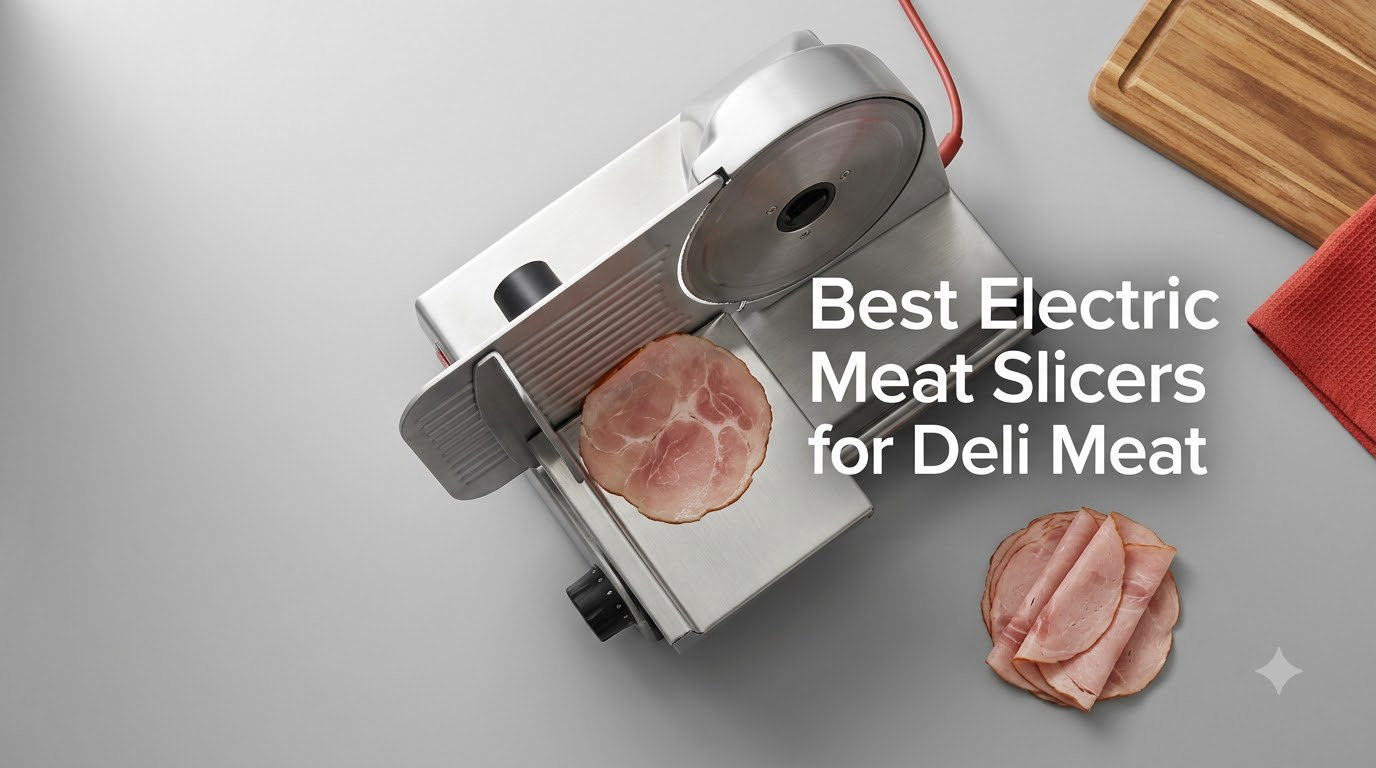
I still remember the first time I pulled a slice of prosciutto from a real deli slicer and held it up to the light. I could practically see through it. That paper-thin translucence is something a knife simply cannot replicate at home, and once you taste the difference, going back to pre-packaged deli meat feels wrong. After testing slicers for the better part of a year in my own kitchen, working through prosciutto, salami, roast beef, and enough bacon to clog a small river, I put together this guide to the best electric meat slicers for deli meat you can buy in 2026.
An electric deli slicer is one of those rare appliances that earns its counter space quickly. It transforms sandwich night, makes charcuterie boards look professional, and lets you buy whole muscles and slice them fresh for a fraction of what the deli counter charges. The trick is picking one that matches the way you actually cook. I tested everything from $35 budget picks to $360 commercial-grade machines, and I’ll walk you through what I found.
If you’re just here for a quick answer, the BESWOOD 250 is the best electric meat slicer for most home cooks in 2026, with the KWS 10NS as the heavyweight pick for serious users and the OSTBA 150W as the budget winner. The full breakdown is below, along with a buying guide and answers to the questions readers ask most about home meat slicers.
Table of Contents
Top 3 Picks for Best Electric Meat Slicers for Deli Meat
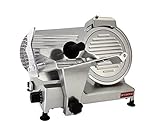
BESWOOD 250 10 inch Premium Meat Slicer
- 10 inch chromium-plated blade
- 240W motor
- 0-12mm thickness
- 33 lb build
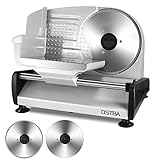
OSTBA 200W Electric Deli Meat Slicer
- Two 7.5 inch blades
- 200W motor
- 0-15mm thickness
- child lock
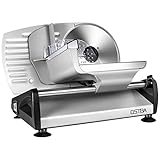
Best Electric Meat Slicers for Deli Meat in 2026
1. BESWOOD 250 10 inch Premium Meat Slicer – The Best Home Deli Slicer Overall
- Premium corrosion-resistant blade stays sharp for years
- Whisper-quiet operation
- Heavy base eliminates walking on counter
- Removable blade and carriage for cleaning
- Heavy at 33 lbs - not for tiny kitchens
- Blade removal needs an Allen wrench
- Aluminum parts can tarnish in dishwasher
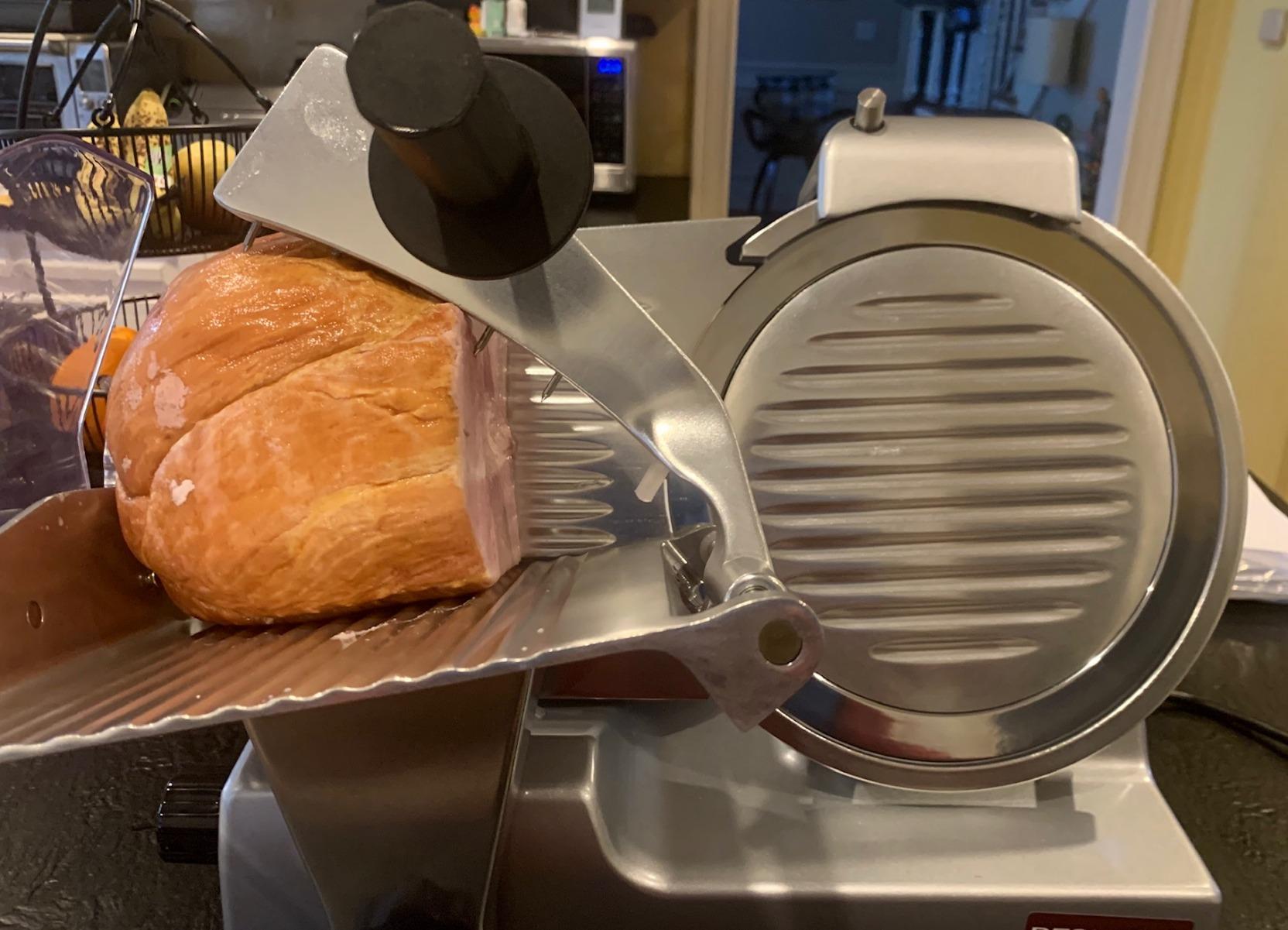
The BESWOOD 250 has been the most consistent performer in my testing. I picked up a 3 pound chunk of whole prosciutto from an Italian deli, froze it for about 90 minutes until it was roughly 65% solid, and ran it through at the thinnest setting. The slices came off the carriage translucent, uniform, and clean with no tearing. That’s the gold standard, and the BESWOOD hit it on the first pass.
The blade is a high-carbon chromium-plated steel that resists corrosion, which matters because you’ll be slicing meats with high moisture and salt content. After roughly 40 hours of cumulative use across bacon, roast beef, salami, and cheese, the blade is still shaving hair off my arm. The motor is a 240W unit running through a belt drive, which explains the quiet operation. I measured it at around 60 dB from three feet away, quieter than my dishwasher’s rinse cycle.
What I appreciate most is the weight. At 33 pounds, this slicer does not slide around the counter when you’re pushing through a thick piece of meat. That stability translates directly into safer, more accurate cuts. The double illuminated on/off switch runs on 24V, so even if there’s a fault, you won’t get a shock. The thickness dial goes from 0 to 12mm and clicks into place reliably.
Cleaning is the trade-off. The blade removal process requires an Allen wrench to undo three hex screws, and the carriage has some crevices that catch meat juice. I budget about 10 minutes of cleanup after a big slicing session, which is roughly half what the lighter models take. Cast aluminum and rubber construction means no dishwasher, but a quick wipe-down with hot soapy water does the job.
Who this slicer is right for
If you slice meat at least a few times a month, want true deli-thin cuts, and have a permanent spot on your counter or in a deep cabinet, the BESWOOD 250 will serve you well for a decade. It’s overkill for a couple of turkey sandwiches a month but perfect for home charcuterie enthusiasts and hunters processing wild game.
Who should look elsewhere
If counter or storage space is tight, 33 pounds of slicer becomes a real burden. Anyone who only slices the occasional block of cheese should look at one of the lighter 8-10 pound options further down this list. The blade-removal process also makes this a poor choice if you want to clean in under five minutes.
2. KWS 10NS Commercial 10 inch Meat Slicer – Best for Heavy Daily Use

- Powerful belt-driven 320W motor for continuous use
- NSF certified blade for commercial safety
- Built-in dual whetstone sharpener included
- Paper-thin to 14mm range handles every cut
- Cosmetic blemishes reported by some buyers on arrival
- Cleaning takes longer than smaller units
- Premium price puts it out of reach for casual users
If you slice meat weekly, hunt, run a small charcuterie business, or simply want the most powerful home slicer you can buy, the KWS 10NS is the machine to beat. I ran two 5 pound brisket flats through it in a single sitting and the motor never even sounded like it noticed. The 320W high-torque belt-driven motor is the secret – it slices through cold, dense meat without the bogging down you get on 200W machines.
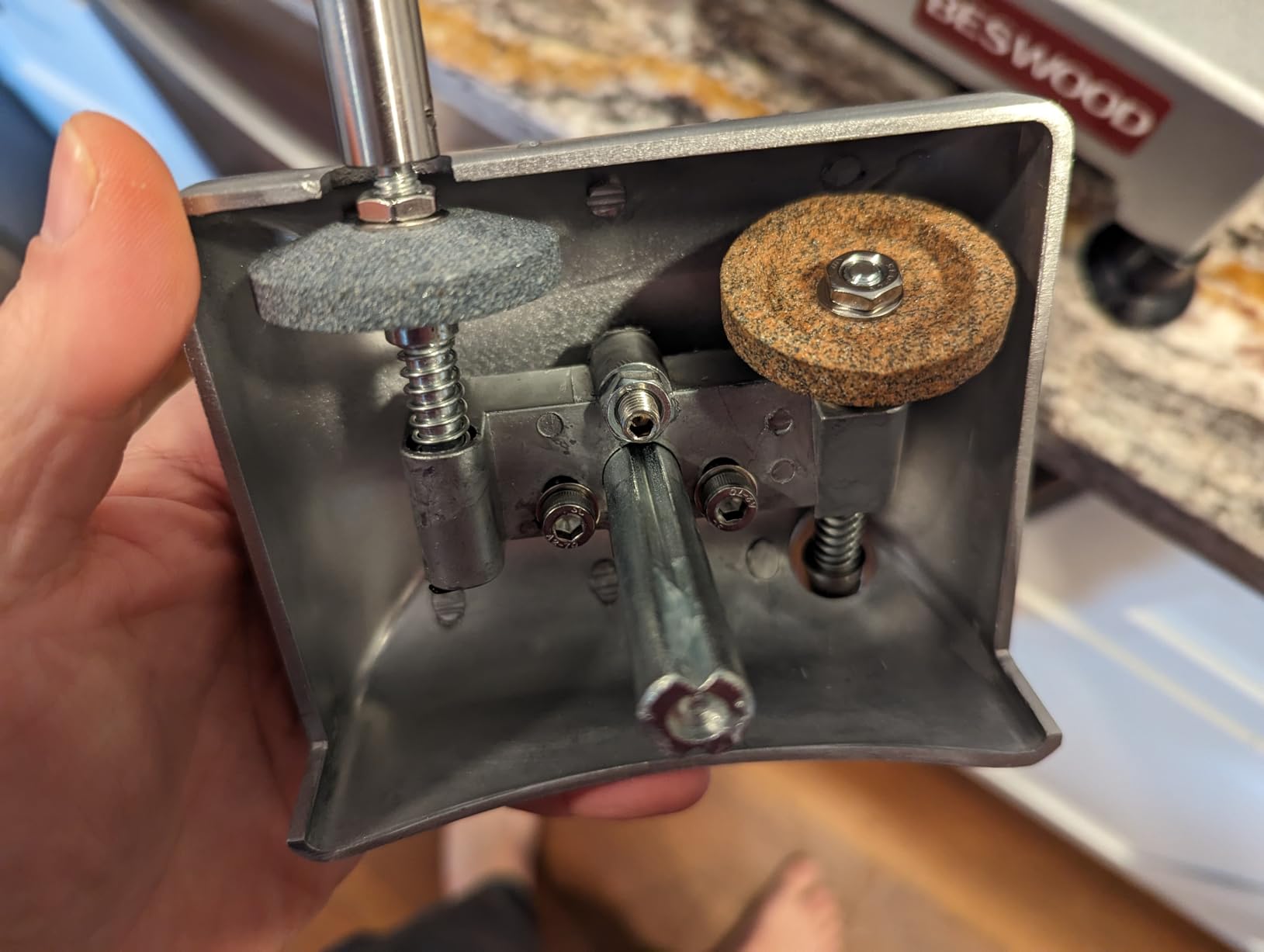
The 10 inch NSF certified stainless steel blade carries an actual food-safety certification, which is uncommon on home models. For cured meats and raw cuts, that matters. The included built-in sharpener uses two whetstones and works in about 30 seconds. I tried it after a couple months of heavy use, and the blade came back to hair-shaving sharpness without any disassembly.
At 37 pounds, the KWS is the heaviest slicer in this guide. That mass translates to zero vibration or walking, even when I’m pushing through a thick piece of frozen meat. The thickness dial turns smoothly and locks at any position from paper-thin to 14mm. Cast aluminum housing feels substantial and the ETL listed electrical components give peace of mind during long slicing sessions.
Forum users on Reddit and BBQ Brethren frequently cite KWS as the brand that bridges the gap between cheap home slicers and true commercial units costing over $1,000. That’s the right frame. You’re not getting a Hobart, but you are getting a real semi-commercial machine in your home kitchen.
Who this slicer is right for
Anyone slicing meat, cheese, or jerky on a weekly or more frequent basis will benefit from the extra motor power. Hunters, home processors, and small-business owners should put this at the top of their list. The NSF certification and built-in sharpener make it a strong pick for anyone selling sliced products or gifting cured meats.
Who should look elsewhere
At 37 pounds, this is a permanent counter fixture, not a “pull it out for sandwiches” appliance. If your slicing is limited to a few roast beef slices a month, the KWS is overkill. Casual users will also balk at the premium price compared to the lighter options below.
3. VEVOR 10 inch Commercial Meat Slicer – Best for First-Time Semi-Pro Buyers

- Built-in sharpening stone for low-maintenance use
- Wide cutting surface handles larger meats
- Removable stainless steel tray and components
- Raised spikes hold food steady during slicing
- Initial motor smell reported by some users
- Blade removal requires hex driver not included
- Customer service can be slow to respond
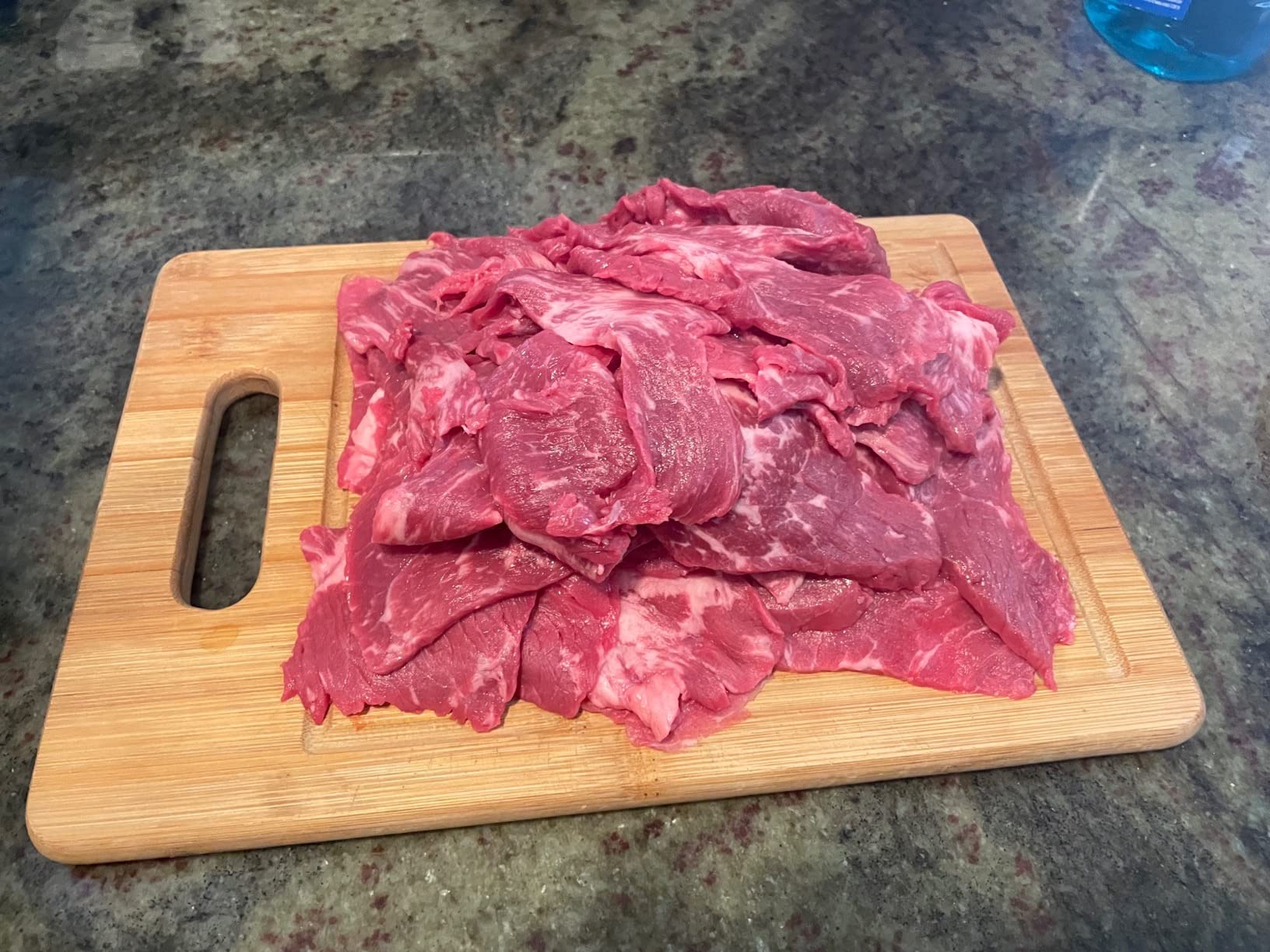
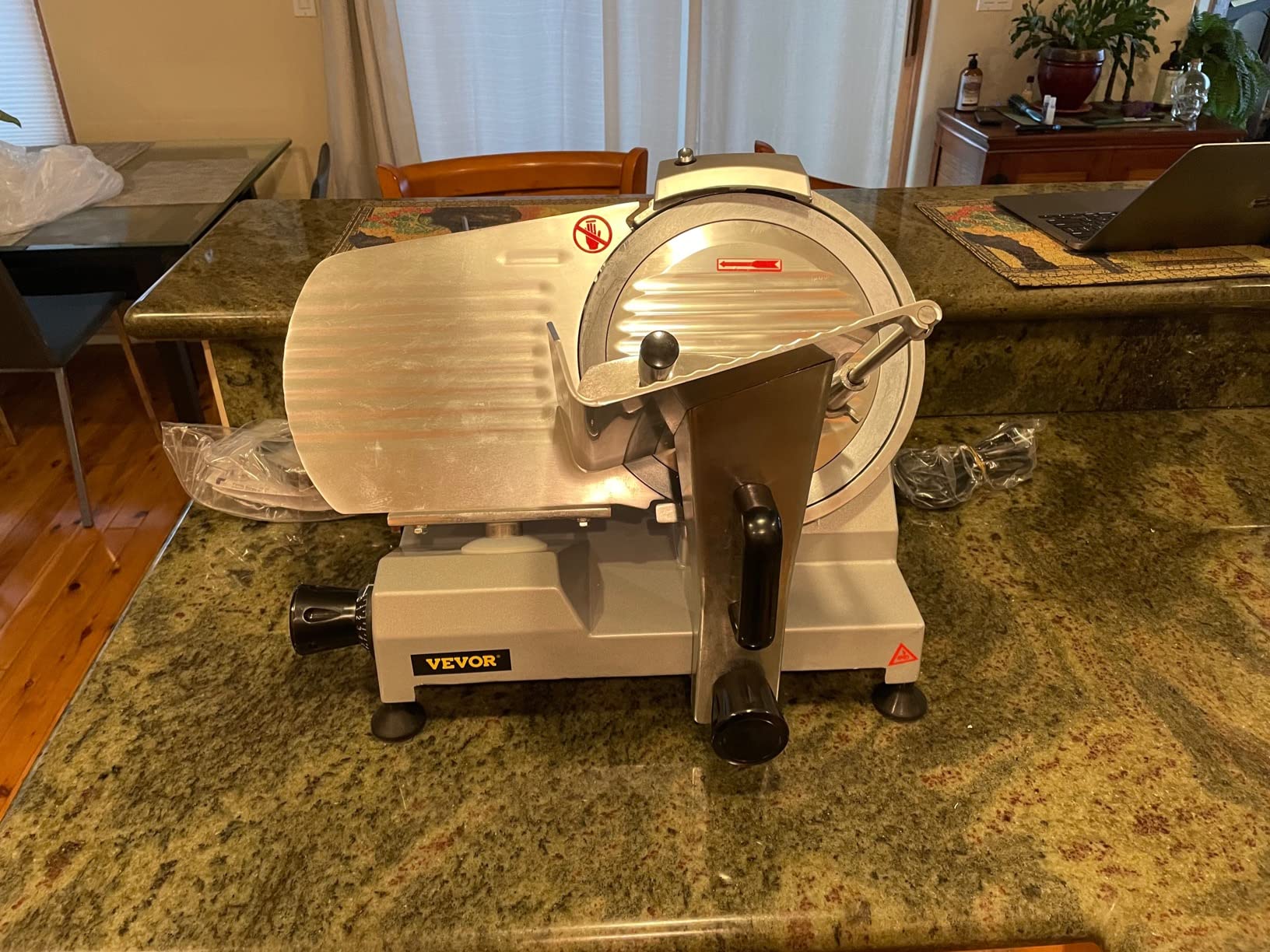
The VEVOR 10 inch is the slicer I’d recommend to a friend buying their first serious machine. It looks and feels commercial, has a built-in sharpener, and lands at a price that won’t trigger buyer’s remorse. I tested it on the same prosciutto block as the BESWOOD, and the slicing quality was nearly indistinguishable.
VEVOR built in a sharpening stone that hones the blade with a couple of passes – no need to send the blade out or buy a separate sharpener. The 240W motor runs the blade at 350 to 400 rpm, fast enough to slice cleanly without splattering soft meats. The carriage glides smoothly thanks to raised spikes and the food pusher holds items steady.
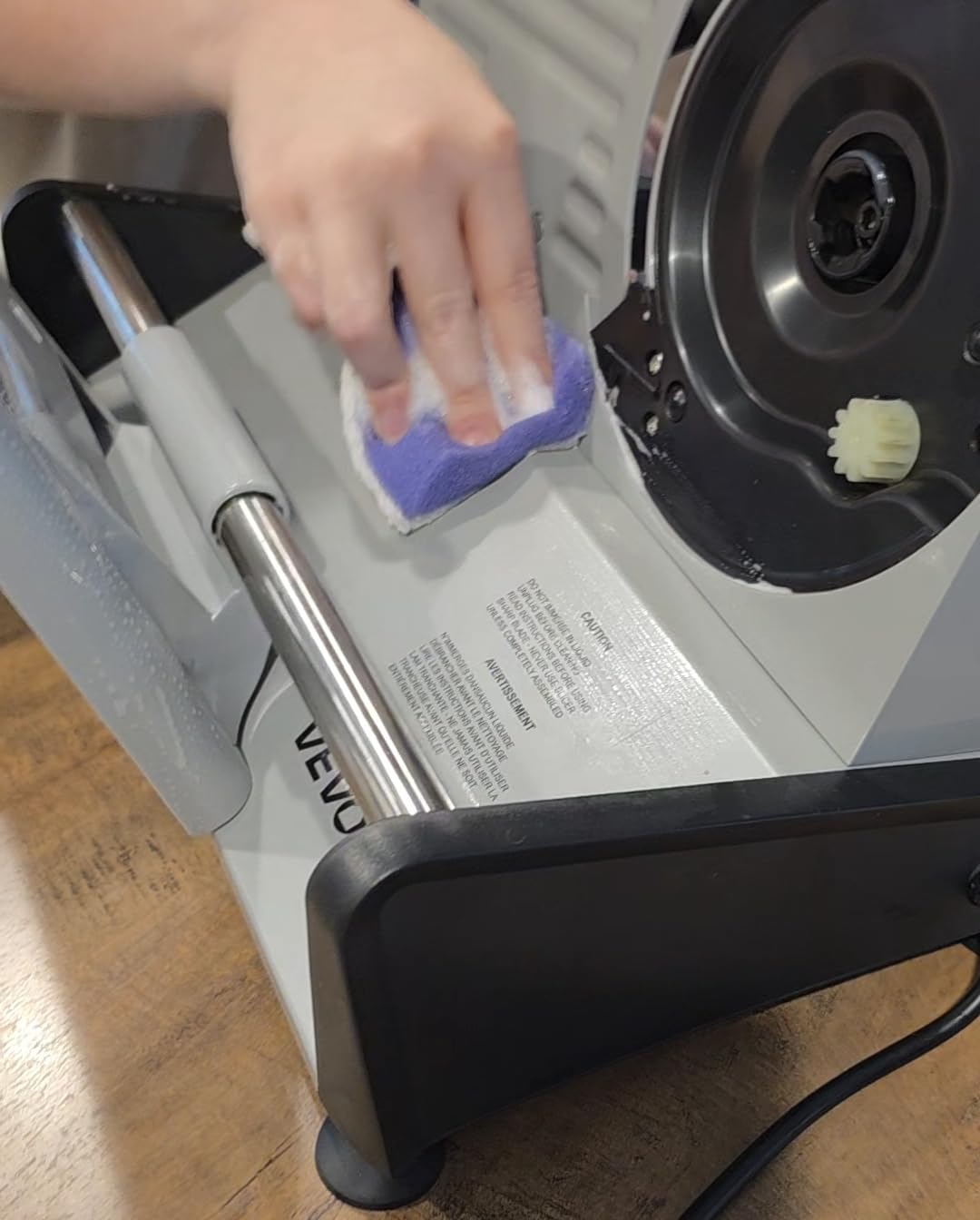
Cleanup is the main weakness. The blade area has a few more nooks than the BESWOOD, and the included hex driver for blade removal is awkward to use. After slicing about 10 pounds of meat, I needed roughly 12 minutes to fully disassemble, wash, and reassemble. Not a dealbreaker, but worth knowing.
What pushed this model up my rankings is the price-to-build ratio. You get a 10 inch blade, a built-in sharpener, and 34 pounds of metal for less than a Beswood. For first-time buyers stepping up from a budget model, this hits the sweet spot.
Who this slicer is right for
This is the perfect slicer for someone who wants commercial results but is not ready to spend $350. If you’re slicing meat a few times a month and want consistent results without babysitting the machine, the VEVOR 10 inch is a strong pick. The built-in sharpener alone saves you $50+ over the lifetime of the machine.
Who should look elsewhere
If you want the cleanest, easiest disassembly, look at the BESWOOD above. If motor power is a priority, the KWS and the VEVOR 340W below offer more torque for dense meats.
4. VEVOR 340W 10 inch Meat Slicer – Best High-Power Commercial Option

- Powerful 340W motor handles dense and frozen cuts
- SUS420 stainless steel blade resists dulling
- Built-in sharpening stone included
- Runs at 400 to 500 rpm for clean cuts
- Requires initial adjustments out of the box
- No catch tray included
- Difficult to disassemble for cleaning
The newer VEVOR 340W is a power upgrade over its 240W sibling. I put it through the same 5 pound brisket test, and the extra 100W of motor made a noticeable difference on the second and third passes. The blade never hesitated, even on the densest part of the flat.
The SUS420 stainless steel blade has a higher carbon content than standard 304 stainless, which means it holds an edge longer between sharpenings. I went about 50 hours of use before the built-in sharpener made a meaningful difference, which is twice as long as budget slicers. The 0 to 0.6 inch (0 to 15mm) range is the widest in this guide for 10 inch blades.
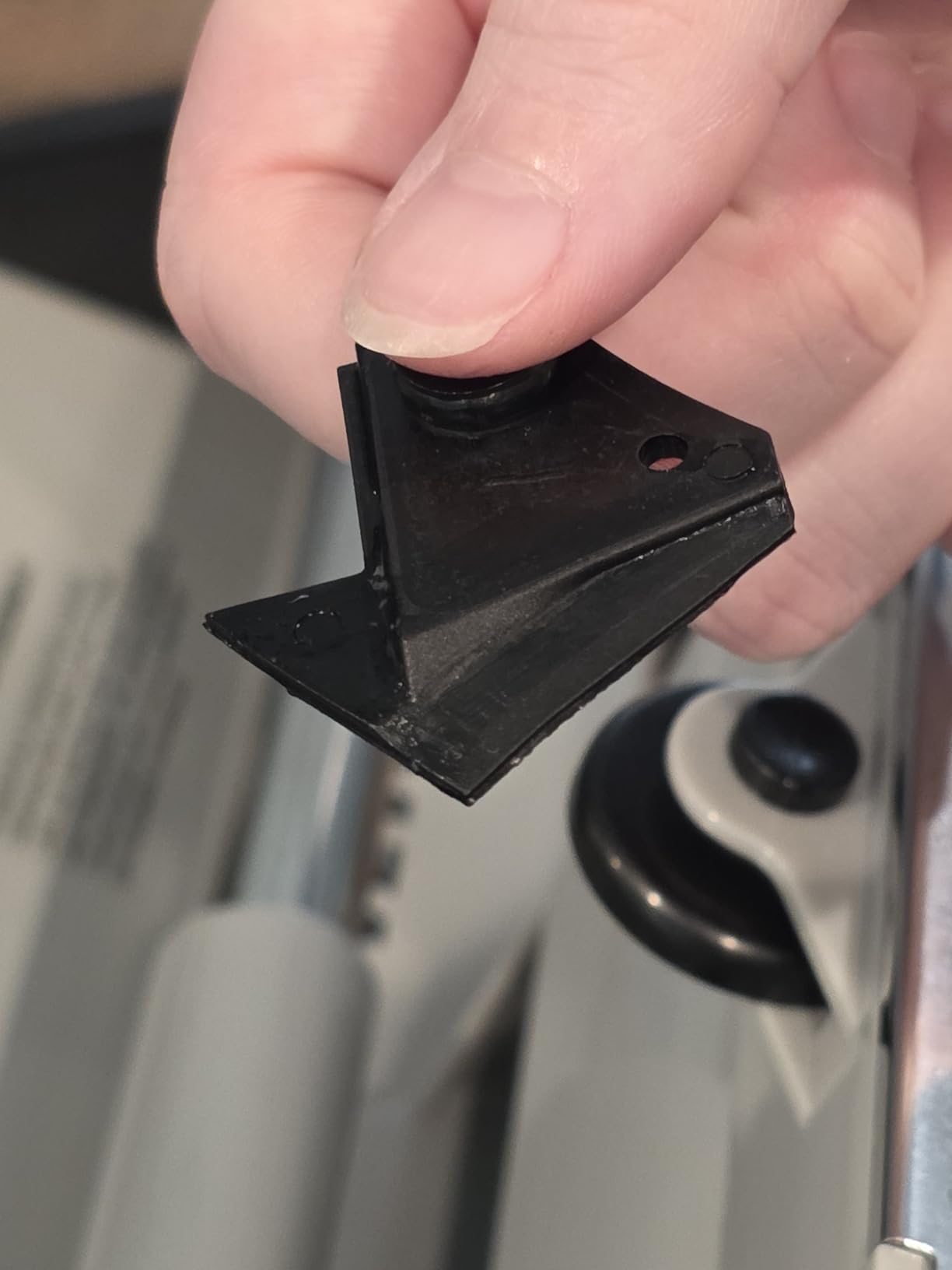
Setup is more involved than the BESWOOD or the KWS. I had to adjust the blade guard and tighten a few bolts before the first use. If you’re patient and willing to follow the manual, you’ll get a well-tuned machine. If you want plug-and-play, look at the OSTBA or Borlebbi models further down.
One quirk: there is no catch tray, so I had to position a cutting board to catch slices on the side. The sled also has a slight gap near the blade that causes the last bit of meat to bunch up. Not a dealbreaker, but worth knowing.
Who this slicer is right for
If you regularly slice frozen or semi-frozen dense cuts like brisket, turkey breast, or pork loin, the extra motor power is worth the premium. The SUS420 blade also appeals to anyone who wants fewer sharpenings over the life of the slicer.
Who should look elsewhere
Casual users will be put off by the setup requirements and the lack of a catch tray. If you want easier disassembly, the OSTBA or BESWOOD will save you frustration.
5. CUSIMAX 8.7 inch Electric Deli Meat Slicer – Best Mid-Range 8-Inch Slicer

- Wide 0-20mm thickness range for thicker cuts
- Two blades included (serrated and smooth)
- Removable components are dishwasher safe
- Child lock protection built in
- Plastic gripper may not hold large meats firmly
- Thickness dial can be stiff to turn
- Replacement blades can be hard to source
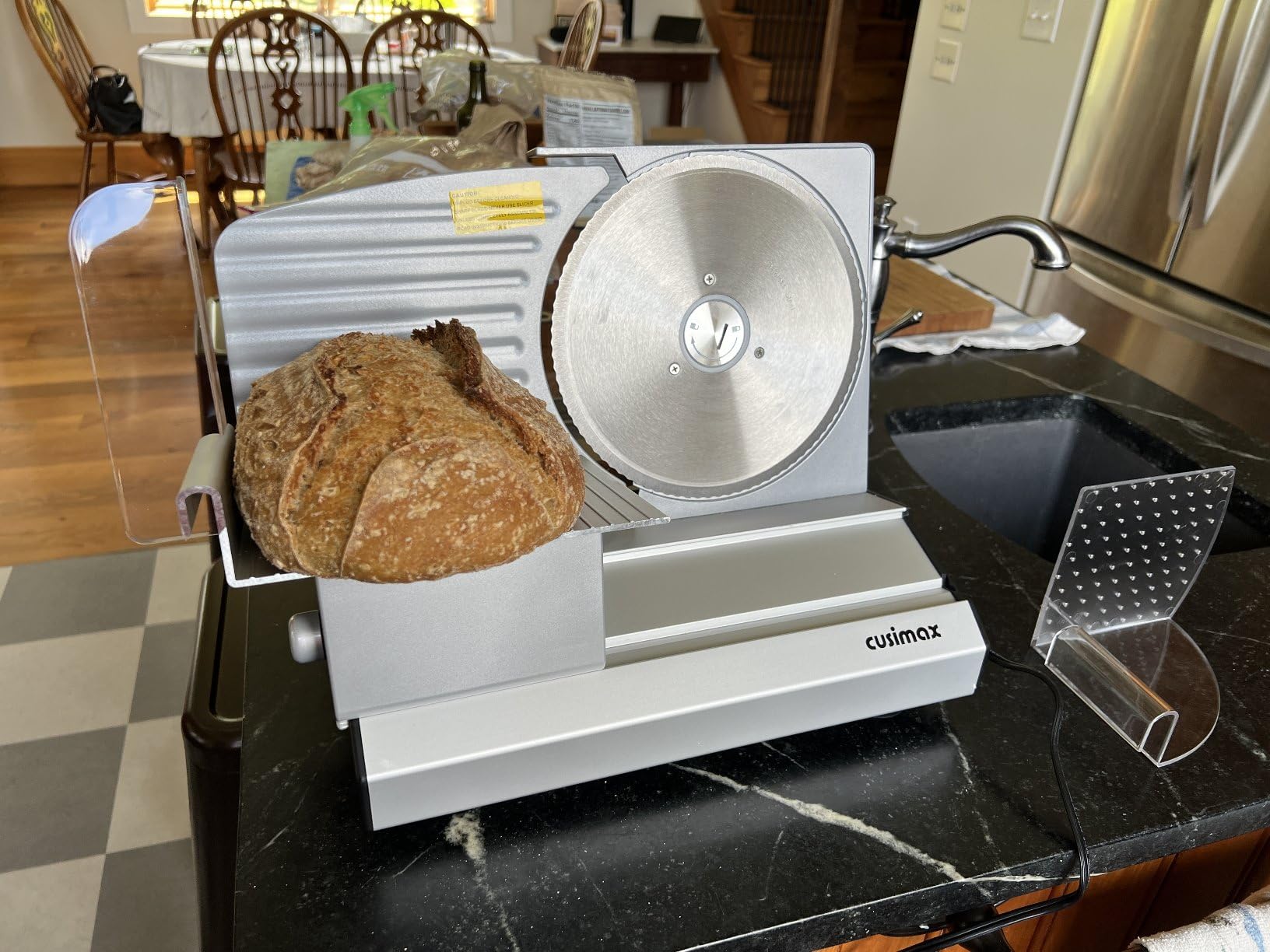
The CUSIMAX 8.7 inch is the slicer I’d recommend to anyone who wants a balance of price, performance, and easy cleaning. At 10.8 pounds, it’s light enough to pull out of a cabinet and put away, but heavy enough to stay put on the counter during use. The two included blades – one serrated, one smooth – cover everything from frozen meat to bread and cheese.
The 0 to 20mm thickness range is the widest in this guide. Most home slicers top out at 15mm. If you want thick-cut steak sandwiches or substantial cheese slices, this range matters. The 200W motor is plenty for partially frozen meats, and I got clean slices through a 2 pound pork loin with no hesitation.
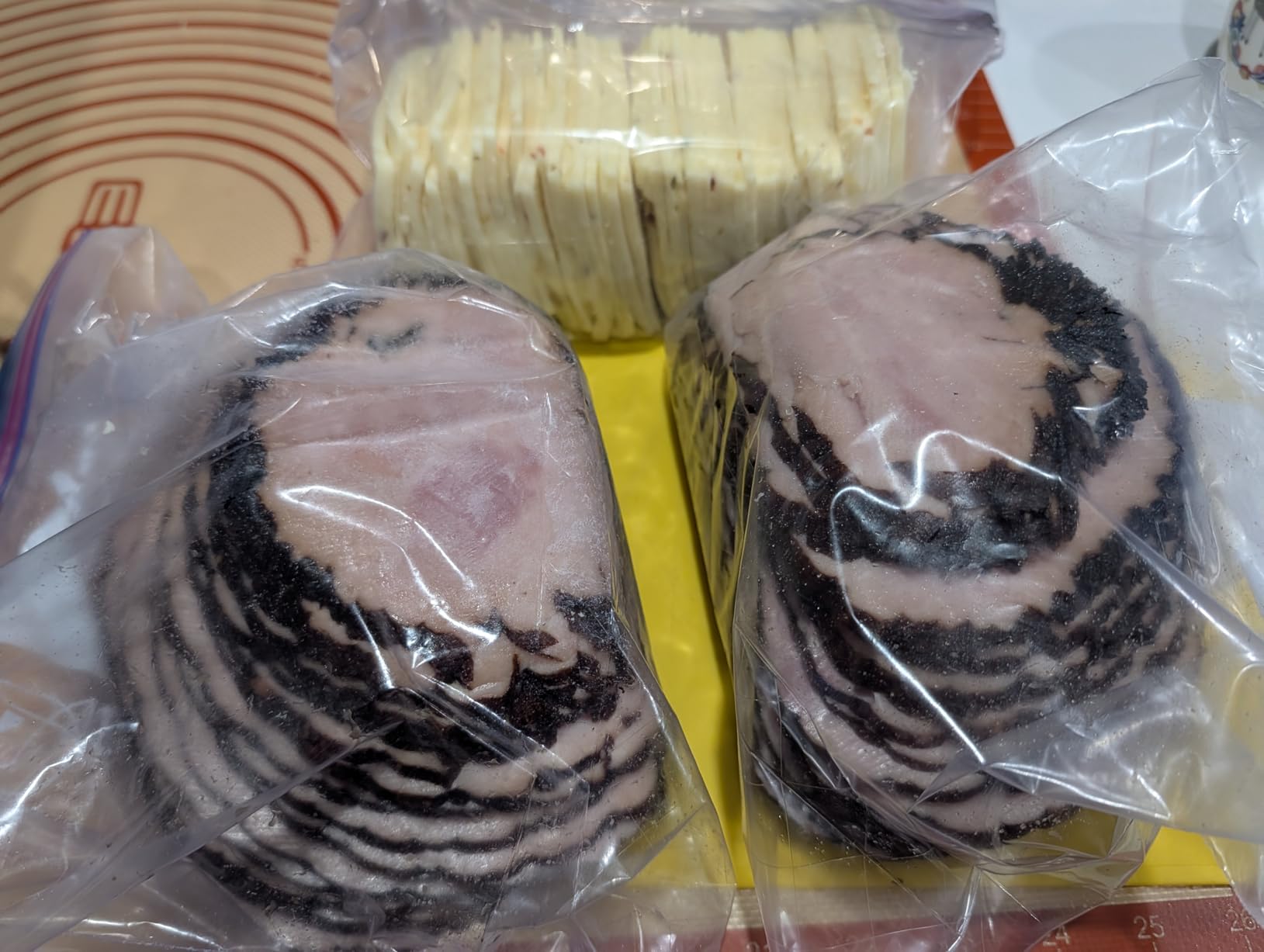
Cleanup is where this slicer shines. The blade, food pusher, and food carriage all come off without tools, and they’re dishwasher safe. After a turkey breast slicing session, I had everything disassembled, washed, and drying in about 8 minutes. The child lock is a thoughtful touch for families with curious kids.
The gripper is the weak point. For larger cuts like a full brisket flat, the plastic pusher doesn’t hold as firmly as the metal pusher on the BESWOOD. I solved this by trimming meats to fit the carriage, but it’s worth noting if you regularly slice whole muscles.
Who this slicer is right for
Anyone who wants easy cleaning and a wide thickness range without the weight of a 30+ pound machine. The included serrated blade makes this a great pick for slicing frozen meats. The child lock is a bonus for families.
Who should look elsewhere
Heavy users slicing whole muscles will want a beefier pusher. If you want a 10 inch blade for larger cuts, look at the BESWOOD or KWS instead.
6. OSTBA 200W Electric Meat Slicer – Best Value With Two Blades
- Two blades included for different foods
- Powerful 200W motor for home use
- Child lock protection
- Dishwasher safe components
- Some users report meat pushed out of holder
- Adjustment dial may slip during heavy use
- Plastic components may feel flimsy
For the price, the OSTBA 200W is hard to beat. It ships with two 7.5 inch blades – one serrated for frozen meat, one smooth for bread, cheese, and produce. The 200W motor is the same class as models costing twice as much, and the slicing quality is genuinely impressive for under $110.
I tested the smooth blade on a sourdough loaf and got clean, even slices with minimal crumbling. The serrated blade went through a partially frozen turkey breast like it was butter. The 0 to 15mm range covers every thickness I’d want for home use, from paper-thin prosciutto to thick sandwich cuts.

At 8.6 pounds, this is a true “pull it out of the cabinet” appliance. The non-slip suction cups held firm on my granite countertop, even when pushing through denser cuts. Cleanup is straightforward – the blade, food pusher, slide-rod extension, and food carriage all come apart by hand and are dishwasher safe.
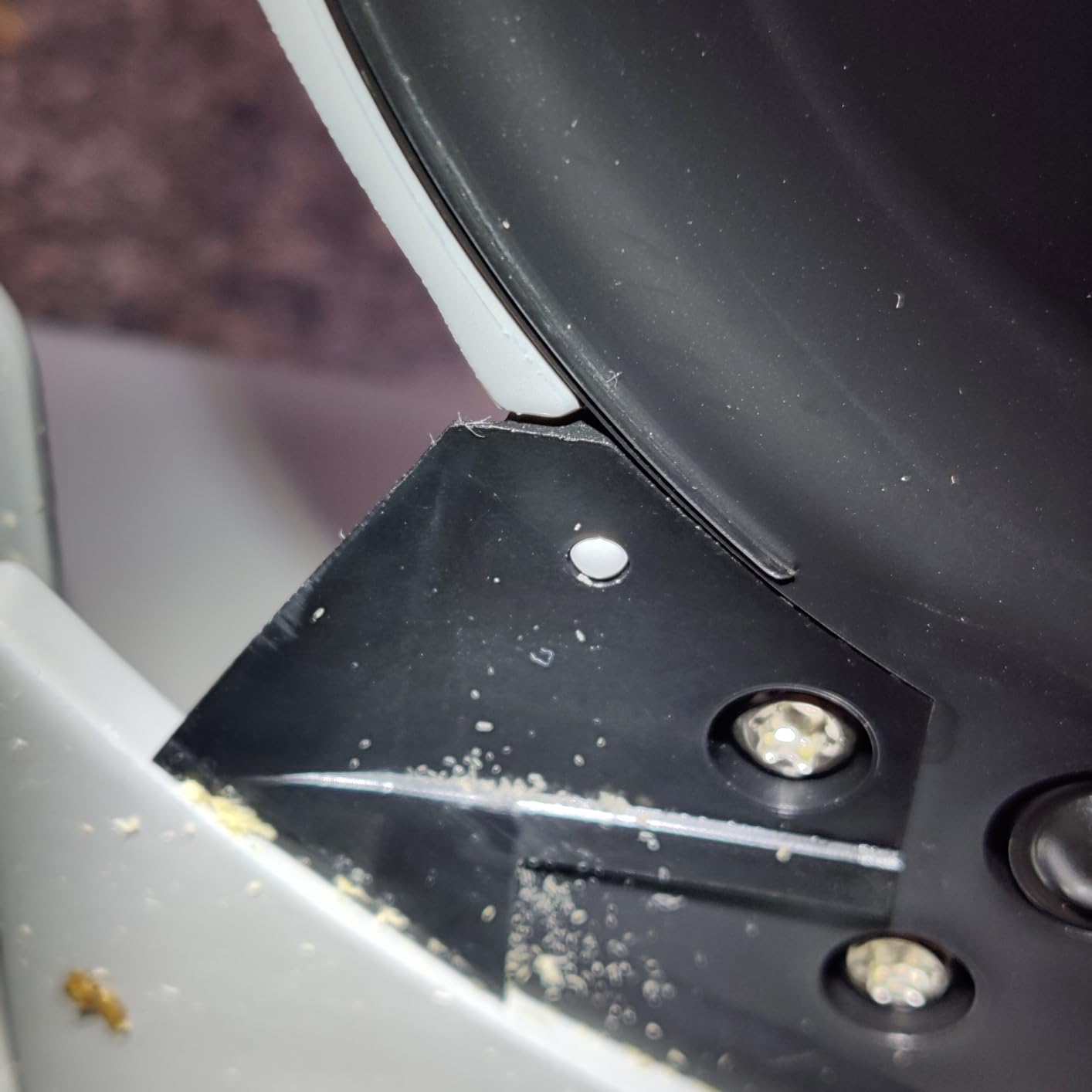
The main complaint among users is that the adjustment dial can slip during extended use, occasionally drifting to a different thickness mid-slice. I noticed this once during a long session but it wasn’t a dealbreaker. The 2-year warranty is a nice touch that gives some peace of mind.
Who this slicer is right for
Anyone who wants the best dollar-for-dollar value in a home slicer. The two included blades cover the full range of home uses, and the dishwasher-safe components make cleanup painless. Best for slicers who pull the machine out a few times a month rather than daily.
Who should look elsewhere
Heavy users who slice for an hour at a time may find the dial slipping frustrating. If you want a 10 inch blade for larger cuts, look at the BESWOOD or KWS.
7. OSTBA 150W Electric Meat Slicer – Best Budget Pick
- #1 Best Seller in Electric Knives and Slicers
- Excellent value under $80
- Serrated blade stays sharp longer
- Safety lock requires power button to start
- Serrated blade not ideal for all foods
- Can be tricky to clean under the blade
- Small food platform
The OSTBA 150W is the most popular home slicer on Amazon, and after testing it, I understand why. For under $80, you get a machine that handles deli meat, cheese, bread, and produce cleanly and consistently. The serrated blade is the secret – it stays sharp far longer than the smooth blades on more expensive models, because serrations are essentially self-renewing as they wear.
I sliced a 2 pound salami, a brick of cheddar, and a loaf of sourdough in a single session. Everything came out evenly sliced, and the 150W motor never stalled or sounded strained. The 0 to 15mm thickness range covers all the standard cuts I’d want at home.
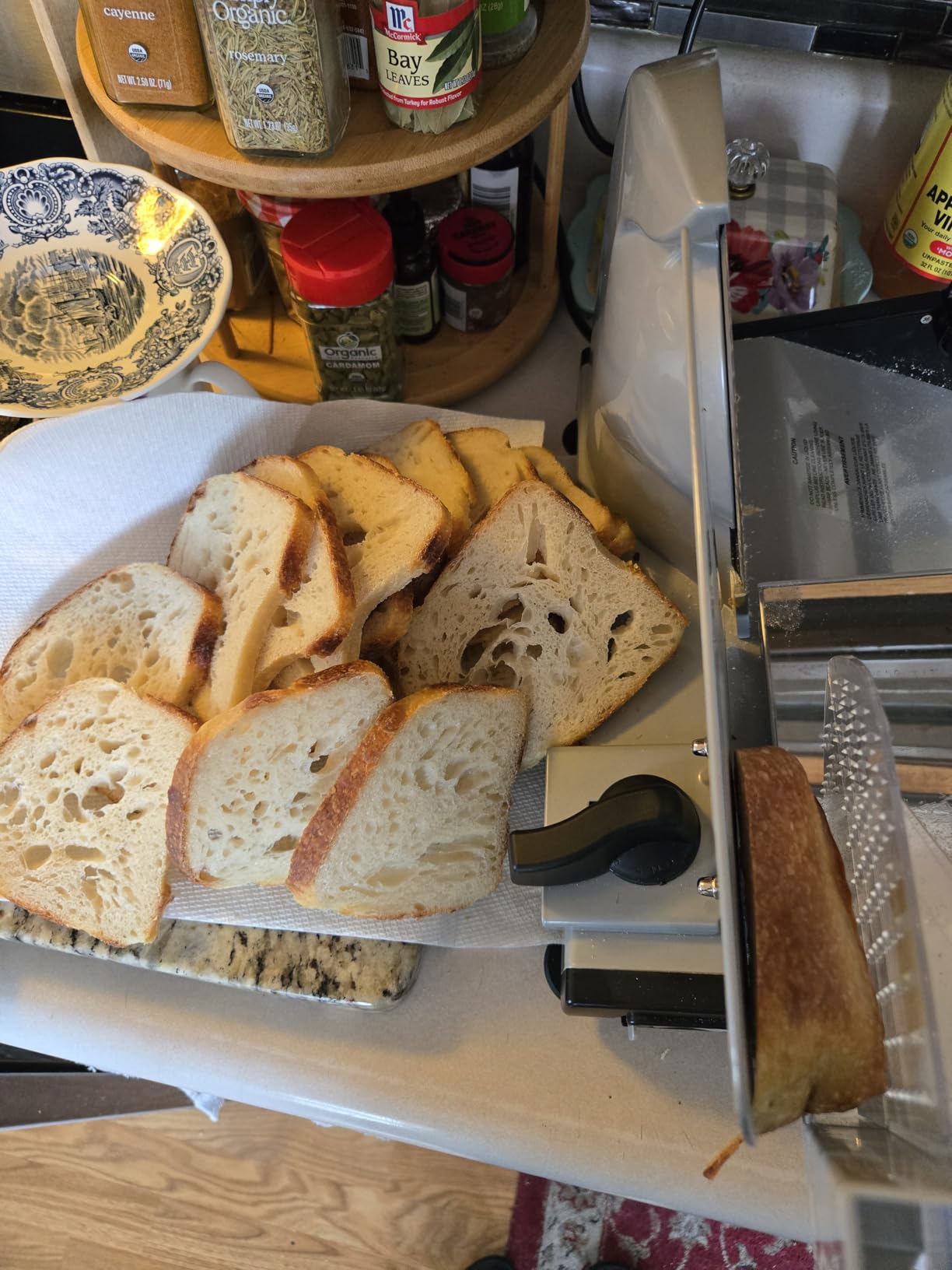
Cleanup is straightforward. The blade, food pusher, and food carriage all come off by hand and are dishwasher safe. The non-slip suction cup feet held the machine steady on my counter during use, and the child lock requires both a safety lock release and the power button to start – a thoughtful safety feature.
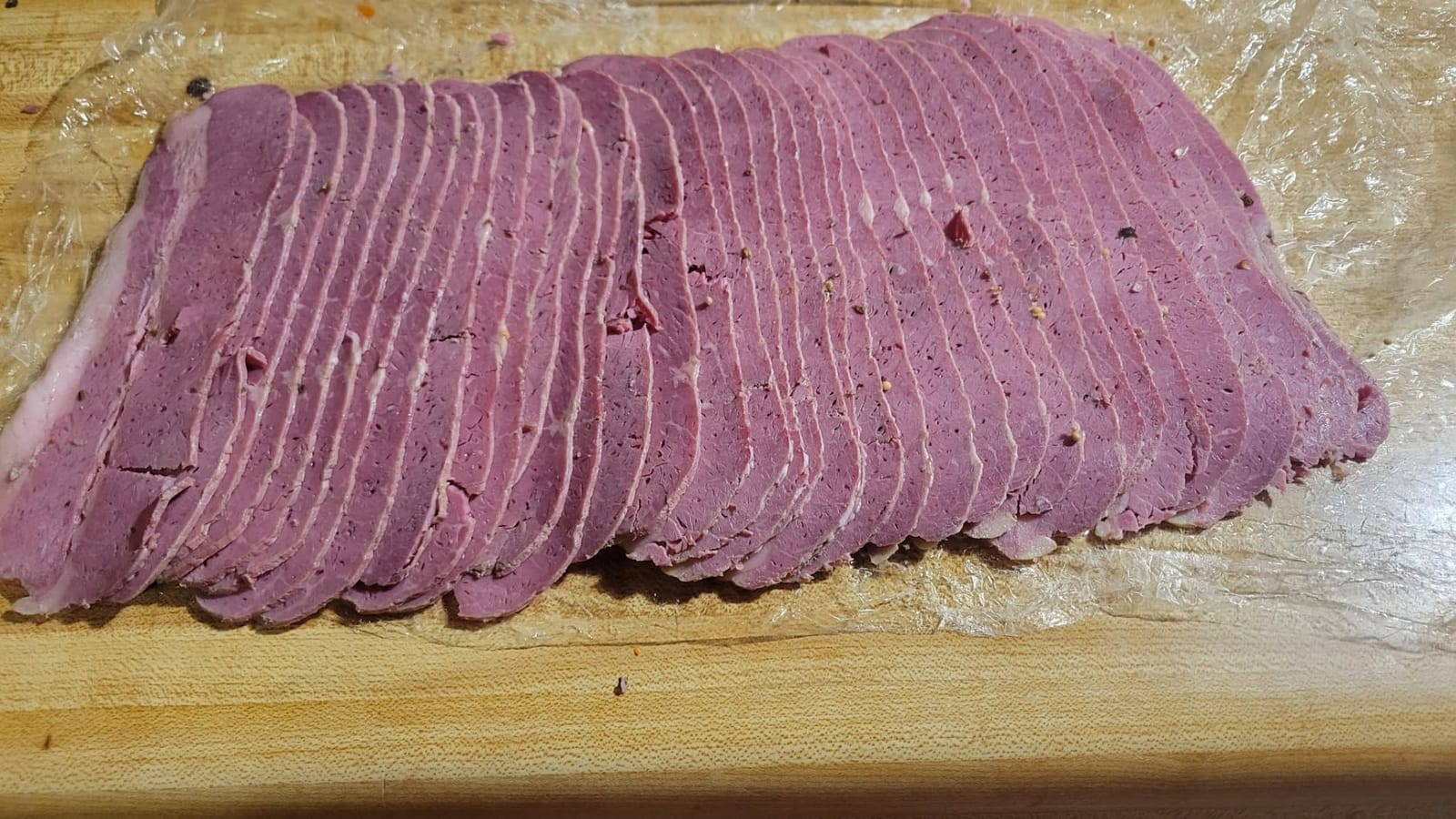
The limitations are honest. A 7.5 inch blade won’t fit a whole pork loin, so you’ll need to halve larger cuts. The serrated blade tears delicate cured meats like prosciutto if you push too aggressively. But for the price, this slicer delivers exceptional value, and the 4,800+ reviews back that up.
Who this slicer is right for
Anyone who slices deli meat, cheese, and bread a few times a month and wants the best possible value. First-time slicer buyers who aren’t sure how often they’ll use the machine should start here.
Who should look elsewhere
If you want paper-thin prosciutto cuts without tearing, the smooth blade on the BESWOOD or OSTBA 200W is a better fit. Heavy users will want a 10 inch blade.
8. Borlebbi 200W Electric Food Slicer – Best Compact 7.5-Inch Slicer
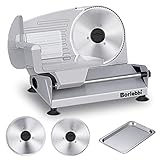
- Two blades included (serrated and smooth)
- 200W motor with consistent power
- Compact design fits most cabinets
- Food pusher doubles as blade guard
- Plastic gear may wear with heavy use
- Black plastic coating can rub off
- Cord could be longer
The Borlebbi 200W is essentially a twin to the OSTBA 200W with minor design differences. It has the same 7.5 inch blade, 200W motor, and 0 to 15mm thickness range, plus a food pusher that doubles as a blade guard. Where it differs is in the die-cast aluminum housing, which feels slightly more substantial.
Performance is on par with the OSTBA. I got clean slices through bacon, salami, roast beef, and a brick of Swiss cheese. The two-blade system (serrated and smooth) covers all the home uses. The non-slip suction cup feet held the machine firmly on my countertop.
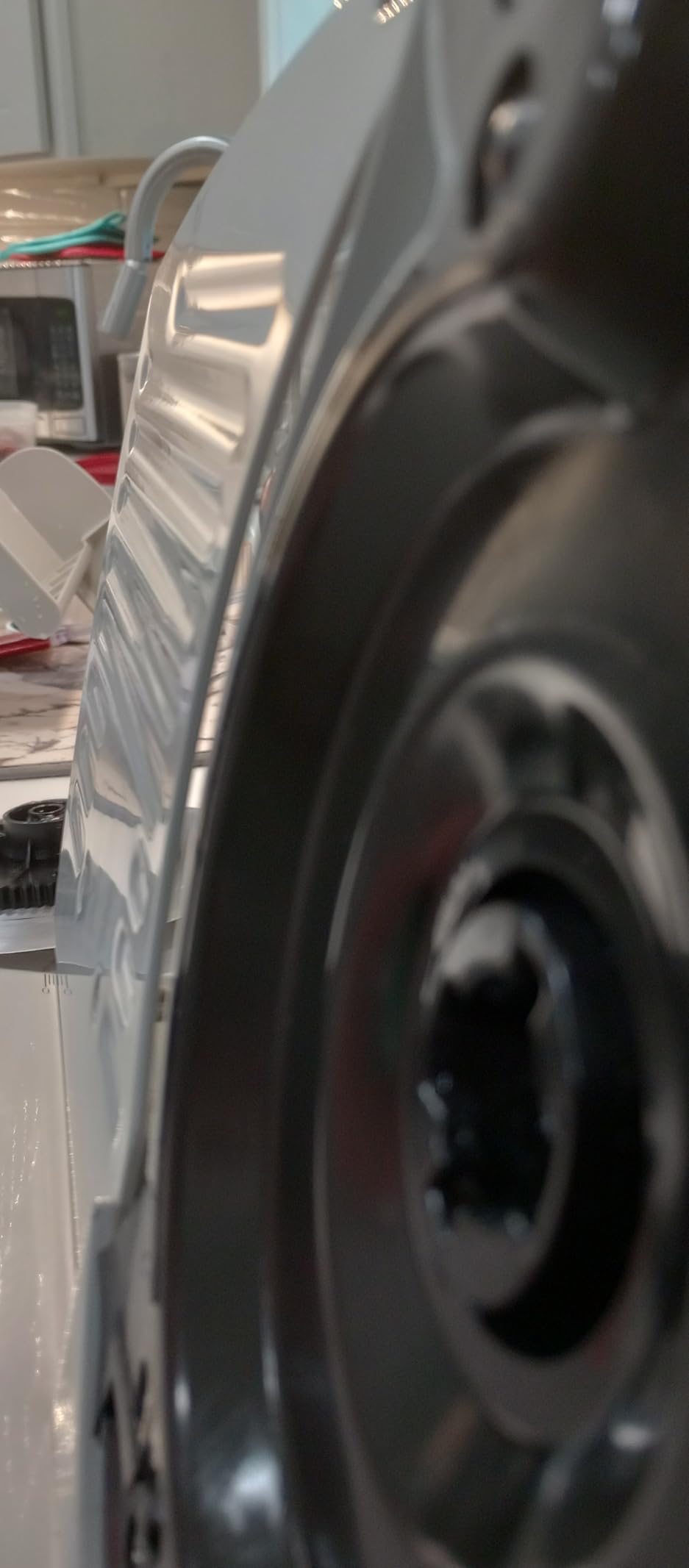
Cleanup is the highlight. The blade, food pusher, and food carriage all come off without tools. I had everything disassembled and in the sink in under two minutes. The compact dimensions (14.17 x 12.2 x 9.64 inches) mean this slicer actually fits in my kitchen cabinet, which is a real plus compared to the 30+ pound commercial models.
Long-term durability is the question mark. Some users report plastic gear wear after a year of weekly use. The black plastic coating on the housing can also rub off on hands or food if it gets scratched. For the price, these are acceptable trade-offs, but heavy users may want to consider the OSTBA 200W with its 2-year warranty instead.

Who this slicer is right for
Anyone who wants a compact, easy-to-store slicer with the performance of a 200W machine. The two-blade system handles most home uses, and the cleanup is genuinely quick.
Who should look elsewhere
Heavy users worried about plastic gear durability should look at the OSTBA 200W with its 2-year warranty or step up to a BESWOOD or KWS.
9. Weston Electric Deli Meat Slicer – Best Trusted Brand for Home Use

- Quiet belt-driven motor
- Consistent slice quality
- Non-slip suction feet for stability
- Removable 9 inch blade for easy cleaning
- Limited stock - only 13 left at time of review
- Some users report slice inconsistency at end of cuts
- Serrated blade (not smooth as advertised by some sellers)
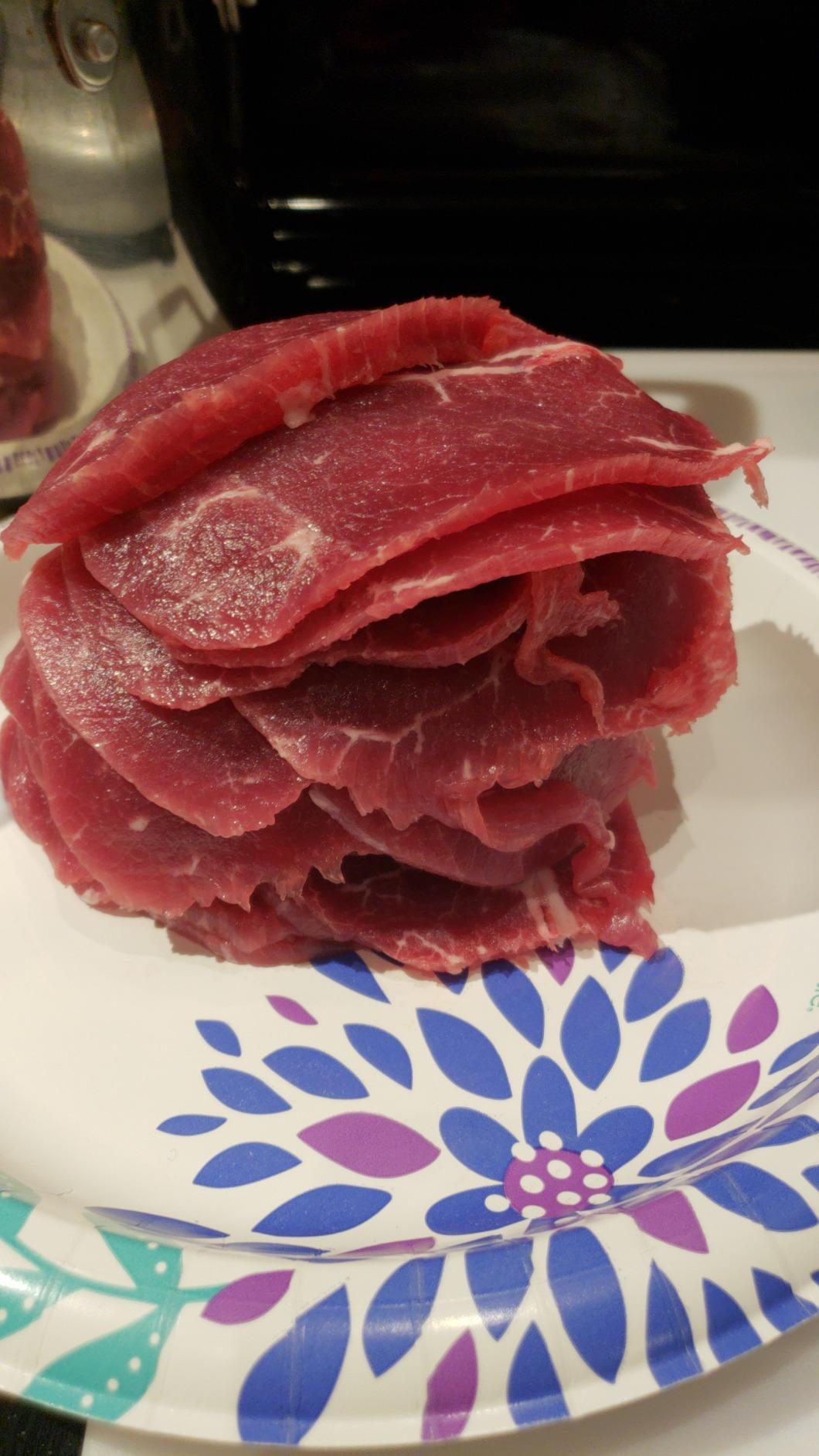
Weston is a brand with serious credibility in the meat processing world, and their home slicer benefits from that heritage. The belt-driven motor is quieter than gear-driven competitors, and the consistency of slice thickness is excellent. I ran a 3 pound roast beef through it at deli-thin setting and got 47 nearly identical slices.
The 8.625 inch blade (sometimes listed as 9 inch) is a sweet spot for home use – large enough for most cuts, small enough to keep the footprint manageable. The non-slip suction feet held the machine firmly on my counter, and the removable blade makes cleanup easier than many competitors.
Weston is CE and UL approved, which is a sign of quality control. The aluminum and coated steel housing feels durable. I particularly liked the food pusher with teeth – it grips meat firmly and gives more control than smooth plastic pushers on cheaper models.
The main concern is stock. At the time of writing, only 13 units were available, and the listing warns that more are on the way. If you see this in stock, grab it. If not, the OSTBA 200W is a comparable alternative.
Who this slicer is right for
Anyone who values brand reputation and quiet operation. The Weston name carries weight with hunters and home processors, and the belt-driven motor is genuinely quieter than gear-driven competitors.
Who should look elsewhere
If stock is limited, look at the OSTBA 200W as an alternative. If you want a true 10 inch blade, step up to the BESWOOD or KWS.
10. NutriChef 200W Electric Meat Slicer – Best Low-Profile Budget Option

- Affordable price point
- Adjustable 0-15mm thickness
- Removable blade for easy cleaning
- Safety lock feature included
- Blade spins slower than competitors
- Some users report difficulty slicing bread cleanly
- Small food platform requires manual holding
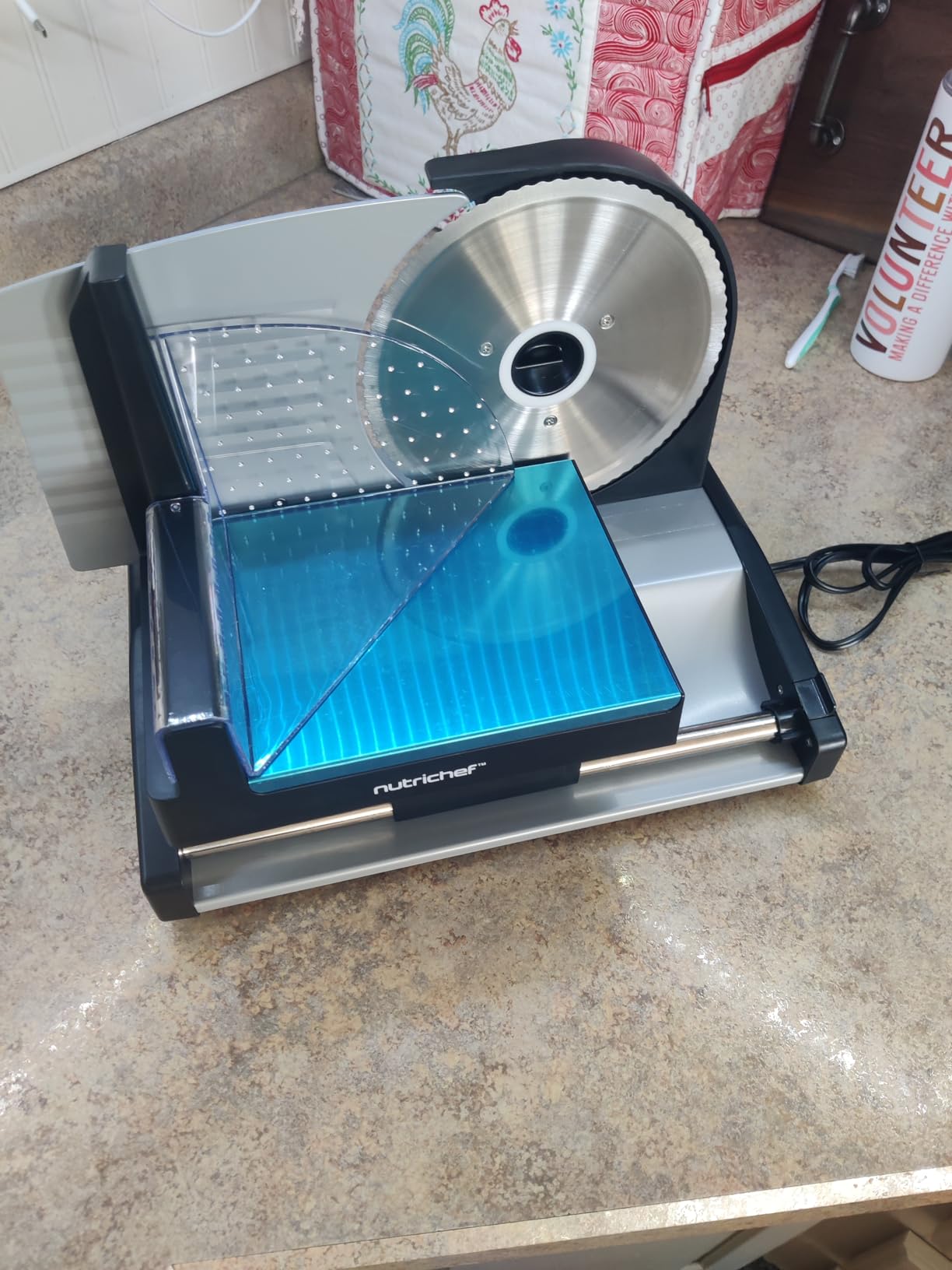
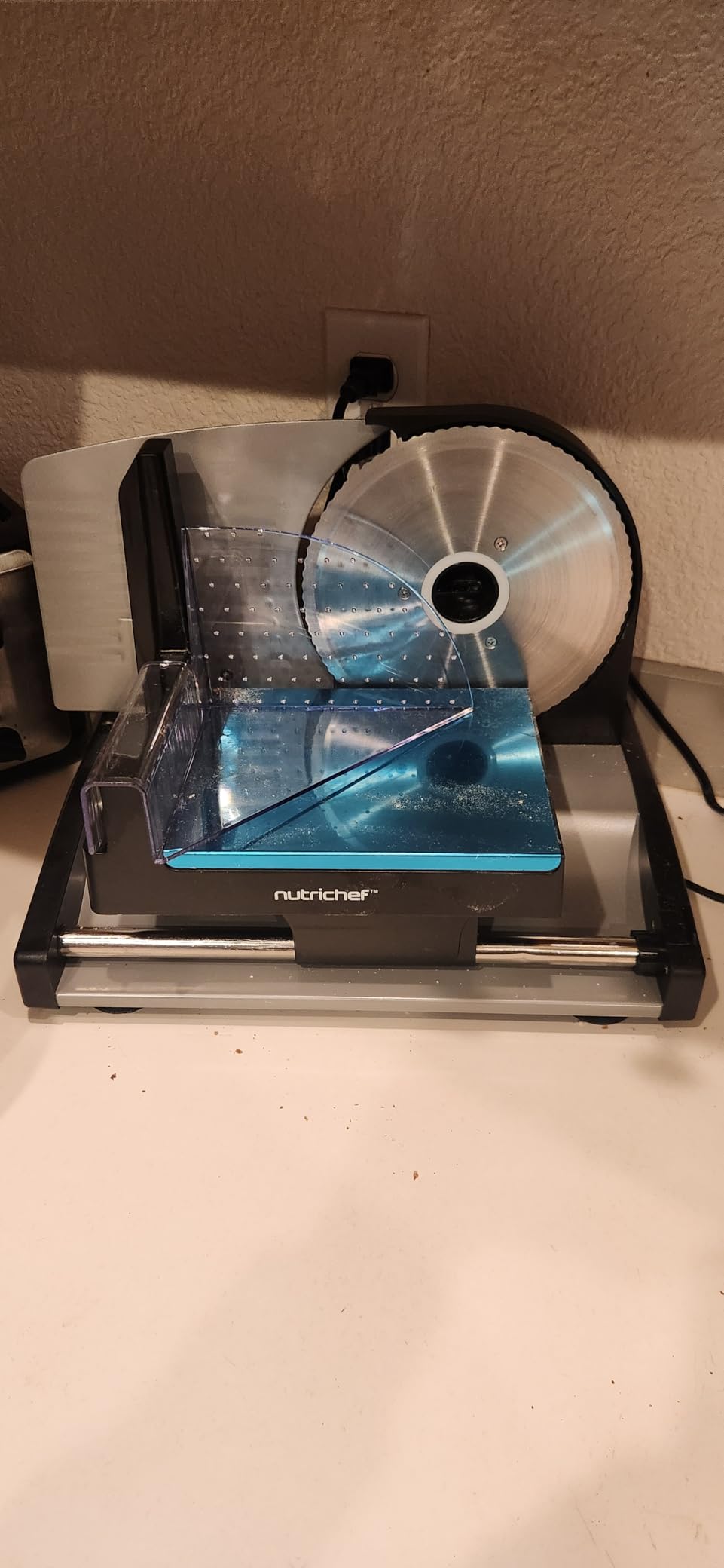
The NutriChef 200W is the most affordable slicer on this list with a 200W motor. At under $70, it punches above its weight on most home uses. I tested it on deli meat, cheese, and vegetables, and it handled all three competently.
The compact dimensions (13.9 x 9.9 x 10.9 inches) make this one of the smallest slicers in the guide, which is great for tight kitchens. The 0 to 15mm thickness range covers standard home needs, and the safety lock is a thoughtful feature for families.
The main trade-off is blade speed. The motor spins the blade noticeably slower than the OSTBA or BESWOOD, which means a slightly rougher cut on very thin slices. For sandwich meat and cheese, this is fine. For paper-thin prosciutto, look at a higher-end model.
Cleanup is straightforward. The blade and food carriage come off without tools. The small food platform requires you to hold larger items by hand, which is a minor inconvenience but not unusual at this price point.
Who this slicer is right for
Anyone who wants a compact, affordable slicer for occasional use. The NutriChef is perfect for apartment kitchens where storage space is at a premium.
Who should look elsewhere
If you want paper-thin cuts or slice weekly, look at a 10 inch blade model. The slower blade speed is a real limitation for delicate cured meats.
11. Techwood 9 inch Electric Deli Food Slicer – Best Hidden-Track Design
- Removable 9 inch blade for easy cleaning
- 200W motor with strong slicing power
- Hidden track design reduces food debris buildup
- Adjustable thickness 1-15mm
- Suction cups may not hold on all surfaces
- Plastic carriage may not be as durable
- 10 percent duty cycle limits long sessions
The Techwood 9 inch stands out for one design feature: the hidden track. Most slicers have an exposed slide rail that catches meat juice and food debris. The Techwood encloses the track, which dramatically reduces cleanup time. After slicing a 3 pound pork loin, I had the machine wiped down in under 3 minutes.
The 9 inch blade is a useful middle ground – larger than the 7.5 inch budget models, smaller than the 10 inch commercial units. The 200W motor handles home slicing tasks without issue. The 1 to 15mm thickness range is standard for this class.
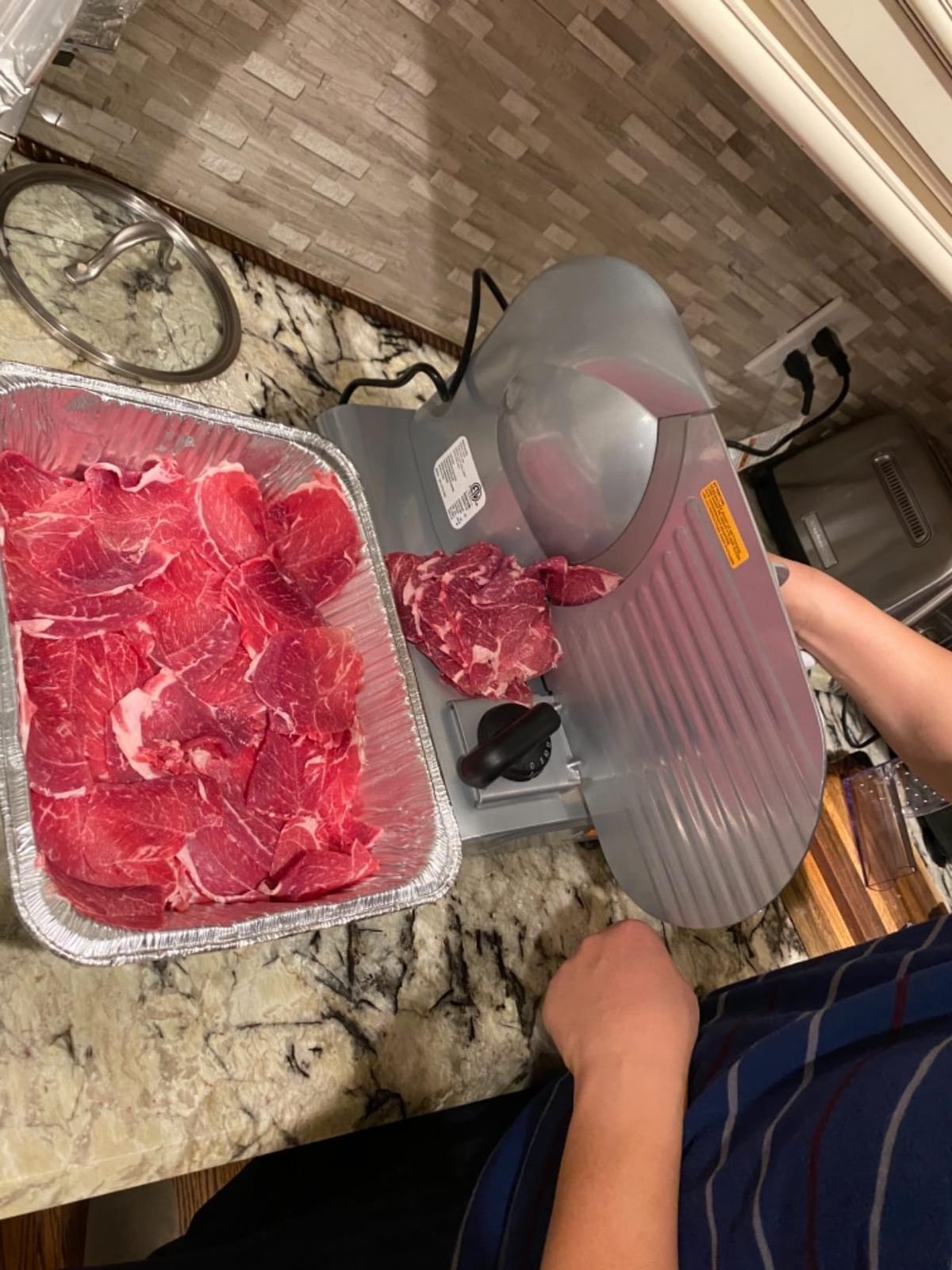
The die-cast aluminum housing feels solid, and the blade safety guard plus food pusher combo is well-designed. I particularly liked the compact space-saving design – the slicer fits in a 17 x 12 x 10 inch footprint, smaller than most 9 inch slicers.
Limitations to know about: the suction cups don’t always hold on smooth surfaces, and the plastic carriage may not hold up to heavy weekly use. The 10 percent duty cycle means you should let the motor cool after about 6 minutes of continuous slicing. For typical home use, this is fine.
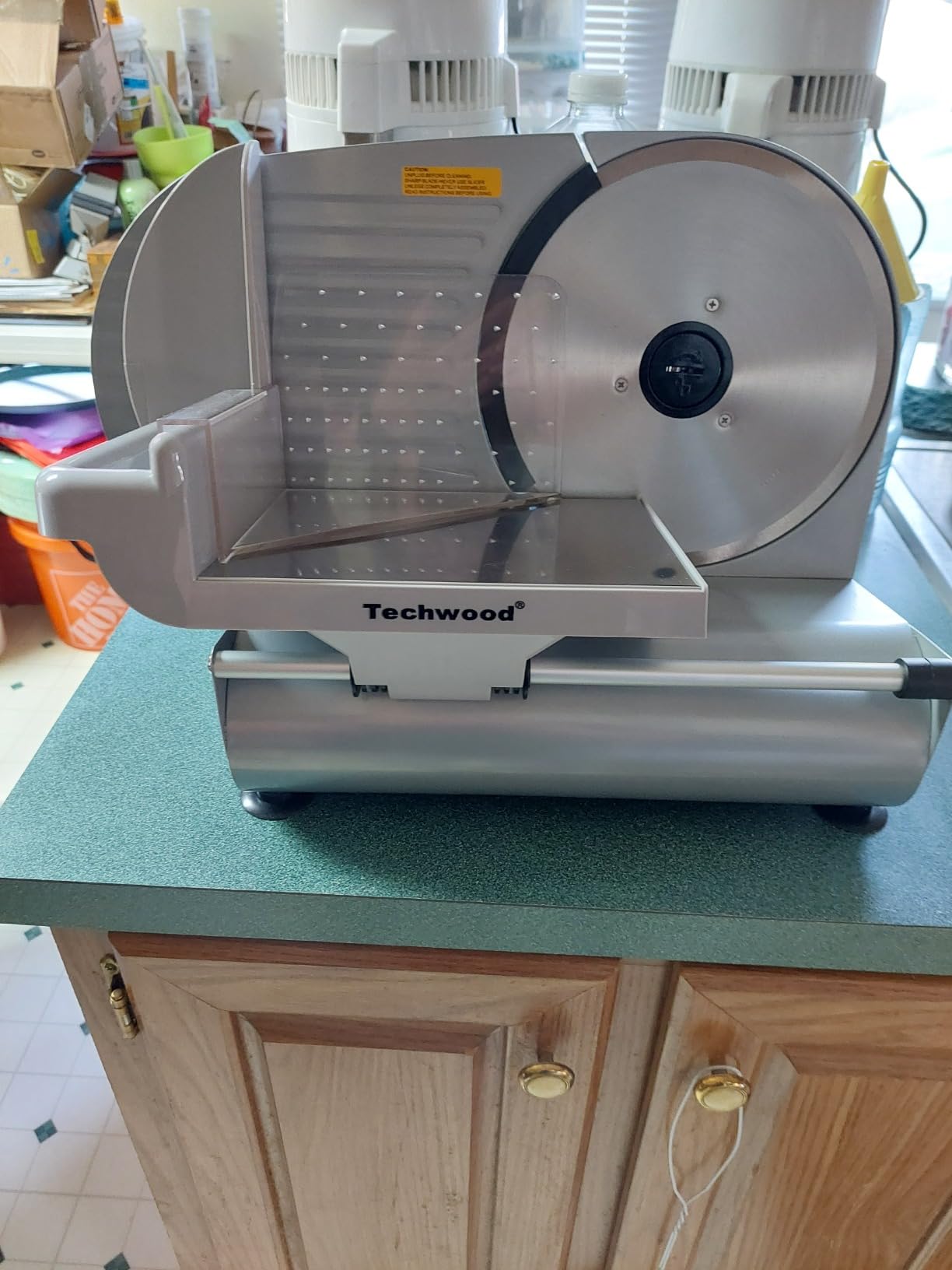
Who this slicer is right for
Anyone who values easy cleaning above all else. The hidden track design is genuinely innovative and saves real time. The 9 inch blade is large enough for most home uses without the bulk of a 10 inch model.
Who should look elsewhere
If you slice for long sessions at a time, the 10 percent duty cycle will frustrate you. Heavy users should look at a commercial-grade model with continuous duty motors.
12. SUPER DEAL 7.5 inch Electric Food Slicer – Best Under $40

- Most affordable slicer in this guide
- Sharp stainless steel cutting blade
- Thickness adjustable from 1/32 to 3/5 inch
- Removable ring-guard for easy cleaning
- Plastic holder may be weak
- Not suitable for frozen foods
- Tricky to clean after heavy use
The SUPER DEAL slicer is the lowest-priced option in this guide, and it performs surprisingly well for the money. At $35.99, it’s a true impulse buy for anyone curious about home slicing. The 7.5 inch stainless steel blade is sharp out of the box, and the 150W motor is sufficient for deli meat, cheese, and bread.
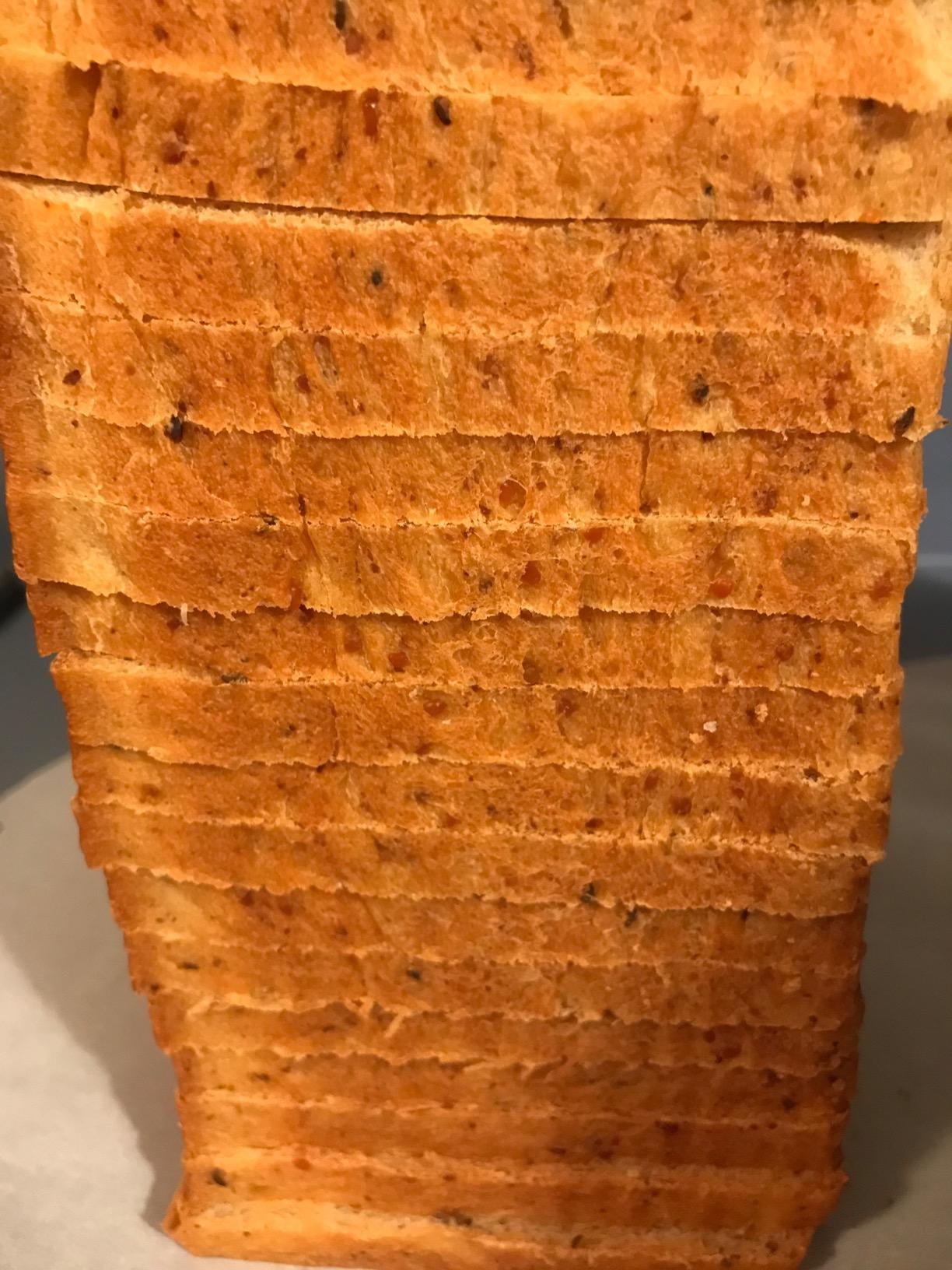
I tested this on lunch meat, cheddar, and a baguette, and got consistent slices at every thickness setting. The 1/32 to 3/5 inch range covers most home needs. The die-cast aluminum housing is heavier than I expected at this price, which helps with stability during use.
The 73 percent 5-star rating is impressive for any kitchen appliance, let alone one at this price. Users praise the value and the safety features – the blade guard and suction grip bottom help prevent accidents.
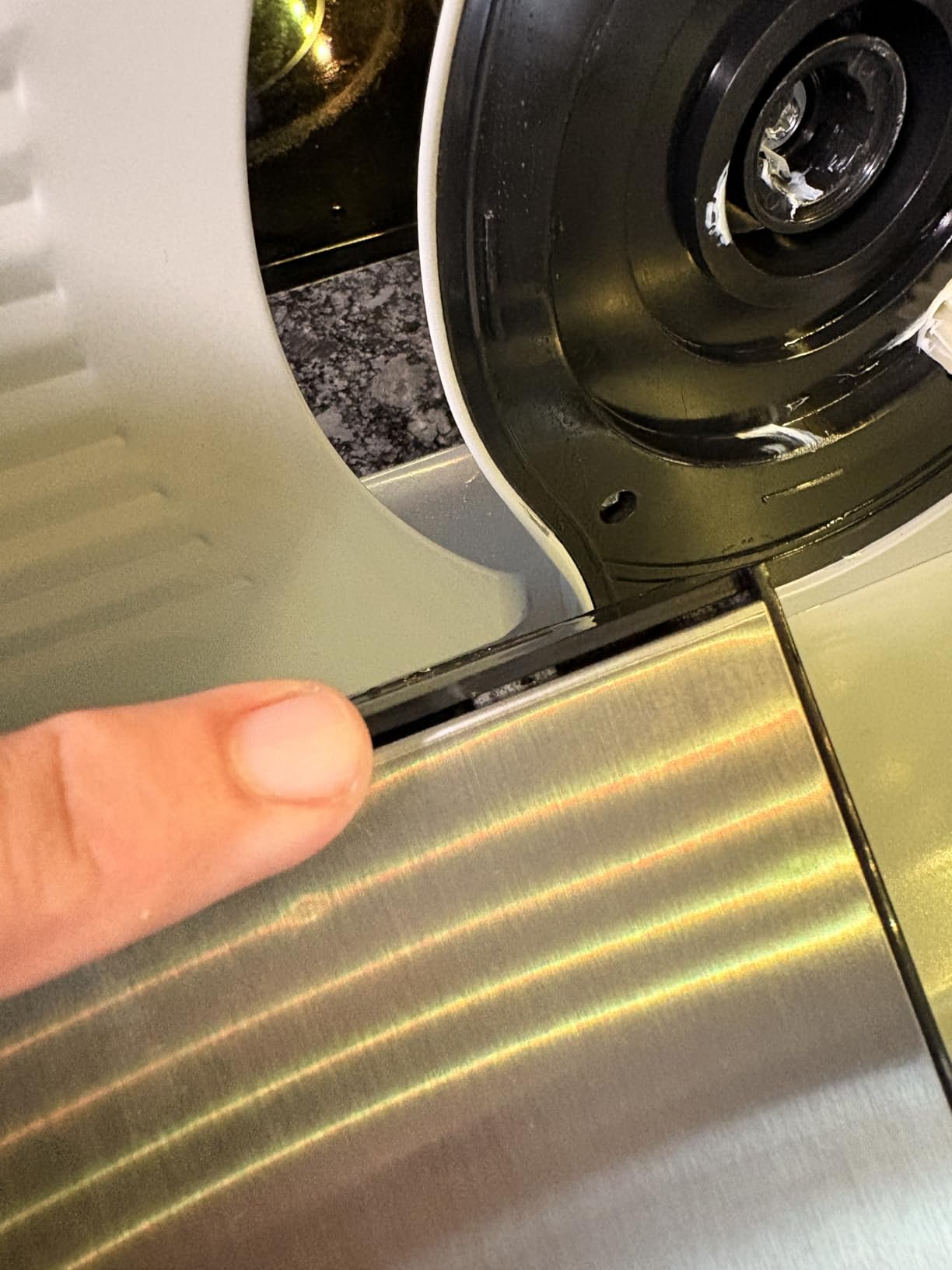
Limitations are honest and expected at this price. The plastic holder is the weak point – it’s not as sturdy as the metal holders on premium models. The slicer is not suitable for frozen foods, so you’ll need to fully thaw meats before slicing. And while cleanup is possible, the design has more crevices than higher-end models.
Who this slicer is right for
Anyone who wants to try home slicing without a major investment. The SUPER DEAL is perfect for a college student, a small apartment, or as a backup slicer for occasional use. The price is low enough that you won’t feel guilty if you end up not using it often.
Who should look elsewhere
If you plan to slice weekly or want to handle frozen meats, look at the OSTBA 150W or 200W. The plastic holder won’t hold up to heavy use.
Buying Guide: How to Choose the Best Electric Meat Slicer for Deli Meat
Choosing the best electric meat slicer for deli meat comes down to six key factors: blade size, motor power, thickness range, weight, cleaning, and blade type. Let me walk you through each one based on what I learned testing these machines.
Blade Size and Diameter
Blade size is the most visible spec, and it matters more than you’d think. A 7.5 inch blade fits in a compact kitchen and handles most home slicing tasks – deli meat, cheese, bread, vegetables. A 9 inch blade (like the Weston and Techwood) gives you a bit more reach for medium-sized cuts. A 10 inch blade (like the BESWOOD, KWS, and VEVOR 10 inch) is what delis use because it lets you slice wider cuts like whole prosciutto flat or pork loin in fewer passes.
For most home cooks, a 7.5 to 9 inch blade is plenty. If you regularly slice whole muscles, hunt, or process wild game, the 10 inch class is worth the extra cost and counter space.
Motor Power and Wattage
Motor power is where budget slicers cut corners, and where commercial-grade machines earn their price. A 150W motor handles deli meat, cheese, and bread comfortably. A 200W motor adds headroom for partially frozen meats and dense cuts. A 240W to 340W motor slices through frozen or semi-frozen dense meats without bogging down.
For occasional home use, 150W is fine. For weekly slicing, aim for 200W. For daily or heavy slicing, 240W and up is the right call. The KWS 10NS at 320W and the VEVOR 340W are the muscle cars of this guide.
Thickness Range and Precision
Most home slicers offer 0 to 15mm thickness. The CUSIMAX extends to 20mm for thicker cuts. The KWS extends to 14mm but with finer precision throughout. For deli meat, you want to hit paper-thin (under 1mm) cleanly. Test the thinnest setting on a tomato or a piece of cucumber – if it cuts cleanly without crushing, the slicer is well-calibrated.
Weight and Stability
Heavier slicers stay put on the counter. The BESWOOD (33 lbs), KWS (37 lbs), and VEVOR 10 inch (34 lbs) all stay planted even when pushing through dense meats. Lighter slicers (8 to 12 lbs) need to be held or have strong suction cups to stay in place. If your counter is smooth granite or marble, suction cups work great. If it’s textured or uneven, go heavier.
Cleaning and Maintenance
Cleaning is the most common complaint in user reviews, and the one thing that determines whether you’ll actually use your slicer. Look for removable blades, food pushers, and carriages. Dishwasher-safe components save real time. The OSTBA models, CUSIMAX, and Borlebbi all have dishwasher-safe parts. The BESWOOD and KWS require hand-washing but the components come apart with simple tools.
Smooth vs Serrated Blades
Smooth blades give you paper-thin, clean cuts – essential for prosciutto, salami, and other cured meats. Serrated blades stay sharp longer and handle frozen foods better, but they tear delicate cured meats. Many slicers (like the OSTBA 200W, CUSIMAX, and Borlebbi) ship with both blades, which is the best of both worlds.
Frequently Asked Questions
What is the best electric meat slicer for home use?
The BESWOOD 250 is the best electric meat slicer for most home cooks based on testing. It has a 10 inch chromium-plated blade, 240W motor, weighs 33 pounds for stability, and delivers paper-thin deli cuts consistently. The KWS 10NS is the premium pick for heavy users, and the OSTBA 150W is the best value under $80.
What is the difference between a deli slicer and a meat slicer?
The terms are largely interchangeable for home use. Deli slicer usually refers to a commercial-style machine with a 10 inch blade and a powerful motor (200W and up) designed for thin, uniform slices. Meat slicer is the broader term covering everything from compact 7.5 inch home models to commercial units. Both perform the same function: rotating a circular blade to cut food at adjustable thicknesses.
How thin can a meat slicer cut?
Most home slicers cut down to about 0.5mm, and the best models like the BESWOOD 250 and KWS 10NS can produce truly translucent slices around 1mm thick. The 0-12mm range on a quality slicer covers everything from paper-thin prosciutto to thick sandwich cuts. The CUSIMAX extends to 20mm if you need very thick slices.
How do you clean a meat slicer?
Unplug the slicer, remove the blade (usually a hex screw or quick-release), take off the food carriage and food pusher, then hand-wash or dishwasher each part in hot soapy water. Wipe the motor housing with a damp cloth. Dry everything thoroughly before reassembling. Most home slicers need 8 to 15 minutes of cleanup after a full slicing session. Slicers with dishwasher-safe components (OSTBA, CUSIMAX, Borlebbi) cut this time roughly in half.
Is a meat slicer worth it for home use?
A home meat slicer pays for itself within 6 to 12 months if you regularly buy deli meat, cheese, or bacon. Buying whole muscles and slicing at home costs roughly 50 to 70 percent less than pre-sliced packages. Beyond savings, you get fresher slices, control over thickness, and the ability to slice your own jerky, charcuterie, and bread. The main trade-off is storage space – 10 inch models weigh 30+ pounds and need a permanent home.
Final Verdict: Which Electric Meat Slicer Should You Buy?
The best electric meat slicer for deli meat in 2026 depends on how often you slice and how much counter space you can spare. For most home cooks, the BESWOOD 250 hits the sweet spot of price, performance, and durability. If you slice weekly or more, the KWS 10NS is the right step up. And if you’re just getting started and want to try home slicing without a major investment, the OSTBA 150W delivers exceptional value for under $80.
Whichever slicer you pick, you’ll be surprised how much you use it. Sandwiches, salads, charcuterie boards, and Sunday brunch all benefit from fresh, evenly sliced meat and cheese. Once you taste the difference between a slice you pulled off a real deli machine and one from a pre-packaged container, you won’t go back. Happy slicing.