
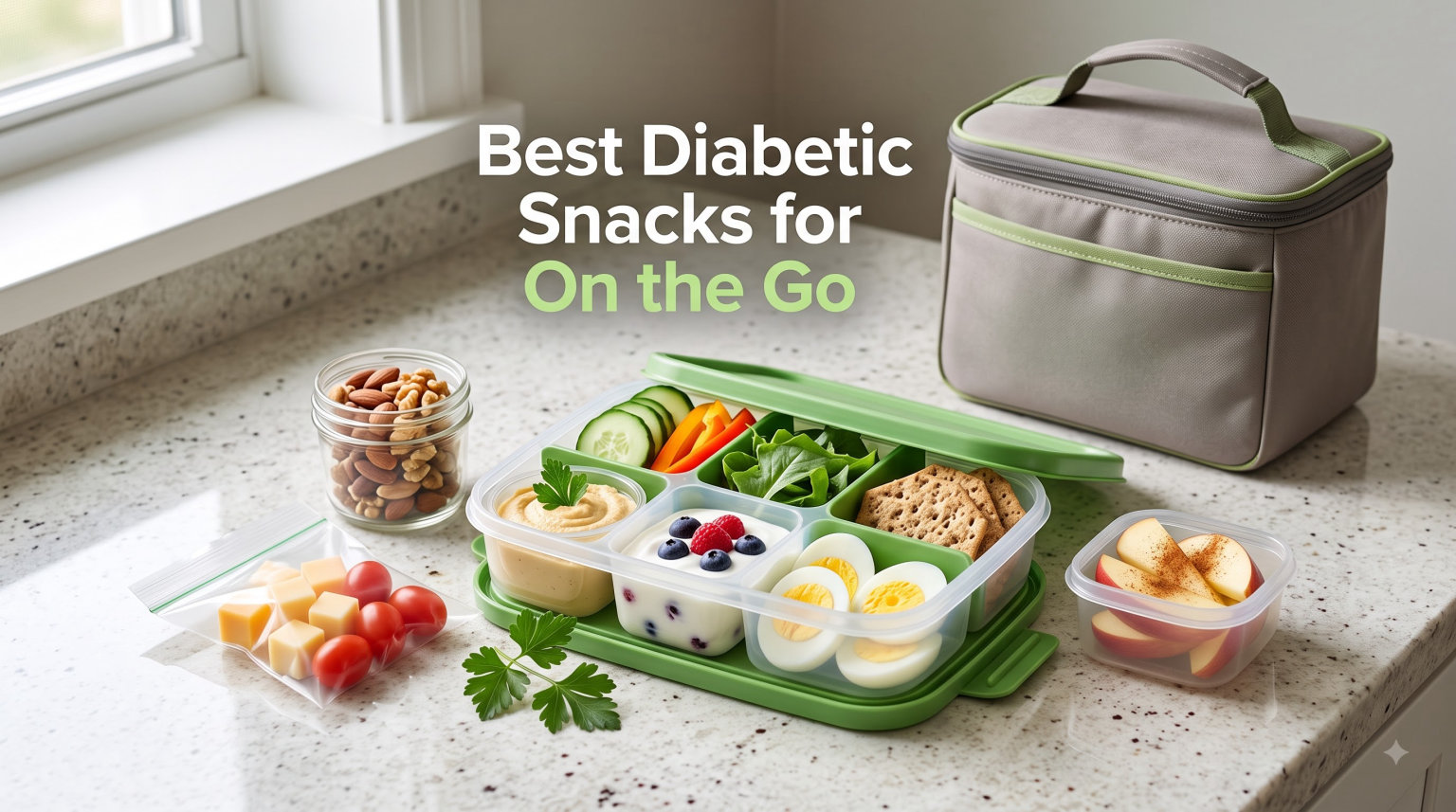
This guide gives you practical choices with measured portions, complete methods, and flexible serving ideas. The portable diabetes-friendly snacks are general food guidance, not an individual medical plan; match carbohydrate portions and ingredients to advice from your clinician or registered dietitian.
The guide also notes realistic swaps and likely failure points. For related planning, see complete diabetic fish recipes, diabetic-friendly side dishes, diabetic-friendly comfort food recipes. Factual safety and health context follows American Diabetes Association healthy-eating guidance.
Table of Contents
Best Diabetic Snacks for on the Go
Use this page when you want the exact quantities and checkpoints visible before cooking. These portable diabetes-friendly snacks keep substitutions specific instead of leaving you to guess how a swap changes time or texture.
The most useful cooking guides explain both the main method and the recovery plan when texture, moisture, or timing goes wrong. These portable diabetes-friendly snacks focus on those practical decisions rather than name-only inspiration.
Before starting, read the full method once, prepare every ingredient in the form listed, and choose a pan that leaves enough room for even heating. Keep raw protein and ready-to-eat ingredients on separate boards, wash hands and tools between tasks, and use an instant-read thermometer when a safe temperature is given. If the center needs more time but the top is already browned, cover the dish loosely with foil and continue in short intervals. If the mixture looks dry before cooking, add only a tablespoon or two of the stated liquid at a time; excess liquid is much harder to correct. Let hot baked dishes rest before serving because the temperature continues to equalize and sauces thicken as steam settles. Label leftovers with the date so storage guidance is easy to follow.
Why Protein, Healthy Fats, and Fiber Matter for Blood Sugar
When you eat carbohydrates alone, they hit your bloodstream fast and cause a glucose spike. When you pair those same carbs with protein, fat, or fiber, the digestion slows down. That slower digestion means sugar enters your blood in a gentler wave instead of a sharp peak.
This is why a plain apple can spike some people but an apple with peanut butter usually does not. The fat and protein in the nut butter act like a speed bump for the sugar. Fiber works the same way, which is why whole fruit is gentler on glucose than fruit juice.
A good rule of thumb for building your own diabetic snack is to combine at least two of these three elements: protein, healthy fat, or fiber. That simple pairing is the foundation behind every snack on this list.
this guide: Quick Reference by Carb Count
Not every snack fits every situation. Sometimes you want something almost carb-free, and other times you need a little fuel before a workout. Here is a quick breakdown so you can grab and go.
Top 12 Grab-and-Go Diabetic Snacks
1. Mixed Nuts and Seeds
Pre-portion them into small containers or reusable snack bags so you are not eating straight from a Costco-sized tub. That is the easiest way to keep portions in check without thinking about it.
Pumpkin seeds and sunflower seeds are great rotating options too. They travel well, do not need refrigeration, and add variety when you get tired of the same nut mix every day.
2. Hard-Boiled Eggs
One large hard-boiled egg has about 6g of protein and less than 1g of carbs. They are cheap, filling, and easy to batch-cook on a Sunday afternoon for the entire week.
For on-the-go use, peel them ahead of time and store them in a small airtight container with a folded paper towel. They will stay good in a lunch bag with an ice pack for about 4 hours, or in the fridge for up to a week.
Sprinkle everything bagel seasoning or a pinch of salt and pepper before you leave the house. It turns a plain egg into something you actually look forward to eating.
3. String Cheese or Cheese Sticks
One low-moisture part-skim string cheese stick typically has about 7g of protein and under 1g of carbs. They are individually wrapped, which makes them perfect for tossing in a bag without thinking.
Pair a string cheese with a small apple, a handful of grapes, or a few whole grain crackers and you have a complete mini-meal.
4. Single-Serve Nut Butter Packets
Squeeze one onto celery sticks, a small apple, or a low-carb wrap. You can even eat it straight from the packet if you are truly in a pinch.
5. Beef or Turkey Jerky (Low-Sugar)
Watch sodium too. If you are managing blood pressure alongside diabetes, look for reduced-sodium varieties or stick to a 1-ounce portion.
6. Veggie Sticks with Hummus
Pre-cut your veggies on Sunday and portion them into small containers with a dollop of hummus at the bottom. This is one of the few snacks that actually feels fresh when you eat it hours later, which makes it a favorite for hot summer days when heavier snacks feel unappealing.
7. Plain Greek Yogurt with Berries
Avoid the pre-sweetened fruit-on-the-bottom cups, which can pack 20g or more of added sugar. If you need sweetness, stir in a few drops of liquid stevia or a sprinkle of cinnamon. This is a snack that needs refrigeration or an ice pack, so save it for short trips or a packed lunch.
8. Half an Avocado
Sprinkle the cut side with lemon juice to prevent browning, wrap it tightly, and pack a small container of everything bagel seasoning. It will hold at room temperature for a few hours without issue.
9. Cottage Cheese with Fruit
Half a cup of low-fat cottage cheese has around 6g of protein and 5g of carbs. Pair it with a few pear slices, a handful of berries, or some diced tomato and black pepper for a savory twist.
Cottage cheese has made a comeback recently, and for good reason. It is one of the most affordable high-protein snacks you can buy, and single-serve cups with their own foil lids make it as portable as yogurt.
10. Olives
A small container of 10 to 15 olives has fewer than 2g of carbs and is packed with healthy fats. They are salty, satisfying, and completely shelf-stable, which makes them perfect for long travel days.
Look for mini snack cups with drained olives so you do not end up with brine leaking in your bag. Kalamata, green, and black olives all work well, so rotate based on what you like.
11. Seaweed Snacks
Seaweed snacks have become a forum favorite in the diabetes community, and for good reason. A full pack of roasted seaweed sheets typically has under 2g of carbs, a tiny amount of protein, and a satisfying salty crunch that scratches the chip itch without the blood sugar spike.
They are lightweight, individually packaged, and can live in your car or desk drawer for months without going bad. Pair them with a string cheese or a handful of almonds for a more filling mini meal.
12. Low-Sugar Protein Bars
Look for bars with under 10g of total sugar, at least 10g of protein, and recognizable ingredients. KIND Minis, RXBARs (the smaller formats), Quest bars, and Munk bars all come up repeatedly in diabetes forums as trusted options. Always test your own response with a glucose check, because individual reactions to sweeteners vary widely.
Treat protein bars as an emergency backup, not a daily snack. Real food almost always wins on satiety and nutrition.
Travel-Friendly Diabetic Snacks for Every Situation
Travel is where most on-the-go snack planning falls apart. Airport food courts and gas station shelves are designed around sugar and refined carbs.
Can Diabetics Bring Snacks Through TSA?
Yes, you can bring snacks through TSA security checkpoints. The TSA explicitly allows solid food items in carry-on bags. The only catch is that anything liquid, creamy, or spreadable over 3.4 ounces has to follow the liquids rule, which means a small hummus cup or nut butter packet under 3.4 ounces is fine in your carry-on, but a full-size yogurt is not.
For longer trips, pack extra. Flight delays happen, airport restaurants close, and the only diabetic-friendly option inside terminal B may be a $14 side salad. Hard-boiled eggs, string cheese, jerky, nuts, and protein bars all fly without issue.
Diabetic Snacks for Road Trips
Road trips are easier than flights because you control the cooler. Load a small soft-sided cooler with ice packs and stock it with hard-boiled eggs, cheese sticks, cottage cheese cups, Greek yogurt, and cut veggies with hummus.
For the center console or glove box, keep a separate stash of shelf-stable options: mixed nuts, jerky, single-serve nut butter packets, seaweed snacks, and low-sugar protein bars. That way you always have something safe within reach even when you stop for gas and only see candy aisles.
Non-Refrigerated Diabetic Snacks
Here is a reliable list of shelf-stable diabetic snacks:
Mixed nuts and seeds, beef or turkey jerky, string cheese (holds for about 4 to 6 hours at room temp), single-serve nut butter packets, seaweed snacks, olives in drained snack cups, low-sugar protein bars, roasted chickpeas, dry-roasted edamame, portioned popcorn, and sugar-free gelatin cups.
Temperature-Sensitive Snack Tips
Chocolate-coated protein bars melt. So do cheese sticks left in a hot car. If you are traveling in summer or will be outside for hours, stick to nuts, jerky, seaweed, and other truly shelf-stable options. Save the dairy and chocolate for cooler days or pack them with a frozen water bottle that doubles as an ice pack.
What Diabetics Should Avoid in On-the-Go Snacks
Knowing what to skip is just as important as knowing what to pack. These are the snacks that trip people up most often.
Sugary protein and granola bars: Many popular bars pack 15 to 20g of added sugar. Always read the label, even on bars marketed as healthy.
Flavored yogurts: Fruit-on-the-bottom yogurts can have as much sugar as a candy bar. Stick with plain and add your own berries.
Fruit juices and dried fruit: Both concentrate sugar without the fiber of whole fruit. Raisins, dried cranberries, and fruit leather are particularly sneaky.
Baked goods and chips: Muffins, cookies, pretzels, and crackers are all refined carbs that digest quickly and spike blood sugar fast.
“Sugar-free” packaged snacks: Sugar-free cookies and candies often use sugar alcohols that can still affect glucose and cause stomach issues. Test your own response carefully.
Smart Diabetic Snack Planning Tips
Batch Prep on Sundays
Spend 30 minutes on Sunday portioning nuts into small containers, hard-boiling a batch of eggs, and cutting veggies for the week. Future you will be grateful on Wednesday at 3 p. m. when the vending machine is the only option.
Always Carry an Emergency Stash
Keep a small bag of non-perishable snacks in your car, desk, or backpack at all times. Replace anything you eat within a day or two. This stash is what saves you when meetings run long, traffic is brutal, or your flight gets delayed.
Read Every Label
Sugar hides in surprising places. A quick scan of total carbohydrates, fiber, added sugars, and protein will tell you everything you need to know in about 10 seconds.
Watch Your Portions
Even healthy snacks can spike blood sugar if you eat too much. A handful of nuts is great. Three handfuls can push you over your carb budget for the day. Pre-portion everything so you never have to guess.
Test and Learn
Everyone responds differently to specific foods. Use your continuous glucose monitor or fingerstick to see how different snacks affect your numbers. What works for your friend might not work for you, and that is normal.
Frequently Asked Questions
How should this guide be used?
Use it as a planning framework, then match portions, ingredients, and timing to your own needs rather than treating every item as interchangeable.
What should I prepare ahead?
Wash and portion produce, cook one flexible protein or grain, and pack sauces separately so texture stays fresh.
How do I read labels for this topic?
Compare serving size, total carbohydrate, added sugar, sodium, and the ingredients that matter to your personal care plan.
When should I ask a clinician or dietitian?
Ask when you use glucose-lowering medication, have kidney or heart concerns, are pregnant, or need an individualized carbohydrate target.
Conclusion
Choose a recipe by matching the method to your available time and ingredients. Because these portable diabetes-friendly snacks include complete quantities, doneness cues, substitutions, storage, and troubleshooting, you can finish the meal confidently from this page.