
Headphones for tinnitus relief are headphones, earbuds, ear muffs or headsets chosen to give your brain a competing sound to focus on, so the ringing fades into the background and you can sleep, work or relax without turning the volume up. One thing to say plainly before any product list: headphones mask tinnitus, they do not treat it, and no pair on this list cures anything. If your ringing started suddenly, pulses in time with your heartbeat, sits in one ear, or came with hearing loss or dizziness, stop shopping and book an appointment with an audiologist or ENT.
That caveat matters more than it sounds. The number one fear people have about using headphones with tinnitus is that they will make it permanently worse, and that fear keeps plenty of people from trying anything at all. In our view the risk is real but manageable, and it comes down to one rule: masking at the lowest level that works, never loud enough to overpower the ringing.
We spent 2026‘s worth of evenings and workdays comparing the ten products below against that rule. What follows is not a list of the fanciest flagships. It is a list of the headphones and ear protection that let you hear your environment at a lower volume, sit lightly on the head, and stay comfortable for the hours you actually need them. We left out dedicated tinnitus sound-therapy devices and over-the-counter hearing aids, because those are medical purchases and a category error in a headphones roundup.
Table of Contents
How We Picked and Scored These Headphones
Every ranking page in this niche looks the same: a table of ten products and a list of features nobody checked. We wanted the opposite, so we scored each product on a weighted rubric before writing a single word about it. The weights matter more than the scores, because they tell you what we actually think matters when tinnitus is the reason for the purchase.
Comfort carries the most weight at 30%, since a headphone you cannot wear for four hours is useless no matter how it sounds. Masking capability is 25%, which rewards a design that delivers clean sound at low volume and punishes one that needs cranking up. Safe-listening features are 20%, covering volume limiters, EQ control and awareness modes. Battery and connectivity are 15%. Value is 10%, which in this category mostly means getting a product you will not resent.
Two things we deliberately did not score. First, we ignored marketing claims about how much noise a pair cancels, because the published figures are measured under laboratory conditions that no office or kitchen reproduces. What matters to a person with tinnitus is whether the ANC keeps you from raising the volume, and that you can only judge in your own environment. Second, we did not score bass extension or treble sparkle, which are the two things headphone marketing celebrates and the two things most likely to grate on a sensitive ear.
Top 3 Picks for Tinnitus Relief


All 10 Headphones Compared Side by Side
| Product | Specifications | Action |
|---|---|---|
| Soundcore Q20i |
|
Check Latest Price |
| Bose QuietComfort |
|
Check Latest Price |
 TOZO OpenEarRing TOZO OpenEarRing |
|
Check Latest Price |
 ProCase Ear Muffs ProCase Ear Muffs |
|
Check Latest Price |
 Dr.meter Ear Muffs Dr.meter Ear Muffs |
|
Check Latest Price |
 Soundcore V20i Soundcore V20i |
|
Check Latest Price |
 KVIDIO Hybrid ANC KVIDIO Hybrid ANC |
|
Check Latest Price |
 TOZO HT3 TOZO HT3 |
|
Check Latest Price |
 SHOKZ OpenFit 2+ SHOKZ OpenFit 2+ |
|
Check Latest Price |
 BERIBES Hybrid ANC BERIBES Hybrid ANC |
|
Check Latest Price |
1. Soundcore Q20i – The Over-Ear That Does the Most Jobs
Soundcore by Anker Q20i Hybrid Active Noise Cancelling Headphones, White
- ANC runs with no music playing
- 40-hour battery with ANC on
- Multipoint connects two devices at once
- App EQ plus built-in white noise
- Comfortable memory foam for long sessions
- Ear pads run hot over long sessions
- Bulky cups and narrow ear cuffs
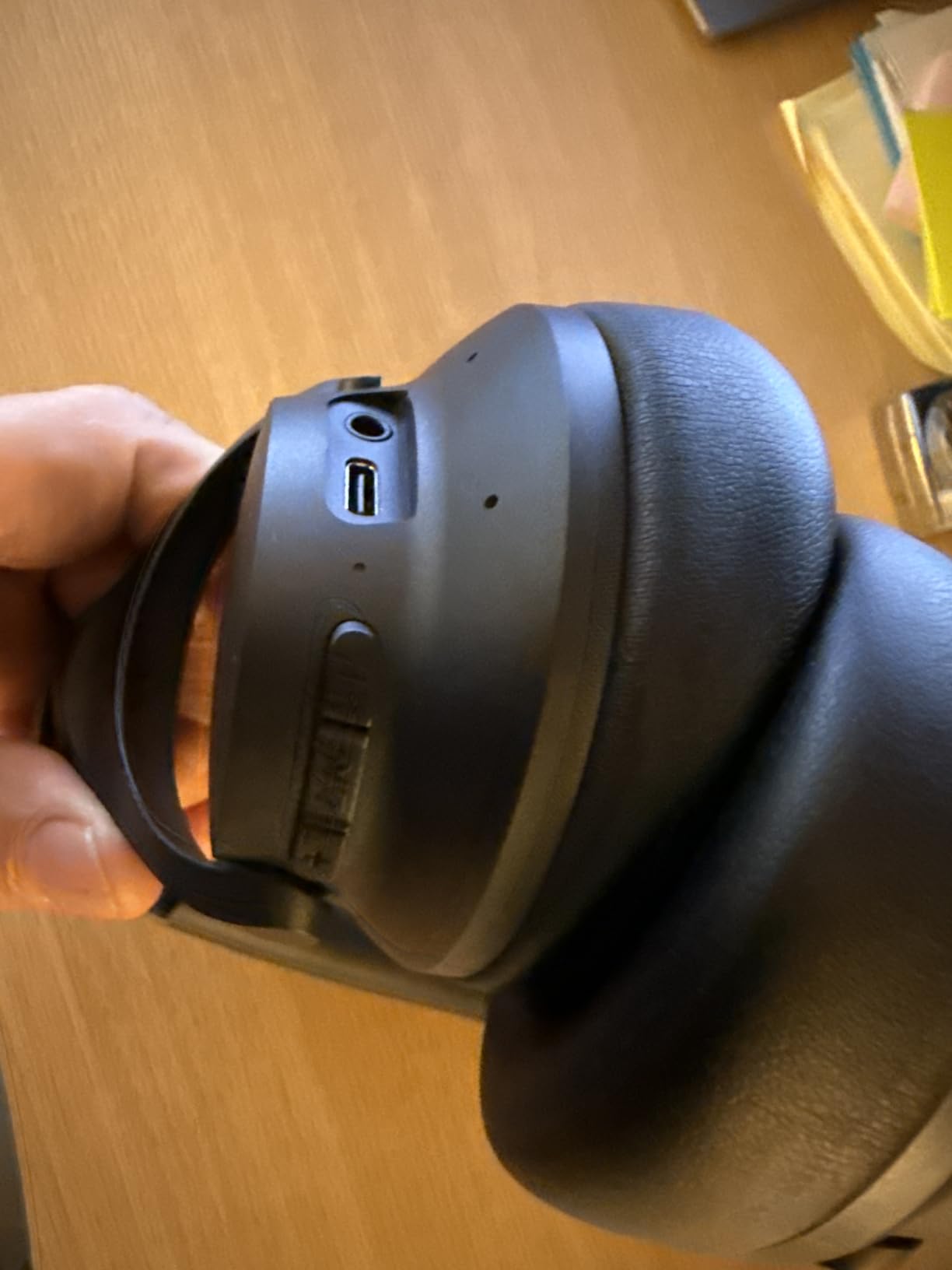
- ANC unavailable in AUX-in mode
The Q20i is the pair we kept reaching for, and the reason is unglamorous: it is the only headphone in this list that does the thing you actually want, which is letting you hear a quiet room at a quiet volume. Its hybrid ANC runs even with no music playing, so the fan, the traffic and the dishwasher drop away on their own and you are not reaching for the volume button at all.
That headroom matters more than it sounds. Most people with tinnitus end up blasting a noise app hard enough to drown the ringing out, which is the exact behaviour that earns headphones a bad reputation. Give the Q20i a job first, then layer low-level masking on top, and you stay inside safe listening territory all evening.
The secondary feature that quietly makes this our top pick is the app. It carries an EQ with presets and a built-in white noise layer, so the masking sound lives on the headphones rather than on a phone that might run out of battery or stop looping at 3am. You set the level once and the headphones remember it.
Battery life is 40 hours with ANC on, and a five-minute top-up adds about four more. Multipoint holds a laptop and a phone at the same time and switches audio between them without a menu dive, which is the difference between actually using your masking headphones and leaving them in a drawer.
What tinnitus situation it fits best
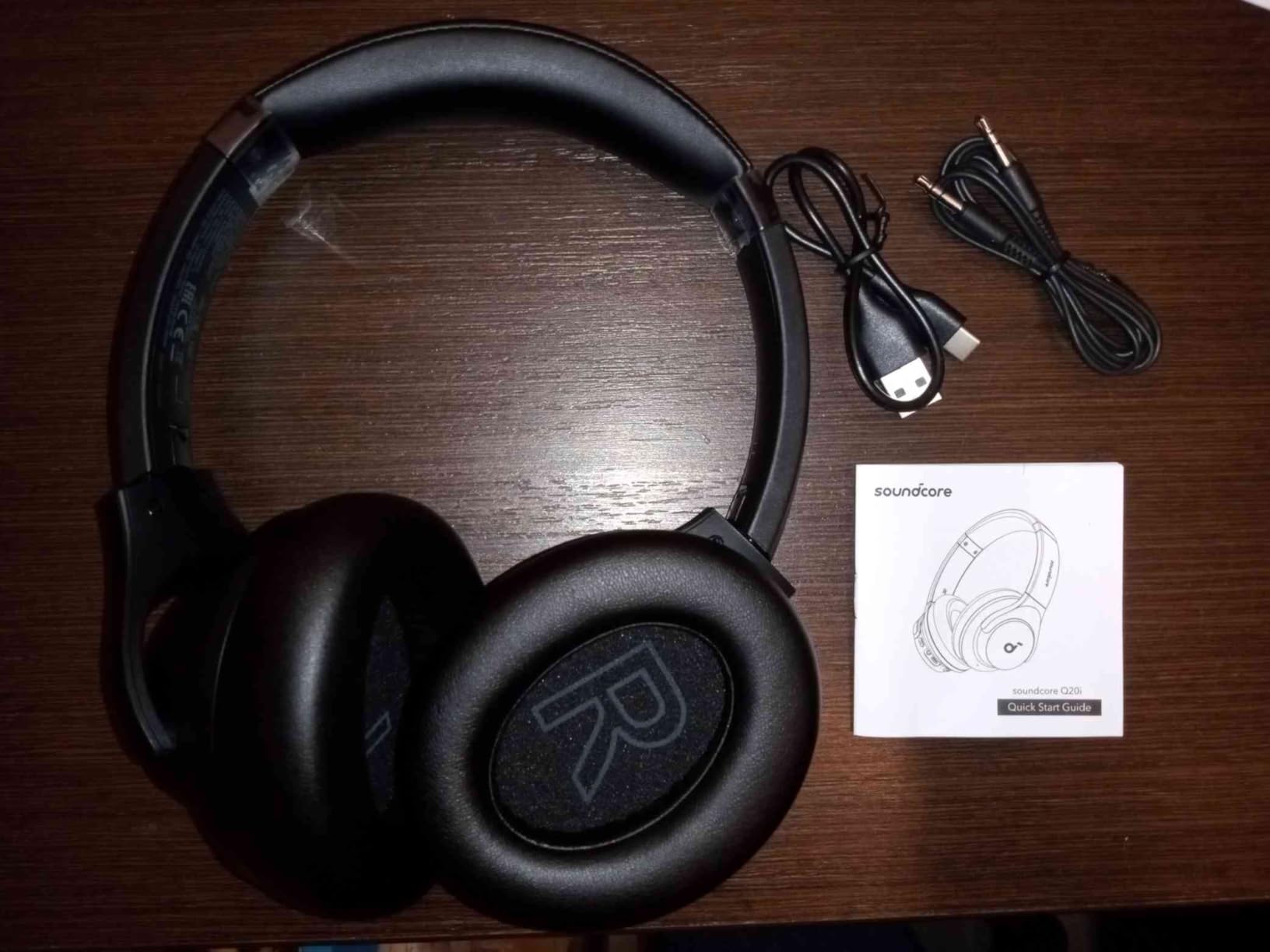
It fits readers whose trigger is environmental noise: shared flats, open-plan offices, street traffic, a partner who watches television at volume. The ANC is the first line of defence and the masking sound is the second. It also works as a wired option with the included 3.5mm cable for anyone who would rather not deal with charging at all.
Where it will let you down
Two honest limits. The ear pads run warm over a long session, which matters if your plan is to wear them from dinner until bed. And ANC is disabled entirely in AUX-in mode, so the wired path gives you sound but not noise control. Narrow ear cushions are also a fair warning for people with larger ears who dislike a sealed feeling.
2. Bose QuietComfort – Best When Noise Itself Is the Trigger
- Best-in-class cancellation of steady hum
- Lightest over-ear here at 240g
- Comfortable for long sessions and side sleeping
- Multipoint switching works reliably
- EQ adjustable in the Bose app
- No true ANC-off mode
- Weaker transparency than premium rivals
- ANC can create a pressure sensation
When we talk about best noise cancelling headphones for tinnitus, the QuietComfort is the reference point, and for one specific reason: it is exceptional against the low, steady sounds that most reliably set people off. Fans, air conditioning, engines, ventilation hum. Those are the noises that make someone turn the TV up until the dialogue hurts.
At 240 grams it is also by far the lightest over-ear in this roundup, which has a direct effect on the masking equation. Fatigue makes people turn the volume up, and a headphone you can forget you are wearing is one you keep at a lower level for longer.
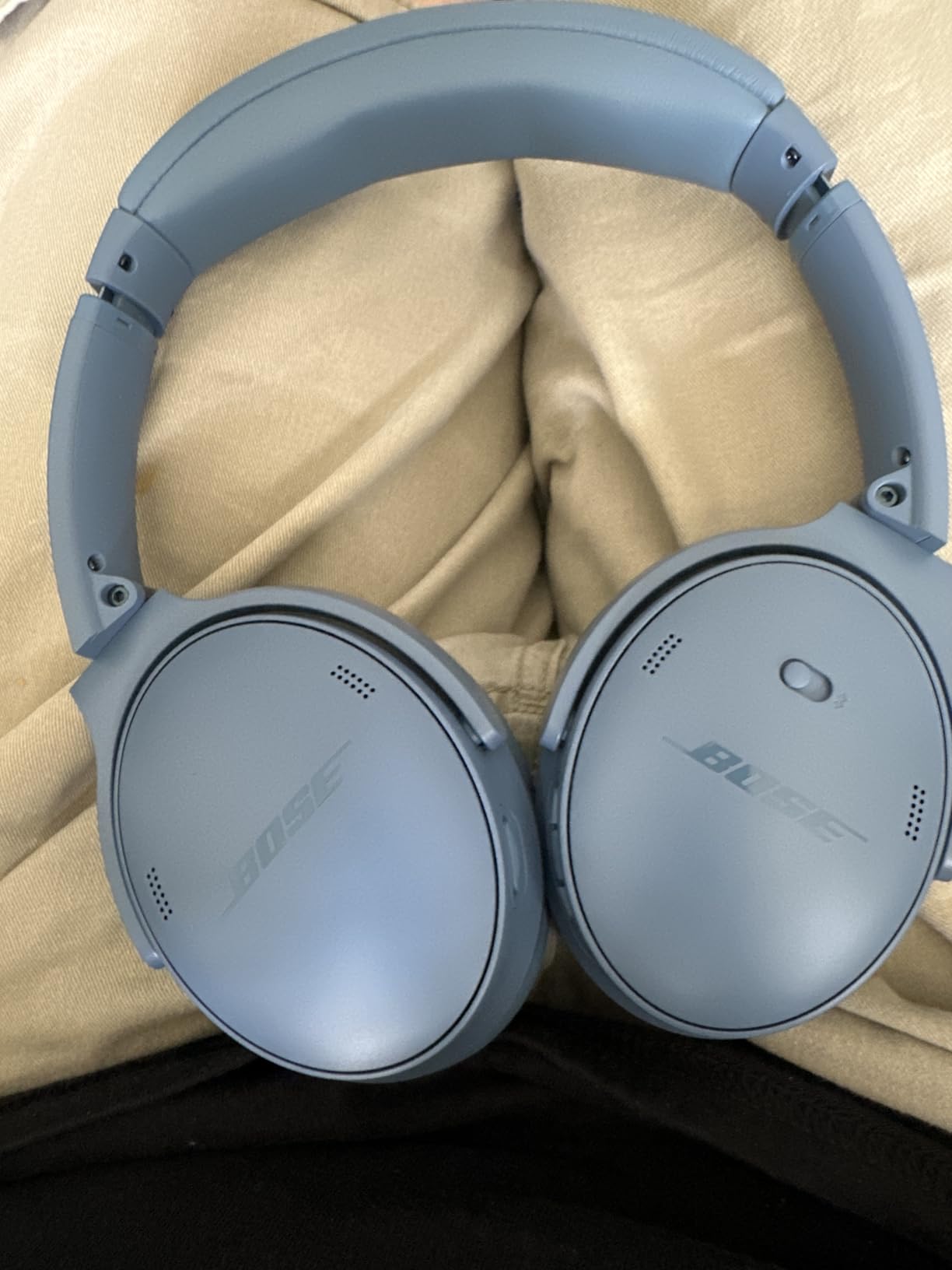
Owners repeatedly compare the cancellation favourably to models costing considerably more, and the 24-hour battery figure holds up in real use rather than in a lab. Multipoint switching between a phone and a laptop is seamless, so the headphones can carry a work call and then settle into a masking playlist in the same afternoon.
There is one Bose-specific annoyance worth flagging before you commit: the EQ lives in the app and does not carry over to a PC or a wired connection. If your plan was to fine-tune the masking tone once and keep it everywhere, that is friction you will feel.
What tinnitus situation it fits best
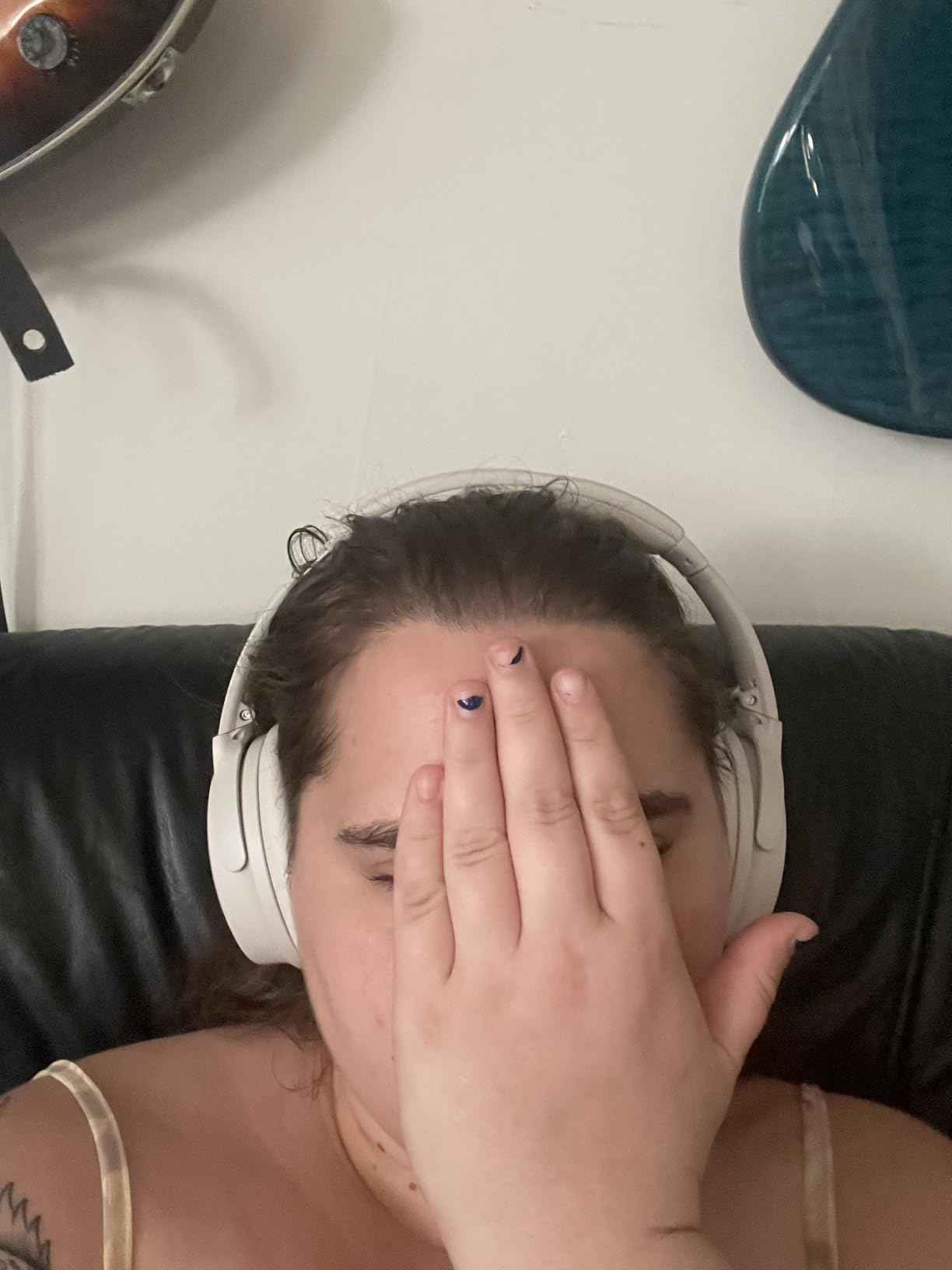
It suits readers whose tinnitus is provoked by sustained background noise rather than by silence, and who want a single pair for a commute, an office and a flight. It is also one of the few over-ears here that owners describe as workable for side sleeping, which is a genuine advantage when the ringing is worst at night.
Where it will let you down
There is no true ANC-off mode, only Quiet and Aware, and a few listeners report a pressure sensation when cancellation is on. Transparency is weaker than the very best rivals, so it is not the right pick for anyone who needs to hear announcements clearly. Irregular sounds such as speech and television are cancelled less completely than steady hum.
3. TOZO OpenEarRing – The One You Will Forget You Are Wearing
- 5.1g per bud so it disappears on the head
- Leaves the ear canal completely unblocked
- Stable through running and gym work
- Works with glasses and small ears
- Good call quality for the size
- No noise reduction at all
- Real per-charge battery nearer 6 hours
- No volume buttons on the buds
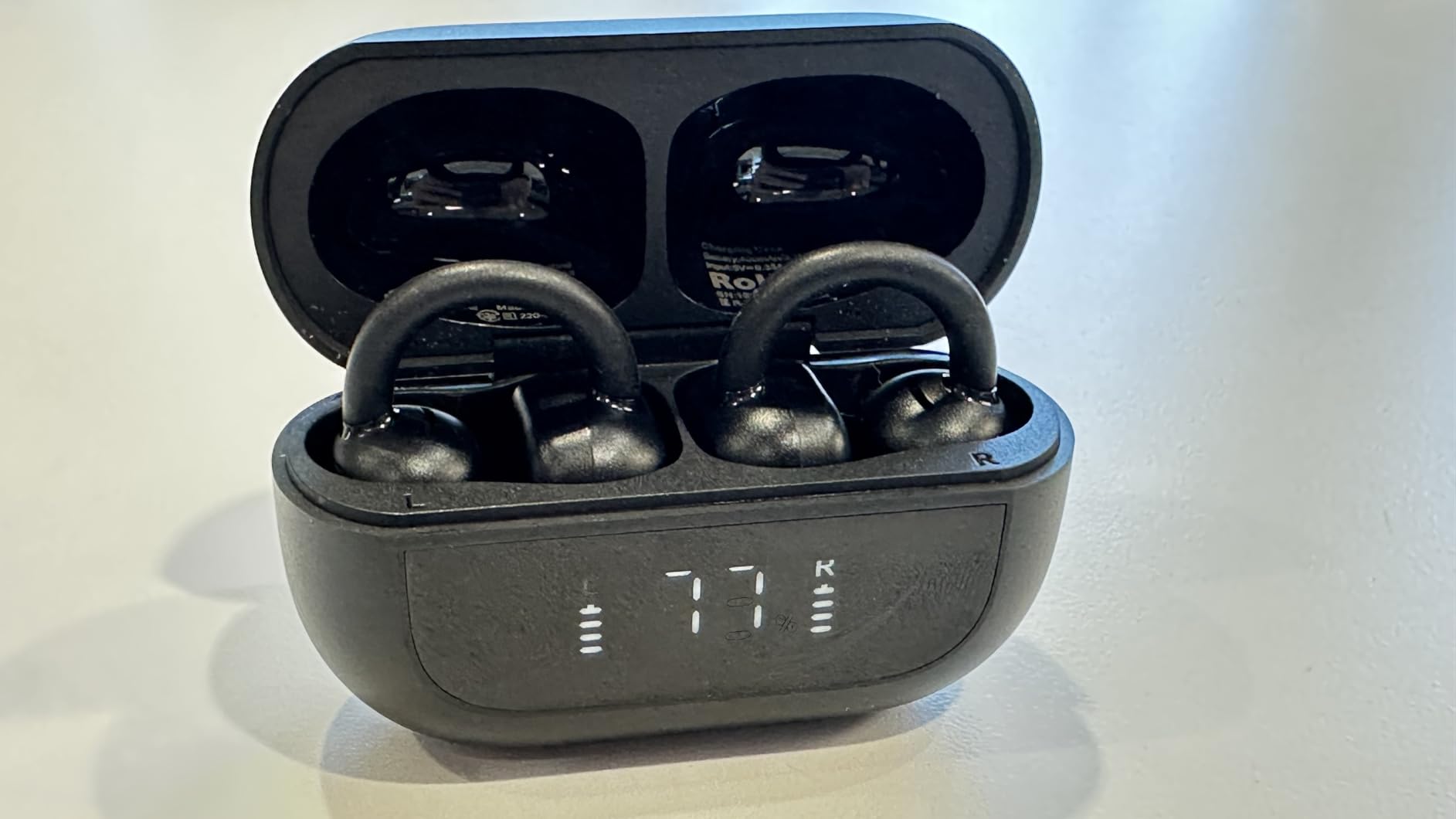
This is the shape most people in tinnitus forums actually recommend, and the reason has nothing to do with sound quality. An open-ear clip does not go in the canal, does not seal it, and does not create the pressure sensation that pushes sensitive listeners to turn a pair off after an hour.
The OpenEarRing weighs 5.1 grams per bud. That is the entire pitch. When a device is that light, you stop being aware of it, and you keep it at a low, comfortable level for a full working day instead of tolerating it for twenty minutes.
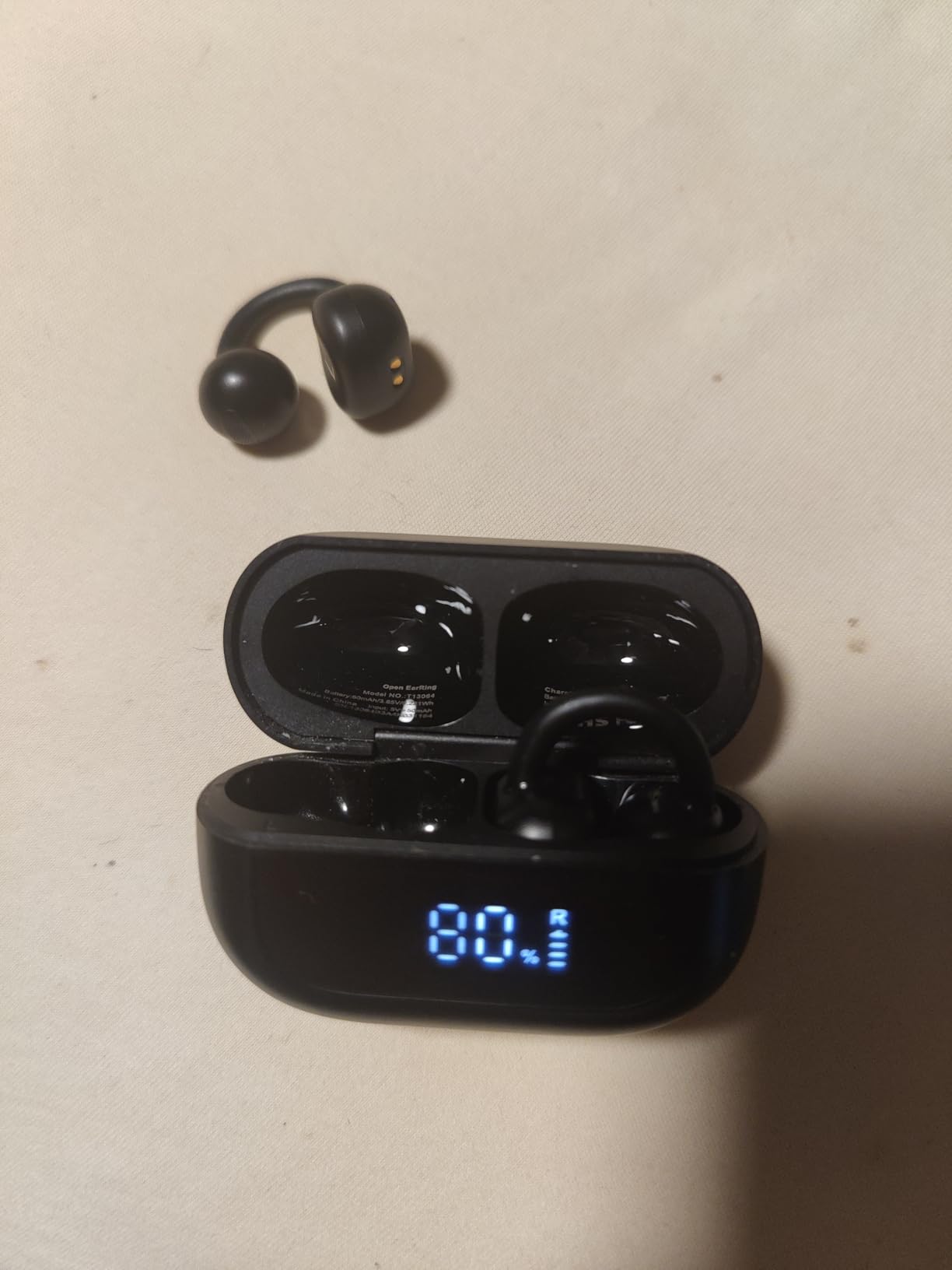
There is a hearing-safety argument too. Because the canal stays open, the ear is not sealed, which is generally considered a gentler option for someone already bothered by ear pressure. The 10mm drivers and 32 EQ modes in the app give you enough control over the masking layer to bring it in under the level of your tinnitus rather than over it.
Battery is where the marketing and the reality diverge. The headline figure is up to 10 hours per charge and 40 hours with the case, but owners more often report something in the region of six hours per charge. Plan on charging overnight rather than assuming an all-day charge.
What tinnitus situation it fits best
It fits readers who cannot tolerate anything in their ear canal, who want to stay aware of traffic and announcements while masking, or who need something stable enough for a run or a gym session. It is also the easiest recommendation here for someone who wants a first attempt at masking with minimal commitment.
Where it will let you down
There is no noise reduction of any kind, so in a genuinely loud environment the masking layer has to compete with real sound and you will push the volume up, which is the opposite of what you want. Volume adjustment is not available directly on the buds, and the touch controls on the back of the ring are easy to trigger by accident.
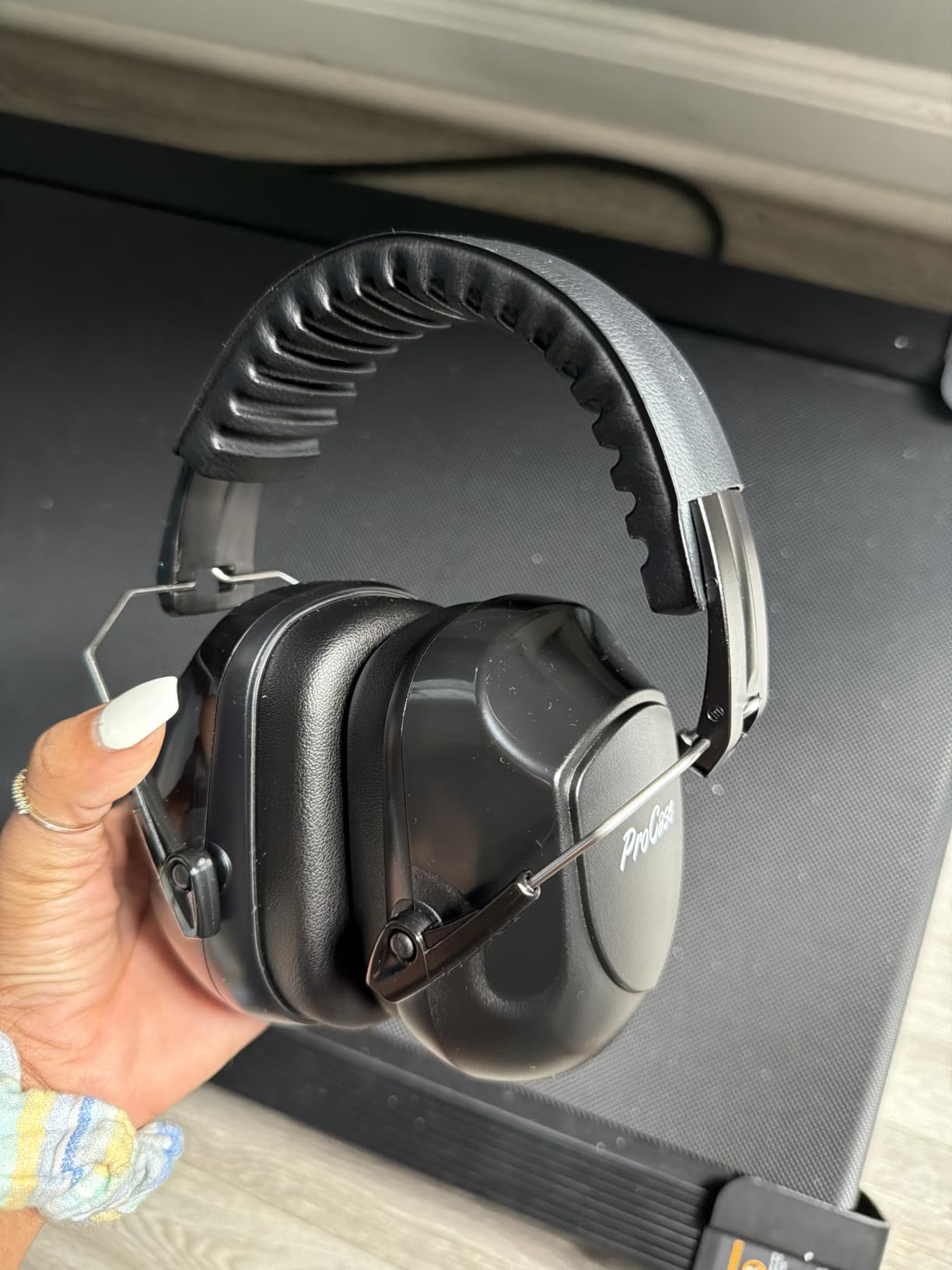
4. ProCase Ear Muffs – Reduce the Trigger Before You Mask It
ProCase Hearing Protection Ear Muffs SNR 33dB, Noise Cancelling Headphones
- Certified SNR 33dB attenuation
- Soft breathable pads with no heavy pressure
- Adjustable metal frame fits most heads
- Folds flat into a bag
- Practical with eyeglasses
- Plays no audio so it cannot mask anything
- Does not block speech or loud music
- Feels tight before the band is stretched
These are not headphones and we want to be clear about that. Ear muffs like these play no audio whatsoever, so they cannot mask tinnitus. We include them because for a large share of readers they are the more important half of the solution: if the noise that triggers your flaring is something you can reduce before it reaches you, you need far less masking sound later.
The ProCase pair carries an SNR 33dB rating certified to EU EN 352-1 by an NVLAP accredited lab, with an equivalent US ANSI S3.19 NRR 28dB figure. In plain terms, that is meaningful attenuation of the continuous, droning type of noise that aggravates tinnitus: lawnmowers, road traffic, sirens, ventilation.
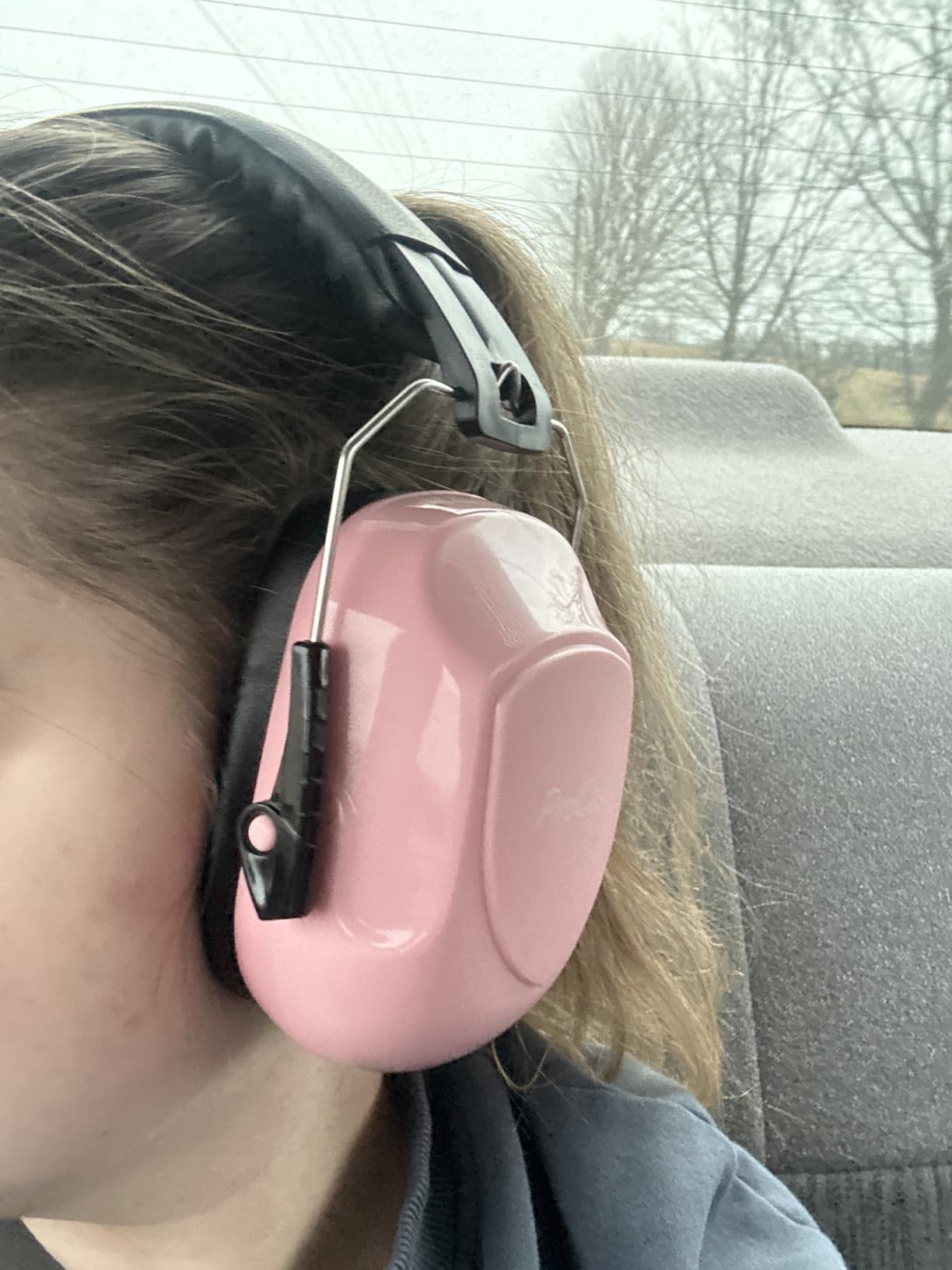
Sensory-sensitive and autistic owners describe the drop in irritation as dramatic, and the same principle applies to anyone whose tinnitus is triggered by a specific environment. The soft breathable cushions avoid the heavy clamping force of many work-style muffs, and the adjustable metal frame takes most adult and teen head sizes.
They also fold flat, which makes them a genuinely practical thing to keep in a work bag or a jacket pocket. If your tinnitus is worst on a train or in a café, having them with you changes the volume you need later that evening.
What tinnitus situation it fits best
They fit readers whose flare-ups track a specific noisy environment and who want a low-tech, zero-charging way to reduce the trigger. They are worth considering alongside whichever headphone on this list you choose for masking, as a two-part approach rather than a substitute.
Where it will let you down
It will not block speech or loud music, only reduce them, and the feel-tight fit out of the box needs a few wears before the headband relaxes. The bulk is not suited to side sleeping. If your problem is internal ringing rather than external noise, this does nothing for it.
5. Dr.meter Ear Muffs – The Pick for Kids and Sensory Sensitivity
Dr.meter Noise Cancelling Headphones for Autism, Noise Reduction Ear Muffs
- Reduces noise while still letting voices through
- Memory foam with PU leather padding for hours
- Adjustable band spans toddlers to adults
- Children keep them on rather than removing them
- Plenty of colours kids accept
- Cushioning gets sweaty over long wear
- Feels tight at first on larger heads
- Runs large for infants
If the person with tinnitus in your house is under twelve, this is the ear muff we would start with. Caregivers describe these as the difference between a child tolerating a loud event and melting down, and the same reduce-don-t-mute behaviour works for adults with misophonia or sensory sensitivity.
The noise reduction rating is SNR 27.4 dB, equivalent to NRR 20 dB, with both ANSI S3.19-1974 and CE EN 352-1 certification. It is lower attenuation than the ProCase pair above, but the design goal is different: this one deliberately leaves voices intelligible, which matters enormously when a child needs to hear a parent who is talking to them.
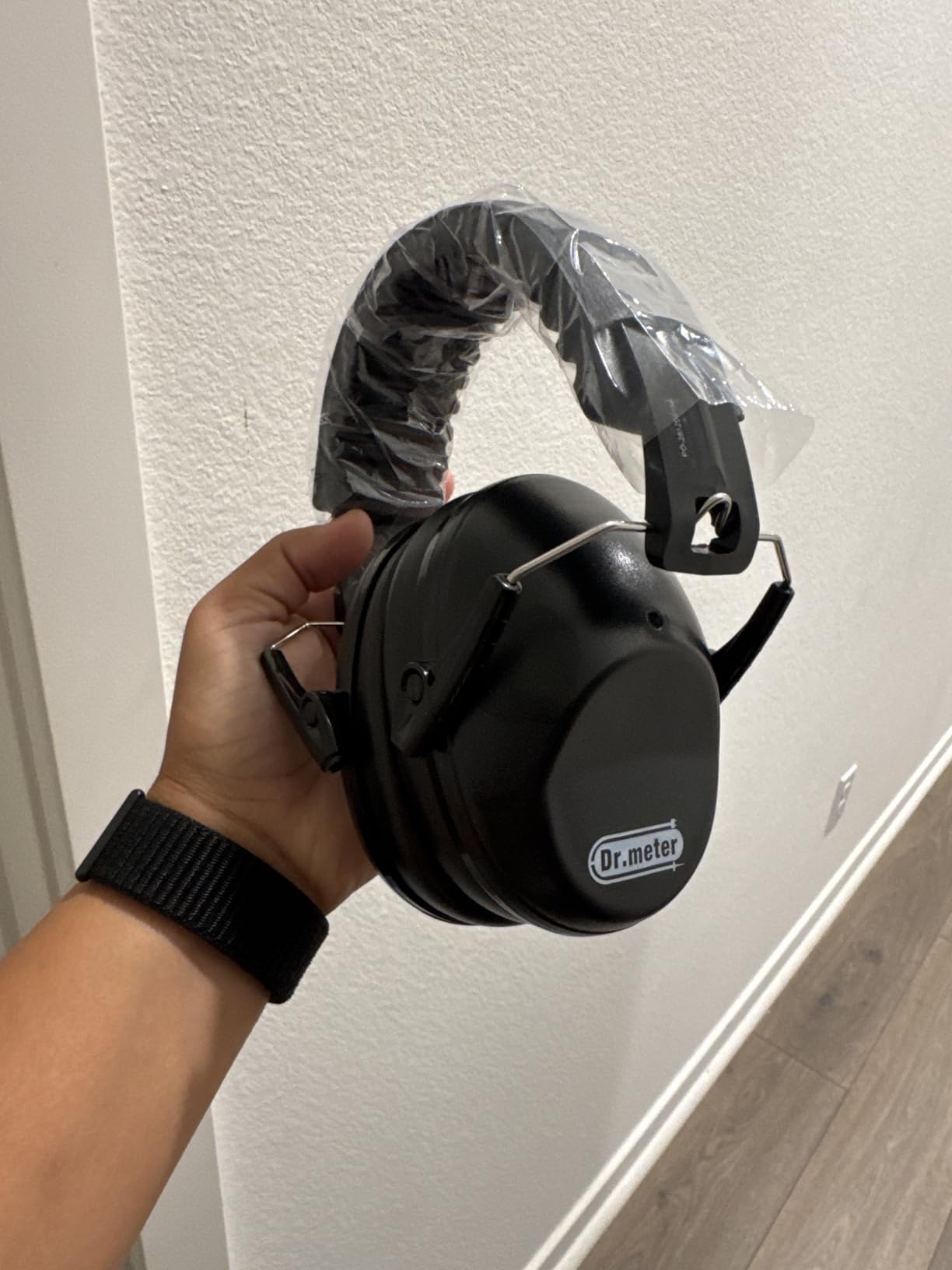
Comfort is where it wins. The memory foam core under PU leather padding is described as staying comfortable for hours, and the adjustable headband spans toddler sizes through adult heads, so one product covers a whole household. The folding design collapses it to palm size for a backpack or a suitcase.
It also has the highest average rating of anything we looked at, across a large body of reviews, which is reassuring given how much of this category is generic unbranded stock. The brand, the certification standards and the model number are all verifiable.

What tinnitus situation it fits best
It fits readers managing a child’s sensitivity to loud environments, adults with misophonia, and anyone whose tinnitus is set off by busy social situations rather than by a steady mechanical hum. The adjustability makes it a single-purchase solution for a family.
Where it will let you down
It cannot block sound completely, which is the correct behaviour for a child but a limitation if you want true isolation. The PU leather gets warm during long wear, and the initial fit can feel tight on larger heads until it breaks in. It also runs large for infants and very small babies.
6. Soundcore V20i – Open-Ear Earbuds for Running and Errands
Soundcore V20i by Anker Open Ear Earbuds, Open Ear Headphones True Wireless
- Non-intrusive open design for all-day wear
- Four adjustable positions for a secure fit
- 16mm titanium-coated drivers with BassUp
- Four mics with AI enhancement for calls
- IP55 sweat resistance
- No noise cancelling whatsoever
- Open design needs more volume for the same loudness
- Hooks can shift and need readjusting
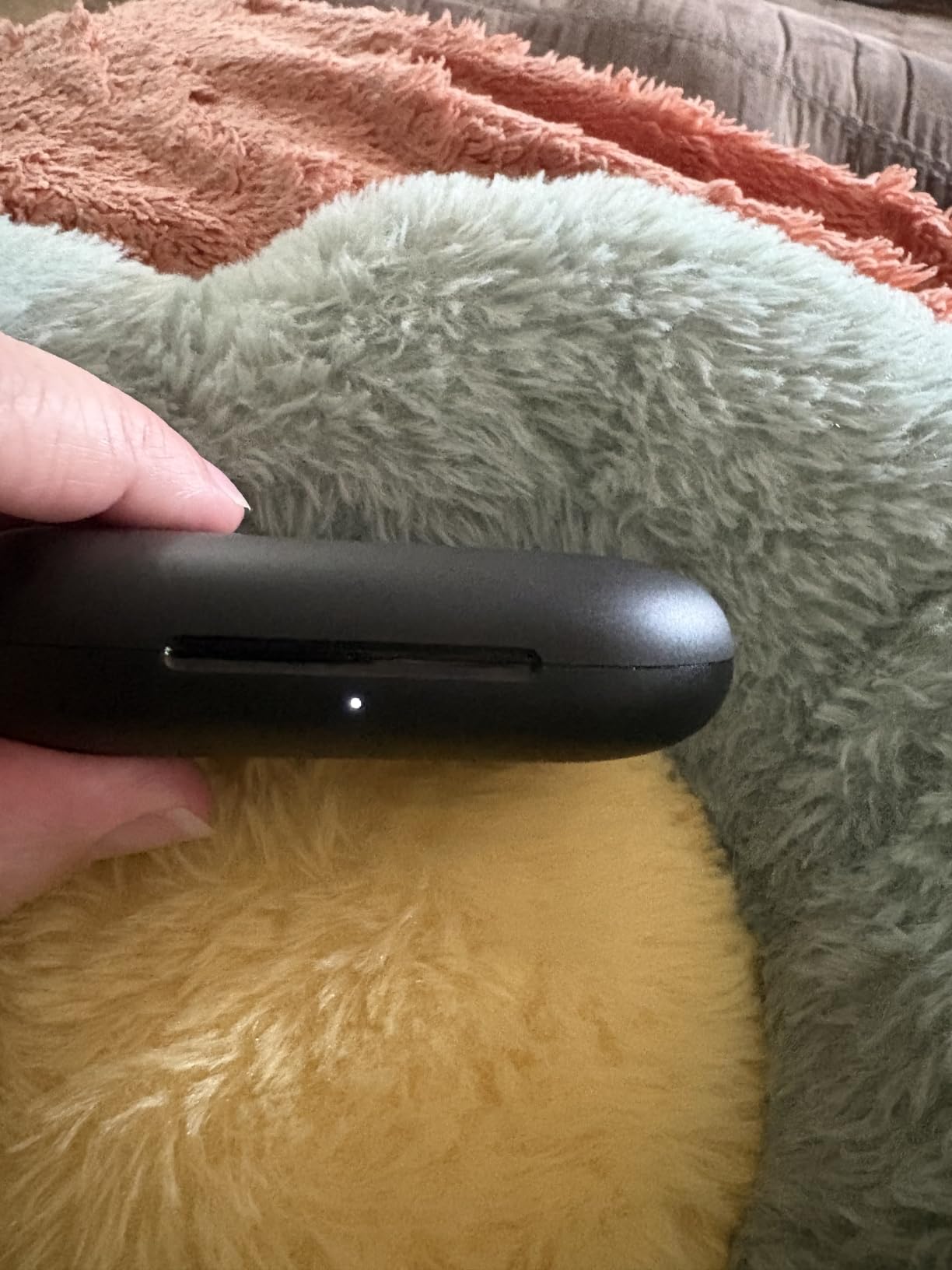
Exercise is one of the most commonly reported triggers for a tinnitus flare, and the reason is straightforward: loud music plus elevated heart rate plus an awareness of your own body sounds. The V20i answers that specifically with an open-ear design rated IP55 for sweat and water, and with four adjustable positions so the hook settles into a secure fit.
Position is the detail that matters. You can rotate each bud until it sits where it wants to be, and that is what keeps it in place through a run rather than shifting every few minutes. For someone who wants a masking layer that stays put, a hook you can dial in beats a generic one you tolerate.
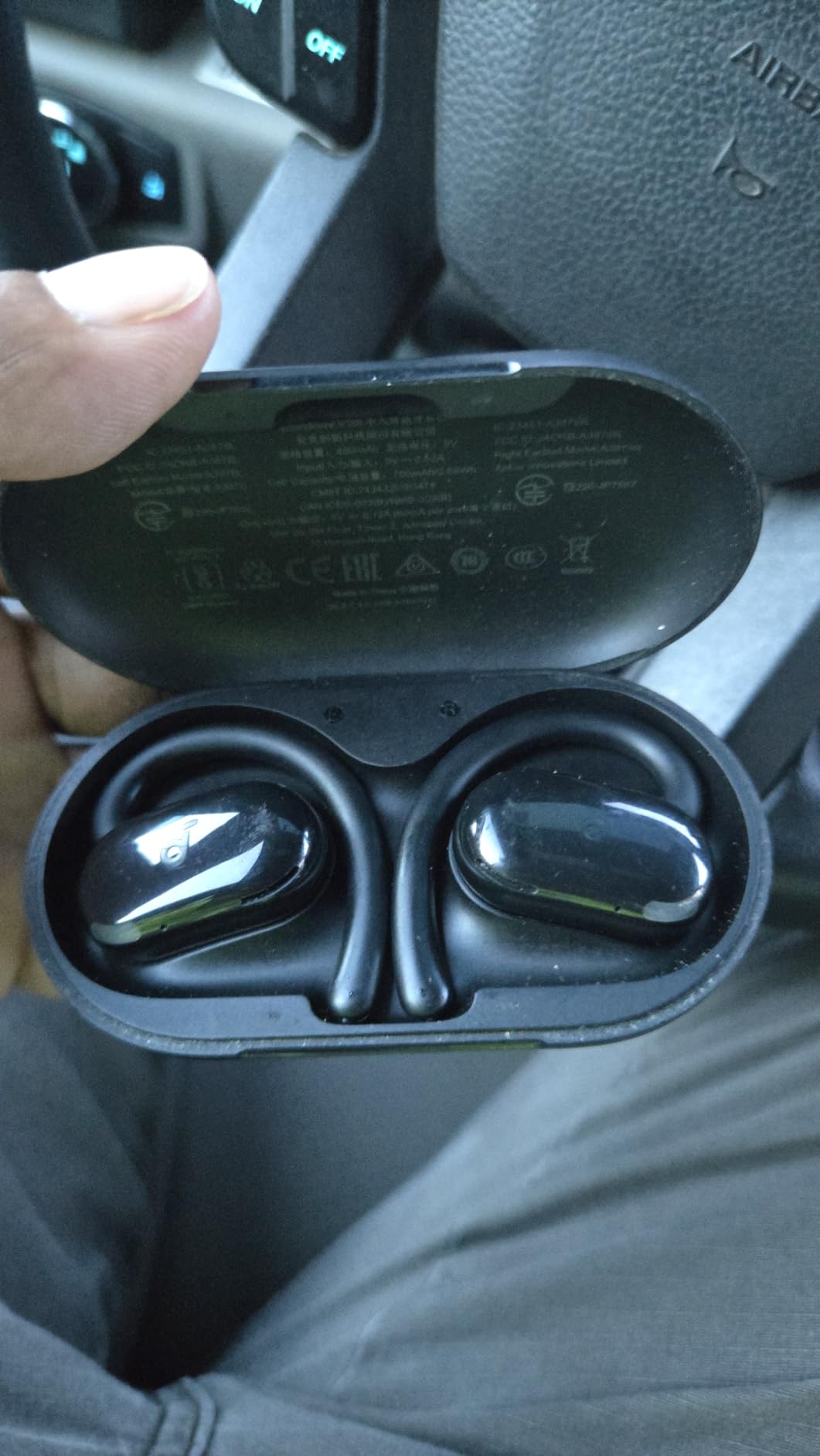
Sound is a step up from most budget open-ear designs. The 16mm titanium-coated drivers with BassUp tuning give a fuller low end than the very light open-ear competitors, and the four microphones with AI enhancement handle calls in a windy street surprisingly well for the size.
Battery is 8 hours per bud and 36 hours with the case, which is a more honest figure than some competitors advertise. It is enough for a training session and most of a working morning, provided you top up the case during a coffee.
What tinnitus situation it fits best
It fits readers who want masking during exercise, commuting on foot, or any situation where blocking out the world would be unsafe. The situational awareness is a genuine comfort feature as well as a safety one, and the sweat rating makes it the pick for a gym or a long run.
Where it will let you down
It does nothing to reduce ambient noise, so on a busy street you will reach for more volume than you would with an ANC pair, which is the wrong direction. The open design needs a higher level to sound as loud, and some users find the hooks shift after a couple of hours and need readjusting.
7. KVIDIO Hybrid ANC – Over-Ear With Weeks Between Charges
- ANC effective on fans and window air conditioning
- Very long battery between charges
- Stable Bluetooth with no dropouts
- Over-ear fit avoids in-ear discomfort
- Three modes including a true off setting
- ANC targets low frequencies only
- Ear pads can hurt after about two hours
- Bulky for side sleeping
- No wall charger in the box
Battery is the headline here. Seventy hours in standard mode and up to 40 with ANC running means you can charge once a fortnight or so and stop thinking about it, which removes a small but real source of anxiety for anyone who plans to mask through the night.
The ANC does its best work on the low-frequency, continuous noises that are easiest to ignore anyway: extract fans, window units, the hum of a fridge compressor, a neighbour’s steady background noise. Owners consistently single out air conditioning and fans as the things it removes most effectively.
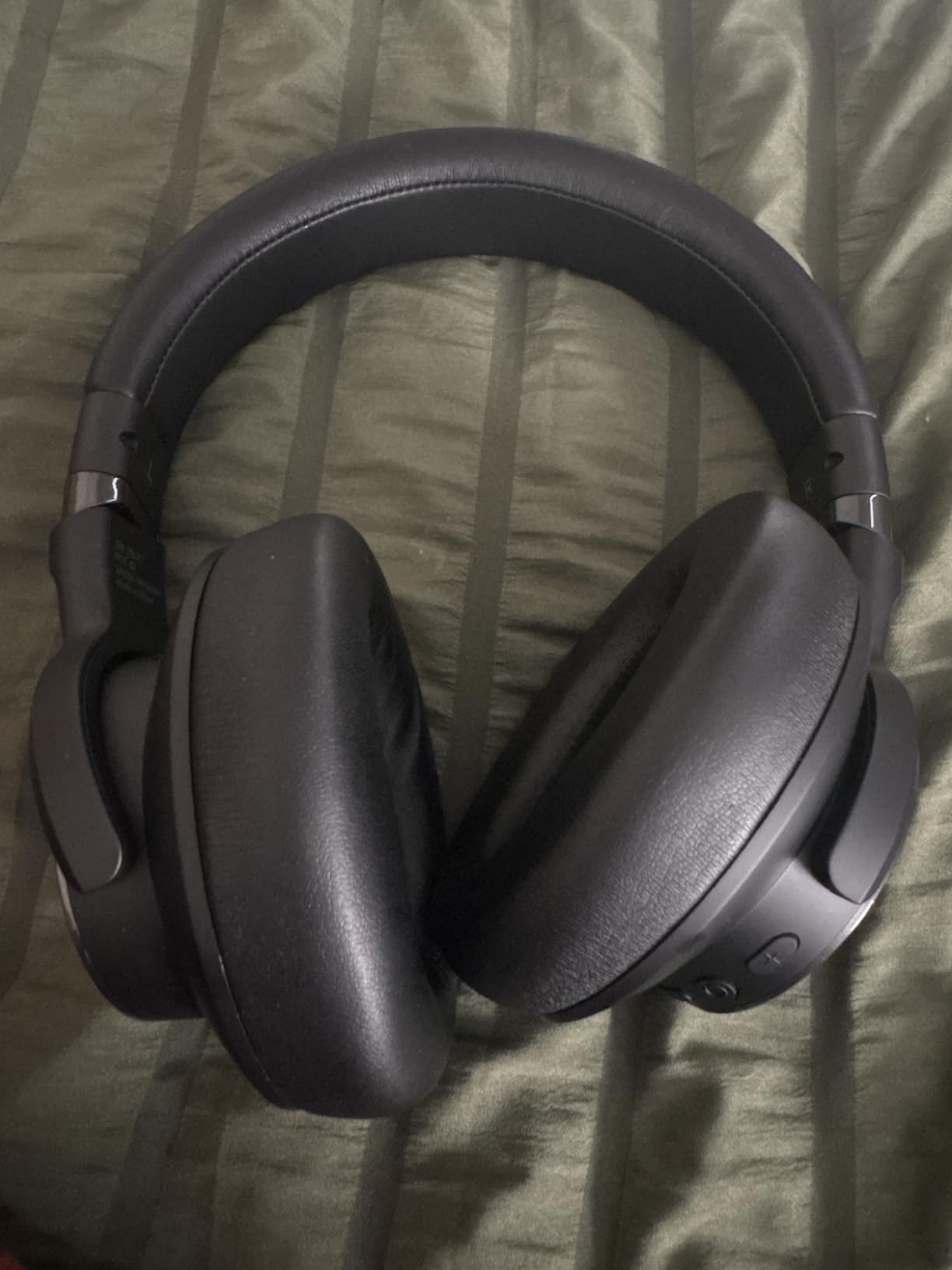
There is also a distinct off and transparency mode among the three modes, and a 3.5mm backup cable in the box, so you are not locked into Bluetooth if your phone is the thing you would rather not depend on at 2am. The connection is stable while moving around a flat, which matters less than it sounds and more than you would expect.
Sound quality surprises most owners for the price, with a 32 ohm dynamic driver covering the full 20 Hz to 20 kHz range. It is a plain, unfussy tuning rather than a bass-forward one, which is the right default for sensitive ears.
What tinnitus situation it fits best
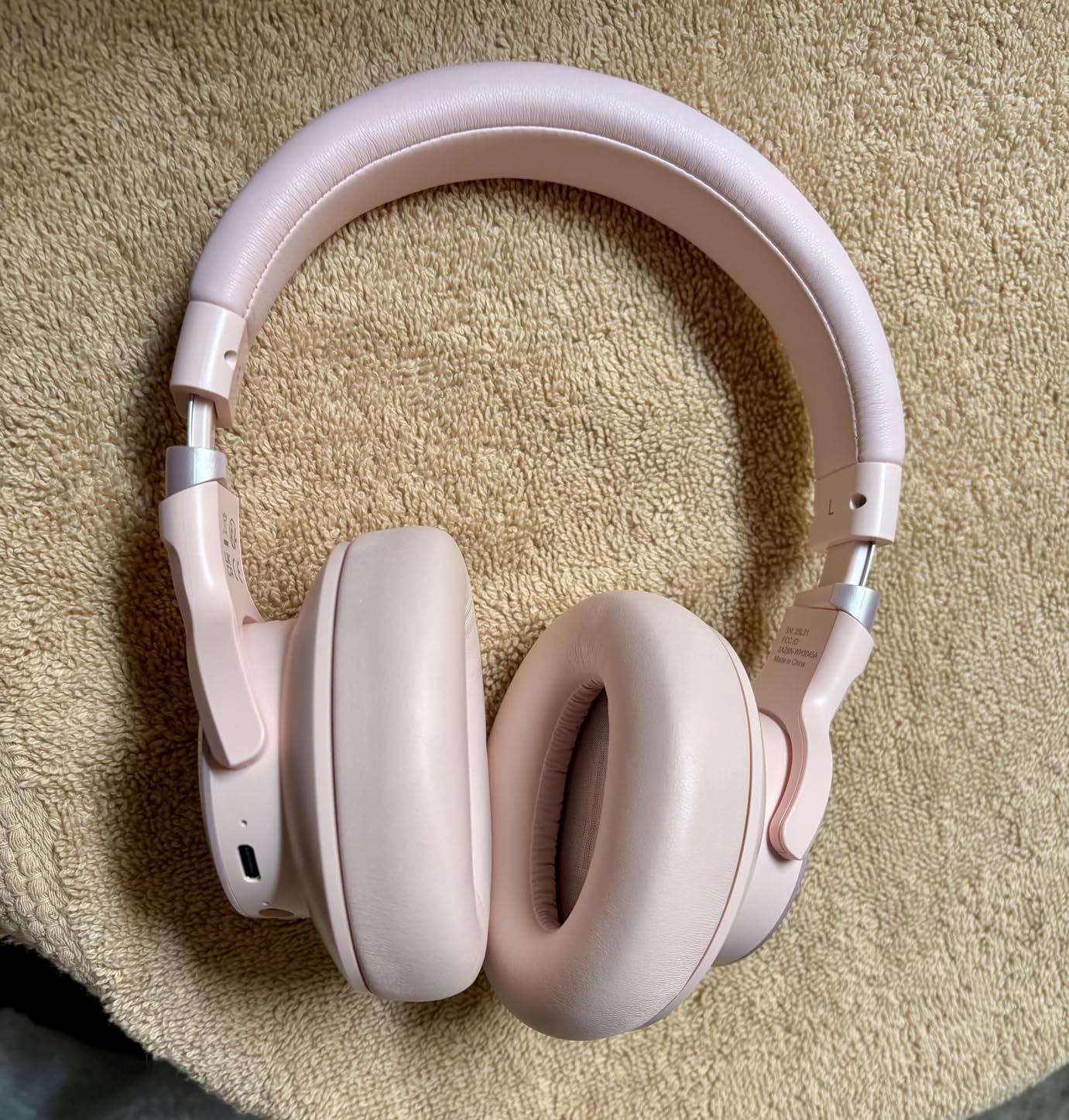
It fits readers whose trigger is a constant mechanical hum at home or in the office, and who want a pair they can leave on a shelf and trust still works next month. The over-ear fit also suits anyone who dislikes the sensation of an earbud in the canal.
Where it will let you down
ANC is tuned for low frequencies and does little against voices or irregular sound, so a talkative colleague or a television is barely touched. Some wearers report the ear pads starting to hurt after roughly two hours, and the bulky profile is awkward for side sleeping. No charging block is included.
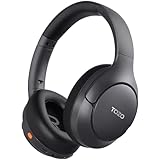
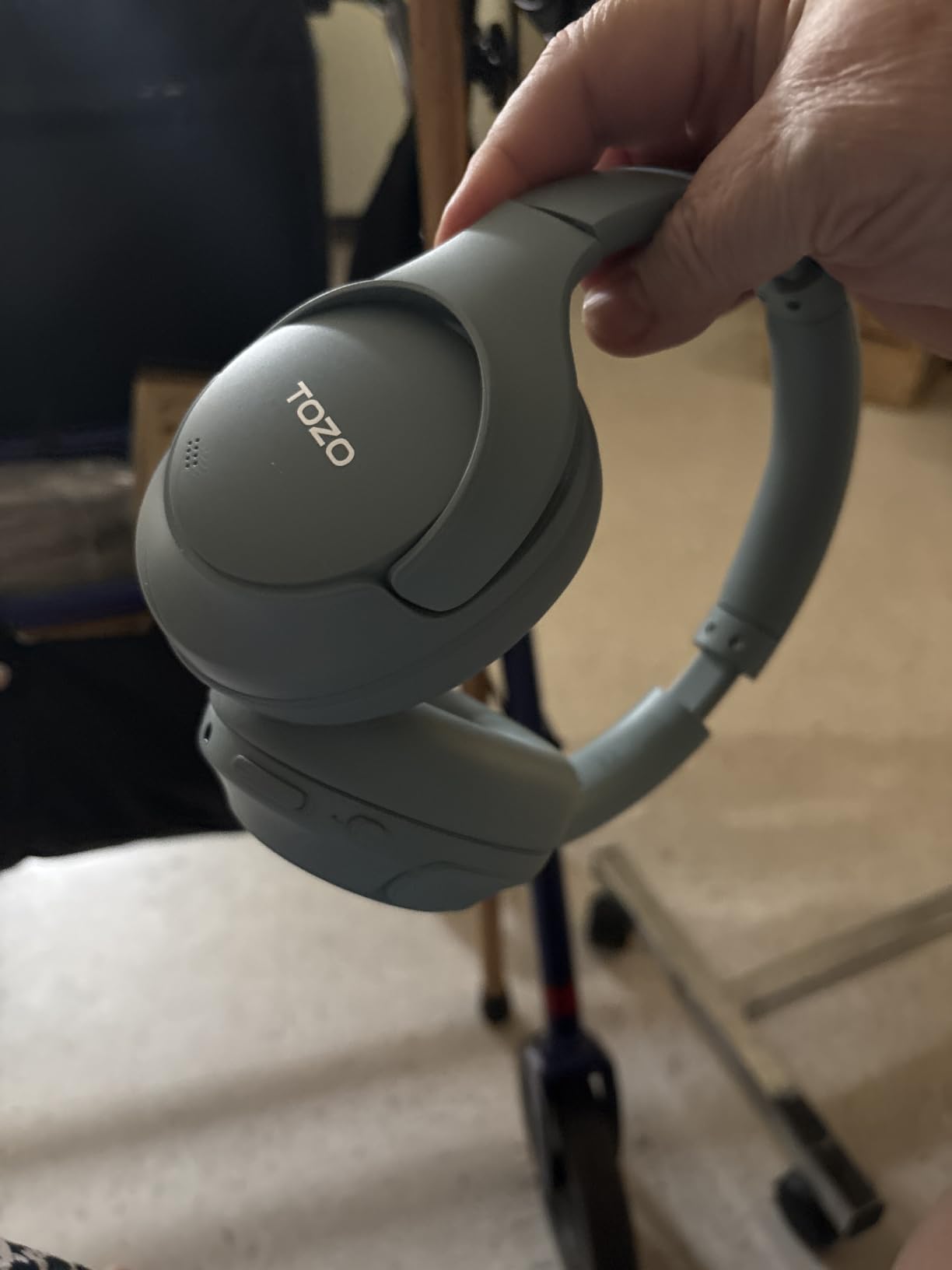
8. TOZO HT3 – Masking Through a Full Workday on One Charge
TOZO HT3 Hybrid Noise Cancelling Wireless Headphones, 90H Over Ear Headset
- Strong cancellation of low-frequency rumble
- 90-hour battery with a 10-minute quick charge
- 40mm drivers with adjustable EQ
- Dual-device connection works reliably
- Metal-reinforced headband
- Bass is heavily boosted out of the box
- ANC switch is easy to knock off
- Ear cups give little passive isolation
- No carrying case included
Ninety hours of playback is the number that lands here, and for a reader planning to wear masking headphones through a working day and a night with a single charge, it is the most practical specification in this roundup. A ten-minute charge adds nine hours, so a forgotten plug rarely means silence.
The adaptive hybrid ANC is rated at 45dB with four microphones, and reviewers consistently point to its handling of low-frequency rumble: engines, transit, aircraft cabin noise, washing machines. That is exactly the class of sound that leads people to reach for the volume dial.
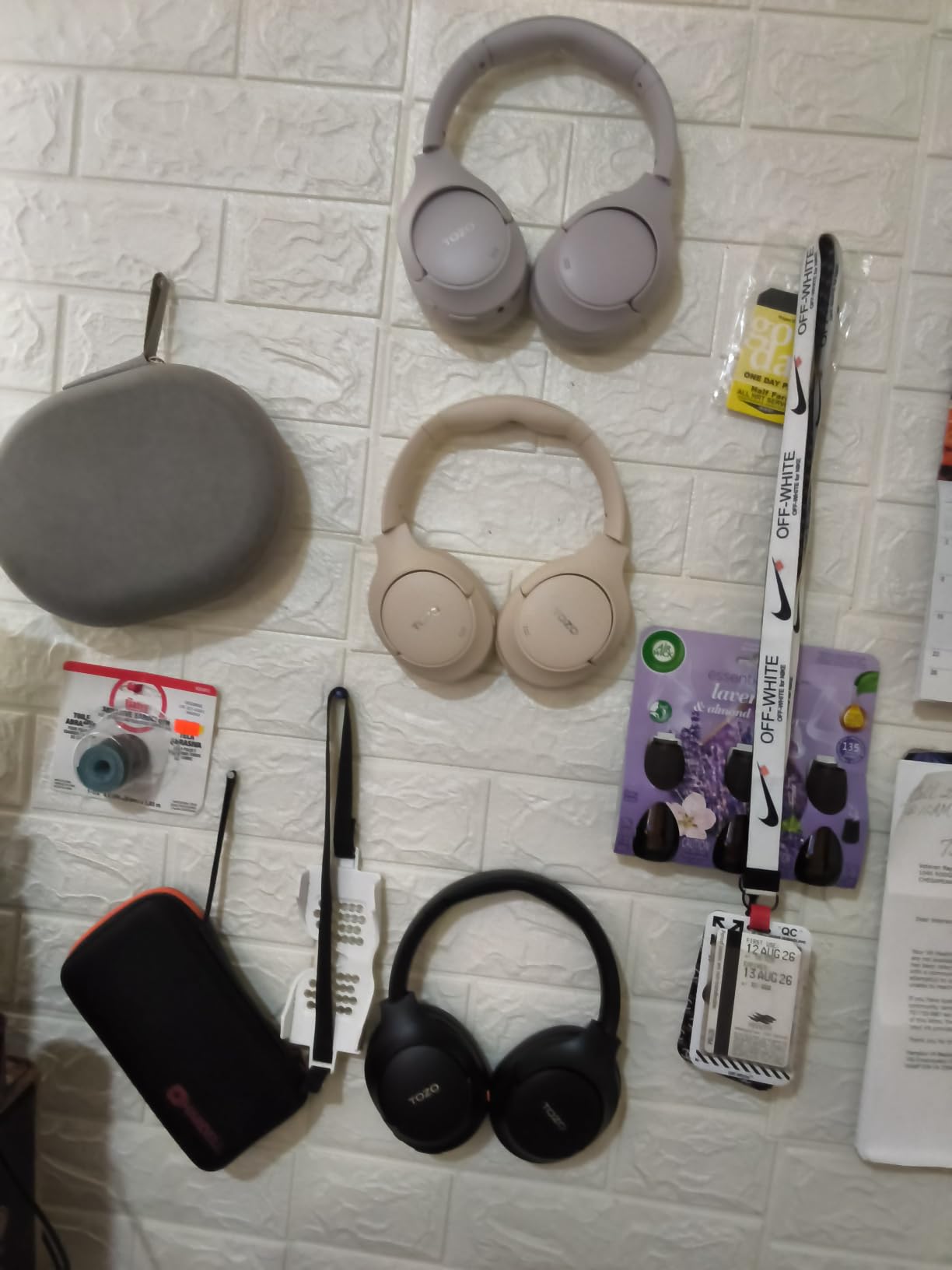
It is also unusually flexible about how you connect, with Bluetooth, AUX and USB-C digital audio all supported. For tinnitus purposes the wired modes are genuinely useful, because they remove the phone from the chain entirely and there is no codec, no pairing dance and no dropout to think about at midnight.
One tuning issue deserves an explicit warning. The bass is heavily boosted out of the box and correcting it on a desktop can be awkward, so anyone sensitive to low frequencies should reach for the EQ in the TOZO app before their first session rather than after.
What tinnitus situation it fits best
It fits readers who mask continuously, who travel often, or who simply refuse to charge anything more than once a week. The 40mm drivers and 32 EQ modes in the app give you the control to set a masking layer that sits under your tinnitus rather than over it.
Where it will let you down
The default bass boost is genuinely uncomfortable for sensitive ears until you correct it, and the app EQ needs a sign-in and falls short at the high frequencies where much tinnitus lives. The ANC switch is easy to knock off, the ear cups provide little passive isolation on their own, and the folding mechanism is a weak point. No case is included.
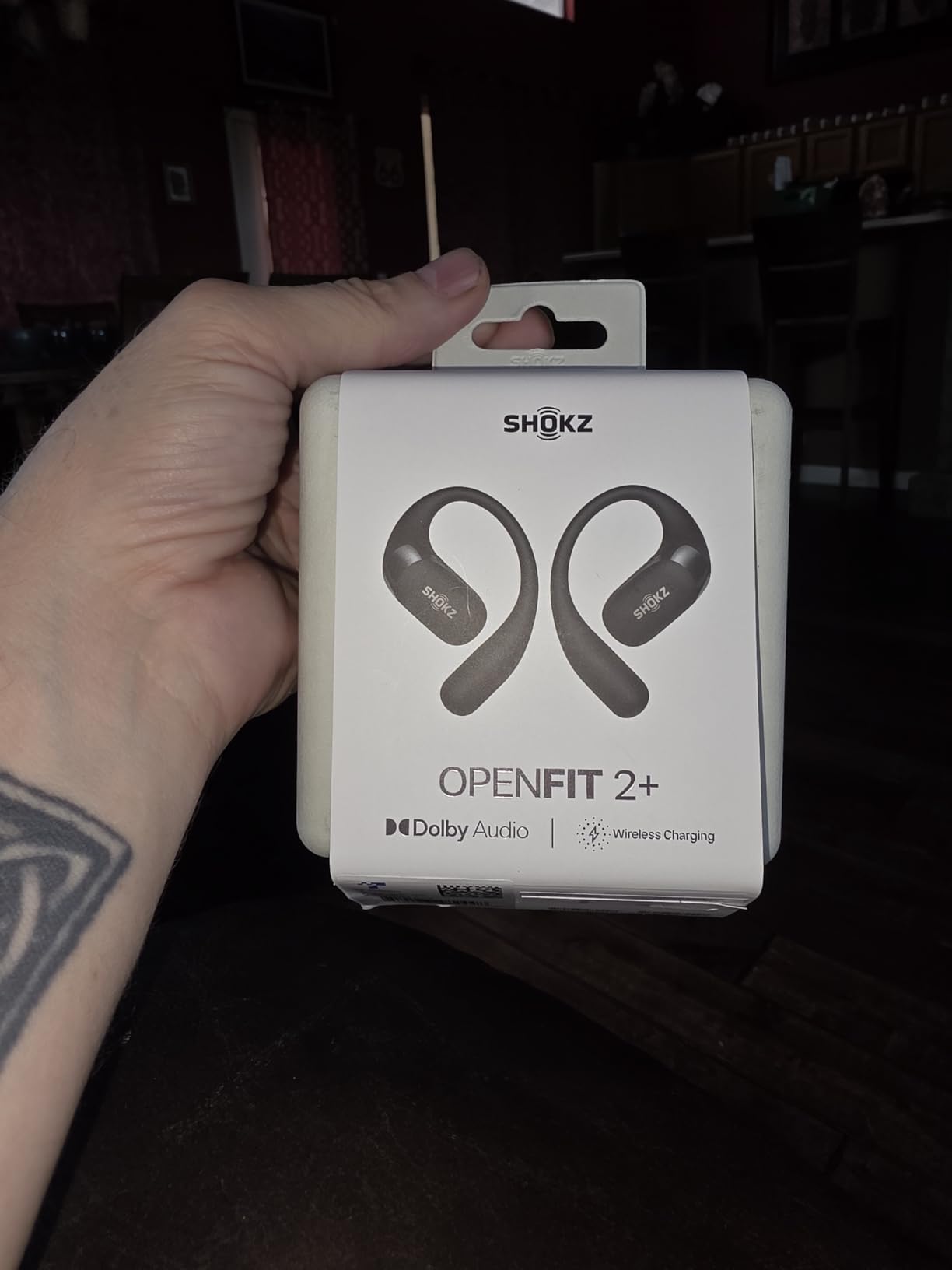
9. SHOKZ OpenFit 2+ – Open-Ear Headset for Open-Office Calls
SHOKZ OpenFit 2+ Open-Ear Earbuds, Purple, Dolby Audio,Wireless Charging
- 9.4g per bud so all-day wear is easy
- DirectPitch design keeps the canal clear and surroundings audible
- Fit survives running and mountain biking
- Four AI mics for calls in wind and noise
- Multipoint across phone and laptop
- No noise reduction so it cannot mask in loud places
- Real battery nearer 10 to 12 hours
- Soft on dialogue in film and TV
- Not for side sleeping
This is the open-ear headset that shows up most often when people ask for work headphones that make tinnitus less noticeable. The reasoning is straightforward and it holds up: if your ringing is loudest in a noisy office, the best response is a headset that lets you take the call without sealing your ears and without competing with the background noise.
A tinnitus listener on r/tinnitus reported buying a Shokz open-ear headset and finding they noticed their tinnitus far less often at work. That is a single account, not a study, but it matches everything else we know about the mechanism. Open-ear designs preserve situational awareness, and awareness is a better masking partner than silence.
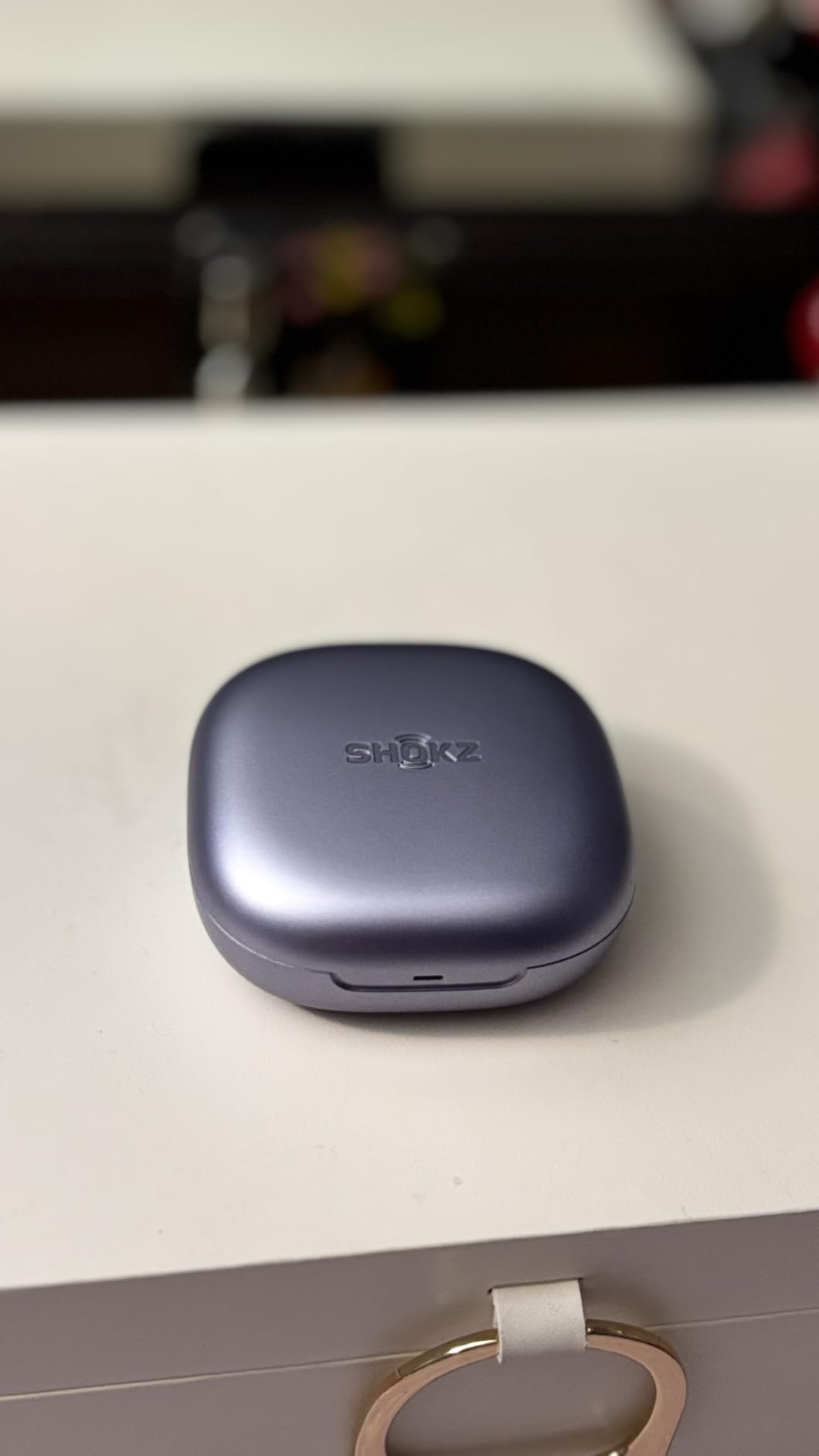
At 9.4 grams per bud with nickel-titanium ear hooks, this is a light pair that survives a demanding schedule. Owners report it holding up through running and mountain biking, and the four AI-enhanced microphones hold a call in wind and noise better than the price bracket would suggest. Multipoint across phone and laptop is seamless.
There is also a physical multifunction button on each bud, with app-customisable controls and EQ, plus a wireless-charging case. Eleven hours per bud and 48 in total is the headline; several owners put real-world use at 10 to 12 hours, which is close enough to plan around.
What tinnitus situation it fits best
It fits readers working in open-plan offices, taking calls in cafés, or anywhere awareness beats immersion. The DirectPitch 2.0 design keeps the ear canal clear, and the two-year warranty is the longest here. It is also a strong choice for anyone who found sealed ANC created pressure.
Where it will let you down
It performs no noise reduction at all, so it cannot mask tinnitus in a loud environment and is a poor choice for a flight. Sound signatures can be soft on dialogue in films and television, the buds are easy to lose, and the open shape is not suitable for side sleeping.
10. BERIBES Hybrid ANC – Folding Over-Ear With Generous Maximum Volume
BERIBES Hybrid Active Noise Cancelling Headphones Wireless Over Ear 70Hours
- 70-hour battery
- 45 hours with ANC on
- Soft protein ear pads some users sleep in
- Generous maximum volume valued by hearing-loss users
- Quick pairing and reliable reconnection
- Folds compactly for travel
- Plastic build can crack at the headband hinge
- Cannot be used while charging
- Weak transparency mode and poor call quality
We put this one last deliberately. Every other product on this list is about helping you listen at less than full volume, and BERIBES is the one here that several reviewers with age-related hearing loss specifically praise for maximum level. If your ears need more headroom, that is a real and valid reason to choose it, with the caveat below.
Otherwise the specification sheet is unremarkable in a good way. Seventy hours in standard mode and 45 with ANC on, 40mm drivers across the full frequency range, a 0.8 pound folding design with 90 and 120-degree folding cups, and both 3.5mm and USB-C cables in the box.
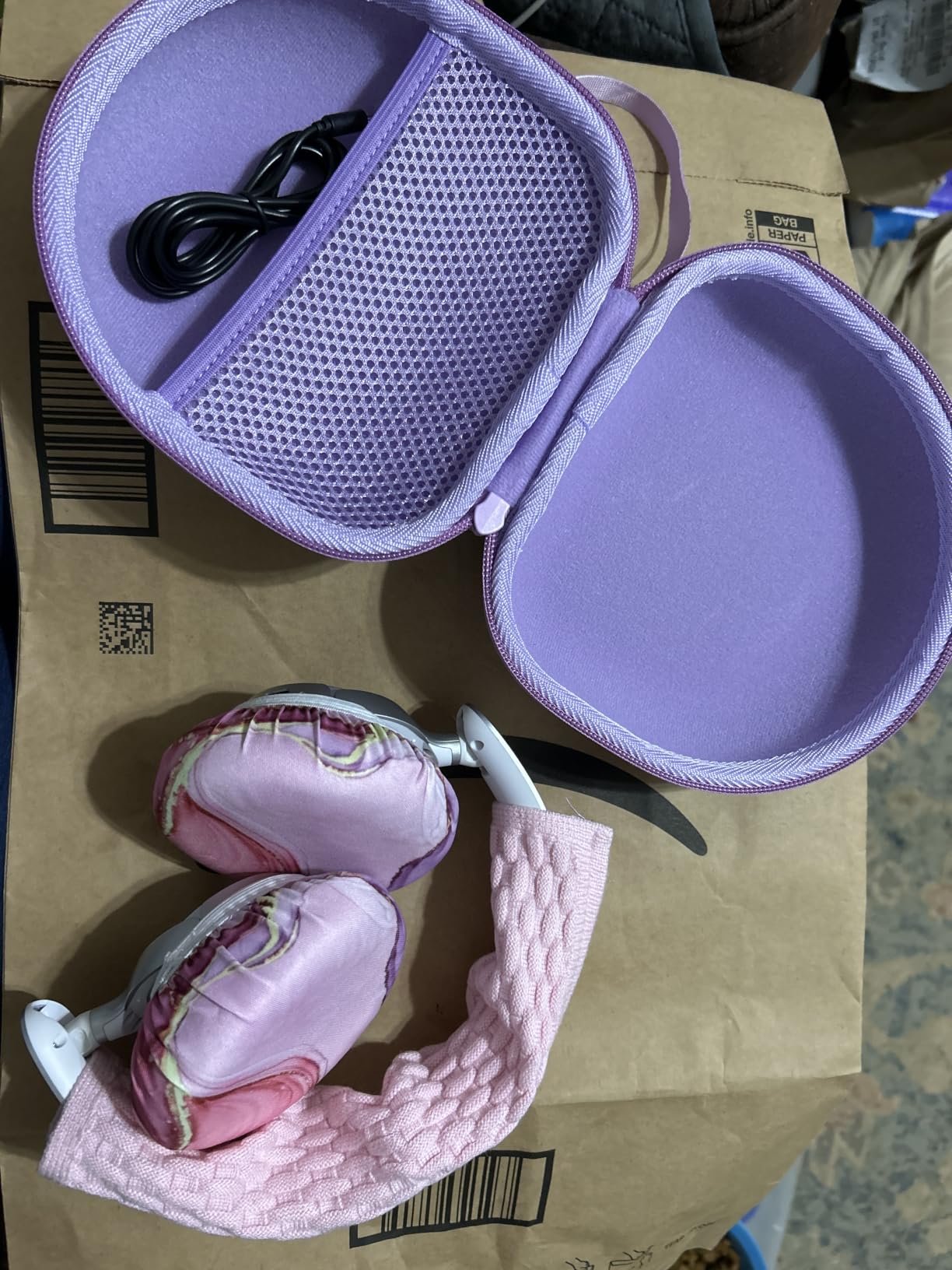
The protein ear pads are described by several users as soft enough to sleep in, which is relevant if the ringing is worst overnight. Hybrid ANC handles machinery and ambient noise adequately for the money, and reviewers are largely positive on sound and battery value.
A word of caution for anyone using this for masking. The one thing you do not want from a pair of headphones for tinnitus relief is a strong maximum volume, because the fastest route to making tinnitus worse is turning things up. If you buy this pair, the volume limiter in your phone and the lowest effective level are the point.
What tinnitus situation it fits best
It fits readers with mild age-related hearing loss who need more headroom than typical earbuds provide, and who still want folding over-ear ANC with a long battery. The light 0.8 pound frame also suits anyone who wants an over-ear that does not feel like one.
Where it will let you down
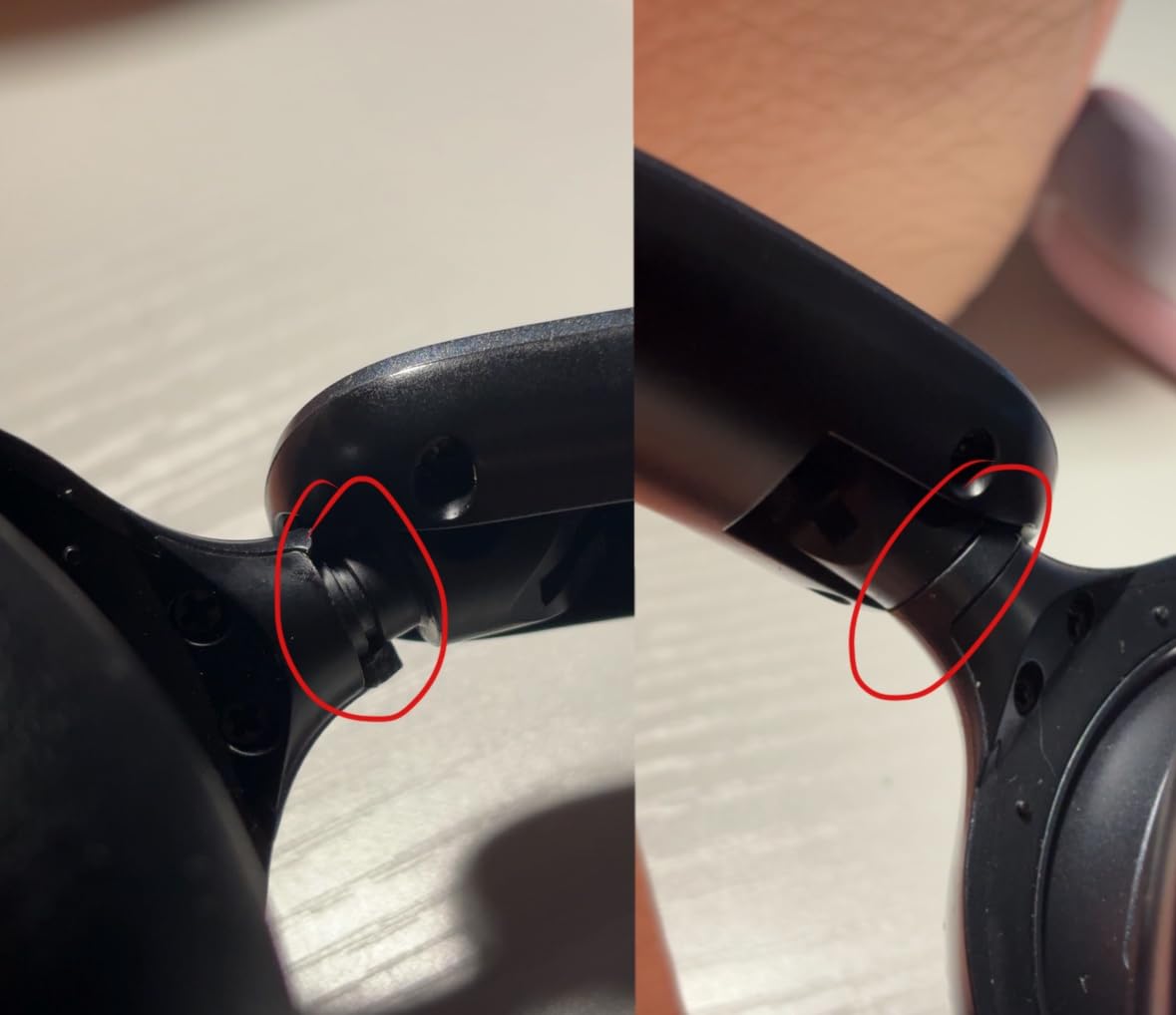
The build is mostly plastic and the headband hinge is a known weak point. It cannot be used while charging, which is an inconvenience for overnight masking, and call quality is poor in noisy settings. Wired mode disables the headphones rather than adding an option, and transparency mode can sound distorted.
How to Choose Headphones for Tinnitus Without Making It Worse
Everything above is a product decision. This section is the more important one, because the wrong choice here does not just fail to help. The single most common way people make tinnitus worse is to blast masking audio hard enough to overpower the ringing, so start with the constraint and only then pick a device.
Form factor decides more than the spec sheet
What you wear matters as much as what you hear. Open-ear and bone-conduction style headsets leave the canal unblocked, produce no pressure sensation and keep you aware of your surroundings. Over-ear ANC cups seal around the ear and remove background noise so you can keep the volume down. Sealed in-ear buds add pressure, which is the design most sensitive listeners reject. Ear muffs play no audio at all and only reduce the trigger.
That is the whole decision, and it is worth getting right before comparing battery hours. Rule of thumb: if your trigger is noise, reduce the noise. If your trigger is silence, add sound. If pressure makes you tense, go open-ear.
What masking actually does, and what ANC is for
These two get conflated constantly, including in most product marketing, so it is worth separating them. Masking is what tinnitus-relief headphones are for: a low-level sound such as white noise, pink noise, brown noise, rain or a fan overlaps the ringing so your brain perceives it less. There is no inverse sound that cancels tinnitus, because cancellation works on external sound arriving at a microphone, not on a sound generated inside your own auditory system.
Active noise cancellation is something else entirely. It plays an opposing signal to cancel external noise, which helps you by letting you keep the volume down rather than by covering the ringing. It is a genuinely useful tool, and for a lot of people the right first step. Be aware of the paradox though: complete silence can make tinnitus feel more noticeable, not less, and if that happens, use transparency mode or a passive open-ear design instead.
Safe listening rules worth following
Keep the level at the lowest setting that works, which for most people is around half volume or below. The 60/60 rule is a decent shorthand: no more than 60 minutes at 60 percent volume or less, then a break. Turn on the volume limiter in your device settings and leave it on. If you can hear the masking layer clearly without straining, you are in the right zone, because your tinnitus will be at least as loud as anything you are playing.
Take listening breaks even during sleep masking, and use a timer or volume ramp where the device offers one. If you find yourself turning the volume up at 11pm more than you did at 9am, that is your signal to stop for the night rather than to keep pushing.
Masking sound choice matters more than most pages admit
White noise is flat and hissy, pink noise is weighted towards lower frequencies and feels gentler, and brown noise is deeper still and often easier on sensitive ears. Nature sounds such as rain and ocean are popular because they have no single dominant frequency. If your tinnitus is high-pitched, a high-frequency tone or a narrow-band sound matched near that pitch can work better than broadband noise, which is why some listeners search specifically for material reaching 14 kHz. If yours is low and rumbling, brown noise and fan sounds tend to blend in better.
Five signs to see a doctor instead of shopping
Sudden onset of tinnitus, especially in a single ear. Tinnitus that pulses in time with your heartbeat, which is called pulsatile tinnitus and has different causes. Ringing accompanied by noticeable hearing loss. New tinnitus alongside dizziness or vertigo. Any of these point to something an audiologist or ENT should assess, and none of them are headphone problems. If tinnitus started after an ear injury, get checked rather than masking through it.
Over-the-counter hearing aids and dedicated tinnitus sound-therapy devices sit outside this roundup on purpose. They are medical purchases with different criteria, and in some cases an appropriate hearing aid is the thing that actually helps, because restoring the missing frequencies can reduce the ringing rather than cover it.
Comfort, return windows and the last 10 percent
Fit decides whether you keep the volume low. Clamping force, ear-cup width and heat build-up are not comfort niceties; they are the reasons people abandon a pair within a week. Check that ear cushions are wide enough if your ears are large, and that the headband does not press hard after an hour. Wear the headphones for a full evening before deciding, because a ten-minute trial tells you nothing about hour three.
Look for a return window long enough to test through several bad days, since tinnitus response is personal and varies with sleep and stress. Tinnitus retraining therapy and counselling-based approaches have the strongest evidence behind them, and a good pair of headphones works best as an adjunct to that rather than a substitute. Lowest effective volume, longest return window, and an appointment on the calendar if the red flags apply.
Frequently Asked Questions
What are the best headphones for reducing tinnitus?
Open-ear and bone-conduction style headsets are the most commonly recommended type, because they mask while leaving the ear canal unblocked and keeping you aware of your surroundings. For noisy environments, over-ear active noise cancelling models like the Soundcore Q20i and Bose QuietComfort let you keep the volume down. For sleep, a light open-ear clip worn on top rather than inside the ear works best. None of them treat tinnitus, only mask it.
Can noise cancelling headphones make tinnitus worse?
ANC itself does not cause tinnitus, and it helps by letting you keep the volume down in noisy places. Two things can make ringing feel worse: the silence ANC creates can make it more noticeable to some listeners, and the pressure sensation some people feel is uncomfortable. If either happens, switch to transparency mode or choose an open-ear design. Tinnitus becomes worse from loud listening over time, not from the cancellation circuit.
Does sound masking work for tinnitus?
Yes for most people, though results vary. Masking introduces a competing sound at a low level so your brain perceives the ringing less, which can help with sleep, focus and relief in quiet rooms. It does not eliminate tinnitus or treat the underlying cause. The critical detail is volume: mask at the lowest level that works, roughly half volume or below, because loud masking is counterproductive.
Is there a sound that cancels out tinnitus?
No. There is no inverse or opposing sound that cancels tinnitus, because noise cancellation technology works on external sound picked up by a microphone, not on a sound generated inside your own auditory system. Masking is the closest available option, and sound therapy programmes for tinnitus are built on that principle. A hearing aid set to mask or mix with the tinnitus tone is a related clinical approach.
What volume should I use with tinnitus?
Use the lowest level that works, which for most people is around half volume or below. The 60/60 rule is a useful shorthand: no more than 60 minutes at 60 percent volume or less, then take a break. Keep your device volume limiter switched on. A good check is whether you can hear the masking sound without straining, because your tinnitus will be at least as loud as anything you play.
Should I choose wired or wireless headphones for tinnitus?
Comfort and volume control matter far more than the connection type. Wireless wins for convenience, active noise cancelling and battery management. Wired wins for zero charging anxiety and consistent audio, which matters if you plan to mask through the night. The practical choice is a wireless model that also accepts a 3.5mm cable, so you have a fallback that never runs out of power or fails to pair.
What do ENT doctors recommend for tinnitus?
The first-line clinical recommendation is a hearing evaluation, followed where appropriate by sound therapy or cognitive behavioural therapy based tinnitus retraining therapy, and sometimes hearing aids that address the underlying loss. Headphones are an adjunct for masking and relaxation, not the treatment. Seek prompt care for sudden-onset, one-sided or pulsatile tinnitus, or any ringing accompanied by hearing loss or dizziness.
The Bottom Line on Headphones for Tinnitus Relief
Our pick for most people is the Soundcore Q20i, because it is the only pair here that lets you keep the volume genuinely low: hybrid ANC that runs with no music playing, an app with a built-in white noise layer, 40 hours of battery and multipoint switching. If your trigger is loud environments rather than quiet ones, the Bose QuietComfort cancels more of that low hum and weighs less than most over-ears.
If you cannot tolerate anything in your ear canal, stop comparing spec sheets and go open-ear. The TOZO OpenEarRing at 5.1 grams per bud or the SHOKZ OpenFit 2+ for work calls will keep you aware of your surroundings, which is a far better partner for masking than silence.
Whatever you choose, the rule is the same as it was in 2026: the lowest effective volume, breaks built into the day, and an appointment with an audiologist if your ringing is sudden, one-sided, pulsatile, or came with hearing loss. These products mask tinnitus. They do not treat it, and nothing on this list changes that.