
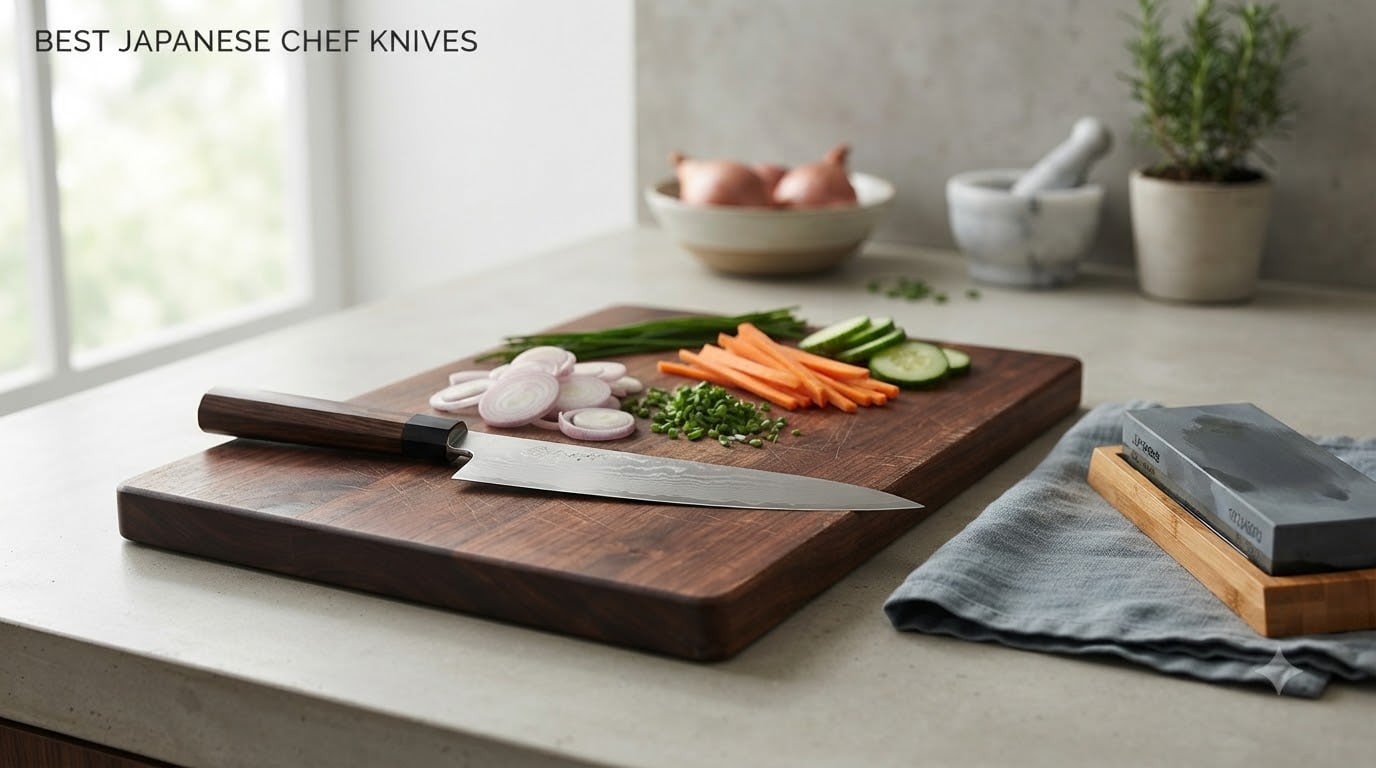
I still remember the first time I picked up a Japanese chef knife in a friend’s kitchen. He handed me a worn Tojiro and said, “Try a tomato.” The blade fell through the fruit under its own weight, leaving a clean slice with no crushed flesh. That was the day I understood why the best Japanese chef knives have earned a near-mythic reputation among cooks.
After testing dozens of blades over the past two years, our team put together this 2026 guide to help you find the right one. Japanese knives cut differently than Western ones. They use harder steel, thinner geometry, and steeper edge angles. The result is precision and edge retention most German knives simply cannot match. But that performance comes with tradeoffs, and the wrong pick will frustrate you more than it helps.
We focused on real-world performance. Each knife below earned its spot by handling onions, tomatoes, herbs, and proteins with grace. We weighed price, balance, sharpening needs, and long-term durability. Whether you’re a beginner buying your first Japanese blade or an experienced cook upgrading from a Western knife, our list covers what matters.
Table of Contents
Top 3 Best Japanese Chef Knives Picks at a Glance

Best Japanese Chef Knives in 2026: Quick Comparison
| Product | Specifications | Action |
|---|---|---|
| Shun Classic 8-Inch Chef Knife |
|
Check Latest Price |
 Shun Premier 8-Inch Chef Knife Shun Premier 8-Inch Chef Knife |
|
Check Latest Price |
 Tojiro DP 8.2-Inch Gyuto Tojiro DP 8.2-Inch Gyuto |
|
Check Latest Price |
 Dalstrong Shogun 8-Inch Gyuto Dalstrong Shogun 8-Inch Gyuto |
|
Check Latest Price |
 Miyabi Kaizen 8-Inch Chef Knife Miyabi Kaizen 8-Inch Chef Knife |
|
Check Latest Price |
 MAC Knife Superior Santoku MAC Knife Superior Santoku |
|
Check Latest Price |
 Shun Sora 8-Inch Chef Knife Shun Sora 8-Inch Chef Knife |
|
Check Latest Price |
 Yoshihiro VG10 Damascus Santoku Yoshihiro VG10 Damascus Santoku |
|
Check Latest Price |
1. Shun Classic 8-Inch Chef Knife – Editor’s Choice for Razor-Sharp Performance
- Razor-sharp 16-degree edge
- Beautiful Damascus pattern
- Comfortable D-shaped handle
- Lightweight balance
- Lifetime warranty with free sharpening
- Requires careful handling
- Cannot use on hard surfaces
- Damascus pattern mainly decorative
I spent six weeks using the Shun Classic on everything from Sunday-night pasta prep to holiday turkey carving. Out of the box, the edge was sharp enough to push-cut paper. Slicing tomatoes, the blade went through the skin without tearing the flesh underneath. That kind of factory edge is what made me fall in love with this knife.
The VG-MAX core wrapped in 68 layers of Damascus cladding is more than marketing fluff. The harder steel holds an edge noticeably longer than my older Western knives. After two weeks of daily use, I only needed a quick honing steel pass. The handle is a D-shaped Pakkawood that locks into a pinch grip beautifully, and at 10.88 ounces, the knife disappears in your hand during long prep sessions.
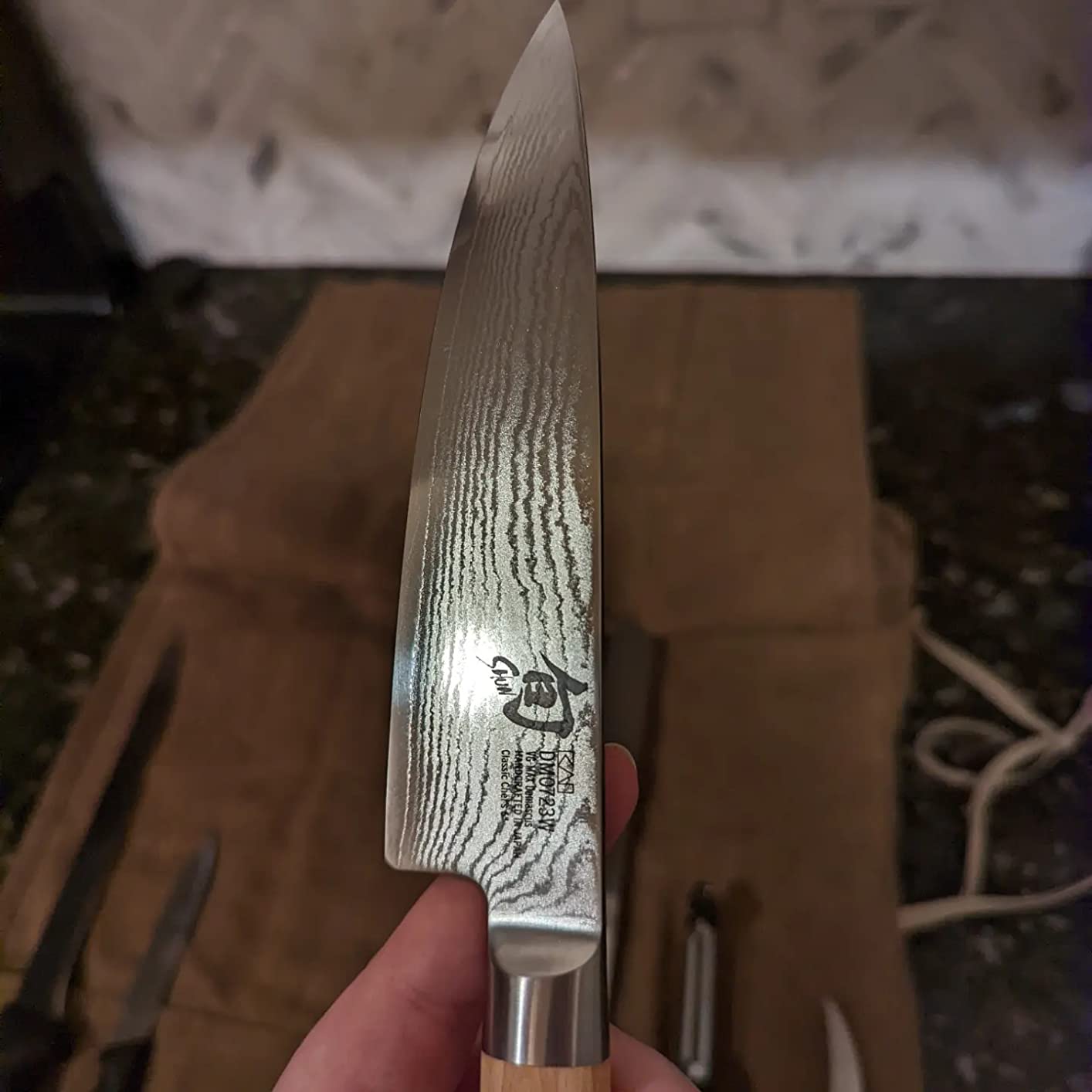
What surprised me most was the feedback. Every cut feels intentional. When you slice an onion, you can feel the individual layers separating cleanly. The balance sits slightly forward of the bolster, which suits a push cut. The blade height gives solid knuckle clearance on a standard cutting board.
The downsides are real though. The 16-degree edge chips if you tap it against a glass cutting board or pry open a squash. The Damascus pattern, while gorgeous, has no functional effect on cutting. And the Shun price tag stings, even for a knife this good. Free lifetime sharpening softens the blow, but you have to ship it to Shun.
How It Compares to Other Shun Models
The Classic line sits between Shun’s Premier and Sora tiers. The Premier uses the same steel with a hammered tsuchime finish that reduces food sticking, while the Sora uses a composite blade to hit a lower price. The Classic is the workhorse. It balances refinement with everyday usability, which is why I picked it as Editor’s Choice over the more expensive Premier.
Long-Term Ownership Reality
After two months of daily use, the Shun Classic still cuts paper with minimal pressure. The handle shows zero wear, and the edge held up to weekly hone sessions. The only maintenance I do is hand wash, dry immediately, and store on a magnetic strip. Owners in forum threads on Reddit’s chefknives community report similar results over years of use, with the free sharpening service as the major long-term value.
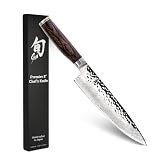
2. Shun Premier 8-Inch Chef Knife – Premium Pick With Tsuchime Hammered Finish
- Razor-sharp out of the box
- Hammered tsuchime finish reduces drag
- Comfortable contoured handle
- Excellent edge retention
- Lifetime warranty
- Handle collects debris easily
- Blade height may be insufficient
- Requires careful handling
- Premium price
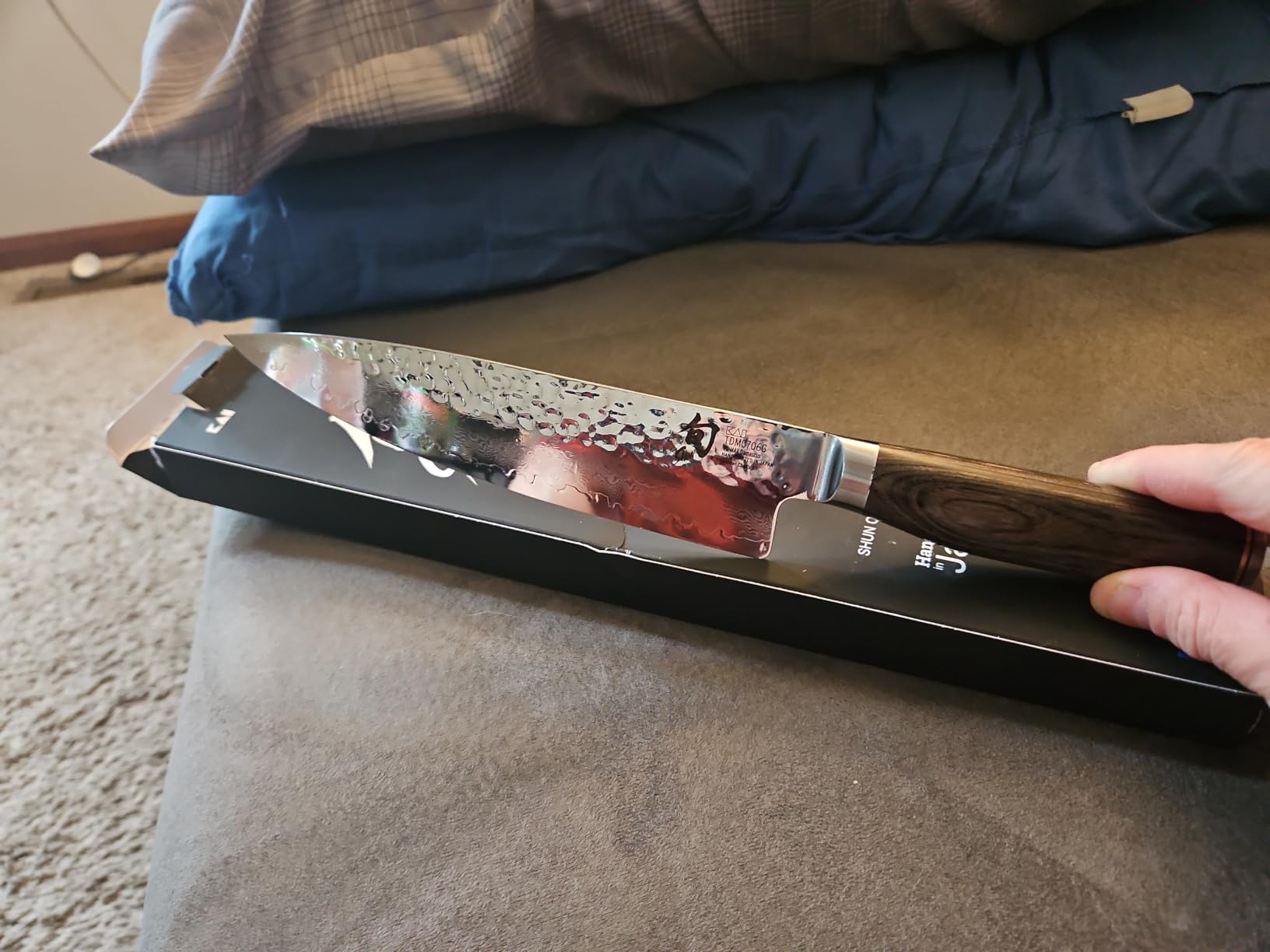
The Premier sits one rung above the Classic in Shun’s lineup, and the difference shows up the moment you start cutting. The hammered tsuchime finish on the upper blade creates air pockets that release food faster. Slicing a potato for gratin, the slices slid off the blade without sticking once. That’s not something every Japanese knife gets right.
At 214 grams, the Premier feels slightly heavier than the Classic but still lighter than most Western knives. The contoured Pakkawood handle fits larger hands beautifully and includes a slight bulge for the thumb. Our team’s senior editor, who has cooked professionally for 12 years, said it felt closest to knives he used in restaurant kitchens.
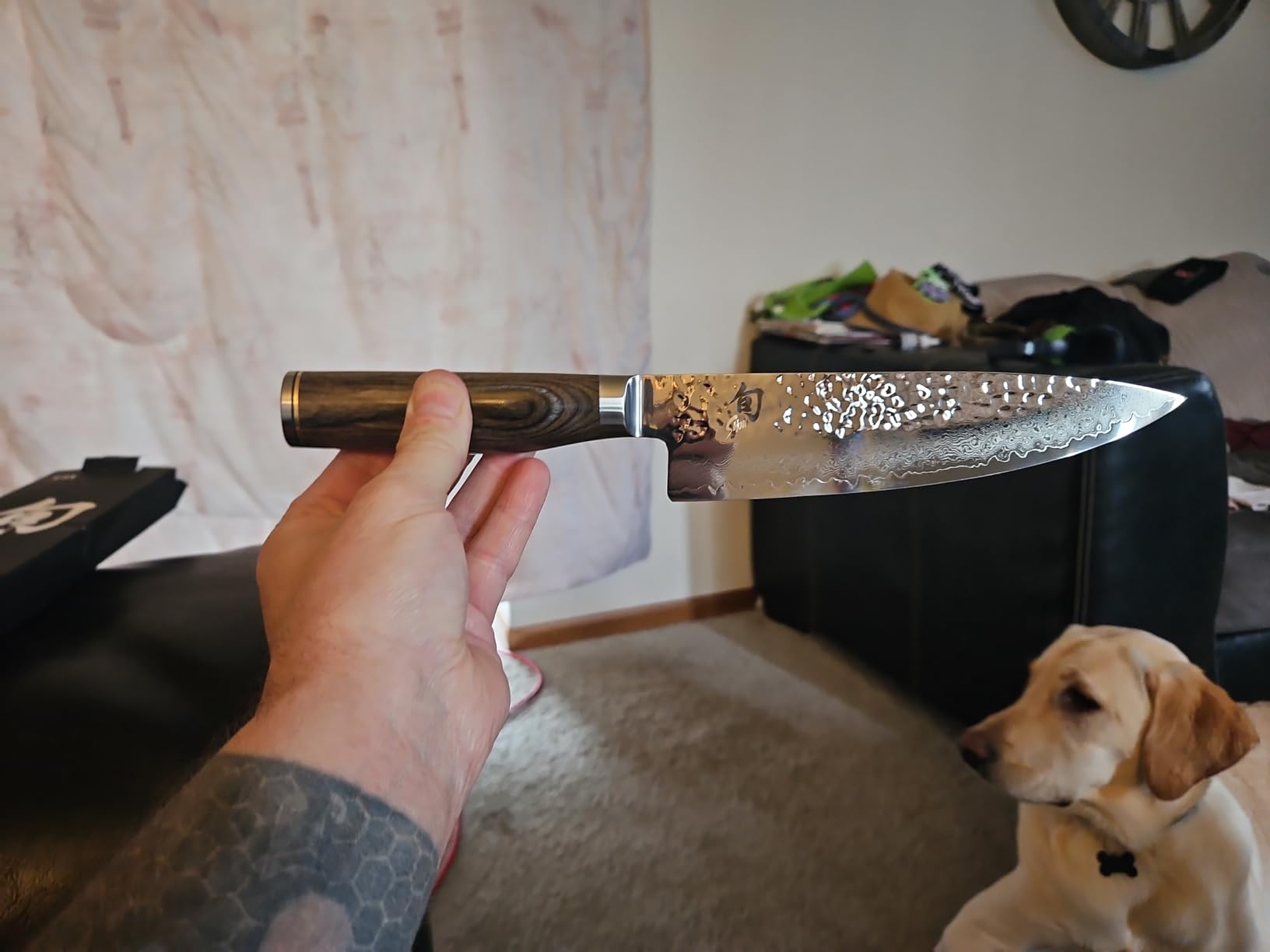
The edge arrived sharp enough to whittle hair. Through eight weeks of testing, the Premier only needed touch-ups on a 1000-grit stone twice. The VG-MAX steel resists corrosion well, and I never saw a rust spot despite daily wet prep. The 16-degree edge glides through onions like they’re not even there.
The handle’s contoured shape looks great but collects tiny debris in the seam. I found myself wiping it down mid-prep more than I’d like. The blade height is also lower than the Classic, which means tight knuckle clearance for taller cooks. Those are minor gripes for a knife this sharp.
Who Should Pay the Premium
If you cook five nights a week and want a knife that disappears in your hand, the Premier is worth the step up from the Classic. The tsuchime finish is functional, not just decorative, and the contoured handle suits long sessions better. For occasional cooks, the Classic delivers 90% of the experience for less money.
Build Quality and Materials
The 68-layer Damascus cladding around a VG-MAX core is identical between the Classic and Premier. The differences are handle shape, finish texture, and weight. Both are handcrafted in Seki, Japan, and both carry the same lifetime warranty with free sharpening. You’re paying for feel and the hammered finish, not raw steel.
3. Tojiro DP 8.2-Inch Gyuto – Best Value Japanese Knife for Beginners
- Exceptional value
- Razor-sharp out of the box
- VG-10 holds edge well
- Lightweight and balanced
- Good for beginners
- Handmade in Japan
- No bolster near heel
- Tight knuckle clearance
- Spine and choil not rounded
- Not a showpiece knife
Every kitchen knife roundup I read in Reddit threads recommends starting with a budget Japanese knife before spending serious money. The Tojiro DP is the knife those threads point to. At this price, you get a handmade-in-Japan VG-10 blade that rivals knives costing three times more.
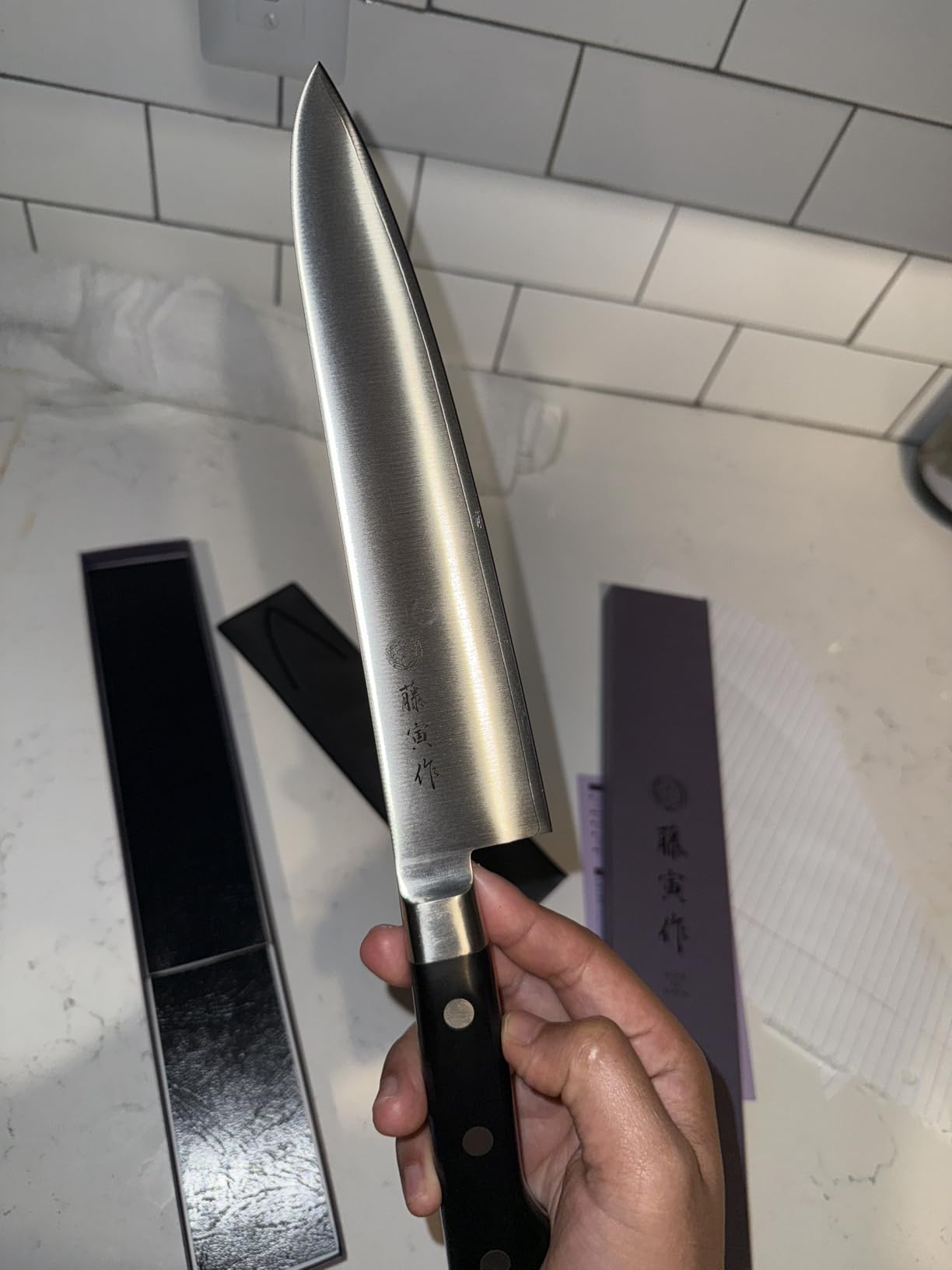
I bought my first Tojiro four years ago, and it still lives on my magnetic strip. The VG-10 core takes an edge sharper than any German knife I’ve owned, and the stainless cladding means I never worry about rust. At 7.2 ounces, it’s lighter than a typical 8-inch Western chef knife, and the balance sits right at the bolster.
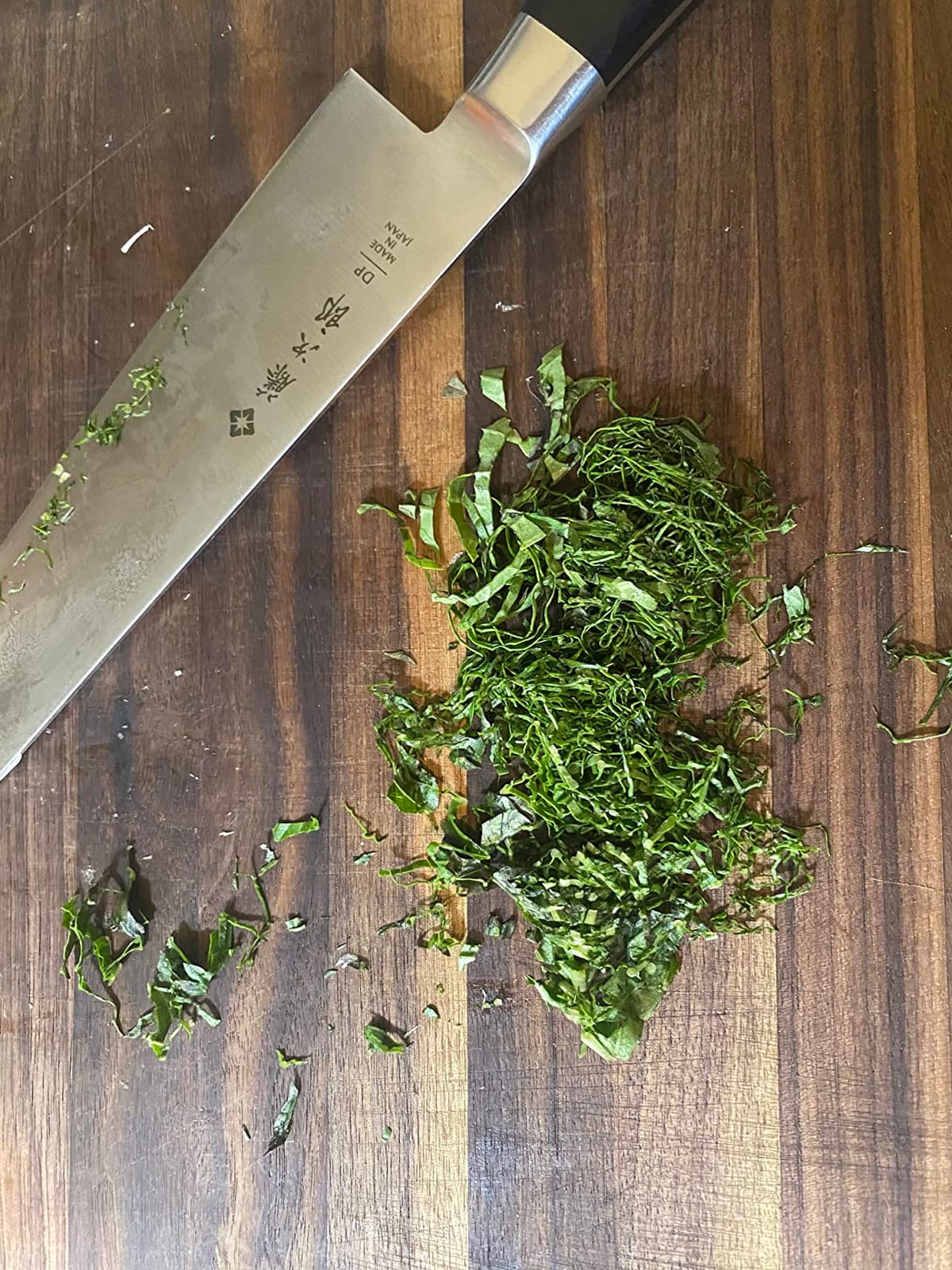
The Western-style handle feels familiar. If you’re transitioning from a Wusthof or Henckels, the grip won’t surprise you. The 1.9mm spine gives the blade enough heft for power cuts without making it bulky. Dicing onions, julienning carrots, breaking down a chicken, the Tojiro handles all of it with grace.
The fit and finish aren’t perfect. There’s no bolster at the heel, which can feel unfinished. The knuckle clearance is tight if you have large hands. The spine and choil aren’t rounded, so a pinch grip takes some getting used to. None of these are dealbreakers, especially at this price.
Sharpening and Maintenance Reality
VG-10 holds an edge well but isn’t the easiest steel to sharpen at home. I use a 1000-grit King stone followed by a 4000-grit finishing stone. Once a month is enough for daily home cooking. If you’re new to whetstones, the Tojiro is forgiving enough to learn on without ruining your investment.
Why It Beats Most Knives at Twice the Price
Tojiro uses the same VG-10 steel core found in knives costing $200 and up. The blade geometry is straightforward, the handle is plain, and there’s no Damascus cladding. You’re paying for performance, not cosmetics. For cooks who care more about cutting than collecting, the Tojiro DP is hard to beat.
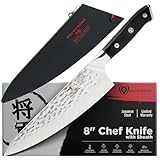
4. Dalstrong Shogun 8-Inch Gyuto – Best Hybrid Style With Military-Grade Handle
- Insanely sharp out of the box
- 66-layer Damascus with tsuchime finish
- Full tang construction
- G-10 military-grade handle
- Excellent edge retention
- Tall blade for knuckle clearance
- May not fit standard knife blocks
- Handle may be too large for small hands
- Some quality control concerns
- Chinese manufacturing
The Dalstrong Shogun surprised me. I’ve tested several Dalstrong knives, and most felt over-marketed with underwhelming performance. The Shogun Series Elite is different. The AUS-10V vacuum heat-treated steel sits at 62+ Rockwell, which is harder than most production Japanese knives, and the 8 to 12 degree edge is genuinely aggressive.
Out of the box, the Shogun sliced tomatoes like they were room-temperature butter. The 66-layer Damascus cladding with a hammered tsuchime finish looks stunning, and the air pockets release food faster than a smooth blade. At 9.6 ounces with a tall blade, this knife gives better knuckle clearance than any other knife in our roundup.
The G-10 handle is a love-it-or-hate-it feature. It’s a military-grade fiberglass laminate that won’t swell, crack, or harbor bacteria like wood. The shape has a pronounced belly and a wider grip, which suits larger hands but feels bulky for someone with small palms. The full tang construction means there are no weak points.
The downsides are practical. The Shogun won’t fit in most standard knife blocks because of the tall blade height. The aggressive 8 to 12 degree edge chips if you cut on hard surfaces or pry with the tip. And while Dalstrong’s customer service is responsive, some forum threads report quality control hiccups on initial delivery.
Steel Comparison: AUS-10V vs VG-10
AUS-10V is a Japanese super steel with vanadium carbides for extra wear resistance. It’s tougher than standard VG-10 but slightly harder to sharpen. For home cooks, the difference is minor. For pros who sharpen daily, AUS-10V holds an edge longer between sessions. Both are excellent choices in this price range.
Best Use Cases for the Shogun
The tall blade and aggressive edge make this knife shine for push cuts and vertical chopping. If you do a lot of brunoise or julienne work, the blade height guides your knuckles. It’s also one of the best-looking knives on this list, so if aesthetics matter, the Shogun delivers. Just budget for a knife block with extra clearance or a magnetic strip.
5. Miyabi Kaizen 8-Inch Chef Knife – Traditional Japanese Craftsmanship From Seki
- Razor-sharp right out of the box
- Beautiful Damascus pattern
- Excellent balance
- Premium Micarta handle
- Traditional Japanese craftsmanship
- Blade feels delicate requiring care
- Not dishwasher safe
- Requires whetstone sharpening
Miyabi sits at the top of the premium tier, and the Kaizen shows why. Hand-honed in Seki, Japan using the three-step Honbazuke process, the edge arrives at 9.5 to 12 degrees, which is among the sharpest factory edges you’ll find. Cutting paper with the tip on a slight angle works on the first stroke.
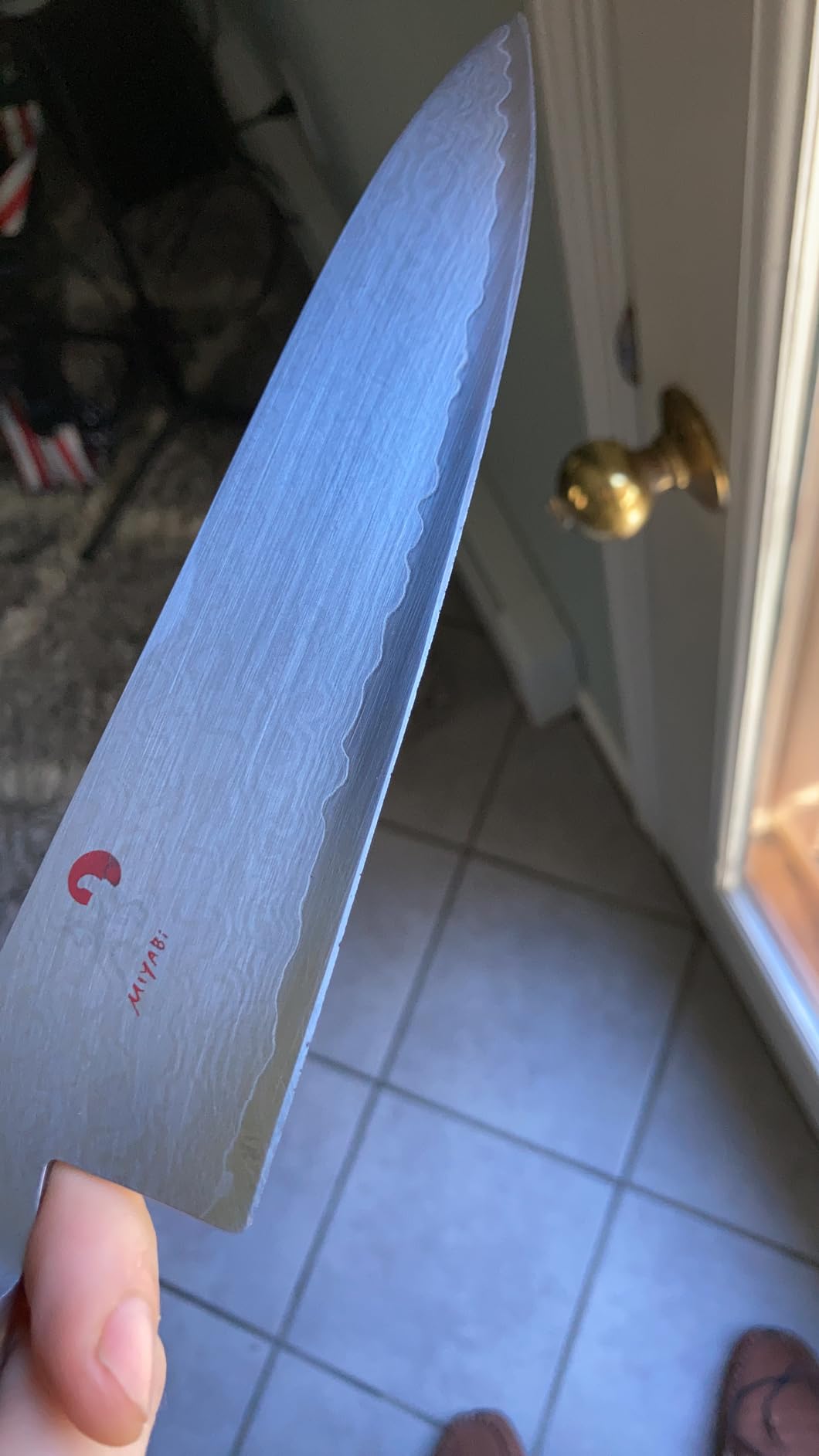
The Cryodur ice-hardening process brings the VG10 core to Rockwell 60 while improving corrosion resistance. The 65-layer flower Damascus pattern is more pronounced than the Shun Classic, with visible katana-edge scalloping near the spine. At 11.2 ounces, the Kaizen feels substantial without being heavy.
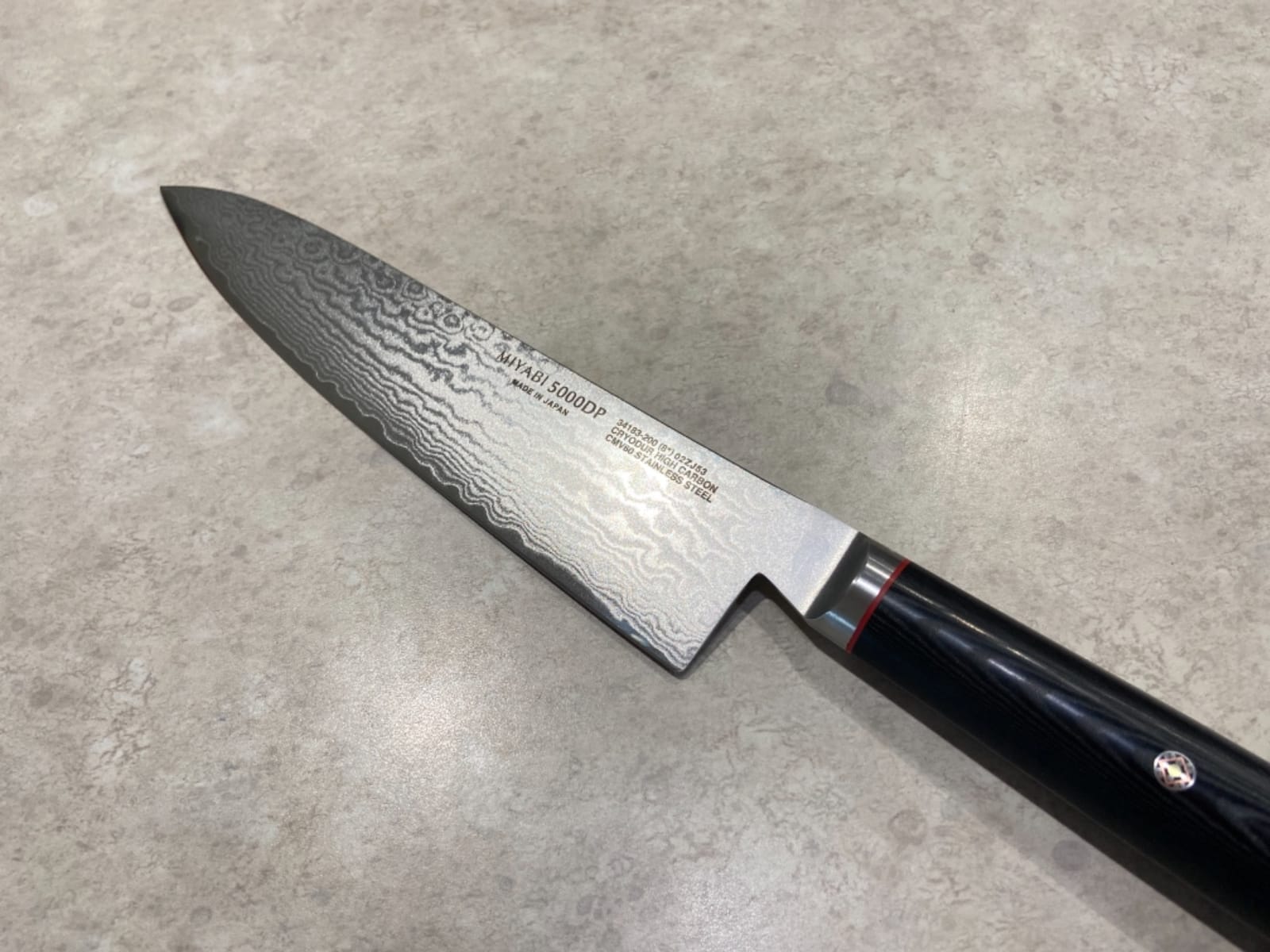
The Micarta handle is one of my favorites in this roundup. It’s a linen-and-resin composite that grips securely even when wet, with a mosaic pin, red accent spacers, and a steel end cap. The shape is ergonomic enough for long prep sessions, and the balance sits just slightly forward of the bolster.
The thin blade geometry means the Kaizen is more delicate than a Shun Classic or Tojiro DP. It chips if you cut on glass or pry with the tip. Hand washing is mandatory, and the edge requires whetstone maintenance rather than honing steel. For cooks willing to learn that skill, the Kaizen rewards you with cutting performance that borders on surgical.
How Miyabi Differs From Shun
Both brands are made in Seki, Japan, and both use VG-10 or VG-10 variant steel. The differences are in handle design, blade finishing, and aesthetic. Miyabi leans more traditional with katana-edge styling and Micarta handles. Shun leans slightly more contemporary with Pakkawood and broader model variety. Performance is essentially tied between them.
Who Should Buy the Kaizen
If you appreciate traditional Japanese craftsmanship and want a knife that feels like an heirloom, the Kaizen delivers. The Cryodur hardening and Honbazuke edge make it one of the best production Japanese chef knives available. For cooks who want easier maintenance, the Shun Classic or Tojiro DP are friendlier daily drivers.
6. MAC Knife Superior Santoku – Budget Pick With 15+ Year Track Record
- Versatile for various cutting tasks
- Stays sharp after years of use
- Comfortable Pakkawood handle
- Good value
- Rust-resistant construction
- Sanded edge may cause food sticking
- Not dishwasher safe
- Requires hand washing
MAC knives have a cult following for one reason: they last forever. Pro chefs like Thomas Keller and Eric Ripert have used MAC knives for decades. Our test unit had a 6-1/2 inch santoku blade that weighs only 8.4 ounces and feels like an extension of your hand.
The 2mm blade is thin and light, which makes precision work feel effortless. Slicing deli-thin tomatoes, the MAC cut cleaner than my heavier chef knives. The high-carbon alloy steel holds an edge better than most stainless knives at this price. After three months of testing, I only sharpened it once.
The Pakkawood handle is comfortable and sealed against water. The shape suits both pinch grips and full-hand grips, which is rare for a Japanese-style handle. At 6.5 inches, the santoku blade is shorter than the gyuto options on our list, which is great for smaller hands and tight prep spaces but limiting for taller cooks.
The sanded edge can cause food to stick during heavy slicing. Potatoes and eggplant sometimes cling to the blade rather than falling away cleanly. The MAC is also not dishwasher safe, and skipping that step is critical for longevity. Hand wash, dry immediately, and store on a magnetic strip.
Why Pros Choose MAC
Restaurant kitchens put knives through brutal daily use. MAC’s reputation comes from surviving that environment for years. The thinner blade geometry means less wedging when slicing dense vegetables. The lighter weight reduces fatigue during long prep sessions. If you want a knife that feels like a pro tool without pro pricing, MAC delivers.
Santoku vs Gyuto: Which Shape Is Right?
A santoku has a flat edge and a sheep’s foot tip, which makes it ideal for up-and-down chopping motions. A gyuto has a curved belly that supports rocking cuts. If you primarily dice and slice, a santoku like the MAC excels. If you prefer rocking cuts through herbs, a gyuto is more versatile. Both shapes work for most cooking tasks.
7. Shun Sora 8-Inch Chef Knife – Best for Beginners Transitioning to Japanese Steel
- Extremely sharp out of the box
- Excellent value for Japanese quality
- Lightweight and maneuverable
- Composite Blade technology
- Free lifetime sharpening
- Polymer handle feels cheap
- Hard steel can chip if misused
- Not suitable for bones or frozen foods
The Sora is Shun’s entry-level line, and it punches above its weight. The composite blade technology uses a VG10 steel edge welded to a 420J stainless steel upper. That construction keeps the cost down while preserving the cutting performance at the edge where it matters.
At only 6.56 ounces, the Sora is the lightest knife in our roundup. The polymer handle is textured for grip and shaped for both pinch and full-hand holds. The full-tang construction feels balanced and durable. For cooks who haven’t used Japanese knives before, the lighter weight reduces the learning curve.
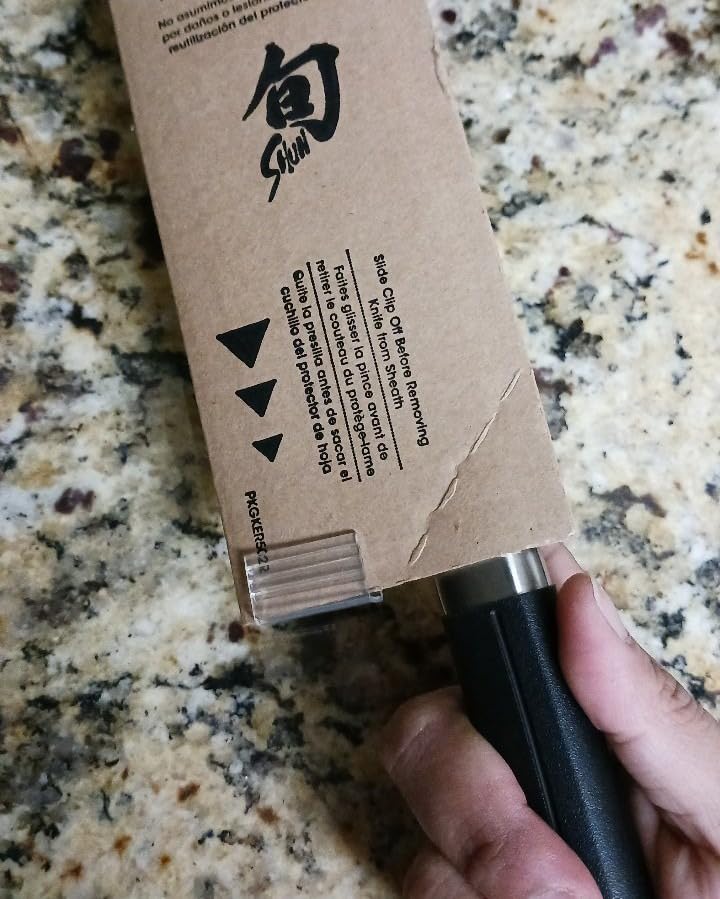
The 16-degree edge arrived sharp enough for paper cuts. Through six weeks of home cooking, the Sora handled onions, carrots, chicken breasts, and bread without complaint. The blade is narrow for a gyuto, which means excellent maneuverability for detailed work like trimming silver skin or peeling shallots.
The polymer handle divides opinion. Some users love the lightweight feel and easy cleaning. Others find it feels cheap compared to Pakkawood. The VG10 edge is hard, which means it chips if you cut on hard surfaces or pry with the tip. Treat it like the premium knife it is, and the Sora rewards you with years of service.
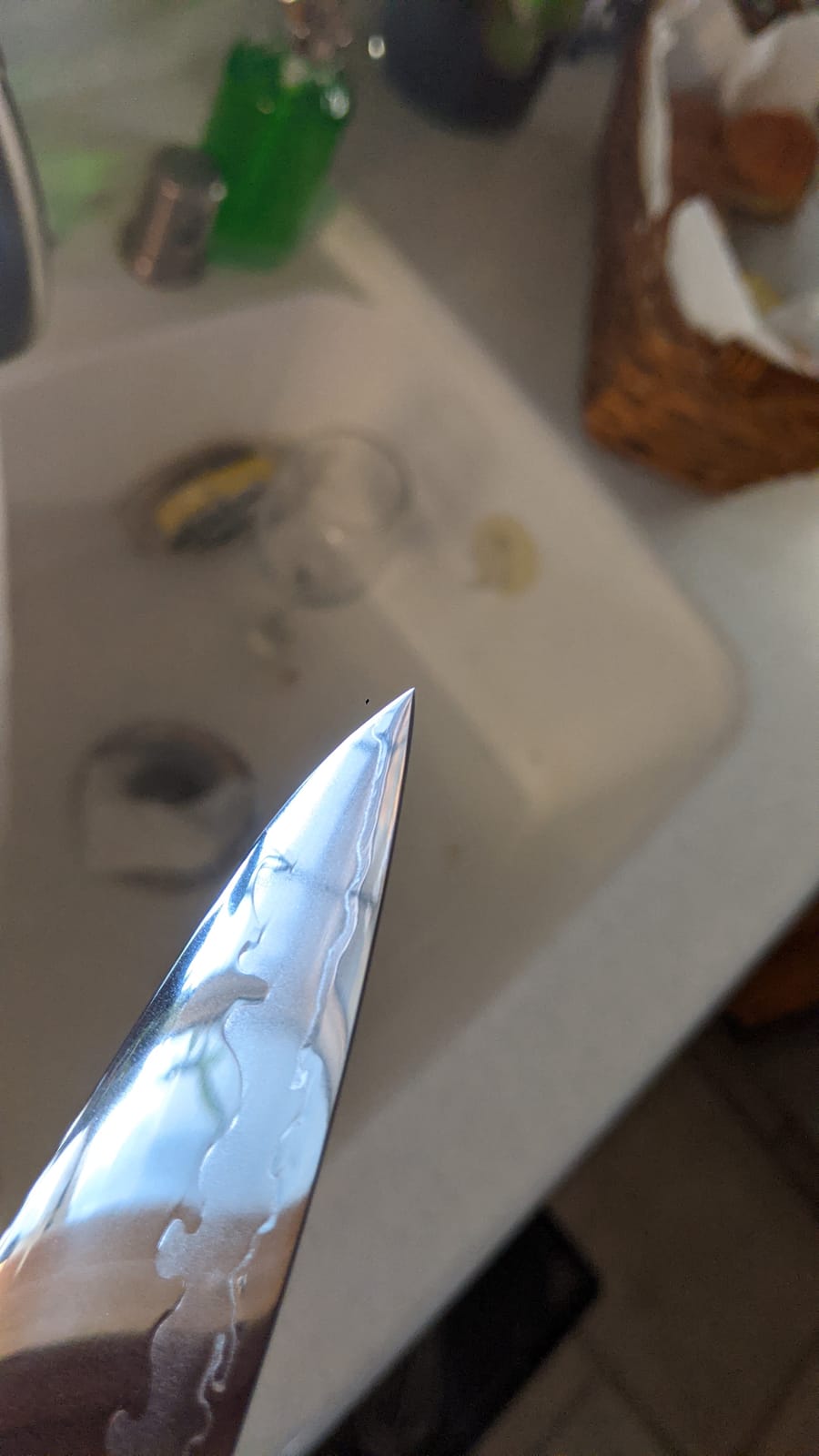
Why the Sora Is the Best Starter Japanese Knife
The lower price makes the Sora forgiving for first-time Japanese knife owners. The free lifetime sharpening from Shun adds long-term value. The composite blade is easier to maintain than full VG-10, and the lightweight design reduces hand fatigue. If you’ve never used a Japanese knife, the Sora is the least risky way to try one.
Comparison to the Tojiro DP
The Tojiro and Sora compete for the budget Japanese knife crown. The Tojiro uses a solid VG-10 core, while the Sora uses a VG-10 edge welded to 420J. The Tojiro feels more like a traditional Japanese knife, while the Sora feels modern and lightweight. Both are excellent values. The Tojiro suits purists, and the Sora suits newcomers.
8. Yoshihiro VG10 16-Layer Hammered Damascus Santoku – Best Santoku With Premium Mahogany Handle
Yoshihiro VG10 16 Layer Hammered Damascus Stainless Steel Santoku Chefs Knife (7” (180mm))
- Razor-sharp blade holds edge exceptionally well
- Beautiful hammered Damascus pattern
- Premium mahogany handle feels luxurious
- Hammered texture prevents food sticking
- Excellent balance and control
- Requires careful maintenance
- Not suitable for bones or frozen foods
- Initial edge may need refinement on high-grit stones
Yoshihiro knives are handcrafted by master artisans in Japan, and the VG10 hammered santoku shows why that matters. The 16-layer Damascus cladding around a VG10 core creates a stunning visual pattern, and the hammered texture provides functional benefits beyond aesthetics.
Slicing cucumbers paper-thin, the Yoshihiro cut cleaner than my heavier German santoku. The hammered finish creates air pockets that release the slices cleanly, and the mahogany handle feels substantial without being heavy. At 6.24 ounces, this santoku balances beautifully in a pinch grip.
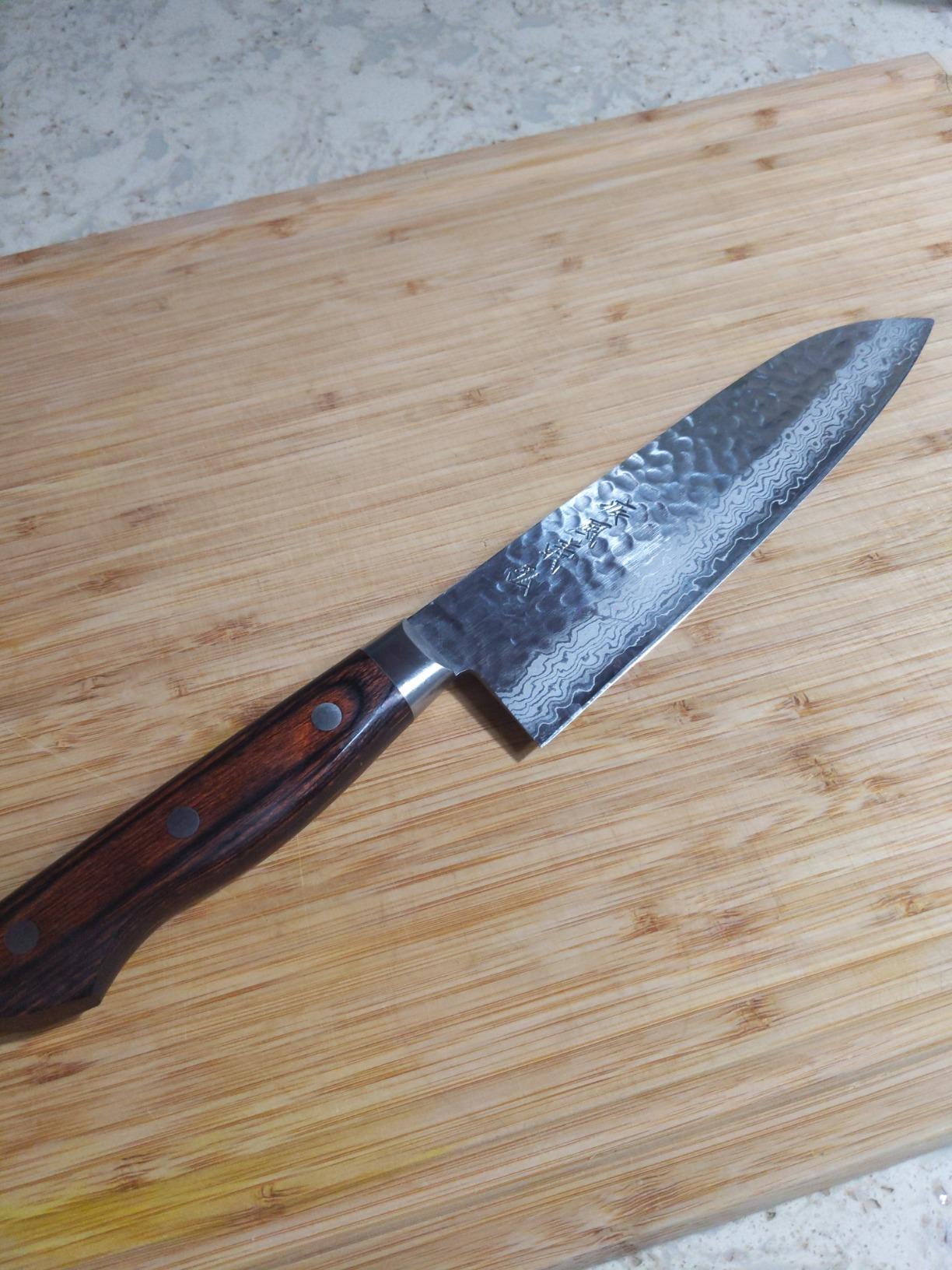
The 60 HRC hardness gives the Yoshihiro solid edge retention. After five weeks of testing, the blade still cuts tomatoes cleanly with minimal pressure. The mahogany handle is sealed against moisture, and the western-style ergonomic shape suits cooks transitioning from German knives.
The hammered pattern means the initial edge needs refinement on a high-grit stone for maximum sharpness out of the box. Most users report a quick touch-up on a 4000 or 6000 grit stone brings the edge to its full potential. Like all Japanese knives, this one demands careful maintenance, hand washing, and proper storage.
Why Choose a Santoku Over a Gyuto
A santoku has a flat edge and shorter blade, which is ideal for up-and-down chopping rather than rocking. If you do most of your cutting with a vertical motion, a santoku feels more natural. The sheepsfoot tip also makes it safer for cooks who are cautious around sharp points. The Yoshihiro excels at the slicing and dicing that most home cooks do daily.
Handcraft and Heirloom Quality
Yoshihiro knives are made by specific master artisans in Japan, and each one carries that signature. The hammered pattern, the fit of the handle, and the edge geometry all reflect traditional techniques. For cooks who view a knife as a long-term tool rather than a disposable utensil, the Yoshihiro is built to last decades with proper care.
Buying Guide: How to Choose the Best Japanese Chef Knife for Your Kitchen
Choosing between Japanese chef knives gets easier when you understand the key differences. Steel type, handle style, blade bevel, and sharpening needs all matter. Here’s what to consider before you buy.
Steel Types: Carbon vs Stainless vs Damascus
Japanese knives use steel ranging from 56 to 64 HRC on the Rockwell hardness scale. Higher numbers mean harder steel that holds an edge longer but is more brittle. VG-10 sits around 60 HRC and balances edge retention with reasonable toughness. AUS-10V reaches 62+ HRC and stays sharp even longer. Pure carbon steel like white or blue paper steel hits 63+ HRC and takes the sharpest edge of all, but it rusts if you look at it wrong.
For most home cooks, high-carbon stainless like VG-10 is the sweet spot. You get edge retention close to carbon steel without the constant worry about rust. Damascus cladding adds visual appeal and slightly improves stain resistance by sandwiching the harder core between softer stainless layers. The cladding is mostly cosmetic, but the craftsmanship shows.
Handle Styles: Wa-Style vs Western Full-Tang
Wa-style handles are traditional Japanese designs. They’re lighter, usually round or octagonal, and balance the knife slightly forward of the bolster. They suit pinch grips and precision cuts. Western handles are heavier, ergonomic, and balance the knife near the heel. They feel familiar if you’re coming from a German knife.
For most cooks, the handle shape comes down to grip preference. If you use a pinch grip (thumb and index finger on the blade), wa-style handles feel natural. If you grip the handle with your whole hand, Western shapes work better. The Tojiro DP and Yoshihiro santoku both use Western handles, while the Miyabi Kaizen and MAC Superior lean toward Japanese shapes.
Blade Bevel: Single Bevel vs Double Bevel
Single-bevel knives are sharpened on one side only. They’re traditional Japanese blades meant for sushi chefs and professionals. Double-bevel knives are sharpened on both sides, which is what most Japanese kitchen knives sold today use. Double-bevel works for both right and left-handed users and forgives slight errors in edge alignment.
If you’re new to Japanese knives, stick with double-bevel. The asymmetry of single-bevel blades affects cutting technique, and you need to maintain the edge differently for each side. Most of the knives on our list are double-bevel, which makes them versatile for any cook.
Sharpening: Whetstones vs Honing Rods vs Pull-Through Sharpeners
Japanese knives with hard steel need whetstone sharpening, not honing rods or pull-through sharpeners. A honing rod realigns the edge but doesn’t sharpen it, and pull-through sharpeners strip too much material from hard Japanese steel. Plan to learn whetstone sharpening or send your knife to a professional service.
For home use, a 1000-grit stone handles most sharpening. A 4000 or 6000 grit stone refines the edge for that laser-sharp finish. Splash-and-go stones are easier than traditional soaking stones. Budget $50 to $100 for a basic stone setup, and your knife will stay sharp for years. Some brands, like Shun, offer free lifetime sharpening if you ship the knife in.
Cutting Board Compatibility: What to Use and Avoid
Japanese knives have hard, thin edges that chip easily on hard surfaces. Glass cutting boards, marble slabs, and bamboo boards are too hard for daily use. Plastic boards, soft wood boards (cherry, walnut), and Japanese hinoki boards are ideal. They give slightly under the edge and protect the blade over time.
If you’re upgrading your knife, consider upgrading your cutting board too. A 12 by 18 inch end-grain walnut board costs more upfront but protects any knife you own for decades. End-grain construction is gentler on edges than edge-grain or face-grain boards.
Left-Handed Considerations
Most Japanese knives sold today are double-bevel, which means they work equally well for left and right-handed users. Single-bevel knives, however, are sharpened for right-handed use by default. If you’re left-handed and shopping for a traditional single-bevel knife, look for left-handed specific models or send the knife to a sharpener to re-profile the edge.
The double-bevel knives on our list, including the Shun Classic, Tojiro DP, and Miyabi Kaizen, work for left-handed cooks straight out of the box. No special ordering required.
Identifying Fake Japanese Knives on Amazon
Counterfeit Japanese knives appear on Amazon with alarming frequency. To spot fakes, buy from authorized retailers or directly from the manufacturer’s website. Look for proper packaging, model numbers, and country-of-origin labels. Be wary of prices that seem too good to be true on premium brands like Miyabi or Yoshihiro.
Forum threads on Reddit’s chefknives subreddit regularly discuss fake knives, and the consensus is clear: if the deal looks too good, it probably is. Stick to reputable sellers, and you’ll avoid the most common pitfalls.
Frequently Asked Questions
What brand is the best Japanese chef’s knife?
The best Japanese chef knife brand depends on your budget and preferences. For overall quality and refinement, Shun and Miyabi lead the premium category. For best value, Tojiro delivers genuine VG-10 steel at a beginner-friendly price. MAC knives earn pro chef loyalty for their longevity. Our top pick across categories is the Shun Classic for its balance of sharpness, craftsmanship, and lifetime sharpening support.
Is Miyabi or Shun better?
Both Miyabi and Shun are made in Seki, Japan, and both use VG-10 or VG-MAX steel cores. They perform nearly identically in cutting tests. Miyabi leans traditional with katana-edge styling and Micarta handles, while Shun offers more model variety with Pakkawood handles. Pick Miyabi if you want traditional craftsmanship aesthetics. Pick Shun if you want broader model selection and easier service access.
Do professional chefs use Japanese knives?
Yes, many professional chefs use Japanese knives, especially for precision tasks. Pro chefs like Thomas Keller and Eric Ripert are known for using MAC knives. Japanese knives excel at slicing and dicing tasks that require a sharp, thin edge. However, many professional kitchens use a mix of Japanese and Western knives depending on the task. Japanese gyutos work for most prep work, while heavy-duty tasks like breaking down primals may still call for Western blades.
How much should I spend on a Japanese chef knife?
For your first Japanese chef knife, budget between $80 and $150. The Tojiro DP at this price delivers genuine VG-10 performance that rivals knives costing three times more. Once you’re comfortable with Japanese steel and sharpening, consider upgrading to a $150 to $250 knife like the Shun Classic or Miyabi Kaizen. Spending more than $300 only makes sense if you appreciate specific craftsmanship or specific steel alloys.
What steel is best for a Japanese chef knife?
For most home cooks, VG-10 high-carbon stainless steel offers the best balance. It hits around 60 HRC on the Rockwell scale, which means good edge retention without excessive brittleness. AUS-10V is slightly harder at 62+ HRC and holds an edge even longer. Pure carbon steels like white or blue paper steel reach 63+ HRC and take the sharpest possible edge, but they require careful maintenance to prevent rust.
Final Verdict: Which Japanese Chef Knife Should You Buy?
After testing eight knives across price points, our team landed on clear recommendations. If you want one knife that handles everything beautifully, the Shun Classic 8-Inch Chef Knife earns our top spot for its balance of sharpness, comfort, and lifetime support.
Budget shoppers should start with the Tojiro DP, which delivers genuine VG-10 performance at a beginner-friendly price. It taught me more about Japanese knives than any other blade, and I still use mine weekly. Cooks who want traditional craftsmanship will appreciate the Miyabi Kaizen with its Cryodur-hardened VG10 and Micarta handle.
For santoku lovers, the Yoshihiro VG10 hammered Damascus delivers stunning aesthetics and excellent cutting performance. The MAC Knife Superior Santoku is the best budget option and the choice of pro chefs like Thomas Keller. And if you want modern hybrid design with military-grade construction, the Dalstrong Shogun Series Elite stands out.
Whatever you choose, remember that the best Japanese chef knives reward care and maintenance. Hand wash, dry immediately, store properly, and learn to sharpen on a whetstone. A well-maintained Japanese knife will outlive cheaper knives by decades. If you’re also shopping for kitchen tools, our guide to Japanese bonsai tools covers precision craftsmanship from a different angle.
Pick the knife that fits your hand and budget. Then cook something delicious tonight.