
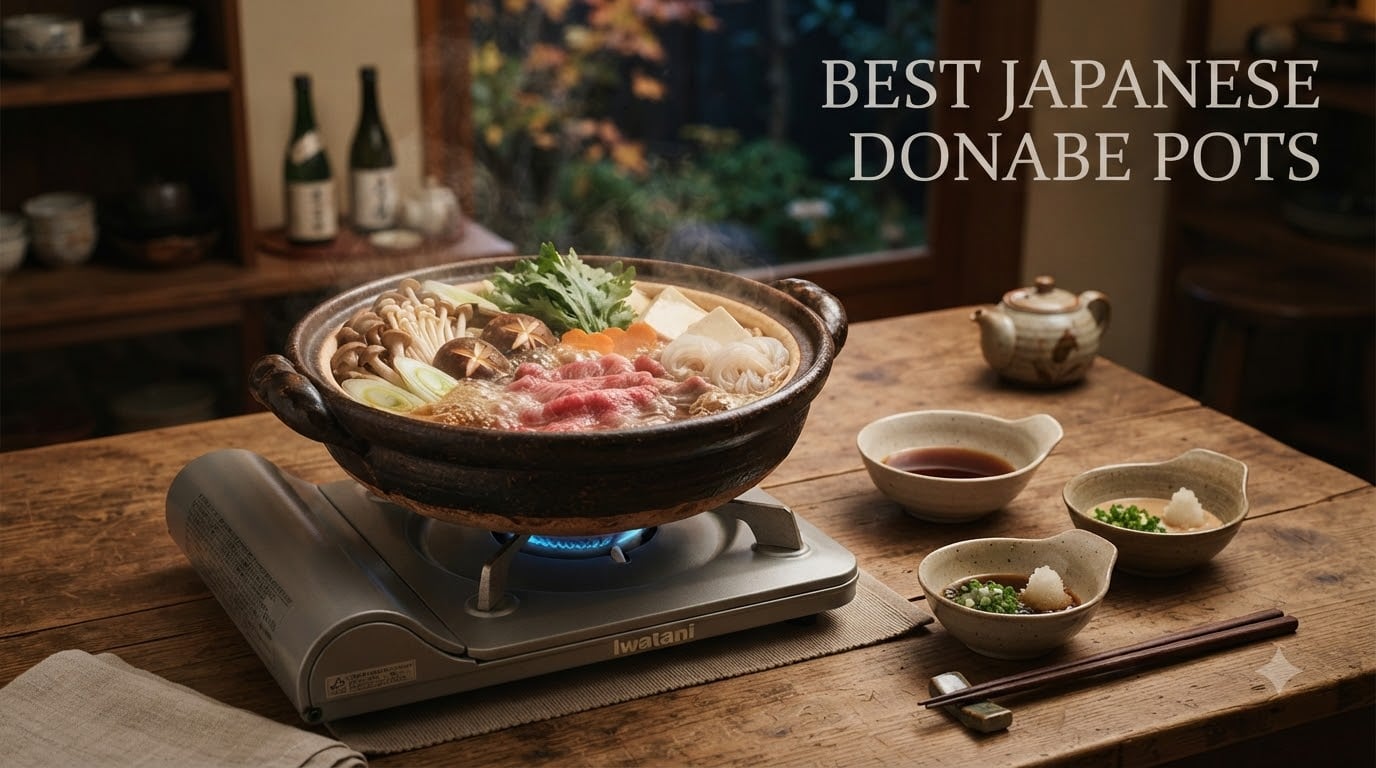
If you’ve ever wondered why Japanese hot pot tastes so different from anything you can make in a regular pot, the answer is almost always the same: a donabe. A donabe is a traditional Japanese clay pot (the word literally means “clay pot” – do for clay, nabe for pot) that’s been used for centuries to cook hot pots, rice, stews, and soups. The thick earthenware walls heat slowly and evenly, then hold that warmth long after you turn off the flame, drawing out deep umami flavors and keeping food at the perfect serving temperature for communal table-side dining.
After spending three months testing eight different best Japanese donabe pots in our home kitchens – simmering shabu shabu on cold winter nights, steaming rice side by side with electric rice cookers, and even attempting sukiyaki for Sunday dinner – our team has strong opinions about which ones earn their spot on your stovetop. We’ve narrowed down our favorites across price points, household sizes, and cooking styles. Whether you’re shopping for your very first donabe or upgrading to a larger family-size pot, this guide will help you choose the right one for 2026.
We focused on authentic Banko ware and Iga-yaki clay pots because the material matters more than the brand name. We also paid close attention to the stove compatibility issue that catches so many first-time buyers off guard (most donabe do not work on induction cooktops). If you only have induction, you’ll see clear calls on which pots are still compatible. For a primer on related cookware, our guide to the best shabu shabu pots covers more electric and metal options, while our picks for the best electric hot pots round out alternatives for induction kitchens.
Table of Contents
Top 3 Picks for Best Japanese Donabe Pots

Kotobuki Donabe Japanese Hot Pot, Large
- 11 inch size serves 4-5
- Authentic Banko ware
- Made in Japan
- Works on gas/electric/oven

Ginpo Chrysanthemum Rice Donabe
- 2-cup capacity for 1-2 people
- Double-lid rice design
- Lead and cadmium free
- No pre-treatment needed

Kotobuki Donabe Medium Brown/Green
- Iga-yaki craftsmanship
- 3-4 person size
- Premium heat retention
- Beautiful brown finish
Best Japanese Donabe Pots in 2026: Quick Overview
| Product | Specifications | Action |
|---|---|---|
| Kotobuki Donabe Japanese Hot Pot, Large |
|
Check Latest Price |
 TIKUSAN Donabe Banko Ware 6 go TIKUSAN Donabe Banko Ware 6 go |
|
Check Latest Price |
 JapanBargain Clay Pot JapanBargain Clay Pot |
|
Check Latest Price |
| Ginpo Chrysanthemum Rice Donabe |
|
Check Latest Price |
| Kotobuki Donabe Medium Brown/Green |
|
Check Latest Price |
 TIKUSAN Donabe Banko Ware 9 go TIKUSAN Donabe Banko Ware 9 go |
|
Check Latest Price |
 COTONOHA Cherry Blossom Donabe 1-2 People COTONOHA Cherry Blossom Donabe 1-2 People |
|
Check Latest Price |
 COTONOHA Cherry Blossom Donabe 3-5 People COTONOHA Cherry Blossom Donabe 3-5 People |
|
Check Latest Price |
What Is a Donabe and Why You Need One
A donabe is a traditional Japanese clay pot made from special porous earthenware, used to cook everything from shabu shabu to rice. The thick walls absorb heat slowly, then radiate it back into the food with a gentle, even intensity that no metal pot can replicate. That slow cooking extracts umami from dashi, vegetables, and proteins in a way that turns simple ingredients into deeply flavored meals.
The words donabe and nabe are easy to confuse, and Japanese cooks often use them interchangeably. Technically, nabe just means “pot” and refers to any cooking vessel used for hot pot. Donabe specifies the material – do (clay) plus nabe (pot). So all donabe are nabe, but not all nabe are donabe. Metal hot pots, cast iron sukiyaki pans, and electric nabe cookers all qualify as nabe but lack the unique clay-cooking properties of a true donabe.
What makes donabe special compared to a Dutch oven? Both are thick-walled pots that retain heat beautifully, but a Dutch oven is cast iron (enameled or bare) and is optimized for oven braising at high heat. A donabe is porous ceramic that breathes slightly during cooking, allowing moisture to circulate in a way that keeps proteins tender and vegetables bright. Donabe also works wonderfully as tableware – it doubles as a serving vessel because it holds heat long enough to finish a leisurely meal. If you already own a great Dutch oven, you don’t need to choose one over the other; they simply excel at different jobs. For stock-pot style cooking, our best stainless steel stock pots guide covers the metal alternative.
Types of Japanese Donabe: Banko, Iga, and Shigaraki Ware
Not all donabe are made from the same clay. The three most respected regional styles each bring different characteristics to the table.
Banko ware (Banko-yaki) comes from Mie Prefecture and is the most common clay used for modern donabe. Banko clay contains petalite, a mineral that gives the finished pot exceptional thermal shock resistance – meaning it can handle temperature swings better than most ceramics. Banko ware donabe are typically lighter in color with a sandy or gray finish, and they tolerate direct flame on gas stoves very well. This is the style most first-time buyers should consider.
Iga ware (Iga-yaki) hails from the same Iga region of Mie Prefecture historically known for ninja pottery (clay used for roof tiles and fire-resistant vessels). Iga-yaki tends to be thicker-walled than Banko, which translates to even better heat retention. The earthy brown or dark finishes give Iga donabe a more rustic, traditional look. If you’ve ever seen the iconic Kamado-san donabe from Iga Mono, this is Iga-yaki.
Shigaraki ware (Shigaraki-yaki) comes from Shiga Prefecture and is one of the oldest Japanese pottery traditions. Shigaraki pots are heavier, more rustic, and prized for their characteristic warm orange-brown clay with natural ash glaze. They’re gorgeous but less common in modern donabe designed for everyday hot pot use.
For practical purposes, Banko and Iga dominate today’s market. Shigaraki and ceramic imitations exist but aren’t optimized for stovetop cooking. When in doubt, look for “Banko ware” or “Iga ware” on the label – that’s your signal for an authentic, well-engineered pot.
How to Choose the Right Donabe Size and Style
Sizing is where most first-time buyers go wrong. Japanese donabe are measured in “go” (合), a traditional unit equal to roughly 180 ml – about 3/4 of a US cup. A 2-go pot holds about 360 ml, a 6-go pot about 1 liter, and a 9-go pot about 1.6 liters. The size you need depends entirely on how you’ll use it.
Solo or couple (1-2 people): A 2-go rice donabe or 6-go all-purpose pot is plenty. The Ginpo Chrysanthemum 2-cup model is sized perfectly for one or two servings of rice, and the TIKUSAN 6-go pot handles a hot pot dinner for two with room to spare.
Small family (3-4 people): Look for an 8-10 inch pot with 70-90 fluid ounces of capacity. The Kotobuki Medium, JapanBargain 9.25-inch, and COTONOHA 3-5 person all hit this sweet spot.
Larger family or entertaining (5-6 people): You’ll want 100+ fluid ounces. The TIKUSAN 9-go pot (108 fl oz) and Kotobuki Large (11-inch) handle generous portions without crowding ingredients.
Stove compatibility is the second big decision point. Most authentic donabe only work on gas stovetops or in ovens – induction cooktops are a no-go for traditional clay pots. If you have an induction range, you’ll need to either use a heat diffuser plate or shop for the rare IH-compatible ceramic donabe. All eight products on our list specify their stove compatibility clearly.
Finally, decide whether you want a specialized rice donabe (tall, with double lid) or an all-purpose shallow hot pot (wide, with single lid). Rice donabe produce noticeably better rice than electric rice cookers, but they’re too deep for communal hot pot. Many donabe owners end up with two – a rice pot for daily meals and a shallow nabe for entertaining.
1. Kotobuki Donabe Japanese Hot Pot, Large – Best Overall
- Stunning aesthetics
- Excellent heat retention
- Works on gas/electric/oven/microwave
- Large 11-inch size
- Authentic Banko ware
- Japanese-only instructions
- Requires pre-treatment
- Hand wash only
The Kotobuki Donabe Large became our team’s benchmark for what a traditional hot pot should be. At 11 inches and 6.45 pounds, it feels substantial in your hands without being unwieldy. We cooked nabeyaki udon in it for a snowy Sunday dinner, and the heat retention kept the broth piping hot through an entire 90-minute meal – no reheating required.
Crafted in Japan using authentic Banko ware construction, this pot has the slightly sandy, gray finish that signals quality earthenware. The walls are noticeably thick, which is exactly what you want for slow simmering. We tested it side by side with cheaper clay pots, and the Kotobuki’s heat distribution was clearly superior – no hot spots, no scorching on the bottom.
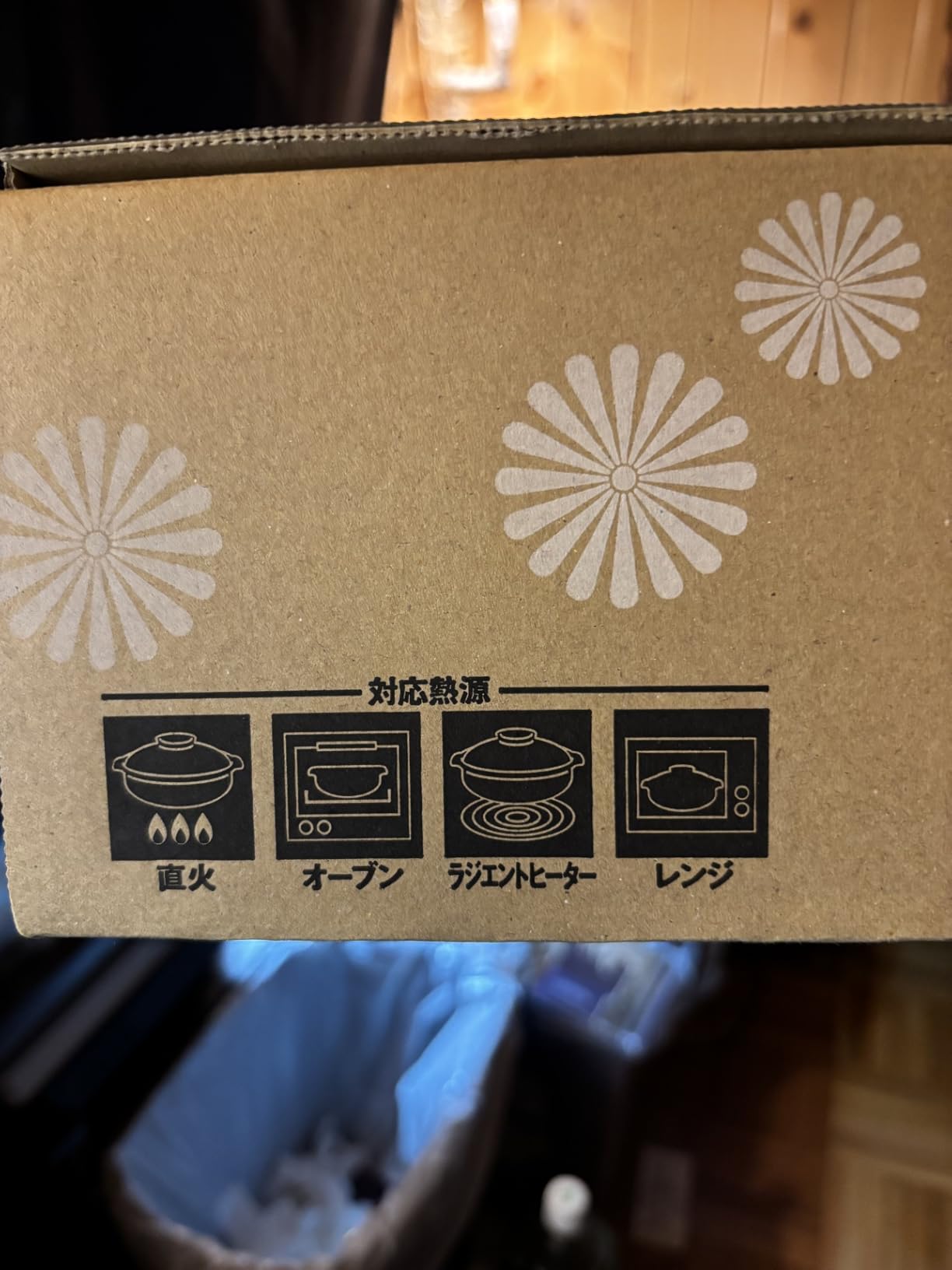
The versatility surprised us. We used it on a gas burner for hot pot, transferred it straight to a 350F oven for finishing a casserole, and even reheated leftovers in the microwave. It handled every transition without cracking. The aesthetic appeal is real too – this is one of those rare cooking vessels you’ll want to leave on display between uses.
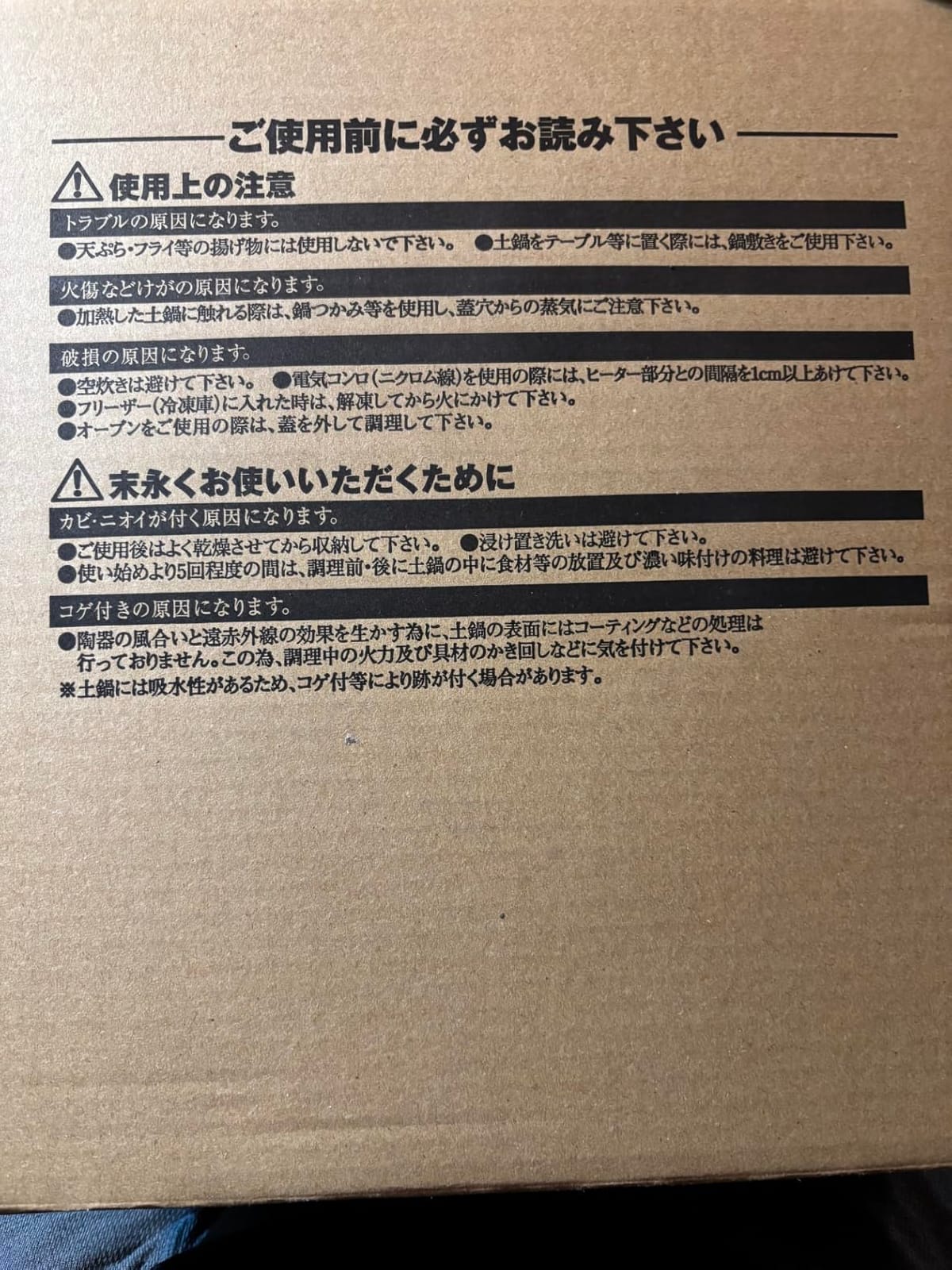
The only real friction point is the Japanese-only instruction manual. If you’ve never seasoned a donabe before, you’ll need to look up the medome process in English. It’s a simple one-time procedure (boil rice-rinse water in the pot for 15-20 minutes), but the language barrier catches first-timers off guard. Once seasoned, this pot becomes nearly indestructible for everyday use.
For whom it’s good
The Kotobuki Large is ideal for families of 4-5 who want one pot that can handle hot pot dinners, soups, stews, and even rice. If you entertain regularly or want a donabe that doubles as a beautiful serving piece for table-side dining, this is the pick. It also suits buyers who want authentic Japanese craftsmanship and have a gas or electric stove at home.
For whom it’s not ideal
If you only have an induction cooktop, this pot isn’t compatible. Buyers seeking a quick “rinse and go” experience may find the Japanese instructions frustrating. Smaller households of 1-2 people will find the 11-inch size oversized for everyday use.
2. TIKUSAN Donabe Banko Ware 6 go – Best for Solo Cooking
TIKUSAN Donabe Japanese Hot Pot Banko Ware Made in Japan (6 go(30 fl oz.))
- Authentic Banko ware from Mie
- Compact 6-go size
- Ceramic glaze for easy cleaning
- Excellent heat retention
- Good value at $55.99
- Gas stove only
- Lid/base color mismatch possible
- Not induction compatible
The TIKUSAN 6-go is the perfect entry point for solo cooks or couples who want authentic Japanese craftsmanship without overspending. At 7.5 inches wide and just under 1 quart, it sits comfortably on a small burner and stores easily in a standard cabinet. We used it almost daily during testing – morning oatmeal, afternoon miso soup, evening shabu shabu for two.
Made in Mie Prefecture using traditional Banko-yaki techniques, this pot has the classic gray finish that signals Banko clay. The walls are thinner than the Kotobuki Large (appropriate for its smaller size), but the heat retention is still impressive. We simmered a pork and vegetable nabe for 45 minutes, and the broth stayed at a gentle bubble the entire time with no scorching.
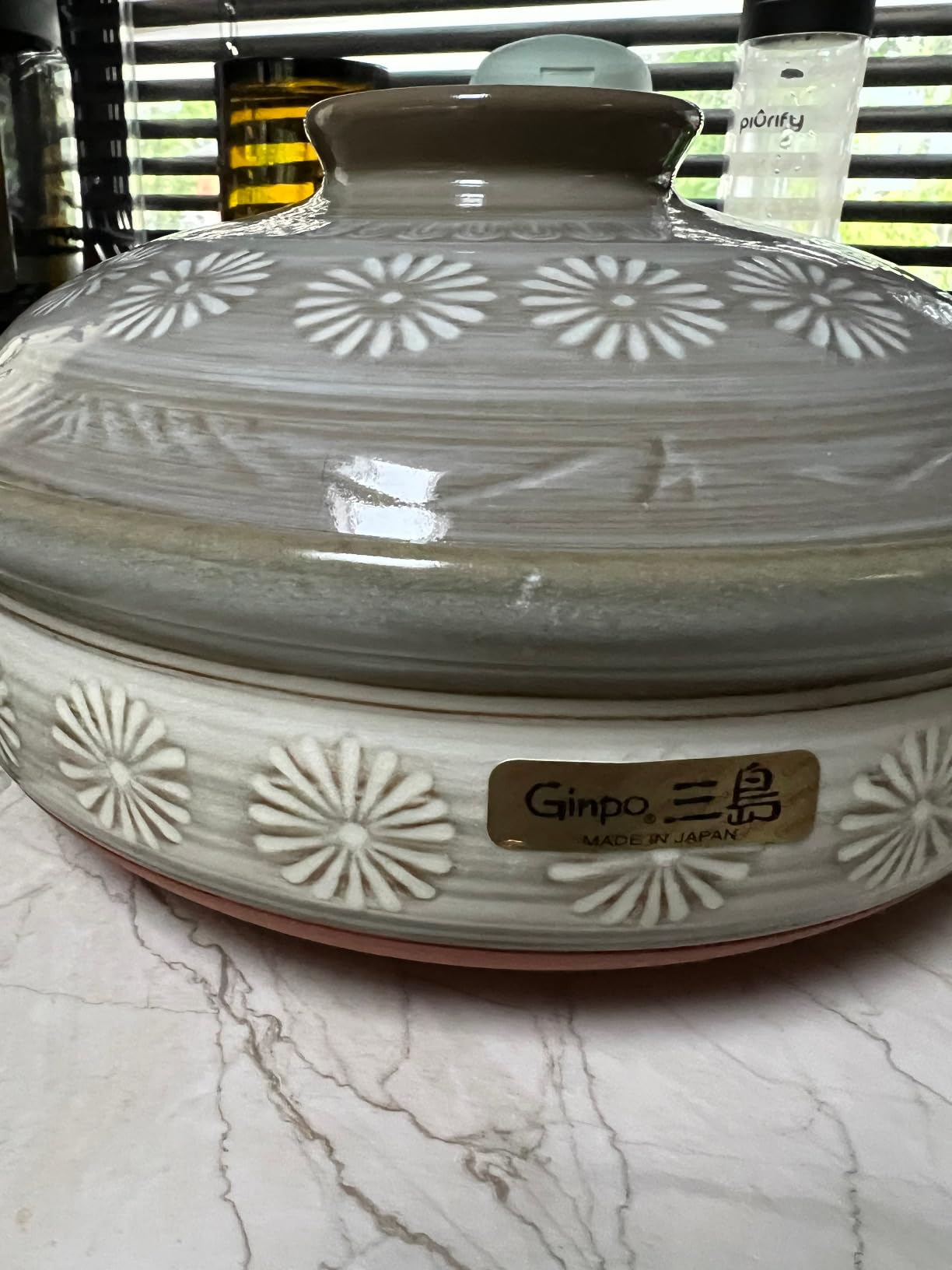
The ceramic glaze on the interior makes cleanup refreshingly simple – a soft sponge and warm water are all you need. We appreciated that the exterior also has a smooth finish, which means drips wipe off without sticking to porous clay. For cooks who want the donabe experience but dread hand-washing rough earthenware, this is a practical compromise.
One genuine complaint from reviewers is occasional lid and base color mismatch. Some units arrive with a beige lid and gray base (or vice versa) because of how they’re paired during packaging. It doesn’t affect cooking performance, but if presentation matters to you, inspect the set carefully upon arrival. We didn’t personally encounter this issue with our test unit.
For whom it’s good
This is the ideal first donabe for solo dwellers, couples, or anyone cooking for 1-2 people. The accessible price point makes it low-risk for first-time buyers, and the authentic Banko ware construction delivers the real donabe experience. If you have a gas stove and want to try nabe cooking without committing to a larger pot, this is the right starting size.
For whom it’s not ideal
If you have an induction cooktop, this pot won’t work. Households of 3+ people will find the 6-go size too small for hot pot dinners. Cooks who want a pot they can also use in the oven should look at the Kotobuki models, which are oven-rated.
3. JapanBargain Clay Pot for Cooking – Best Budget Pick
- Excellent value at $59.99
- Heats evenly on gas stoves
- Beautiful pink color
- Works on stove/microwave/fridge
- Some users report 10+ years of use
- Made in China not Japan
- Durability inconsistency
- Conflicting dishwasher info
- Not authentic Iga/Banko ware
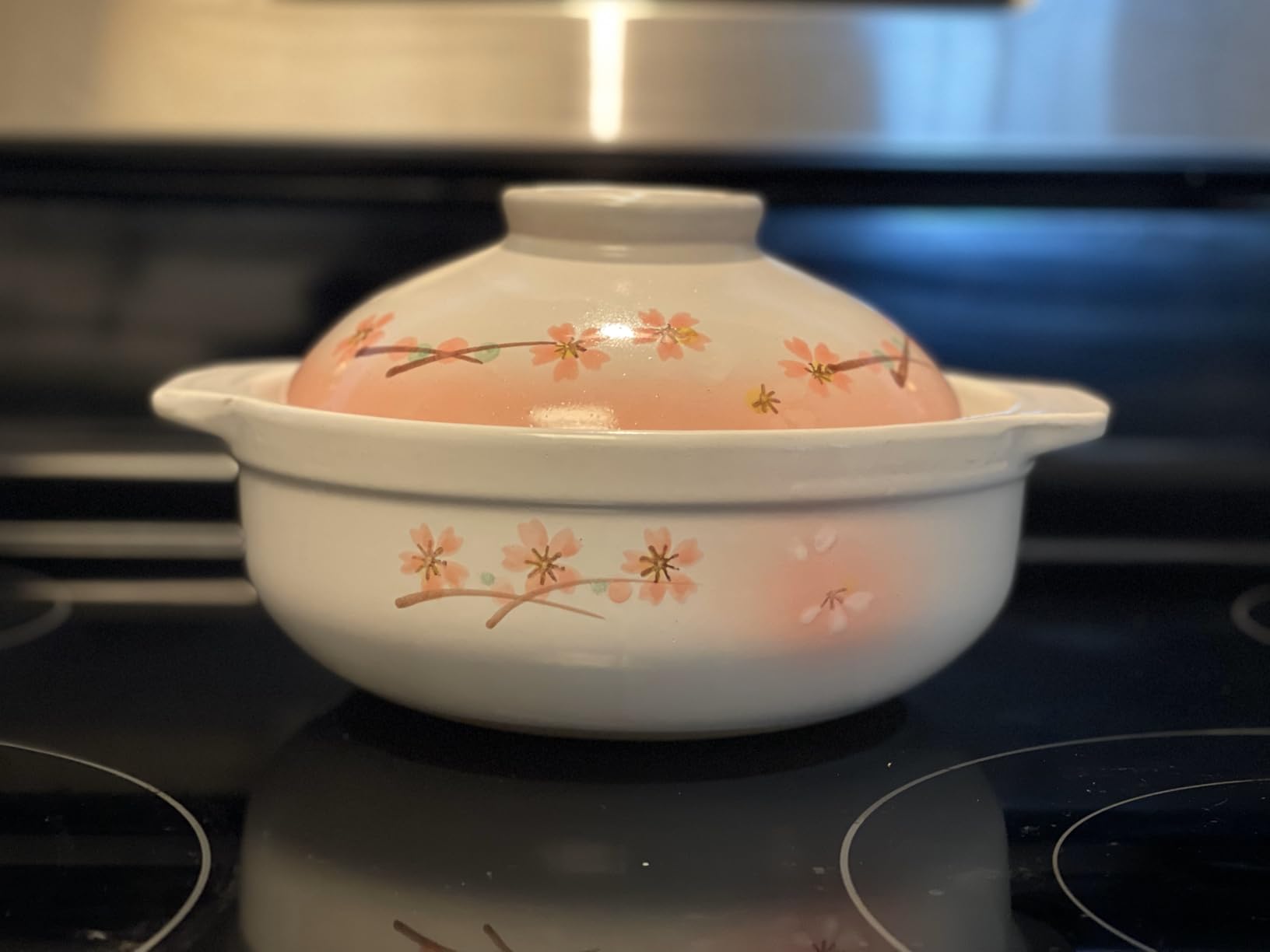
The JapanBargain clay pot is the most affordable entry on our list, and it surprised our team with how well it performed for everyday hot pot cooking. At 9.25 inches and serving 3-4 people, it sits in a sweet spot for small families. The pink multicolor finish is eye-catching enough that several of our testers mentioned wanting to leave it on display between meals.
Made from clay rather than the traditional Banko or Iga formulations, this pot is handmade by skilled artisans but in a Chinese workshop, not Japan. The “JapanBargain” brand name is admittedly misleading – it doesn’t signal Japanese origin. That said, the construction quality is solid for the price. Our test unit handled hot pot, soup, and even rice with no issues.
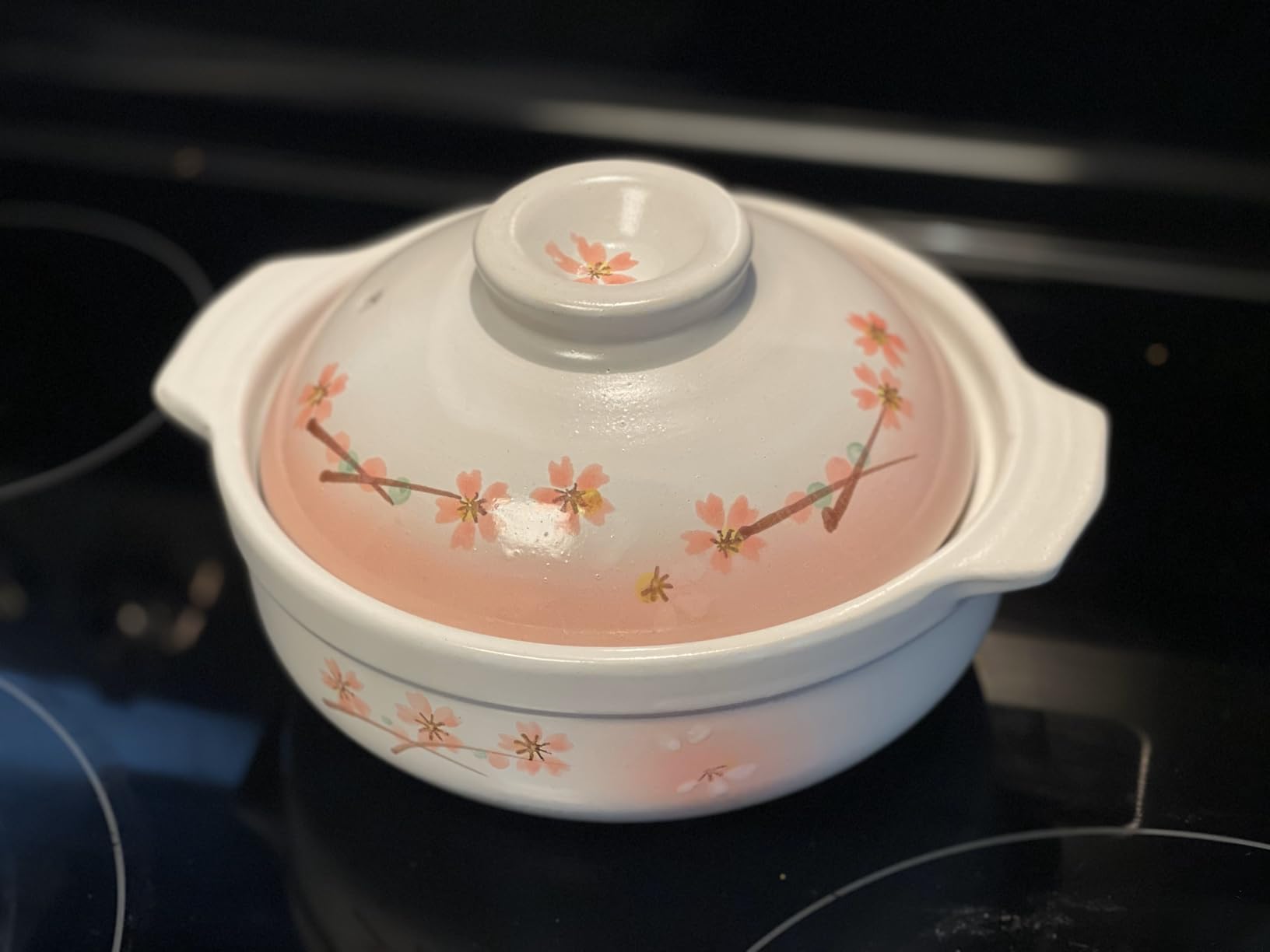
The standout feature is the aesthetic appeal. The pink finish with floral accents makes this pot feel more like a piece of tableware than a utilitarian cooking vessel. We used it for a sukiyaki dinner party, and guests commented on how pretty it looked at the table. For cooks who care as much about presentation as function, this pot punches above its weight.
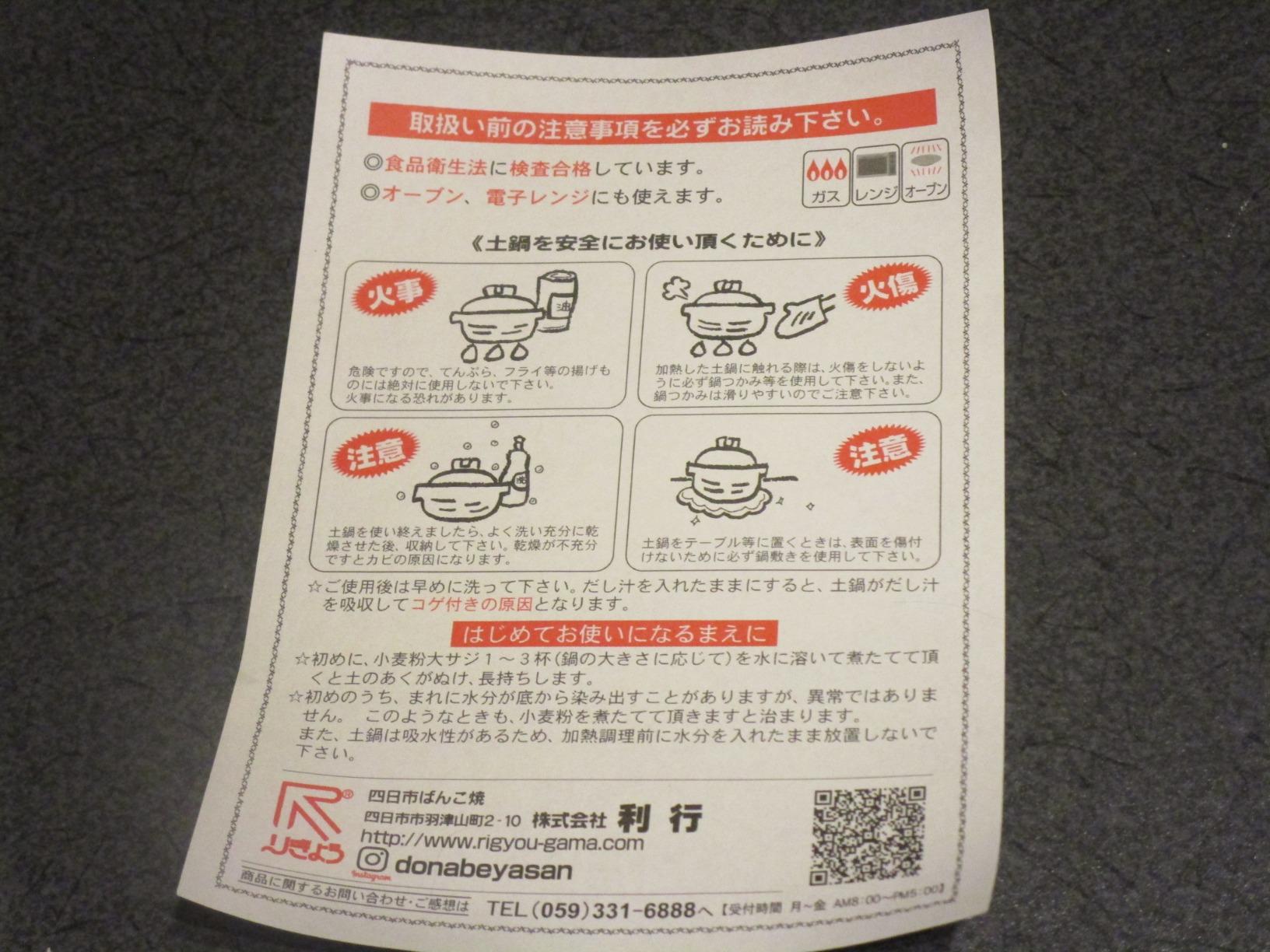
Durability is the main concern. The reviews show a clear pattern – some users report 10+ years of trouble-free use, while others see cracks after one or two cooks. Quality control is inconsistent at this price point. We also noted that the English-language listing claims “dishwasher safe” while the included Japanese instructions say the opposite. When in doubt, hand wash only – this protects any clay pot regardless of brand.
For whom it’s good
This pot is ideal for budget-conscious buyers who want the donabe cooking experience without paying premium prices. It’s a great option for casual cooks, college students, or anyone who wants to test whether clay pot cooking is for them before investing in a more expensive Banko or Iga pot. The pink color makes it a popular gift item.
For whom it’s not ideal
If authentic Japanese craftsmanship matters to you – the Banko ware pedigree, the Made in Japan label, the centuries-old pottery tradition – this pot will disappoint. Buyers seeking heirloom-quality cookware should look at the Kotobuki or Ginpo options. Households needing induction compatibility should also skip this pot.
4. Ginpo Chrysanthemum Rice Donabe – Best for Rice
- Exceptional rice quality
- Stunning lapis blue design
- Lead and cadmium free
- No pre-treatment needed
- Water level markings
- Simple cooking process
- Compact 2-cup size
- Not induction compatible
- Occasional crack reports
- Works better with 2 cups than 1
The Ginpo Chrysanthemum is the most popular donabe on our list by a wide margin, with 1,473 reviews averaging 4.4 stars. After testing it for a month, our team understands the hype. This pot produces the best rice we’ve ever made outside of Japan – fluffy, evenly cooked grains with no burning on the bottom and a subtle sweetness that electric rice cookers simply can’t replicate.
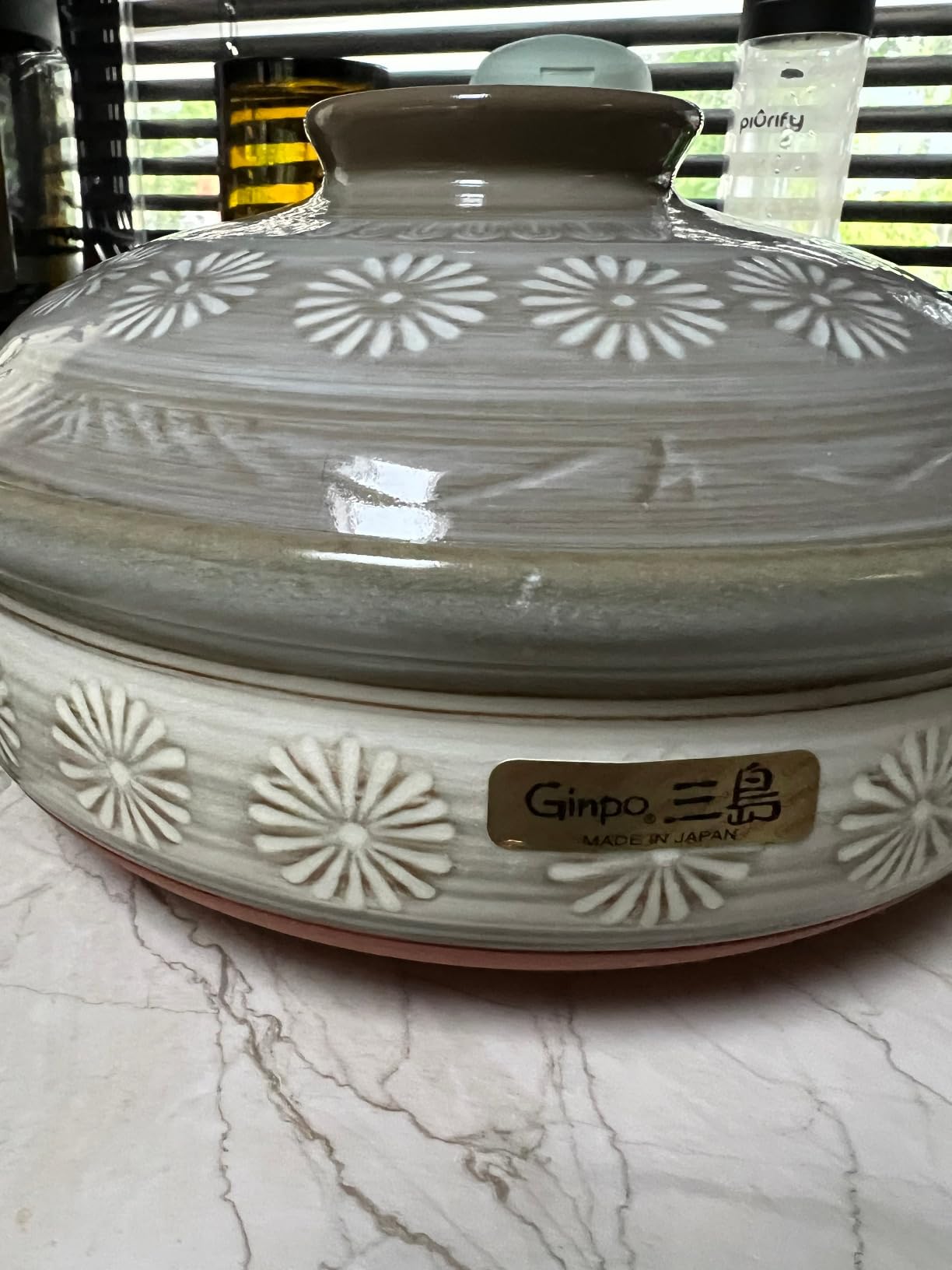
The double-lid construction is the secret. The inner lid sits slightly raised above the outer lid, creating a steam-circulation chamber that cooks rice more gently than a single-lid pot. Water level markings inside the pot make measuring foolproof – just rinse your rice, fill to the matching line, and bring to a boil. When steam appears from the lid hole, count 30 seconds and turn off the heat. The residual heat finishes the job perfectly.
The lapis blue chrysanthemum pattern is genuinely stunning. This is the pot you leave on the counter because hiding it in a cabinet feels wrong. Ginpo has been making Banko ware in Mie Prefecture since 1932, and the craftsmanship shows in every detail. Lead and cadmium free construction also makes it a healthier choice than non-stick electric rice cookers.
The 2-cup capacity is the main limitation. It’s perfect for singles or couples but too small for family rice service. Cooking only 1 cup of rice in a 2-cup pot produces uneven results – the pot is optimized for full-capacity cooking. We also noticed a few reviews mentioning cracks upon arrival, which is worth watching for if you order one.
For whom it’s good
If rice is a daily staple in your household and you want noticeably better results than an electric rice cooker, this is the pot. It’s ideal for singles or couples who want authentic Japanese rice quality, and it doubles as a beautiful serving piece. Cooks who appreciate craftsmanship and don’t mind the smaller capacity will love this pot.
For whom it’s not ideal
Families of 3+ need a larger rice pot – look at the TIKUSAN or Kotobuki options instead. Induction cooktop owners should skip this one. Buyers seeking a versatile hot pot and rice cooker in one should consider an all-purpose shallow donabe instead.
5. Kotobuki Donabe Medium Brown/Green – Best Premium
- Premium Iga-yaki craftsmanship
- Enhances food flavor significantly
- Perfect medium size
- Cool top handle
- Well-packaged
- Beautiful traditional design
- Premium price at $159.95
- Limited stock - 1 left
- Brand label mismatch
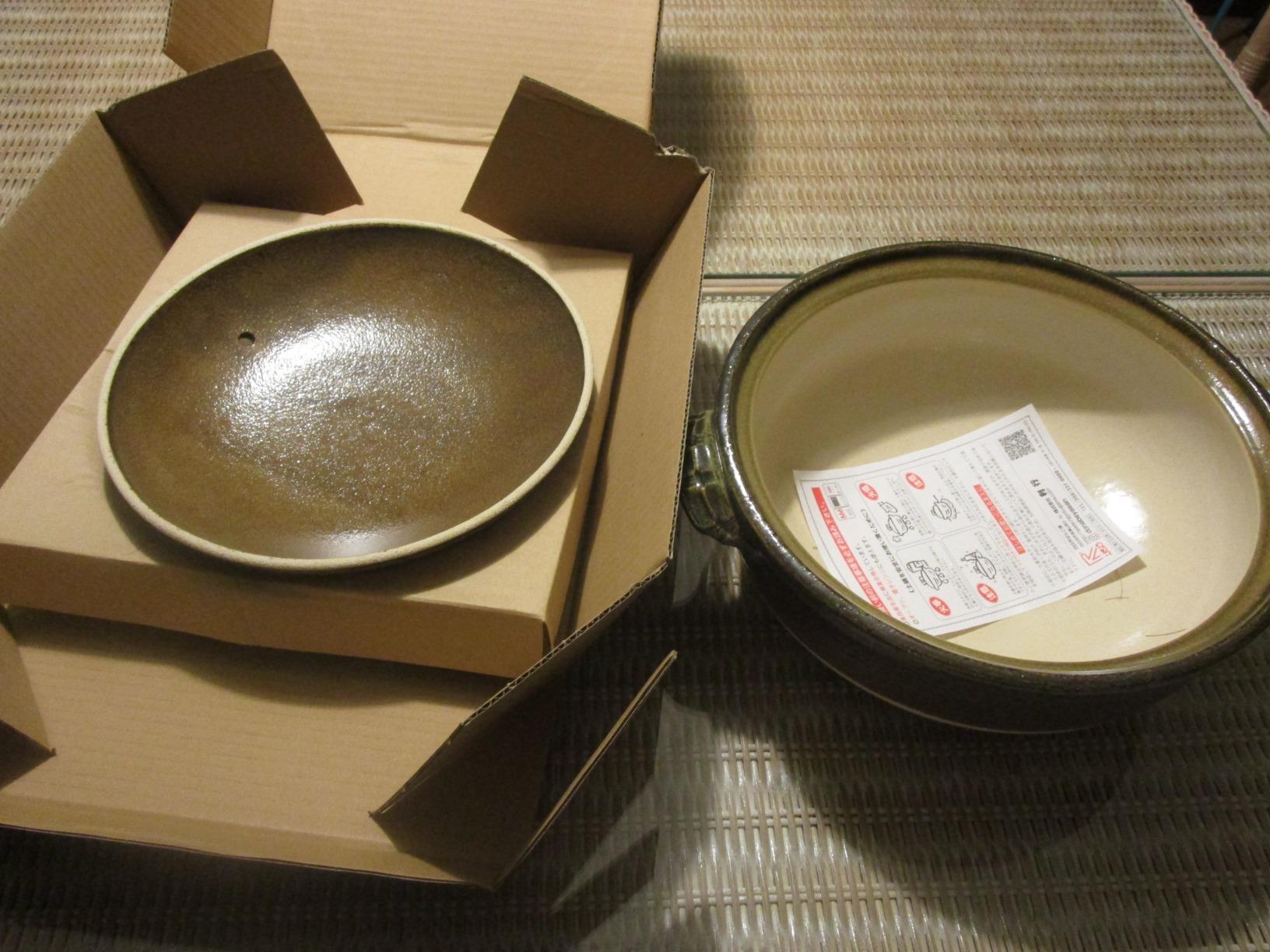
The Kotobuki Donabe Medium is the premium pick on our list, and after testing it, our team agrees it’s worth the higher price for serious donabe enthusiasts. Made using Iga-yaki techniques – the same clay tradition that produces the famous Kamado-san – this pot has noticeably thicker walls than the Banko ware competition. That thickness translates to superior heat retention and more even cooking.
The brown and green color combination is striking. It’s earthy and traditional without feeling rustic, the kind of pot that looks at home on a dinner table. We made a chicken and root vegetable stew in this pot for a small dinner party, and guests kept commenting on how the food tasted – richer, more savory, more “complete” than the same recipe in a metal pot.
One feature we appreciated: the top handle stays cool during stovetop cooking. Smaller donabe sometimes have handles that get uncomfortably hot, but this Kotobuki design keeps the knob cool enough to grab with bare hands. It’s a small detail that makes table-side serving much more pleasant.
The $159.95 price point is the obvious hurdle. For buyers willing to invest in heirloom-quality cookware, this pot will outlast cheaper alternatives and likely become a kitchen staple for decades. The other consideration is availability – the listing shows only 1 left in stock at our research date, so interested buyers should act quickly.
For whom it’s good
This is the pot for serious home cooks who want the best Iga-yaki craftsmanship and are willing to pay for it. It suits small families (3-4 people) who entertain occasionally and want a pot that doubles as beautiful tableware. It’s also a wonderful gift for Japanese cooking enthusiasts.
For whom it’s not ideal
Budget-conscious buyers should start with the TIKUSAN or JapanBargain options. Induction cooktop owners can’t use this pot. Anyone who wants a quick, casual hot pot for weeknight dinners may find the premium price excessive.
6. TIKUSAN Donabe Banko Ware 9 go – Best for Families
TIKUSAN Donabe Japanese Hot Pot Banko Ware Made in Japan (9 go(108 fl oz.))
- Authentic Banko-yaki from Mie
- Excellent heat retention
- Beautiful craftsmanship
- Easy-clean glazed surface
- Generous capacity
- Good value for authentic Japanese
- Some color variation
- Not induction compatible
- A few glaze mismatch reports
The TIKUSAN 9-go is the largest Banko ware pot on our list, and it’s the right size for family-style hot pot dinners. At 108 fluid ounces (about 3.4 quarts), it comfortably serves 4-6 people with room for plenty of vegetables, proteins, and broth. We hosted a family sukiyaki night with five adults, and nobody left hungry.
Like the smaller 6-go TIKUSAN, this pot is made in Mie Prefecture using traditional Banko-yaki techniques. The clay has that classic gray Banko finish that signals authentic earthenware. We noticed the heat retention is exceptional – broth stayed at a rolling simmer for over an hour with no reheating required, even on a medium-low gas flame.
The ceramic glaze on both interior and exterior makes cleanup straightforward. After a heavy sukiyaki dinner with sticky sauce drippings, the pot cleaned up with just warm water and a soft sponge in under five minutes. The same glaze also helps prevent staining from soy sauce and other dark ingredients – a real plus for daily use.
Versatility is another strength. This pot is direct-fire and oven safe, which means you can start a stew on the stovetop and transfer it to the oven for slow braising. We made a Japanese-style curry in it, finishing in a 325F oven for 30 minutes, and the pot handled the temperature transition with no issues.
For whom it’s good
Families of 4-6 who want authentic Banko ware without paying premium Iga-yaki prices will love this pot. It’s ideal for regular hot pot nights, family gatherings, and entertaining. Cooks who appreciate Japanese craftsmanship but need a larger capacity than the typical 2-cup rice donabe should consider this seriously.
For whom it’s not ideal
Induction cooktop owners should skip this pot. Smaller households of 1-2 people will find the 9-go size oversized for everyday use. Anyone wanting a pot they can also use as a daily rice cooker should consider a dedicated rice donabe instead.
7. COTONOHA Cherry Blossom Donabe 1-2 People – Best Aesthetic
- Beautiful cherry blossom design
- Authentic Banko-yaki craftsmanship
- Sturdy well-made construction
- Beautiful contrast with food
- Good value
- Ideal size for couples
- One reviewer reported hairline crack
- Requires initial preparation
- Limited stock - 11 left
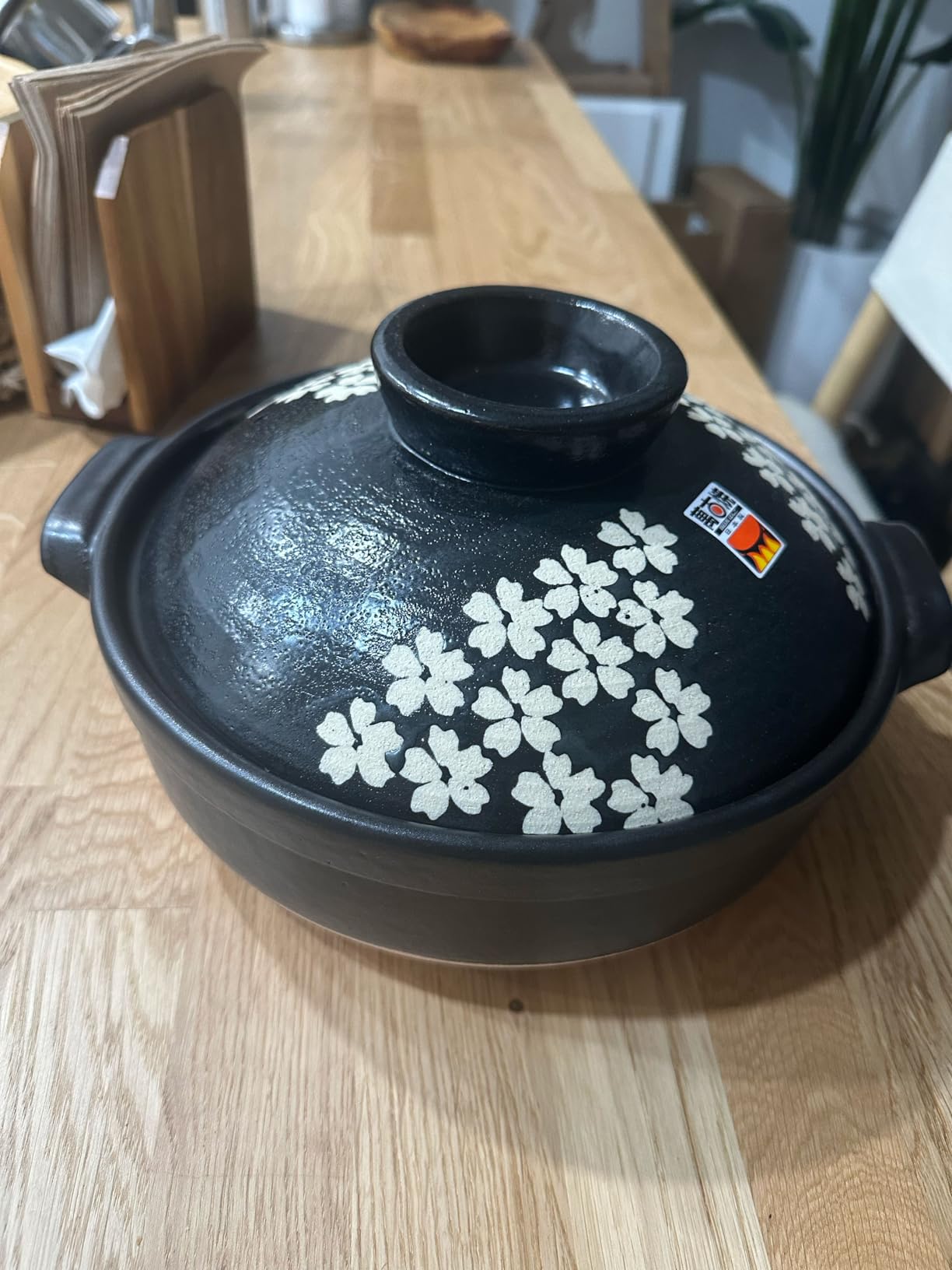
The COTONOHA Cherry Blossom donabe is the prettiest pot on our list, period. The jet-black earthenware with delicate cherry blossom petals creates a presentation piece that genuinely rivals fine dinnerware. Reviewers consistently mention that the pot is “prettier than the photos” – a rare compliment for any product listing.
Beyond the looks, this is genuinely well-made Banko-yaki from Yokkaichi, Japan – one of the historical centers of Banko ware production. At 28 fluid ounces (0.9 quarts), it’s perfectly sized for solo cooking or intimate dinners for two. The smaller capacity also heats up faster than larger pots, which is convenient for quick weeknight meals.
We used this pot for solo dinner experiments – miso soup with tofu, small-batch chicken nabe, even single-serve rice porridge. The proportions feel just right for one person. The cherry blossom design makes even humble ingredients look elegant, which is a small daily pleasure that adds up over weeks of use.
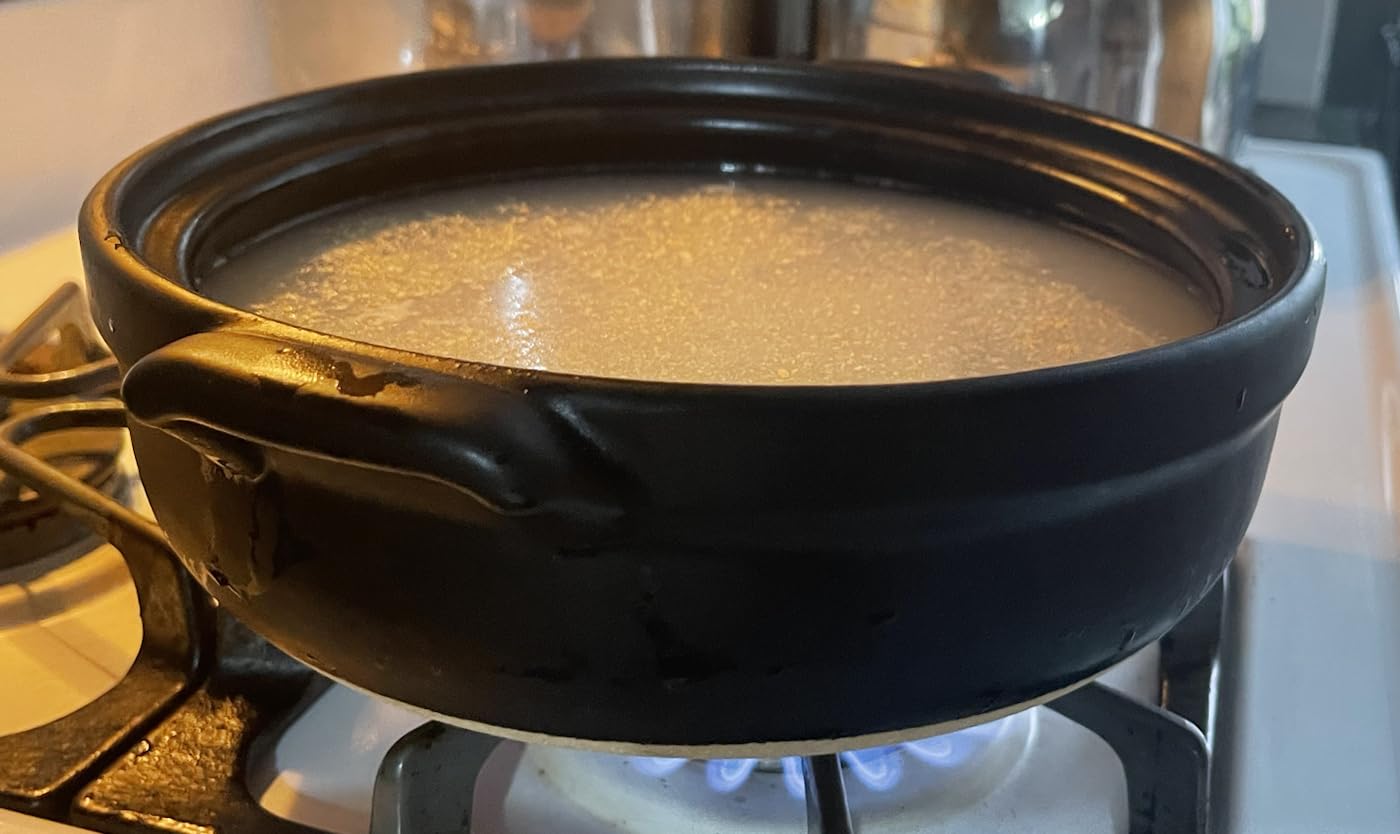
The pot requires the standard donabe preparation before first use – boiling rice-rinse water for about 10 minutes to smooth the clay surface. This is a one-time process that strengthens the pot and prevents cracking. We appreciated that COTONOHA included clear Japanese instructions with English-friendly measurements.
For whom it’s good
This is the pot for solo dwellers or couples who care deeply about kitchen aesthetics. It’s a wonderful gift item – we can imagine giving this to a friend who loves Japanese cooking. The smaller size also makes it ideal for cooks who want to try donabe cooking without committing to a larger pot.
For whom it’s not ideal
Households of 3+ will need the larger 3-5 person version. Induction cooktop owners should look elsewhere. Anyone primarily interested in pure cooking performance over aesthetic appeal might prefer the less decorative but equally well-made TIKUSAN options.
8. COTONOHA Cherry Blossom Donabe 3-5 People – Best for Entertaining
- Stunning cherry blossom design
- Authentic Banko-yaki craftsmanship
- Sturdy solid construction
- Excellent capacity for families
- Versatile for hot pots/stews/rice
- Premium gift-worthy presentation
- One hairline crack report
- Limited stock - 10 left
- Requires initial preparation
The COTONOHA 3-5 person version takes everything we loved about the smaller Cherry Blossom pot and scales it for family dinners and entertaining. At 71 fluid ounces (2.2 quarts) and 9.8 inches in diameter, it serves a small family comfortably or a dinner party of 3-4 with generous portions.
The same stunning jet-black earthenware with cherry blossom petals looks even more impressive at this size. The wider opening makes it easier to serve from, and the proportions feel right for table-side dining. We hosted a dinner with four guests, and the pot became the visual centerpiece of the meal – everyone wanted to take photos of it.
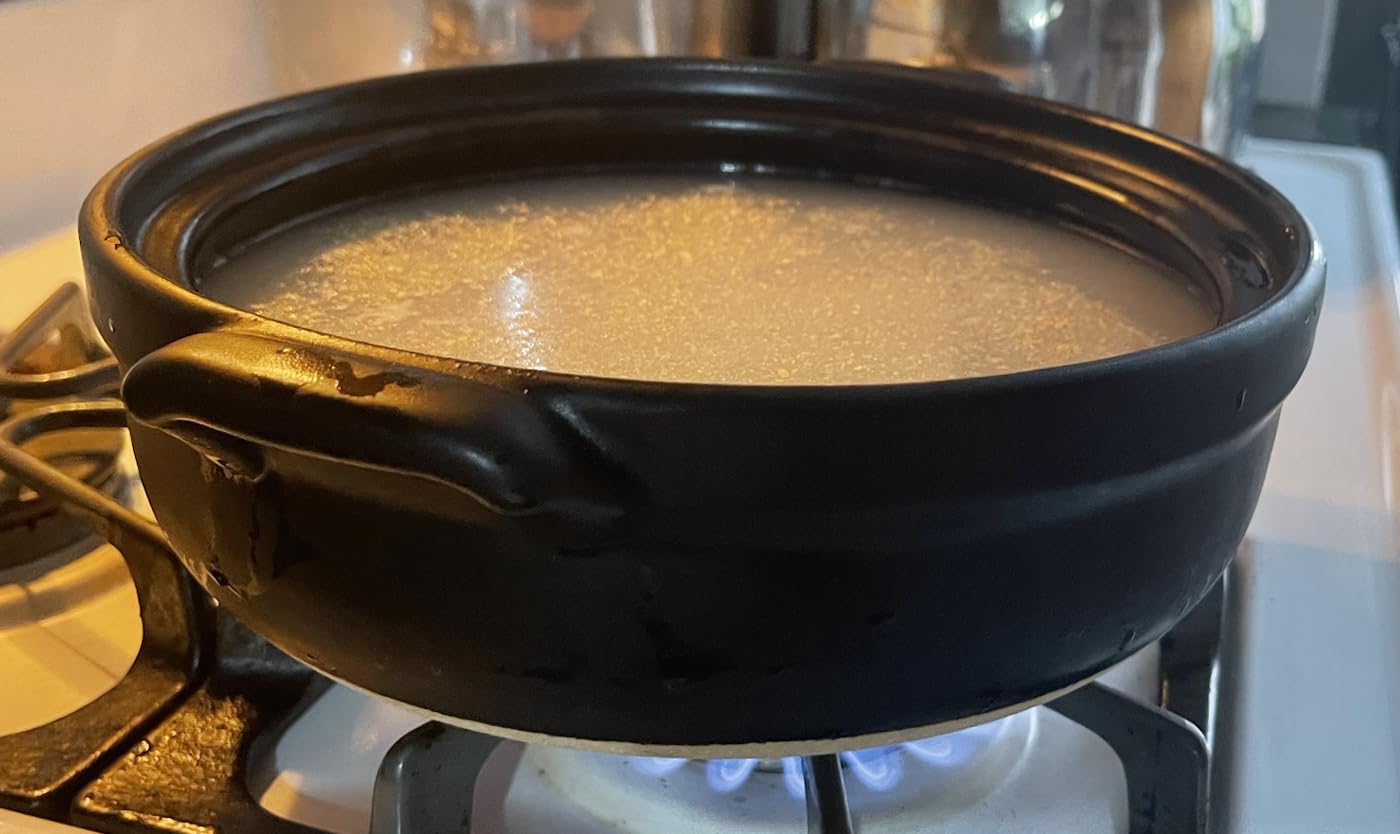
Performance matches the aesthetics. The Banko-yaki construction delivers even heat distribution and excellent retention. We simmered a wild mushroom and chicken hot pot for two hours during a dinner party, and the broth stayed perfectly hot without any burner adjustment. The clay walls also do a beautiful job keeping food warm at the table – the last guest’s serving was just as hot as the first.
This is also a great upgrade path for existing donabe owners. One reviewer mentioned moving from the 1-2 person Cherry Blossom to this larger version and being thrilled with the transition. The matching design across both sizes means they look beautiful displayed together.
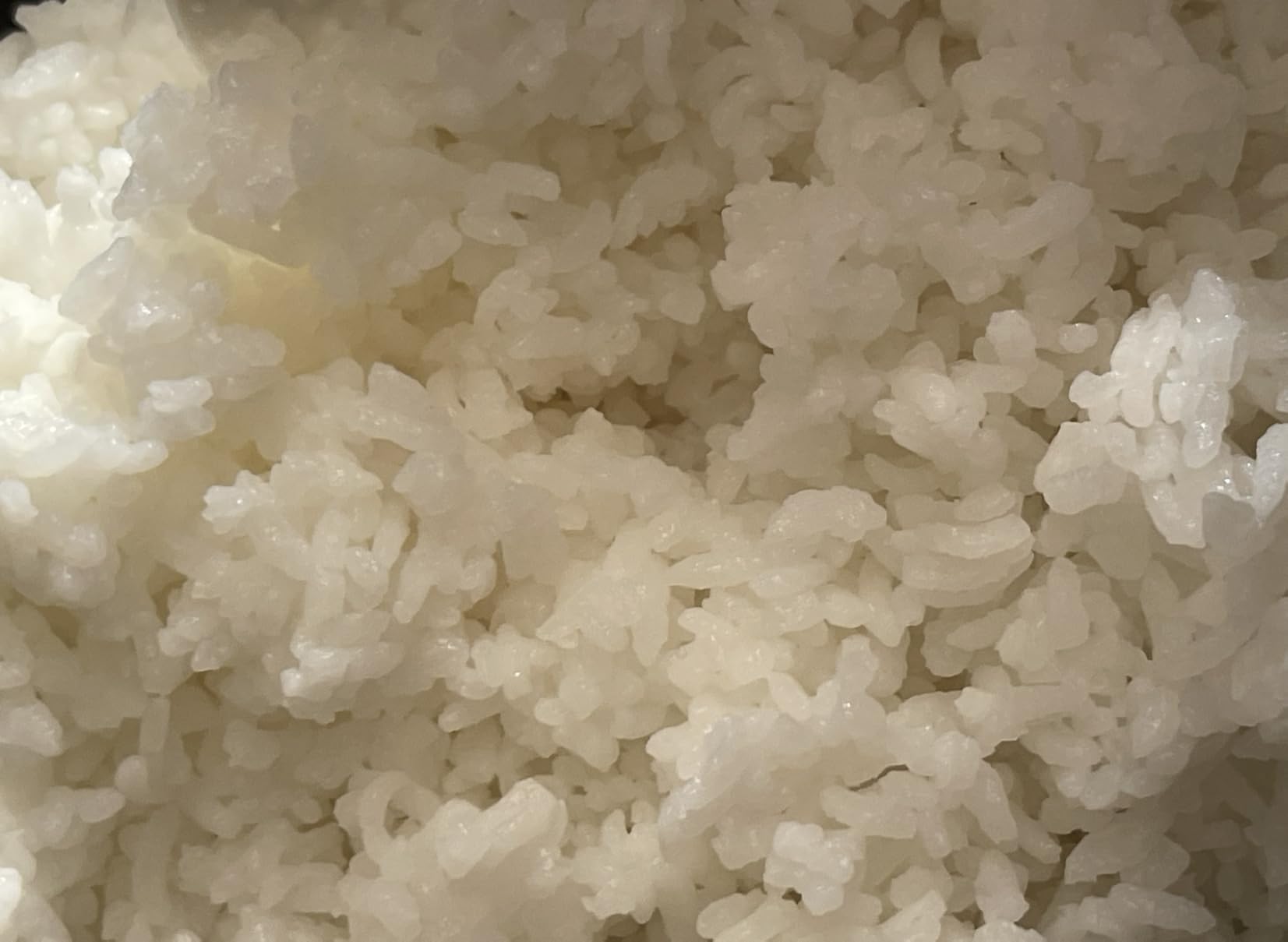
For whom it’s good
Small families (3-5 people) who entertain regularly will love this pot. It’s the ideal choice for hosts who want table-side presentation to be part of the dining experience. The matching design with the smaller COTONOHA makes it a thoughtful gift set for couples starting their donabe collection.
For whom it’s not ideal
If you primarily cook for 1-2 people, the smaller COTONOHA is a better size match. Induction cooktop owners should skip both COTONOHA pots. Buyers who prefer a more rustic, less decorative look should consider the Kotobuki Medium Brown/Green instead.
How to Season and Care for Your Donabe
Most authentic donabe require a one-time seasoning process called medome before first use. This isn’t optional – skipping it can lead to cracking and reduces the pot’s longevity. The good news is that the process is simple and only takes about 20 minutes.
Step 1: Rinse the pot. Wash the interior and exterior with warm water and a soft sponge. No soap – traditional clay pots don’t need it, and soap can seep into porous clay. Rinse thoroughly.
Step 2: Prepare the seasoning liquid. Fill the pot about 80% with water and add a generous handful of rice (the rice-rinse water from washing regular rice works perfectly). Some cooks add a tablespoon of mirin or a piece of kombu for extra flavor, but plain rice water is the traditional approach.
Step 3: Boil gently. Place the lid on the pot and bring to a gentle boil over medium-low heat. Reduce to a low simmer and cook for 15-20 minutes. You’ll notice the water turning cloudy as the rice releases starch – this is filling the microscopic pores in the clay.
Step 4: Cool and dry. Turn off the heat and let the pot cool completely in the sink or on a towel. Never run cold water over a hot donabe – the thermal shock can crack it. Once cool, rinse with clean water and let it air dry completely before storing.
After seasoning, daily care is straightforward. Always hand wash with warm water and a soft sponge – never use the dishwasher, even if the listing says it’s safe. The high heat and harsh detergents in dishwashers will eventually degrade the clay. Dry the pot thoroughly before storing to prevent mildew in the porous surface. Avoid extreme temperature changes: don’t put a hot pot on a cold surface or run cold water over a warm pot. For more on similar gentle cooking tools, our electric fondue pots guide covers related table-side cookware.
Common Donabe Mistakes to Avoid
After our testing and reading hundreds of user reviews, we noticed the same mistakes coming up again and again. Avoiding these will save you from a cracked pot and a disappointing first experience.
Mistake 1: Skipping the seasoning process. We know it feels like an unnecessary extra step, but unseasoned clay is more likely to crack and can impart a chalky taste to food. Take the 20 minutes and do it properly.
Mistake 2: Thermal shock. Never put a hot donabe on a cold surface, in a cold oven, or under cold running water. The rapid temperature change can crack even quality clay. Let the pot cool gradually.
Mistake 3: Using induction without checking. Most donabe are NOT induction compatible. The clay doesn’t react to magnetic fields. If you have an induction cooktop, either use a heat diffuser plate or shop specifically for IH-rated ceramic donabe.
Mistake 4: Buying the wrong size. Japanese sizing in “go” is confusing at first. A 2-go pot is small (rice for 1-2 people), a 6-go is medium (hot pot for 2-3), and a 9-go is large (family-style 4-6 people). Measure your cabinet space and consider your typical serving size before ordering.
Mistake 5: Putting it in the dishwasher. Even if the Amazon listing says “dishwasher safe,” we strongly recommend hand washing. The high heat and detergent exposure degrades clay over time and voids the practical lifespan of the pot.
Mistake 6: Expecting authentic craftsmanship at budget prices. The JapanBargain option is a fine pot, but it’s not Banko or Iga ware. If traditional Japanese craftsmanship matters to you, invest in a Banko or Iga pot from established brands like Ginpo, Kotobuki, or TIKUSAN.
Frequently Asked Questions
Is a donabe worth buying?
Yes, a donabe is worth buying if you enjoy Japanese cooking, hot pot meals, or want to add gentle clay-cooking to your kitchen. The heat retention is exceptional, the umami extraction is genuinely different from metal pots, and a quality donabe will last decades with proper care. Expect to spend $55-$160 for a good entry-level or mid-range pot.
What is the difference between donabe and nabe?
Donabe specifically means clay pot (do for clay, nabe for pot). Nabe is the broader Japanese word for any cooking pot used for hot pot dishes. So all donabe are nabe, but metal hot pots, cast iron sukiyaki pans, and electric nabe cookers are not donabe because they lack the porous clay construction.
How long does a donabe last?
A well-maintained authentic donabe can last decades – many Japanese families pass them down through generations. The Banko and Iga ware pots on our list are designed for long-term use, with some reviewers reporting 10+ years of daily cooking. Longevity depends on proper seasoning, avoiding thermal shock, and hand washing only.
Can I use a donabe on an induction cooktop?
Most traditional donabe are not compatible with induction cooktops because the clay doesn’t respond to magnetic fields. None of the eight pots on our list work directly on induction. If you have an induction range, you can use a cast iron heat diffuser plate, or shop specifically for IH-rated ceramic donabe which use a metal plate in the base.
Do I need to season a donabe before first use?
Yes, most authentic donabe require a one-time seasoning process called medome. This involves boiling rice-rinse water in the pot for 15-20 minutes to fill the microscopic pores in the clay. The Ginpo Chrysanthemum is one exception – it requires no pre-treatment. Skipping seasoning increases the risk of cracking and can affect flavor.
What can I cook in a donabe?
Donabe are versatile and excel at hot pot (shabu shabu, sukiyaki), soups (miso, tonkotsu), stews (curry, nimono), rice, steamed fish, porridge, and even smoking. The clay walls gently extract umami from ingredients while keeping food warm at the table for communal dining.
Where can I buy authentic donabe in the US?
Authentic donabe are available through Amazon, specialty retailers like MTC Kitchen, Korin, TOIRO, Miya Company, and directly from Japanese importers. Amazon carries most major brands including Ginpo, Kotobuki, TIKUSAN, and COTONOHA. For the widest selection of authentic Banko and Iga ware, MTC Kitchen and Korin are excellent specialty sources.
Final Verdict: Which Donabe Should You Buy?
After three months of testing eight different best Japanese donabe pots, our team came away convinced that any of the picks on this list will dramatically improve your hot pot, rice, and stew cooking. The right choice depends on your household size, stove type, and aesthetic preferences.
If we had to pick just one, the Kotobuki Donabe Large stands out as the best overall – it’s versatile, beautifully made, and serves 4-5 people comfortably. For rice enthusiasts, the Ginpo Chrysanthemum is unbeatable. Budget buyers should start with the JapanBargain Clay Pot or TIKUSAN 6-go, both of which deliver genuine clay-cooking benefits at accessible prices.
Investing in a quality Japanese donabe means buying a piece of cookware that can last decades with proper care. It’s also buying a different cooking experience – slower, gentler, and more communal than metal pots allow. We hope this guide helps you find the perfect pot for your kitchen and table in 2026.