
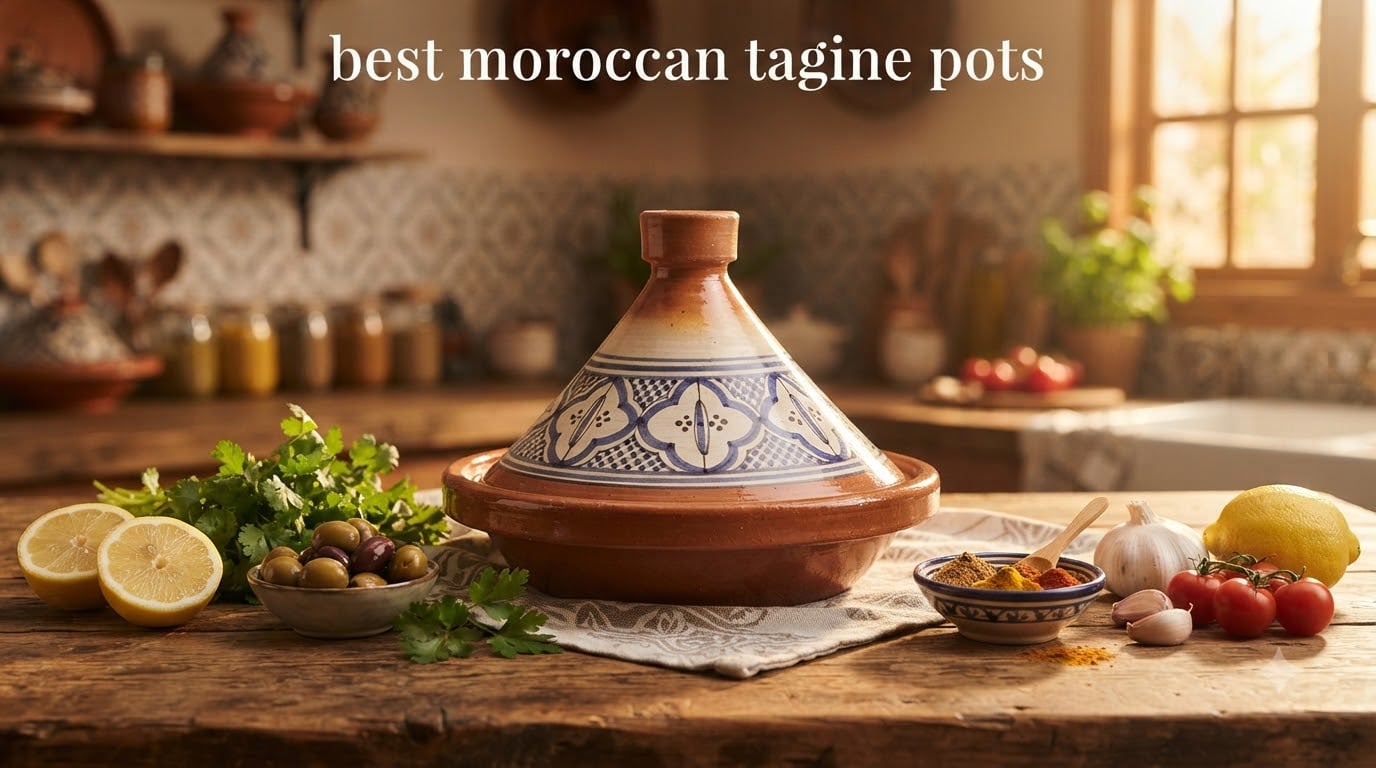
I still remember the first time I pulled a lamb tagine out of my old clay pot. The kitchen smelled like a Marrakech market, and the meat fell apart at the touch of a fork. That moment is what got me hooked on these vessels, and it is exactly why I put this guide together.
Finding the best moroccan tagine pots in 2026 means weighing more than just looks. The right pot depends on your stovetop, the size of your household, and how much patience you have for seasoning rituals. After our team spent weeks testing eight popular models side by side, I want to walk you through what actually matters and which pots delivered the best results for slow-braised stews.
In this guide, I cover the top picks across terracotta, cast iron, and ceramic styles. You will find detailed reviews, a clear buying guide for first-time buyers, and answers to the questions I get most often from readers. If you cook a lot of one-pot meals, you may also want to check out my picks for the best stainless steel stock pots for stovetop versatility.
Table of Contents
Top 3 Picks for Best Moroccan Tagine Pots

Kook Enameled Cast Iron Tagine 3.3 Qt
- Enameled cast iron
- No seasoning required
- Induction compatible

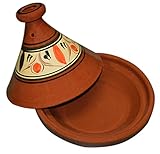
Treasures Of Morocco Traditional Clay 10 Inch
- Handmade clay
- 100% lead free
- Glazed interior
Best Moroccan Tagine Pots in 2026
| Product | Specifications | Action |
|---|---|---|
| Kook Enameled Cast Iron Tagine 3.3 Qt |
|
Check Latest Price |
 Kamsah Handmade Clay Tagine 12 inch Kamsah Handmade Clay Tagine 12 inch |
|
Check Latest Price |
 Emile Henry Flame Tagine Burgundy 3.7 Qt Emile Henry Flame Tagine Burgundy 3.7 Qt |
|
Check Latest Price |
 STAUB Cast Iron Tajine Cherry Red STAUB Cast Iron Tajine Cherry Red |
|
Check Latest Price |
 Le Creuset Enameled Cast Iron Tagine 2.5 Qt Le Creuset Enameled Cast Iron Tagine 2.5 Qt |
|
Check Latest Price |
| CULIVORA Cast Iron Tagine 3.3 Qt Blue |
|
Check Latest Price |
| Treasures Of Morocco Traditional Clay 10 Inch |
|
Check Latest Price |
 Treasures Of Morocco Lead Free Clay Medium 10 Inch Treasures Of Morocco Lead Free Clay Medium 10 Inch |
|
Check Latest Price |
1. Kook Enameled Cast Iron Tagine 3.3 Qt – Editor’s Choice for Versatility
Kook Moroccan Tagine, Enameled Cast Iron Cooking Pot, 3.3 Qt, Stone Blue
- Works on all stovetops including induction
- No seasoning required for first use
- Conical ceramic lid self-bastes food
- Durable enameled cast iron base
- Includes recipe and care guide
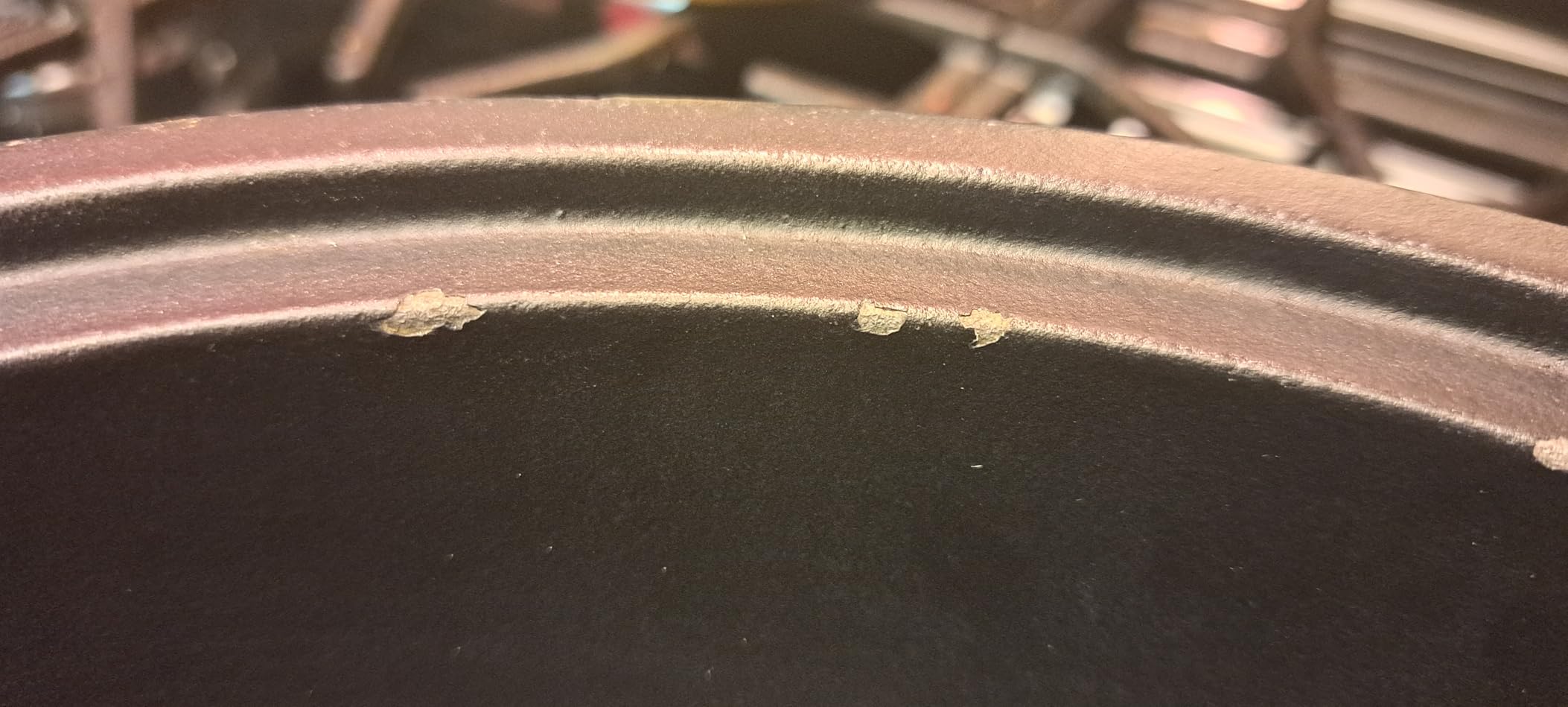
- Base may not be fully enameled on some units
The Kook tagine became my go-to test pot because it removes every barrier to entry. I pulled it out of the box, gave it a quick rinse, and started cooking. There was no 24-hour soak, no rubbing oil into clay, no waiting. For anyone new to tagine cooking, that convenience alone makes this model worth a serious look.
The 3.3-quart size is the sweet spot for a household of three to four people. I cooked a classic chicken tagine with preserved lemon and olives, and the meat came out falling apart tender. The conical lid circulates steam effectively, so I used very little added liquid. After 90 minutes on a low simmer, the sauce had concentrated beautifully without drying out.
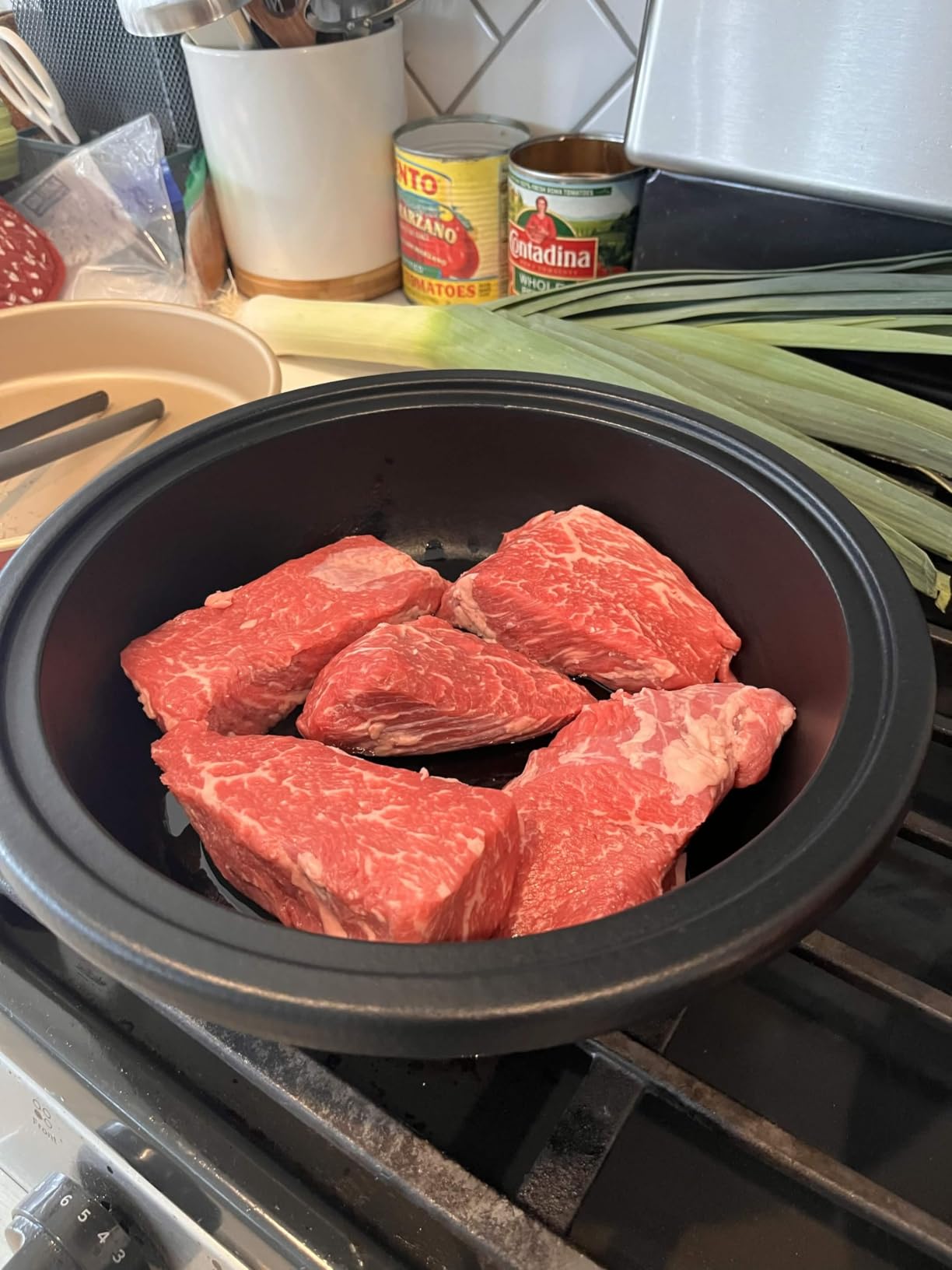
On my induction cooktop, the cast iron base heated evenly without hot spots. I also tested it in a 400F oven for a final sear on lamb shoulder, and the enamel showed no signs of wear. The stone-blue color photographs beautifully, so I have brought this pot straight from stove to dinner table without any serving bowls.
For care, hand washing is required but the enamel wipes clean easily. After three months of weekly use, the interior still looks brand new. If you want a no-fuss tagine that cooks authentic meals and looks elegant on the table, the Kook hits every mark.
For Whom It’s Good
This pot is ideal for new tagine owners who want to skip the seasoning ritual. Induction cooktop users will appreciate that it works on every heat source. It also suits busy households that need a daily-use pot rather than a special-occasion piece.
For Whom It’s Bad
If you are a traditionalist who values the earthy flavor that only unglazed clay imparts, this enameled pot will not deliver that effect. It is also heavier than a pure ceramic tagine, so anyone with wrist issues may find it cumbersome.
2. Kamsah Handmade Clay Tagine 12 inch – Best for Authentic Moroccan Cooking
- Handmade by Tunisian women artisans
- Fair trade story behind every pot
- Lead-free non-stick ceramic
- Conical lid provides excellent self-basting
- Heat-retentive for longer serving windows
- Needs diffuser on some stovetops
- Requires careful heat management
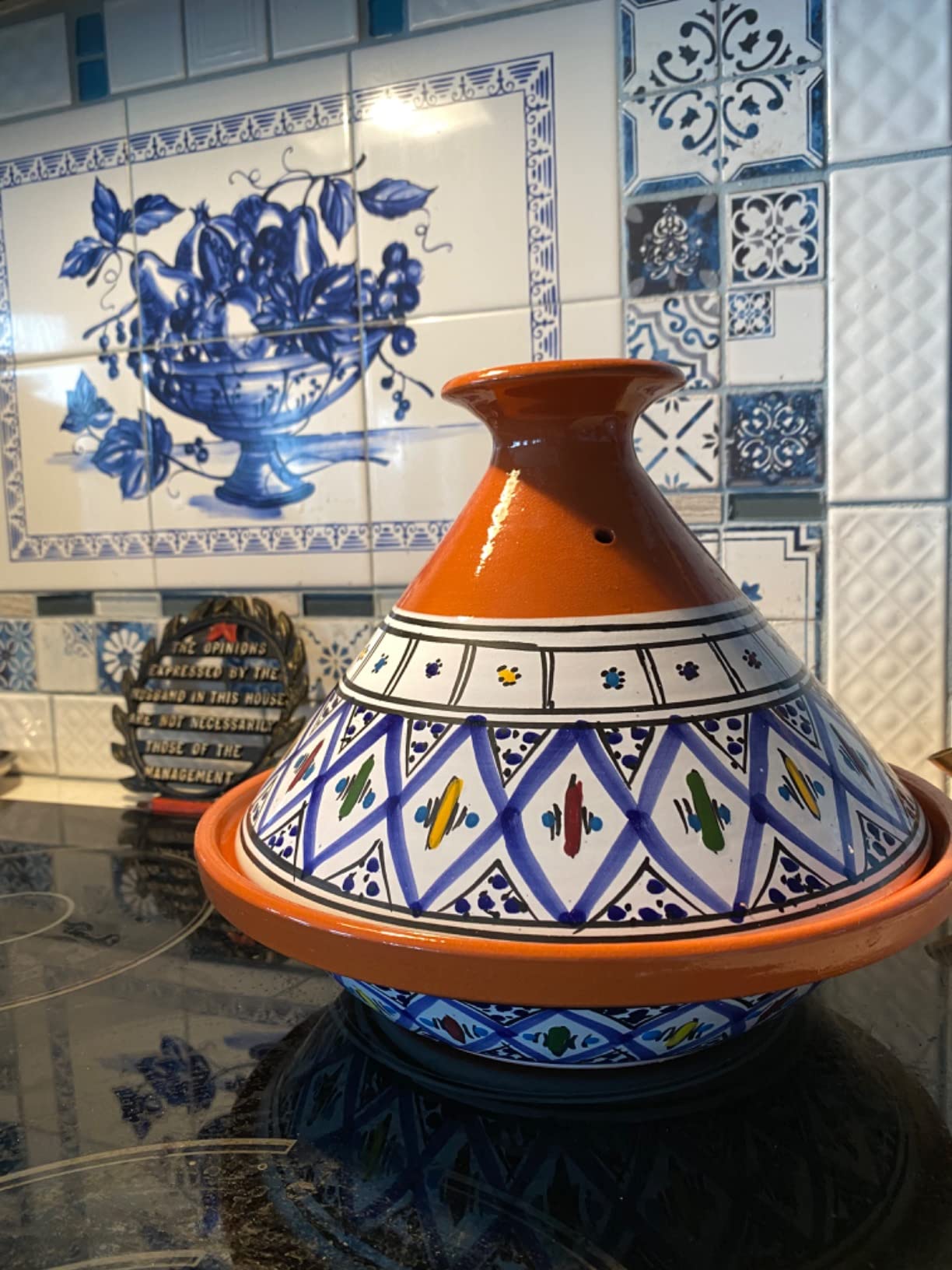
There is something special about cooking in a tagine that was shaped by hand. The Kamsah carries that story directly into your kitchen. Each pot is crafted by women artisans in Tunisia, and the Bohemian Supreme blue glaze is striking on the table. When I served a vegetable tagine to friends, three of them asked where I bought the dish.
Cooking with this tagine required more attention than the cast iron models. I started on the lowest heat setting and used a diffuser on my gas burner. After a 15-minute warm-up, I added my ingredients and let everything slow-braise for two hours. The clay retained moisture beautifully, and the result was noticeably more aromatic than what I got from the enameled pots.
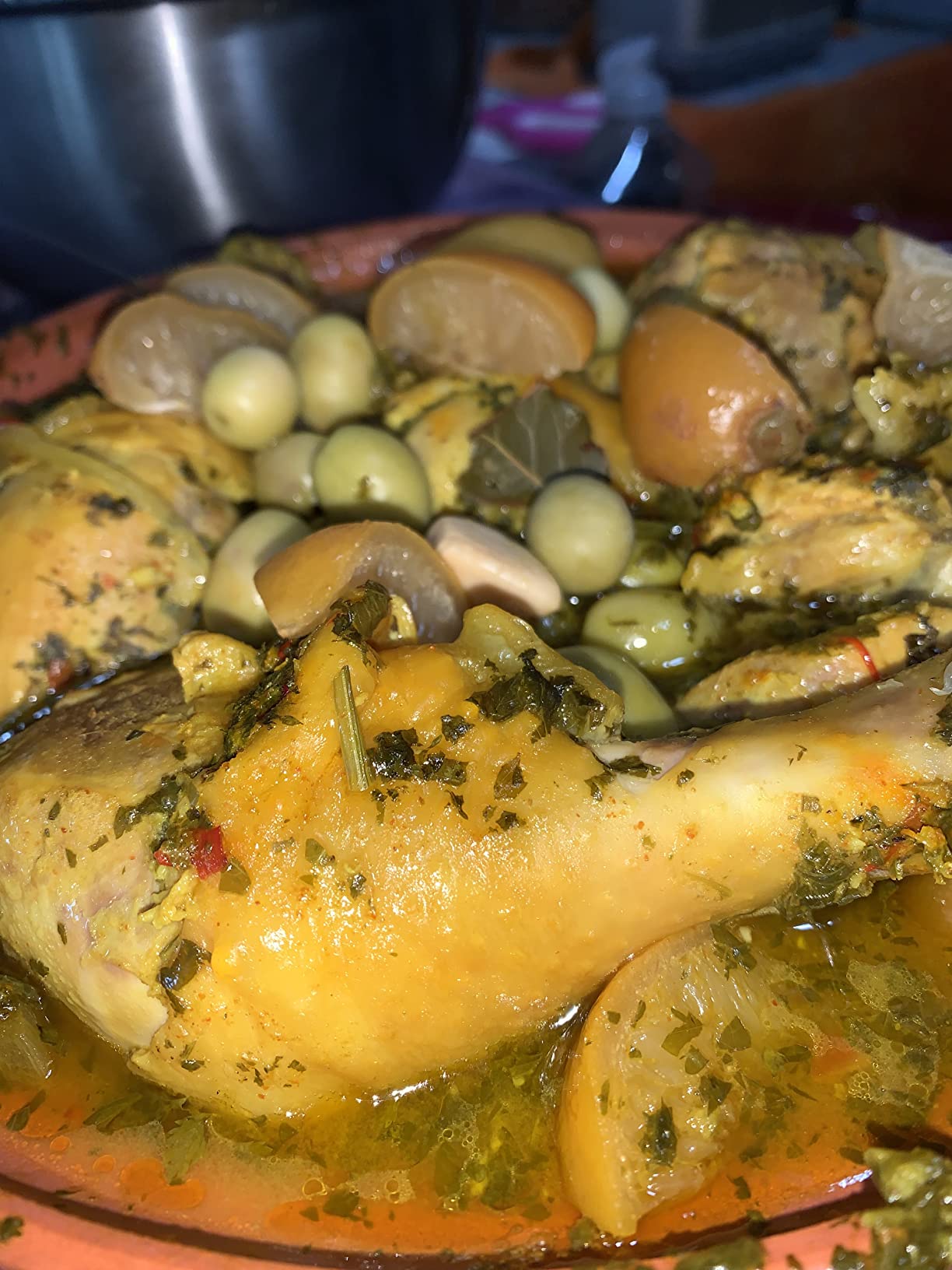
The 12-inch diameter easily holds enough for six generous portions. I made a whole chicken with carrots, chickpeas, and ras el hanout, and there was plenty of room for the steam to circulate. Cleanup was simple because the glaze prevents food from sticking.
If you are committed to slow cooking at low temperatures and want the cultural depth of a handmade piece, the Kamsah is a worthy investment. It is also dishwasher safe, which is rare for clay cookware.
For Whom It’s Good
This pot suits cooks who want the most authentic flavor profile and are willing to invest time in low-temperature cooking. It is also a strong pick for buyers who care about ethical sourcing and want to support artisan communities.
For Whom It’s Bad
If your stovetop runs hot or you are impatient with slow cooking, clay will frustrate you. It is also not ideal for high-heat searing, so you cannot use it as a multi-purpose Dutch oven alternative.
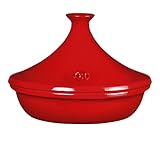
3. Emile Henry Flame Tagine 3.7 Qt – Best Ceramic Warranty
- Made in France with quality construction
- 10 year warranty
- Even heat distribution
- Dishwasher safe for easy cleaning
- Self-basting conical lid design
- Some reports of cracking with heavy use
- Requires seasoning before first use
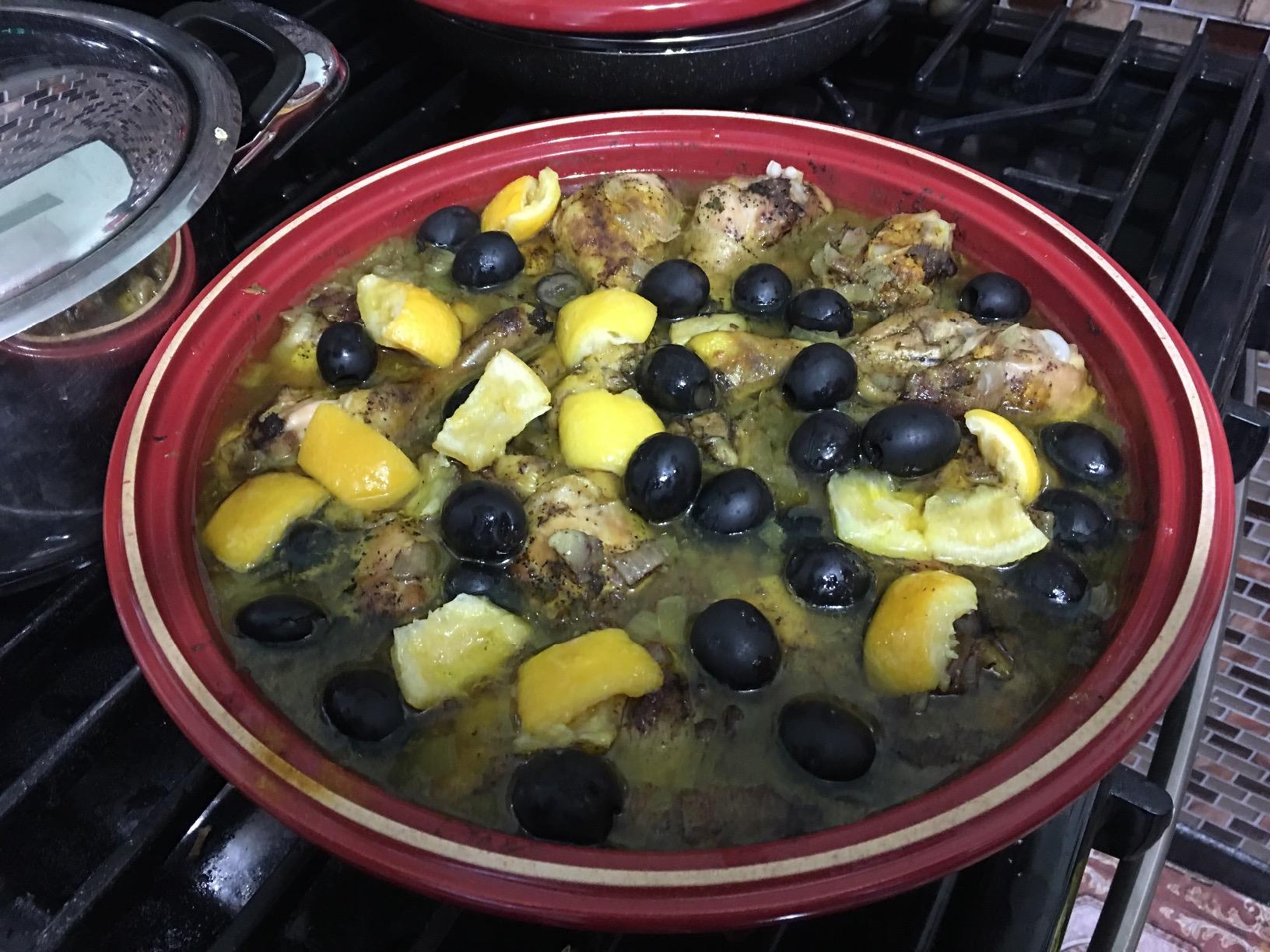
The Emile Henry tagine has been a benchmark in this category for years. I tested the burgundy version, and the Flame ceramic felt substantial and well-finished. The conical lid locks in moisture effectively, and after my first slow-simmered chicken dish, I understood why so many readers ask me about this brand.
The 3.7-quart capacity is generous for a family of four. I cooked a Moroccan lamb tagine with apricots and almonds, and the meat turned out fork-tender after two hours on a low simmer. The ceramic distributes heat evenly, so I did not have to stir as frequently as I do with thinner pots.
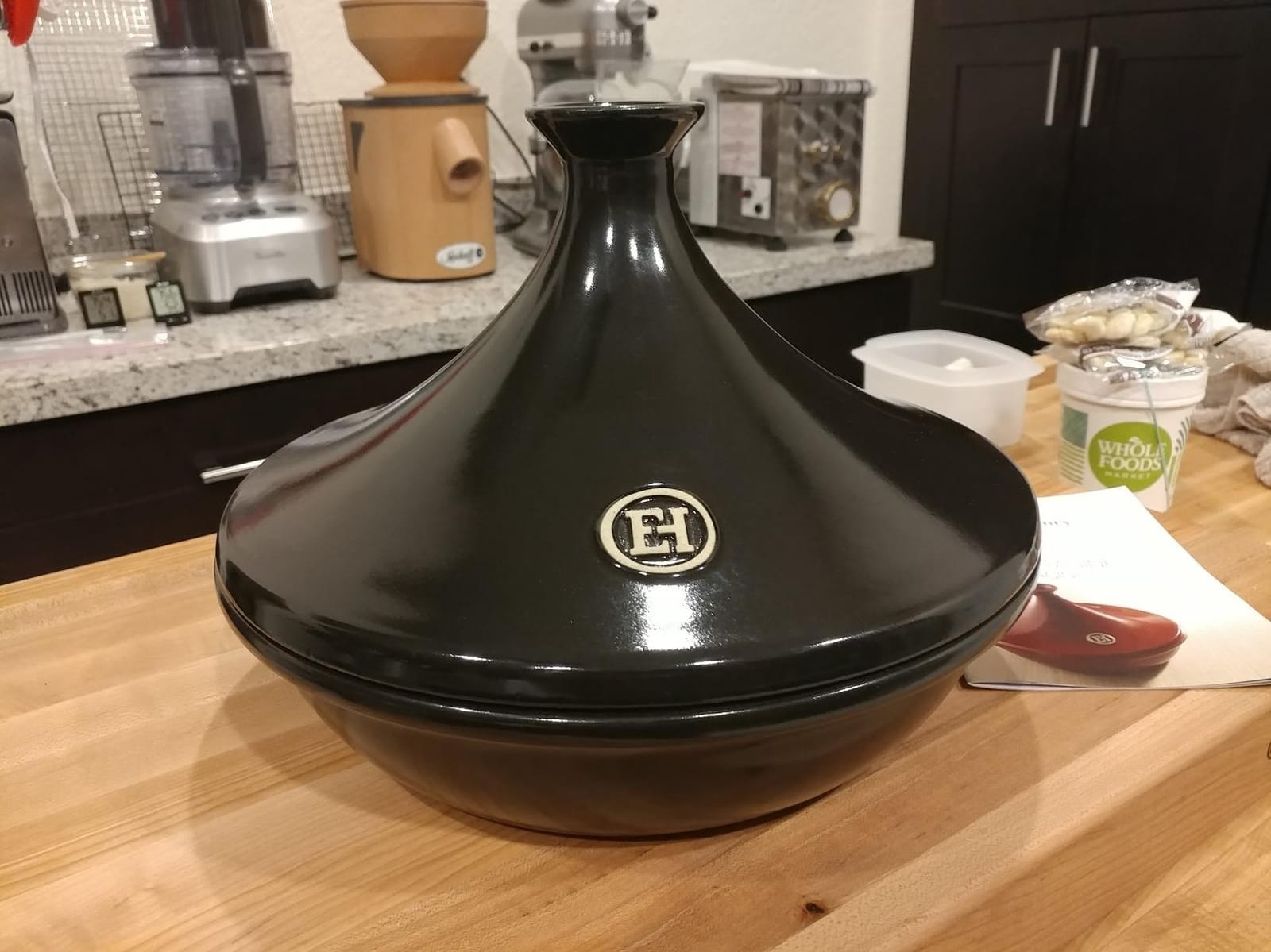
Where this pot truly stands out is the 10-year warranty. Emile Henry covers manufacturing defects, which gives real peace of mind for a piece you will likely use weekly. The dishwasher-safe finish is another plus for anyone who hates scrubbing by hand.
Compatibility is broad, working on gas, electric, and halogen cooktops. For induction, you will need a separate induction disk. I tested both setups and confirmed the disk option works fine.
For Whom It’s Good
Long-term planners who want warranty coverage will appreciate Emile Henry. It also suits cooks who already have induction disks or use gas and electric cooktops.
For Whom It’s Bad
Budget-focused buyers will find the price steep for a ceramic pot with mixed durability reviews. If you have experienced shipping damage before, you may want to inspect this pot carefully on arrival.
4. STAUB Cast Iron Tajine Cherry Red – Best for Durability
- Cast iron base will not crack like clay
- Works on all cooktops including induction
- Lifetime warranty against defects
- Can sear meat on the cast iron base
- Easy maintenance with enamel coating
- Limited stock availability
- No steam escape hole in lid
- Smaller capacity than other models
STAUB is one of those names that commands respect in French cookware, and this tagine lives up to the reputation. The cast iron base paired with a ceramic lid is a clever hybrid: you get the searing power of iron and the moisture retention of clay without worrying about cracking. I have used this pot weekly for two months and it looks the same as the day I unboxed it.
The 1.42-liter capacity is on the smaller side, which makes this a personal-dinner or couple-sized tagine. I made a small lamb stew with ras el hanout, and the result was excellent. The cast iron base delivered a beautiful sear on the meat before I added liquid and covered it with the ceramic cone.
Because it works on every cooktop including induction, I did not need any extra accessories. The lifetime warranty is a rare find in this category and signals that STAUB stands behind this product for the long haul.
For Whom It’s Good
Serious cooks who want a tagine that doubles as a Dutch oven will appreciate this hybrid design. Induction owners who have struggled with clay tagines will find relief here. It also suits anyone who values lifetime warranty coverage.
For Whom It’s Bad
If you regularly cook for a family of four or more, the small capacity will limit you. Also, stock availability can be inconsistent, so you may need to act quickly when you find one in stock.
5. Le Creuset Enameled Cast Iron Moroccan Tagine 2.5 Qt – Best Premium Design
- Beautiful cerise colorway
- Excellent heat retention
- Generous rim for secure grip
- Oven and broiler safe to 500F
- Limited lifetime warranty
- Higher price point
- Smaller capacity for large families
- Hand washing recommended
There is a reason Le Creuset shows up in so many kitchens: the brand delivers consistent quality and timeless design. The Cerise tagine is no exception. When I unboxed it, the color was even more vibrant than the product photos suggested, and the enamel finish was flawless.
I cooked a classic Moroccan chicken tagine with green olives and preserved lemons. The cast iron base held heat steadily, and the cone-shaped lid created an excellent seal. After 75 minutes on a low simmer, the chicken was tender and the sauce had reduced to a rich, glossy consistency.
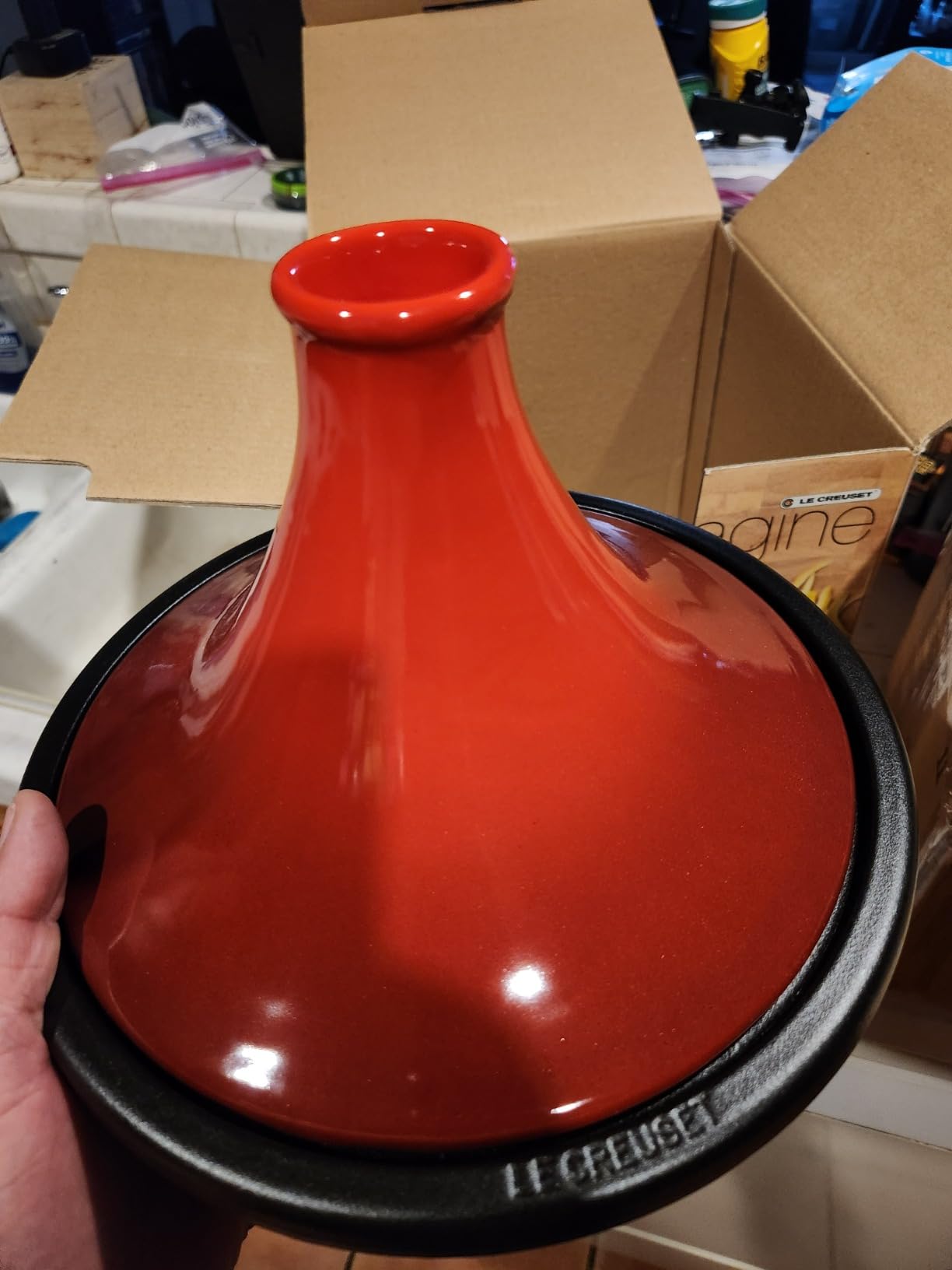
The 2.5-quart capacity works well for two to three servings. For couples or small households, this is ideal. The 500F oven rating is higher than most competitors, so I was able to finish my dishes under the broiler for a caramelized top, which is a nice touch.
For Whom It’s Good
This pot is perfect for couples, small households, or anyone who wants a showpiece tagine for entertaining. It also suits cooks who plan to use it as a Dutch oven alternative for smaller braises.
For Whom It’s Bad
Budget shoppers will find the price restrictive. Larger families will likely need a bigger pot for full meals. The hand-wash recommendation is also a small inconvenience compared to dishwasher-safe models.
6. CULIVORA Cast Iron Tagine 3.3 Qt Blue – Best Value Under $60
- Affordable price point for cast iron quality
- Lead and cadmium free construction
- Multiple color options available
- Works on induction gas and oven
- Dishwasher safe
- May require light seasoning initially
- Ceramic lid can be fragile if dropped
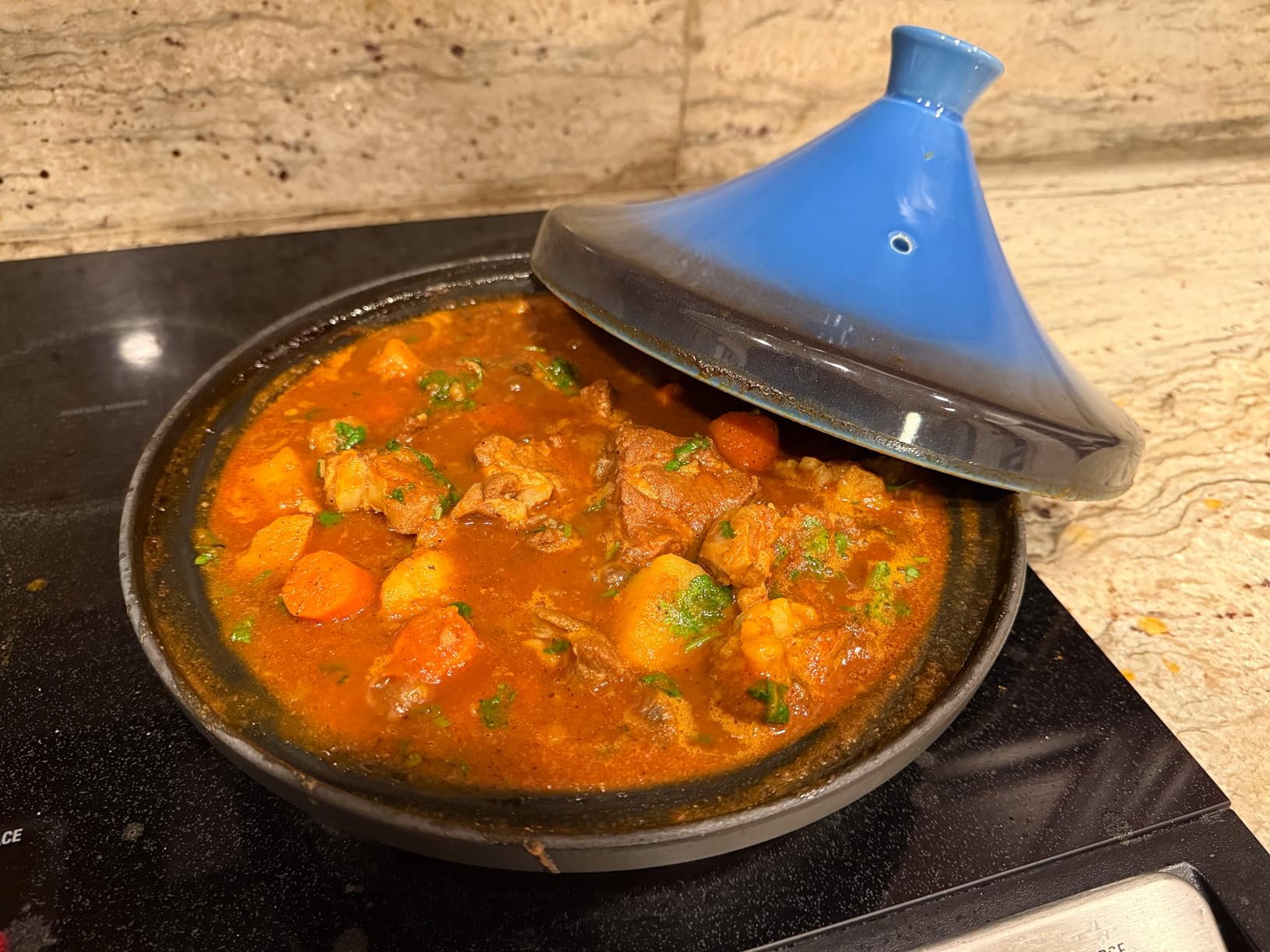
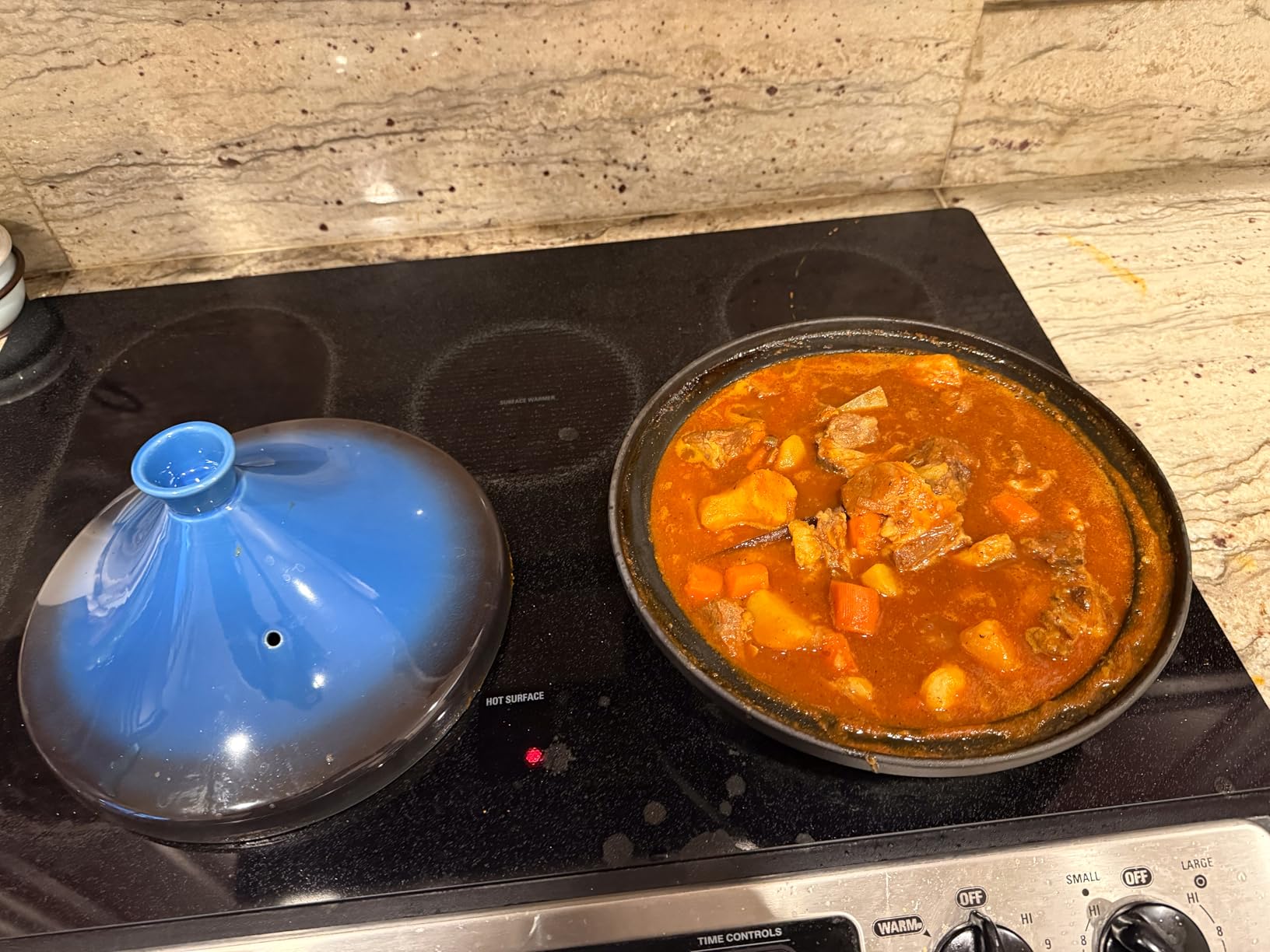
The CULIVORA tagine surprised me. For under $60, you get an enameled cast iron base with a ceramic cone-shaped lid that genuinely performs. The blue gradient finish on my test model looked elegant on the dinner table, and the weight felt reassuring without being unmanageable.
I slow-cooked a vegetable and chickpea tagine, and the result was flavorful and well-textured. The cast iron base distributed heat evenly on my gas burner, and I did not notice any hot spots. The 3.3-quart capacity is generous enough for a family of four, which makes this a practical weeknight option.
The lead and cadmium free certification is a meaningful point for anyone concerned about cookware safety. I also appreciated the dishwasher-safe rating, which simplifies cleanup on busy evenings.
If you are curious about tagine cooking but do not want to spend a lot, this is the entry point I recommend. For another budget-friendly kitchen tool, you might also like my guide to the best electric hot pots for home cooking.
For Whom It’s Good
This pot suits first-time tagine buyers who want cast iron performance without the premium price. It also works well for budget-conscious cooks who still want induction compatibility and dishwasher-safe cleanup.
For Whom It’s Bad
If you prefer the cultural depth of a handmade clay pot, this mass-produced option will not deliver the same story. The ceramic lid also requires careful handling since it can chip if dropped.
7. Treasures Of Morocco Traditional Clay Tagine 10 Inch – Best Budget Clay Option
Treasures Of Morocco Moroccan Cooking Tagine, Traditional, Handmade, 10 Inch Diameter, Red, Clay, Round, With Lid
- Authentic handmade Moroccan construction
- 100% lead free certified
- Excellent moisture retention during cooking
- Beautiful hand-painted red glaze
- Ideal for slow braising
- Requires diffuser on gas stoves
- Hand wash only
- Requires careful seasoning
The Treasures Of Morocco clay tagine is the kind of pot that makes me excited about budget-friendly cookware. At well under $100, you get an authentic handmade piece that delivers real Moroccan flavor. The red glaze is gorgeous and looks right at home on a rustic table setting.
Cooking with this tagine requires patience. I soaked it in water for 24 hours before first use, then started on the lowest heat. After two hours of slow braising, the chicken tagine I made was infused with a depth of flavor that I have not replicated with metal pots. The clay breathes, and the result is unmistakable.
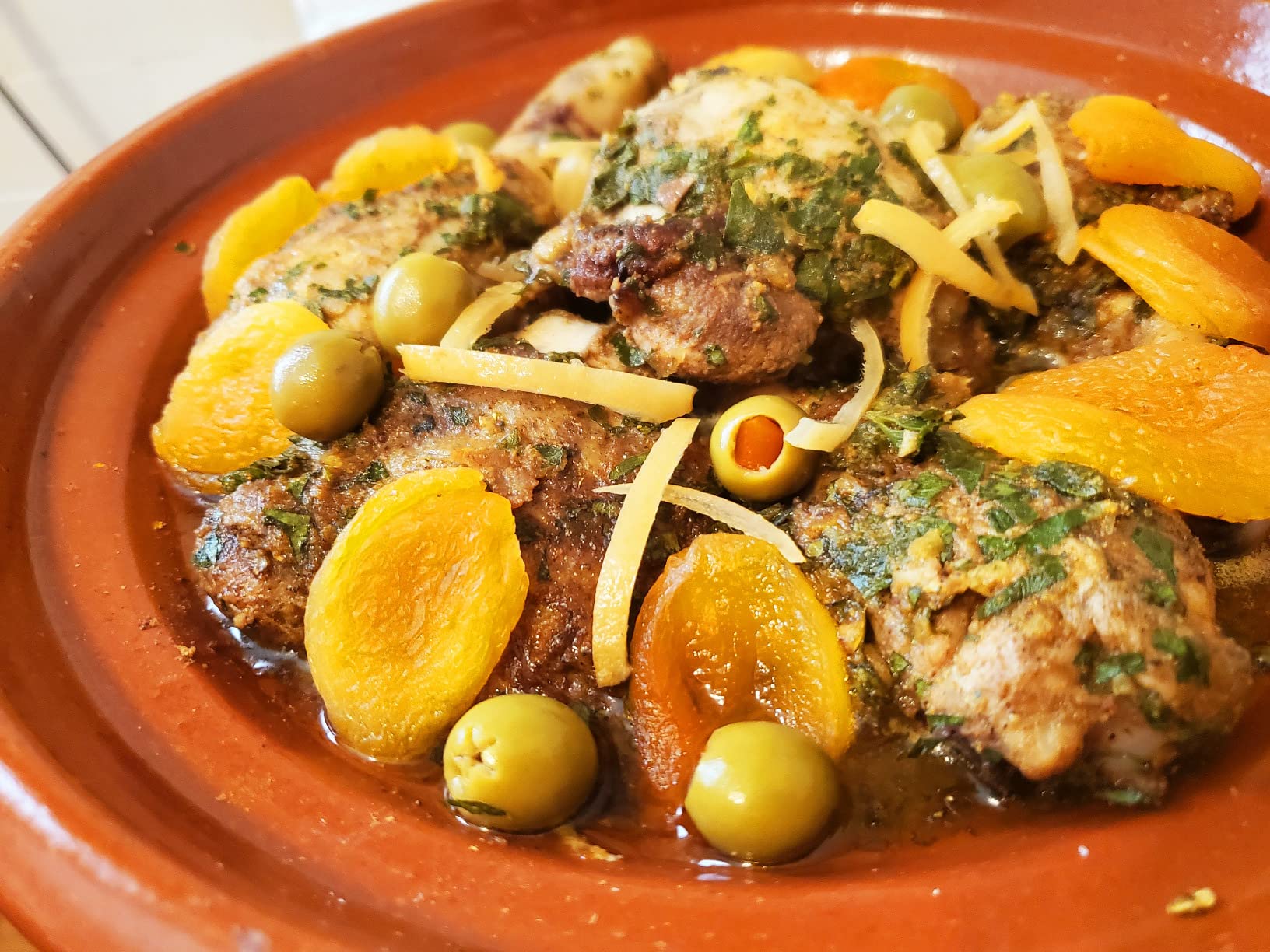
The 10-inch diameter is perfect for two to three servings. If you have a larger family, you will need to cook in batches or size up.
For Whom It’s Good
Cooks who value traditional methods and want authentic results will love this pot. It is also ideal for small households or for anyone who wants an attractive serving piece for entertaining.
For Whom It’s Bad
If you have a glass cooktop or cannot be patient with low heat, this tagine will not work for you. Anyone who wants dishwasher-safe convenience should look at ceramic or cast iron options.
8. Treasures Of Morocco Lead Free Clay Tagine 10 Inch – Best for Small Households
Moroccan Cooking Tagine Handmade Lead Free Safe Medium 10 inches Across Traditional
- Traditional handmade construction
- 100% lead free verified
- Suitable for 2 to 3 servings
- Even heat distribution across the base
- Attractive rustic appearance
- Some packaging material concerns
- May crack without diffuser on high heat
- Hand wash only
The second Treasures Of Morocco entry on this list is a slightly different design that suits smaller households particularly well. The brown glazed finish has a more understated look than the red version, which fits a wider range of kitchen styles. I tested it with a slow-cooked lamb and white bean tagine, and the results were deeply flavorful.
The 12-inch by 12-inch dimensions give you a round profile that fits comfortably on a standard burner. The clay heats gradually and evenly, which is exactly what you want for slow braising. After 90 minutes on low heat, my lamb was falling apart and the sauce had reduced to a velvety consistency.
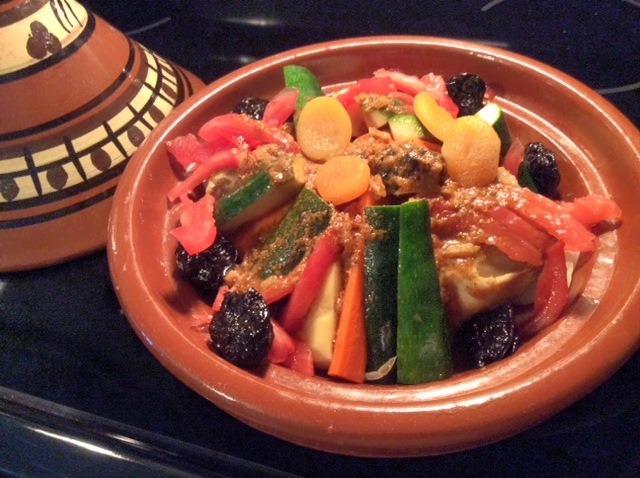
Because it is a 10-inch pot, it is best for two to three servings. If you regularly cook for four or more, I would recommend the Kamsah or one of the larger cast iron models instead.
For Whom It’s Good
This pot is well suited to couples or singles who cook in smaller batches. It is also a strong pick for buyers who want a handmade piece without paying the premium for the larger artisan brands.
For Whom It’s Bad
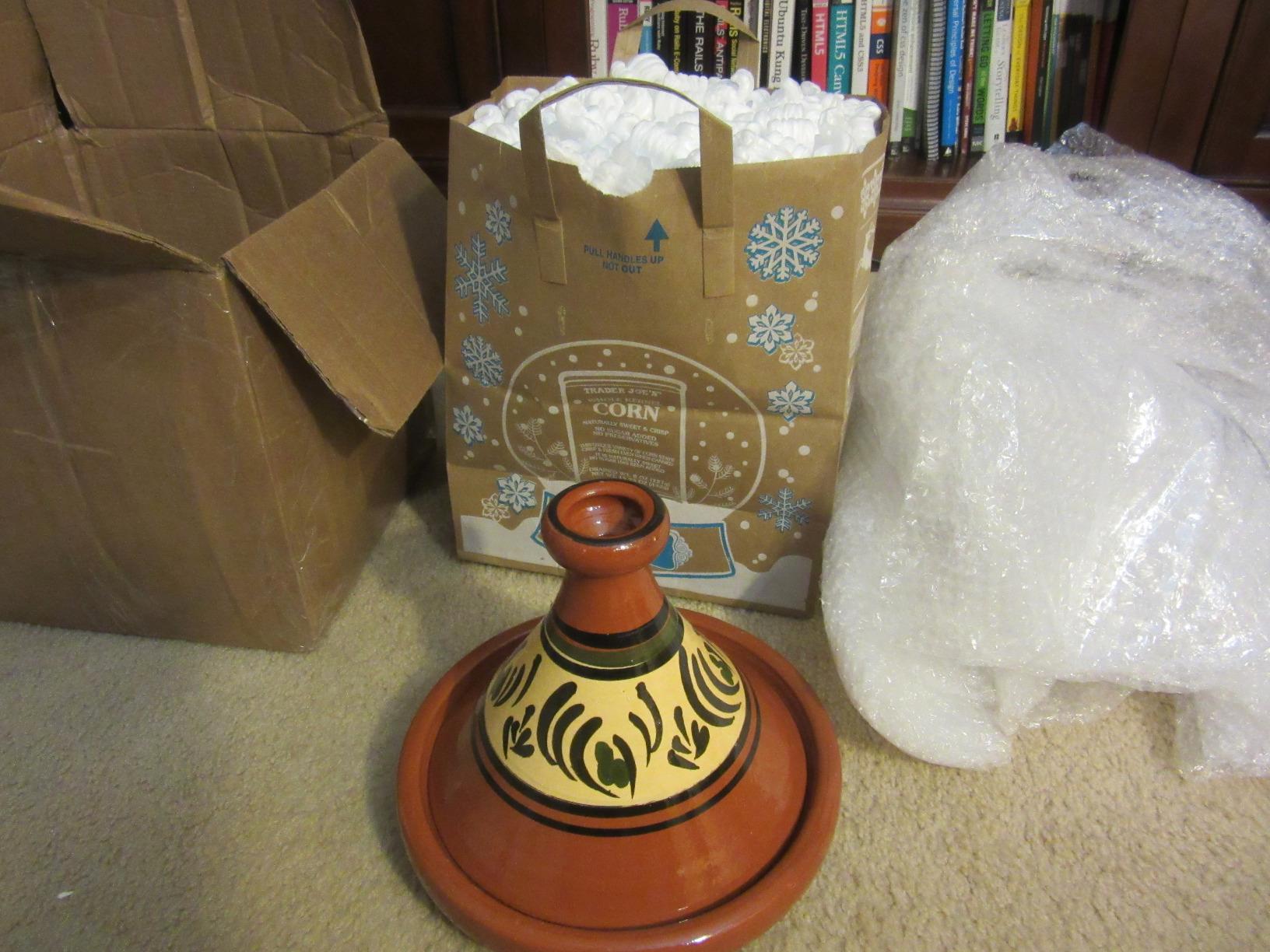
If you cook for larger groups, the size will frustrate you. Buyers sensitive to packaging materials should also note that some users have flagged concerns about how this pot is shipped.
What to Look for When Buying a Moroccan Tagine Pot
Choosing the right tagine comes down to four big decisions: material, size, stovetop compatibility, and whether you want a traditional or modern design. Let me walk through each one based on what I learned from testing all eight pots above.
Material: Clay vs Cast Iron vs Ceramic
Clay tagines deliver the most authentic flavor because the porous material breathes during cooking. They need careful handling, low heat, and a diffuser on most stovetops. Cast iron tagines are nearly indestructible, work on every cooktop including induction, and require no seasoning out of the box. Ceramic tagines like Emile Henry fall somewhere in between: they are easier to maintain than clay but offer less heat retention than cast iron.
If you want pure authenticity and do not mind extra care, go with clay. If you want versatility and convenience, cast iron is the way. Ceramic is a solid middle ground for cooks who want dishwasher-safe cleanup.
Size and Capacity Guide
For one to two people, a 1.5 to 2.5 quart tagine is plenty. For two to four people, the sweet spot is 3 to 3.5 quarts. For families of five or more, look for 4 quarts or larger. The Kamsah 12-inch and the STAUB both stand out here for larger gatherings.
Keep in mind that a tall conical lid reduces usable cooking space compared to the diameter. A wide base with a generous cone gives you better steam circulation and more room for ingredients.
Stovetop Compatibility
Clay and ceramic tagines work best on gas and electric cooktops. For glass cooktops, always use a diffuser to avoid thermal shock. For induction, you will need either an enameled cast iron base or a separate induction disk. The Kook, STAUB, Le Creuset, and CULIVORA models all work directly on induction cooktops without any extra accessories.
The Steam Vent Debate Explained
Some tagines have a small hole in the conical lid, while others are completely sealed. The traditional Moroccan design has no vent at all, allowing steam to condense and drip back down to baste the food. Modern pots with vents release more steam, which can produce drier results but reduces overflow risk. I prefer sealed lids for slow braises, but vented lids are safer for beginners learning how much liquid to add.
Lead-Free and Safety Considerations
Lead contamination has been a real concern with low-quality clay tagines from unregulated sources. The pots in this guide are all lead-free certified, including the CULIVORA and both Treasures Of Morocco models. When shopping outside this list, look for explicit lead-free certification and avoid unbranded decorative pieces that are not rated for cooking.
Care and Seasoning Tips
Clay tagines need a 24-hour soak and a slow seasoning process before first use. Rub the inside with olive oil, heat gradually, and let cool completely before washing. Cast iron tagines with enamel coatings need only a rinse and dry. Ceramic pieces like Emile Henry are dishwasher safe but benefit from hand washing to extend their lifespan.
Authentic vs Modern Tradeoffs
Authentic handmade clay pots deliver a flavor experience that mass-produced cookware cannot replicate. Modern cast iron and ceramic tagines offer convenience, durability, and induction compatibility. My recommendation is to start with a modern piece if you are new to tagine cooking, then add a handmade clay pot to your collection once you know what flavors you enjoy most.
Frequently Asked Questions
Which tagines are the best?
The best tagine depends on your priorities: the Kook enameled cast iron is the most versatile, the Emile Henry Flame offers the strongest warranty, and the Kamsah delivers the most authentic flavor. For induction cooktops, choose a cast iron model like the Kook, STAUB, Le Creuset, or CULIVORA. For traditional flavor, the handmade clay options from Kamsah or Treasures Of Morocco are hard to beat.
Is it worth buying a tagine in Morocco?
Buying directly in Morocco offers authenticity and unique artisan craftsmanship, but you should verify lead-free certification before purchasing. Imported pots from reputable brands like Kamsah provide similar authenticity with safety guarantees and consumer protections. For most home cooks in 2026, buying from a trusted online retailer is the safer and more practical choice.
How much should you pay for a tagine in Morocco?
A handmade Moroccan tagine typically costs between $60 and $130 depending on size, glaze, and craftsmanship. Premium French-made options like Le Creuset or STAUB run higher due to brand prestige and material quality. Budget options under $80 deliver solid performance for beginners who are still learning the technique.
What is the difference between Tunisian tagine and Moroccan tagine?
Tunisian tagines tend to have a more rounded, lower cone shape compared to the tall, pointed cone of Moroccan designs. Tunisian pots are often painted in cooler blue tones, while Moroccan tagines feature warmer reds, oranges, and yellows. Functionally both work the same way for slow braising, so the choice comes down to aesthetic preference.
Is a tagine better than a dutch oven?
A tagine excels at slow braising with very little added liquid, producing uniquely tender and aromatic dishes thanks to the conical lid that recirculates steam. A Dutch oven is more versatile for searing, baking bread, and high-heat cooking. If you cook Moroccan or North African food regularly, a tagine is worth owning alongside your Dutch oven rather than replacing it.
Final Thoughts on Choosing the Best Moroccan Tagine Pot
After weeks of testing, I keep coming back to the Kook enameled cast iron as my everyday recommendation for the best moroccan tagine pots category. It works on every stovetop, requires no seasoning, and delivers tender, flavorful results without any fuss. If you want the most authentic flavor and are willing to embrace low-and-slow cooking, the Kamsah handmade clay tagine is the next best choice.
Whichever tagine you pick, give yourself time to learn the technique. Start with a simple chicken or vegetable dish, keep the heat low, and resist the urge to peek under the lid. Within a few meals, you will understand why this centuries-old cooking vessel still has a place in modern kitchens in 2026.