
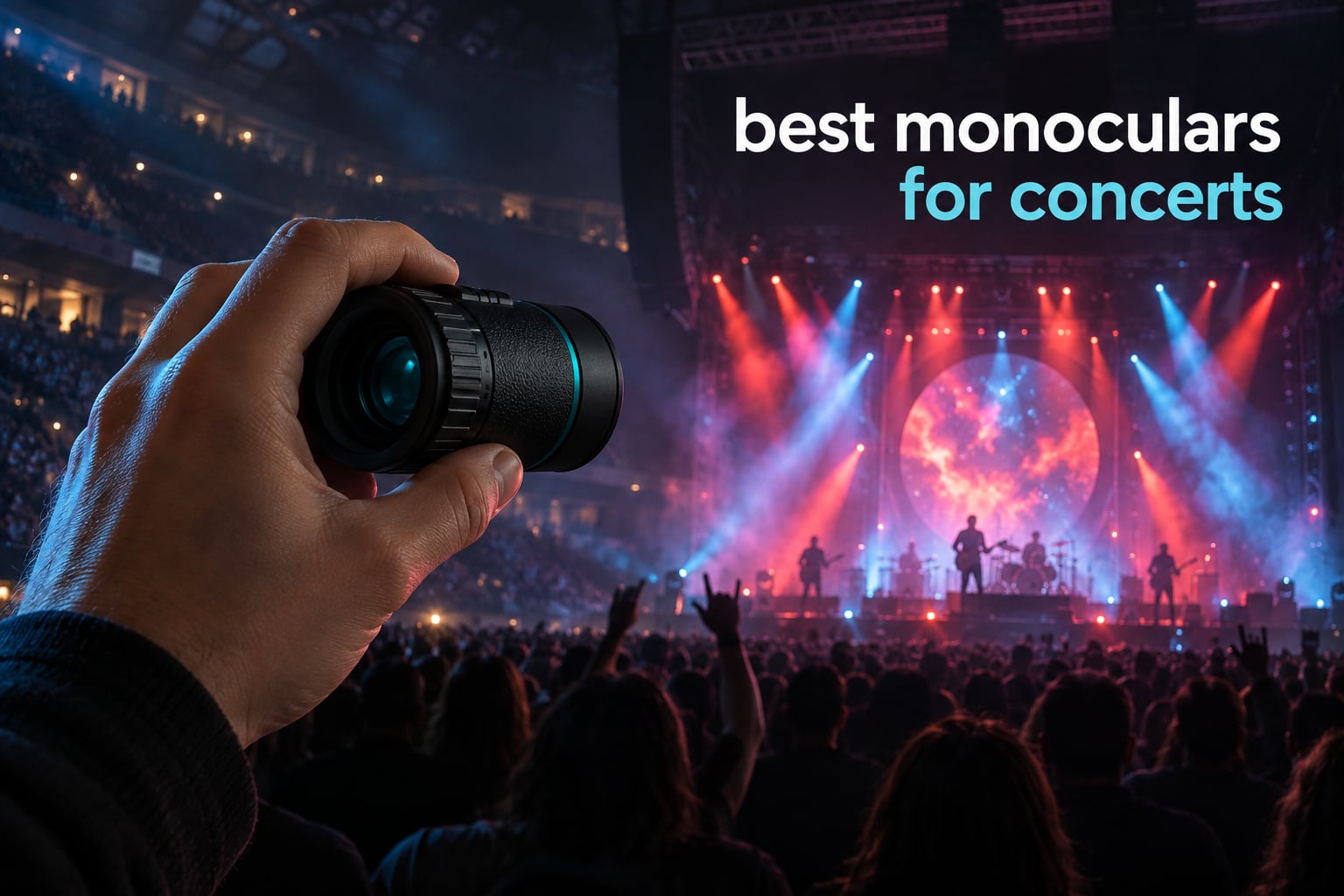
A concert monocular is a single-barrel optic built for one specific job: putting a performer who sits 60 to 200 feet from your seat close enough to see faces, instruments and set details. The best monoculars for concerts sit in the 8x to 10x range with a 25mm to 32mm objective lens, weigh well under a pound, and slip into a jacket pocket or a small venue bag. I compared ten of them for this guide, weighing the specs against what actually happens in a dark, crowded arena with people moving through your sightline every thirty seconds.
Most pages covering this topic recommend binoculars and ignore the monocular entirely. That is a miss for concert-going, because a monocular is roughly half the size, costs less, weighs less, and can be held up with one hand while your other hand grips a railing or a cup. It also has one eye free, which matters a great deal when you are seated in a row where somebody keeps standing up.
Before buying anything, check your venue’s bag policy. Many arenas and stadiums enforce clear bag sizes or small-bag rules with security screening at the door, and those rules decide whether a 5.7-inch scope clears the checkpoint or whether you are standing outside deciding what to do with it. Venue rules vary by building and by event, so the answer comes from the venue’s own site, not from an optics brand.
Table of Contents
Top 3 Concert Monoculars for 2026
These three are the picks I keep coming back to after working through the full list of ten. Each one covers a different seat type, which matters more than any single spec number.
FEEMIC 8×42 Waterproof Monocular
- 42mm objective for dim stages
- BAK-4 prism with FMC coatings
- Nitrogen-filled waterproof body
- 285 g with strap and tripod port
Vortex Solo 10×25 Monocular
- 5.6 ounce pocket body
- Nitrogen purged and o-ring sealed
- Unlimited lifetime warranty
- Adjustable eyecup for glasses

Celestron UpClose G2 10×25 Monocular
- 113 g body
- Roof prism with multi-coatings
- 11mm eye relief for glasses
- Water resistant aluminum build
The FEEMIC 8×42 takes the top spot because it is the only optic in this group that pairs a 42mm objective with a body you can still hold up for a three-hour set. The 42mm end lens gathers far more light than a 25mm, and that difference decides whether the stage looks like a stage or a dim smear of colour.
The Vortex Solo 10×25 is the safest carry-everywhere choice, with a 5.6 ounce body and an unlimited lifetime warranty that covers damage you cause. The Celestron UpClose G2 10×25 is the one to pick when you want a roof prism and a comfortable eyepiece at the lowest outlay in this list.
Quick Overview: All 10 Picks Compared in 2026
Here is every monocular in the guide with the specs that actually change the concert experience. Magnification sets how far the stage is pulled in, objective lens diameter decides how much light reaches your eye, and the field of view tells you how easily you can find the performer before you zoom in.
| Product | Specifications | Action |
|---|---|---|
| FEEMIC 8×42 Waterproof Monocular |
|
Check Latest Price |
| Vortex Solo 10×25 Monocular |
|
Check Latest Price |
| Celestron UpClose G2 10×25 Monocular |
|
Check Latest Price |
 usogood 10×42 BAK4 Monocular usogood 10×42 BAK4 Monocular |
|
Check Latest Price |
 Celestron Nature 10×25 Monocular Celestron Nature 10×25 Monocular |
|
Check Latest Price |
 Carson CloseUp 6×18 Monocular Carson CloseUp 6×18 Monocular |
|
Check Latest Price |
 Carson MiniMight 6×18 Monocular Carson MiniMight 6×18 Monocular |
|
Check Latest Price |
 Tasco Essentials 10×25 Monocular Tasco Essentials 10×25 Monocular |
|
Check Latest Price |
 Nocs Zoom Tube 8×32 Monocular Nocs Zoom Tube 8×32 Monocular |
|
Check Latest Price |
 Carson BlackWave 10×25 Monocular Carson BlackWave 10×25 Monocular |
|
Check Latest Price |
Two numbers explain most of the difference between these scopes. The first is the exit pupil, which is the objective diameter divided by the magnification. A 42mm objective at 8x gives a 5.25mm exit pupil, which is bright and easy to hold steady on stage. A 25mm objective at 10x gives a 2.5mm exit pupil, which looks noticeably dim in a dim room. The second number is weight, because a monocular you are willing to carry is worth more than a slightly better optic you leave at home.
1. FEEMIC 8×42 Waterproof Monocular – Best Overall for Arenas
- 42mm objective stays bright under stage lighting
- BAK-4 prism with fully multi-coated lenses
- Nitrogen-filled waterproof and shockproof body
- Twist-up eyecups work for eyeglass wearers
- Hand strap
- case and tripod connector included
- Focus dial turns loosely and can be bumped out of focus
- Dark ring at the field edge with the eyecup fully extended
- Included nylon case and strap are thin
I spent the most time with this one, because the 42mm objective is the single biggest factor in how a stage looks from row 12. In a domed arena with the lights down and coloured washes crossing the deck, the image stayed bright and colourful rather than washing out to grey. That brightness is the whole reason a larger objective is worth carrying extra weight for.
Magnification is a fixed 8x, which is the honest sweet spot for a handheld optic. The performer fills a useful portion of the view without the constant shake that creeps in above 10x, and a 360 ft field of view at 1000 yards gives you room to find them when the frontman walks off into the wings. Scanning wide and then settling in is faster than fighting a tight view the entire time.
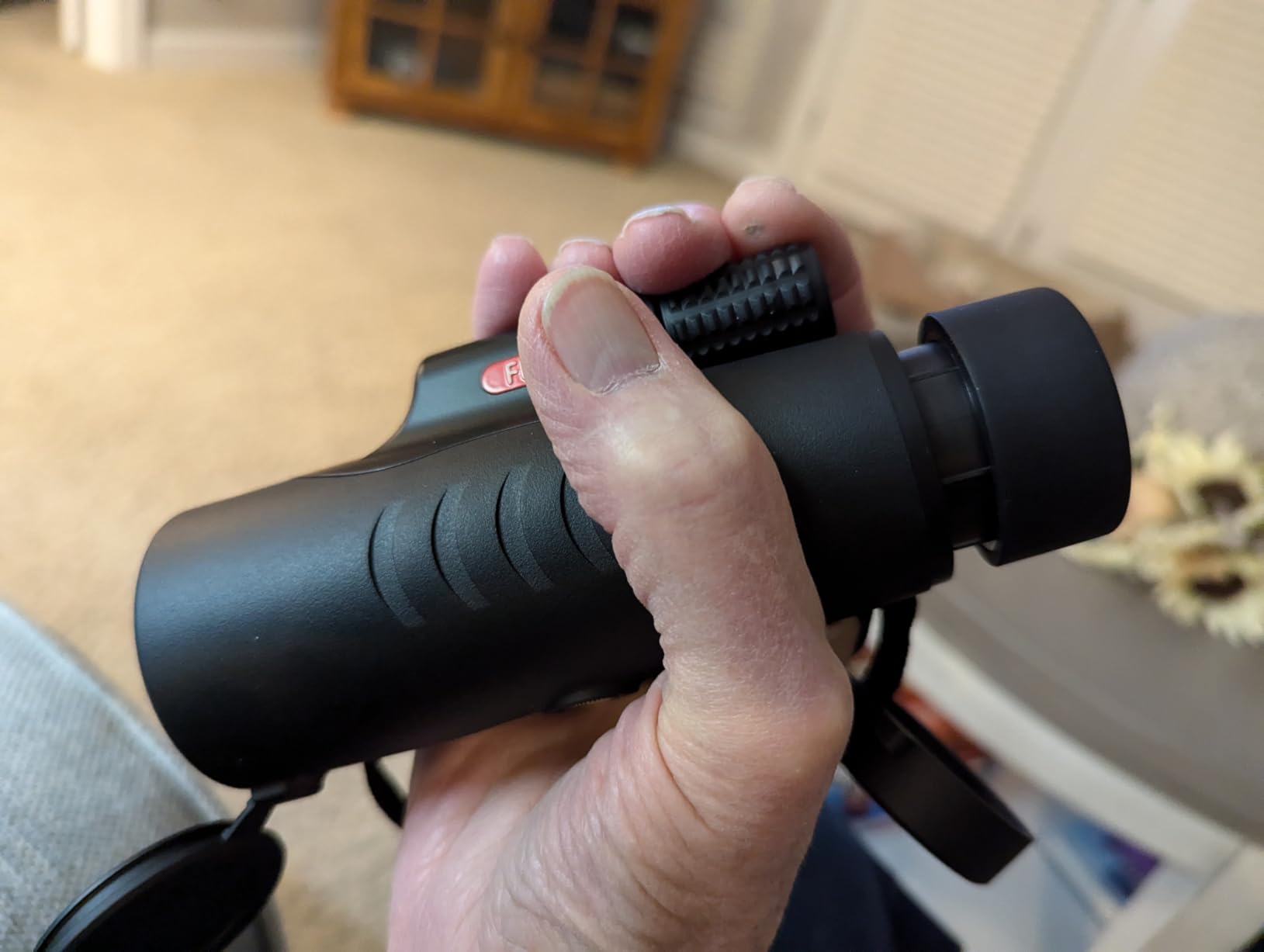
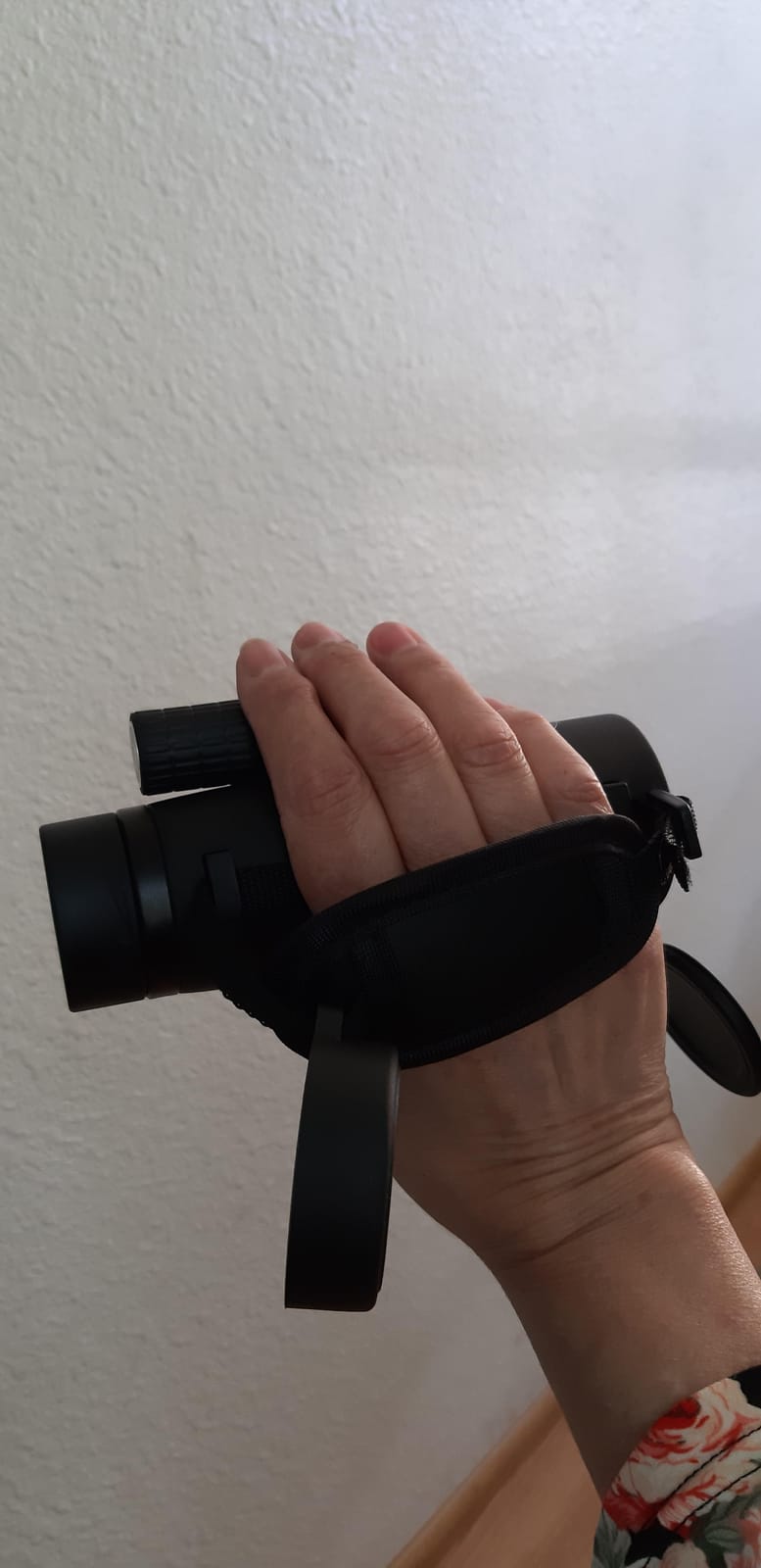
Build quality is where this scope separates from the sub-40-dollar crowd. The BAK-4 prism with fully multi-coated elements is a real optical package, and the nitrogen-filled, waterproof, dust-proof and shockproof body means a sudden downpour at an outdoor festival does not end your night. The 285 g weight is the heaviest in this guide, and you can feel it on a long set, but it balances well one-handed with the included strap.
The complaints in owner reviews are consistent and fair. The focus dial is looser than I would like and a knock against the rail can push it out of focus, which means you re-focus more often than you would with a firmer ring. Several owners also mention a dark ring around the edge of the image when the twist-up eyecup is extended all the way, and the included nylon case is thin enough that I would not lean on it.
What seat type suits the 8×42
This is my pick for the lower bowl and the first ten rows of an upper deck, where the performer is 40 to 100 feet away and still recognisable at 8x. The bright 42mm end also handles the transition from house lights down to a dark stage without a long adjustment.
If your seat is more than 150 feet back, 8x will not close the distance on its own. Pair it with the tripod connector if you want to push further, or step up to a stronger optic for nosebleed rows.
Where it falls short
It is not the choice for a strict small-bag policy, at 5.7 inches long and 285 g it is the bulkiest body here. The loose focus dial also makes it a poor companion for crowds where your elbow takes regular knocks from people filing past your row.
Owners who expected true night-vision capability were disappointed, and that expectation is worth naming. A 42mm objective brightens a dim stage, but it does not turn a blacked-out arena into daylight.
2. Vortex Solo 10×25 Monocular – Best Known Brand for Upper Decks
- Very small and light for jacket or bag carry
- Full rubber armor resists slips and knocks
- Nitrogen purged and o-ring sealed against moisture
- Adjustable eyecup works with and without glasses
- Unlimited unconditional lifetime warranty
- 2.5mm exit pupil looks dim in dark indoor venues
- Fixed focus design limits close-range flexibility
- Narrow field of view compared with larger monoculars
This is the monocular I recommend to anyone who wants one optic that handles concerts, travel, hiking and everything in between. The 10×25 pairing is the most widely proven compact specification in the category, and the 5.6 ounce body is small enough that it lives in a jacket pocket rather than a bag you have to think about.
Vortex backs it with an unlimited, unconditional lifetime warranty, which is the standout trust signal in this group. For an item you are taking into a crowd, where things get dropped, that coverage removes most of the risk of the purchase.
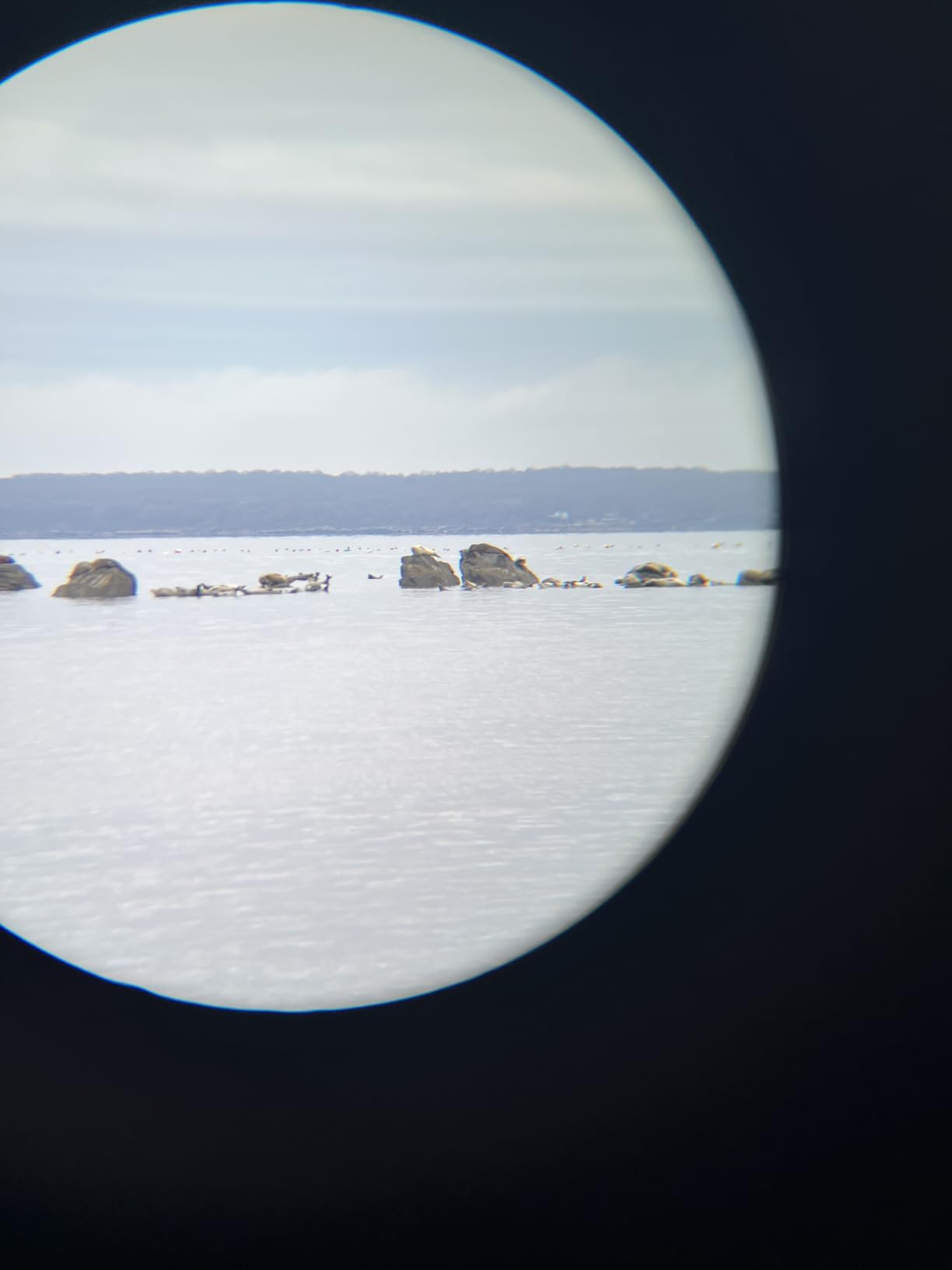
The optical performance is exactly what the spec sheet promises. Fully multi-coated lenses give a clean, crisp image, and the sealed nitrogen-purged body means it survives a jacket pocket in August and a rain queue in November. The adjustable eyecup sits comfortably against the eye and clears glasses without pressing the frame against the lens.
There is one honest limitation, and it is the same one that applies to every 10×25 pocket scope. Dividing a 25mm objective by 10x gives a 2.5mm exit pupil, and in a dark indoor arena that reads as a dim image with muted colour. Outdoors at an evening festival with stage lights aimed at you, it is perfectly comfortable. Under a low roof with the house lights down, it is the first thing you will notice.
Where this monocular earns its place
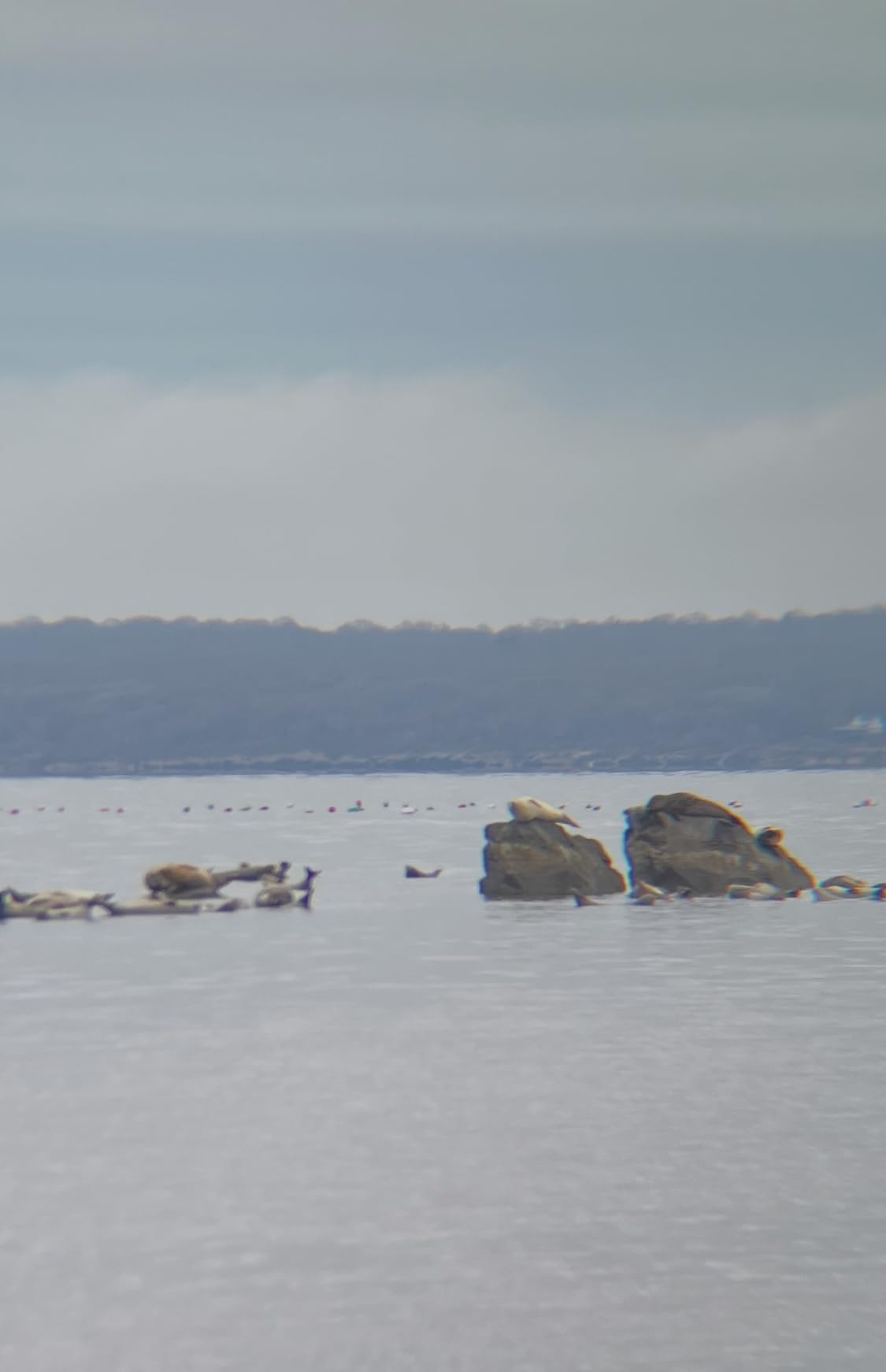
It suits open-air stadium seating, festival fields, and arenas where you are closer to the stage than the lighting is dim. The 10x gives you a real pull on a performer 80 feet out, and the narrow field of view is a small price when you know roughly where to point.
It is also the pick if you are a glasses wearer who wants a sealed, warrantied body and would rather not think about eye relief numbers at all.
Where it falls short
Fixed focus means no close-range adjustment, so it will not do duty as a theatre or backstage optic. If your seat puts you close enough that the performer fills your view unaided, this magnification is more than you need.
If you sit in the darkest, furthest corner of a domed arena, the 2.5mm exit pupil will feel thin, and you would be better served by a 32mm or 42mm objective.
3. Celestron UpClose G2 10×25 Monocular – Best Value for Indoor Arenas
- Roof prism with multi-coated optics
- Rubber-covered aluminum body with finger ridges
- 11mm eye relief suits eyeglass wearers
- Very light at 113 g
- Celestron limited lifetime warranty
- Owners report internal fogging that needs an angled hold
- Severe lens flare when pointed at a bright sky
- Narrow field of view and no lens caps included
Among the lightest 10x bodies in this guide at 113 g, and the only one that pairs a roof prism with a rubber-covered aluminum shell at this outlay. Roof prisms tend to sit in wider, flatter housings than Porro designs, and the flat profile is easier to hold steady one-handed when your elbow is resting on a rail.
The 11mm eye relief is a genuine advantage if you wear glasses. You can keep your frames on and still see the full field without the black circle that appears when the eyepiece sits too close, and the enlarged eyepiece lens reduces that limiting effect further.
Focus feel is the best part. The ring turns with firm, well-judged resistance and holds its position, which matters when you need to re-focus in the dark between songs. The image is sharp with little visible distortion, and the thumb indents and finger ridges give you a secure one-handed grip on a slim tube.
Owners do report internal fogging that some solve by holding the scope at an angle rather than straight on, and a fair number mention severe lens flare when pointing toward a bright sky. For a night concert, flare is rarely an issue, since you are looking at a dark stage. The field of view is narrow enough that some owners describe the view as looking through a straw, so practise finding the stage before the lights go down.
Who should buy this one
It is the sensible first concert monocular for anyone who wants to spend as little as possible while still getting a roof prism, a firm focus ring and eye relief that works with glasses. The 113 g body is easy to forget in a coat pocket until the support act ends.
It also suits indoor arena floors and lower bowls, where 10x is more than enough and you are close enough that a dim exit pupil is not a problem.
Where it falls short
A 4.0 average rating is the lowest tier in this group, and the recurring complaints are consistent: fogging, flare and a narrow view. It is water resistant rather than fully waterproof, so I would not rely on it in sustained rain at an outdoor festival.
No lens caps are included, which is a small thing that becomes annoying in a dark venue when you set the scope down on a sticky floor between songs.
4. usogood 10×42 BAK4 Monocular – Best for Nosebleed Seats
- 42mm objective keeps the image bright at 10x
- Large 22.5mm eyepiece gives a wider view than most 10x scopes
- Tripod interface and smartphone adapter support
- Waterproof
- fog-proof and shock-resistant
- One-handed focus with a comfortable grip
- Some owners find 10x feels closer to 5x-8x in practice
- Hand strap is awkward to thread and can slide free
- Loose lens caps and a basic pouch
Taking a 42mm objective up to 10x is the combination that makes this scope interesting for steep-bowl seating. Most 10x monoculars use a 25mm end lens, which is why so many of them look dim. Pairing 10x with 42mm gives a 4.2mm exit pupil, brighter than a 10×25 by a wide margin, so a distant performer still reads with colour.
The 22.5mm eyepiece is unusually large for this class and produces a wider view than most 10x scopes. On a moving performer that matters, because you spend less time hunting for the target in the frame after a zoom change.
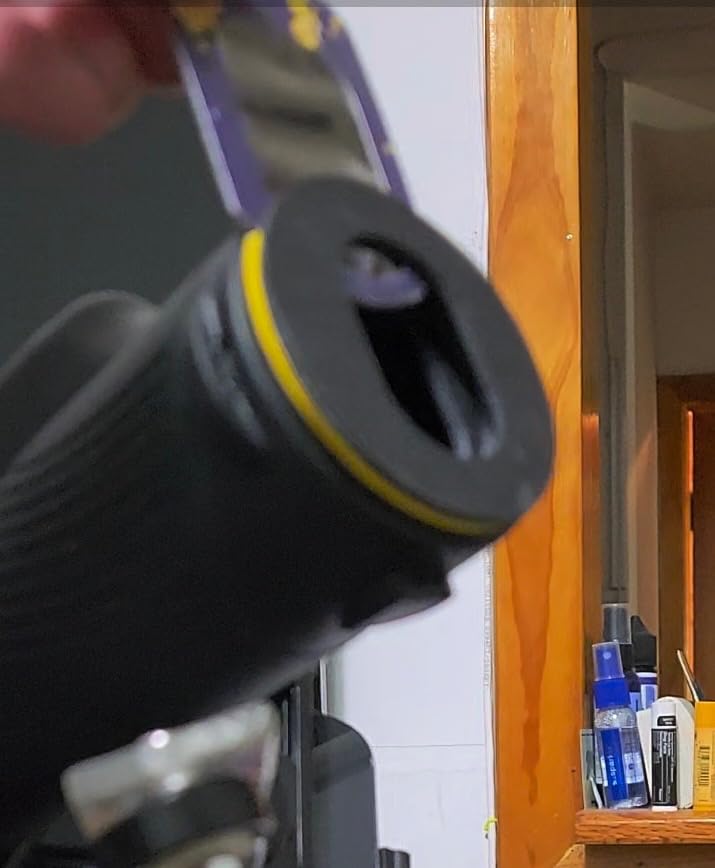
Focus is quick and genuinely one-handed, which is what I want in a row where people shuffle past constantly. The rubber-armored 6.1-inch body grips well in damp hands, and the listed close focus range from 3.3 yards out to about 1200 yards means it handles everything from the pit to the back of an open field.
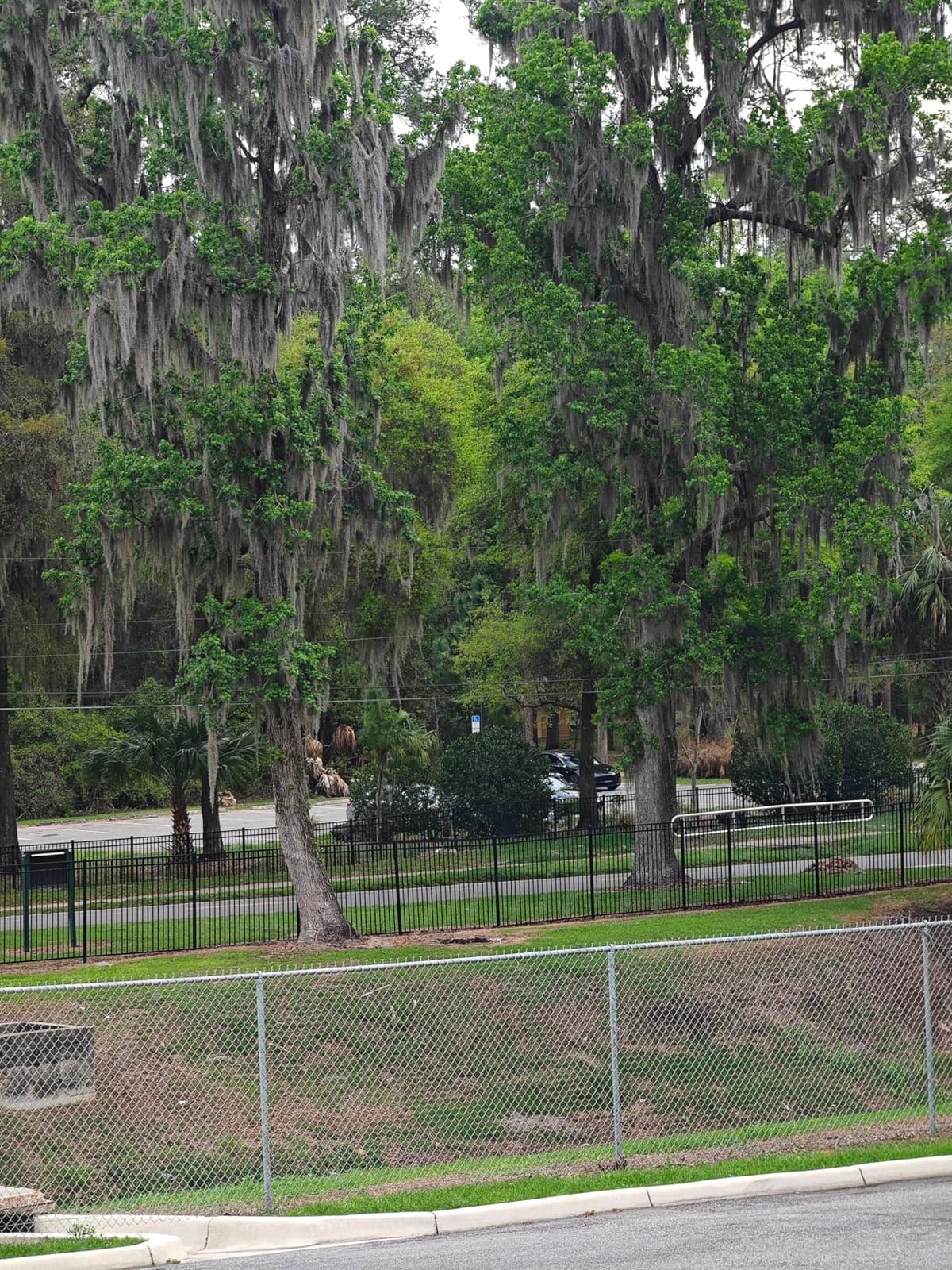
One of the most useful details for concert use is the tripod interface. At 10x, hand shake is unavoidable in a dark venue, and a small tabletop tripod or even a monopod on the barrier in front of you removes most of it. Several owners pair it with a phone adapter, which turns the same optics into an improvised image grabber.
Why it suits the highest seats
For upper decks and nosebleed rows where the stage is 150 feet away or more, the combination of brightness and a tripod mount is the reason I rank this fourth. A dim scope at high power is worse than a bright one, because you end up straining to resolve detail the light never delivered.
It is also the pick for outdoor festival fields, where the waterproof and fog-proof construction handles weather without worry.
Where it falls short
At 9.12 ounces it is the second-heaviest body here, and it is not a small-bag item at 6.1 inches long. Owners also note that 10x sometimes feels like 5x to 8x in practice, which is a fair caution when your seat is very high.
The included accessories are the weak point. The hand strap is awkward to thread and can slide out of its holes, the lens caps fit loosely, and the pouch is basic. Budget a strap of your own.
5. Celestron Nature 10×25 Monocular – Best for Glasses Wearers
- Firm focus ring holds position between adjustments
- Twist-up eyecup works with and without eyeglasses
- Nitrogen purged so it stays clear in a pocket
- Multi-coated optics with a BaK-4 prism
- Limited lifetime warranty with US-based support
- Focus ring is very stiff and needs two hands
- No tripod socket for steadying 10x
- Narrow field of view makes tracking a moving performer hard
The thing I appreciate most about this scope is a minor detail that matters more at a concert than most spec sheets suggest: the focus ring is firm enough to hold its setting. You set it once on the way in, and it stays there when someone bumps your elbow two songs later.
Owners also report that it never fogs inside a pocket, which follows from the nitrogen purging and matters in a warm indoor arena where a damp scope would stay blurred for the whole set. The rubber-armored polycarbonate housing handles a season of festivals without developing the loose-hinge problems that plague cheap metal bodies.
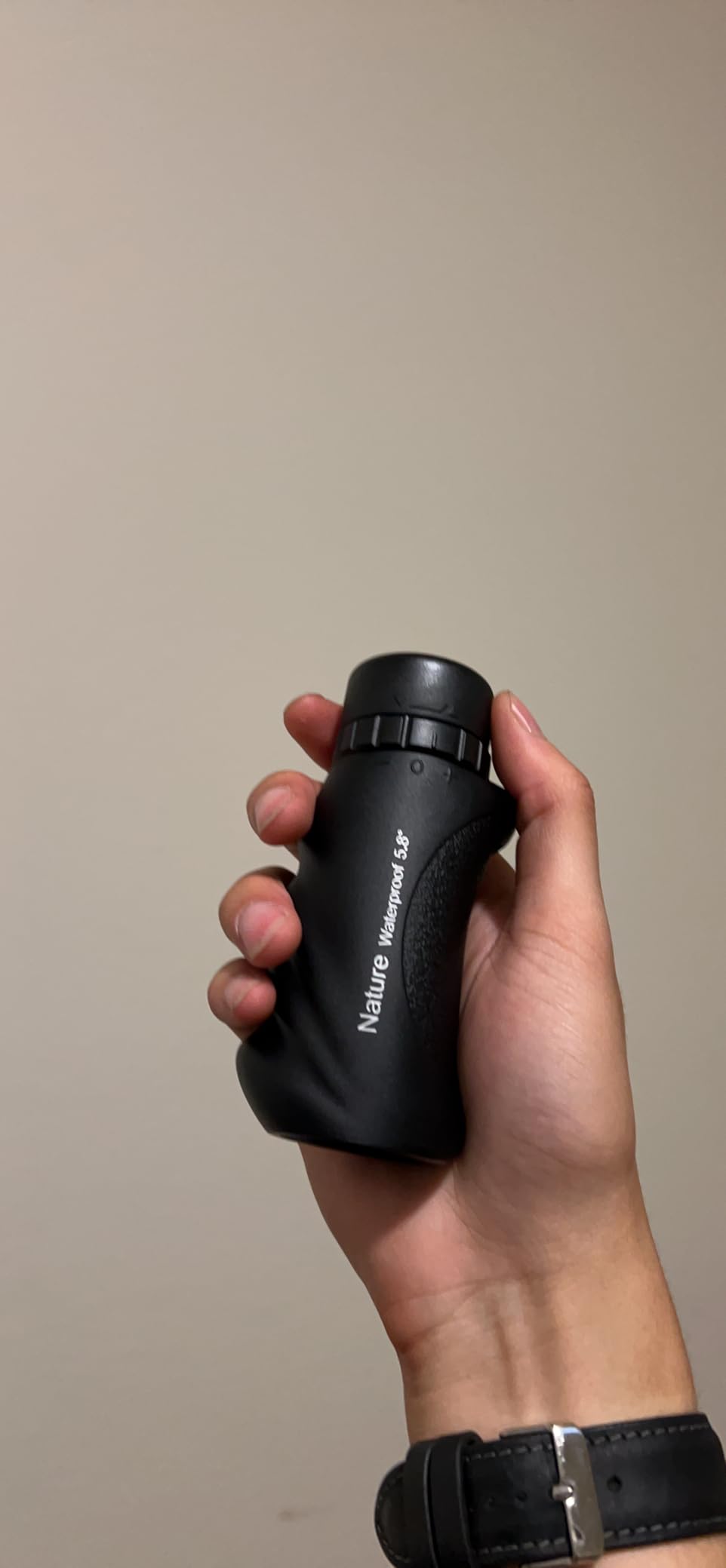
Optically it is a straightforward 10×25 with multi-coated lenses over a BaK-4 prism, which delivers good contrast and true colour for a compact scope. The 5.8-degree angular field of view is a little wider than several rivals here, which helps when you are scanning for a performer who has moved stage left.
The 170 g weight sits in the middle of this group. It is light enough for a lanyard around your neck and heavy enough that the 10x does not feel twitchy, and the twist-up eyecup gives glasses wearers a clean full-field view.
Why glasses wearers like it
The twist-up eyecup is the reason this scope appears in so many glasses-wearing concert-goers’ hands. You can collapse it for bare eyes and raise it to clear a frame, and because it locks in position, it will not drift down during a long set.
It is a good first monocular for a fan who watches a handful of shows a year and wants something dependable rather than impressive on paper.
Where it falls short
The focus ring is the stiffest in this guide, stiff enough that several owners describe adjusting it while looking through the eyecup as a two-handed job. In a dark venue that is a genuine annoyance, and it is the main reason this sits fifth rather than higher.
There is no tripod socket, so at 10x in a dim venue you are managing hand shake on your own. Edge sharpness and light transmission are also a clear step below the fully multi-coated scopes higher on this list.
6. Carson CloseUp 6×18 Monocular – Best for Floor and Front Rows
- Genuine close focus down to about 10 inches
- 1.6 ounce body that disappears into a pocket
- 6x stays steady handheld for long sets
- Good eye relief works with eyeglasses
- No Fault warranty covers repair or replacement
- Weak at long distance where street or venue signs stay unreadable
- Two-piece focus barrel takes practice and both hands
- Close focus has a very shallow depth of field
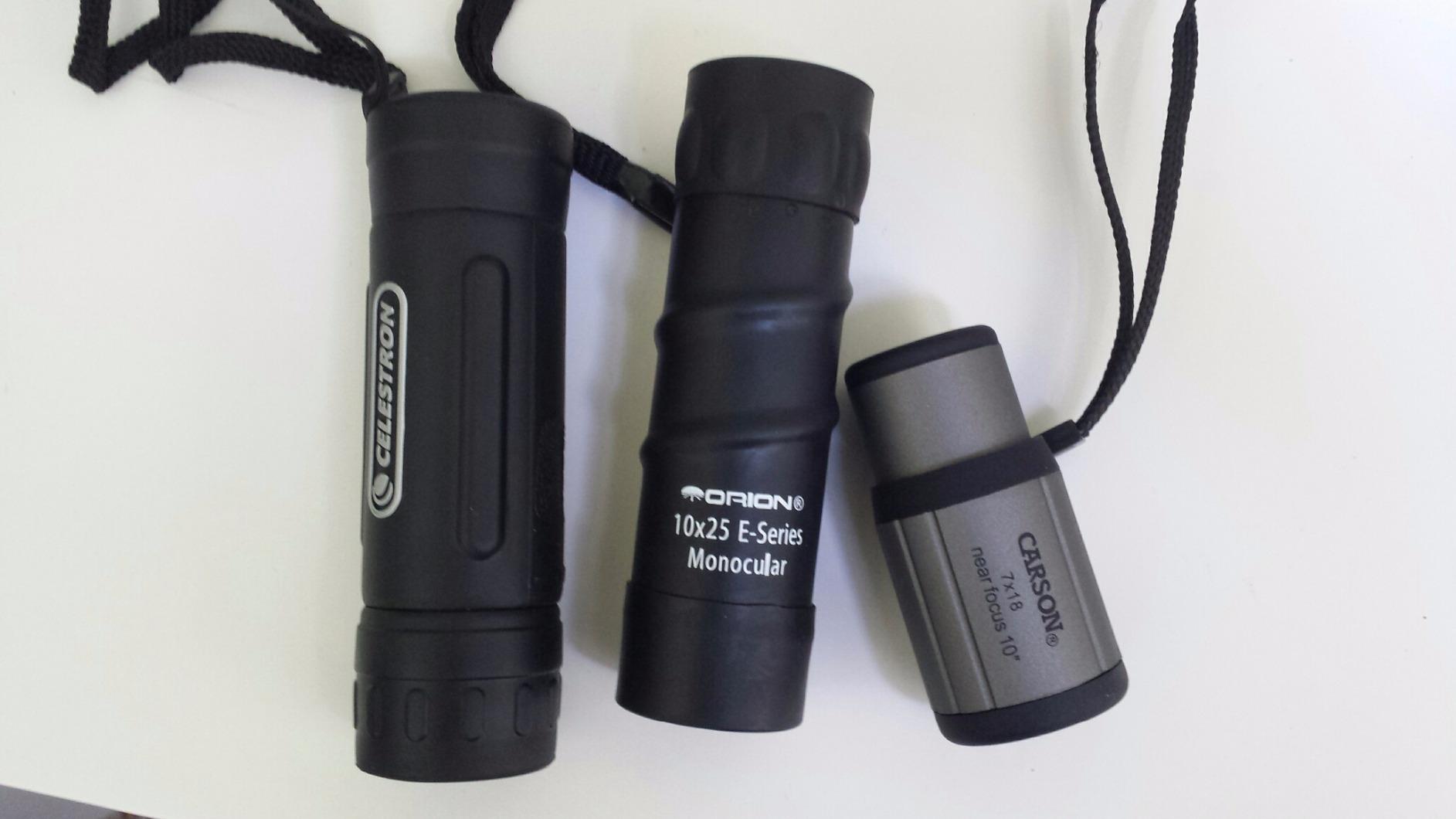
This is the only optic here that can focus from a foot away, and that changes who it suits. If you are on the floor, in the pit, or in the first few rows, 6x is more magnification than you need, and the close-focus barrel lets you frame a singer’s face or a guitarist’s hands at short range with genuine detail.
At 1.6 ounces it is the lightest body in the guide, and the 427 ft field of view at 1000 yards is the widest here, so finding a target is quick even at short power.
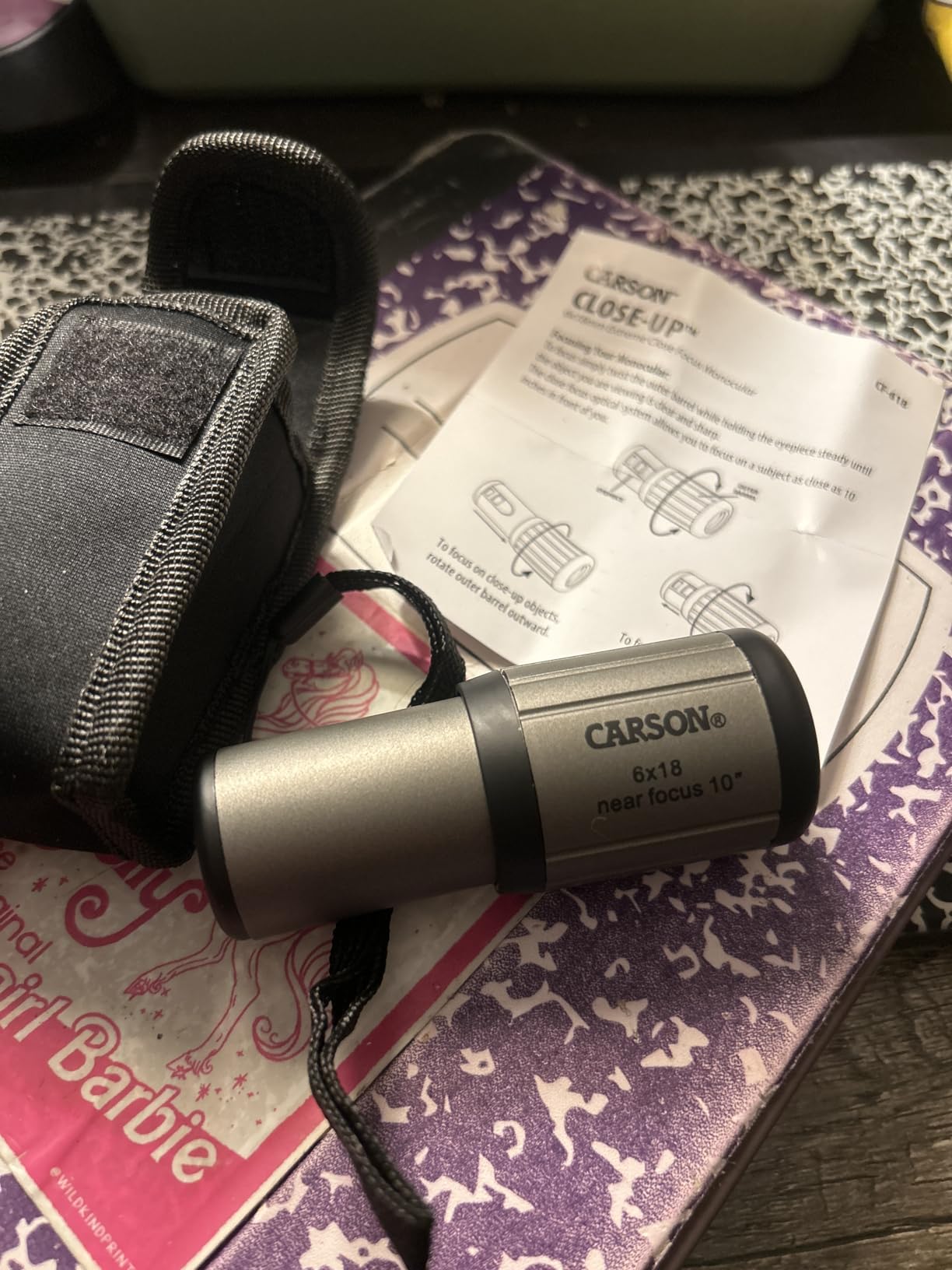
The two-piece twist-focus barrel is unusual and needs explaining. The short position sets the scope for distance, and sliding the barrel out switches to close focus. Owners who have used it rate the focus as smooth and well tolerated, but a few describe the switch as something that takes practice and occasionally needs both hands.
Optics are crisp for the class, with a fully coated design that holds contrast better than the very cheapest scopes, and several reviewers specifically recommend it for theatre and close concert viewing, which is exactly the use it was built for.
What makes it different at a concert
Close focus is the distinguishing feature. At a music venue or a smaller stage you can pull the barrel out and fill the view with a face or an instrument, which no other 6x scope in this guide can do. For a floor ticket, that beats raw magnification every time.
It also mounts to a tripod, and at 6x that removes the last of the shake without any fuss, which helps if you want a steadier view of an acoustic set.
Where it falls short
Do not expect it to reach a stage 100 feet away. Owners report that street and trail signs stay unreadable at distance, and the useful range is limited. An 18mm objective at 6x gives a 3mm exit pupil, so it is also dim in a dark room.
The close focus depth of field is very shallow, and the soft pouch offers no hard protection. If your seat is anywhere above the lower bowl, one of the 10x scopes is the better purchase.
7. Carson MiniMight 6×18 Monocular – Best for Small Venue Bags
Carson MiniMight 6x18mm Pocket Monocular with Carabiner Clip (MM-618)
- Very small and light for a belt or pocket
- Sharp clear image with a smooth focus ring
- Long eyecup makes it easier to hold steady
- Comfortable solid-feeling shape
- Comes with a carabiner clip
- Narrow field of view makes nearby targets hard to locate
- Awkward for prolonged one-eyed viewing
- Weak at longer distances
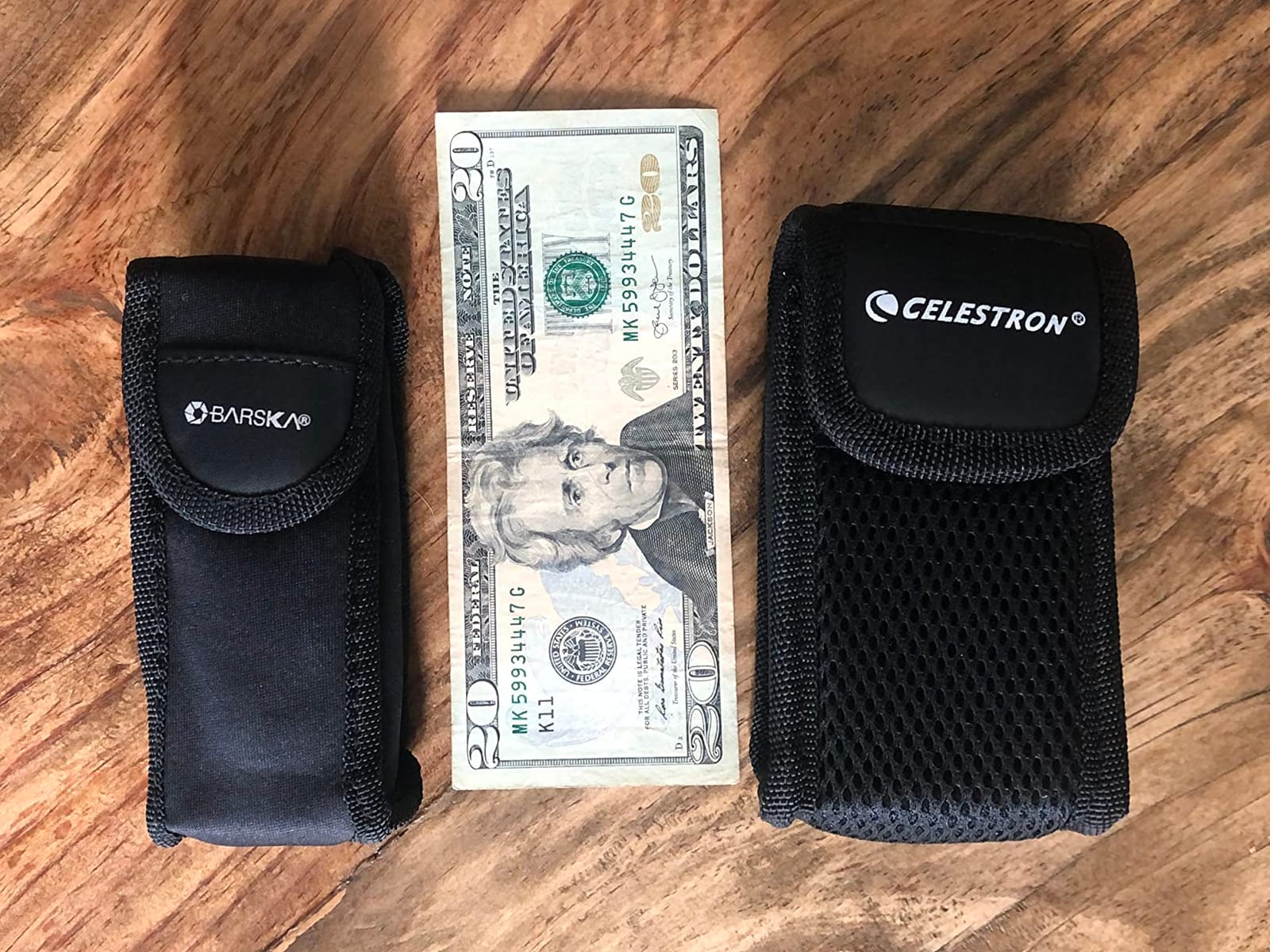
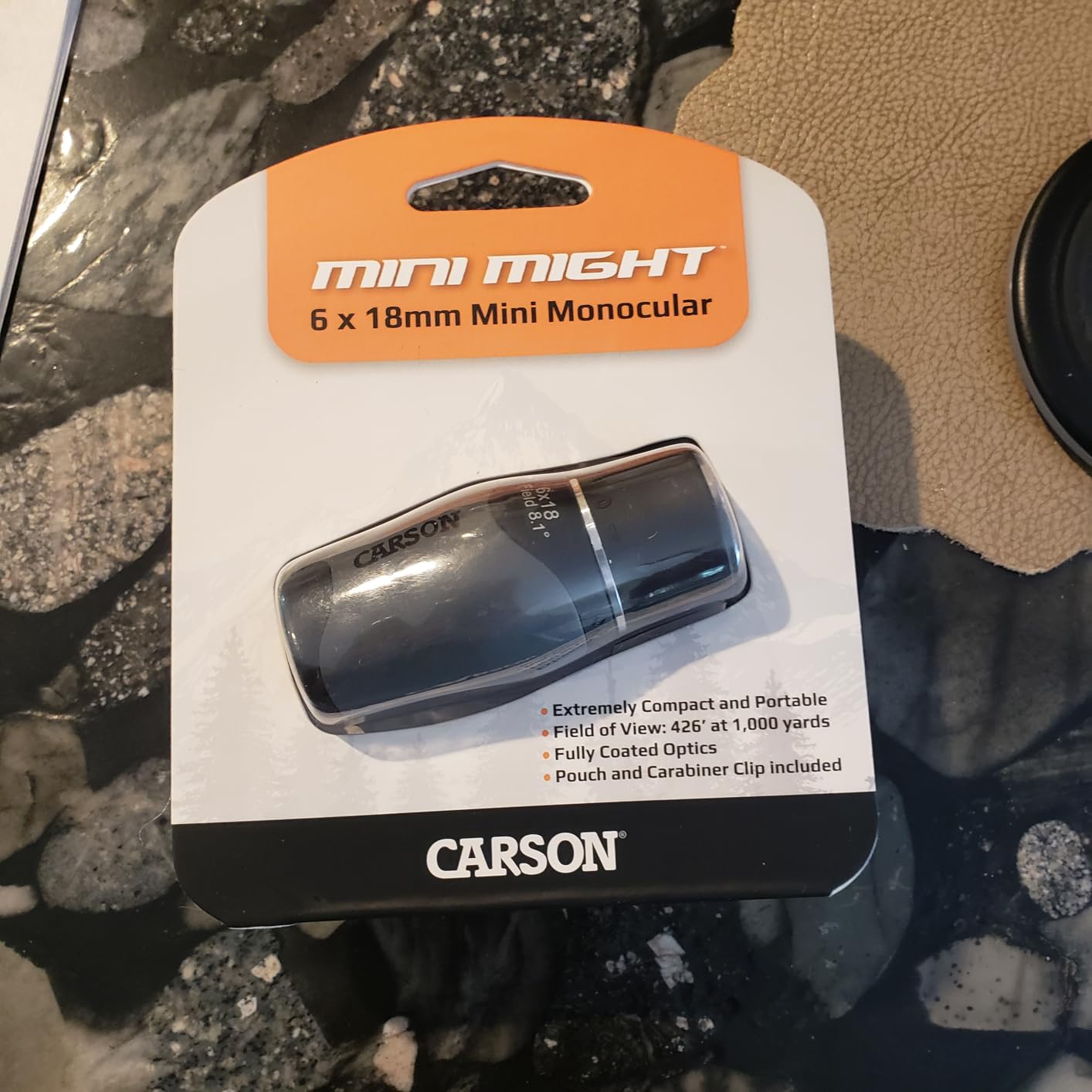
When the venue enforces a strict small-bag policy, this is the scope that gets through the door without a conversation. At roughly 3 inches long and 2.24 ounces, with a carabiner clip that attaches to a belt loop or a bag strap, it is the least conspicuous optic in this guide.
The eyecup is longer than competing mini scopes of this size, and that detail is what makes it usable. A longer eyecup gives you something to brace against with your cheek, which is how you keep a small scope steady at a concert when your elbow has nowhere to rest.
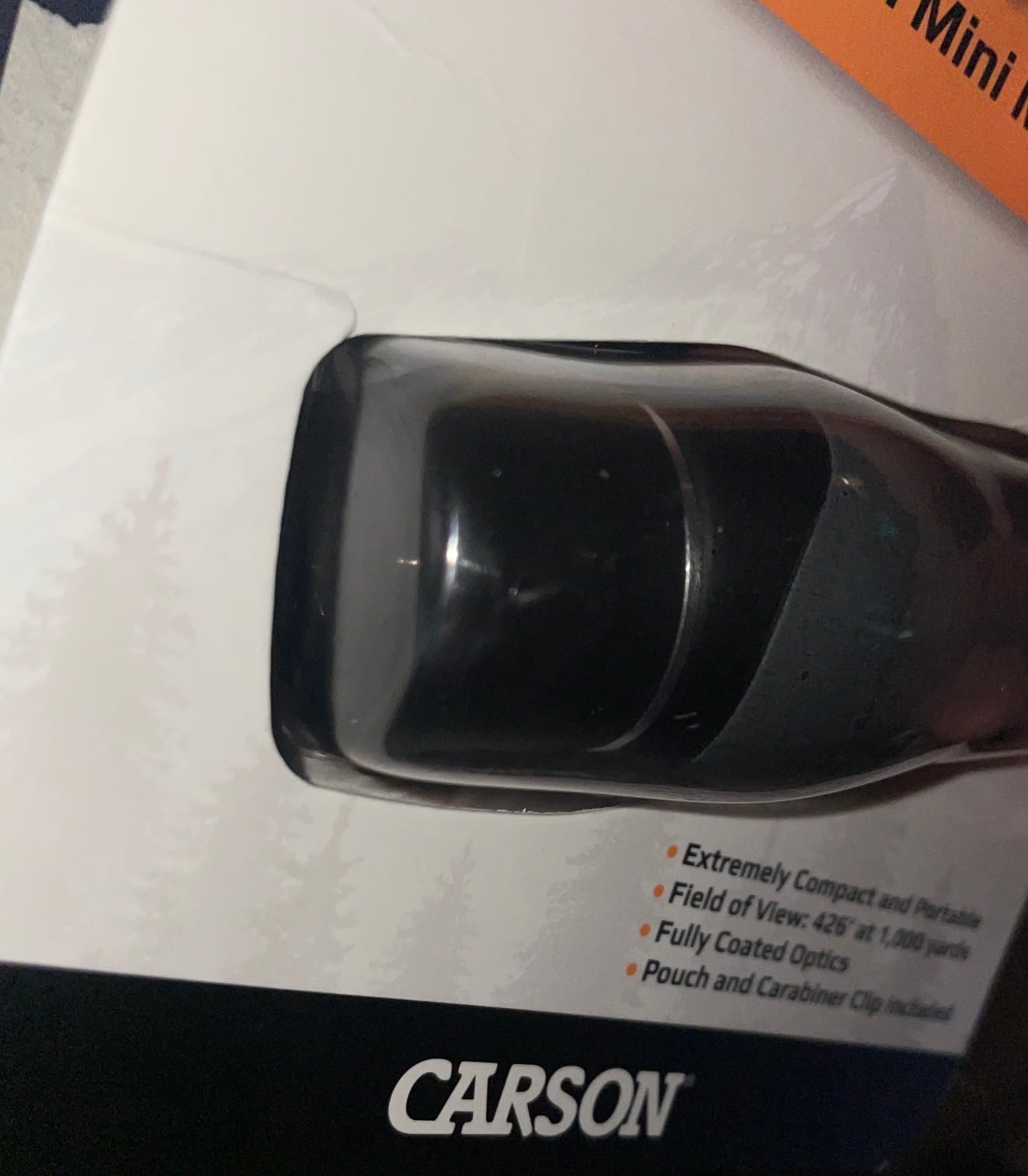
Image quality is sharp and clear for the price, and the focus ring turns smoothly. Several owners cite it directly for concerts and sporting events, and the 426 ft field of view at 1000 yards is essentially identical to the Carson CloseUp, so you are not giving up scan width for the smaller body.
At 6x the image is easy to hold, which is where pocket scopes genuinely excel. Hand shake above 8x is the limiting factor for most people, and this scope deliberately stays below that threshold.
Where a tiny monocular wins
Front rows, general admission floors, and any venue with a small-bag rule are the sweet spots. Because you can wear it on a belt, it never becomes the reason you leave a bag at home, and you still have both hands free for a drink or a phone.
It is also a sensible backup to keep permanently in a jacket, since the weight penalty of carrying it alongside a larger optic is close to nothing.
Where it falls short
Owners describe the narrow field of view as making nearby objects hard to locate, and 6x can feel like more than a small body handles comfortably when you brace it badly. It is also not comfortable for prolonged use with one eye closed, which is a real consideration over a long set.
Like its 6×18 sibling, it is weak at longer distances and dim in a dark room. There is one report of an internal correction lens loosening and going blurry, which appears to be an isolated failure rather than a pattern.
8. Tasco Essentials 10×25 Monocular – Best Budget Roof Prism
- Roof prism design in a very compact 70 g body
- Rubber armor gives a secure grip in crowds
- Hand strap and carrying pouch included
- Long-standing budget brand with a steady rating
- Fully coated optics limit brightness in dim venues
- Narrow 288 ft field of view restricts tracking
- Only a 1 year warranty
- No tripod mount at 10x
A roof prism in a 70 gram body is a specification you rarely see at this price, and the roof prism layout means the scope lies flat in a pocket rather than sitting like a stubby tube. Tasco is an established budget optics brand, and this model has held a steady rating just under four stars across a large number of owners for years.
At 10x with a 25mm objective, this is the power-and-size combination most fans assume they need. It pulls in a performer 80 to 100 feet away convincingly, and the black rubber armor gives you a grip that survives a season of being shoved into a bag.
The limitation is coatings, and it is worth understanding before you buy. Fully coated lenses transmit less light than the multi-coated and fully multi-coated packages used by the scopes higher on this list, so in a dim indoor arena this image is the dimmest of the 10x options here. Outdoors at a daytime or early-evening festival, that difference largely disappears.
The 288 ft field of view is also narrow, and owners regularly cite it when describing difficulty tracking a moving performer. The included hand strap and pouch are serviceable, and the 1 year warranty is the shortest of any scope in this guide.
Who this pick suits
If you want a 10x pull without a large body, this is a fair entry point. The 70 g weight is one of the lightest here, and the roof prism shape fits a jacket pocket more easily than a chunky Porro design of the same power.
It suits outdoor stadium seating and festival afternoons, where the light is good and you want something that will not weigh you down.
Where it falls short
Indoor arenas are where it struggles. A 2.5mm exit pupil with fully coated glass is a dim combination, and there is no tripod mount to steady the 10x when your arms get tired three songs in.
The 1 year warranty is worth weighing. The Celestron scopes on this list carry limited lifetime warranties for a similar outlay, and that is a meaningful difference for something you will use repeatedly.
9. Nocs Zoom Tube 8×32 Monocular – Best for Dim Open-Air Stages
Nocs Provisions Zoom Tube 8×32 Monocular, Bird Watching & Backpacking
- Highest average rating in this guide at 4.6 stars
- 32mm objective gives a bright 4mm exit pupil in dim venues
- Widest field of view of the 10x and 8x options
- Center focus is fast and one-handed friendly
- Multi-stop twist-up eyecup for glasses
- Built-in tripod adapter and lifetime warranty
- Bulkier and heavier than the pocket scopes at 8 ounces
- 8x is fixed despite the Zoom Tube name
- No case or strap listed in the box
This is the highest-rated optic in the guide at 4.6 stars, and the rating reflects something real rather than marketing. The 32mm objective at 8x produces a 4mm exit pupil, which keeps the image bright without carrying the weight of a 42mm scope. Brightness is what you are buying when the stage lighting is low, and this is where the Nocs makes its case.
The 384 ft field of view is the widest among the 8x and 10x options in this list, so finding a performer and keeping them framed takes less hunting. In practice that means more of the show spent watching rather than searching.
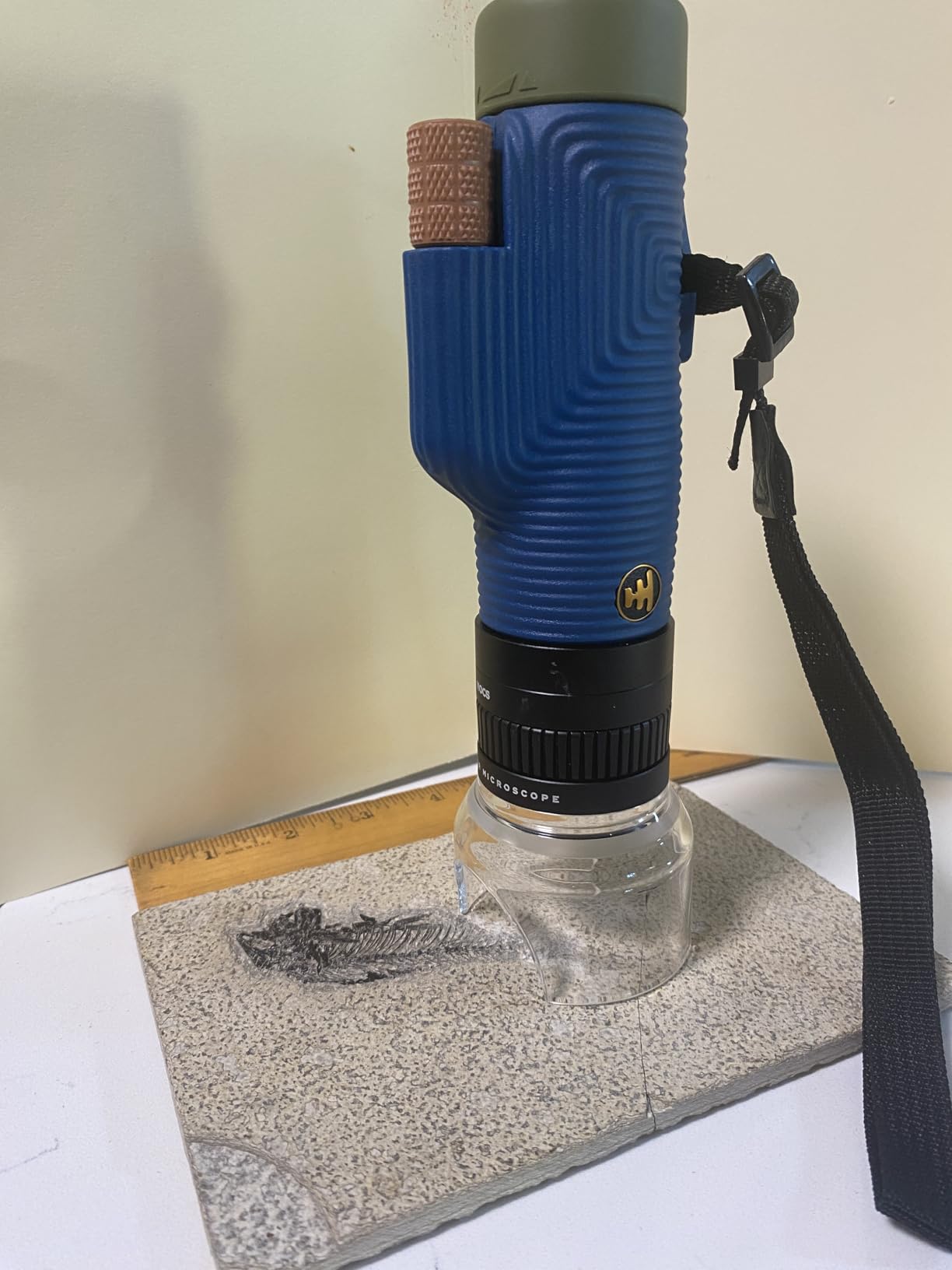
Handling is the strongest part. The center focus design is fast and naturally one-handed, and the patented wave-pattern grip stays secure in a sweaty hand. The multi-stop twist-up eyecup has three positions, which means you can set it precisely for glasses or for bare eyes and leave it there.
There is a threaded tripod adapter built into the frame, and at 8x over a dim stage it is a genuinely useful addition rather than a checkbox. The housing is IPX4 water resistant, scratch proof and impact resistant, which suits a life that involves festivals and a glovebox.
Why it stands out in low light
Bright optics and a wide view solve the two problems that ruin concert monoculars. A performer 100 feet away in a dark arena, lit mostly by backlight and coloured wash, resolves with colour instead of going grey, and the wide field means you do not lose them every time they move.
For open-air festival main stages at dusk, and for domed arenas with dark upper decks, it is the pick I would make without hesitating.
Where it falls short
At around 8 ounces it is heavier than every pocket scope here, so it does not disappear into a jacket the way the Vortex or the Tasco does. Under a strict small-bag rule it is a borderline item rather than a safe one.
Despite the name, the magnification is fixed at 8x rather than a true zoom, so you cannot push toward a distant stage. The box also lists no case or strap, which you will want to add.
10. Carson BlackWave 10×25 Waterproof Monocular – Best for Outdoor Festivals
- Nitrogen-filled waterproof build for wet outdoor events
- 12mm eye relief is comfortable with eyeglasses
- 4.32 ounce body stays comfortable over a long set
- Close focus to 4 feet adds short-range flexibility
- Pouch
- strap and lens cloth included
- BK-7 prism and blackened coating reduce contrast
- Narrow 273 ft field of view makes tracking harder
- 10x handheld shows shake with no tripod mount
Outdoor festivals are the case where weatherproofing matters, and this scope is built for it. The nitrogen-filled, waterproof construction holds up in rain and changing conditions, and the rubberized body grips well in wet hands, which a smooth aluminum shell does not.
The 12mm eye relief is one of the more generous figures in this guide and it makes the scope genuinely comfortable for glasses wearers. The 4.32 ounce weight is light enough that you will still be holding it comfortably at the end of a long outdoor set.
Close focus down to 4 feet adds flexibility that the other 10×25 scopes here do not offer, so you can drop the power on something close and still get a clean image. Owners also note the fast individual focus, which suits a performer who crosses a stage quickly.
Optically it sits lower in this list. The BK-7 prism with blackened coating produces less contrast and light transmission than a multi-coated BaK-4 design, and in a dark indoor venue that shows as a duller image than the FEEMIC or the Nocs.
Where it earns its place
Rain-soaked festival fields, open-air stadium events in unpredictable weather, and any show where your optic lives in a bag rather than a pocket. It also works well for anyone who wants a sealed body with usable eye relief at a modest weight.
For outdoor daytime viewing the 10x pull is exactly right, and the 273 ft field of view is workable if you know roughly where to look.
Where it falls short
There is no tripod mount, so at 10x you are handling all of the shake yourself in a dark venue. The narrow field of view makes tracking a moving performer harder than it should be, and the modest BK-7 optics limit image brightness.
One practical note: figures for field of view and eye relief differ slightly between the listing and the spec sheet, so check the numbers on the box if those two matter to your seat.
How to Choose a Monocular for Concerts in 2026
Choosing well comes down to matching the optic to your seat, your venue, and your tolerance for a scope you have to carry. Here are the factors that actually move the outcome, in the order I would weigh them.
Start with your seat location. Distance to the stage sets the magnification you need, and getting this wrong is the most common purchase mistake. As a rough guide: floor and front rows need little or no magnification, the lower bowl is comfortable at 6x to 8x, a typical upper deck works at 8x to 10x, and nosebleed rows benefit from 10x combined with a way to steady the scope.
Choose the objective lens next. This is the light-gathering end of the scope, and it decides how the stage looks in a dim room. The rule of thumb is that the exit pupil equals objective diameter divided by magnification, and anything at or above about 3mm feels comfortable indoors. That is why a 32mm objective at 8x and a 42mm objective at 8x or 10x outperform a 25mm objective at 10x in an arena, even though the smaller scope is easier to carry.
Fixed power beats zoom for most seats. A true 8x to 16x zoom sounds useful until you consider that zoom rings on compact monoculars are often slow, imprecise, and prone to drift. A fixed 8x or 10x with a wide field of view is faster in practice, because you scan wide, find the performer, and look. The Nocs Zoom Tube illustrates the point: despite the name, it is fixed at 8x, and owners rate the bright, wide, fast-focus experience.
Check the field of view before the magnification. A narrow view makes a moving performer genuinely hard to follow. Anything around 5.5 degrees or wider at 1000 yards is comfortable for tracking, and the widest options here sit near 8 degrees. If you expect a lot of movement on stage, weight this above raw power.
Mind the weight for the whole night. You will hold this for two to four hours, and fatigue causes shake far earlier than most buyers expect. Anything under about 6 ounces stays comfortable for a full set. Above 8 ounces, plan to rest your elbows on the rail in front of you or use a tripod interface.
Verify eye relief if you wear glasses. Most of the scopes here have twist-up or adjustable eyecups, and 11mm to 12mm of eye relief is the comfortable range for framed eyes. A scope with a fixed low eyecup and short eye relief will show you a black circle around the edge of the image, and that is a fitting problem rather than an optical fault.
Look at coatings in a dim venue. Fully multi-coated lenses with a BaK-4 prism give the brightest, most contrasty image and hold colour better under coloured stage washes. Fully coated lenses, and blackened or BK-7 prism designs, transmit less light and are the first scopes I would avoid for indoor arenas.
Confirm the venue policy before you spend anything. This is the factor that most often decides whether a monocular is usable at all. Arenas and stadiums frequently enforce clear bag sizes, small-bag rules, and screening at every entrance, and optics are sometimes named specifically. Check the venue’s current policy page and any event-specific rules, and if a small bag is required, measure the body rather than guessing. A 3-inch pocket scope clears almost anything; a 6-inch body does not.
Decide between a monocular, binoculars and your phone. A monocular gives you one-handed use, half the weight, and roughly half the price of comparable binoculars, at the cost of a more comfortable two-eye view for long sessions. Binoculars are steadier and better for scanning, and they are worth it if you already own them. Your phone is free, has a wide lens and a bright sensor, and is unbeatable for a single photo, but it cannot be held on a distant performer while you film the person in front of you. For a fan who mostly wants to watch, a monocular is the right spend.
Dial it in before the lights go down. The most useful thirty seconds of concert optics happens before the show. Outside or in the lobby, find a distant light, set focus and the diopter, and settle the eyecup for your glasses or bare eyes. Then find the stage through the view, note where the performer stands, and start at your low power. In a dark venue with a moving crowd, hunting for focus is what ruins the experience, and it is entirely avoidable.
Common Monocular Mistakes Concert Buyers Make
Most disappointing concert monoculars are not defective. They are mismatched to the job, and the mistakes repeat often enough to be worth naming.
Chasing the biggest magnification number. Listings advertising 20x, 30x, 40x and 60x are almost always describing a zoom range that collapses in real use. Above roughly 10x, hand shake and a narrowing field make the image hard to hold and hard to find. A steady 8x beats an unusable 30x every time.
Expecting a 25mm objective to work in a dark arena. A 10×25 gives a 2.5mm exit pupil, and owner reviews across the budget scopes on this list repeat the same complaint: dim, washed-out images indoors. If your event is inside, spend your budget on a larger objective rather than on a higher number.
Buying before reading the bag policy. This is the mistake that ends the purchase rather than the experience. People arrive at a venue with a monocular in a case and discover that cases are not carried through screening. Read the current venue rules, then buy the size that fits.
Leaving focus adjustments for the dark. Loosely tensioned focus rings drift when bumped, and a blurred image in a dark arena is a wasted set. Set focus before you sit down, and re-check it after the first song as your eyes adapt.
Overlooking weight and balance. A 285 g scope held one-handed for three hours produces real fatigue, and fatigue is what makes a 10x image shake. A lighter scope you keep raised beats a better scope you set down after one number.
Ignoring accessories. A tripod interface, a proper strap, and lens caps cost very little and change how usable a scope is. Thin straps, loose caps and absent cases are recurring complaints in the reviews across this group, and at a concert you will be handling the optic with one hand while holding everything else.
Frequently Asked Questions
What is better, a 12×50 or a 40×60 monocular?
A 40×60 gives far more magnification and a much brighter image, but at 40x the view shakes badly and is very hard to hold on a distant performer. For concerts, 8x to 10x with a 25mm to 42mm objective is far more usable, and a 12×50 sits in a sensible middle ground with a bright 4.2mm exit pupil. Choose 40×60 only for stationary viewing at a distance, not for a live show.
What is the strongest magnification for monoculars?
Handheld monoculars run to 20x or 30x, but usable magnification for handheld concert viewing tops out around 10x. Above that, hand shake and a narrowing field of view make the image hard to hold. Many of the highest-numbered scopes are zoom ranges rather than a true fixed power, so treat 8x to 10x as the practical ceiling.
Which is better for concerts, binoculars or a monocular?
Binoculars are steadier and more comfortable for two eyes over a long show, so they win for regular concert-goers. A monocular is half the size and weight, costs less, fits a small venue bag, and can be raised with one hand while the other holds a railing, which is why it suits occasional fans and anyone dealing with bag restrictions. If you already own decent binoculars, use them.
Are monoculars allowed at concerts and arenas?
Most venues allow monoculars, but rules vary by building and event, and many arenas and stadiums enforce clear bag sizes or small-bag policies with screening at every entrance. Optics are sometimes named specifically in prohibited-item lists. Check the current policy on the venue’s own site before you buy, and measure the body of the scope you plan to carry rather than guessing.
What size monocular fits concert venue bag rules?
The smallest options in this guide are around 3 inches long and under 2.5 ounces, which clears almost any small-bag policy, while the larger 42mm scopes run closer to 6 inches. Anything you plan to carry should fit inside the permitted bag rather than being carried separately, because cases are commonly not allowed through screening. Check the venue’s stated dimensions and measure the scope including its case.
The Verdict: Which Monocular Should You Buy?
The best monoculars for concerts come down to one number: how far the stage sits from your seat. If you are in the lower bowl, take the FEEMIC 8×42 and enjoy the brightest image in this guide, with a 42mm objective that holds colour under stage lighting. If you are one or two decks up, the Vortex Solo 10×25 is the dependable carry-everywhere option, backed by an unlimited lifetime warranty. If you are in the nosebleeds, the usogood 10×42 gives you brightness at 10x plus a tripod interface to cut the shake.
Adjust the pick to the venue. In a dark domed arena or on an outdoor main stage at dusk, the Nocs Zoom Tube 8×32 pairs the highest rating in this group with a 32mm objective, a wide field of view and a built-in tripod adapter. Under a strict small-bag rule, the Carson MiniMight 6×18 clips to a belt and clears any checkpoint. For floor and front rows, the Carson CloseUp 6×18 is the only one here that focuses close enough to fill the view with a face.
Whichever you choose, set the focus and the diopter in the lobby before the lights drop, start at the lower end of your range, and let your elbows rest on the rail in front of you. Those three habits do more for a show than any number on a spec sheet.