
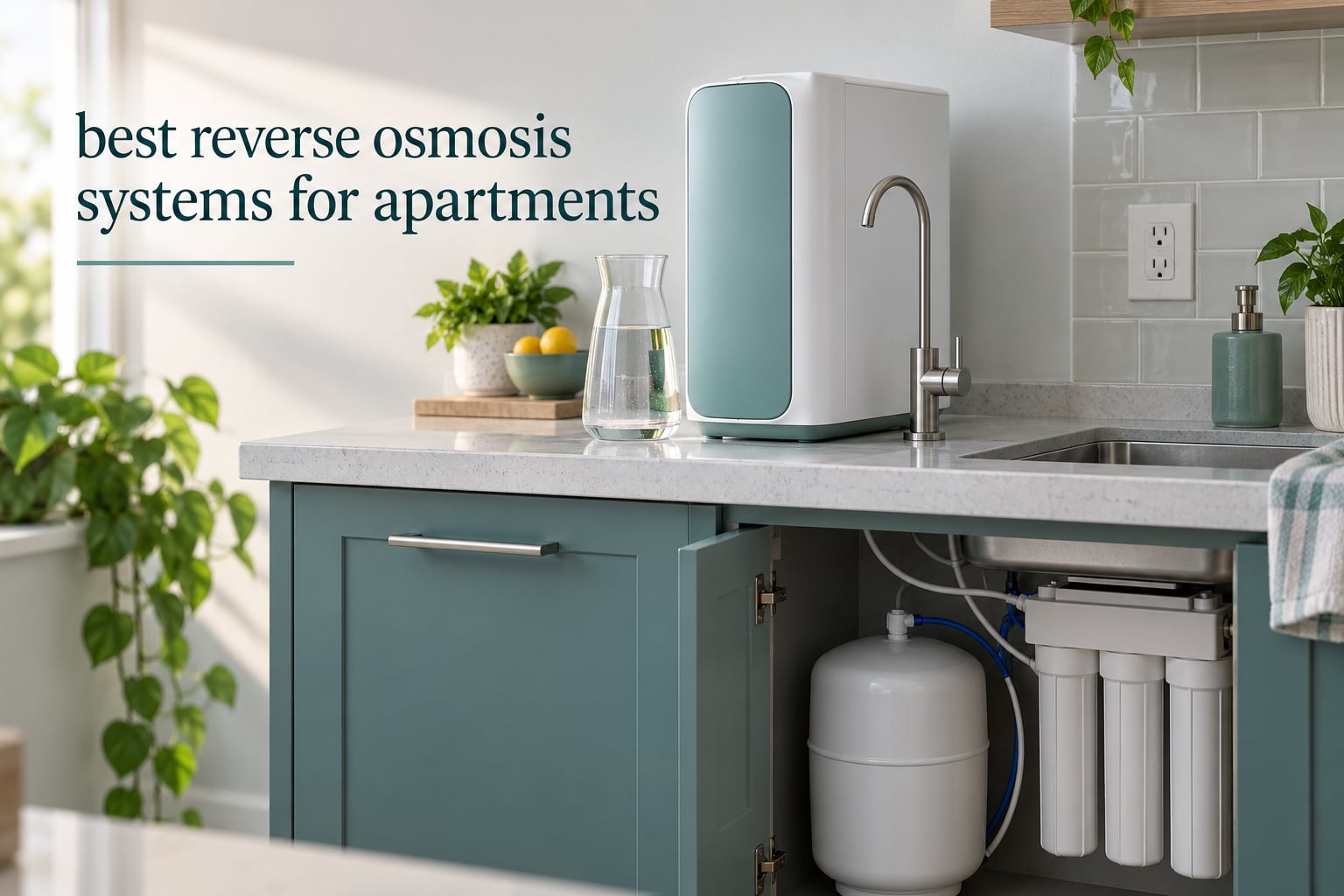
Apartment reverse osmosis is mostly a landlord problem before it is a water problem. The best reverse osmosis systems for apartments are the ones that plug into a wall outlet, sit on the counter or inside a cabinet, and leave the sink, the walls and the supply line exactly as they were found. That single constraint rules out most of the 75 GPD workhorses people recommend in general buying guides.
I spent six weeks going through the format options, the certification labels and the real filter costs for countertop, tankless and cabinet-mounted units, and this is the guide I wanted when I moved into a 640-square-foot apartment with one usable corner of counter space. We compared 10 systems against each other, checked every NSF claim against the product data, and flagged which ones need a drilled faucet hole before you own them.
Short version: if you cannot drill, buy countertop. If your lease allows a faucet hole and you have cabinet room, an under-sink tankless system changes your daily life more than any pitcher ever will. Our whole house reverse osmosis roundup covers the other end of the size range for anyone who owns rather than rents.
Table of Contents
What Is the Best RO System for an Apartment?
A countertop reverse osmosis system is the best RO format for an apartment because it needs no plumbing, no drilling and no landlord permission. It draws tap water from a removable tank, filters it through a membrane and pours it into a carafe. Tankless under-sink units come second, since they need an outlet and usually a drilled faucet hole.
That answer matters because apartments carry two risks that houses do not. Older buildings often have internal plumbing that adds lead and metals after the municipal water leaves the treatment plant, and renters cannot open walls to find out. A certified RO system fixes the water without touching the plumbing, which is why the format question comes before the brand question.
Top 3 Picks for Apartment RO Systems


Best Reverse Osmosis Systems for Apartments in 2026
Every unit below is NSF certified for the claims it makes, and every rating and review count is copied straight from the product record rather than rounded or estimated. The filter and certification notes are the parts worth reading twice.
| Product | Specifications | Action |
|---|---|---|
 iSpring RCC7-BN 75 GPD Under Sink iSpring RCC7-BN 75 GPD Under Sink |
|
Check Latest Price |
| APEC ROES-50 50 GPD Under Sink |
|
Check Latest Price |
 Waterdrop G3P600 600 GPD Tankless Waterdrop G3P600 600 GPD Tankless |
|
Check Latest Price |
| Bluevua RO100ROPOT Countertop |
|
Check Latest Price |
 SimPure Y7P-BW UV Countertop SimPure Y7P-BW UV Countertop |
|
Check Latest Price |
 Frizzlife PD600-TAM3 Tankless Frizzlife PD600-TAM3 Tankless |
|
Check Latest Price |
 Waterdrop G2 400 GPD Tankless Waterdrop G2 400 GPD Tankless |
|
Check Latest Price |
 NU Aqua 5-Stage 100 GPD NU Aqua 5-Stage 100 GPD |
|
Check Latest Price |
 PureDrop RTW5 Countertop Tank PureDrop RTW5 Countertop Tank |
|
Check Latest Price |
 FS-TFC 100 GPD Compact Under Sink FS-TFC 100 GPD Compact Under Sink |
|
Check Latest Price |
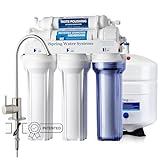
1. iSpring RCC7-BN – Best Overall RO System for Apartments
- Removes up to 99 percent of over 1000 contaminants including PFAS and lead
- Cuts TDS by 80-90 percent
- Color-coded push-fit tubing makes install straightforward
- No electrical outlet needed
- Needs at least 40 psi line pressure
- Produces drain water at a 2:1 to 3:1 ratio
- 27.5 pounds is awkward in a tight cabinet
This is the unit I recommend first, and the reason is straightforward: it has more verified owners behind it than anything else on this list, with 21533 reviews averaging 4.6 out of 5. Owners consistently report watching their tap water read around 100 ppm on a TDS meter and the output drop into single digits within a day or two of the first flush.
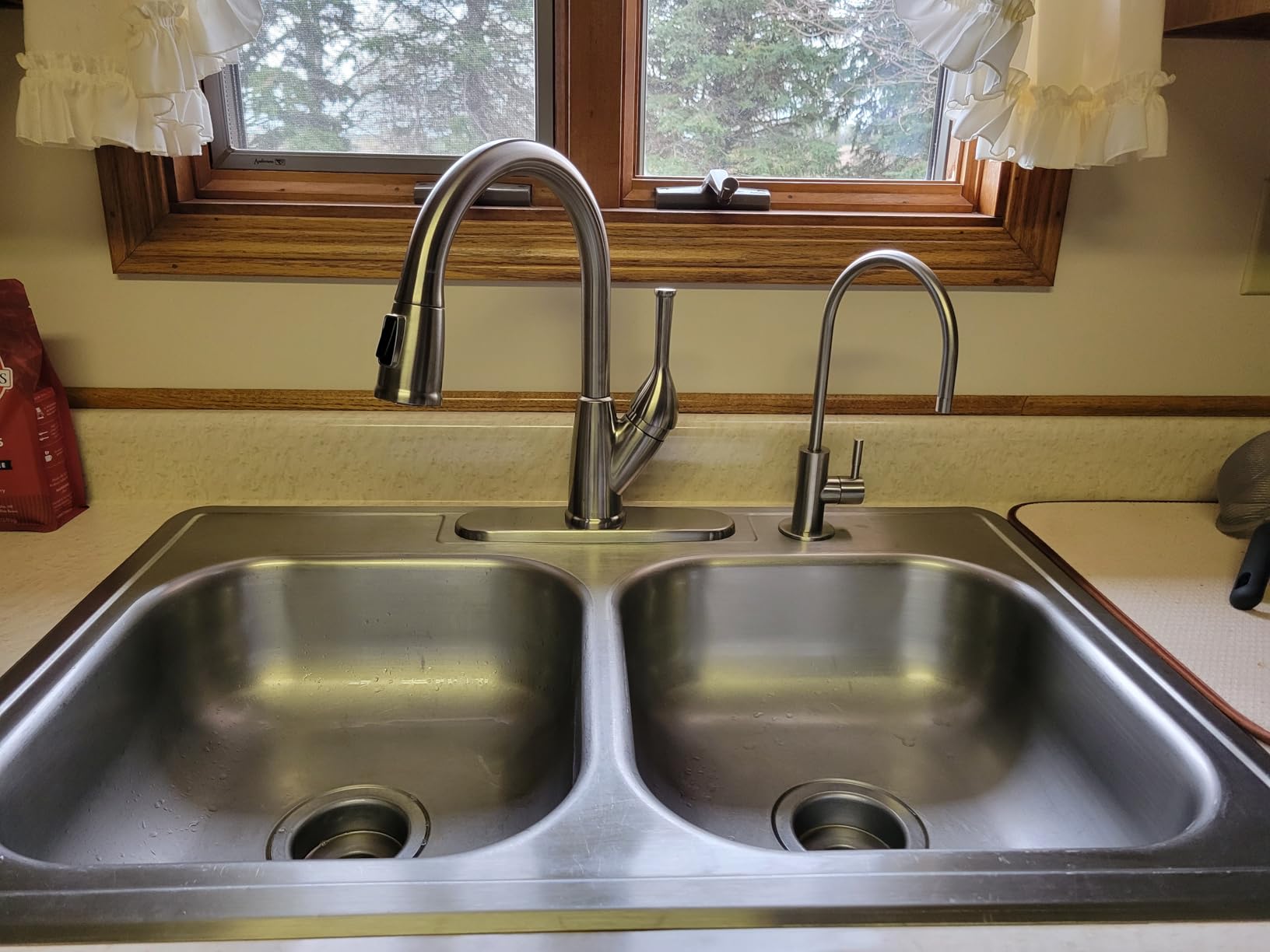
It is an under-sink system with a 75 gallon per day tank, and that means two things for a renter. You are drilling a faucet hole, which needs written landlord permission in most leases, and you are giving up the widest possible stretch of cabinet to a 27.5 pound assembly.
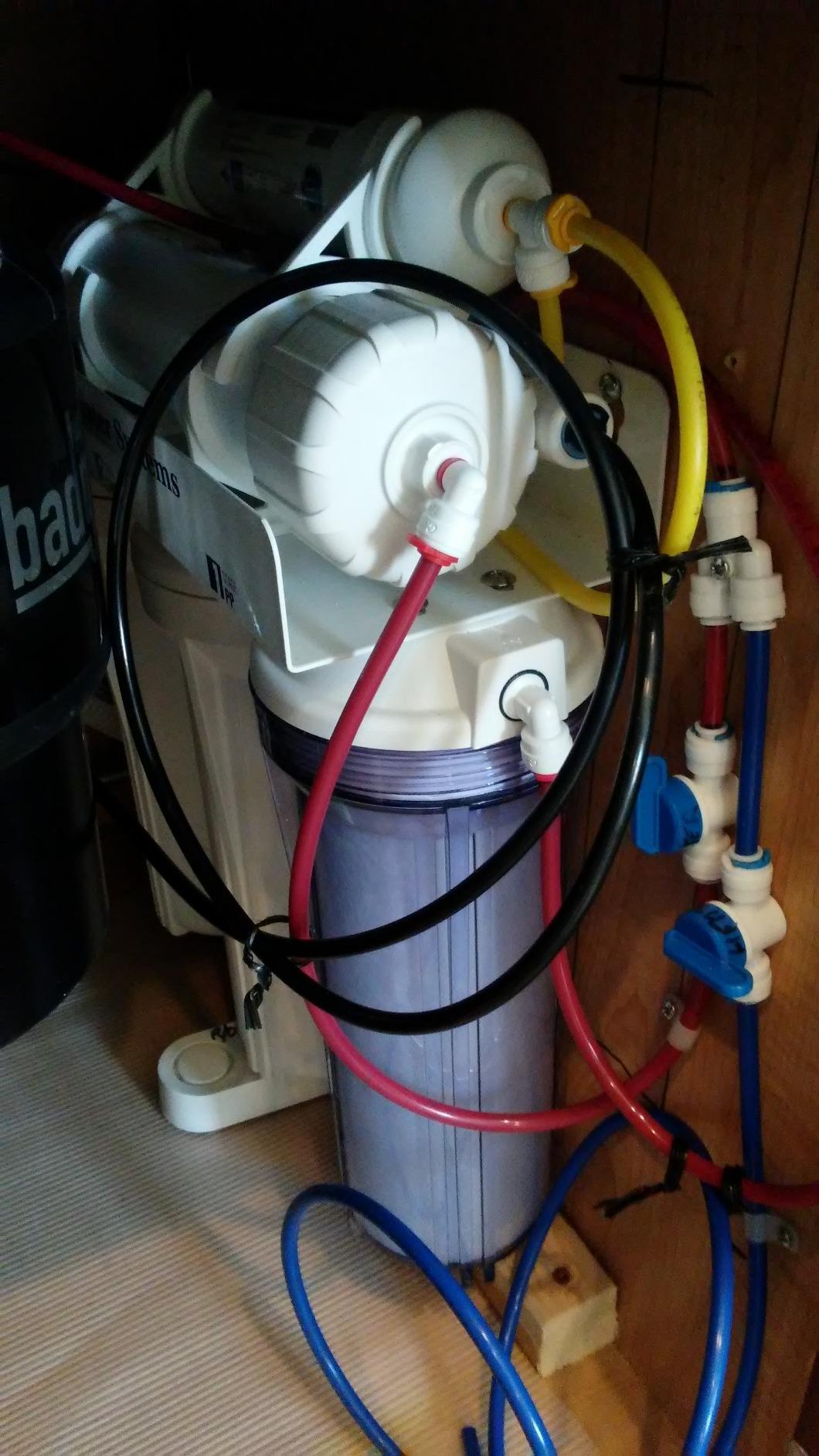
What earns it the top spot is the parts situation. Push-fit color-coded tubing and housing caps mean you can replace a stage in a small cabinet without tools or a plumber, and the replacement parts are cheap and widely stocked. Support is repeatedly singled out as a strength because the team will size a system around your measured ppm and psi readings rather than pushing the largest membrane.
The membrane filters to 0.0001 microns and carries NSF/ANSI 58 certification, with a final carbon polishing stage for taste and odor. There is no electrical requirement, which matters in older buildings where the cabinet has no outlet to spare.
What you get for the drilling you have to do
A 100% lead-free brushed nickel faucet is included, along with food-grade tubing and a mounting bracket. That faucet is the one thing you will not have to explain at move-out if you remove it and patch the hole, and most tenants find a matching escutcheon or a self-adhesive cover handles the countertop scar well enough that it does not come out of the deposit.
The 3.4 liters per minute maximum flow and 750 ppm maximum supported TDS mean this works for one or two people without any planning. For a shared apartment of four or more, look at the 600 GPD options further down instead.
When this is the wrong pick
If your lease forbids drilling, this unit is off the table no matter how good the filtration is. If your building sits below 40 psi, flow drops and you will need a booster pump, which adds cost and another leak point in the cabinet.
The 2:1 to 3:1 pure-to-waste ratio also means real water going down the drain for every gallon you drink. And RO strips minerals, so if you are used to drinking water with some body to it, plain output tastes flat until you add a remineralization cartridge.
2. APEC WATER ROES-50 – Best Value Under-Sink System
- Drops TDS from roughly 100-145 ppm city water to about 3-6 ppm
- Quick-connect fittings and color-coded tubing
- Includes tank
- faucet and full filter set
- Parts are industry-standard and cheap to replace
- Included faucet has no air gap
- Filter housing caps can crack if overtightened
- 50 GPD fills the tank slowly
The APEC ROES-50 is the pick when you want the iSpring experience at a smaller size and with cheaper filters. It carries 9408 reviews at 4.5, and the recurring owner story is a decade of service with the same quick-connect tubing and hardware still in place.
TDS results are the standout. Owners running city water between 100 and 145 ppm report purified output landing at 3 to 6 ppm, which is the same purity target as much larger systems. Five stages cover arsenic, chlorine, lead, fluoride, heavy metals and PFAs.
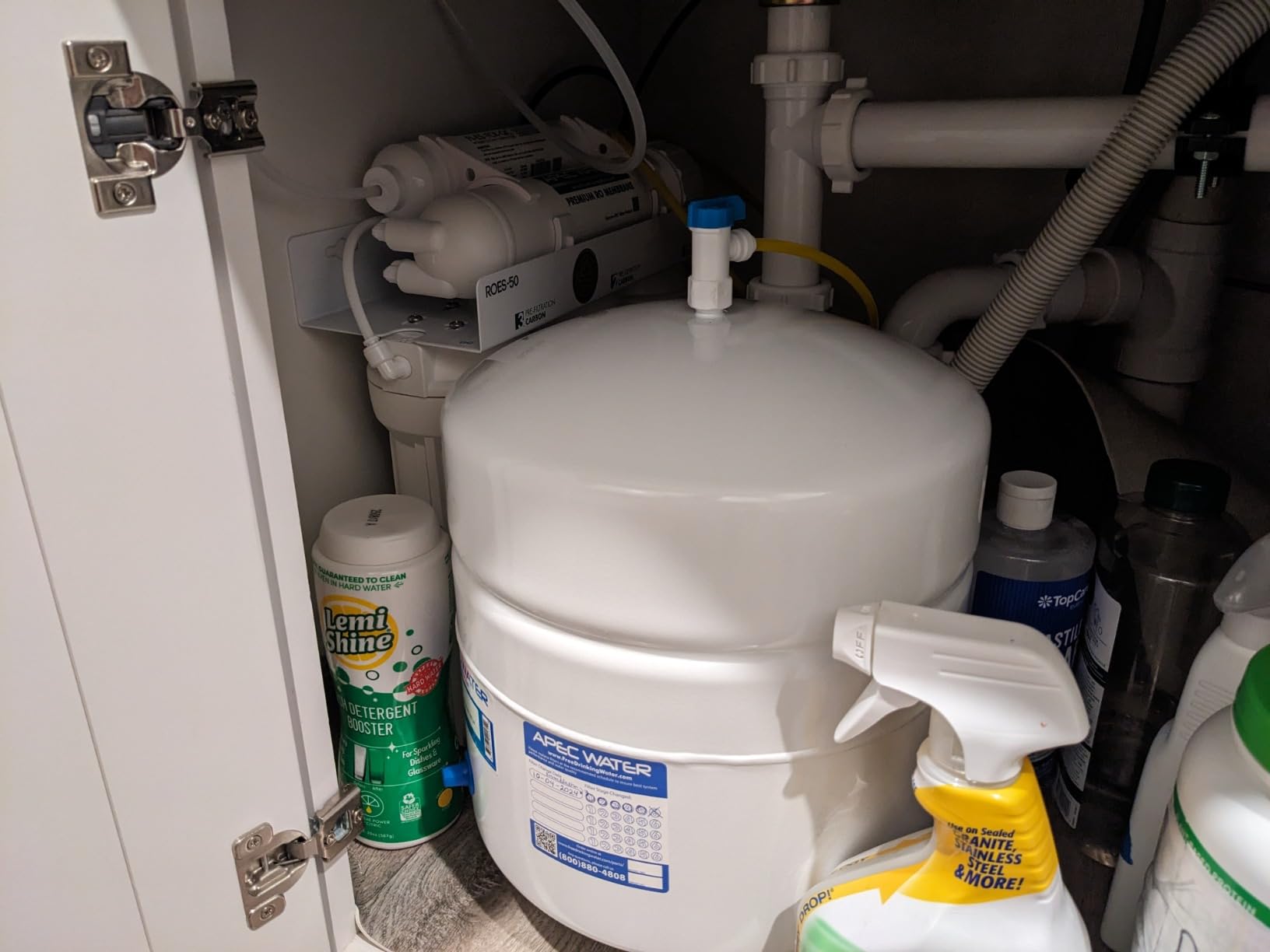
For an apartment, the servicing story is what makes it easy to recommend. Every component is an industry-standard quarter-inch part, so a cartridge swap in a cramped cabinet is a five-minute job and the filters cost less over ten years than the proprietary cartridges on some premium tankless units.
It needs the same 40 to 85 psi supply pressure the iSpring does, and it shares the same lease problem: a drilled faucet hole and cabinet space at 11.3 kg.
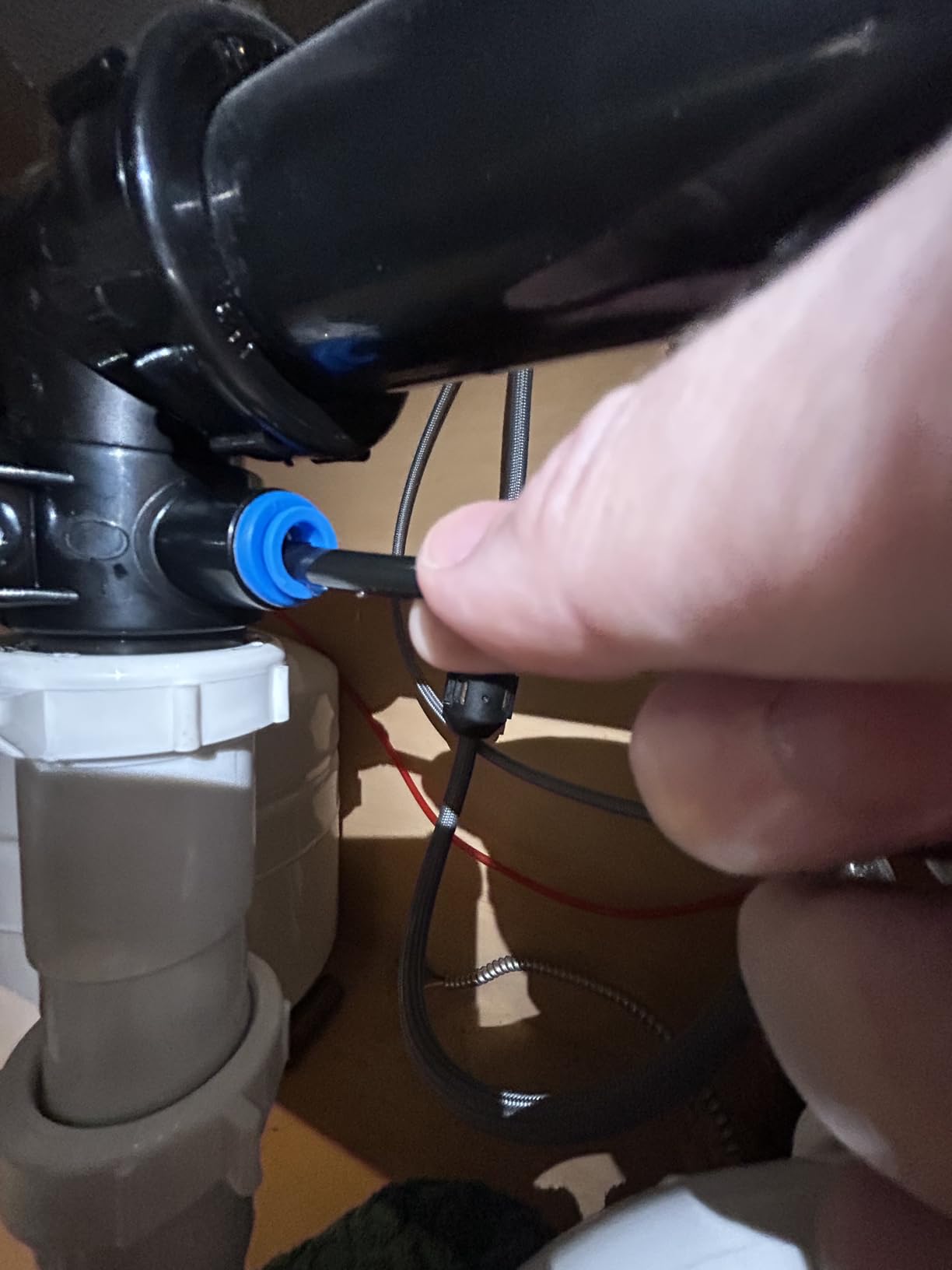
What the air gap issue means for you
The included faucet is not an air gap, which leaves the drain line open to a sink backflow path. Owners who care about it add a dual dishwasher and RO air gap, which costs a few dollars and a little more under-sink room. Not a dealbreaker, but know it going in.
The 50 GPD rate is slow. Draining the full five gallon tank takes a while, so plan refills overnight rather than mid-coffee. The included Filter-Max-ES50 set and a six month filter life mean your first replacement lands around the six month mark.
When this is the wrong pick
Choose the iSpring instead if two people will drink from it daily, because 75 GPD recovers from an empty tank noticeably faster. Avoid this one if you are a renter with zero drilling permission, and note that the feed fittings are US NPT sized, so they will not adapt to European pipework.
Overtightening the housing caps during installation is the single most common owner mistake and the most common source of under-sink leaks. Snug, not gorilla-tight.
3. Waterdrop G3P600 – Best for High Flow and Big Households
Waterdrop G3P600 Tankless Reverse Osmosis Water Filter System, 600 GPD
- Tankless design frees about 70 percent of under-sink space
- Front filters swap in about 3 seconds
- Live TDS and filter-life reminders on the faucet
- 2:1 pure-to-drain ratio cuts wastewater
- Needs a live electrical outlet under the sink
- Replacement filters cost more than generic cartridges
- Built-in TDS meter can disagree with an external meter
If your apartment has three or more people drinking and cooking from one faucet, flow rate is the deciding factor and this is the unit that solves it. 600 gallons per day with an eight second cup fill time means nobody waits while a tank slowly refills.
The tankless design is the real apartment win here. It frees roughly 70 percent of the under-sink volume a conventional tank system occupies, which in a small kitchen is the difference between usable cabinet space and a cavity full of plumbing gear.
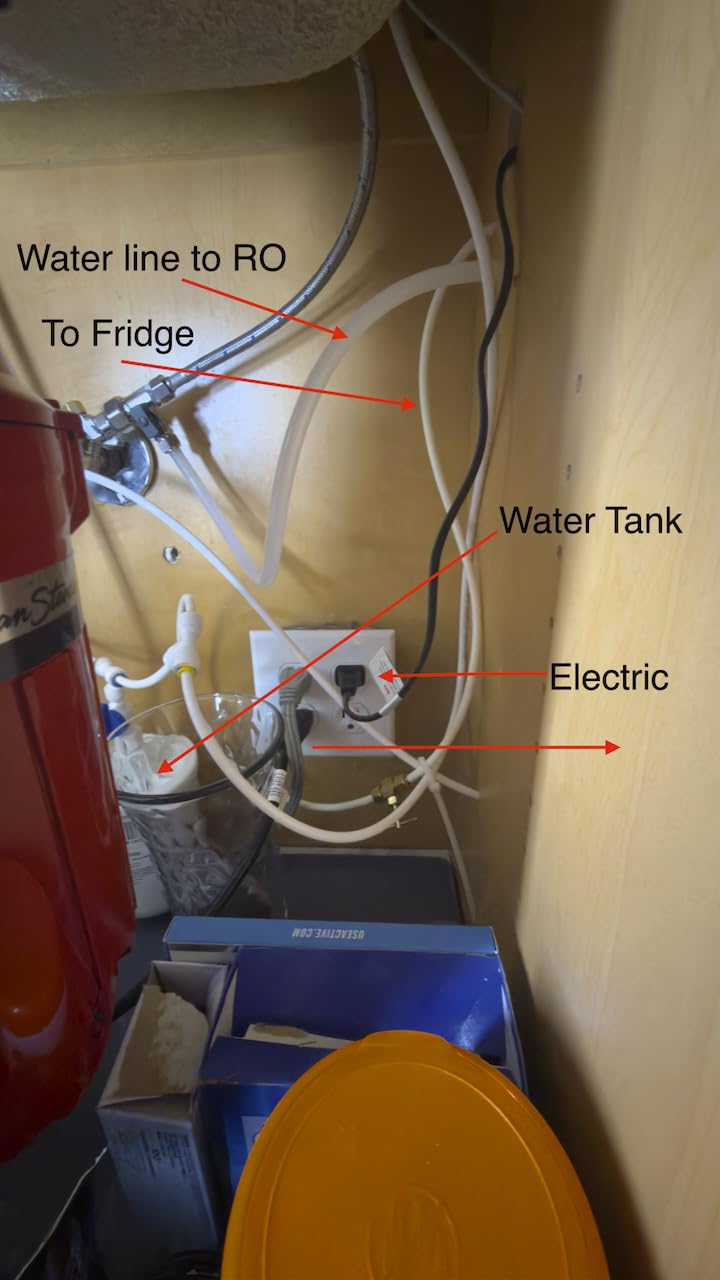
Owners report input TDS above 350 ppm falling into the single digits within a day or two. The smart faucet shows live TDS and color-coded filter-life reminders, which removes the single most common mistake in RO ownership, which is running filters until the water tastes wrong.
Eight stages cover TDS, chromium, PFAS, radium, fluoride, arsenic, iron and radioactive substances, tested by SGS, and the system is certified to NSF/ANSI 58 for TDS reduction, 372 for lead-free materials and 42 for chlorine and taste.
Before you buy: the outlet question
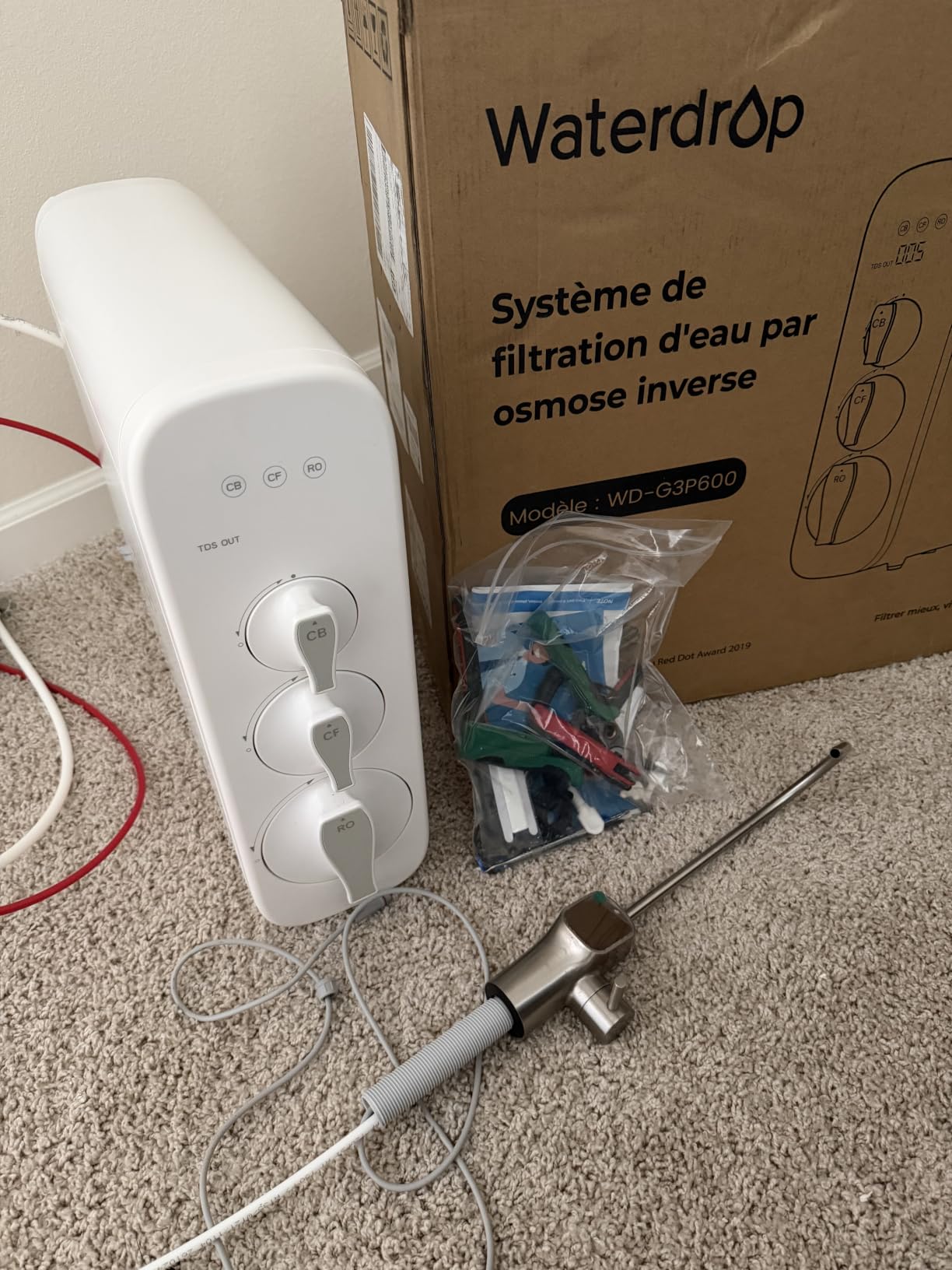
This needs a live electrical outlet under the sink. Plenty of older apartment cabinets do not have one, so check first, because running an extension cord into a wet cabinet is not a fix. If your cabinet has no outlet, the FS-TFC or PureDrop units run without power at all.
Two habits to know about. Tankless systems show TDS creep, meaning the first draw after the unit has sat for hours reads high until you flush it, so run the faucet for a few seconds before filling a bottle. And the integrated TDS meter has been reported to disagree with an external meter after a filter change, so verify once after each service.
When this is the wrong pick
The smart faucet needs a larger countertop hole than a standard small-hole RO faucet, which raises the drilling bar for your lease conversation. Proprietary replacement filters also cost meaningfully more than generic 600 GPD cartridges, and that gap compounds over the life of the system.
At 31 pounds and 18.12 by 5.67 by 17.72 inches, this is not a small unit. Measure your cabinet before committing, especially the depth from the back wall to the cabinet door.
4. Bluevua RO100ROPOT – Best Countertop RO for Renters
- No plumbing
- drilling or landlord permission required
- Borosilicate glass carafe instead of a plastic jug
- Remineralization stage keeps the taste balanced
- Filter life monitor tracks cartridge life
- Countertop footprint uses working kitchen space
- Needs a nearby electrical outlet
- Slower dispense rate than a faucet-fed system
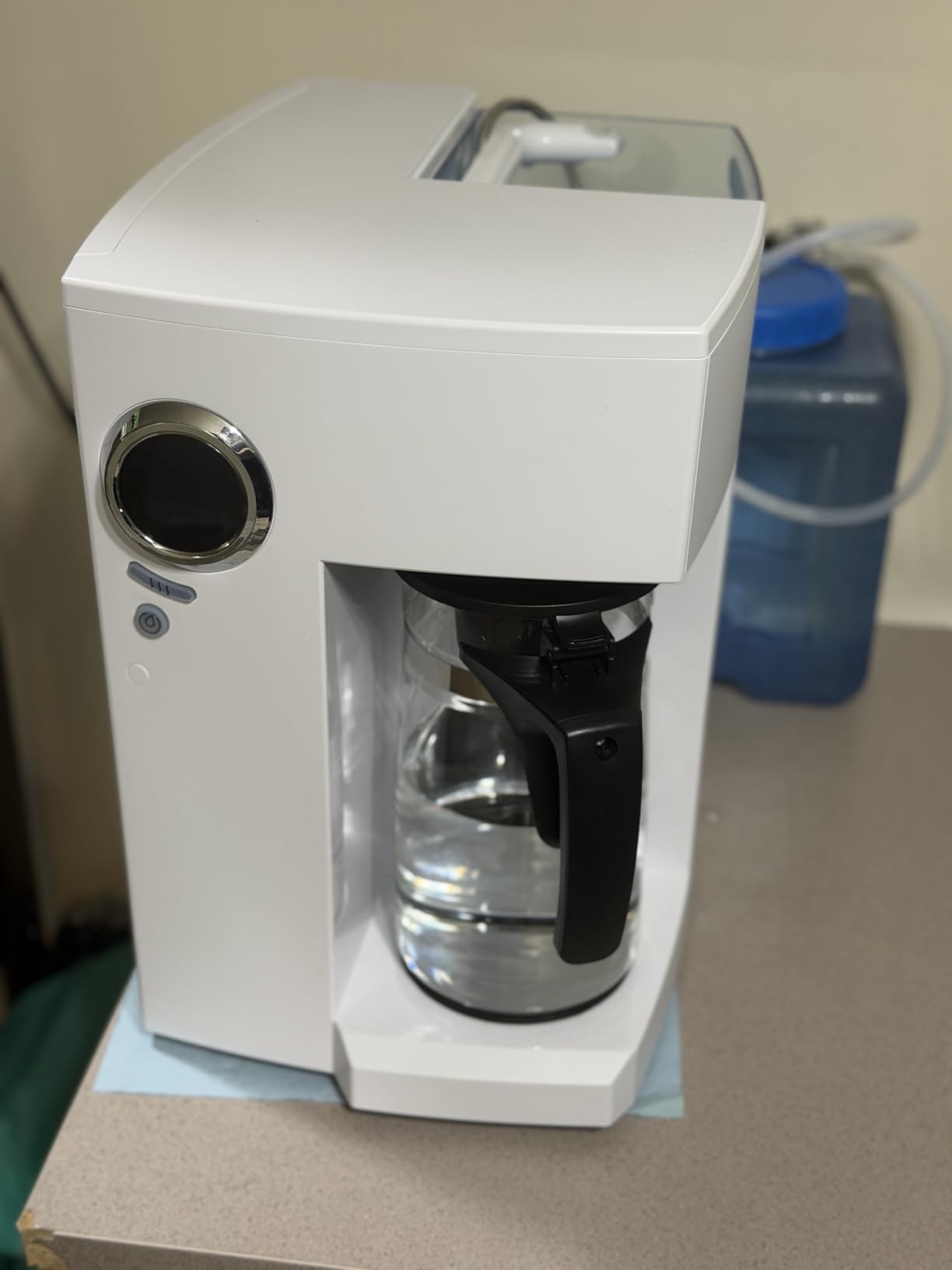
This is the answer for anyone whose lease says no holes and whose counter has about a square foot to spare. Nothing about it touches the sink, the cabinet or the supply line. You fill the top tank, press a button, and the unit pumps water through five stages into a glass carafe.
It carries 3695 reviews at 4.6, and the appeal is consistent: renters and small kitchens choose it precisely because it avoids permanent modification. The 10.9 by 15.4 by 14.3 inch body is the largest dimension any truly renter-safe option on this list demands.
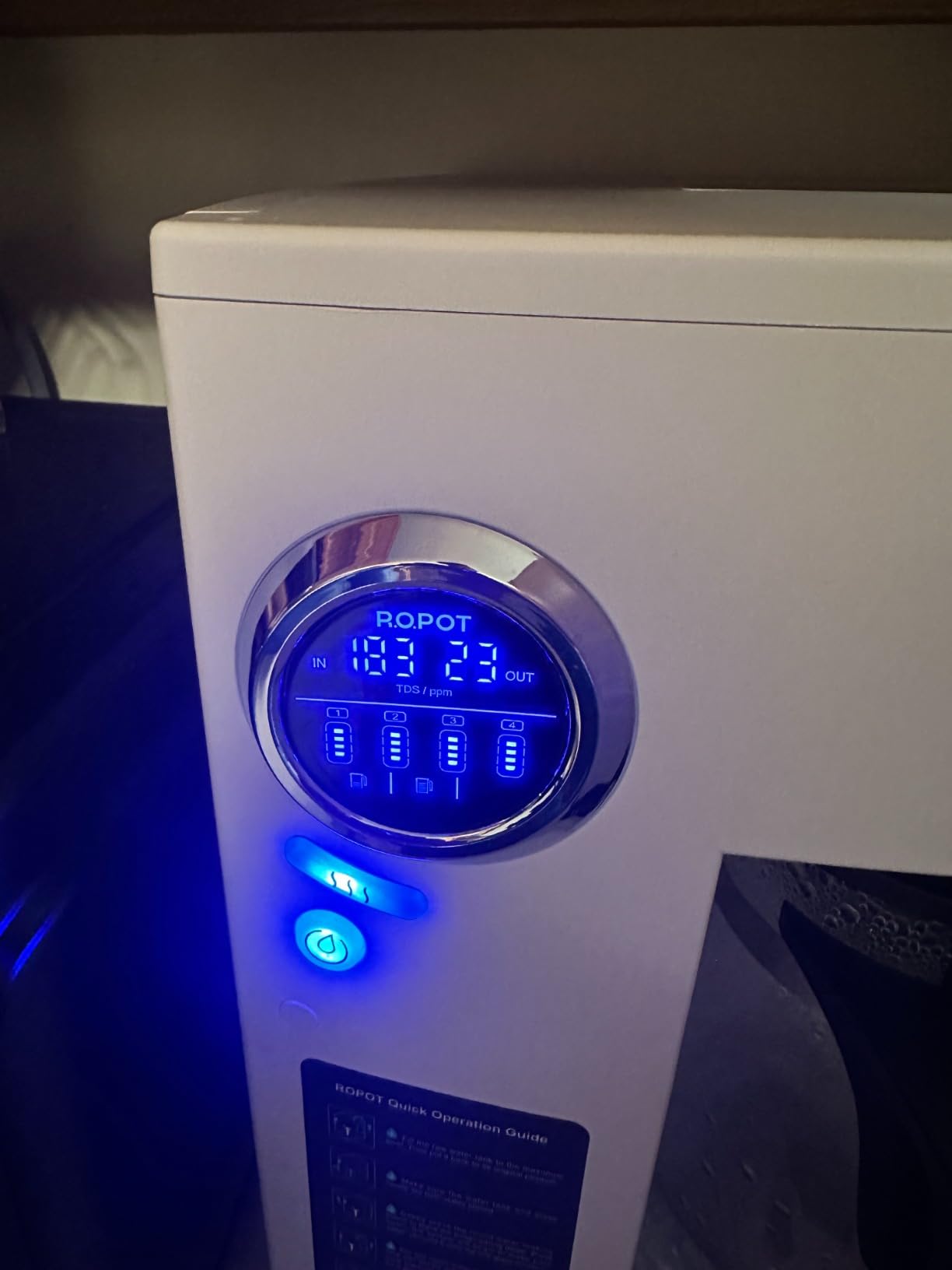
Two design choices stand out for daily use. The borosilicate glass carafe removes the secondary contamination risk of a plastic jug, and the remineralization stage is the reason the water does not taste like nothing, which is the complaint that drives most people back to bottled water.
The 2:1 pure-to-drain ratio and automatic power-saving standby mode keep both water and electricity use modest. Filter life runs 12 to 24 months per monitored set, which works out to a lower annual cost than most under-sink systems.
Planning around the batch cycle
At 0.26 liters per minute, the carafe takes 10 to 15 minutes to fill. That is the renter pain point no competitor quantifies. Plan it as a morning and evening ritual, and note that the system runs a batch rather than dispensing on demand, so you fill what you will drink.
Because it plugs into a standard outlet and sits on the counter, moving apartments takes about five minutes. Unplug it, empty the tanks, drain the reject water and pack it. There is no faucet hole, no cabinet hardware and nothing to patch.
When this is the wrong pick
Skip it if your kitchen has no free counter, because unlike an under-sink unit it will not hide in a cabinet. It also cannot feed a refrigerator or ice maker line, which matters for people who make a lot of ice.
The 0.26 L per minute rate is slower than a faucet-fed system. And the footprint is real working space that you will have to give back every day.
5. SimPure Y7P-BW – Best Countertop Pick With a UV Stage
SimPure Y7P-BW UV Countertop Reverse Osmosis Water Filter, 5 Stage RO
- Plug-and-play with no plumbing or drilling
- UV stage adds a safeguard beyond the membrane
- Most water-efficient countertop ratio at 4:1
- Slim footprint fits a narrow counter
- Small internal reservoir means constant refilling
- Internal reservoir can tint the water after about a month
- Initial flush takes roughly 45 minutes
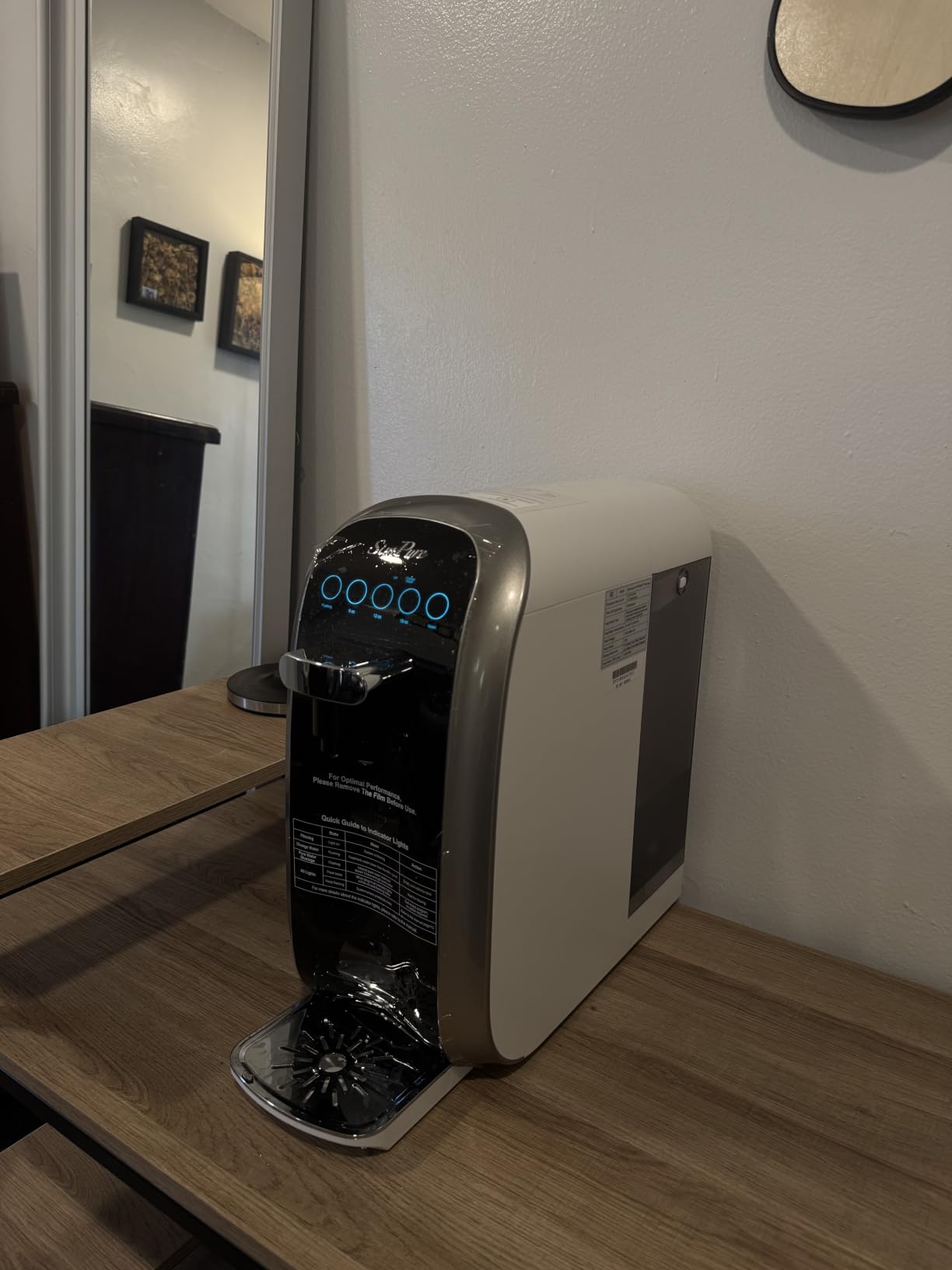
This is the countertop option for anyone who wants the no-install convenience with a UV stage behind the membrane. It is SGS tested against NSF/ANSI 58 and claims 99.99 percent removal across more than 1,000 contaminants including PFOA, PFOS, lead, arsenic, fluoride and nitrates.
Owners commonly report large TDS drops, with one example going from 193 ppm tap water to roughly 33 ppm. The UV stage runs on electricity rather than chemicals and produces no by-products, which is the reason to pick this over an otherwise similar countertop unit.
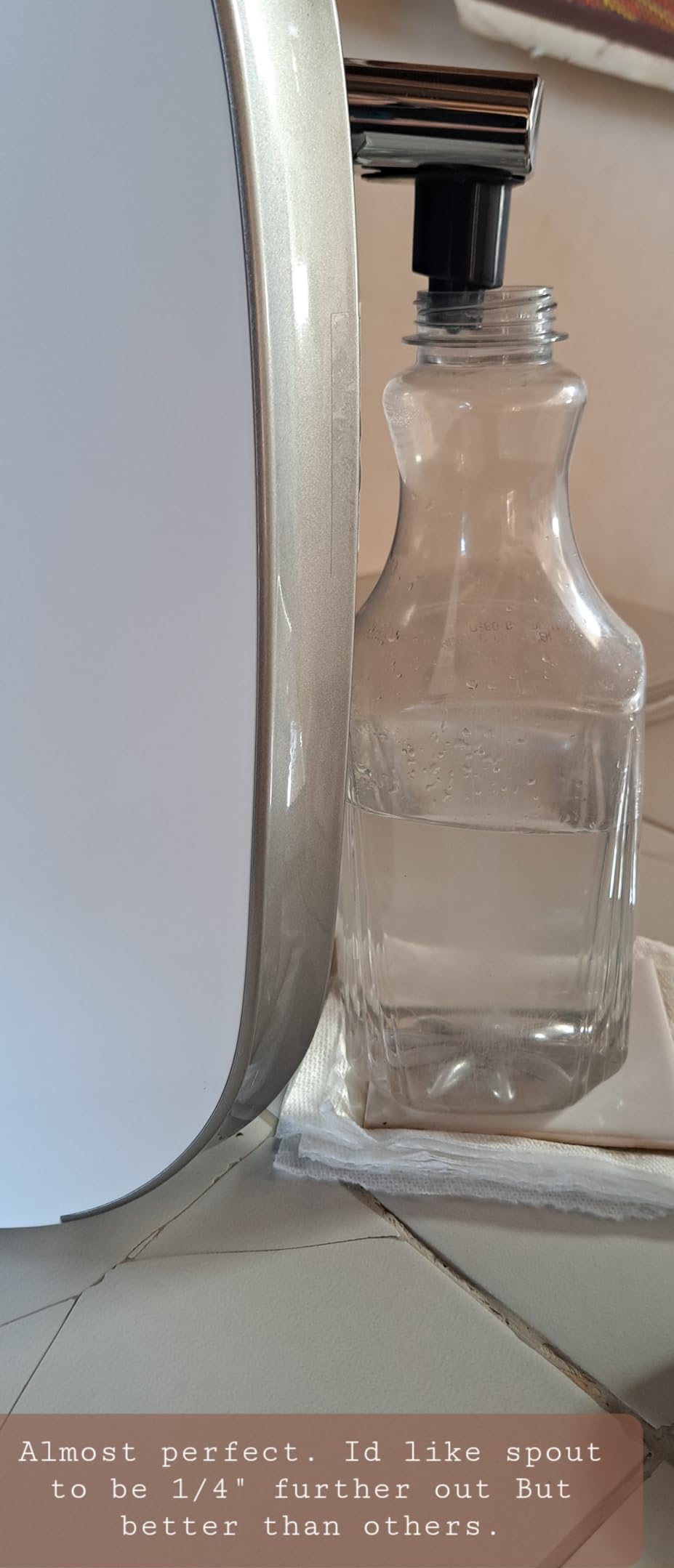
The 4:1 pure-to-drain ratio and 418 GPD dispense rate are the best efficiency numbers among the countertop models we reviewed, and a cup fills in about 15 seconds. At 17.3 by 7.5 by 17 inches it fits a narrow counter better than most competitors.
The quick-change filter set provides 528 gallons, which owners translate to roughly 6,000 bottled water equivalents, and the unit works anywhere with a power outlet, including offices, camping and RVs.
The maintenance reality check
This unit has the lowest rating in our group at 4.2 across 3685 reviews, and the reason is upkeep, not filtration. The small internal reservoir needs constant refilling and is hard to reach for cleaning, and the manual calls for a daily tank rinse plus a monthly deep clean.
Some owners replace filters well ahead of the stated six month life, and several report the internal plastic reservoir giving the water an off or plastic-like taste after about a month of use. If you are not willing to run that cleaning routine, choose the Bluevua instead.
When this is the wrong pick
It dispenses room temperature water only, so there is no hot or cold output. The initial flush cycle takes roughly 45 minutes across several tank cycles, which is annoying on move-in day.
Also be aware that with a supported maximum of 500 ppm TDS, this is the lowest input ceiling of the group. On genuinely hard municipal water, the membrane will work harder and filters will wear faster.
6. Frizzlife PD600-TAM3 – Best Tankless Pick for Better Taste
- Alkaline stage re-adds minerals and lifts pH above 7.5
- Fills a 330 ml cup in about 10 seconds
- Tankless design avoids stagnant storage tank water
- LED panel shows live TDS and filter life
- Requires under-sink electrical power
- Proprietary replacement filters cost more than generic
- Unit is tall
- so measure cabinet depth first
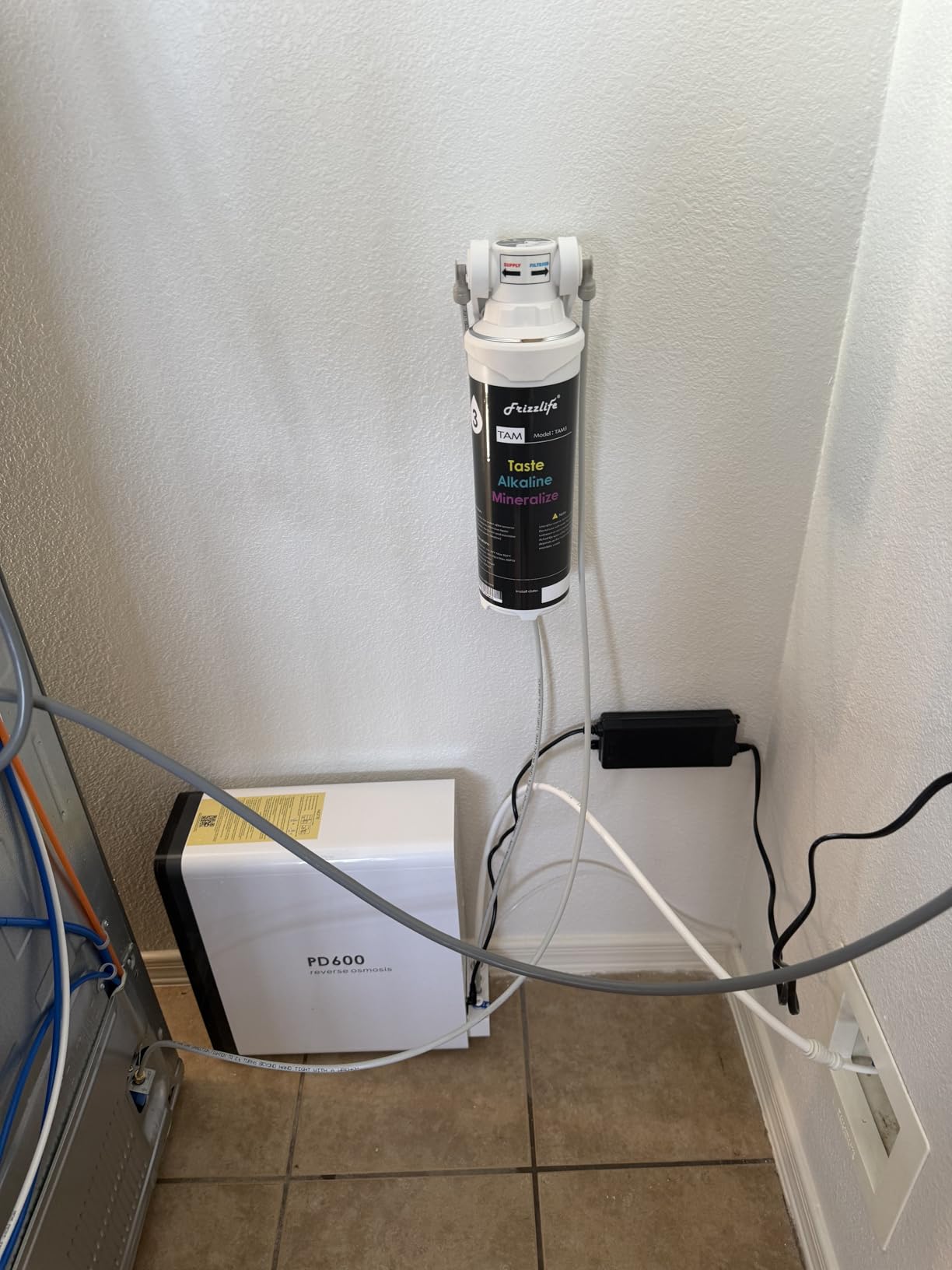
If your complaint about RO water is taste, this is the one to look at. The third-stage alkaline filter re-adds minerals and raises the pH above 7.5, and buyers single that stage out as the reason the water tastes better than plain RO output.
It holds 2476 reviews at 4.6, and the tankless layout is a genuine apartment advantage twice over. It keeps the footprint small at 14.7 by 5.3 by 15.5 inches, and it removes the bacterial risk that comes from water sitting in a storage tank between uses.
The flow rate is 0.41 gpm, filling a 330 ml cup in about 10 seconds, with a 2:1 drain ratio advertised to save up to 450 percent water versus conventional systems. Certification covers NSF/ANSI 58, 53, 42 and 372, which is the broadest health-effects standard coverage on this list.
The smart LED panel displays real-time TDS and remaining filter life with color-coded reminders, so you are not guessing when to service it.
Why the remineralization stage matters in a small kitchen
In an apartment you will likely use this water for coffee, tea and cooking where there is no second glass of something else nearby. Flat RO water mutes flavor, and many users who upgraded to a mineralized stage reported brewing tasting different within days.
The trade is money over time. Proprietary filters cost more than generic 600 GPD cartridges, and that is the honest downside of this pick. Budget for it before buying rather than discovering it at the first annual service.
When this is the wrong pick
It needs an under-sink outlet because of the built-in pump. If your cabinet has no power, this one is out and you should be looking at a non-powered under-sink unit instead.
Measure cabinet depth and faucet hole size before ordering, because the unit is tall and a mismatch here is what triggers returns. Operating range is 38 to 100 degrees F, narrower than some competitors.
7. Waterdrop G2 – Best Tankless Fit for Small Cabinets
Waterdrop G2 Reverse Osmosis System, 400 GPD Tankless RO Water Filtration
- Entry point into the tankless line at a lower cost
- Saves over 70 percent of under-sink storage
- Twist-and-pull filters replace in about 3 seconds
- Airtight housing reduces operating noise
- Mechanical faucet has no TDS display
- Still needs an under-sink outlet and a drilled faucet hole
- Supported TDS input tops out around 300 ppm
The Waterdrop G2 is the value entry into tankless design, and it makes sense in an apartment where the cabinet is genuinely tiny. Buyers treat it as the cheaper route into the same front-facing filter architecture as the larger model, with 2106 reviews at 4.5.
At 17.3 by 5.9 by 14 inches it is short, and the integrated electrical and water circuit design reduces leak points compared with a conventional manifold. The airtight housing also cuts operating noise, which matters in open-plan apartments where a pump hum carries.
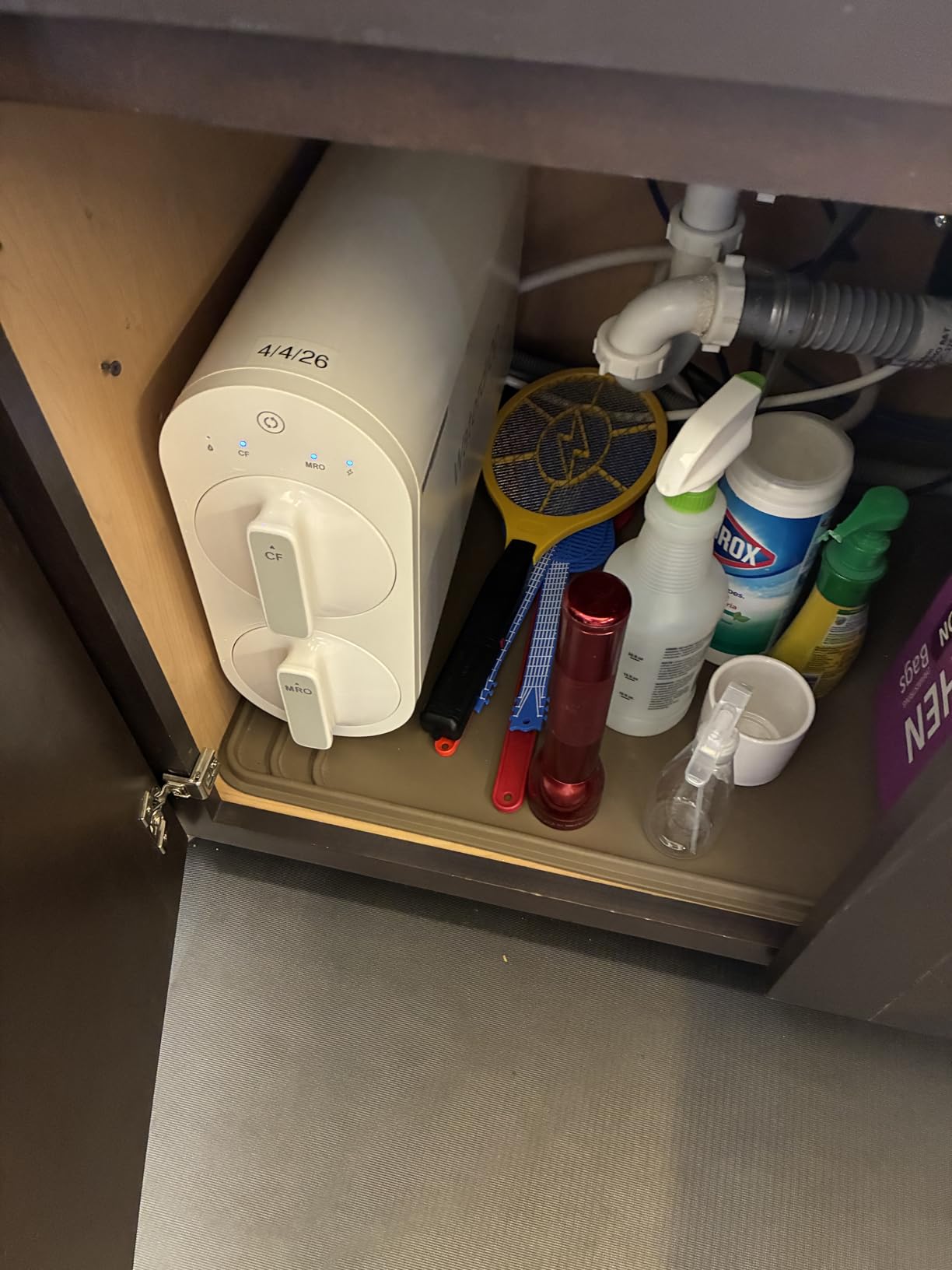
Filters twist and pull in about three seconds, installation is commonly quoted at under 30 minutes, and the 400 GPD rate fills a cup in about 12 seconds. The 1:1 pure-to-drain ratio is efficient for a plumbed unit, which is unusually good given the tankless format.
Filtering runs through seven composite stages, and the system is certified to NSF/ANSI 372 for lead-free materials.
What you give up versus the G3
The included faucet is mechanical, with no TDS readout at all. That means you are tracking filter life by calendar rather than by reading, which for many people is the difference between replacing on time and replacing after the taste shifts.
Only two filters come with the unit, and the composite cartridge is proprietary to Waterdrop, so plan for brand-specific replacements across the system’s life.
When this is the wrong pick
Supported TDS input caps out around 300 ppm, the lowest ceiling here. If your municipal water reads higher, the membrane will be pushed past its ideal range and filter life will shorten.
You still need an under-sink electrical outlet and a drilled countertop hole for the mechanical faucet, so this is not the answer for a strict no-drilling lease. Check whether your kitchen has room before buying.
8. NU Aqua 5-Stage 100 GPD – Best Warranty and Trial Period
NU Aqua 5-Stage Under Sink Reverse Osmosis Water Filter System – 100 GPD RO
- 100 GPD roughly doubles a standard under-sink filter
- Complimentary PPM meter for checking water quality
- 3-year warranty and 120-day home trial
- Long-term owners report years of leak-free service
- No built-in booster pump for low line pressure
- Tank can arrive over-pressurized from the factory
- Alkaline sixth stage has been reported to smell sulfur-like
The NU Aqua stands out on the fine print rather than the spec sheet. A 120-day home trial and a 3-year manufacturer warranty give you a full season to decide, which is unusually generous in a category where most systems carry one year.
At 100 gallons per day it roughly doubles the output of a standard under-sink drinking water filter, which is meaningful in a shared apartment. The HydraCoil membrane is double o-ring sealed, and the package includes a complimentary PPM meter so you can verify results at home instead of trusting a label.
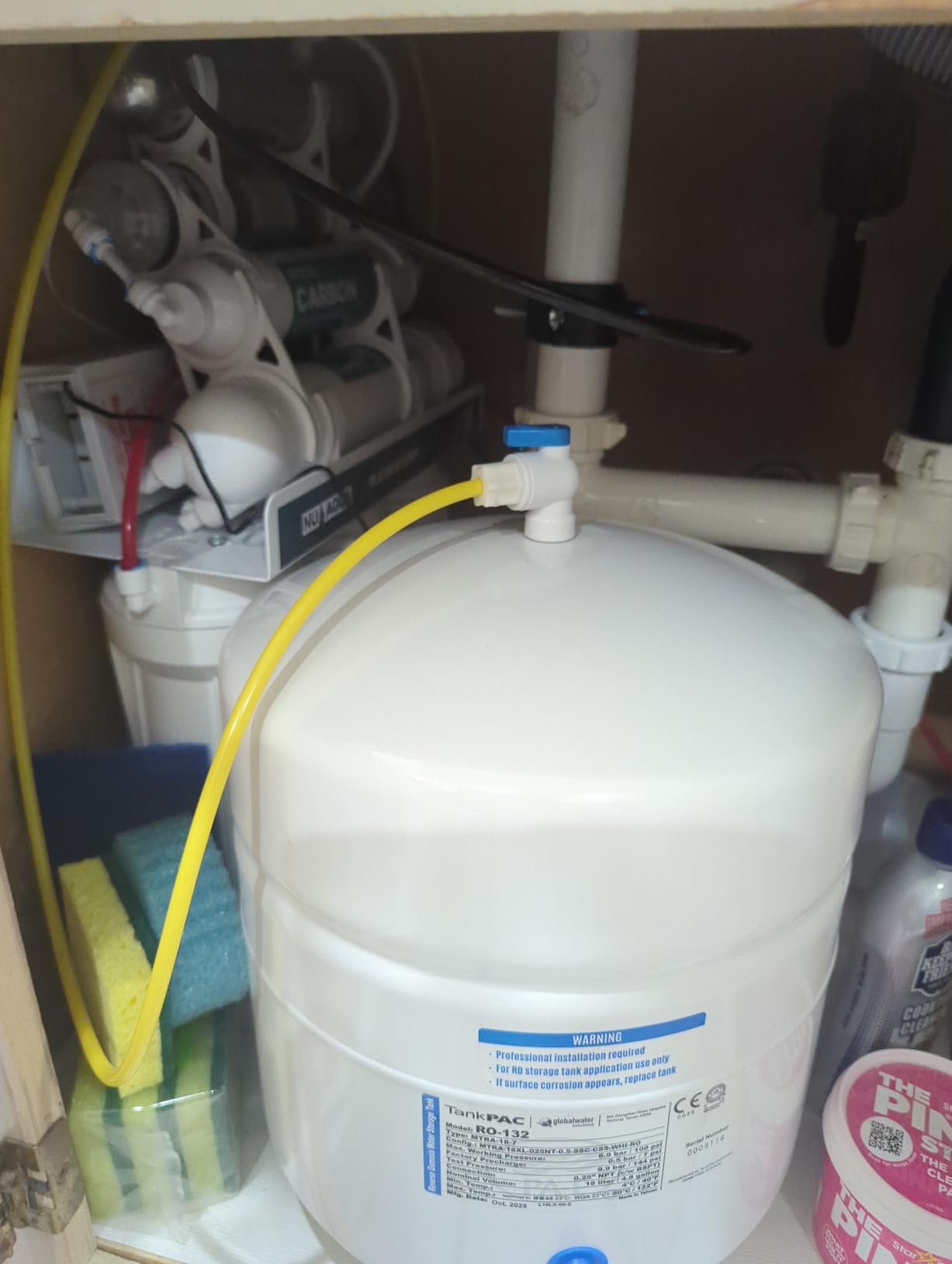
Long-term owners report several years of leak-free service across multiple units, and the stainless steel lead-free faucet is a nice touch in a kitchen where plastic hardware tends to look cheap after a year.
Color-coded tubing and quick-connect fittings make the install approachable for first-time DIYers, and the 15 by 5.5 by 17.5 inch body is fairly slim for 100 GPD.
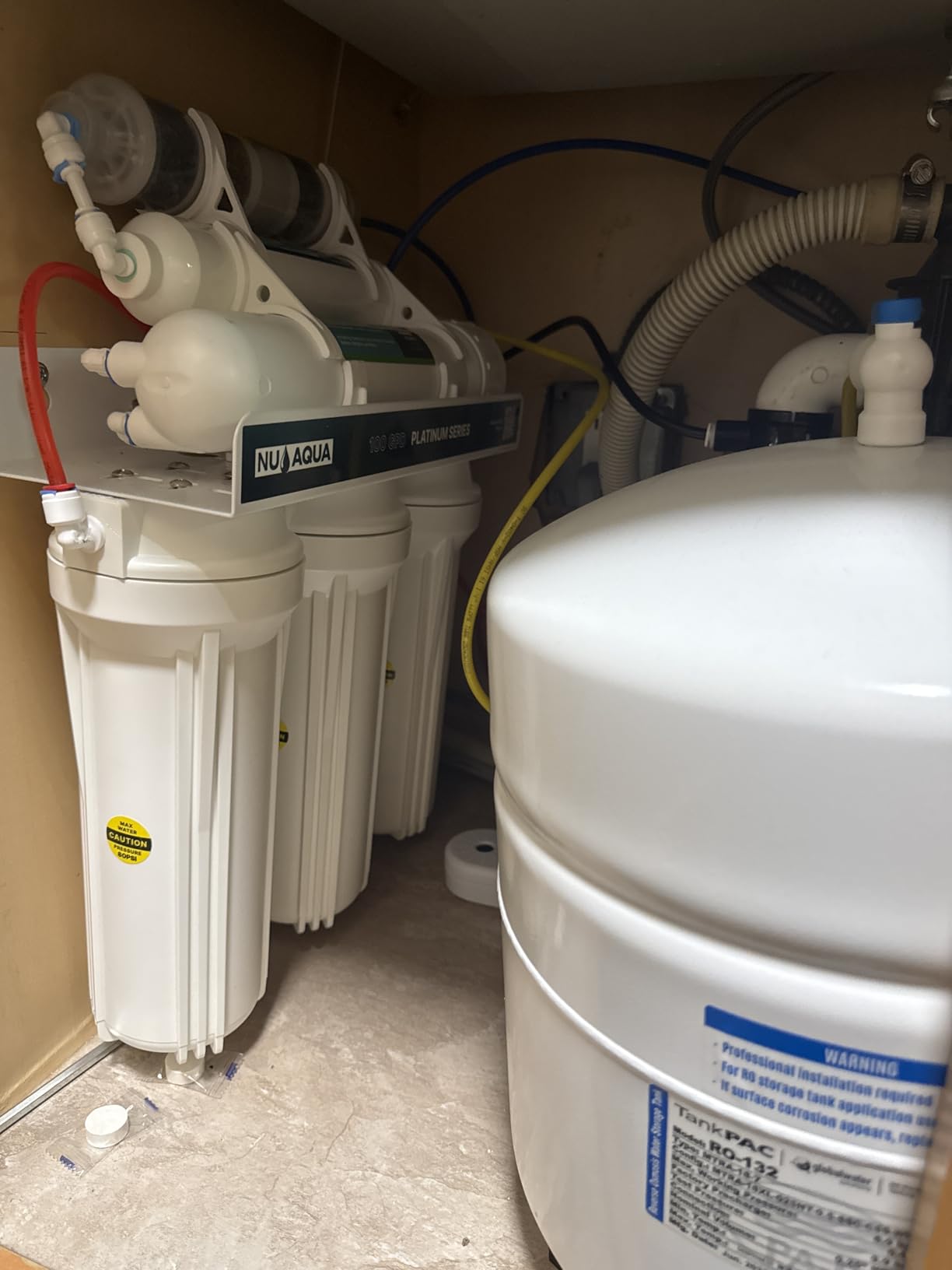
Read the tank instructions on day one
The most common early complaint is that the storage tank arrives over-pressurized from the factory and will not fill until air is bled out. Owners who follow the bleed procedure on arrival report the issue disappears permanently.
There is no built-in booster pump, so homes with low line pressure see reduced output. That is the trade for the quiet, pump-free design and it is worth confirming your building pressure before install.
When this is the wrong pick
Some owners report the automatic shut-off valve and filter housings failing and leaking within a few months, which is exactly why the 3-year warranty matters here. Check the warranty terms carefully given you may move out long before it expires.
The optional alkaline sixth stage has been reported to give the water a sulfur-like smell after a few days of use. If that bothers you, leave it off. The spigot handle also feels loose and can look like it is unscrewing.
9. PureDrop RTW5 – Easiest Install From Above the Counter
- Entire install happens from above the counter
- Small 2.2 gallon tank fits tight rentals
- Runs on water pressure with no outlet needed
- Three extra pre-filters in the box
- 50 liters per day is a low output rate
- Several owners report the tank bladder rupturing
- Initial canister tightening is easy to get wrong
The PureDrop RTW5 solves a problem most roundups ignore: working under a kitchen cabinet while kneeling on a tile floor. Its patented oval-nut top-mount faucet means the whole assembly installs from above the countertop, so you never lie on your back under a sink with a wrench.
It carries 556 reviews at 4.4, and owners praise the 2.2 gallon tank for leaving under-sink storage usable, which is precisely the constraint in a small rental kitchen. It runs on water pressure alone, so there is no outlet requirement at all.
Filtration performance is genuinely strong for the format, with five stages reducing up to 99 percent of PFAS, lead, arsenic, chlorine, heavy metals and TDS, SGS tested to NSF/ANSI 58. Owners report TDS dropping into the low single digits.
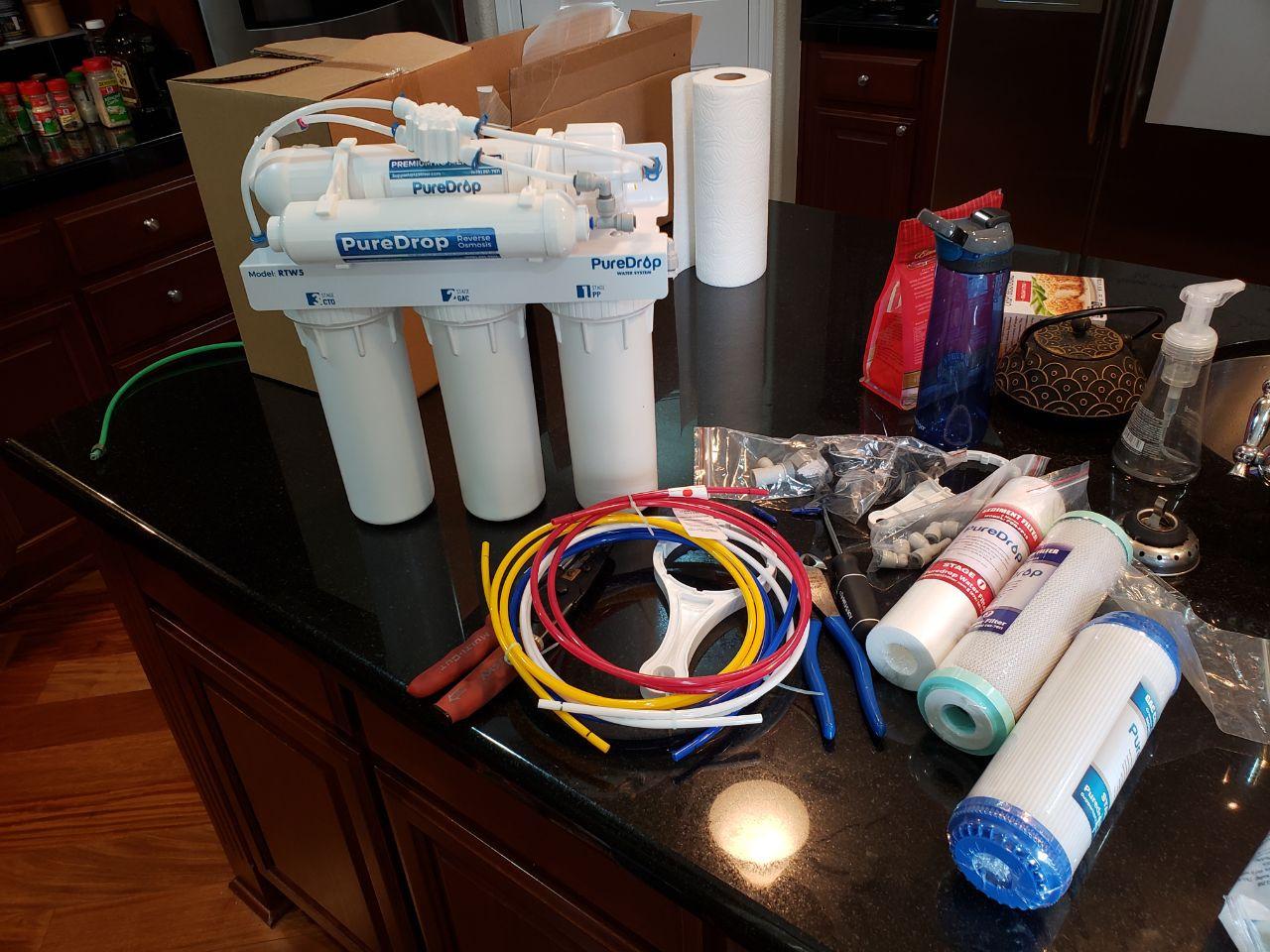
The box includes three extra pre-filters, plus refrigerator adapters and standard quarter-inch quick-connect fittings so an ice maker hookup is straightforward. The check valve is a separate part, which means membranes are cheap to buy individually.
Two things to plan around
First, output. At 50 liters per day this is the lowest rate on the list, so filling a pitcher or feeding a fridge line takes real patience. If you are the only water drinker, that is fine. If two people drink from it all day, plan around it.
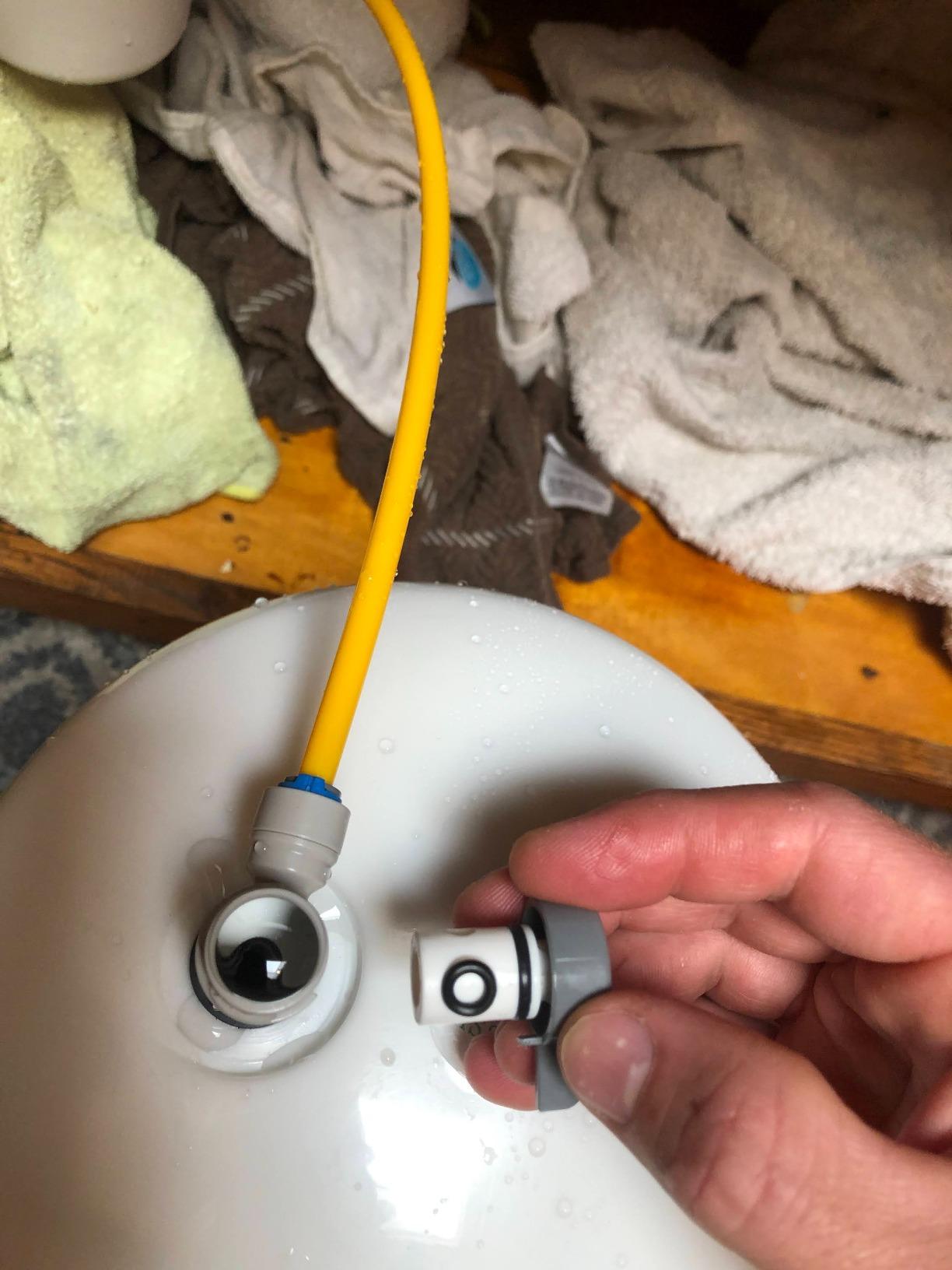
Second, the tank. Several owners report the storage tank bladder rupturing repeatedly and forcing tank replacement. That is the recurring negative theme in the reviews, so treat the tank as a consumable rather than a permanent part.
When this is the wrong pick
The instructions have confusing sections that send buyers searching for video walkthroughs, and the initial canister tightening is easy to get wrong, which causes leaks until the housings are properly snugged down. Budget an extra hour and read before you start.
At 16 by 22 by 17 inches this is the widest body here, so it suits a countertop with real space rather than a galley kitchen.
10. FS-TFC 100 GPD – Most Versatile for Tiny Spaces
- Smallest footprint here at 11.5 by 5 by 11.5 inches
- Fills a 200 ml cup in about 5 seconds
- Four extra replacement filters included
- Lowest stated annual filter cost in the group
- Some quick-connect fittings reported as low quality
- Flimsy mounting bracket needs extra support
- No remineralization stage so the water tastes flat
When cabinet space is the binding constraint, this is the unit that fits. At 11.5 by 5 by 11.5 inches it is small enough for a bathroom vanity, an RV or a countertop workstation, and it runs from 30 to 85 psi without electricity.
It carries 1723 reviews at 4.2, and buyers single out the entry cost, the compact body and the generous filter allowance. Four extra replacement filters come in the box, and the stated annual filter replacement cost of roughly 50 per year is the lowest running cost in this group.
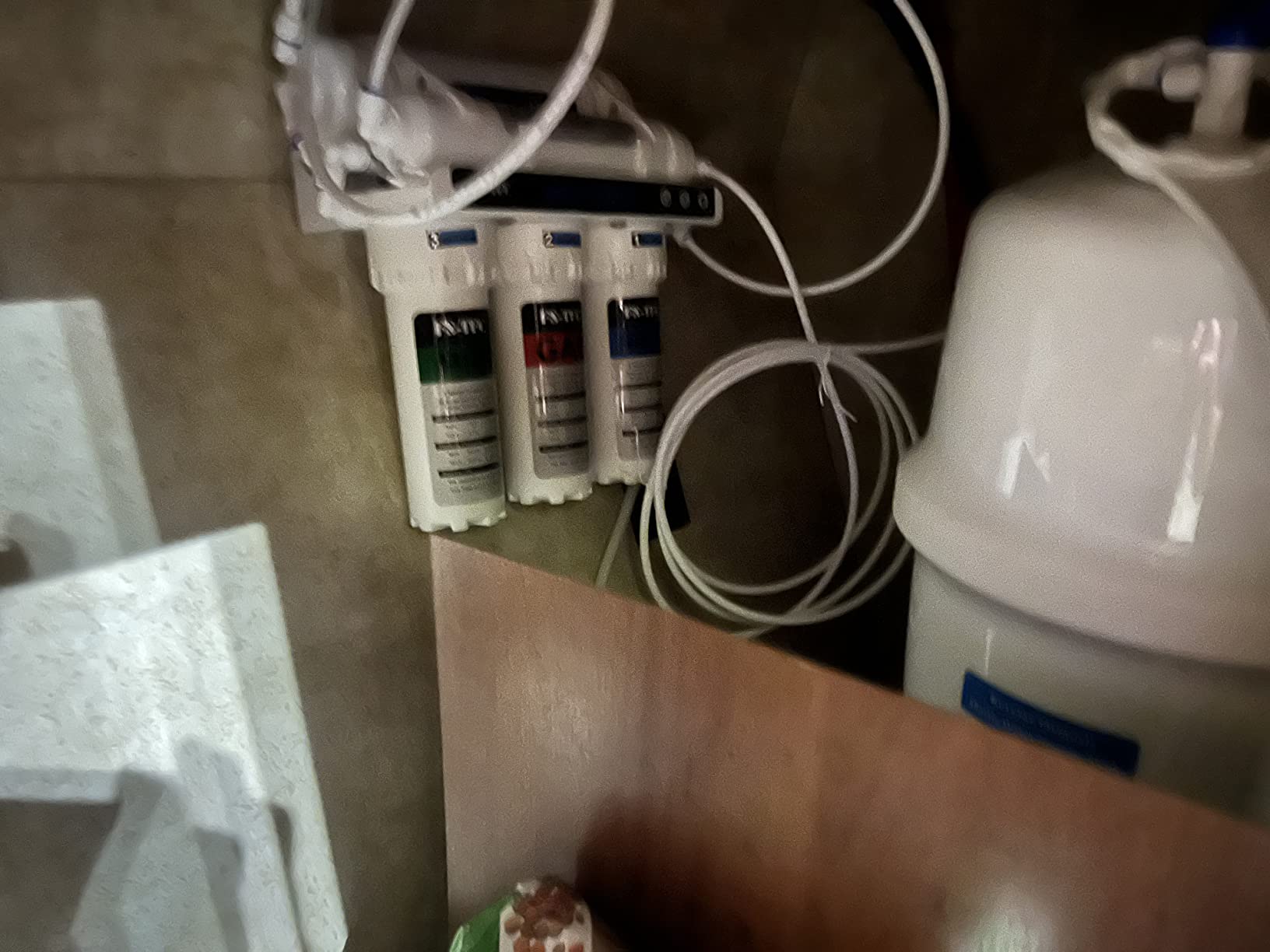
Flow is genuinely quick at 18 liters per hour, filling a 200 ml cup in about 5 seconds, and the 1:1 drain ratio is efficient for a 100 GPD unit. Units arrive largely pre-assembled with plenty of quarter-inch tubing, and the instructions are printed in large color, which matters more than it sounds.
Filtration claims 99.999 percent removal against more than 1,000 contaminants including chlorine, VOCs, fluoride, arsenic, lead, nitrates and heavy metals, and the warranty runs two years on registration with lifetime technical support.
The flat taste problem and the condensation problem
There is no remineralization stage here, so the water tastes flat and stays that way. If taste is your main reason for buying RO, add a mineral cartridge or reconsider the Frizzlife.
Condensation also forms on the lower housings often enough that some owners build a small drain trough. And the mounting bracket for the filter housings is flimsy enough that a zip tie or a better support is a common first modification.
When this is the wrong pick
Some quick-connect fittings, including the feed connector and tank connector, have been reported as low quality and leaking, with some owners replacing them with parts from another brand. Check every fitting during install while a towel is under the unit.
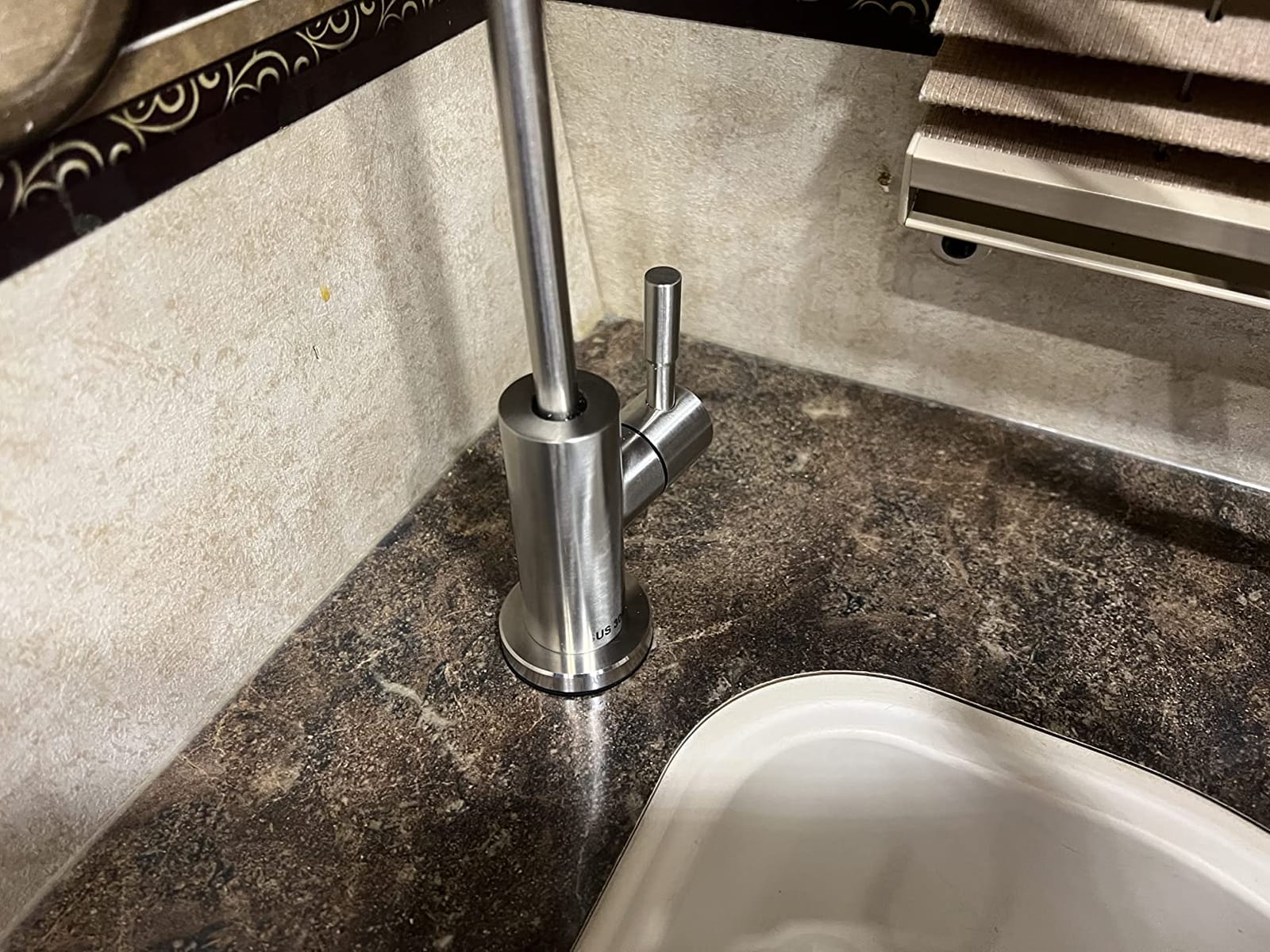
The instructions call for a half-inch faucet hole, which is larger than necessary and harder to drill in thick stone or granite. That makes this a poor choice for a stone countertop you are trying to keep intact.
Can You Install an RO System in an Apartment? What Your Lease Says
You can put an RO system in an apartment, but the format decides whether it is a casual yes or a conversation with your landlord. Countertop units need no permission at all. Under-sink systems almost always need written approval, because they require drilling a hole in your countertop and adding a line to the cold-water supply.
Here is how the formats fall in practice:
Countertop RO: no modification. Nothing is drilled, taped or plumbed. You unplug the unit, drain its tanks and carry it to your next apartment. This is the only category that is unambiguously fine in every lease we have seen.
Faucet-mount filters: gray zone. These clamp onto an existing faucet and leave no hole, but some leases define any water-treatment device as a prohibited fixture. Worth a written yes if your building is strict.
Under-sink RO: written approval required. Everything except the countertop models drills a faucet hole and taps the cold-water line. Ask for approval in writing, and specify that you will remove everything and patch the hole at move-out.
Condo and HOA rules can add a second layer of restrictions beyond your lease, particularly on exterior walls and plumbing alterations. In buildings with older internal piping, some associations require a licensed plumber rather than a tenant doing the work.
Removing the system before move-out
Do this in order and the kitchen looks untouched. Shut off the cold-water valve, then close the tank valve and the feed valve, then disconnect the tubing. Drain the storage tank fully and carry it out empty. Remove the faucet, then the tubing, then the bracket.
For the countertop hole, a self-adhesive escutcheon or a matching cover plate usually hides the opening well enough that it does not come out of a deposit. Take a photo of the empty hole and the patched cabinet before you leave, and keep it for the move-out inspection.
Wipe down the cabinet interior, because mineral spotting and a bit of standing water are what turn a routine removal into an argument. A renter who returns a dry, clean cabinet with a covered hole usually walks out without a deduction.
More apartment-specific picks we have covered sit alongside this guide, including canister vacuums for small spaces and folding power racks for the same no-permanent-change logic.
How to Choose an RO System for a Small Kitchen
Start with the lease, not the spec sheet. If drilling is off the table, your shortlist is the countertop models in this guide and nothing else. If a faucet hole is approved, you have ten models to choose from and the real trade-offs begin.
Check the NSF certification, not the contaminant count. Marketing pages love claiming 99.99 percent removal of 1,000 contaminants, which means little on its own. NSF/ANSI 58 certifies RO performance and TDS reduction. NSF/ANSI 53 certifies health effects, including lead and arsenic reduction. NSF/ANSI 42 covers chlorine, taste and odor, which is aesthetic rather than health-related. NSF 401 covers emerging contaminants, and P473 covers PFAS specifically. A system certified to 58 and 53 together is telling you it has been independently tested for both purity and health-relevant contaminant reduction.
Size GPD to how many people drink from it. A 50 GPD system is comfortable for one person. A 75 GPD system handles a couple sharing a faucet. Anything above 300 GPD exists to serve a household or a shared apartment where several people drink, cook and make ice from the same source.
Decide between a storage tank and tankless. A tank system holds purified water ready to serve, so flow is instant, but it occupies cabinet volume and the water can sit long enough to pick up taste from the tank liner. A tankless system produces water on demand, saves roughly 70 percent of the space, and gives up nothing on flow if the GPD rating is high enough. For small kitchens, tankless usually wins on space alone.
Budget for filters before you buy the system. Replacement cost per year is where cheap and expensive units converge. Proprietary cartridges on tankless models cost noticeably more than the standard quarter-inch inline filters used by conventional systems, and a system advertised as low cost can quietly become the expensive one over five years. The FS-TFC and APEC are the lowest running costs here; the Waterdrop tankless cartridges are among the highest.
Measure your cabinet and your outlet. Tankless systems need a live electrical outlet under the sink, which many older apartment cabinets do not have. Check before ordering, because running an extension cord into a wet cabinet is not a solution. Then measure depth and height, since the taller units will not fit a shallow cabinet with a waste trap in the way.
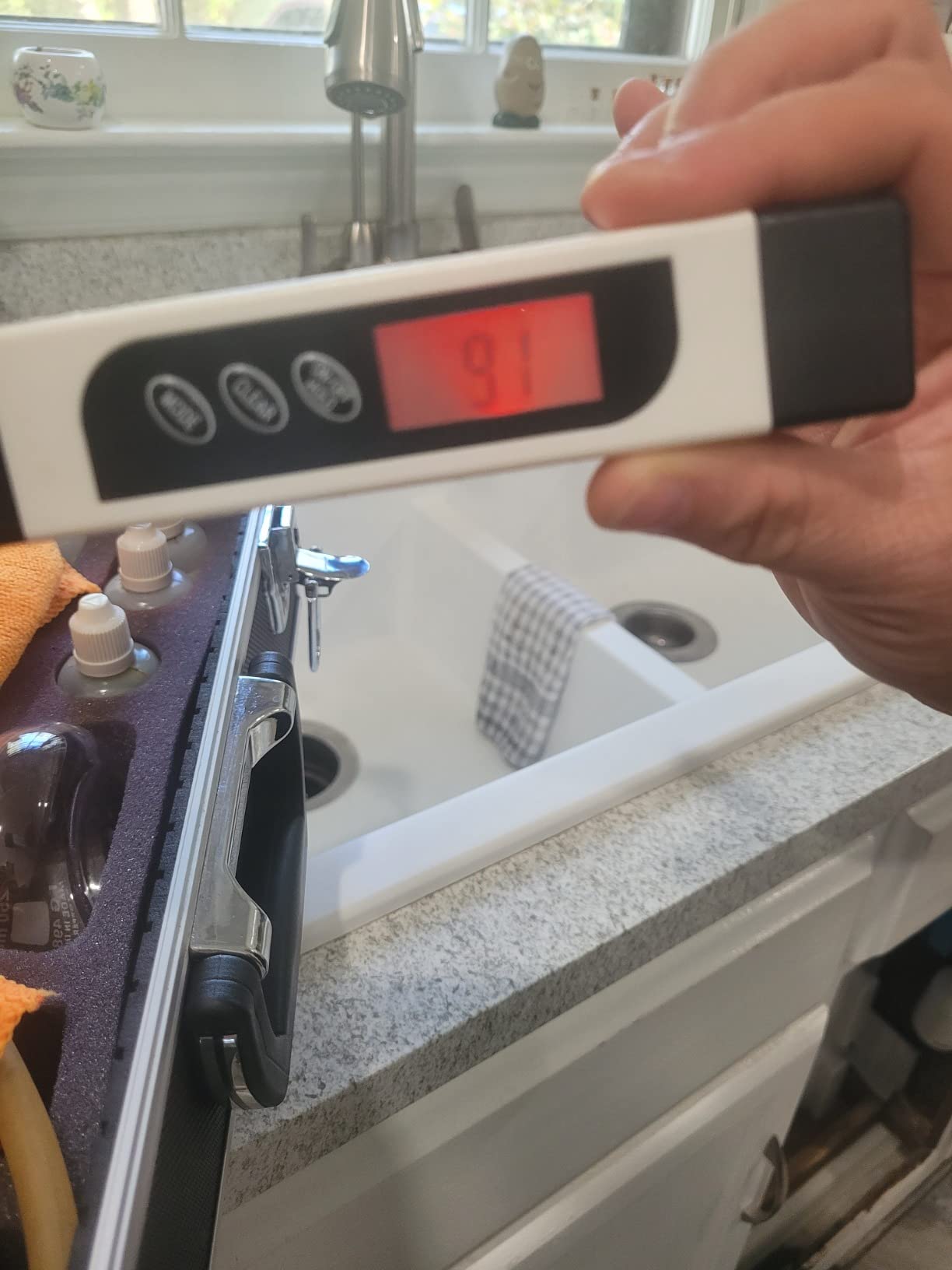
Test your own tap water before you buy. A TDS meter reads in seconds and costs less than one filter set. Pour a glass of cold tap water into it, and note the number. Above 300 ppm and you want the highest GPD system you can physically fit. Below 100 ppm and a 50 GPD unit will do everything you need.
Check your building’s water pressure. Most RO membranes need 40 psi minimum, and the FS-TFC runs down to 30 psi. Older buildings with low pressure produce less output than the GPD rating suggests, and that is where booster pumps enter the picture, along with their extra cost and leak points.
Readers who are furnishing the rest of a small kitchen usually start with the appliance side first, which is why we put countertop dishwashers for apartments on the same renter-first logic.
The Downsides of RO Water and How to Fix Them
The major downside of reverse osmosis water is that it strips dissolved minerals along with the contaminants, which leaves the output tasting flat and slightly acidic. That is not a safety problem, but it is the reason people buy RO water and then go back to bottled water a month later.
Two fixes work well. The Bluevua and Frizzlife both include a remineralization stage that adds minerals back and lifts the pH, and you can add a similar inline mineral cartridge to a system that lacks one. For brewing, the practical move is to keep your coffee and tea water slightly harder than your drinking water, since extraction depends on some mineral content.
The second downside is wastewater. A 2:1 pure-to-drain ratio means two gallons go down the drain for every gallon you keep, and conventional systems run closer to 3:1. Higher-efficiency models cut that to 1:1 or 4:1. The reject water is not harmful, so using it for mops and plants is a reasonable way to get some of it back.
Third is the countertop batch cycle. Units like the Bluevua take 10 to 15 minutes per carafe, which is fine once you build it into your morning routine and annoying if you assume on-demand dispensing.
Frequently Asked Questions
What is the best reverse osmosis system for a rental apartment?
A countertop reverse osmosis system is the best format for a rental apartment because it needs no plumbing, no drilling and no landlord permission. It draws tap water from a removable tank, filters it through a 0.0001 micron membrane and pours it into a carafe. Tankless under-sink systems are the next best option, but they need an electrical outlet and usually a drilled faucet hole.
Can you put a reverse osmosis system in an apartment?
Yes, but the format decides whether it is simple. Countertop units modify nothing and can be carried out at move-out. Under-sink systems require drilling a faucet hole and tapping the cold-water line, which most leases treat as a modification needing written landlord approval. Ask in writing and offer to remove everything and patch the hole before you move out.
What is a major downside of reverse osmosis water?
The main drawback is taste. RO strips dissolved minerals along with contaminants, so the water tastes flat and slightly acidic. A remineralization or alkaline filter stage adds minerals back and raises the pH, which fixes the flavor for coffee, tea and drinking. Other downsides include the wastewater ratio and the counter space a countertop unit occupies.
What is the best water filtration system for an apartment?
For drinking water quality, a certified RO system is the strongest option available to a renter because it removes dissolved solids, lead, fluoride and PFAS. Countertop RO units suit kitchens with little counter space, while under-sink units suit kitchens where a faucet hole is approved and cabinet room exists. Look for NSF/ANSI 58 and 53 certification rather than contaminant counts.
How much counter space does a countertop RO system take?
Plan on roughly 15 by 15 inches of footprint. The Bluevua RO100ROPOT measures 10.9 by 15.4 by 14.3 inches, and the SimPure Y7P-BW measures 17.3 by 7.5 by 17 inches. Measure the widest dimension across your usable counter, away from the sink and the stove, before ordering, and add a few inches for the power cord.
The Bottom Line
The best reverse osmosis systems for apartments are the ones that leave no trace behind. If your lease forbids drilling, the Bluevua RO100ROPOT and the SimPure Y7P-BW are the only two categories on this list that qualify, and the Bluevua wins on taste and filter economics.
If a faucet hole is approved, the iSpring RCC7-BN is the one I would buy, with the most verified owners and inexpensive, widely available long-term parts. Go tankless and high GPD if the apartment has several water drinkers, and pick the Frizzlife if flat water is what you cannot stand.
Whichever you choose, run a TDS meter on your tap water first and on your output after a month. It takes ten seconds and it tells you whether your money is going anywhere.