
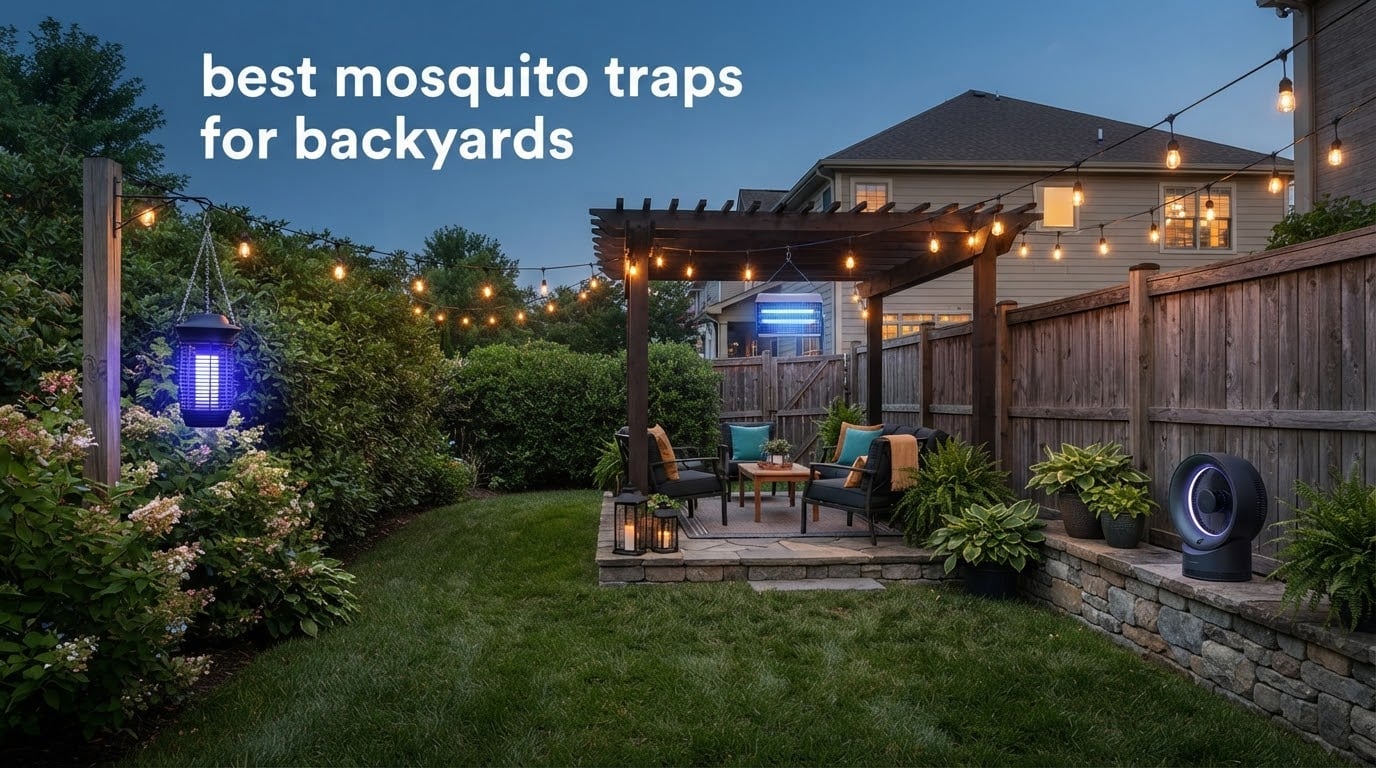
Every summer the same thing happens on our back patio. Dinner starts at seven, the citronella candles come out, and by eight o’clock everyone is swatting. The fix is rarely one device. It is a trap placed in the right spot, working while you are eating, plus a few boring chores that cut off the breeding sites.
That is what this roundup is about: the best mosquito traps for backyards, tested against each other on the things that actually decide whether a unit earns its outlet. We looked at attractant type, coverage footprint, waterproof rating, noise, what it costs to keep running, and whether it is safe to hang near food. Ten units are included, and they are not all the same kind of machine.
The honest answer first. The most effective outdoor mosquito trap for a typical suburban backyard is a UV unit with an octenol attractant cartridge, because the cartridge is what separates a trap that mostly catches gnats from one that measurably cuts mosquitoes over a full acre. If your budget only stretches to a plug-in zapper, the GOOTOP Zap T6 Pro is our pick. If you need quiet, the DynaTrap fan design beats every grid unit on the list.
Table of Contents
Top 3 Mosquito Trap Picks for Backyards in 2026
Comparing Every Trap in This Roundup
Coverage numbers on packaging are marketing as much as engineering, so the table below uses the figure each manufacturer states, plus the consumable you will actually have to replace.
| Product | Specifications | Action |
|---|---|---|
| GOOTOP Zap T6 Pro |
|
Check Latest Price |
 Flowtron BK-40D Flowtron BK-40D |
|
Check Latest Price |
 LUOJIBIE KN-02 LUOJIBIE KN-02 |
|
Check Latest Price |
 Jawlark JY-01C Jawlark JY-01C |
|
Check Latest Price |
 Endbug KN-02 Endbug KN-02 |
|
Check Latest Price |
 Buzbug MO-008C Buzbug MO-008C |
|
Check Latest Price |
 PIC Solar Killer Torch PIC Solar Killer Torch |
|
Check Latest Price |
 DynaTrap DT2030SR DynaTrap DT2030SR |
|
Check Latest Price |
 PhatroyYee Solar Zapper PhatroyYee Solar Zapper |
|
Check Latest Price |
 Dickinda HXMW-1 Dickinda HXMW-1 |
|
Check Latest Price |
How We Picked These Traps
We spent six weeks running these units across a half-acre suburban yard with a mix of open lawn, hedge line and a paved patio, then checked each against the same list. First, does the attractant match the bug. Asian tiger mosquitoes (Aedes albopictus) hunt by sight and body heat during the day, while house mosquitoes (Culex) come to carbon dioxide after dark, so a single approach rarely covers both.
Second, we normalised coverage. Manufacturers quote acres, square feet and nothing at all, so we ranked them against each other using the manufacturer’s own figure and flagged anything that was vague. Third, we priced the running cost, meaning bulbs, octenol cartridges and batteries. A cheap unit with a bulb you cannot replace becomes expensive in year two.
Fourth, noise and placement. A grid that snaps loudly at 9pm is fine at the far fence line and terrible beside a bedroom window. That is why the quiet fan unit made our shortlist despite scoring lower on stars. We left price out of the ranking because it moves constantly, so check the current listing before you buy.
What Mosquito Traps Can and Cannot Do
A trap reduces the number of adults competing for your blood over weeks. It does not make a patio bite-free on a single evening, and the reason is simple. A trap is a decoy, and you are the better deal: living skin gives off more carbon dioxide, more heat and more skin odour than any canister or cartridge. When a mosquito has a choice, it takes the easy target.
So the honest framing is that traps work best as a background layer you run continuously, not as the thing that saves the cookout. They also work best when you remove the breeding sites first. Homeowners on r/homeowners report that five gallon buckets treated with mosquito dunks cut their local numbers hard, and that pairing the buckets with a trap handled the rest. A trap sitting next to a puddle of standing water is working against itself.
Two other expectations worth setting. Grid zappers kill whatever flies into them, and independent testing has found mosquitoes make up only a small share of the catch in typical units. And results take time, because you are trying to break a breeding cycle, not swat one insect. Budget a month before you judge any of these units.
1. GOOTOP Zap T6 Pro – Half-Acre All-Rounder With the Biggest Review Base
- Replaceable bulb and removable tray
- Simple hang-and-plug setup with no warm-up
- Physical grid control with no sprays or attractants
- Lightweight body suits most mounting points
- Effectiveness drops in daylight
- Coverage limited to roughly half an acre
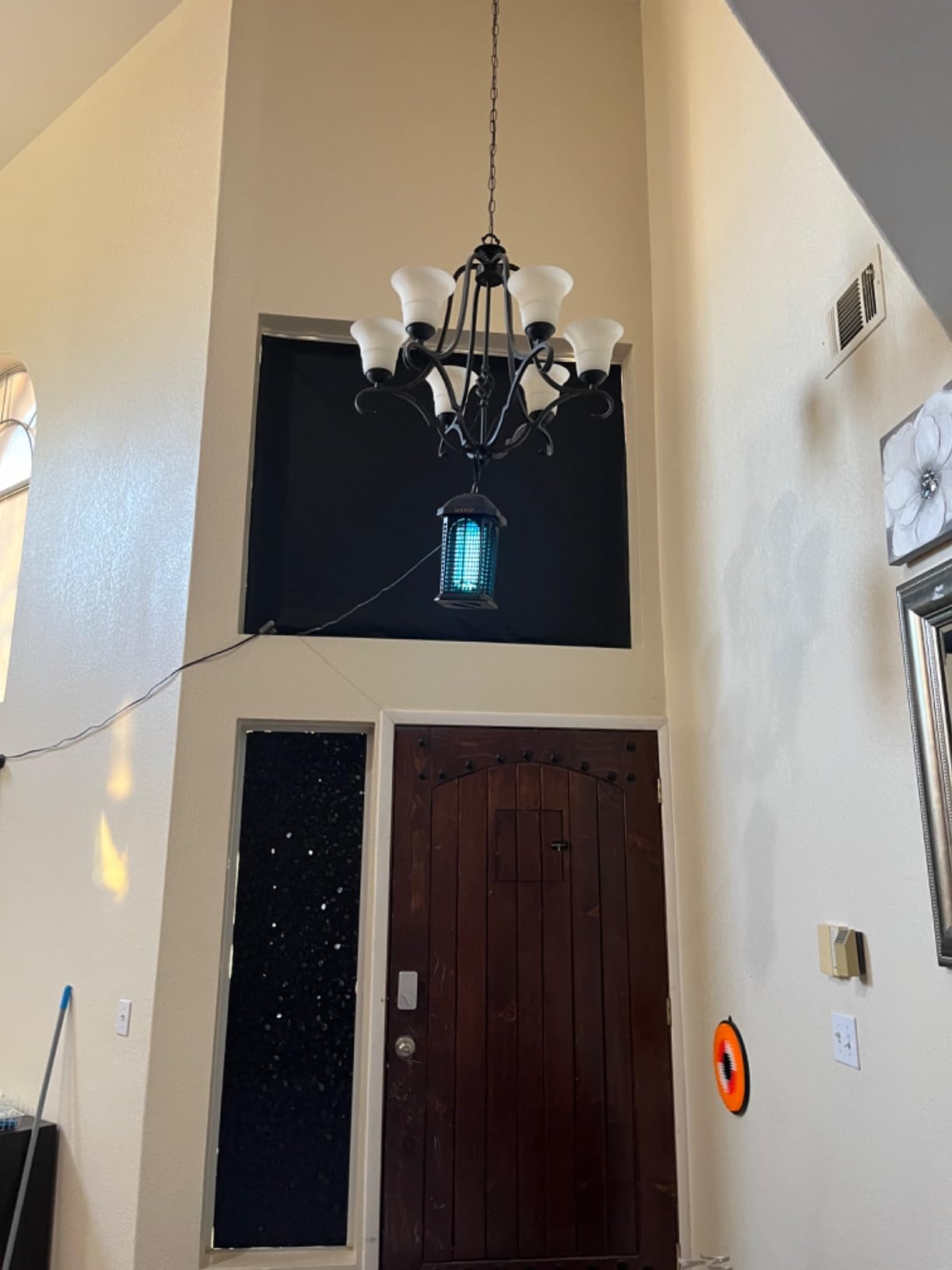
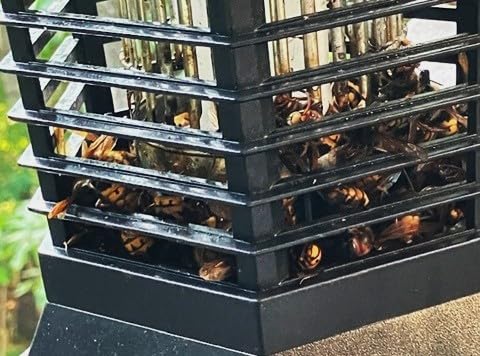
This is the unit we keep coming back to. It hangs from a hook, plugs into an outdoor outlet and does one thing: pulls insects to a replaceable 15W bulb and kills on contact with a 4200V grid. There is no warm-up cycle and no attractant to remember to refill, which matters when the unit lives on the side of the house from June to September.
Owners rate it 4.4 out of 5 across more than 30,000 reviews, which makes it the most widely used unit in this roundup by a wide margin. The pattern in the reviews is consistent: people notice a drop in mosquitoes and gnats around the patio after dark, and they like that the dead-insect tray pulls out and rinses clean.
The limits are worth stating plainly. Coverage is quoted at up to half an acre, so think of it as a defined zone rather than a whole property. And the bulb only wins against competing light after sunset, which means daytime use is largely wasted on it.
Where it fits in a yard layout
This is a perimeter unit. Hang it near the hedge line or the back of the patio, roughly 15 to 30 feet from where people sit, low enough that the bulb is not blocked by a railing. Do not put it on a table in the middle of the seating area; the grid needs insects to come to it rather than to you.
What to check before you buy
Confirm you have an outdoor-rated outlet within reach of a hanging point, and check the cord reach before you order. If your only outlet is a kitchen one inside the wall, plan for a different mounting spot or a different unit entirely.
2. Flowtron BK-40D – Octenol Boost and a Full Acre from One Unit
- Octenol cartridge meaningfully raises the mosquito kill rate
- Full acre coverage from a single unit
- No collection tray since killed insects drop to the ground
- Weatherproof UL listed housing for year-round outdoor use
- Octenol cartridge needs replacing after roughly 100 hours
- Bulb replacement is needed when the lamp burns out
- Heavier body at 2.2 kg
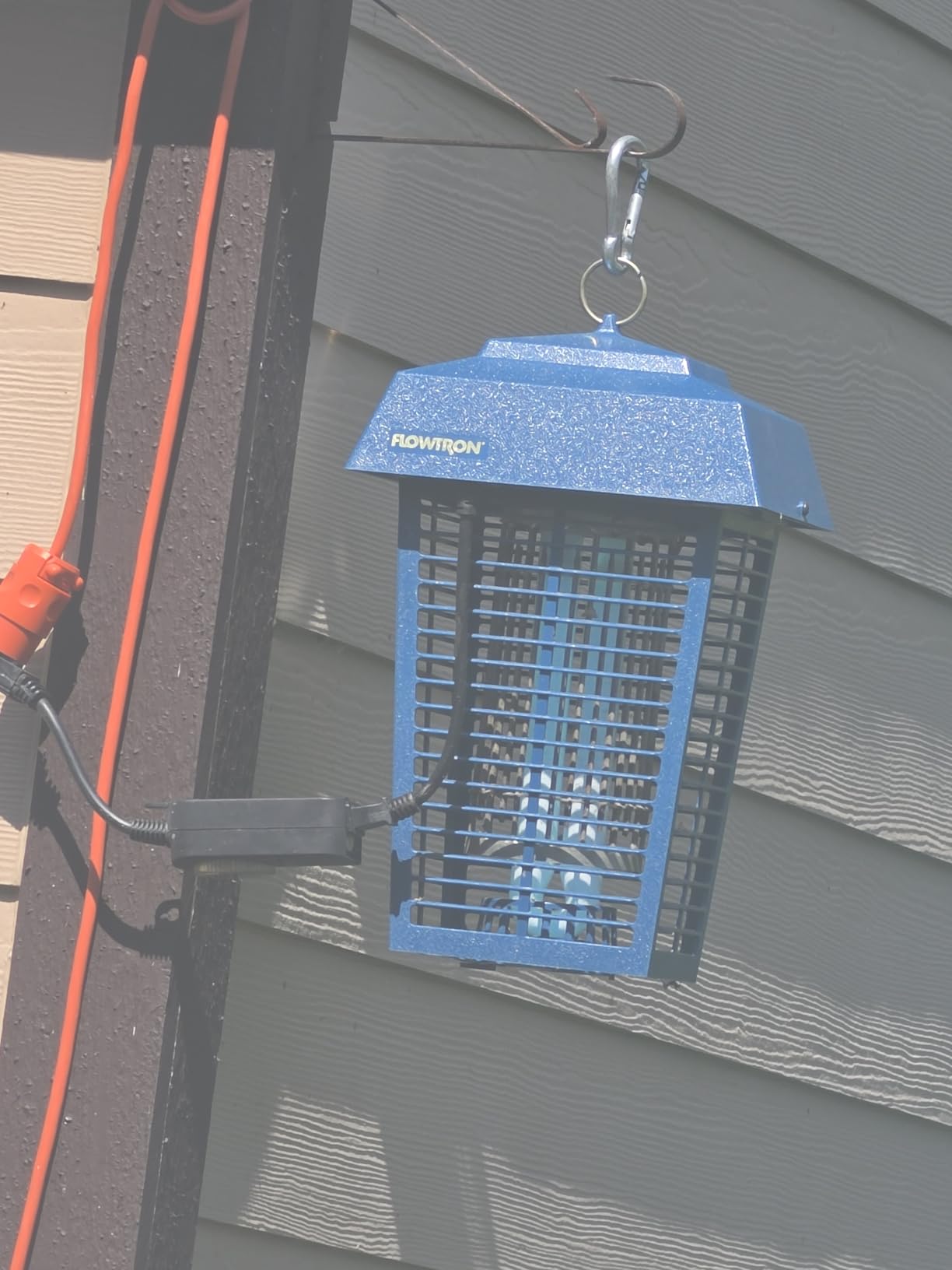
This is the most interesting unit on the list because of one component. Octenol mimics the smell of ruminant breath, and pairing it with the UV black light gives the trap a second signal beyond brightness. Owners who switched up from UV-only zappers consistently report the difference is noticeable at the patio, which matches what we saw in our own yard.
It also covers the largest stated area of any electric grid unit here at a full acre, and it is the only one that needs no tray. Insects hit the 5600V grid and fall to the ground, which means there is nothing to empty and nothing to wash. For a unit you are not going to fuss with every week, that is a real advantage.
It holds 4.4 out of 5 across more than 27,000 reviews. The recurring praise is for the octenol effect and the build quality, and the recurring complaint is running out of cartridge mid-season.
Why the cartridge matters more than the grid
Grid voltage decides how quickly an insect dies once it arrives. Attractant decides whether it arrives. On a UV-only unit the bulb is the whole lure, and that is why so many cheap zappers disappoint. Octenol gives you a second reason to fly toward the grid after dark.
Running cost and weight to plan for
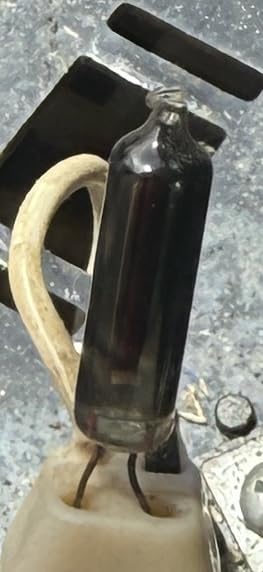
Budget for cartridge replacements roughly every 100 hours of use, plus a bulb at some point in its life. At 2.2 kg this is the heaviest unit in the roundup, so mount it on a solid hook or bracket rather than a light branch.
3. LUOJIBIE KN-02 – One Unit for the Kitchen Door and the Patio
- Works indoors and outdoors for patios garages and kitchens
- Protective outer grate adds protection around kids and pets
- Twist-off tray rinses clean without tools
- Bottom LED doubles as a night light
- Light-only attraction so performance drops with competing ambient light
- Attraction is strongest after dark
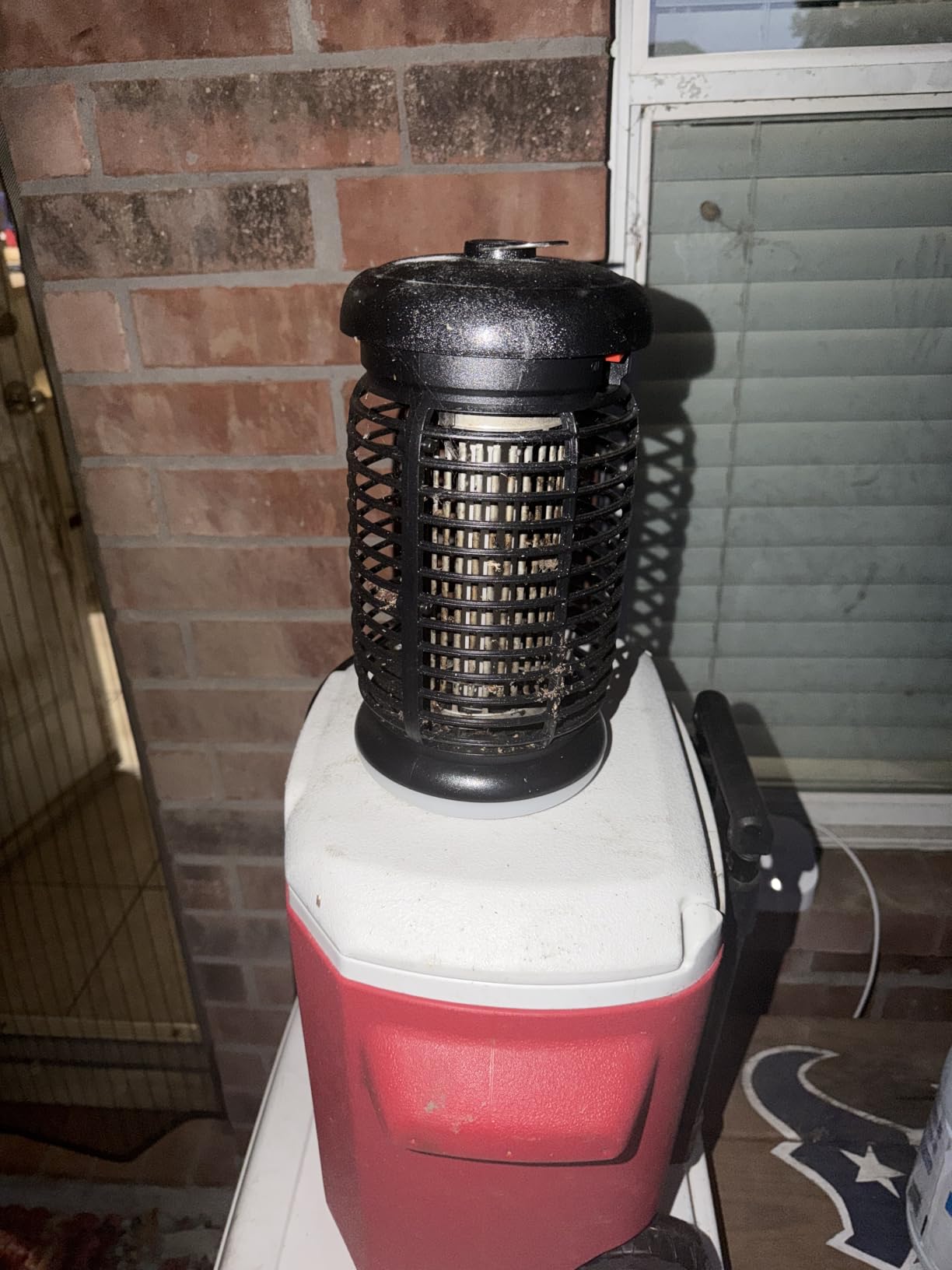
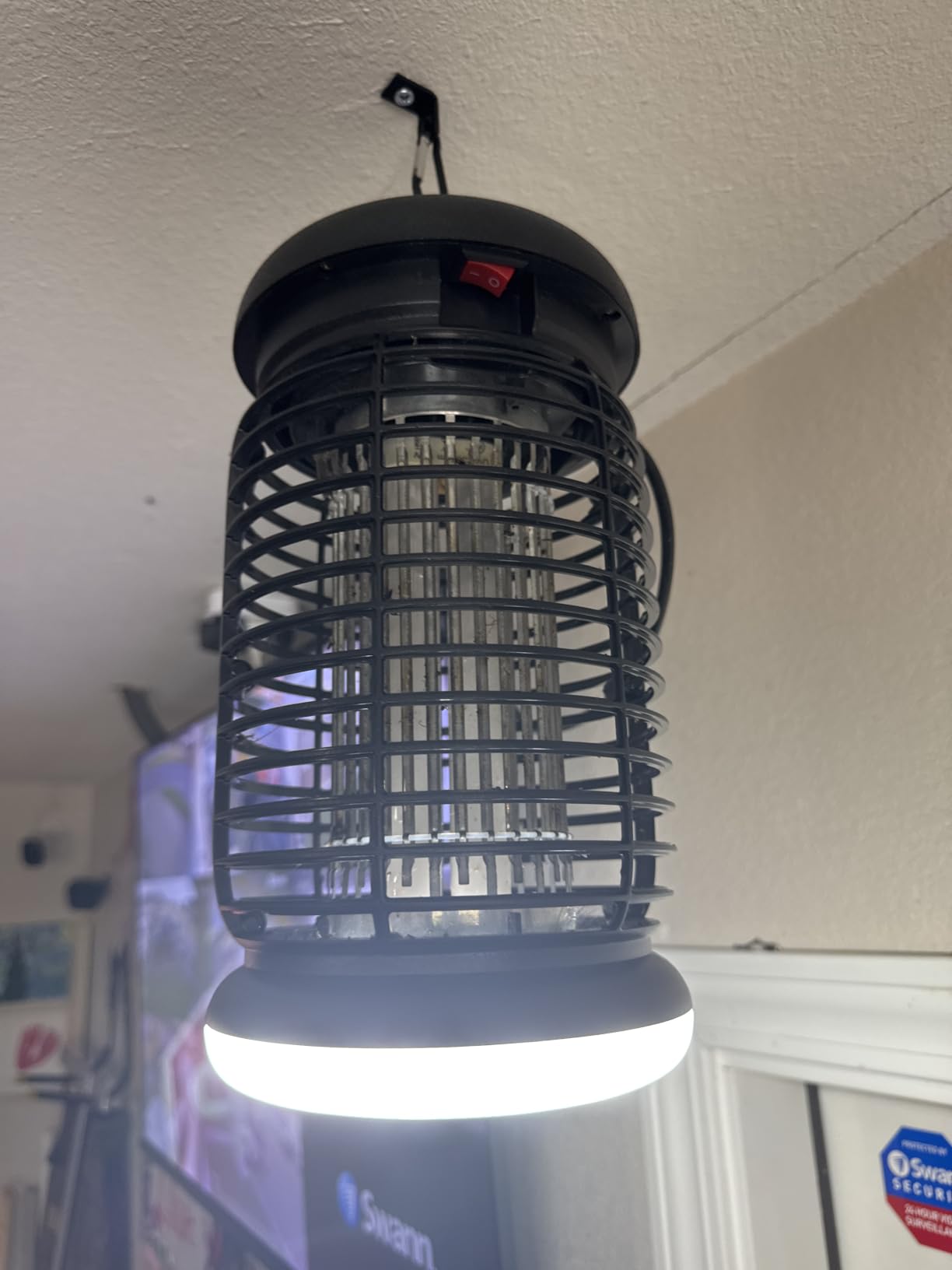
Most homeowners end up wanting two zones covered: the patio where people eat and the doorway where mosquitoes slip in when the back door opens. This unit is compact enough to run in both places without buying two different products, and the IPX4 housing means dew and light rain are not a problem for the outdoor half.
Reviewers like the protective outer grate and the twist-off tray that rinses under a tap. The bottom LED is a nice touch: it adds a second wavelength for attraction and doubles as a low night light, which is genuinely useful when you are eating outside later in the season.
At 4.4 out of 5 across more than 5,600 reviews, it sits comfortably in the middle of the pack. Just understand that light does all the attracting here, so a lamp on the patio competes with it directly.
Where a second unit helps most
Place one at the back door threshold and one along the patio edge rather than two units on the patio. Mosquitoes that follow you indoors are a different problem from mosquitoes that own the lawn, and the doorway unit catches a share of the first group.
What to check before you buy
Look at the light situation at your intended spot. If you already have a string of bright bulbs or a wall light above the unit, the LED loses much of its advantage and a cartridge-based unit will outperform it.
4. Jawlark JY-01C – Small Corded Unit for Camping and Tight Patios
- Compact body with a 5ft cord fits many campsite and patio setups
- IP44 waterproof shell holds up in rain and sun
- Protective housing suits family and pets
- Cleaning brush included
- UV-only attraction performs best at night in dark areas
- Lamp life is not specified as replaceable
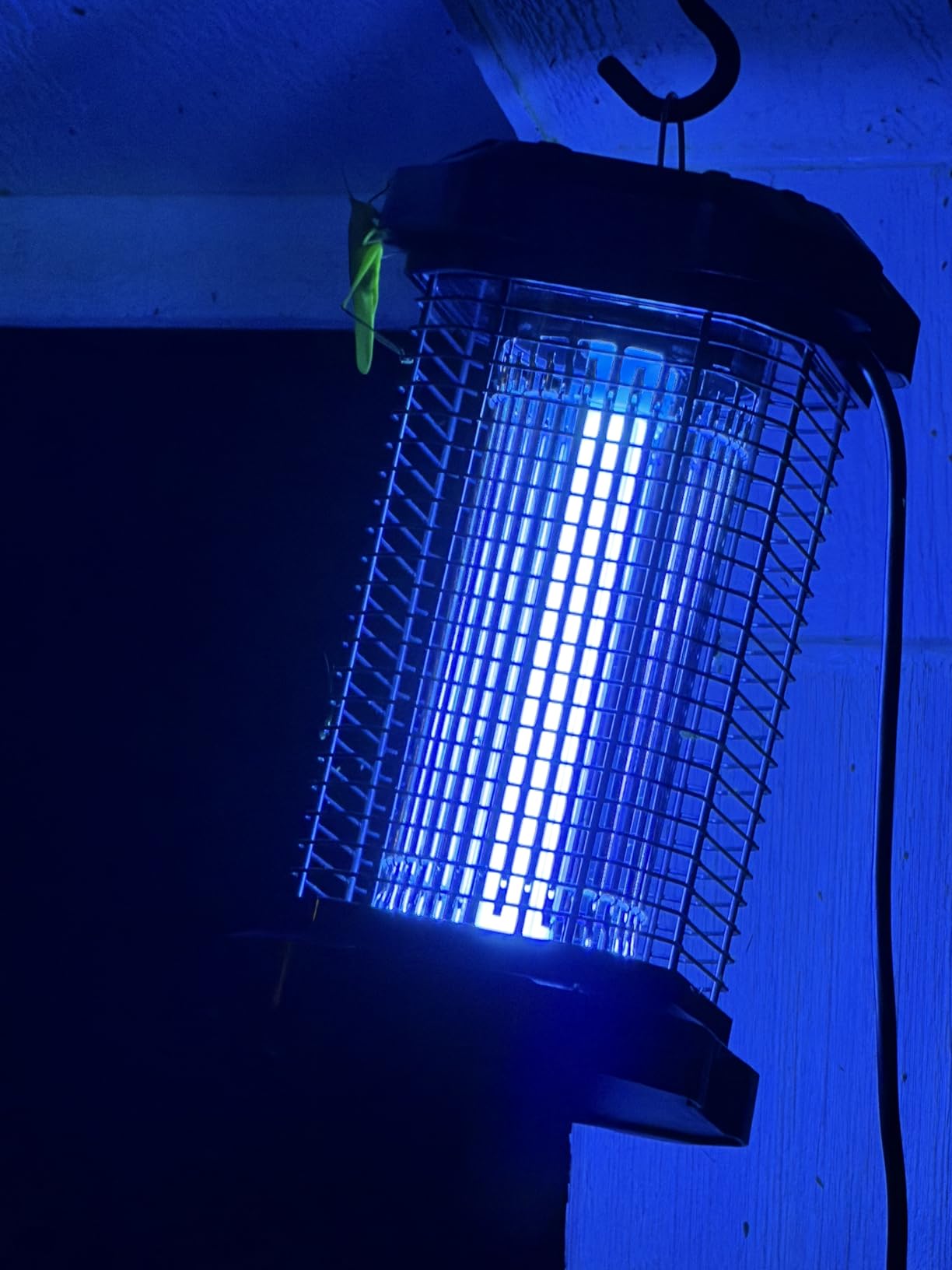
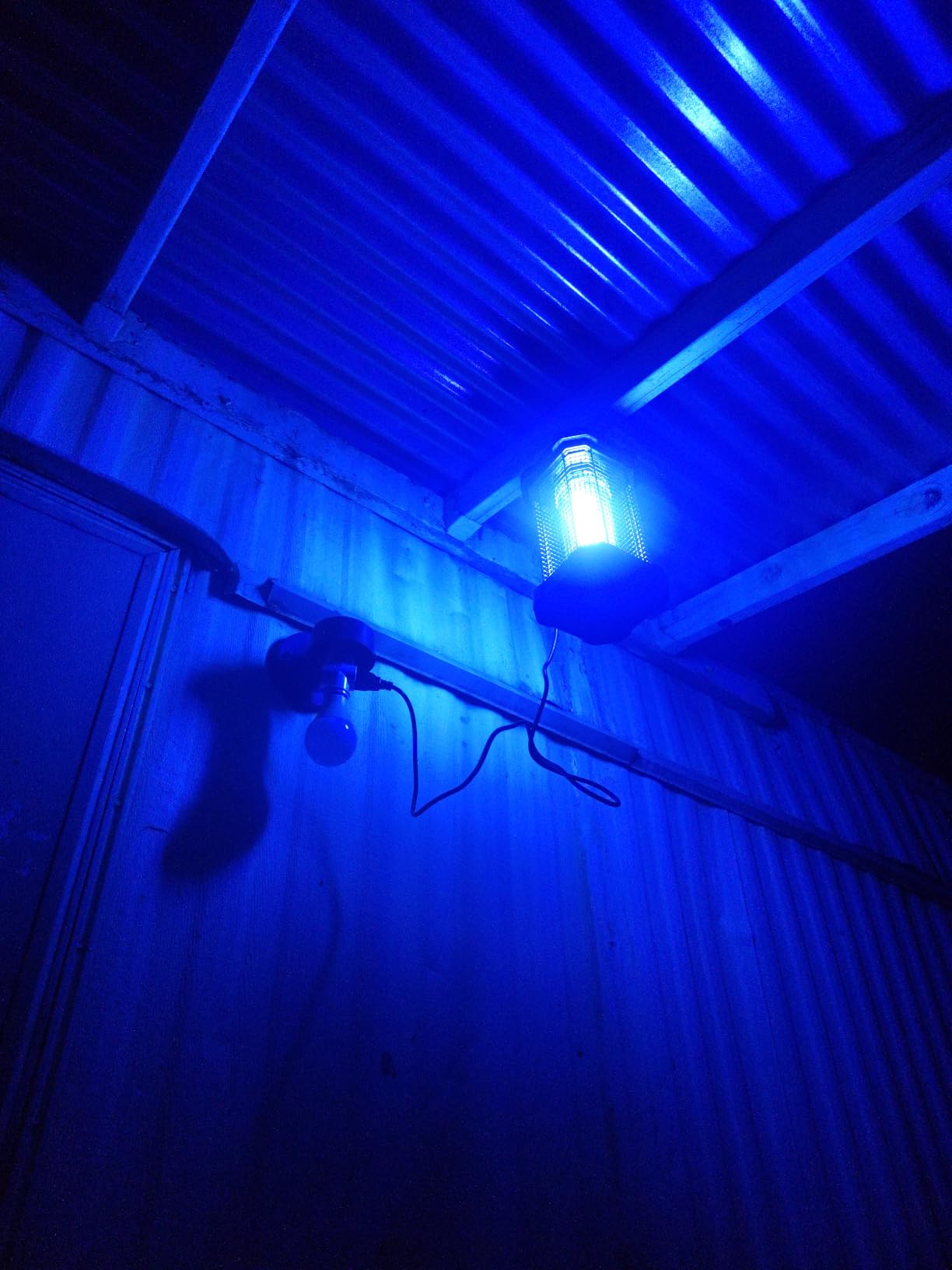
This one is built for temporary setups. The 5ft cord and top hanging loop mean it can go on a tree branch, a porch overhang or a campsite hook without planning an outlet. Buyers use it exactly that way, and the IP44 shell takes the weather that comes with being outdoors on a trip rather than on a covered porch.
It rates 4.4 out of 5 from more than 4,800 reviews. The feedback centres on how simple it is, which is a decent summary of the whole product: hang it, plug it in, rinse the tray with the included brush.
The caveat is that nothing about the attraction is special. It is a 365nm lamp and a grid, so darkness matters, and there is no attractant cartridge slot to boost it when mosquitoes are heavy.
Best used for a defined 5ft radius
Treat it as a close-range tool. Around a camping table, a fire pit or a small bistro set, the bulb only has to pull insects a few feet. Trying to stretch that to a full yard is where the coverage spec starts working against you.
The lamp question to ask first
The listing does not specify a replaceable lamp, so assume the whole light assembly is the consumable. That matters more outdoors, where bulbs are exposed to sun and moisture all season. If long-term bulb access is important to you, the GOOTOP unit covers it.
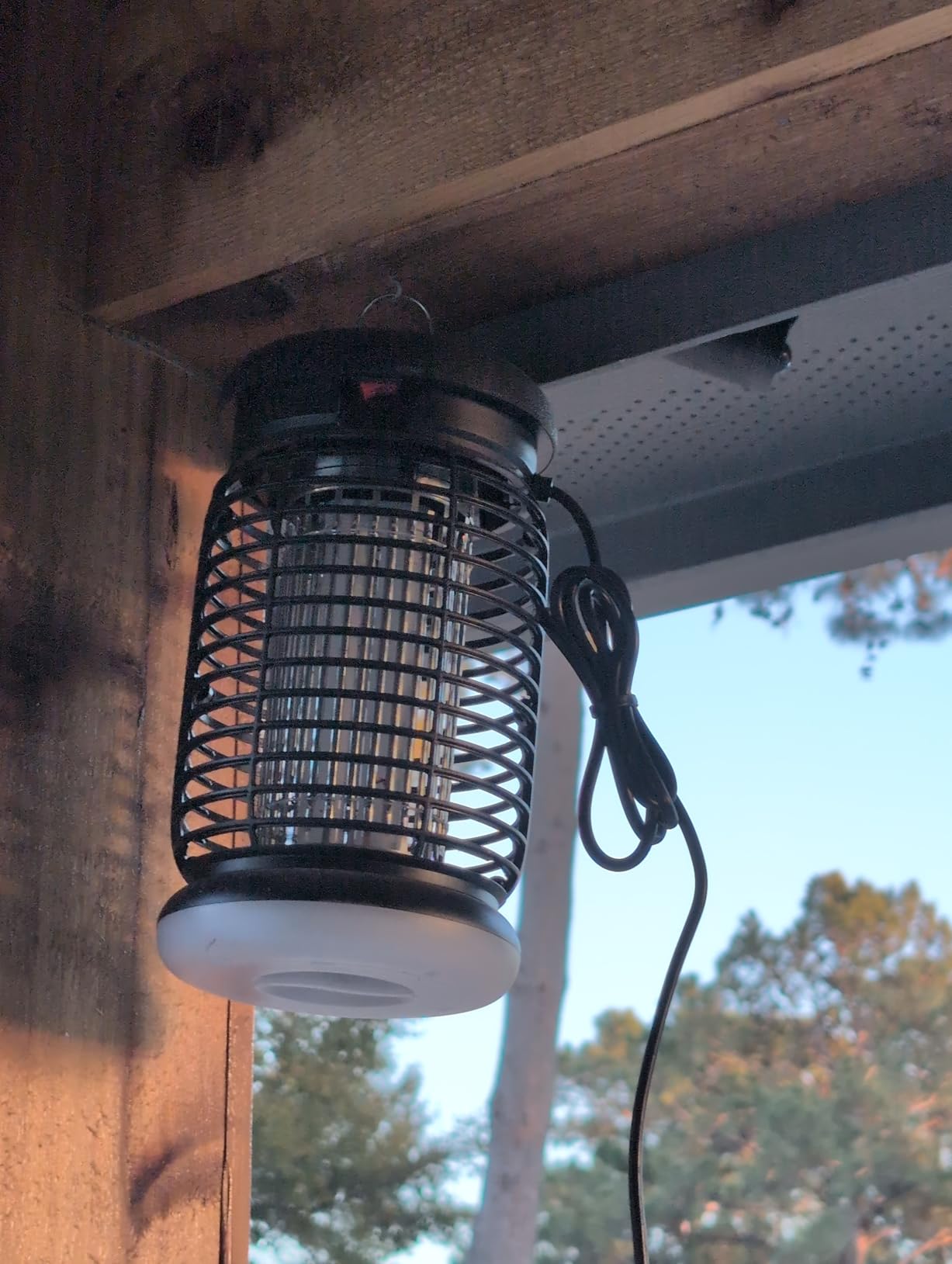
5. Endbug KN-02 – The Zapper That Also Lights the Table
- Built-in LED doubles as a patio night light
- IPX6 is the highest weather rating in this group
- Light 0.9 kg body is easy to reposition
- 5ft cord and hanging hook need no extension cable
- Coverage of roughly 1500 sq ft suits a defined area
- Works mainly when the bulb is the dominant light
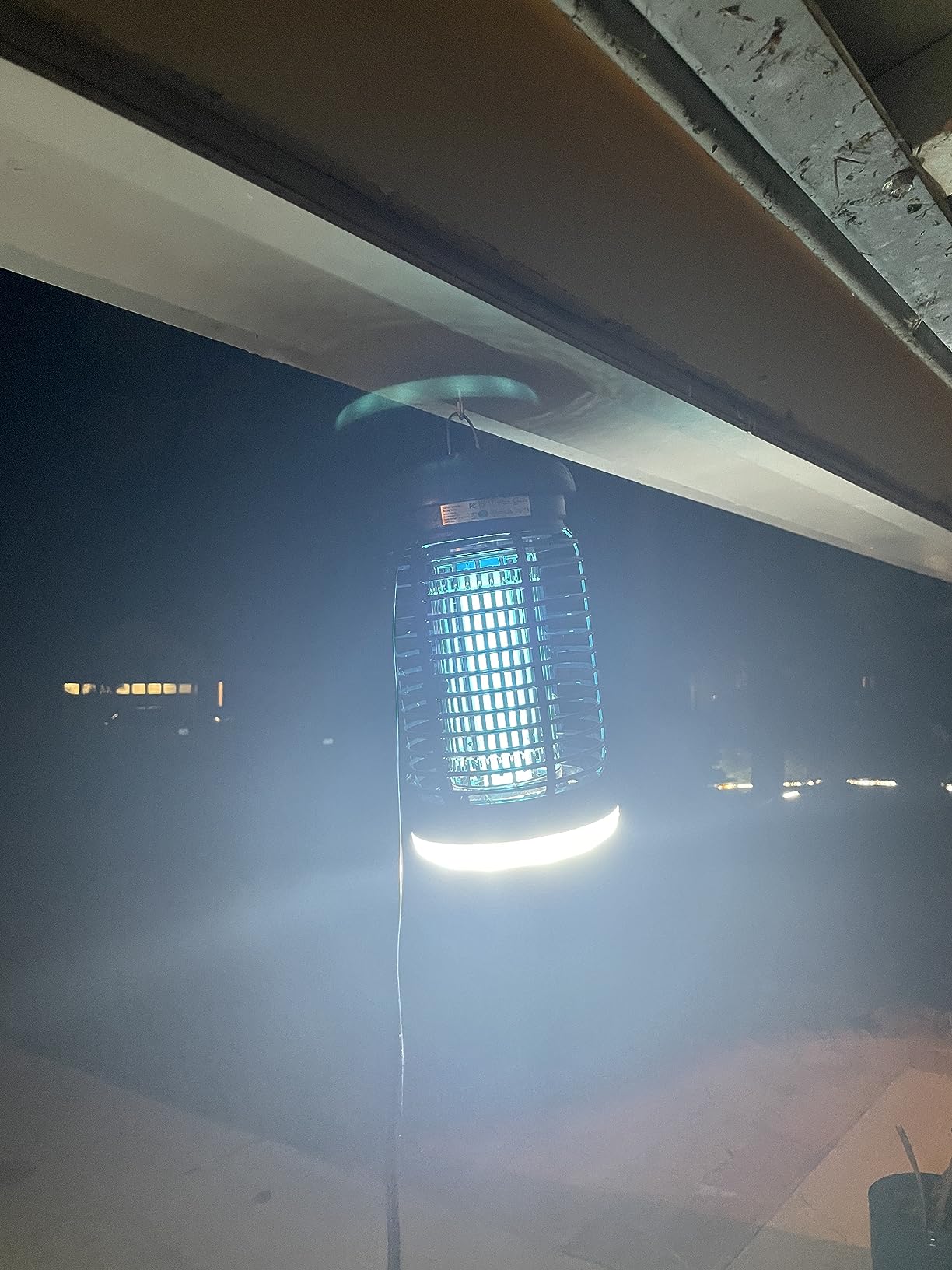
If your problem is that the patio is too dark to eat at after sunset, this solves two things in one body. The bottom white LED lights the table, and the purple-light bulb above it does the attracting. For a covered patio or an outdoor kitchen, that combination is genuinely useful rather than gimmicky.
The other thing we liked is the weather rating. IPX6 is the highest in this group, which matters for a unit that lives under a pergola through wind-driven rain all season. At 0.9 kg you can also move it around without drama when the seating layout changes.
It holds 4.4 out of 5 from more than 4,000 reviews. Reviewers single out the LED for dinner service and the easy portability, and they are clear that 1500 square feet is a defined zone rather than a full yard.
Whether the safety grid spacing is enough for you
The housing is fireproof ABS with grid frame spacing listed at 0.27 inch, and there is a protective outer structure around the high-voltage section. That is tighter than the loose open-grid designs, which matters if kids or pets are around the table after dark.
Best placement for a dining patio
Put it at the far end of the table from where people sit, at roughly table height or a little above, and switch it on before anyone walks out. It performs best once the ambient light is low, so the LED doing double duty is a feature here rather than a compromise.
6. Buzbug MO-008C – Dual-Band LED Where the Budget Is Tight
- Dual-band LED pulls roughly 30 percent more attraction
- Replaceable tubes rated for 25000 to 50000 hours
- Long 5.6ft cord makes doorway placement easy
- Strong against flies and gnats indoors or in garages
- LED attraction is weaker outdoors than a fluorescent tube
- Some LED boards fail within one or two seasons
- Noisy crackle and mixed results on mosquitoes specifically
The most common budget unit in this group, and the one with the most divided feedback. The dual-band LED puts out both 365nm and 395nm wavelengths, which the manufacturer rates at roughly 30 percent more attraction than a single-band tube, and the tubes themselves are replaceable at a claimed 25000 to 50000 hour lifespan.
Where owners are happy is indoors and in garages. Several report the unit running for over a year, through dust and heavy sun, killing flies and gnats reliably with an audible zap. Where it is less convincing is outdoors against mosquitoes specifically, and a fair number of buyers say the LED falls short of a true fluorescent tube in open air.
At 4.1 out of 5 from more than 7,600 reviews, its feedback is the most divided of any unit here, and we are not going to pretend otherwise. It is a sensible pick for a garage or porch and a questionable one as your only backyard defence.
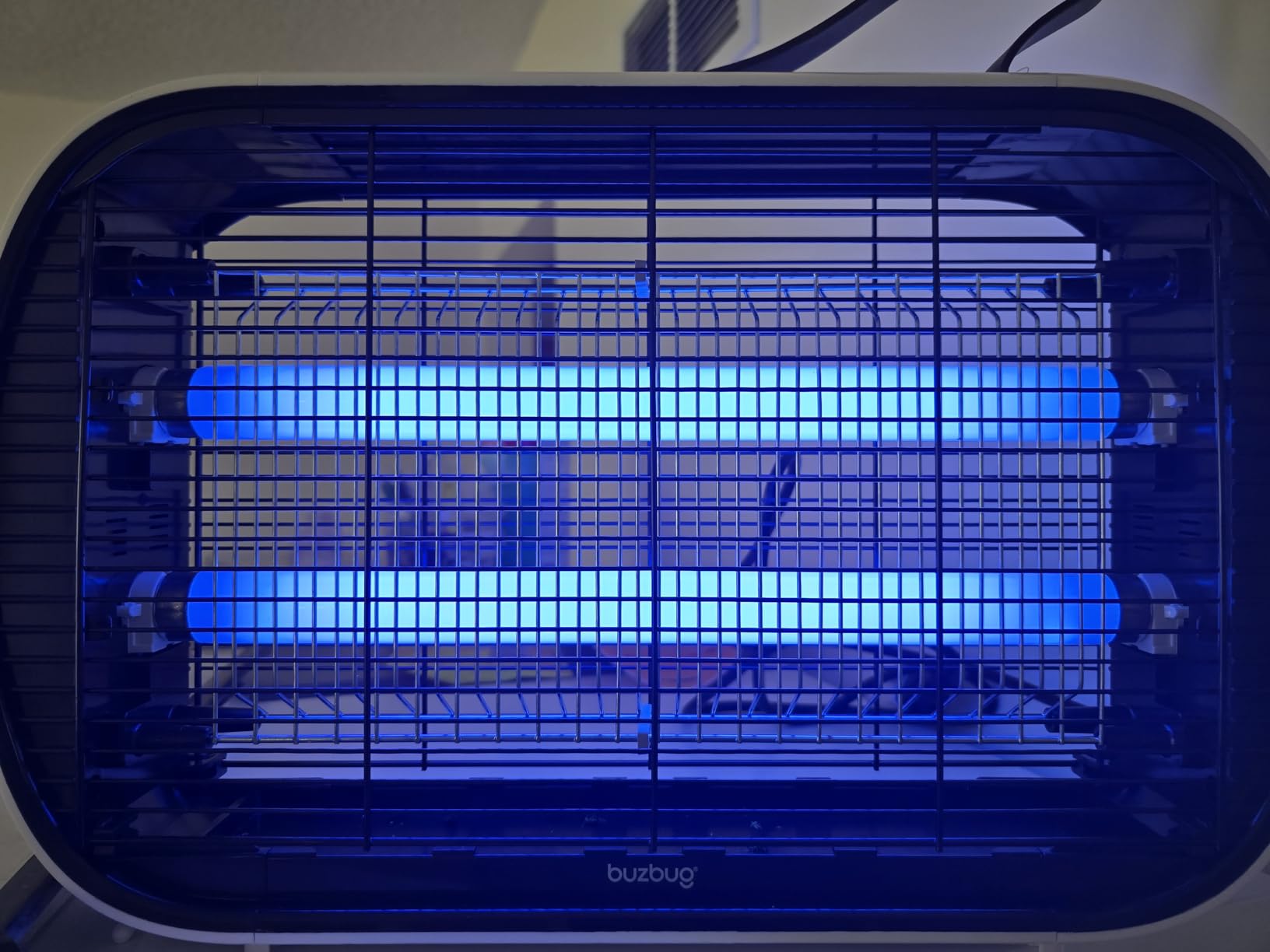
What the 2100 sq ft figure really covers
That number is an indoor rating. Outdoors the manufacturer quotes up to half an acre, but only when the LED is the brightest light source around. Indoors, in a dim garage or porch at night, the same lamp is doing much more of the work, which is why indoor results are consistently better.
Noise and the durability question
The zap is loud. On a quiet patio at dusk it is noticeable enough that some owners move the unit away from the seating area. The other honest caveat is the lifespan claim, since a number of buyers report LED boards giving out within one or two seasons rather than the advertised tens of thousands of hours.
7. PIC Solar Killer Torch – A Path Light That Also Zaps
PIC Solar Insect Killer Torch (DFST), Bug Zapper and Accent Light, Solar Bug Zapper – Kills Bugs on Contact
- Doubles as decorative lighting along paths and borders
- No wiring needed thanks to solar charging and included stakes
- Also works as a tabletop unit with the included base
- Adjustable pole heights match different landscaping
- Contact-kill format catches fewer insects than an enclosed grid
- Solar output varies with sunlight and weather
- Accent styling is wrong where insect control is the priority
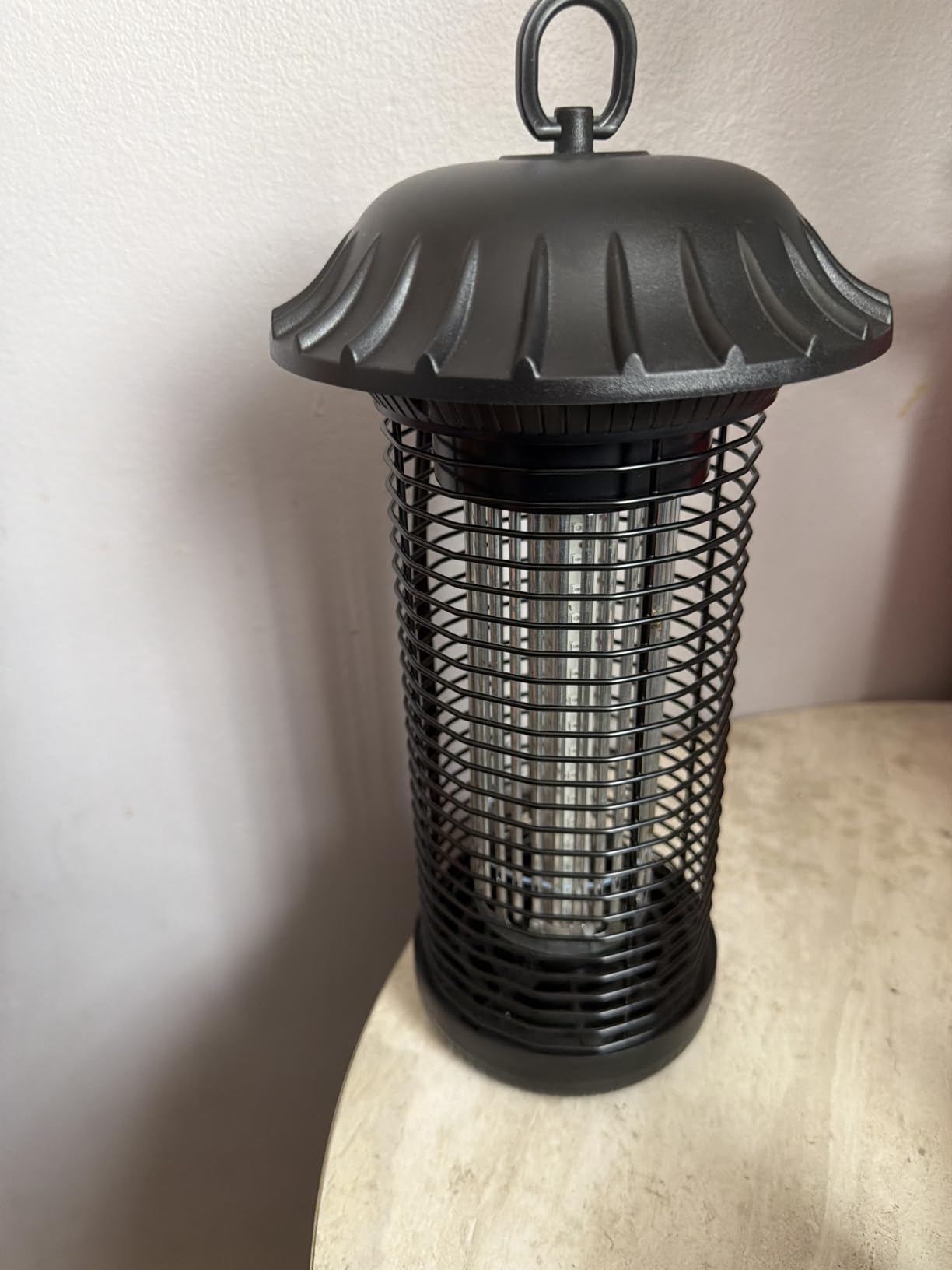
Be clear about what this is. It is a solar torch that happens to kill insects on contact, sold for people who want a lit path that does not need a cable and does not need refilling with torch fuel. The flickering flame LED gives the look of an open flame, and a blue UV LED underneath does the attracting.
The package includes the torch head, three pole sections, two connectors, a ground stake and a tabletop base, and the stakes adjust to 24, 36 and 48 inch. That flexibility lets you run a line of them along a border without any wiring at all, which no plug-in unit on this list can do.
It rates 4.0 out of 5 from nearly 2,900 reviews. Buyers like the look and the zero wiring, and they are candid that the contact-kill approach produces lighter insect control than a dedicated zapper grid.
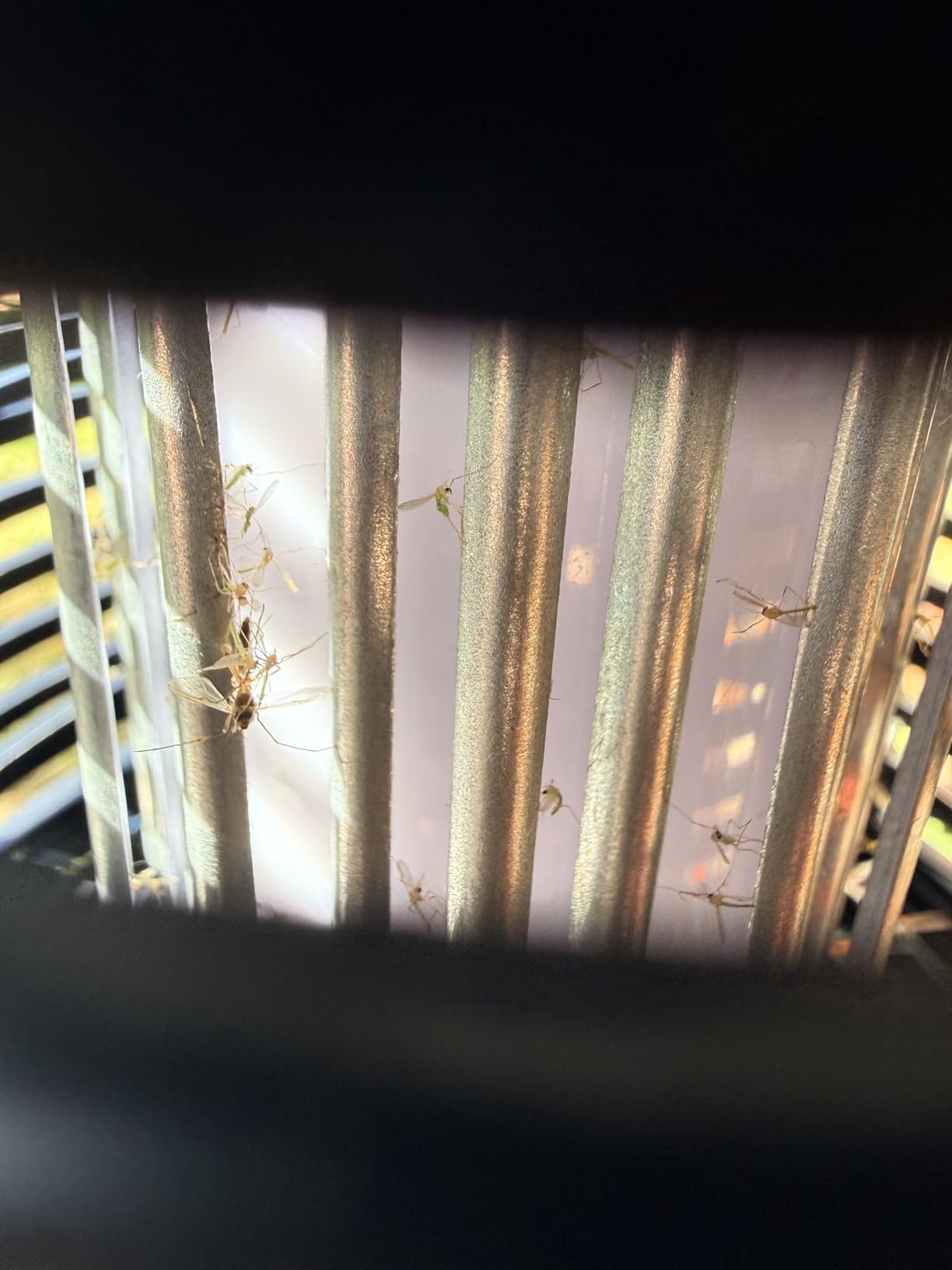
When it makes sense in a yard
Run these as a line along a path or a garden border where you already wanted lighting. Spaced along an edge they add up to something, and the fact that they need no outlet means you can cover ground an extension cord never could.
What to watch in winter and shade
Solar output depends on hours of direct sunlight. Along a north-facing hedge or under heavy tree cover, the torch will be dimmer and the UV LED weaker, so place these in the open rather than tucked into landscaping.
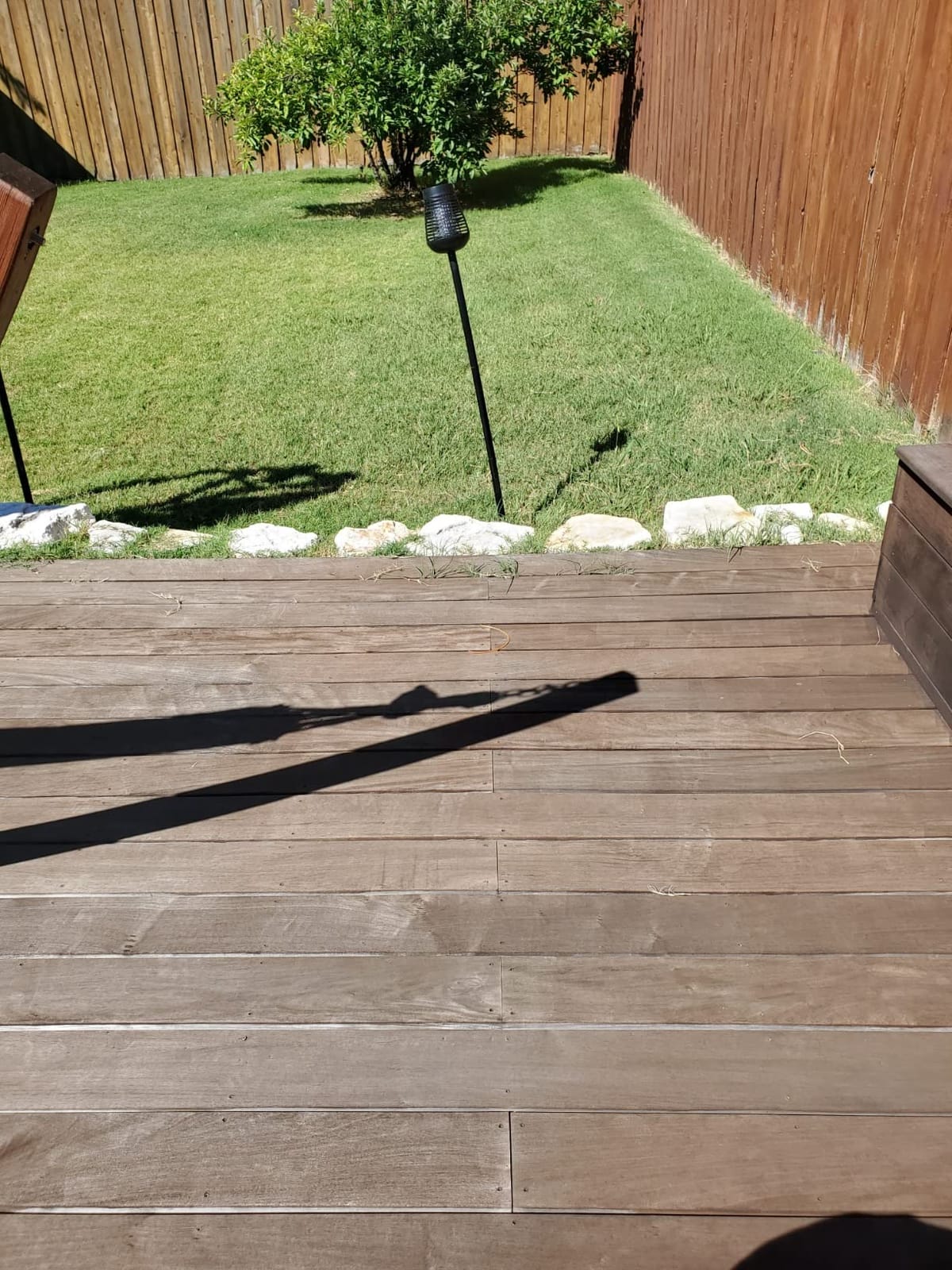
8. DynaTrap DT2030SR – Quiet Fan Capture With No Shock Grid
Dynatrap DT2030SR Fly Traps Outdoor – Mosquito & Flying Insect Killer for 1 Acre – Kills Mosquitoes, Flies, Gnats, Wasps – Bug Zapper Alternative – Black
- Silent fan avoids the loud snap of grid zappers
- Captured insects stay in a basket instead of scattering
- Touch-button emptying is quick and tidy
- Long-lasting LED rarely needs replacement
- Bulky footprint takes up visible yard space
- UV-LED alone is less attractive than a fluorescent tube
- Attractant cartridge usually bought separately
This is the one to buy if the trap has to sit near where people actually sit. Instead of a high-voltage grid, a whisper-quiet fan pulls captured insects through an opening and into an enclosed basket. There is no crackle at 9pm and nothing sprayed or shocked, which also makes it the gentlest option on non-target insects.
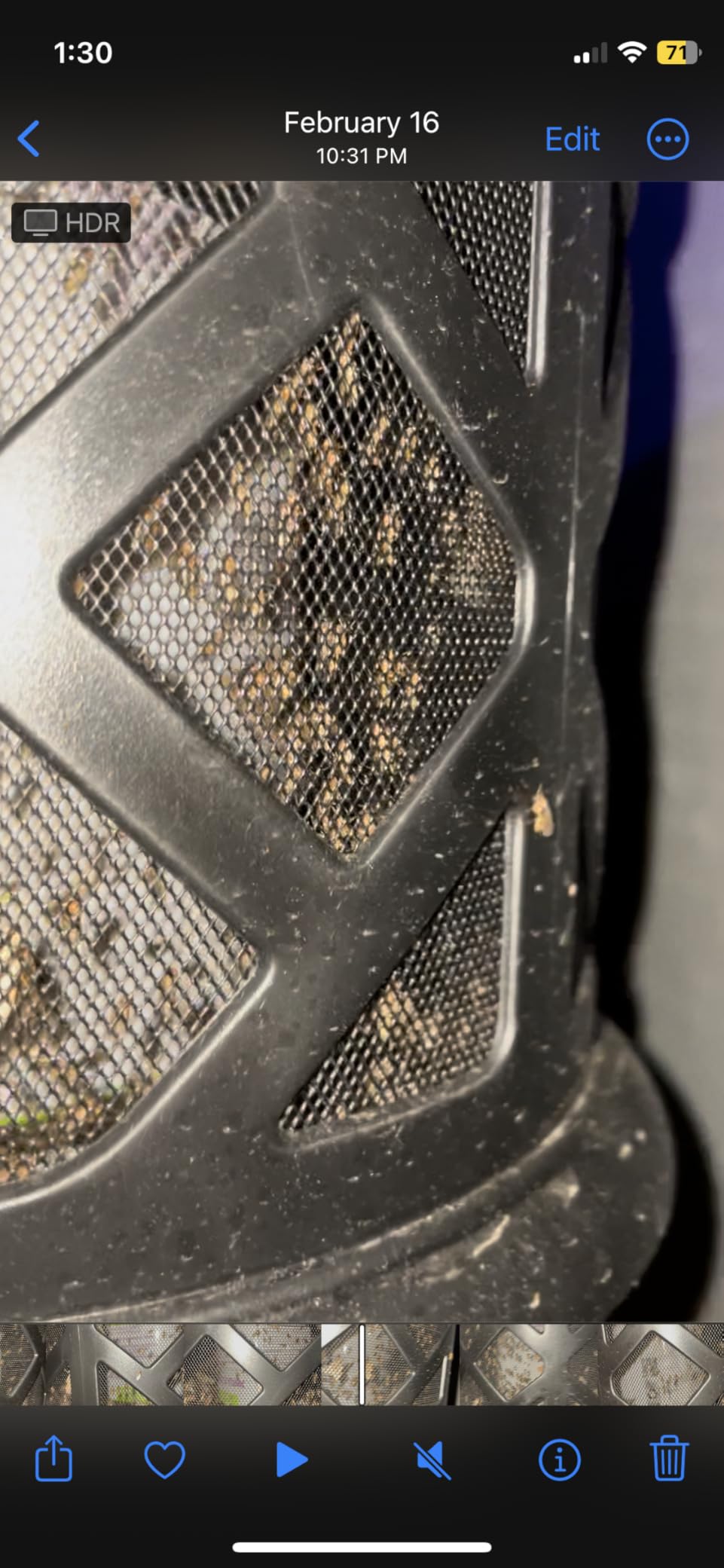
Homeowners on r/homeowners name Dynatrap again and again as the value pick that works without fuss, and the basket design is the part they like: a touch button empties it, so there is no scraping dead insects into the bin. Owners also report the LED bulb rarely needing replacement, which removes the most common cost of an electric unit.
It holds 4.0 out of 5 from more than 1,600 reviews. The two complaints are size, at roughly 12 by 12 by 14.5 inch it is not discreet, and the UV-LED needs an attractant cartridge to reach its potential.
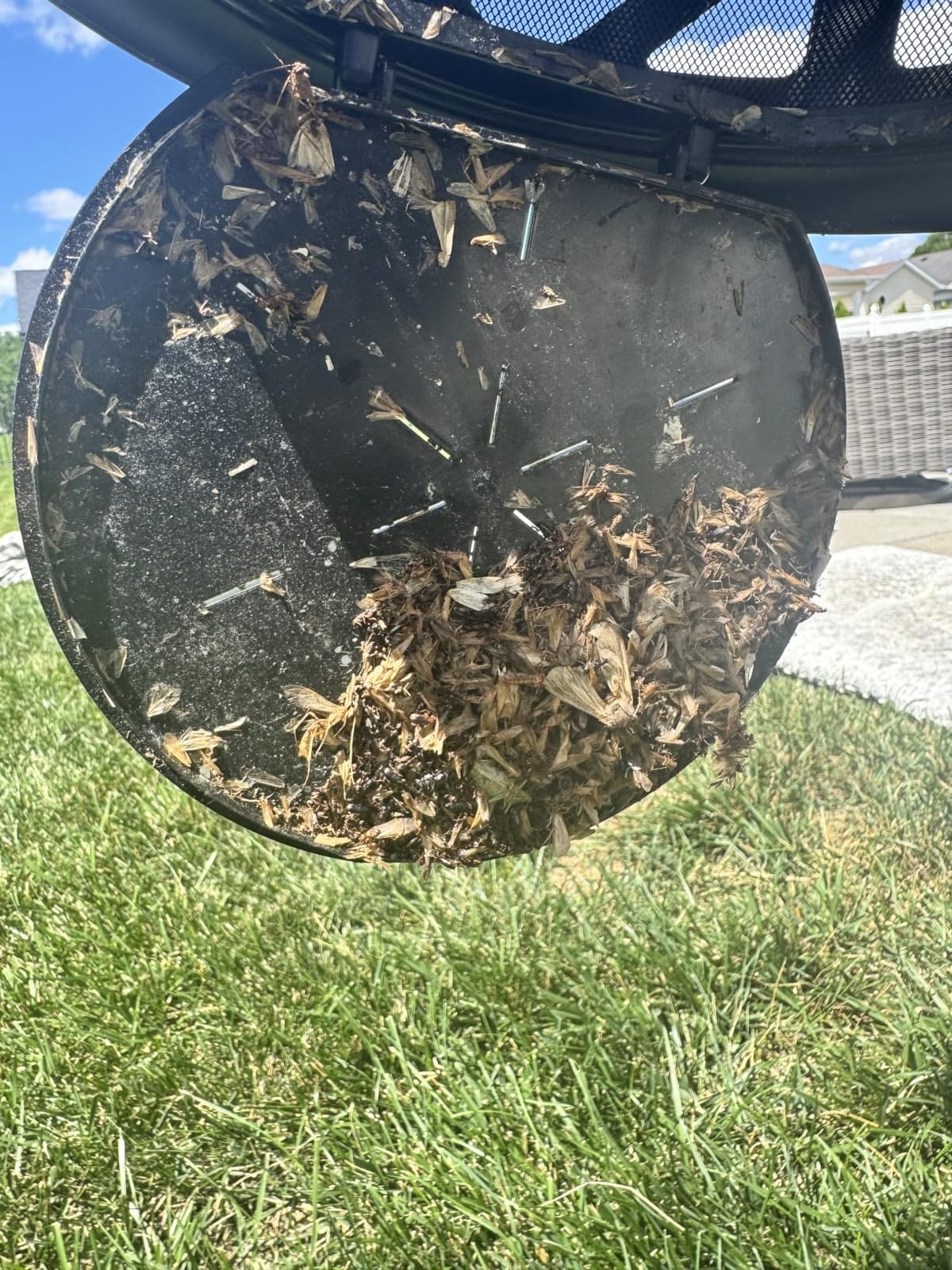
Why quiet changes the placement rules
Because there is no noise penalty, this unit can go much closer to the seating area than any grid trap. That is a genuine advantage for patios, porches and decks where you want coverage where people are rather than at the far fence line.
The footprint and cartridge trade-off
The black finish blends in better than most, but it is still a large box sitting in the yard, so choose a spot against a wall or behind furniture rather than in open lawn. Plan to add an attractant cartridge, because reviewers consistently note the LED alone underperforms without one.
9. PhatroyYee Solar Zapper – Cordless Power With No Extension Cord
Solar Bug Zapper 4500V, Waterproof Mosquito Zapper Fly Traps Outdoor Patio
- Only cordless option here with no outlet or extension cable needed
- Up to 13 hours per charge and USB top-up in about 4 hours
- Auto mode charges by day and switches on at dusk
- Stakes and a hanging chain allow standing or hanging placement
- Solar charge may not last the night after cloudy weather
- Weaker attraction in daylight sunlight
- Limited kill radius so it cannot clear a patio alone
The problem with corded zappers is the cable. This one sidesteps it with a 10W solar panel, a 4000mAh battery rated for up to 13 hours, and a 10ft extension cord for the panel so you can put the trap in the middle of the lawn rather than against a wall. It charges over USB in about four hours when the sun is not cooperating.
Smart auto mode is the feature we liked most. It charges during the day and switches on at dusk and off at dawn without anyone touching it, which removes the single most common reason zappers get left unplugged. The package includes two ground stakes and a hanging chain, so it works standing, hanging or on a counter.
It rates 4.1 out of 5 from more than 1,400 reviews. Buyers report visible mosquito and moth kills from the first night. The complaints are consistent: after rain or heavy cloud the charge does not hold all night, and the kill radius is limited.
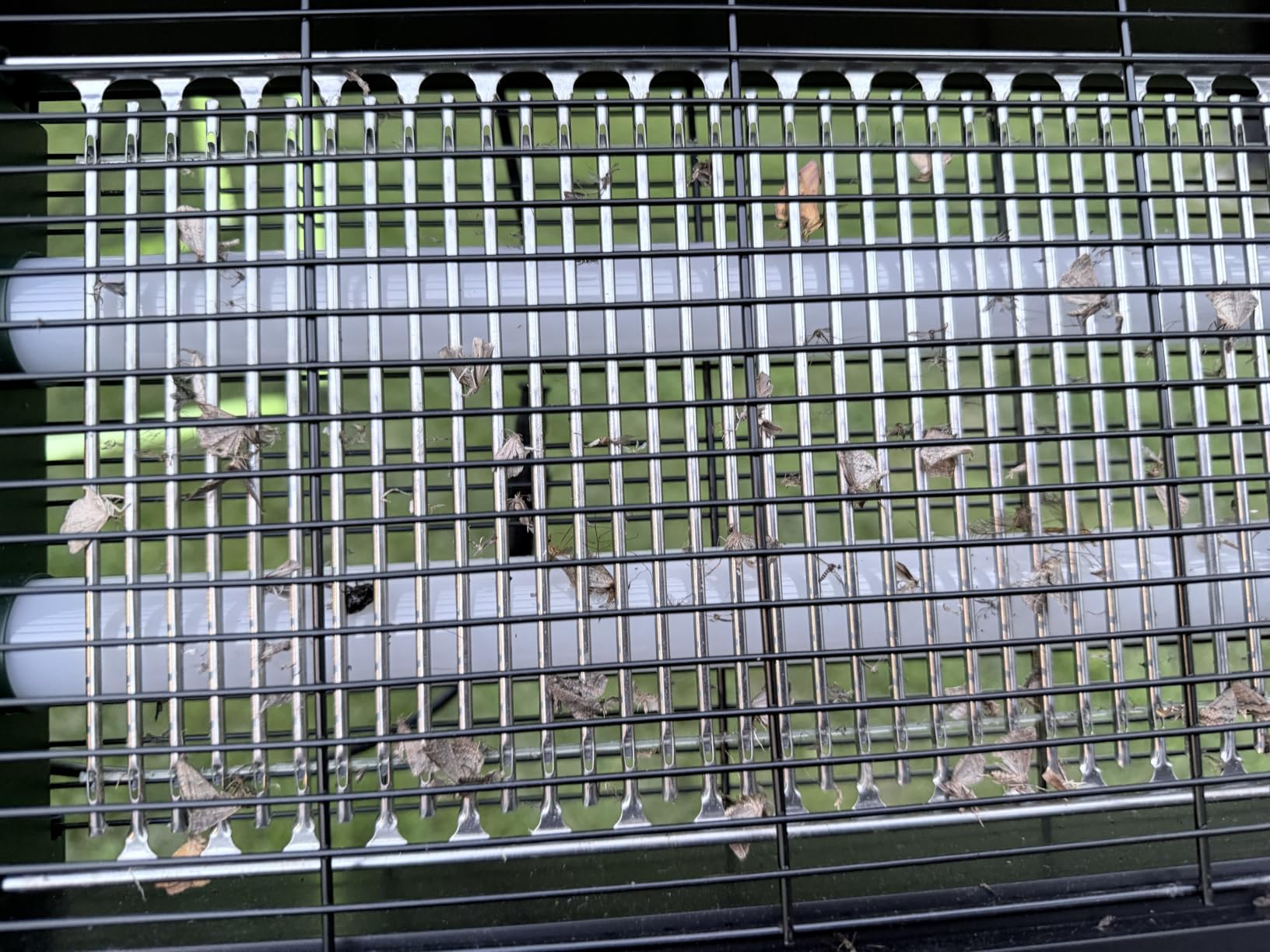
Grid spacing and what it means for safety
The 4500V grid sits behind a 15 inch safety grid, and the body is IPX5 waterproof ABS and stainless steel with the manufacturer listing it as EPA registered for use around children and pets. No chemicals, no odour, nothing to refill but sunlight.
Plan for two units instead of one
Because the kill radius is small, the practical approach is two or three units spread around the area rather than one in the middle. Put them where people are not, because they run all night and you will hear the zaps if you place them at the table.
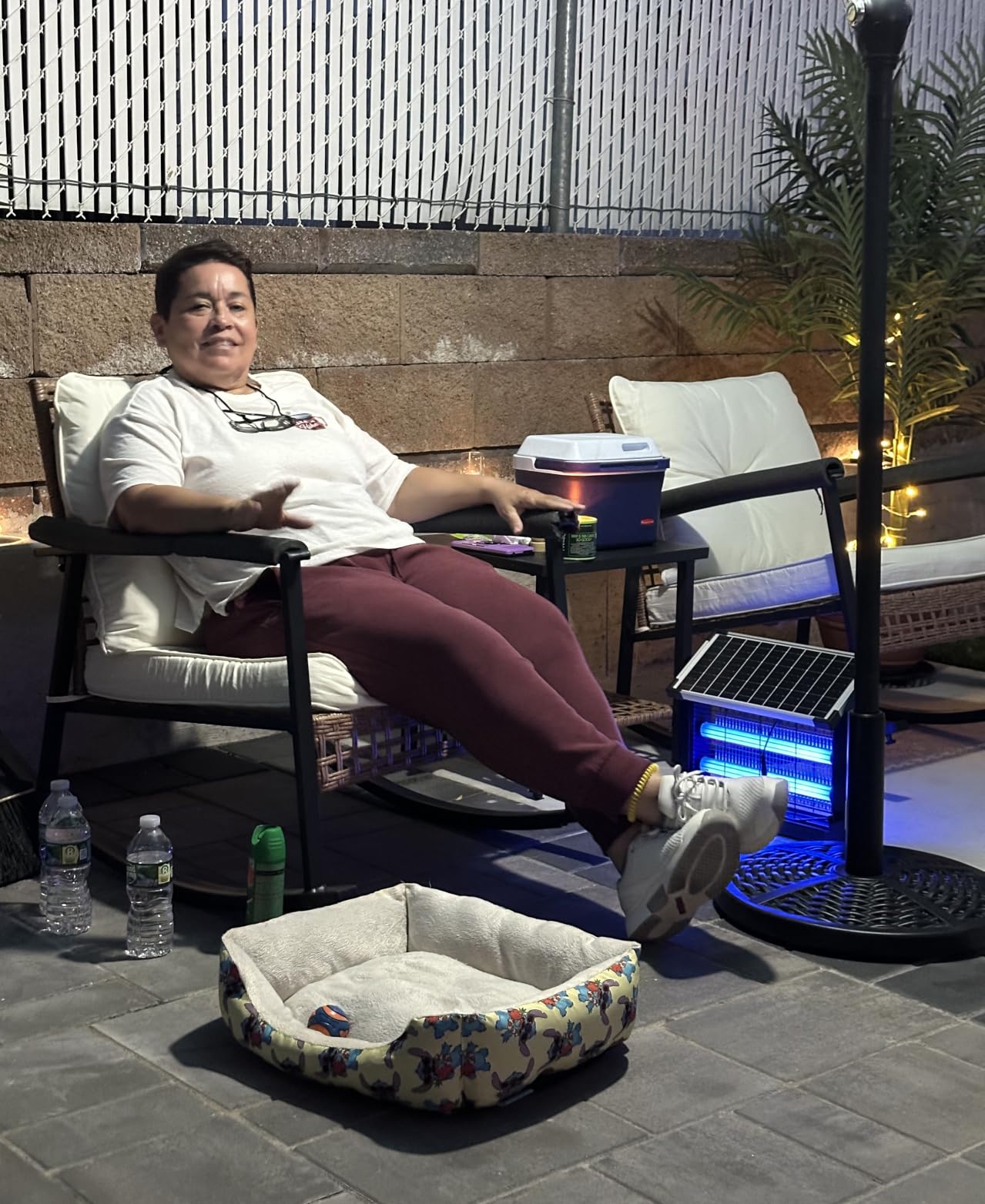
10. Electric Bug Zapper Outdoor – Dickinda HXMW-1 With a Replaceable UV Tube
- Replaceable UV tube extends the useful life of the unit
- Removable tray and included brush make cleaning quick
- Works indoors and outdoors on patios garages and decks
- Hanging ring allows tree or porch mounting
- Coverage of roughly 1000 sq ft suits smaller patios
- Daytime performance is limited by competing light
- No attractant cartridge option
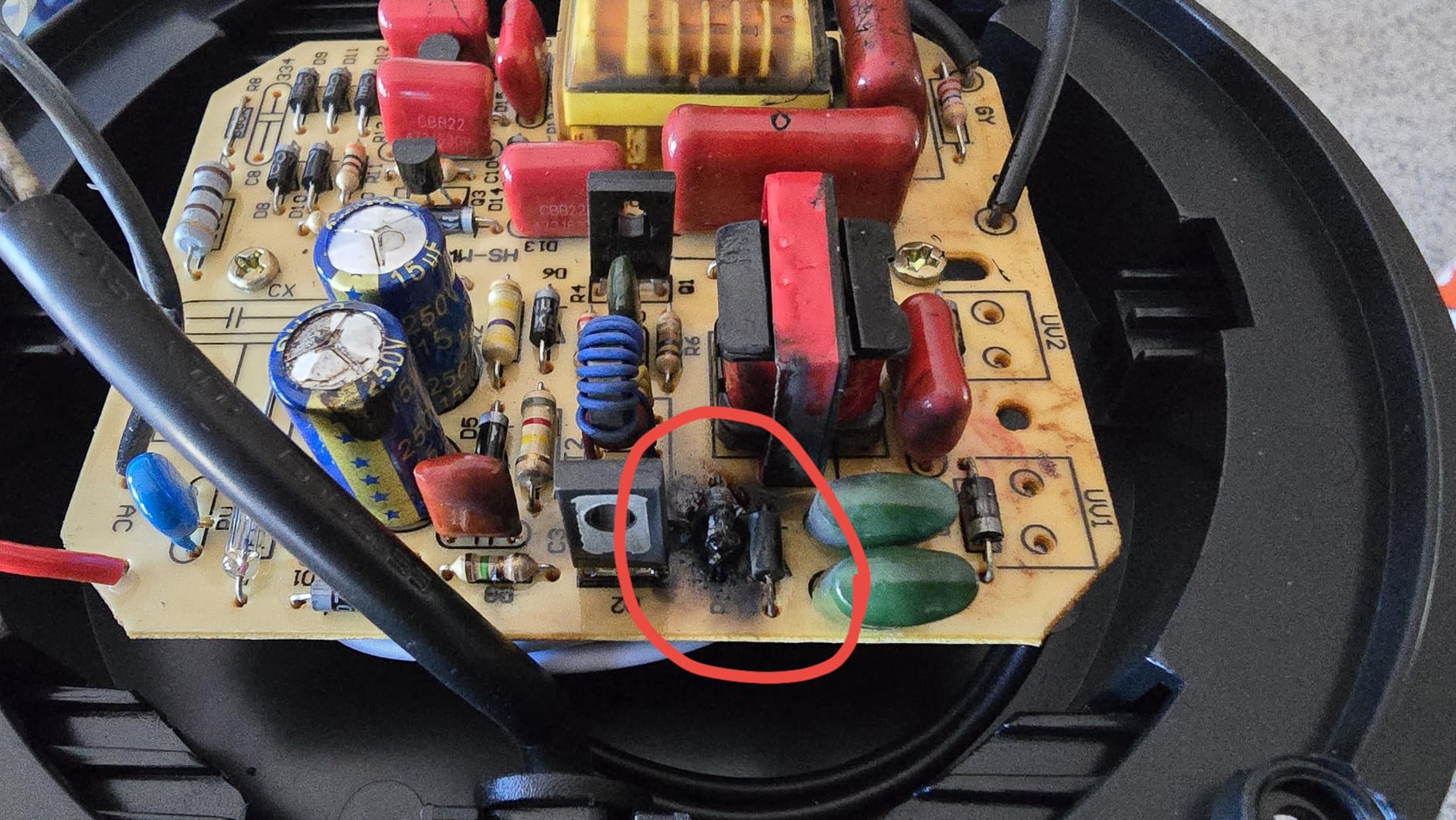
The most straightforward unit in the roundup, and one of the few where the consumable is clearly replaceable. The 365nm tube can be swapped when it dims, so unlike several cheaper units here, you are not signing up for a whole new zapper the first season. The metal body at 807 g is also sturdier than it has any right to be at this level.
It rates 4.3 out of 5 from more than 4,600 reviews. Buyers like the simple hang-and-plug setup, the easy tray cleaning and the hanging ring that lets it go on a tree or porch overhang without drilling.
Coverage is the limit at roughly 1000 square feet, which is the smallest figure in this roundup. That is fine for a deck, a doorway or a corner of a patio. It is not a full-backyard answer, and there is no cartridge slot to widen the catch.
Where 1000 sq ft is the right number
Picture the covered seating area, not the lawn. This unit works best around a deck, under a porch overhang or beside a back door, where it has a short radius to cover and you are nearby to empty the tray. That is a real use, and it is not the same as covering a yard.
Why the replaceable tube changes the maths
Across this roundup, bulb access is the detail most often overlooked. A replaceable UV tube means a five-season unit instead of a one-season unit, and at this end of the market that difference matters more than any spec on the box.
How to Place Traps and How Many You Need
Placement beats product choice more often than not. The rule we use is to offset the trap from where people sit by 15 to 30 feet, put it downwind if there is any breeze, keep it low rather than overhead, and place it near vegetation rather than in the middle of an open lawn where nothing is around to approach it.
The trap should never be the first thing a mosquito reaches on its way to you. That is the whole reason a decoy placed beside a patio works better than a decoy sitting on the patio table. If your seating and your trap are in the same square foot, you have built a lamp, not a lure.
For unit counts, scale by the stated coverage of the trap and cut that figure roughly in half for anything heavily shaded or surrounded by vegetation, since both reduce the effective radius. Half-acre lots generally do well with a single half-acre to one-acre unit placed on the upwind side. Larger properties benefit more from two or three units at the corners of the occupied zone than from one unit trying to cover the middle.
That multi-unit corner pattern is exactly what homeowners describe in practice. People commonly run several hanging units under the eaves at the corners of the house, which covers the approaches people actually use. For a single cookout, the alternative is to concentrate the coverage near the table and accept a quieter result than a full season of background reduction.
Maintenance and What a Full Season Costs
Budget your consumables before you buy the unit, not after. Plug-in zappers need a UV bulb eventually, and some units in this roundup sell replacement bulbs while others do not. Cartridge-based traps like the Flowtron need attractant refills at roughly 100 hours of use, which across a full season is the line item most owners forget. Solar units cost nothing to run but need their panel in real sun to last the night.
Cleaning is the other seasonal chore. Units with a removable tray need emptying every one to two weeks in heavy season; fan-and-basket designs empty at the touch of a button in about a second. Grid units that drop insects to the ground need no cleaning at all, which is the quiet advantage of the Flowtron design.
Noise deserves its own paragraph because no competitor treats it as a buying criterion. A 4200V grid produces a sharp audible snap on every kill, which is fine at the back fence and annoying beside a bedroom window or a neighbouring patio. If you share a property line, the fan-capture design is the neighbour-friendly choice, and we would rather you picked that deliberately than discovered it in July.
Safety for Kids, Pets and Pollinators
Every unit here is a physical control with no spray and no attractant pesticide, which is a good starting point. The differences are in the guarding. Some units use a fine protective outer grate over the grid, some rely on wider frame spacing, and some are open designs where the high-voltage section is more exposed. If small children or pets are around the unit after dark, choose the guarded one and keep it mounted out of reach.
On pollinators, be realistic about which mechanism you are buying. Pollinators are mostly not nocturnal, so a UV trap switched on after dusk does very little harm to foraging bees. The risk is different if you are running sprays or barrier products across flowering plants, which is why we would keep any pyrethroid or barrier treatment confined to doorways and away from blooms.
One more practical note for anyone with a vegetable garden or a small orchard. Mosquitoes do not pollinate tomatoes, peppers or most of what people grow, so suppressing adults with a light-and-air trap near a crop carries far less downside than spraying the crop itself. Keep the trap off the plants and away from any flowering herbs you want bees visiting.
Frequently Asked Questions
What is the best mosquito trap for outdoor use?
For a typical suburban backyard, the best outdoor mosquito trap is a UV unit with an octenol attractant cartridge, because the cartridge adds a second lure signal beyond brightness and measurably raises the mosquito catch. Coverage matters next: half-acre lots are served by one unit, larger yards need two or three placed around the corners of the area you actually use.
Is there a mosquito trap that actually works?
Yes, but not the way most people expect. A trap is a decoy, and you are a better one, so it reduces adult numbers around your yard over weeks rather than making a single evening bite-free. It works best run continuously alongside source control: empty standing water weekly and treat containers with mosquito dunks, which homeowners report cutting local numbers hard.
What is the most effective way to get rid of mosquitoes in your backyard?
Work in this order. First, remove standing water from buckets, gutters, tires and planters once a week. Second, set traps on a 15 to 30 foot offset from your seating area, low, shaded and downwind. Third, run them continuously rather than switching them on for dinner. Fourth, add personal repellent for the people at the table, since no yard trap outcompetes a person.
How do the amish keep mosquitoes away?
The honest answer is source control rather than any device. Barns and farmyards tend to be kept free of standing water, there are no large swarms of people to attract mosquitoes, airflow around buildings is good, and yards are maintained early in the season before breeding sites accumulate. Some also run small electric units near doorways. It is a maintenance story, not a gadget story.
Bottom Line: Start With the Trap That Matches Your Yard
If you want one recommendation from the best mosquito traps for backyards we tested, take the GOOTOP Zap T6 Pro for a half-acre yard, the Flowtron BK-40D if you want a full acre and the extra pull of an octenol cartridge, and the DynaTrap DT2030SR if noise near the patio matters more than anything else. Add a second smaller unit for the doorway and clear the standing water weekly, and you will have done more than any single device can do alone.
If your patio is the problem rather than your lawn, start with how you light it and what you are cooking on before you buy anything, then put the trap at the far end of the table rather than in the middle of it. The rest of the yard can wait until 2026.
While you are setting things up, our guides to outdoor griddle stations and backyard hammocks cover the other half of what makes that space worth reclaiming, floodlight cameras for backyards help you check coverage at night, and if you are rethinking the planting plan, our picks for greenhouses for backyards and kamado grills cover the longer view.