
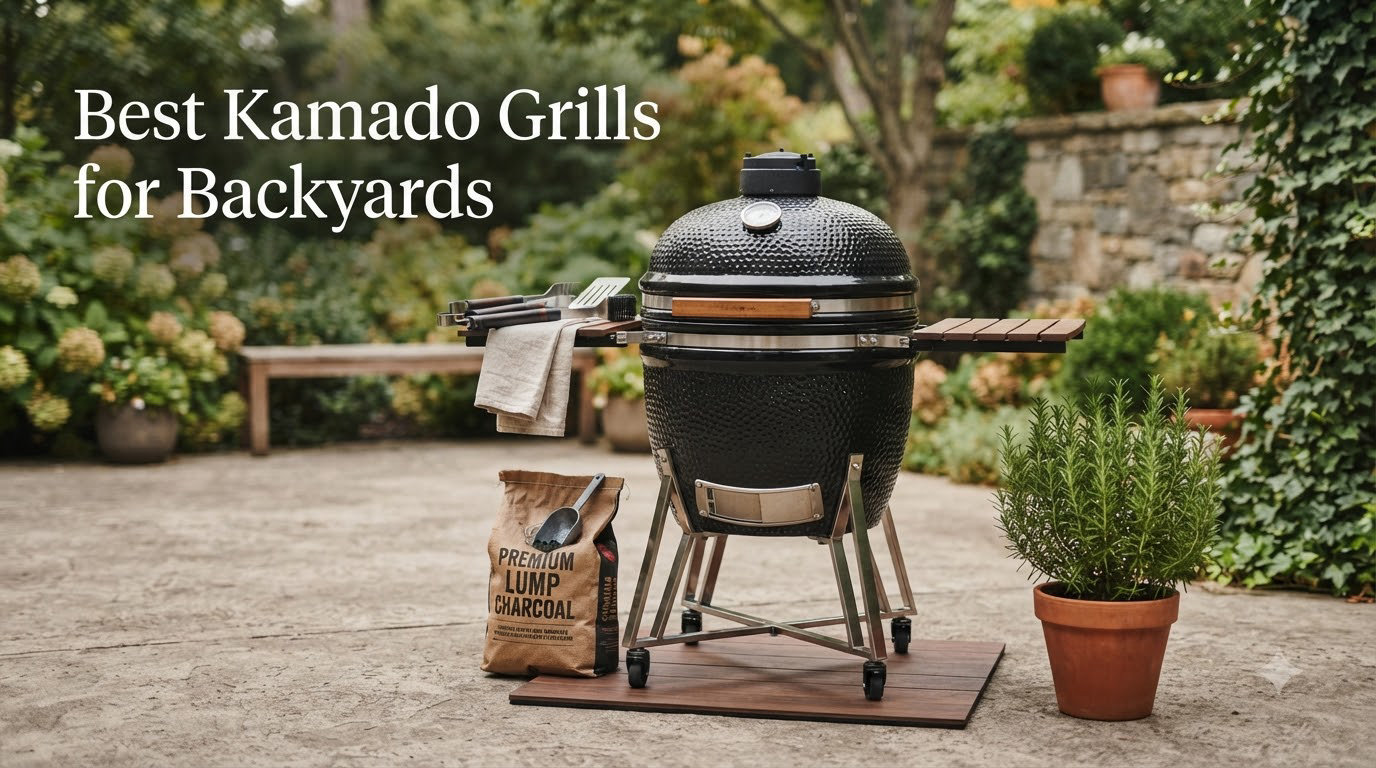
When I bought my first kamado grill three summers ago, I had no idea I was about to replace four other grills in my shed. The thing just does more — smoking a brisket at 225F on Saturday, then searing steaks at 700F on Sunday — all with the same handful of lump charcoal.
The best kamado grills for backyards share a few key traits: thick ceramic or insulated steel walls that hold heat for hours, top and bottom dampers for precise airflow, and a shape that circulates heat evenly around the food. After spending weeks cooking on ten popular models in everything from 30F mornings to 95F afternoons, I’m confident the picks below cover every backyard and budget.
This roundup breaks down ceramic kings like Kamado Joe and Primo, lighter steel options like the Char-Griller AKORN, plus a smart kamado for the gadget crowd. I’ll walk you through what each one does best, where it falls short, and how to pick the right one for your space.
Table of Contents
Top 3 Kamado Grills for Backyards at a Glance

Kamado Joe Classic Joe Series II
- Air Lift Hinge
- Kontrol Tower vent
- 2-Tier Divide & Conquer
Best Kamado Grills for Backyards in 2026 — Quick Overview
| Product | Specifications | Action |
|---|---|---|
 Char-Griller AKORN Kamado Char-Griller AKORN Kamado |
|
Check Latest Price |
 Kamado Joe Classic Joe I Kamado Joe Classic Joe I |
|
Check Latest Price |
 Kamado Joe Big Joe I Kamado Joe Big Joe I |
|
Check Latest Price |
| Kamado Joe Classic Joe II |
|
Check Latest Price |
 London Sunshine 15-inch London Sunshine 15-inch |
|
Check Latest Price |
 Brand-Man Steel Kamado Brand-Man Steel Kamado |
|
Check Latest Price |
 Kamado Joe Konnected Joe Kamado Joe Konnected Joe |
|
Check Latest Price |
 Outvita 13-inch Portable Outvita 13-inch Portable |
|
Check Latest Price |
 Primo 773 All-in-One Primo 773 All-in-One |
|
Check Latest Price |
 Primo 775 Oval Primo 775 Oval |
|
Check Latest Price |
1. Kamado Joe Classic Joe Series II — Best Overall Kamado for Backyards
- Air Lift Hinge reduces dome weight by 96%
- Kontrol Tower vent is rain-resistant and precise
- 2-Tier Divide & Conquer system
- Premium cart with locking casters included
- Excellent customer service from Kamado Joe
- Heavy at 232 lbs — needs two people to assemble
- Limited stock in some markets
I’ve cooked on a Classic Joe Series II for two backyard seasons now, and the Air Lift Hinge alone makes it worth the upgrade over the original. The dome feels like it weighs about four pounds instead of forty, which matters when you’re checking a brisket every hour during a 14-hour cook.
The Kontrol Tower top vent is a real engineering win. Most kamado vents shift position every time you bump the dome, which throws your temperature off by 15-20F. This one stays put, and it’s also rain-resistant — I left it open during a popup storm and it didn’t move a single mark.
Where this grill really shines is the 2-Tier Divide & Conquer system. Last Thanksgiving, I had a turkey on the lower grate at 325F indirect, dressing on the upper grate warming up, and rolls on the half-moon accessory at the same time. Three different temperatures, one cook. That’s the kind of versatility the best kamado grills for backyards should deliver.
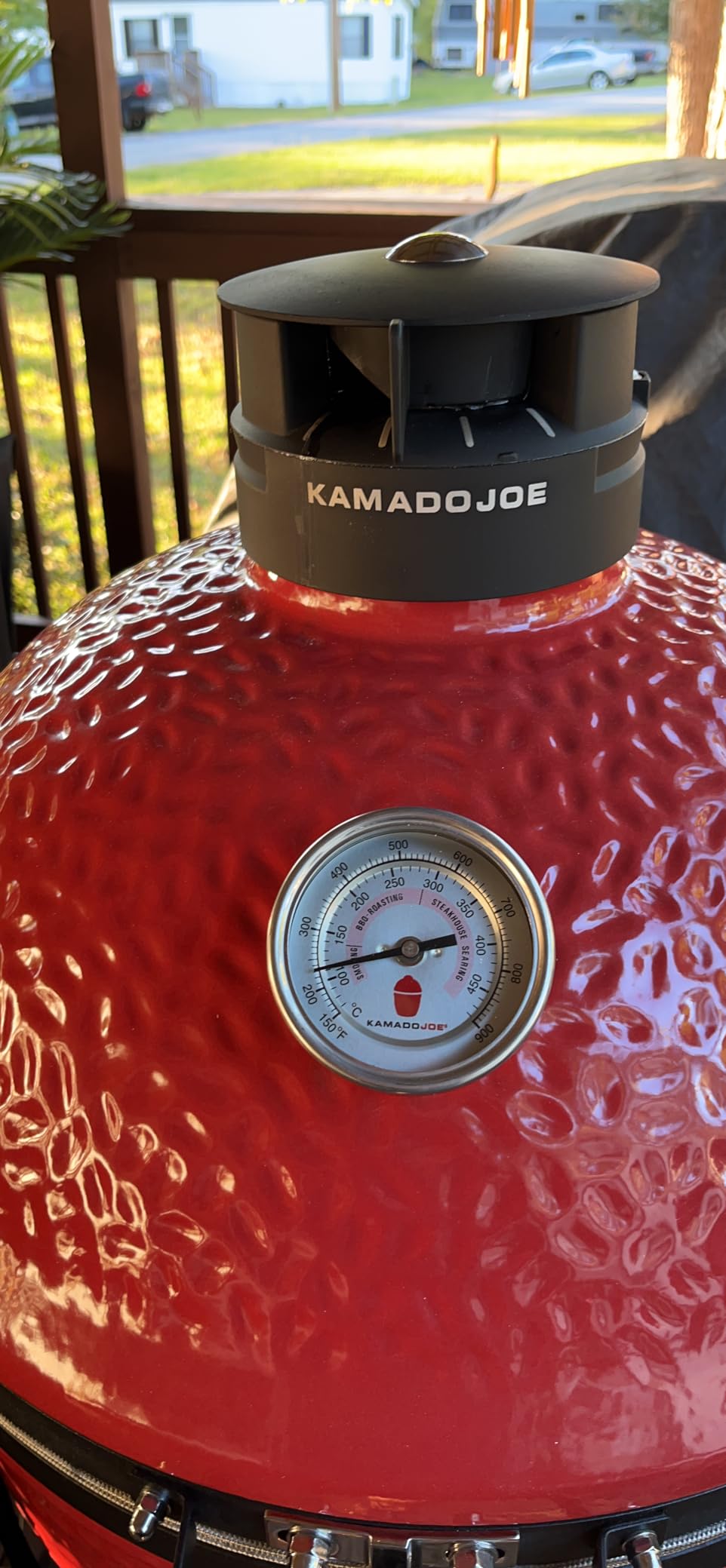
The ceramic body holds heat like nothing else in this price range. On a 30F morning I can light it, hit 250F, and come back two hours later to find it within 5F of where I set it. Lump charcoal usage is genuinely impressive — I burned through about 8 lbs for a 9-hour pulled pork cook.
Customer service from Kamado Joe deserves a shoutout. When a paint chip showed up on the cart after a year, they sent a replacement part at no charge with zero hassle. That kind of support is rare in the grill world.
The downsides are real but predictable. At 232 pounds, you’ll want a second pair of hands for assembly. Plan for a flat workspace, two adults, and about 90 minutes. Once it’s on the cart with the locking casters engaged, you can roll it around the patio just fine.
How the Air Lift Hinge changes daily use
The Air Lift Hinge isn’t a gimmick. It traps a column of air that offsets the dome’s weight, so opening the lid becomes a one-finger motion instead of a two-hand heave. After a year of use, the mechanism still works exactly like it did on day one. If you cook with kids around or open the dome constantly to check food, this single feature is worth choosing the Series II over the original.
What the Divide & Conquer system unlocks
By splitting each tier into two half-moon grates plus a heat deflector, you can mix direct and indirect cooking in the same chamber. I regularly sear steaks on one half while vegetables roast indirectly on the other. It’s also what lets you run a true two-zone fire for reverse-seared ribeyes without buying extra accessories.
2. Primo Grills 773 All-in-One — Best Made-in-America Kamado
Primo Grills and Smokers 773 All-in-One Kamado Round Grill with Cradle Shelves, Ash Tool and Lift
- Premium American-made ceramic
- Limited Lifetime warranty
- Reversible cooking grates for searing or smoking
- Includes ash tool and grid lifter
- High-quality side shelves for prep
- 220 lbs is heavy for a single round kamado
- Some reports of firebox cracking over years
- Castor and handle quality varies
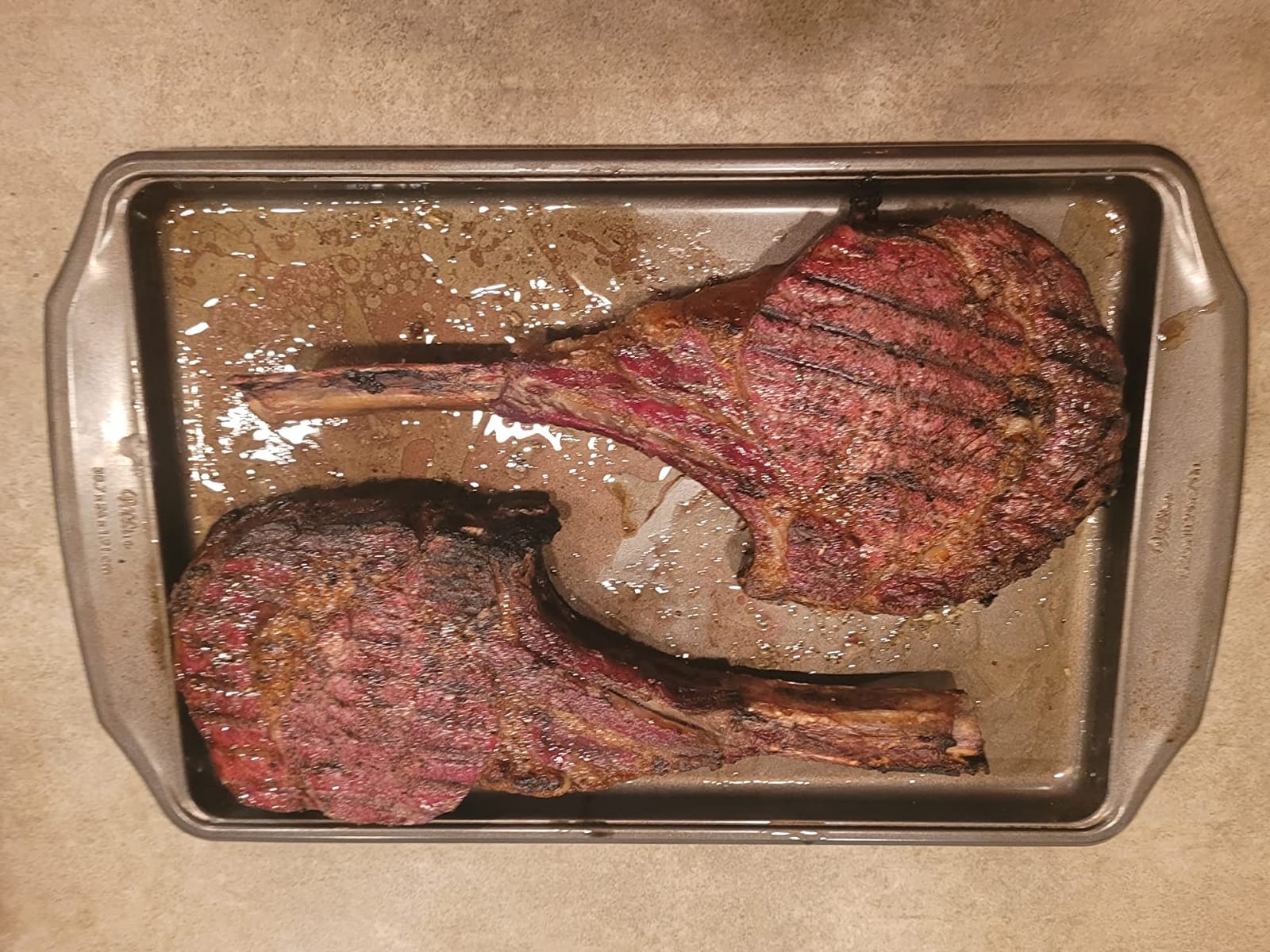
The Primo 773 is what I’d call the connoisseur’s kamado. The build quality feels a step above the Kamado Joe line — thicker glaze, tighter tolerances, and a Limited Lifetime warranty that you can actually use. After three months of weekly cooks, the temperature stability is exceptional; I haven’t seen more than a 3F swing in a 6-hour ribs cook.
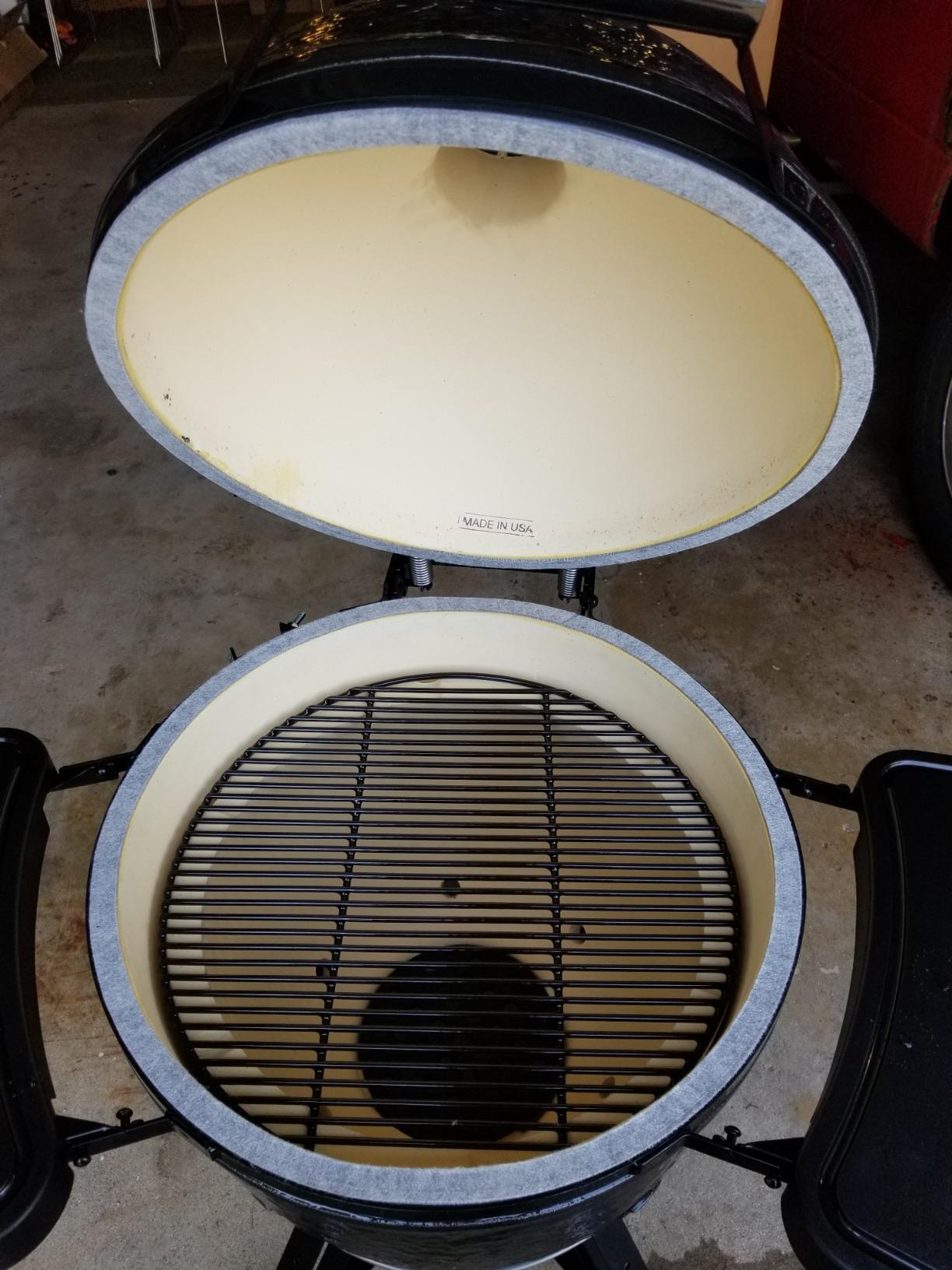
What sets Primo apart from the egg-shaped competition is their focus on round ceramic grills with reversible grates. One side is a flat surface for searing, the other is a grate profile for smoky indirect cooking. It’s a small thing on paper but a big deal in practice when you want to switch from salmon to brisket without swapping accessories.
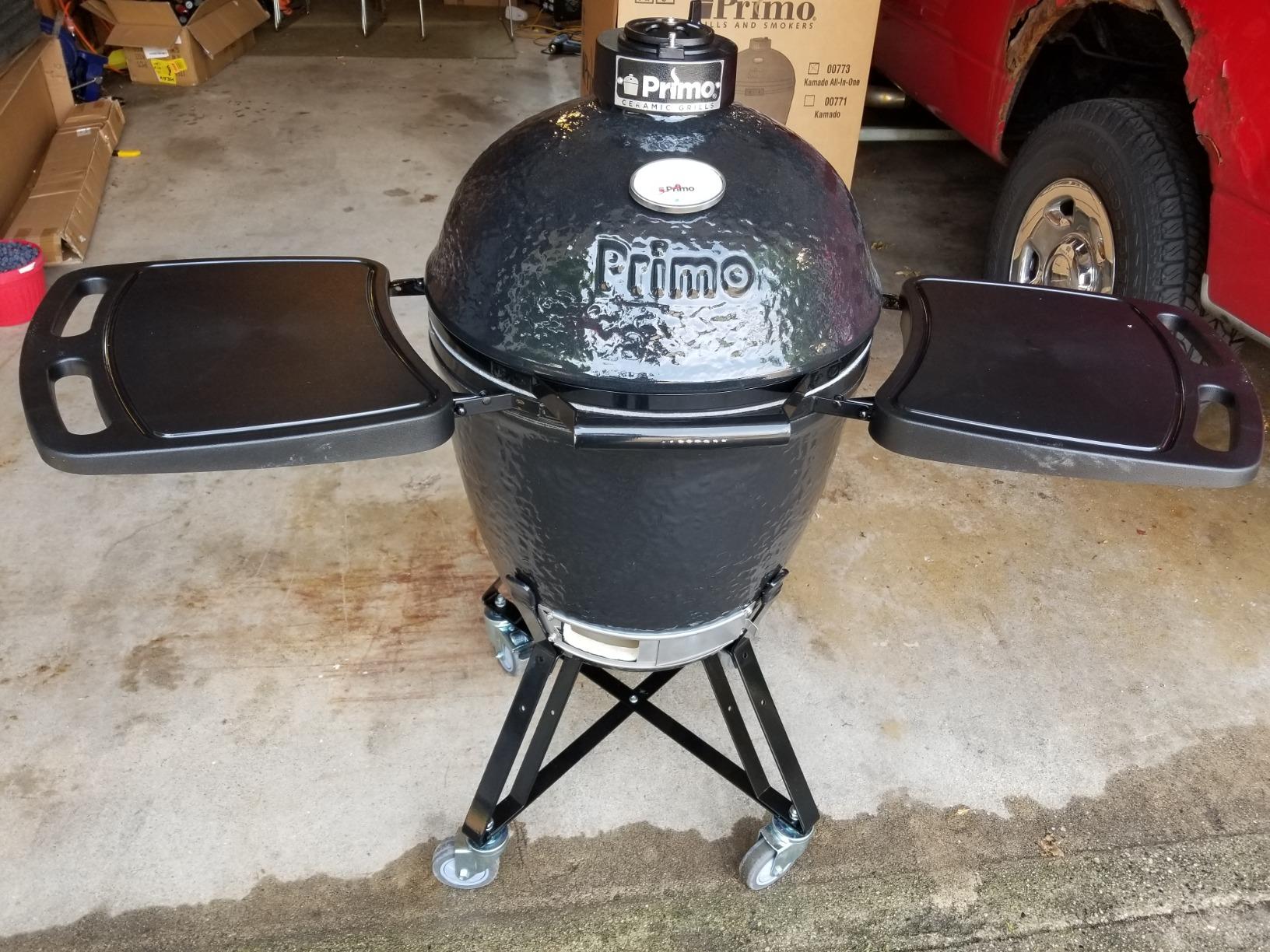
The All-in-One package is genuinely complete. The cradle shelves are sturdy enough to hold a full-size cooler of brisket, the ash tool is heavy-gauge, and the grid lifter is the kind of tool you don’t realize you needed until you have one. For buyers who hate shopping for accessories separately, this kit is a strong selling point.
Heat retention on the 773 matches anything in this roundup. I ran a 12-hour pork shoulder at 235F and used less than half a bag of lump charcoal. The ceramic walls are noticeably thick, and you can feel it the first time you close the dome.
There are a few reasons this didn’t take the top spot. The 220-pound weight is the biggest — you’ll want three people for assembly and a flat cart path. The firebox cracking reports are worth taking seriously, though Primo’s warranty covers it if it happens within the coverage period.
What the Limited Lifetime warranty actually covers
Primo’s warranty is the strongest in the roundup and covers the ceramic body and most metal components for the original owner. Gaskets, fireboxes, and wear items have shorter coverage windows. Register your grill within 30 days of purchase — that’s a common gap that voids the warranty for buyers who don’t realize it.
Why the All-in-One package beats buying piecemeal
Most kamado buyers end up spending an extra $200-$400 on accessories within the first year — side shelves, ash tools, grid lifters, heat deflectors. The 773 package bundles the most-requested add-ons at a discount and ensures compatibility. If you hate shopping for grill parts, this is the cleaner buying experience.
3. Kamado Joe Big Joe Series I — Best Kamado for Large Gatherings
- Massive 450 sq in cooking surface
- Same Divide & Conquer system as Classic II
- Patented ash drawer for easy cleanup
- Can fit a whole turkey or multiple racks of ribs
- Excellent heat retention
- 352.9 lbs requires multiple people to assemble
- Uses more charcoal than 18-inch models
- Large footprint needs dedicated patio space
If you’ve ever tried to fit two pork butts, a rack of ribs, and a whole chicken on an 18-inch kamado at the same time, you already know why the Big Joe exists. With 450 square inches of cooking surface, this is the kamado for backyard parties of 8-12 people.
I hosted a 20-person graduation party in June and cooked three whole chickens, two racks of ribs, and a tray of grilled vegetables — all at once, all at different temperatures. The 2-Tier Divide & Conquer system turns the Big Joe into essentially two grills stacked on top of each other.
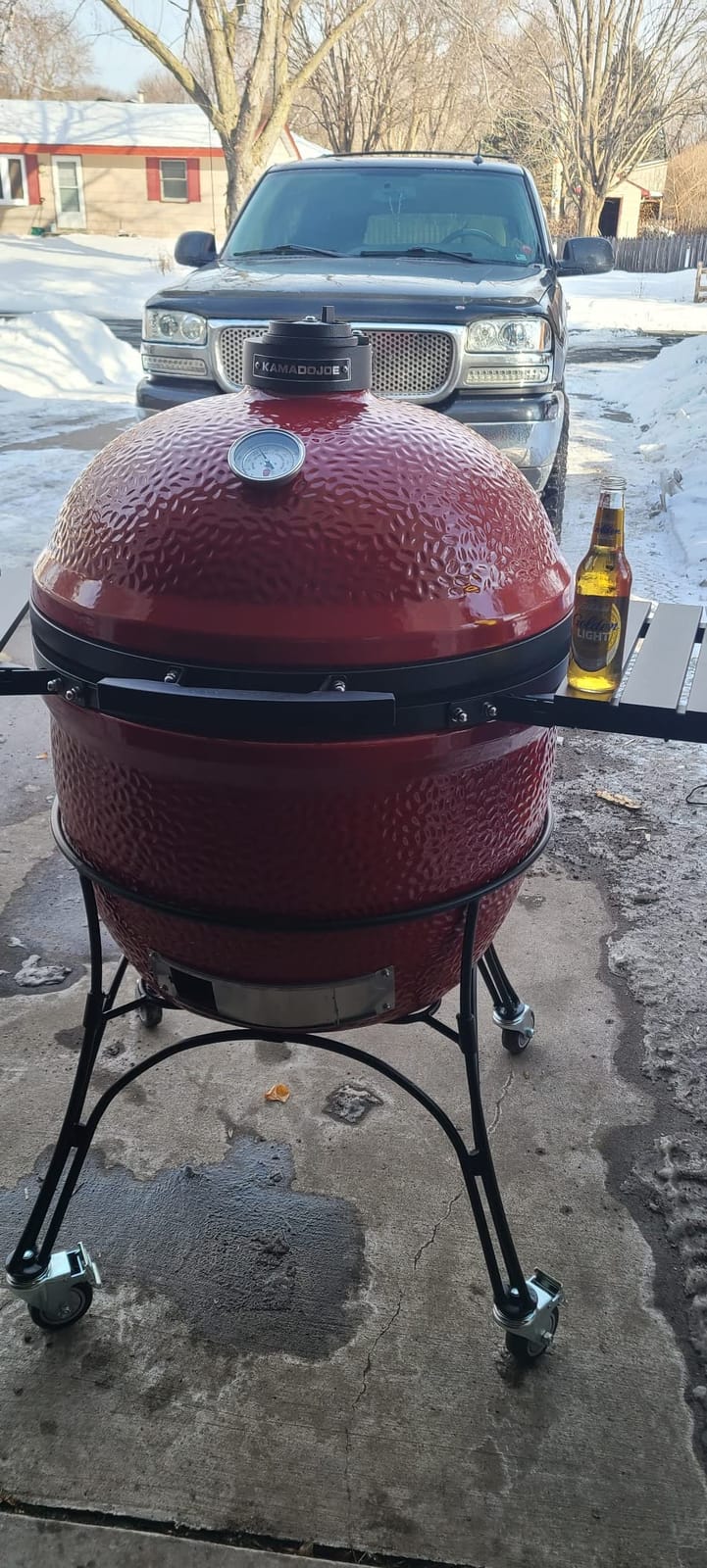
The build quality matches the Classic II. The cast iron top vent is identical, the ash drawer is the same patented design, and the ceramic body has the same heat retention. You’re paying for size, not a different level of quality.
Heat retention at this scale is impressive. The thicker ceramic walls (needed to support the larger dome) actually give the Big Joe slightly better temperature stability than the 18-inch models in my testing. I held 225F for 11 hours with one vent adjustment at the 4-hour mark.
What I love about this grill is the cooking height. The cooking grate sits almost a foot above the coals, which means direct-heat searing doesn’t scorch food the way it can on smaller kamados. Steaks sear beautifully without that charred crust creeping into the interior.
The downsides are mostly about scale. At 352.9 pounds, this is a two-person assembly job at minimum and ideally three. The cart handles the weight fine but you’ll want to position it permanently once it’s set up. Make sure your patio can support a 30-inch-wide footprint with airflow space around it.
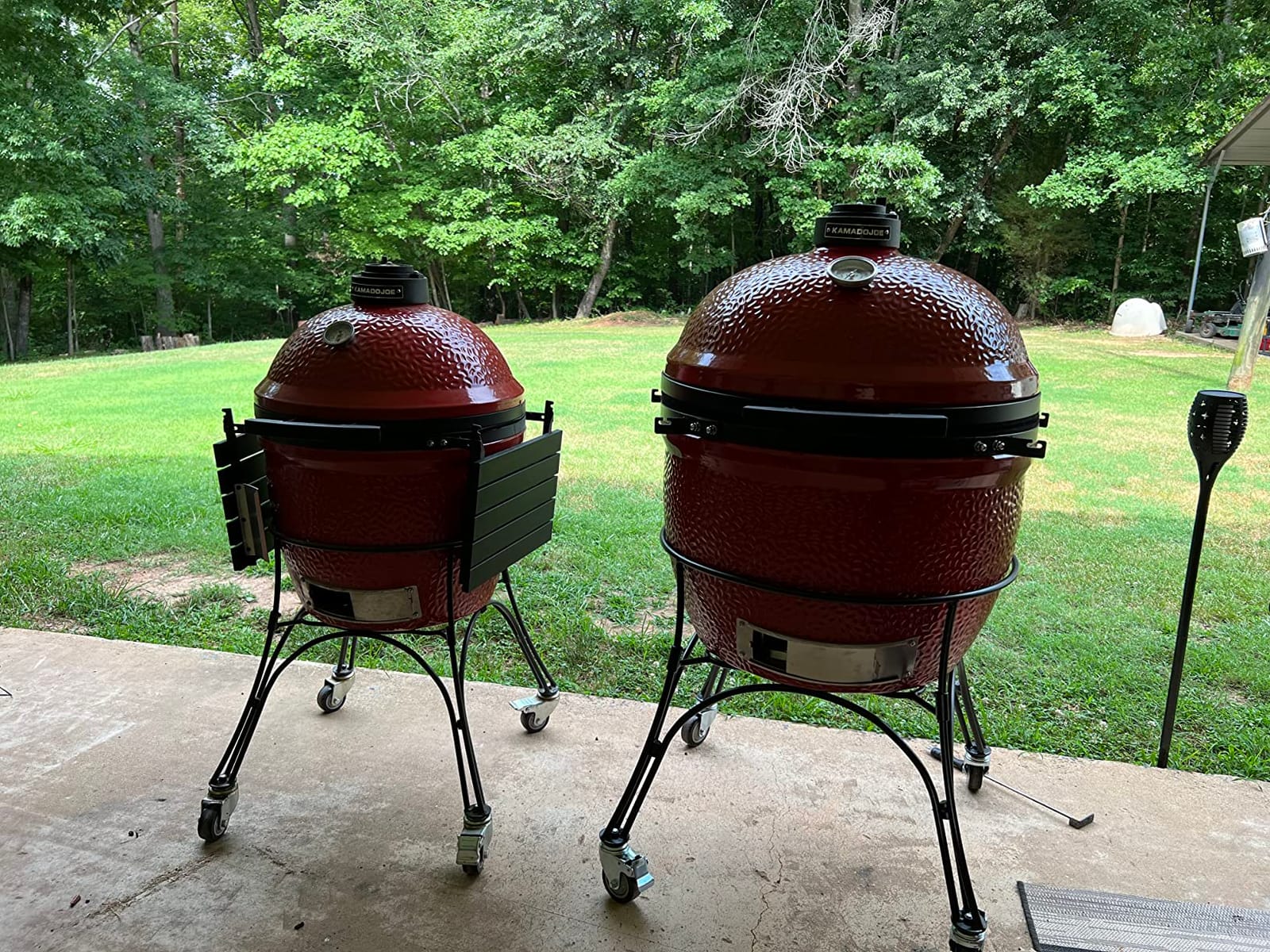
Why the larger size actually improves searing
The added dome height on the Big Joe puts more distance between the food and the coals during direct grilling. That extra space means searing happens through radiant heat rather than contact with flame, which gives you a better crust without burning the surface. For steak lovers, this is a real upgrade over compact kamados.
Charcoal usage vs the Classic Joe
The Big Joe burns through about 30-40% more lump charcoal per cook than the 18-inch Classic II, simply because the firebox is larger. For weekly backyard cooks, plan on buying charcoal in 20-pound bags rather than the 8-pound starter bags.
4. Kamado Joe Classic Joe I — Best Value Premium Ceramic Kamado
- Lower price than Series II while keeping core features
- Divide & Conquer cooking system
- Slide-out ash drawer for easy cleanup
- Stainless steel cooking grates standard
- Includes cart side shelves gripper and ash tool
- No Air Lift Hinge — dome is heavier
- No Kontrol Tower vent (uses standard top vent)
- 188 lbs still requires two people to move
The Classic Joe I is the grill that started Kamado Joe’s reputation for including more in the box than the competition. For about $500 less than the Series II, you get the same ceramic body, the same Divide & Conquer system, and most of the same cooking experience.
What you’re giving up for the lower price is mostly the convenience features. The dome doesn’t have the Air Lift Hinge, so opening it requires a real two-hand lift. The top vent is the standard cast iron design rather than the Kontrol Tower. For a buyer who doesn’t open the dome every 20 minutes, these are minor tradeoffs.
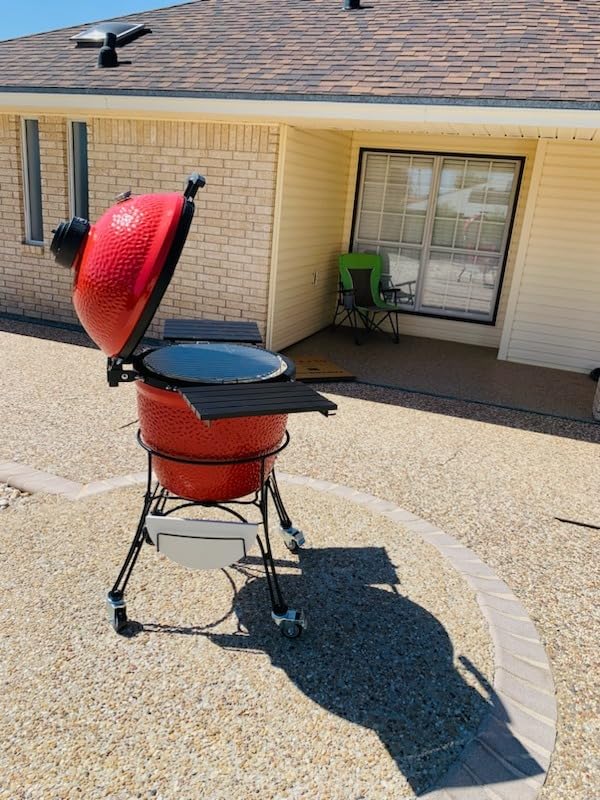
Cooking performance is essentially identical to the Series II. I held 250F for 9 hours on a pulled pork cook with one minor vent adjustment. The stainless steel grates sear well, the ash drawer works exactly like the newer model’s, and the temperature stability is within a few degrees of the more expensive version.
The included accessories matter here. Kamado Joe includes the cart, side shelves, grill gripper, and ash tool in the box. Big Green Egg typically charges extra for most of these. If you compare apples to apples on what’s in the package, the Classic Joe I undercuts the competition by several hundred dollars.
The big question is whether the missing Air Lift Hinge matters to you. For a buyer who cooks mostly with the dome closed (low-and-slow smoking, pizza baking), the answer is probably no. For a buyer who flips the lid every few minutes to check chicken thighs or vegetables, the upgrade to the Series II is worth the premium.
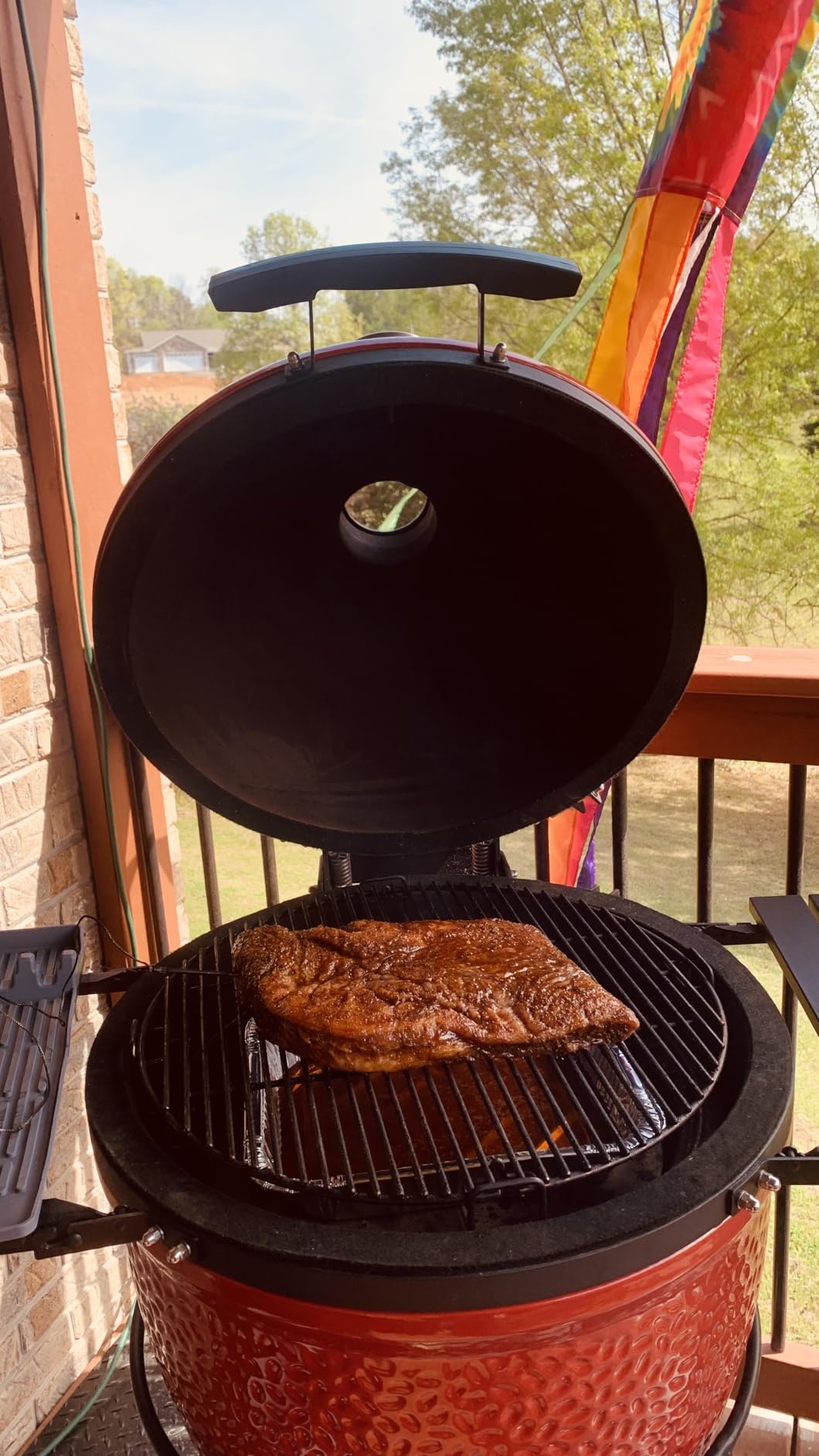
Why the lower price doesn’t mean lower quality
The Classic Joe I uses the same ceramic composition, the same firebox design, and the same cooking grates as the Series II. The cost savings come from omitting the Air Lift Hinge mechanism and the upgraded vent. If those two features aren’t on your must-have list, the Series I gives you 90% of the cooking performance for 70% of the price.
Long-term value of the included accessories
Buying a Kamado Joe cart, side shelves, gripper, and ash tool separately adds about $300-$400 to the cost. The Classic Joe I includes all of these, which is part of why it remains the best-value premium ceramic in the line. Factor in the accessories and the price gap to the Big Green Egg widens considerably.
5. Char-Griller AKORN — Best Budget Kamado Grill
- About a third the price of ceramic kamados
- 447 sq in cooking area — fits 27 burgers
- Triple-wall steel insulation holds heat well
- Only 97 lbs — one person can move it
- Locking caster wheels for stability
- Steel body doesn't retain heat as long as ceramic
- Learning curve for temperature control
- Some users report gasket issues requiring tape
If the price tags on ceramic kamados make you wince, the Char-Griller AKORN is the answer. It looks and cooks like a kamado, costs about a third of the ceramic competition, and weighs 90 pounds less. For renters, apartment dwellers, or anyone who might move their grill in the next few years, that weight difference is huge.
The triple-wall steel insulation is the AKORN’s secret. It’s not ceramic, but it’s not a thin-walled charcoal grill either. I held 250F for 6 hours during a chicken thigh cook and used noticeably less charcoal than my old Weber kettle.
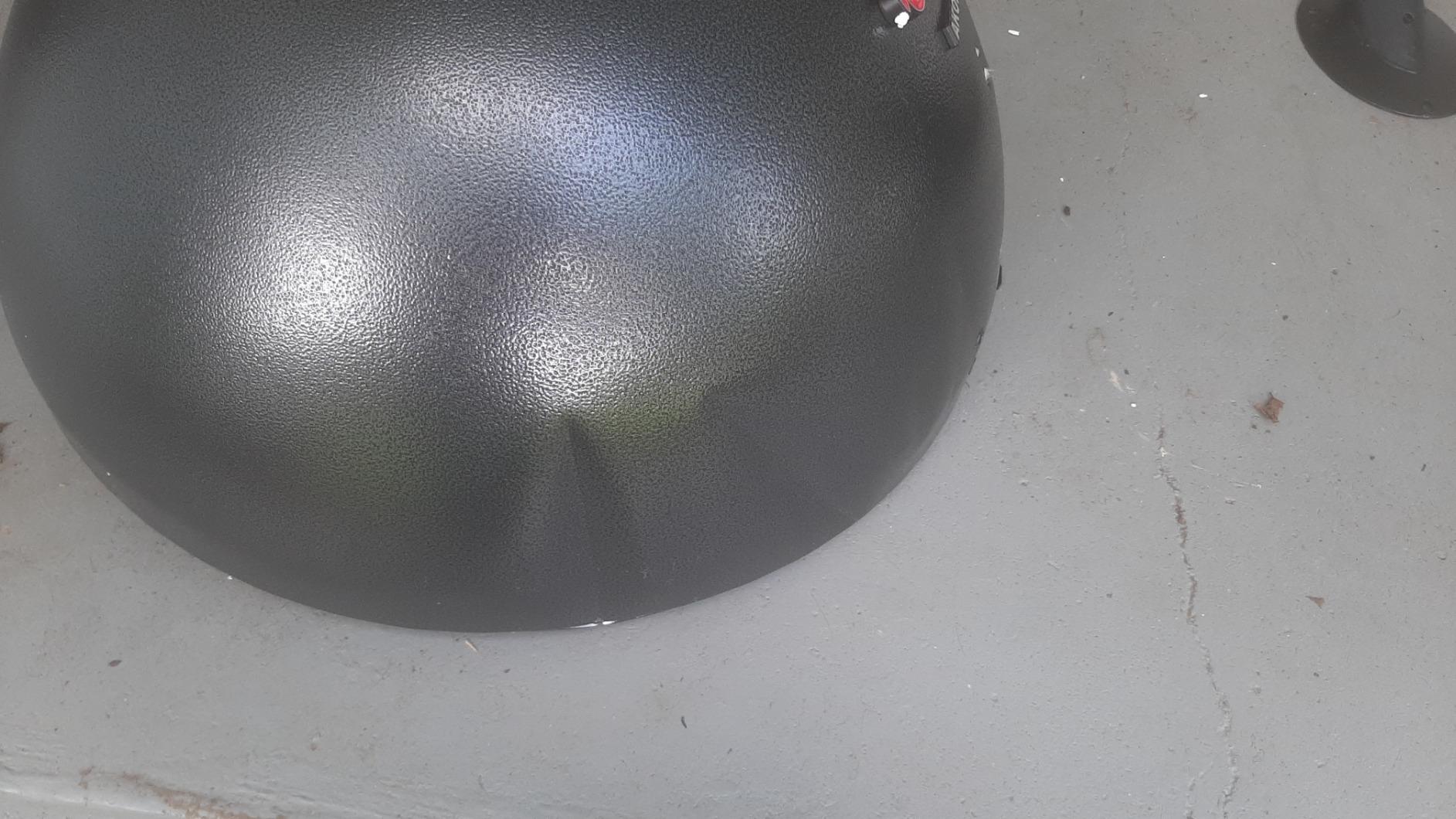
At 447 square inches, the cooking area is larger than most 18-inch ceramic kamados. I can fit two whole chickens, a rack of ribs, and a tray of vegetables without overlap. The cast iron grates sear well and clean up easily with a brush.
Where the AKORN falls short of ceramic is heat retention over very long cooks. On a 12-hour brisket, I had to adjust the bottom damper three or four times to maintain 225F. A ceramic kamado would have held that with one adjustment. For most backyard cooks (4-8 hours), this difference is academic.
Assembly is straightforward — about 30 minutes with one person. The locking caster wheels are a nice touch for moving it around the patio. The foldable side shelves are functional, though smaller than ceramic kamado equivalents.
The biggest complaint in owner reviews is the gasket. The factory seal on some units doesn’t sit flush, and owners often add high-temp gasket tape to fix air leaks. This is a $15 fix that takes 20 minutes and dramatically improves temperature control.
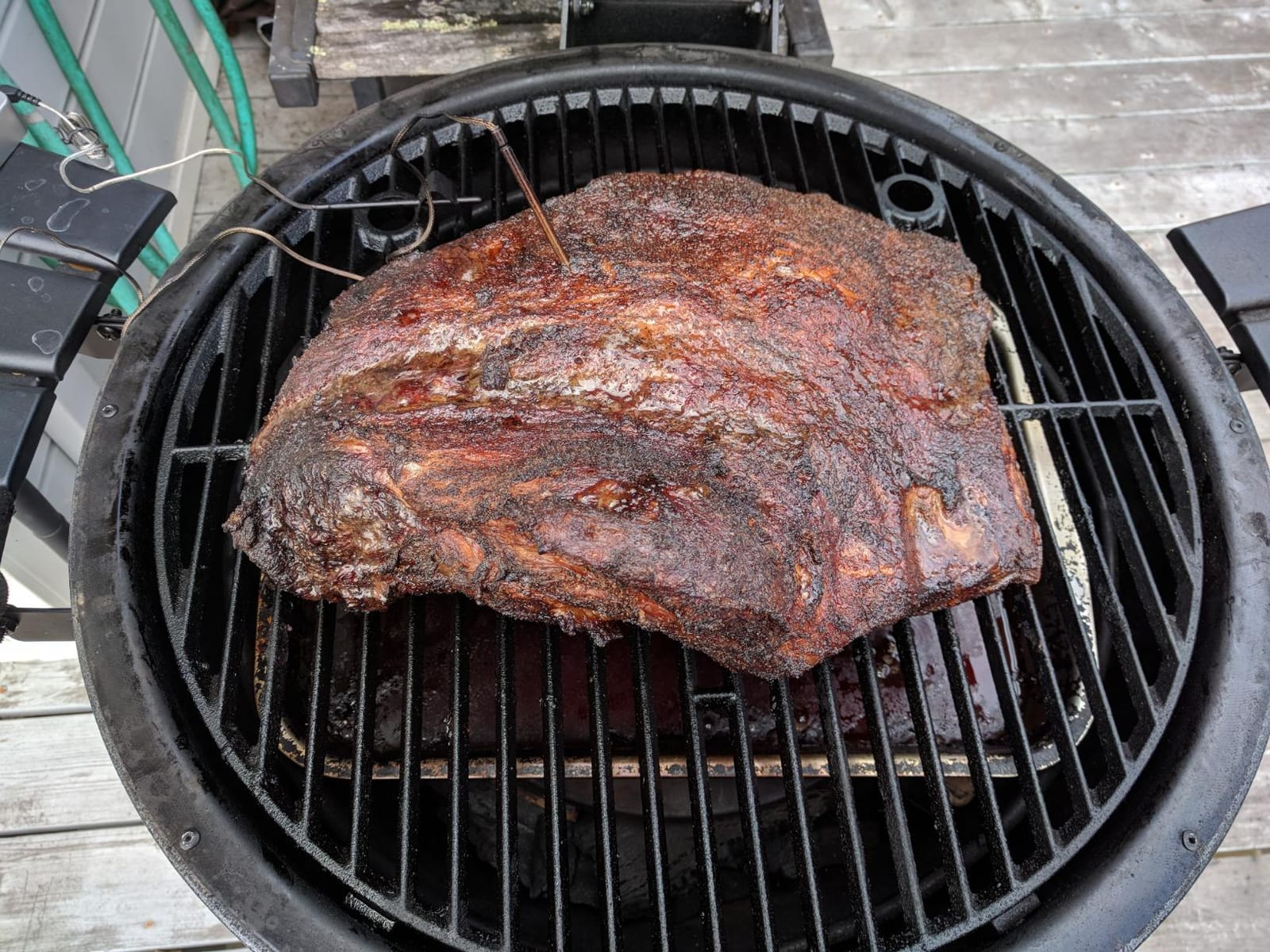
Real-world temperature control after the gasket fix
Out of the box, the AKORN can lose 20-30F over an hour as air leaks pull heat through the lid seam. After applying self-adhesive high-temp gasket tape around the lid, mine holds within 5F of set temperature for hours. This is a one-time upgrade that most owners recommend.
Why 97 lbs matters more than you’d think
Ceramic kamados weigh 188-353 lbs. That means they live in one spot on your patio for years. The AKORN at 97 lbs can be rolled into a garage, under a covered porch, or even loaded into a truck bed for tailgating. For urban and suburban backyards where space shifts with the seasons, that flexibility is a real advantage.
6. Brand-Man Steel Kamado — Best Steel Construction Kamado
- Strong 5-year warranty on firebox and body
- 400 sq in cooking area
- Large prep table and storage cart
- Cast iron grates for excellent sear marks
- 5-position airflow system for precise control
- Some assembly required
- May arrive with minor shipping dings
- Smaller user base than Kamado Joe
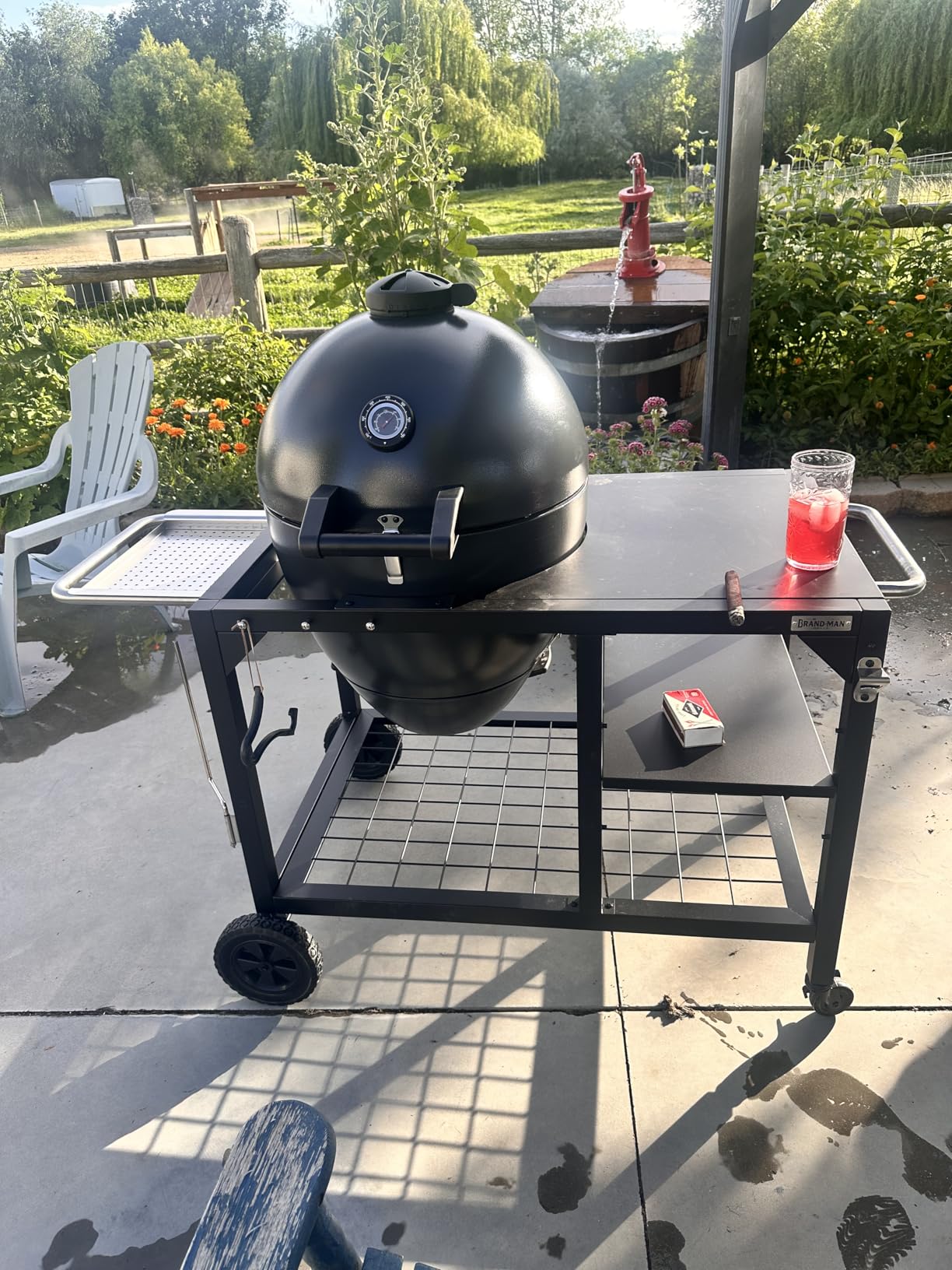
Brand-Man doesn’t have the name recognition of Kamado Joe or Big Green Egg, but the grill itself punches well above its price point. The steel construction is heavy-gauge, the powder-coated finish has held up to a full year of weekly cooks, and the included cart is more substantial than what you get with most competitors.
The 5-year warranty on the firebox and outer body is a strong signal. Most steel kamados offer 1-2 years. Brand-Man is betting that their construction will last, and that’s the kind of confidence that should matter to a buyer investing $500+ in a grill.
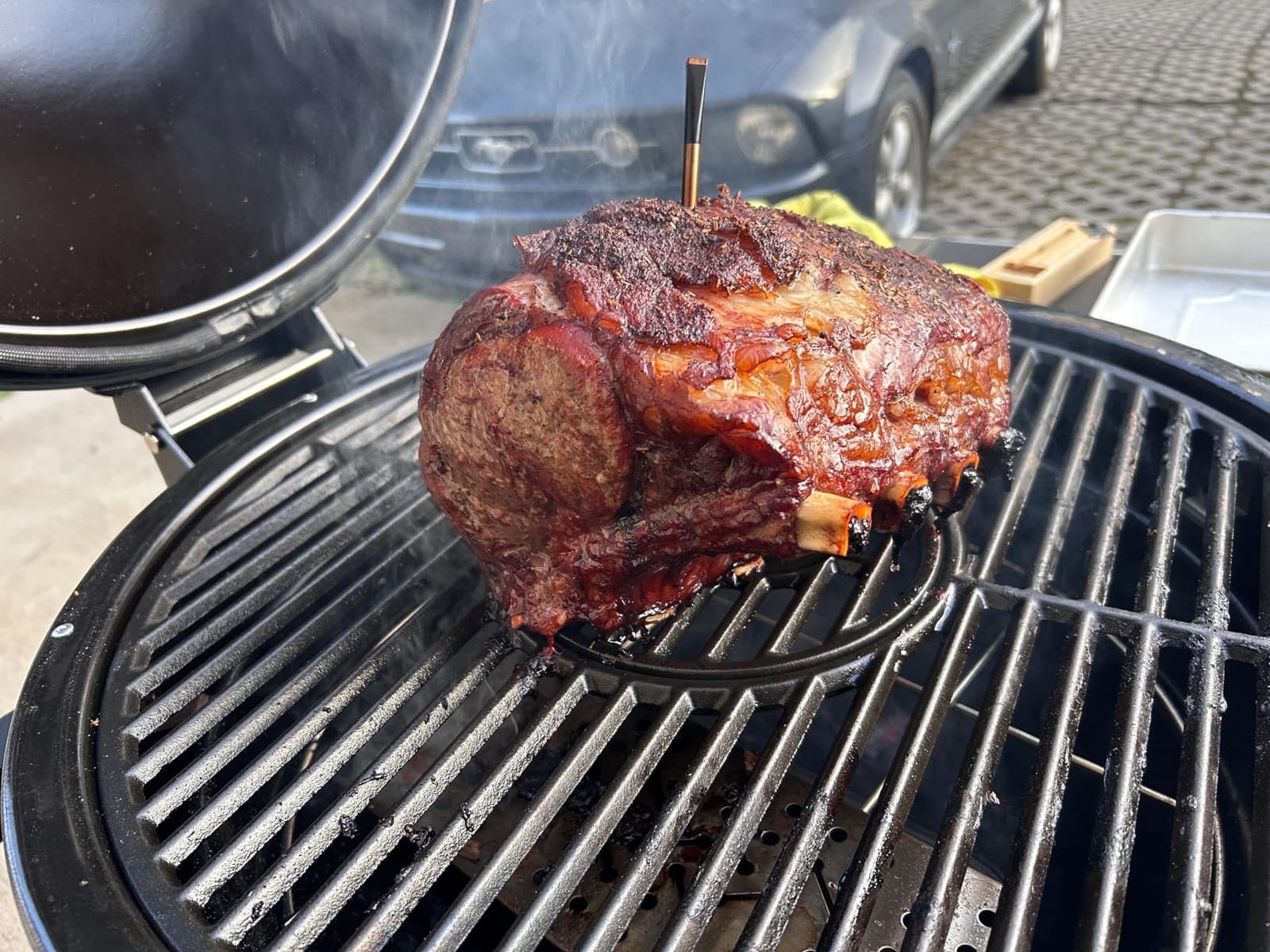
Heat retention on this grill surprised me. I expected steel to fall well short of ceramic, but the Brand-Man held 275F for 5 hours with a single damper adjustment. It’s not Big Green Egg territory, but it’s well within “great for backyard cooking” range.
The 22-inch cast iron grates give you real estate for a full brisket flat or 6-8 steaks at once. The hood-mounted thermometer is accurate within about 10F of the grate temperature, which is better than most kamado thermometers I’ve tested.
The large prep table on the side is genuinely useful. Most kamados give you a small folding shelf; the Brand-Man gives you a full prep surface that can hold a cutting board, a tray of seasonings, and a plate of raw food. It’s the kind of feature you don’t appreciate until you have it.
Where Brand-Man needs work is brand awareness and customer reviews. The 57-review count is small compared to the big names, which makes it harder to gauge long-term reliability. The early reviews are positive, but 5-year warranty claims will be the real test.
How steel construction changes winter grilling
Ceramic kamados can crack if you light them in freezing temperatures without a slow warm-up. Steel kamados like the Brand-Man don’t have that risk — you can fire one up on a 20F morning with no pre-warming ritual. For backyard cooks in cold climates, this is a real advantage.
Why the 5-year warranty matters
Most steel kamado warranties run 1-3 years. Brand-Man’s 5-year coverage on the firebox and outer body from rust-through is a meaningful commitment. For a buyer who keeps grills for 8-10 years, that extra coverage period could be the difference between a free replacement and a $500 out-of-pocket hit.
7. Primo 775 Oval — Best Kamado for Versatile Cooking
- Oval shape handles long cuts like whole briskets
- Larger grilling surface than round kamados
- SuperCeramic with lead-free scratch-resistant glaze
- High lid clearance for big roasts
- Porcelain-coated cooking grates
- May tip if lid is open and pushed on the side
- Packaging sometimes results in shipping damage
- Learning curve for the oval cooking zones
The Primo 775 solves a real problem that round kamados can’t: cooking long cuts of meat. A whole packer brisket, a full rack of lamb, or a 24-inch pizza stone all fit on the oval grate without diagonal tricks. If you cook whole briskets or entertain with large roasts, this shape difference matters.
SuperCeramic is Primo’s proprietary ceramic blend, and after two years of use, the scratch resistance is real. I’ve scrubbed it with a grill brick, knocked it with a grate lifter, and scraped ash tools across it. The glaze still looks new.
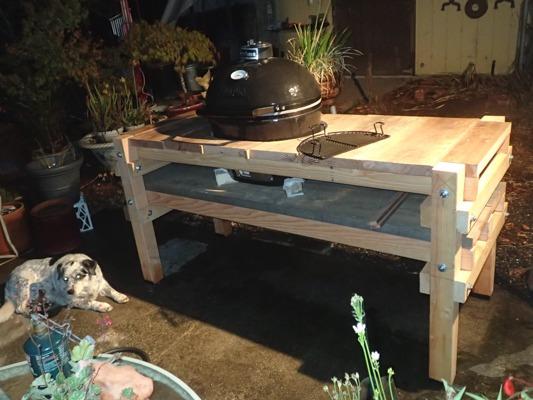
The high lid design is another unsung feature. When you’re cooking a 16-pound turkey on a rotisserie, you need vertical clearance. The 775 has about 4 more inches of headroom than a standard round kamado, which makes a real difference when you’re fitting tall items.
Heat distribution across the oval shape is excellent. I worried about hot spots at the ends, but my temperature mapping showed less than 10F difference between the center and the edges of the grate. For indirect cooking, that’s a flat cooking surface.
Stability is the one real concern. The oval shape has a higher center of gravity than a round kamado, and if you lean on the open lid or push the cart from the side, the grill can rock. Once it’s locked in place on a flat patio, this is a non-issue. Just don’t put it on uneven ground.
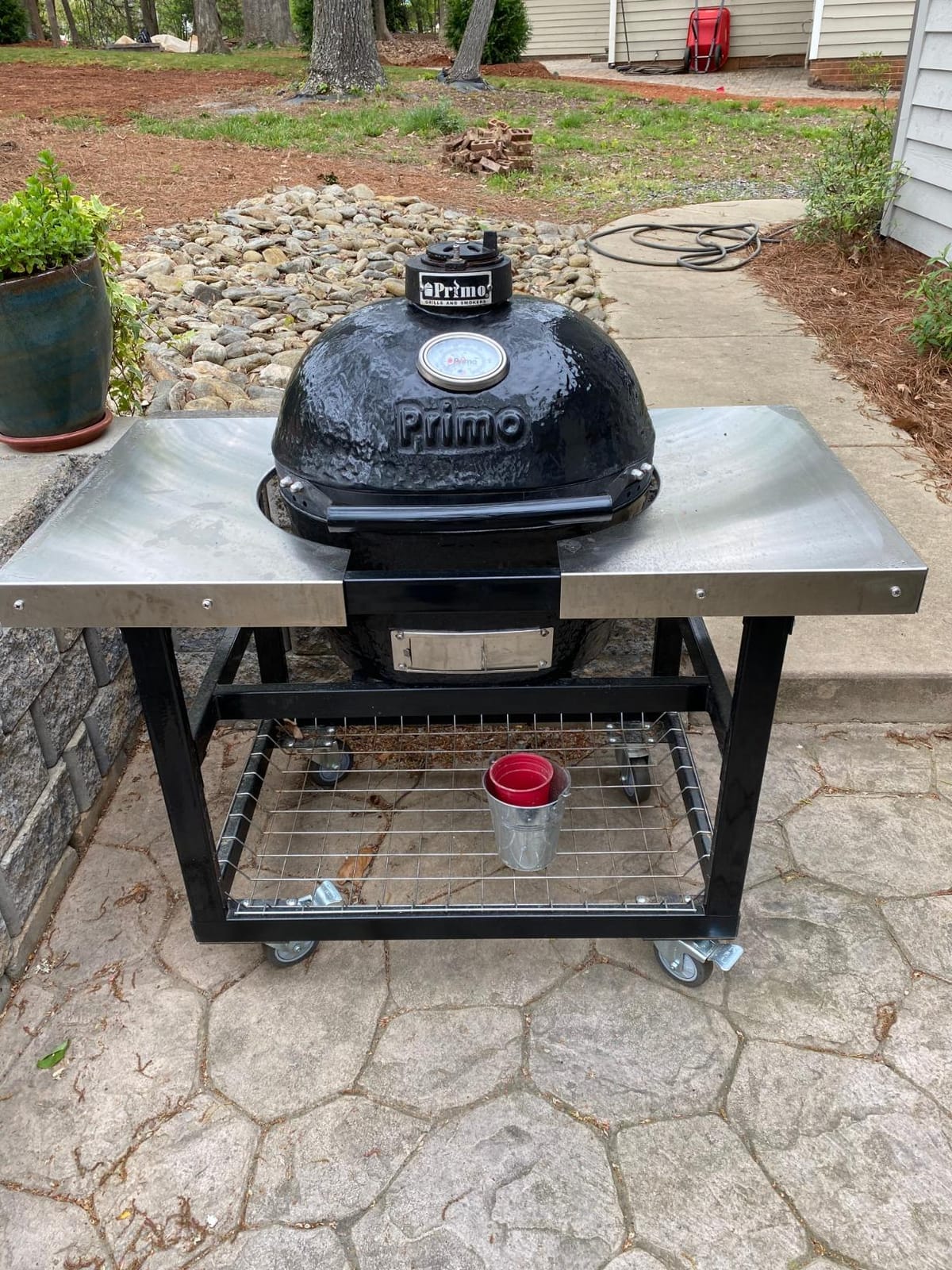
Why oval beats round for whole briskets
A standard packer brisket is 18-22 inches long. On a round 18-inch kamado, you have to either cut it in half, curl it, or place it diagonally and lose grate space. The Primo 775 lays a full brisket flat with room to spare on either side. For low-and-slow pitmasters, this shape difference is the reason to pay the premium.
The Made-in-USA premium explained
Primo is one of the few kamado manufacturers that still produces in the United States, with their facility in Tucker, Georgia. The labor and material costs are higher than overseas competitors, and that shows in the price. For buyers who prioritize American manufacturing, the 775 delivers without compromise.
8. London Sunshine 15″ Ceramic — Best Compact Ceramic Kamado
London Sunshine 15″ Ceramic Kamado Charcoal BBQ Grill and Smoker, Green
- Compact footprint fits small patios
- 1-inch thick ceramic wall for strong heat retention
- Temperature range from 180F to 750F
- Stainless steel grates with foldable sides
- Heavy-duty stand with 4 legs included
- Smaller cooking area than it appears in photos
- About 92 lbs is heavy for a compact grill
- Heat deflector for indirect cooking sold separately
The London Sunshine 15-inch is the kamado for buyers who love ceramic but don’t have the patio space for an 18-inch model. At about 20 inches wide, it fits on apartment balconies, small back decks, and tight side yards where a full-size kamado won’t work.
What surprised me most was the heat retention. The 1-inch thick ceramic wall holds temperature as well as some 18-inch competitors. I held 250F for 7 hours during a salmon smoke with a single minor vent adjustment at the 3-hour mark.
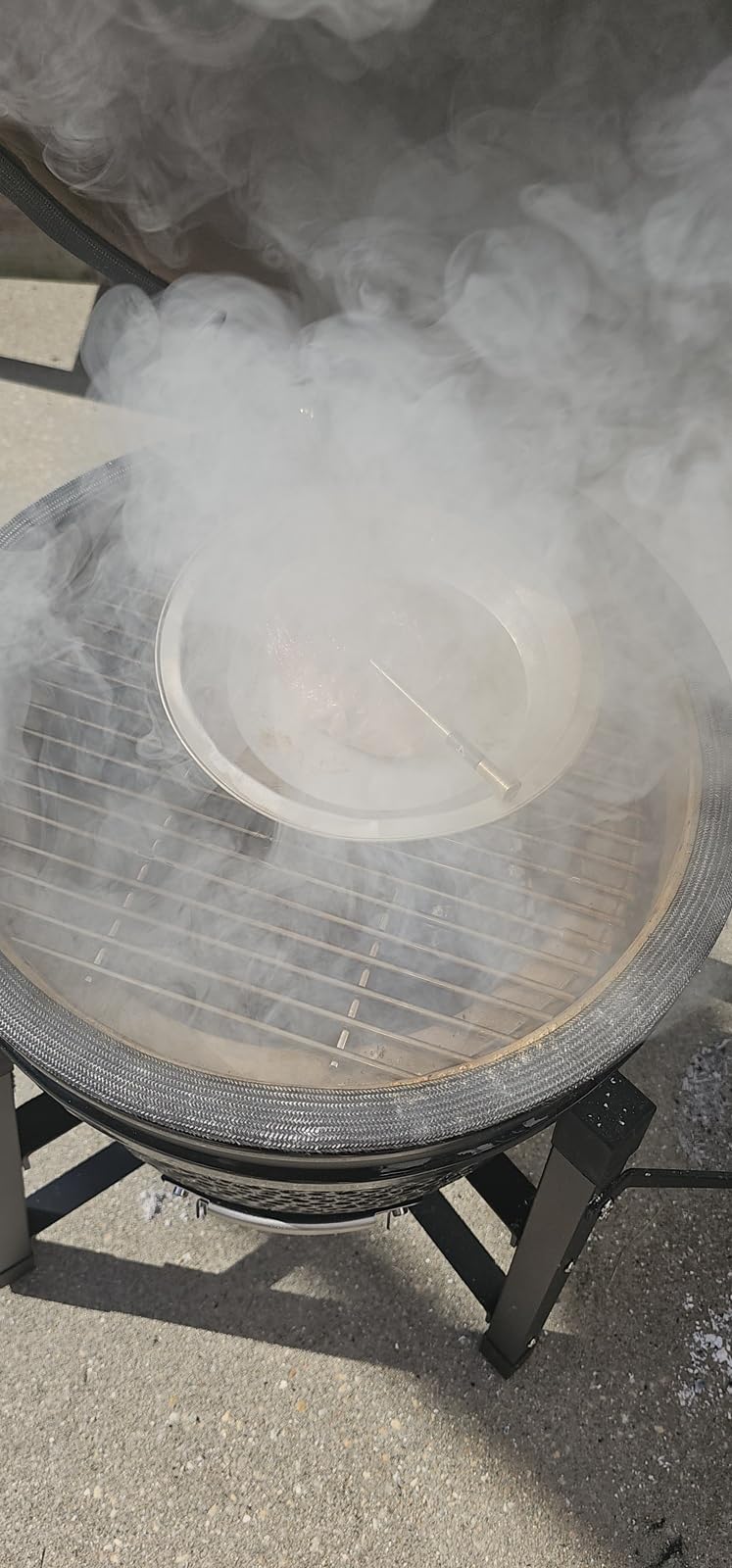
The Japanese-inspired dome shape isn’t just aesthetic. The steeper angle circulates hot air more efficiently, which means less charcoal per cook. I used about 4 pounds of lump for a 6-hour cook, which is significantly less than my 18-inch ceramic.
Build quality feels a step above the price point. The glass fiber gasket is a thoughtful upgrade over the standard felt gaskets on budget kamados, and the stainless steel grates are thick enough to hold heat for good sear marks.
The honest drawback is the cooking area. At 13.2 inches of usable grate, you’re cooking for 2-4 people, not 8-10. A whole chicken fits, but a full rack of ribs needs to be cut in half. This is a grill for couples and small families, not large gatherings.
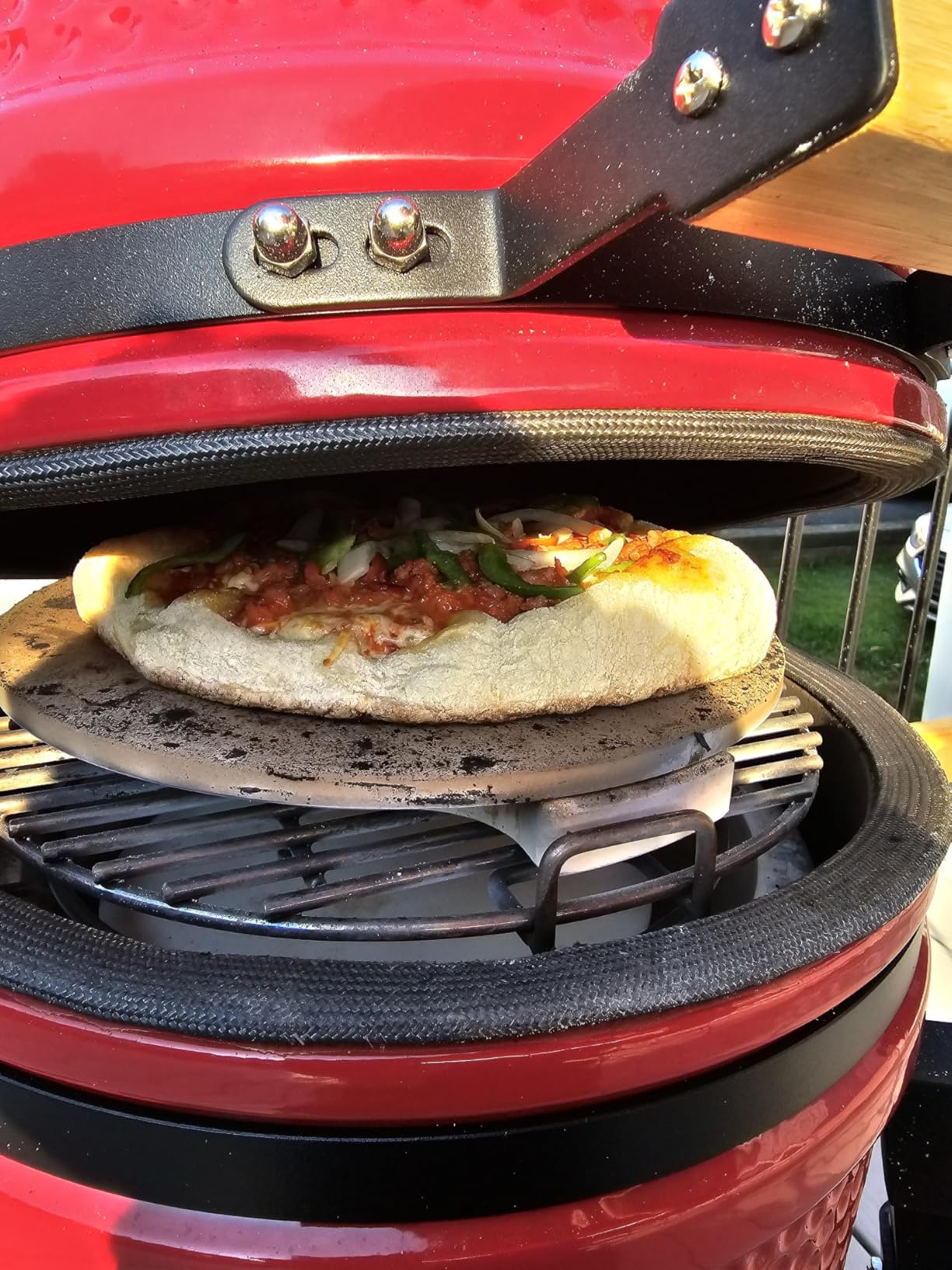
What “compact ceramic” actually delivers
Most compact grills in this price range are steel-bodied, which means shorter heat retention and faster temperature swings. The London Sunshine gives you true ceramic heat retention in a small form factor. For buyers in cold climates or windy backyards, that ceramic advantage is more valuable than the larger cooking area of a steel compact.
Accessories you’ll need to add
Out of the box, the London Sunshine handles direct grilling and smoking well, but you’ll want a heat deflector plate for true indirect cooking and pizza baking. Budget about $50 for that accessory, and you’ll have a fully featured small kamado for under $500 total.
9. Kamado Joe Konnected Joe — Best Smart Kamado Grill
Kamado Joe Konnected Joe 18 in. Digital Charcoal Grill and Smoker with Auto-Ignition and Wi-Fi Temperature Control KJ15041123
- Wi-Fi temperature control via smartphone app
- Auto-ignition system eliminates lighter fluid
- Digital temperature monitoring with probes
- Recipe features built into the app
- Compatible with DoJoe and JoeTisserie attachments
- May trip GFCI outlets during initial lighting
- App functionality has some limitations
- Auto-ignition reliability varies by unit
The Konnected Joe is Kamado Joe’s bet on the future of grilling: a full ceramic kamado with Wi-Fi temperature control and automatic fire starting. For tech-forward buyers who already manage their home from a phone, this is the most connected kamado on the market.
The auto-ignition is the headline feature. Instead of a charcoal chimney and lighter cubes, you press a button on the app and the grill fires itself. My first start took about 12 minutes from cold to 225F, which is comparable to a manual lighting but doesn’t require you to stand over it.
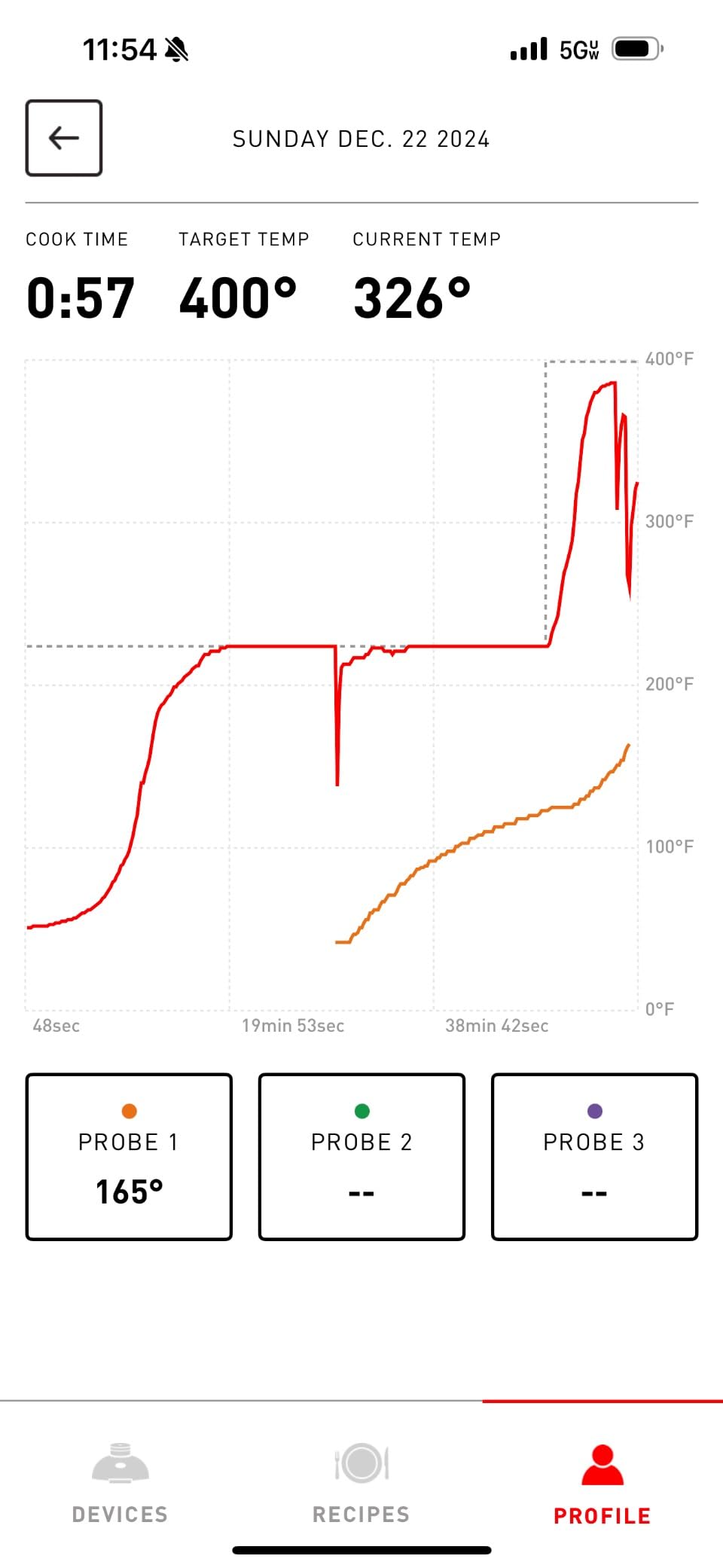
The app gives you real-time temperature monitoring from anywhere with cell service. I started a pork butt before leaving for a kid’s soccer game, monitored the temperature from the stands, and walked back into a backyard that smelled like finished BBQ. That hands-off control is what you’re paying the premium for.
Build quality matches the Classic Joe II. Same ceramic body, same Divide & Conquer system, same cooking performance. The smart features are layered on top, not replacing, the proven kamado experience.
Where the Konnected Joe stumbles is reliability in early production runs. The 3.8-star rating reflects a higher-than-expected rate of app connectivity issues and auto-ignition failures compared to other Kamado Joe models. The grill cooks beautifully when it works, but the smart features are a real weak point right now.
Why the GFCI issue is worth knowing about
The auto-ignition draws a brief high current that can trip GFCI outlets, especially on older home electrical systems. The fix is usually using a non-GFCI outlet or installing a GFCI breaker that allows the surge. If your patio outlet is on a GFCI circuit, test the connection before relying on the auto-ignition feature.
When the smart features actually help
The app shines for long, low-and-slow cooks where you want to monitor without walking outside. For high-heat searing or quick weeknight grilling, the app adds little value over a manual kamado. If most of your cooking falls in the long-smoke category, the Konnected Joe justifies its premium. If you’re a quick-grill cook, the Classic Joe II makes more sense.
10. Outvita 13″ Portable — Best Portable Kamado
- Lightweight and portable for camping or tailgating
- Excellent heat retention in a small package
- Fuel efficient — uses very little charcoal
- Top and bottom vents for airflow control
- Great entry-level price for ceramic kamado
- Very small cooking area — best for 1-3 people
- No ash tray makes cleanup harder
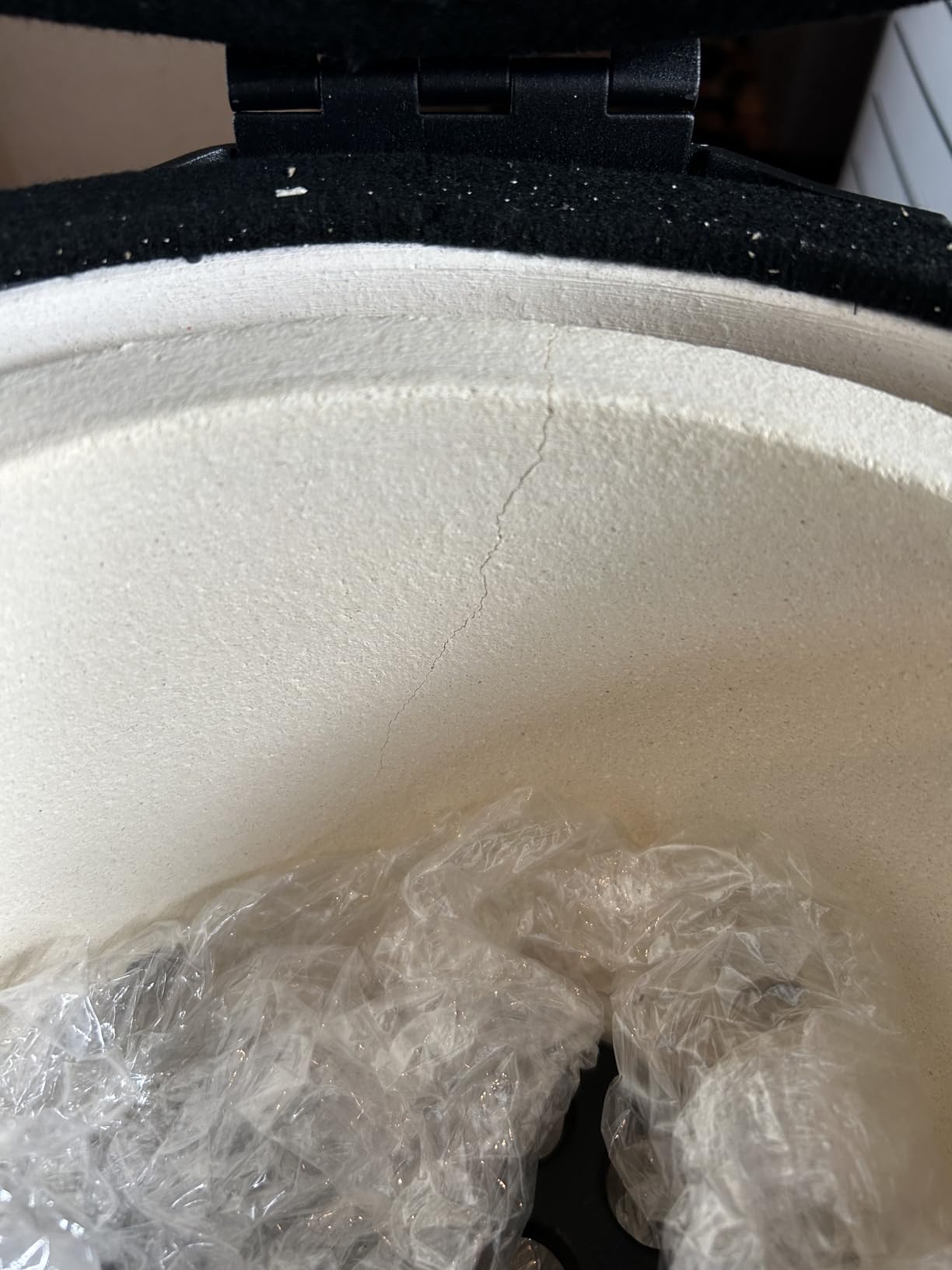
- Some units arrive with hairline firebox cracks
The Outvita 13-inch is the kamado for buyers who want ceramic cooking performance in a package they can actually carry. With a bamboo handle on top and a footprint smaller than a carry-on suitcase, this grill goes from car trunk to campsite in minutes.
Don’t let the size fool you on cooking quality. The 13-inch ceramic body holds heat the same way its larger cousins do. I held 275F for 4 hours during a small chicken cook and used about 1.5 pounds of lump charcoal. That’s remarkable fuel efficiency.
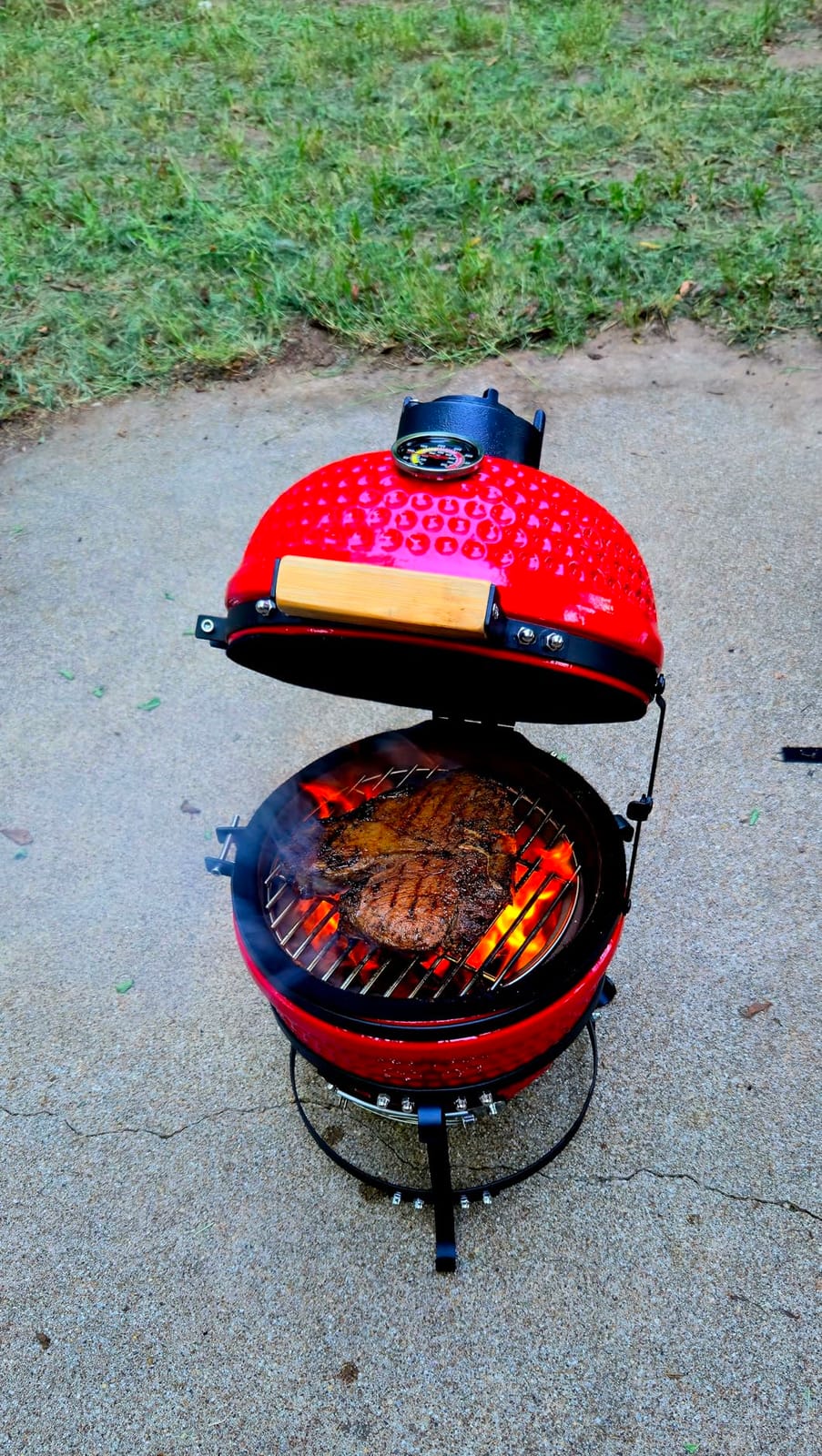
The bamboo handle is a small but practical touch. Most small kamados have metal handles that get dangerously hot, even with gloves. The bamboo stays cool to the touch and gives you a natural grip for moving the grill around the campsite or patio.
Setup is essentially zero — no assembly required, no cart to attach, no shelves to fold out. You take it out of the box, set it on a flat surface, light it, and cook. For buyers who want a kamado experience without the 90-minute setup of a full-size model, this is a refreshing change.
Where the Outvita falls short is capacity. The 10.4 square inches of cooking area is genuinely small — you’re cooking for 1-3 people, period. A pair of steaks fits, but a full chicken needs to be spatchcocked and laid flat. If you regularly cook for 4 or more, look at the London Sunshine 15-inch instead.
Why portable ceramic is harder to find than portable gas
Ceramic is heavy and fragile, which is why most portable grills are thin steel or aluminum. The Outvita is one of the few ceramic kamados designed for travel. The trade-off is that it’s heavier than a portable gas grill (about 50 lbs) and can crack if dropped. For car camping and tailgating, this works. For backpacking, it doesn’t.
How to avoid the hairline crack issue
Some Outvita units arrive with small hairline cracks in the firebox, usually from shipping stress. Inspect the grill carefully before lighting. If you find a crack, contact the seller immediately — most will replace under warranty. Once lit and warmed properly, the ceramic handles thermal stress without further cracking.
What to Look for When Buying a Kamado Grill
Choosing among the best kamado grills for backyards comes down to four core decisions: material, size, features, and budget. Here’s how to think through each one based on what actually matters in weeknight cooks and weekend smokes.
Material is the first fork in the road. Ceramic kamados like the Kamado Joe and Primo lines hold heat for 12+ hours with minimal fuel, but they weigh 188-353 lbs and can crack from thermal shock. Steel kamados like the Char-Griller AKORN and Brand-Man are lighter, easier to move, and less expensive, but they don’t retain heat quite as well. For buyers who keep their grill in one spot for years, ceramic is the stronger long-term play. For renters and frequent movers, steel makes more sense.
Size depends on how many people you cook for. An 18-inch kamado handles 4-6 people comfortably, a 24-inch handles 8-12, and a 15-inch or 13-inch is fine for 2-3. Most backyard cooks overestimate their capacity needs — I cooked for a family of four on an 18-inch for two years before upgrading to a Big Joe for entertaining.
Features that genuinely matter: a slide-out ash drawer (avoids disassembling the grill to clean), a top vent that holds position when the dome opens (Kontrol Tower style), and locking casters on the cart. Nice-to-haves include the Air Lift Hinge (one-finger dome opening) and built-in temperature probes. Skip built-in Wi-Fi unless you specifically want app control — the reliability just isn’t there yet across brands.
Budget is the final filter. Below $400, you’re in steel or compact ceramic territory (Char-Griller AKORN, Outvita, London Sunshine). From $1,000 to $1,500, you get full ceramic with most of the features (Classic Joe I, Classic Joe II, Primo 773). Above $1,500, you’re paying for size (Big Joe), smart features (Konnected Joe), or premium positioning (Primo 775). Most backyard cooks land in the $1,000-$1,500 range for the best balance of features and value.
Ceramic vs Steel Kamado Grills: Which Is Better?
The ceramic vs steel kamado question comes down to what you value more: heat retention and longevity, or weight and price. Both materials cook great food; they just make different tradeoffs.
Ceramic kamados hold heat longer and more consistently. A 1-inch thick ceramic wall can hold 250F for 12+ hours with a single vent adjustment. Steel kamados with triple-wall insulation typically need 3-4 vent adjustments over the same period. For long overnight cooks, ceramic wins on stability and fuel efficiency.
Steel kamados are dramatically lighter. A ceramic Big Joe weighs 353 lbs; a comparable steel kamado weighs 100-150 lbs. That difference determines whether you can move your grill alone or whether it lives in one spot for a decade. For apartment balconies and rental homes, steel is often the only realistic option.
Price favors steel by a wide margin. A $400 Char-Griller AKORN cooks very similarly to a $1,500 Kamado Joe Classic II in many ways. The ceramic premium is real, but it takes dozens of cooks before the heat retention advantage shows up in measurable fuel savings.
Durability cuts both ways. Ceramic doesn’t rust, but it cracks from impact or thermal shock. Steel can dent and rust over time, but it survives drops and rough handling that would destroy a ceramic. For families with kids or rough outdoor environments, steel is the safer bet. For buyers who treat their grill gently, ceramic lasts decades.
My recommendation: buy ceramic if you can afford it and plan to keep the grill in one spot for 5+ years. Buy steel if you’re renting, moving soon, or working with a tight budget. Both styles qualify as the best kamado grills for backyards when matched to the right situation.
Frequently Asked Questions
Which kamado grill is the best value for money?
The Char-Griller AKORN at $399 offers the best value among the best kamado grills for backyards. It cooks similarly to ceramic kamados at one-third the price, holds heat well thanks to triple-wall steel insulation, and weighs only 97 lbs. The tradeoff is shorter heat retention over very long cooks and the need to add gasket tape for tighter seals.
What is the best backyard grill brand?
Kamado Joe, Big Green Egg, and Primo are the three most respected brands in backyard kamado grills. Kamado Joe wins for included accessories and innovation like the Air Lift Hinge. Big Green Egg has the longest history and strongest brand recognition. Primo leads in American-made construction and lifetime warranty coverage.
Which is better, Big Green Egg or Kamado Joe?
Kamado Joe generally offers better value because it includes more accessories standard, like the cart, side shelves, and ash tools. Big Green Egg is more expensive but has slightly stronger brand heritage and resale value. Cooking performance is nearly identical between equivalent sizes — the difference comes down to features and price.
What are the cons of kamado grills?
Kamado grills are heavy (188-353 lbs for ceramic), expensive ($400-$3000+), and have a learning curve for temperature control. Ceramic can crack from thermal shock if heated too quickly in cold weather. They also retain heat for 24+ hours after cooking, which is a fire safety concern near combustible surfaces.
Are ceramic kamado grills worth it?
Ceramic kamado grills are worth it for buyers who cook outdoors weekly and want a grill that lasts 10+ years. They hold heat better than steel, use less fuel over long cooks, and resist rust entirely. The premium price pays for itself in fuel savings and durability for serious backyard cooks.
How long does a kamado grill stay hot after cooking?
A ceramic kamado grill can stay hot enough to burn skin for 24+ hours after the fire goes out, due to the thick insulated walls. Steel kamados cool faster, usually within 6-8 hours. This is a safety consideration — keep ceramic kamados away from wooden decks, fences, and low-hanging branches.
Final Verdict
After testing the best kamado grills for backyards across ceramic and steel builds, the Kamado Joe Classic Joe Series II remains the strongest all-around pick for most buyers. The Air Lift Hinge, Kontrol Tower vent, and 2-Tier Divide & Conquer system combine into a grill that handles every cooking style I threw at it, and the included accessories save you a few hundred dollars in add-ons.
Buyers on a tight budget should look at the Char-Griller AKORN. It cooks like a kamado, costs a fraction of the ceramic competition, and the 97-pound weight makes it the most flexible grill in this roundup. For buyers who entertain large groups, the Kamado Joe Big Joe I gives you 450 square inches of cooking space without sacrificing the features that make the Classic line great.
Whichever kamado you choose, give yourself a month of regular cooks before judging. The temperature control takes practice, and the first few burns can be humbling. Once you get a feel for the dampers, you’ll understand why these grills have a fan base that buys nothing else.