
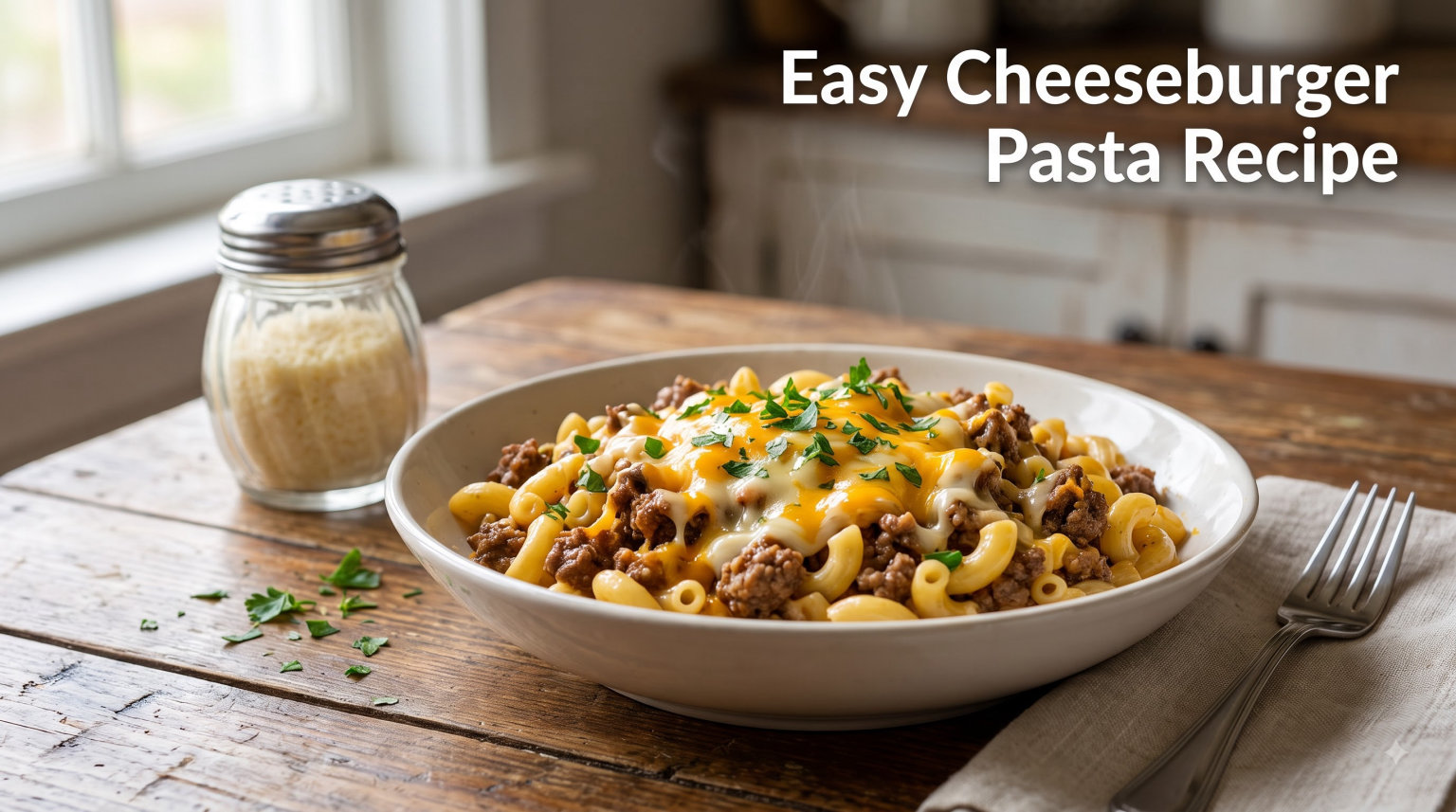
When dinner needs to be both dependable and satisfying, I turn to cheeseburger pasta recipe. The dependable result comes from one practical choice: brown the beef deeply, keep the pasta al dente, and melt freshly grated cheese after reducing the heat. The guide below explains the texture, timing, substitutions, serving options, and storage without guesswork.
I have also included one-pot cheeseburger pasta guidance for the exact moments that decide the result, from prep and doneness to storage. For another practical dinner, browse these easy one pot pasta recipes ideas.
Table of Contents
Why Easy cheeseburger pasta recipe works
Why This cheeseburger pasta Works
This recipe works because it recreates the experience of eating a cheeseburger in pasta form without relying on processed seasoning packets. The secret comes down to three flavor building ingredients that most recipes skip or underuse. Worcestershire sauce adds that savory, slightly tangy depth that ground beef needs. Yellow mustard brings the classic burger condiment flavor right into the sauce. And dill pickle relish, stirred in at the end, gives every bite that unmistakable cheeseburger finish.
The clear winner was sharp cheddar combined with cream cheese. Sharp cheddar brings the bold, cheesy flavor you expect from a cheeseburger, while cream cheese creates that smooth, velvety sauce texture that coats every noodle without breaking or turning grainy. Using only cheddar left the sauce thin and slightly oily. Using cream cheese alone tasted too tangy. Together, they are magic.
Beyond flavor, this recipe is designed for real life. It uses a single large skillet, which means one pan to wash. It cooks in about 30 minutes from the moment you pull out the ground beef to the moment you sit down. And it uses pantry staples you probably already have on hand, making it an ideal 30 minute dinner recipe for those nights when takeout is tempting but your wallet says otherwise.
cheeseburger pasta Ingredients
For dependable cheeseburger pasta recipe, brown the beef deeply, keep the pasta al dente, and melt freshly grated cheese after reducing the heat. The same rule keeps one-pot cheeseburger pasta focused and balanced instead of greasy beef or grainy sauce. You may also want to save these easy ground beef dinner recipes ideas for your next meal plan.
Here is everything you need to make this recipe, along with my notes on why each ingredient matters and what you can substitute if you do not have it on hand.
Core Ingredients
1 lb ground beef (80/20): I prefer 80/20 ground beef because it has enough fat to keep the meat juicy and flavor the sauce, but not so much that you end up draining a puddle of grease. If you only have leaner ground beef like 90/10, the recipe still works fine. You may just need to add a tablespoon of butter or olive oil when browning to prevent sticking. Always handle raw ground beef safely and cook it to a minimum internal temperature of 160 degrees Fahrenheit, following USDA ground beef safety guidelines.
Rotini and elbow macaroni work just as well if that is what you have. The key is choosing a short pasta shape with nooks and crannies that catch the sauce. Avoid long pasta like spaghetti or linguine because it does not work well with this type of thick sauce.
1 cup sharp cheddar cheese, freshly grated: This is non negotiable. Pre shredded cheese is coated with anti caking agents like cellulose that prevent it from melting smoothly. Spend the extra two minutes grating your own cheddar from a block and your sauce will be noticeably creamier. Sharp cheddar gives you the most cheeseburger like flavor.
4 oz cream cheese, softened: This is the ingredient that transforms the sauce from thin and greasy to thick and velvety. Let it sit on the counter for 30 minutes before cooking so it softens and blends in without clumping.
1 cup beef broth: This forms the liquid base for cooking the pasta right in the skillet. It adds much more depth than water alone. You can substitute chicken broth or even vegetable broth if that is what you have.
1/2 cup milk (whole milk preferred): Whole milk gives the richest sauce, but 2 percent works in a pinch. Avoid skim milk because it does not have enough fat to create a creamy texture.
Seasonings and Flavor Builders
1 tablespoon Worcestershire sauce: This is the umami backbone of the entire dish. Do not skip it. If you are out, you can substitute soy sauce mixed with a pinch of sugar, but the flavor will be slightly different.
1 tablespoon yellow mustard: This is what makes it taste like a cheeseburger instead of just beef and pasta. Dijon mustard works as a substitute but use only 2 teaspoons because it is stronger.
1 tablespoon ketchup: Adds a touch of sweetness and tomato flavor that rounds out the cheeseburger profile. Tomato paste works as a substitute, just use 1 tablespoon and it will add a richer tomato flavor.
1 tablespoon dill pickle relish (plus extra for serving): This is the secret ingredient that makes people go back for seconds. If you do not have relish, finely chop dill pickles and add them with a splash of pickle juice. The vinegar tang is what sells the cheeseburger flavor.
1 teaspoon garlic powder, 1 teaspoon onion powder, 1/2 teaspoon salt, 1/2 teaspoon black pepper: These pantry staples build the savory base. You can substitute fresh garlic and onion if you prefer, but the powder distributes flavor more evenly through the sauce.
Optional Toppings
Diced tomatoes, shredded lettuce, crumbled bacon, sliced jalapenos, extra shredded cheese, hot sauce: Set these out family style and let everyone customize their bowl. This is one of the reasons kids love this dish. They get to build their own bowl the same way they build a burger.
Ingredient Substitutions for Dietary Needs
Gluten free: Swap the regular pasta for your favorite gluten free pasta. I have tested this with chickpea pasta and brown rice pasta, and both work well. The sauce ingredients are naturally gluten free, just double check your beef broth label.
Dairy free: Substitute the cheddar with a dairy free cheddar style shreds, use a dairy free cream cheese alternative, and swap the milk for unsweetened oat milk or almond milk. The sauce will be slightly less rich but still delicious.
Without cream cheese: If you want an cheeseburger pasta without cream cheese, substitute 1/4 cup sour cream or 1/4 cup heavy cream stirred in at the end. The texture will be slightly thinner but still creamy.
Without cream entirely: For an cheeseburger pasta without cream, use 1 cup of beef broth mixed with 2 tablespoons of cornstarch to thicken the sauce, then stir in extra cheddar cheese. The result is a lighter, more tomato forward sauce.
How to Make Easy Cheeseburger Pasta
For food-safety temperatures and handling limits, I follow the USDA food-safety guidance and use an instant-read thermometer whenever doneness is uncertain.
Now for the fun part. This cheeseburger pasta comes together in one skillet and takes about 30 minutes from start to finish. Follow these steps and you will have a creamy, cheesy, comforting dinner on the table faster than delivery.
Step 1: Brown the ground beef. Heat a large skillet or Dutch oven over medium high heat. Add 1 lb of ground beef and break it apart with a wooden spoon into bite sized crumbles. Season with the salt, pepper, garlic powder, and onion powder as it cooks. Cook for 5 to 7 minutes until the beef is fully browned with no pink remaining.
Step 2: Drain the grease. Carefully drain the excess grease from the skillet. I tilt the pan and use a spoon to hold the beef back, pouring the grease into a heatproof container. Leaving too much grease in the pan will make your sauce oily and thin. If you used very lean beef, you can skip this step.
Step 3: Add the liquids and seasonings. With the beef back in the skillet, pour in 1 cup of beef broth, 1/2 cup of milk, 1 tablespoon of Worcestershire sauce, 1 tablespoon of yellow mustard, and 1 tablespoon of ketchup. Stir everything together, scraping up any browned bits from the bottom of the pan. Those browned bits are packed with flavor.
Step 4: Add the pasta and simmer. Pour 2 cups of dry pasta directly into the skillet. Stir well to combine so the pasta is submerged in the liquid. Bring the mixture to a boil, then reduce the heat to low, cover the skillet with a lid, and let it simmer for 12 to 15 minutes. Stir every 3 to 4 minutes to prevent the pasta from sticking to the bottom. The pasta is done when it is tender and most of the liquid has been absorbed.
Step 5: Stir in the cream cheese. Remove the skillet from the heat. Add 4 oz of softened cream cheese in small chunks and stir vigorously until it is completely melted and incorporated. The sauce will immediately thicken and become silky smooth. If the cream cheese is cold, it will clump, so make sure it is fully softened before starting.
Step 6: Add the cheddar cheese. Add 1 cup of freshly grated sharp cheddar cheese, a handful at a time, stirring constantly until each addition is melted before adding more. Adding the cheese slowly off the heat prevents it from separating and turning grainy. The residual heat of the pasta is enough to melt the cheese perfectly.
Step 7: Finish with pickle relish. Stir in 1 tablespoon of dill pickle relish right before serving. This is the ingredient that makes people stop and ask what your secret is. The cool, tangy crunch of the relish cuts through the rich cheese sauce and delivers that authentic cheeseburger finish in every bite.
Step 8: Rest and serve. Let the pasta rest for 2 to 3 minutes before serving. This short rest allows the sauce to thicken further and cling to the noodles. Serve hot with optional toppings on the side.
That is it. You now know how to make an cheeseburger pasta from scratch in 30 minutes with one pan. For more quick dinner ideas like this one, browse our collection of 30 minute dinner recipes that are perfect for busy weeknights.
Recipe Tips for Perfect Cheeseburger Pasta
I judge cheeseburger pasta recipe by the finished texture and temperature, not by the clock alone. With one-pot cheeseburger pasta, the beef must reach 160°F, the pasta should be tender with bite, and the sauce should look creamy rather than oily. For a useful companion guide, see these best 30 minute dinner recipes ideas.
-
Grate Your Own Cheese: This is the number one tip I can give you. Pre shredded cheese, even the good brands, is coated with cellulose and anti caking agents that prevent it from melting smoothly. When you melt pre shredded cheese into a sauce, those additives make it clumpy and grainy instead of smooth and velvety. Grating your own from a block takes about 90 seconds and makes a difference you can see and taste.
-
Prevent the Cheese Sauce From Getting Grainy: Grainy cheese sauce is the most common complaint I hear. It happens when the cheese gets too hot or when you add it too quickly. To prevent it, always remove the skillet from the heat before adding cheese. Add the cheese a handful at a time, stirring until each addition is fully melted. If your sauce still gets grainy, whisk in a splash of warm milk off the heat to bring it back together.
-
Do Not Let the Pasta Dry Out: Cheeseburger pasta continues to absorb liquid as it sits, which means it can dry out quickly. To keep it creamy, serve it immediately after the short rest period. If you need to hold it, cover the skillet tightly with a lid or foil and add 2 tablespoons of warm milk right before serving, stirring to loosen the sauce. When reheating leftovers, always add a splash of milk or broth to bring the sauce back to life.
-
Cook Pasta Al Dente: Because the pasta finishes cooking in the sauce, you want it slightly firm when you take it off the heat. It will continue to soften as it rests. If you cook it until it is completely soft, it will turn mushy by the time you sit down to eat. Test a noodle at the 12 minute mark. It should have a slight bite to it.
-
High Altitude Adjustments: If you live above 3,500 feet elevation, water boils at a lower temperature which means pasta takes longer to cook. Add 2 to 3 extra minutes to the simmer time and add an extra 1/4 cup of beef broth to account for the longer cooking time. Check the pasta at the original time and extend as needed.
-
Let It Rest Before Serving: That 2 to 3 minute rest at the end is not optional. It gives the starches in the pasta time to absorb the last bit of liquid, which thickens the sauce and helps it cling to the noodles. If you skip the rest, your sauce will be thinner than it should be.
These tips address the most common problems people run into, so read them before you start cooking.
Delicious Recipe Variations
-
Bacon Cheeseburger Pasta: Cook 4 strips of bacon until crispy, then crumble them and set aside. Use 1 tablespoon of the bacon grease instead of draining it all when you brown the ground beef. Stir the crumbled bacon in right before serving along with the pickle relish. The smoky, salty bacon flavor takes this dish straight to burger joint territory.
-
Spicy Cheeseburger Pasta: Add 1/2 teaspoon of crushed red pepper flakes when you brown the beef. Substitute pepper jack cheese for half of the cheddar. Top each bowl with sliced pickled jalapenos. This version is my personal favorite when I want something with a kick.
-
Double Cheeseburger Pasta with Tomato: Add 1/2 cup of diced tomatoes to the skillet along with the beef broth. Increase the ketchup to 2 tablespoons. This version leans more into the classic burger toppings and adds a nice fresh tomato flavor to the sauce.
-
Gluten Free Cheeseburger Pasta: Swap regular pasta for your favorite gluten free variety. Chickpea pasta adds extra protein and holds its shape well. Brown rice pasta works beautifully too. Just check your beef broth to make sure it is certified gluten free.
-
Using Leftover Cheeseburgers: If you have leftover cooked cheeseburgers from a cookout, chop them into bite sized pieces and add them to the skillet after the pasta is cooked. Since the beef is already cooked, you skip the browning step entirely. Just warm the chopped burgers in the skillet for 2 minutes, then proceed with adding liquids and pasta. The melted cheese from the burgers adds incredible flavor.
-
Cheeseburger Pasta Bake: For a baked version, cook the recipe as directed but transfer it to a greased 9 by 13 baking dish after step 6. Top with an extra 1/2 cup of shredded cheese and bake at 375 degrees for 10 to 15 minutes until the cheese is bubbly and golden. This version is great for potlucks and make ahead dinners. Check out more casserole recipes for dinner if you love the baked approach.
One of the best things about this cheeseburger pasta is how easily it adapts. Once you have the base recipe down, try these variations to keep things interesting.
What to Serve With Cheeseburger Pasta
This cheeseburger pasta is a complete meal on its own, but it pairs beautifully with simple side dishes that complement its rich, cheesy flavors.
Simple Side Salads
A crisp green salad with a tangy vinaigrette is the perfect contrast to the rich, creamy pasta. The acidity cuts through the richness and refreshes your palate between bites.
Steamed or Roasted Vegetables
Steamed broccoli or roasted green beans are my go to vegetables. The slight bitterness of broccoli balances the richness of the cheese sauce. Roasted green beans with a little olive oil, salt, and pepper take 15 minutes in a 400 degree oven and are ready right when the pasta is.
Garlic Bread or Toasted Rolls
Since this dish is inspired by cheeseburgers, toasted burger buns or garlic bread feel right at home. Slice a roll in half, butter it, and toast it face up under the broiler for 2 minutes. It is perfect for scooping up extra sauce.
Topping Bar Ideas
Set out small bowls of diced tomatoes, shredded lettuce, sliced black olives, diced onions, extra pickle relish, hot sauce, and additional shredded cheese. Let everyone top their own bowl. This turns a simple weeknight dinner into a fun, interactive family meal.
Storage, Freezing, and Reheating
-
Refrigerator Storage: Store leftover cheeseburger pasta in an airtight container in the refrigerator for up to 4 days. The sauce will thicken as it chills, which is completely normal. When you reheat it, you will need to add a splash of liquid to bring the sauce back to its original consistency.
-
How to Reheat Without Drying Out: You can also microwave it in 30 second intervals, stirring between each and adding a splash of milk each time. The microwave method is faster but requires more attention to prevent hot spots and dried edges.
-
Freezing Instructions: Cheeseburger pasta can be frozen, but the texture changes slightly. The cream cheese based sauce holds up better than a purely dairy based sauce, which tends to separate. To freeze, let the pasta cool completely, then transfer it to a freezer safe container or zip top bag. Press out as much air as possible and freeze for up to 3 months. To reheat from frozen, thaw overnight in the refrigerator, then reheat on the stovetop with extra milk as described above. For more make ahead meal ideas like this one, explore our collection of freezer meals for busy families .
This recipe stores and reheats well, which makes it great for meal prep and leftovers. Here is how to handle storage so your pasta stays creamy and delicious.
Frequently Asked Questions
How do I know when cheeseburger pasta is ready?
The beef must reach 160°F, the pasta should be tender with bite, and the sauce should look creamy rather than oily.
How do I prevent greasy beef or grainy sauce?
Brown the beef deeply, keep the pasta al dente, and melt freshly grated cheese after reducing the heat.
Can I substitute ground turkey for beef?
Yes. Add a teaspoon of oil and season generously, then cook the turkey to 165°F.
What should I serve with cheeseburger pasta?
Use a pickle-heavy salad, steamed broccoli, roasted green beans, or tomato wedges for fresh contrast.
Can I make cheeseburger pasta ahead?
Refrigerate promptly and reheat over low heat with a splash of milk or broth.
The Bottom Line
For cheeseburger pasta recipe, the most important move is to brown the beef deeply, keep the pasta al dente, and melt freshly grated cheese after reducing the heat. That same discipline makes one-pot cheeseburger pasta useful on a busy day without sacrificing flavor or texture.
I recommend reading the method once, preparing every ingredient, and using the doneness cues above as the final authority. The dependable result comes from one practical choice: brown the beef deeply, keep the pasta al dente, and melt freshly grated cheese after reducing the heat. The guide below explains the texture, timing, substitutions, serving options, and storage without guesswork.