
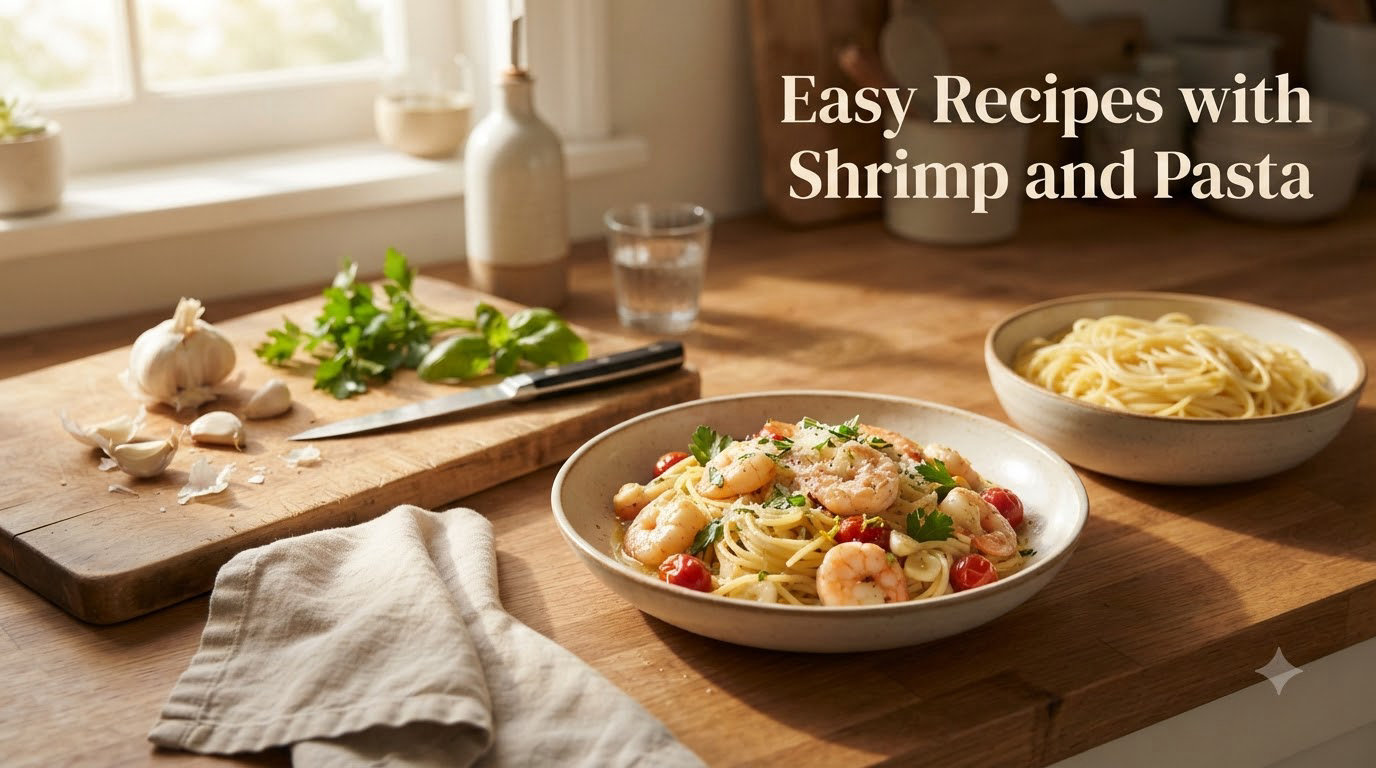
When shrimp and pasta are on hand, I use these easy recipes with shrimp and pasta to choose the cooking method before I start seasoning or heating anything.
Each of the shrimp pasta recipes answers a slightly different need, from fast skillet cooking to hands-off baking and planned leftovers.
The goal is a useful finished meal, not extra steps, so every section includes the cue that matters most for doneness or texture.
Table of Contents
Easy Recipes With Shrimp And Pasta
Choose the Recipe by Method and Texture
-
Use a skillet when browned edges and a fast sauce matter most.
-
Choose an oven or casserole method for hands-off cooking and larger portions.
-
Use a one-pot method when the starch should absorb the cooking liquid and seasoning.
-
Keep fresh herbs, acid, or a crisp vegetable for the end when the main ingredients are rich.
These easy recipes with shrimp and pasta are organized so the cooking method, doneness cue, and practical adjustment are visible before the longer instructions.
Essential Ingredients for Shrimp Pasta
Before diving into the recipes, let me walk you through the core ingredients you will need. Having everything prepped and ready makes shrimp pasta come together smoothly because shrimp cooks so quickly.
Choosing the Right Shrimp
Use large or jumbo shrimp (26/30 or 21/25 count per pound) for pasta dishes. They are easier to sear without overcooking and provide a satisfying bite alongside the noodles. Peeled and deveined shrimp save you time, but you can buy them shell-on for better flavor in the pan sauce.
Frozen shrimp work just as well as fresh for pasta recipes. In fact, most “fresh” shrimp at the grocery store were previously frozen. Thaw frozen shrimp overnight in the refrigerator or place them in a colander under cold running water for about 15 minutes.
Pat the shrimp completely dry with paper towels before cooking. Moisture is the enemy of a good sear, and wet shrimp will steam instead of developing that golden crust that adds so much flavor.
Best Pasta Shapes for Shrimp
Long strands like linguine and spaghetti are the classic pairing for shrimp. The noodles twirl beautifully and the sauce clings to every strand. If you prefer short pasta, penne, rigatoni, and farfalle all work well because their shapes hold sauce in crevices and nooks.
Cook your pasta one minute less than the package instructions for al dente texture. The pasta will finish cooking in the sauce, absorbing flavor and releasing starch that helps thicken everything together. Always reserve at least one cup of pasta cooking water before draining.
Pantry Staples You Will Need
All three recipes use a foundation of common pantry ingredients. Here is what to stock up on:
-
Extra virgin olive oil and unsalted butter
-
Fresh garlic (at least 6 to 8 cloves)
-
Fresh lemons for zest and juice
-
Grated Parmesan cheese (freshly grated melts best)
-
Kosher salt and freshly ground black pepper
-
Red pepper flakes for optional heat
-
Fresh parsley for finishing
-
Dry white wine such as Pinot Grigio or Sauvignon Blanc (optional but recommended)
Complete Shrimp And Pasta Recipes
1. Classic Garlic Butter Shrimp Pasta
This recipe is useful on busy nights because it uses just a handful of ingredients and takes 20 minutes from start to finish. The garlic butter sauce coats every strand of pasta, and a squeeze of lemon at the end brightens everything up. It is essentially a shrimp scampi pasta that anyone can master on the first try.
Serves: 4 | Time: 35 minutes | Method: Skillet
Ingredients
-
12 oz linguine or spaghetti
-
1 lb large shrimp, peeled and deveined, tails on or off
-
4 tablespoons unsalted butter, divided
-
2 tablespoons olive oil
-
5 cloves garlic, minced
-
1/4 teaspoon red pepper flakes (optional)
-
Zest and juice of 1 lemon
-
1/4 cup fresh parsley, chopped
-
Kosher salt and black pepper to taste
-
1 cup reserved pasta water
Instructions
-
Bring a large pot of generously salted water to a boil. Add the linguine and cook one minute less than the package directions for al dente. Before draining, scoop out one cup of the starchy pasta water and set it aside.
-
While the pasta cooks, pat the shrimp dry and season both sides with salt and pepper. Heat 2 tablespoons of butter and the olive oil in a large skillet over medium-high heat. When the butter foams, add the shrimp in a single layer without crowding the pan. Sear for 2 minutes until the bottoms turn pink and golden, then flip and cook 1 more minute. Remove the shrimp to a plate immediately.
-
Lower the heat to medium and add the remaining 2 tablespoons of butter to the same skillet. Add the minced garlic and red pepper flakes, stirring constantly for 30 to 45 seconds until fragrant but not browned. Burnt garlic turns bitter, so keep everything moving.
-
Pour in the lemon juice and zest, scraping up any browned bits from the bottom of the pan. Add half a cup of the reserved pasta water and swirl to create a light sauce. Return the shrimp to the skillet along with any juices from the plate.
-
Add the drained pasta directly to the skillet and toss everything together with tongs for 1 to 2 minutes. The pasta will absorb the sauce and finish cooking. If the noodles seem dry, add more pasta water a splash at a time until the sauce clings perfectly.
-
Off the heat, toss in the chopped parsley and season with additional salt and pepper to taste. Serve immediately in warm bowls with extra lemon wedges and freshly grated Parmesan on the side.
-
Cook’s tip: The biggest mistake people make with garlic butter shrimp pasta is overcooking the shrimp. Two minutes per side is all you need for large shrimp. They should be pink with curled tails but still have a slight give when pressed. Shrimp continue cooking from residual heat, so pull them from the pan the moment they look done.
2. Creamy Lemon Parmesan Shrimp Pasta
This creamy shrimp pasta is the one I serve when I want to impress without spending hours in the kitchen. The Parmesan cream sauce is silky and rich, balanced by fresh lemon that keeps it from feeling heavy. It tastes like something from a nice Italian restaurant but uses a simple technique anyone can follow.
Serves: 4 | Time: 35 minutes | Method: Skillet
Ingredients
-
12 oz linguine or fettuccine
-
1 lb large shrimp, peeled and deveined
-
3 tablespoons unsalted butter
-
1 tablespoon olive oil
-
4 cloves garlic, minced
-
3/4 cup heavy cream
-
1/2 cup freshly grated Parmesan cheese, plus more for serving
-
Zest and juice of 1 lemon
-
1/4 cup fresh parsley, chopped
-
1 teaspoon Italian seasoning
-
Kosher salt and black pepper to taste
-
1 cup reserved pasta water
Instructions
-
Boil the pasta in salted water until one minute shy of al dente. Reserve one cup of pasta water before draining. This starchy water is the secret to a smooth, emulsified cream sauce.
-
Season the shrimp with salt, pepper, and Italian seasoning. Heat the olive oil and 1 tablespoon of butter in a large skillet over medium-high heat. Sear the shrimp for 2 minutes per side until pink and opaque. Transfer to a plate and set aside.
-
Reduce the heat to medium-low and melt the remaining 2 tablespoons of butter in the same pan. Add the garlic and cook for 30 seconds until fragrant. Pour in the heavy cream and whisk gently, scraping up any browned bits from the pan.
-
Let the cream simmer for 2 to 3 minutes until it thickens slightly. Remove the pan from direct heat and gradually whisk in the grated Parmesan cheese. Stirring off the heat prevents the cheese from clumping or turning grainy.
-
Add the lemon zest, lemon juice, and 1/4 cup of pasta water to the sauce. Stir until smooth. If the sauce seems too thick, add more pasta water gradually until it reaches a silky, pourable consistency.
-
Add the drained pasta and seared shrimp to the sauce. Toss with tongs over low heat for 1 minute until everything is coated and warmed through. Garnish with parsley and serve with extra Parmesan.
-
Cook’s tip: Add the Parmesan slowly and stir constantly. Dumping it all in at once or adding it over high heat causes the proteins to seize, leaving you with a lumpy sauce. Freshly grated Parmesan melts smoothly, but pre-grated cheese often contains anti-caking agents that resist melting. Take the extra minute to grate your own.
3. Mediterranean Shrimp Pasta with White Wine
This is a dependable when I want something lighter and brighter. Instead of cream, the sauce is built on white wine, lemon, and olive oil with cherry tomatoes that burst and add natural sweetness. It is a Mediterranean shrimp pasta that proves you do not need heavy ingredients for big flavor.
Serves: 4 | Time: 35 minutes | Method: Skillet
Ingredients
-
12 oz spaghetti
-
1 lb large shrimp, peeled and deveined
-
3 tablespoons extra virgin olive oil
-
5 cloves garlic, thinly sliced
-
1 pint cherry tomatoes, halved
-
1/2 cup dry white wine (Pinot Grigio or Sauvignon Blanc)
-
Zest and juice of 1 lemon
-
1 teaspoon dried oregano
-
1/2 teaspoon Aleppo pepper or red pepper flakes
-
1/4 cup fresh basil, torn
-
2 tablespoons fresh parsley, chopped
-
Kosher salt and black pepper to taste
-
1 cup reserved pasta water
Instructions
-
Cook the spaghetti in well-salted water until one minute before al dente. Save one cup of pasta water, then drain. The salted water seasons the pasta from the inside out, so do not skimp on the salt here.
-
Pat the shrimp dry and season with salt, pepper, and oregano. Heat 2 tablespoons of olive oil in a large skillet over medium-high heat. Sear the shrimp for 2 minutes per side until golden and pink. Move them to a plate.
-
In the same skillet, add the remaining tablespoon of olive oil and reduce heat to medium. Add the sliced garlic and Aleppo pepper, cooking for 45 seconds until the garlic is fragrant and lightly golden around the edges.
-
Add the cherry tomatoes and cook for 3 to 4 minutes, stirring occasionally. Press down on a few tomatoes with your spoon to help them release their juices. This creates a natural, light sauce base.
-
Pour in the white wine to deglaze the pan, scraping up the browned bits. Let it bubble and reduce by half, about 2 minutes. The alcohol cooks off and leaves behind a bright, acidic flavor that ties the whole dish together.
-
Add the lemon zest, lemon juice, and 1/2 cup of pasta water. Stir to combine, then return the shrimp to the pan. Add the drained pasta and toss everything together for 1 to 2 minutes over medium heat. The pasta will soak up the wine-tomato sauce.
-
Remove from heat and fold in the torn basil and parsley. Drizzle with a little more olive oil, season to taste, and serve immediately. The fresh herbs added at the end keep their bright flavor and color.
-
Cook’s tip: If you prefer not to cook with wine, substitute with 1/2 cup of chicken broth plus 1 tablespoon of white wine vinegar. You will lose a little complexity but still get a bright, acidic sauce. Do not use cooking wine from the grocery store, as it contains added salt and preservatives that throw off the flavor balance.
Tips for Perfect Shrimp Pasta Every Time
After making these recipes more times than I can count, I have learned a few things that separate good shrimp pasta from great shrimp pasta. These tips address the most common mistakes home cooks share in forums and cooking communities.
Never Overcook the Shrimp
Overcooking shrimp is the number one complaint I see from home cooks. Shrimp go from perfectly cooked to rubbery in seconds. Large shrimp need just 2 minutes per side in a hot pan. They are done when they turn pink, form a loose C shape, and feel firm with a slight spring when pressed.
If they curl into a tight O shape, they are overcooked. Remove the shrimp from the heat the moment they look done. Carryover cooking will finish them on the plate.
Always Reserve Pasta Water
That starchy pasta water is liquid gold for your sauce. The starch helps the sauce cling to the noodles instead of pooling at the bottom of the bowl. I keep a measuring cup right next to the stove and scoop out a cupful right before draining every single time.
Add the pasta water a little at a time. You may not need the full cup, and it is easier to add more than to fix a watery sauce.
Get the Pasta-to-Shrimp Ratio Right
A good ratio is 12 ounces of pasta to 1 pound of shrimp for four servings. This gives each person a satisfying portion with plenty of shrimp in every bite. If you want a protein-forward dish, reduce the pasta to 8 ounces and keep the full pound of shrimp.
Pat Shrimp Dry for Better Searing
Moisture on the surface of the shrimp prevents browning. Take 30 seconds to pat them dry with paper towels before seasoning. This one step makes a noticeable difference in flavor because a good sear adds depth that steamed shrimp simply cannot match.
For more detailed food safety information on handling and storing shrimp, the Food Safety Authority guidelines on shrimp provide helpful reference material.
Variations and Customizations
One of the best things about shrimp pasta recipes is how adaptable they are. Once you master the base technique, you can customize endlessly based on what you have on hand.
Make it spicy: Increase the red pepper flakes to 1/2 teaspoon or add a drizzle of hot honey for a sweet-heat combo that pairs beautifully with shrimp.
Add vegetables: Spinach, asparagus, bell peppers, and zucchini all cook quickly and complement shrimp. Add sturdy vegetables to the pan after the shrimp and soften them before building the sauce.
Try a tomato-based sauce: Swap the cream or butter base for a jar of marinara or crushed tomatoes with basil. Simmer for 10 minutes, add the shrimp, and toss with pasta for a comforting Italian-style dish.
Make it gluten-free: Use your favorite gluten-free pasta. Rice-based and chickpea pastas work especially well. Just check the pasta water, as some gluten-free pastas release more starch than traditional semolina.
If you love the idea of minimal cleanup, check out these one pot pasta recipes that cook everything in a single pan. And for completely different cooking methods, these easy sheet pan dinner recipes are worth exploring too.
Storage and Reheating
Store leftover shrimp pasta in an airtight container in the refrigerator for up to 2 days. Shrimp does not hold up well for long storage, so plan to eat leftovers within 48 hours for the best texture.
To reheat, warm gently in a skillet over low heat with a splash of water or broth. The liquid reconstitutes the sauce and prevents the shrimp from turning rubbery. Avoid microwaving on high, which overcooks the shrimp and makes the pasta gummy.
I do not recommend freezing cooked shrimp pasta. The texture of both the shrimp and the pasta degrades significantly after thawing. If you want to prep ahead, cook and store the sauce separately from the pasta, then combine fresh when ready to serve.
When I compare easy recipes with shrimp and pasta, I look first at whether the protein, starch, and sauce finish at the same time; that one decision prevents most dry meat, broken sauces, and uneven texture.
For cooked food and leftovers, follow the USDA leftovers and food-safety guidance for prompt chilling, shallow storage, and thorough reheating rather than relying on smell or appearance alone.
A second way to use easy recipes with shrimp and pasta is to prep the slower component first, keep moisture adjustments small, and add delicate vegetables, dairy, or crisp toppings only when their texture can be protected.
For another practical dinner, see easy shrimp recipes, easy pasta recipes, or instant-pot rice.
Frequently Asked Questions
Can I change the seasoning in these shrimp and pasta recipes?
Yes. Keep the cooking ratio and method steady, then change the herb, spice, or sauce profile. Taste salty ingredients before adding extra salt.
What can I substitute in shrimp and pasta recipes?
Choose a substitute with a similar moisture level and cooking time. Adjust liquid gradually rather than making a large change before the dish has simmered.
How do I scale shrimp and pasta for more people?
Use a wider pan or two baking dishes so ingredients are not crowded. Check doneness rather than relying only on the original clock time.
What side dish balances shrimp and pasta?
Add contrast: a crisp salad, steamed green vegetable, acidic slaw, or simple roasted vegetable usually balances a rich or starchy main.
Can I use frozen ingredients with shrimp and pasta?
Thaw meat safely before recipes that depend on browning. Frozen vegetables can often go in later, but drain excess liquid so the sauce stays balanced.
Wrapping Up the Shrimp And Pasta Recipe Guide
These easy recipes with shrimp and pasta make it easier to turn shrimp and pasta into a complete meal without guessing about ratios, doneness, storage, or the order of the steps.
Choose one of the shrimp pasta recipes for tonight, then save a different method for the next time the same ingredients need a new direction.