
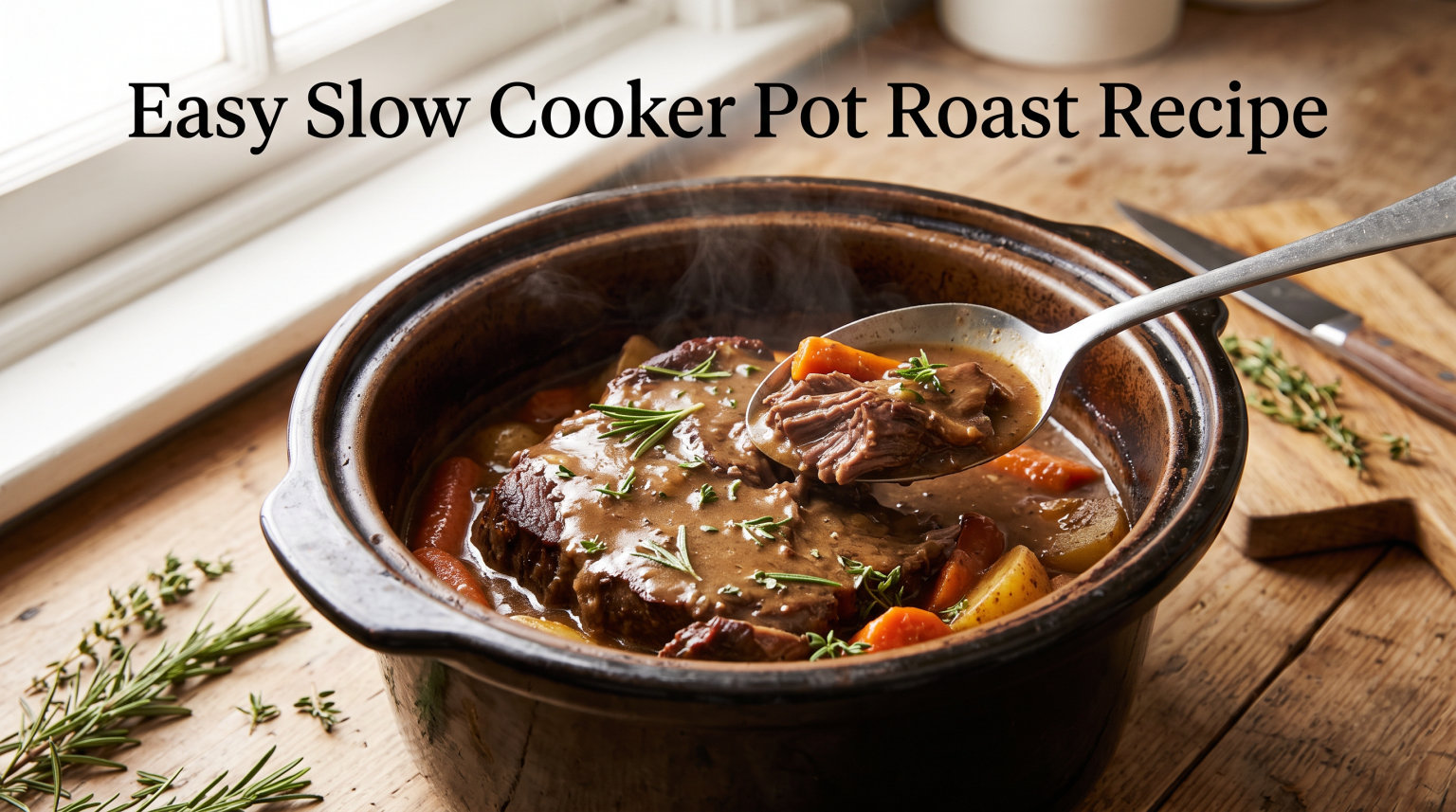
This easy slow cooker pot roast recipe turns a chuck roast, vegetables, and a savory cooking liquid into a tender, low-effort dinner. A few simple choices—using the right cut, giving it enough time, and slicing against the grain—make the result more reliable.
I have kept the method practical, with clear cooking, storage, and troubleshooting notes for busy-day cooking.
What makes this recipe special is its simplicity. You don’t need fancy ingredients or complicated techniques. Just quality beef, fresh vegetables, and a few pantry staples come together to create something that tastes like you spent all day in the kitchen. The result is a complete one-pot meal with protein, vegetables, and a rich gravy that everyone will love.
For another hearty dinner, see my easy Instant Pot beef stew and easy Instant Pot chili. For safe serving, follow the USDA safe-temperature chart.
Table of Contents
Why You’ll Love This Easy Slow Cooker Pot Roast Recipe
This recipe has earned a permanent spot in my meal rotation for good reason. Here is what makes it a family favorite:
Set It and Forget It Convenience: With just fifteen minutes of prep in the morning, dinner practically makes itself. The slow cooker works its magic while you handle everything else on your busy schedule.
Fall-Apart Tender Beef Every Time: The low, slow cooking method breaks down tough connective tissue, transforming an economical cut of beef into fork-tender perfection that literally melts in your mouth.
Complete One-Pot Meal: Meat, potatoes, carrots, and onions all cook together in one vessel. That means minimal cleanup and a balanced dinner ready when you are.
Budget-Friendly Comfort Food: A three-pound chuck roast feeds six to eight people for a fraction of what you’d spend on individual steaks or takeout.
Leftovers That Taste Even Better: The flavors deepen overnight, making this perfect for meal prep. You’ll look forward to tomorrow’s lunch.
Ingredients You’ll Need
Gathering the right ingredients makes all the difference. Here is everything you need for this classic comfort food dish:
For the Roast:
-
2.5 to 3-pound beef chuck roast (boneless)
-
1 teaspoon salt
-
1 teaspoon black pepper
-
1 teaspoon garlic powder
-
2 tablespoons olive oil or vegetable oil (for searing, optional)
For the Vegetables:
-
1.5 pounds baby potatoes (red or Yukon gold), halved
-
4 large carrots, cut into 2-inch chunks
-
1 large yellow onion, cut into thick wedges
-
3 celery stalks, cut into 2-inch pieces (optional but recommended)
For the Cooking Liquid:
-
2 cups beef broth (low sodium preferred)
-
2 tablespoons Worcestershire sauce
-
3 cloves garlic, minced
-
1 teaspoon dried thyme
-
1 bay leaf
-
1 packet onion soup mix (optional, for extra flavor)
For the Gravy:
-
3 tablespoons cornstarch
-
3 tablespoons cold water
-
Salt and pepper to taste
Ingredient Notes and Substitutions
Beef Chuck Roast: This is the ideal cut for slow cooker pot roast. It has the perfect amount of marbling and connective tissue that breaks down during cooking. Look for a roast with visible fat streaks throughout. If chuck roast is not available, bottom round or rump roast work too, though they may need an extra hour of cooking.
Potatoes: Baby potatoes hold their shape beautifully during long cooking. If using larger potatoes, cut them into quarters. Avoid Russet potatoes as they tend to fall apart.
Beef Broth: Homemade broth gives the best flavor, but store-bought works perfectly. Choose low-sodium so you can control the salt level.
Onion Soup Mix: This is optional but adds depth. If you prefer to skip it, increase the salt and add a pinch of onion powder.
Wine Addition: For extra richness, replace half the beef broth with dry red wine like Cabernet or Merlot. This adds complexity that elevates the entire dish.
How to Cook a Pot Roast in a Slow Cooker: Step-by-Step Instructions
Follow these simple steps for perfect results every time. The entire process takes about fifteen minutes of active work.
Step 1: Prepare the Beef
Pat the chuck roast completely dry with paper towels. This helps the seasoning stick and promotes better browning if you choose to sear. Mix the salt, pepper, and garlic powder together, then rub the mixture evenly over all sides of the meat. Let it sit at room temperature for about ten minutes while you prepare the vegetables.
If you want to sear the roast, heat two tablespoons of oil in a large skillet over medium-high heat. Brown the meat on all sides, about three minutes per side. This step adds deeper flavor through the Maillard reaction, but I have made excellent pot roasts without searing when I’m pressed for time.
Step 2: Layer the Vegetables
Place the onion wedges, celery pieces, and half the baby potatoes in the bottom of your slow cooker. These form a bed that lifts the roast slightly above the direct heat, preventing the bottom from overcooking. Arrange the carrots around the edges.
Pro tip from my kitchen: root vegetables take longer to cook than meat in a slow cooker. Placing them on the bottom ensures they become perfectly tender without turning mushy.
Step 3: Add the Roast and Remaining Vegetables
Set the seasoned chuck roast on top of the vegetable bed. Nestle the remaining potatoes around and on top of the meat. The potatoes on top will cook more gently, maintaining their shape while absorbing all those delicious juices.
Step 4: Add the Cooking Liquid
In a measuring cup, whisk together the beef broth, Worcestershire sauce, minced garlic, dried thyme, and onion soup mix if using. Pour this mixture over the roast and vegetables. The liquid should come about halfway up the sides of the meat. Do not completely submerge the roast.
Add the bay leaf, tucking it into the liquid. This will infuse the cooking juices with subtle herbal notes.
Step 5: Cook Low and Slow
Cover the slow cooker with the lid. Cook on LOW for 8 to 10 hours or on HIGH for 5 to 6 hours. Resist the temptation to lift the lid and check progress. Every time you remove the lid, you release heat and extend the cooking time by approximately twenty minutes.
The pot roast is done when the meat easily shreds with a fork and the vegetables are tender when pierced with a knife. If the meat still feels firm, continue cooking for another hour. Tough roast almost always means it needs more time.
Step 6: Make the Gravy
When cooking is complete, carefully remove the roast and vegetables to a serving platter. Cover loosely with foil to keep warm.
Strain the cooking juices through a fine-mesh sieve into a saucepan, discarding the solids. Bring the liquid to a gentle simmer over medium heat. In a small bowl, mix the cornstarch with cold water until smooth. Slowly whisk this slurry into the simmering juices.
Continue cooking for two to three minutes until the gravy thickens enough to coat the back of a spoon. Taste and adjust seasoning with salt and pepper as needed.
Step 7: Serve and Enjoy
Shred or slice the pot roast against the grain. Arrange on plates with the vegetables and drizzle generously with the homemade gravy. Serve immediately while hot.
Slow Cooker Cooking Times: Low vs High Heat
Understanding your cooking options helps you plan your day. Here is the breakdown of timing for different scenarios:
Slow-cooker timing: Cook a 3- to 4-pound chuck roast on low until fork-tender; start checking near 8 hours, or use high when needed and check near 5 hours.
Choosing the Right Beef Cut for Pot Roast
Not all beef cuts are created equal for slow cooking. The best pot roast comes from tough, well-exercised muscles that break down beautifully during long cooking.
Chuck Roast (Top Choice): Cut from the shoulder area, chuck roast has the perfect combination of meat, fat, and connective tissue. It produces the most flavorful, tender results. Look for roasts labeled “chuck roast,” “shoulder roast,” or “chuck eye roast.”
Bottom Round Roast: A leaner option from the rear leg. It produces good results but benefits from the addition of extra liquid and careful attention to cooking time. May be slightly less tender than chuck.
Brisket: Famous for barbecue, brisket also makes excellent pot roast. It has a distinct grain and requires slicing against the grain for tenderness. Often more expensive than chuck.
Rump Roast: Cut from the back end of the cow, this is another lean option. It holds together well for slicing but may not shred as easily as chuck.
Avoid These Cuts: Skip tender cuts like ribeye, sirloin, or tenderloin. They lack the connective tissue needed for slow cooking and will become dry and tough rather than tender.
Common Mistakes With Slow Cooker Roast and How to Avoid Them
-
Using a lean cut: Choose chuck roast for the collagen that makes pot roast tender.
-
Lifting the lid: Each peek releases heat and delays cooking.
-
Stopping too early: Tough meat needs more time, not less.
-
Slicing with the grain: Cut across it for tender bites.
After reading countless forum discussions and troubleshooting my own kitchen mishaps, here are the most common pot roast problems and their solutions:
Mistake 1: Cooking on High Heat for Convenience
Many home cooks rush the process by using the high setting. While this works in a pinch, low heat produces significantly better results. The collagen in tough cuts needs time to break down into gelatin. If your roast comes out tough despite being cooked through, it probably needed more time at a lower temperature.
Mistake 2: Lifting the Lid Too Often
Curiosity can sabotage your dinner. Every lid lift releases heat and steam, dropping the internal temperature and adding twenty to thirty minutes to your cooking time. Trust the process. Set your timer and walk away.
Mistake 3: Using Too Much Liquid
Pot roast is not soup. The meat and vegetables release moisture as they cook. You only need enough liquid to come halfway up the sides of the roast. Too much liquid dilutes the flavor and makes watery gravy.
Mistake 4: Overcooking the Vegetables
Adding delicate vegetables like peas or green beans at the beginning turns them to mush. Add quick-cooking vegetables only in the last hour of cooking. Stick to hearty root vegetables for the full cook time.
Mistake 5: Skipping the Resting Period
Letting the meat rest for ten minutes after cooking allows juices to redistribute. If you shred immediately, those precious juices run out, leaving drier meat.
Mistake 6: Using the Wrong Cut of Beef
Tender, expensive steaks become tough and dry in a slow cooker. You need a tough cut with plenty of connective tissue. When in doubt, ask your butcher for a roast suitable for braising.
Mistake 7: Not Seasoning Adequately
Large roasts need generous seasoning. What seems like plenty on the surface must flavor the entire piece. Season boldly with salt and pepper before cooking.
What Size Slow Cooker Do You Need?
This practical question rarely gets addressed in recipes. Using the right equipment makes a difference.
For a 2.5 to 3-pound roast: A 6-quart slow cooker is ideal. It provides enough space for the meat and vegetables without overcrowding.
For larger families or batch cooking: An 8-quart slow cooker accommodates up to a 5-pound roast with extra vegetables.
Why size matters: An overstuffed slow cooker cooks unevenly. Food on top may be underdone while the bottom burns. Conversely, a too-large slow cooker with a small amount of food cooks too quickly and can dry out the meat.
Fill your slow cooker between half and two-thirds full for best results. If your slow cooker is significantly larger than needed, check for doneness earlier than the recipe states.
Delicious Variations to Try
Once you master the basic recipe, experiment with these flavor variations:
French Onion Pot Roast: Use French onion soup mix and add a splash of dry sherry to the cooking liquid. Top with Gruyere cheese in the last ten minutes.
Italian Style: Replace thyme with Italian seasoning. Add a can of diced tomatoes and serve over polenta.
Mississippi Pot Roast: Add pepperoncini peppers and their juice, a packet of ranch dressing mix, and a stick of butter for tangy, rich flavor.
Red Wine Pot Roast: Substitute one cup of beef broth with dry red wine. Add fresh rosemary and thyme for an elegant dinner party version.
Southwest Style: Add a can of diced green chiles, cumin, and chili powder. Serve with warm flour tortillas instead of mashed potatoes.
Serving Suggestions and Pairings
This complete meal stands beautifully on its own, but here are ways to round out your dinner:
Classic Accompaniments: Serve over buttery mashed potatoes or egg noodles to soak up every drop of gravy. A side of crusty bread helps too.
Fresh Contrasts: Balance the richness with a simple green salad dressed with lemon vinaigrette. Steamed green beans or roasted Brussels sprouts add color and nutrition.
Bread Options: Warm dinner rolls, crusty baguette slices, or homemade cornbread complete the comfort food experience.
Wine Pairings: A medium-bodied red wine like Merlot or Pinot Noir complements the beef beautifully. For white wine drinkers, a rich Chardonnay works surprisingly well.
For those watching their diet, this pot roast pairs well with diabetic-friendly food choices like extra vegetables instead of potatoes.
Storage, Freezing, and Reheating Instructions
One of the best things about pot roast is how well it keeps. Here’s how to store and enjoy leftovers:
Refrigerator Storage
Store leftover pot roast and vegetables in an airtight container in the refrigerator for up to four days. Keep the gravy separate or spooned over the meat to prevent drying. The flavors actually improve after a day as the seasonings meld together.
Freezing Instructions
Freeze portions in freezer-safe containers or heavy-duty freezer bags for up to three months. Remove as much air as possible to prevent freezer burn. Label with the date and contents.
Freeze the gravy separately in a container with room for expansion. Thaw overnight in the refrigerator before reheating.
Reheating Methods
In the Oven (Best Method): Place the roast and vegetables in a baking dish with a splash of beef broth. Cover with foil and heat at 325 degrees Fahrenheit for twenty to thirty minutes until warmed through.
On the Stovetop: Slice the cold roast and warm gently in a skillet with gravy over medium-low heat. This prevents the meat from drying out.
In the Microwave: Cover with a damp paper towel and heat in one-minute intervals, checking between each. This method works in a pinch but can make the meat slightly tougher.
Slow Cooker Reheat: Place leftovers in your slow cooker with some broth. Heat on LOW for one to two hours. Perfect for entertaining when you want to prepare ahead.
Creative Leftover Ideas
Transform leftovers into entirely new meals:
-
Shred and make hot roast beef sandwiches with melted provolone
-
Add to vegetable soup for beef vegetable soup
-
Make beef and vegetable shepherd’s pie with mashed potato topping
-
Stuff into baked potatoes with cheese and sour cream
-
Make beef tacos with cilantro and lime
Frequently Asked Questions
Is pot roast better on low or high?
Low heat gives chuck roast more time to become fork-tender. Use high only when needed, and expect a slightly less silky texture.
Why is my slow cooker pot roast tough?
It usually needs more time. Keep cooking until the connective tissue has softened and a fork twists easily in the meat.
Can I freeze leftover pot roast?
Yes. Cool it promptly, freeze it with some gravy, and thaw it in the refrigerator before reheating.
Conclusion
This easy slow cooker pot roast recipe is a dependable way to make a comforting dinner with very little active work. Mastering this easy slow cooker pot roast recipe opens up a world of comforting, stress-free dinners. The beauty of this dish lies in its simplicity and reliability. With just fifteen minutes of morning prep, you return home to a meal that tastes like you spent hours in the kitchen.
Remember the keys to success: choose a well-marbled chuck roast, resist lifting the lid during cooking, and give the meat enough time to become truly tender. Do not stress about searing if you are short on time. The recipe works beautifully either way.
I have served this pot roast to picky eaters, dinner guests, and busy family members. It never fails to satisfy. The leftovers make incredible sandwiches, soups, and creative next-day meals. Make a batch this weekend and discover why this classic comfort food deserves a permanent spot in your recipe collection.
What questions do you have about making the perfect pot roast? Leave a comment below and I will help you troubleshoot. And if you try this recipe, let me know how it turns out for your family.
Prep Time: 15 minutes | Cook Time: 8-10 hours on LOW or 5-6 hours on HIGH | Servings: 6-8