
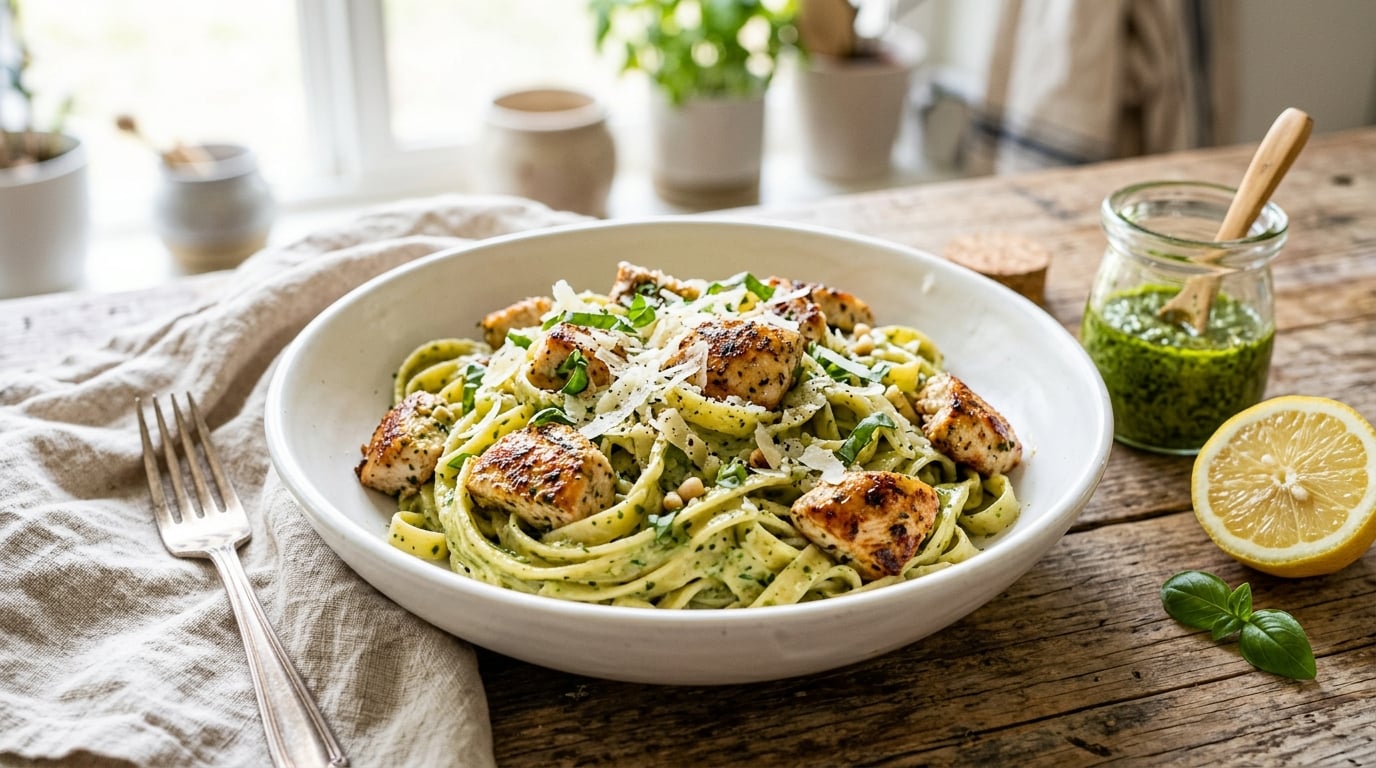
If you want high protein pasta recipes for dinner that actually fill you up, you have two levers to pull, and you need both. Swap standard durum wheat pasta for a chickpea, lentil, or protein-fortified noodle, and then add a real protein to the bowl: chicken, ground turkey, lean beef, shrimp, tuna, steak, or blended cottage cheese.
Between the two, you land somewhere around 30 to 40 grams of protein per plate. The ten recipes below all hit at least 25 grams, most of them land in under 35 minutes, and every one uses ingredients you can pick up on a normal grocery run. Late September is a good month for this: the tomatoes are still good, the weeknights are getting darker earlier, and nobody wants to stand at a stove for an hour.
Two quick notes before you start. Protein numbers here are estimates for a standard serving, and brands of chicken and pasta vary enough that nobody’s label is gospel. And legume pasta cooks faster and turns to mush faster than wheat, so pull it a minute early. I learned that the hard way more than once.
If you want more protein-forward meals that are not pasta, I keep coming back to these easy high protein dinner recipes and these protein bowl recipes built for meal prep.
Table of Contents
At a Glance
Here is the whole list on one screen. Every dish below is a complete recipe with quantities, times, and a substitution if something in your fridge is not cooperating.
| Recipe | Time | Difficulty | Best for |
|---|---|---|---|
| Creamy Chicken Pesto Pasta | 30 min | Easy | Family weeknight, picky eaters |
| Baked Salmon Tomato Basil Pasta | 40 min | Easy | Omega-3s, entertaining |
| Beef and Mushroom Pasta | 35 min | Easy | Big iron, hungry teenagers |
| Turkey Meatball Spaghetti | 45 min | Medium | Meal prep, freezing ahead |
| Lemon Garlic Shrimp Linguine | 25 min | Easy | Fastest dinner on the list |
| Lentil Bolognese with Rigatoni | 40 min | Easy | Meatless Mondays, batch cooking |
| Tuna Stuffed Pasta Shells | 45 min | Medium | Casserole night, budget |
| Chickpea Spinach Carbonara | 30 min | Medium | Vegetarian, pantry cooking |
| Steak, Tomato, and Garlic Pasta | 30 min | Medium | Date night, hearty plates |
| Crispy Chicken Caesar Pasta Salad | 30 min | Easy | Lunchboxes, make-ahead |
1. Creamy Chicken Pesto Pasta
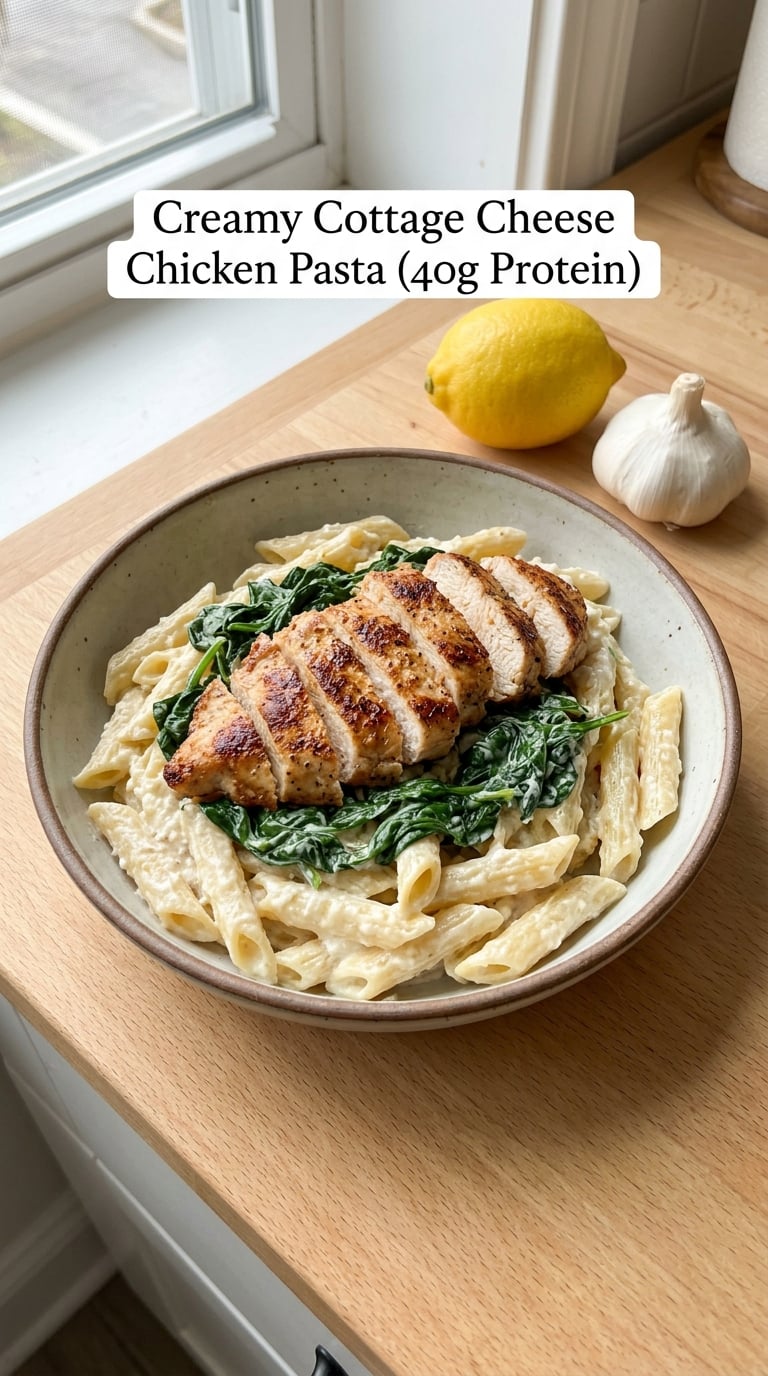
This is the one I make most often. Pesto and cream do the flavor work, seared chicken does the protein work, and the whole thing lands in a bowl with about 40 grams of protein before you add anything on top.
Yield: 4 servings · Prep: 10 minutes · Cook: 20 minutes · Total: 30 minutes · Difficulty: Easy
Ingredients
- 12 oz whole-wheat penne
- 1 1/4 lb boneless skinless chicken breasts, cut into 1-inch pieces
- 2 tbsp olive oil, divided
- 1/2 cup basil pesto (store-bought is fine)
- 3 garlic cloves, thinly sliced
- 1 cup cherry tomatoes, halved
- 1 1/2 cups whole milk
- 1/2 cup heavy cream
- 1/2 cup finely grated Parmesan, plus more to serve
- 1/3 cup fresh basil leaves, torn
- Salt and black pepper
Instructions
- Bring a large pot of salted water to a boil and cook the penne until al dente, 9 to 11 minutes.
- Heat 1 tbsp oil in a large skillet over medium-high and sear the chicken in a single layer until browned on the outside, about 5 minutes.
- Add the remaining oil, the garlic, and the cherry tomatoes and cook until the tomatoes soften and split, 4 minutes.
- Stir in the pesto, milk, and cream and bring to a gentle simmer, 3 minutes.
- Add the drained pasta and toss until the sauce turns glossy and clings, 2 minutes.
- Stir in the Parmesan off the heat. Season with salt and pepper.
- Check the chicken has reached 165°F (74°C) in the thickest piece, then let it rest 2 minutes.
- Fold in the fresh basil and serve with extra Parmesan.
Tip: Take the pan off the heat before the Parmesan goes in. Add it while the sauce is still bubbling and it will grain up instead of melting smooth.
Swap it: Use shrimp instead of chicken and cut the total time by about 8 minutes, or use 12 oz of thawed and squeezed cottage cheese blended with the pesto for a lighter, lower-saturated-fat sauce.
Storage: Keeps 3 to 4 days in the fridge. Make the sauce and cook the pasta separately if you are meal prepping, then combine with a splash of milk when you reheat. Both freeze well for 2 months.
Allergens: dairy, gluten.
2. Baked Salmon Tomato Basil Pasta
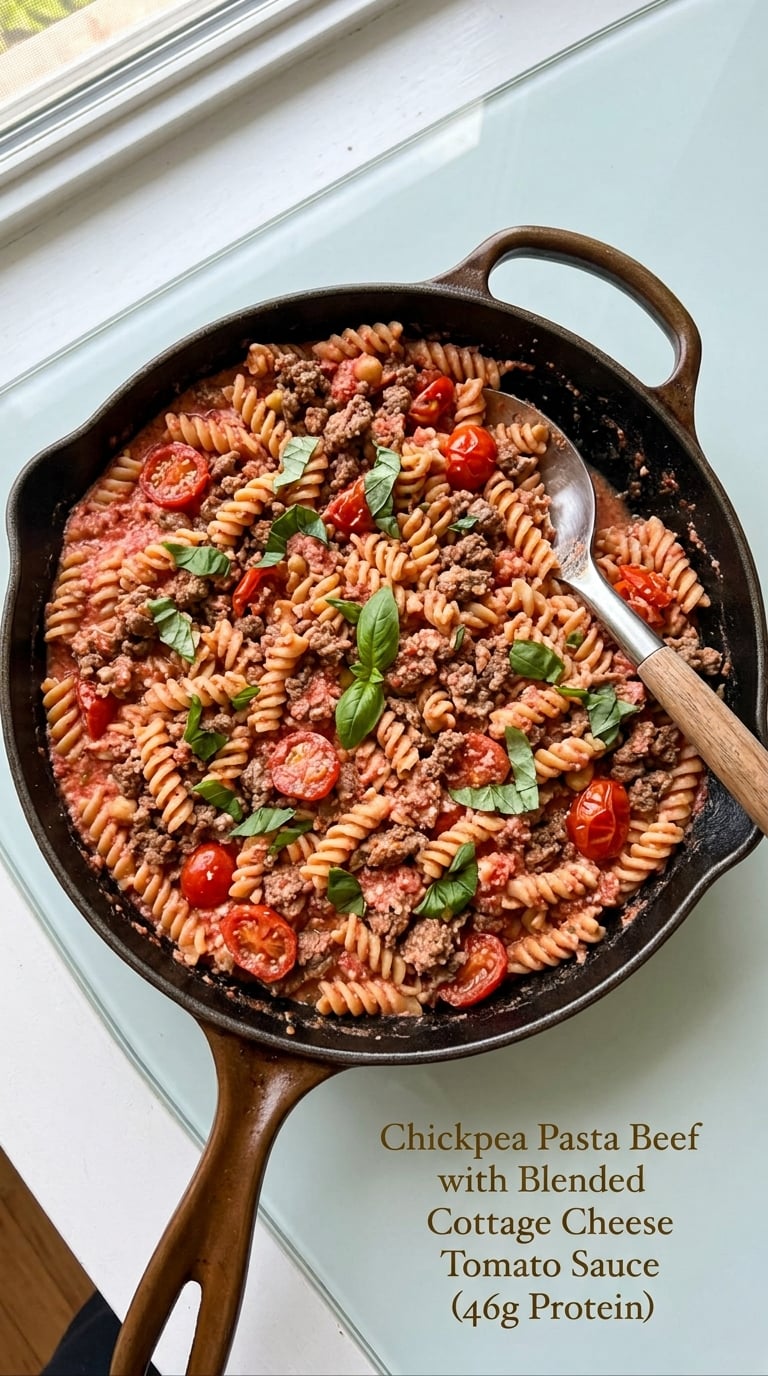
Everything roasts on one sheet pan while the pasta boils. That is the whole trick. You get a proper baked salmon texture, a jammy tomato sauce built from the roasting juices, and a plate with roughly 40 grams of protein on it.
Yield: 4 servings · Prep: 10 minutes · Cook: 30 minutes · Total: 40 minutes · Difficulty: Easy
Ingredients
- 12 oz penne or rigatoni
- 4 skinless salmon fillets, 5 to 6 oz each
- 2 pints cherry tomatoes
- 1/2 red onion, sliced into thin half-moons
- 5 garlic cloves, smashed
- 3 tbsp olive oil
- 2 tbsp balsamic vinegar
- 1/3 cup extra-virgin olive oil, for drizzling
- 1/4 cup grated Parmesan
- 1/2 cup fresh basil leaves
- Salt, black pepper, and red pepper flakes
Instructions
- Heat the oven to 425°F (220°C).
- Toss the cherry tomatoes, red onion, and garlic with 2 tbsp olive oil, the balsamic vinegar, salt, and pepper on a rimmed sheet pan.
- Nestle the salmon fillets among the tomatoes, drizzle with the remaining olive oil, and season with salt and pepper.
- Roast for 12 to 15 minutes, until the salmon flakes at the thickest part and reads 145°F (63°C) in the center.
- Start the pasta in salted boiling water while the salmon roasts and cook until al dente.
- Rescue the tomatoes and garlic from the sheet pan into a wide serving dish and roughly crush them with a fork.
- Drain the pasta, add it to the dish, and fold everything together with the pan juices.
- Top with the flaked salmon, Parmesan, basil, and red pepper flakes. Drizzle with the extra-virgin olive oil.
Tip: Pull the salmon at 145°F (63°C) even if the center still looks a touch translucent. It finishes on the plate, and overcooked salmon goes dry and chalky in about a minute.
Swap it: Trout works identically. For a dairy-free plate, skip the Parmesan and finish with a spoonful of white bean purée stirred through the tomatoes.
Storage: Best eaten the same day. Refrigerate leftovers 3 to 4 days and reheat the pasta in a skillet over medium heat with a tablespoon of water; the microwave makes the salmon edges rubbery.
Allergens: fish, gluten.
3. Beef and Mushroom Pasta
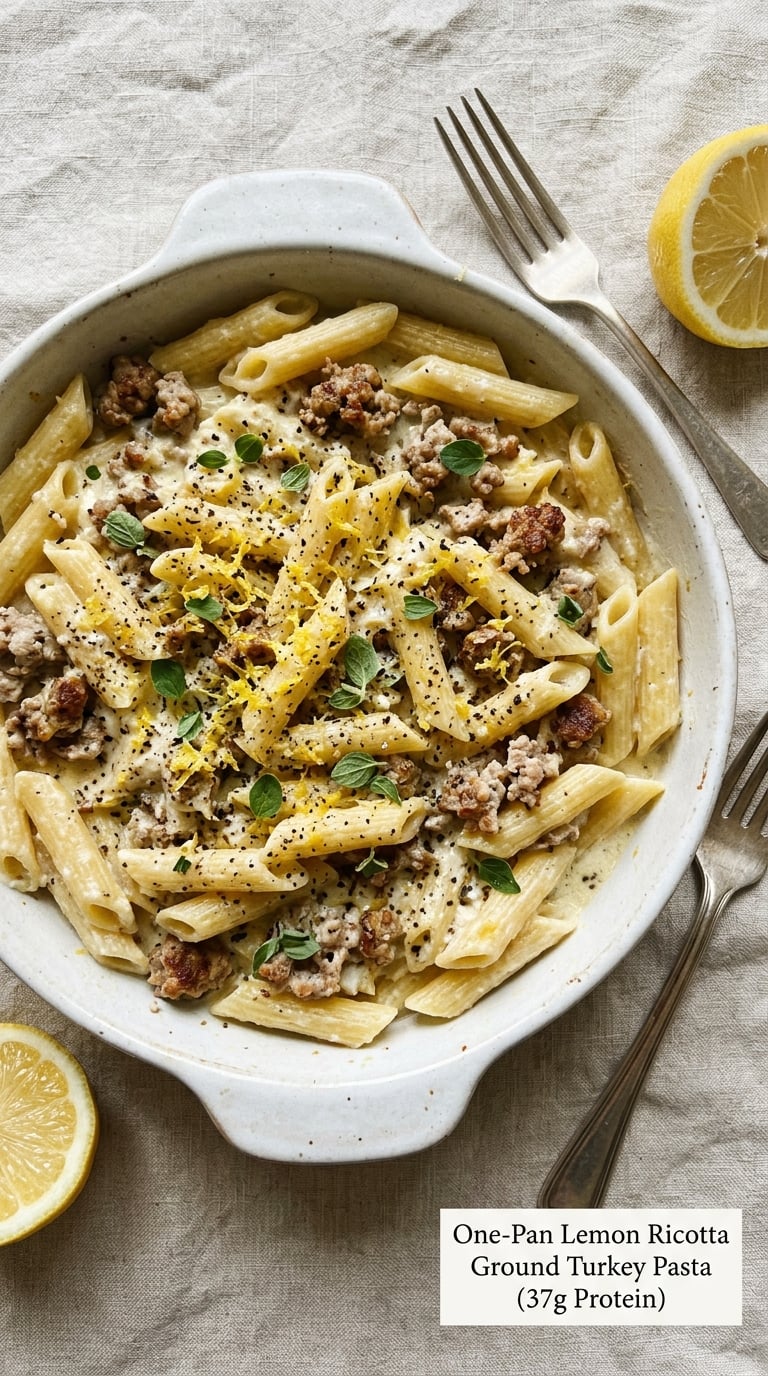
Worth the extra few minutes for a proper browned crust on the beef, which is the difference between a good plate and a forgettable one. Roughly 40 grams of protein per serving, and it reheats without losing its sauce.
Yield: 4 servings · Prep: 10 minutes · Cook: 25 minutes · Total: 35 minutes · Difficulty: Easy
Ingredients
- 12 oz linguine
- 1 lb 90% lean ground beef
- 8 oz cremini mushrooms, sliced
- 1 tbsp olive oil
- 1 small yellow onion, diced
- 4 garlic cloves, minced
- 1 tsp dried oregano
- 1/2 cup low-sodium beef broth
- 1/3 cup heavy cream
- 1/4 cup grated Parmesan
- 2 tbsp chopped flat-leaf parsley
- Salt and black pepper
Instructions
- Bring a large pot of salted water to a boil and cook the linguine until al dente, 9 to 11 minutes.
- Heat the oil in a large skillet over medium-high and brown the beef in a single layer, breaking it up as it colors, 6 to 7 minutes.
- Push the beef aside, add the mushrooms and onion, and cook until the liquid is gone and the mushroom edges look dark, 7 minutes.
- Stir in the garlic and oregano and cook 1 minute.
- Pour in the broth and scrape up the browned bits from the bottom of the pan.
- Simmer until the liquid drops by about half, 3 minutes.
- Stir in the cream and season with salt and pepper.
- Add the drained pasta and toss for 2 minutes until the sauce clings.
- Off the heat, fold in the Parmesan and parsley. Check the beef has hit 160°F (71°C) and rest 3 minutes before serving.
Tip: Do not move the beef for the first few minutes of browning. Crowding the pan or stirring constantly gives you grey meat in a grey puddle instead of a browned one.
Swap it: Ground turkey works and lowers the saturated fat. Keep the mushrooms, though; they are what keeps the pan from drying out once the cream goes in.
Storage: 3 to 4 days in the fridge. The sauce thickens overnight, so add a splash of broth or cream when reheating over low heat. Freezes up to 2 months.
Allergens: gluten, dairy.
4. Turkey Meatball Spaghetti
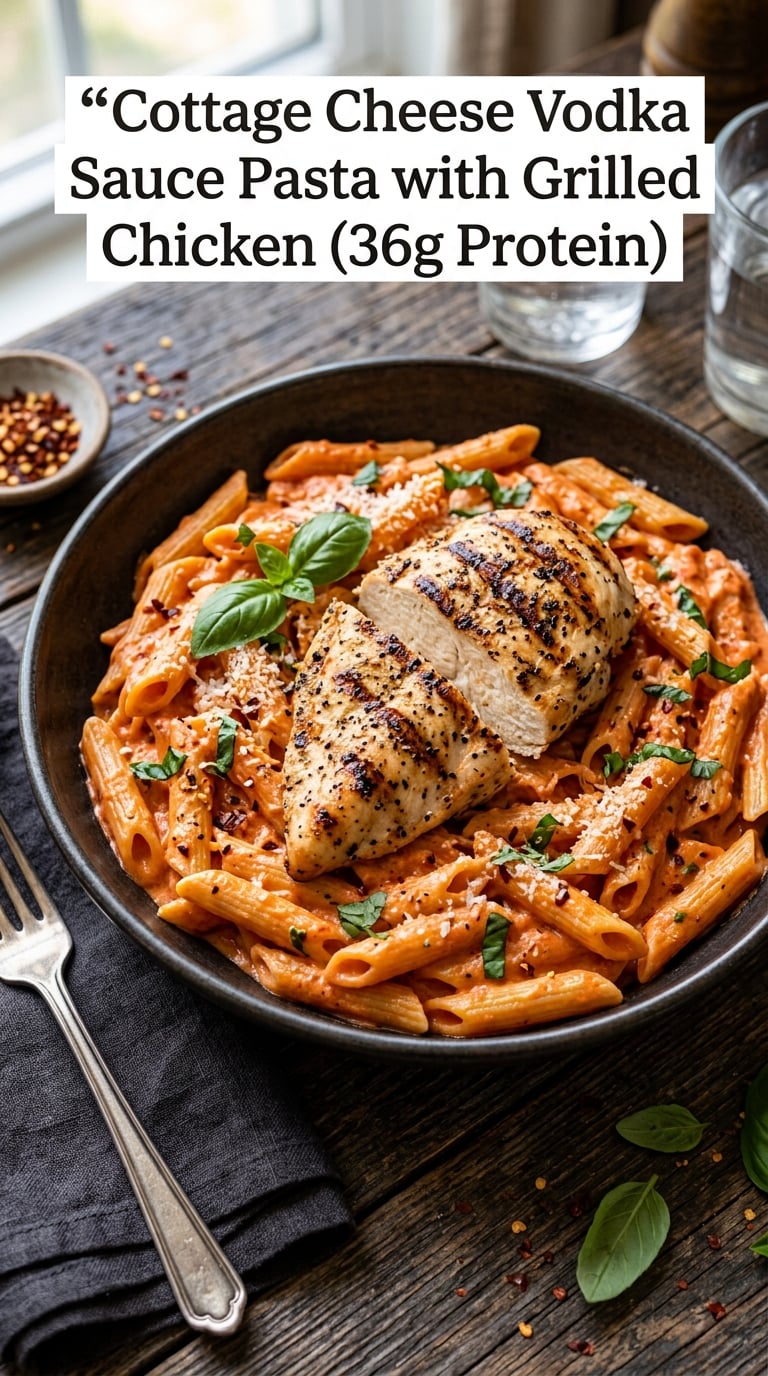
A real meatball dinner without the fuss, and the only recipe here that genuinely rewards a freezer. I make a double batch of meatballs on a Sunday and the weeknight versions take about 25 minutes from freezer to bowl. About 42 grams of protein a plate.
Yield: 4 servings · Prep: 20 minutes · Cook: 25 minutes · Total: 45 minutes · Difficulty: Medium
Ingredients
For the meatballs
- 1 lb ground turkey (93% lean)
- 1/2 cup panko breadcrumbs
- 1 egg, beaten
- 1/3 cup grated Parmesan
- 2 garlic cloves, minced
- 2 tbsp chopped parsley
- 1 tsp dried oregano
- 1/2 tsp salt
For the sauce and pasta
- 2 tbsp olive oil
- 1 small onion, diced
- 3 garlic cloves, minced
- 28 oz crushed tomatoes
- 1 tsp dried basil
- 1/2 tsp red pepper flakes
- 12 oz spaghetti
- 1/4 cup grated Parmesan, plus more to serve
- Fresh parsley, to finish
Instructions
- Heat the oven to 400°F (205°C) and line a sheet pan with parchment.
- Mix the turkey, panko, egg, Parmesan, garlic, parsley, oregano, and salt with your hands until combined but still loose.
- Roll into 16 meatballs, about 2 inches across, spaced apart on the pan.
- Bake 15 to 18 minutes, until the internal temperature reaches 165°F (74°C) and the outsides are deeply browned.
- While they bake, heat the oil in a saucepan and soften the onion, 5 minutes.
- Add the garlic, basil, and pepper flakes and cook 1 minute.
- Pour in the crushed tomatoes and simmer until thickened and darker in color, 15 minutes.
- Cook the spaghetti until al dente, 9 to 11 minutes, then drain and toss with the sauce.
- Add the baked meatballs and spoon sauce over them. Simmer 5 minutes so they pick up the tomato.
- Top with Parmesan and parsley.
Tip: Keep the sauce in its own pot rather than pouring it into the meatball pan. Separate components keep better in the fridge and reheat without drying the meatballs out.
Swap it: Store-bought turkey meatballs save you steps 2 through 4. For a gluten-free plate, use certified gluten-free breadcrumbs and chickpea spaghetti.
Storage: Meatballs keep 4 days refrigerated and 3 months frozen on a tray before bagging. Sauce keeps 5 days. Assemble with cool sauce and pasta, then heat and add the meatballs at the last second so they stay juicy.
Allergens: gluten, egg, dairy.
5. Lemon Garlic Shrimp Linguine
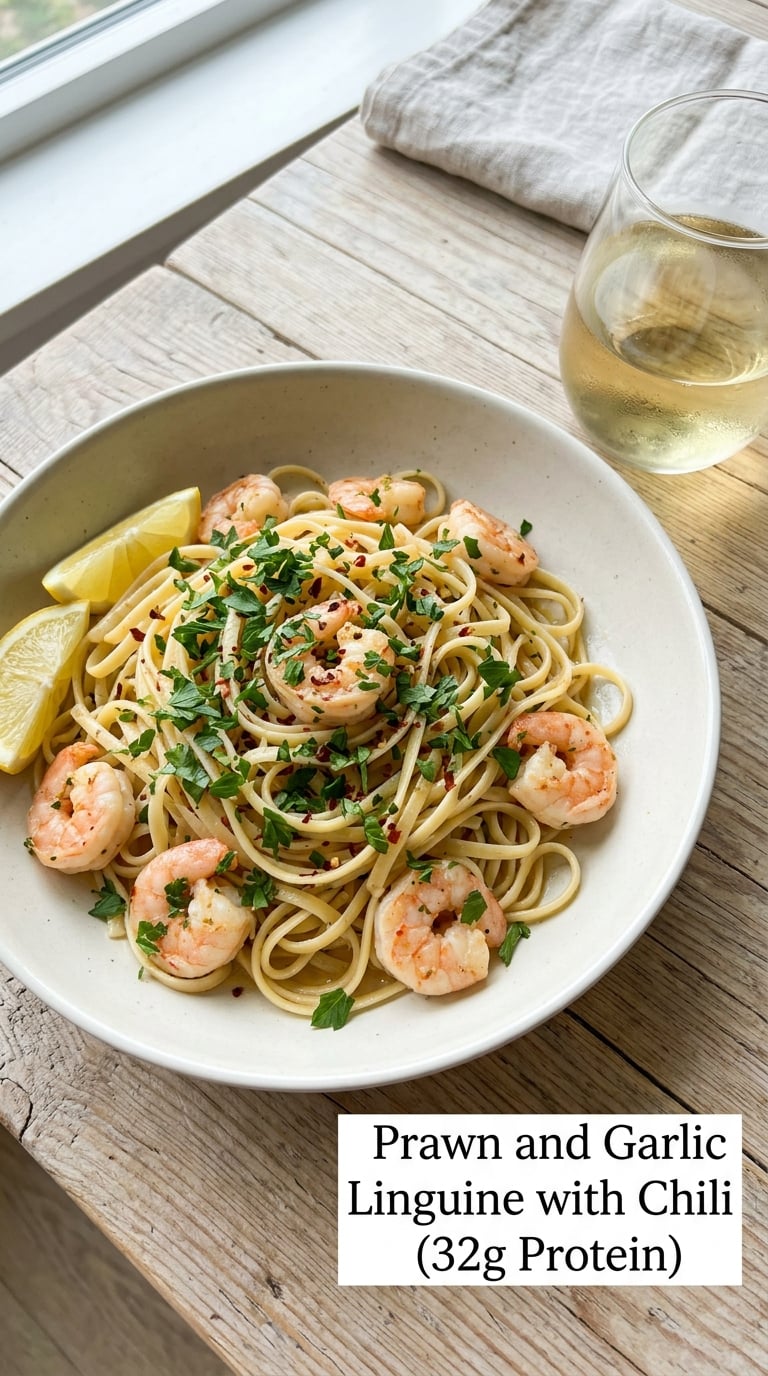
The fastest thing on this list and the one I make on the nights I get home late. Shrimp cook in about three minutes, so the whole dinner is really just boiling water plus one pan. About 35 grams of protein per serving.
Yield: 4 servings · Prep: 10 minutes · Cook: 15 minutes · Total: 25 minutes · Difficulty: Easy
Ingredients
- 12 oz linguine
- 1 1/2 lb large shrimp, peeled and deveined, tails on or off
- 4 tbsp olive oil, divided
- 4 garlic cloves, thinly sliced
- 1/2 tsp red pepper flakes
- 1/3 cup dry white wine or chicken broth
- Juice and zest of 1 lemon
- 3 tbsp unsalted butter, cubed
- 1/3 cup finely grated Parmesan
- 2 tbsp chopped flat-leaf parsley
- Salt and black pepper
Instructions
- Bring a large pot of salted water to a boil and cook the linguine until al dente, 9 to 11 minutes.
- Pat the shrimp dry and season with salt and pepper.
- Heat 2 tbsp oil in a large skillet over high heat and sear the shrimp in a single layer for 90 seconds per side.
- Remove the shrimp to a plate. They will look barely cooked at this point, which is exactly right.
- Lower the heat to medium and add the remaining oil, the garlic, and the pepper flakes. Cook 30 seconds.
- Pour in the wine or broth and let it reduce by half, 2 minutes.
- Add the lemon juice and zest, then the butter, stirring until the butter melts into a glossy sauce.
- Add the drained pasta and toss for 1 minute.
- Return the shrimp to the pan, toss once, and cook just until they turn opaque and pink and hit 145°F (63°C), about 1 minute.
- Off the heat, fold in the Parmesan and parsley. Season and serve with lemon wheels.
Tip: Pull the shrimp out early. They go back in at the end and finish in the sauce, and that is how you get them opaque all the way through without turning them rubbery.
Swap it: Scallops work in place of shrimp, and 8 oz of crabmeat stirred in at the very end turns this into a different dinner entirely. Cooked chicken works too if you are not in the mood for seafood.
Storage: Best fresh. Refrigerate up to 2 days and reheat gently in a skillet over low heat with a splash of pasta water; the butter sauce will split if you boil it. The lemon loses its brightness overnight, so add a fresh squeeze before serving.
Allergens: shellfish, gluten, dairy.
6. Lentil Bolognese with Rigatoni
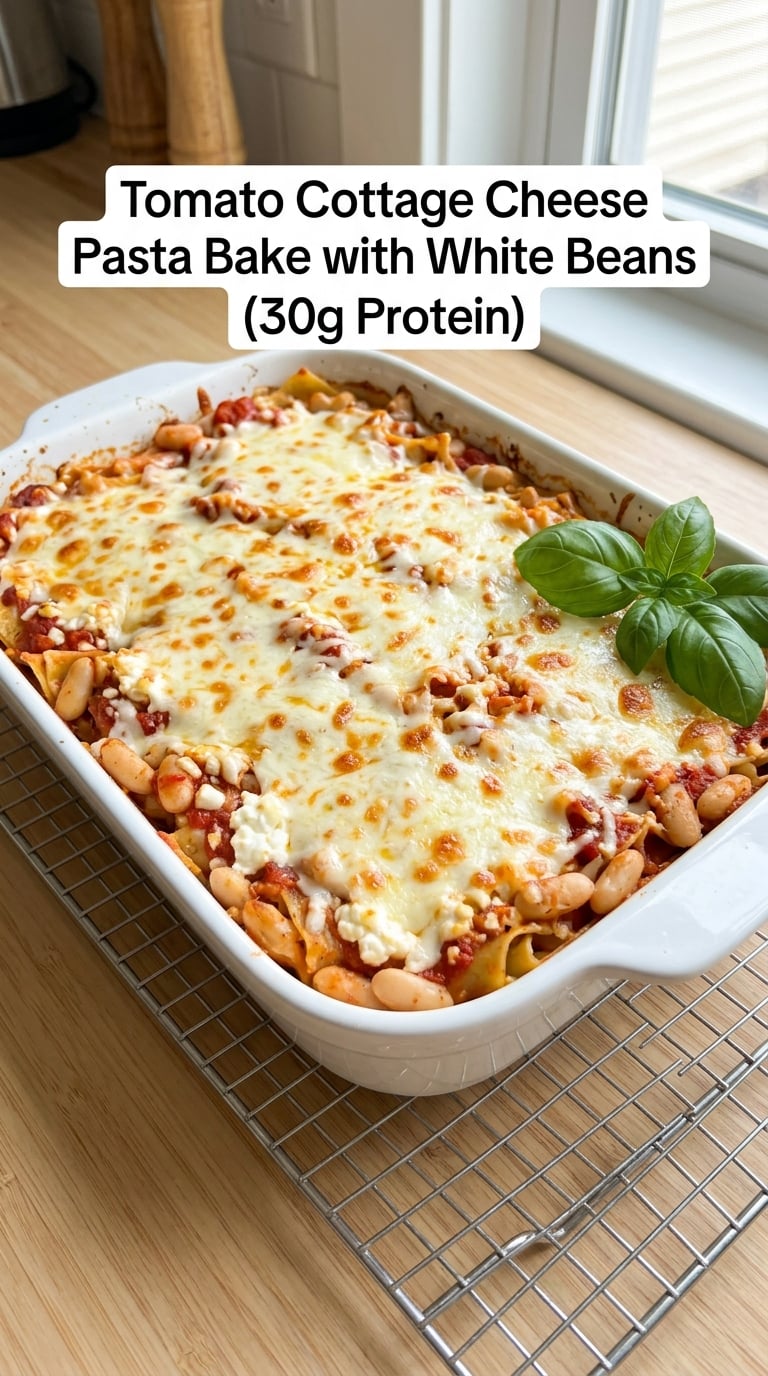
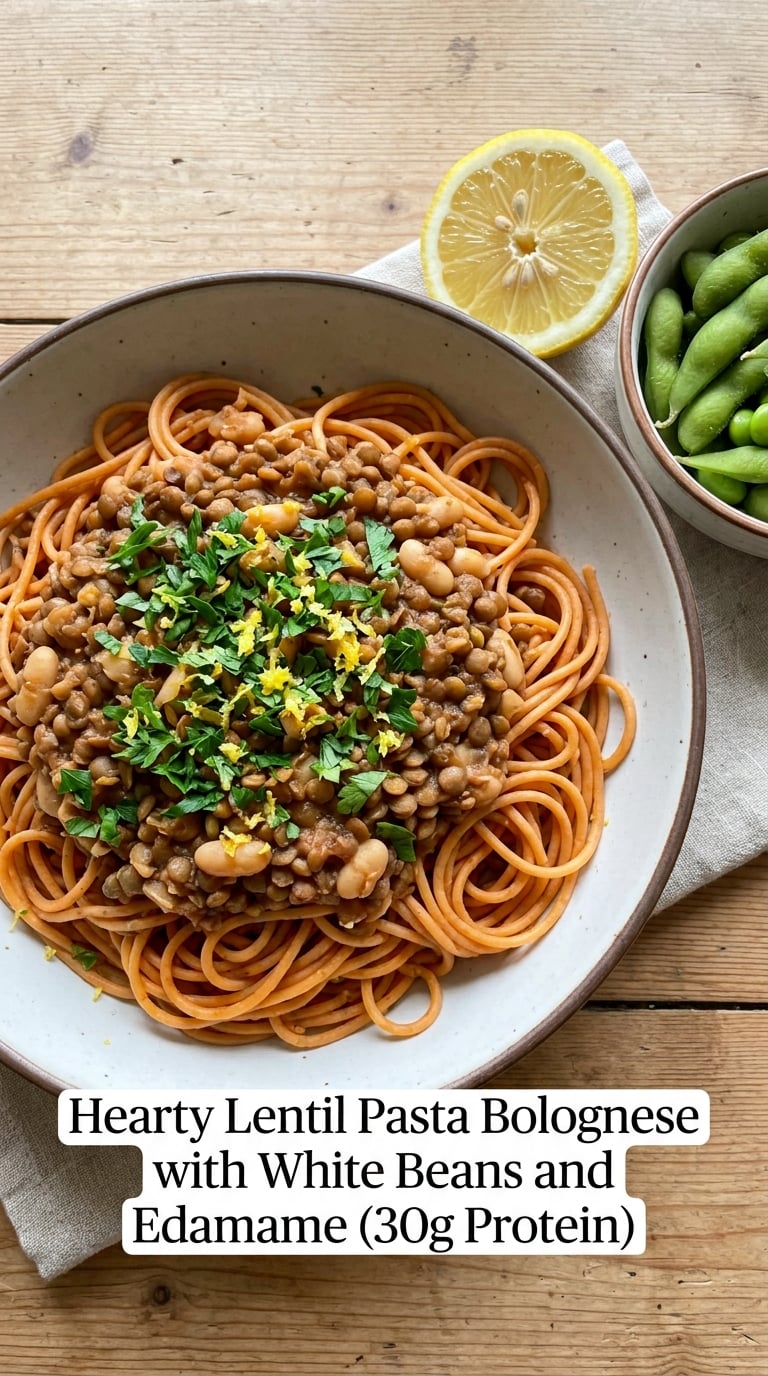
A meatless sauce that tastes like it simmered all afternoon, because a splash of miso and a long, low simmer get you most of the way there in forty minutes. It is the one everyone in the house eats, and roughly 25 grams of protein a plate without any meat at all.
Yield: 4 servings · Prep: 10 minutes · Simmer: 30 minutes · Total: 40 minutes · Difficulty: Easy
Ingredients
- 12 oz rigatoni
- 2 tbsp olive oil
- 1 small yellow onion, finely diced
- 2 carrots, finely diced
- 2 celery stalks, finely diced
- 4 garlic cloves, minced
- 1 cup cooked lentils (green or brown), plus 1/2 cup cooking liquid
- 28 oz crushed tomatoes
- 2 tbsp tomato paste
- 2 tsp dried oregano
- 1 tbsp white miso
- 1 tbsp nutritional yeast
- Salt and black pepper
- 1/4 cup grated Parmesan and fresh basil, to serve
Instructions
- Heat the oil in a wide pot and soften the onion, carrot, and celery over medium-low heat until everything is tender and translucent, 10 minutes.
- Add the garlic and oregano and cook 1 minute.
- Stir in the tomato paste and cook until it darkens, 2 minutes.
- Add the lentils, their cooking liquid, and the crushed tomatoes.
- Bring to a bare simmer, then drop the heat so it barely bubbles.
- Cook uncovered, stirring every 10 minutes, until the sauce is thick and glossy, 25 to 30 minutes.
- Turn off the heat and stir in the miso and nutritional yeast.
- Cook the rigatoni until al dente, 10 to 12 minutes, then drain and reserve 1/2 cup of the water.
- Toss the pasta with the sauce, loosening with a splash of pasta water if it looks stiff.
- Serve with Parmesan, basil, and black pepper.
Tip: Take the sauce off the heat before the miso goes in. Boiling after that point dulls its savory flavor, and the last two minutes of simmering do not need the extra salt either.
Swap it: Swap half the lentils for an extra cup of white beans, or use 12 oz of red lentil pasta in place of the rigatoni for even more protein. Red miso works better than white if you want the sauce to taste more meaty.
Storage: 4 days in the fridge, and the flavors genuinely improve by day two. It freezes beautifully for 3 months; loosen the frozen sauce with pasta water when you reheat it in a saucepan. Cook the pasta fresh rather than freezing it with the sauce.
Allergens: gluten, dairy. Miso contains soy.
7. Tuna Stuffed Pasta Shells
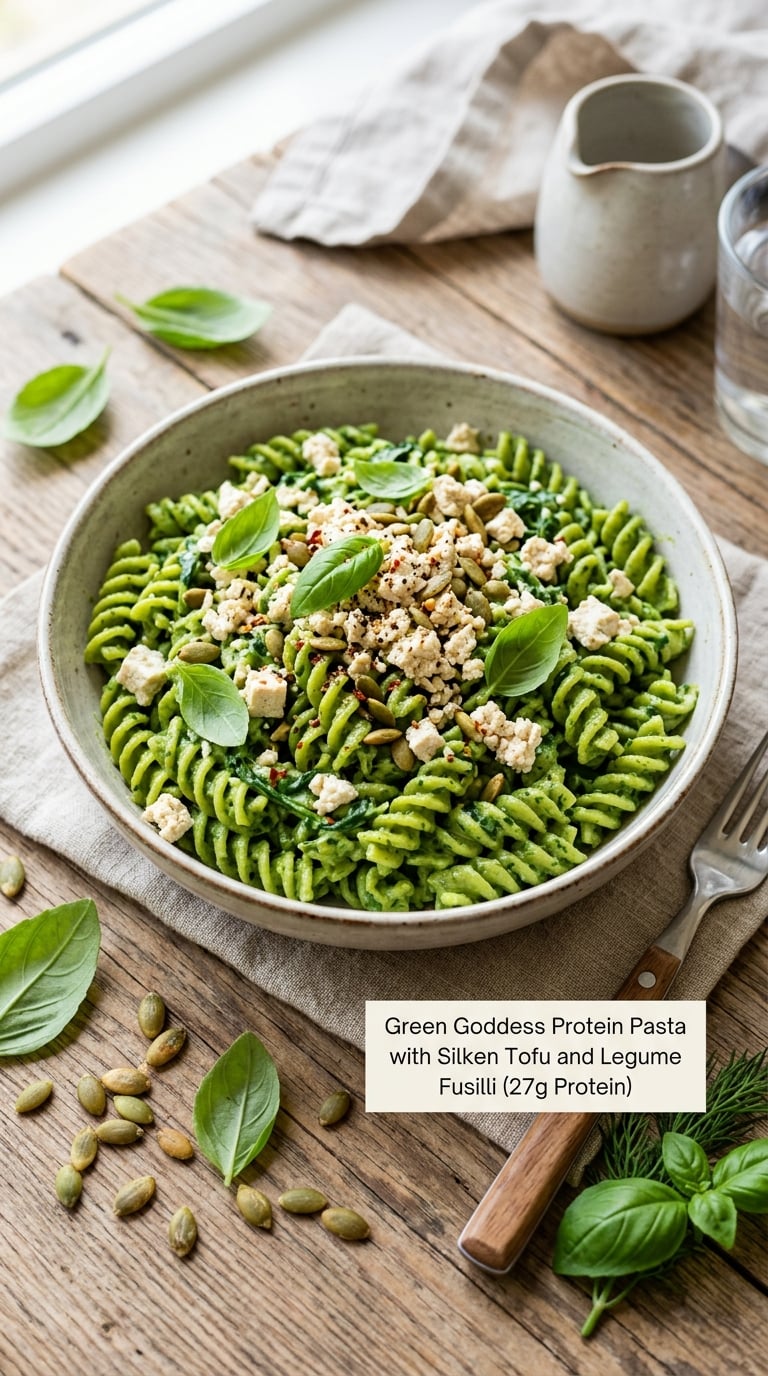
A casserole that tastes like more effort than it is, and the best budget dinner here: canned tuna, a jar of marinara, and a bag of shredded mozzarella. Four shells per serving lands around 42 grams of protein, and it is the recipe my picky eater requests.
Yield: 4 servings · Prep: 15 minutes · Cook: 30 minutes · Total: 45 minutes · Difficulty: Medium
Ingredients
- 12 oz jumbo pasta shells
- 2 tbsp olive oil
- 1 small onion, diced
- 2 garlic cloves, minced
- 2 cans (5 oz each) tuna in water, drained
- 1/2 cup mayonnaise
- 1/3 cup chopped celery
- 1/3 cup chopped dill or parsley
- 1 tsp Dijon mustard
- 2 cups marinara sauce
- 1 1/2 cups shredded mozzarella
- 1/4 cup grated Parmesan
- Salt, black pepper, and red pepper flakes
Instructions
- Heat the oven to 400°F (205°C).
- Cook the shells in salted boiling water until just tender, 7 to 8 minutes, then drain and rinse briefly so they do not stick together.
- Heat the oil in a skillet and soften the onion, 5 minutes.
- Add the garlic, celery, and mustard and cook 2 minutes.
- Turn off the heat and stir in the tuna, mayonnaise, dill or parsley, salt, and pepper. Mix until just combined and season generously.
- Spread 1 cup of marinara across the bottom of a 9×13 inch baking dish.
- Spoon the tuna mixture into each shell and nestle them upright in the dish.
- Cover the shells with the remaining marinara, then the mozzarella and Parmesan.
- Bake 18 to 20 minutes, until the cheese is melted and browned at the edges and the filling is steaming hot, 165°F (74°C) in the center.
- Rest 5 minutes so the filling sets, then scatter with parsley and red pepper flakes.
Tip: Under-cook the shells by a full minute. They finish in the oven, and pasta that is already tender when it goes in turns to mush by the time the cheese browns.
Swap it: Swap the tuna for canned salmon, chopped baked chicken, or leftover turkey meatballs. For a lighter version, replace the mayonnaise with Greek yogurt and leave out the Parmesan.
Storage: 3 to 4 days refrigerated, and it reheats better than most pasta dishes. Cover with foil and warm at 350°F (175°C) for 20 minutes so the cheese re-melts instead of drying. Freezes for up to 2 months, unbaked.
Allergens: fish, dairy, gluten, egg.
8. Chickpea Spinach Carbonara
Carbonara without the raw-egg risk and without the pork, and it comes out closer to 26 grams of protein thanks to a can of chickpeas. The trick is pulling the pan off the heat before the eggs go in, which gives you a sauce that sets instead of scrambling.
Yield: 4 servings · Prep: 10 minutes · Cook: 20 minutes · Total: 30 minutes · Difficulty: Medium
Ingredients
- 12 oz spaghetti
- 1 can (15 oz) chickpeas, drained and rinsed
- 4 oz bacon or pancetta, diced
- 2 tbsp olive oil
- 3 garlic cloves, minced
- 3 cups baby spinach
- 3 eggs
- 1/2 cup whole milk
- 3/4 cup finely grated Parmesan
- 1 tsp cracked black pepper
- 1/2 tsp salt
Instructions
- Bring a large pot of salted water to a boil and cook the spaghetti until just under al dente, 7 to 8 minutes.
- Whisk the eggs, milk, Parmesan, cracked pepper, and salt together in a bowl until smooth.
- Heat the oil in a skillet over medium and render the bacon until crisp, 4 minutes.
- Add the garlic and cook 30 seconds, then add the drained chickpeas and toss until they pick up some color, 3 minutes.
- Fold in the spinach in handfuls until it wilts, about 1 minute.
- Lower the heat to low and add the drained spaghetti, tossing to combine.
- Take the skillet completely off the heat. Wait 30 seconds so the pasta is not screaming hot.
- Pour in the egg mixture and toss continuously for 45 to 60 seconds, until the sauce looks creamy and clings and the noodles reach 165°F (74°C).
- Let it stand 1 minute off the heat, then divide into bowls and finish with more Parmesan and pepper.
Tip: Residual heat cooks the eggs in step 8, not the flame. If you keep the burner on, you will get scrambled egg strings instead of a sauce, and there is no recovering from that.
Swap it: Leave out the bacon and add 1/2 cup of white beans or an extra half-can of chickpeas. For a dairy-free version, blend silken tofu with the nutritional yeast and a splash of pasta water instead of the milk and Parmesan.
Storage: 3 days in the fridge, but eat it within two if you can. Reheat in a skillet over low heat with a splash of water, never in a microwave, or the eggs tighten and the sauce turns chalky.
Allergens: egg, dairy, gluten, pork.
9. Steak, Tomato, and Garlic Pasta
Restaurant food at home in about half an hour. The tomatoes blister in the steak drippings, which is where most of the flavor comes from, and slicing the steak thin after the rest means it lays over the pasta like it came off a deli counter. Around 39 grams of protein per serving.
Yield: 4 servings · Prep: 10 minutes · Cook: 20 minutes · Total: 30 minutes · Difficulty: Medium
Ingredients
- 12 oz spaghetti
- 1 1/4 lb flank steak, sliced against the grain into thin strips
- 2 tbsp olive oil, divided
- 1 tsp kosher salt, plus more to taste
- 1/2 tsp black pepper
- 3 pints cherry tomatoes
- 6 garlic cloves, smashed
- 1/4 cup red wine vinegar
- 1/3 cup extra-virgin olive oil
- 1/2 tsp red pepper flakes
- 1/2 cup fresh basil leaves
- 1/4 cup grated Parmesan
Instructions
- Take the steak out of the fridge 20 minutes before you cook. Cold meat sears unevenly.
- Pat the steak dry and season with salt and pepper.
- Heat 1 tbsp oil in a large skillet over medium-high until it just begins to smoke.
- Sear the steak in a single layer for 2 minutes per side, until browned and cooked to 145°F (63°C).
- Transfer the steak to a plate and let it rest 3 minutes.
- Add the remaining oil, the tomatoes, and the garlic to the same skillet and cook over medium-high until the tomatoes blister and pop, 5 minutes.
- Add the vinegar and let it reduce by half, scraping up the browned bits, 1 minute.
- Cook the spaghetti until al dente, 9 to 11 minutes, then drain and reserve 1/2 cup pasta water.
- Toss the pasta with the tomatoes, adding pasta water a splash at a time until glossy.
- Slice the rested steak across the grain and lay it over the pasta. Finish with extra-virgin olive oil, basil, Parmesan, and pepper flakes.
Tip: The three-minute rest is not optional. Skip it and the juices flood out as soon as you slice, and you end up with dry strips in a pan of fat.
Swap it: Sirloin works and needs no tenderizing. Skillet-seared chicken thighs or a thick chicken breast work on the same timeline, just cook to 165°F (74°C) instead.
Storage: Keep the sliced steak separate from the pasta and store both in the fridge, 3 to 4 days. Reheat the pasta in the skillet, then lay the steak on top and warm it 60 seconds so it heats through without overcooking.
Allergens: gluten, dairy.
10. Crispy Chicken Caesar Pasta Salad
The reason this roundup needed a salad: pasta salad is the best high-protein lunch and make-ahead dinner, and this one holds up for three days without going floppy. Golden chicken, crisp romaine, and a dressing you make yourself so it never pools at the bottom. About 45 grams of protein a serving.
Yield: 4 servings · Prep: 20 minutes · Cook: 10 minutes · Total: 30 minutes · Difficulty: Easy
Ingredients
For the salad
- 12 oz rotini or penne
- 1 1/4 lb boneless skinless chicken breasts
- 2 tbsp olive oil
- 1 tsp garlic powder
- 1/2 tsp paprika
- 1/2 tsp salt
- 1/4 tsp black pepper
- 1/2 cup shredded Parmesan
- 1/2 cup croutons
- 1 lemon, cut into wedges
For the dressing
- 1/3 cup Greek yogurt
- 1/4 cup mayonnaise
- 2 tbsp grated Parmesan
- 2 anchovy fillets, mashed (optional)
- 1 tbsp lemon juice
- 1 small garlic clove, grated
- 1 tsp Worcestershire sauce
- Salt and black pepper to taste
Instructions
- Cook the pasta in salted boiling water until al dente, 10 to 11 minutes, then rinse under cold water and drain well.
- Pat the chicken dry and slice it into 1/2-inch strips.
- Mix the garlic powder, paprika, salt, and pepper in a small bowl.
- Heat the oil in a large skillet over medium-high and cook the chicken in a single layer for 5 to 6 minutes, until golden and cooked through to 165°F (74°C).
- Let the chicken rest 3 minutes, then slice it into bite-size pieces.
- Whisk the yogurt, mayonnaise, Parmesan, anchovies, lemon juice, garlic, and Worcestershire together until smooth and pourable. Season to taste.
- Cut the romaine into ribbons, keeping the texture crisp rather than chopping it fine.
- Combine the pasta, romaine, Parmesan, and croutons in a large bowl.
- Add the dressing and toss gently, adding a tablespoon of water if it looks too thick to coat.
- Fold in the chicken, top with the lemon wedges, and add black pepper. Serve warm or chilled.
Tip: Dress the pasta and lettuce first, then fold the chicken in at the very end. Chicken stirred in with the dressing goes soft and dull by the second day.
Swap it: Grilled shrimp or canned tuna both work in place of the chicken. Skip the anchovies if you are not a fan; a spoonful of Dijon gives you the same savory depth without them.
Storage: Store the dressing separately in a jar for up to 4 days and keep the dry salad in the fridge the same. Dress 2 to 3 hours before serving and give the croutons a quick toast at the table so they still crunch on day three.
Allergens: dairy, gluten, egg, fish (anchovy).
Tips for Making These
Most of the failure modes across these high protein pasta recipes for dinner are the same four problems wearing different hats. These are the fixes I use every time, and they are what separate a decent weeknight plate from one people remember. If you want more dinners built on the same small habits, this one-pan cheeseburger pasta recipe and this round of easy high protein dinner ideas both use the same techniques.
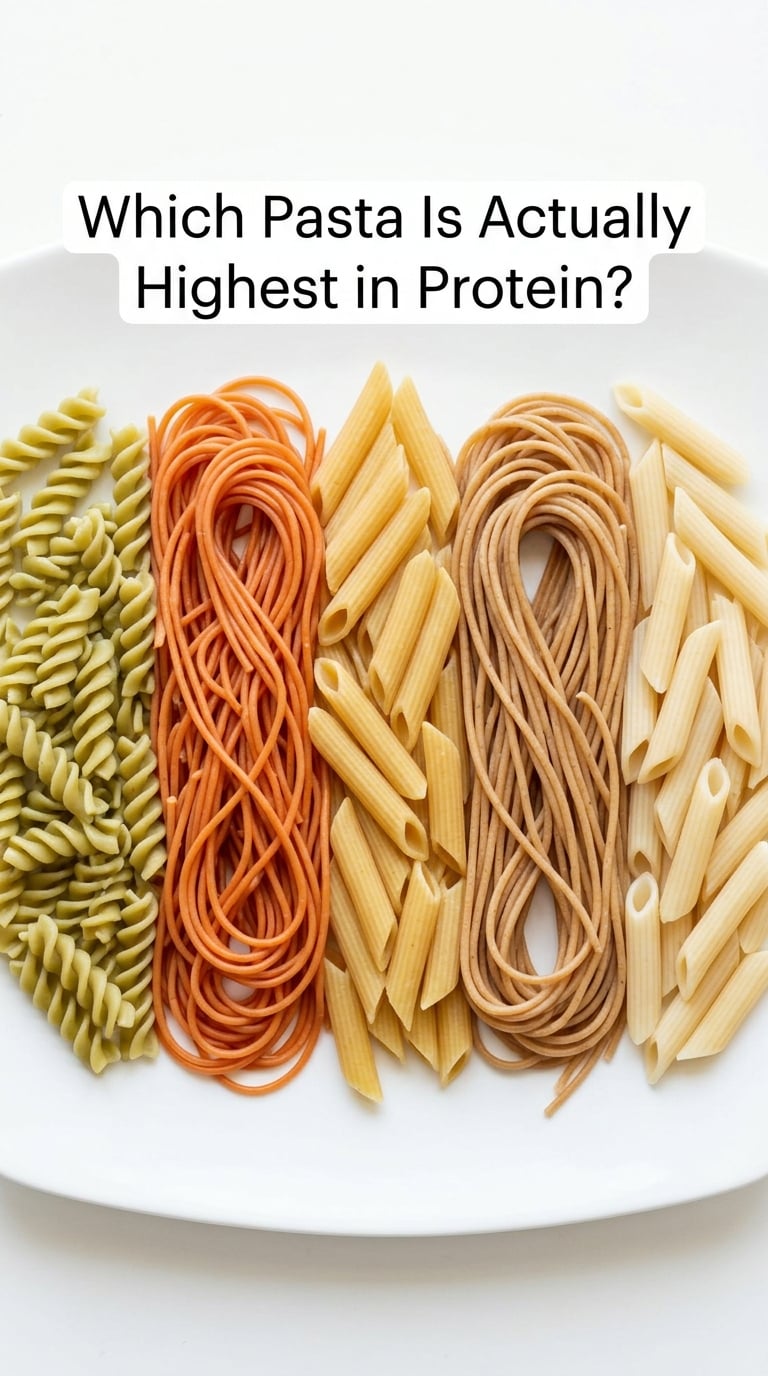
- Pull legume pasta one minute early. Chickpea, lentil, and red lentil pasta all go from al dente to mush fast. Start checking at 8 minutes rather than the printed cook time.
- Reserve a cup of pasta water before you drain. The starchy water is what emulsifies a sauce into something that clings instead of sliding off, and it is the single biggest difference between a good plate and a watery one.
- Use an instant-read thermometer, and stop the moment it says stop. Poultry hits 165°F (74°C), ground meat 160°F (71°C), fish and steak 145°F (63°C) with a 3-minute rest. The margin between perfect and dry is about 20 degrees.
- Salt the water like the ocean and season in layers. Pasta water absorbs maybe a third of its salt into the noodles, which is why a well-salted pot makes an under-salted plate even after you add Parmesan.
- Shred your own Parmesan if the sauce is going grainy. Pre-grated cheese has anti-caking agents in it that clump in hot sauce. A 1 oz block and thirty seconds of work fixes the problem.
- Build protein in two places, not one. A legume noodle adds roughly 5 to 8 extra grams per serving and the add-in adds 20 to 30. Pasta alone, even a legume pasta, will not get you to 30 grams. If you want a plate that hits 40, you need both.
Frequently Asked Questions
How much protein should I aim for in a pasta dinner?
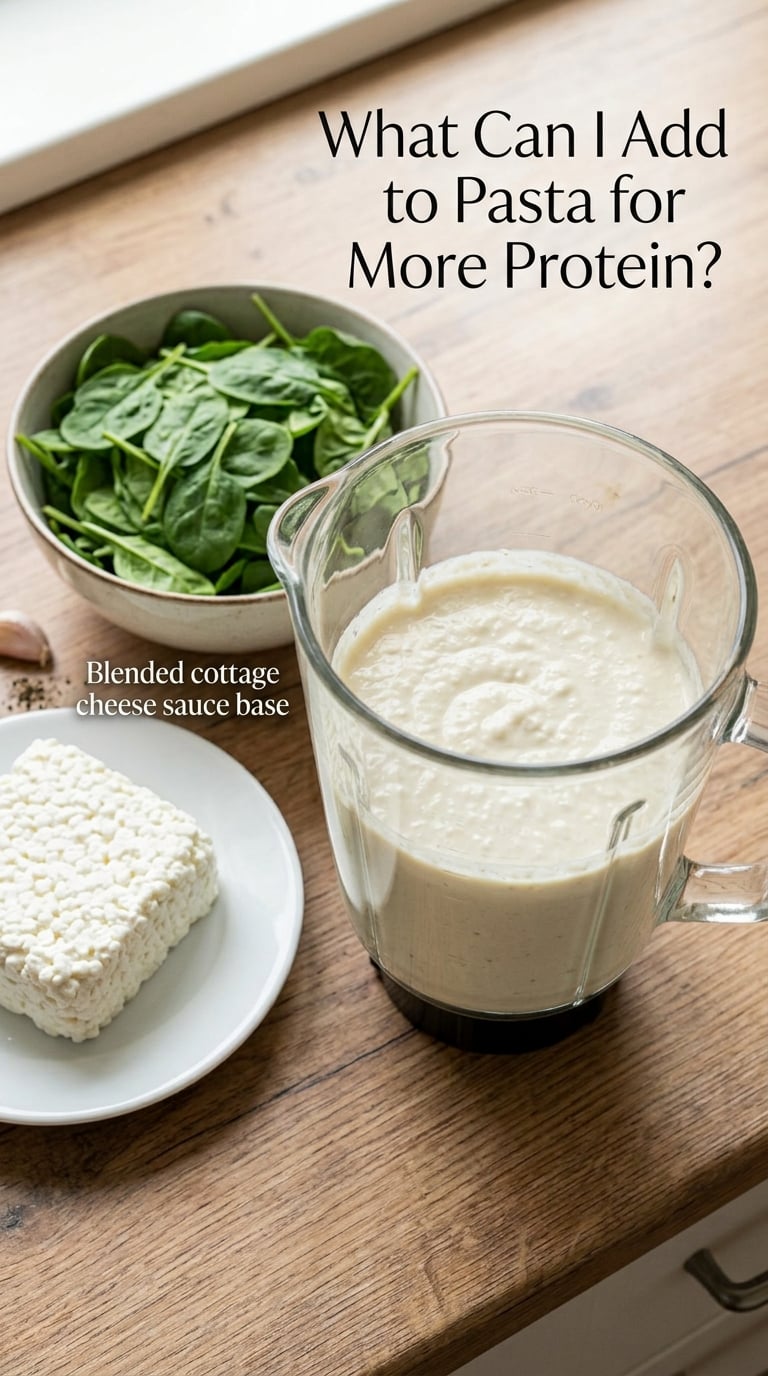
Around 30 to 40 grams per serving is the useful target for most adults, especially anyone training, eating in a calorie deficit, or trying to stay full through the evening. A standard serving of legume pasta gives you roughly 5 to 8 grams on its own, which means the rest has to come from an add-in like chicken, ground turkey, beef, shrimp, tuna, or a blended cottage cheese sauce. All ten recipes here land between 25 and 45 grams.
Which pasta works best for high-protein recipes?
Chickpea, red lentil, and green lentil pasta all carry more protein and more fiber than standard durum wheat, and they suit chunky sauces like bolognese and pesto. For creamy sauces, wheat pasta actually clings better, so pair it with a protein add-in instead. Whatever shape you pick, cook legume pasta one minute short of the package time, because it softens faster once it hits the sauce.
Can I make high protein pasta ahead of time?
Yes, with one rule: keep the pasta and the sauce separate until the night you eat it. Cooked pasta stored in sauce soaks up liquid and turns gluey, and baked dishes like the stuffed shells hold up much better with the components apart. Cook the pasta, cool it under running water, toss with a little oil, and refrigerate. Most of these keep 3 to 4 days, and the lentil bolognese is better on day two.
How can I reduce saturated fat without losing flavor?
Swap heavy cream for whole milk plus a spoonful of blended cottage cheese, which adds casein and thickens the sauce at the same time. Greek yogurt works as a straight replacement in salad dressings and in the carbonara. Leaner meat does the rest: 93% ground turkey, 90% lean beef, and skinless chicken breast. Nobody has ever missed the fat in the bolognese once the garlic and tomatoes are done properly.
What is the best way to reheat pasta with chicken, beef, or seafood?
Use a skillet over low heat with a tablespoon or two of pasta water, not a microwave. Gentle heat keeps the sauce emulsified and the meat from drying out, while the microwave overheats the edges and leaves the center cold. Spread everything in a single layer, stir every minute or so, and once it is steaming all the way through, check the meat has come back up to 165°F (74°C) for poultry.
Conclusion
Start with the Creamy Chicken Pesto Pasta. The flavors are familiar enough that nobody interrogates the sauce, prep is ten minutes, and it lands about 40 grams of protein on the plate without anyone at the table feeling like they are eating a fitness meal. Once that one is in your rotation, the beef and mushroom and the shrimp linguine take about the same effort.
Whichever you pick, remember the rule that makes all of it work: swap the noodle and add a protein. That is the whole idea behind these high protein pasta recipes for dinner, and it is why every plate on this list clears 25 grams.