
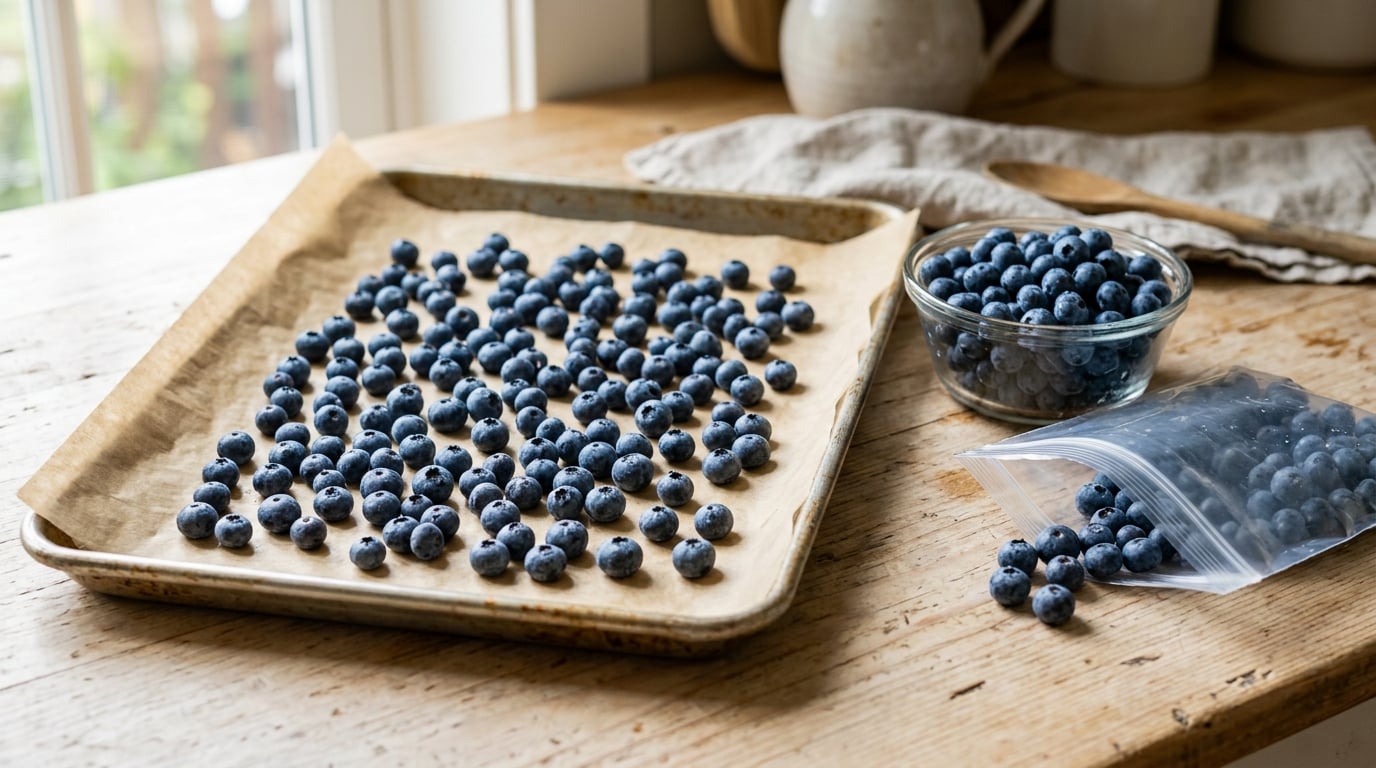
To freeze blueberries so they do not clump, wash and dry them thoroughly, spread them in a single layer on a parchment-lined baking sheet with none of them touching, freeze for 1 to 2 hours until solid, then scrape them into an airtight freezer bag. Freezing them separately first is what stops them welding into one solid brick.
Blueberry season tends to arrive all at once. One punnet becomes three, a farmers market haul turns into a flat of them on the counter, and the ones you did not get to freeze in time go soft and then mouldy.
Freezing solves the waste problem. It also solves the clumping problem, as long as you skip the step where the whole punnet gets tipped into a bag and frozen as one lump. This guide covers the method, the reason clumping happens, and the small decisions about washing and sugar that change the result.
If you like the idea of prepping ahead, our blueberries and cream pastry puff recipe is an easy way to put a bag of individually frozen berries to work.
Table of Contents
How to Freeze Blueberries So They Do Not Clump
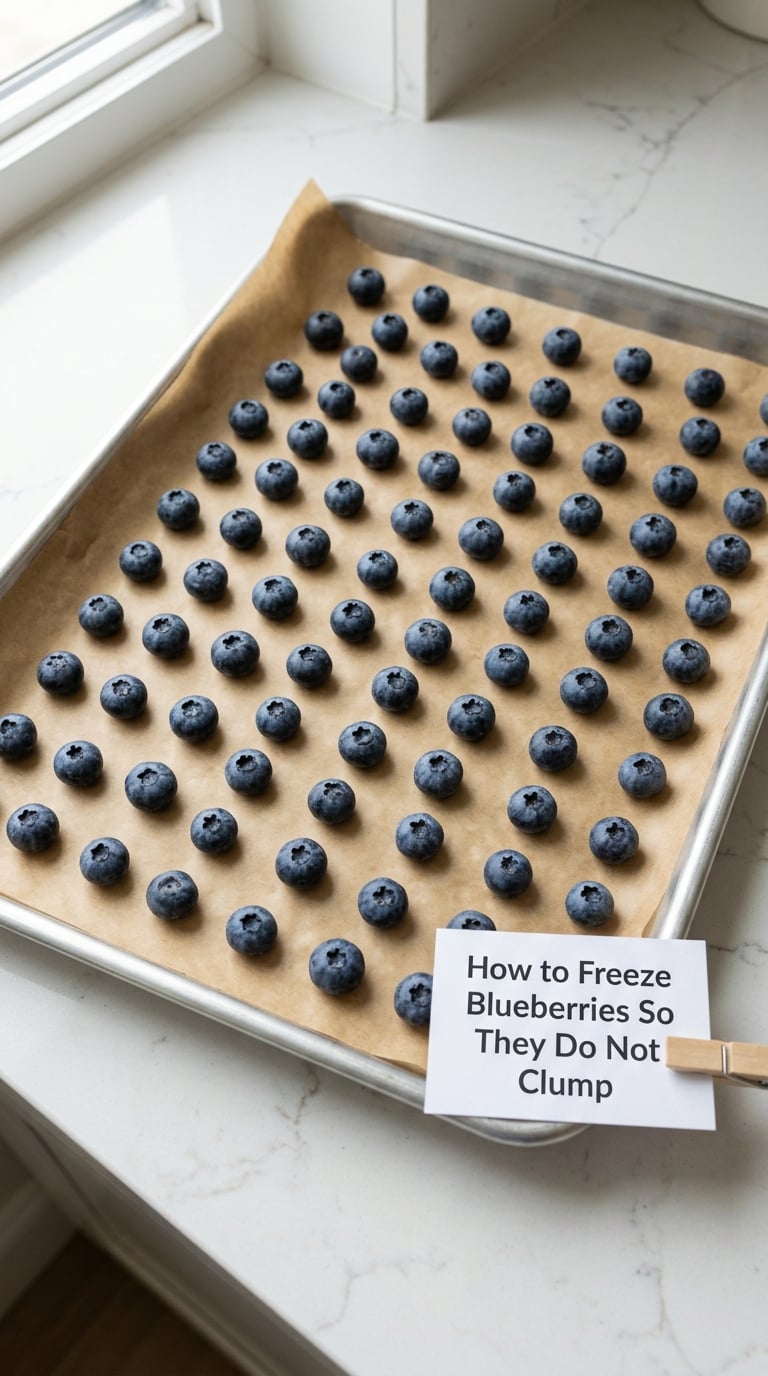
The short answer sits above, and here it is again in practice. Sort the fruit, get every bit of surface moisture off it, lay the berries out on a lined sheet with a millimetre or two of space between each one, and give them one to two hours in the freezer before they go anywhere near a bag.
What you need is dull and ordinary: a rimmed baking sheet, a square of parchment paper or a silicone mat, a colander, a clean towel, a metal spatula, and freezer bags or a rigid airtight container. No special equipment, and no blanching, which is the step you would use for peaches or tomatoes but not for berries.
Here is the version that takes about ten minutes of active work plus freezing time.
- Sort the blueberries and pull out anything bruised, soft, split, or showing mould.
- Rinse under cool running water only if you want to. Skip it if the fruit is home-grown or already clean.
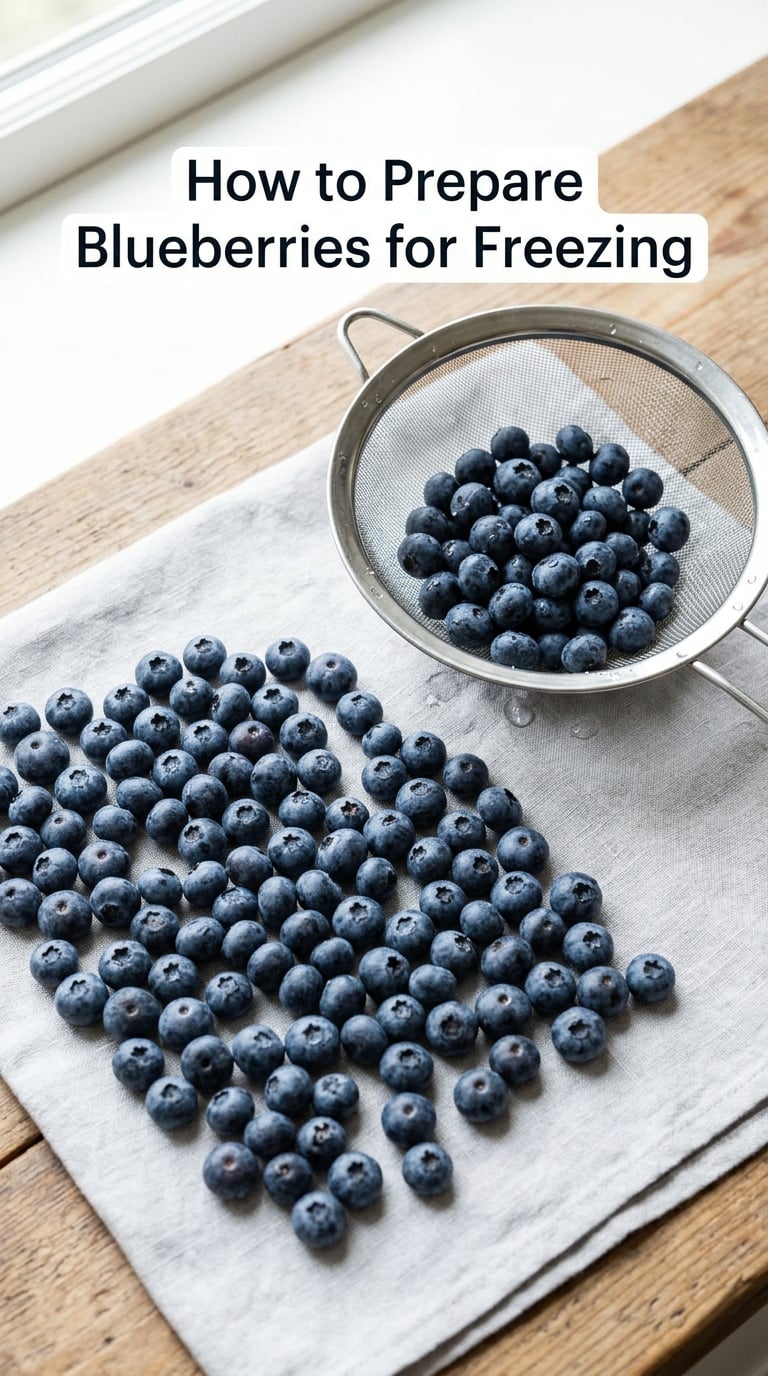
- Pat the berries dry on a clean towel, then spread them out on the towel for ten more minutes.
- Line a baking sheet with parchment paper or a silicone mat and lay the blueberries out in one layer, not touching.
- Freeze level for 1 to 2 hours, or up to 4 hours for large, juicy home-picked berries, until they are solid.
- Scrape the berries into a labelled freezer bag, press out the air, seal it, and freeze.
Why Do Blueberries Clump Together When Frozen?
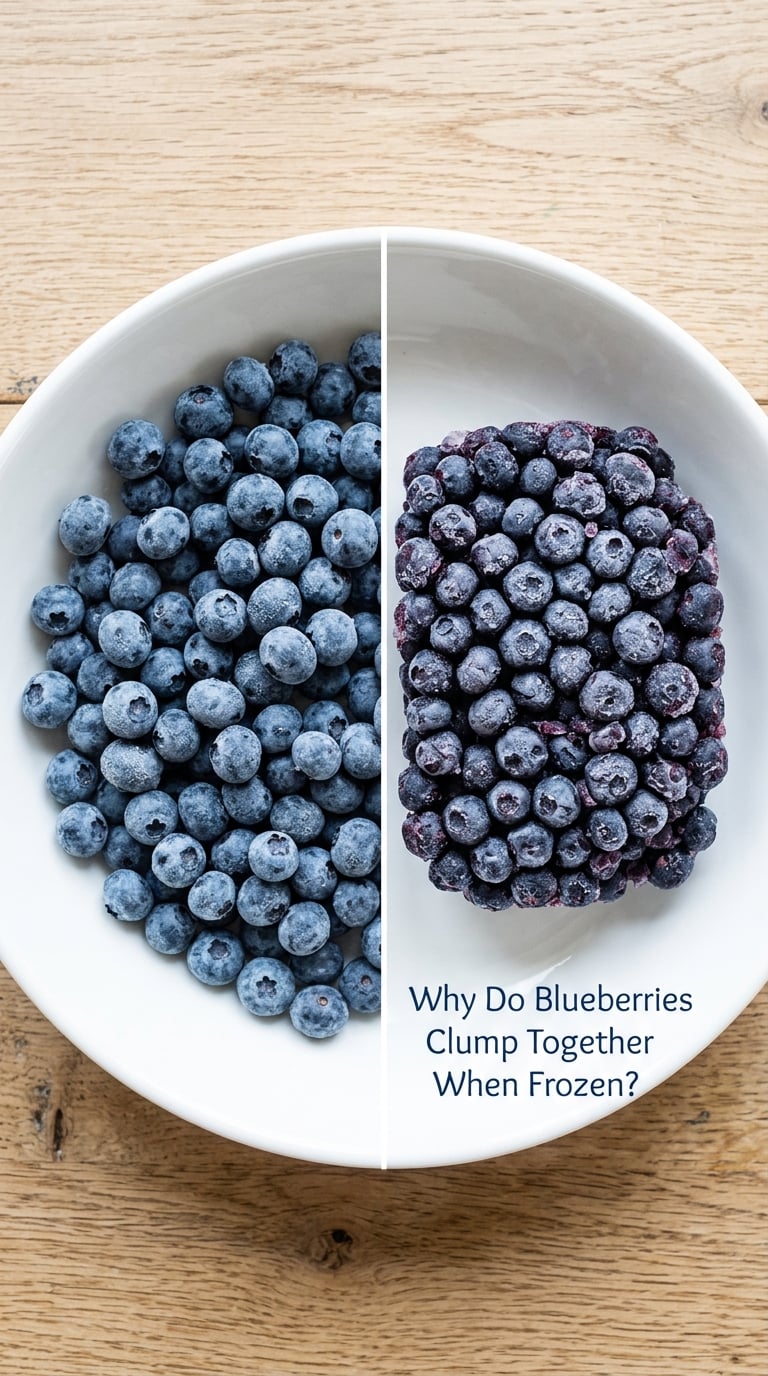
Clumping is a physics problem, not a mistake in your technique. Any water left on the skin freezes first, and that first layer of ice welds each berry to its neighbours. Once that bridge exists, the whole tray freezes as one block.
Contact makes it worse. Berries piled in a heap touch on dozens of points, so they have dozens of chances to bond. Berries spaced in a single layer have almost none, which is the entire reason the tray method works.
Third factor is timing. Move the berries before they are frozen solid and you are back to a pile touching a pile, so they bridge anyway.
Good news: clumping is a convenience problem, not a safety problem. A solid brick of frozen berries is perfectly safe to eat. It is just annoying to break apart, and it means you thaw more than you meant to.
How to Prepare Blueberries for Freezing
Pick berries that are ripe but still firm. Very soft ones go mushy in the freezer, and anything already soft will not hold its shape at all.
Rinse only when you need to. Store-bought berries that have handled a lot of transport benefit from a rinse. Home-picked or garden berries that you know are clean do not, and skipping the rinse keeps the natural bloom on the skin.
Drying is the part people rush, and it is the part that decides whether you get loose berries or a brick. Pat them with a towel, then let them sit spread out on that towel for about ten minutes so the crevices dry too.
Pull off any stems, and cut into larger home-picked berries if you like. Bigger fruit with a broken skin releases more juice, which is more glue.
Leave the berries whole unless you are freezing them for something specific. A whole berry has an intact skin, and intact skins are what resist freezer burn over a long storage.
The Best Way to Freeze Blueberries Without Clumping
How to freeze blueberries so they do not clump, step by step
This tray method is the reliable one, and it is the one I would use for any batch larger than a handful.
- Line the tray. Parchment paper works, and so does wax paper or a silicone baking mat. Without a liner the berries fuse to the metal and lose a skin layer when you scrape them off.
- Space them out. A millimetre or two between berries is enough. If you are wondering whether the berries look sparse, they are supposed to look sparse.
- Freeze them flat. One to two hours is right for grocery-store berries. Big, ripe, home-picked berries can take up to four. Test one by touching it; it should feel like a small stone, not a cold grape.
- Release them with a spatula. A thin metal spatula under the parchment, or a warm hand drawn lightly across the surface, pops them off without crushing. Running fingers under cold water first helps too.
- Bag and seal. Tip the berries into a freezer bag, press the air out, seal it, and lay the bag flat. Write the date and the quantity on it with a permanent marker.
- Keep it cold. Bags go back into the freezer straight away, never on the counter while you finish the next tray.
Working several trays at once? In a chest freezer, three side by side works. In a domestic upright freezer, space them with cut paper towel tubes so the air can still move between trays.
If you are portioning for baking, bag one or two measured cups per bag while the berries are still on the tray. That way the bag goes straight into the bowl without a weighing step.
Can You Freeze Blueberries Directly in a Bag?
Yes, and for small amounts it is honestly fine. Blueberries are small enough that many bags of them stay loose without any pre-freezing at all.
The direct bag method works best when you are freezing a punnet for smoothies, where the berries go straight into a blender anyway and nobody will notice a small clump.
The trick for pulling out a portion without thawing everything is the width of the bag. A wide bag laid flat gives you a thin layer, so you can break off what you need with your fingers. A narrow quart bag gives you a thick block, which defeats the purpose.
Leave the bag lying flat in the freezer, not standing upright or leaning against something. Gravity packing is what turns a loose bag into a brick.
Should You Wash Blueberries Before Freezing Them?
My recommendation is a middle path. Skip the rinse for fruit you grew or picked yourself, and rinse anything store-bought, then dry it completely either way.
The case against washing is the bloom, the dusty bluish wax that naturally coats a blueberry. It protects the skin from bacteria and helps resist freezer burn. A rinse rubs some of it away.
The case for washing is straightforward: you do not know what has been on the fruit between the field and your kitchen, and a rinse is cheap.
Either way, water left on the berries is what causes clumping. If you wash, give the berries a full drying session, not a shake in a colander.
On vinegar and baking soda: some people soak berries in a dilute vinegar solution before freezing to extend their life, and others use a baking soda rinse. A vinegar soak leaves a trace of moisture that has to be dried off thoroughly, which works against you here. If you use one, rinse the berries again afterwards and dry them properly. Skipping it costs you nothing if you ate the berries fresh first.
Do You Need Sugar or Lemon Juice When Freezing Blueberries?
Neither one prevents clumping. That is not what sugar or citrus juice does in the freezer.
Plain freezing is best for smoothies, yogurt, oatmeal, and snacking. The berries taste like berries and nothing else, which is what you want in those uses.
A small amount of sugar helps for pies, cobblers, and sauces where you want the juices to thicken into a syrupy texture rather than staying watery.
A few drops of lemon juice is worth it when you want to hold on to colour. It slows the browning that turns frozen berries grey-blue and dull in the bag.
Whatever you add, toss the berries in it right before they go on the tray, and still let them dry on the surface for a few minutes. A syrup coating is moisture.
How Long Do Frozen Blueberries Last?
For the best quality, use them within three to six months. Kept frozen at a steady 0°F, they stay safe well past a year, but the texture softens and the flavour fades somewhere around the six-month mark.
The container matters more than most people expect. Airtight, with as little air as possible, is what keeps freezer burn off the skins. Loose berries in a loosely closed container pick up freezer smells, and that is the first sign quality is dropping.
Mould, a distinct sour or fermented smell, or a slimy feel after thawing means the fruit goes in the bin. Colour change on its own is not spoilage; frozen blueberries often look duller than fresh ones.
Do not refreeze berries that have thawed. Thawing softens the skin, and a second freeze turns them to mush and lets bacteria grow. If you thawed a whole bag, eat them within a day or two instead.
Thaw in the fridge overnight for baking, or drop them straight from freezer to blender for smoothies. Frozen berries baked in a pie soften and bleed colour, which is usually exactly what you want.
Frozen Blueberries at a Glance
| Method | Clumping risk | Effort | Freezer space | Best for |
|---|---|---|---|---|
| Tray pre-freeze, single layer | Lowest | Ten minutes plus freezing | One tray at a time | Large batches, baking prep, long storage |
| Direct freezer bag, wide | Low to moderate | Two minutes | Minimal | Small amounts, smoothies |
| Direct freezer bag, narrow | High | Two minutes | Minimal | Nothing you want loose later |
| Silicone mat, small batches | Low | Five minutes plus freezing | Half a tray | Repeat weekly top-ups |
| Sugar or lemon coating | No effect on clumping | Extra two minutes | Minimal | Pies, sauces, colour retention |
Common Mistakes That Make Blueberries Clump
Washing and then skipping the drying. The most common cause. Ten extra minutes on a towel fixes a problem that no amount of bag-packing will.
Crowding the tray. If berries touch, they freeze joined. Do a second tray rather than packing the first one densely.
Moving them too soon. Semi-frozen berries are fragile and still wet at the surface. They collapse into a pile and re-stick.
Filling the bag to the top. A full bag has no air space and no loose volume. Fill to about two-thirds, press out the air, and seal.
Refreezing thawed berries. This is the one that ruins texture rather than clumping. It is not worth it for a handful of berries.
Skipping the liner. Unlined metal plus a wet berry means the fruit comes off the tray missing a layer of skin.
How to rescue a bag that already froze into a brick
You do not have to throw it out. Put the sealed bag on the counter for five to ten minutes until it is cold but no longer rock hard, then flex the bag and roll it against a flat surface until the block separates.
For stubborn spots, hold the bag under cool running water for about ten seconds. Never use warm water, and never microwave a frozen bag. Once loose, the berries go back in the freezer, though the texture will be slightly softer than berries frozen properly the first time.
Before your next batch, check out our cozy fall soup recipes that freeze well for other things worth putting in the freezer in portioned bags.
How to Use Frozen Blueberries
- Smoothies. Straight from freezer to blender, no thawing, whole or roughly crushed.
- Yogurt and ice cream. They land as individual berries and soften within a minute or two.
- Oatmeal. Add straight from the freezer in the morning; the berries thaw in the hot oats.
- Baking. Fold into muffin, pancake, and quick-bread batter right before it goes in the oven. No thawing needed, and the bleed gives you jammy pockets.
- Pies and crisps. Fill from frozen and bake from frozen. Keep the pie cold for the first 15 minutes of baking so the filling sets before the crust browns.
- Sauces and compotes. Simmer from frozen on the stove until the juices thicken, then finish with a squeeze of lemon.
- Snacking. Eat them straight from the bag, still firm and slightly frosty.
Leave them whole for smoothies, oatmeal, and snacking. Crush them lightly with the bottom of a glass or a fork for sauces and anything where you want the fruit to break down into the mixture.
One more freezing tip worth knowing: if you like directional freeze ice molds for drinks, a bag of individually frozen blueberries drops into a glass far better than a clump does.
Frequently Asked Questions
Why do my blueberries clump together in the freezer?
Because moisture on the skin freezes first and forms ice bridges that weld neighbouring berries together. Contact makes it worse, since a pile of berries touches in dozens of places while a single layer has almost no contact points. Moving berries before they are solid also stacks them back up, and they bridge again. Clumping is a convenience problem rather than a safety one, but a frozen block is annoying to portion.
What is the best way to freeze blueberries without sticking together?
Dry them fully, then lay them in a single layer on a parchment-lined baking sheet with a millimetre or two between each berry. Freeze level for 1 to 2 hours, up to 4 for large home-picked berries, until they feel like small stones. Scrape them off with a thin spatula into a freezer bag, press out the air, seal, label with the date, and keep the bag flat in the freezer.
Should I wash blueberries before freezing them?
My rule is to skip the rinse for garden or home-picked fruit and rinse anything store-bought, then dry completely either way. The bluish bloom on the skin helps protect against bacteria and freezer burn, so rinsing is not free. What matters most is that no surface water remains, since that moisture is what causes clumping. Budget those extra drying minutes whenever you do rinse.
How long do frozen blueberries stay good in the freezer?
Use them within three to six months for the best flavour and texture. Stored airtight at a steady 0°F they remain safe beyond a year, but the skins soften and the flavour fades over time. Keep bags sealed and press out excess air, since loose berries pick up freezer smells and burn. Discard any that smell sour or fermented or feel slimy after thawing.
Can I freeze blueberries in a bag without a baking sheet?
Yes. Small blueberries often stay loose without any pre-freezing, especially in a wide bag laid flat. It works well for punnets destined for smoothies, where a small clump makes no difference. Use a wide bag rather than a narrow one so the berries form a thin layer you can break into, fill the bag only two-thirds full, and lay it flat rather than standing it upright.
Can I refreeze blueberries after thawing them?
No, and I would not try it. Thawing softens the skin, and a second freeze turns the berries to mush while giving bacteria room to grow, so the texture and keeping quality both suffer. Eat thawed berries within a day or two, or cook them into a sauce or compote, which is a good use for a batch that thawed by accident. The tray method is what keeps refreezing off the table entirely.
Conclusion
If you only do one thing differently, give the berries a proper drying session and a real single layer on a lined tray. That is the whole fix. Freeze them for one to two hours until solid, bag them flat, and you will be able to scoop twelve berries for a smoothie without thawing the rest.
It is worth freezing a batch now while the fruit is good and cheap. To freeze blueberries so they do not clump, remember the three things that matter: bone-dry berries, no contact, and patience on the tray before they go in the bag.