
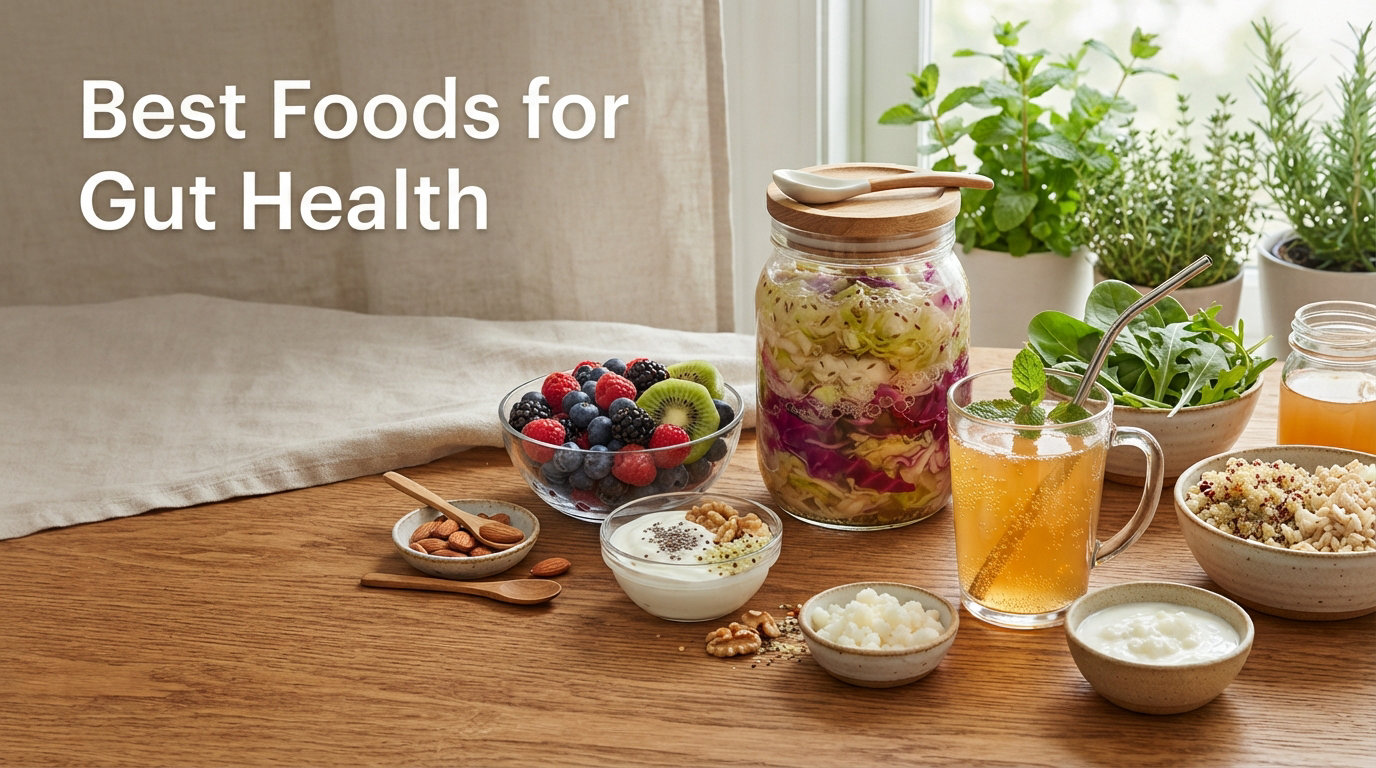
Good gut health does not come from one miracle ingredient. It is built through everyday meals that provide a mix of fiber-rich plants, fermented foods you enjoy, enough fluid, and variety over time. This guide to the best foods for gut health gives you practical choices for breakfast, lunch, dinner, and snacks—without expensive powders or unrealistic “reset” plans.
Your digestive system and gut microbiome are complex, and people do not all respond to the same foods in the same way. Start with foods you already tolerate, make changes gradually, and pay attention to how you feel. If you have persistent pain, bleeding, unexplained weight loss, severe symptoms, a diagnosed digestive condition, or a weakened immune system, speak with a qualified health professional before making major dietary changes or using probiotic supplements.
Table of Contents
What Does “Gut Health” Actually Mean?
Gut health is a broad term for how comfortably and effectively your digestive system works. It also refers to the community of bacteria and other microorganisms in the digestive tract, commonly called the gut microbiome. Scientists are still learning how diet, medicines, sleep, stress, age, and many other factors affect that community.
No food can “rebuild” or “detox” the gut overnight. A more realistic goal is to eat a varied diet that supplies fiber and essential nutrients while limiting foods that regularly cause discomfort for you. Fermented foods can be part of that pattern, but they are optional—not a cure or a requirement.
Best Foods for Gut Health: The Quick List
-
Plain yogurt with live and active cultures
-
Kefir
-
Refrigerated sauerkraut or kimchi
-
Oats and barley
-
Beans, lentils, and chickpeas
-
Berries
-
Apples and pears with the skin
-
Bananas
-
Onions, garlic, and leeks
-
Asparagus and artichokes
-
Broccoli and leafy greens
-
Whole grains
-
Nuts and seeds
-
Tempeh and miso
-
Water and other unsweetened fluids
You do not need to eat every item. A better approach is to choose several foods from the list and rotate them through the week. In other words, the best foods for gut health are the ones that add variety and fiber while fitting your needs and tolerance.
Probiotics, Prebiotics, and Fiber: The Simple Difference
Probiotic foods
Probiotics are live microorganisms intended to provide a health benefit. Some yogurts, kefir, and fermented vegetables contain live cultures, but not every fermented product does. Pasteurization and heat can reduce or eliminate live cultures, so check the package when that is what you want.
Different probiotic strains may have different effects, and evidence for many popular claims remains limited. The National Center for Complementary and Integrative Health advises talking with a healthcare professional before taking probiotic supplements, especially if you have an underlying illness or weakened immune system.
Prebiotic foods
Prebiotics are food components that certain microorganisms can use. Foods commonly described as prebiotic include onions, garlic, leeks, asparagus, bananas, oats, and legumes. You do not need a product labeled “prebiotic” to include these foods in your diet.
Fiber-rich foods
Fiber is found in plant foods such as beans, whole grains, fruit, vegetables, nuts, and seeds. Different foods provide different types of fiber, which is one reason variety matters. Increase fiber slowly and drink enough fluid; adding a large amount at once may lead to gas, bloating, or discomfort. The NIDDK recommends gradual increases for people who need more fiber.
15 Practical Foods to Add to Your Meals
1. Plain yogurt with live cultures
Look for “live and active cultures” on the label and compare added sugar between brands. Use plain yogurt as a breakfast base with berries and oats, blend it into a smoothie, or stir it with herbs for a savory dip. Lactose-free yogurt is an option for people who tolerate dairy protein but not much lactose.
2. Kefir
Kefir is a tangy fermented milk drink. Choose an unsweetened or lower-sugar version and start with a small serving if fermented foods are new to you. It works in smoothies, overnight oats, or in place of buttermilk in cold preparations.
3. Sauerkraut
Refrigerated, unpasteurized sauerkraut may contain live cultures. A spoonful can add acidity and crunch to grain bowls, sandwiches, roasted potatoes, or eggs. It can be high in sodium, so portion size and the rest of the meal matter if you limit salt.
4. Kimchi
Kimchi is a fermented vegetable dish with bold flavor. Add a small amount to rice bowls, noodles, eggs, or tofu. Check ingredients for fish products if you follow a vegetarian diet, and choose a mild version if spicy foods worsen your symptoms.
5. Oats
Oats provide soluble fiber and are easy to use. Make oatmeal with fruit and nuts, prepare overnight oats, or blend oats into a smoothie. Plain old-fashioned and steel-cut oats make it easier to control added sugar than many flavored packets.
6. Barley
Barley has a pleasantly chewy texture and works well in soups, salads, and grain bowls. Cook a batch for the refrigerator and use it with roasted vegetables and a protein. Barley contains gluten, so it is not appropriate for people with celiac disease.
7. Beans and lentils
Beans, lentils, and chickpeas provide fiber, plant protein, and useful minerals. Start with 1/4 to 1/2 cup if you are not used to legumes. Rinsing canned beans removes some sodium and surface carbohydrates, while lentils are quick to cook without soaking.
8. Berries
Raspberries, blackberries, blueberries, and strawberries bring fiber and color to meals. Fresh and frozen berries are both useful; frozen berries are often less expensive and keep longer. Add them to yogurt, oats, smoothies, or a simple dessert.
9. Apples and pears
Keeping the edible skin adds fiber. Pair sliced fruit with peanut butter, chop it into oats, or bake it with cinnamon. If raw fruit bothers you, a smaller portion of peeled or cooked fruit may be easier to tolerate.
10. Bananas
Bananas are portable, inexpensive, and easy to add to breakfast. Ripeness changes their texture and carbohydrate profile, so choose the stage you digest best. Slice one over cereal, blend it into a smoothie, or pair it with nuts for a more filling snack.
11. Onions, garlic, and leeks
These vegetables add flavor and contain fermentable carbohydrates that some gut microbes can use. They can also trigger symptoms in some people with IBS. Cooking them well, using a smaller amount, or using garlic-infused oil may be more comfortable, but individual tolerance varies.
12. Asparagus and artichokes
Both vegetables add fiber and variety. Roast asparagus for a quick side dish, or add canned artichoke hearts to salads and pasta after rinsing them. As with onions and garlic, some people with IBS may find these foods uncomfortable.
13. Broccoli and leafy greens
Broccoli, spinach, collards, and similar vegetables provide fiber and a range of vitamins and minerals. Cooked vegetables may feel gentler than large raw salads. Roast, steam, or sauté them and increase portions at a pace that works for you.
14. Nuts and seeds
Almonds, walnuts, chia seeds, flaxseed, and pumpkin seeds add fiber, unsaturated fats, and texture. Sprinkle a tablespoon over breakfast or salads. Ground flaxseed is easy to stir into oats and yogurt; store it in the refrigerator after opening.
15. Tempeh and miso
Tempeh is a firm fermented soy food that can be sliced, marinated, and cooked. Miso is a salty fermented paste used in soups, sauces, and dressings. Live cultures are not guaranteed after high-heat cooking, but these foods still add flavor and variety.
How to Build a Gut-Friendly Plate
Use this flexible formula instead of chasing a perfect menu:
-
Choose a fiber-rich carbohydrate, such as oats, brown rice, barley, potatoes with skin, or whole-grain bread.
-
Add a protein, such as beans, lentils, eggs, fish, chicken, tofu, tempeh, yogurt, or cottage cheese.
-
Include one or two vegetables or fruits you tolerate.
-
Add a source of fat and texture, such as olive oil, avocado, nuts, or seeds.
-
Optionally add a small serving of fermented food for flavor.
This produces a satisfying meal without requiring special “gut health” products.
One-Day Sample Menu
-
Breakfast: Oatmeal with plain yogurt, blueberries, and ground flaxseed
-
Lunch: Lentil and barley bowl with roasted carrots, spinach, olive oil, and lemon
-
Snack: An apple with peanut butter
-
Dinner: Baked salmon or tempeh with potatoes, broccoli, and a spoonful of sauerkraut
Adjust portions and ingredients for your appetite, dietary needs, allergies, and tolerance. This is an example, not a treatment plan.
How to Add More Fiber Without Feeling Miserable
-
Add one new fiber-rich food or one modest portion at a time.
-
Keep the change consistent for several days before adding more.
-
Drink water and other unsweetened fluids regularly.
-
Cook vegetables if raw produce causes discomfort.
-
Keep a simple food-and-symptom note if you are trying to identify patterns.
Tip: More is not automatically better. Sudden large servings of bran, beans, raw vegetables, or prebiotic powders can cause gas and bloating.
Foods to Limit or Personalize
There is no universal “bad for the gut” list. Still, a diet dominated by low-fiber ultra-processed foods can crowd out the whole foods that provide fiber and nutrients. Large amounts of alcohol, very high-fat meals, sugar alcohols, or spicy foods may also cause symptoms for some people.
Do not eliminate gluten, dairy, legumes, or entire food groups simply because a social-media plan says to. Restrictive diets can make nutrition harder and are not necessary for everyone. If you suspect celiac disease, food allergy, inflammatory bowel disease, or IBS, seek an evaluation before beginning a major elimination diet.
Frequently Asked Questions
What is the single best food for gut health?
There is no single best food. A varied pattern that includes fiber-rich plants and foods you tolerate is more practical than relying on one ingredient. Yogurt, oats, beans, berries, vegetables, whole grains, nuts, and seeds can all contribute.
Do I need probiotic supplements?
Not necessarily. Effects differ by strain and health condition, and evidence is limited for many advertised uses. Ask a healthcare professional before using a probiotic supplement if you have a medical condition, take medicines, are pregnant, or have a weakened immune system.
How quickly will dietary changes improve digestion?
There is no guaranteed timeline. Some people notice changes quickly, while others need more time or require medical evaluation. Persistent or severe symptoms should not be managed through food experiments alone.
Are fermented foods safe for everyone?
No food is ideal for everyone. Fermented foods may be high in sodium, contain allergens, or worsen symptoms in some people. Anyone with a serious illness or weakened immune system should ask a clinician about products containing live microorganisms.
Can I improve gut health without dairy?
Yes. Fiber-rich grains, legumes, fruits, vegetables, nuts, and seeds do not require dairy. Optional fermented choices include kimchi, sauerkraut, tempeh, and some non-dairy cultured products; check labels for live cultures and added sugar.
Conclusion
The best foods for gut health are familiar, flexible foods you can eat consistently: oats, beans, fruit, vegetables, whole grains, nuts, seeds, and—if you enjoy them—fermented foods. Begin with a few comfortable choices, increase fiber gradually, drink enough fluid, and build variety over time. A steady, enjoyable eating pattern is more useful than a restrictive cleanse or a promise of an overnight fix.