
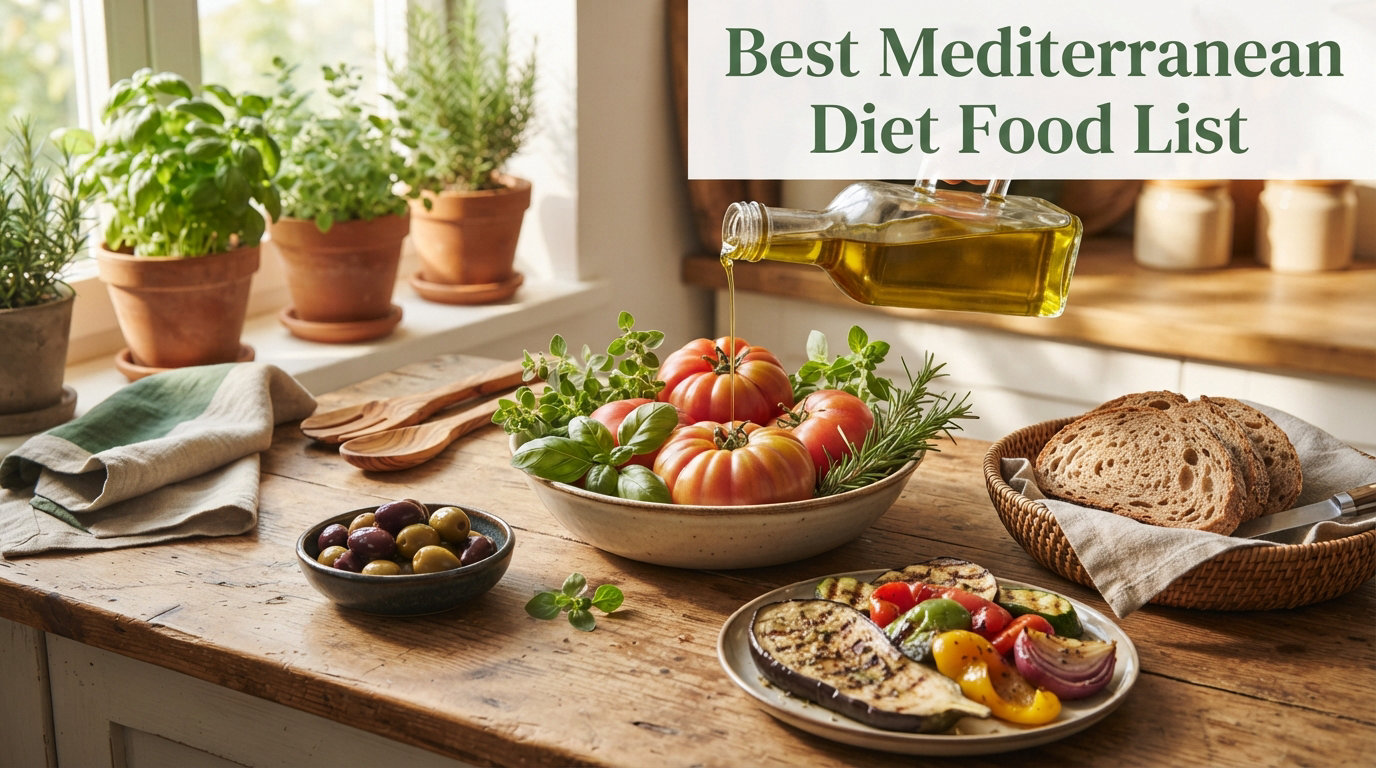
A Mediterranean-style eating pattern is flexible, colorful, and built around everyday foods rather than strict rules. This Mediterranean diet food list shows you what to buy, how to build balanced meals, and which foods to enjoy less often. You can use it whether you cook from scratch every day or need convenient supermarket options.
There is no single “official” Mediterranean menu. The cuisines of Greece, Italy, Spain, Turkey, Morocco, and other Mediterranean regions are different, but they share a plant-forward foundation: vegetables, fruit, beans, whole grains, nuts, seeds, olive oil, herbs, and moderate amounts of fish, poultry, eggs, and dairy. The American Heart Association recognizes this as a heart-healthy dietary pattern, but your portions and food choices should still reflect your medical needs, allergies, culture, and budget.
Table of Contents
Mediterranean Diet Food List: Quick Shopping Guide
Eat often
-
Vegetables of every color
-
Whole fruit
-
Beans, lentils, chickpeas, and peas
-
Whole grains and potatoes
-
Nuts and seeds
-
Extra-virgin olive oil and other unsaturated oils
-
Fresh and dried herbs and spices
-
Water and unsweetened beverages
Eat regularly in moderate amounts
-
Fish and seafood
-
Plain yogurt, cheese, and milk if included
-
Eggs
-
Poultry
-
Olives and avocado
Eat less often
-
Processed and fatty meats
-
Foods high in added sugar
-
Sugary drinks
-
Highly processed snacks
-
Refined grains when a whole-grain option works
-
Foods high in sodium or saturated fat
You do not need foods imported from the Mediterranean. Local produce, frozen vegetables, canned beans, oats, brown rice, canned fish, and ordinary nuts can all fit the pattern.
What Are the Top 10 Mediterranean Diet Foods?
-
Extra-virgin olive oil: Use it for dressings, sautéing, roasting, and finishing dishes.
-
Beans and lentils: Affordable sources of fiber and plant protein for soups, salads, and bowls.
-
Leafy greens: Spinach, kale, romaine, arugula, chard, and collards add volume and nutrients.
-
Tomatoes: Fresh, canned, roasted, or simmered into sauces.
-
Whole grains: Oats, barley, bulgur, farro, brown rice, quinoa, and whole-grain bread or pasta.
-
Fish: Salmon, sardines, trout, tuna, mackerel, and other seafood you enjoy.
-
Nuts and seeds: Walnuts, almonds, pistachios, sesame, pumpkin seeds, and flaxseed.
-
Whole fruit: Berries, citrus, apples, pears, grapes, melon, figs, and seasonal fruit.
-
Plain yogurt: A simple breakfast, snack, dip, or sauce base.
-
Herbs and spices: Garlic, parsley, basil, oregano, mint, rosemary, cumin, paprika, and sumac add flavor without relying only on salt.
These ten foods are a starting point, not a checklist you must complete every day. The overall pattern matters more than any single ingredient.
Complete Mediterranean Diet Food List by Category
Vegetables
Build meals around vegetables, using fresh, frozen, canned, or roasted options. Good choices include tomatoes, spinach, broccoli, cauliflower, peppers, eggplant, zucchini, carrots, cabbage, green beans, artichokes, cucumbers, onions, mushrooms, and leafy salads. Choose canned vegetables with no salt added or rinse them when sodium is a concern.
Fruit
Choose whole fruit most often: oranges, lemons, berries, apples, pears, grapes, peaches, plums, pomegranates, figs, and melon. Frozen fruit without added sugar is convenient for smoothies and oatmeal. Dried fruit is concentrated, so a small portion is usually enough.
Beans, lentils, and peas
Keep chickpeas, cannellini beans, kidney beans, black beans, lentils, split peas, and fava beans on hand. Canned beans make fast meals; drain and rinse them before using. Try adding beans to pasta sauce, tossing chickpeas into a salad, or making lentil soup for lunch.
Whole grains and starchy vegetables
Useful options include oats, barley, brown rice, bulgur, farro, quinoa, whole-grain couscous, whole-wheat pasta, and bread labeled 100% whole grain. Potatoes, sweet potatoes, corn, and winter squash can also supply satisfying carbohydrates. People with celiac disease should choose verified gluten-free grains and products.
Nuts, seeds, and healthy fats
Stock extra-virgin olive oil, olives, avocado, walnuts, almonds, pistachios, tahini, pumpkin seeds, sunflower seeds, and ground flaxseed. These foods are energy-dense, so use portions that suit your appetite and calorie needs. Unsalted nuts are helpful when you need to limit sodium.
Fish and seafood
Salmon, sardines, tuna, trout, mackerel, cod, shrimp, mussels, and other seafood can all fit. Fresh, frozen, and canned choices are useful. Compare sodium in canned and smoked products, and follow local fish-consumption guidance if you are pregnant, breastfeeding, or feeding young children.
Poultry, eggs, and meat
Eggs and poultry can be included, while red and processed meats are generally eaten less often. Instead of making meat the largest part of the plate, use a smaller amount in a vegetable-rich soup, stew, pasta, or grain bowl. Beans can replace some or all of the meat in many familiar meals.
Dairy and dairy alternatives
Plain yogurt, milk, feta, ricotta, goat cheese, and other cheeses can be enjoyed in moderate amounts. Cheese is often used as a flavorful accent rather than the main protein. If you avoid dairy, choose unsweetened fortified alternatives that match your nutrition needs.
Herbs, spices, and flavor boosters
Use garlic, onion, lemon, vinegar, basil, oregano, parsley, mint, dill, rosemary, thyme, cumin, coriander, smoked paprika, and pepper. Flavorful ingredients make vegetables, grains, and beans more appealing and can reduce the need for heavy sauces.
Beverages
Water is the main beverage. Unsweetened tea and coffee can also fit. Wine is not required, and no one should begin drinking for a possible health benefit. The American Heart Association advises people who do not drink alcohol not to start; anyone who drinks should follow current medical and public-health guidance.
How to Build a Mediterranean-Style Plate
-
Fill about half the plate with vegetables or a mix of vegetables and fruit.
-
Add a whole grain or starchy vegetable.
-
Add beans, fish, eggs, poultry, yogurt, or another protein.
-
Use olive oil, nuts, seeds, olives, or avocado for flavor and unsaturated fat.
-
Finish with herbs, spices, lemon, or vinegar.
This plate is a visual guide, not a prescription. Adjust it for hunger, activity, allergies, and advice from your healthcare team.
One-Day Mediterranean Meal Plan
-
Breakfast: Plain yogurt with oats, berries, walnuts, and cinnamon
-
Lunch: Chickpea, cucumber, tomato, and parsley salad with whole-grain pita
-
Snack: An apple with almonds
-
Dinner: Baked salmon or white beans with roasted vegetables, brown rice, olive oil, and lemon
-
Dessert: Fresh fruit or a small serving of yogurt
For a vegetarian day, replace fish with lentils, beans, tofu, or tempeh. For a dairy-free day, use an unsweetened fortified alternative.
Budget-Friendly Mediterranean Grocery List
-
Old-fashioned oats
-
Brown rice or barley
-
Whole-wheat pasta
-
Canned chickpeas, lentils, and beans
-
Canned tomatoes
-
Frozen spinach, broccoli, and mixed vegetables
-
Seasonal fruit or frozen berries
-
Eggs
-
Plain yogurt
-
Canned tuna, salmon, or sardines
-
Peanut butter or a budget-friendly nut
-
Olive oil, lemon juice, garlic, and dried herbs
Buying store brands, using frozen produce, and planning two bean-based dinners each week can make this pattern more affordable.
How to Start Without Overhauling Your Kitchen
-
Replace one refined grain with a whole-grain option you already like.
-
Add one extra vegetable to lunch or dinner.
-
Make one meal with beans or lentils each week, then increase if it works for you.
-
Use olive oil, nuts, or seeds in place of some butter or fatty meat.
-
Choose fruit, yogurt, or nuts for some snacks and desserts.
-
Plan a fish meal if you eat seafood.
Tip: Consistency beats perfection. A Mediterranean-style meal can be as simple as canned beans, chopped tomatoes, whole-grain toast, olive oil, and herbs.
Foods to Limit—Without Calling Them Forbidden
The pattern generally limits processed meat, fatty cuts of red meat, sugary drinks, sweets, refined grains, foods high in sodium, and ultra-processed snacks high in added sugar or saturated fat. These foods do not have to be “banned.” Eating them less often and in smaller portions leaves more room for the foods on the Mediterranean diet food list.
If you have diabetes, kidney disease, heart disease, food allergies, digestive conditions, or take medicines affected by diet, ask a clinician or registered dietitian to personalize the approach. This article is general education, not medical treatment.
Frequently Asked Questions
Can I eat bread and pasta on the Mediterranean diet?
Yes. Whole-grain bread and pasta are common choices, and portion size depends on the rest of the meal and your needs. Pair them with vegetables, beans, seafood, or another protein instead of relying on a large bowl of refined pasta alone.
Are potatoes allowed?
Yes. Potatoes can fit as a starchy vegetable. Baking, boiling, or roasting them with olive oil and herbs better matches the pattern than making deep-fried potatoes the default.
Do I have to eat fish?
No. Fish is traditional, but a plant-forward version can use beans, lentils, tofu, tempeh, nuts, and seeds. Pay attention to nutrients that may need extra planning in a vegetarian or vegan diet.
Is the Mediterranean diet low-carb?
Not usually. It includes fruit, beans, whole grains, and starchy vegetables. The emphasis is on the quality and combination of foods rather than eliminating carbohydrates.
Can I follow it without olive oil?
Yes. Olive oil is traditional, but other unsaturated fats such as nuts, seeds, avocado, and non-tropical liquid plant oils can also fit.
Conclusion
Use this Mediterranean diet food list as a flexible framework: eat more vegetables, fruit, whole grains, beans, nuts, seeds, and unsaturated fats; include fish, poultry, eggs, and dairy according to your preferences; and enjoy processed meat, sugary drinks, and highly processed snacks less often. Start with one or two realistic swaps, then build a pattern you can keep.