
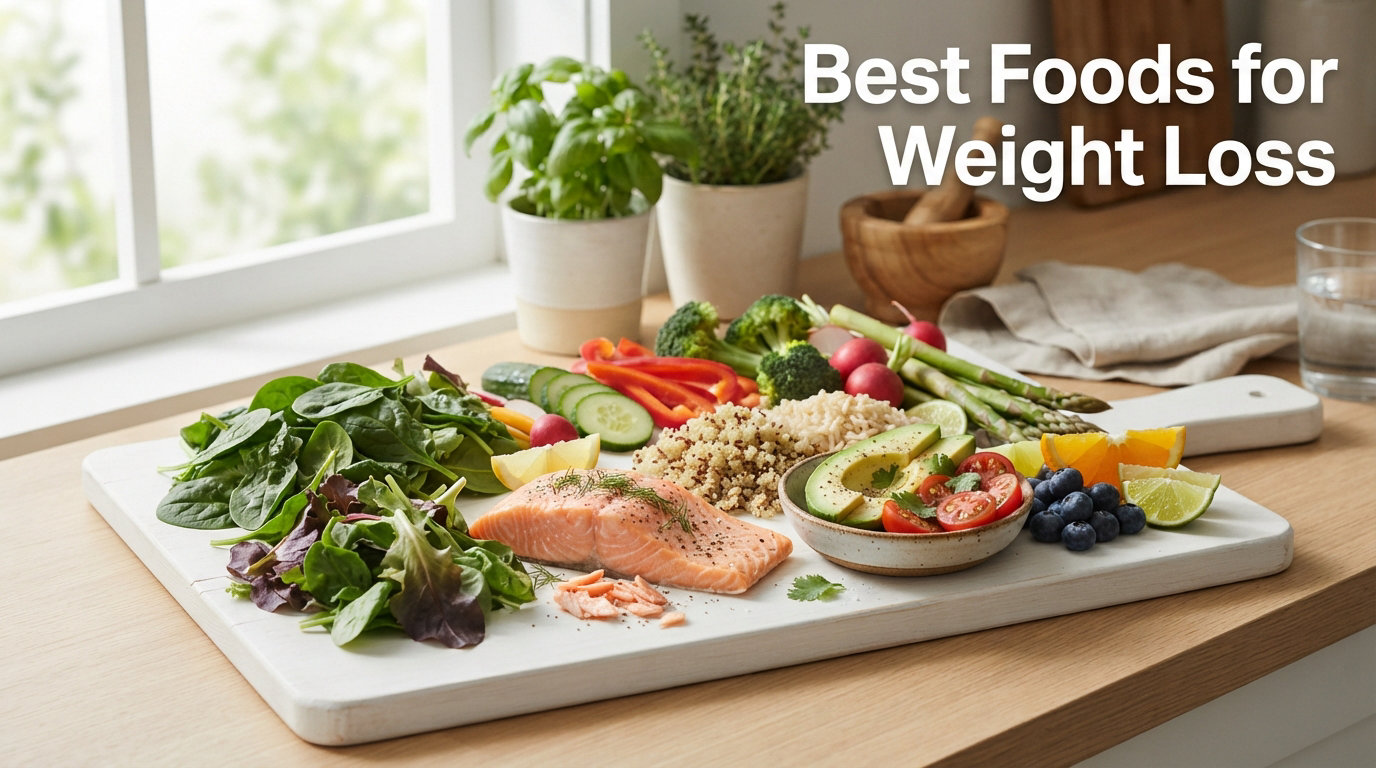
The best foods for weight loss are not magic “fat-burning” ingredients. They are satisfying, nutritious foods that make a balanced eating pattern easier to maintain: protein-rich choices, fiber-rich carbohydrates, vegetables, fruit, and flavorful unsaturated fats.
Weight is influenced by eating patterns, activity, sleep, stress, medications, medical conditions, hormones, age, and environment. Use this list to build enjoyable meals rather than a restrictive diet. If you have diabetes, kidney disease, a history of disordered eating, take medication, are pregnant, or need an individualized plan, speak with a qualified health professional.
Table of Contents
What Makes a Food Helpful for Weight Loss?
A useful food does at least one of three things: supplies protein, adds fiber and volume, or makes a nutritious meal enjoyable enough to repeat. Portions still matter, including for healthy foods. The CDC emphasizes that sustainable weight management also includes regular physical activity, enough sleep, and stress management.
25 Best Foods for Weight Loss
1. Eggs
Eggs provide complete protein and work at any meal. Pair them with vegetables and whole-grain toast, beans, or potatoes for a balanced plate. Boiled eggs are convenient, while an egg-and-vegetable scramble can use up produce in the refrigerator.
2. Plain Greek Yogurt
Greek yogurt is a protein-rich base for breakfast or snacks. Choose plain yogurt and add berries, chopped fruit, oats, nuts, or seeds. Compare labels because protein and added sugar vary by brand.
3. Cottage Cheese
Cottage cheese supplies protein and pairs with fruit, tomatoes, cucumber, herbs, or whole-grain crackers. Sodium can vary, so choose a lower-sodium version if that matters for your health.
4. Chicken Breast
Roasted or grilled skinless chicken is easy to prepare in batches for salads, wraps, soup, and grain bowls. Keep it moist with yogurt marinades, salsa, lemon, herbs, or a measured dressing instead of relying only on heavy sauces.
5. Turkey
Fresh turkey and lean ground turkey are flexible protein choices for burgers, chili, meatballs, or taco bowls. Deli turkey may be high in sodium, so compare it with freshly cooked meat rather than assuming they are identical.
6. Salmon
Salmon provides protein and omega-3 fats. Bake it with vegetables, flake it over a whole-grain bowl, or use canned salmon for patties. Smoked salmon is much higher in sodium than fresh or no-salt-added canned fish.
7. Tuna
Canned tuna is convenient for salads, sandwiches, and bean bowls. Choose tuna packed in water when you want a lighter base and add flavor with lemon, yogurt, mustard, celery, or herbs. Follow current seafood guidance about variety and mercury, especially during pregnancy.
8. Shrimp
Shrimp cooks quickly and adds protein to stir-fries, tacos, salad, and pasta. Choose plain shrimp rather than heavily breaded versions, and compare sodium because some products contain added salt.
9. Tofu
Extra-firm tofu can be baked, air-fried, scrambled, or stir-fried. Press it first for a firmer texture, then use a flavorful marinade. Pair it with vegetables and a whole grain for a complete meal.
10. Lentils
Lentils provide plant protein and fiber in soup, curry, salad, and pasta sauce. They cook faster than many dried beans and hold up well in meal prep. Start gradually if you are not used to eating much fiber.
11. Beans
Black beans, chickpeas, cannellini beans, and kidney beans add fiber and protein to bowls, soup, chili, and salads. Rinse canned beans to remove some sodium. Our high-fiber foods list has more practical options.
12. Edamame
Edamame is a convenient soybean with protein and fiber. Use it in grain bowls, salads, or stir-fries, or serve a small bowl as a snack. Choose unsalted or lightly salted versions when possible.
13. Oats
Oats provide whole-grain carbohydrate and soluble fiber. Add yogurt, milk, chia, fruit, or nuts so oatmeal includes protein and fat as well as carbohydrate. Plain oats let you control the sweetness.
14. Quinoa
Quinoa supplies fiber and some protein and works hot or cold. Use it as the base of a bowl with chicken, tofu, beans, vegetables, and a lemon-herb dressing. Cook a batch ahead for quick lunches.
15. Brown Rice
Brown rice can absolutely fit a weight-management eating pattern. Combine it with protein and vegetables and choose a portion that matches your appetite. Frozen or microwaveable plain brown rice is a useful time-saving option.
16. Potatoes
Plain baked or boiled potatoes are very different from a large serving of fries. Keep the skin when practical and top a potato with chili, Greek yogurt, cottage cheese, vegetables, tuna, or beans.
17. Broccoli
Broccoli adds fiber, volume, and texture to a meal. Roast it until browned, steam it briefly, or add frozen florets to a stir-fry. A vegetable is most useful when you prepare it in a way you actually enjoy.
18. Leafy Greens
Spinach, romaine, kale, arugula, and collards make it easy to add vegetables. A salad becomes a meal when it includes protein, a fiber-rich carbohydrate, and dressing; leaves alone are unlikely to keep most people satisfied.
19. Cauliflower and Cabbage
These sturdy vegetables are economical and keep well. Roast cauliflower, use cabbage in slaw or stir-fries, or add either to soup. You do not need to replace every grain with cauliflower; it can simply add more vegetables to the plate.
20. Berries
Berries bring sweetness, fiber, and color to yogurt, oats, smoothies, and snacks. Fresh and frozen berries are both useful. Choose unsweetened frozen fruit so you control added sugar.
21. Apples and Pears
Whole apples and pears are portable and contain more fiber than juice. Pair them with yogurt, cheese, peanut butter, or nuts if fruit alone does not keep you satisfied.
22. Oranges and Grapefruit
Whole citrus fruit provides fluid and fiber. Grapefruit can interact with several medicines, so check with your pharmacist if you take prescription drugs. Orange or grapefruit juice is easier to drink quickly and contains less fiber than whole fruit.
23. Avocado
Avocado provides unsaturated fat and fiber. Add a few slices to eggs, toast, bowls, tacos, or salads. It is nutrient-dense and energy-dense, so use a portion that fits with the rest of the meal.
24. Nuts
Almonds, walnuts, pistachios, and peanuts provide unsaturated fats, fiber, and some protein. Portion a small handful instead of eating from a large bag. Unsalted varieties are useful if you are watching sodium.
25. Chia and Ground Flaxseed
Chia and ground flax add fiber and texture to oats, yogurt, and smoothies. Increase fiber gradually and drink enough fluid. Seeds support a balanced meal but do not replace adequate protein.
How to Use the Best Foods for Weight Loss in a Balanced Plate
Start with a protein, add vegetables or fruit, include a fiber-rich carbohydrate, and finish with a modest amount of flavorful fat or sauce. This simple structure works across many cuisines.
-
Breakfast: Greek yogurt, berries, oats, and walnuts.
-
Lunch: Lentil-and-quinoa salad with cucumber, tomatoes, greens, and olive-oil dressing.
-
Dinner: Salmon, roasted broccoli, and a baked potato.
-
Snack: An apple with peanut butter, or edamame with fruit.
For ready-to-cook combinations, use our weight loss meal prep ideas. Our high-protein dinner recipes also show how to build satisfying meals from familiar ingredients.
Foods You Do Not Need to Ban
Bread, pasta, rice, potatoes, fruit, and dairy can all fit. Removing an entire food group is not necessary for most people and may make the plan harder to maintain. Choose versions and portions that work for you, and pay attention to the overall meal rather than labeling a single ingredient “good” or “bad.”
Treats can fit too. A planned dessert or restaurant meal does not erase a consistent eating pattern. Returning to your usual routine at the next meal is more useful than compensating through extreme restriction.
What to Limit More Often
-
Sugar-sweetened drinks that add energy without much satiety
-
Frequent large portions of fried food
-
Highly refined snacks eaten directly from large packages
-
Heavy alcohol intake
-
Meals that contain little protein, produce, or fiber
“Limit” does not mean a food must never appear. Frequency, portion, context, and your individual health needs matter.
Frequently Asked Questions
What food helps you lose weight fastest?
No single food safely guarantees fast weight loss. Gradual, sustainable change is more likely to last. Build meals around protein, fiber-rich foods, vegetables, fruit, whole grains, and portions that suit your needs.
Should I avoid carbohydrates to lose weight?
Not necessarily. Beans, fruit, oats, brown rice, quinoa, and potatoes provide valuable nutrients and fiber. A health professional can advise you if a medical condition requires a specific carbohydrate plan.
Are low-fat foods always better?
No. Nuts, seeds, avocado, olive oil, and oily fish contain beneficial unsaturated fats. Portion still matters, and products labeled low-fat may contain more added sugar or sodium, so check the full label.
How much protein should I eat?
Protein needs vary with body size, age, activity, pregnancy, health conditions, and goals. Include a useful protein source at meals and ask a registered dietitian or clinician if you need a personal target.
Do I have to count calories?
No single method works for everyone. Some people find tracking useful, while others do better with balanced plates, planned meals, and hunger/fullness awareness. Choose an approach that does not create anxiety or obsessive behavior.
Conclusion
The best foods for weight loss are filling, flexible ingredients you can afford, prepare, and enjoy repeatedly. Build most meals around protein and produce, add fiber-rich carbohydrates and unsaturated fats, and leave room for real life. Sustainable habits matter more than a perfect menu.
Sources: CDC: Steps for Losing Weight; NIDDK: Eating and Physical Activity to Lose or Maintain Weight; USDA MyPlate.