
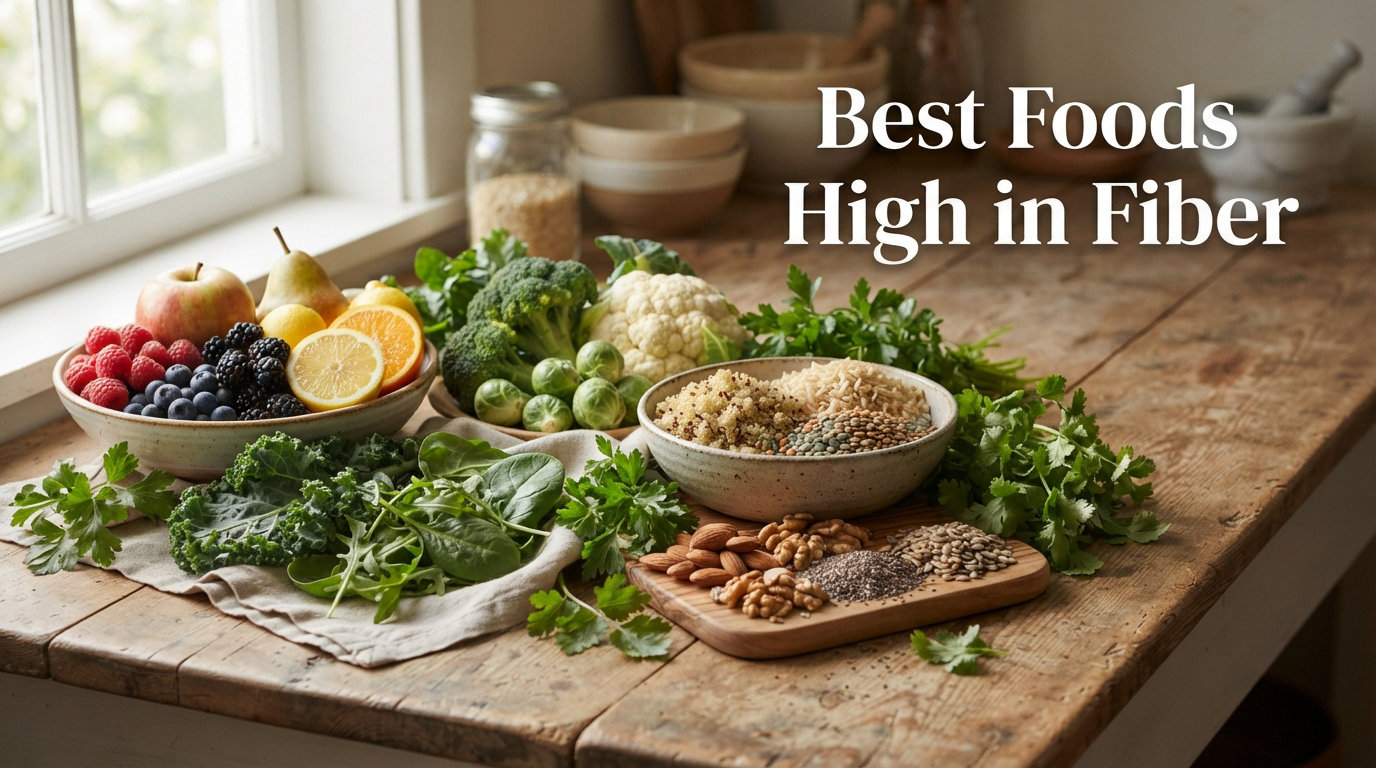
Fiber comes from plant foods, and the easiest way to get more is to mix beans, whole grains, fruit, vegetables, nuts, and seeds across the day. This guide ranks 20 of the best foods high in fiber using standard portions from the USDA, then gives you a realistic meal example and a gradual plan that helps reduce the chance of uncomfortable bloating.
Depending on age and sex, adults generally need about 22 to 34 grams of fiber per day. Your needs may differ with pregnancy, medical conditions, or a therapeutic diet. Increase fiber little by little and drink enough fluid; adding a large amount overnight can cause gas, cramping, or changes in bowel habits.
Table of Contents
20 Best Foods High in Fiber
-
Unsweetened high-fiber bran cereal, 1/2 cup: 14.0 g. Compare labels because brands vary in fiber, added sugar, and serving size.
-
Cooked lima beans, 1 cup: 13.2 g. Add them to soup, succotash, grain bowls, or salads.
-
Cooked artichoke, 1 cup: 9.6 g. Use artichoke hearts in salads, pasta, dips, and roasted vegetable dishes.
-
Cooked navy beans, 1/2 cup: 9.6 g. They work in soup, baked beans, white-bean mash, and tomato-based stews.
-
Cooked green peas, 1 cup: 8.8 g. Stir them into pasta, rice, soup, cottage pie, or scrambled eggs.
-
Cooked split peas, 1/2 cup: 8.2 g. Split-pea soup is the classic choice, but they also make a thick curry or puree.
-
Raspberries, 1 cup: 8.0 g. Fresh and frozen berries both work in oatmeal, yogurt, smoothies, and desserts.
-
Cooked lentils, 1/2 cup: 7.8 g. Add lentils to soup, salads, tacos, pasta sauce, or grain bowls.
-
Cooked black beans, 1/2 cup: 7.5 g. Use them in burrito bowls, chili, quesadillas, salads, or eggs.
-
Canned pumpkin, 1 cup: 7.1 g. Choose plain pumpkin rather than pie filling and stir it into oatmeal, soup, chili, or baking.
-
Cooked Brussels sprouts, 1 cup: 6.4 g. Roast, sauté, or shred them into a warm salad.
-
Cooked chickpeas, 1/2 cup: 6.3 g. Use them in hummus, curry, salad, soup, or a roasted snack.
-
Cooked sweet potato, 1 cup: 6.3 g. Roast cubes, mash them, or fill a baked sweet potato with beans and vegetables.
-
Raw jicama, 1 cup: 5.9 g. Cut it into sticks, slaw, salsa, or salad for crisp texture.
-
Air-popped popcorn, 3 cups: 5.8 g. Keep butter, sugar, and sodium reasonable if you want a nutrient-dense snack.
-
Pear, 1 medium: 5.5 g. Eat the edible skin, slice it into oatmeal, or pair it with nuts or yogurt.
-
Cooked broccoli, 1 cup: 5.2 g. Roast, steam, or add it to pasta, soup, stir-fries, and grain bowls.
-
Avocado, 1 cup: 5.0 g. Add it to toast, salads, tacos, sandwiches, or bowls.
-
Apple with skin, 1 medium: 4.8 g. Pair it with peanut butter or chop it into oatmeal or salad.
-
Chia seeds, 1 tablespoon: 4.1 g. Stir them into yogurt, oats, smoothies, or chia pudding with enough liquid.
Note: The USDA portions are standard reference amounts, not mandatory serving sizes. Packaged-food values can vary, so check the Nutrition Facts label.
Fiber Needs at a Glance
The National Institute of Diabetes and Digestive and Kidney Diseases says adults generally need 22 to 34 grams per day, depending on age and sex. U.S. food labels use a Daily Value of 28 grams. A product with 20% or more of the Daily Value per serving is considered high in fiber, while foods with smaller amounts still contribute.
Fiber is not one single substance. Soluble, insoluble, and fermentable fibers behave differently, which is one reason variety is more useful than relying on a single cereal or supplement.
High-Fiber Food Groups
Beans, peas, and lentils
Legumes dominate many lists of foods high in fiber. They also contribute protein, potassium, magnesium, and other nutrients. Canned beans are convenient; drain and rinse them if you want less surface sodium.
Whole grains
High-fiber cereal, shredded wheat, popcorn, bulgur, barley, oats, whole-wheat bread, and whole-grain tortillas can help. Look for a whole grain near the beginning of the ingredient list and compare grams of fiber per serving.
Fruit
Raspberries, blackberries, pears, apples, oranges, kiwi, and other whole fruits provide fiber with water. Juice usually contains much less fiber than the whole fruit. Keep the edible skin when it is safe and comfortable to eat.
Vegetables
Artichokes, peas, pumpkin, Brussels sprouts, sweet potatoes, broccoli, carrots, greens, and many other vegetables contribute. Fresh, frozen, and canned forms can all work.
Nuts and seeds
Chia, flax, pumpkin seeds, almonds, pistachios, and other nuts and seeds add fiber in small portions. They are calorie-dense and can be a choking hazard for young children, so use an appropriate form and portion.
One-Day High-Fiber Meal Example
-
Breakfast: Oatmeal with raspberries and one tablespoon of chia seeds
-
Lunch: Lentil and roasted-vegetable bowl with whole grains
-
Snack: An apple or pear with a small handful of nuts
-
Dinner: Black-bean tacos with Brussels sprout slaw and avocado
This is an example, not a prescription. If you currently eat very little fiber, smaller portions and slower changes are usually more comfortable.
How to Increase Fiber Without Overdoing It
-
Add one small high-fiber serving at a time.
-
Keep that change consistent for several days before adding more.
-
Drink water and other unsweetened fluids regularly.
-
Cook vegetables and choose smaller bean portions if large raw meals cause discomfort.
-
Spread fiber across breakfast, lunch, dinner, and snacks.
-
Reduce the portion temporarily if symptoms become uncomfortable, then increase more slowly.
These foods overlap with our guide to the best foods for gut health and the plant-forward choices in our Mediterranean diet food list. Beans, seeds, and whole grains are also featured among the best foods high in magnesium.
When More Fiber Is Not Automatically Better
A sudden increase can worsen gas, bloating, cramping, diarrhea, or constipation. Some people with IBS, inflammatory bowel disease, bowel narrowing, gastroparesis, recent gastrointestinal surgery, or other medical conditions need individualized advice. A low-fiber diet may be medically necessary in specific situations.
See a healthcare professional for persistent constipation, rectal bleeding, blood in stool, continual abdominal pain, vomiting, fever, or unexplained weight loss. Food changes should not delay an evaluation.
For current guidance, see the NIDDK fiber and constipation resource and the USDA food-sources table.
Frequently Asked Questions
What food is highest in fiber?
In the USDA list used here, half a cup of unsweetened high-fiber cereal provides 14 grams. Among whole foods, a cup of cooked lima beans provides 13.2 grams, while a cup of cooked artichoke or half a cup of navy beans provides 9.6 grams.
Which fruit has the most fiber?
One cup of raspberries provides 8 grams in the USDA table. A medium pear provides 5.5 grams and a medium apple with skin 4.8 grams.
How can I add fiber at breakfast?
Choose oatmeal or a lower-sugar whole-grain cereal, then add raspberries, chia seeds, nuts, pear, or apple. Start with one addition if your current breakfast is low in fiber.
Can fiber make constipation worse?
It can if you increase it too quickly, do not drink enough fluid, or have a condition that changes how fiber should be used. Persistent or severe constipation needs medical advice.
Is a fiber supplement the same as food?
No. A supplement may provide one type of fiber, while high-fiber foods also provide vitamins, minerals, protein, or other plant compounds. Ask a healthcare professional whether a supplement is appropriate for you.
Conclusion
The best foods high in fiber are practical foods you can rotate: beans, lentils, high-fiber cereal, berries, artichokes, peas, whole grains, sweet potatoes, broccoli, pears, apples, nuts, and seeds. Add them gradually, drink enough fluid, and choose variety instead of trying to reach your whole day’s fiber in one meal.