
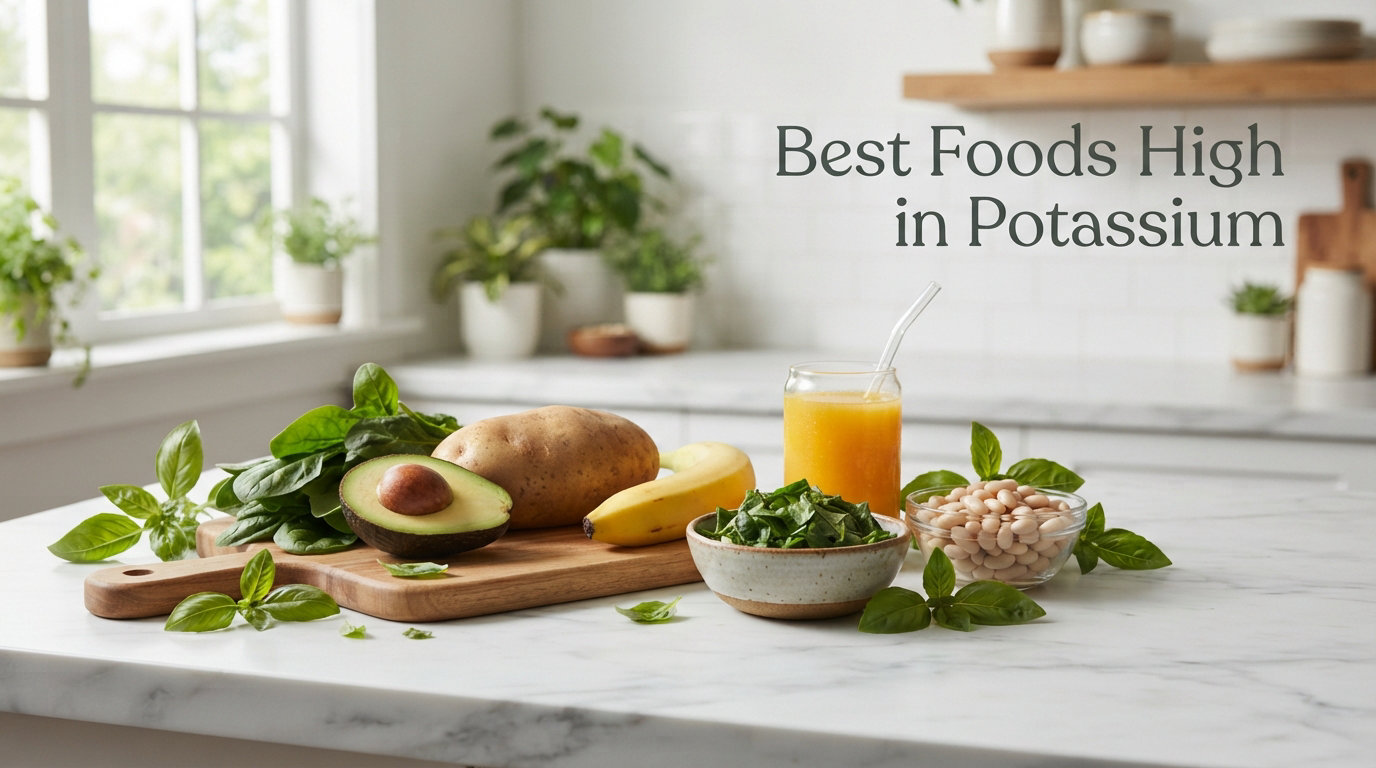
Potassium supports normal cell function, nerve signals, muscle contraction, and fluid balance. Bananas contribute, but they are far from the only option. This guide ranks 20 of the best foods high in potassium using practical servings from the National Institutes of Health, then shows you how to combine them in everyday meals.
Healthy adult men have an Adequate Intake of 3,400 milligrams per day and healthy adult women 2,600 milligrams; needs differ during pregnancy and breastfeeding. These targets do not apply to everyone. Kidney disease and medicines such as ACE inhibitors, ARBs, and potassium-sparing diuretics can make too much potassium dangerous, so follow your clinician’s advice if you have a medical condition or take prescription medicine.
Table of Contents
20 Best Foods High in Potassium
-
Dried apricots, 1/2 cup: 755 mg. A small portion is easy to add to oatmeal or trail mix. Dried fruit is concentrated in carbohydrate and calories, so use the serving that fits your needs.
-
Cooked lentils, 1 cup: 731 mg. Use lentils in soup, curry, salads, tacos, or grain bowls.
-
Mashed acorn squash, 1 cup: 644 mg. Roast halves until tender, then mash with olive oil, pepper, and herbs.
-
Dried prunes, 1/2 cup: 635 mg. Chop them into oatmeal or yogurt, or eat a smaller portion with nuts.
-
Raisins, 1/2 cup: 618 mg. Add them to cereal, couscous, salads, or homemade trail mix.
-
Baked potato, flesh only, 1 medium: 610 mg. Top it with beans, vegetables, plain yogurt, or herbs for a complete meal.
-
Canned kidney beans, 1 cup: 607 mg. Drain and rinse them, then add to chili, soup, rice bowls, or salad.
-
Orange juice, 1 cup: 496 mg. Whole oranges also contribute potassium and provide fiber; juice portions can add up quickly.
-
Boiled mature soybeans, 1/2 cup: 443 mg. Use them in bowls and salads or season them as a snack.
-
Banana, 1 medium: 422 mg. Pair it with yogurt, peanut butter, or oatmeal for a more satisfying snack.
-
One-percent milk, 1 cup: 366 mg. Use it in cereal, oatmeal, smoothies, or cooking if dairy fits your diet.
-
Raw spinach, 2 cups: 334 mg. Make a salad, blend it into a smoothie, or cook it into eggs, soup, or pasta.
-
Grilled chicken breast, 3 ounces: 332 mg. Serve it with potatoes, beans, greens, or squash to raise the meal’s total.
-
Nonfat fruit yogurt, 6 ounces: 330 mg. Potassium and added sugar vary by brand, so compare labels. Plain yogurt with fruit is another option.
-
Cooked Atlantic salmon, 3 ounces: 326 mg. Pair it with a baked potato and broccoli for several sources in one meal.
-
Grilled top sirloin, 3 ounces: 315 mg. Use a moderate portion alongside plenty of vegetables and whole grains.
-
Blackstrap or other molasses, 1 tablespoon: 308 mg. Stir a small amount into oatmeal or baking; it is still an added sugar.
-
Raw tomato, 1 medium: 292 mg. Use tomatoes in salads, sandwiches, salsa, sauces, and soups.
-
Soymilk, 1 cup: 287 mg. Choose an unsweetened fortified product when possible and check the label because brands vary.
-
Plain nonfat Greek yogurt, 6 ounces: 240 mg. Top it with fruit or use it in dips and sauces.
Note: The U.S. Daily Value for potassium is 4,700 mg. A food does not have to provide 20% of that amount to be useful; moderate sources add up across meals.
Potassium Needs at a Glance
-
Men age 19 and older: 3,400 mg per day
-
Women age 19 and older: 2,600 mg per day
-
Pregnancy: 2,900 mg per day for adults
-
Breastfeeding: 2,800 mg per day for adults
These are Adequate Intake values for healthy people, not a target for treating low or high blood potassium. A blood test and medical evaluation are needed for those conditions.
Potassium-Rich Food Groups
Beans and lentils
Among foods high in potassium, lentils, kidney beans, soybeans, and other legumes also contribute fiber and protein. Canned beans save time. Rinse them if you want less surface sodium, and increase portions gradually if beans are new to your diet.
Vegetables and potatoes
Acorn squash, potatoes, spinach, tomatoes, broccoli, asparagus, and many other vegetables contribute. Instead of focusing on one “superfood,” serve two vegetables at dinner or add vegetables to foods you already make.
Fruit and dried fruit
Dried apricots, prunes, raisins, bananas, oranges, and cantaloupe are useful choices. Dried fruit packs more potassium into a small volume, but it also concentrates natural sugar and calories. Whole fresh fruit provides more water and often feels more filling.
Dairy, soy, fish, and meat
Milk, yogurt, soymilk, chicken, salmon, beef, and turkey all contribute. Potassium is not only a plant-food nutrient, although plant-rich meals make it easier to combine several sources.
One-Day High-Potassium Meal Example
-
Breakfast: Oatmeal made with milk or soymilk, topped with banana and a spoonful of raisins
-
Lunch: Lentil and spinach bowl with tomatoes and brown rice
-
Snack: Plain Greek yogurt with chopped dried apricots
-
Dinner: Salmon, chicken, or soybeans with a baked potato and roasted broccoli
This sample is not appropriate for everyone, especially people who must limit potassium. Adjust it for your health, appetite, allergies, and medical guidance.
Easy Ways to Eat More Potassium
-
Add beans or lentils to soup, salad, tacos, or pasta sauce.
-
Serve a potato or winter squash with dinner.
-
Use spinach and tomatoes in sandwiches, eggs, or grain bowls.
-
Pair fruit with yogurt, milk, soymilk, nuts, or peanut butter.
-
Choose whole grains and varied produce across the week.
-
Build meals around several moderate sources rather than chasing one very large serving.
Many of these foods also appear in our Mediterranean diet food list. For a companion mineral guide, see the best foods high in magnesium.
Who Should Be Careful With Potassium?
People with chronic kidney disease or impaired potassium excretion may need a lower-potassium plan. Potassium-sparing diuretics, ACE inhibitors, ARBs, and some other medicines can raise blood potassium. Other diuretics, repeated vomiting, or diarrhea can lower it. Do not diagnose or correct a suspected imbalance with food or supplements on your own.
Salt substitutes deserve special caution because some contain 440 to 2,800 mg of potassium per teaspoon. Ask a healthcare professional before using one if you have kidney disease, heart disease, diabetes, or take prescription medicine.
The NIH potassium fact sheet explains current intake guidance, food sources, medication interactions, and safety concerns.
Frequently Asked Questions
What food has the most potassium?
In the NIH list used here, half a cup of dried apricots provides 755 mg, followed closely by a cup of cooked lentils at 731 mg. A medium baked potato provides about 610 mg.
Are bananas the best source of potassium?
No. A medium banana provides about 422 mg, which is useful, but lentils, potatoes, beans, winter squash, and dried fruit provide more in the listed servings.
Can I get enough potassium without dairy?
Yes. Beans, lentils, potatoes, squash, spinach, tomatoes, fruit, soy foods, nuts, and whole grains can all contribute. If you use a dairy alternative, check its potassium and fortification on the label.
Should I take a potassium supplement?
Not unless a healthcare professional recommends it. Most over-the-counter supplements contain only a small amount, while higher doses and salt substitutes can be dangerous for people with certain conditions or medicines.
What are signs of low potassium?
Low blood potassium can cause fatigue, muscle weakness, constipation, and more serious problems, but those symptoms have many possible causes. A clinician should diagnose and treat an electrolyte problem.
Conclusion
The best foods high in potassium go well beyond bananas: lentils, dried apricots, acorn squash, potatoes, beans, spinach, tomatoes, yogurt, soy foods, and salmon all contribute. Combine several sources across the day, and use food-first changes only when they are safe for you. Anyone with kidney disease or potassium-affecting medicine should follow individualized medical advice.