
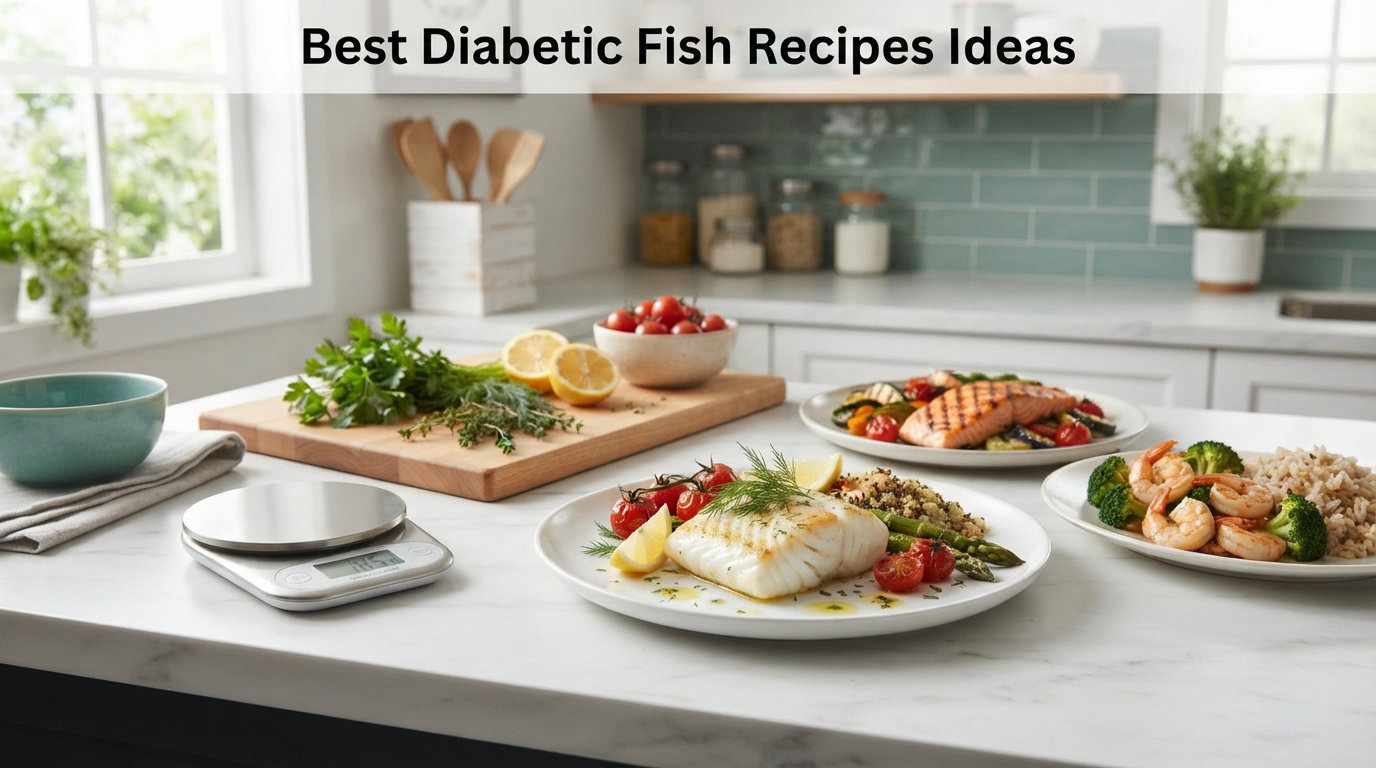
Best diabetic fish recipes should make the entire meal easier, not leave you guessing about the sauce, side dish, portion, or cooking time. These 10 ideas use salmon, cod, tilapia, trout, pollock, canned tuna, and sardines in complete meals with measured ingredients, clear directions, doneness cues, and practical substitutions.
Fish contains little or no carbohydrate on its own, but breading, sweet glazes, tortillas, grains, beans, and sides still count toward the meal. The recipes below rely on vegetables, herbs, citrus, vinegar, spices, and modest portions of higher-carbohydrate ingredients. They are meal ideas rather than an individual diabetes prescription, so adjust portions and carbohydrate choices to the plan you made with your clinician or registered dietitian.
Food-safety note: Cook finfish to 145°F at the thickest point, or until the flesh is opaque and separates easily with a fork, as explained in the USDA safe minimum temperature chart.
Table of Contents
How to Build a Diabetes-Friendly Fish Dinner
The American Diabetes Association Diabetes Plate is a useful starting point: fill half the plate with non-starchy vegetables, one quarter with protein such as fish, and one quarter with a quality carbohydrate when wanted. That structure keeps the fish in context instead of treating one ingredient as a complete plan.
Choose the fish for the job
-
Salmon and trout: Richer fish that stay moist in the oven and stand up to assertive herbs, mustard, and citrus.
-
Cod, pollock, and tilapia: Mild, quick-cooking fillets that readily take on tomato, spice, curry, or herb flavors.
-
Canned tuna and sardines: Useful pantry options; compare labels because sodium varies widely, and drain them before using.
Measure the ingredients around the fish
Bottled teriyaki sauce, honey glaze, sweet chili sauce, seasoned breadcrumbs, creamy sauce, and restaurant-size tortillas can change a fish dinner substantially. A measured sauce and one intentional carbohydrate side are easier to account for than several hidden sources. For more meal-building ideas, compare these easy diabetic dinner recipes.
Keep mercury advice in perspective
The FDA advice about eating fish lists salmon, cod, pollock, tilapia, sardines, trout, and canned light tuna among its lower-mercury “Best Choices.” The guidance is especially important for people who are pregnant or breastfeeding and for children; it also recommends variety rather than relying on one fish every week.
10 Best Diabetic Fish Recipes Ideas
The first four recipes are hands-off oven dinners, the next four use a skillet, and the final two turn shelf-stable fish into fast meals. All quantities serve four unless noted. If a fillet is unusually thin, begin checking it several minutes early.
Sheet-Pan and Oven Fish Ideas
1. Lemon-Dill Salmon with Asparagus
Lemon, dill, and mustard make a sharp, aromatic coating without a sugary glaze. Asparagus roasts beside the salmon, so cleanup stays simple.
Serves: 4 | Time: 25 minutes | Method: Sheet pan
Ingredients
-
4 salmon fillets, about 5 ounces each
-
1 pound asparagus, woody ends trimmed
-
1 tablespoon olive oil, divided
-
1 tablespoon Dijon mustard
-
1 tablespoon lemon juice
-
1 teaspoon finely grated lemon zest
-
1 tablespoon chopped fresh dill, plus more for serving
-
1/4 teaspoon black pepper
Instructions
-
Heat the oven to 425°F and line a rimmed sheet pan with parchment.
-
Toss the asparagus with two teaspoons of olive oil and spread it on the pan. Roast for 5 minutes.
-
Mix the remaining oil with the mustard, lemon juice, zest, dill, and pepper.
-
Move the asparagus aside, place the salmon on the pan, and brush the mustard mixture over the fish.
-
Roast for 8 to 12 minutes, depending on thickness, until the salmon reaches 145°F or flakes easily and the asparagus is crisp-tender.
Serve it with: A measured scoop of quinoa or farro when it fits your plan. If you want a deeper salmon technique guide, use this baked salmon method.
2. Cilantro-Lime Cod with Cabbage and Peppers
Cod cooks over a bed of cabbage and peppers that catches the lime-and-cumin juices. The vegetables soften without becoming watery.
Serves: 4 | Time: 35 minutes | Method: Sheet pan
Ingredients
-
4 cod fillets, about 5 ounces each
-
4 cups thinly sliced green cabbage
-
2 bell peppers, sliced
-
1 small red onion, thinly sliced
-
2 tablespoons olive oil, divided
-
1 teaspoon ground cumin
-
1/2 teaspoon smoked paprika
-
2 tablespoons lime juice
-
1/3 cup chopped fresh cilantro
-
1/4 teaspoon black pepper
Instructions
-
Heat the oven to 425°F and coat a large rimmed sheet pan with one teaspoon of oil.
-
Toss the cabbage, peppers, and onion with one tablespoon of oil, half the cumin, and half the paprika.
-
Roast the vegetables for 15 minutes, then stir and make four spaces for the fish.
-
Pat the cod dry. Rub it with the remaining oil, cumin, paprika, and pepper, then set it among the vegetables.
-
Roast for 8 to 12 minutes until the cod reaches 145°F and separates into moist flakes.
-
Drizzle the lime juice over the pan and scatter with cilantro.
Easy swap: Pollock, haddock, or another mild white fish can replace cod; check thinner pieces sooner.
3. Paprika Tilapia with Broccoli and Tomatoes
This fast tray bake uses smoked paprika and garlic for depth while tomatoes provide moisture for the lean tilapia.
Serves: 4 | Time: 25 minutes | Method: Sheet pan
Ingredients
-
4 tilapia fillets, about 5 ounces each
-
5 cups broccoli florets
-
1 pint cherry tomatoes
-
2 tablespoons olive oil, divided
-
1 1/2 teaspoons smoked paprika
-
1 teaspoon garlic powder
-
1/2 teaspoon dried thyme
-
1 tablespoon red wine vinegar
-
1/4 teaspoon black pepper
Instructions
-
Heat the oven to 425°F and line a large sheet pan with parchment.
-
Toss the broccoli and tomatoes with one tablespoon of oil, half the paprika, and half the garlic powder.
-
Roast the vegetables for 10 minutes.
-
Pat the tilapia dry. Rub it with the remaining oil, paprika, garlic powder, thyme, and pepper.
-
Add the fish to the pan and roast for 7 to 10 minutes until it reaches 145°F and flakes easily.
-
Splash the vinegar over the hot vegetables and toss gently before serving.
Make it useful: Refrigerate one cooked fillet separately and flake it over greens for lunch the next day.
4. Mustard-Herb Trout with Green Beans
Rainbow trout has enough richness to carry a thin mustard-herb crust. Green beans roast at the same temperature and keep their bite.
Serves: 4 | Time: 30 minutes | Method: Oven
Ingredients
-
4 trout fillets, about 5 ounces each
-
1 pound green beans, trimmed
-
1 tablespoon olive oil, divided
-
1 1/2 tablespoons Dijon mustard
-
1 tablespoon chopped fresh parsley
-
1 teaspoon chopped fresh rosemary
-
1 teaspoon lemon juice
-
1/4 teaspoon black pepper
Instructions
-
Heat the oven to 425°F and line a rimmed pan with parchment.
-
Toss the green beans with two teaspoons of oil and spread them across the pan. Roast for 8 minutes.
-
Mix the remaining oil with the mustard, parsley, rosemary, lemon juice, and pepper.
-
Place the trout skin-side down among the beans and spread the mustard mixture over the flesh.
-
Roast for 8 to 11 minutes until the trout reaches 145°F or flakes at the thickest point.
Serving note: Add a small baked sweet potato if you want a carbohydrate side, rather than combining several starches.
Skillet Fish Dinners
5. Tomato-Olive Pollock Skillet
Pollock gently poaches in a chunky tomato sauce with garlic, oregano, and a measured amount of olives. The sauce is flavorful enough that no breading is needed.
Serves: 4 | Time: 30 minutes | Method: Skillet
Ingredients
-
4 pollock fillets, about 5 ounces each
-
2 teaspoons olive oil
-
1 small onion, diced
-
3 garlic cloves, minced
-
1 can no-salt-added diced tomatoes, 14.5 ounces
-
1 teaspoon dried oregano
-
1/3 cup pitted kalamata olives, halved
-
3 cups baby spinach
-
1 tablespoon lemon juice
-
1/4 teaspoon black pepper
Instructions
-
Heat the oil in a wide skillet over medium heat. Cook the onion for 5 minutes until softened.
-
Add the garlic and oregano and stir for 30 seconds.
-
Add the tomatoes with their juices and simmer uncovered for 6 minutes.
-
Nestle the pollock into the sauce, cover, and cook gently for 7 to 10 minutes until the fish reaches 145°F.
-
Transfer the fish to plates. Stir the olives and spinach into the sauce until the spinach wilts.
-
Finish with lemon juice and pepper, then spoon the sauce around the fish.
Lower-sodium move: Use no-salt-added tomatoes, measure the olives, and let lemon and oregano supply contrast.
6. Ginger-Sesame Salmon and Green Bean Skillet
A small amount of reduced-sodium soy sauce seasons the entire pan. Ginger, rice vinegar, and toasted sesame oil keep the glaze bright without relying on honey.
Serves: 4 | Time: 25 minutes | Method: Skillet
Ingredients
-
4 salmon fillets, about 5 ounces each
-
1 pound green beans, trimmed
-
2 teaspoons avocado or canola oil
-
1 tablespoon reduced-sodium soy sauce
-
1 tablespoon rice vinegar
-
2 teaspoons finely grated fresh ginger
-
1 garlic clove, finely grated
-
1 teaspoon toasted sesame oil
-
2 scallions, thinly sliced
-
1 teaspoon sesame seeds
Instructions
-
Whisk the soy sauce, vinegar, ginger, garlic, sesame oil, and two tablespoons of water.
-
Heat the avocado oil in a large nonstick skillet over medium-high heat.
-
Add the salmon presentation-side down and cook for 3 minutes. Turn and cook for 2 minutes more.
-
Move the salmon to one side and add the green beans with two tablespoons of water. Cover and cook for 4 minutes.
-
Pour in the ginger mixture, cover again, and cook for 2 to 4 minutes until the salmon reaches 145°F and the beans are crisp-tender.
-
Spoon the pan juices over the fish and finish with scallions and sesame seeds.
Label check: Reduced-sodium soy sauce is still salty, so measure it rather than pouring directly from the bottle.
7. Coconut Curry Cod with Cauliflower and Spinach
Light coconut milk creates a gently spiced sauce, while cauliflower and spinach make the skillet feel like a complete dinner.
Serves: 4 | Time: 35 minutes | Method: Skillet
Ingredients
-
4 cod fillets, about 5 ounces each
-
2 teaspoons olive oil
-
1 small onion, thinly sliced
-
1 tablespoon finely grated fresh ginger
-
2 garlic cloves, minced
-
1 tablespoon curry powder
-
1 can light coconut milk, 13.5 ounces
-
4 cups small cauliflower florets
-
4 cups baby spinach
-
1 tablespoon lime juice
-
1/4 teaspoon black pepper
Instructions
-
Heat the oil in a wide skillet over medium heat. Cook the onion for 5 minutes until soft.
-
Add the ginger, garlic, and curry powder and stir for 30 seconds.
-
Pour in the coconut milk and 1/2 cup of water, then add the cauliflower.
-
Cover and simmer for 8 minutes until the cauliflower is nearly tender.
-
Nestle the cod into the sauce, cover, and simmer gently for 7 to 10 minutes until it reaches 145°F.
-
Transfer the fish to plates. Stir the spinach, lime juice, and pepper into the sauce until wilted, then spoon it around the cod.
Portion cue: Coconut milk contributes saturated fat, so use the measured light version rather than treating the sauce as unlimited.
8. Salmon Cakes with Cucumber-Yogurt Salad
These tender patties use oats instead of a thick breadcrumb coating. A crisp cucumber salad supplies contrast without a sweet relish or heavy sauce.
Serves: 4 | Time: 30 minutes | Method: Skillet
Ingredients
-
2 cans no-salt-added salmon, 5 ounces each, drained
-
1 large egg
-
1/3 cup quick oats
-
2 scallions, thinly sliced
-
1 tablespoon chopped fresh dill
-
1 teaspoon Dijon mustard
-
2 teaspoons olive oil
-
1 large cucumber, diced
-
3/4 cup plain Greek yogurt
-
1 tablespoon lemon juice
-
1/4 teaspoon black pepper
Instructions
-
Mix the salmon, egg, oats, scallions, dill, mustard, and half the pepper in a bowl.
-
Let the mixture stand for 5 minutes, then form eight small patties.
-
Stir the cucumber, yogurt, lemon juice, and remaining pepper in a separate bowl.
-
Heat the oil in a nonstick skillet over medium heat.
-
Cook the patties for 3 to 4 minutes per side until browned and hot through the center.
-
Serve two patties per person with the cucumber-yogurt salad.
Texture fix: If the mixture feels wet, add one tablespoon of oats and wait 2 minutes before shaping.
Fast Pantry Fish Meals
9. Tuna, White Bean, and Tomato Skillet
Canned light tuna turns white beans, tomatoes, and kale into a 20-minute meal. The beans are the planned carbohydrate here, so the skillet does not need pasta or bread to feel complete.
Serves: 4 | Time: 20 minutes | Method: Skillet
Ingredients
-
2 cans light tuna packed in water, 5 ounces each, drained
-
1 tablespoon olive oil
-
1 small onion, diced
-
2 garlic cloves, minced
-
1 can no-salt-added white beans, 15 ounces, rinsed and drained
-
1 pint cherry tomatoes, halved
-
4 cups chopped kale, tough stems removed
-
1 teaspoon dried Italian seasoning
-
1 tablespoon red wine vinegar
-
1/4 teaspoon black pepper
Instructions
-
Heat the oil in a large skillet over medium heat and cook the onion for 4 minutes.
-
Add the garlic and Italian seasoning and stir for 30 seconds.
-
Add the beans, tomatoes, kale, and 1/4 cup of water.
-
Cover and cook for 5 minutes until the kale is tender and the tomatoes begin to collapse.
-
Fold in the tuna gently and heat for 2 minutes without breaking it into tiny pieces.
-
Finish with vinegar and pepper.
Meal-prep note: Store the tuna skillet for up to three days and reheat it gently so the fish does not dry out.
10. Sardine, Tomato, and Spinach Whole-Wheat Pasta
A modest pasta portion carries a bold sauce of sardines, tomatoes, spinach, lemon, and chile. Because canned sardines can be salty, the recipe uses no added salt.
Serves: 4 | Time: 25 minutes | Method: Stovetop
Ingredients
-
6 ounces dry whole-wheat spaghetti
-
2 cans sardines packed in water, about 4 ounces each, drained
-
2 teaspoons olive oil
-
3 garlic cloves, thinly sliced
-
1 pint cherry tomatoes, halved
-
5 cups baby spinach
-
1/4 teaspoon crushed red pepper, optional
-
1 teaspoon finely grated lemon zest
-
1 tablespoon lemon juice
-
2 tablespoons chopped fresh parsley
Instructions
-
Cook the spaghetti in unsalted water until just tender. Reserve 1/2 cup of cooking water, then drain.
-
Heat the oil in a wide skillet over medium heat. Add the garlic and crushed red pepper and cook for 30 seconds.
-
Add the tomatoes and cook for 5 minutes until they release their juices.
-
Add the spinach and stir until wilted.
-
Fold in the sardines, spaghetti, lemon zest, lemon juice, and enough reserved water to loosen the sauce.
-
Warm for 1 to 2 minutes and finish with parsley.
Serving cue: Divide the pan into four equal portions and add a non-starchy side such as a simple green salad. These diabetic salad recipes offer compatible ideas.
Fish Cooking Times, Doneness, and Common Fixes
-
Start with dry fish: Pat fillets dry so seasonings adhere and the surface roasts instead of steaming.
-
Cook similar thicknesses together: A thin tail piece can finish several minutes before a thick center-cut fillet.
-
Use a thermometer: Insert it sideways into the thickest portion when the fillet is too thin for a top-down reading.
-
Prevent sticking: Preheat the pan, use a modest amount of oil, and leave the fish alone until it releases readily.
-
Rescue dry fish: Flake it into a tomato-based skillet, yogurt-dill salad, or vegetable soup rather than reheating it repeatedly.
Shopping, Storage, and Meal-Prep Tips
Fresh fish should smell mild rather than strongly fishy, and fillets should look moist without drying at the edges. Frozen fish is often the practical choice: thaw it overnight in the refrigerator, keep it in a leakproof container, and pat it dry before seasoning.
Compare labels on canned fish, broth, mustard, soy sauce, tomatoes, beans, and olives. “Reduced sodium” means less than the standard product, not necessarily a small amount, so the number per serving still matters. Rinsing beans and measuring condiments give you more control over the final meal.
Refrigerate cooked fish within two hours in a shallow container. Use most cooked fish within three to four days, but choose the shorter three-day window when aroma or texture changes quickly. Reheat only the portion you need and stop as soon as it is hot; repeated heating makes lean fish tough.
Frequently Asked Questions
Can people with diabetes eat fish?
Yes. Fish can supply protein with little or no carbohydrate. The full plate still matters, including breading, sauce, beans, grains, tortillas, fruit, and side dishes, so fit those foods into your individualized meal plan.
Which fish are useful choices for a diabetes-friendly meal?
Salmon, trout, cod, pollock, tilapia, sardines, and canned light tuna all work in the recipes above. Choose a variety, compare sodium on packaged fish, and follow FDA mercury guidance if you are pregnant, breastfeeding, feeding children, or eating fish frequently.
Is fried fish diabetes-friendly?
It can fit some plans, but a thick breading adds carbohydrate and frying changes the fat content. Baking, roasting, broiling, grilling, poaching, and skillet cooking make the coating and oil easier to measure.
What should I serve with fish?
Start with a generous non-starchy vegetable such as broccoli, asparagus, cabbage, green beans, leafy greens, zucchini, peppers, or cauliflower. Add one measured quality-carbohydrate food—such as beans, brown rice, quinoa, whole-grain pasta, corn tortillas, or sweet potato—when it fits your plan.
Can I use frozen fish?
Yes. Thaw it safely in the refrigerator, drain any liquid, and pat the fish dry. If cooking from frozen, use package directions because thickness and added ice can change the timing.
How can I add flavor without a sweet glaze?
Use citrus zest and juice, vinegar, mustard, fresh herbs, garlic, ginger, smoked paprika, cumin, curry powder, tomato, chile, or a measured lower-sodium condiment. Build contrast with acid and aromatics before reaching for honey or bottled sauce.
Conclusion: Best Diabetic Fish Recipes
The best diabetic fish recipes combine a clearly cooked portion of fish with vegetables, a measured sauce, and an intentional carbohydrate choice. Pick the method that suits your evening—sheet pan, oven, skillet, or pantry meal—then adjust the sides and portions to your own plan. With complete directions and realistic substitutions, fish can become a dependable dinner rather than an occasional experiment.