
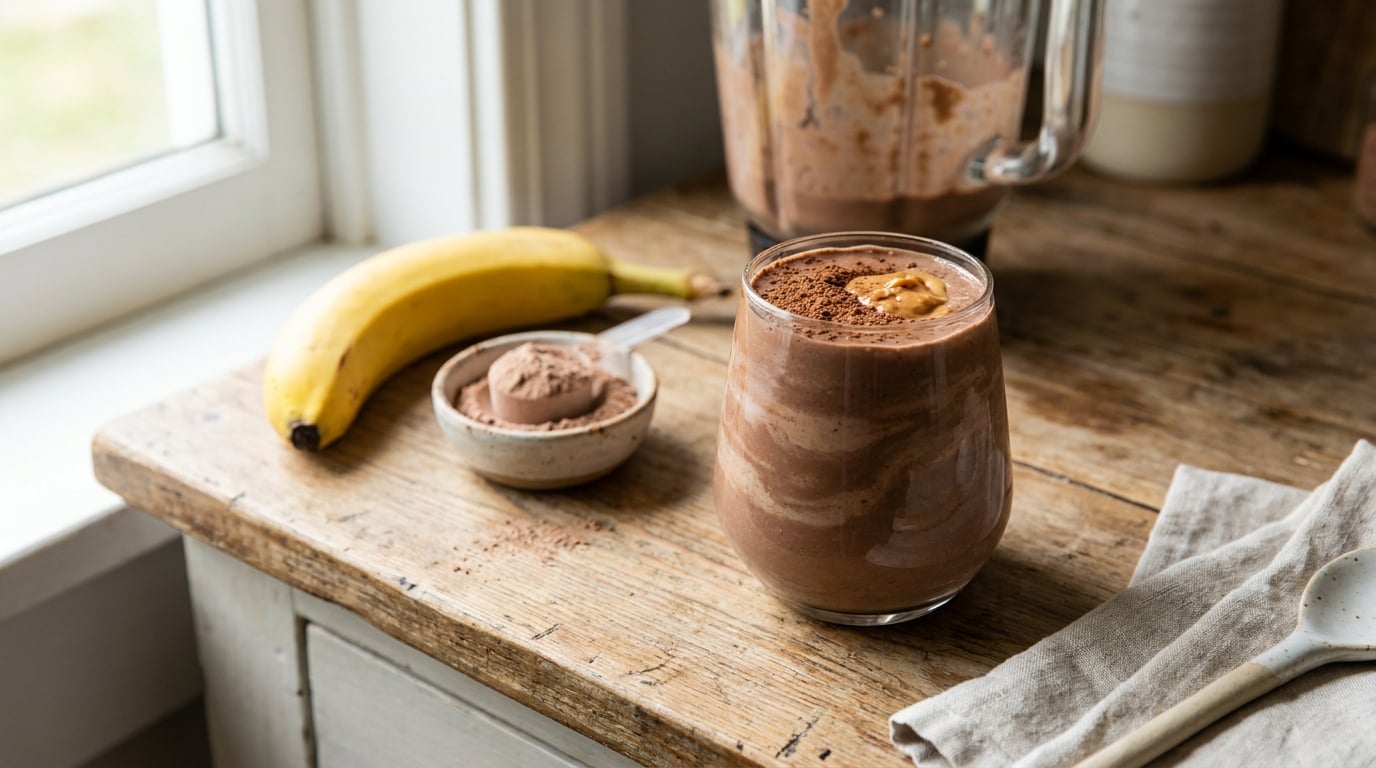
High protein smoothie recipes for weight loss are the ones I actually make on a weeknight, because they take five minutes and still hold hunger off until lunch. Every drink below lands between 22 and 31 grams of protein for roughly 250 to 340 calories, with no added sugar and enough fat and fiber to actually fill you up.
This list is for adults working on weight management who want filling, protein-forward breakfasts and snacks without giving up flavor. I built all ten around the same formula: a lean protein source, a fiber-rich fruit or vegetable, a little healthy fat, and a liquid you like drinking. Nine of the ten are ready in under six minutes, and all ten store, freeze, and travel well. If you like the bowl-style versions, my protein bowl recipes for meal prep use the same base ideas in a spoonable form.
Table of Contents
High Protein Smoothie Recipes for Weight Loss at a Glance
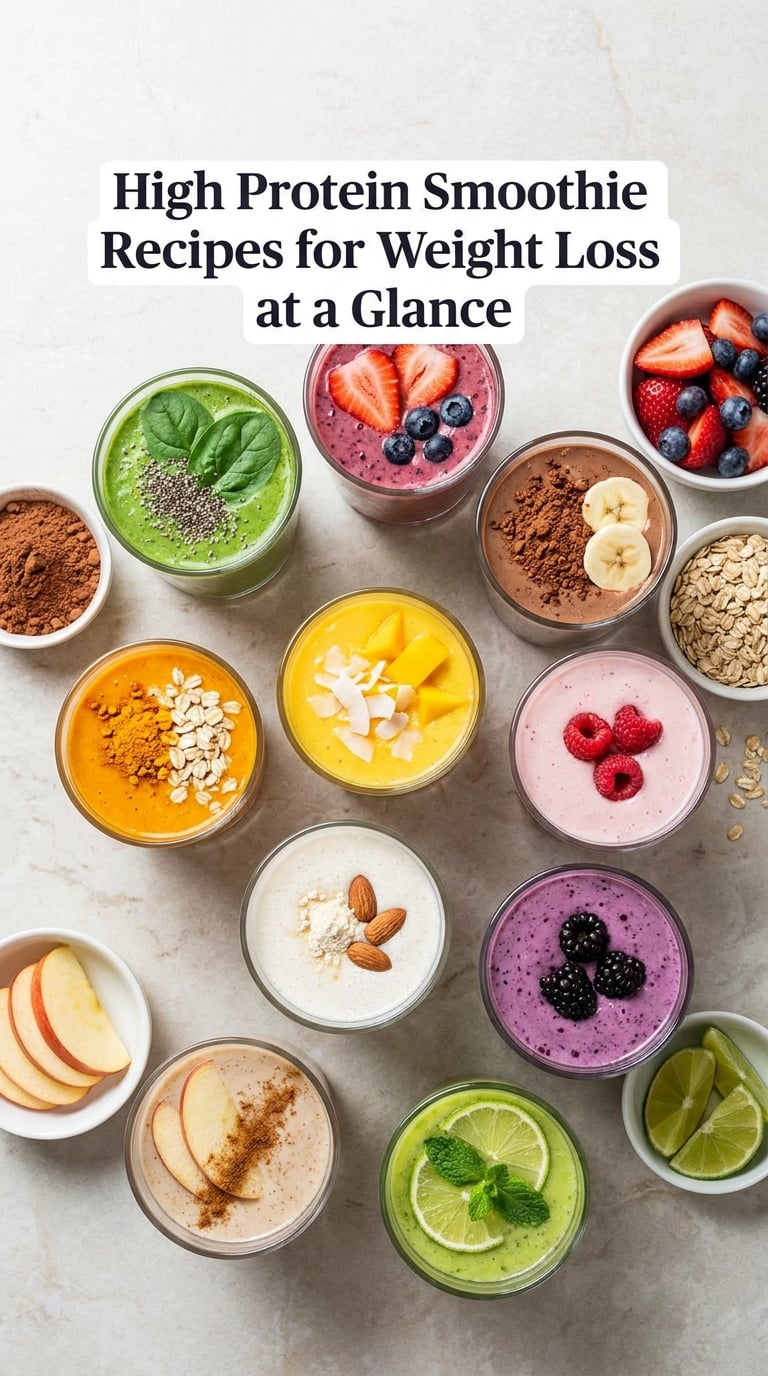
Here is the whole list on one page, with the numbers that decide which one you make. Protein density is grams of protein per 100 calories, which is the figure that tells you how filling a drink is for what it costs you in calories.
| Recipe | Total Time | Difficulty | Main Protein Source | Protein | Calories | Best For |
|---|---|---|---|---|---|---|
| 1. Chocolate Peanut Butter Protein Smoothie | 5 min | Easy | Whey powder and peanut butter | 30 g | about 310 | Cravings, post-workout |
| 2. Strawberry Greek Yogurt Protein Smoothie | 4 min | Easy | Greek yogurt and chia | 28 g | about 265 | Breakfast, picky eaters |
| 3. Banana Protein Smoothie with Oats | 5 min | Easy | Whey powder, oats, peanut butter | 27 g | about 330 | Long mornings, meal replacement |
| 4. Blueberry Cottage Cheese Smoothie | 4 min | Easy | Cottage cheese and hemp seeds | 25 g | about 250 | Best protein per calorie |
| 5. Pineapple Coconut Protein Smoothie | 4 min | Easy | Pea or whey powder, coconut | 24 g | about 280 | Dairy-free, tropical |
| 6. Mocha Java Protein Smoothie | 4 min | Easy | Chocolate powder and coffee | 29 g | about 270 | Morning lift, highest density |
| 7. Mango Turmeric Protein Smoothie | 4 min | Easy | Greek yogurt and hemp seeds | 22 g | about 290 | Sore muscles, afternoon |
| 8. Apple Cinnamon Protein Smoothie | 6 min | Easy | Greek yogurt and almond butter | 26 g | about 310 | Autumn, cozy breakfast |
| 9. Avocado Lime Protein Smoothie | 5 min | Easy | Vegan protein powder, seeds | 23 g | about 300 | Vegan, high fiber |
| 10. Berry Almond Butter Protein Smoothie | 5 min | Easy | Whey powder and almond butter | 31 g | about 340 | Highest protein, pre-workout |
1. Chocolate Peanut Butter Protein Smoothie
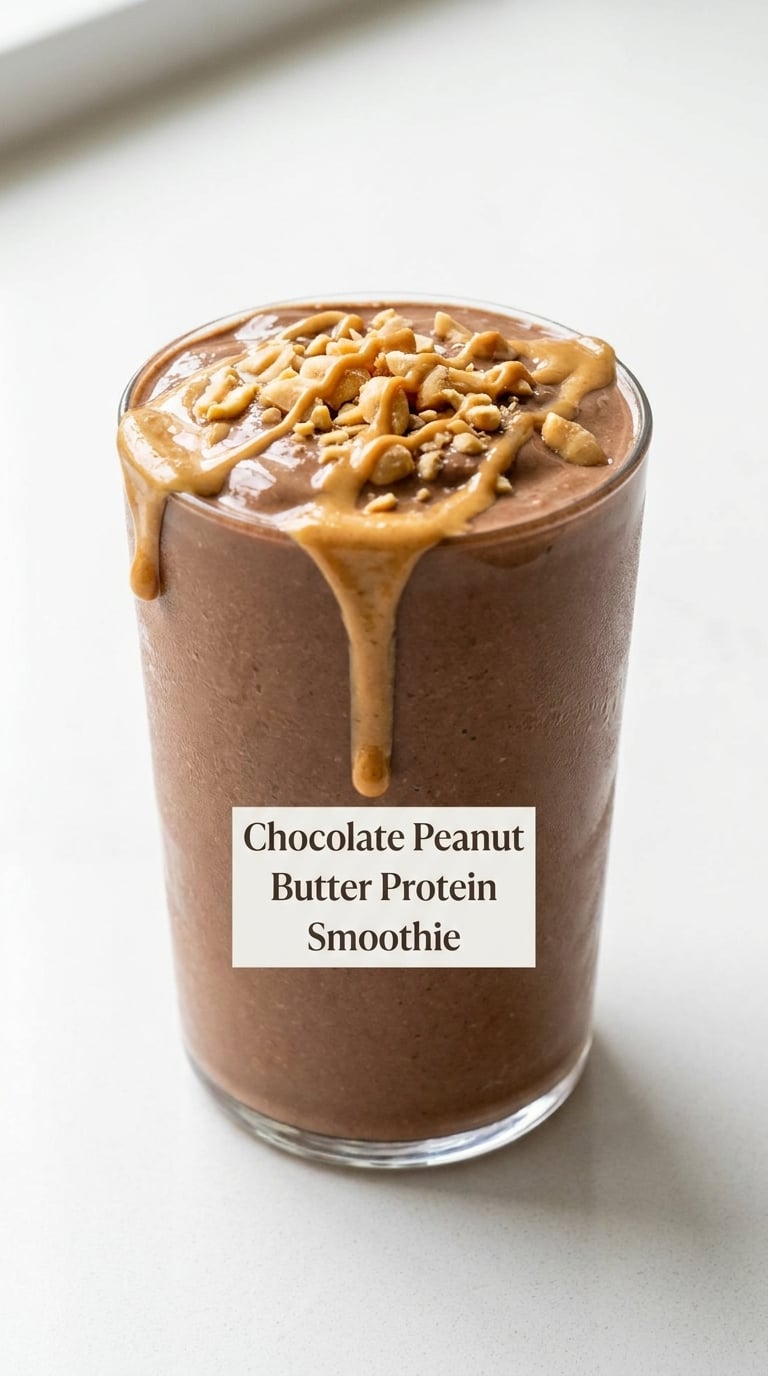
This is the one I make when a chocolate craving hits at 4pm and I know what’s in the cupboard. It tastes like a candy bar but it holds up as a real snack, because the peanut butter and cocoa do the work that sugar usually does.
Yield: 1 large smoothie, about 20 ounces (590 ml) · Prep: 5 minutes · Cook: none · Total: 5 minutes · Difficulty: Easy
Ingredients
- 1 frozen banana, about 150 g, broken into chunks
- 1 scoop chocolate or vanilla whey protein powder, about 25 g
- 2 tablespoons natural creamy peanut butter, 32 g
- 1 tablespoon unsweetened cocoa powder, 8 g
- 1 cup unsweetened milk or almond milk, 240 ml
- 2 tablespoons plain Greek yogurt, 60 g
- 1 teaspoon vanilla extract
- 1 pinch fine salt
- 4 to 5 ice cubes
Instructions
- Pour the milk into the blender first, then add the peanut butter and swirl it around with a spoon until it breaks up in the liquid.
- Add the cocoa powder and protein powder and whisk the liquid with a fork for 20 seconds so nothing sits in dry pockets on the blades.
- Add the banana chunks, Greek yogurt, vanilla, and salt.
- Blend on high for 30 seconds until the banana disappears.
- Drop in the ice and pulse 10 more times, just until the ice is broken down.
- Pour into a chilled glass and drink right away, or hold it in the fridge for up to an hour.
Tip: Stirring the peanut butter into the liquid first is the whole recipe. Dump everything in cold and the peanut butter will sit in a solid blob in the middle of the glass.
Swap it: Sunflower seed butter works one for one and keeps the recipe nut-free. For dairy-free, use unsweetened plant yogurt; the texture loosens a touch, so add one more ice cube.
Storage: Keeps in the fridge in a sealed container for up to 24 hours, though it separates, so pour through a blender or shake hard before drinking. It also freezes well as a slush for about 2 months if you leave a thumb of room in the container for expansion. Contains dairy and peanuts.
Per serving: about 310 calories, 30 g protein, 9 g fat, 8 g fiber, no added sugar.
2. Strawberry Greek Yogurt Protein Smoothie
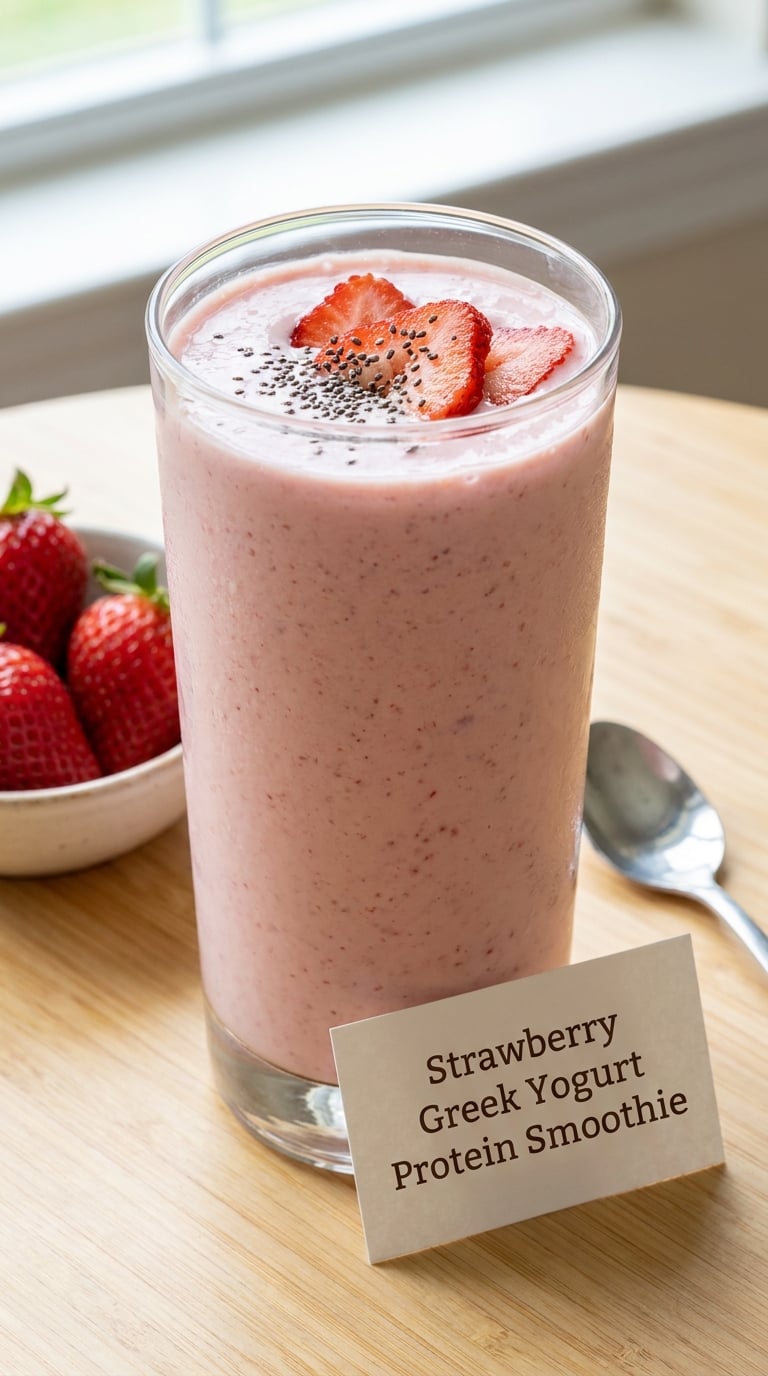
Greek yogurt is the quiet hero of most high protein smoothie recipes for weight loss, because it adds protein and body at the same time with no powder aftertaste. This one tastes like strawberry yogurt drink from a diner, in the good way.
Yield: 1 smoothie, about 16 ounces (470 ml) · Prep: 4 minutes · Cook: none · Total: 4 minutes · Difficulty: Easy
Ingredients
- 1 cup frozen strawberries, 140 g
- 3/4 cup plain 2% Greek yogurt, 170 g
- 1/2 cup milk, 120 ml
- 1 scoop vanilla protein powder, 25 g, optional but recommended
- 1 tablespoon chia seeds
- 1 teaspoon vanilla extract
- 1 pinch fine salt
Instructions
- Add the milk, Greek yogurt, and protein powder to the blender and blend for 20 seconds until smooth.
- Add the frozen strawberries, vanilla, and salt.
- Blend on high for 45 seconds, scraping down the side once, until no berry seeds show.
- Add the chia seeds and pulse 5 times to distribute them.
- Pour into a glass and top with a few sliced fresh strawberries.
Tip: Frozen berries instead of fresh, and no ice. Fresh berries blend watery and you end up diluting the whole drink to fix it, which quietly drops the protein per ounce.
Swap it: Raspberries and blackberries work the same way. For a dairy-free version, use unsweetened coconut yogurt and a pea protein powder, then add a spoon of chia to make up the lost thickness.
Storage: Best within 12 hours, refrigerated, because the chia keeps swelling and the drink thickens as it sits. It freezes into a soft yogurt-like scoop for up to 2 months. Contains dairy.
Per serving: about 265 calories, 28 g protein, 6 g fat, 7 g fiber, no added sugar.
3. Banana Protein Smoothie with Oats
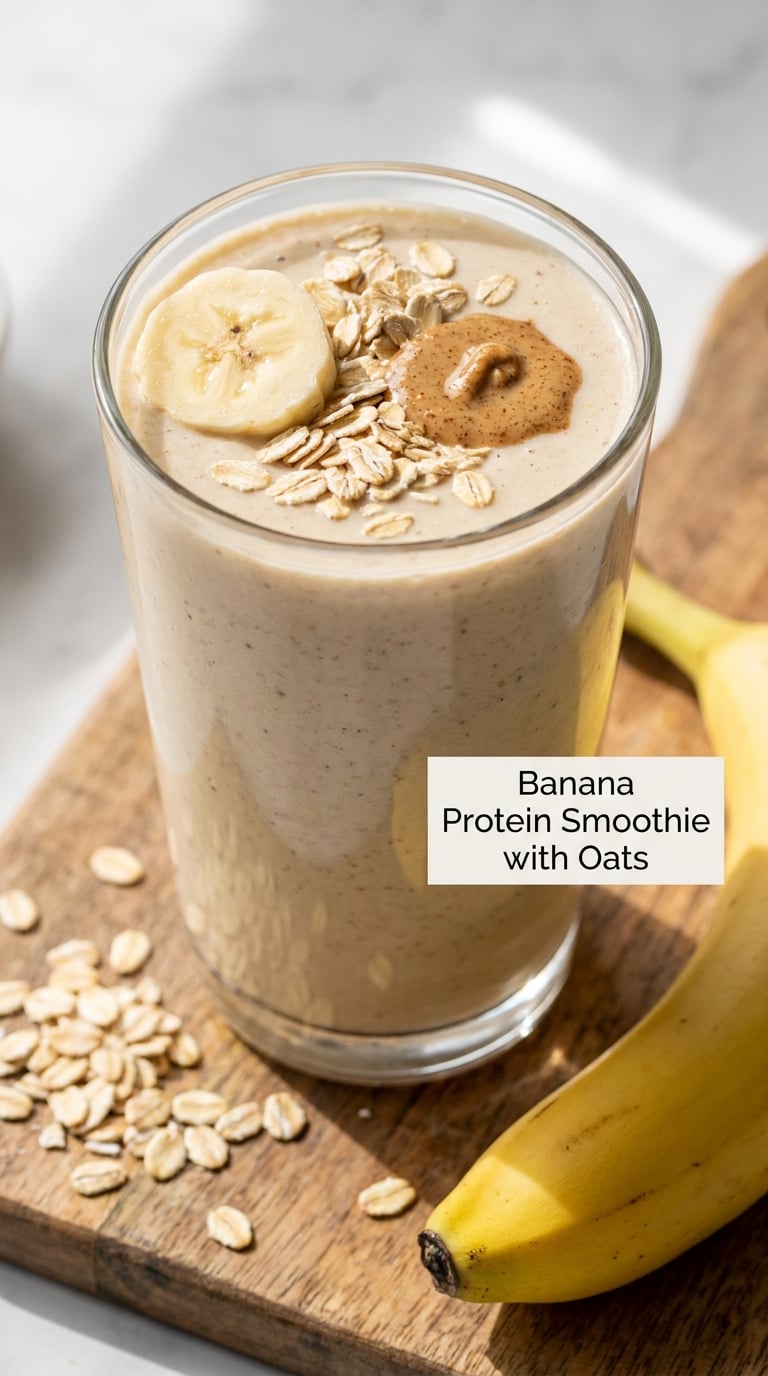
Oats are what turn a banana smoothie from a drink into something closer to breakfast. They thicken the blend, add slow-release carbs, and give you a fiber number that most fruit smoothies cannot touch. This is my pick when a smoothie has to stand in for a full meal.
Yield: 1 large smoothie, about 20 ounces (590 ml) · Prep: 5 minutes · Cook: none · Total: 5 minutes · Difficulty: Easy
Ingredients
- 1/2 cup rolled oats, 40 g
- 1 frozen banana, 150 g
- 1 scoop vanilla whey protein powder, 25 g
- 1 cup unsweetened almond milk, 240 ml
- 2 tablespoons peanut butter, 32 g
- 1 tablespoon chia seeds
- 1/2 teaspoon ground cinnamon
- 1 teaspoon vanilla extract
Instructions
- Put the oats, almond milk, chia, and cinnamon in the blender and blend 30 seconds, until the oats look wet and no dry flour sits at the bottom.
- Add the peanut butter and stir it into the oat mixture with a spoon.
- Add the protein powder, banana, and vanilla.
- Blend on high for 45 seconds until everything is smooth and pale.
- Rest for 2 minutes so the oats finish swelling, then blend 10 more seconds for a thicker, spoon-coating texture.
- Pour into a glass and top with a banana slice and a few oat flakes.
Tip: Give the oats a 2-minute soak in the liquid first. Straight-to-the-blender oats leave a chalky grit at the bottom of the glass that no amount of extra blending fixes.
Swap it: Chocolate protein powder and cacao nibs make this taste like dessert. To keep it gluten-free, buy oats labeled gluten-free and check that your peanut butter is made in a facility that handles wheat.
Storage: Refrigerate up to 24 hours; the oats continue to thicken it, so add a splash of milk before drinking. Freezes for about 2 months. Thaw in the fridge overnight and blend with a splash of liquid. Contains dairy and peanuts.
Per serving: about 330 calories, 27 g protein, 12 g fat, 7 g fiber, no added sugar.
4. Blueberry Cottage Cheese Smoothie
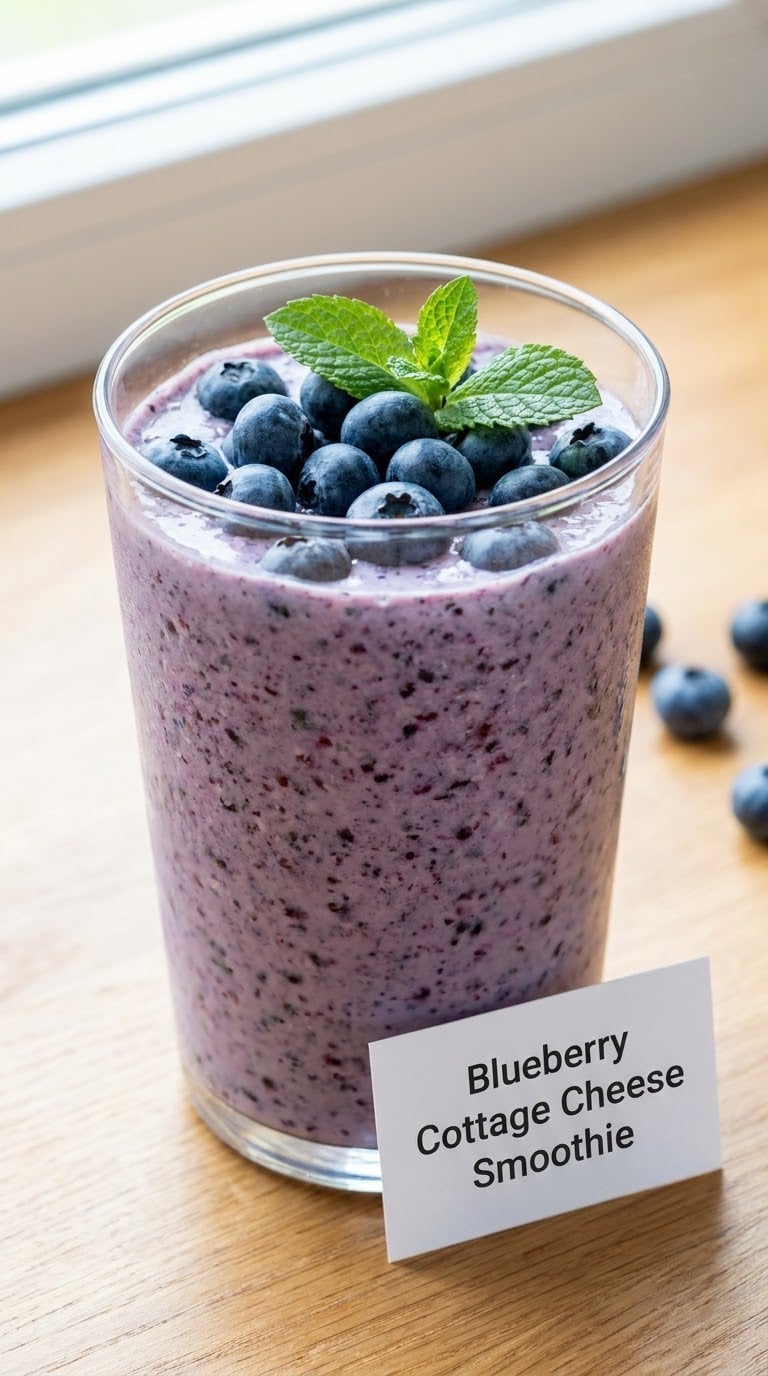
Low-fat cottage cheese has more protein per calorie than almost anything else in a fridge, and blended smooth it disappears completely. If you have ever been put off by the texture straight from the tub, this is the recipe that fixes that opinion.
Yield: 1 smoothie, about 15 ounces (440 ml) · Prep: 4 minutes · Cook: none · Total: 4 minutes · Difficulty: Easy
Ingredients
- 3/4 cup low-fat cottage cheese, 150 g
- 1 cup frozen blueberries, 140 g
- 1/2 cup milk, 120 ml
- 1 tablespoon hemp seeds, 10 g
- 1 teaspoon vanilla extract
- 1 pinch fine salt
- 2 to 3 ice cubes
Instructions
- Put the cottage cheese, milk, vanilla, and salt in the blender and blend on high for 30 seconds, until it looks like thick cream with no curds left.
- Add the frozen blueberries.
- Blend another 45 seconds, then add the ice and pulse 10 times.
- Stir in the hemp seeds by hand so they do not turn gritty.
- Pour into a chilled tumbler and drop a few fresh blueberries and a mint sprig on top.
Tip: Give the cottage cheese its own 30 seconds before any fruit goes in. Blending it alone first is what removes that curdled, lumpy look entirely.
Swap it: For a dairy-free version, use 3/4 cup silken tofu blended with a scoop of pea protein, which lands in the same range. Blackberries and chopped strawberries work as well as blueberries.
Storage: Refrigerate in a sealed container for up to 24 hours and stir well before drinking, since hemp seeds settle. Freezes for about 2 months. Contains dairy.
Per serving: about 250 calories, 25 g protein, 4 g fat, 6 g fiber, no added sugar.
5. Pineapple Coconut Protein Smoothie
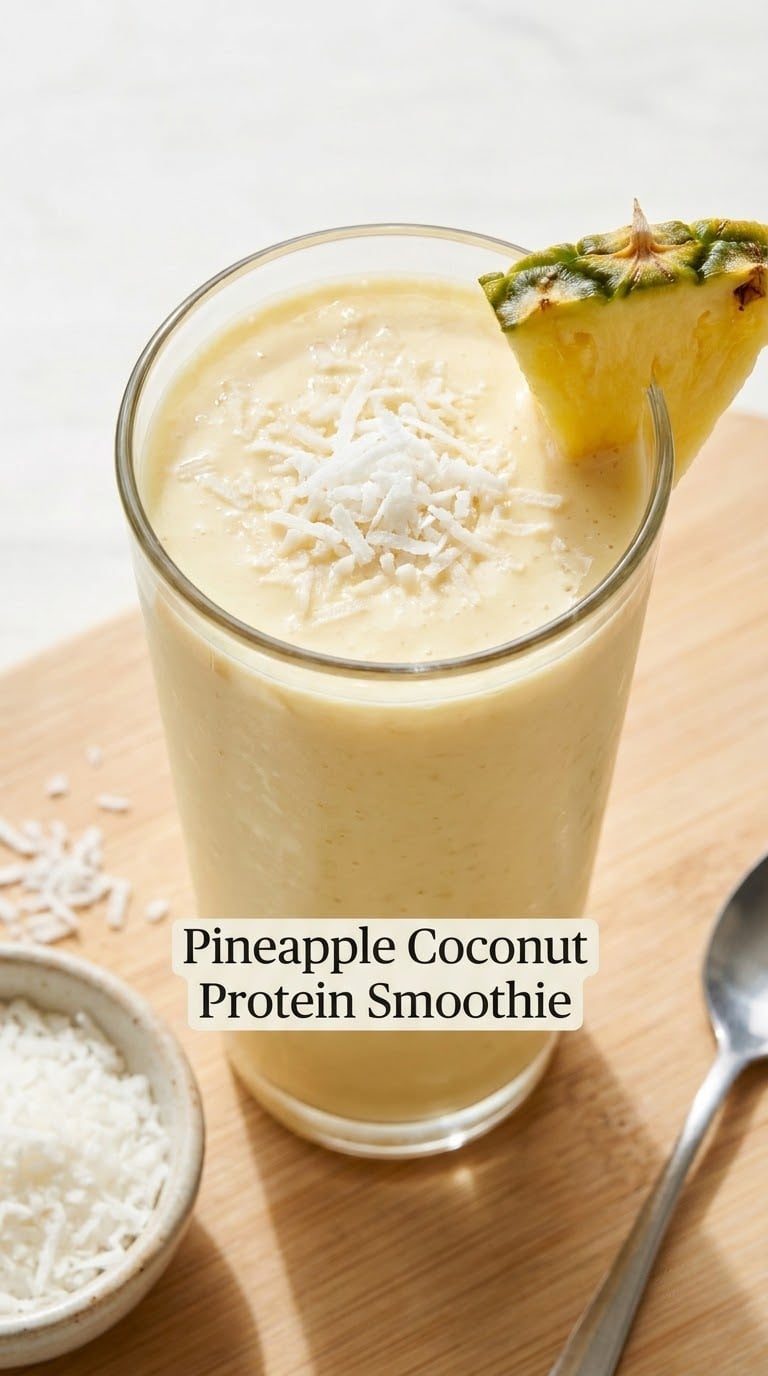
For anyone who finds dairy and chalk in the morning difficult, this is the one. Pineapple is naturally sweet enough that you need nothing added, and the coconut makes the texture read as a tropical drink rather than a nutrition shake.
Yield: 1 smoothie, about 18 ounces (530 ml) · Prep: 4 minutes · Cook: none · Total: 4 minutes · Difficulty: Easy
Ingredients
- 1 cup frozen pineapple chunks, 165 g
- 1/2 frozen banana, 75 g
- 3/4 cup unsweetened coconut milk from a carton, 185 ml
- 1 scoop vanilla pea protein or whey protein powder, 25 g
- 1 tablespoon unsweetened shredded coconut
- Juice of 1/2 lime
- 1/2 teaspoon vanilla extract
Instructions
- Pour the coconut milk and lime juice into the blender, then add the protein powder and whisk with a fork until it disappears.
- Add the frozen pineapple, banana, and vanilla.
- Blend on high for 60 seconds until completely smooth and no fibrous bits remain.
- Pour into a glass and scatter the shredded coconut over the top.
Tip: Buy coconut milk in a carton, not the canned variety. Canned coconut milk is mostly fat and will flatten the protein count, and the sweetened kind undoes the whole point of the drink.
Swap it: Use 1/2 cup coconut water plus 1/2 cup almond milk for a lighter, less rich version at about 40 fewer calories. Mango works in place of pineapple just as well.
Storage: Refrigerate up to 24 hours, and add the shredded coconut only at drinking time so it stays crunchy. Freezes for about 2 months. Naturally dairy-free if you use pea protein; check labels, since most whey is not.
Per serving: about 280 calories, 24 g protein, 9 g fat, 6 g fiber, no added sugar.
6. Mocha Java Protein Smoothie
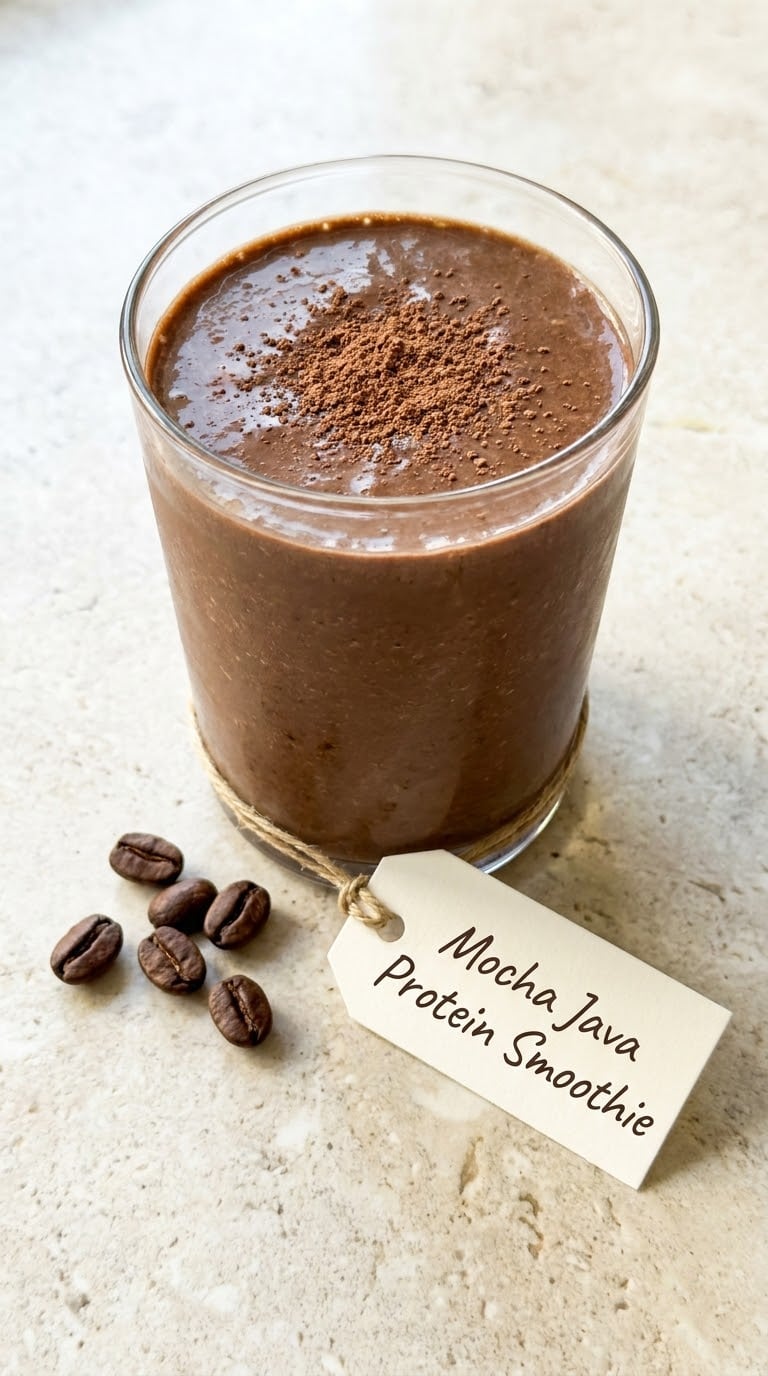
Coffee plus chocolate protein powder makes this the highest protein density on the list, at nearly 11 grams per 100 calories. It is also the fastest thing here: four minutes from lid to glass, and it does the work of a second coffee without the jitters that come from drinking both.
Yield: 1 smoothie, about 15 ounces (440 ml) · Prep: 4 minutes · Cook: none · Total: 4 minutes · Difficulty: Easy
Ingredients
- 1 cup cold brew coffee, cooled to room temperature, 240 ml
- 1 scoop chocolate protein powder, 25 g
- 1 tablespoon unsweetened cocoa powder, 8 g
- 1 frozen banana, 150 g
- 1 tablespoon almond butter, 16 g
- 1/4 cup milk or almond milk, 60 ml
- 1/4 teaspoon ground cinnamon
Instructions
- Blend the coffee, cocoa, and almond butter for 20 seconds first, so the powder has liquid to dissolve into.
- Add the protein powder, milk, and cinnamon, and blend another 20 seconds.
- Add the frozen banana and blend on high for 45 seconds.
- Pour into a glass, dust the top with a pinch of cocoa, and serve immediately.
Tip: A cup of cold brew typically carries roughly 100 to 150 mg of caffeine, so treat this as a coffee and not a snack. Most people are fine with it before noon; if it ever keeps you up, use decaf and add 1/2 teaspoon of vanilla for the missing depth.
Swap it: Decaf cold brew swaps in one for one with no recipe change. Espresso shots work too, use 2 shots in place of the cup of cold brew and add 1/4 cup more milk. Contains dairy and tree nuts.
Storage: Refrigerate up to 24 hours, and expect the coffee flavor to flatten, so drink this one fresh. Freezes for about 2 months. Contains dairy and tree nuts.
Per serving: about 270 calories, 29 g protein, 6 g fat, 6 g fiber, no added sugar.
7. Mango Turmeric Protein Smoothie
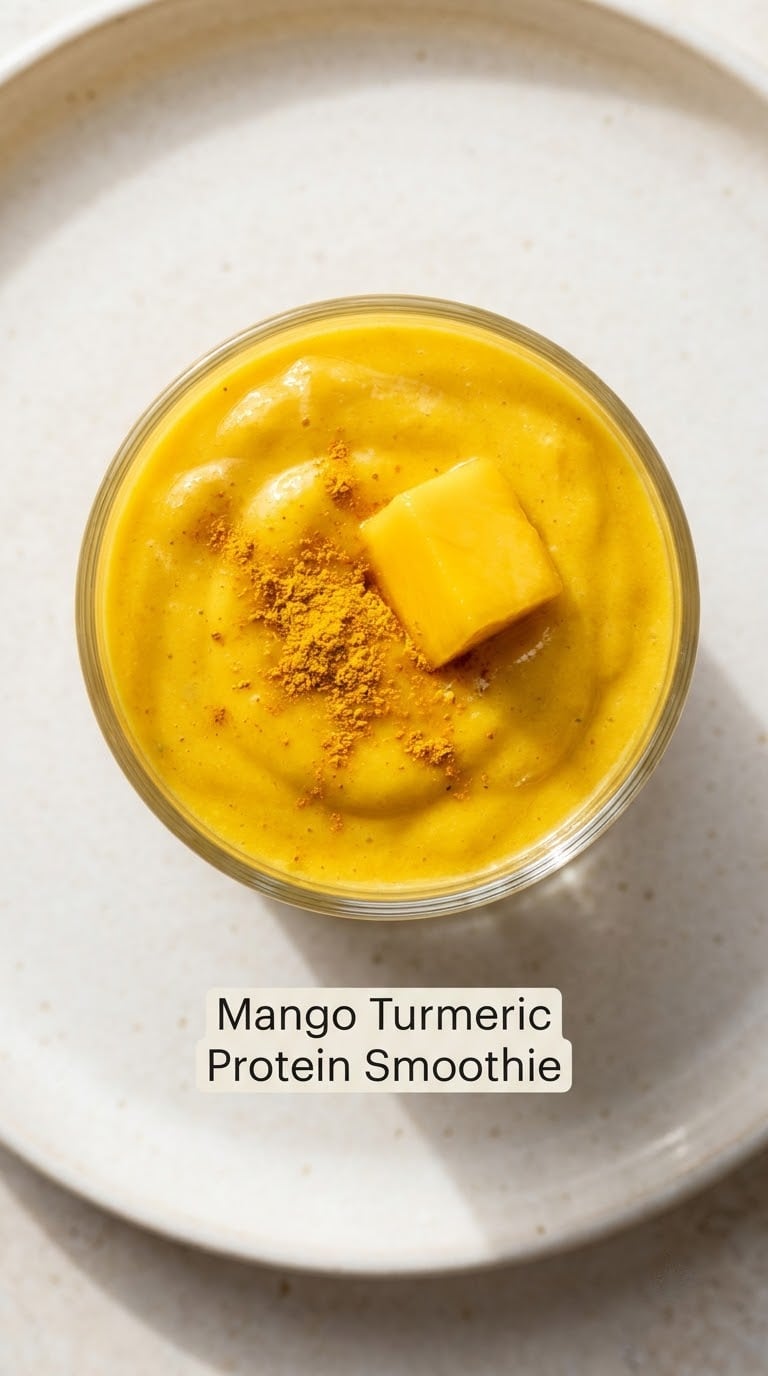
Turmeric and mango is a combination I reach for when my legs are sore after a long walk, and it happens to make a bright, non-bland breakfast. The Greek yogurt and hemp seeds keep this one honest at 22 grams of protein, which is the lowest on the list, so pair it with something if breakfast is all you are having.
Yield: 1 smoothie, about 16 ounces (470 ml) · Prep: 4 minutes · Cook: none · Total: 4 minutes · Difficulty: Easy
Ingredients
- 3/4 cup frozen mango chunks, 165 g
- 3/4 cup plain Greek yogurt, 170 g
- 1/2 cup coconut water or milk, 120 ml
- 1/2 teaspoon ground turmeric, about 1.5 g
- 1/4 teaspoon ground ginger
- 1 small pinch ground black pepper
- 1 tablespoon hemp seeds, 10 g
- 1 teaspoon honey, 5 g, optional
Instructions
- Add the coconut water, yogurt, turmeric, ginger, and black pepper to the blender and blend 30 seconds until the color is even.
- Add the frozen mango and honey, if using.
- Blend on high for 60 seconds until the mango is fully broken down and no fibrous string remains.
- Stir in the hemp seeds and pour into a glass.
- Top with a small cube of mango and a dusting of turmeric for color.
Tip: That tiny pinch of black pepper is not a mistake. It is what lets your body absorb the turmeric properly, and it also stops the drink tasting like a plain spice shake.
Swap it: For a dairy-free version, use unsweetened coconut yogurt plus 1/2 scoop pea protein powder. If turmeric is not for you, leave it out entirely and you have a very good mango yogurt smoothie with a protein boost from the hemp seeds.
Storage: Refrigerate up to 24 hours; the turmeric flavor deepens over a few hours, so make it the way you like it. Freezes for about 2 months. Contains dairy.
Per serving: about 290 calories, 22 g protein, 8 g fat, 6 g fiber, no added sugar unless you add the honey.
8. Apple Cinnamon Protein Smoothie
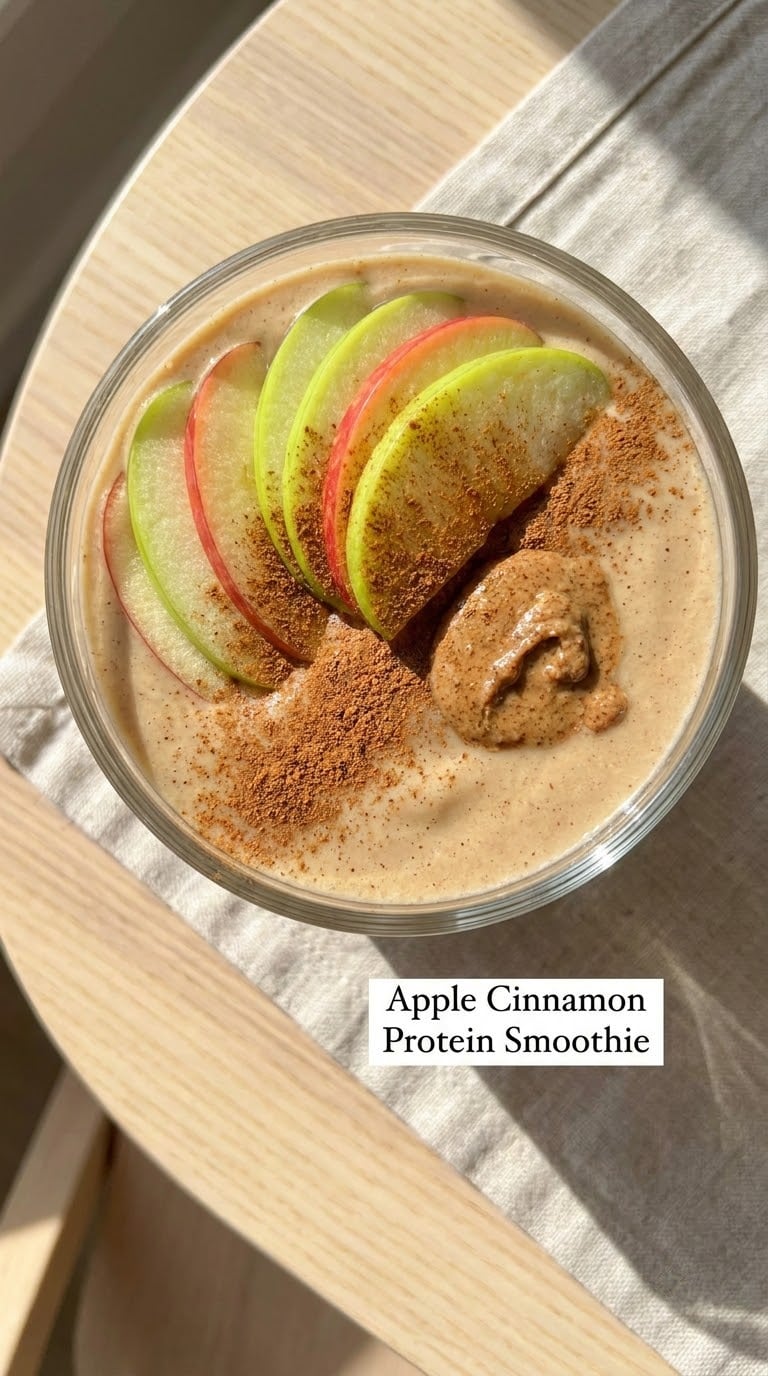
This is the autumn version of the banana oat smoothie, and for a few weeks in the fall it is the one I make most. Apples add less sugar than banana while contributing more of that soft, cooked-fruit texture, and the cinnamon does the flavor work that usually needs syrup.
Yield: 1 large smoothie, about 19 ounces (560 ml) · Prep: 6 minutes · Cook: none · Total: 6 minutes · Difficulty: Easy
Ingredients
- 1 medium apple, cored and chopped, about 140 g
- 3/4 cup plain Greek yogurt, 170 g
- 1/2 cup unsweetened almond milk, 120 ml
- 1/4 cup rolled oats, 20 g
- 1 tablespoon almond butter, 16 g
- 1 teaspoon ground cinnamon, 2 g
- 1/2 teaspoon vanilla extract
- 2 ice cubes
Instructions
- Put the almond milk, oats, and cinnamon in the blender and blend 30 seconds until the oats are wet.
- Add the Greek yogurt and almond butter, and blend 20 seconds.
- Add the chopped apple and vanilla, then pulse five times to break the apple down.
- Blend on high for 60 seconds until the color is uniform and the texture is like soft-serve.
- Add the ice and pulse 10 times to chill it down.
- Pour into a glass and top with thin apple slices and a dusting of cinnamon.
Tip: Peel the apple if your blender is not powerful. The skin carries most of the fiber, which is worth keeping, but any leftovers turn the drink grainy and a little foamy.
Swap it: A ripe pear works identically and is even softer. For a nut-free version, drop the almond butter and add 1/2 scoop of protein powder, which keeps the protein count within about 3 grams.
Storage: Refrigerate up to 24 hours, and add a splash of milk before drinking, since the oats thicken overnight. Freezes for about 2 months. Contains dairy and tree nuts.
Per serving: about 310 calories, 26 g protein, 9 g fat, 7 g fiber, no added sugar.
9. Avocado Lime Protein Smoothie
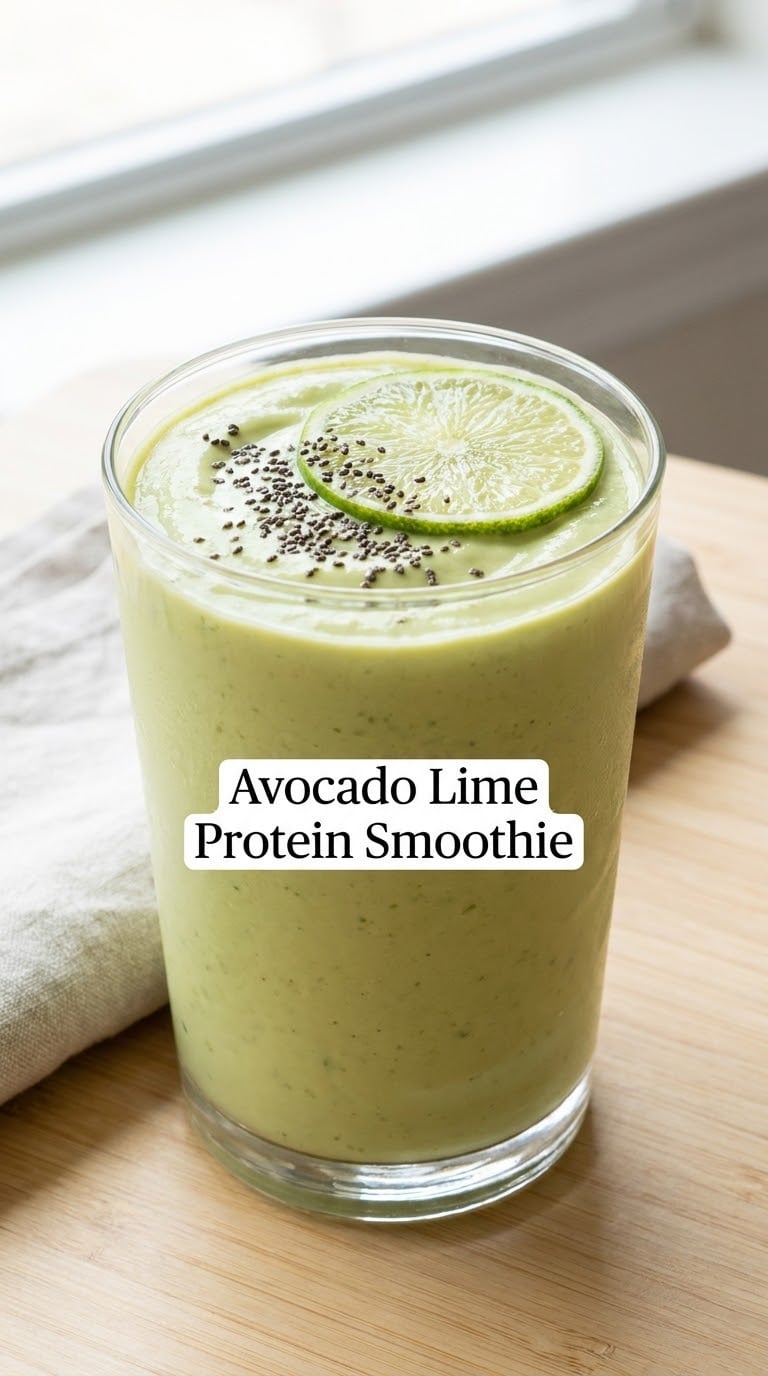
Half an avocado is the cheapest way I know to make a smoothie stay with you, because the fat slows everything down and takes the edge off hunger. It tastes like a lime milkshake, and it is entirely vegan, which is hard to find in this category.
Yield: 1 smoothie, about 18 ounces (530 ml) · Prep: 5 minutes · Cook: none · Total: 5 minutes · Difficulty: Easy
Ingredients
- 1/2 ripe avocado, about 100 g flesh
- 1 cup baby spinach, 30 g
- 1/2 frozen banana, 75 g
- 1 cup unsweetened almond milk, 240 ml
- 1 scoop vanilla plant protein powder, 25 g
- 1 tablespoon chia seeds
- Juice of 1 lime, about 2 tablespoons
- 1 teaspoon honey, 5 g, optional
Instructions
- Add the almond milk, lime juice, and spinach to the blender and blend 20 seconds, until the leaves are no longer visible.
- Add the avocado, protein powder, and honey, if using, and blend 30 seconds until there are no green flecks.
- Add the frozen banana and blend on high for 60 seconds.
- Stir in the chia seeds and pour into a glass.
- Add a lime wheel on the rim and a small sprinkle of chia on the surface.
Tip: Use an avocado that is ripe enough to yield to a spoon. A hard one will blend into pale lumps, and those lumps are the reason people think they do not like avocado smoothies.
Swap it: Use a quarter avocado and a tablespoon more chia if you want it lighter. Spinach can be swapped for kale, though the drink will taste more green. To keep it lower in fat, drop the avocado and use 2 tablespoons of pumpkin seeds instead.
Storage: Drink within 12 hours if possible; the color darkens where the avocado meets air. It freezes well for up to 2 months as a green ice. Naturally dairy-free, and free of nuts if your protein powder is made without them.
Per serving: about 300 calories, 23 g protein, 13 g fat, 8 g fiber, no added sugar unless you add the honey.
10. Berry Almond Butter Protein Smoothie
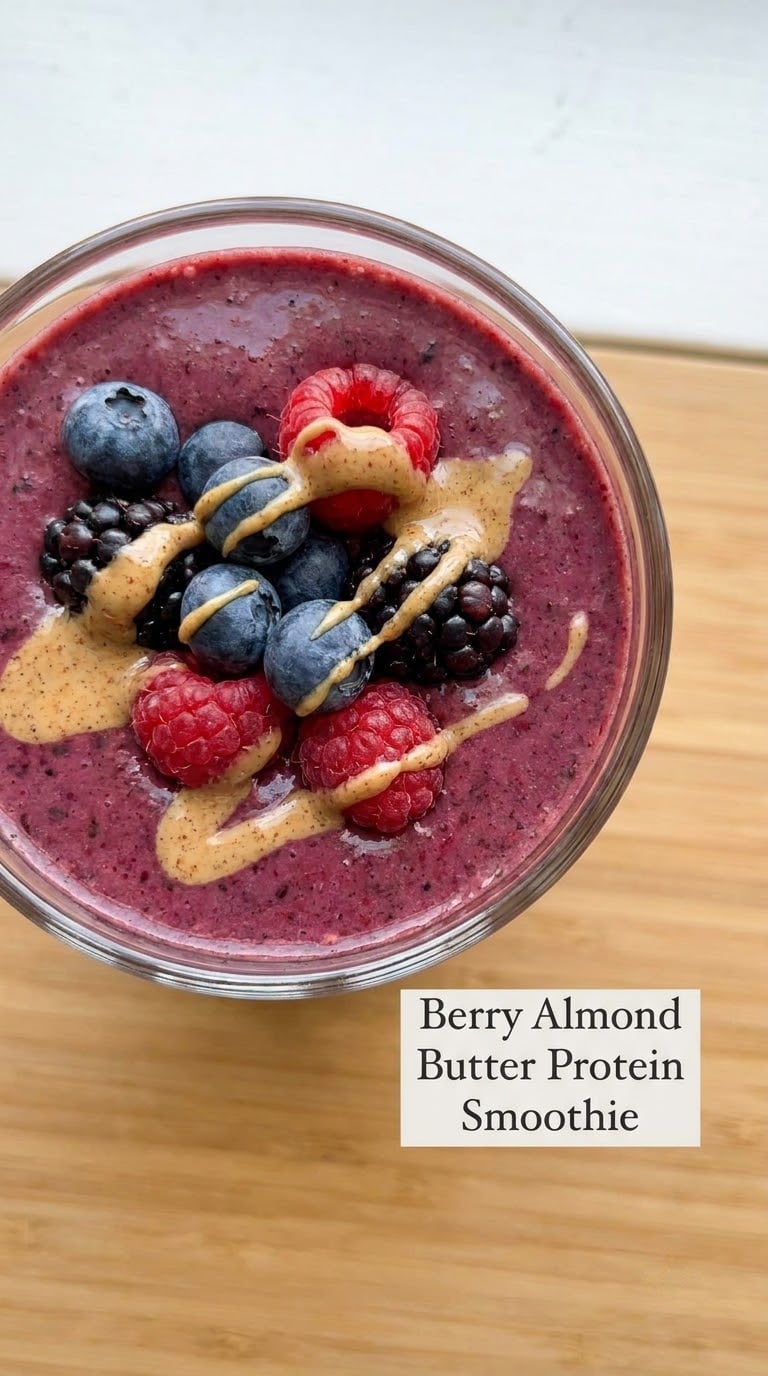
The last one is the highest protein in the set at 31 grams, and the reason is the double hit: a full scoop of powder plus two tablespoons of almond butter stirred straight into the liquid. It is thick, almost spoonable, and closer to a milkshake than a drink.
Yield: 1 large smoothie, about 20 ounces (590 ml) · Prep: 5 minutes · Cook: none · Total: 5 minutes · Difficulty: Easy
Ingredients
- 1 cup frozen mixed berries, 140 g
- 1/2 frozen banana, 75 g
- 1 scoop vanilla whey or plant protein powder, 25 g
- 1 cup unsweetened almond milk, 240 ml
- 2 tablespoons almond butter, 32 g
- 1 tablespoon chia seeds
- 1/2 teaspoon vanilla extract
- 1 pinch fine salt
Instructions
- Pour the almond milk into the blender, add the almond butter, and swirl it around until it emulsifies into the liquid.
- Add the protein powder and chia, and whisk with a fork for 20 seconds so nothing clumps.
- Add the frozen berries, banana, vanilla, and salt.
- Blend on high for 60 seconds, scraping the side once, until the color is even and no berry seeds show.
- Pour into a chilled glass, top with a few mixed berries, and drizzle the last spoonful of almond butter over the top.
Tip: A pinch of salt is doing real work here. It sharpens the berry flavor enough that you notice it, and it takes the flat edge off a sweet drink without adding a single thing to the sugar list.
Swap it: For a nut-free version, use sunflower seed butter in the same amount; it is not as sweet, so add 1/2 teaspoon of vanilla. Any frozen berry blend works, and strawberries alone are the sweetest option.
Storage: Refrigerate up to 24 hours and expect it to thicken; add milk a splash at a time until it pours. Freezes for up to 2 months. Contains dairy and tree nuts unless you use plant protein and seed butter.
Per serving: about 340 calories, 31 g protein, 14 g fat, 10 g fiber, no added sugar.
Tips for Making These
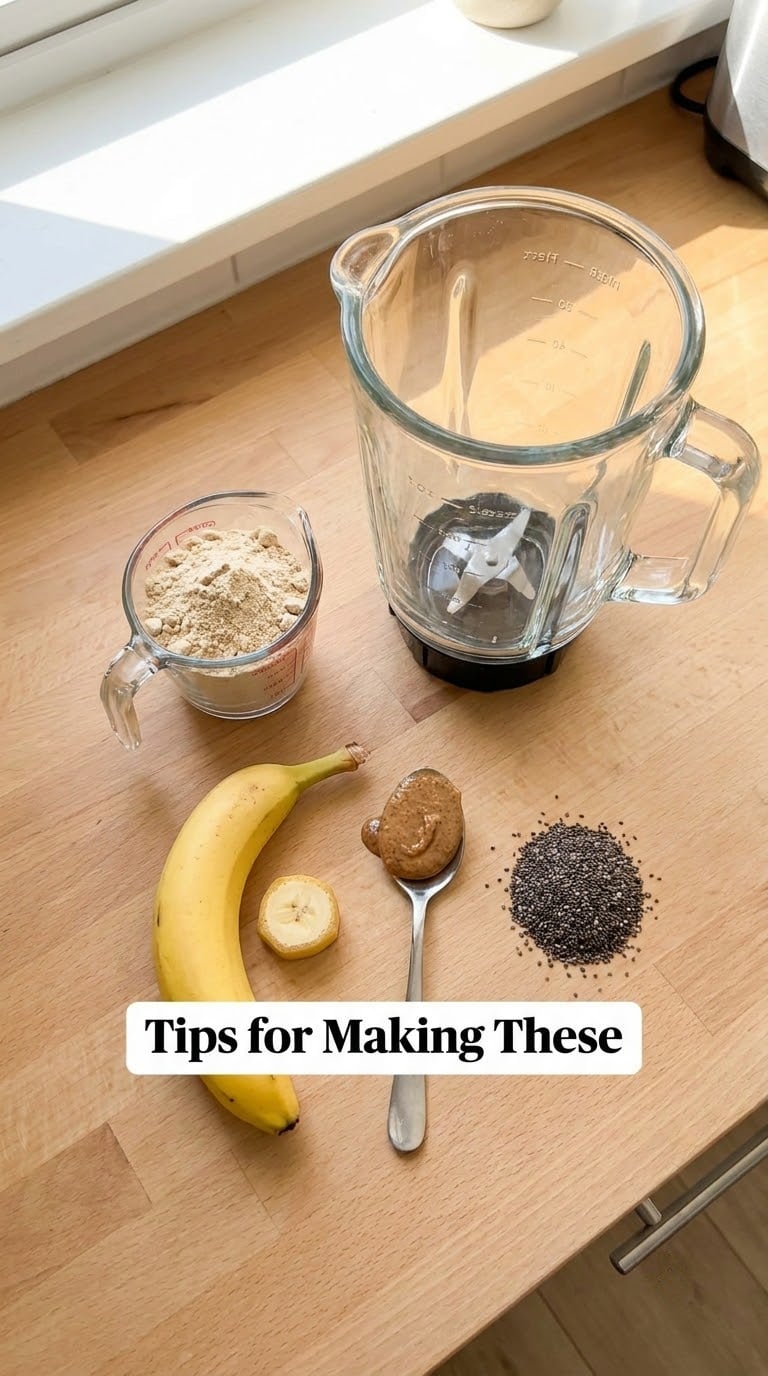
Every high protein smoothie recipe for weight loss on this page works because of the same handful of habits. If a drink comes out thin, watery, or not filling enough, the fix is almost always one of these rather than a longer ingredient list.
How I build a high protein smoothie for weight loss
Start with the liquid, add protein, then add fiber and fat. Liquid first stops powders from caking on the blades, protein comes before any powder or nut butter so it fully dissolves, and fat arrives last because it slows the blend down. Aim for 25 to 35 grams of protein per serving; under 20 grams and you will be hungry again within an hour.
Use frozen fruit, not ice
Ice is mostly water, so a smoothie built on it thins out and has to be thickened with more calories. Frozen banana and frozen berries do the same cooling job while adding fiber and body. I have learned this the hard way, drinking a watery smoothie and wondering why it did nothing for hunger.
Add a fat to slow the sugar
A spoonful of nut butter, a quarter avocado, or a tablespoon of seeds adds fat that blunts the blood sugar rise from ripe fruit. This is also the single biggest contributor to staying full, and it is where most takeout smoothies fail, because they are built with juice and syrup and almost no fat.
Watch the hidden calories
Granola, honey, sweetened yogurt, juice, and full-sugar chocolate milk can quietly add 200 to 300 calories to a drink that looked reasonable. If you want crunch, use unsweetened shredded coconut or cacao nibs. If you want sweetness, add half a banana before you reach for anything else.
Make it once, blend twice
Blend the liquid, protein, and fat together first, then add the fruit. Skipping this step is why so many home smoothies taste gritty, and it costs you an extra 20 seconds. If you have a busy week, double a batch, pour it into a freezer bag flat, and freeze it flat so it stacks in the door.
For a rotating routine that keeps the week interesting, my high-protein snack ideas cover the solid-food side, my healthy snacks for weight loss roundup has the same low-effort, high-protein logic for days when a blender is not what you want, and my high-protein dinner recipes take over in the evening when a smoothie will not cut it.
One honest note: the nutrition numbers on this page are estimates calculated from the ingredient quantities, not lab values, so treat them as close. And these are tools, not a magic fix. Total daily calories still decide whether weight comes off, and a 300-calorie smoothie that replaces a 600-calorie snack is doing real work on its own.
Frequently Asked Questions
Can protein smoothies help with weight loss?
They can, but only because of what they replace. Protein and fiber are the two satiety drivers: protein slows how fast food leaves your stomach, and fiber adds bulk, so a shake with 25 grams or more eaten in the morning often holds hunger off for three to five hours. If that drink replaces a mid-afternoon snack you would have eaten anyway, your daily calories drop. A smoothie added on top of everything else changes nothing.
How much protein should I add to a smoothie for weight loss?
For weight management, aim for 25 to 35 grams of protein per serving, and treat anything under 20 grams as a snack rather than a meal. One scoop of most protein powders gives 20 to 25 grams, a 3/4 cup of Greek yogurt gives about 17 grams, and 3/4 cup of low-fat cottage cheese gives about 21 grams. Combining two sources, such as yogurt plus powder, is an easy way to clear 30.
Are smoothies filling enough to replace a meal?
Sometimes, and it depends on the build. A drink needs 25 or more grams of protein, 7 or more grams of fiber, and some fat to hold you for three hours or more. The banana oat smoothie and the berry almond butter smoothie clear all three, so they can genuinely stand in for a light meal. A fruit-and-yogurt drink usually cannot, and trying to make it do so leaves you snacking again by 10am.
Can I prepare high protein smoothies ahead of time?
Yes, and it is the only way most people keep this up on a weekday. Blended smoothies keep in the fridge up to 24 hours, though they separate and thicken, so add a splash of milk and blend or shake before drinking. For longer storage, freeze them flat in a freezer bag with a thumb of space for expansion, and blend straight from frozen with a couple of tablespoons of liquid. Frozen fruit smoothies keep the best texture this way.
What can I use instead of protein powder?
Greek yogurt, low-fat cottage cheese, silken tofu, hemp seeds, and nut butter all work. Greek yogurt adds 17 grams per 3/4 cup and blends smooth, cottage cheese adds about 21 grams per 3/4 cup and disappears once blended on its own, and 3 tablespoons of hemp seeds give roughly 10 grams plus plenty of fat and fiber. Nut butter gives 7 to 8 grams per 2 tablespoons but is a supporting player, not the main source.
Are fruit smoothies good for weight loss?
Fruit smoothies can be, and the fruit itself is not the problem. The issue is what gets blended with it: juice, syrup, sweetened yogurt, and granola will turn a 200-calorie drink into a 500-calorie one without you noticing. Whole or frozen fruit, a real protein source, and a fat source keeps a fruit smoothie in the range of 200 to 340 calories, which is where these ten recipes all land.
Which High Protein Smoothie Should You Make First?
Start with the chocolate peanut butter protein smoothie. It takes five minutes, every ingredient is in most pantries, and at 30 grams of protein for about 310 calories it is hard to argue with on paper. If coffee appeals more in the morning, the mocha java is the same argument in four minutes.
Whichever you pick, build it the same way: liquid first, protein second, fruit and fat after. That habit is what separates these high protein smoothie recipes for weight loss from a fruit drink in a glass, and it is the one worth keeping after the novelty of the list wears off.