
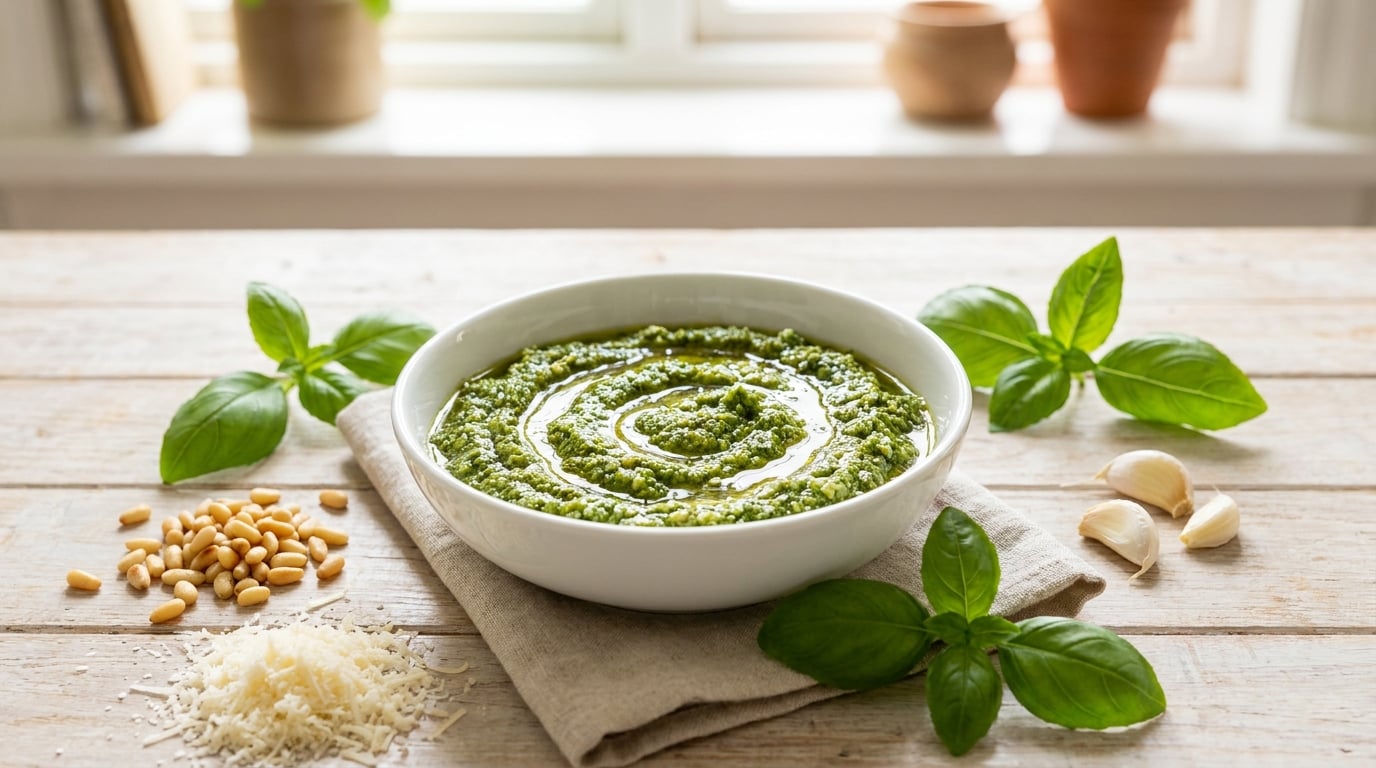
Easy pesto recipes to use up fresh basil are the answer when the basil plant on the windowsill has gone from six decent leaves to a bushy, slightly alarming handful overnight. Basil is the fastest-spoiling herb in the fridge, going soft and black within two or three days, and most of it gets binned at the bottom of a crisper drawer. A single batch of pesto changes that: about a third of a cup of fresh basil turns into a sauce that stretches across pasta, pizza, sandwiches, eggs and dips for the rest of the week.
Every recipe here starts from the same bright, five-minute classic pesto (or a jar from the cupboard), and then goes somewhere different with it. Nothing needs more than a food processor, a skillet or a pot, and every dish is short enough to cook on a weeknight. Start with recipe 1 before anything else, because a big batch of basil pesto is what makes the other nine possible.
Table of Contents
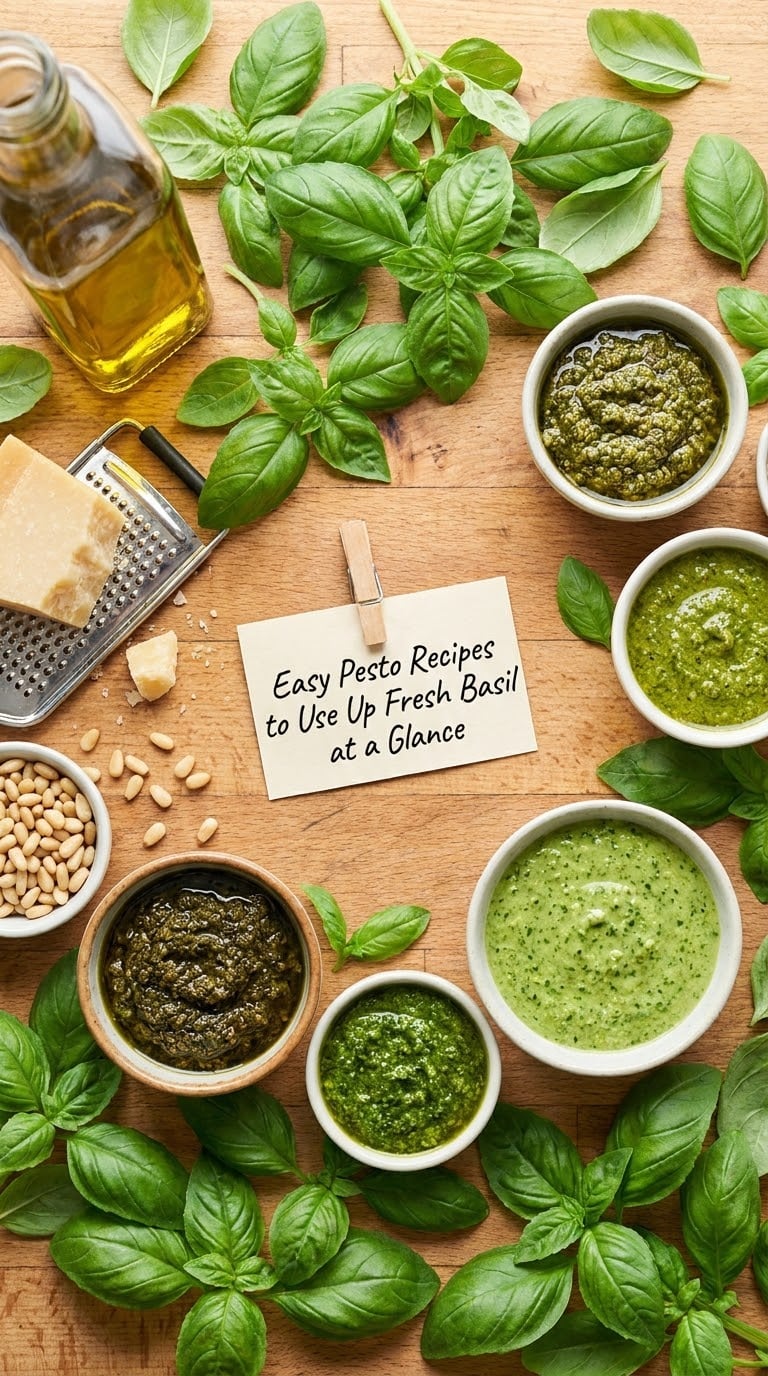
Easy Pesto Recipes to Use Up Fresh Basil at a Glance
| Recipe | Time | Difficulty | Best for |
|---|---|---|---|
| 1. Classic Fresh Basil Pesto | 15 min | Easy | The base sauce everything else uses |
| 2. Creamy Pesto Pasta | 25 min | Easy | A fast weeknight dinner |
| 3. Pesto Grilled Cheese | 15 min | Easy | Lunch in ten minutes |
| 4. Pesto Chicken Bowls | 30 min | Easy | Meal prep for the week |
| 5. Pesto Tomato Pasta Sauce | 25 min | Easy | A vegetarian dinner with garden tomatoes |
| 6. Pesto Pizza with Fresh Tomato and Basil | 1 hr 45 min | Medium | A weekend project or pizza night |
| 7. Pesto Potato Salad | 45 min | Easy | A picnic side, warm or cold |
| 8. Pesto Pasta Salad | 50 min | Easy | A lunch you can pack and travel with |
| 9. Pesto Hummus or Bean Dip | 10 min | Easy | An afternoon snack spread |
| 10. Pesto Pasta Bake | 1 hr | Easy | Feeding a crowd from one dish |
How to Choose Among These Easy Pesto Recipes to Use Up Fresh Basil
Look at what you already have. A lot of basil and nothing else in the fridge means recipe 1, plus a batch of recipe 9 for snacking. Cooked chicken in the cooker means recipe 4 beats spending another hour at the stove. Extra tomatoes coming in fast on the vine and no protein in mind means recipe 5. The freezer is the tie-breaker: anything marked freezer-friendly can be made in double quantity and portioned into ice cube trays, which is the single most useful thing you can do with a market haul of basil.
1. Classic Fresh Basil Pesto
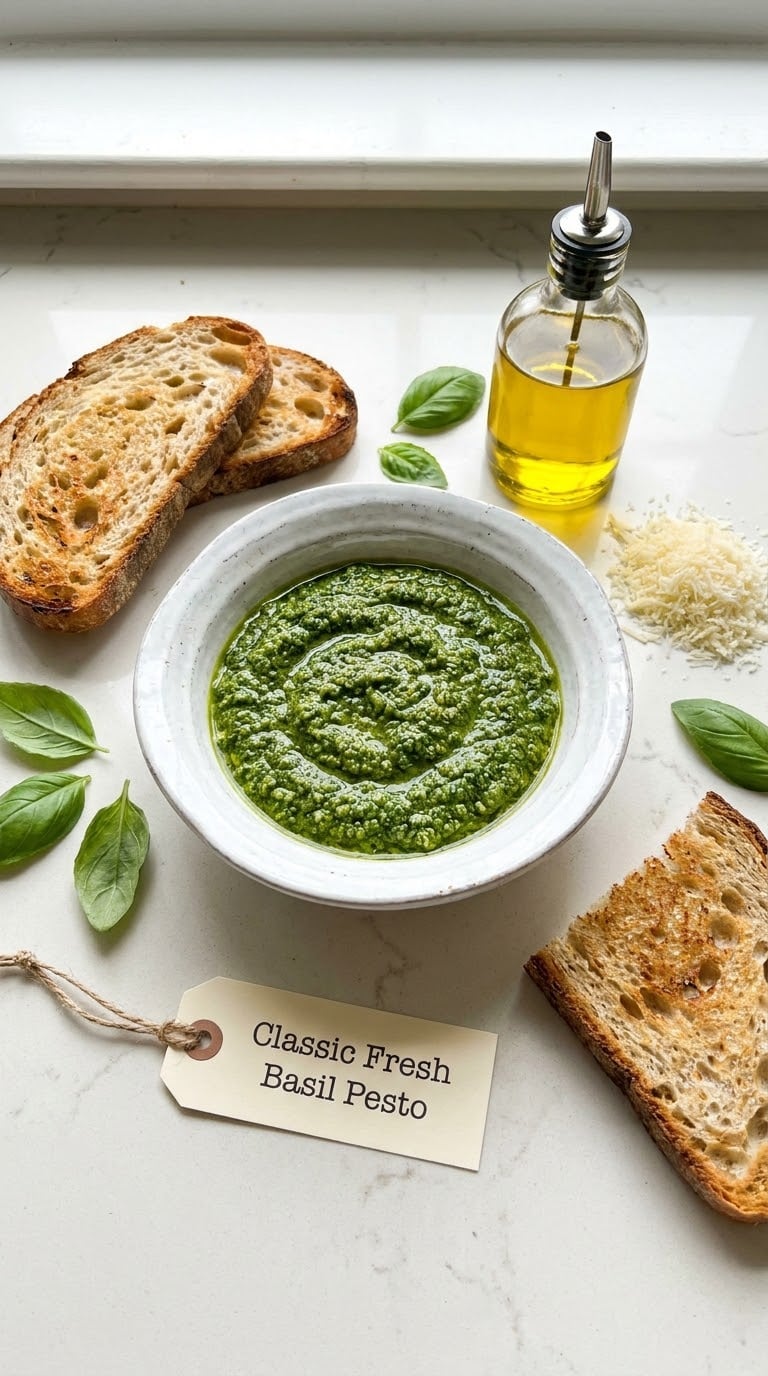
This is the sauce the other nine recipes depend on, and it is the one worth learning by heart. Two cups of loosely packed basil leaves become a glossy, spoonable pesto in about fifteen minutes with one food processor and almost no cleanup.
Yield: about 1 cup · Prep: 10 min · Cook: 5 min · Total: 15 min · Difficulty: Easy
Ingredients
- 2 cups loosely packed fresh basil leaves, stems removed
- 1/3 cup pine nuts (about 50 g)
- 1/3 cup finely grated Parmesan, roughly 1.5 oz (45 g)
- 1 small garlic clove
- 1/2 cup extra virgin olive oil, plus more for the jar
- 1 tablespoon lemon juice
- 1/2 teaspoon fine sea salt
Instructions
- Heat the oven to 350°F (175°C).
- Spread the pine nuts on a small baking sheet and toast for 5 to 8 minutes, until they smell sweet and are golden at the edges. Cool for 5 minutes, because hot nuts turn pesto bitter.
- Put the cooled nuts and the garlic clove in the food processor. Pulse 10 to 15 times, until the nuts are chopped and the garlic is in pieces the size of coarse gravel.
- Add the basil and pulse 5 to 8 more times. Stop while the mixture is still coarse; over-pulsing heats the basil and dulls the colour.
- With the motor running on low, pour the olive oil in a thin stream. The sauce will come together and turn glossy after about 20 seconds.
- Stop the machine, add the Parmesan, lemon juice and salt, and pulse 5 times until the sauce is smooth but still textured.
- Spoon into a jar and press a thin layer of oil over the surface. Taste with a small spoon: it should be bright, grassy and a little sharp.
Tip: dry basil is the whole ball game. If you washed the leaves, spin or pat them completely dry first, because any water dragging around the blade thins the sauce and dulls the green.
Swap it: walnuts, pecans or sunflower seeds work in place of pine nuts. For a vegan, nut-free version, use 1/3 cup sunflower seeds with 1/4 cup nutritional yeast and double the lemon juice.
Storage: keeps 5 days in the fridge under a layer of oil. Freeze in ice cube trays for up to 3 months, or in a flat freezer bag pressed thin for up to 6 months, and thaw cubes in the fridge overnight.
2. Creamy Pesto Pasta
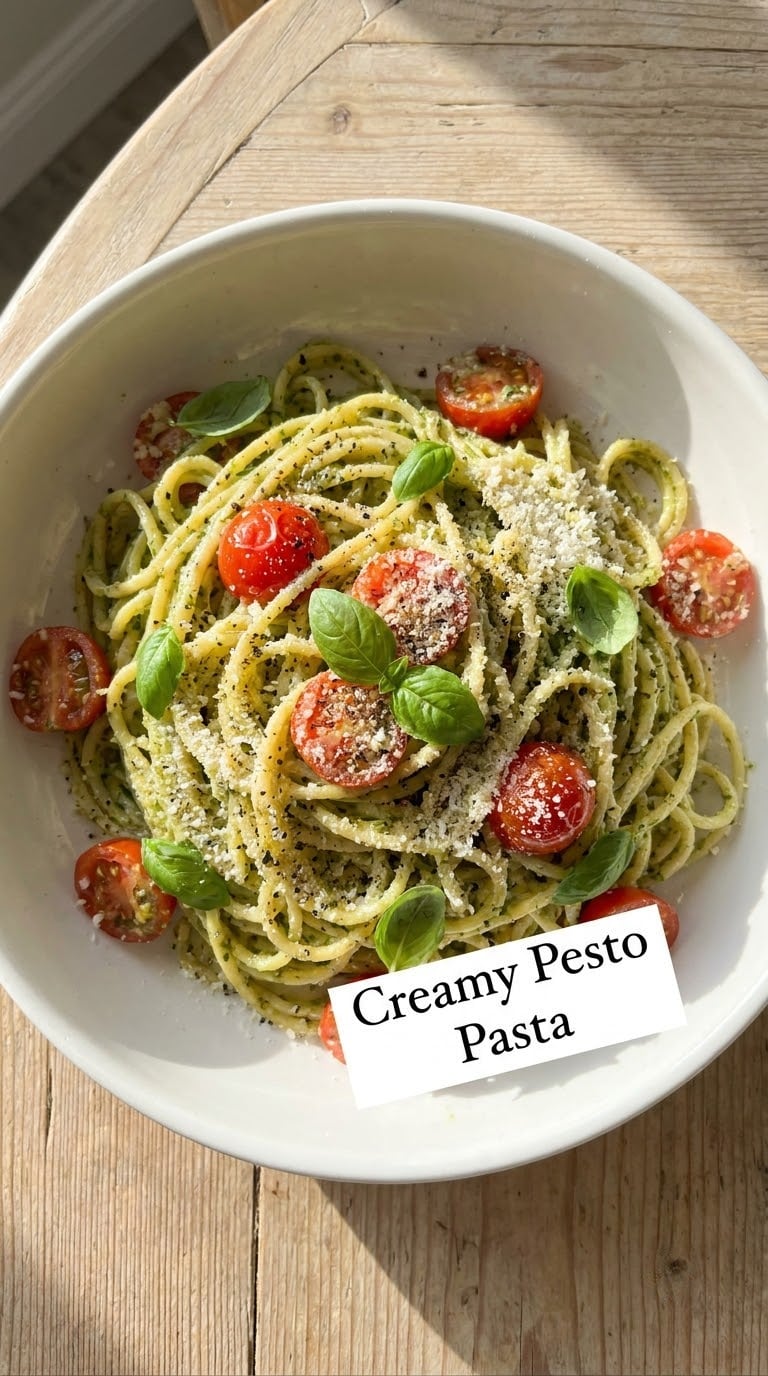
Jarred pesto straight from the fridge can be thin and sharp, and boiling it hard turns the basil army green. Adding cream or milk off the heat makes it cling to pasta and keeps the colour bright, which is why this one comes together in a single pan.
Yield: 4 servings · Prep: 5 min · Cook: 20 min · Total: 25 min · Difficulty: Easy
Ingredients
- 12 oz (340 g) spaghetti or bucatini
- 1 cup whole milk or half-and-half
- 1/2 cup grated Parmesan, plus more to finish
- 1 tablespoon unsalted butter
- 1 garlic clove, thinly sliced
- 1.5 cups baby spinach
- 1/2 cup cherry tomatoes, halved
- 1/2 cup basil pesto (recipe 1)
- 1/2 teaspoon freshly ground black pepper
- 1 cup reserved pasta water
Instructions
- Bring a large pot of salted water to a boil. Cook the pasta 8 to 9 minutes, until just shy of al dente, then scoop out 1 cup of the water before draining.
- While the pasta cooks, melt the butter in a wide skillet over medium-low heat. Add the garlic and cook for 30 seconds, until fragrant but not colored.
- Pour in the milk and let it simmer gently for 2 to 3 minutes. Whisk in the Parmesan and keep stirring until smooth.
- Lower the heat to low. Add the drained pasta, the pesto and the spinach to the skillet.
- Toss for 1 to 2 minutes, until the spinach wilts and the sauce coats every strand with no white streaks. Add pasta water a splash at a time if it looks tight.
- Season with black pepper, add the halved tomatoes, and finish with more Parmesan.
Tip: add the pesto with the heat at its lowest setting. Boiling pesto is the number one reason homemade green sauce goes dull and slightly bitter.
Swap it: cream cheese, softened, works in place of the milk, with a splash of pasta water to loosen it. Gluten-free pasta cooks the same way, in 6 to 8 minutes.
Storage: keeps 3 to 4 days in the fridge. Reheat in a skillet over medium-low heat with a splash of milk, stirring, until the sauce looks loose again.
3. Pesto Grilled Cheese
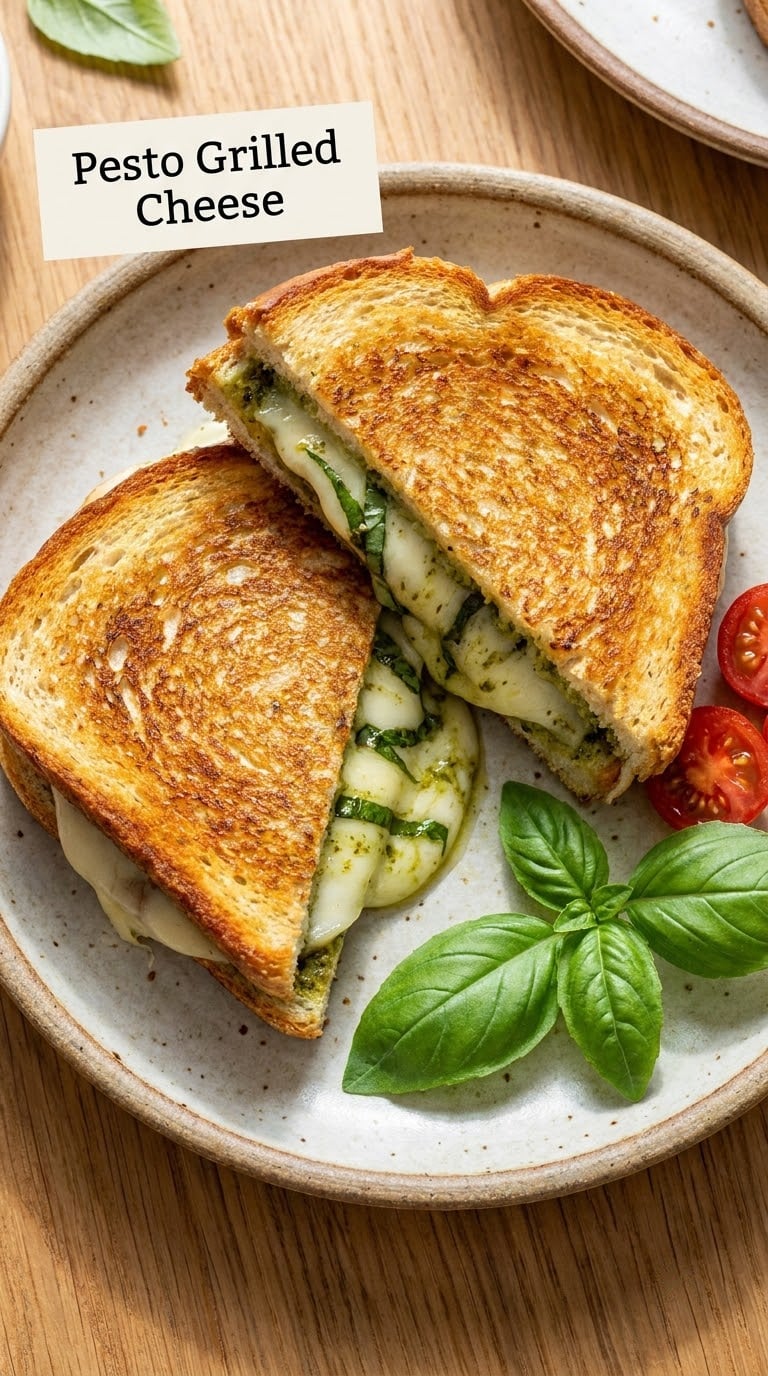
Pesto and cheese are a natural pair, and mixing a little pesto into softened butter stops the sandwich from drying out before the cheese melts. It is the fastest lunch in this list, start to plate, and it uses a spoonful of the batch you made earlier in the week.
Yield: 2 sandwiches · Prep: 5 min · Cook: 8 min · Total: 15 min · Difficulty: Easy
Ingredients
- 4 thick slices sourdough or country white bread
- 3 tablespoons unsalted butter, softened
- 3 tablespoons basil pesto
- 4 slices low-moisture mozzarella or provolone
- 3 tablespoons shredded Parmesan
- 2 tablespoons sliced roasted red pepper, optional
Instructions
- Mix 2 tablespoons of the softened butter with 1 tablespoon of pesto until the mixture is smooth and streak-free.
- Spread the pesto butter on the cut side of each bread slice. The other 1 tablespoon of butter goes on the outside of two slices for extra crunch.
- Layer the mozzarella slices on two pieces of bread, add the shredded Parmesan and the red pepper if using, and top with the other bread.
- Warm a skillet over medium-low heat. Put the sandwiches in and weight them with a second pan.
- Cook 4 to 6 minutes per side, until the bread is deeply golden and the cheese has fully melted and run slightly at the seam.
- Rest for 2 minutes on a board before cutting diagonally, so the cheese sets instead of pouring out.
Tip: medium-low heat, not medium. A hot pan browns the bread long before the mozzarella gives up, and you end up with a crisp shell around a cold middle.
Swap it: vegan butter and a plant-based cheese melt the same way. For a gluten-free version, use a sturdy seeded loaf, which holds up better than sliced sandwich bread.
Storage: best eaten straight away while the bread is crisp. Wrapped in foil, it keeps 3 days in the fridge and softens, so warm it 5 minutes in a 350°F (175°C) oven before serving.
4. Pesto Chicken Bowls
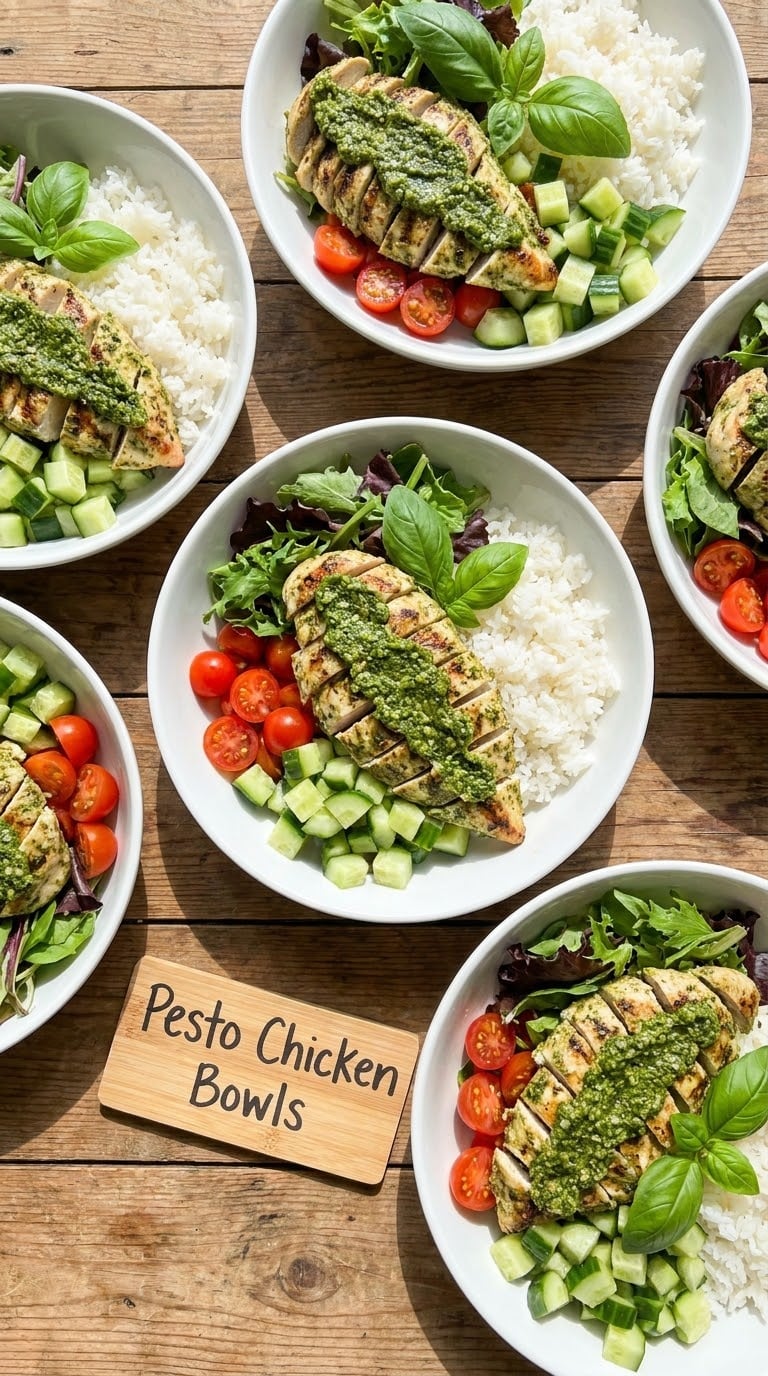
A grain bowl is the reason to make a big batch of pesto in the first place: cook once on Sunday, then build four different lunches from the same basil. Pound the chicken to an even three-quarter inch and it cooks through at the same rate as it browns, which is what keeps a weeknight bowl from turning dry.
Yield: 4 bowls · Prep: 15 min · Cook: 12 min · Total: 30 min · Difficulty: Easy
Ingredients
- 1.25 lb (570 g) boneless skinless chicken breast or thigh
- 2 tablespoons olive oil, divided
- 1 teaspoon fine sea salt, divided
- 1/2 teaspoon freshly ground black pepper
- 2 cups cooked jasmine rice, quinoa or farro
- 1/4 cup basil pesto
- 1 tablespoon lemon juice
- 1.5 cups cucumber, sliced
- 1 cup cherry tomatoes, halved
- 2 cups arugula or chopped romaine
- 1/3 cup crumbled feta or grated Parmesan
Instructions
- Pound the chicken between two sheets of parchment to an even 3/4 inch thick, then season both sides with 1 teaspoon of the salt and the pepper.
- Heat 1 tablespoon of oil in a skillet over medium-high. Sear the chicken 6 to 7 minutes per side, until the outside is golden and a thermometer reads 165°F (74°C) in the thickest part.
- Transfer the chicken to a board and rest 5 minutes, which keeps the juices in the meat when you slice it.
- Whisk the remaining oil with the lemon juice and a pinch of salt, then toss the arugula and cucumber with it.
- Stir 2 tablespoons of the pesto through the warm rice with 1 tablespoon of the lemon dressing.
- Divide the rice, dressed greens, tomatoes and sliced chicken among four bowls. Spoon over the remaining pesto and scatter with feta and a few torn basil leaves.
Tip: check the chicken with an instant-read thermometer at the thickest point, not against the bone or the pan edge. 165°F (74°C) is the safe minimum, and pulling it there keeps the breast juicy.
Swap it: pressed tofu or roasted cauliflower works for a vegetarian bowl, at 425°F (220°C) for 25 minutes. If you already have leftover roast chicken, this is the recipe for it. My chicken and broccoli recipes sit nicely alongside it.
Storage: the dressed bowl keeps 3 to 4 days, but store the grains, chicken and greens separately and assemble in the morning. Pesto should always have its own oil layer in the fridge.
5. Pesto Tomato Pasta Sauce
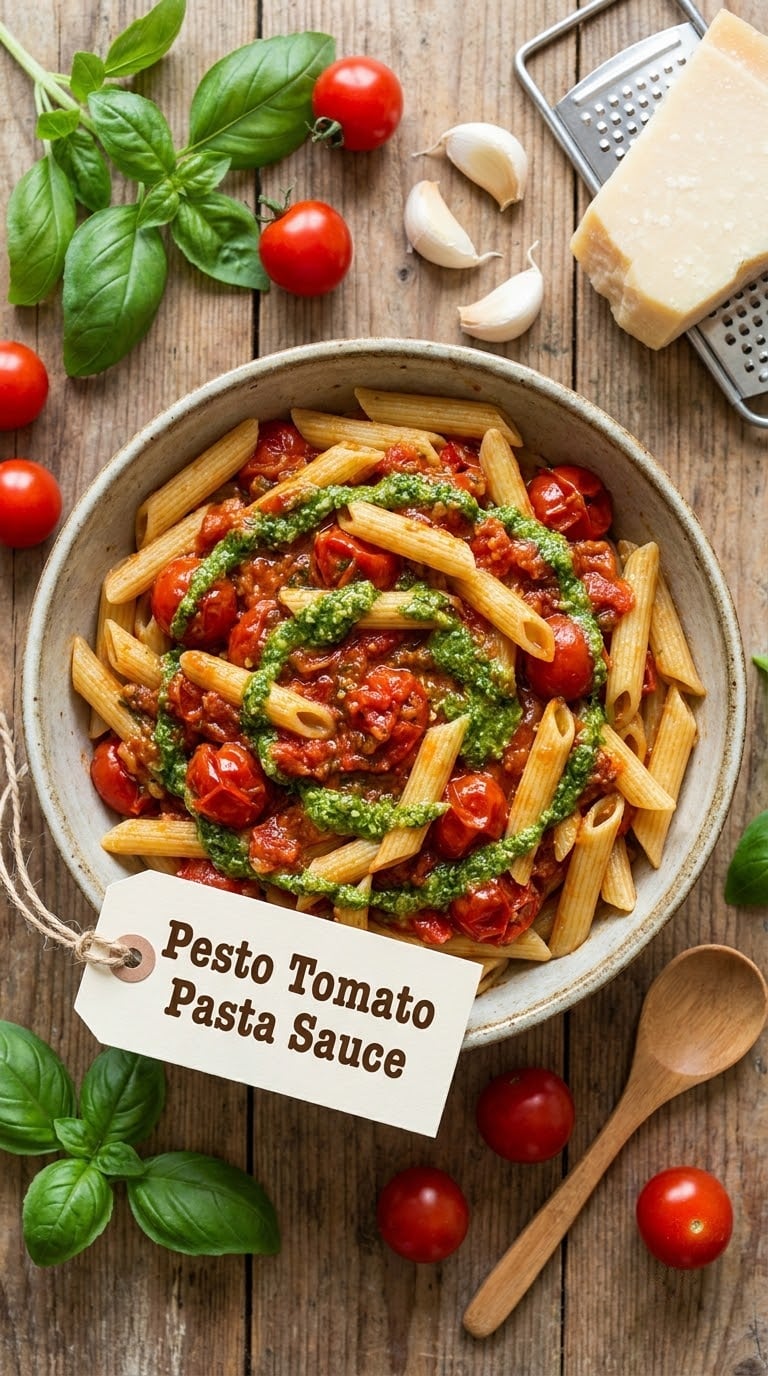
When tomatoes and basil arrive at the same time, this is the recipe that stops you cooking the same thing twice. The tomatoes cook down into a quick sauce, the pesto goes in off the heat, and the whole thing is on the table in under half an hour with no blender involved.
Yield: 4 to 6 servings · Prep: 5 min · Cook: 20 min · Total: 25 min · Difficulty: Easy
Ingredients
- 2 tablespoons olive oil
- 1 small onion, finely diced
- 3 garlic cloves, thinly sliced
- 1/2 teaspoon red pepper flakes
- 1.25 lb (570 g) cherry tomatoes, halved, or 1.5 lb peeled plum tomatoes
- 1/2 teaspoon fine sea salt, plus more to taste
- 1/2 cup basil pesto (recipe 1)
- 1/2 cup grated Parmesan, plus more to serve
- 1/4 cup torn basil leaves
Instructions
- Warm the oil in a wide skillet over medium heat. Add the onion and cook 5 to 6 minutes, until soft and translucent.
- Add the garlic and red pepper flakes and cook 30 seconds, until the garlic smells sweet.
- Add the tomatoes and 1/2 teaspoon of salt. Cook 8 to 10 minutes, until the skins split and a thick liquid pools in the bottom of the pan.
- Crush about half the tomatoes with the back of a spoon so the sauce has both whole pieces and a body.
- Turn off the heat. Stir in the pesto, then the Parmesan, and let it settle for a minute before tasting for salt.
- Toss with 1 lb (450 g) of cooked penne or rigatoni, adding a splash of pasta water if the sauce looks thick. Finish with torn basil and more Parmesan.
Tip: if your pesto has gone a little dark or stiff after a week in the fridge, warm it gently in a pan with a spoonful of water before stirring it through. It revives completely.
Swap it: half a roasted red pepper, chopped, adds sweetness and a smoky edge. Basil stems, cleaned and chopped, can go into the pan with the onions instead of being discarded.
Storage: keeps 4 days in the fridge. Freeze in a flat bag with the air pressed out for up to 3 months, then break off a piece and simmer it in a pan to loosen it.
6. Pesto Pizza with Fresh Tomato and Basil
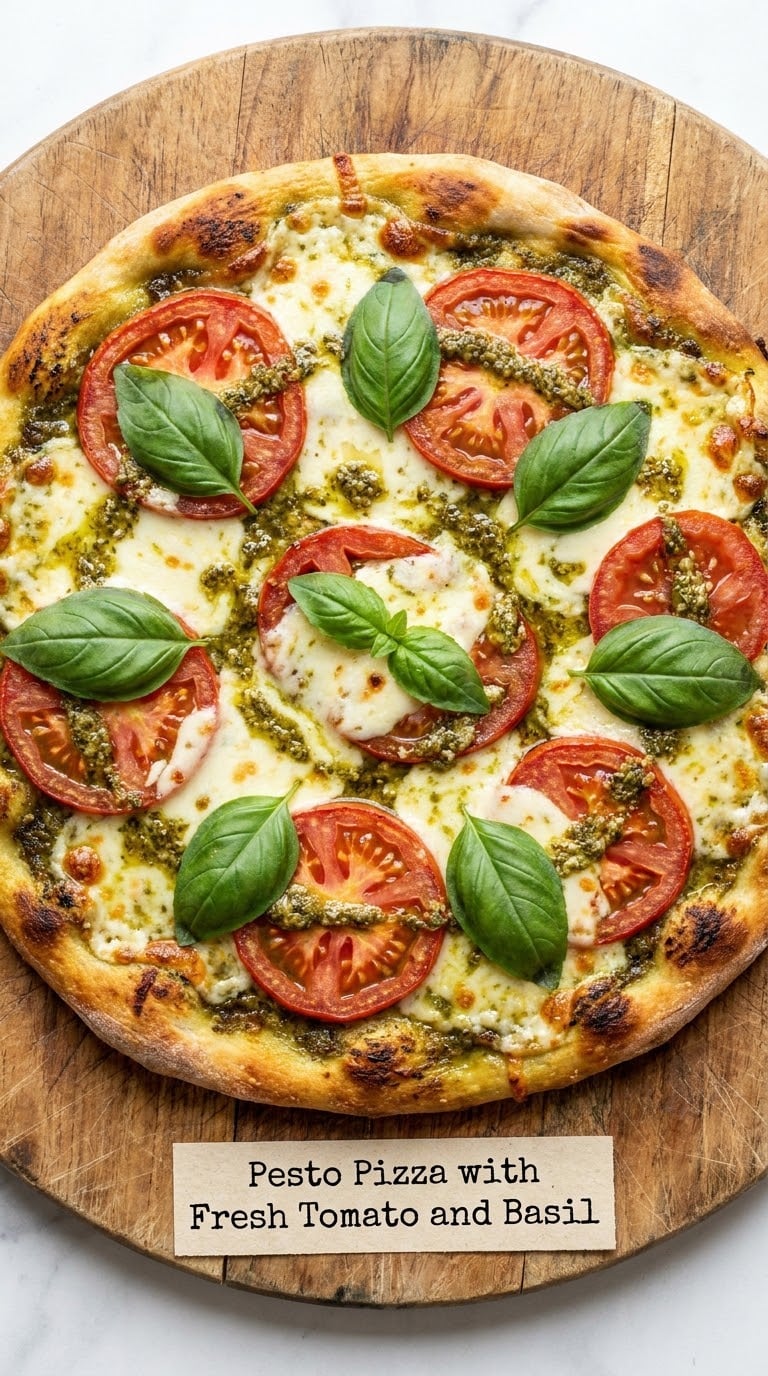
Home pizza is mostly waiting, not work, and the actual assembly takes about ten minutes. Once you get the order right on top, the basil stays green and the base stays crisp: pesto goes on the dough first, cheese next, raw tomato after that, fresh basil after the bake.
Yield: 2 pizzas · Prep: 30 min · Rest: 90 min · Bake: 10 min · Total: 1 hr 45 min · Difficulty: Medium
Ingredients
For the dough:
- 2.25 teaspoons instant yeast (7 g)
- 2 cups bread flour (240 g), plus more for dusting
- 1 teaspoon fine sea salt
- 3/4 cup warm water (180 ml), about 105°F (40°C)
- 1 tablespoon olive oil
For the topping:
- 1/4 cup basil pesto (recipe 1)
- 8 oz (225 g) low-moisture mozzarella, grated
- 1 cup ripe tomato, sliced thin
- 1/2 cup fresh basil leaves
- 1/4 cup grated Parmesan
- 1 tablespoon olive oil
- Freshly ground black pepper
Instructions
- Mix the yeast, flour, salt, water and oil in a large bowl until no dry patches remain. Knead 6 to 8 minutes, until the dough is smooth and springs back when you poke it.
- Cover and leave in a warm spot for 60 to 90 minutes, until roughly doubled in size.
- Heat the oven with a baking stone or steel inside to 500°F (260°C) for at least 45 minutes.
- Punch the dough down, split it in two and let each ball rest 15 minutes so it relaxes and stretches without springing back.
- Stretch each piece on a floured surface into a 12 inch round. Spread 2 tablespoons of pesto over each base, leaving a 1 inch border.
- Add the mozzarella, then the tomato slices and a little black pepper. Brush the crust edges with oil.
- Bake one pizza at a time for 8 to 11 minutes, until the crust is puffed and blistered with dark spots and the cheese is bubbling with a few brown freckles.
- Scatter with whole basil leaves and Parmesan as soon as the pizza leaves the oven, then slice.
Tip: the doneness cue is the underside, not the top. Lift the edge with a peel: if the base is golden and firm, it is done. Pale crust underneath means another two minutes.
Swap it: a cauliflower crust bakes in 10 to 12 minutes on a lined sheet pan at 425°F (220°C). A same-day no-knead dough, mixed in the morning and left in the fridge until dinner, needs no rise time at all.
Storage: keeps 3 days in a sealed container at room temperature. To bring back the crunch, heat a slice for 5 minutes in a 425°F (220°C) oven.
7. Pesto Potato Salad
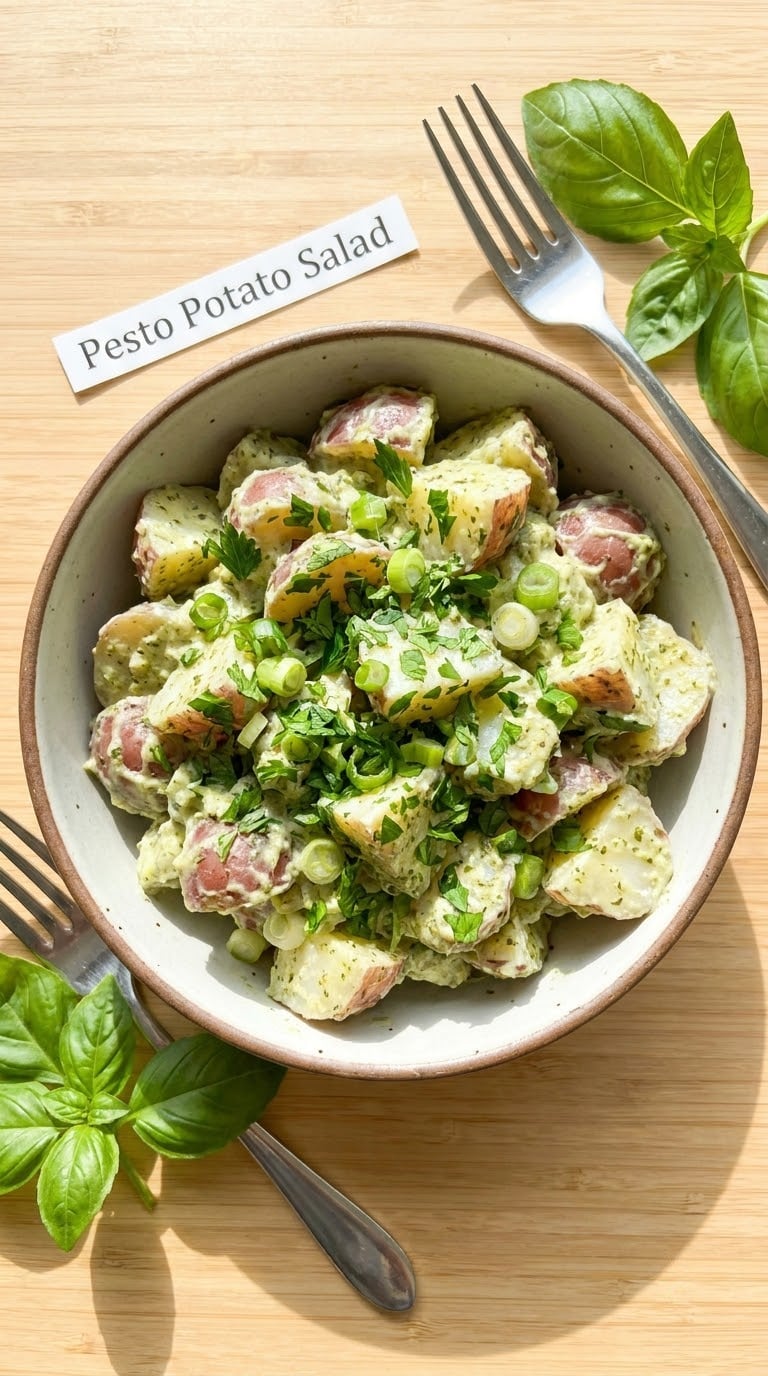
Most potato salad is held together with mayonnaise. Pesto does the same job with a fraction of the heaviness, and it turns a beige side dish into the brightest thing on the table. The one non-negotiable step is drying the potatoes, and I mean really drying them.
Yield: 6 servings · Prep: 10 min · Cook: 18 min · Chill: 30 min · Total: 45 min · Difficulty: Easy
Ingredients
- 2 lb (900 g) small Yukon Gold or red-skinned potatoes, halved
- 1/2 cup basil pesto (recipe 1)
- 1/4 cup mayonnaise or Greek yogurt
- 2 tablespoons red wine vinegar or lemon juice
- 1 tablespoon Dijon mustard
- 1/2 cup flat-leaf parsley, finely chopped
- 2 scallions, thinly sliced
- 1/2 cup celery, finely diced
- 1/2 cup grated Parmesan
- 1 teaspoon fine sea salt
- 1 hard-boiled egg, to garnish, optional
Instructions
- Put the potatoes in a large pot, cover with cold salted water, and bring to a boil.
- Simmer 15 to 18 minutes, until a knife slides into the thickest piece with no resistance. Do not overcook them; they should hold their shape when drained.
- Drain well and spread the potatoes on a rimmed baking sheet. Let them steam-dry for 10 minutes, then gently break or chop into bite-size pieces.
- Whisk the pesto, mayonnaise, vinegar, Dijon and salt together in a large bowl until the dressing is smooth and streaky green.
- Fold in the warm potatoes, celery, parsley and half the scallions. Use a big spoon rather than a whisk, so the potatoes stay in pieces.
- Chill for 30 minutes to 2 hours, then top with the sliced egg, the remaining scallions and more Parmesan. Serve cold or warm.
Tip: never rinse boiled potatoes for a salad. The water they lose is exactly the water the dressing needs, and washing it off is why many potato salads turn pasty in the fridge.
Swap it: for a dairy-free version, use an extra 2 tablespoons of pesto plus a squeeze of lemon and skip the yogurt. Adding 1/2 cup of chopped bacon or a handful of olives at the end makes it a main dish.
Storage: keeps 4 days in the fridge and travels well in a sealed container with ice packs. It does not freeze; the potatoes turn watery and the dressing separates.
8. Pesto Pasta Salad
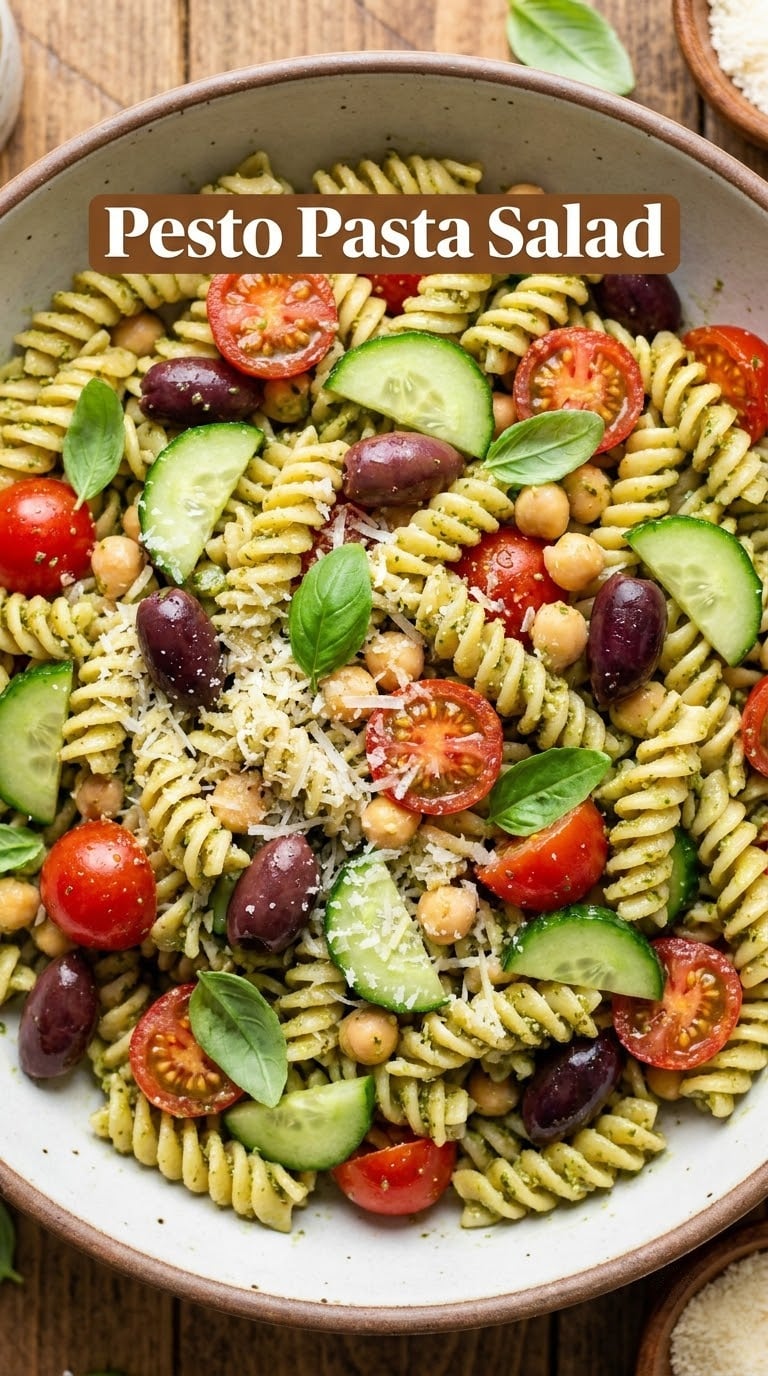
This is the make-ahead workhorse: a bowl that survives a fridge overnight and a car boot, with chickpeas and cucumber doing the job that chicken usually does. Dressing the pasta while it is still a little warm is the difference between a salad where the pesto coats every piece and one where it pools at the bottom.
Yield: 6 servings · Prep: 15 min · Cook: 11 min · Chill: 30 min · Total: 50 min · Difficulty: Easy
Ingredients
- 1 lb (450 g) rotini, fusilli or cavatappi
- 1/2 cup basil pesto (recipe 1)
- 1/3 cup olive oil
- 1/4 cup red wine vinegar
- 1/2 teaspoon fine sea salt, plus more to taste
- 1 cup cherry tomatoes, halved
- 1 cup cucumber, diced
- 1/2 cup red onion, sliced paper thin
- 1/2 cup kalamata olives, halved
- 1 can (15 oz, 425 g) chickpeas, drained and rinsed
- 1/2 cup grated Parmesan
- 1/4 cup crumbled feta, optional
Instructions
- Bring a large pot of salted water to a boil and cook the pasta 10 to 11 minutes, until al dente. Do not rinse.
- While the pasta cooks, whisk the pesto, olive oil, vinegar and salt in a large serving bowl.
- Drain the pasta and add it straight to the bowl while it is still steaming. Toss for a full minute so every piece is coated.
- Fold in the tomatoes, cucumber, red onion, olives and chickpeas.
- Chill for 30 to 45 minutes, then stir in the Parmesan and feta. Taste and add salt if the chickpeas have left it a little flat.
- Torn basil leaves and a few extra olives go in just before serving, so they stay bright rather than soft.
Tip: add a tablespoon more oil if the salad looks dry after chilling. Pesto thickens noticeably once it is cold, and pasta salad should be glossy, not stiff.
Swap it: cannellini beans work in place of chickpeas, and broccoli florets or arugula can replace the cucumber. For a warm-weather twist, add cubed watermelon and a few torn leaves of mint.
Storage: keeps 4 days in the fridge. Keep the dressed salad in the cold part of the car rather than the boot, and eat it within a day of travel. My carrot ribbon salad is the other thing I pack alongside it.
9. Pesto Hummus or Bean Dip
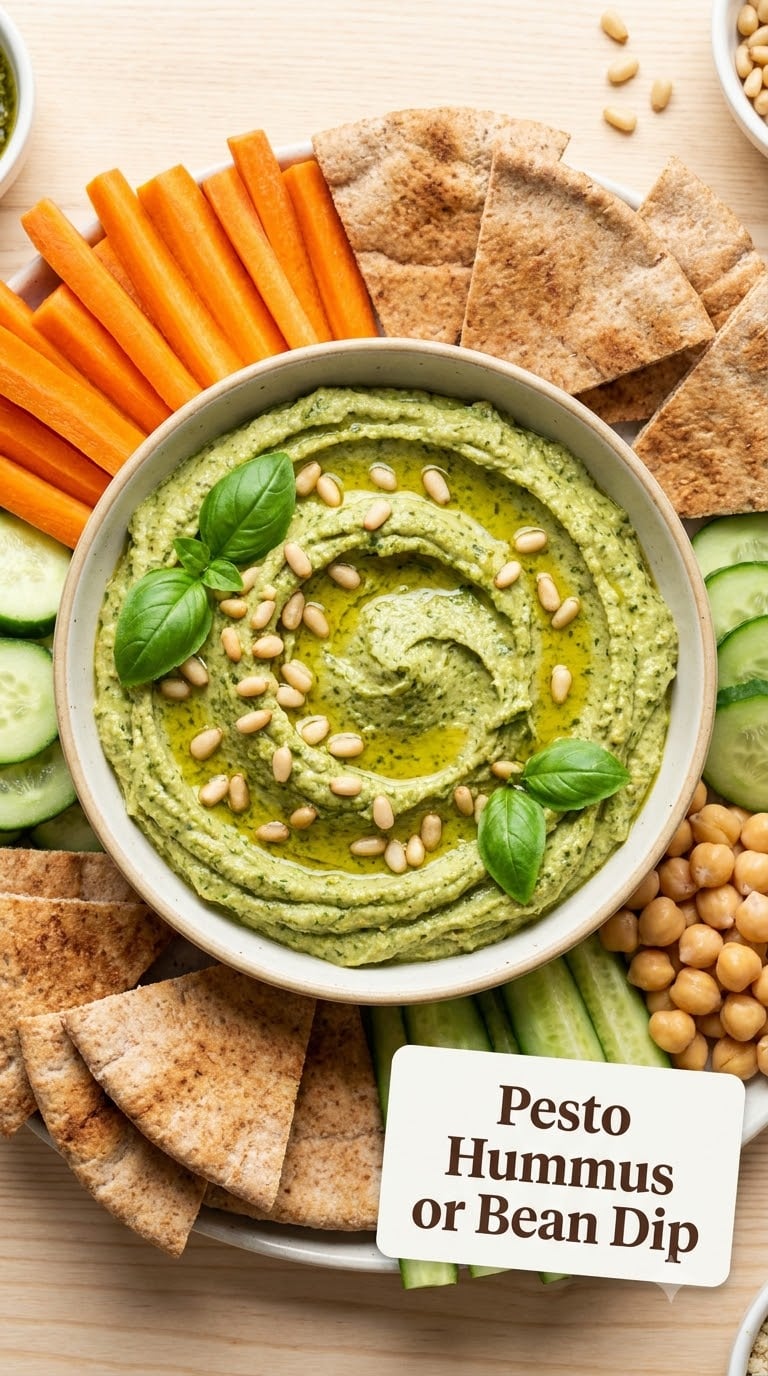
The best thing about a bean dip is that it takes ten minutes, uses things you have already got, and quietly uses up basil that is losing its shine in the crisper. Blended with pesto and tahini, it turns into something that eats like a meal on toast.
Yield: about 3 cups, 8 servings as a dip · Prep: 10 min · Cook: 0 min · Total: 10 min · Difficulty: Easy
Ingredients
- 1 can (15 oz, 425 g) chickpeas, drained, plus 3 tablespoons of the liquid
- 1/2 cup basil pesto (recipe 1)
- 1/3 cup tahini
- 2 tablespoons lemon juice
- 1 small garlic clove, grated
- 1/4 cup ice water, plus more as needed
- 2 tablespoons olive oil
- 1/2 teaspoon fine sea salt
Instructions
- Whisk the tahini and lemon juice together in a bowl. It will seize into a thick paste, which is normal. Let it stand for 5 minutes, then whisk again; it loosens into a smooth, pale sauce.
- Put the chickpeas, chickpea liquid, pesto, tahini mixture, garlic, salt and ice water in a blender or food processor.
- Blend 45 to 60 seconds, scraping the sides once, until completely smooth with no whole chickpeas left.
- Add ice water 1 tablespoon at a time until the dip is creamy and holds a soft swirl when you tilt the bowl.
- Spoon into a shallow bowl, make a swirl with the back of a spoon, drizzle with olive oil and finish with salt and a few basil leaves.
- Serve with carrot and cucumber sticks, warm pita, crackers or toast.
Tip: whisk the tahini and lemon before anything else. It seizes and looks ruined for five minutes, then relaxes into the creamiest part of the dip, and skipping that step leaves it grainy.
Swap it: cannellini or butter beans are smoother and milder. Roasted garlic, or a jalapeno, turns it into a different dip entirely. To keep it allergen-light, swap the tahini for 3 tablespoons of lemon juice and olive oil, though the texture will be lighter.
Storage: keeps 5 days in the fridge in a sealed container, covered with a thin film of oil. It freezes for 3 months, though the texture turns slightly grainy once thawed, so stir in a splash of water.
10. Pesto Pasta Bake
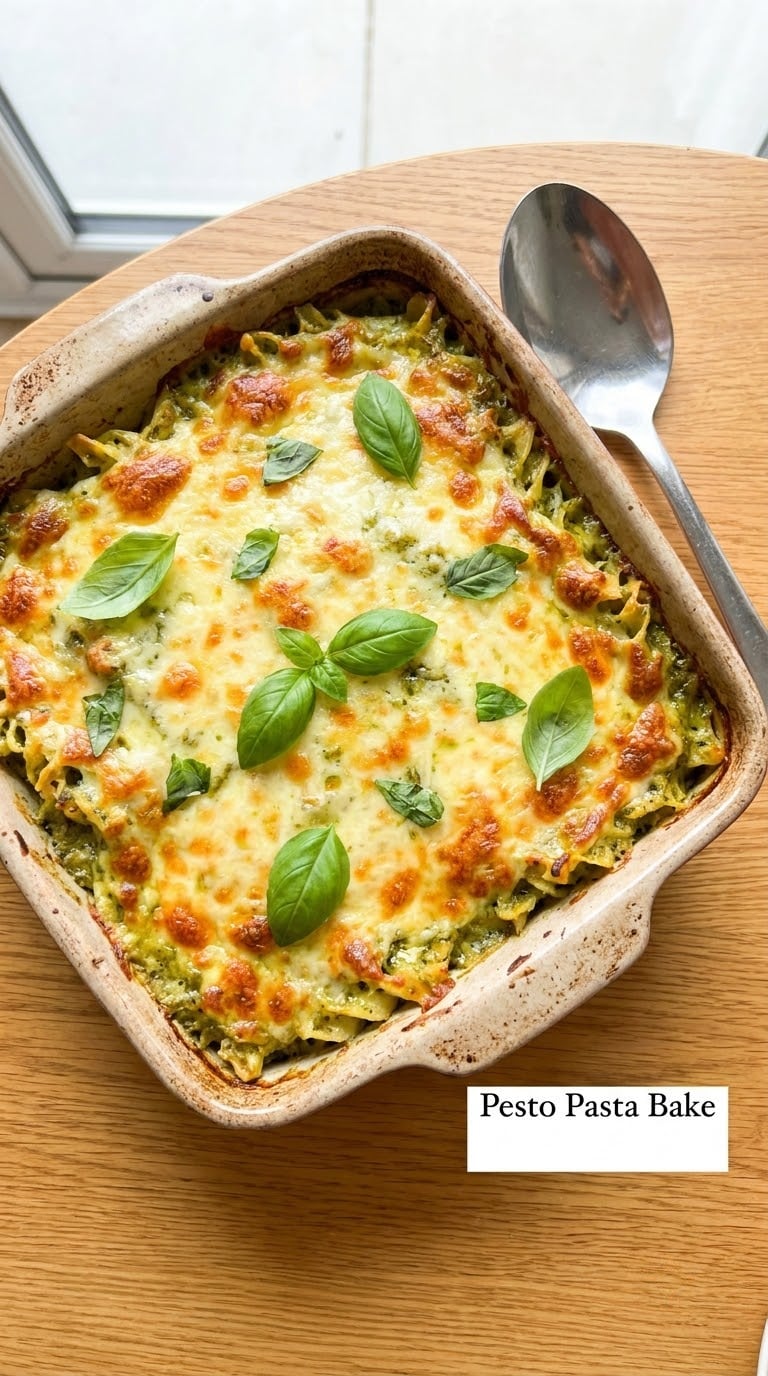
A pasta bake is the answer to a basil surplus bigger than a week can eat. Make the largest batch of pesto you have, pour half into the dish and freeze the rest in ice cube trays, and the surplus problem disappears. Undercooking the pasta by two minutes matters here, because it finishes cooking in the oven alongside everything else.
Yield: 6 servings · Prep: 20 min · Bake: 35 to 40 min · Total: 1 hr · Difficulty: Easy
Ingredients
- 12 oz (340 g) rotini, ziti or rigatoni
- 1.5 cups basil pesto (recipe 1)
- 2 cups marinara sauce
- 1 cup whole-milk ricotta
- 2 cups shredded low-moisture mozzarella, divided
- 1.5 cups cherry tomatoes, halved
- 1 cup baby spinach or small broccoli florets
- 1/2 cup grated Parmesan
- 1/2 cup sliced roasted red pepper, optional
- 1 lb (450 g) Italian sausage, casings removed, optional
- 1 teaspoon fine sea salt, divided
- 1/2 teaspoon freshly ground black pepper
Instructions
- Heat the oven to 375°F (190°C) and grease a 9×13 inch baking dish.
- Bring a large pot of salted water to a boil. Cook the pasta 6 to 7 minutes only, so it is firmer than al dente. Drain and return to the pot.
- Brown the sausage in a skillet over medium-high heat, breaking it up, about 8 minutes, then drain on a paper towel. If you are skipping the meat, skip this step.
- Whisk 1.5 cups of the marinara, 1.5 cups of the pesto and the ricotta together in the pot with the pasta, 1/2 teaspoon of the salt and the pepper.
- Spread half the pasta mixture in the dish. Layer with 1 cup of mozzarella, the tomatoes, the spinach, the sausage and the roasted pepper.
- Spoon in the remaining pasta, spread the last of the sauce over it, and finish with the remaining mozzarella and the Parmesan.
- Cover with foil and bake 20 minutes, then uncover and bake 15 to 20 minutes more, until the top is browned in spots and the edges are bubbling hard.
- Rest 10 minutes before serving so the layers set, then scatter with fresh basil. If you have cooked salmon or chicken that needs using, my leftover salmon recipes work in place of the sausage.
Tip: the foil for the first 20 minutes is not optional. It traps steam so the center cooks through before the cheese starts to color, and that is what keeps a bake from being raw in the middle and pale on top.
Swap it: double the spinach and skip the sausage for a vegetarian bake. Adding a cup of ricotta to the sauce layer is what makes it creamy, so keep it even for a vegan version and use a plant-based ricotta.
Storage: keeps 4 days in the fridge, covered. It freezes unbaked for 3 months; to reheat, cover and bake 25 minutes at 350°F (175°C) until the center reaches 165°F (74°C) and the cheese is hot through.
Tips for Making These
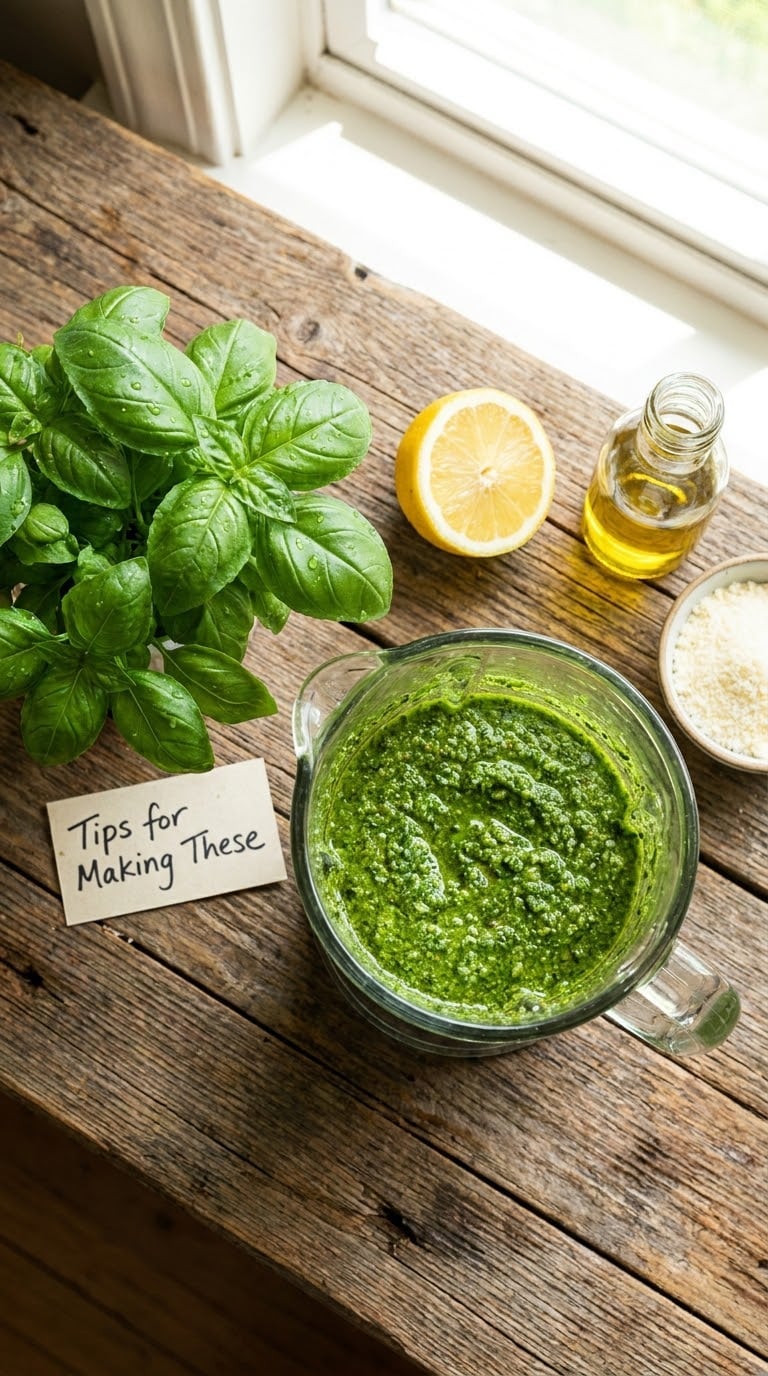
- Dry your basil completely. Wet leaves thin the sauce and dull the colour. If you have just washed them, spin them in a salad spinner or press them between two towels for five minutes.
- Blitz, do not puree. Short pulses keep the basil cool. A long blend heats the leaves, and heat is what turns bright green pesto olive-drab.
- Pour the oil in a thin stream with the motor running. That slow emulsification is the whole difference between a coarse, separated jar sauce and a glossy one. A drizzle of olive oil before the basil also helps.
- Add acid at the end. A tablespoon of lemon juice sharpens the flavour, brightens the green and slows the browning that turns pesto brown in the fridge within hours.
- Press a layer of oil over the top before the lid goes on. Basil needs air to oxidise, and a thin seal of oil keeps it away from the air. Pesto in a squeeze bottle keeps better for the same reason.
- Stems do not have to be binned. Peel the tough outer layer, chop the tender inner stem and blitz it in. It is a mild, sweet flavour and it saves a surprising amount of leaves from the compost.
- Freeze in trays, bag the rest. Ice cube trays give you ready portions, one or two cubes per pasta plate, and a flat freezer bag pressed thin gives you the same sauce six months later.
Frequently Asked Questions
How long does fresh homemade basil pesto last in the fridge?
Homemade basil pesto keeps about 5 days refrigerated at 40°F (4°C) or below, as long as you use clean utensils and press a thin layer of olive oil over the surface before the lid goes on. That oil seal slows the oxidation that turns the sauce brown. Discard it if the lid was left open, if there is water sitting on top, or if it smells sour or fizzy when opened.
Can you freeze fresh homemade basil pesto?
Yes, and freezing is the best answer to a summer basil surplus. Spoon the sauce into ice cube trays and freeze until solid, then transfer the cubes to a sealed freezer bag, where they keep around 3 months. For longer storage, press the pesto thin in a flat freezer bag to remove the air, which gives you up to 6 months. Thaw in the fridge overnight, never on the counter.
Why does my homemade pesto turn brown so fast?
Three things cause it. Basil oxidises on contact with air, so cover the surface with a thin layer of olive oil, add lemon juice for acidity, and store the jar in the fridge rather than the door. Over-blending also heats the leaves and darkens them, so pulse in short bursts. If pesto is already brown, warm it gently in a pan with a splash of water and it revives, though the colour will not fully return.
What is the secret to a good pesto?
The secret is temperature control and a dry herb. Pulse the nuts and garlic first into a coarse paste, add the basil in short bursts, then drizzle the olive oil in with the motor running to emulsify. If the sauce gets warm at any point, the basil darkens and turns bitter. A tablespoon of lemon juice at the end and a proper pinch of salt are what make it taste finished rather than flat.
Should I wash fresh basil before making pesto?
Yes, wash it, then dry it thoroughly. Basil arrives with soil and small insects on it, and rinsing takes only a few seconds under cold running water. The mistake is skipping the drying: any water left on the leaves drags around the food processor blade, thins the sauce and dulls the colour. Spin the leaves in a salad spinner or pat them dry with a towel before they go in.
What can I use instead of pine nuts in pesto?
Walnuts and pecans are the closest in flavour, with a slightly earthier edge than pine nuts, and they cost far less. Sunflower seeds give a milder, nuttier result and work for anyone avoiding nuts altogether, as do pumpkin seeds. Cashews are the mildest and creamiest of the bunch. Use the same 1/3 cup measure and toast them first for the same depth of flavour.
Easy Pesto Recipes for Using Up Fresh Basil
If the basil is waiting on the counter right now, make the classic pesto first. It takes fifteen minutes, it is the version every other recipe here assumes, and one batch gives you about a cup to spend across the week: a spoonful in cream pasta tonight, a layer on the pizza dough, a fork’s worth through the pasta salad for lunch tomorrow.
Beyond that, pick the recipe that matches the ingredient you need to use up, not the one that sounds best. A market haul and a free afternoon means the pasta bake in recipe 10 plus a tray of frozen pesto cubes. Tomatoes coming in fast and nobody else cooking means recipe 5, done and eaten inside half an hour. Whichever you choose, dry basil, short pulses and a layer of oil in the jar are the three habits that make these easy pesto recipes to use up fresh basil work every single time.