
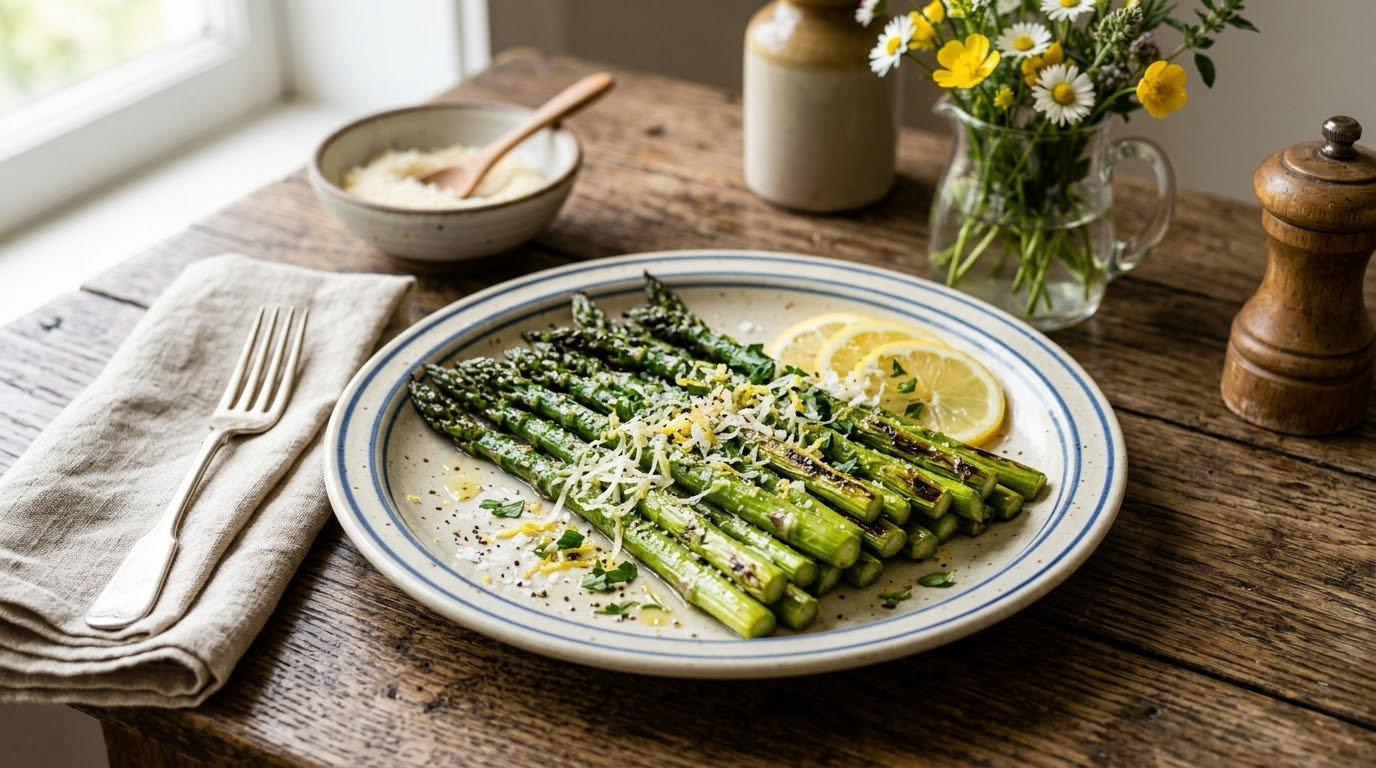
Easy asparagus recipes for spring dinners all follow the same rule: one pan, one pot, or one skillet, and dinner lands on the table in under 50 minutes. These ten are complete recipes you can cook tonight, from a creamy garlic pasta to a sheet-pan chicken dinner, a honey-glazed salmon supper, and a thick corn and potato chowder for a cool spring evening.
Fresh asparagus shows up for a few short weeks and then it is gone, which is how I end up roasting the same tray of spears four nights in a row. Ten recipes fix that. Every one below has exact quantities, a real doneness cue, and a note on what to do the next day, so you can work through the season instead of wasting a bunch that arrived too big. If you plan ahead, we also have easy chicken thigh recipes and quick shrimp recipes for the weeks asparagus is not in the market.
Table of Contents
Easy Asparagus Recipes for Spring Dinners at a Glance
| Recipe | Time | Difficulty | Best for |
|---|---|---|---|
| 1. Lemon Herb Sheet-Pan Chicken and Asparagus | 50 min | Easy | A full Sunday dinner with no washing up |
| 2. Creamy Garlic Asparagus Pasta | 25 min | Easy | The fastest weeknight dinner in the list |
| 3. Honey-Glazed Salmon with Roasted Asparagus | 20 min | Easy | A date night or a fast Tuesday |
| 4. Garlic Shrimp and Asparagus Rice Skillet | 30 min | Easy | Feeding four from one pan |
| 5. Crispy Asparagus, Tomato, and Mozzarella Flatbread | 40 min | Medium | A casual dinner with crusty bread and salad |
| 6. Classic Asparagus Risotto with Peas | 45 min | Medium | A slow Sunday or a dinner party main |
| 7. Asparagus and Cheddar Cheese Omelet | 14 min | Easy | Breakfast, brunch, or a light supper |
| 8. Seared Beef Tenderloin with Asparagus | 27 min | Medium | A restaurant-style dinner in half an hour |
| 9. Asparagus, Goat Cheese, and Herb Pizza | 50 min plus rise | Medium | Friday night pizza at home |
| 10. Asparagus, Corn, and Potato Chowder | 50 min | Easy | A cool, filling bowl on a rainy evening |
How to pick among easy asparagus recipes for spring dinners
Under 30 minutes and want zero dishes to wash: go with the creamy pasta, the salmon, or the omelet. Feeding a group and you do not want to babysit a stove: the sheet-pan chicken and the rice skillet both hold their heat for a few minutes at the table.
Vegetarian dinners are the flatbread, the risotto, the pizza, and the chowder (swap the bacon for oil and smoked paprika). The omelet and the pizza are also the two most forgiving if you are cooking for a picky table, and both freeze well for the end of the season.
1. Lemon Herb Sheet-Pan Chicken and Asparagus
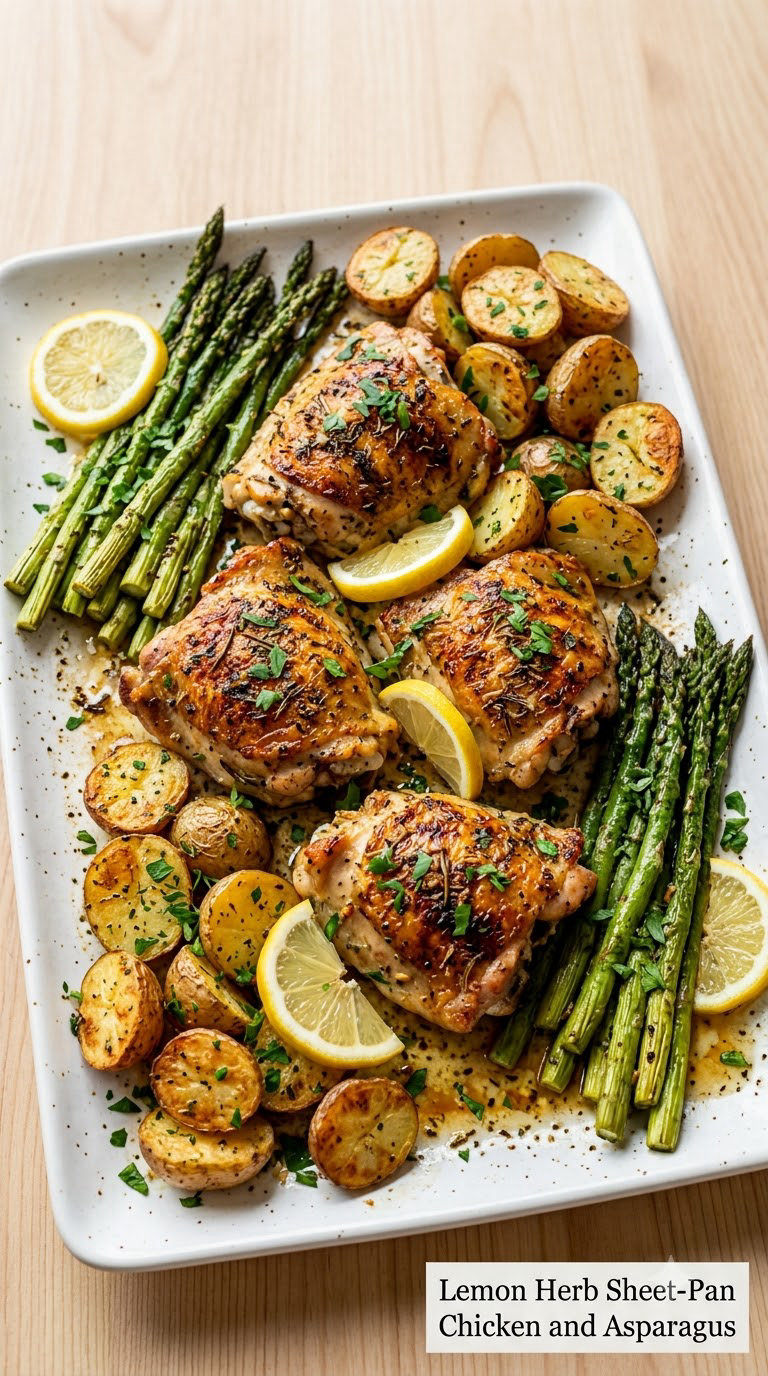
This is the dinner I make when the bunch is big and I do not want to stand at the stove. Everything roasts together on one pan, the potatoes brown underneath the thighs, and the asparagus goes in at the end so it stays snappy instead of turning to string.
Yield: 4 servings · Prep: 15 minutes · Cook: 35 minutes · Total: 50 minutes · Difficulty: Easy
Ingredients
- 4 bone-in, skinless chicken thighs (about 1 1/2 pounds)
- 1 pound fresh asparagus, woody ends snapped off
- 1 pound baby potatoes, halved
- 2 tablespoons olive oil, divided
- 1 lemon, half juiced and half cut into wheels
- 4 garlic cloves, lightly crushed
- 1 teaspoon dried oregano
- 1/2 teaspoon dried thyme
- 1 teaspoon kosher salt
- 1/2 teaspoon black pepper
- 2 tablespoons chopped fresh parsley
Instructions
- Heat the oven to 400°F (204°C).
- Toss the potatoes with 1 tablespoon of the oil and 1/2 teaspoon of the salt on a large rimmed sheet pan.
- Roast the potatoes for 10 minutes, until the cut sides are just starting to color.
- Rub the chicken with the remaining oil and 1/2 teaspoon of the salt, then set it skin-side up in the middle of the pan.
- Tuck the garlic cloves and lemon juice around the chicken, and scatter the oregano and thyme over everything.
- Push the asparagus into the remaining space in a single layer, drizzle with a little oil, and season with the pepper.
- Roast for 20 to 25 minutes more, until the chicken registers 165°F (74°C) at the thickest part and the juices run clear, and the asparagus is tender with a little resistance left in the stems.
- Let the chicken rest 5 minutes, then squeeze the roasted lemon wheels over the pan and scatter with parsley.
Tip: Give the asparagus its own side of the pan. Under the thighs it traps steam and goes limp, and if the bunch is large, use a second small pan rather than doubling up the spears.
Swap it: Boneless, skinless thighs need about 5 minutes less roasting and still hit 165°F (74°C). Thick salmon fillets work in place of the chicken, cooked to 145°F (63°C).
Storage: Store in an airtight container in the fridge for 3 to 4 days. Reheat covered at 325°F (163°C) until the chicken reaches 165°F (74°C) again, about 15 minutes, or microwave on 50% power for 90 seconds.
2. Creamy Garlic Asparagus Pasta
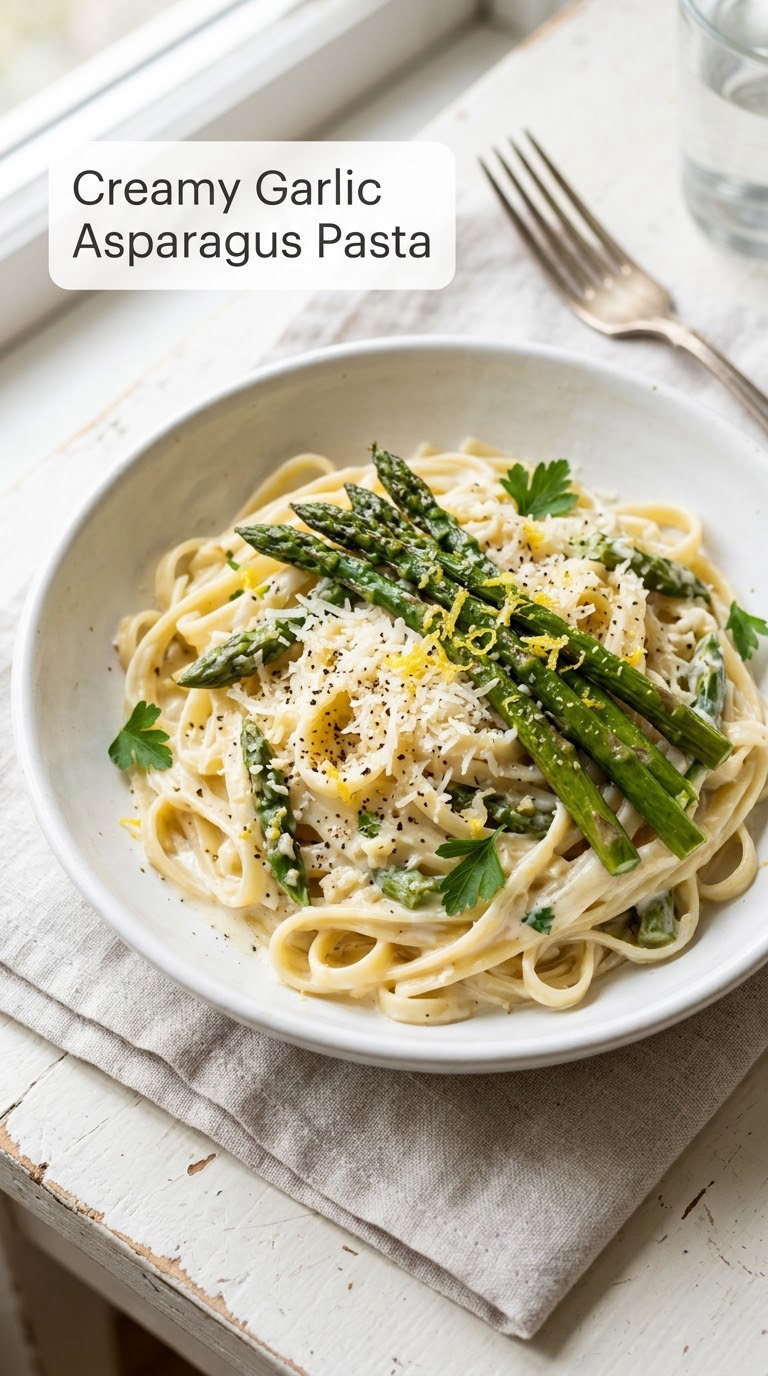
If you only make one thing from this list, make this. It takes one pot, the sauce comes together in the same pan the pasta cooked in, and the asparagus keeps its bite because it goes in at the very end. Add chicken and spinach on top and it becomes a full meal.
Yield: 4 servings · Prep: 8 minutes · Cook: 17 minutes · Total: 25 minutes · Difficulty: Easy
Ingredients
- 12 ounces spaghetti or linguine
- 1 pound asparagus, cut into 1/2-inch pieces
- 3 tablespoons butter
- 2 tablespoons olive oil
- 4 garlic cloves, thinly sliced
- 1/2 teaspoon red pepper flakes
- 1/2 cup heavy cream
- 1/2 cup finely grated Parmesan, plus more to serve
- 1 lemon, zested and juiced (about 1 tablespoon of juice)
- 1/2 teaspoon kosher salt
- 1/4 teaspoon black pepper
- 2 tablespoons chopped fresh parsley
- 1/3 cup reserved pasta water
Instructions
- Bring a large pot of salted water to a boil.
- Boil the asparagus for 2 minutes, then lift it out with a slotted spoon into a bowl. Keep the water at a boil.
- Cook the pasta until just shy of al dente, about 8 minutes. Scoop out 1/3 cup of the cooking water before draining.
- In the same pot over medium-low heat, melt the butter with the olive oil. Add the garlic and red pepper flakes and cook for 60 to 90 seconds, until the garlic is pale gold and fragrant but not brown.
- Pour in the cream and let it simmer for 1 minute.
- Whisk in the Parmesan, lemon zest, and half the lemon juice. The sauce should thicken to a light cream.
- Add the drained pasta and the blanched asparagus back to the pot and toss vigorously, adding pasta water a splash at a time until the sauce looks glossy and coats every strand.
- Season with the salt and pepper, then finish with parsley, more Parmesan, and the rest of the lemon juice.
Tip: Keep the blanched asparagus out of the hot pot until the pasta is nearly done. Any longer and it goes soft and dull green while the noodles finish.
Swap it: Half-and-half makes a lighter sauce. Pecorino is sharper than Parmesan and works well, and a handful of peas or 3 strips of crisp bacon stirred in at the end adds sweetness and crunch.
Storage: Keeps 3 to 4 days in the fridge. Reheat gently at 325°F (163°C) with a splash of water, stirring, until the cream loosens. Contains dairy and gluten (wheat pasta).
3. Honey-Glazed Salmon with Roasted Asparagus
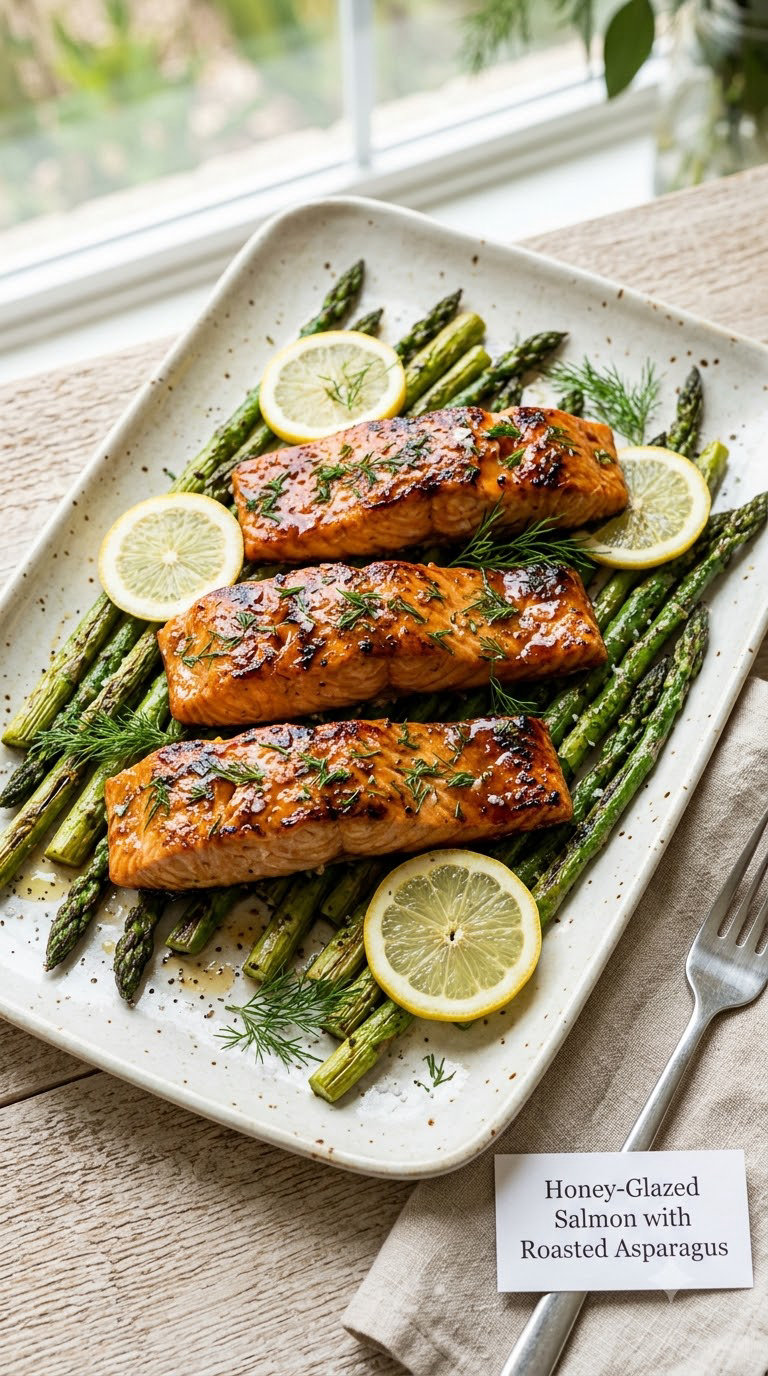
Twenty minutes start to finish, and the honey-mustard glaze caramelizes in a hot oven while the asparagus roasts underneath. It is the recipe I make on the nights when I want something that looks like effort.
Yield: 4 servings · Prep: 8 minutes · Cook: 12 minutes · Total: 20 minutes · Difficulty: Easy
Ingredients
- 4 skinless salmon fillets, 6 ounces each
- 1 pound fresh asparagus, woody ends snapped off
- 2 tablespoons honey
- 1 tablespoon Dijon mustard
- 1 tablespoon lemon juice
- 1 tablespoon soy sauce
- 1/2 teaspoon garlic powder
- 1 tablespoon olive oil
- 1/2 teaspoon kosher salt
- 1/4 teaspoon black pepper
- 1 lemon, cut into wheels
- Fresh dill, for serving
Instructions
- Heat the oven to 425°F (220°C) and line a rimmed sheet pan with parchment.
- Whisk the honey, Dijon, lemon juice, soy sauce, and garlic powder together in a small bowl.
- Toss the asparagus with the olive oil, salt, and pepper and spread it in the pan.
- Roast the asparagus for 7 minutes, until the tips are browned and the stalks bend without snapping.
- Move the asparagus to the edges of the pan, set the salmon fillets in the middle, and spoon the glaze over each one.
- Roast for 6 to 9 minutes more, until the salmon flakes at the thickest part and the thickest fillet registers 145°F (63°C).
- Rest 2 minutes, then finish with lemon wheels, dill, and a little extra glaze from the pan.
Tip: The single most common way salmon goes wrong is overcooking it. Watch the sides: the flesh turns opaque and separates into clean flakes about a minute before the centre is firm, and that is the moment to pull it.
Swap it: Maple syrup for honey gives a darker glaze, and harissa or grainy mustard swaps in for Dijon if you want heat. Thicker-cut fillets need 3 to 4 minutes longer.
Storage: Keep 3 to 4 days in the fridge; freeze up to 2 months in a sealed container. Reheat at 300°F (149°C) for 8 to 10 minutes under a loose foil tent, or microwave on 50% power for 45 seconds.
4. Garlic Shrimp and Asparagus Rice Skillet
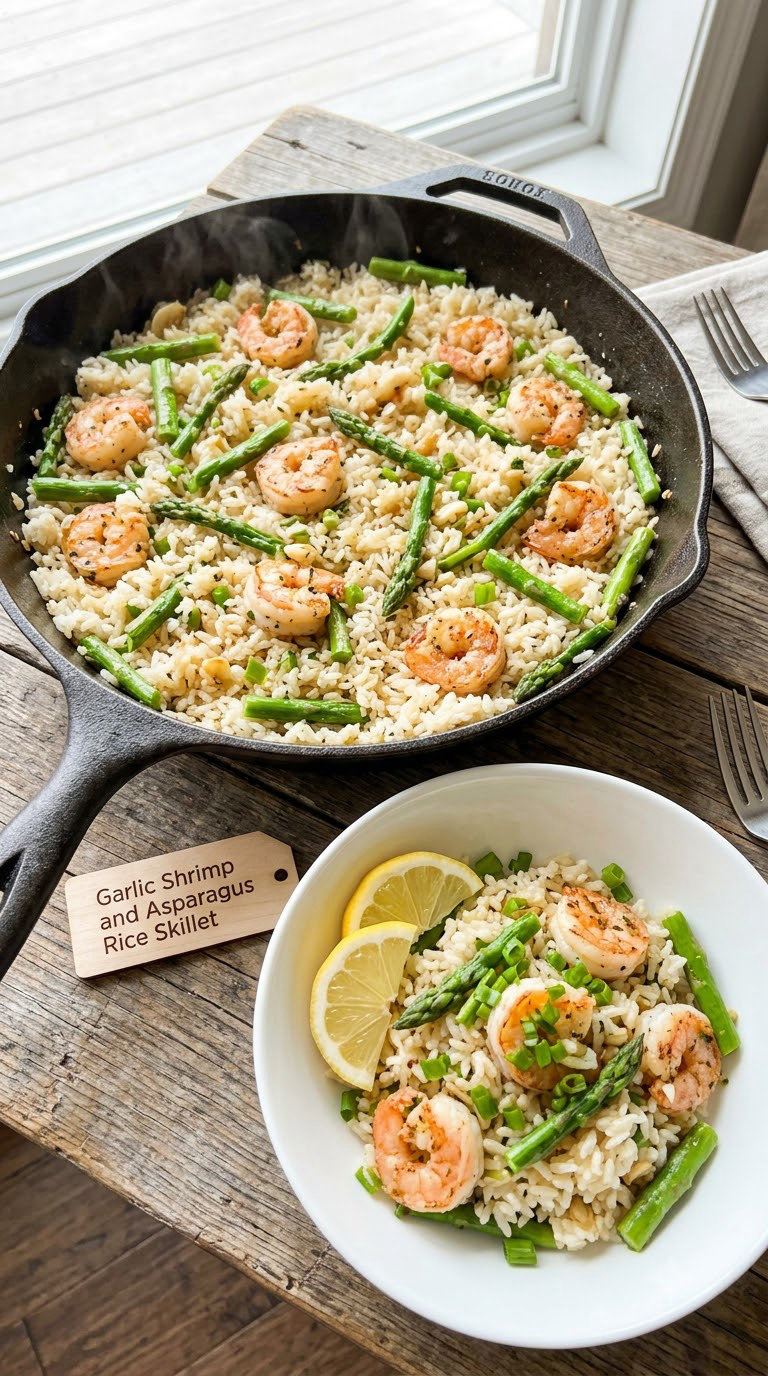
A proper one-pan dinner: the rice cooks in the skillet first, the shrimp and vegetables go in the same pan after, and everything lands in bowls together. The soy and rice vinegar at the end give it a light, springy finish rather than a heavy one.
Yield: 4 servings · Prep: 10 minutes · Cook: 20 minutes · Total: 30 minutes · Difficulty: Easy
Ingredients
- 1 pound large raw shrimp, peeled and deveined
- 1 cup jasmine rice
- 2 cups chicken broth
- 1 pound asparagus, cut into 2-inch pieces
- 1 red bell pepper, diced
- 3 tablespoons olive oil, divided
- 4 garlic cloves, minced
- 1/2 teaspoon red pepper flakes
- 2 tablespoons soy sauce
- 1 tablespoon rice vinegar
- 1 tablespoon lemon juice
- 2 scallions, thinly sliced
Instructions
- Heat 1 tablespoon of the oil in a wide skillet over medium heat. Add the rice and stir for 2 minutes, until the grains look translucent at the edges.
- Pour in the broth, bring to a boil, cover, and simmer for 12 minutes without lifting the lid.
- Turn off the heat, uncover, and let the rice sit undisturbed for 5 minutes while you cook the shrimp. Fluff it with a fork and set it aside.
- Pat the shrimp dry with paper towel and add the remaining oil to the same skillet over high heat. Cook the garlic and red pepper flakes for 30 seconds.
- Add the bell pepper and cook for 3 minutes, then add the asparagus and cook for 3 to 4 more minutes, until bright green and still crisp.
- Push the vegetables to the sides, add the shrimp in a single layer, and cook 90 seconds per side, until pink, opaque, and curled into a loose C.
- Return the rice to the skillet and stir in the soy sauce, rice vinegar, and lemon juice.
- Fold in the scallions and spoon into bowls.
Tip: Dry the shrimp thoroughly before they hit the pan. Water on the surface makes them steam and never sear, and that is the difference between shrimp with a browned crust and shrimp that are simply boiled.
Swap it: Brown rice needs about 10 minutes longer plus an extra 1/2 cup of liquid. Cubed extra-firm tofu, browned in place of the shrimp, keeps the dish vegetarian.
Storage: Keeps 3 to 4 days refrigerated. Reheat covered at 350°F (177°C) until steaming hot; the shrimp only need 5 to 6 minutes or they go rubbery. Contains shellfish.
5. Crispy Asparagus, Tomato, and Mozzarella Flatbread
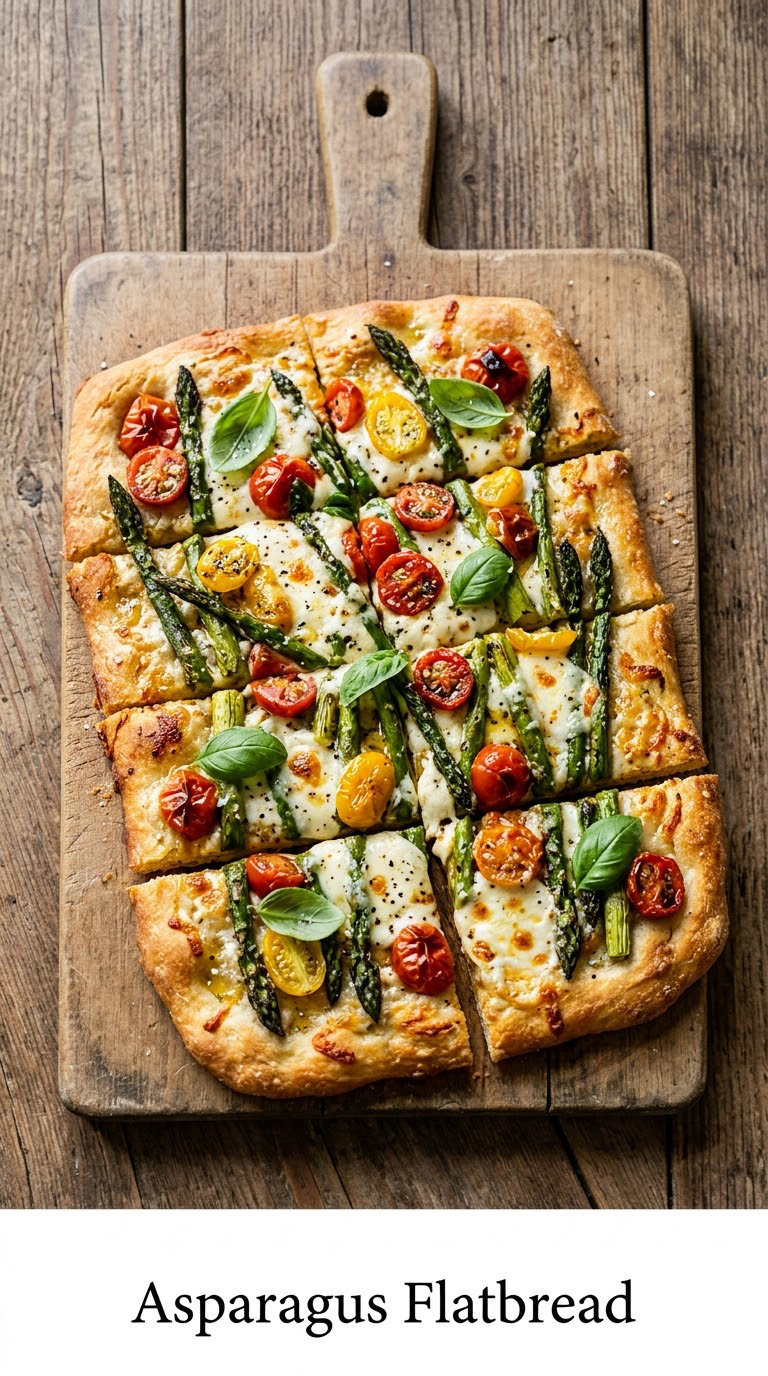
This is the one to make when you want a dinner that feels like a restaurant but you are cooking from a Tuesday evening. Store-bought dough does most of the work; the whole job is getting everything dry before it goes on.
Yield: 4 servings · Prep: 15 minutes plus 20 minutes dough rise · Cook: 15 minutes · Total: 50 minutes · Difficulty: Medium
Ingredients
- 1 pound bread dough (store-bought pizza dough, or a sourdough loaf rolled thin)
- 1 pound fresh asparagus, cut into 1/2-inch pieces
- 1 pint cherry tomatoes, halved
- 6 ounces fresh mozzarella, sliced and drained
- 2 tablespoons olive oil, divided
- 2 garlic cloves, finely grated
- 1/2 teaspoon red pepper flakes
- 1/2 teaspoon kosher salt
- 1 tablespoon chopped fresh basil
- 1 tablespoon grated Parmesan
- Semolina, for the peel
Instructions
- Heat the oven to 475°F (246°C) with a baking steel or a rimless baking sheet inside for at least 30 minutes.
- Toss the asparagus with 1 tablespoon of the oil and the salt, and roast on a separate pan for 8 to 10 minutes, until the tips are browned. Set aside.
- Pat the tomato halves dry with a clean towel and toss with the remaining oil.
- Stretch the dough into a 12 by 9-inch rectangle on a floured surface and dust the top with semolina.
- Lay the mozzarella over the dough, then the asparagus, then the tomatoes. Finish with the grated garlic and red pepper flakes.
- Slide the dough onto the hot steel and bake for 8 to 12 minutes, until the crust is puffed, deep golden at the edges, and the cheese is bubbling in spots.
- Slide the flatbread onto a board, scatter with basil and Parmesan, and cut into eight pieces.
Tip: Dry everything. Wet asparagus and watery tomato halves steam the dough into a pale cracker, so patting both dry before they go on is the whole trick here.
Swap it: A split baguette or a naan flatbread bakes in 8 to 10 minutes with no rise time at all. A gluten-free pizza crust works, and prosciutto folded over the flatbread after baking adds salt without making it wet.
Storage: Best the same day; it keeps 2 days in the fridge. Reheat on a baking sheet at 425°F (220°C) for 5 to 8 minutes so the base stays crisp. Contains dairy and gluten.
6. Classic Asparagus Risotto with Peas
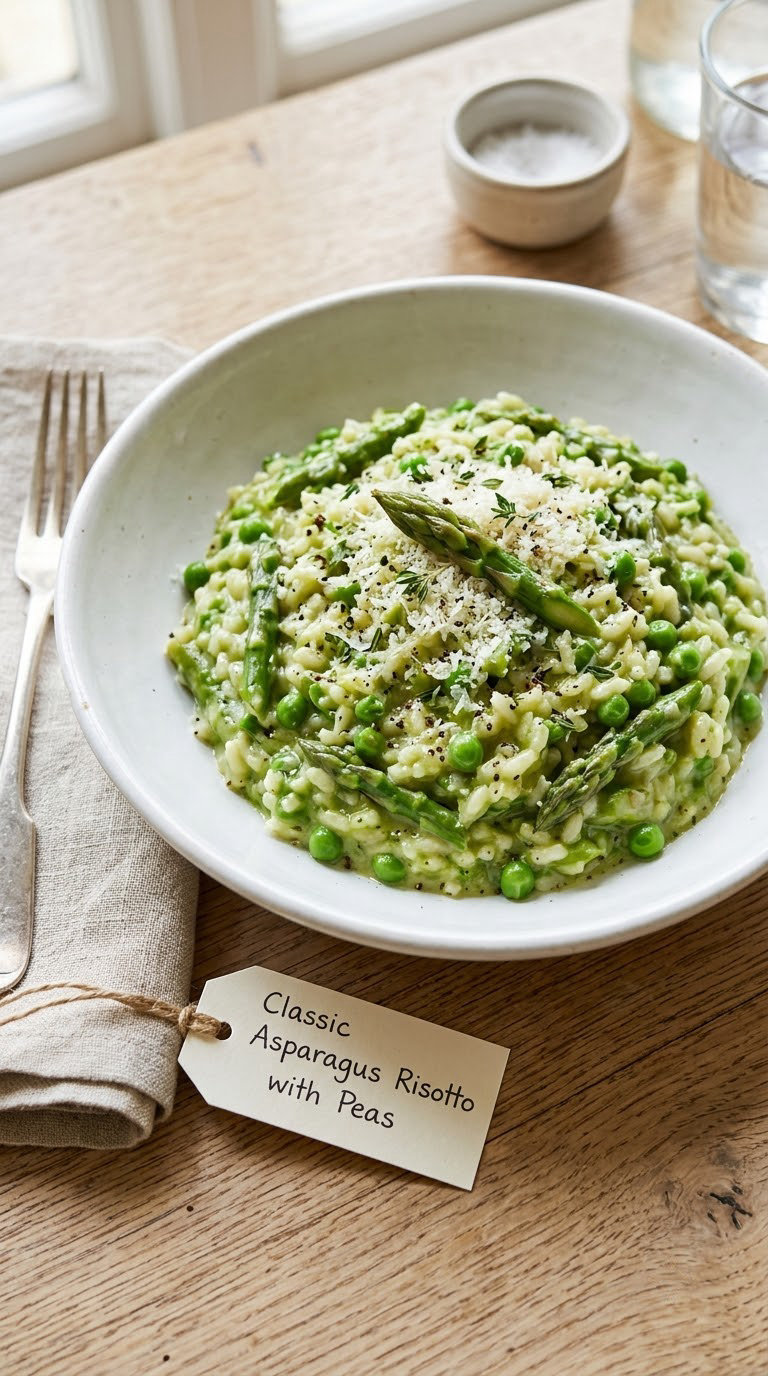
Risotto gets a bad reputation for constant stirring, but the work is simple and mostly passive: warm broth, ladle it in, and wait. Twenty-five minutes of stirring produces a plate that loosens slowly on the spoon instead of pouring off it, which is the one texture cue that matters.
Yield: 4 servings · Prep: 15 minutes · Cook: 30 minutes · Total: 45 minutes · Difficulty: Medium
Ingredients
- 1 1/2 cups Arborio rice
- 1 pound fresh asparagus, cut into 1/2-inch rounds
- 1 cup frozen peas
- 5 cups chicken or vegetable broth, kept at a bare simmer
- 4 tablespoons butter, divided
- 1 small onion, finely diced
- 2 garlic cloves, minced
- 1/2 cup dry white wine or 1/3 cup lemon juice
- 3/4 cup grated Parmesan
- 1 teaspoon kosher salt
- 1/4 teaspoon black pepper
- 1 tablespoon chopped chives
- 1 tablespoon olive oil
Ingredients note: Keep the broth in a saucepan over low heat the whole time. Adding cold broth to hot rice stalls the cooking and makes the texture uneven.
Instructions
- Melt 2 tablespoons of the butter with the olive oil in a wide pot, add the onion, and soften for 5 minutes. Add the garlic for 30 seconds.
- Stir in the rice and toast for 2 minutes, until the outer edges of the grains look glassy.
- Pour in the wine and stir until it is almost gone.
- Add 1 cup of hot broth and stir. Keep adding 1 cup at a time, stirring often and waiting until each cup is nearly absorbed before the next goes in.
- After about 15 minutes, stir in the asparagus. After 3 more minutes, add the peas.
- Continue until the rice is tender with a slight bite and the risotto spreads slowly when you tilt the pan, 22 to 25 minutes total.
- Take the pot off the heat and beat in the remaining butter, the Parmesan, and the chives.
- Cover and let it sit for 2 minutes, then stir once more, season, and serve.
Tip: Beat the cold butter and cheese in off the heat, then let the pan sit covered for two minutes. That resting step is what makes it creamy rather than gluey.
Swap it: Skip the wine and use 1/3 cup lemon juice instead. Vegetable broth and nutritional yeast make it dairy-free, and grilled shrimp on top turn it into a main course.
Storage: Keeps 3 days in the fridge. Loosen it with a splash of broth while reheating at low heat. Do not freeze risotto; the starch turns gluey.
7. Asparagus and Cheddar Cheese Omelet
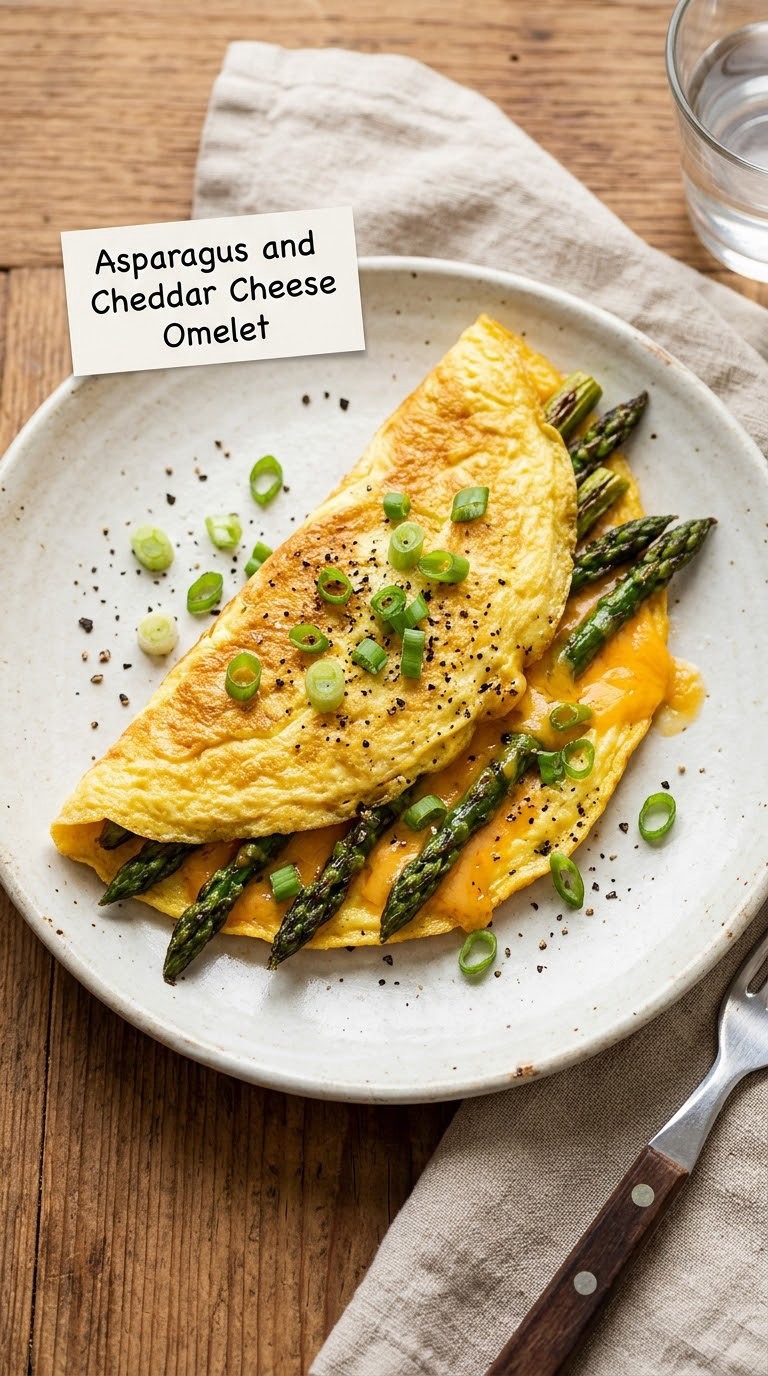
Fourteen minutes, one pan, and enough protein to carry you to lunchtime. The asparagus gets a quick saute first so the omelet is not sitting in a puddle of vegetable water when it folds.
Yield: 2 servings · Prep: 6 minutes · Cook: 8 minutes · Total: 14 minutes · Difficulty: Easy
Ingredients
- 4 large eggs
- 1/2 cup sharp Cheddar cheese, grated
- 1/2 cup fresh asparagus, cut into 1/4-inch pieces
- 2 scallions, thinly sliced
- 1 tablespoon butter or olive oil
- 1/4 teaspoon kosher salt
- 1/8 teaspoon black pepper
- Hot sauce, for serving
- 1 slice toast, for serving
Instructions
- Heat a 10-inch oven-safe skillet over medium heat and add the butter.
- Add the asparagus and the white parts of the scallions and cook for 2 to 3 minutes, until bright and just tender. Season with a pinch of the salt and scrape them onto a plate.
- Whisk the eggs with the remaining salt and the pepper until no streaks of white remain.
- Lower the heat to medium-low, add the eggs to the same skillet, and draw them once across the pan with a spatula.
- Let the eggs set for about 30 seconds, then scatter over the cheddar, the asparagus, and the scallion greens.
- Fold the near edge over the filling and cook for 30 seconds, then slide the omelet onto a plate, or finish it in a 400°F (204°C) oven for 2 to 3 minutes, until the centre reaches 165°F (74°C) with no liquid egg left.
- Serve with toast, hot sauce, and more black pepper.
Tip: Medium-low heat and a 10-inch pan. High heat browns the outside long before the middle sets, and a small pan makes the omelet too thick to cook through in eight minutes.
Swap it: Feta, Gruyère, or crumbled goat cheese all work, and chopped ham, sliced mushrooms, or a spoonful of pesto before folding make it a proper dinner. Contains eggs and dairy.
Storage: Keeps 3 days refrigerated. Reheat covered at 325°F (163°C) for 5 minutes so the eggs reach 165°F (74°C) without going rubbery; a fresh omelet takes 3 minutes instead.
8. Seared Beef Tenderloin with Asparagus
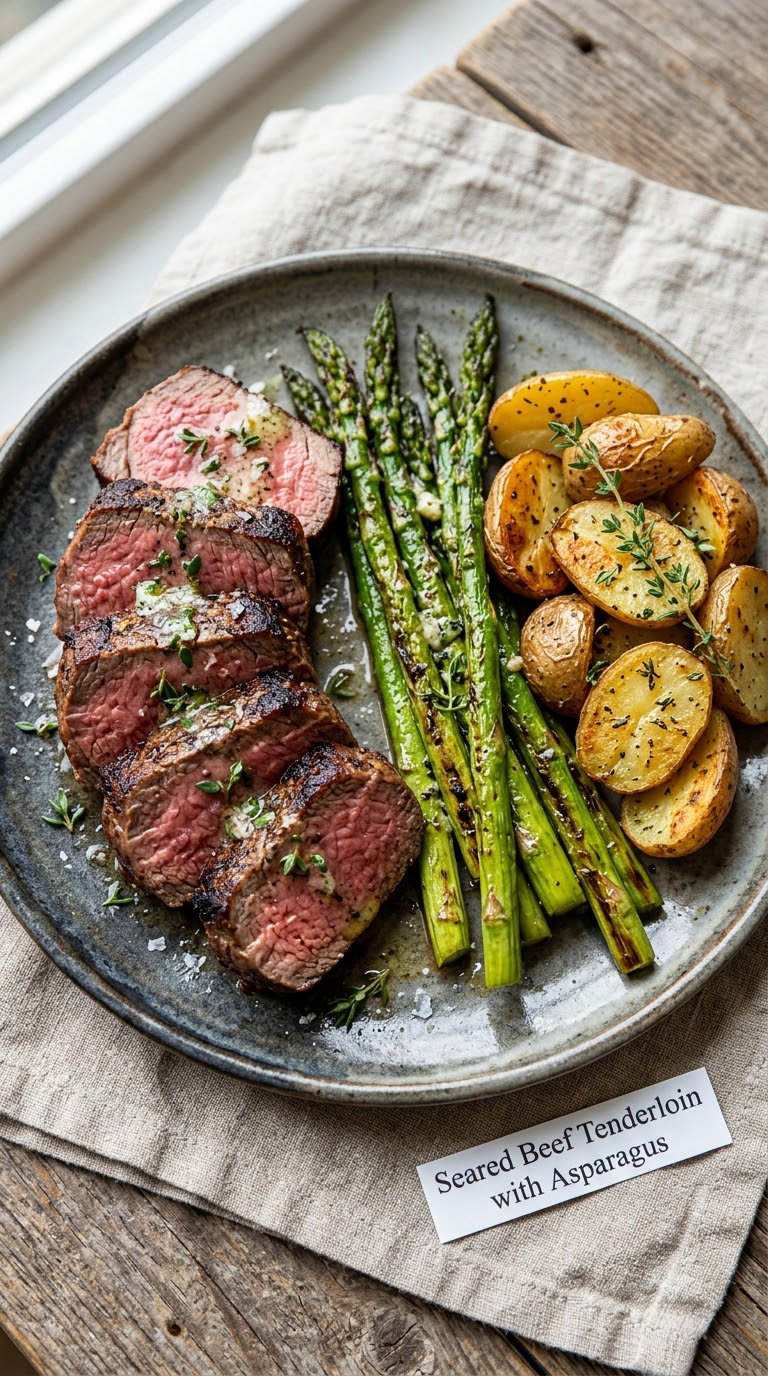
Half an hour for something that looks like it came from a steakhouse. The tenderloin medallions sear fast in a ripping-hot pan, rest while the same pan makes garlic butter for the asparagus, and the whole thing finishes in the juices.
Yield: 4 servings · Prep: 10 minutes · Cook: 17 minutes · Total: 27 minutes · Difficulty: Medium
Ingredients
- 1 pound beef tenderloin, cut into 1 1/2-inch medallions
- 1 pound fresh asparagus, woody ends snapped off
- 1 pound baby potatoes, halved
- 3 tablespoons butter
- 3 garlic cloves, lightly crushed
- 4 sprigs fresh thyme
- 2 tablespoons olive oil, divided
- 1 teaspoon kosher salt
- 1/2 teaspoon black pepper
- 1 tablespoon lemon juice
Instructions
- Let the medallions sit at room temperature for 15 to 20 minutes and pat them very dry.
- Toss the potatoes with 1 tablespoon of the oil and half the salt. Microwave on high for 5 to 6 minutes, or boil them until just tender, and drain.
- Heat a heavy skillet over high heat until it smokes faintly. Add the remaining oil and the steaks, and leave them undisturbed for 90 seconds.
- Turn and cook the second side until a thermometer in the thickest medallion reads 145°F (63°C), the USDA safe minimum for whole cuts of beef, which usually takes 2 to 3 minutes per side.
- Transfer the steaks to a plate and rest for 3 minutes while the internal temperature finishes rising.
- Lower the heat to medium and drop in the butter, garlic, and thyme. Swirl until the butter foams and smells nutty.
- Add the asparagus to the same pan and cook for 3 to 4 minutes, turning once, until tender with crisp tips. Add the potatoes to warm them through in the butter.
- Squeeze the lemon juice into the pan to cut the butter, then slice the steaks against the grain, plate them, and spoon the pan butter over the top.
Tip: Do not move or flip the steaks for the first 90 seconds. That undisturbed contact is the difference between a browned crust and a grey, steamed one.
Swap it: NY strip, sirloin, or flank steak all work, and thin-cut beef needs only 90 seconds per side. A splash of red wine deglazed after the sear turns the pan butter into a proper sauce.
Storage: Keeps 3 to 4 days in the fridge. Reheat steaks to 165°F (74°C) in a 325°F (163°C) oven; sliced tenderloin reheats far better in the pan sauce than dry on its own.
9. Asparagus, Goat Cheese, and Herb Pizza
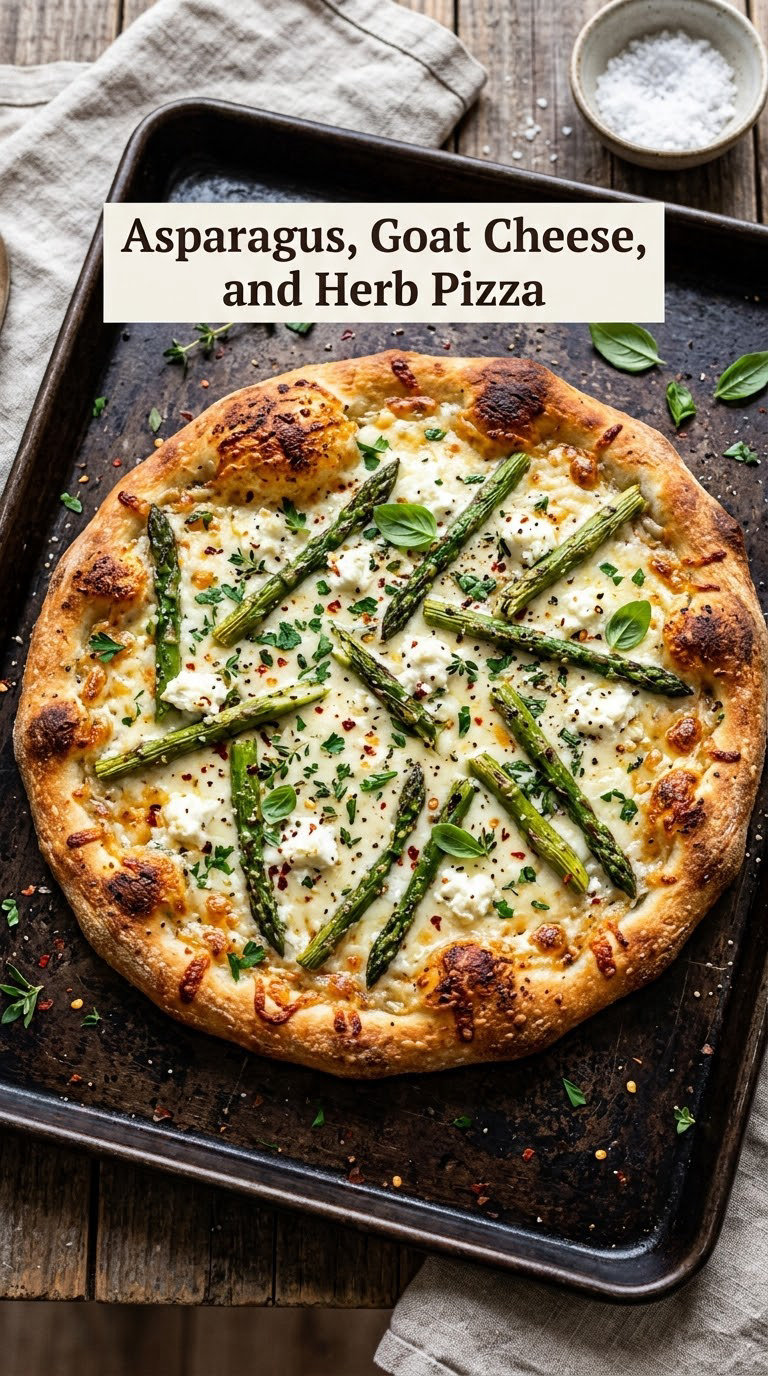
Goat cheese and roasted asparagus is a combination worth making more than once a season. Salty, tangy cheese against sweet spears, with a base you can actually hear when you bite it. Pre-roasting the asparagus is what keeps the centre of the pizza from turning damp.
Yield: 2 pizzas (4 servings) · Prep: 20 minutes plus dough rise · Cook: 12 minutes · Total: 50 minutes plus rise · Difficulty: Medium
Ingredients
- 1 pound pizza dough, at room temperature
- 1 pound fresh asparagus, woody ends snapped off
- 4 ounces low-moisture mozzarella, shredded
- 6 ounces goat cheese, crumbled
- 1/2 cup cherry tomatoes, sliced paper thin
- 2 tablespoons olive oil, divided
- 1 garlic clove, finely grated
- 1/2 teaspoon kosher salt
- 1/2 teaspoon red pepper flakes
- 1 tablespoon chopped fresh basil or dill
Ingredients note: Take store-bought dough out of the fridge 30 to 45 minutes before you stretch it. Cold dough springs back and tears instead of opening into a round.
Instructions
- Heat the oven to 425°F (220°C) and toss the asparagus with 1 tablespoon of the oil and the salt. Roast for 8 to 10 minutes, then cut into 1-inch pieces.
- Raise the oven to 500°F (260°C) and set a baking stone or steel inside for at least 45 minutes.
- Stretch a dough ball into a 12-inch round on a floured surface or parchment.
- Rub the dough with the grated garlic and 1 tablespoon of olive oil, leaving a 1-inch border.
- Scatter over the mozzarella, the crumbled goat cheese, the roasted asparagus, and the tomato slices.
- Slide the pizza onto the hot stone and bake for 7 to 12 minutes, until the crust edge is dark golden with a few blistered spots and the base is firm enough to lift without bending.
- Finish with the basil or dill, the red pepper flakes, and a drizzle of olive oil.
- Repeat with the second dough ball.
Tip: Pre-roast the asparagus and slice the tomatoes as thin as you can manage. That single change is what separates a crisp-bottomed pizza from one with a soft, damp middle.
Swap it: Skip the tomatoes entirely and add roasted red pepper, or spread ricotta thinned with lemon over the base before the cheese. Bacon and prosciutto go on after baking so they stay crisp.
Storage: Keeps 2 days refrigerated, though the crust softens. Reheat on a baking sheet at 450°F (232°C) for 5 minutes rather than in a microwave. Contains dairy and gluten.
10. Asparagus, Corn, and Potato Chowder
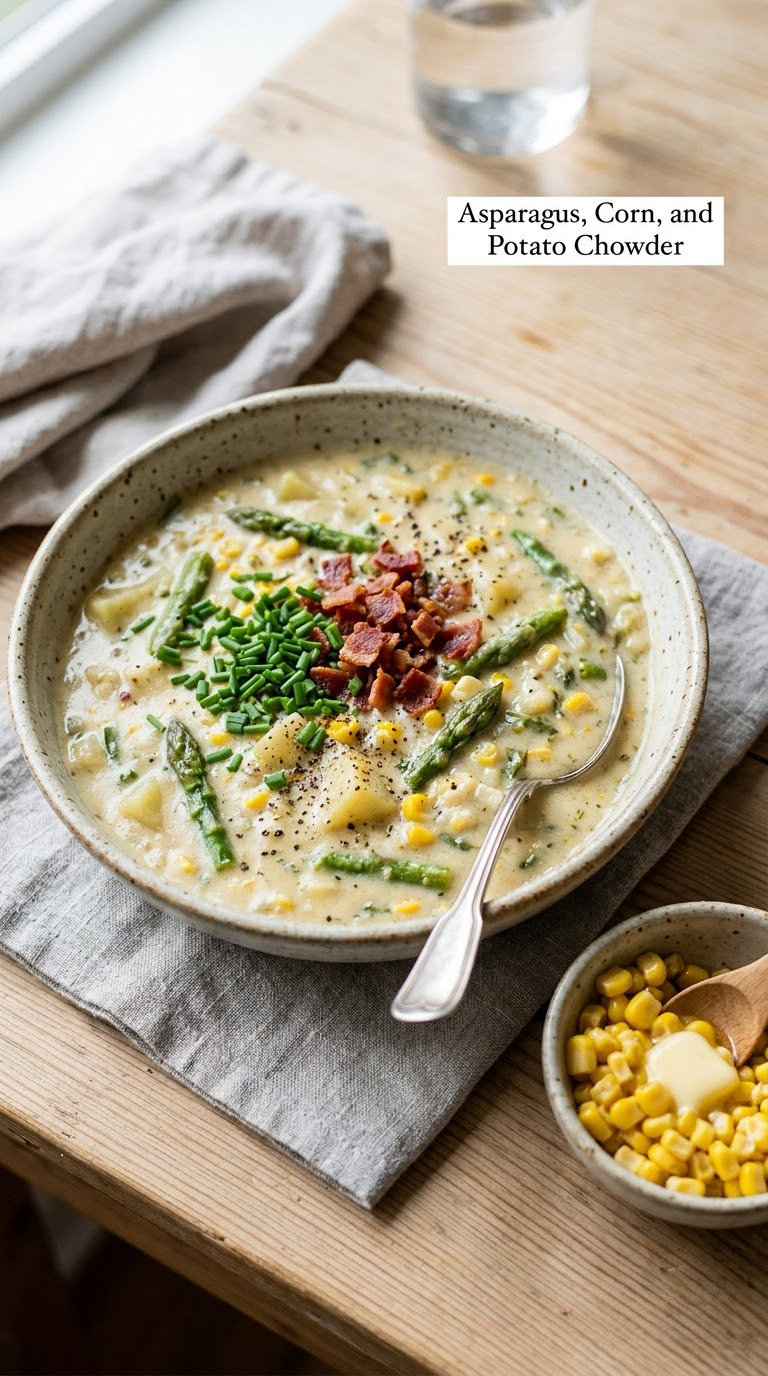
Corn season and asparagus season overlap just long enough for this bowl. It is thick, it is filling enough to be dinner, and it reheats well enough to cook once and eat twice.
Yield: 6 servings · Prep: 15 minutes · Cook: 35 minutes · Total: 50 minutes · Difficulty: Easy
Ingredients
- 4 slices bacon, diced (or 2 tablespoons olive oil plus 1 teaspoon smoked paprika)
- 1 pound fresh asparagus, cut into 1/2-inch rounds
- 1 cup fresh or frozen corn kernels
- 1 1/2 pounds Yukon Gold potatoes, diced 1/2 inch
- 1 small onion, finely diced
- 2 celery stalks, finely diced
- 3 tablespoons butter
- 3 cups chicken or vegetable broth
- 2 cups whole milk
- 1/2 cup heavy cream
- 1 teaspoon kosher salt
- 1/2 teaspoon black pepper
- 1 bay leaf
- 1 teaspoon dried thyme
- 1/2 cup shredded Cheddar, for serving
- Chives and lemon juice, for serving
Instructions
- Cook the bacon in a Dutch oven over medium heat for 5 minutes, until crisp. Lift it out onto a towel and set it aside.
- Pour off all but 1 tablespoon of the fat, add the butter, and cook the onion and celery for 6 to 8 minutes, until soft and translucent.
- Add the potatoes, broth, bay leaf, thyme, salt, and pepper and bring to a boil.
- Lower the heat and simmer for 15 minutes, until a potato slice slides off a fork with no resistance.
- Add the corn and simmer for 5 minutes.
- Add the asparagus and cook for 4 minutes only. The spears should stay bright and firm, not bend into the soup.
- Stir in the milk, cream, half the bacon, and a teaspoon of lemon juice, and simmer gently for 3 minutes without boiling.
- Remove the bay leaf, ladle into bowls, and finish with the remaining bacon, shredded Cheddar, and chives.
Tip: Add the asparagus last, in its own four-minute window. It is the fastest-cooking ingredient in the pot, and letting it ride along with the potatoes is exactly how it turns to string.
Swap it: Vegetable broth plus smoked paprika makes it vegetarian, and a handful of shrimp stirred in at the very end turns it into a seafood chowder. Add a cup of shredded hash browns for extra thickness.
Storage: Keeps 3 to 4 days in the fridge; cool it within two hours. Reheat slowly over low heat or at 300°F (149°C) for about 20 minutes, stirring and adding a splash of milk, and never let it boil. It freezes well for 2 to 3 months. Contains dairy.
Tips for Making These
- Snap, do not cut. Bend each stalk until it breaks cleanly. The stalk tells you where the woody part starts, and cutting above it leaves a tough, fibrous end that no amount of cooking will soften.
- Give the pan space. Spear that touch each other on a sheet pan or in a skillet starts steaming instead of roasting. Use two pans rather than crowding one, and leave the tips pointing in the same direction so they char evenly.
- Cook hot and stop early. High heat gives you browned tips and a tender stalk. Pull the asparagus a minute before it looks done to you, because carryover heat finishes the job, and the difference between that and two extra minutes is snappy versus mush.
- Salt in layers. Asparagus has no fat or salt of its own, so season the water for pasta, the oil for roasting, and the finished dish. The last pinch matters most.
- Save the pasta water. The starchy water is what turns butter, cream, and Parmesan into a sauce that clings instead of pooling. Add it a splash at a time with the heat off.
- Keep the pans out of the danger zone. Poultry to 165°F (74°C), fish and shrimp to 145°F (63°C), eggs in dishes to 165°F (74°C), and whole cuts of beef to 145°F (63°C) with a 3-minute rest. Reheated food goes to 165°F (74°C), and cool cooked dishes into the fridge within two hours.
Frequently Asked Questions
Can I use frozen asparagus in these spring dinner recipes?
Yes. Frozen asparagus is blanched and frozen, so it cooks in about half the time of fresh: 3 to 4 minutes in a skillet, or 10 to 12 minutes in a 425°F (220°C) oven. Add it from frozen without thawing and do not crowd the pan, or it steams. Frozen spears soften more than fresh, so save the pasta, risotto, and soup recipes, which already have liquid to soften the texture, and skip the flatbread and pizza.
How do I trim asparagus before cooking it?
Hold the spear at both ends and bend it until the stem snaps. Trim at the break with a sharp knife, and the cut should be clean with no fibrous threads pulling away from the stalk. Snap the ends while the spears are cold and dry, before any oil or water. Thick, purple, or older spears benefit from a vegetable peeler drawn down the stalk.
What can I use instead of asparagus if it is not in season?
Snap beans and green beans cook almost identically and need only a minute less in the pan. Sugar snap peas work in the pasta and rice skillet if you add them in the last 3 minutes. Broccoli florets, green beans, and snow peas all take the place of asparagus in the sheet-pan and flatbread recipes, and thin zucchini ribbons do a decent job in the salad-style dishes.
How do I keep asparagus from becoming soggy?
Heat your pan or oven properly, and never crowd the spears. Asparagus gives off water as it cooks, and if the pieces touch, that water pools and steams the stalks instead of browning them. Salt the spears, not the pan, so the salt draws out less moisture, and take them off the heat while they still have a little resistance left in the stalk. Dry spears also sear; wet ones boil.
Which asparagus recipe is best for meal prep?
The sheet-pan chicken, the rice skillet, and the chowder hold their texture best for three to four days in the fridge. The creamy pasta, omelet, and flatbread are better made the night you eat them, since the sauce tightens and the crust softens as they sit. Roast a double tray of spears, keep them whole, and dress them at the table instead of storing them dressed.
How should I reheat cooked asparagus without overcooking it?
Reheat in a hot, dry skillet for 1 to 2 minutes, tossing once, rather than in the microwave or oven. A 30-second microwave blast followed by a dry skillet keeps the heat right and the tips crisp. If you are reheating a dish like the pasta or chowder, add the asparagus only for the final minute so it warms through without losing its bite.
Your First Spring Dinner Recipe
Start with the creamy garlic asparagus pasta. It is 25 minutes, one pot, forgiving about timing, and it is the one people ask for again once the season is over. If you have a bunch of spears that need using up before the weekend, the sheet-pan chicken and the chowder are the two that stretch the most.
If you are still choosing, these easy asparagus recipes for spring dinners all cook faster than a delivery order. Pick your recipe, snap the ends off the whole bunch, and get the water going. That is the part that takes the longest, and the rest follows quickly.