
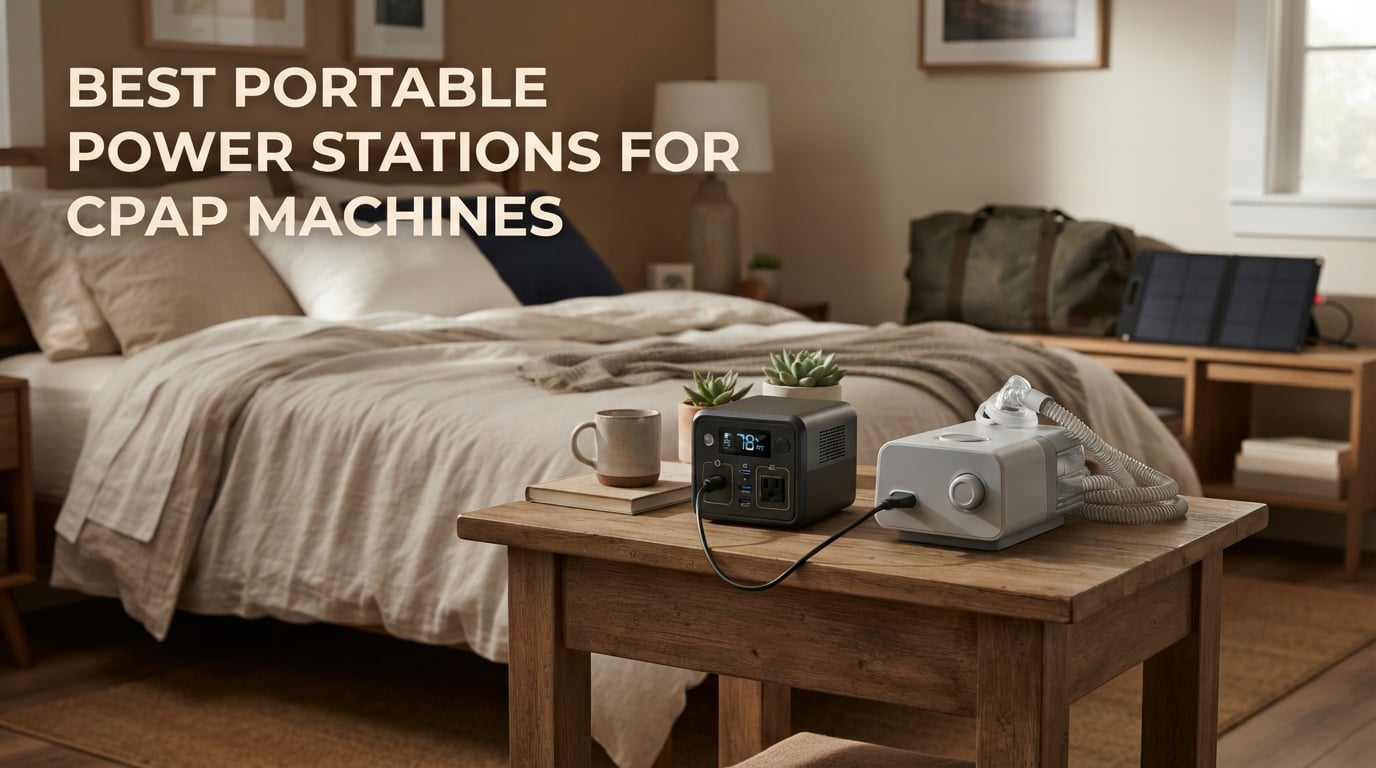
Yes, a portable power station will run a CPAP machine, and for anyone who camps, flies, RV travels, or lives in an outage-prone area, it is the difference between sleeping through a storm and losing therapy in the middle of the night. The catch is capacity: a heated humidifier can triple the draw of a bare CPAP, and most people buy too small a unit the first time.
We spent weeks going through owner reviews, specs, and reported runtime for the eight best portable power stations for CPAP use on the market in 2026. The lineup runs from a 192Wh budget unit to a 1070Wh model that covers three humidified nights, plus one purpose-built CPAP battery that comes with the manufacturer DC cables already made for your machine.
Before we get into the picks, here is the short version. If you run a heated humidifier and want a safe margin, look at 500Wh or more. If you use your CPAP without humidification, a 230Wh to 300Wh station gives you two to three nights. And if your machine uses a heated tube, check the compatibility list carefully, because one of the picks below does not support heated-tube ResMed models at all.
Our general guide to portable power stations tested picks covers the hardware side of things, and this one is narrower: sleep therapy only.
Table of Contents
Top 3 Portable Power Stations for CPAP in 2026
These are the three that cover the widest range of real CPAP setups without an adapter hunt. Everything else in the roundup is a specialist in one direction or another.
Quick Comparison of Every Pick in 2026
All eight stations, with the numbers that decide whether your therapy makes it to morning.
| Product | Specifications | Action |
|---|---|---|
 Jackery Explorer 300 Jackery Explorer 300 |
|
Check Latest Price |
 Jackery Explorer 1000 v2 Jackery Explorer 1000 v2 |
|
Check Latest Price |
 Anker SOLIX C300 Anker SOLIX C300 |
|
Check Latest Price |
| ALLWEI 256Wh Portable Power Station |
|
Check Latest Price |
 EASYLONGER ES720 CPAP Battery EASYLONGER ES720 CPAP Battery |
|
Check Latest Price |
 VTOMAN FlashSpeed 300 VTOMAN FlashSpeed 300 |
|
Check Latest Price |
 EnginStar 296Wh Solar Generator EnginStar 296Wh Solar Generator |
|
Check Latest Price |
 DaranEner 192Wh Power Station DaranEner 192Wh Power Station |
|
Check Latest Price |
How Much Power Does a CPAP Machine Actually Use?
A modern CPAP without humidification typically pulls between 10W and 30W, and users reporting on r/CPAP put a common figure at 9W to 25W for a pressure-only night. That is the number that matters most when you size a battery.
The heated humidifier changes everything. It can add 10W to 35W on top of the machine’s baseline, which pushes a full-night draw toward 40W and, on a high heat setting with heated tubing, toward 70W to 90W. Forum users report the same pattern repeatedly: they budget for the machine, forget the humidifier, and wake up to a machine that shut itself down.
Your nightly consumption in watt-hours is simply the draw in watts multiplied by your sleep hours. Eight hours at 40W is 320Wh. Eight hours at 15W is 120Wh. That single number is what you multiply by your trip length.
Watch out for auto-shutoff. Many budget stations cut output when the connected load drops below a threshold, usually somewhere around 10W to 25W. A CPAP briefly dips low during exhalation, and users have reported therapy stopping mid-sleep on units with an aggressive low-load cutoff. Before you trust a station, run a full night with it at home and see whether it stays on. Units in this roundup with documented multi-hour CPAP runs in their owner reviews did stay awake through the night, and we call that out per pick rather than assuming every 300W unit behaves the same.
How to Size a Power Station for CPAP
Multiply your nightly watt-hours by the number of nights, then apply a safety factor of about 1.4x. The factor covers inverter conversion loss, a display that never reads a full charge, cold weather derating, and the aged capacity of a battery that is a few years into its life.
Worked example: a heated-humidifier night at 40W for eight hours is 320Wh. Two nights is 640Wh, and with the 1.4x factor you want a station rated at roughly 900Wh. A non-humidified night at 15W is 120Wh, and a single such night with the factor applied asks for about 170Wh, which is why so many 192Wh to 256Wh units earn a place in this list.
A second piece of math matters just as much: the inverter. Running your CPAP through an AC outlet means converting stored DC to AC and back through the machine’s power brick, and you lose roughly 10% to 15% of your usable capacity in the round trip. Every capacity estimate in this roundup has already taken a 15% haircut so the numbers reflect what you would actually measure at the machine.
That is also why experienced travelers on r/CPAP recommend buying the official DC power cord instead of running the AC brick through an inverter, and why a station’s watt-hour rating can look generous right up until the first humidified night.
For broader sizing help, our camping power station guide covers panel sizing and recharge planning that carry over to multi-night trips.
1. Jackery Explorer 300 – Best Overall for Overnight CPAP
- Highest reviewed unit here at 11273 ratings
- LiFePO4 cells rated for 4000+ cycles
- Two AC outlets plus 100W USB-C PD and a 120W car port
- 7.1 lb body with an integrated carry handle
- Smallest capacity among the 300W-class stations here
- One USB-C PD port means phone and laptop compete for it
- Solar charging is slow without a separate 40W or 100W Jackery panel
The Explorer 300 is the station we keep coming back to because the numbers line up with how most people actually use a CPAP. At 292Wh it clears two full nights of non-humidified therapy with room to spare, and it weighs 7.1 pounds, which is a realistic carry weight for a car-camping or vanlife setup.
The output is a 300W continuous AC inverter rated to 600W surge, and Jackery’s listing copy positions the unit as a dependable battery for sensitive electronics. Two AC outlets mean you can run the machine and charge a phone at the same time, and the 100W USB-C port handles a laptop on a slow evening if you need it.
Owners consistently call out the LiFePO4 chemistry, rated past 4,000 cycles before dropping to 70% capacity. For a machine you might run 300 nights a year, that headroom matters more than it does for a weekend-only unit, and it is a large part of why this model carries an average rating of 4.6 across 11273 reviews.
The honest limitation is capacity. A heated-humidifier night at 40W needs 320Wh before any losses, and this station holds about 248Wh after the inverter allowance. Treat it as roughly six hours of humidified therapy and recharge after, not a full night. Buy it if you travel with humidification off, or if you refill every morning from a car outlet or a solar panel.
Who the Jackery Explorer 300 suits
This is the right pick for a weekend trip where you recharge daily, for anyone who runs CPAP without a humidifier, and for travelers who want one box that also tops off phones and cameras on the trail.
It is also the most reviewed station here by a wide margin, which means a deep pool of owners reporting real CPAP use rather than a handful of early adopters. If you want a proven workhorse rather than a bargain experiment, the volume of feedback is itself worth something.
Where the Jackery Explorer 300 falls short
One humidified night is the ceiling at this capacity. Anyone running a heated tube at high heat needs to step up to the Explorer 1000 v2 or carry a second battery.
There is also only one USB-C port. Running the CPAP on AC plus a laptop and two phones means something gets unplugged, and solar input is slow unless you pair it with a Jackery-branded panel.
2. Jackery Explorer 1000 v2 – Best for Multi-Night and Outage Backup
- Highest average rating here at 4.7 with 85% five-star reviews
- 1070Wh covers several humidified nights without a recharge
- 30 dB quiet charging mode and app control for emergency top-ups
- LFP battery holds over 70% capacity after 4000 cycles
- 23.8 lb is too heavy for backpacking or long walks
- Largest and most capable unit in this roundup
- Solar input limited to Jackery-branded panels
This is the only station here that lets you stop thinking about capacity. At 1,070Wh it holds roughly 900Wh usable after the inverter allowance, which covers close to three heated-humidifier nights or about seven nights without humidification.
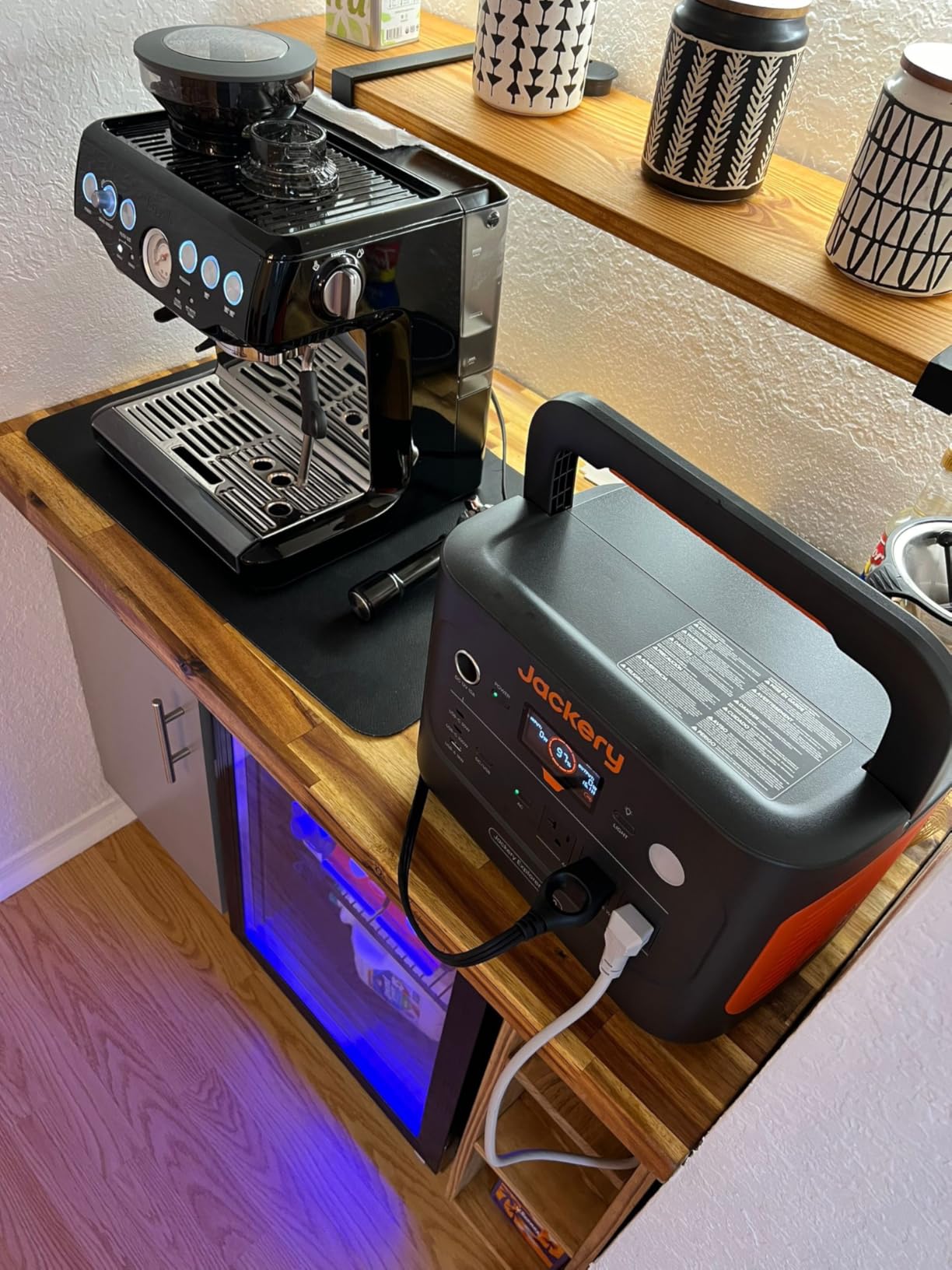
The inverter puts out 1,500W continuous with 3,000W surge across three pure sine wave outlets, so the CPAP is not the only thing you can run. Owners on r/CPAP report pairing one of these with a CPAP, a laptop, and a heated blanket during a winter storm, which is exactly the scenario most people picture when they buy a station.
The 30 dB quiet charging mode matters more than it sounds. A fan that ramps up during an outage is the last thing you want at 3am, and the app lets you set emergency charging that takes the unit from empty to usable in about an hour.
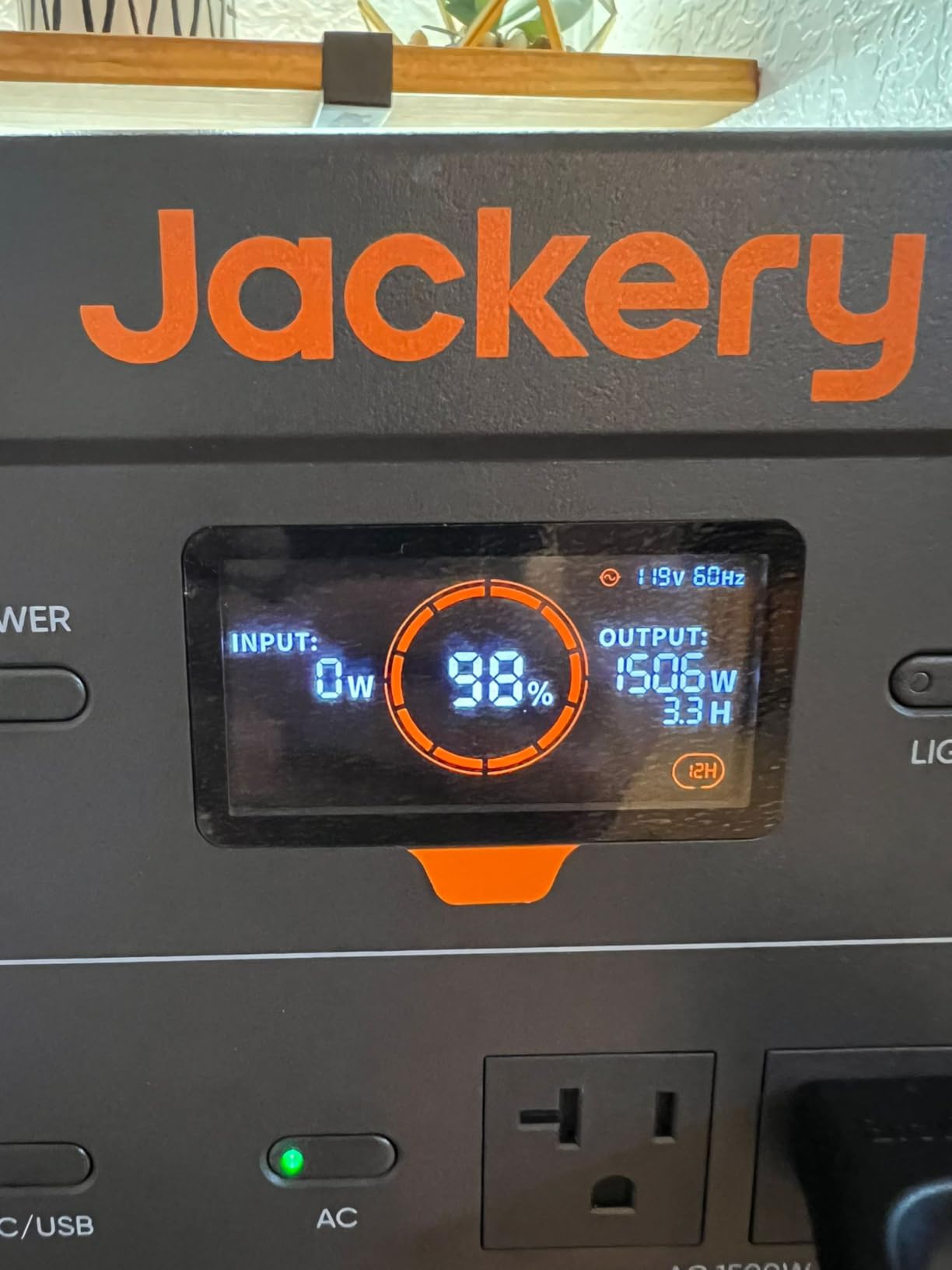
The 4,000-cycle LFP rating is what makes it viable as a permanent backup asset rather than a trip toy. Buyers treat it as home or vehicle equipment, and the rating reflects that: 4.7 stars with 85% of reviews at five stars and only 3% at one star.
It charges from a wall outlet in about 1.7 hours by default, or roughly an hour with emergency charging switched on in the app. That turnaround is what allows a multi-day trip without carrying a second battery.
Who the Jackery Explorer 1000 v2 suits
Homeowners in areas with regular outages, vanlife and RV users who boodock for days, and anyone who travels with a heated humidifier and does not want to think about recharge timing.
It also suits people who want one power source for the whole household load during a storm, not just the bedroom. At 1,500W continuous you can add a small fridge or a CPAP and a router without straining it.
Where the Jackery Explorer 1000 v2 falls short
23.8 pounds is the honest number, and it rules this out for anyone walking more than a few hundred yards from a vehicle. It is a car, garage, or deck-side battery.
It is also the biggest and most capable unit here, and a family that only camps two nights a year is paying for capacity it will not use. Solar charging stays locked to Jackery panels, so pairing it with another brand’s array is not an option.
3. Anker SOLIX C300 – Best for Quiet Bedrooms
Anker SOLIX C300 Portable Power Station, 288Wh Solar Generator for Camping
- 25 dB operation measured at 3.3 feet
- quiet enough to sleep beside
- Eight outputs including three AC outlets and two 140W USB-C ports
- Rebuilds to 80% from a wall outlet in about 50 minutes
- 5-year warranty and 3000-cycle LiFePO4 design
- 288Wh covers only about six hours of heated-humidifier use
- Not compatible with Anker SOLIX PS30
- PS200
- or PS400 panels
- Shoulder strap is not included
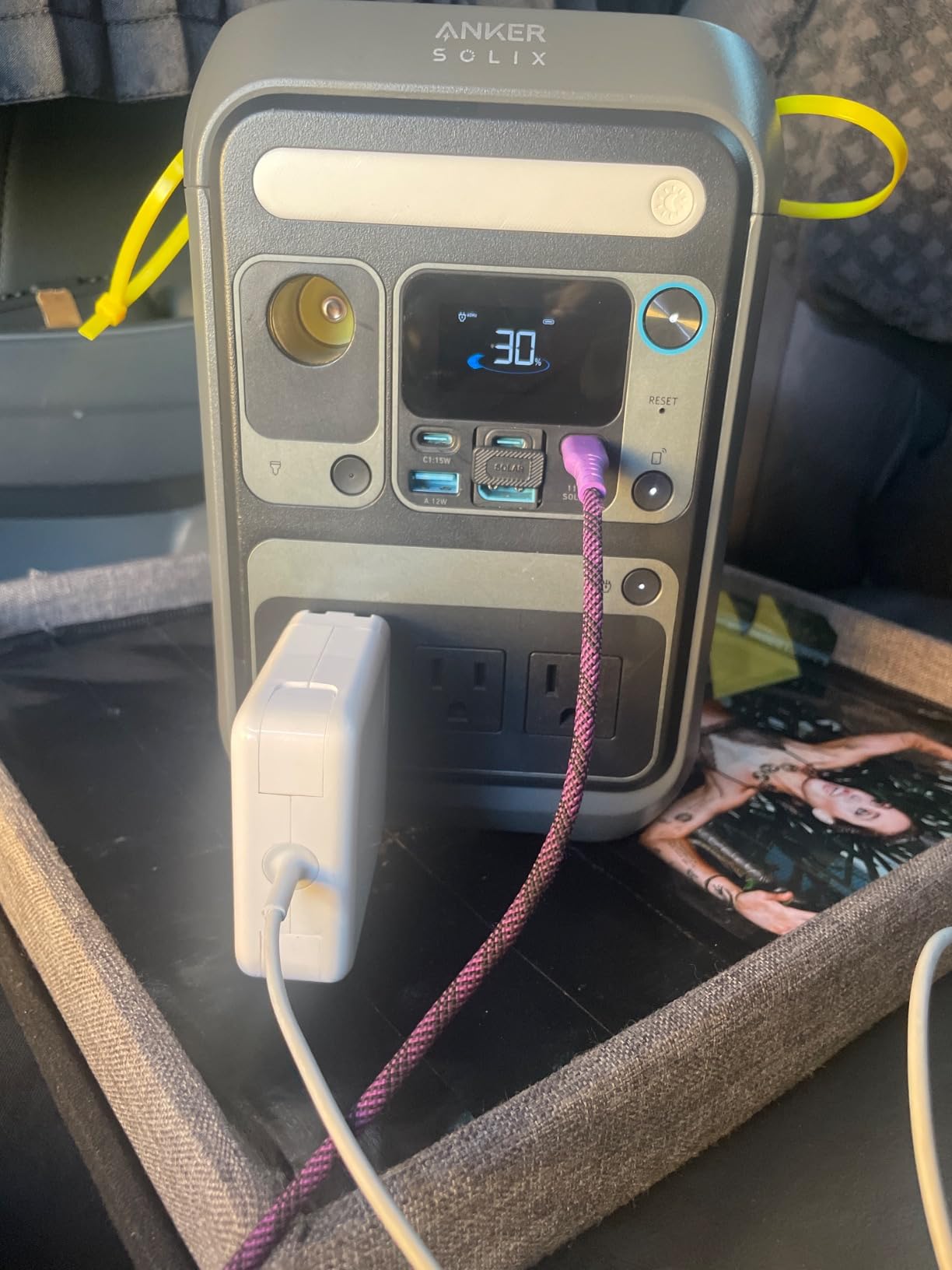
Owners measure this unit at 25 dB from 3.3 feet, the lowest published figure any station in this roundup carries, and it matters if the battery is going to sit inside your bedroom rather than in a garage.
The Anker SOLIX C300 also happens to be unusually well equipped for everything that is not the CPAP. Eight total outputs cover three AC outlets, a 120W car socket, two 140W USB-C ports, a 15W USB-C, and a USB-A. Those two 140W USB-C ports can charge two laptops while the machine runs.
At 288Wh it sits in the same capacity class as the Explorer 300, so expect two nights of non-humidified therapy or about six humidified hours. What you gain here is the ability to keep it close to the bed without the fan cycling.
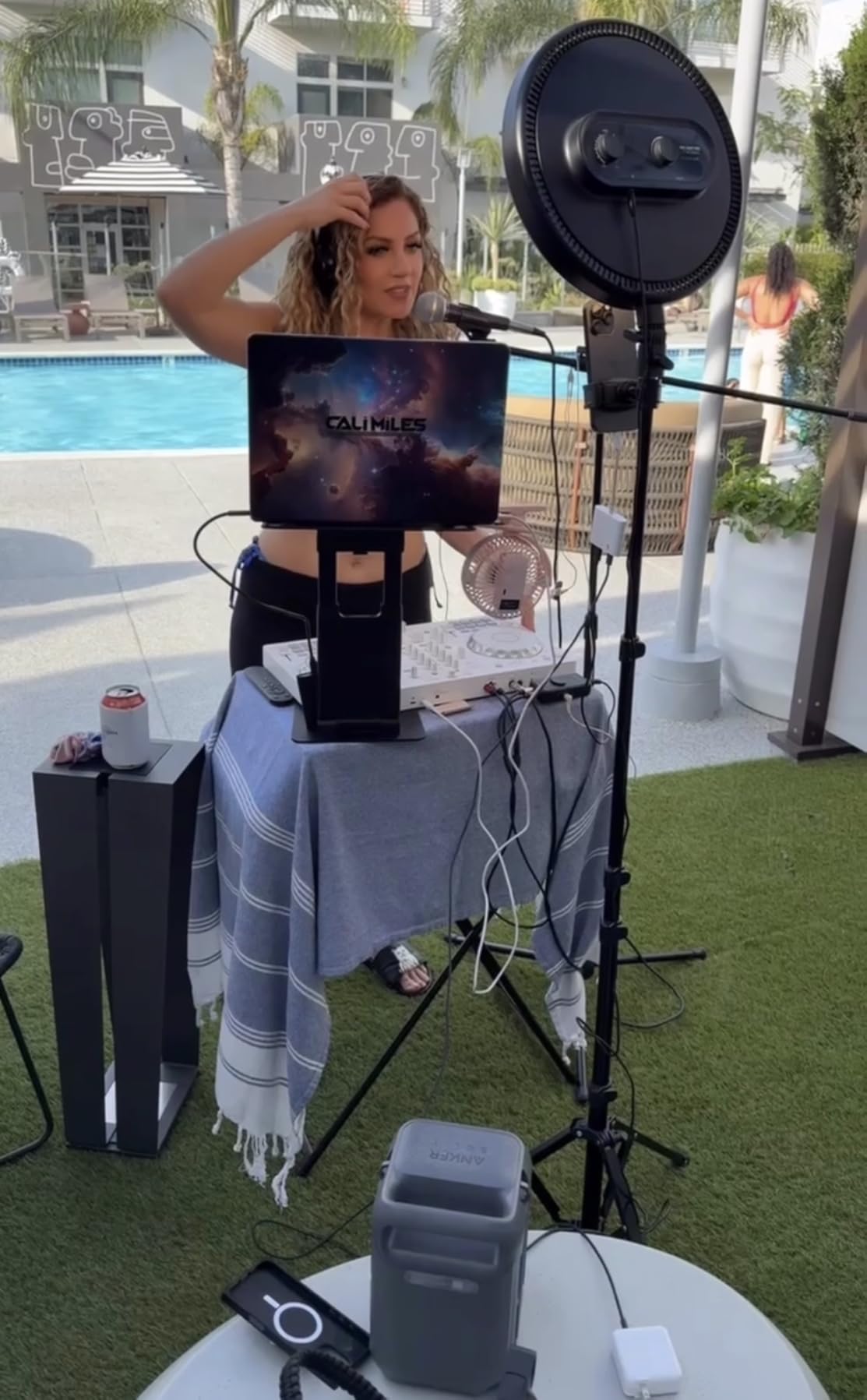
The 50-minute wall recharge to 80% is the practical standout. If you get home mid-afternoon and leave for a trip the next morning, a full evening of charging is more than enough, which means you rarely start a trip below full.
The 3,000-cycle LiFePO4 design and 5-year warranty are both better than most of the sub-300Wh competition, and at 4.6 stars across 1914 reviews the feedback base is deep enough to trust.
Who the Anker SOLIX C300 suits
Light sleepers, anyone treating the station as a bedside CPAP backup for an apartment outage, and travelers who want to run phones and a laptop off the same box while the machine runs on AC.
It is also a strong car-camping pick, since the 120W car socket can recharge phones and the wall recharge is quick enough to top up overnight in a campground cabin.
Where the Anker SOLIX C300 falls short
Capacity is the limit, exactly as with the Explorer 300. About six humidified hours, two dry nights, and then you are looking at a car socket or a wall outlet.
The solar restriction is more annoying than it sounds. If you already own Anker SOLIX PS30, PS200, or PS400 panels, this unit will not take them, so check what is already in your gear bag. The shoulder strap is a separate purchase too, and at 9.1 lb you will want one for anything longer than a car trunk.
4. ALLWEI 256Wh – Best Value Pick with Documented CPAP Runs
- Owners report 20 hours across three nights on a ResMed Luna 2
- 12 hours on a DreamStation 2 at medium-high heat
- 300W pure sine wave output with 600W surge
- Pure sine wave output is explicitly noted as safe for sensitive medical devices
- Display shows estimated runtime and true remaining percentage
- 6.4 lb body with three-level LED light and SOS mode
- Some reviewers report units failing to hold charge after about a year
- Fan can run loudly for extended stretches beside a bed
- Solar input capped at 120W so larger panels will not work
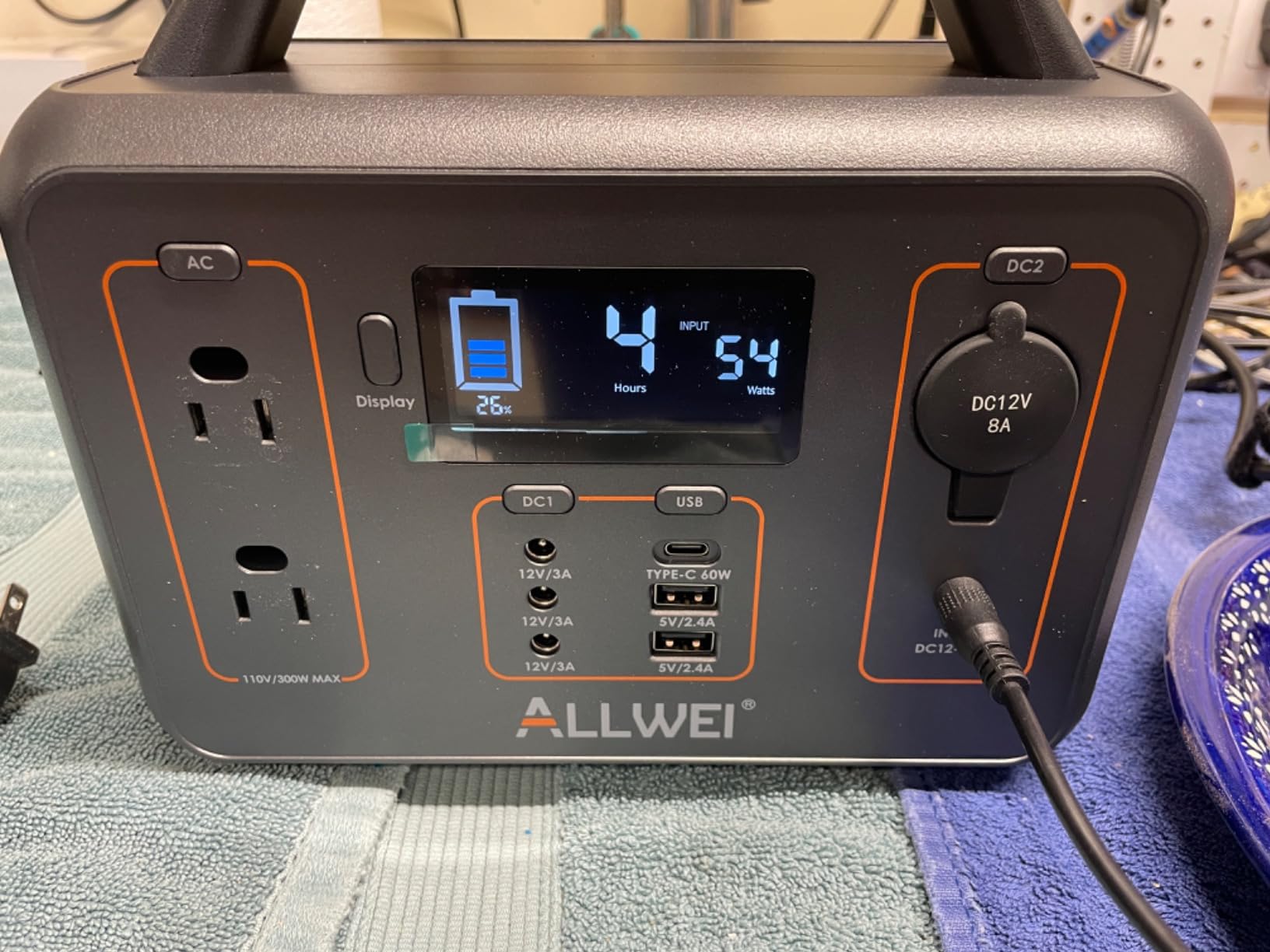
This is the pick with the most concrete CPAP evidence behind it. One owner ran a ResMed Luna G2 for 20 hours spread over three nights, and another logged 12 hours on a Philips DreamStation 2 with the humidifier on medium-high heat. That is a heated-humidifier result on a 256Wh battery, which is exactly what the runtime math says should be hard.
Output is 300W continuous pure sine wave with 600W surge, and reviewers specifically note that the clean waveform is what makes them comfortable using it with a medical device. A modified sine wave output is on the deal-breaker list for CPAP, and this unit clears it.
Two details separate it from cheaper rivals. The display gives you an estimated runtime and a true remaining percentage rather than just current wattage, and pass-through charging lets the station charge while it powers the machine, which turns an overnight outage into a non-event.
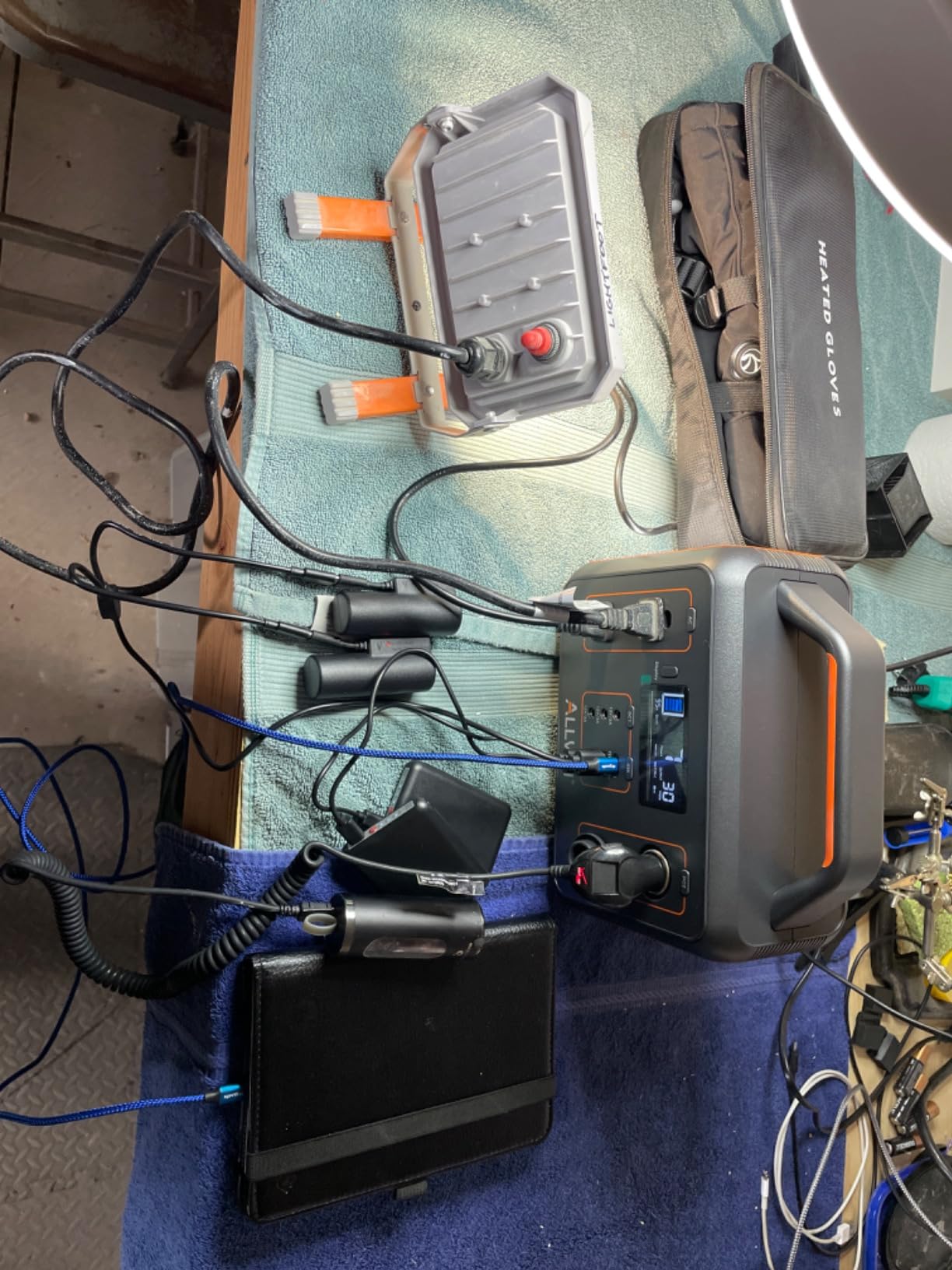
At 6.4 pounds and 9.25 by 5 by 6.8 inches it packs easily, and the three-level LED with SOS mode is genuinely useful if you are the type to need a light in a tent at 2am. It also has a 60W USB-C PD port, so you can refill it from a charger you already own.
The rating sits at 4.4 across 2450 reviews, with 73% at five stars. It is not the highest-rated station here, but it is one of only three units with verified heated-humidifier CPAP runs attached to its reviews.
Who the ALLWEI 256Wh suits
Budget-conscious CPAP users who still want humidifier capability for one or two nights, and anyone who wants pass-through charging as a standby battery at home.
It is a good match for buyers who already own a modest solar setup, since it accepts a 100W panel and recharges in four to five hours from one.
Where the ALLWEI 256Wh falls short
Durability is the recurring complaint. A number of reviewers report units losing the ability to hold charge after roughly a year, so if you are buying this as permanent outage insurance, buy it with the understanding that it may not last a decade the way a 4,000-cycle LiFePO4 unit does.
The fan noise is the other issue for sleep use. Several owners describe it running loudly for extended periods, and there is no quiet mode to step down to. There is also only one AC outlet, so anything besides the CPAP runs off DC or USB.
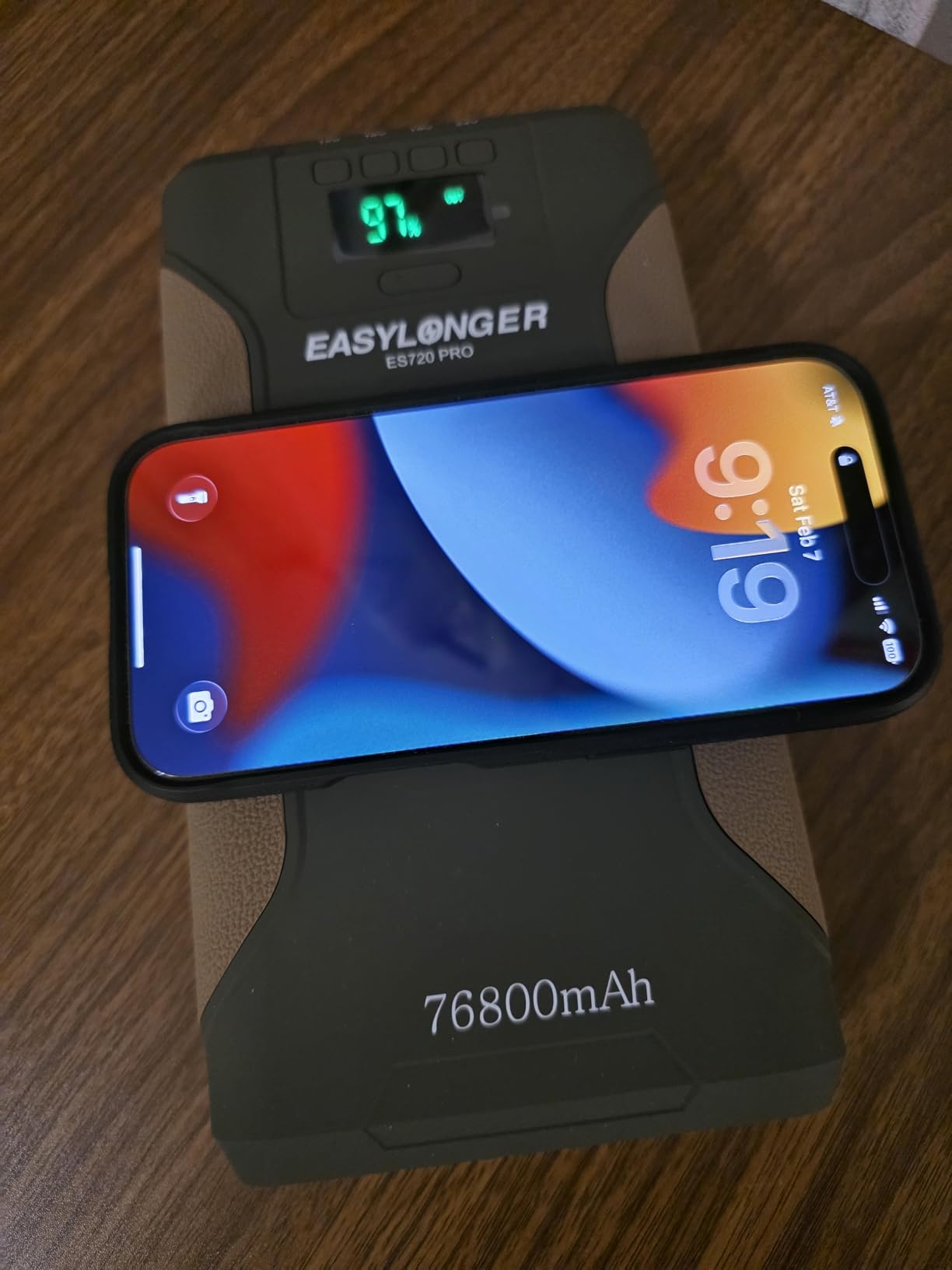
5. EASYLONGER ES720 – Best Dedicated CPAP Battery with DC Cables
EASYLONGER ES720 CPAP Battery Backup, 266.4Wh Portable CPAP Power Supply
- Four manufacturer DC cables cover ResMed S9
- AirSense 10
- AirMini
- AirSense 11 and Philips DreamStation
- DC connection skips the inverter and maximizes runtime
- Lightest unit here at 3.31 lb with a slim 1.7 inch profile
- Adjustable DC output from 12V to 24V plus a 180W car socket
- Often FSA or HSA eligible
- Lowest average rating in the roundup at 4.2 with 14% one-star reviews
- Heated-tube ResMed Luna G3 is explicitly unsupported
- Luna G3 owners must fall back to AC mode
- Smaller review base gives less long-term field history
This is the only purpose-built CPAP power supply in the group, and that changes the setup conversation. It arrives with four manufacturer DC cables covering the ResMed S9, AirSense 10 and AirCurve 10, AirMini and AirSense 11, and the Philips DreamStation. No guessing, no converter.
Going straight to DC means the battery does not go through an inverter at all, so you keep the full 266.4Wh rather than losing 10% to 15% in conversion. That efficiency gap is why a dedicated CPAP battery of this size can outlast a general power station of similar capacity.
At 3.31 pounds and 1.7 inches thick, it is by far the easiest to carry. It slides into a CPAP bag the way a laptop battery would, which is the single biggest practical advantage over a 300W station in this list.
There is more than a CPAP output here. A 180W cigarette lighter socket, adjustable DC at 12V, 16.5V, 20V, and 24V, and four USB ports mean it can top up a phone and a travel router while the machine runs.
Four recharge paths keep it flexible: a 72W AC adapter in four to five hours, 60W USB-C PD in roughly five, a 100W solar panel in four to five, or a car outlet. Pass-through charging and an LED with SOS mode are both included.
Who the EASYLONGER ES720 suits
Flyers and light packers who want the lowest possible weight and a known-good connection to their specific machine, without researching cables or converters.
It is also a strong choice for anyone whose therapy battery is the only thing they need, since every watt goes to the CPAP rather than to a general-purpose inverter.
Where the EASYLONGER ES720 falls short
Heated-tube compatibility is the deal-breaker. The ResMed Luna G3 with heated tubing is explicitly unsupported, and those owners have to run in AC mode instead. Check your machine before buying.
Its 4.2 rating with 14% one-star reviews is the widest spread of negative feedback in the roundup, and 372 reviews is a thinner base than the Jackery and Anker units. Because it is built only for CPAP, it cannot double as a general camp power source the way the others can.
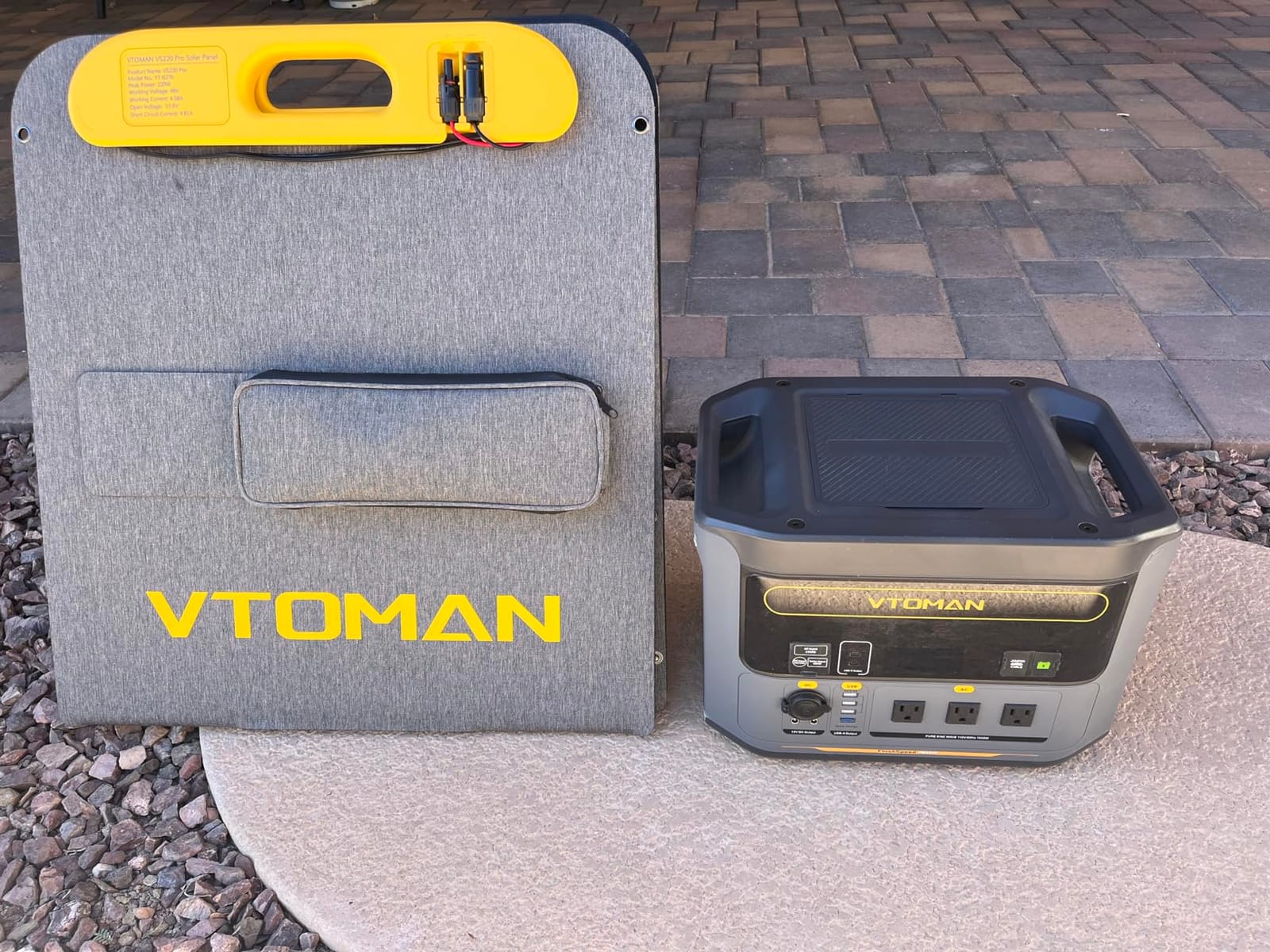
6. VTOMAN FlashSpeed 300 – Best for Fast USB-C Recharging
VTOMAN FlashSpeed 300 Portable Power Station, 300W 230Wh LiFePO4 Battery
- 100W USB-C PD input refills the station to 80% in about two hours
- Seven outlets including two AC outputs for a CPAP plus phones and cameras
- LiFePO4 cells rated 3000+ cycles
- Four recharge paths including wall
- solar
- car
- and USB-C PD
- 230Wh is the smallest capacity among the 300W-class picks
- 7% one-star reviews with recurring fan noise complaints
- Less established brand with a smaller review base
The FlashSpeed 300 solves a specific problem well: how fast you can refill it when the only power you have is a USB-C charger. The 100W PD input takes it from empty to 80% in about two hours, which no other station in this roundup matches on a single-cable top-up.
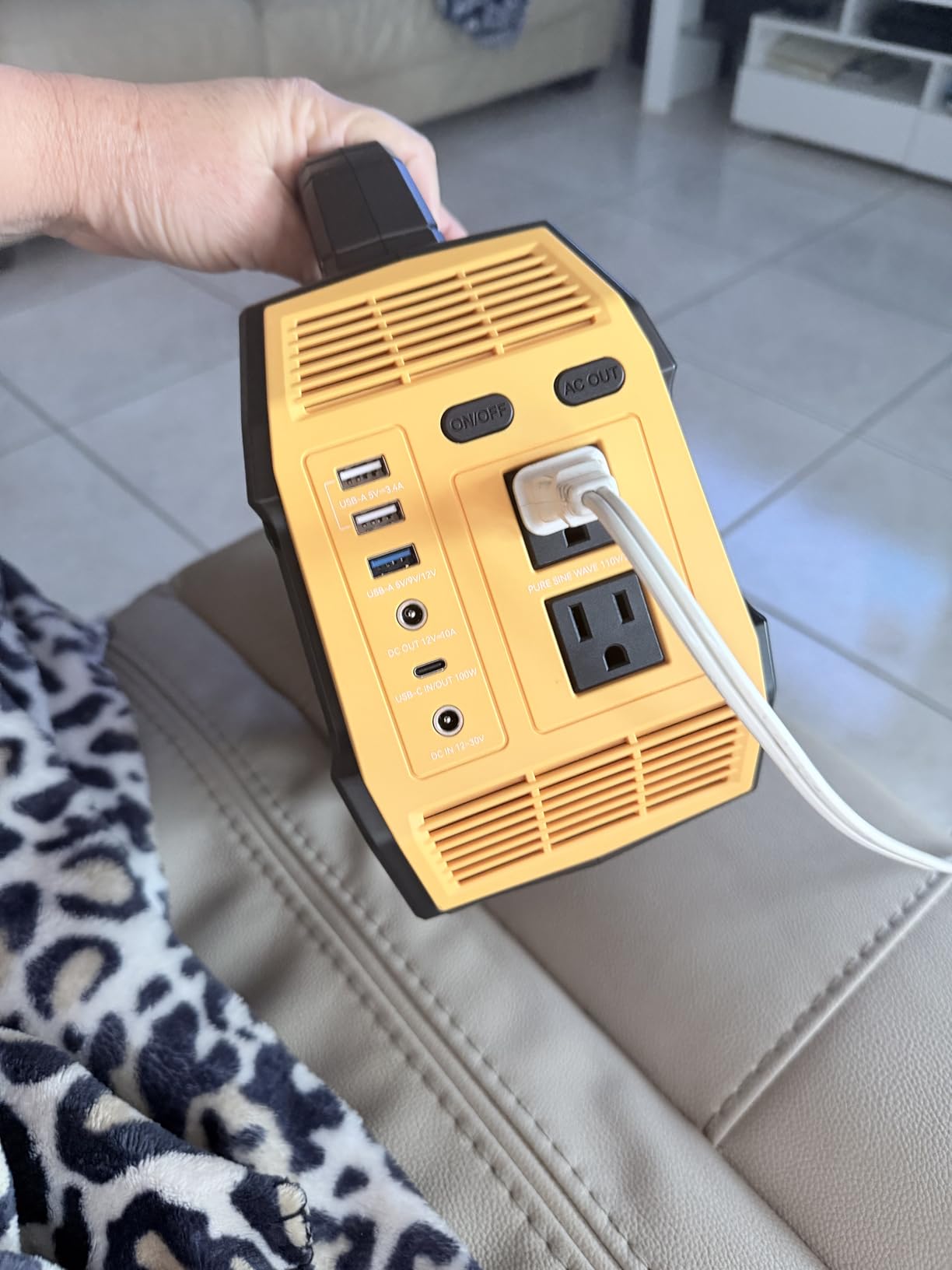
Seven outlets cover two AC outputs, one 100W USB-C, three USB-A, and a DC port. Two AC outlets is more than most 300W units offer, so you can run the CPAP on one and charge gear on the other without a power strip.
LiFePO4 cells rated past 3,000 cycles and a three-mode LED with steady, strobe, and SOS options round out a competent package. At 4.4 stars across 533 reviews, feedback is decent but thinner than the leaders.
The VTOMAN 230Wh is the smallest of the 300W-class picks here. At 12W that is about 16 hours of dry therapy or roughly 5.5 hours with a humidifier, and a single 75W fan will empty the remainder in under two hours.
For non-heated use that is fine. For a heated-humidifier setup you are finishing the night with the battery essentially empty, and any phone charging alongside it will cut into an already thin margin.
Who the VTOMAN FlashSpeed 300 suits
Tent campers and van travelers who recharge from a vehicle, a solar setup, or a single USB-C brick and want the station full again before bed. A full refill during a lunch stop is realistic with this unit.
It also works for anyone who needs the CPAP plus camera batteries or a phone in the same session and wants more than one AC outlet at the 300W class.
Where the VTOMAN FlashSpeed 300 falls short
Its 230Wh capacity is the smallest among the 300W-class picks, so humidified overnight use is tight to the point where we would not rely on it without a car recharge the next day.
Fan noise shows up repeatedly in reviews, and the brand has less field history than Jackery or Anker. If your setup depends on heated humidification every night, step up a size class instead.
7. EnginStar 296Wh – Best for RV and 24V Devices
- One owner reports three full days of CPAP on a single charge
- Another logged 7.5 hours of full-humidity use with better results at lower heat
- Two 110V pure sine wave AC outlets for clean medical-device output
- A dedicated 24V DC barrel port for RV and marine electronics
- Display shows live input and output wattage per port
- Lowest average rating here at 4.2 with 11% one-star reviews
- Wall recharge takes roughly 7 hours
- Bright panel light with no dimming option
- Only 1000 rated charge cycles
- Fan cycles audibly during use
The EnginStar’s reviews contain some of the most useful CPAP field data in the roundup. One owner reports running a partner’s machine for three full days on a single charge, and another logged 7.5 hours of full-humidity use, noting that results improved noticeably when the humidifier was turned down.
That second data point is the honest picture of heated use. 7.5 hours on a 296Wh battery is most of a night, not all of it, and the owner’s own observation matches what the math predicts: the humidifier is the variable that decides whether you finish.
What sets it apart technically is the output panel. Two 110V pure sine wave AC outlets, plus a 12V car port, a 12V DC port, and a 24V DC barrel jack. That last one matters in an RV or on a boat, where 24V accessories are common and most 300W units simply do not offer it.
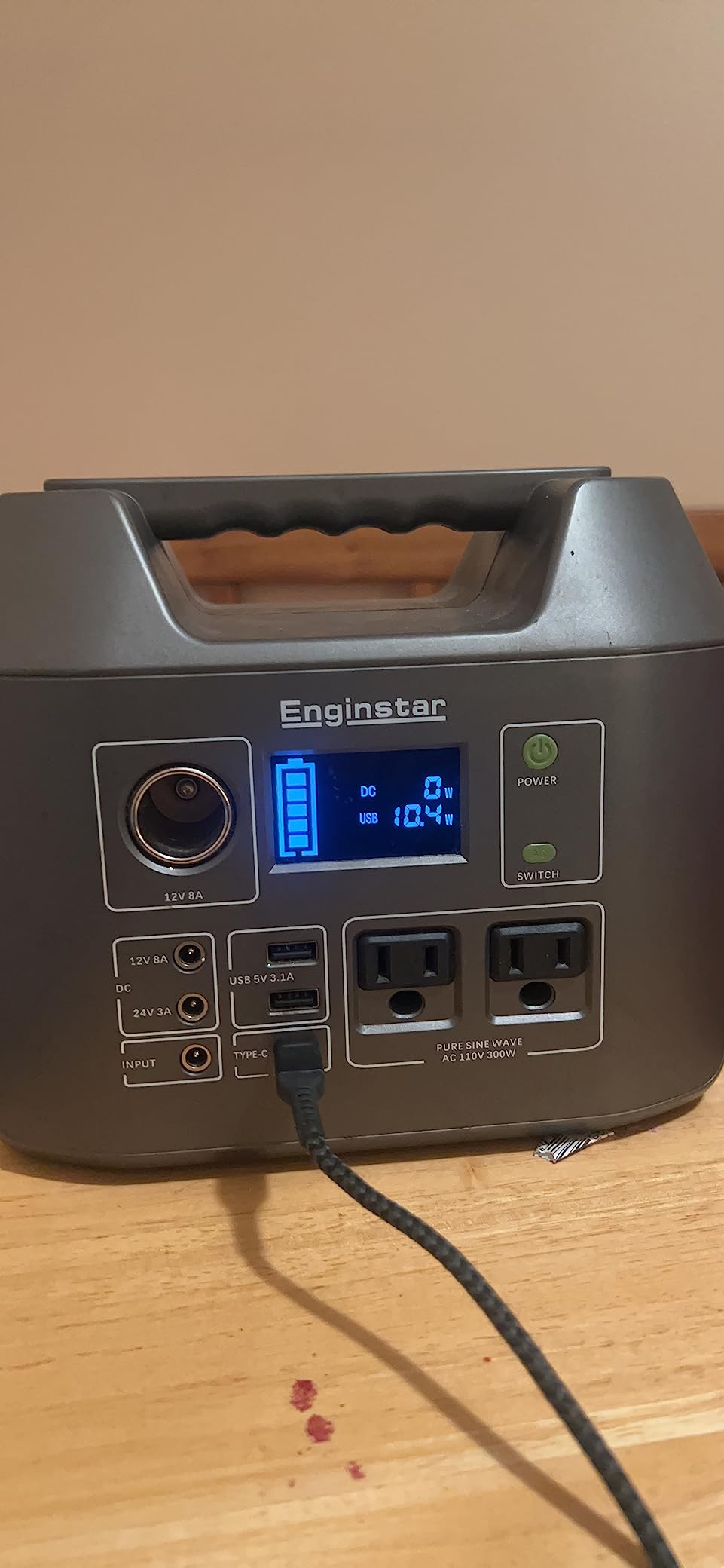
Pass-through UPS-style output is also a plus for outage use, and the display shows real-time wattage per port, which makes it easy to see exactly what your machine is pulling.
The battery is rated at only 1,000 cycles, well short of the LiFePO4 units here. At one full night of therapy a year that is a few years before meaningful capacity fade, which is why we would not build permanent medical backup on this one.

Who the EnginStar 296Wh suits
RV and marine travelers who need 24V output alongside AC, and anyone who wants a full night of humidified therapy plus a slow daytime recharge from a wall outlet.
It is a reasonable entry point for households in storm-prone areas who want a station that can sit plugged in and pass power through during an outage rather than cycling from empty to full.
Where the EnginStar 296Wh falls short
The seven-hour wall recharge is the biggest inconvenience. Overnight charging is fine, but topping up during a lunch stop is not.
Its 1,000-cycle battery is the shortest-lived here, the panel light has no dimming and can be genuinely disruptive in a dark bedroom, and the fan audibly cycles on and off during use. Those three together make it a poor bedside choice.
8. DaranEner 192Wh – Budget Pick for Non-Heated CPAP Use
- Verified CPAP runs of about 7 hours on the AC adapter reported by owners
- Dual 300W pure sine wave AC outlets are unusual at this capacity
- LiFePO4 cells rated 3500+ cycles with smart BMS protection
- Compact 5.73 lb body that packs into a small overnight bag
- Four-year warranty and responsive replacement service
- 192Wh is the smallest capacity in the roundup
- Display runtime estimate can be off by 25%
- No car charging cable included despite being advertised
- A 75W fan drains it in about two hours
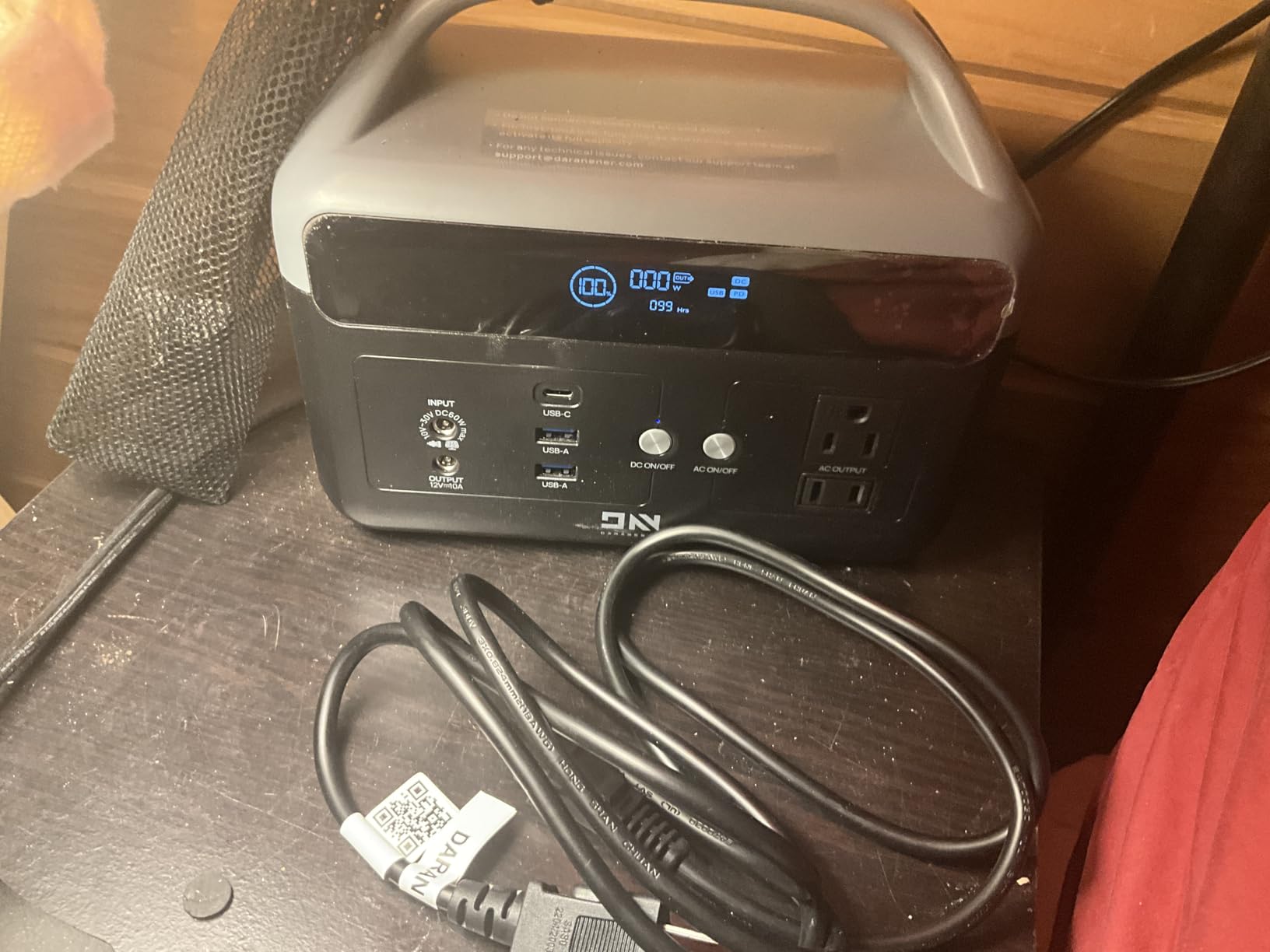
The DaranEner has the smallest battery in the group at 192Wh and weighs 5.73 pounds, which makes it a low-commitment way to find out whether a power station works with your machine before spending on something larger. Owners report measured CPAP runs of roughly seven hours on the AC adapter, and one bought a second unit after the first passed that test.
Dual 300W pure sine wave AC outlets at 192Wh is an unusual combination, and the clean output is the right call for a medical device. The LiFePO4 cells are rated past 3,500 cycles, which is better than most of the capacity class it competes in.
It also charges quickly. A wall outlet takes it to 80% in about 1.7 to 2 hours, and the built-in MPPT controller accepts small solar panels in series up to 30V of input.
The warranty is four years with a responsive replacement service, and buyers who had USB or DC board failures report the company swapping units rather than arguing. That matters for a device you are trusting with therapy.
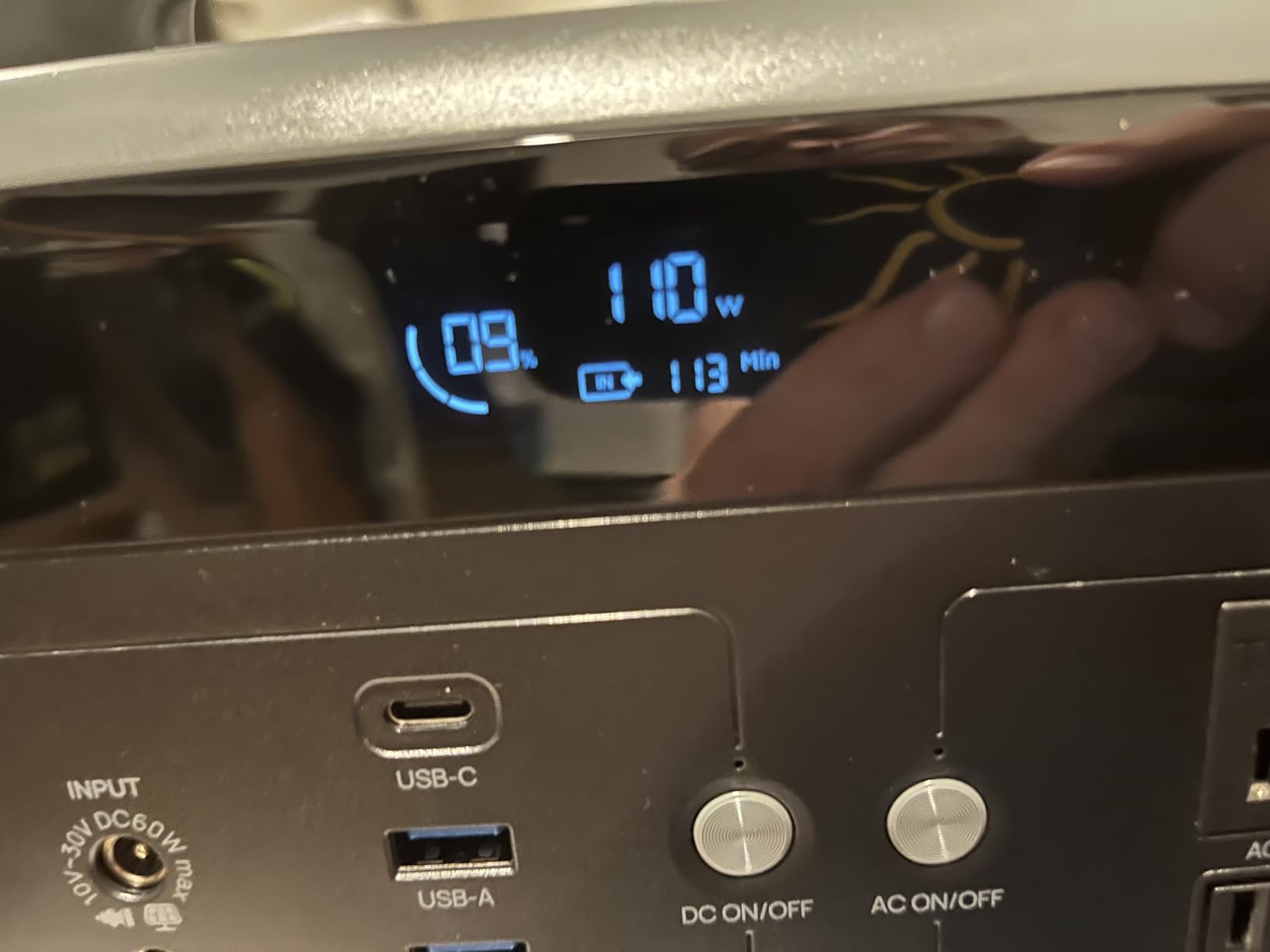
Its limits are clear though. Seven hours is not a full night once you add humidification, and the runtime estimate on the display has been reported as much as 25% off, so do not plan around the number it shows.
Who the DaranEner 192Wh suits
Travel CPAP users running pressure-only therapy, and anyone who wants a trial unit, a grab-and-go weekend battery, or a lightweight addition to a car kit for outages.
It also works as a dedicated CPAP battery when paired with a second unit for longer trips, which is how one owner in the reviews used it after a successful first test.
Where the DaranEner 192Wh falls short
One humidified night is out of reach. At 40W this unit holds about 163Wh usable, which is close to four hours. Treat it as a non-heated machine companion or a short-trip battery rather than a replacement for grid power.
Anything beyond the CPAP will eat it quickly. A 75W fan drains the whole capacity in about two hours, the car charging cable is not included despite the advertising, and the inaccurate runtime display makes planning harder than it should be.
DC vs AC: Why the Cable You Use Changes Your Runtime
Every station in this roundup stores energy as DC current. Running your CPAP from an AC outlet forces that energy through an inverter to become AC, then back through the machine’s power brick to become DC again, and that double conversion costs roughly 10% to 15% of your capacity.
Connecting a DC cable straight to the unit’s 12V barrel output skips both steps. On a 192Wh station that difference is meaningful, and it is the single largest lever you have that costs nothing.
Can you run a CPAP machine on a power bank? Yes, if the voltage and connector match and the battery can supply the current. The EASYLONGER ES720 does exactly this with adjustable 12V, 16.5V, 20V, and 24V output and four supplied manufacturer cables.
Two cautions. Your CPAP still needs the correct connector and polarity, and the station’s DC output must be regulated enough for the machine. This is why the community recommendation is consistently to buy the official manufacturer DC cord rather than a generic barrel adapter.
Waveform matters too. Every pick in this roundup puts out pure sine wave AC, which is the safe choice for sensitive electronics. A modified sine wave output is on the deal-breaker list for CPAP and is the first spec to check on any budget unit outside this guide.
Our battery backup power station rankings go deeper on inverter quality across a wider range of capacities.
How to Get More Nights Out of Any Power Station
These five changes are worth more than any upgrade in capacity, and several of them are free.
1. Turn the humidifier down or off. This is the single biggest lever. Moving from level 5 to level 3, or switching to a heated baseboard, can cut 10W to 20W from your nightly draw. Users on r/CPAP and r/CPAPCamper consistently report the humidifier as the reason their batteries ran out early.
2. Turn off heated tubing. A heated tube adds 10W to 20W on its own. If you have been running both a heated humidifier and a heated tube at full heat, that combination can double your consumption for comfort you may not need at moderate temperatures.
3. Use the DC cable. Skipping the inverter returns 10% to 15% of usable capacity. At 12W on a 256Wh battery, that is the difference between about 21 hours and about 18 hours of therapy.
4. Recharge during the day rather than carrying full autonomy. This is the standard advice from experienced travelers. A 500Wh station topped up every morning from a car outlet or a 100W panel beats a 1,000Wh station you have to carry. Our RV power station picks cover panel setups for that approach.
5. Confirm pass-through charging works. The ALLWEI 256Wh and the EnginStar 296Wh both support it. Plugged into the wall during an outage, they keep powering your machine while refilling, which effectively turns a 296Wh battery into an indefinite supply.
Lowering your expiratory pressure relief setting shaves another 1W to 2W, which is smaller but free. And always run a complete night at home before you depend on any of this in the field.
Portable Power Station or a Dedicated CPAP Battery?
A dedicated CPAP battery like the EASYLONGER ES720 costs more per watt-hour than a general power station, because the capacity is smaller and the enclosure is purpose-built. What you get for that premium is DC output, manufacturer cables, and a form factor that fits in a CPAP bag.
The general power station wins on everything else. You can charge a laptop, run a heated blanket, power a router during an outage, or run a fridge, none of which a CPAP battery can do.
The practical split is simple. If CPAP is the only thing you will ever run and you fly or walk, buy the dedicated battery. If you want one box for a weekend of gear, or you need it to carry a house through an outage, buy a power station.
Quiet Operation and Overnight Outage Backup
Two things separate a station that works in theory from one you can actually sleep next to: fan noise and display brightness.
The Anker SOLIX C300 is the quietest unit here at 25 dB measured at 3.3 feet, and the Jackery Explorer 1000 v2 offers a 30 dB quiet charging mode. The EnginStar’s panel light has no dimming at all, which owners flag as disruptive in a dark room.
For backup use, switchover time is what matters. Stations with pass-through or UPS behavior transfer in under 20ms, which your CPAP will not notice. Test it by charging the unit full, then pulling the wall plug while the machine is running.
One safety note that no roundup should skip. A fuel generator produces carbon monoxide and must never be run indoors, in a garage, or near a sleeping area. A battery station has no exhaust, which is a large part of why it is the right backup device for a bedroom. If you want a broader prepared look, our home backup power station guide covers sizing for a whole residence.
Air Travel and the 100Wh Carry-On Limit
Every pick in this roundup exceeds the FAA’s 100Wh carry-on limit for lithium batteries, which means none of them can travel in cabin baggage without approval for a larger battery.
Spare lithium batteries over 100Wh are allowed in checked baggage with approval, and you are required to declare them and remove the terminals. The airline sets the ceiling, commonly between 160Wh and 320Wh, which covers the EASYLONGER ES720, the DaranEner, the VTOMAN, and the ALLWEI.
The 1,070Wh Explorer 1000 v2 and the 296Wh EnginStar fall outside what most carriers will accept without advance approval. If flying is part of your plan, the dedicated CPAP battery approach or a sub-100Wh CPAP-specific pack is the safer route.
Frequently Asked Questions
Will a portable power station run a CPAP?
Yes. Any station with a pure sine wave AC inverter at 300W or more can run a CPAP machine overnight. A non-humidified night typically needs 80Wh to 240Wh, while a heated humidifier night needs 320Wh or more. Budget at least 256Wh for one humidified night and 900Wh for several.
What size portable power station do I need to run a CPAP machine?
Multiply your nightly watt-hours by the number of nights, then add a 1.4x safety factor. At 40W for eight hours you need 320Wh per humidified night, so two nights means about 900Wh of station capacity. For non-humidified use at 15W, a 192Wh to 300Wh station is enough.
How long will a portable power station run a CPAP machine?
On a 292Wh station, expect roughly 16 hours of non-humidified therapy or about 6 hours with a humidifier running. A 1,070Wh station gives close to 60 hours dry or about 22 hours humidified. Divide usable capacity, after a 15% inverter allowance, by your actual wattage draw.
Can you run a CPAP machine on a power bank?
Yes, as long as the voltage and connector match and the pack can supply the required current. Running DC straight to the machine skips the inverter and returns 10% to 15% more usable capacity. Buying the official manufacturer DC cord is the safest approach.
What is the best portable power station for CPAP machines for camping?
The Jackery Explorer 1000 v2 wins for multi-night camping with humidification because 1,070Wh covers several nights and it refills from a vehicle or solar panel. For lighter trips without humidification, the Jackery Explorer 300 at 7.1 pounds is easier to carry and still covers two or three nights.
Conclusion: Our Best Portable Power Station for CPAP Picks
The Jackery Explorer 300 is our top pick in 2026. At 292Wh and 7.1 pounds, with 4,000-cycle LiFePO4 cells and the deepest review base here, it is the safest default for anyone running CPAP therapy without humidification on weekend trips.
If you run a heated humidifier, step up to the Jackery Explorer 1000 v2. The Anker SOLIX C300 is the pick if the station sleeps in the bedroom with you, and the EASYLONGER ES720 is the one to buy if flying or walking distance decides the trip.
Whichever you choose, run a full night at home first, and turn the humidifier down before you leave. That single habit does more for your runtime than any spec on this list.