
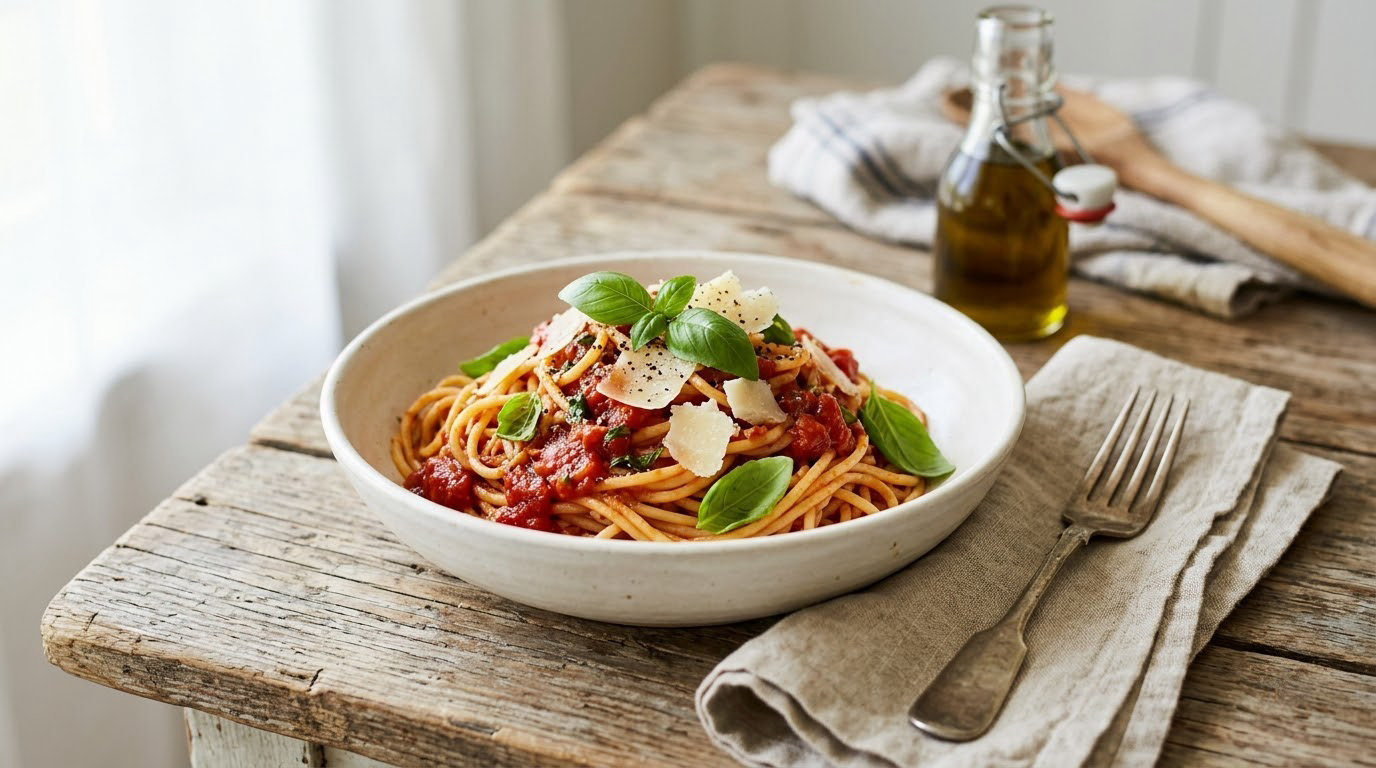
Cooked plain pasta lasts 3 to 5 days in the refrigerator when it is cooled quickly, sealed in an airtight container, and kept at 40°F (4°C) or below. Add sauce and the window tightens: 3 to 4 days for tomato, oil or cheese sauces, and closer to 2 to 3 days once meat, poultry or seafood is mixed in.
That is the short version. The longer version is that leftover pasta is a perishable prepared food, so it follows the same refrigerator rules as any other cooked dish, and the clock starts the moment it leaves the heat.
I keep a container of spaghetti in my fridge most weeks, and I am the person who forgets to date it. So the labels and the day-counting in here are less theory than survival tactics.
Table of Contents
How Long Does Cooked Pasta Last in the Fridge? Quick Guide
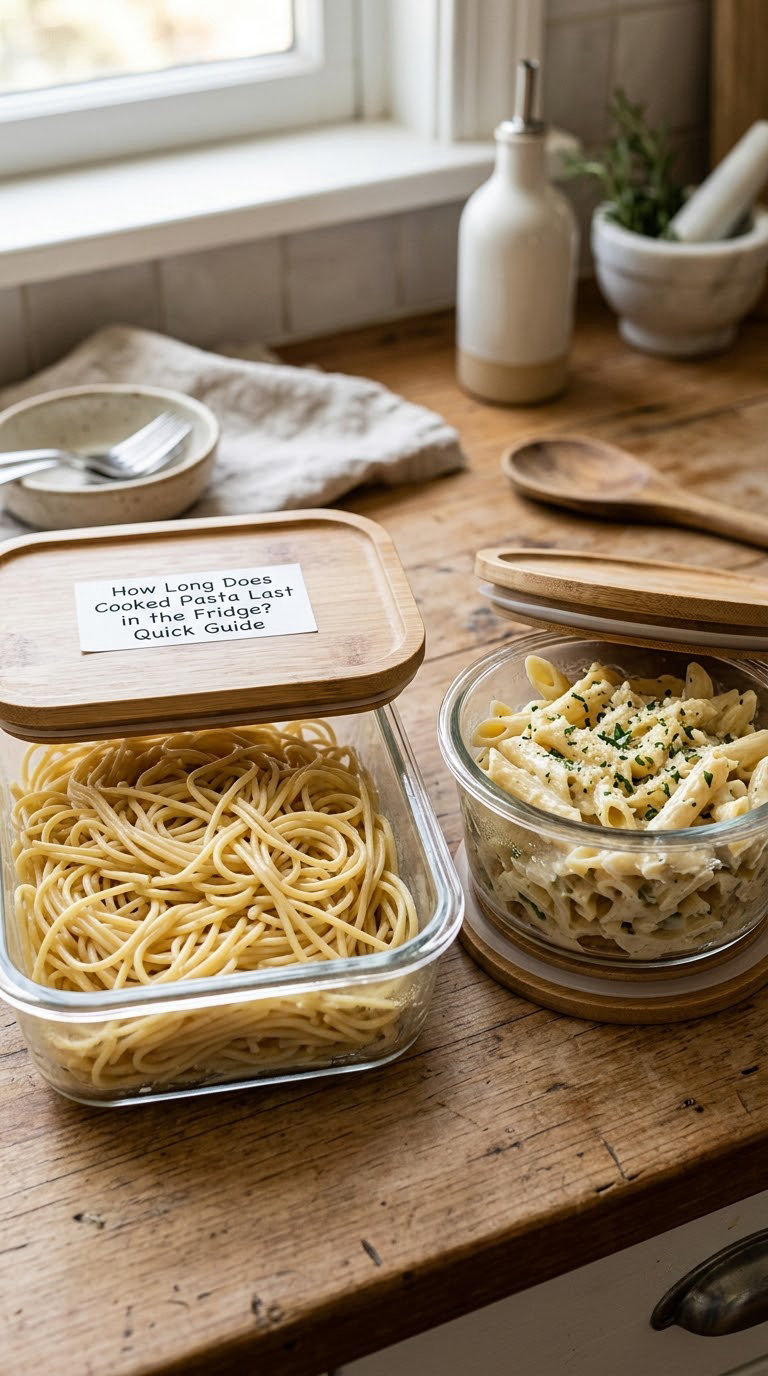
Here is the timing at a glance, assuming a refrigerator holding 40°F (4°C) or below and food that was refrigerated within two hours of cooking.
| Type of cooked pasta | Refrigerator | Freezer | Room temperature |
|---|---|---|---|
| Plain, no sauce | 3 to 5 days | 1 to 2 months | 2 hours |
| Tomato or marinara sauce | 3 to 4 days | 1 to 2 months | 2 hours |
| Oil-based sauce (pesto, olive oil, tuna) | 3 to 4 days | 1 to 2 months | 2 hours |
| Cream, Alfredo or cheese sauce | 3 to 4 days | 1 to 2 months | 2 hours |
| With meat, poultry or seafood | 2 to 3 days | 1 to 2 months | 2 hours |
| Stuffed pasta (ravioli, tortellini) | 3 to 4 days | 1 to 2 months | 2 hours |
| Pasta salad with dressing | 3 to 4 days | Not recommended | 2 hours |
If a container holds more than one ingredient, follow the shortest timeline on the list. A meat sauce made on Sunday and eaten on Wednesday is a day-3 dish, not a day-5 one.
Room temperature is one hour instead of two if the air is above 90°F (32°C), which covers a summer porch, a warm garage, or a busy kitchen in July.
How Long Does Cooked Pasta Last by Type?
The table above is a fridge-versus-freezer map. This second one breaks the same question down by what is actually in the dish, including the sauces and add-ins most of us store.
| Pasta and sauce | Safe use window in the fridge | What to watch |
|---|---|---|
| Plain spaghetti, penne, macaroni | 3 to 5 days | Hardens into a block; needs water to revive |
| Spaghetti with marinara | 3 to 4 days | Acid softens noodles faster than oil does |
| Pesto or olive oil and tomato | 3 to 4 days | Oil goes rancid; smell it before eating |
| Alfredo, vodka, mac and cheese | 3 to 4 days | Dairy sours and thickens quickly |
| Spaghetti and meatballs or sausage | 2 to 3 days | Poultry and ground meat shorten the window |
| Shrimp, salmon or tuna sauce | 2 to 3 days | Seafood is the shortest-timer of all |
| Whole-grain or gluten-free pasta | 2 to 4 days | Whole-grain versions spoil faster than refined wheat |
| Ravioli, tortellini, stuffed shells | 3 to 4 days | Cheese or meat filling follows its own rule |
| Pasta salad, dressed with vinaigrette | 3 to 4 days | Vinegar does not make it shelf stable |
Quality falls off long before safety does. Plain noodles dry out and turn rubbery in a day or two, which is a texture problem, not a spoilage problem. The unsafe window is longer than the window where leftovers still taste good.
One thing worth knowing: tomato sauce is acidic, and that acid continues to break down the surface of a cooked noodle. Sauced pasta often looks softer and more fragile than plain pasta on day three, which is a normal change rather than a sign of spoilage.
How to Store Cooked Pasta in the Fridge
- Start the clock within two hours. Set a timer the moment you drain the pasta. Two hours of warm counter time is the whole allowance, and a big hot pot keeps cooking well past it.
- Cool it fast, in pieces. Spread the pasta in a single layer on a baking sheet for 15 minutes, or toss it in a cold-water bath for a minute or two. The center of a deep pot stays in the danger zone far longer than you think.
- Never refrigerate a big batch in a deep pot. The middle stays warm for hours. Divide it into shallow containers, or into single-serving boxes, and refrigerate while the pasta is still slightly warm.
- Use airtight containers with a tight lid. Glass with locking clips beats a loosely covered bowl, and a zip-top bag pressed flat beats a bowl with a plate on it.
- Toss plain pasta with a little oil. A teaspoon of olive oil per serving keeps noodles separate and slows the drying that makes them fuse together. Oil-based sauces do the same job on their own.
- Label it with the date and the type. A strip of masking tape on the lid with Monday and spaghetti saves you from playing detective a week later.
- Keep the fridge at 40°F (4°C) or below. An appliance thermometer in the middle shelf is cheap insurance, and it is the single thing that makes a 5-day claim true rather than hopeful.
Sauce kept in a separate jar often stays usable longer than the noodles do, which makes separate storage the smart move when you want the pasta past day four.
Leftovers are not the only thing worth storing well. Our guide to how long homemade soup lasts in the fridge follows the same two-hour rule and the same 3-to-4-day window, and starch-thickened soups run even shorter.
Can You Freeze Cooked Pasta?
Yes. Cooked pasta freezes well for 1 to 2 months when it is packed properly, and sauced pasta freezes better than plain pasta because the sauce holds moisture around the noodles.
- Cool the pasta completely, then toss it with a little sauce or olive oil so the strands do not freeze as one solid slab.
- Spread it in a single layer on a parchment-lined baking sheet and freeze it until firm, usually about an hour.
- Transfer the frozen portion to a freezer bag or airtight box, press out the air, and label it with the date.
- Thaw it in the fridge overnight, or drop frozen noodles straight into a hot sauce for a fast dinner.
What changes after freezing: plain noodles often turn a little softer, creamy sauces thicken as they thaw, and stuffed pasta keeps its shape if the filling was fully cooked before freezing. Fresh herbs and crisp toppings do not survive at all, so add those after reheating.
Thawed pasta that sat in the fridge too long is not made safe again by freezing. Freezing stops growth, it does not remove it.
How to Reheat Leftover Pasta
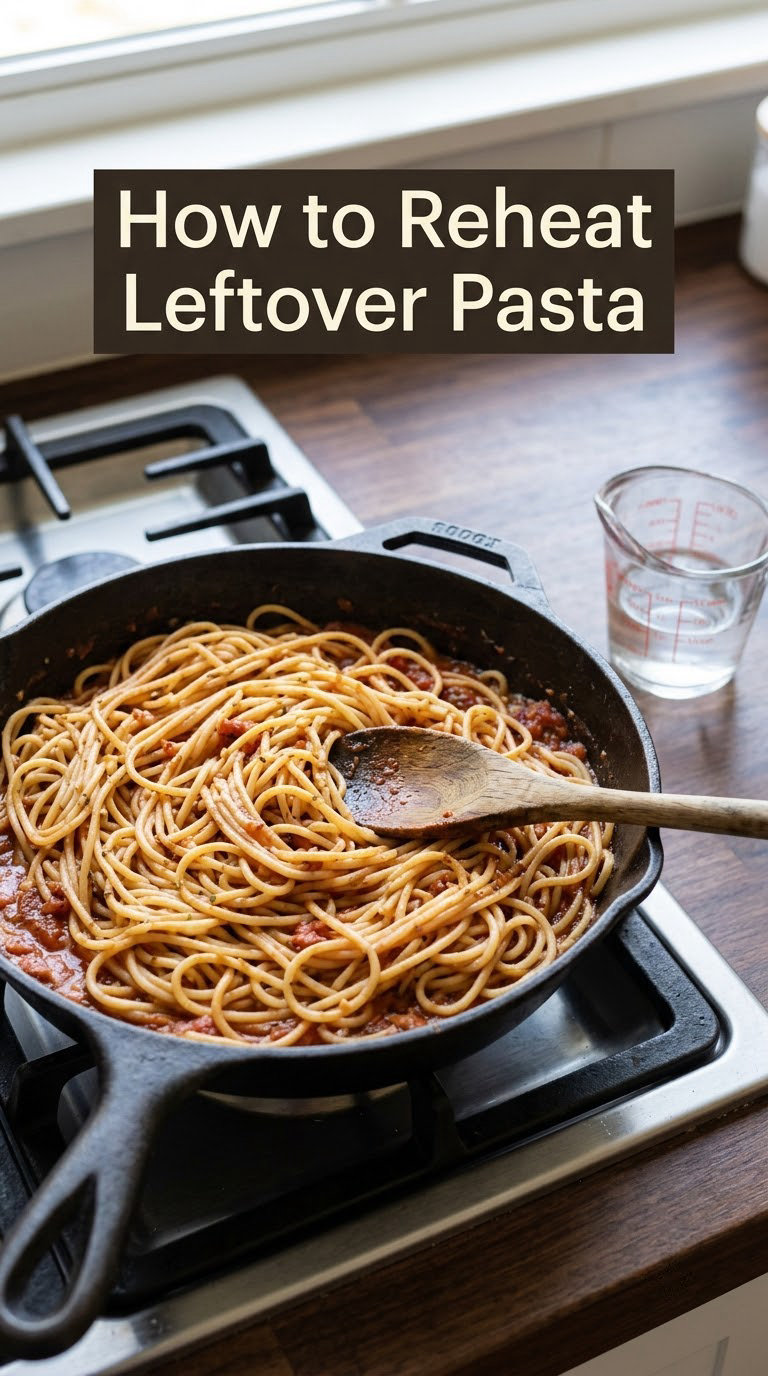
Reheat only what you plan to eat, and heat it to 165°F (74°C) in the center. Anything you reheat and put back in the fridge gets one more reheating at most.
Plain pasta on the stovetop. Put it in a skillet with a splash of water and a teaspoon of oil over low heat. Stir until the water cooks off and the noodles loosen, usually 3 to 5 minutes.
Tomato-based pasta. Add a ladle of sauce or a splash of water and warm it over low heat. High heat is what turns reheated noodles rubbery, so keep the dial low and stir often.
Creamy or cheese-based pasta. Warm gently with a splash of milk or water and stir until the sauce comes back together. Cheese that has set will loosen with a little liquid and low heat rather than more microwave time.
Microwave. Cover loosely, microwave on 50% power in 60-second bursts, and stir between each one. Plain noodles usually need a tablespoon of water first, or they turn leathery.
Oven. Cover with foil, bake at 350°F (175°C) for 15 to 20 minutes, and add a drizzle of oil on top if the pasta looks dry. If you have a whole batch to feed a group, our easy pasta bake recipes for a crowd turn extra cooked pasta into a casserole that reheats beautifully.
If your leftover pasta is a hardened block, run it under cold running water for a minute and break it apart. A food safety reader on Facebook turned day-old clumped spaghetti into pasta salad that way, and it works better than any amount of reheating.
Signs Your Cooked Pasta Has Gone Bad
Discard leftovers with any of the following, without tasting them first:
- Sour, fermented or ammonia-like smell that was not there when the pasta was served.
- Fuzzy mold in white, green, blue or black patches on the noodles, sauce or container.
- Slimy or sticky texture that feels different from the pasta you cooked.
- Discoloration, such as a dull grey cast on the noodles or sauce that has darkened and separated.
- Sour sauce, particularly a cream sauce that has thinned and smells tangy.
- Liquid leaking or swelling in a sealed container, or a lid that no longer sits flat.
Mold on sauced pasta hides well. A jar of spaghetti and sauce can look fine on the surface while mold grows down inside the clump, so discard the whole container instead of scraping the top layer off.
And do not taste food to test it. That is the standard advice in the food safety communities, and for good reason: dangerous bacteria and their toxins are not required to change smell, taste or appearance. If the storage history is unclear, the pasta is already a week old, or the fridge ran warm during an outage, throw it out. Wasting a container of noodles is annoying. Food poisoning is worse.
The reason pasta sits in a special place in food safety discussions is Bacillus cereus, a bacterium that grows on cooked starch and produces heat-stable toxins. Reheating to 165°F (74°C) kills the live bacteria, but not always the toxins, which is why badly stored pasta cannot be rescued by a thorough reheat.
Common Pasta Storage Mistakes
- Leaving the pasta warm for hours. Fix: start the two-hour timer at the drainer, not at serving.
- Refrigerating one big hot batch. Fix: divide into shallow containers, or single portions, and refrigerate while still slightly warm.
- Storing pasta loosely covered. Fix: seal it airtight. A bowl with a plate on top loses moisture and lets odors move in.
- Forgetting to date leftovers. Fix: masking tape on the lid, with the day of the week and the dish.
- Putting hot food straight into the fridge. Fix: a 15-minute spread on a sheet pan cools the food fast enough to make refrigeration safe while still moving.
- Reheating the whole batch every time. Fix: portion out one serving, reheat that, and leave the rest cold in the container.
- Confusing a quality problem with a safety problem. Fix: rubbery texture or bland sauce means you stored it badly, not that you must throw it out. Sour smell, mold or slime means you must.
- Leaving lunchboxes out all morning. Fix: an insulated lunch bag with a cold pack keeps pasta safely under 40°F (4°C) until lunch.
For the carb-heavy cousins of pasta in your fridge, our cooked rice storage guide covers the same freezing method in more detail, including why rice is the one food we warn people about hardest.
Frequently Asked Questions
How long does cooked pasta last at exactly 40°F (4°C)?
At 40°F (4°C) or below, plain cooked pasta keeps 3 to 5 days in the fridge, and sauced or stuffed pasta keeps 3 to 4 days. Anything with meat, poultry or seafood drops to 2 to 3 days. The temperature matters more than most people expect, so use an appliance thermometer in the middle shelf rather than trusting the dial.
Can I store cooked pasta without sauce or oil?
Yes, and plain noodles are the most flexible thing in your fridge for freezing. The catch is texture: plain pasta dries out and hardens faster than sauced pasta, so toss it with a teaspoon of olive oil before it goes in the container. For a family dinner, keeping the sauce in a separate jar means the pasta stretches and the sauce carries the flavor.
Does cooked pasta need to be refrigerated on the same day?
It should be refrigerated the day it is cooked, within two hours of draining the pot. That rule does not change with the season, though hot weather cuts it to one hour above 90°F (32°C). You do not have to wait for pasta to reach room temperature first, and waiting for it costs you the cooling window you needed anyway.
How long does pasta salad last in the refrigerator?
Dressed pasta salad keeps 3 to 4 days in the fridge at 40°F (4°C) or below, which is a day shorter than plain pasta because of the oil, vegetables and any cheese or meat folded in. A vinegar dressing does not make it shelf stable, and pasta salad is not something to freeze, because the dressing goes grainy and the vegetables turn watery.
Can creamy pasta with sauce be frozen?
Yes, for 1 to 2 months. Cream and cheese sauces thicken noticeably as they thaw, so loosen them with a splash of milk or water while reheating over low heat. Freeze the pasta and sauce together rather than separately so the noodles do not dry out, and stir in fresh basil, parmesan or cracked pepper after reheating rather than before freezing.
Is reheated pasta safe to refrigerate or freeze again?
Reheated pasta can go back in the fridge for one more round if it cooled quickly and was refrigerated within two hours, but reheating never resets the storage clock. Freezing reheated pasta is not recommended, because it adds another handling step to food that was already handled more than once. When in doubt, throw it out.
Cooked Pasta Storage Takeaways
Refrigerate cooked pasta within two hours, use it within 3 to 4 days, and push toward day 5 only for plain or well-sauced pasta kept cold and sealed. Freeze it for 1 to 2 months if it will not get eaten in time, and discard anything with a sour smell, mold, slime or discoloration.
The habit that saves the most food is the boring one: seal the container and write the date on the lid the moment you serve it. Do that, and how long does cooked pasta last in the fridge becomes a question you already answered, instead of one you are squinting at in the back of the fridge on Thursday night.