
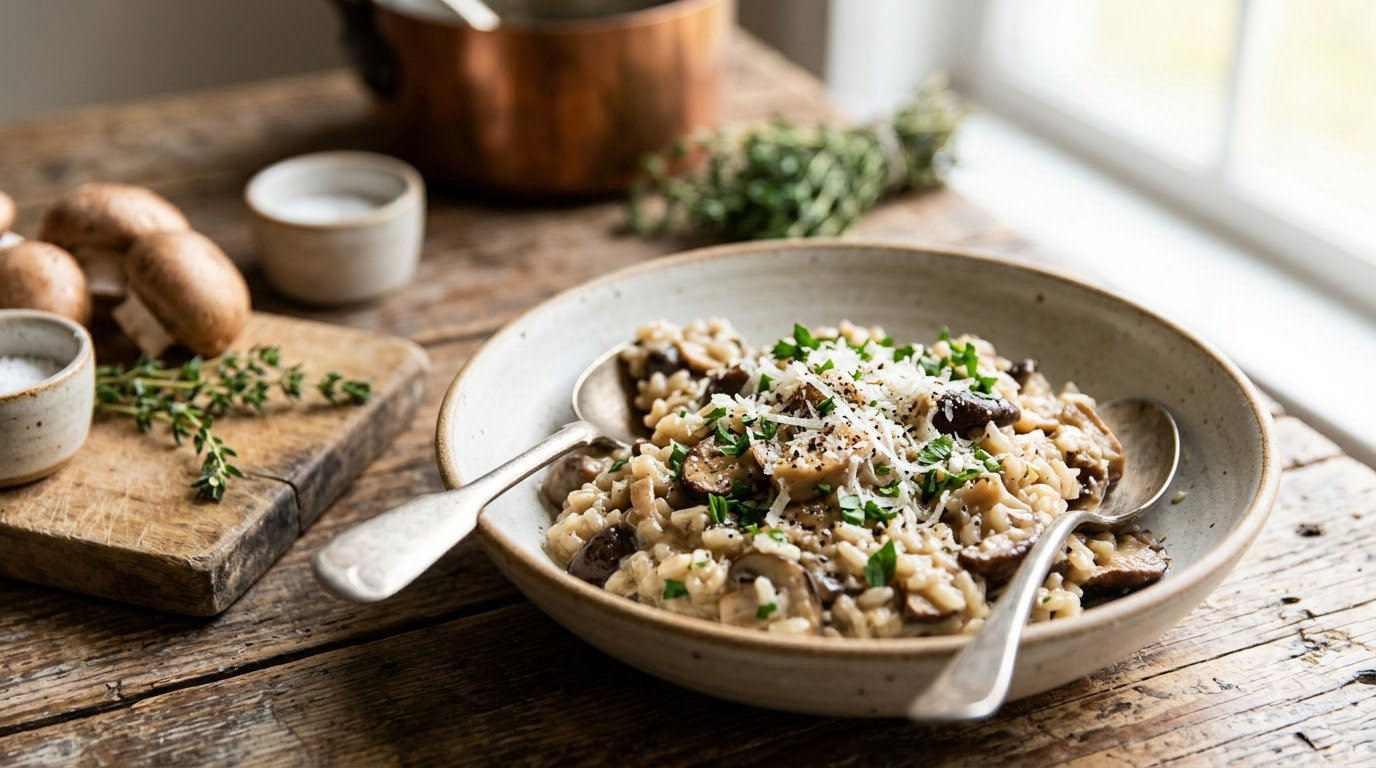
If you want to know how to freeze mushrooms without them getting slimy, cook them first. Sauté, steam, or blanch the slices for a few minutes, let them cool completely on a baking sheet, flash-freeze them in a single layer for 1 to 2 hours, then move them into airtight freezer bags with as much air squeezed out as you can manage. Firm mushrooms for up to 12 months, no weeping puddle in the pan.
I learned this the slow way. A whole tray of raw creminis went straight from the grocery bag into the freezer, and a few weeks later they thawed into a rubbery block that leaked water into everything it touched. Now I never freeze a raw mushroom, and neither does my freezer.
Fall is the busy season for this, whether you bought a big tray on sale or came home from a foraging walk with more than you can eat. Here is what actually happens inside the mushrooms, which varieties are worth freezing, and the exact timings for each method.
Table of Contents
How to Freeze Mushrooms Without Them Getting Slimy: Quick Guide
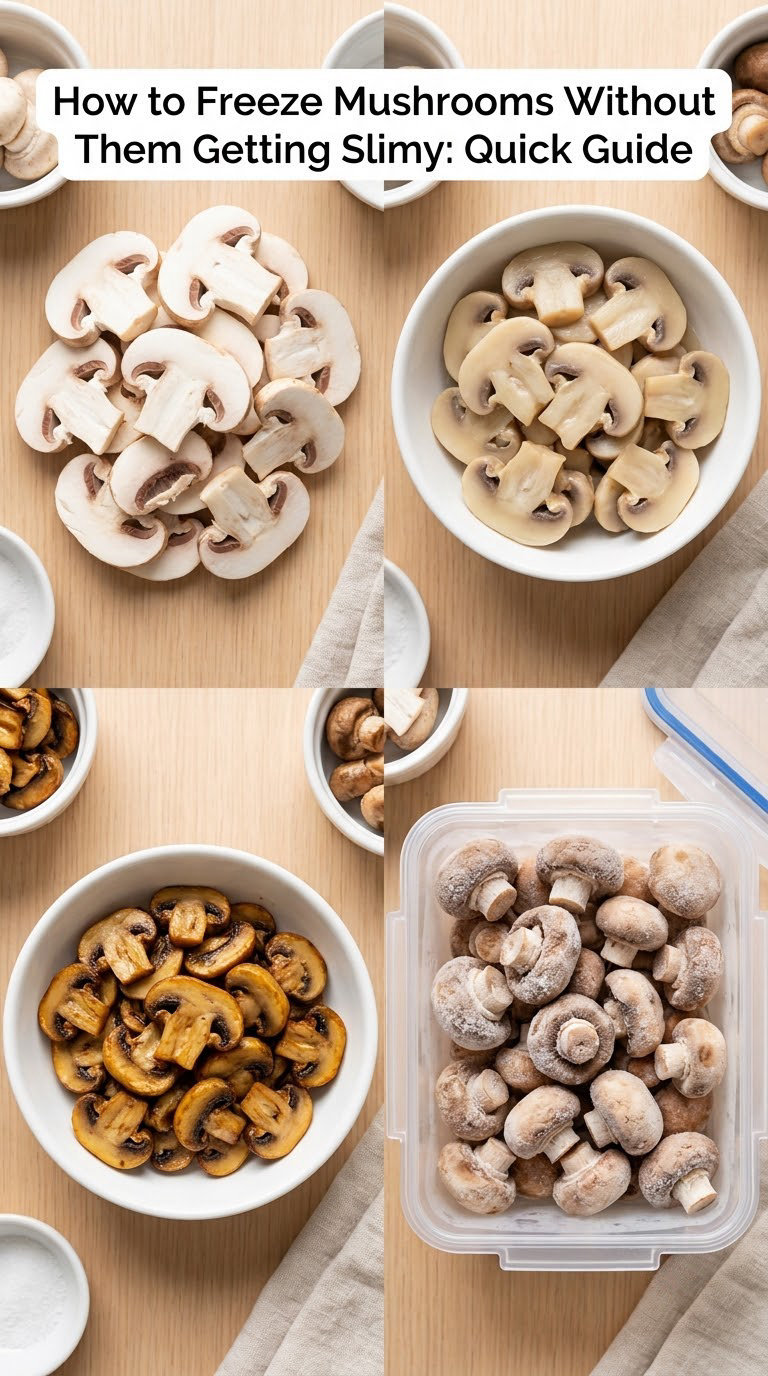
The four steps that matter: cook the mushrooms briefly, cool them completely, flash-freeze them loose in a single layer, then seal them with the air pushed out. Everything else is detail.
| Method | Best cut | Time in the pan or pot | Texture after thawing | Freezer life | Best for |
|---|---|---|---|---|---|
| Sautéed | Quarter-size slices | 5 to 7 minutes, high heat, no crowding | Firm, chewy, holds shape | 9 months | Pizza, pasta, frittata, any dish that eats it alone |
| Steamed | Whole, halved, or thick slices | Whole 5 minutes, button 4 minutes, sliced 3 minutes | Firm, keeps pieces separate | 12 months | Foraged and wild mushrooms you want to keep whole |
| Blanched | Slices or chunks | Whole 5 minutes, button 3.5 minutes, sliced 3 minutes | Slightly softer, very clean flavor | 12 months | Soups, stews, sauces where texture is not the point |
| Raw | Any | None | Rubbery, weeps water as it thaws | 6 months, quality fades sooner | Shape reference only. Skip if sliminess bothers you |
My default, if you only remember one row: sauté. It gives the firmest texture and the shortest cook time, and a quick dry-pan version gets you the same result with almost no oil.
Why Do Mushrooms Get Slimy When Frozen?
Mushrooms are roughly 90% water, and that water is the whole problem. Freezing turns it into ice crystals, the crystals grow and burst the cell walls that hold the flesh together, and when the mushrooms thaw, all that water escapes at once. What is left behind collapses into the soft, slimy texture you were trying to avoid.
Two things make it worse. Freezing slowly creates bigger ice crystals than freezing quickly, so a slow, clumped, air-filled bag does more structural damage than a flash-frozen sheet pan. And thawing adds a second insult: as the ice melts, the ruptured cells release liquid into whatever they are sitting next to.
Pre-cooking is the fix. Heat drives off surface moisture, and it sets the proteins and sugars in the flesh so it firms up instead of collapsing. Flash-freezing makes the crystals small and evenly spaced, so less damage happens in the first place. Squeezing the air out protects against freezer burn, which hits high-moisture foods harder than anything else in the freezer because the moisture on the surface reaches the cold dry air and sublimates away.
Why are my mushrooms slimy in the fridge before they even reach the freezer?
Same cause, different trigger. Mushrooms keep respiring after harvest, and they release water as they age. Airtight plastic wrap traps that condensation so the surface stays wet and bacteria and mold move in. One bad mushroom spoils the whole tray, and freezing it just preserves the problem.
Which Mushrooms Can You Freeze?
Most mushrooms freeze well once you cook them first, but they are not equal. Button, cremini, and portobello are the easy ones. They hold their shape through a sauté, and portobello caps are thick enough that even a brief cook firms them right up.
Shiitake works too, and it is one of my favorites. Sauté them until the edges brown, and they come back from the freezer tasting nutty rather than merely watery. Oyster mushrooms are trickier: cook them hard and fast in a very hot pan, because they hold a lot of water and will steam in their own liquid if the pan is crowded.
For foraged mushrooms, freeze by the method the mushroom wants. Chanterelles, porcini, morels, and boletes hold up best when steamed, which keeps their shape and stops a delicate chanterelle from turning to paste. Maitake can be frozen raw in thick steaks by people who like the texture, though sautéed is firmer.
A few things I would not bother freezing. A whole raw portobello cap keeps so much water that it turns to mush. Enoki and other very thin mushrooms go from springy to limp in a single blanch. And king oyster mushrooms are so dense they barely need freezing, which makes them a strange thing to put in a bag in the first place.
A safety note on wild mushrooms
Freezing does not destroy mushroom toxins. No amount of blanching, drying, or freezing makes an unidentified species safe, so only ever freeze mushrooms you can positively identify. If you are not certain, leave it where it is.
How to Prepare Mushrooms for Freezing
Dry brushing beats rinsing for most mushrooms. Hold the cap under a barely damp cloth, wipe the cap clean, and slice the stem from the bottom of the stem upward so you use the firmest part. Only rinse shiitake, oyster mushrooms, and anything visibly dirty, and dry them thoroughly afterwards.
Washing matters more than people think. A mushroom that carries a film of surface water into the hot pan will spit and steam, and that surface water travels into the freezer with it. Pat everything dry before it goes near heat.
Slice to a consistent thickness so everything cooks in the same amount of time. A quarter-inch slice is a good default for button and cremini. Keep pieces small enough that a single layer fits on a sheet pan with room to spare, because a crowded pan steams instead of browns.
Do the cutting on a dry board, and scrape the board clean between batches. Leftover damp debris under your knife is the quiet reason a bag of mushrooms smells sour months later.
Should You Blanch Mushrooms Before Freezing?
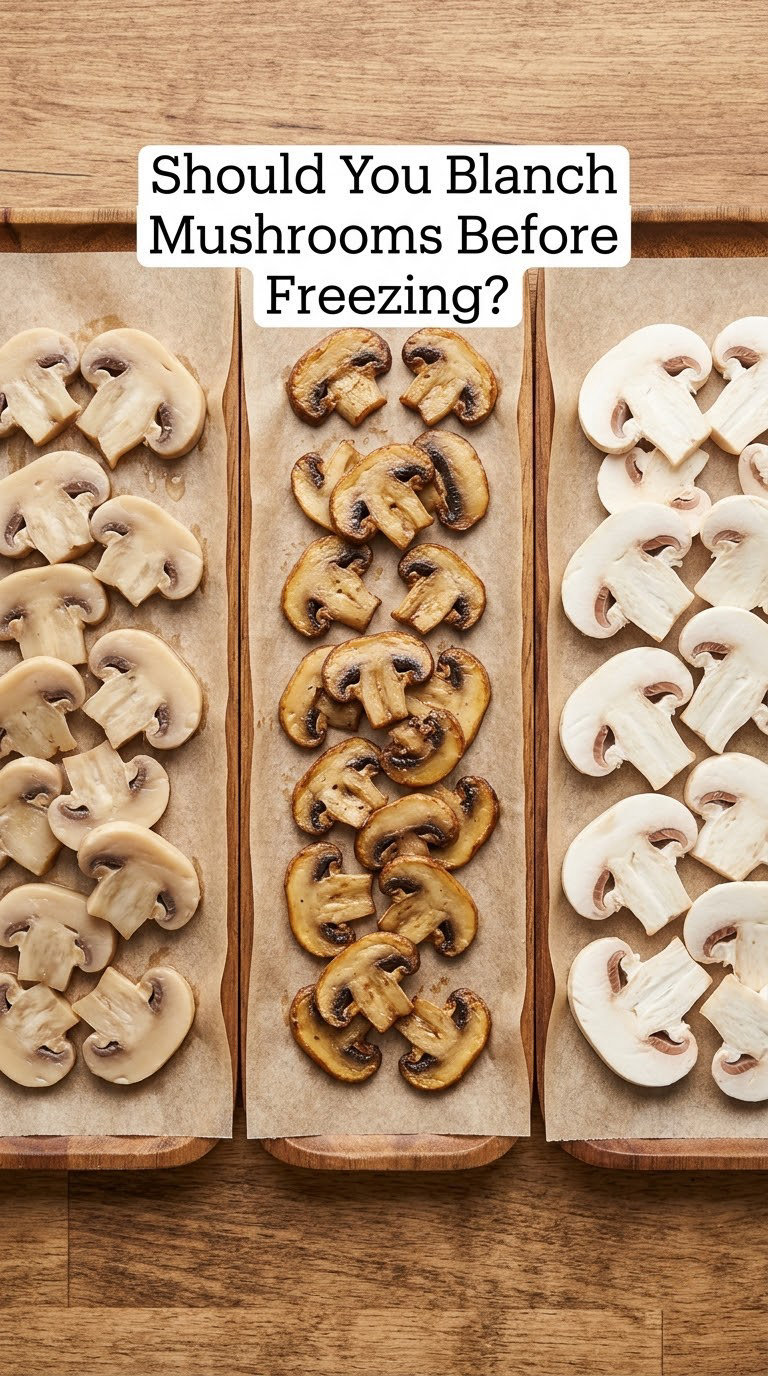
Blanching is worth it, and it is the best method for mushrooms going into soup, stew, or sauce. Boil them until the edges just turn translucent, then move them straight to ice water so the cooking stops. Drain very well and freeze.
| Cut | Blanching time | Steaming time | Quality after thawing | Keeps for |
|---|---|---|---|---|
| Whole caps | 5 minutes | 5 minutes | Intact, slightly soft | 12 months |
| Button, quartered | 3.5 minutes | 4 minutes | Firm, keeps its shape | 12 months |
| Sliced | 3 minutes | 3 minutes | Firm, best all-round | 12 months |
Overshooting is its own failure mode. Blanched past about 5 minutes, thin slices turn to mush, and that mush is exactly what you were trying to avoid. Cooks who steam-blanch for 3 minutes prefer it to sautéing because the mushrooms stay in separate pieces and store longer, and I have had the same result.
Where I disagree with the cook-first camp is on the acid bath. Tossing mushrooms in lemon water or citric acid solution before blanching slows the browning that makes a tray look dull, but it does nothing for sliminess. I use it for appearance, not texture.
How to Freeze Mushrooms Without Them Getting Slimy
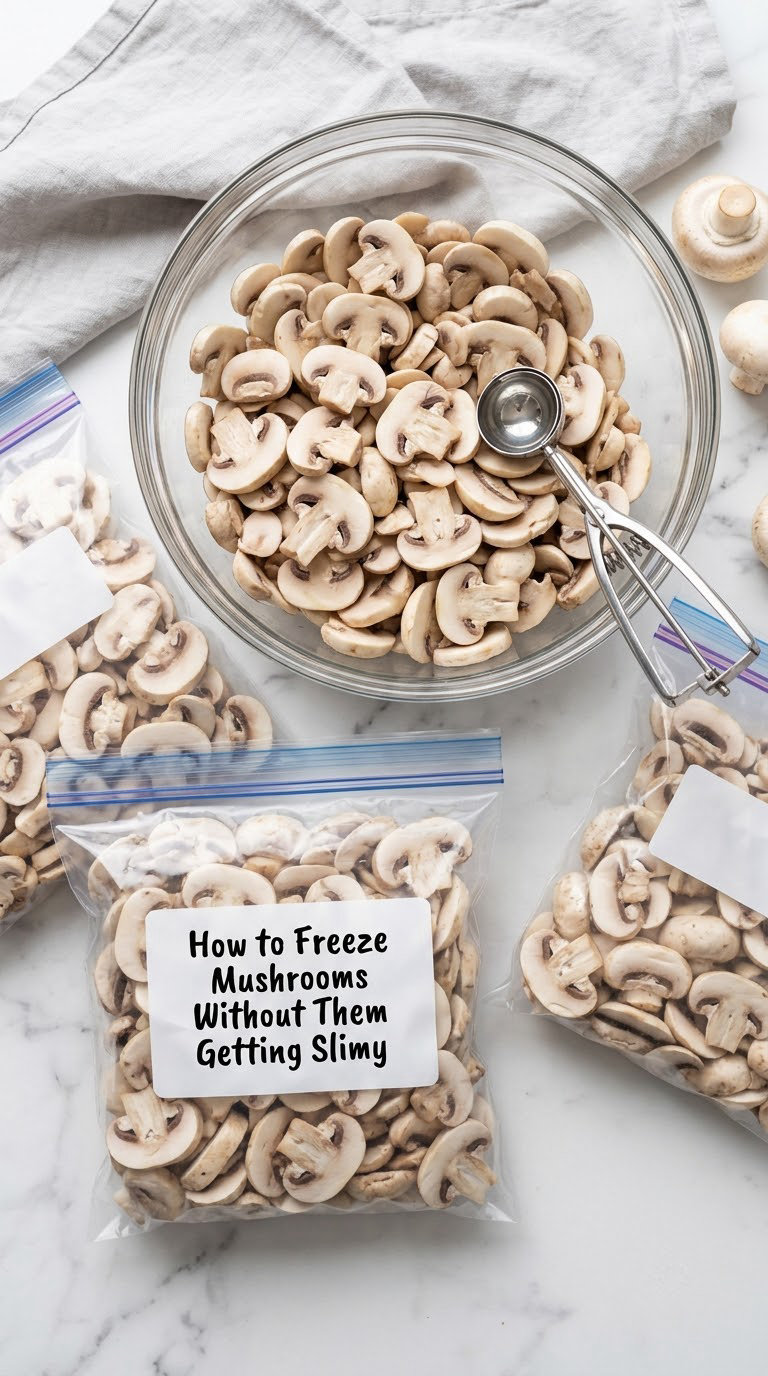
This is the full method. It works for mushrooms you blanched, sautéed, or steamed.
- Cook the mushrooms. Sauté in a hot pan for 5 to 7 minutes without crowding, or blanch for 3 to 5 minutes depending on the cut.
- Drain and cool completely. Spread them on a plate or a baking sheet and let them cool to room temperature. Packing them warm traps steam, and that steam condenses into the water you are trying to avoid.
- Flash-freeze in a single layer. Arrange the pieces on a parchment-lined sheet pan with no touching. Freeze for 1 to 2 hours, until solid.
- Portion. Move the frozen pieces into a freezer bag or container. One quart bag holds about two cups of sliced mushrooms, or roughly a quarter pound, so a full sheet pan makes two or three bags.
- Push the air out. Zip the bag and press the excess air toward the corner, or run a vacuum sealer over it. Mushrooms are among the worst offenders for freezer burn because of the water content.
- Leave headspace in containers. Mushrooms expand as they freeze, so keep about an inch of empty space at the top of a rigid container or the lid will be impossible to open later.
- Label with the type and date. A freezer full of flat white bags is a puzzle nobody wants to solve in February.
Stack the bags flat like books rather than piling them loose, and put the newest bags at the front so you use them first. A community tip worth trying: a small pinch of cornstarch shaken into the bag keeps the pieces from fusing into a single brick when they freeze together.
Another one from cooks who do this by the pound: dry-pan sauté the mushrooms instead of adding oil. They release their own water, you let it cook away, and you get the same pre-cook with almost no fat going into the freezer bag.
Can You Freeze Mushrooms Without Blanching Them?
You can, and plenty of foragers do it. The trade-off is honest: raw-frozen mushrooms keep their shape for foragers who care about identification, but they come back rubbery and they weep liquid as they thaw. In a soup that water mostly disappears into the broth. In a skillet it pools and steams the food around it.
If you freeze raw, the sheet-pan step is not optional. Spread the pieces in a single layer, freeze them solid for at least 2 hours, then bag them. Mushrooms dumped loose into a bag freeze into one clump, and the only way to break that clump apart later is with your fingers.
My advice for a beginner: freeze your first batch sautéed. Come back to raw freezing once you know what you want the mushrooms for.
Sautéed Mushrooms vs. Raw Mushrooms for Freezing
Sautéed mushrooms come back firm and slightly chewy, and they hold their shape in a pan. Raw mushrooms come back softer, release water, and lose the browning flavor that makes mushrooms worth cooking in the first place.
Flavor is the real difference. Sautéing drives off water and concentrates the sugars, so a thawed sautéed batch tastes like mushrooms. A thawed raw batch tastes like a warm, damp vegetable with none of that.
Convenience is the one point in raw’s favor. No pan, no stove, no 7 minutes. For a forager with 20 pounds of porcini, that matters. For someone with a half pound from the grocery store, the extra 7 minutes is worth it.
Best uses for sautéed: pizza, frittata, pasta, grilled cheese, a pan sauce. Best uses for raw: soups, stews, risotto, and anything where the liquid goes into the dish rather than the pan.
How Long Can Mushrooms Stay Frozen?
Plan on 9 to 12 months for cooked mushrooms, and use them inside that window. Quality starts slipping around month 6 for raw batches.
| Stage | Time | Notes |
|---|---|---|
| Counter, before cooking | 1 to 2 hours | Never more, and only in a cool kitchen |
| Fridge, raw in a paper bag | 5 to 7 days | 7 to 10 days at best, paper towel changed daily |
| Fridge, cooked | 3 to 4 days | Covered container, not the plastic wrap the mushrooms came in |
| Freezer, sautéed | 9 months | Firmest texture |
| Freezer, blanched or steamed | 12 months | Slightly softer |
| Freezer, raw | 6 months | Usable, not recommended |
To thaw, move the bag to the fridge the night before and cook straight from there. Some foragers freeze in flat bags in their own juice and let the liquid thicken the dish, which is a legitimate style if you are using them in soup.
While you are stocking the freezer, you may also want freezing mashed potatoes for later or a look at freezing cooked rice safely, because those two go through the same cool-completely-then-flat-freeze routine.
How to Thaw Frozen Mushrooms Without Getting Soggy
Cook from frozen whenever you can. It is the single rule that keeps thawed mushrooms from turning to mush, and it is repeated more often than any other tip in the cooking forums. Thawing first means the ice melts, the water leaves, and the flesh has nothing left to hold onto.
When you must thaw, move the bag to the fridge overnight and drain the pieces in a colander before they go anywhere near a pan. Skip the counter and skip the microwave; both warm the mushrooms unevenly and cook them in their own released water.
Skillet thawing works if you are cooking immediately. Put the frozen pieces into a hot dry pan, let them sit 30 seconds to shed the ice, then add oil and season. Most of the liquid boils off in two or three minutes.
Cooking from frozen in soup or stew: add the mushrooms straight to the pot with the cold liquid, and give it five extra minutes. Frozen mushrooms need a little more cooking time than fresh, not less.
Common Mushroom Freezing Mistakes
Freezing mushrooms that were already going slimy
Freezing stops decay, it does not reverse it. Mushrooms that are damp, dark, or soft in the fridge will be worse after thawing. Sort out anything questionable before it reaches the sheet pan.
Packing mushrooms while they are still warm
Warm mushrooms release steam, and the steam condenses inside the bag. Cool them on a sheet pan until no warmth is left, which takes 20 to 30 minutes for a sautéed batch.
Dumping mushrooms straight into the bag
They freeze into one solid brick. Flash-freeze on a lined sheet first and separate the pieces only once they are solid.
Leaving air in the bag
That trapped air is what freezer burn eats. Press the bag flat, or use a vacuum sealer.
Over-blanching
More than 5 minutes in boiling water turns thin slices to paste. Time them, and remember that bigger pieces need longer than small ones.
Thawing before cooking
Thawed raw or cooked mushrooms release a surprising amount of water. Add them frozen and let the dish cook around them.
Cramming a rigid container full
Mushrooms expand as they freeze. Leave an inch of headspace or the lid fights you later.
Skipping the label
Cooked mushrooms look identical frozen and thawed. Write the type and the date on the bag with a marker, and put the date on top.
Ways to Use Frozen Mushrooms
Soups, stews, and sauces are the easiest home for frozen mushrooms because the released liquid becomes part of the dish. Add them to a cold pot with the broth and let everything come together, then skim any foam off the top.
Stir-fries work well if you cook them from frozen in a very hot pan. The mushrooms hit the wok already frozen, sear before they can release their water, and come out close to restaurant texture.
Pizza and pasta toppings need no adjustment at all. Scatter them frozen over the sauce and let the oven do the work. The same goes for casseroles, baked pasta, and mushroom lasagna.
Omelets, quiches, and frittatas are trickier, since the eggs cook fast. Thaw in the fridge overnight for these, drain well, and add them to a hot pan rather than mixing them into raw eggs.
For a creamy result, I freeze some batches already in a simple butter and garlic sauce, in a flat bag. It saves a pan on a weeknight, and for those chicken and mushroom recipes that finish in a skillet, a spoonful straight from the bag is exactly what you want.
Frequently Asked Questions
Should I wash mushrooms before freezing them?
Usually not. Dry brush the caps and trim the stem base, which keeps the flesh dry and stops extra water from traveling into the freezer. Rinse only shiitake, oyster mushrooms, and anything visibly dirty, and pat them completely dry afterward. Any surface water left on a mushroom makes the pan spit, steams instead of browns, and ends up as extra liquid in the bag.
Does freezing ruin the texture of mushrooms?
Freezing always softens mushrooms a little, but cooking them first keeps that change small. Sautéed slices come back firm and chewy for around 9 months, and blanched or steamed pieces hold up for 12. Raw mushrooms are the real casualty: they thaw rubbery and release water, which is why most cooks freeze them already cooked.
Can you bread and freeze mushrooms?
You can, but breading goes on last. The coating absorbs freezer odor and goes soggy, so freeze the mushrooms cooked and uncoated, then bread and bake or air-fry straight from the freezer at the higher temperature the coating needs. A quick dredge in seasoned flour just before it hits the pan gives the same result with no sogginess.
How long can mushrooms sit in the fridge before freezing?
Up to about a week if you store them properly. Keep them in a paper bag or a bowl lined with paper towel in the main compartment of the fridge, never in airtight plastic wrap or the clamshell they came in, which traps condensation and makes them go slimy faster. Anything already soft or dark before freezing should not be frozen at all.
Can freezing destroy mushroom toxins?
No. Freezing, drying, and cooking do not neutralize the toxins in poisonous mushrooms, and freezing them does not make an unidentified species safe to eat. Only freeze wild mushrooms you can identify with certainty. If there is any doubt about a specimen, leave it alone rather than putting it in the freezer.
What to Do First
Pick one method and stick with it. For most kitchens, that means sautéing sliced mushrooms for 5 to 7 minutes, cooling them on a sheet pan, flash-freezing them loose for 1 to 2 hours, and bagging them with the air pushed out. Label the bag, date it, and get them into the freezer before dinner.
Once you have a few batches in there, you will stop worrying about a mushroom turning slimy in the back of the fridge, and that is the whole point of learning how to freeze mushrooms. Mushrooms go from about 90% water to frozen solid in under half an hour of work, and they will still be there in February.