
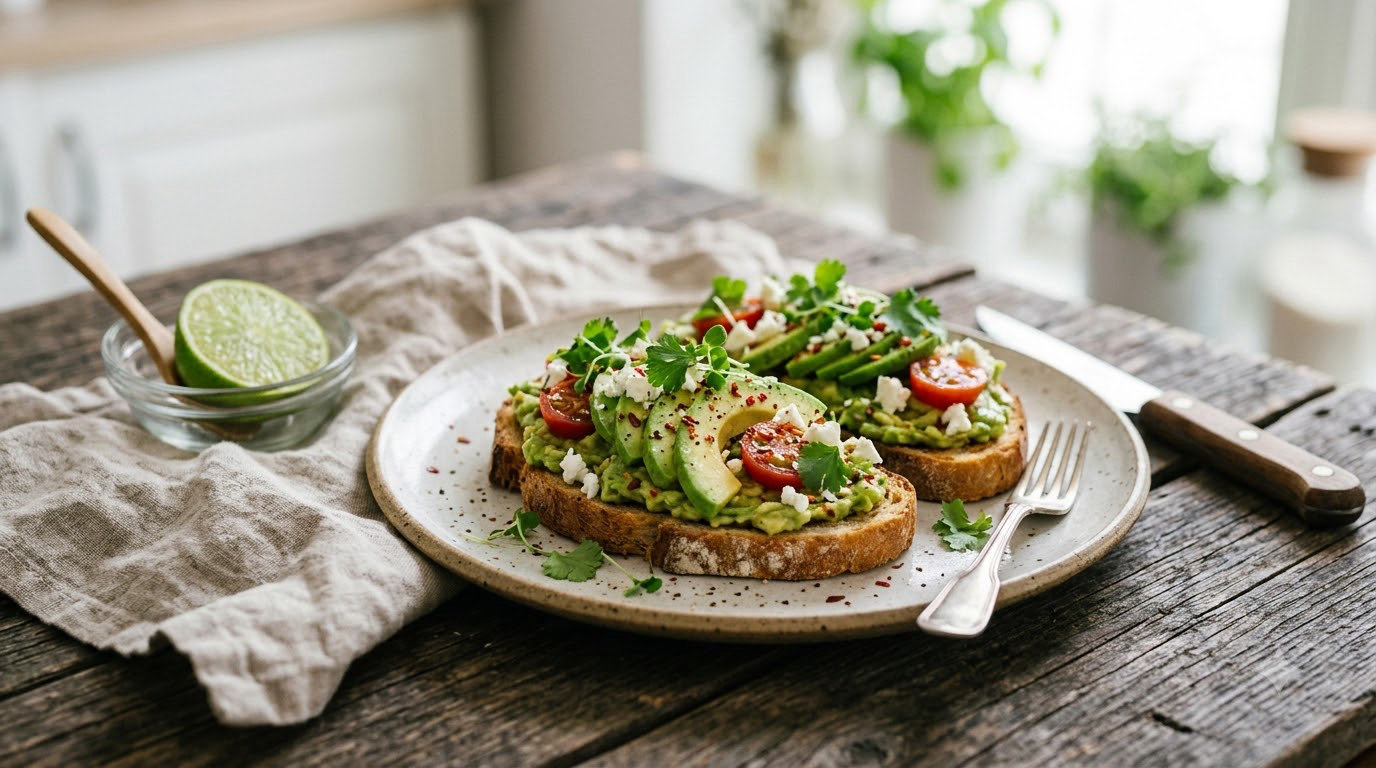
If you have just cut an avocado and want it to still be good tomorrow, brush the exposed flesh with lemon or lime juice, press plastic wrap directly against the surface so no air sits between the fruit and the film, then refrigerate. That combination — acid, contact wrap, cold — holds a cut avocado green and firm for roughly 2 to 3 days. Slices and cubes outlast a bare half.
Avocados are one of the most expensive things in the fruit bowl, and a half used for toast leaves behind exactly the part most likely to turn brown by morning. The browning itself is harmless — it is a chemical reaction between an enzyme called polyphenol oxidase and the oxygen in the air, not spoilage. So the whole job is slowing that reaction down with acid, keeping oxygen away, and keeping the fruit cold.
This guide covers the four storage methods that actually work, how long you get from each one, how to freeze cut avocado when you want to keep it longer than a few days, and the mistakes that turn a well-covered half into a brown puddle by breakfast. If you like to know your fruit before you cut it, our cutting board guide covers how to prep without bruising the flesh.
Table of Contents
How to Store Avocados After Cutting: 4 Methods That Work
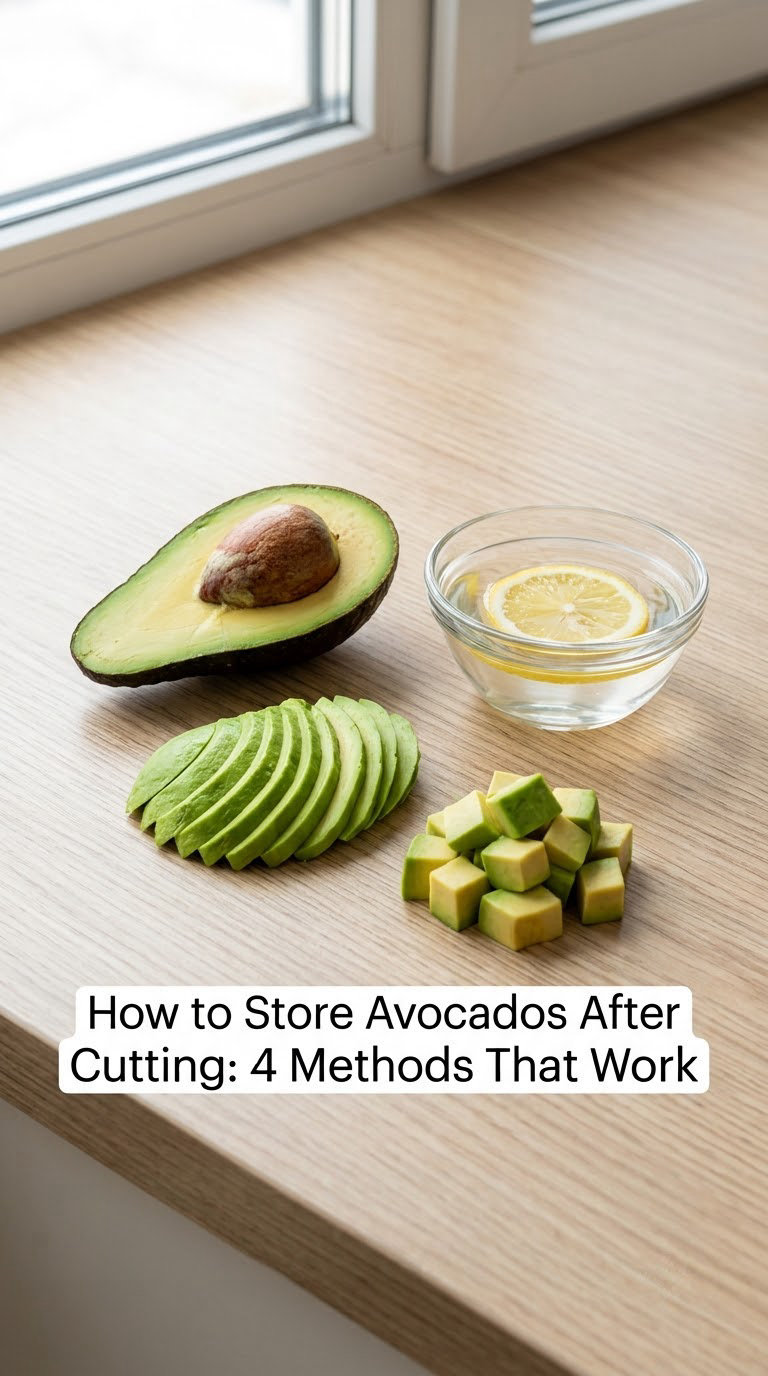
How to store avocados after cutting comes down to two things: stopping the flesh from touching air, and slowing the enzyme that reacts with it. The four methods below all do at least one of those well, and the best ones do both.
1. The plastic-wrap contact method. Squeeze a little lemon or lime juice over the cut face, then press cling film straight onto the flesh with no gaps. The film touches the avocado, which keeps moisture in and oxygen out. This is the strongest all-round method for halves and large pieces, and it is what I use almost every week.
2. The airtight container with citrus juice. Toss or dip slices and cubes in lemon juice, then seal them in a glass or plastic container with a tight lid. The juice coats many small cut faces at once, which matters more for cubes than for halves. Expect about 2 to 3 days refrigerated.
3. Acidulated water (the bowl method). Put the pieces in a shallow container, pour over water loosened with lemon or lime juice, and press the pieces under the surface so no part sits above the waterline. Change the water the next day if the fruit is staying in. This slows browning nicely for a few hours, but the flesh goes watery and slightly flat in flavour, and the FDA advises against water submersion as a general storage method, so I use it for a short hold, not for a full day.
4. Refrigeration alone, no added liquid. Wrapped or in a sealed box, cold on its own will not stop browning, but it slows it a lot. An uncovered half on a plate browns in a few hours at room temperature and takes most of a day in the fridge. This method is your fallback when you have no lemon in the house, and it buys you about a day.
Storage time depends mostly on how much surface area you created. A half has one large cut face and stays usable longest, slices are next, and cubes have the most exposed edges and turn first.
| Cut form | Acid plus contact wrap | Airtight container plus juice | Refrigerated, nothing added |
|---|---|---|---|
| Half, pit in or removed | 2 to 3 days | 1 to 2 days | About 1 day |
| Slices | 2 to 3 days | 2 to 3 days | About 1 day |
| Cubes | 2 days | 2 days | Half a day |
| Mashed or guacamole | About 12 hours | About 12 hours | Several hours |
One table worth keeping in your head: the more surface you expose, the faster the clock runs.
Which Storage Method Works Best for Cut Avocado?
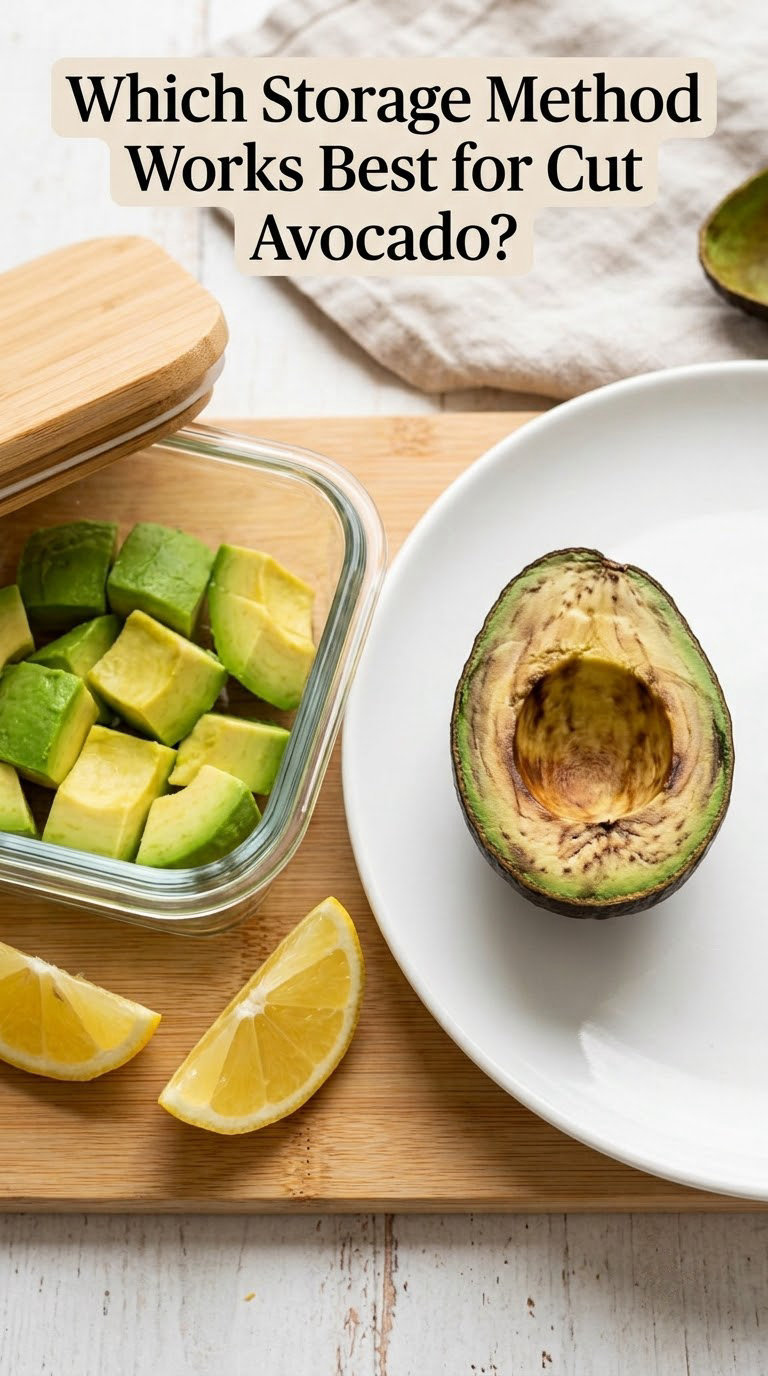
The plastic-wrap contact method ranks best overall, because it is the only one that blocks air and adds acid at the same time without changing the texture of the flesh. An airtight container with citrus is the runner-up and is easier when you have a lot of small pieces.
| Method | Preparation | Best cut shapes | Time in the fridge | Browning control | Tradeoff |
|---|---|---|---|---|---|
| Plastic wrap in contact | Brush with citrus, press film onto flesh | Halves, thick slices | 2 to 3 days | Strongest | Film can loosen if the flesh is wet |
| Airtight container plus juice | Toss in lemon or lime juice, seal the lid | Slices, cubes | 2 to 3 days | Strong | Juice can sour a cut surface left too long |
| Acidulated water | Submerge in lemon water, cover, chill | Cubes, slices | Up to 24 hours, change water daily | Moderate for a few hours | Watery texture, not advised by the FDA for storage |
| Refrigeration alone | Covered or sealed, no liquid | Any | About 1 day | Weak on its own | Browning is slowed, never stopped |
Refrigeration slows browning, it does not stop it. There is always some oxygen in a fridge, and the enzyme keeps working at a slower pace until the fruit is thoroughly cold and wrapped. Anyone promising you cut avocado will sit untouched for a week has oversold it.
How to Keep Cut Avocado Green for Longer
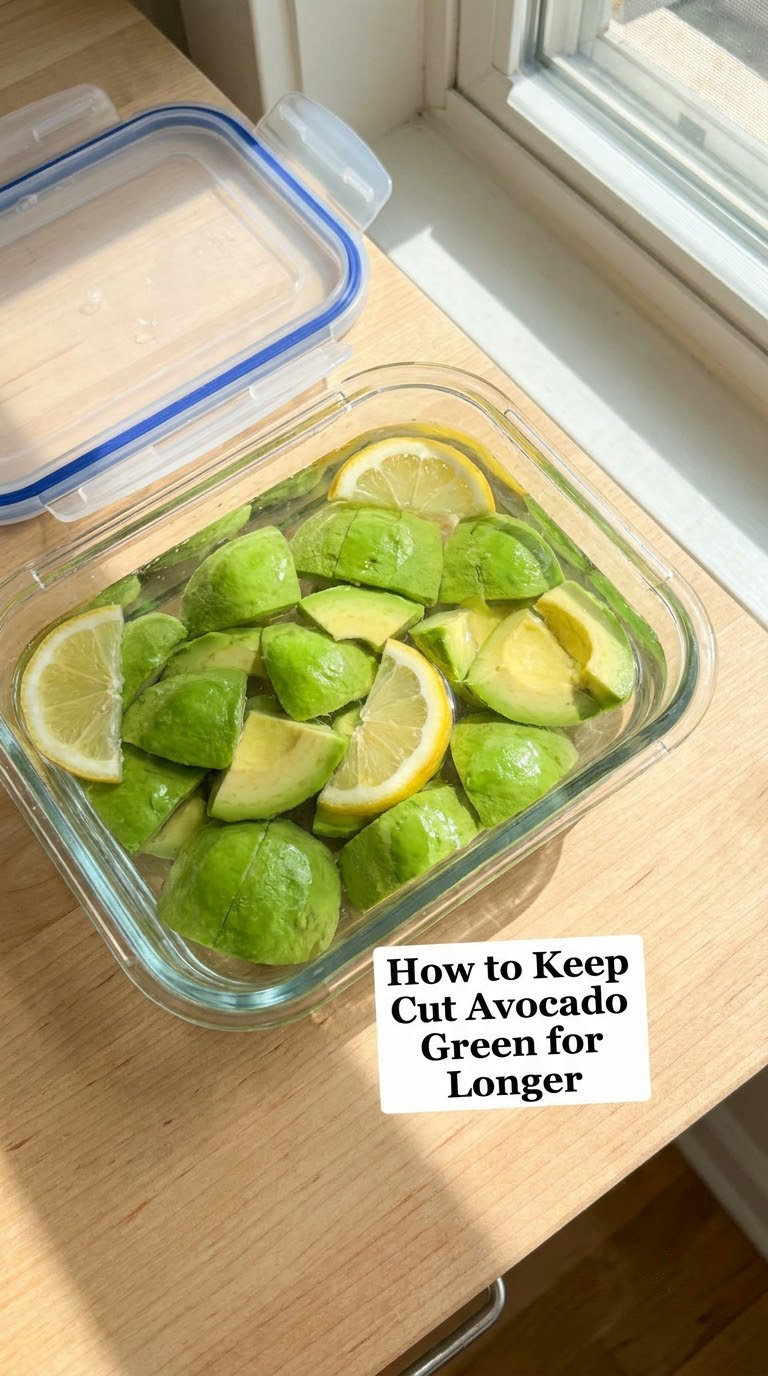
To keep cut avocado green longer, work in this order: treat the surface with acid, remove the air, then chill fast. Skipping any one of the three gives you back hours of freshness, and hours are what most people actually need.
Here is the step-by-step version for the acidulated-water method, which is the one that works on lots of small pieces at the same time.
- Make the water. Fill a shallow container with cold water, then add lemon or lime juice at about one tablespoon per cup. You want it to taste faintly sour, not sharp. Too much juice and the avocado takes on a sour edge.
- Cut to a size that will sit under the surface. Halves laid flat and thin slices submerge easily. Large wedges tend to float and poke above the waterline, which is where browning starts.
- Submerge completely. Lay the pieces in, press them down with a small plate or a spoon so every cut face is under the liquid, and top the container up if the pieces are buoyant.
- Limit air exposure. Cover the container and get it into the fridge within minutes. A short fridge soak is a holding pattern, not a place to leave fruit for a day or two.
- Refrigerate promptly. Keep it at or below 40°F (4°C). Change the water the next day if the fruit is staying in, and give the pieces a quick rinse before eating.
For anything you plan to eat within a day, the wrap-and-refrigerate method beats the water bowl, because the flesh keeps its creamy texture and the flavour stays clean. Reach for the water bowl when you have a pile of prepped cubes and no time to wrap each one.
Should You Use Plastic Wrap, Lemon Juice, or Both?
Use both. They do different jobs, and neither one is enough on its own. Citrus juice lowers the pH on the surface, which slows the browning enzyme. Plastic wrap removes the oxygen that enzyme needs. Acid alone goes brown in a few hours, and wrap alone holds colour for a day at most.
The detail people miss is the pressing. Plastic wrap laid loosely over a half will dome up in the middle and leave an air pocket right over the softest flesh, which browns first. Push the film down with your palm so it follows the dip where the pit sat, and smooth the edges down onto the skin.
For halves, the wrap matters most because the cut face is large. For cubes and slices, the juice matters most because there are more cut faces to coat. A light, even coating is enough — a thick slick of juice pools at the bottom of the container and gives the fruit a sour taste on day two.
Use fresh juice, not a bottle that has been open for weeks. Bottled lemon juice is weaker and more muted in acidity, so it slows browning less than juice you just squeezed. Lime works the same way and is often the better choice if you are building guacamole, since it is already in the bowl.
How Long Do Cut Avocados Last in the Fridge?
A cut avocado stored with acid and contact wrap stays usable for 2 to 3 days at 40°F (4°C) or below. A half keeps better than cubes, and mashed avocado is the shortest window of all at roughly 12 hours.
Here is how the timing breaks down by how you stored it.
- Use it the same day: anything works. If you cut it for lunch and eat it at lunch, the storage question is already answered.
- Overnight, up to 24 hours: acid plus contact wrap, or an airtight container with juice. This is the range where almost every method still produces a decent piece of fruit.
- Two to three days: only the two strong methods hold up. Wrapped and chilled, a half is still green at the edges; cubes start to look tired by day three.
- Beyond three days: quality drops fast. The flesh browns through, the texture goes from creamy to mealy, and freezing is the better plan.
Judge freshness on smell and texture, not colour. A thin brown film on the surface is the oxidation reaction and you can scrape it off with a spoon; a fully brown piece with a sour, fermented smell or a slimy feel is spoilage and belongs in the bin. Press the flesh gently too. If it dents under a fingertip instead of giving slightly, the cell structure has broken down and the texture will not come back no matter what you do to it.
One more check before it goes in the fridge: the fruit should be ripe but not soft. An underripe half will not brown quickly, but it also will not be pleasant for two more days, and an overripe one is already losing texture before you store it. If you want the timing guide for whole fruit, our walnut cutting board picks are the boards I would actually use for the prep step.
Can You Freeze Cut Avocado?
Yes, and freezing is the answer when you want to keep cut avocado for weeks instead of days. The trade is texture. Thawed avocado is soft and slightly watery, so it is a poor fit for toast or a salad but a very good one in smoothies, dips, and baked dishes where it gets mashed anyway.
Freeze it in these steps.
- Use a ripe but firm avocado. Very soft fruit freezes into mush, and underripe fruit stays hard and starchy.
- Scoop and dice or puree. Leaving the fruit in a half and freezing it whole wastes the part you are unlikely to use. Dice for smoothies, puree for guacamole and baking.
- Toss with lemon or lime juice. A teaspoon of juice per cup of diced fruit slows browning during freezing and thawing. Lime is less sharp in flavour, so it is the nicer option for sweet applications.
- Spread it in a single layer to freeze first. A flat tray for 30 to 60 minutes stops the pieces clumping into one solid block.
- Move to a freezer bag or airtight container. Squeeze out the extra air, label with the date, and keep it flat. Frozen avocado holds 3 to 4 months at 0°F (-18°C).
Thaw it in the fridge rather than on the counter, and use it straight from thawed. There is no need to rinse off the lemon coating, and a splash of fresh lime after thawing wakes up the flavour if the fruit sat a while.
Freezing is a different job from refrigeration. The fridge is for the next meal, the freezer is for the month ahead, and the texture difference between them is real enough that you should not freeze and then thaw for toast.
Common Mistakes When Storing Cut Avocado
Most brown avocados I have rescued started with one of these. The fixes are quick once you know which one happened.
- Leaving the fruit uncovered. A cut half on a plate browns in a few hours. Fix: put it in the fridge inside thirty minutes of cutting, not whenever you remember the leftovers.
- Wrapping loosely. The film domes over the pit hollow and traps air exactly where the flesh is softest. Fix: press the wrap down with your palm until it makes contact all the way across.
- Leaving flesh on the pit. That ring of avocado around the seed browns and traps moisture, and it is exactly the part that goes slimy first. Fix: scrape the pit clean before wrapping, or cut the halves and discard the pit.
- Using a thin, uneven coating of juice. A few drops in the middle of a half does nothing on the outer thirds. Fix: use a brush or the back of a spoon to spread a thin film over the whole cut face.
- Sealing a container with air inside. A lid that clicks shut over a half-empty box still has plenty of oxygen in it. Fix: fill the container, press out trapped air, and seal right away.
- Waiting too long to refrigerate. Browning speeds up fast at room temperature, and by the time the fruit is cold the damage is already done. Fix: chill within two hours of cutting, or within one hour if the kitchen is hot.
- Using colour as the only freshness test. Brown means oxidised, not necessarily bad. Fix: smell it and press it. A neutral smell and a slight give means fine; a sour smell and a mushy feel means discard.
A related habit worth dropping: storing cut avocado next to bananas, apples or other ethylene-producing fruit in the same crisper drawer. Ethylene gas speeds ripening, and ripening is what turns creamy flesh dark. Keep cut pieces on a different shelf from ripening fruit.
Frequently Asked Questions
Can you store cut avocado without lemon juice?
Yes. Press plastic wrap directly against the cut face, seal the piece in a container or bag, and refrigerate. Without acid you get roughly a day of good colour instead of the 2 to 3 days that citrus plus wrap gives you. Use this when you have no lemon or lime in the house, and keep the refrigerated time shorter.
Is it better to store avocado halves with or without the pit?
With the pit is slightly better. The seed holds the centre of the half together and keeps the softest area from collapsing, but it is not a seal and it does not stop browning. Scrape any flesh left on the pit before you wrap, since that ring browns and goes slimy faster than the rest. Leaving the pit in does not change how long the fruit keeps.
Why does my cut avocado turn brown in the fridge?
Because a fridge is not free of oxygen, and the enzyme polyphenol oxidase keeps reacting with it on every exposed cut face. Cold slows the reaction; it does not stop it. An uncovered half, a loose wrap, or a container with air inside all leave more surface touching oxygen. Acid plus a tight contact wrap plus cold is what slows it enough to buy you two or three days.
Can I leave cut avocado out overnight?
Skip it. Cut avocado sits at room temperature in the range where bacteria multiply quickly, and unlike a whole fruit it no longer has an unbroken skin protecting it. Cut pieces should be refrigerated within two hours, or within one hour if the room is above 90°F (32°C). If you need a longer hold, freeze the pieces instead of leaving them out.
Does coating avocado in oil stop it from browning?
Oil helps a little, but it is weaker than citrus and it behaves oddly on a cut half. Any oil you brush on runs down into the pit hollow and pools there while the outer edges get almost none. A thin film also rinses off easily if you are eating the avocado with salt, and it can taste flat. Lemon or lime plus a contact wrap is the better combination.
How do I keep mashed avocado from turning brown?
Mashed avocado has the shortest window of all, around 12 hours refrigerated, because mashing opens up far more surface area. Press plastic wrap straight onto the surface of the mash so there is no air layer, dot the top with lemon or lime juice, and keep the container closed. For guacamole, lime is the traditional choice and rounds out the flavour. Beyond 12 hours, freeze it.
What I Do in My Own Kitchen
If you cut one avocado today and want half of it tomorrow, do this: squeeze lemon or lime over the cut face, press plastic wrap into contact, and put it in the fridge inside thirty minutes. That one habit covers almost every case, and it is why I rarely throw a cut avocado away.
Save the acidulated water for prepped cubes you want to use the same evening, and save the freezer for fruit you will not touch for weeks. Knowing how to store avocados after cutting is mostly a matter of acting in the first half hour, while the flesh is still bright and the enzyme has barely started.