
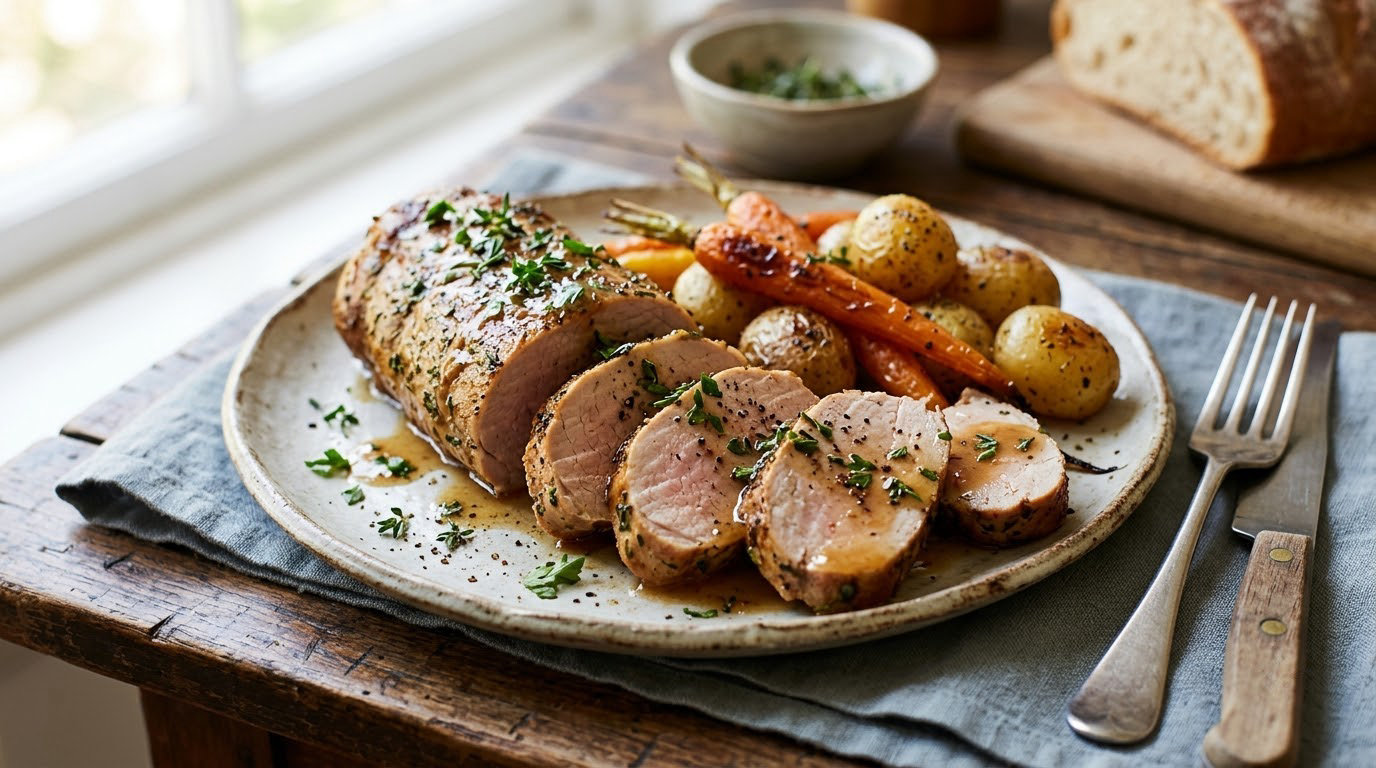
Cook pork tenderloin at 400°F (204°C) in a fully preheated oven for about 20 to 25 minutes per pound, then pull it the moment an instant-read thermometer reads 145°F (63°C). Let it rest 10 to 15 minutes before slicing. That one temperature, one time estimate, and one temperature check give you a browned crust and a juicy center without any guesswork.
Tenderloin is the leanest cut in the case, with almost no fat cap and very little intramuscular fat. It has no cushion against overcooking, which is why recipes on this topic contradict each other so loudly. One says 350°F, another 425°F, and a third famously says 500°F.
Here is the version that holds up. If you remember only one thing, remember 145°F. If you remember only one oven setting, remember 400°F. Everything below is detail built on those two numbers.
Table of Contents
What Temperature to Cook Pork Tenderloin in the Oven: Quick Guide
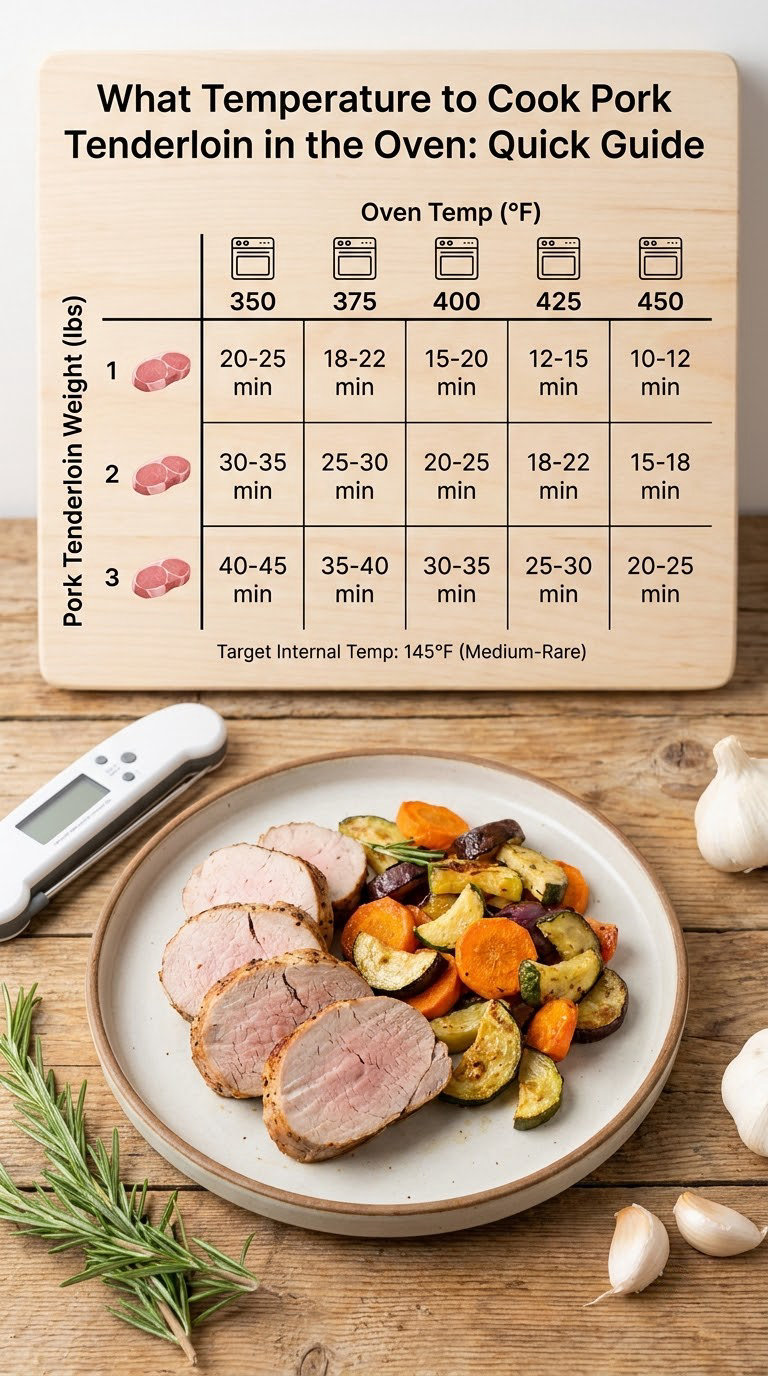
400°F (204°C) is the best all-around oven temperature for pork tenderloin, giving you a browned outside and a fast, even cook. Use 425°F (218°C) when you want a darker crust in less time, and 350°F (177°C) when you prefer gentler heat for a very large tenderloin.
| Oven temperature | 1 lb (450 g) | 1.5 lb (680 g) | 2 lb (900 g) | 2.5 lb (1.1 kg) | 3 lb (1.4 kg) |
|---|---|---|---|---|---|
| 350°F (177°C) | 25-30 min | 35-40 min | 45-50 min | 55-60 min | 65-70 min |
| 375°F (191°C) | 20-25 min | 30-35 min | 40-45 min | 50-55 min | 60-65 min |
| 400°F (204°C) | 18-22 min | 25-30 min | 35-40 min | 45-50 min | 55-60 min |
| 425°F (218°C) | 15-20 min | 22-26 min | 30-35 min | 38-45 min | 48-55 min |
| 450°F (232°C) | 12-16 min | 18-22 min | 24-30 min | 30-36 min | 38-44 min |
These times take a tenderloin from fridge temperature to a safe 145°F (63°C) internal, and they assume a conventional oven. Treat them as a starting point, not a finish line. The thermometer decides when it is done.
Because the meat keeps cooking after it leaves the oven, pull it about 5°F (3°C) under your target, around 140°F (60°C), and let the residual heat finish the job during the rest. If your oven runs hot, this margin matters even more.
Pork Tenderloin Oven Temperature and Cooking Times
Roasting uses dry heat, and a lean cut loses moisture the whole time it is in there. The fix is not a lower temperature. It is a temperature hot enough to brown the surface quickly, paired with the shortest cook that still reaches 145°F (63°C).
That is why 400°F (204°C) works so well as a default. At 350°F (177°C) the meat spends a long time losing moisture before the outside colors, and you land closer to 45 minutes for a 2-pound tenderloin. At 425°F (218°C) the crust arrives sooner and the window for overcooking gets tighter, which is a trade many cooks happily make on a weeknight.
| Setting | Crust | Texture | Best for |
|---|---|---|---|
| 350°F (177°C) | Light | Very tender, moist | Large 3 lb plus roasts, or a forgiving slow Sunday cook |
| 400°F (204°C) | Golden | Moist, juicy | Everyday roasts up to 3 lb, weeknight dinners |
| 425°F (218°C) | Deep brown | Moist, slightly firmer | Holiday roasts, sliced pork for sandwiches |
Time scales with weight but also with thickness, and the two are not the same thing. A 2-pound tenderloin rolled into a thick cylinder cooks differently from a 2-pound tenderloin left flat, even in the same oven at the same temperature. Rolling or butterflying it changes the distance heat has to travel.
For a convection oven, drop the setting by 25°F (14°C) and keep the time the same, so 400°F (204°C) becomes 375°F (191°C). Convection runs hotter because the fan moves air past the meat continuously.
One more thing that gets overlooked: home ovens are frequently 25°F (14°C) off in either direction. That single fact explains a surprising share of why recipe times fail in one kitchen and work in another. If your roasts consistently finish early or run late, the oven is the first thing to check, not your technique.
Choosing the Right Doneness Temperature
The USDA safe minimum internal temperature for whole cuts of pork is 145°F (63°C) followed by a 3-minute rest. Modern whole-muscle pork is safe well before it looks cooked through, so a trace of pink at 145°F (63°C) is normal rather than a sign of undercooking.
Many experienced cooks pull earlier, at 140°F (60°C) to 143°F (62°C), and let carryover cooking carry the center to 145°F (63°C) or a little beyond. The meat loses noticeably less moisture that way. If you like a fully uniform interior with no pink whatsoever, cook to 160°F (71°C) instead, and expect a slightly drier, tighter texture on this very lean cut.
Whatever you aim for, rest the roast before you cut it. Three minutes is the safe minimum, but 10 to 15 minutes is what keeps the juices in the meat while you slice. Our full breakdown of what temperature is pork done at covers the same numbers across other cuts.
How to Cook Pork Tenderloin in the Oven
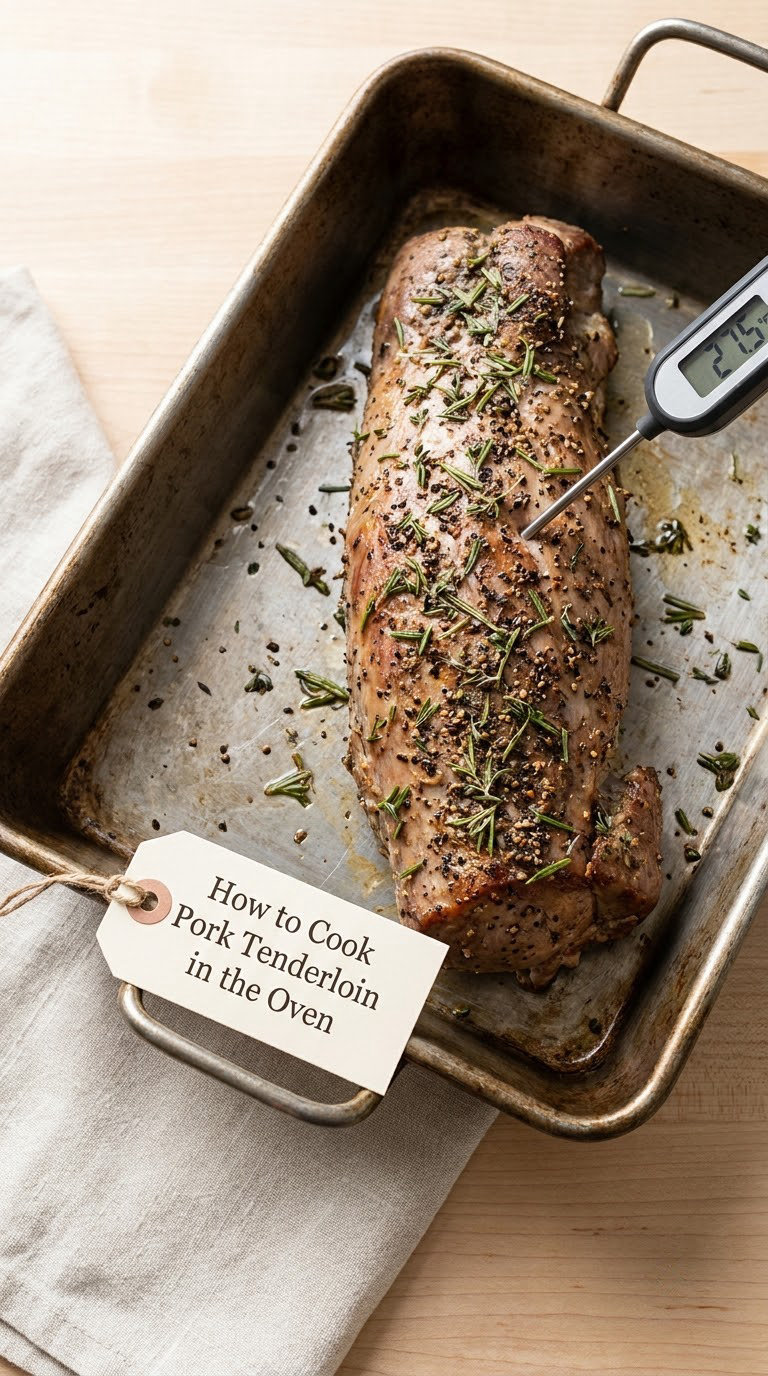
This is the method I come back to, and it is close enough to the base method in our roundup of easy pork tenderloin recipes to use for most nights.
- Take the tenderloin out of the fridge 30 to 45 minutes before cooking so it is not fridge-cold in the middle.
- Preheat the oven to 400°F (204°C) and put the empty roasting pan in to heat with it.
- Pat the tenderloin completely dry with paper towels, then season it all over with salt, pepper and whatever rub or marinade you like.
- Set the pan on the stovetop over medium-high heat, add a thin layer of oil, and sear the tenderloin for 1 to 2 minutes per side until the surface is browned.
- Transfer the pan to the oven and roast uncovered. Start checking temperature when you are about 5 minutes from the time in the chart.
- Probe the thickest part of the tenderloin and pull it the moment it reads your target, usually 140°F (60°C) to 143°F (62°C) for a carryover finish.
- Rest the tenderloin on a cutting board for 10 to 15 minutes. Do not slice it early and do not cover it tightly, or the crust softens.
- Slice against the grain into 1/2-inch medallions and serve, or store the leftovers loosely covered.
For a larger crowd, roast two tenderloins in separate pans rather than crowding one. Two pans also mean both pieces cook at the same rate instead of one waiting on a crowded dish.
How to Use an Instant-Read Thermometer Correctly
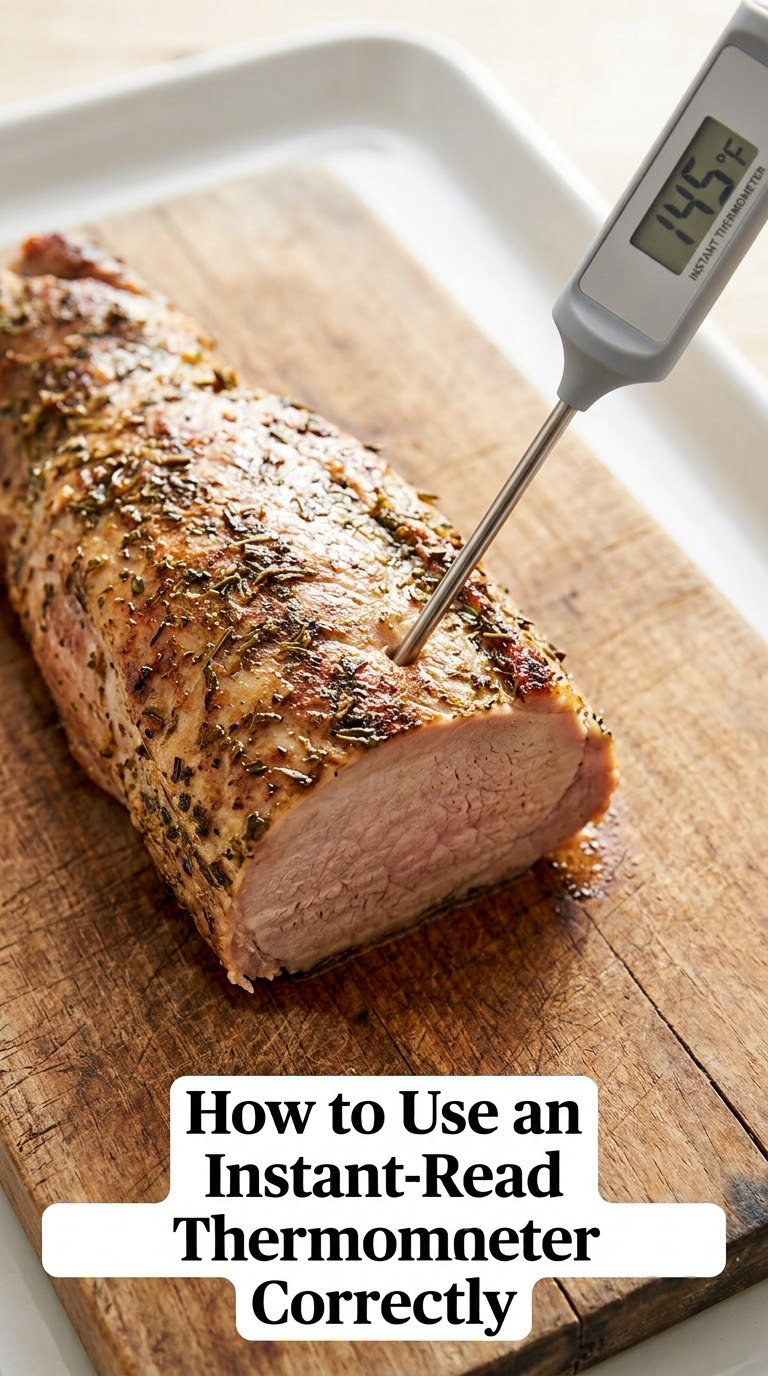
Place the probe in the thickest part of the tenderloin, about 1 to 2 inches from the end, aiming at the very center. Stay away from the sides of the pan, which conduct heat and read falsely high, and avoid the very ends, which run cooler.
Two habits make the reading trustworthy. Take the tenderloin out of the oven for a few seconds before probing so you are not reading a hot artifact or a steam cloud, and probe in a second spot if the first number looks wrong. A cold spot in the thickest section is a real thing on thick cuts, and it is the reason slicing a tenderloin that “looked done” sometimes reveals a raw center.
Start checking early rather than late. Time is a guess, temperature is a fact, and a glance costs nothing compared with five extra minutes in a hot oven.
If you roast often, a leave-in probe thermometer with an alarm takes the guessing out entirely. Set it for your pull temperature and walk away. Our oven-baked pork chops guide uses the same probing technique on a fattier cut, which forgives placement errors a tenderloin does not.
Common Mistakes When Roasting Pork Tenderloin
- Roasting in a cold oven. A tenderloin in a cold oven spends extra minutes losing moisture before the heat reaches it. Preheat fully, and add 5 to 10 minutes to the cook time if your oven takes a long time to preheat.
- Trusting the recipe time instead of the thermometer. Two tenderloins of the same weight can finish six minutes apart. The clock starts you; the thermometer finishes the job.
- Probing against the pan. Metal conducts heat straight to the tip. A reading taken there can read 10°F (6°C) or more high and leave you with dry pork.
- Cooking past 160°F (71°C). On a cut this lean, the jump from juicy to dry happens fast, and no amount of resting brings moisture back.
- Skipping the rest. Slicing straight off the pan dumps the juice onto the board. Fifteen minutes of rest is the difference between a moist roast and a dry one.
- Roasting with no liquid in the pan. A splash of stock or apple juice in the roasting pan keeps the underside from drying out and gives you a quick sauce.
Leftovers keep 3 to 4 days in the fridge. Reheat them to 165°F (74°C), and check our leftover pork tenderloin recipes for turning a second-day roast into a meal instead of a side dish.
Frequently Asked Questions
Is it better to cook pork tenderloin at 350 or 400?
Both work, and the difference is a crust-versus-moisture trade. At 350°F (177°C) a 2 lb tenderloin needs roughly 45 to 50 minutes and stays very moist with a light crust. At 400°F (204°C) it needs 35 to 40 minutes and browns better. Choose 400°F (204°C) for most weeknight roasts and 350°F (177°C) for very large cuts you want gentle heat.
Should I cover pork tenderloin when baking it in the oven?
Leave it uncovered if you want a browned crust, and tent it loosely with foil if it is browning faster than you expect or the cut is larger than 3 lb. Covering traps steam, which keeps the surface moist but stops it from coloring. A loose foil tent after the halfway mark is the usual compromise, and a little liquid in the roasting pan helps as well.
How long does a 2 lb pork tenderloin take at 400°F?
A 2 lb pork tenderloin takes about 35 to 40 minutes at 400°F (204°C) to reach 145°F (63°C) internal in a conventional oven. That assumes the tenderloin started near fridge temperature rather than straight from the freezer. Check with a thermometer at the 30 minute mark and pull at 140°F (60°C) to 143°F (62°C) so carryover heat lands it on target.
Should pork tenderloin be 145 or 160?
The USDA safe minimum for whole cuts of pork is 145°F (63°C) with a 3-minute rest, and a little pink at that temperature is normal. Cooking to 160°F (71°C) gives you a fully uniform interior with no pink at all, but this very lean cut comes out noticeably drier. Most experienced cooks pull at 140°F (60°C) to 143°F (62°C) and let the rest carry it the rest of the way.
How do I store and reheat leftover pork tenderloin?
Refrigerate cooked pork within two hours and use it within 3 to 4 days. Keep it in a shallow airtight container, or the meat will dry out in the fridge as it gives up moisture. Reheat to 165°F (74°C) in a skillet with a splash of stock, in the microwave with a damp paper towel, or in a 300°F (149°C) oven wrapped in foil. Reheating dries it further, so a little extra liquid always helps.
Conclusion
Set the oven to 400°F (204°C), start checking at the time in the chart, and pull the tenderloin when the thermometer says 145°F (63°C) so the rest carries it there on its own. If you do one thing differently from the recipes you have been reading, use a thermometer instead of the time. That single switch fixes more dry, tough, uneven roasts than any seasoning trick.
Once it is sliced, pair it with something bright and starchy. Our list of what to serve with pork tenderloin covers the sides that work, from crisp potatoes to something green and sharp.