
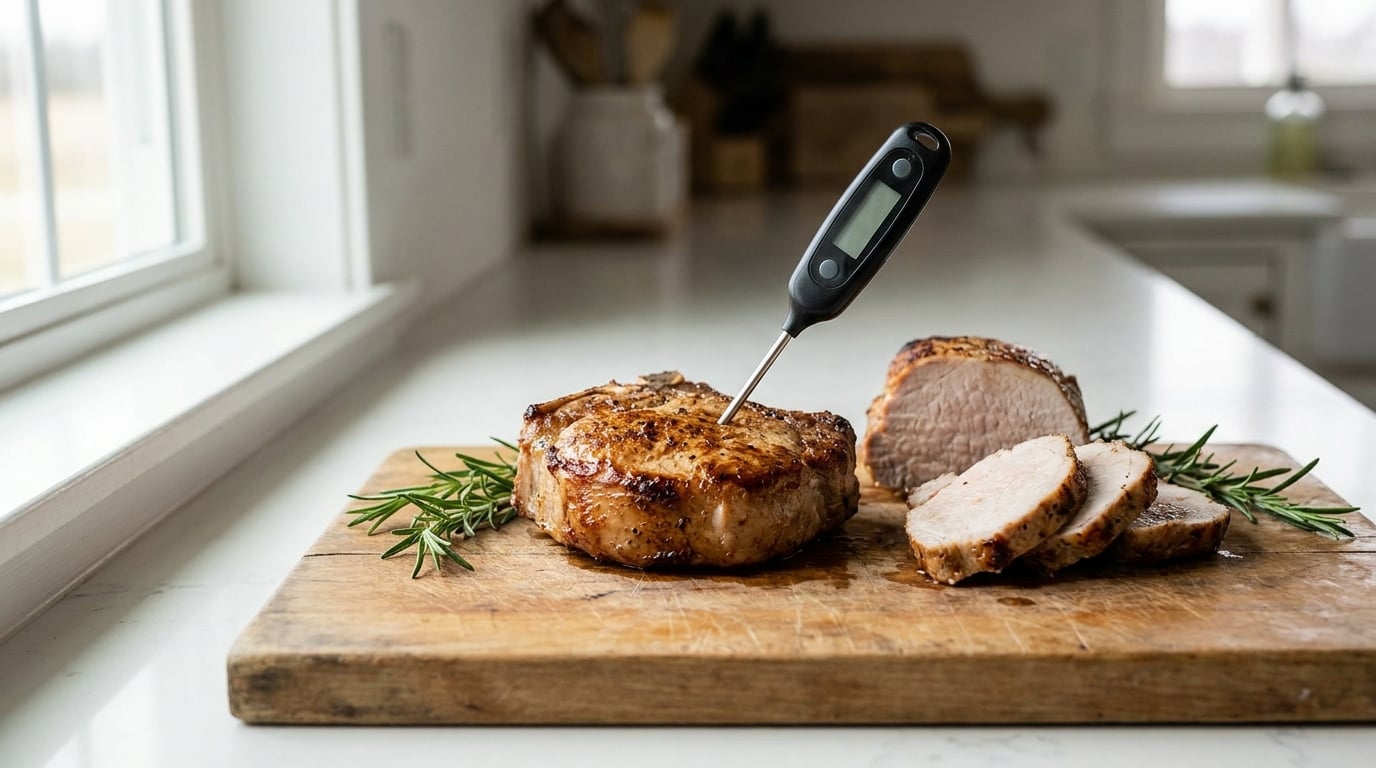
What temperature is pork done at? Whole cuts of pork reach a safe internal temperature of 145°F (63°C) followed by a three-minute rest. Ground pork, sausage, and pork burgers need 160°F (71°C). Fully cooked ham only needs 140°F (60°C) when reheating, and pulled pork is done somewhere around 195°F to 205°F (90°C to 96°C) when the connective tissue finally gives way.
That is the short version. The reason it matters is that color, juice running clear, and the way the meat springs back are all unreliable signals. A good instant-read thermometer tells you the one thing you actually need to know.
Table of Contents
What Temperature Is Pork Done At?
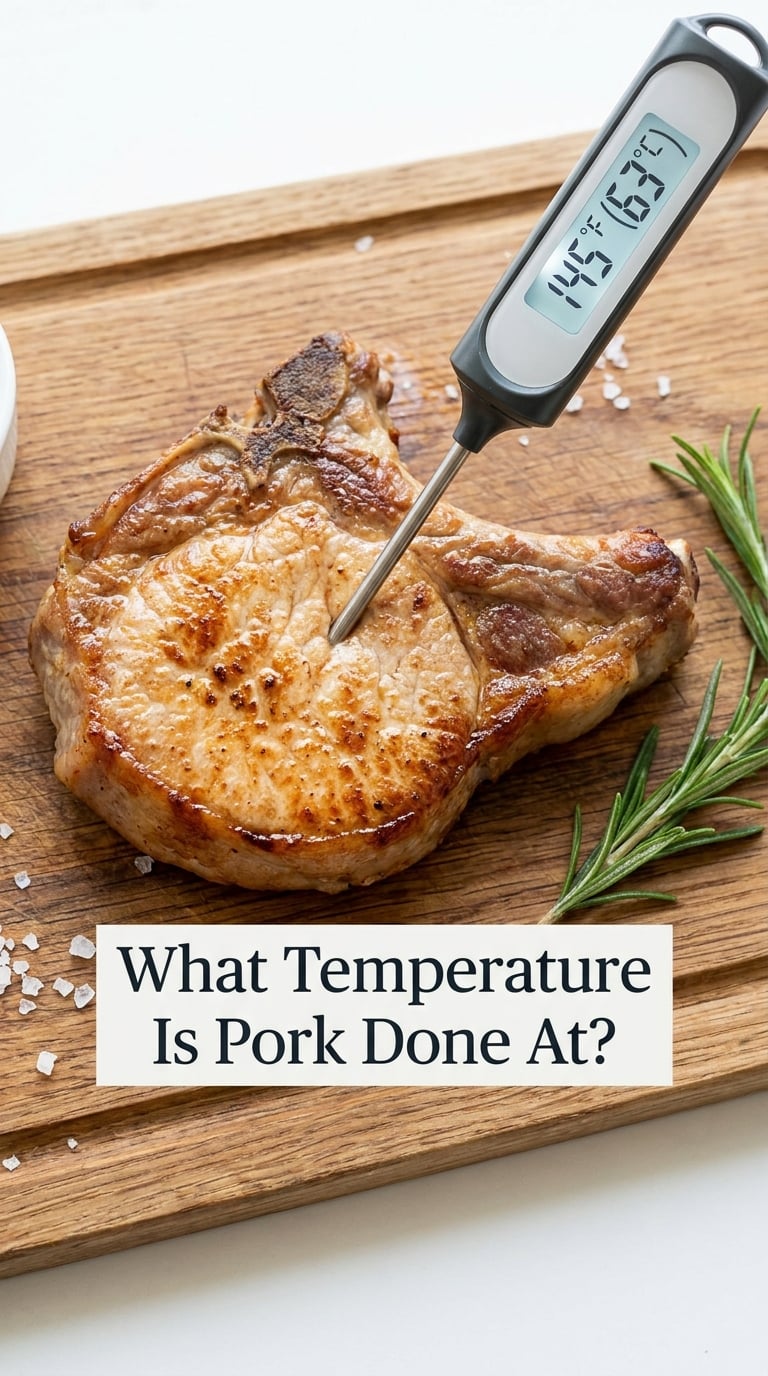
145°F (63°C) with a three-minute rest is the USDA safe minimum internal temperature for fresh pork steaks, chops, and roasts. That one number covers bone-in chops, pork loin, tenderloin, sirloin, and a pork shoulder you pulled from the oven at 350°F.
Everything else on this page is a variation on that. Ground pork is a different food, so it carries a different number: 160°F (71°C). Pre-cooked ham is already cooked, so reheating it to 140°F (60°C) is all that is required. Pulled pork is not about safety at all; it goes far past safe into the range where collagen turns gelatinous enough to shred.
One more distinction worth making early. The old advice to cook pork until it was grey through and bone-dry came from a 1971 USDA guideline. It was revised in 2011 after researchers showed whole cuts are safely pasteurized at 145°F. Cook a tenderloin to 165°F and you have not made it safer, you have just made it tough.
Whatever you are roasting, grilling, or smoking, an instant-read thermometer in the thickest part is the only method I trust. If you want the same cut handled a certain way, these slow cooker garlic Parmesan pork chops start from the same temperature principles.
Pork Safe Internal Temperatures at a Glance
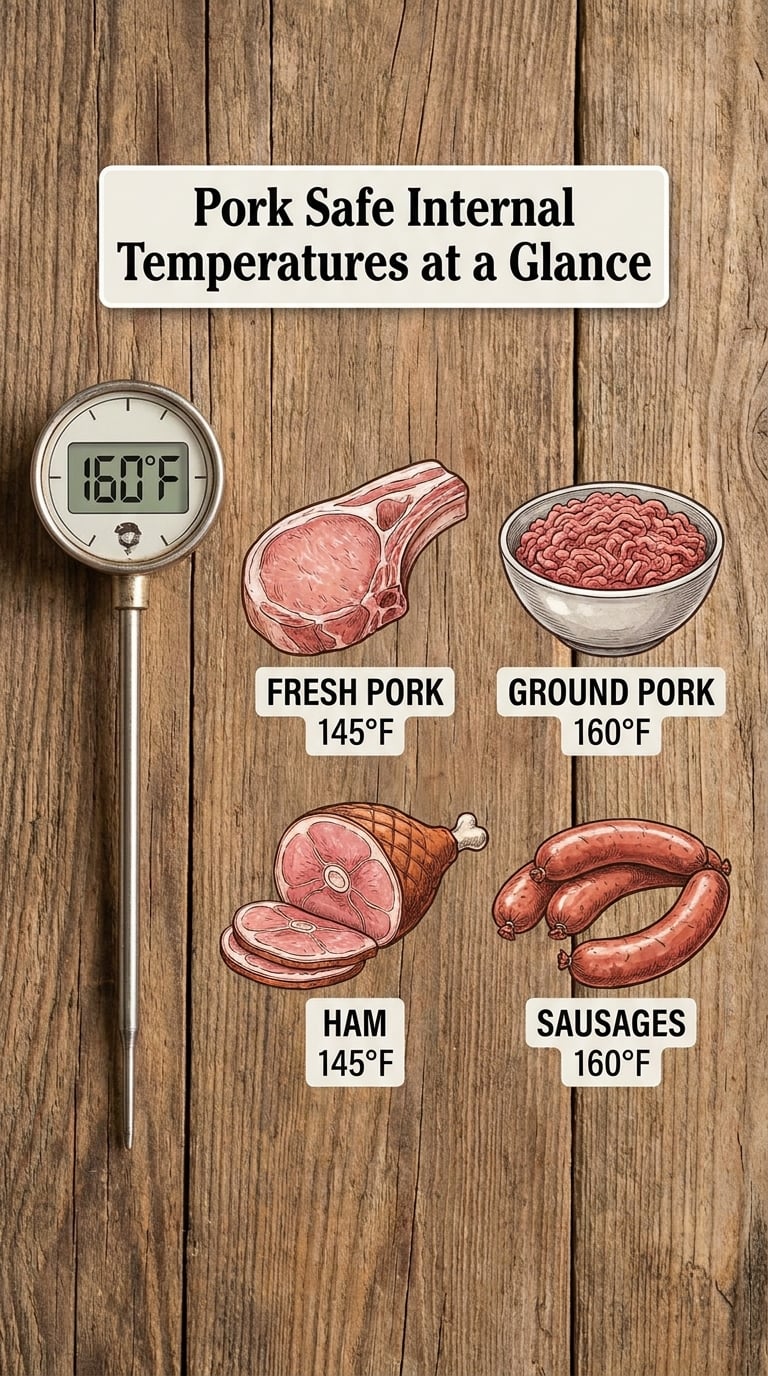
This is the table I keep on the fridge. Every Fahrenheit value has its Celsius equivalent, because most international pork guidance is written in metric.
| Cut | Safe minimum internal temperature | Rest time | Where to probe | What it looks like |
|---|---|---|---|---|
| Pork chops (bone-in or boneless) | 145°F / 63°C | 3 minutes | Thickest part of the eye, away from the bone | Juices run clear, faint blush at most |
| Pork steaks | 145°F / 63°C | 3 minutes | Thickest point, away from bone | Surface browned, interior lightly pink to grey-white |
| Pork loin roast | 145°F / 63°C | 3 minutes | Two points along the loin | Opaque throughout, clear juices |
| Pork tenderloin | 145°F / 63°C | 3 minutes | Thickest section, at an angle if under 1 inch | Pale with a rosy centre is normal and safe |
| Pork sirloin | 145°F / 63°C | 3 minutes | Thickest part, avoid the bone edge | Similar to a steak, usually a touch drier than loin |
| Fresh ham (uncured) | 145°F / 63°C | 3 minutes | Thickest part of the ham, not the bone | Juices run clear, no pink |
| Pre-cooked ham (reheating only) | 140°F / 60°C | No rest required | Centre of the slice or shank | Warm all the way through |
| Ground pork, pork burgers, sausage | 160°F / 71°C | No rest required | Thickest part, away from the pan edge | No pink at all, fully browned outside |
| Pulled pork / pork shoulder | 195-205°F / 90-96°C | Wrap, then rest 1 hour | Thickest part of the shoulder | Shreds easily with a fork, bark set |
| Pork ribs | 190-203°F / 88-95°C for tenderness, 145°F / 63°C minimum for safety | 3 minutes minimum | Between the bones, thickest meat | Bark set, meat pulling from bone |
For doneness preference rather than safety, most cooks land in a narrow band. Medium-rare sits at 145-150°F (63-66°C) with a rosy centre, medium at 150-155°F (66-68°C), medium-well at 155-160°F (68-71°C), and well done at 160°F (71°C) or above with no pink left.
How to Check the Temperature of Pork
- Pick up an instant-read thermometer. A leave-in probe thermometer is for roasts and long cooks; for chops and steaks a digital instant-read is faster and more accurate at the moment you need it.
- Push the tip into the thickest part of the meat, away from bone, fat, and any skewed edges where the meat is thin enough to read the pan’s temperature instead of its own.
- Hold it still. Movement lowers the reading. Give it three or four seconds on a thin chop and closer to ten on a cold centre in a roast.
- Read the number where you want it, not where you hoped it would be. If the first spot is under, check a second spot before you decide to keep cooking.
- Take the meat off the heat and let it rest before slicing, so carryover cooking finishes the job and the juices settle instead of running out.
Where Should You Put the Thermometer in Pork?
The thickest part is the answer for every cut, because that is where the centre of the meat sits last during cooking. On a bone-in chop, slide the tip in from the side into the eye of the loin, not down toward the bone. Bone conducts heat, so a probe touching it can read several degrees high and convince you the chop is further along than it is.
For a thin boneless chop or bacon-wrapped tenderloin, insert at a shallow angle so the whole tip sits inside the meat rather than poking through to the board. Under 1 inch thick, a straight-down probe is mostly reading the surface.
On roasts and hams, take two or three readings in different spots along the length. A single reading near the tapered end tells you very little, because that end dries out and hits temperature long before the thick middle does.
Roasting a whole loin at 350°F and probing it two or three times will also give you a time-per-pound estimate you can actually trust, which is worth more than any chart. The leftover pork roast recipes are all built around a roast that was probed and rested properly.
Pork Temperature by Cut
Pork Chops and Pork Loin Temperatures
Bone-in pork chops are done at 145°F (63°C) with a three-minute rest. That is the number, and it is enough. Some home cooks push to 150°F (66°C) for a slightly firmer texture; the difference is a preference, not a safety matter.
Pork loin follows the same rule, and it is the cut most often overcooked because people still remember the grey-through rule. A pork loin roast pulled at 145°F tastes like pork. The same roast taken to 170°F (77°C) tastes like a binder.
As secondary guidance, a 350°F (177°C) oven is a reliable baseline. A whole pork loin of about 3 to 4 pounds usually needs 20 to 30 minutes per pound to hit temperature, but a thick chop may be done well before its time estimate says so. Trust the probe, not the clock.
Thin Cuts, Pork Tenderloin, and Ham Temperatures
Pork tenderloin is done at 145°F (63°C). It is the fattest-free, leanest cut on the pig, which means it dries out faster than anything else. This is where carryover matters most, and where pulling at 140°F (60°C) and letting the rest finish the climb gives you the juiciest result.
Pork belly follows the same safety minimum, though sous vide cooks run it much higher for texture, commonly 160-170°F (71-77°C) for 12 to 18 hours until the collagen has rendered. That is a texture window, not a safety requirement.
Fresh ham needs 145°F (63°C) plus a rest, exactly like any other whole cut. Pre-cooked ham that comes from the grocery already cured and cooked is different: it only needs to reach 140°F (60°C) while reheating. Spiral-sliced ham warms through in a pan with a splash of liquid in minutes.
If you cook a tenderloin ahead, these leftover pork tenderloin recipes turn a lean, well-probed roast into three more meals.
What Temperature Is Pork Done At for Ground Pork and Sausage?
160°F (71°C) is the safe minimum internal temperature for ground pork, pork sausage, pork meatballs, and pork burgers. The number is higher than whole cuts because grinding spreads surface bacteria through the interior of the meat, where the heat has to reach on its own.
This is the rule people get wrong most often. A lot of home cooks still treat 160°F as the old well-done standard for chops and roasts, which pushes whole cuts far past the point where they are juicy, and they leave ground pork undercooked because they assume the whole-cut number applies.
For a thick pork burger, press the probe straight down through the centre and read it before you flip. If you want to slice a thin patty, wait and check two spots, because the edge of a fast-seared patty can read several degrees higher than the middle.
Pulled Pork and Smoked Pork Shoulder Temperatures
Pulled pork is finished between 195°F and 205°F (90°C to 96°C). The reason is texture, not safety. Long, slow heat converts collagen into gelatin, and somewhere in the low 200s the muscle fibres give up and the meat shreds. Below that, it is a tough shoulder; far above it, it is dry and stringy.
Many pitmasters wrap the shoulder once it hits about 160°F (71°C), then unwrap and cook it to the 195°F mark. A common grid temperature is 250°F to 300°F (121°C to 149°C), though cookers vary enormously and the internal reading is the only reliable measure.
If you like crisp carnitas, cook the shoulder to shredding temperature and crown the finished meat with crisped skin. Our pork carnitas recipes all follow that route rather than braising the cut in liquid.
Do You Need to Let Pork Rest Before Serving?
Yes for whole cuts, and the USDA requirement is short. Steaks, chops, and roasts of pork, beef, veal, and lamb need a three-minute rest after reaching 145°F (63°C). Ground pork and pre-cooked ham do not carry that requirement, because they are not whole intact cuts of muscle.
The rest is not just a safety formality. Heat pushes moisture out of muscle fibres as the proteins tighten. Resting gives that moisture time to settle back through the meat, which is the difference between a chop that stays juicy and one that floods the cutting board when you slice it. A rest of five to ten minutes is better than three; nobody has ever complained about an extra five.
This is also what makes carryover cooking work. The internal temperature keeps climbing after the meat leaves the heat, often five to ten degrees on a thick chop or roast. If you pull a pork loin at 140°F (60°C), the rest alone will take it to a safe 145°F. Pulling at temperature and then cooking to temperature in the oven is a common source of dry pork, because you are cooking the same cut twice.
One question that comes up constantly is the 2-hour rule for leftovers. That is the FDA guidance for how long cooked food sits out, not a rest guideline. Two hours at room temperature, then refrigerate, and eat cooked pork within three to four days. If there is a lot of shoulder left over, leftover pulled pork recipes are the fastest way to use it.
Can You Tell When Pork Is Done by Appearance?
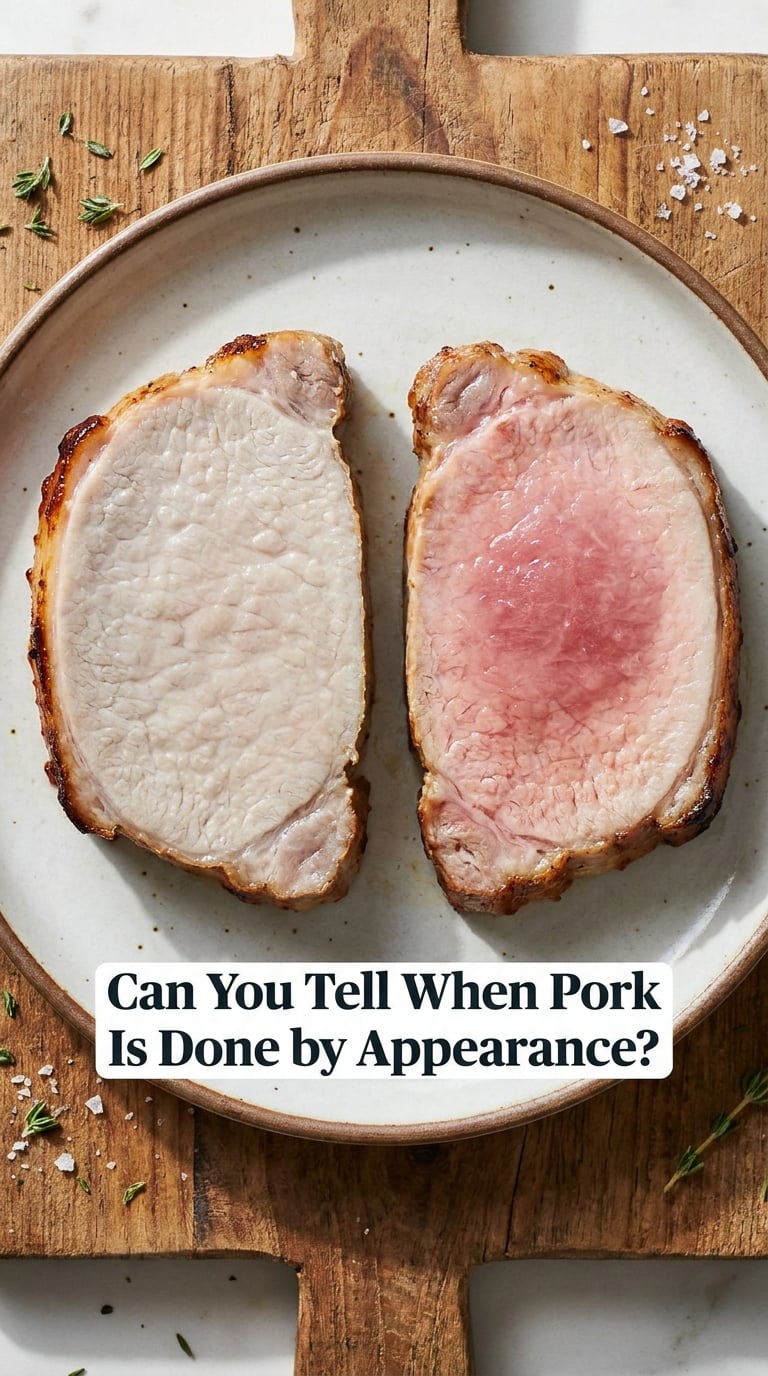
You can guess, but you cannot confirm. An opaque, whitish interior with clear juices and a well-browned crust are good supporting signs. They are supporting signs only, because pork packed with water, brined at a low concentration, or smoked can sit at 160°F and still show colour in the middle, and a pale chop cooked slowly can look underdone at a safe temperature.
The reverse happens too. Fresh pork that has been rested or vacuum-sealed after cooking can keep a rosy tint, and some darker cuts like a well-aged pork steak stay pink-looking well past safe temperatures. Cut it, press it, smell the juices, and you still do not have a number. Only the thermometer gives you a number.
So what is pork actually supposed to look like when done? Under my probe, 145°F, mostly opaque, with the centre faintly pink if it is a tenderloin or a chop I pulled early. That faint pink at 145°F is safe, and if it bothers you, rest it five more minutes and watch it disappear.
The one rule I will not bend: never serve pork that has not reached the safe minimum for its type. Confidence comes from the thermometer, not from the colour in the photo.
Common Pork Temperature Mistakes
- Probing near bone. A bone-in chop probed straight down toward the bone reads high. Slide the tip in from the side into the eye of the loin instead.
- Taking the reading on the browned edge. The outer crust is the hottest part of the cut. Check the centre, or you are measuring the pan.
- Using one reading on a big roast. A single reading near the tapered end means nothing. Take two or three readings along the length.
- Removing the pork too early. Many recipes still say 160°F or 170°F for whole cuts out of an old habit. That dries the meat and buys no safety.
- Confusing fresh pork with ham. A fresh ham is a whole cut and needs 145°F plus a rest. A pre-cooked ham only needs 140°F to reheat.
- Skipping the probe on ground pork. Ground pork and pork burgers need 160°F (71°C), not 145°F. This is the number people skip most.
- Poking straight down through thin cuts. A chop under 1 inch thick needs an angled insertion so the whole tip stays in the meat.
- Forgetting carryover. Pulling 5 to 10°F under target on a thick cut and resting is correct technique, not cheating.
Frequently Asked Questions
What temperature should pork chops be cooked to?
Pork chops are safe to eat at an internal temperature of 145°F (63°C) measured in the thickest part of the eye, away from the bone, followed by a three-minute rest. Many home cooks pull at 140°F (60°C) and let carryover cooking finish the climb during the rest. Cooking chops past 160°F (71°C) adds no safety and dries them out noticeably.
Is pork safe at 145°F with pink color?
Yes. A faint rosy tint at 145°F (63°C) is safe, especially in pork tenderloin, which stays pale and slightly pink even when fully cooked. Colour is not a reliable safety measure in either direction, because brined, smoked, and rested pork can hold colour past safe temperatures. Judge safety with a thermometer in the thickest part, not by looking at the centre.
What temperature should ground pork reach?
Ground pork, pork sausage, and pork burgers must reach 160°F (71°C) measured in the thickest part of the patty or sausage. This is higher than the 145°F minimum for whole cuts because grinding folds surface bacteria into the interior, where the heat has to reach on its own. No rest is required, but the outside should still be fully browned.
Is pork tenderloin done at 145°F?
Pork tenderloin is done at 145°F (63°C) with a three-minute rest, exactly like any other whole cut. Because it is the leanest cut on the pig, it dries out quickly, so many cooks pull at 140°F (60°C) and rely on carryover cooking to finish during the rest. Sous vide cooks run it much higher, often 160-170°F, but that is for texture rather than safety.
What temperature should precooked ham reach when reheating?
Pre-cooked ham that is sold already cured and cooked only needs to reach 140°F (60°C) while reheating, because it has already passed through its cooking stage. Spiral-sliced ham warms through in a covered pan with a splash of liquid in a few minutes. A fresh, uncooked ham is a whole cut and still needs 145°F (63°C) plus a three-minute rest.
How long should pork rest before slicing?
The USDA requires a three-minute rest for pork, beef, veal, and lamb steaks, chops, and roasts after they reach 145°F (63°C). Five to ten minutes is better in practice, because resting gives the juices time to redistribute through the fibres instead of running out onto the board. Smoked pork shoulder benefits from a full hour in a wrap before pulling.
Conclusion
Start with an instant-read thermometer and check the thickest part of the cut, away from bone. Fresh whole cuts of pork are safe at 145°F (63°C) followed by a three-minute rest, ground pork and sausage need 160°F (71°C), and pre-cooked ham only needs 140°F (60°C) to reheat. Pulled pork goes to 195-205°F (90-96°C) for texture, not safety.
That is what temperature is pork done at, and the number takes ten seconds to check. Appearance, juice colour, and the fork test are all guesswork dressed up as confidence. Use the probe, rest the meat, and slice it.