
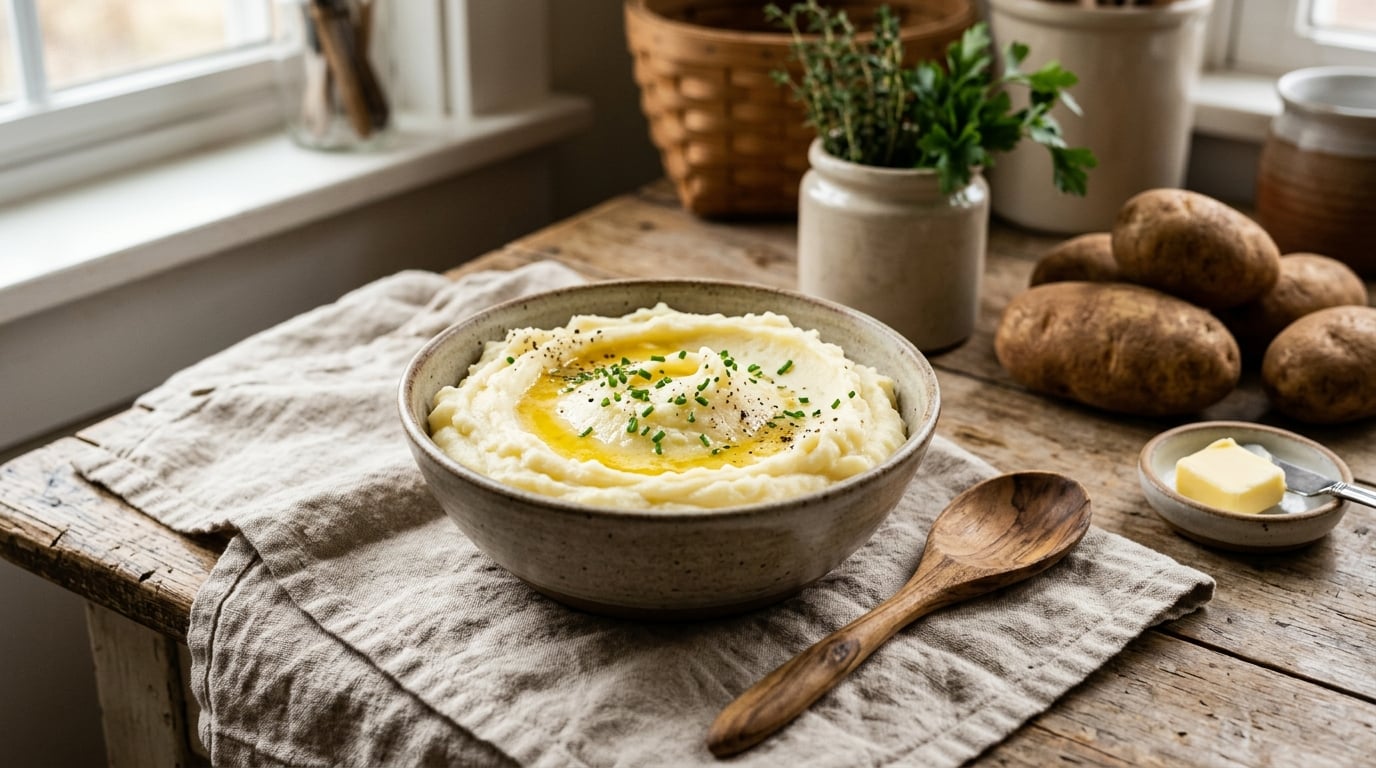
Yes, you can freeze mashed potatoes for later, and it is one of the most forgiving things you can put in a freezer. Cooked mash keeps its best quality for about 1 to 2 months and stays perfectly safe for 3 months, as long as you cool it fast, add enough fat before it goes in, and seal it airtight. Holiday cooks have figured this out for years. Thanksgiving and Christmas are the reason a lot of us learned it in the first place.
The honest catch: freezing does soften the texture a little. Fresh mash is fluffier and brighter. Frozen mash reheats creamy and close, never identical. If you know that going in, you will not be disappointed. If you expect Sunday-fresh mashed potatoes three months later, you will.
The other thing worth naming early is the number that decides your result. Fat. A buttery, cream-enriched mash comes back smooth. A broth-only or plain boiled mash comes back loose and grainy, and no amount of reheating will fully hide it. Everything else in this guide is a detail. That one is the rule.
Table of Contents
Can You Freeze Mashed Potatoes for Later?
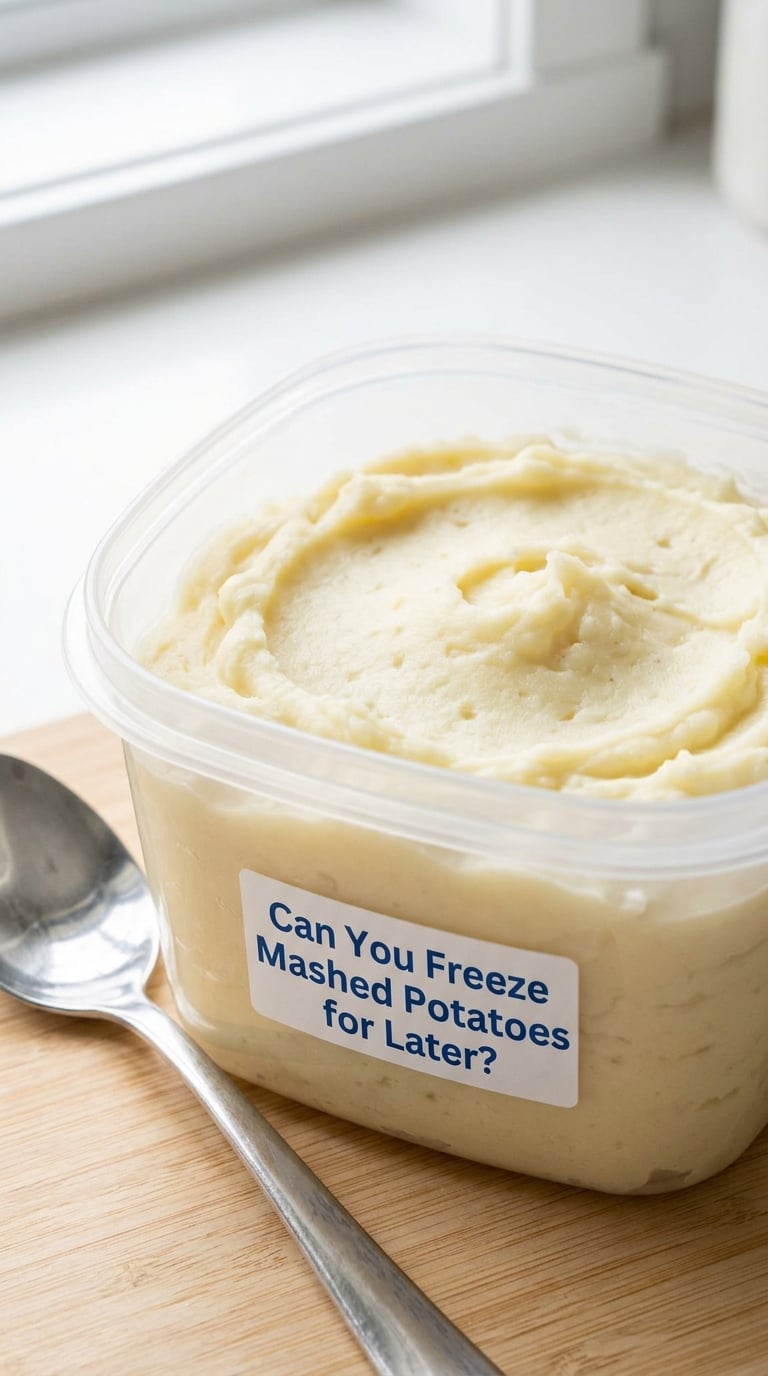
You can, and you should if you cook in batches. Freezing turns a 45-minute peel, boil, mash job into a 10-minute reheat on a weeknight when you have nothing in the house and no patience left.
It works because cooked potato is mostly soft, broken-down starch with fat and water woven through it. That soft gel is why mash is freezable at all, and it is also why the fat matters. Butter, cream, sour cream, or cream cheese coats the starch particles and slows them down. Leave the fat out and freezing pushes water out of those starch cells, which is exactly the watery, gluey result people complain about.
What freezes best:
- Mash made with plenty of butter and cream or milk
- Roasted garlic, herb, or cheese-swirled mash
- Sweet potato mash, with the same fat rule
- Assembled potato casseroles, if you leave a little headspace
What freezes poorly:
- Broth-only mash, which turns loose and gluey
- Mash made from peeled, waterlogged boiled potatoes
- Mash you overmixed, or hit with a blender
- Warm potatoes put straight into a bag, which steams and defrosts the texture
One quick note on leftovers: if you already made too much dinner mash, leftover mashed potato recipe ideas are worth checking before you reach for the freezer. A skillet cake or a soup that uses them up tonight beats a portion that eats fine but not quite like fresh.
How Long Do Mashed Potatoes Keep in the Freezer?
Mashed potatoes keep 1 to 2 months at peak quality and are safe to eat for up to 3 months. That is the number to plan around. If you see 6 months quoted elsewhere, that is a safety ceiling with no quality promise attached, and I would not serve it to guests.
| Type | Best quality | Safe maximum | Notes |
|---|---|---|---|
| Plain or broth-only mashed potatoes | 1 month | 2 months | Texture loosens fastest without fat |
| Buttermilk, butter, and cream mashed potatoes | 2 months | 3 months | The most reliable option for long storage |
| Sour cream or cream cheese mashed potatoes | 2 months | 3 months | Reheat gently, high heat can split the dairy |
| Roasted garlic or herb mashed potatoes | 2 months | 3 months | Flavors hold better than textures do |
| Assembled potato casserole | 2 months | 3 months | Freeze before the top browns |
| Instant potato flakes, dry | Long lasting | Check the package date | Dried flakes do not spoil the way cooked mash does |
For the fridge, USDA guidance for cooked potatoes is 3 to 4 days, and that applies to your mash too. If it has been sitting for five, freeze it today rather than cooking a fresh batch. Freezing is the better of the two options at that point.
Home cooks on Reddit almost all say the same thing about the ceiling: the window where people notice a difference is about 2 months, and 3 months is the line they do not cross for company. A recipe developer friend of mine put it more plainly, the frozen result is not quite the same as freshly made and the consistency changes slightly, but it is still a very useful dinner on a busy Wednesday.
What Is the Best Way to Freeze Mashed Potatoes?
Portioning matters more than the container. Most freezer failures happen because someone froze a whole batch in one lump and then had to thaw all of it to use two servings. Few guides compare the options, so here they are side by side.
| Method | Portion size | Best for | The catch |
|---|---|---|---|
| Heavy-duty freezer bag | 1 to 2 cups flat | Leftovers and big-batch cooking | Lay them flat so they stack and freeze fast |
| Rigid airtight container | 1 to 2 cups | Mashed potatoes going straight into a microwave | Leave 1 inch of headspace, the mash expands |
| Ice cube tray | 2 tablespoons per cube | Small servings and casseroles | Transfer to a bag once frozen so they do not pick up odors |
| Silicone freezer mold | 1/2 cup per well | Shepherd’s pie and cottage pie topping | Soft molds, do not place hot mash directly in plastic |
| Souper Cubes or vacuum bags | 1 to 2 cups | Freezer meal prep, portion-controlled weeknights | More equipment than most people need |
My default is a heavy-duty freezer bag, flattened with a layer of oil or butter smeared inside so the mash does not weld itself to the plastic. Squeeze out every bit of air, because air is what causes freezer burn, then lay the bags flat on a baking sheet to freeze solid before stacking them upright.
For a big holiday batch, I do the same thing in a rimmed baking sheet, parchment on the bottom, one-cup mounds dropped with an ice cream scoop, then a quick pre-freeze of about 1 hour. Once they are solid I move them into bags. That hour of pre-freezing is the step people skip and it is why big bags thaw into one solid brick.
How to Freeze Mashed Potatoes Step by Step
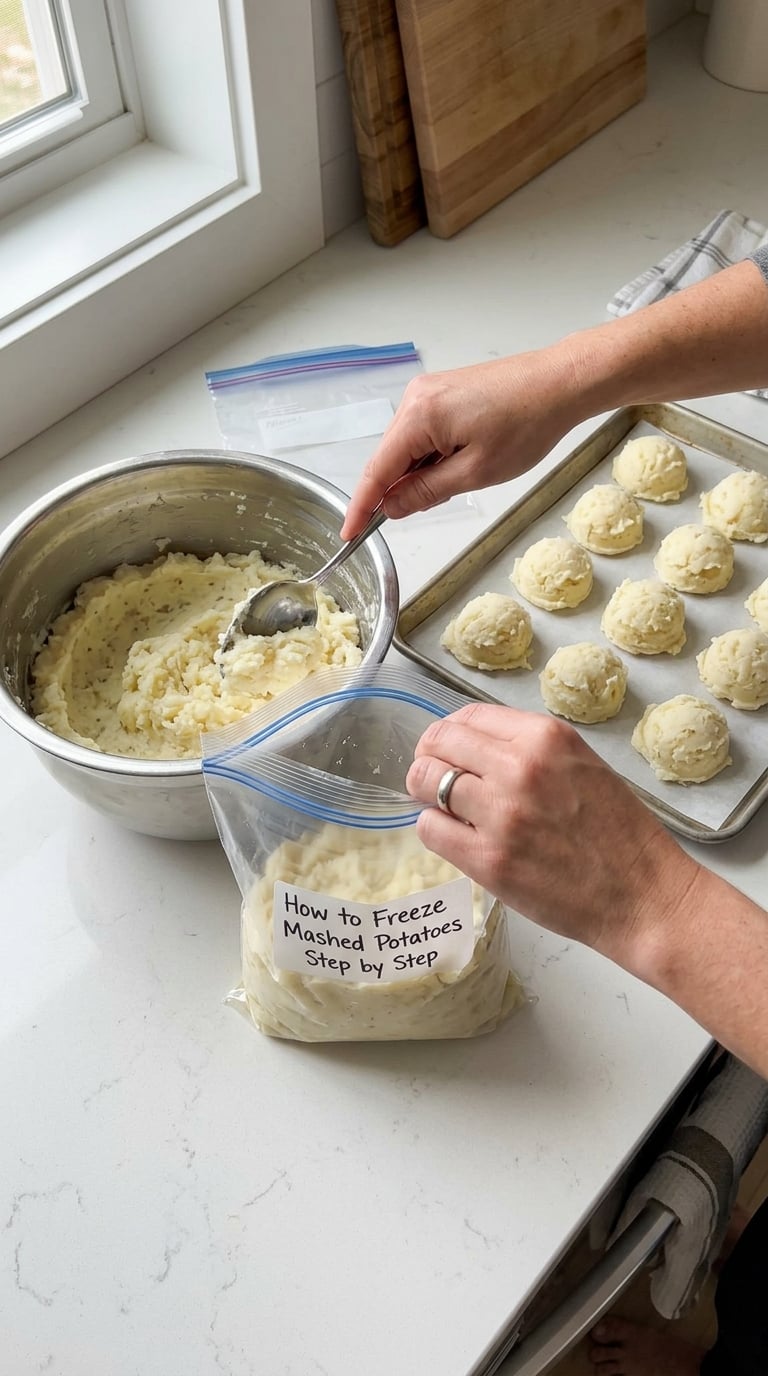
- Make the mash with fat. For every 2 pounds of potatoes, use about 1/2 cup of butter and 1/2 to 3/4 cup of warm milk or cream. More fat than feels normal is the right instinct here.
- Boil the potatoes whole, unpeeled. This one step prevents most watery batches. Peeled potatoes soak up water as they cook and release it into the mash. Simmer them in salted water until a knife slides in without resistance, about 20 to 25 minutes for whole medium potatoes.
- Mash gently. Drain, let them steam dry for a minute, then rice or mash them. Do not use a blender and do not keep beating them. Overworked starch is what turns mash gluey before it ever reaches the freezer.
- Season, then under-season slightly. Salt and pepper taste duller after freezing and thawing, so salt a touch heavier than usual, but hold back on strong flavorings like garlic powder, chili heat, and fresh herbs, which sharpen over time.
- Cool quickly. Spread in a shallow container or sit the pot in an ice bath and stir. You want room temperature in under an hour. Food-safety guidance says do not leave cooked potatoes standing warm for more than 2 hours, and cool mash fast rather than sealing it warm.
- Portion, seal, and label. One or two cups per bag, one inch of headspace in rigid containers, air squeezed out of bags, and the date written on with a Sharpie. Freeze flat, then stack.
If you are using an Instant Pot regularly, my Instant Pot mashed potatoes method produces a drier, fluffier mash than stovetop boiling because of the extra cooking time, and that drier mash is actually easier to freeze. It is a decent reason to double the Instant Pot batch on a Sunday.
Can You Freeze Mashed Potatoes Made With Milk or Butter?
Yes. Milk and butter are the ideal fat sources for frozen mash, not a compromise. What they do is coat the broken-down starch and keep it from bonding into a single dense gel as it freezes and reheats.
What happens without them is straightforward. Water in the mash forms ice crystals. Those crystals puncture the starch cells that were holding liquid, and on reheating the water leaks out instead of staying in the mash. You get loose, watery potatoes with a slightly grainy bite, and the only real fix is more fat and more stirring than you want to do.
Aim for roughly 1/4 cup of butter and 1/4 cup of cream per pound of potatoes, on top of whatever the recipe already calls for. Home cooks across Reddit credit high fat content as the single biggest predictor of a good frozen result, and it holds up in my kitchen too.
What about other dairy, since that comes up constantly:
- Buttermilk: excellent, tangy flavor survives freezing well
- Sour cream: works, adds body and helps a thin batch; reheat low and slow so it does not split
- Cream cheese: freezes fine and gives the creamiest result, though it makes the mash heavier. If you are freezing it, my cream cheese freezing guide covers the storage side
- Broth or stock: does not count as fat. A broth-only mash is the single most common reason frozen potatoes turn to glue
Going dairy-free works too. Olive oil, vegan butter, and a splash of cashew cream all behave similarly to their dairy counterparts because they are still fat. Just keep the same ratios.
How to Thaw and Reheat Frozen Mashed Potatoes
The smoothest result comes from thawing in the refrigerator overnight, then reheating. A bag moved straight to a hot oven or a full-power microwave is where the watery texture usually comes from, because the outside reheats and dries out long before the middle softens.
That said, thawing first is not required. Plenty of meal preppers go from freezer to pot, and it works. It is just a little less predictable, so plan extra liquid when you skip the thaw.
| Method | Time and temperature | Thaw first? | Best result for |
|---|---|---|---|
| Refrigerator | 8 to 12 hours, overnight | Yes, this is the thaw | Smoothest texture, most hands-off |
| Microwave | 50% power, 2 minutes per cup, stirring between rounds | No | Fastest, single portion |
| Oven | 350°F (175°C), 20 to 30 minutes in a covered dish | No, works from frozen | Casserole-sized portions |
| Stovetop in a bag | Simmering water, 20 to 30 minutes, bag never touching the pot bottom | No | Best flavor, no scorching |
| Slow cooker | Low, 2 to 3 hours, lid on | No | Hands-off while you do everything else |
The stovetop bag method is the one I use most. Put the frozen bag in a pot of barely simmering water, keep it off the bottom, and turn it every few minutes. The bag is doing the stirring so the mash cannot overwork itself into glue, and nothing scorches. It is the same trick homesteaders use for vacuum-sealed quart bags.
For the microwave, 50% power is not negotiable. Full power boils the milk solids and gives you a rubbery edge in about 90 seconds. Stir every 60 to 90 seconds, and stop while the mash still looks slightly loose. It thickens as it sits.
Whichever method you choose, restore it in the last two minutes:
- Add a splash of warm milk, cream, or half-and-half a tablespoon at a time until it loosens
- Beat in an extra tablespoon of butter for gloss and flavor
- Stir in a spoonful of sour cream if the batch is thin
- Season again with salt, which tastes flat after thawing
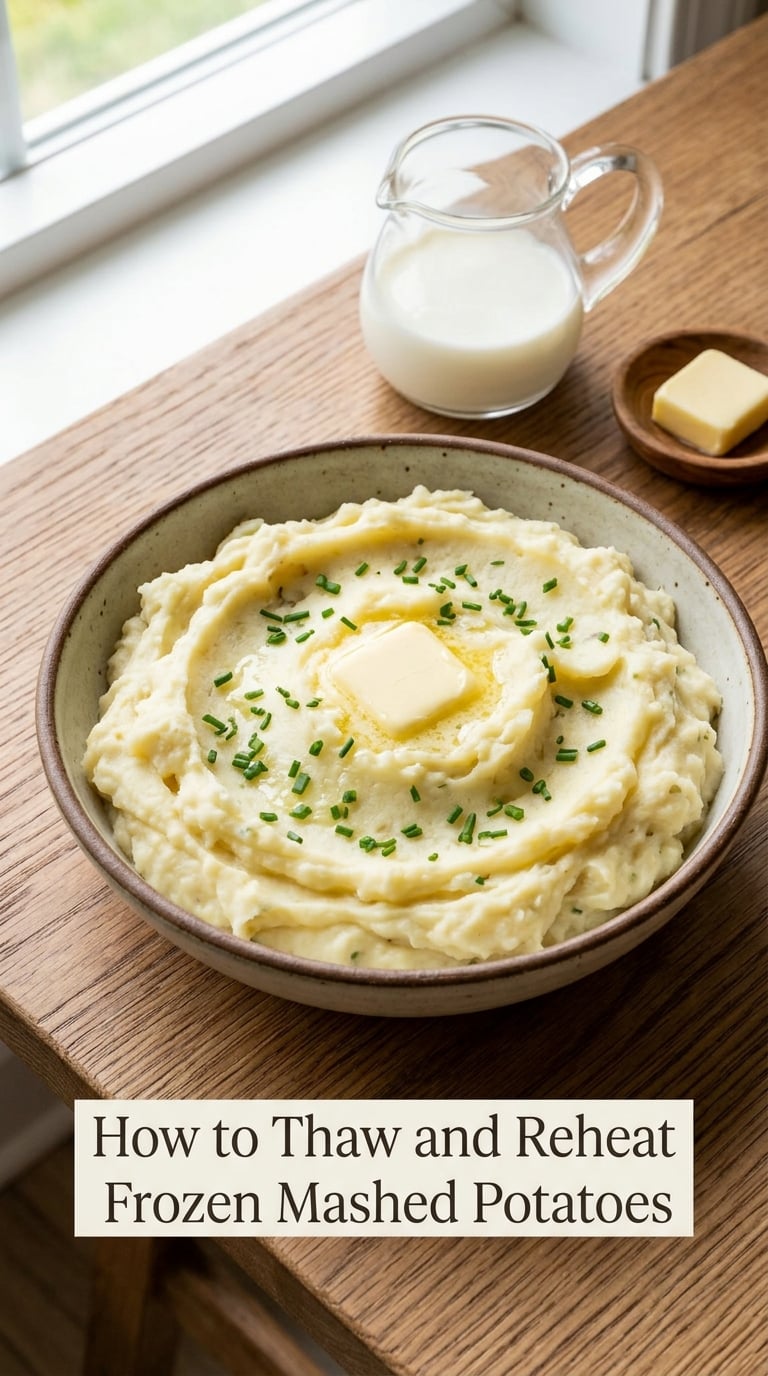
Reheat each portion once, and only once. Reheated mash that goes back in the fridge and out again gets thin and dull, and pushing it through a third microwave cycle is how you end up with glue.
Can You Freeze Potato Casseroles and Other Potato Dishes?
Potato casseroles freeze well, and so do assembled dishes like scalloped potatoes, a layered potato bake, and loaded baked potatoes with their skins on. Freeze them before the top browns or before you add finishing cheese, then brown at the end.
Assembled casseroles actually have one advantage over loose mash. The whole thing is already bound, so there is less free water to squeeze out. The sauce or cream layer keeps the potatoes from drying, and reheating gives you a result closer to freshly baked.
A few rules keep them straight:
- Use a rigid freezer-safe dish with a tight lid, or a foil pan sealed under plastic wrap, then a layer of foil
- Leave 1 inch of headspace because casserole dishes and sauces both expand as they freeze
- Go no more than two-thirds full, which makes reheating faster and reduces the chance of a glass dish cracking
- Label the dish with the date and the reheat instructions, because nobody remembers in February what the pan holds
- Reheat from frozen at 350°F (175°C) covered, about 45 minutes, then uncover for the last 10 to brown
Individual frozen mounds work as a shepherd’s pie or cottage pie topping. Freeze them on the tray until solid, bag them up, and set the frozen pucks straight into a dish with the meat filling. They go from freezer to oven with no thawing at all. For the meat side, hamburger and potato recipes are an easy pairing to plan around.
Two more things people ask. Sweet potato mash follows the same rules and freezes just as reliably, just use a little less liquid because sweet potatoes hold more water. And dry instant potato flakes need no special treatment, they are already shelf-stable, so buy the tub in a big size and skip the freezer entirely for those.
Common Mistakes When Freezing Mashed Potatoes
Nearly every bad batch traces back to one of these. The fix is almost always the same three things: more fat, less heat, less stirring.
- Freezing warm potatoes. Warm mash traps steam, thaws slowly, and turns watery. Cool it in a shallow dish or an ice bath until it is barely warm, no longer steaming, then seal it.
- Not enough fat in the original batch. You cannot fix this completely after freezing. Add butter and cream at freeze time if you can, and expect a slightly looser result next time you add more to the pot.
- Peeling before boiling. The exposed surface soaks up water and releases it into the mash. Boil whole and unpeeled, then peel or scrape after draining.
- Filling the container to the top. Mash expands as it freezes and will push the lid off. One inch of headspace, every time.
- Leaving air in the bag. Air causes freezer burn and off flavors. Press the mash flat, seal, then press again to push the last of it out. Vacuum sealing is better if you have it.
- Reheating at full power. Milk solids and starch scorch before the center warms. Use half power in the microwave, or the simmering water bath, and stir gently.
- Beating frozen mash hard. Over-stirring after reheating is the leading cause of gluey, gluey-adjacent potatoes. Fold gently, then let it rest a minute before the next stir.
- Refreezing thawed mash. You can refreeze if you froze it raw or cooked and never reheated it. Once it has sat in the fridge after cooking, or been reheated, refreezing is not recommended because the texture degrades every cycle. Cooked potatoes that sat warm for over 2 hours should be discarded, not frozen.
Two more worth naming. Skip frozen mash in a blender under any circumstance, the blender takes a silky mash and turns it into glue in about ten seconds. And never serve reheated mash that sat on a counter while dinner ran late, the same 2-hour rule applies after thawing.
Frequently Asked Questions
How long can mashed potatoes stay frozen?
Cooked mashed potatoes stay safe for up to 3 months in the freezer, but the best eating window is 1 to 2 months. If the mash was made with plenty of butter and cream, it usually holds its creamy texture the full 3 months. Broth-only or plain mashed potatoes start to loosen at around 1 month, so eat those first. Always label and date the bag, and refrigerate leftovers within 2 hours.
Should I freeze mashed potatoes in individual portions or one large container?
Portion them. Freeze one or two cups per bag or container so you only thaw what you need. A large single container means thawing the whole batch to serve two people, and the part you do not use keeps thawing and refreezing in a warm fridge, which turns the texture grainy. For meal prep, one to two cup servings work well as a side dish. Half-cup portions are the right size for shepherd’s pie topping.
Why do frozen mashed potatoes become watery when reheated?
Freezing forms ice crystals that rupture the potato starch cells, and the water inside them leaks out during reheating. The result is loose, watery mash with a slightly grainy bite. Two things prevent it. Add plenty of fat before freezing, about 1/4 cup of butter and 1/4 cup of cream per pound of potatoes. Then reheat gently, at 50% microwave power or in a bag sitting in simmering water, and stir in warm milk a little at a time.
Can you freeze mashed potatoes with cheese or sour cream?
Yes to both. Sour cream and cream cheese add fat and body, which actually helps the mash hold together after thawing, so freeze them freely. Shredded cheese works too, though it can make the mash slightly rubbery if reheated too hot. Keep the heat moderate, because dairy splits and turns grainy above about 350°F (175°C). Reheat covered and stir in a splash of warm milk at the end to bring the creaminess back.
Is it better to thaw mashed potatoes in the refrigerator, microwave, or cold water?
The refrigerator is the best option for smooth texture, so move the container there 8 to 12 hours ahead. The microwave works if you are reheating at the same time, at 50% power for about 2 minutes per cup, stirring between rounds. Cold water thawing is not recommended because the potatoes sit in water, which makes them watery and absorbs any flavors from the container. You can also reheat straight from frozen, just add extra milk.
Can you freeze mashed potatoes made from instant potatoes?
You can freeze cooked instant mashed potatoes, and they behave much like homemade ones because they are already high in fat and starch. Use milk or cream rather than water, because the fat is what protects the texture through freezing. Dry instant potato flakes do not need the freezer at all, they keep on the shelf for months and you can just scoop out what you need. Check the package date on the tub, and keep it sealed and dry.
Conclusion
Three steps do almost all the work. Cool the mash fast in a shallow dish, freeze it in airtight one to two cup portions, and thaw it in the refrigerator overnight for the smoothest result. Add your fat before it goes in, not after it comes out, and you can freeze mashed potatoes for later without thinking about it again until dinner.
If you are cooking for a holiday, do the batch a few days ahead. If you are just avoiding waste, do it the night you notice the leftovers. Either way, a bag of mash in the freezer is one of the cheapest shortcuts in the kitchen.