
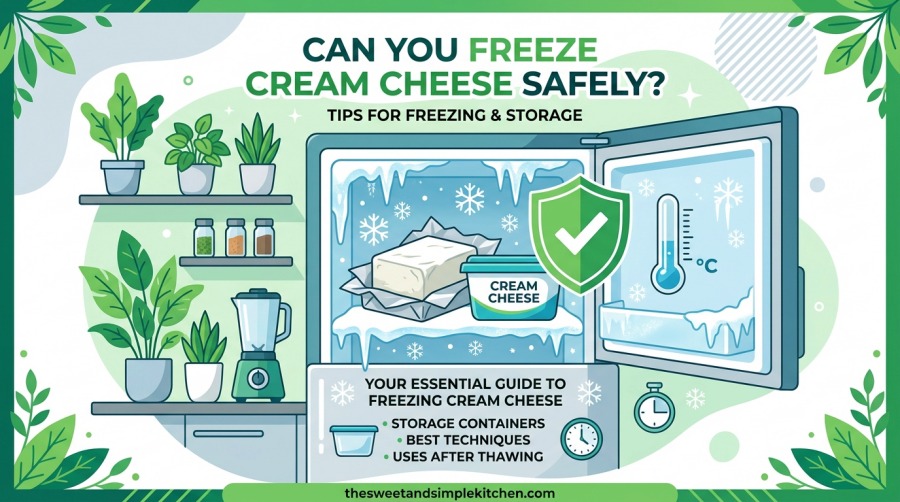
Yes, you can freeze cream cheese safely. If you have ever stared at a block of cream cheese approaching its expiration date and wondered whether the freezer is an option, the answer is a clear yes. Freezing cream cheese extends its shelf life up to two months without any food safety concerns, though you should expect some texture changes after thawing. I have frozen cream cheese dozens of times for baking projects, and once you understand how to handle the texture shift, it works beautifully for casseroles, cheesecakes, dips, and cooked dishes. This guide covers everything you need to know about whether you can freeze cream cheese safely, including step-by-step instructions, the science behind why texture changes, and how to bring that creamy consistency back.
Table of Contents
Key Takeaways
- Yes, freezing cream cheese is safe and extends shelf life up to 2 months
- Texture will change — thawed cream cheese becomes grainy and crumbly
- Best for cooking and baking — cheesecakes, casseroles, dips, and warm dishes
- Not ideal for spreading — the grainy texture is noticeable on bagels
- You can revive smoothness — a hand whisk, stand mixer, or brief microwave session helps
- The “do not freeze” label is about texture quality, not safety
- For more freezer-friendly cooking ideas, check out our freezer meals guide
Quick Comparison: Freezing Different Types of Cream Cheese
Not all cream cheese freezes the same way. Here is how the three main types compare when you freeze and thaw them.
| Type | Freezer Life | Texture After Thawing | Best Use After Freezing | Can You Freeze It? |
|---|---|---|---|---|
| Unopened Block | Up to 2 months | Grainy, crumbly | Baking, cooking, dips | Yes |
| Opened Block | Up to 2 months | Grainy, slightly more crumbly | Cooked dishes, casseroles | Yes (wrap tightly) |
| Whipped Cream Cheese | Up to 1 month | Separates, watery | Mixed into batters only | Not recommended |
| Cream Cheese Frosting | Up to 3 months | Needs re-whipping | Re-whipped for cakes | Yes |
The takeaway is simple: unopened blocks freeze best, opened blocks work fine with proper wrapping, and whipped cream cheese should stay in the fridge whenever possible.
What Happens When You Freeze Cream Cheese (The Dairy Science)
To understand why frozen cream cheese feels different after thawing, it helps to know a little about what cream cheese actually is. Cream cheese is an emulsion — a stable mixture of water droplets suspended in fat, held together by milk proteins. That smooth, spreadable texture you love comes from this delicate balance between water, fat, and protein.
When you put cream cheese in the freezer, the water inside it forms ice crystals. These crystals are sharp and rigid, and as they grow, they physically damage the protein network that holds the emulsion together. Think of it like tiny needles piercing a balloon — once the structure is punctured, it cannot hold its original shape.
When the cream cheese thaws, those ice crystals melt back into water. But the protein network is already damaged. The water separates from the fat instead of staying mixed in, and the once-smooth texture becomes grainy, crumbly, and sometimes slightly watery. This is the same reason frozen sour cream and frozen cottage cheese also change texture.
Hard cheeses like cheddar or Parmesan handle freezing better because they have less water content and a denser protein structure. Cream cheese, by contrast, is roughly 50 to 55 percent water, making it one of the most moisture-rich dairy products. More water means larger ice crystals, which means more structural damage. The fat content (around 33 percent) helps buffer some of the damage, which is why cream cheese still freezes better than many other soft dairy products.
Here is the good news: the flavor does not change. The dairy proteins and fats that create the tangy, rich taste of cream cheese remain intact through freezing. Only the physical texture is affected, and as I will explain later, you can fix much of that with simple kitchen tools.
Why Does Cream Cheese Say “Do Not Freeze”?
If you have ever flipped over a package of Philadelphia cream cheese and spotted the words “do not freeze,” you are not alone in feeling confused. It seems to contradict everything I just told you. Here is the reality: that label has nothing to do with food safety.
Manufacturers put “do not freeze” on cream cheese packaging for one reason — quality control. They know that freezing changes the texture from smooth and spreadable to grainy and crumbly. Since their brand reputation is built on that signature creamy consistency, they would rather you not freeze it and blame them for a subpar experience.
The label is essentially a liability shield. If you freeze their product and it comes out crumbly, the manufacturer does not want you calling customer service or leaving negative reviews. From a pure food safety standpoint, freezing cream cheese is completely safe. No bacteria grow at freezer temperatures, and the freezing process does not create any harmful compounds.
I have spoken with food scientists who confirm this. The “do not freeze” recommendation exists to protect the brand’s quality image, not your health. So the next time you see that label, know that it means “you might not love the texture” rather than “this is dangerous.”
How to Freeze Cream Cheese: Step-by-Step Instructions
The method you use depends on whether your cream cheese is unopened or already opened. Here are both approaches, plus tips for portioning.
Freezing an Unopened Block of Cream Cheese
This is the easiest scenario because the original foil packaging already provides a good seal. You just need one extra layer of protection.
- Check the expiration date. Freeze cream cheese when it is still fresh, not when it is already past its prime. The freezer preserves quality — it does not restore it.
- Wrap the entire block in plastic wrap. Add a tight layer of plastic wrap or aluminum foil around the original packaging. This blocks freezer burn and prevents the cream cheese from absorbing odors from other foods.
- Place inside a freezer bag. Put the wrapped block into a resealable freezer bag. Squeeze out as much air as possible before sealing.
- Label and date the bag. Use a marker to write the date and contents. Cream cheese is best used within 2 months, so this helps you track freshness.
- Place flat in the freezer. Lay the bag flat so the block freezes evenly and thaws uniformly later.
Freezing an Opened or Partially Used Block
Opened cream cheese needs a little more attention because it has been exposed to air and potential contaminants.
- Transfer to a clean container. If the original foil is torn, move the remaining cream cheese to an airtight container. Press a sheet of plastic wrap directly against the surface before sealing the lid.
- Alternatively, rewrap tightly. If you want to keep it in the original foil, wrap the entire block in two layers of plastic wrap, making sure no cream cheese is exposed.
- Place in a freezer bag. Same as above — bag it, squeeze out air, seal, label, and freeze flat.
- Use within 2 months for best results. Opened cream cheese that has been sitting in the fridge for a week before freezing will not last as long as a freshly opened block.
Freezing Whipped Cream Cheese
I do not recommend freezing whipped cream cheese if you can avoid it. The whipping process incorporates extra air into the product, and freezing causes that air-cell structure to collapse. The result is a separated, watery mess that is difficult to rescue. If you absolutely must freeze it, use an airtight container and plan to use it only as an ingredient mixed into batters where the texture will not matter.
Freezing Cream Cheese in Portions
One of the smartest things you can do is portion cream cheese before freezing. This way you only thaw what you need instead of dealing with the whole block.
- Half-cup portions: Scoop cream cheese into small resealable bags or silicone molds, flatten them, and freeze. Each portion is ready for a single recipe.
- Tablespoon scoops: Use a tablespoon to scoop portions onto a parchment-lined tray, freeze until solid, then transfer to a freezer bag. Great for quick additions to pasta sauces or scrambled eggs.
- Recipe-specific amounts: If you know you will be making cheesecake next month, freeze the exact amount your recipe calls for in one bag. Label it “cheesecake — 32 oz” so you grab the right portion.
How Long Can You Freeze Cream Cheese Safely
For the best quality, use frozen cream cheese within 2 months. This is the standard recommendation from food safety experts and matches what most home cooks report as the sweet spot for flavor and usability.
That said, frozen cream cheese does not suddenly become unsafe after 2 months. Reddit users in baking communities have reported using cream cheese that was frozen for 6 months or longer with acceptable results for baking. The main issue with extended freezing is freezer burn — those dry, discolored patches that develop when air reaches the surface.
Freezer burn does not make cream cheese unsafe to eat, but it does degrade the flavor and texture further. You will notice dry, whitish or yellowish spots on the surface. If the freezer burn is minor, you can trim those areas and use the rest. If the entire block is covered in ice crystals and looks dried out, it is better to discard it.
To maximize freezer life, keep your freezer at 0 degrees Fahrenheit or below, and avoid placing cream cheese near the door where temperature fluctuates with opening and closing.
How to Thaw Frozen Cream Cheese
Thawing cream cheese is straightforward, but the method you choose affects the final texture. Here are your three options, ranked from best to acceptable.
Method 1: Refrigerator Thawing (Best)
This is the gold standard. Place the frozen cream cheese in the refrigerator and let it thaw overnight — typically 8 to 12 hours for a standard 8-ounce block.
The slow, gentle thawing in the refrigerator minimizes additional texture damage because the temperature change is gradual. The cream cheese stays at a safe temperature throughout the process, and you avoid any risk of bacterial growth that can happen with room-temperature thawing.
Method 2: Cold Water Bath (Faster)
If you need cream cheese thawed within a few hours, place the sealed freezer bag in a bowl of cold water. Change the water every 30 minutes to keep the temperature consistent. An 8-ounce block typically thaws in 2 to 3 hours using this method.
Never use warm or hot water for thawing dairy products. The outer layer can warm into the danger zone (above 40 degrees Fahrenheit) while the center remains frozen, creating conditions where bacteria multiply.
Method 3: Microwave (Last Resort)
You can thaw cream cheese in the microwave, but do this carefully. Remove all metal and foil packaging first. Use the defrost setting or 30 percent power in 15-second intervals, checking between each burst. Stop microwaving when the cream cheese is soft enough to stir but still cold in the center.
The microwave is the most likely method to cause additional texture problems because it heats unevenly. Some spots may become hot and runny while others stay frozen solid. If you choose this method, plan to stir the cream cheese vigorously immediately after thawing to redistribute moisture.
How to Make Frozen Cream Cheese Creamy Again
This is the section I wish every article included, because it is the single biggest concern people have. Thawed cream cheese is grainy — but you can fix much of that. Here are three methods I have tested personally, ranked by effectiveness.
Method 1: Stand Mixer or Hand Mixer (Most Effective)
Break the thawed cream cheese into chunks and place them in a mixing bowl. Beat on medium speed for 2 to 3 minutes, scraping the bowl halfway through. The mechanical force breaks down the grainy curds and redistributes the separated moisture. This method gets you closest to the original smooth texture.
If the cream cheese seems dry, add a small splash of milk or cream — about 1 teaspoon per 8 ounces — while mixing. The added liquid helps the emulsion come back together.
Method 2: Hand Whisking (Good for Small Amounts)
For smaller portions, a vigorous hand whisking session works well. Press the cream cheese through a fine-mesh strainer first to break up the largest curds, then whisk hard for 2 minutes. This is my go-to method when I only need a few tablespoons for a sauce.
Method 3: Brief Microwave Softening (Quick Fix)
Place the thawed cream cheese in a microwave-safe bowl and heat for 10 to 15 seconds on medium power. The gentle warmth softens the fats and makes it easier to stir smooth. Immediately stir vigorously with a fork or whisk. Do not over-microwave — you want it barely warm, not hot.
When to Accept the Grainy Texture
Sometimes, despite your best efforts, the cream cheese will not return to perfectly smooth. That is okay. If you are using it in a recipe where it will be heated — like a casserole, a warm dip, or a baked cheesecake — the graininess disappears during cooking. Save your energy for recipes where it actually matters.
Best Uses for Thawed Cream Cheese (And What to Avoid)
Understanding where thawed cream cheese shines — and where it falls short — makes all the difference in your cooking. After freezing and thawing many blocks myself, here is what I have learned.
Best Uses (Texture Does Not Matter or Gets Fixed)
- Baked cheesecake. This is where frozen cream cheese truly excels. The baking process melts and recombines the cream cheese anyway, so any graininess disappears in the oven. Try it in our no-bake cheesecake recipe (after reviving the texture with a mixer first) or any baked cheesecake where the oven does the work for you.
- Casseroles and hot dips. Thawed cream cheese blends seamlessly into warm dishes. Whether you are making a buffalo chicken dip, a chicken enchilada casserole, or a creamy pasta bake, the grainy texture melts away as the dish cooks.
- Cream cheese frosting. After reviving the texture with a stand mixer, thawed cream cheese works well in frostings. The sugar and butter help mask any remaining graininess. Our cinnamon buns with cream cheese frosting turn out just as delicious with previously frozen cream cheese.
- Quick breads and baked goods. Muffins, scones, and our banana bread recipe that call for cream cheese in the batter will not miss a beat. The cream cheese melts during baking and incorporates smoothly.
- Sauces and soups. Stirred into a warm Alfredo sauce, a creamy tomato soup, or a skillet sauce, thawed cream cheese performs identically to fresh.
Uses to Avoid (Texture Is Front and Center)
- Bagel spread. Thawed cream cheese is noticeably grainy when eaten cold on a bagel. Even after vigorous mixing, it will not have that silky spreadable quality. Save the fresh stuff for your morning bagel.
- No-bake desserts where texture is key. If a no-bake recipe depends on the smooth, silky texture of fresh cream cheese — like an unbaked cheesecake filling or a mousse — previously frozen cream cheese may not deliver the result you want unless you mix it thoroughly.
- Cheese boards or appetizer platters. The visual and textural difference is noticeable enough that guests might comment. Stick to fresh for presentation purposes.
Signs Your Frozen Cream Cheese Has Gone Bad
While freezing preserves cream cheese for months, things can still go wrong. Here are the warning signs that your frozen cream cheese should be discarded rather than used.
- Mold growth. If you see any fuzzy spots — green, blue, white, or pink — on the surface after thawing, throw the entire block away. Mold can penetrate soft cheese deeper than what is visible on the surface.
- Sour or rancid smell. Thawed cream cheese should smell the same as fresh — mildly tangy and milky. If it smells sharply sour, like spoiled milk, or has an unpleasant rancid odor, the fats have oxidized. This can happen if the cream cheese was stored too long or the freezer temperature fluctuated.
- Off color. Fresh cream cheese is pale white to ivory. If it has developed a yellowish or brownish tint throughout — not just on the surface where freezer burn appears — discard it.
- Excessive liquid separation. A small amount of liquid after thawing is normal and expected. But if a large pool of cloudy liquid separates from a small amount of solid, the cream cheese has broken down too far to be useful.
- Ice crystals throughout the block. If the entire block is permeated with ice crystals rather than just on the surface, it has likely been in the freezer too long or was not wrapped properly. While technically safe, the quality will be so degraded that it is not worth using.
- When in doubt, throw it out. Cream cheese is inexpensive. Your health and the quality of your recipe are worth more than a two-dollar block of cheese.
Portioning Tips: Freeze Cream Cheese for Easy Meal Prep
If you freeze cream cheese regularly, portioning before freezing saves time and reduces waste. Here are the strategies that have worked best in my kitchen.
- The ice cube tray method. Soften cream cheese slightly, then press it into the compartments of a silicone ice cube tray. Each cube holds roughly 2 tablespoons. Freeze until solid, then pop the cubes out and store them in a labeled freezer bag. This gives you grab-and-go portions for sauces, scrambled eggs, and small-batch recipes.
- The flat-bag method. Scoop half-cup portions into small snack-size freezer bags. Flatten each bag into a thin disc before freezing. Flat portions thaw in half the time of a thick block, and they stack neatly in the freezer.
- The pre-measured recipe pack. Before a busy week, I portion cream cheese into the exact amounts my go-to recipes require. One bag has 16 ounces for cheesecake, another has 4 ounces for frosting, and a third has 8 ounces for a casserole. Label each bag with the recipe name, and dinner prep becomes seamless.
- Combine with other freezer prep. If you are already batch-cooking freezer meals, add cream cheese portioning to your prep day. For more ideas on making the most of your freezer, our freezer meals guide has over 30 recipes designed for busy families.
Can You Freeze Cream Cheese Safely: Frequently Asked Questions
Why is it not recommended to freeze cream cheese?
Cream cheese has a high water content (around 50-55%) which forms ice crystals during freezing. These crystals damage the protein network that holds the emulsion together, causing the smooth texture to become grainy and crumbly after thawing. The flavor remains the same, but the texture change is significant enough that manufacturers and many food experts recommend against it if you plan to use the cream cheese as a spread. For cooking and baking, frozen cream cheese works perfectly well.
Why does it say ‘do not freeze’ on cream cheese?
The ‘do not freeze’ label on cream cheese packaging is a quality recommendation, not a safety warning. Manufacturers know that freezing changes the smooth, spreadable texture to a grainy, crumbly consistency. Since brands like Philadelphia built their reputation on that signature creaminess, they add this label to prevent consumer complaints about texture. From a food safety perspective, freezing cream cheese is completely safe — no harmful bacteria grow at freezer temperatures, and no dangerous compounds form during freezing.
Can unused cream cheese be frozen?
Yes, unused cream cheese can absolutely be frozen. For best results, freeze it as soon as possible after opening while it is still fresh. Wrap it tightly in plastic wrap, place it in a freezer bag, squeeze out excess air, and freeze for up to 2 months. Unused cream cheese that has been sitting open in the fridge for a week can still be frozen, but it will not maintain peak quality as long as a freshly opened block.
Is cream cheese good after it’s been frozen?
Cream cheese is good after freezing, especially for cooking and baking applications. The flavor does not change, but the texture becomes grainy and crumbly. You can restore much of the smoothness by beating the thawed cream cheese with a stand mixer or hand mixer for 2-3 minutes. For baked cheesecakes, casseroles, dips, and warm sauces, previously frozen cream cheese works just as well as fresh because the heat eliminates any remaining graininess.
Is cream cheese good for diabetics?
Cream cheese can fit into a diabetic diet in moderation. It is low in carbohydrates (about 1 gram per 2-tablespoon serving) and high in fat, which means it has minimal impact on blood sugar levels. However, it is calorie-dense, so portion control matters. Always consult with your healthcare provider or a registered dietitian for personalized dietary advice, especially if you have diabetes or other health conditions.
What is the best brand of cream cheese?
Philadelphia is widely considered the best cream cheese brand for its consistent texture and tangy flavor, and it is the standard most recipes are tested with. Other strong options include Organic Valley for an organic choice, Trader Joe’s store brand for value, and Kite Hill for a dairy-free alternative. For freezing purposes, any block-style cream cheese will work similarly — the brand matters less than the type (block versus whipped).
Final Thoughts on Freezing Cream Cheese
So, can you freeze cream cheese safely? Absolutely. The freezer is a reliable tool for extending the life of cream cheese by up to two months. Yes, the texture changes — it becomes grainy and crumbly rather than smooth and spreadable. But once you understand the science behind why that happens and how to fix it with a mixer, a whisk, or gentle heat, frozen cream cheese becomes a practical kitchen staple.
I keep portioned bags of cream cheese in my freezer at all times. When a recipe calls for it, I grab what I need, thaw it overnight in the fridge, and give it a quick mix before using. It works in baked cheesecakes, warm dips, casseroles, frostings, and any dish where cream cheese gets heated or mixed into other ingredients.
For your next baking project, try using thawed cream cheese in our apple cinnamon pop tarts or any of the recipes linked throughout this guide. Happy freezing, and happy cooking.