
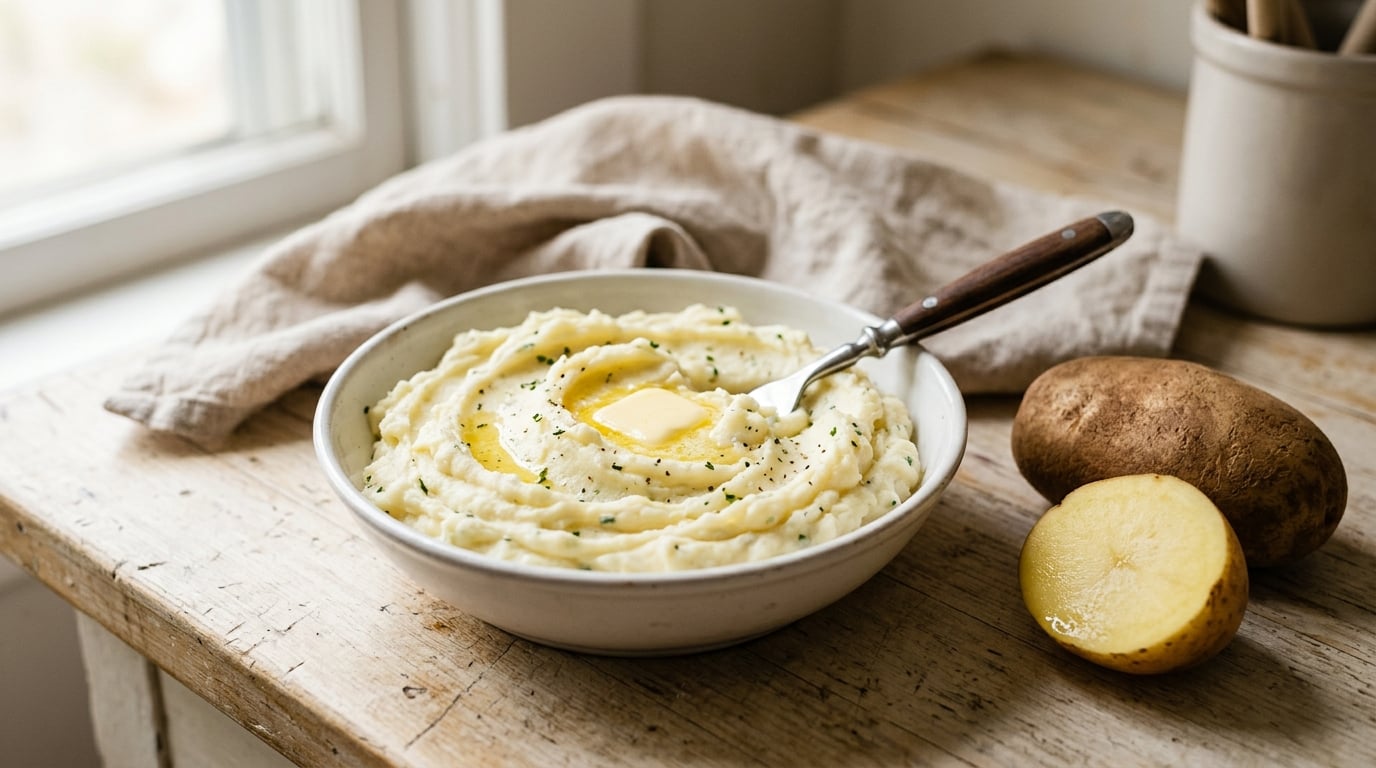
Boil potatoes for 15 to 20 minutes for mashed potatoes if you cut them into 1-inch pieces and start them in cold salted water. Small pieces need 10 to 12 minutes, big chunks need 25 to 30. The clock is a guide, not a rule: pull them the moment a fork slides into the biggest piece with no resistance.
Timing is the one variable in mashed potatoes you cannot fake. Undercook and you get firm, lumpy potatoes that fight the masher. Overcook and the cells rupture, dumping loose starch into the water, and that starch is exactly what turns mash gluey and glue-like.
So this guide gives you real numbers by cut size and potato type, the cold water method I use every time, and what to do when the mash has already gone wrong. Grab a pot and read on.
Table of Contents
How Long to Boil Potatoes for Mashed Potatoes by Size
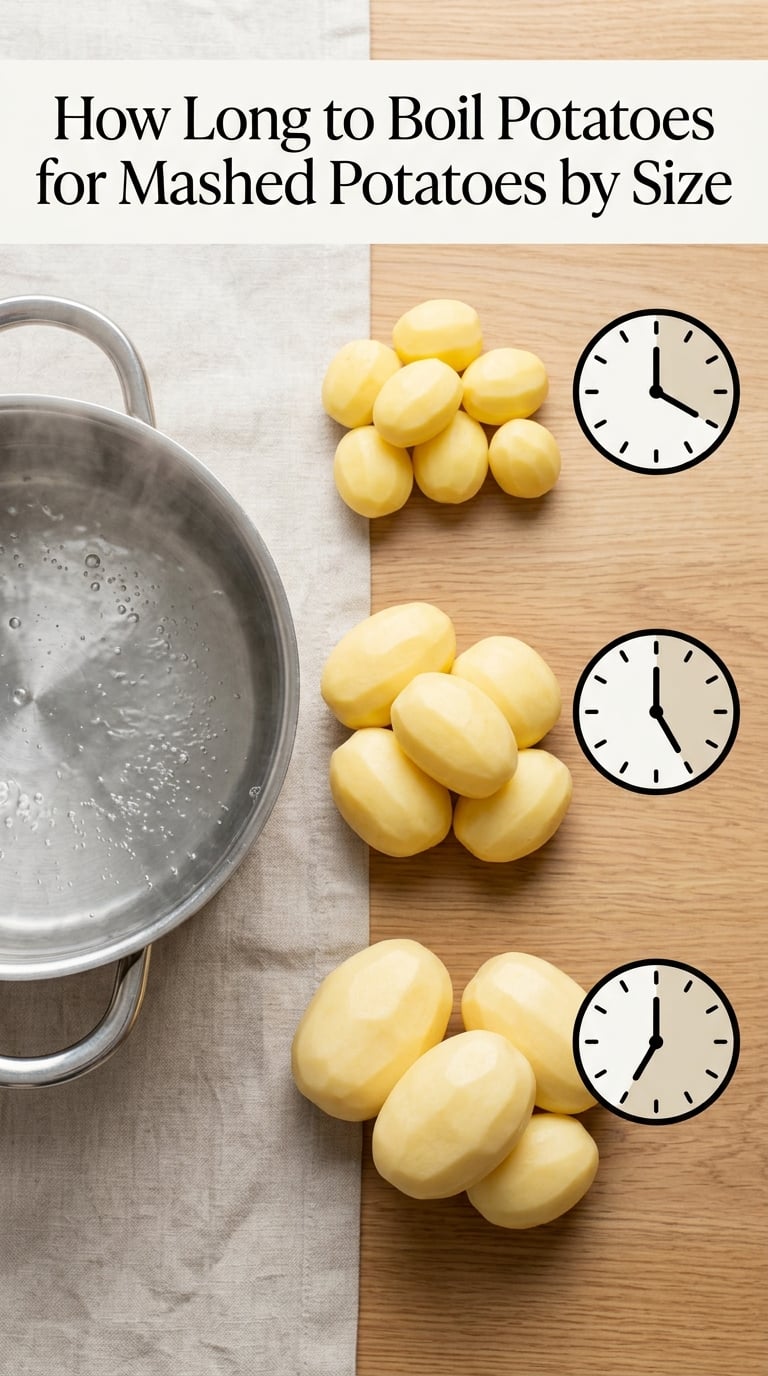
Here is how long to boil potatoes for mashed potatoes, based on how you cut them. Start checking a few minutes before the shortest time in the row, and test the largest piece, never a small one.
| Cut size | Approximate size | Cold water start, boil then simmer | Hot water start, simmer only |
|---|---|---|---|
| Whole small potatoes | Under 2 inches | 20 to 25 minutes | 15 to 20 minutes |
| Halves | 2 to 3 inch potato | 20 to 25 minutes | 15 to 20 minutes |
| Quarters | 3 to 4 inch potato | 22 to 28 minutes | 18 to 22 minutes |
| 1-inch cubes | The most common cut | 15 to 20 minutes | 12 to 15 minutes |
| 1/2-inch dice | Finely chopped | 10 to 12 minutes | 8 to 10 minutes |
| 2-inch chunks | Roughly halved small potato | 25 to 30 minutes | 20 to 25 minutes |
Now the type. A starchy russet cooks slightly faster and breaks down more readily than a waxy Yukon Gold, so if you swapped varieties mid-recipe, add about 5 minutes of margin when in doubt.
| Potato type | Texture in the pot | Boil time for 1-inch pieces | Mash result |
|---|---|---|---|
| Russet or Idaho | Dry, starchy, high starch | 15 to 20 minutes | Fluffy and light, best for gravy and a big holiday table |
| Yukon Gold | Creamy, medium starch | 18 to 22 minutes | Buttery and smooth, the easiest to make creamy |
| Red potatoes | Waxy, moist, low starch | 18 to 22 minutes | Holds its shape, good for chunky rustic mash or potato salad |
| New potatoes | Waxy, very small | 12 to 18 minutes | Delicate skin-on texture, minimal peeling |
One more adjustment worth knowing: water boils at a lower temperature up high. Above 5,000 feet, add roughly 5 to 10 minutes. If you are doubling the batch, a bigger pot of water takes longer to come back to temperature, so give the full time instead of the short one.
Cold Water Start vs Hot Water Start
Both work. They just behave differently, and the difference in timing is about 5 minutes. For mashed potatoes I use cold water, because the potatoes heat slowly and evenly and the outside never overcooks before the center catches up.
| Method | How it works | Timing effect | Best for |
|---|---|---|---|
| Cold water start | Potatoes go in with cold water, salt goes in too, pot comes to a boil then drops to a simmer | Add about 5 minutes to the hot-start time | Fluffy, evenly cooked mash |
| Hot water start | Water is already at a rolling boil, potatoes go in, heat drops to a simmer | Faster, closer to the stated 15 to 20 minutes | Creamy, faster weeknight mash |
A hot start is rougher on the outside of the potato, which some cooks like for a fluffier result and others do not. The real risk with a rolling boil is not the water, it is the agitation. Potatoes that boil hard for 25 minutes fall apart in the pot before you drain them, and you lose the chunks you need for a good mash.
Lid On or Lid Off, Simmer or Rolling Boil, and High Altitude
Leave the lid off. A lid traps pressure in a pot of starch-heavy water, and the faster boil inside scrapes the potatoes against the sides, which is another route to broken, gluey mash.
Bring the water up to a boil, then turn the heat down until you see a steady blip every second or two. That is a simmer, and it is where the potatoes should spend most of their time. If you boil them hard the whole way, expect mush on day one.
At high altitude, water never gets as hot, so cook times stretch. Above 5,000 feet, budget 5 to 10 extra minutes on a cold start and lean on the fork test rather than the timer.
Which Potatoes Are Best for Creamy Mashed Potatoes?
For the creamiest mashed potatoes, Yukon Gold wins. It has a medium starch content and a high moisture content, so it whips into something smooth with less effort and less butter. For the lightest, fluffiest mash, use russets: the extra starch swells during boiling and breaks into separate strands when you mash it.
Red potatoes sit in between but lean waxy, so they hold their shape instead of collapsing. That is a virtue for a rustic mash you want to keep chunky, and a problem if you want silk.
The mechanism matters here. Potatoes cook by starch gelatinization: hot water swells the starch granules and softens the cell walls, which is what lets a masher break the potato down. Cook past the point where the cells collapse and free starch leaks out. That loose starch is what turns mash gummy and gluey rather than fluffy.
So boil long enough to soften, then stop. If you want to know which variety you have, cut one open and rub the cut face between your fingers. Rubbery and gritty means starchy. Moist and dense means waxy.
How to Boil Potatoes Before Mashing Them
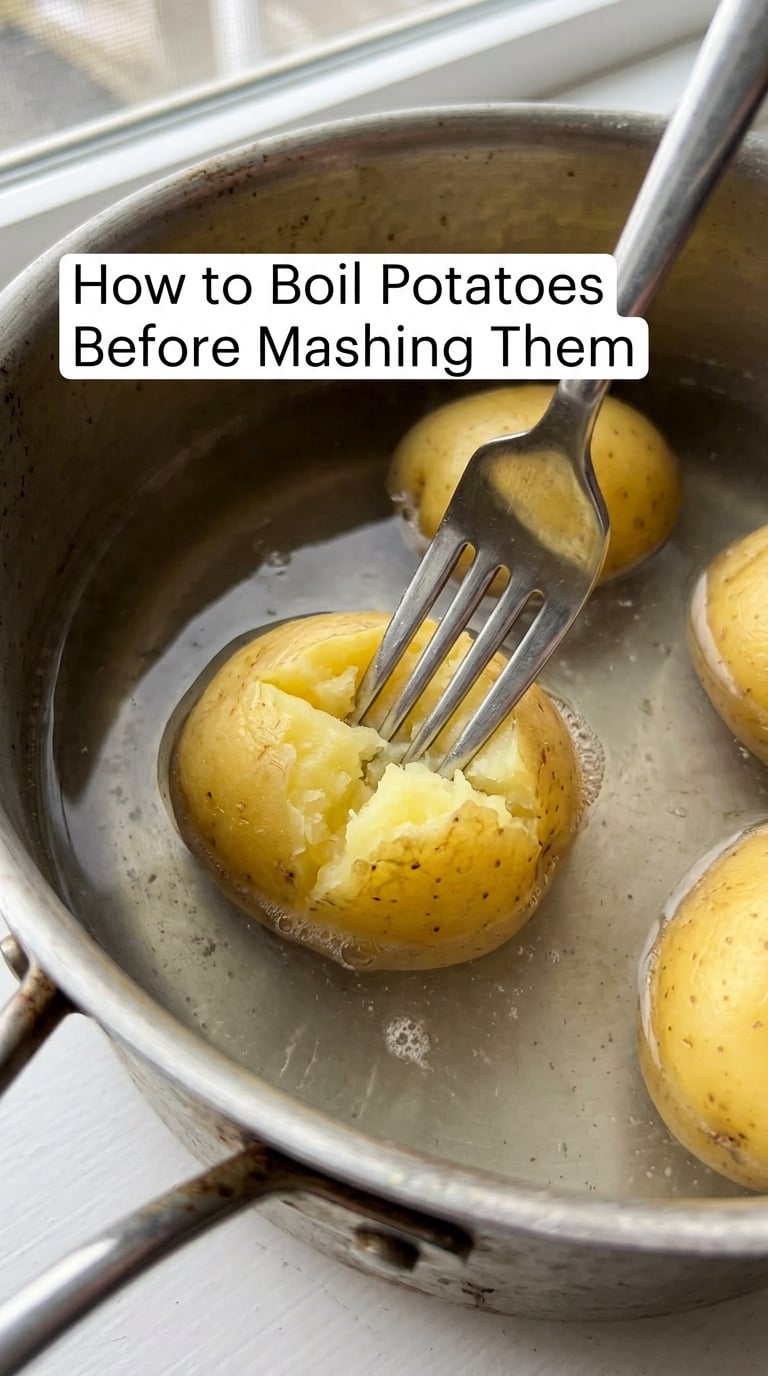
This is the cold water method I use, and it is the one most home cooks describe as their default.
- Scrub the potatoes well under cold running water. If you are peeling, do it now; if you are boiling with the skin on, scrub the dirt off and leave the peel.
- Cut into even pieces. Even is the whole game. Mixed sizes mean some pieces turn to paste while others still have a hard core.
- Rinse the cut pieces in a colander until the water runs mostly clear. That washes off surface starch and keeps the mash from getting gluey.
- Put the potatoes in a pot and cover them with cold water by about 1 inch.
- Add 1 to 2 teaspoons of salt per quart of water. It seasons the potato itself, not just the water, because the potato absorbs salted water as it cooks.
- Bring to a boil over high heat, uncovered.
- Turn the heat down to a steady simmer and cook until a fork slides into the largest piece with no resistance, about 15 to 20 minutes for 1-inch pieces. Start testing at 10 minutes.
- Drain immediately. Do not rinse, because you want to keep the starch that is still in the potato.
- Return the potatoes to the dry pot and let them sit off the heat for a minute or two so the surface moisture evaporates.
- Mash with a masher or push through a ricer before you add anything else. Beat the potatoes on their own first, then soften with warm butter, then loosen with warm milk or cream.
That last step is the most-repeated tip across cooking threads, and it is the one most recipes skip. Seasoning and dairy go in after the mash is broken down, never before.
You will know the potatoes are done by more than the fork. The edges should start to crumble slightly, a spoon should crush a piece with almost no pressure, and a knife tip should pass through the center without you feeling anything push back. Test the biggest piece, always.
Do You Peel Potatoes Before Boiling Them for Mash?
It does not matter much for texture. Boiling with the skin on, then peeling after draining, gives you slightly drier potatoes and a better aerated mash, because the skin holds the piece together through the boil. Peeling first saves you work at the peeling stage, not at the sink, and peeled pieces lose moisture a little faster.
Peel the russets if you want the cleanest, fluffiest result. Skip it on Yukon Golds and reds, where the thin skin barely registers once mashed. New potatoes always stay on.
The one thing to do: keep cut potatoes under cold water until they go in the pot, or add them right away. Cut potatoes sitting in open air oxidize and go grey and pink at the edges, and that grey shows up in the finished mash.
How Much Salt and Water Should You Use?
Use 1 to 2 teaspoons of salt per quart of water, and cover the potatoes by 1 inch. More water is not safer: the potatoes cook fine submerged, and extra water simply takes longer to heat up.
Salting the water is what seasons the potato from the inside. A potato cooked in unsalted water and salted afterward needs a noticeably heavier hand to taste properly seasoned.
Save about a cup of the cooking water before you drain. That starchy liquid is the rescue for mash that turns out too thick, and it is the easiest fix for a batch that has gone gluey. Do not use it as the main liquid in your mash, though. Straight-up potato water makes soupy, loose mash, so use milk or cream for creaminess and keep the pot water in your back pocket.
Common Mistakes That Make Boiled Potatoes Watery
Watery and gluey mash usually comes down to one of a handful of things. Here is the symptom, the cause, and the fix.
| What went wrong | Why it happened | Fix it next time |
|---|---|---|
| Watery, soupy mash | Potatoes sat undrained, or the pot water got stirred in | Drain fully, return to the dry pot, let it sit a minute, then mash |
| Gummy, gluey mash | Overcooked past fork tender, or over-mashed with a blender | Pull the potatoes the moment the fork slides in; mash with a masher or ricer, never a blender |
| Hard centers in soft edges | Pieces were cut unevenly | Cut every piece the same size, and test the biggest one |
| Uneven cooking, some mushy | Started in a hard rolling boil | Boil, then simmer, uncovered |
| Flavor only on the surface | Unsalted water | 1 to 2 teaspoons of salt per quart |
| Grainy, glue-like texture | Surface starch was never rinsed off | Rinse cut pieces until the water runs clear |
Two habits cause most of it. The first is leaving the potatoes in the water after they are tender, thinking they need longer. They are done. The second is reaching for the hand blender. Blending ruptures every remaining cell at once and releases all the starch in the pot, which is the fastest route to wallpaper paste.
How to Rescue Gluey Mashed Potatoes
Once the starch is out, you cannot put it back in, but you can thin and lighten the batch.
- Warm half-and-half or whole milk in a separate pan until it is steaming but not boiling.
- Warm a cup of the reserved cooking water in the same pan.
- Whisk the two together, then stir it into the gluey mash a little at a time.
- Beat the mash hard with a whisk for a full minute. This pushes air back into it and loosens the gluey texture.
- Rest it for five minutes before serving, so the liquid soaks in instead of pooling.
Do not add the butter until the end of the rescue, since fat binds to the loose starch and makes the glueiness worse. The result will not be as good as a batch that was never over-mashed, but it will be edible and, honestly, still pretty good on a plate.
Can You Make Mashed Potatoes Ahead of Time?
Yes, and for a holiday dinner it is the difference between calm and chaos. Boil and mash the day before, refrigerate, and reheat gently.
Store mashed potatoes in an airtight container in the refrigerator for up to 3 to 4 days. For longer, freeze in a sealed container for up to 2 months, though the texture softens a little on the second freeze-thaw.
To keep them from drying out or going gluey overnight, spread a thin layer of butter over the surface before you cover the container, and leave out a splash of the cooking water. Reheat in a double boiler or a low saucepan with a little extra milk, stirring often, until hot all the way through. A microwave works, but stir halfway through or the edges turn rubbery.
If you would rather not mash ahead, boil the potatoes only, keep them whole and unseasoned in the fridge, and mash them fresh the next day. That is the better option for texture. If you want the pressure-cooker version of the same dish, my Instant Pot mashed potatoes method uses about 8 minutes at high pressure with a cup of water.
Leftovers that are already mashed and fried or baked turn into excellent food rather than a second helping of mash. I have a few favorites in best leftover mashed potato recipes, and this hamburger and potato recipe is what I make when there is mash in the fridge and nothing else planned.
Frequently Asked Questions
How long does it take to boil potatoes for mashed potatoes?
Plan on 15 to 20 minutes for 1-inch pieces started in cold salted water, 10 to 12 minutes for half-inch dice, and 25 to 30 minutes for 2-inch chunks. Yukon Golds and reds usually need 3 to 5 minutes longer than russets. Treat every number as a ceiling and start testing early, because the fork sliding in without resistance is the real signal that the potatoes are done.
Should mashed potatoes start in cold or boiling water?
Cold water is the better choice for mash. The potatoes heat slowly and evenly, so the outside never turns to paste before the center softens, and you avoid a rough, waterlogged exterior. Boiling water start cooks about 5 minutes faster, which is useful on a weeknight, and both methods work fine as long as you drop to a simmer once the water returns. Salt either way at 1 to 2 teaspoons per quart.
How do you know boiled potatoes are done for mashing?
Push a fork or knife into the center of the largest piece. It should slide in with no hard resistance, the edges should be crumbling slightly, and a spoon should crush a piece with almost no pressure. Always test the biggest piece rather than a small one, since small bits turn to mush long before the large ones are ready. If the fork meets any resistance at all, give it two more minutes.
Do you peel potatoes before boiling them for mashed potatoes?
Either way works, and the difference in texture is small. Boiling with the skin on then peeling after draining gives a slightly drier, better aerated mash, while peeling first saves a little work and loses a bit of moisture. Peel russets for the cleanest fluffiest result, and leave thin-skinned Yukon Golds and reds on. The exception is new potatoes, which always keep their skin.
Can you boil potatoes ahead of time for mashed potatoes?
Yes. Boil and mash up to 3 to 4 days ahead, refrigerate in an airtight container, and cover the surface with a thin layer of butter so it does not dry out. Reheat in a double boiler or low saucepan with a splash of warm milk, stirring often, until steaming all the way through. For the best texture, boil ahead and mash fresh, keeping the pieces whole and unseasoned in the fridge.
Why are my mashed potatoes watery after boiling the potatoes?
Usually one of three things: the potatoes sat in the water after they were already tender, they were not drained long enough, or you mashed them with a blender. Wait until the fork slides in, drain immediately without rinsing, return the potatoes to the dry pot for a minute, then mash with a masher or ricer. Rinsing the cut pieces before boiling matters too, since surface starch is a big part of the glueiness.
Use These Timings for Fluffy, Creamy Mash
Start with 15 to 20 minutes for 1-inch pieces in cold salted water, and shorten that for dice or stretch it for big chunks. Start checking 5 minutes early, test the largest piece, and stop the second a fork or knife goes through with no resistance and the edges are crumbling.
Drain straight away, let the potatoes dry in the empty pot for a minute, and mash them on their own before the butter and milk go in. Those three habits do more for fluffy, creamy mashed potatoes than any timer will. Updated for 2026, and worth a read before your next holiday pot of potatoes.