
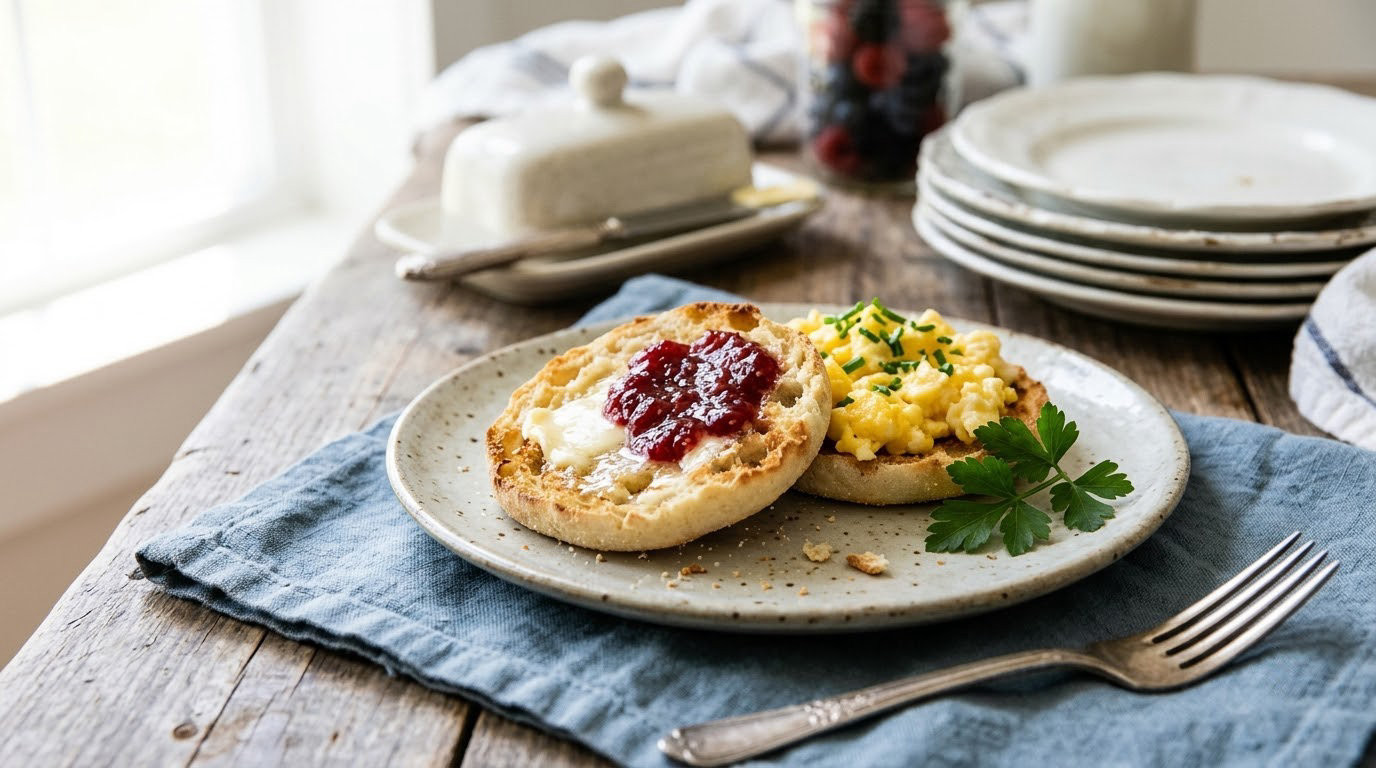
An easy homemade english muffin recipe takes about 30 minutes of actual work, and almost all of the rest is waiting. You mix a soft yeasted dough, roll it out, cut rounds, let them puff up, then bake until the middles reach 200°F (93°C). Nothing here needs a bread pan, a mixer, or any shaping skill.
That matters more than it sounds. Most people who try to make English muffins at home fail in the same two spots: over-flouring the dough while shaping, and baking too hot so the outside burns before the center cooks. This method avoids both. It also makes ten to twelve muffins, so a Sunday morning batch covers most of the week.
Table of Contents
Why This Easy Homemade English Muffin Recipe Works
- No pan and no shaping tricks. You roll the dough flat and stamp out rounds with a cup or a biscuit cutter, so nothing can collapse or shrink out of shape.
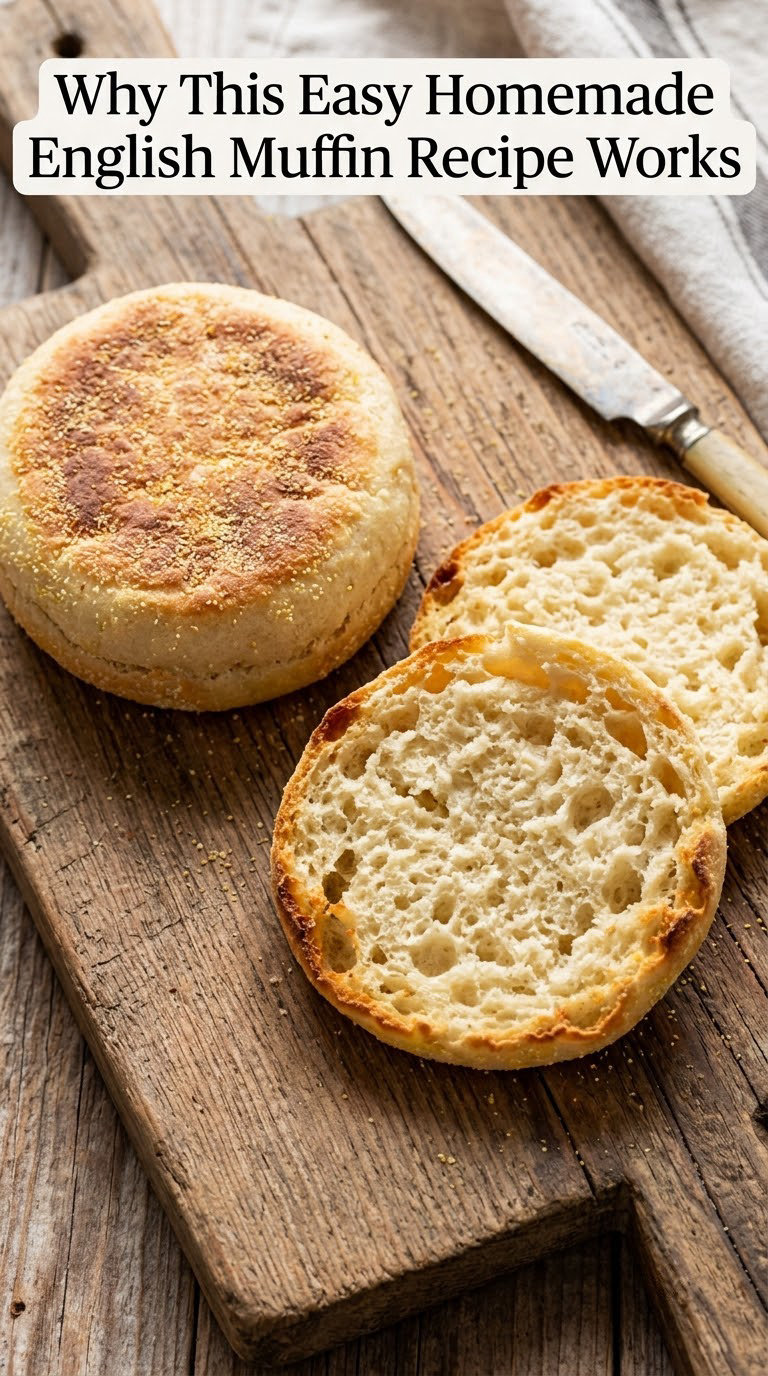
- The dough stays slightly sticky. That stickiness is hydration doing its job. A wetter dough keeps more open pockets, and those pockets are what you tear open later for nooks and crannies.
- You judge the rises by sight, not the clock. Every rise here gets a visual cue, so a cold kitchen or a warm one changes the timing without ruining the batch.
- Cornmeal does the sticking. A light dusting on the sheet and on the tops means the rounds lift clean instead of tearing.
- A quick egg wash and a moderate oven do the rest. The wash sets a glossy, crisp shell, and 400°F (205°C) is gentle enough to cook a thick center all the way through.
Split the cooled muffin with a fork rather than a knife, and those pockets tear open into the crannies people complain store-bought muffins never have. Home bakers have a nickname for the fake version: crevices of deceit.
Ingredients
For the dough
- 3 cups (408 g) bread flour, plus more for dusting
- 2 1/4 teaspoons (7 g) instant yeast
- 1/4 cup (50 g) granulated sugar
- 1 teaspoon fine sea salt
- 3/4 cup (180 ml) whole milk, warmed to about 110°F (43°C)
- 2 tablespoons (28 g) unsalted butter, melted and cooled slightly
- 1 large egg, at room temperature
For the topping and the sheet
- 1/2 cup (65 g) fine cornmeal or semolina, for dusting
- 1 egg plus 1 tablespoon milk, beaten, for the wash
- 1 tablespoon butter or neutral oil, for the baking sheet
Bread flour is the best choice here because its higher protein builds a strong gluten network that holds big gas pockets. All-purpose flour still works, and the muffins will be a bit softer and less structured. See egg muffin recipes that prep ahead for the week if you want a second make-ahead breakfast in the fridge.
Swaps that hold up: use Greek yogurt in place of half the milk for a higher-protein, tangier crumb. Active dry yeast works if you wake it in the warm milk first with a pinch of sugar and let it foam for five minutes. Whole wheat flour can replace up to half the bread flour, though expect a denser, nuttier muffin.
Equipment
- Large mixing bowl
- Whisk, or a stand mixer with a dough hook
- Rolling pin
- 3-inch round cutter, or a sharp rimmed glass
- Rimmed baking sheet lined with parchment paper
- Dough scraper
- Measuring spoons and a kitchen scale, if you have one
- Instant-read thermometer for the baked centers
The thermometer is the one tool that takes this from guesswork to repeatable. Thick muffin centers fool you easily, and 200°F (93°C) is the number to trust. A cast iron skillet works too if you prefer a stovetop version.
How to Make Easy Homemade English Muffins
Mixing the Dough
- Warm the milk. Heat 3/4 cup milk until it feels warm in your hand, roughly 110°F (43°C). Too hot and you kill the yeast.
- Bloom the yeast if needed. Instant yeast can go straight in. For active dry yeast, stir it into the warm milk with a teaspoon of the sugar and wait five minutes for a foamy surface.
- Combine the dry ingredients. Whisk 3 cups bread flour, the yeast, the sugar and the salt in the bowl.
- Add the wet ingredients. Pour in the warm milk, the melted butter and the egg. Stir until no dry flour is left.
- Knead briefly. Knead on a lightly floured surface for 6 to 8 minutes, until the dough feels smooth and springs back slowly when you poke it.
- Cover and let it rise. Put the dough in an oiled bowl, cover with a damp towel, and leave it in a warm spot until doubled in size, about 60 to 75 minutes. It should be full of visible bubbles and feel soft and pillowy, not firm.
Shaping the English Muffins
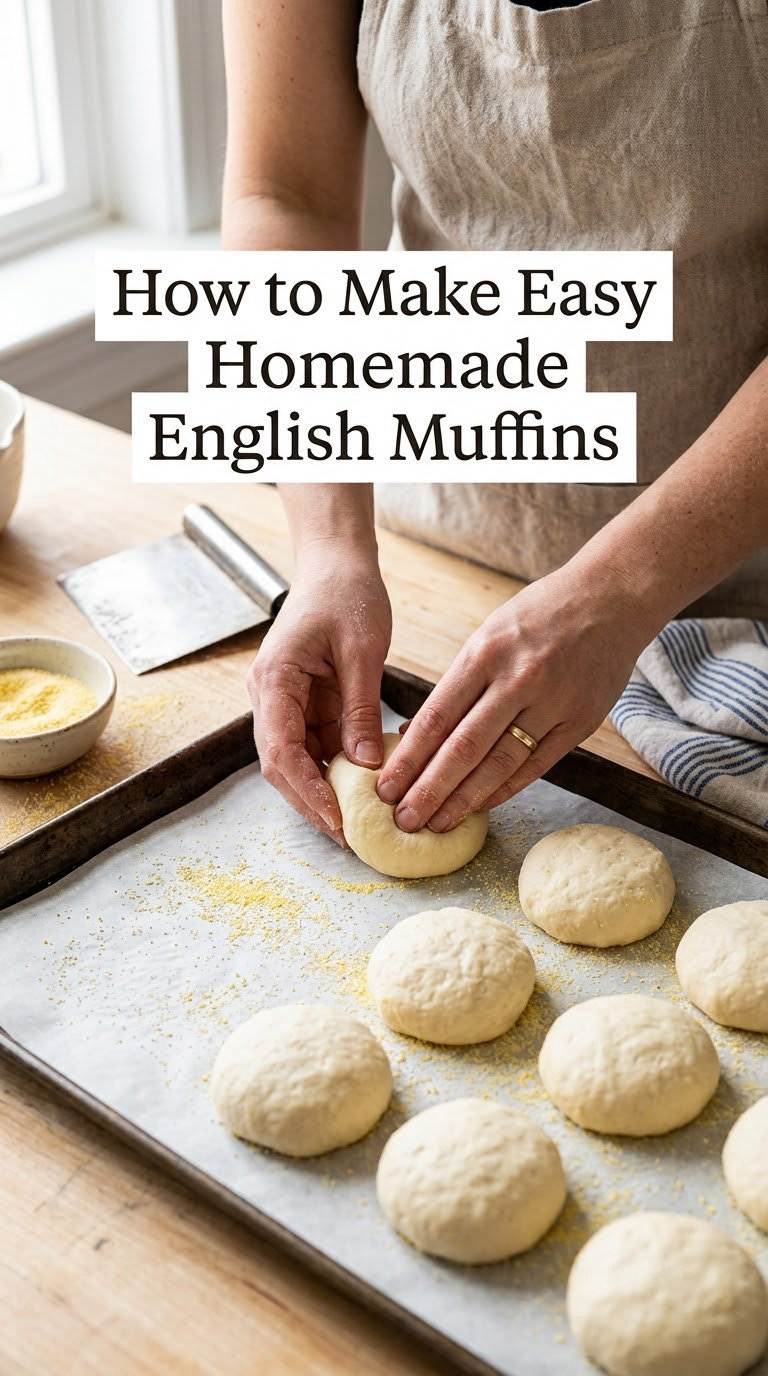
- Roll the dough gently. Turn it onto a floured surface and roll to 3/4 inch thick. Press rather than roll hard, and keep the height even.
- Stamp out the rounds. Cut with a 3-inch cutter or a rimmed glass. Gather the scraps, pat them into a disc, and roll them out again, so nothing goes to waste.
- Dust the sheet and the tops. Brush a baking sheet with butter, line it with parchment, and sprinkle cornmeal over the parchment and the dough rounds.
- Proof the rounds. Cover loosely and let them puffy up for 30 to 45 minutes, until they look pillowy and have grown noticeably taller. This second rise is what separates a good crumb from a dense one.
Space the rounds about an inch apart. They rise sideways as well as up, and touching rounds bake into one another.
Baking for Golden Tops
- Brush and bake. Heat the oven to 400°F (205°C). Brush the tops with the beaten egg and milk, then bake for 12 to 16 minutes.
- Check the center. Insert an instant-read thermometer into the thickest part. At 200°F (93°C) the crumb is set and the middle is no longer doughy. Golden tops and a soft center usually land between 13 and 15 minutes.
- Cool completely. Move the muffins to a rack for at least 30 minutes. Warm bread tears when you split it, and that is how the nooks get ruined.
- Fork-split. Pierce the muffin with a fork all the way around the middle, then lift the top with your fingers and pull it away. The crumb tears open into pockets.
For a stovetop cook, preheat a cast iron skillet or griddle over medium-low heat and cook the rounds for 7 to 8 minutes per side, until deep golden and cooked through. Medium-low is not optional. Higher heat browns the outside long before the center sets.
The cool muffins also toast well. Split and toast for two minutes before serving to get the edges crunchy again.
Tips for Success
- If the dough doesn’t rise: the milk was probably too hot. Next time, use a thermometer and aim for 105 to 110°F (41 to 43°C). Some kitchens are cold enough that a rise takes 90 minutes, so judge it by doubling, not by the clock.
- If the muffins spread into puddles: they went into the oven under-proofed. Wait for the rounds to look inflated and pillowy before baking, and skip a second rise if the dough feels fragile and torn.
- If the centers are dense: you likely floured the surface too much while shaping. Dust lightly, keep the dough sticky, and handle it as little as possible. Extra flour tightens the crumb and kills the pockets.
- If the tops are pale: the egg wash was too thin or the oven was cool. Beat the egg with the milk, and give the sheet a minute to preheat before the muffins go in.
- If they stick to the sheet: the cornmeal dusting was skipped or too light. Let the rounds sit in the cornmeal for a minute before moving them, and always peel them off the parchment rather than the parchment off the sheet.
- If they dry out before serving: store them only once completely cool, in a paper bag or a loose towel, and skip the fridge. A sealed plastic bag pulls moisture out of the crumb within hours.
If you bake a big batch, these also freeze well next to easy muffin recipes that are freezer ready.
Variations
- Cinnamon sugar: Roll the rounds in a mix of 1/3 cup sugar and 2 teaspoons cinnamon with 2 tablespoons melted butter before the second rise. Cut the sugar in half so it does not burn.
- Herb and cheese: Replace the sugar with 1 tablespoon honey and fold 1/2 cup shredded cheddar plus 2 teaspoons dried herbs into the dough. Drop the egg wash and dust with a little grated cheese instead.
- Seeded: Add 2 tablespoons sesame, poppy, or everything seasoning to the cornmeal dusting. Rinse the seeds first if you are using them on top of the dough.
- Whole wheat: Swap up to half the bread flour for whole wheat. Keep the milk quantity the same and add a tablespoon of water if the dough feels tight when you roll it.
- Sourdough discard: Replace the yeast with 150 g of ripe discard and let the first rise run overnight in the fridge. The crumb turns chewy and the flavor gets tangier.
Storage, Make-Ahead and Reheating
English muffins keep two days on the counter in a paper bag or a clean towel. They last three to four days in the fridge, though the crumb firms up faster than it should. For longer storage, cool them completely, then freeze in a single layer for two hours before moving to a bag so they do not clump. Frozen muffins keep three months and reheat beautifully.
To reheat, split and place cut-side down in a hot dry skillet for a minute or two, or toast in a 350°F (175°C) oven for five minutes. The microwave works, but it leaves the outside soft and chewy, so it is only worth it for a muffin you are about to eat.
The dough can also be made ahead. Refrigerate the risen rounds overnight and bake them straight from the cold, adding two to three minutes to the bake time.
Two allergens to flag: these muffins contain wheat and egg. Milk and butter are in the dough and the wash, so skip the wash and use dairy-free butter for a dairy-free version.
What to Serve With English Muffins
- Butter and jam, warmed in a small pot, with flaky salt on top
- Fried eggs with crispy edges, straight onto the split muffin
- Bacon or prosciutto and a fried egg, the classic breakfast sandwich build
- Peanut butter and sliced banana with a pinch of cinnamon
- Soft scrambled eggs and smoked salmon for a weekend brunch plate
For a table that needs something on the side, these sit well next to 10 easy granola recipes for homemade breakfast, since the muffins are the savory-leaning half of the spread.
Frequently Asked Questions
How do I know the English muffin dough has risen enough?
Push a floured finger gently into the dough and pull it back out. If the dent stays and the dough has roughly doubled in volume, the rise is done. A properly risen dough feels soft and full of air, with bubbles visible across the surface. If the dent springs right back, the yeast has not worked yet, so give it another 20 minutes in a warmer spot.
Do English muffins need a second rise before baking?
Yes, and this is the step most skipped. The first rise builds the dough, and the second rise lets the gas pockets expand after you cut the rounds. Muffins that skip it bake up with a tight, dense crumb and almost no pockets. Wait until the rounds look visibly puffy, usually 30 to 45 minutes at room temperature.
Can I use instant yeast or active dry yeast?
Both work with this recipe. Instant yeast goes straight into the dry ingredients with no adjustment. Active dry yeast needs waking first: stir it into the warm milk with a pinch of sugar and wait five minutes for foam before adding everything else. Either way, use water no hotter than 110°F (43°C), or the yeast will die.
Why are my homemade English muffins flat?
Three usual causes. Rolling too thin gives you a pancake instead of a muffin, so aim for 3/4 inch. Flouring the surface heavily during shaping tightens the crumb and stops the rounds from puffing. And baking straight after cutting, with no second rise, leaves them flat and heavy. Fix all three and the height comes back.
How do I make English muffins crisp?
Three things matter: brush the tops with beaten egg and milk before baking, dust them lightly with cornmeal, and bake at 400°F (205°C) until the centers hit 200°F (93°C). For extra crunch, split a cooled muffin with a fork and toast it cut-side down in a dry skillet for a minute before serving.
Can homemade English muffins be frozen?
Freeze them fully cooled, not warm. A single layer on a baking sheet for two hours keeps them from sticking together, then move them to a freezer bag where they hold three months. Reheat from frozen in a 350°F (175°C) oven for five minutes, or in a covered skillet, and the crust comes back crisp.
Your New Go-To Breakfast Routine
Make a double batch the first time and freeze half before you even taste one. This easy homemade english muffin recipe is the kind of thing that changes a weekday morning: pull two from the freezer, toast them, and breakfast is done in five minutes without a trip out of the house.
If your first batch comes out flat, check the second rise before you blame the recipe. That single wait fixes most disappointing muffins.