
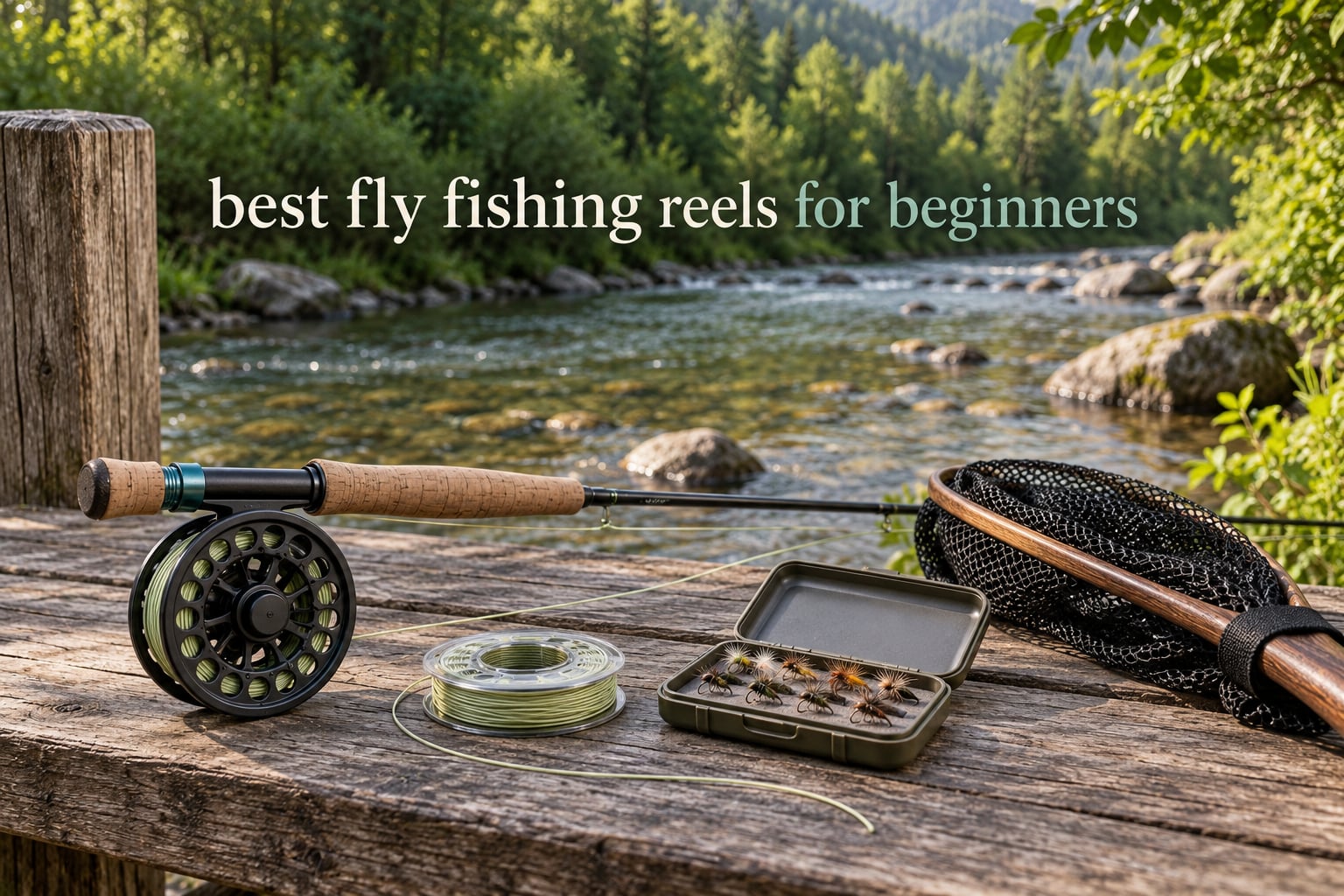
If you only buy one piece of fly fishing gear as a beginner, make it the reel. Everything else on a starter setup is easier to replace, and most beginners land trout by stripping line with their fingertips instead of cranking a reel anyway. That said, the difference between a reel that smooths a running fish and one that locks up mid-fight is the difference between a good first season and a frustrating one.
We compared the twelve best fly fishing reels for beginners currently worth a place on the shortlist, looking at three things above everything else: reel weight against rod weight, arbor size, and drag system. All twelve sit at the affordable end of the market, and none of them is the kind of machined titanium reel that belongs on a wall in year ten.
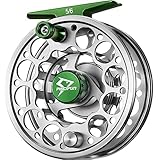
Our default pick is the Piscifun Sword. It weighs 4.48 ounces, carries a multi-disc carbon and stainless drag, and a one-way clutch bearing that stops the spool dead the instant you set the retrieve. If your budget is tighter or your hands are smaller, the Maxcatch AVID at 4 ounces is the one to look at first.
The rule of thumb most experienced anglers follow, and the one we used here, is to spend in the middle of the entry range rather than at either end. The very cheapest reels feel great for an afternoon and frustrate you in month three; premium reels add weight and cost you do not yet need. Newcomers buying unfamiliar gear tend to do well with the same logic.
Table of Contents
What to Look For in a Beginner Fly Reel
Reel weight: Match the reel to the rod weight line. A 5-weight rod wants a 5/6 reel in the 4 to 6 ounce range, and a 6-weight rod wants a 6/7 or 7/8. Heavier reels unbalance a light rod.
Arbor size: A large arbor spool is wider, so it picks line up faster, resists line memory better, and holds more backing than a mid or standard arbor.
Drag system: A smooth disc drag bleeds line at a steady rate under pressure, which protects your tippet. Clicker-only reels give you an audible click and nothing else.
Two more things matter more than most shoppers expect. Corrosion resistance decides whether the reel survives a season of wet hands and wading, and warranty length tells you whether the brand expects the drag to last.
Top 3 Beginner Fly Reels
Piscifun Sword
- CNC-machined 6061-T6 aluminum
- Multi-disc carbon and stainless drag
- 4.48 oz
- 5/6wt

Sougayilang Large Arbor
- Large arbor CNC aluminum
- 2+1 ball bearings
- 5.76 oz
- Five-year warranty

Aventik HVCE Classic III
- Graphite composite body
- Large arbor spool
- Central disc drag
- 4.2 oz in 3/4wt
All 12 Beginner Fly Reels at a Glance
Every reel below is listed with the same core specs so you can scan for the combination of weight, arbor and drag that fits your rod.
| Product | Specifications | Action |
|---|---|---|
| Piscifun Sword Fly Reel |
|
Check Latest Price |
| Sougayilang Large Arbor 2+1 BB |
|
Check Latest Price |
| Aventik HVCE Classic III Graphite |
|
Check Latest Price |
 Redington Zero Clicker Drag Reel Redington Zero Clicker Drag Reel |
|
Check Latest Price |
 Maxcatch ECO Large Arbor Combo Maxcatch ECO Large Arbor Combo |
|
Check Latest Price |
 Maxcatch Tino Large Arbor Maxcatch Tino Large Arbor |
|
Check Latest Price |
 SF SF-001 Large Arbor Combo SF SF-001 Large Arbor Combo |
|
Check Latest Price |
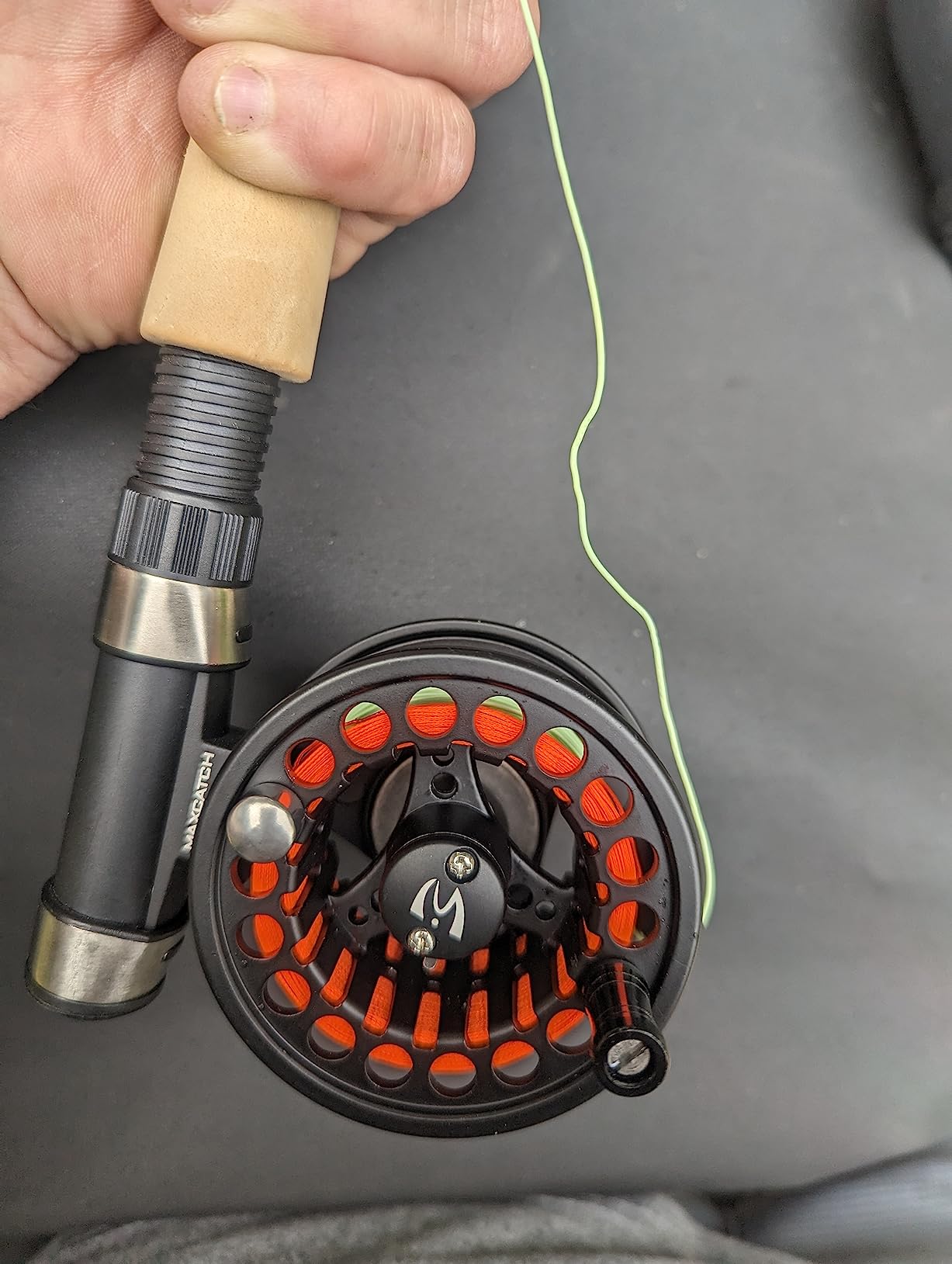
 Maxcatch AVID CNC Aluminum Maxcatch AVID CNC Aluminum |
|
Check Latest Price |
 SF SF-003 Pro Mid Arbor SF SF-003 Pro Mid Arbor |
|
Check Latest Price |
 Aventik FLK CNC Large Arbor Aventik FLK CNC Large Arbor |
|
Check Latest Price |
 Redington Crosswater IV Redington Crosswater IV |
|
Check Latest Price |
 Sougayilang 5/6 CNC Reel Sougayilang 5/6 CNC Reel |
|
Check Latest Price |
1. Piscifun Sword – the all-round beginner fly reel
Piscifun Sword Fly Fishing Reel, CNC-Machined Aluminum Alloy Fly Reel
- Smooth drag for very little money
- Tight CNC machining in a hollow aluminum body
- Light at 4.48 oz and well balanced
- One-way clutch bearing for fast hook-ups
- Three-year warranty
- Loosely threaded drag dial that is easy to bump
- Drag washers need periodic cleaning and lubrication
- Tension can feel inconsistent on hard-running fish
The Sword is the reel we keep coming back to because almost nothing else at this level combines a real multi-disc drag with machined aluminum. The hollow 6061-T6 body comes in at 4.48 ounces, which sits comfortably on a 5 or 6 weight rod without tipping the balance forward.
The one-way clutch bearing is the detail most beginners notice first. Set the retrieve and the spool stops dead, so picking up a dropped line, landing a fish, or changing flies does not involve spinning the spool by hand. Reviewers consistently single out the machining quality and the smoothness of the drag for the money.
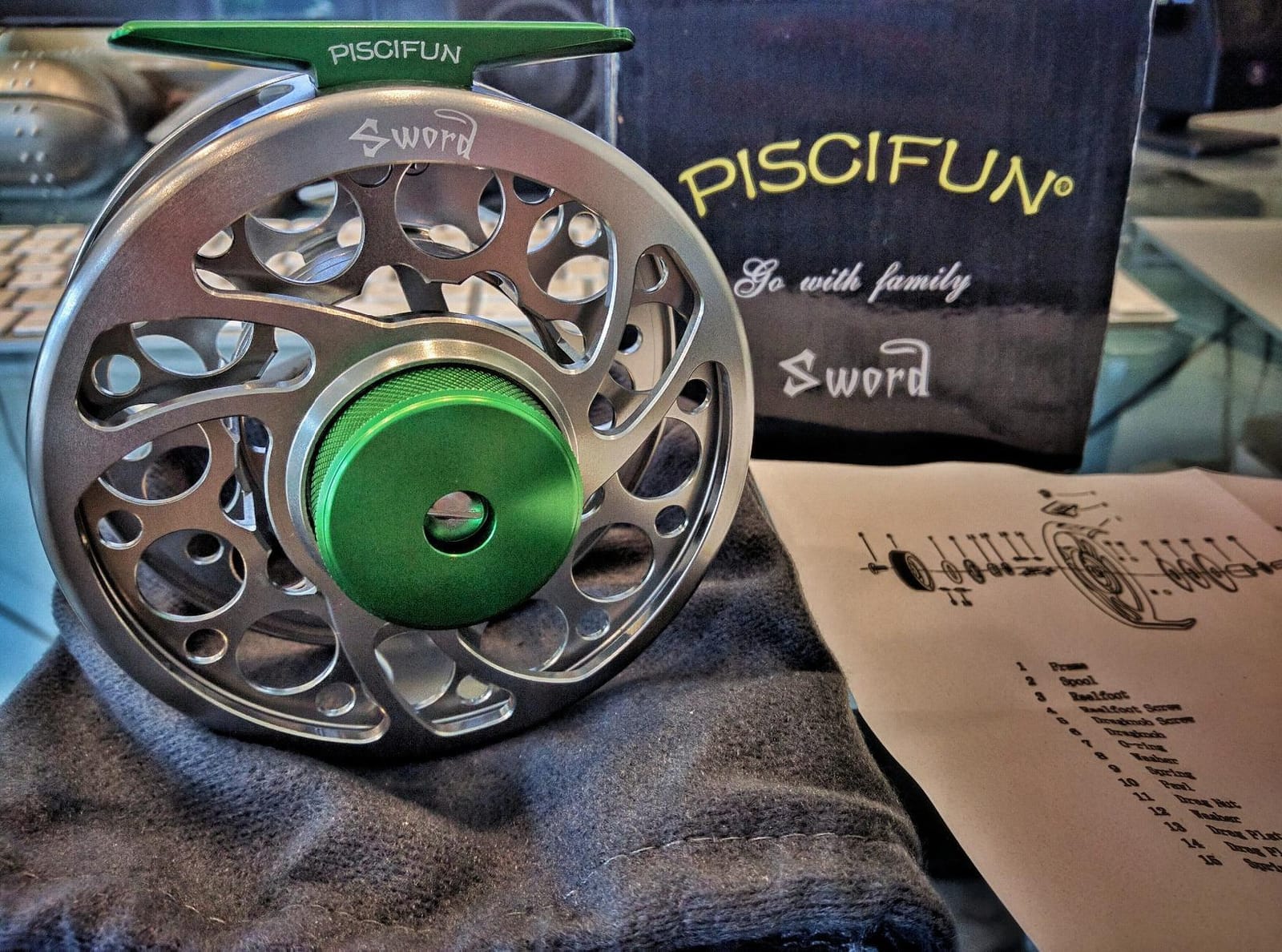
The honest caveat is maintenance. The drag is exposed rather than sealed, so the washers want cleaning and lubrication between heavy trips, and a minority of experienced owners report tension that feels inconsistent when a fish really pulls. The drag adjustment dial is also threaded loosely enough that it is easy to bump with a wet hand.
How it holds up under a hard-running fish
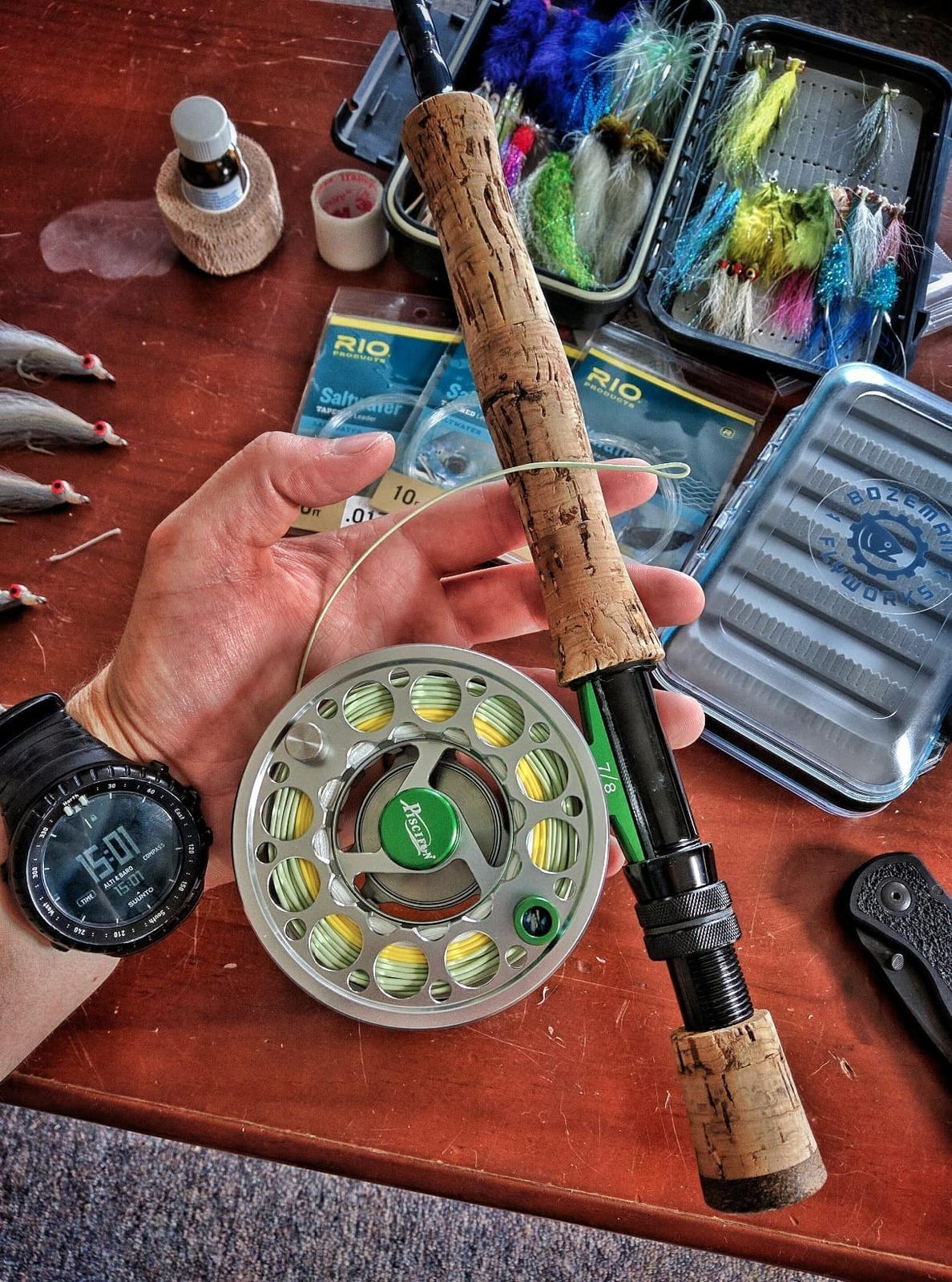
Owners regularly report landing fish well beyond what a 5 weight would suggest, including carp and small pike. The multi-disc stack does creep once it is hot and dirty, which is why cleaning it between trips matters more here than on a sealed drag.
If you fish only trout in clean water, you will probably never notice. If you fish structure, wind, or salt water, expect to pull the spool and wipe the discs more often than you would on a sealed system.
Who should look past this one
If you want a reel that arrives with line already on it, this one is sold without line and you will be building the spool yourself. That is a real advantage for learning, but it is a weekend the first time.
Anyone fishing salt water regularly should also look at a sealed-drag option further down this list rather than committing to an exposed multi-disc system.
2. Sougayilang Large Arbor 2+1 BB – big arbor at a low price
- Large arbor picks line up quickly
- Durable CNC-machined aluminum build
- One-way roller bearing engages the drag fast
- Tool-free retrieve hand conversion
- Five-year warranty
- 4.2 average with an 8% one-star share
- Drag and spool retention can need adjusting over time
This is the reel that makes a large arbor affordable. The spool is wide for the price, so line comes off faster than on a mid-arbor reel of similar weight and there is less line memory after a long day of casting. Two stainless bearings and a one-way roller bearing handle the retrieve and the clutch in one part.
At 5.76 ounces it suits a 6 or 7 weight rod better than a 5 weight. Owners using it for multi-species freshwater fishing like the combination of capacity and durability, and the knurled screw caps mean spool removal and hand conversion need no tools.
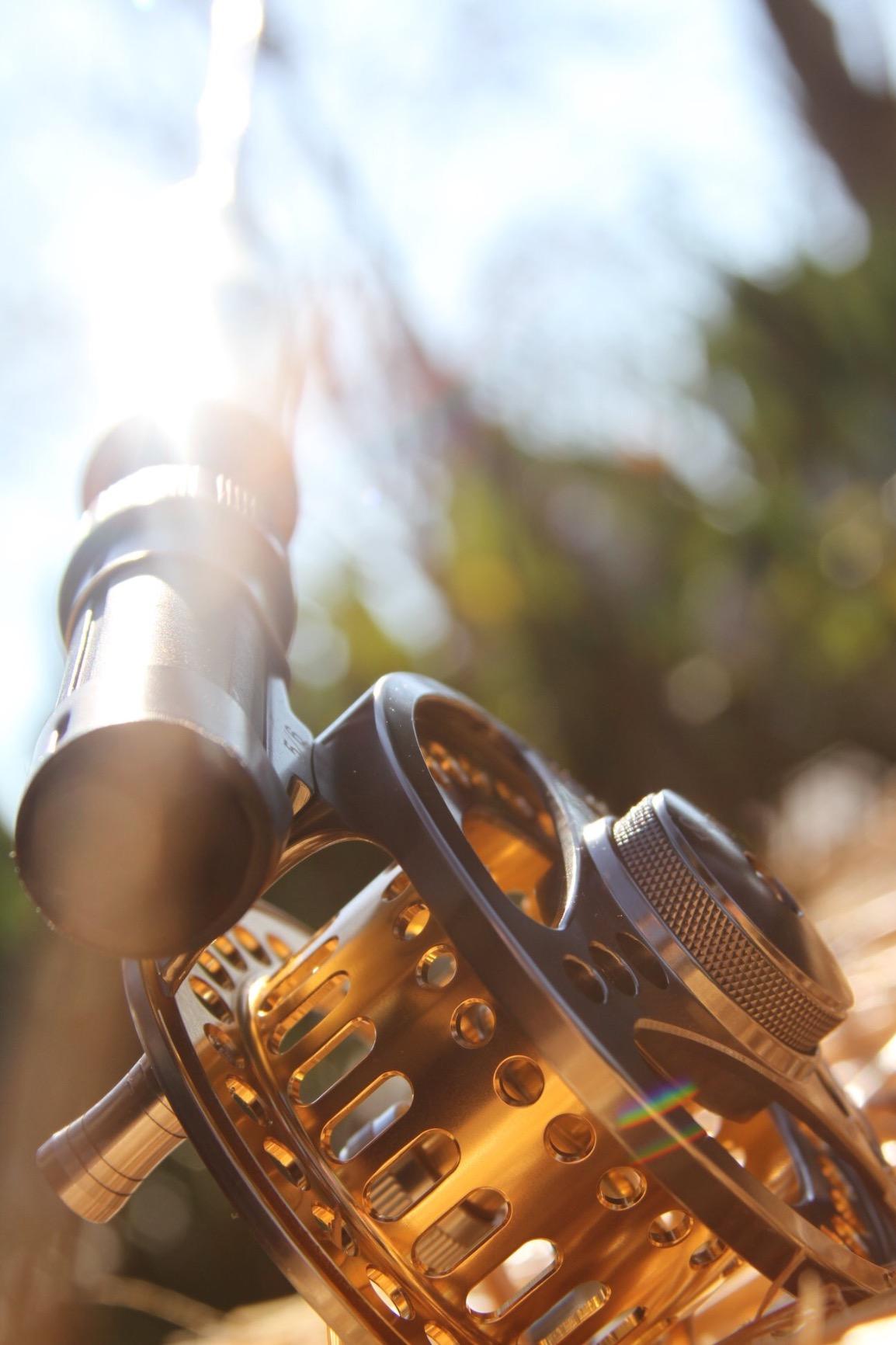
The 4.2 average is the lowest of the CNC-machined group here, and the rating spread is wide. One-star feedback concentrates on drag feel and durability over time, and some users report the drag and spool retention needing adjustment after months of use.
Where the five-year warranty matters
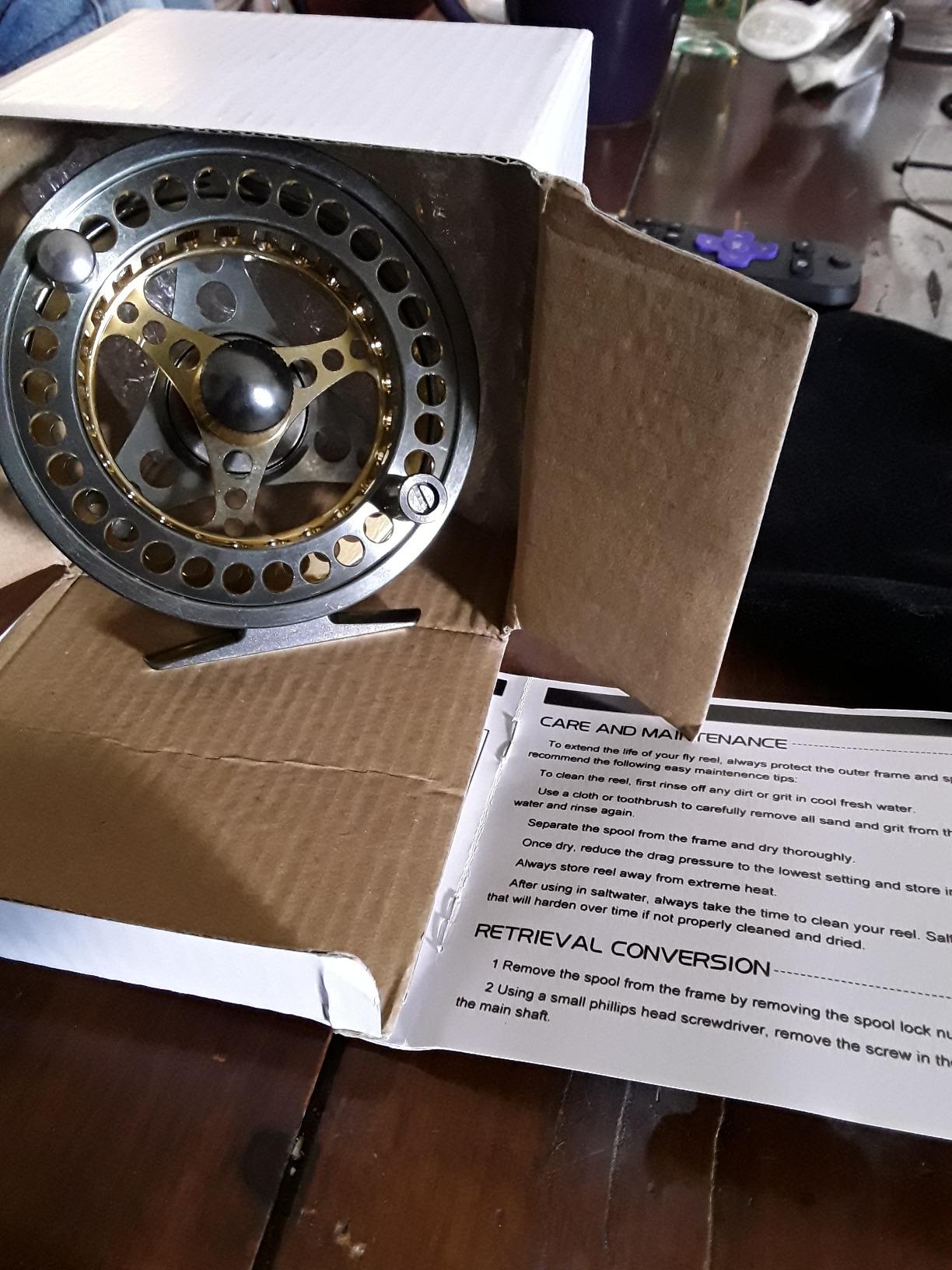
This is the longest warranty in the roundup, and for a first reel it matters more than it looks. A five-year term on a mechanism with this many wear parts means the brand expects the drag and bearings to be serviceable for the length of a beginner’s first few seasons.
Reviewers report responsive support on replacement parts, which is the difference between a warranty and a piece of paper. Check that the drag washers and clicker are replaceable before committing.
Who should look past this one
If you fish light tackle and want the lightest possible reel on a 5 weight, 5.76 ounces is heavier than you need. Look at the Maxcatch AVID at 4 ounces instead.
If you plan to fish salt water at all, the anodizing helps but there is no sealed drag, so a freshwater-only reel in the mid tier of the market is a better first purchase.
3. Aventik HVCE Classic III – the graphite creek reel
- Very light graphite composite body
- Large arbor capacity with fast retrieval
- Smooth consistent central disc drag
- Corrosion-resistant composite construction
- Available in 3/4
- 5/6 and 7/8
- Composite body feels less refined than machined aluminum
- Backing capacity is limited at the larger sizes
The HVCE is built from a polymeric graphite composite rather than metal, and that single decision explains both its strength and its weakness. At 4.2 ounces in the 3/4 size, 4.9 ounces in 5/6 and 5.3 ounces in 7/8, it is one of the lightest reels we tested, and for creek work that matters.
Despite the composite body it still gets a large arbor and a central disc drag with a one-way bearing, plus an audible clicker when the drag starts to slip. Reviewers recommend it both as a first reel and as a spare, and 67% of ratings sit at five stars.
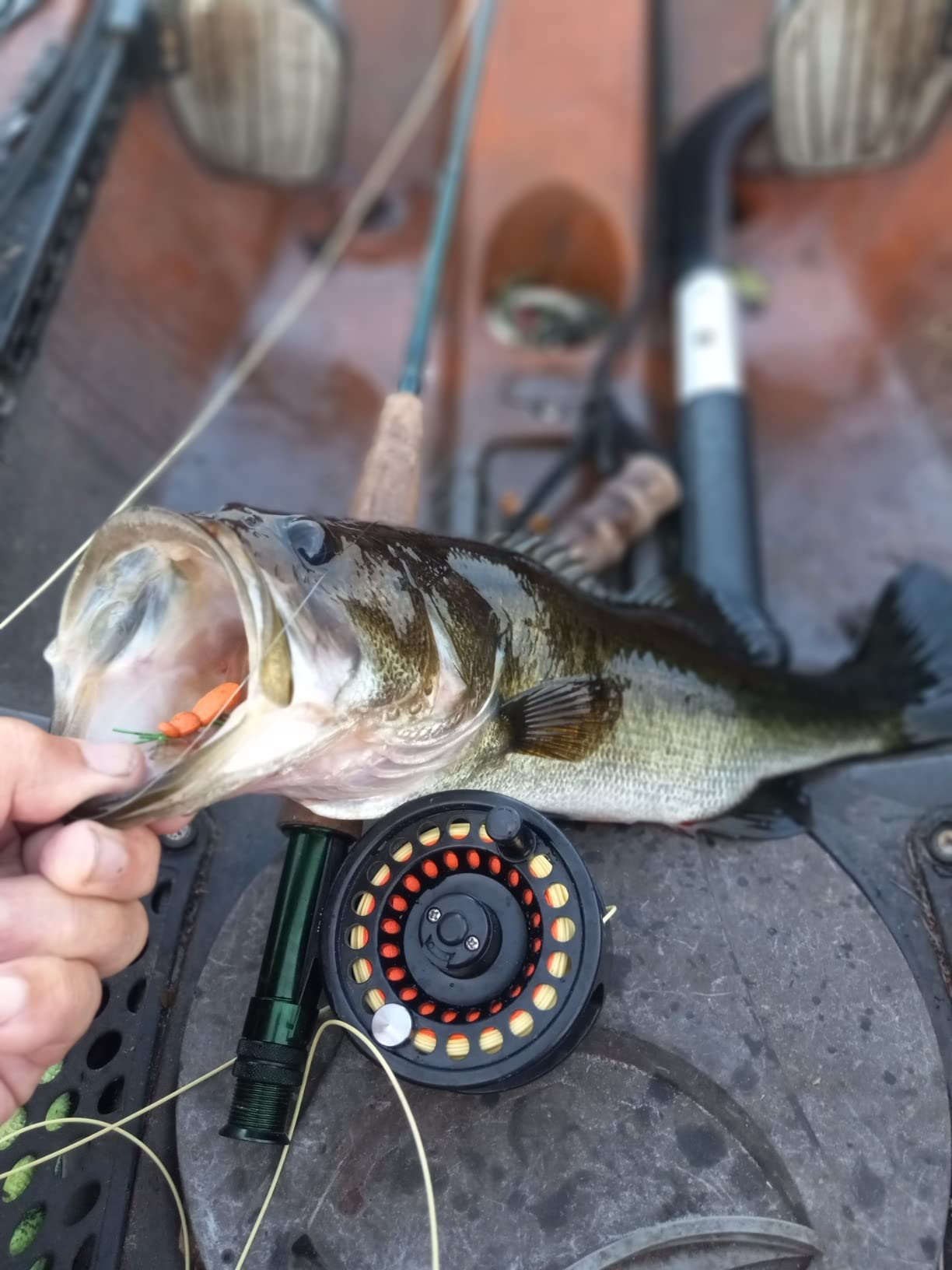
The compromise is refinement. Owners note the body feels less precise than machined aluminum in the hand, and backing capacity runs short on the larger sizes compared with a metal large arbor. If you cast a lot of heavy line, that ceiling shows up sooner than you expect.
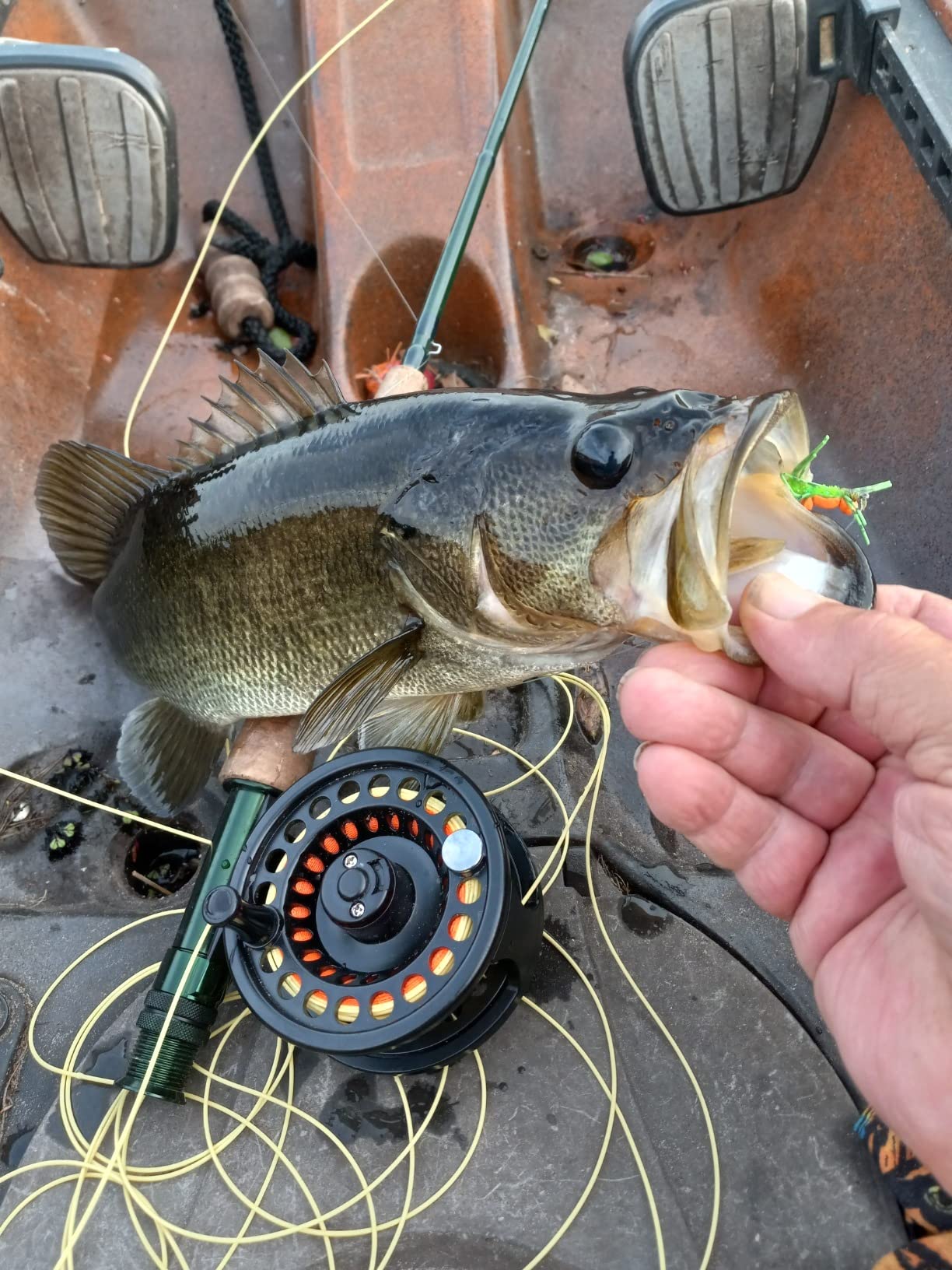
Why weight beats construction for wading
A gram saved on the reel is a gram carried for four hours on a creek. Composite bodies also shrug off salt water and mud without corroding, which matters if you fish estuary trout or keep a reel on a boat.
The three size options mean you can buy a 3/4 for a 4 weight ultralight rod and keep the same brand on a 7/8 later, which simplifies buying one spare spool setup instead of two.
Who should look past this one
If you fish big water with pike, bass or salmon, the limited backing capacity will frustrate you. Take a machined large arbor instead.
Buyers who care about how a reel feels in the hand over a full day tend to prefer an aluminum body, and there is an inexpensive one of those in the same size class.
4. Redington Zero – the travel and backpacking reel
Redington Zero Fly Fishing Reel, Lightweight Design for Trout, Clicker Drag System, Wolf Grey, 2/3
- Very light at 4.16 oz
- Smooth and dependable retrieve
- Simple clicker drag that is easy to maintain
- Quick retrieve hand conversion
- Padded protective pouch included
- No adjustable drag beyond the clicker
- Clicker noise is loud in close quarters
- Spool shaft can loosen without thread locker
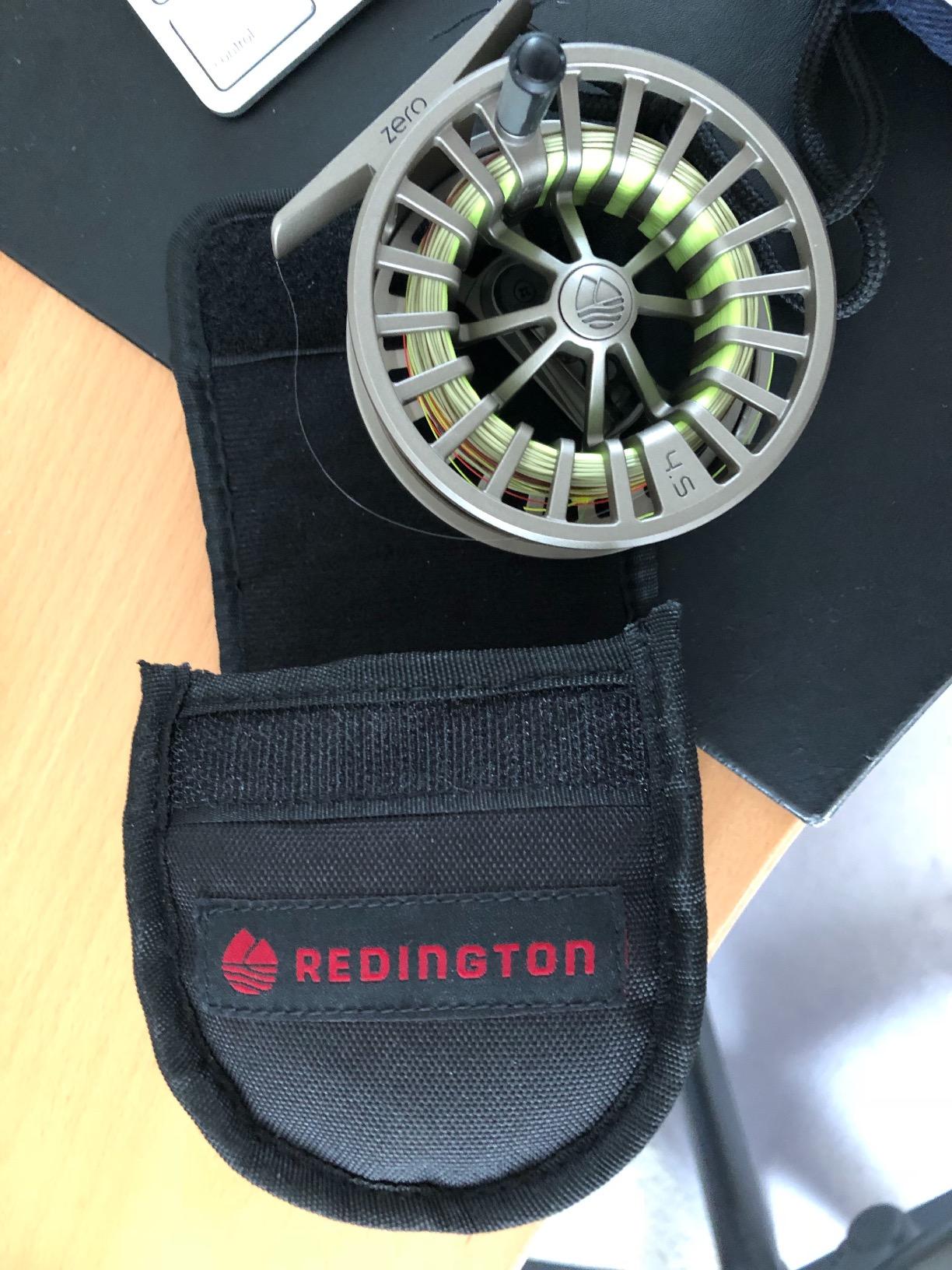
The Zero is a click-and-pawl reel, and understanding what that means will decide whether it is right for you. There is no adjustable drag. Line leaves the spool when a fish pulls, and a clicker tells you it is happening. That is all a trout needs, because most trout never make the Zero do more than that.
Owners love the 4.16 ounce weight and the skeletonized die-cast look. The large arbor gathers line quickly despite the small footprint, the twin-molded dual density handle stays comfortable with a wet hand, and a padded pouch comes in the box.
The trade-offs are audible and specific. The clicker is louder than on a premium click-and-pawl reel, which matters if you are fishing a pool at dusk two rods down from someone else. Backing capacity is also low for a 4/5 size, and owners report the spool shaft loosening unless a drop of thread locker is added.
When a clicker drag is genuinely enough
Veterans on the classic fly rod forums describe click-and-pawl reels as more than adequate for small to medium fish. For panfish, small trout, and a first season on a creek, it removes the single thing beginners break most often, which is a drag set too tight.
If you are going to fish bass, pike, or anything that runs hard, move up to a disc drag. A clicker will not slow a big fish at a controlled rate.
Who should look past this one
If you travel, the Zero is hard to beat: it is light, small, simple to maintain, and has nothing to seize up. It also packs into a jacket pocket without a rod tube.
Anyone chasing saltwater species should skip it entirely. The drag is not sealed and the capacity is too low for a shore caster working strippers.
5. Maxcatch ECO – the ready-to-fish starter combo
M MAXIMUMCATCH Maxcatch ECO Pre-Loaded Fly Fishing Reel Aluminum Body with Fly Line, Backing, Leader(3/4wt 5/6wt 7/8wt) (Black ECO Reel with Line, 5/6 wt)
- Arrives with fly line
- backing and leader already loaded
- Sturdy all-aluminum die-cast body
- Smooth large arbor retrieval
- One-way bearing converts retrieve hands quickly
- One-year warranty with responsive support
- Heavier in the hand than machined competitors
- Die-cast finish shows wear over time
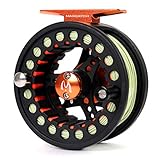
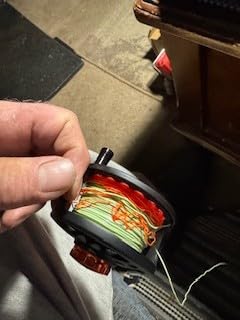
Most beginner mistakes with a fly reel happen during the first spool build, not during the first cast. The ECO removes that step entirely. It comes pre-loaded with a weight-forward floating fly line, backing and a leader, so you can mount it, thread the rod, and fish.
Underneath it is a polished die-cast all-aluminum body with a large arbor spool, a Teflon and stainless disc drag, and a one-way bearing for quick retrieve hand conversion. Reviewers consistently rate it as outstanding value and note it works just as well as a spare reel for trips where you do not want to risk your main one.
Two things to know. At 4.96 ounces it carries more mass than the machined reels in this list, and die-cast aluminum finishes scuff and wear faster than hard anodized machined bodies, which is a cosmetic issue rather than a structural one. The one-year warranty is among the shortest here.
Why pre-loaded line actually helps beginners
A beginner who builds a spool wrong can put a weight-forward line on a reel sized for shooting head, or reverse the backing and the fly line. Both mistakes surface as poor casting and weak drag, and neither is obvious to a new angler.
The pre-loaded package removes the guesswork and the cost of a separate line purchase. You can always strip it down and re-spool once you know what you are doing, which is a cheap lesson compared with losing a first fish to a bad drag.
Who should look past this one
If you already know your line weight and want to choose a specific fly line, the pre-loaded spool is wasted money. Look for a reel-only version and build your own.
If you are fishing bigger water and plan to add a shooting head later, check the capacity on the reel-only option first, because the pre-loaded line fills the spool differently.
6. Maxcatch Tino – CNC-cut strength for heavy use
- CNC-cut reinforcement adds real strength at low cost
- Disc drag engages immediately and smoothly
- Pre-loaded version removes setup friction
- Tool-free retrieve hand conversion in about 30 seconds
- Heavy at 6.4 oz for a 5 weight rod
- One-year warranty
The Tino takes an all-aluminum body and adds CNC-cut reinforcement to the high-wear areas, which is how you get machined strength without a machined price. The large arbor spool retrieves line quickly and the Teflon and stainless drag engages immediately rather than creeping up gradually.
It is also the version most reviewers buy in a pre-loaded configuration with a weight-forward fly line, backing and tapered leader already on the spool. Hand conversion is tool-free and takes about 30 seconds, so switching for a different angler is not a project.
Is 6.4 ounces too heavy?
For a 5 weight, 6.4 ounces is heavy. It is enough extra mass to feel tip-heavy at the end of a long day, and it will show on a long walk to the water or a full afternoon casting. Pair it with a 6 or 7 weight rod, where the mass disappears.
The flip side is that it does not feel cheap in the hand, and owners report it holding up when other reels of similar price were already scuffed from being set down on rock.
Who should look past this one
Anyone buying for a young angler or a smaller pair of hands should skip straight past this one. Weight is the first thing you feel with a reel, and 6.4 ounces is a lot to hang off a small rod.
The one-year warranty is also the joint-shortest here, so pair it with the knowledge that the drag is the part most likely to need service.
7. SF SF-001 – the all-in-one kit with a line alarm
SF Large Arbor Fly Fishing Reel 5/6wt Aluminum Alloy Body Die-Cast Matt Black Pre-Loaded Reel with Line Combo Fluorescent Yellow Line
- Comes with fly line
- backing and a tapered leader
- Audible ticking alarm helps beginners follow the line
- Anti-corrosion treated aluminum and stainless shaft
- Large arbor retrieves quickly
- Three-year spare part availability
- Retrieve is supplied set to one hand
- Reel-only versions leave out the line package
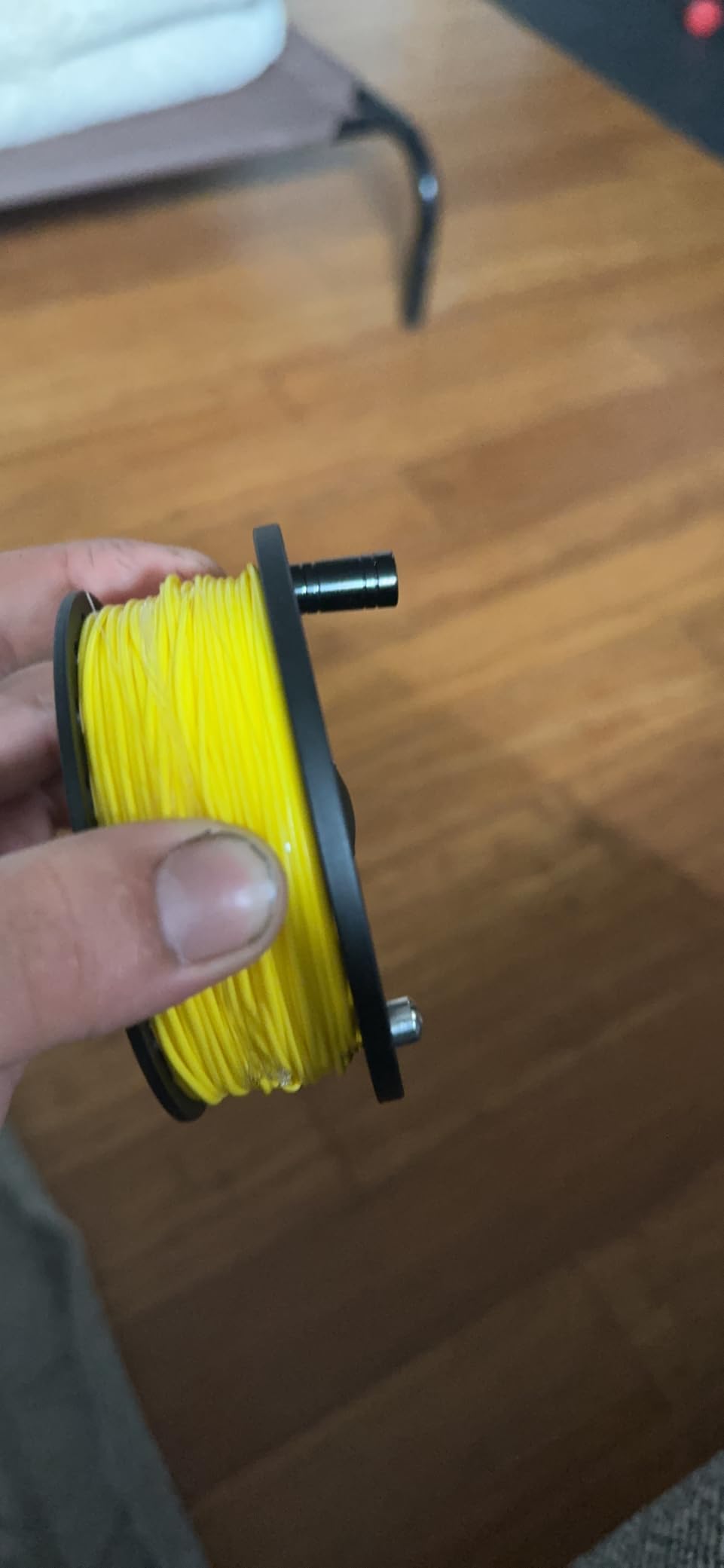
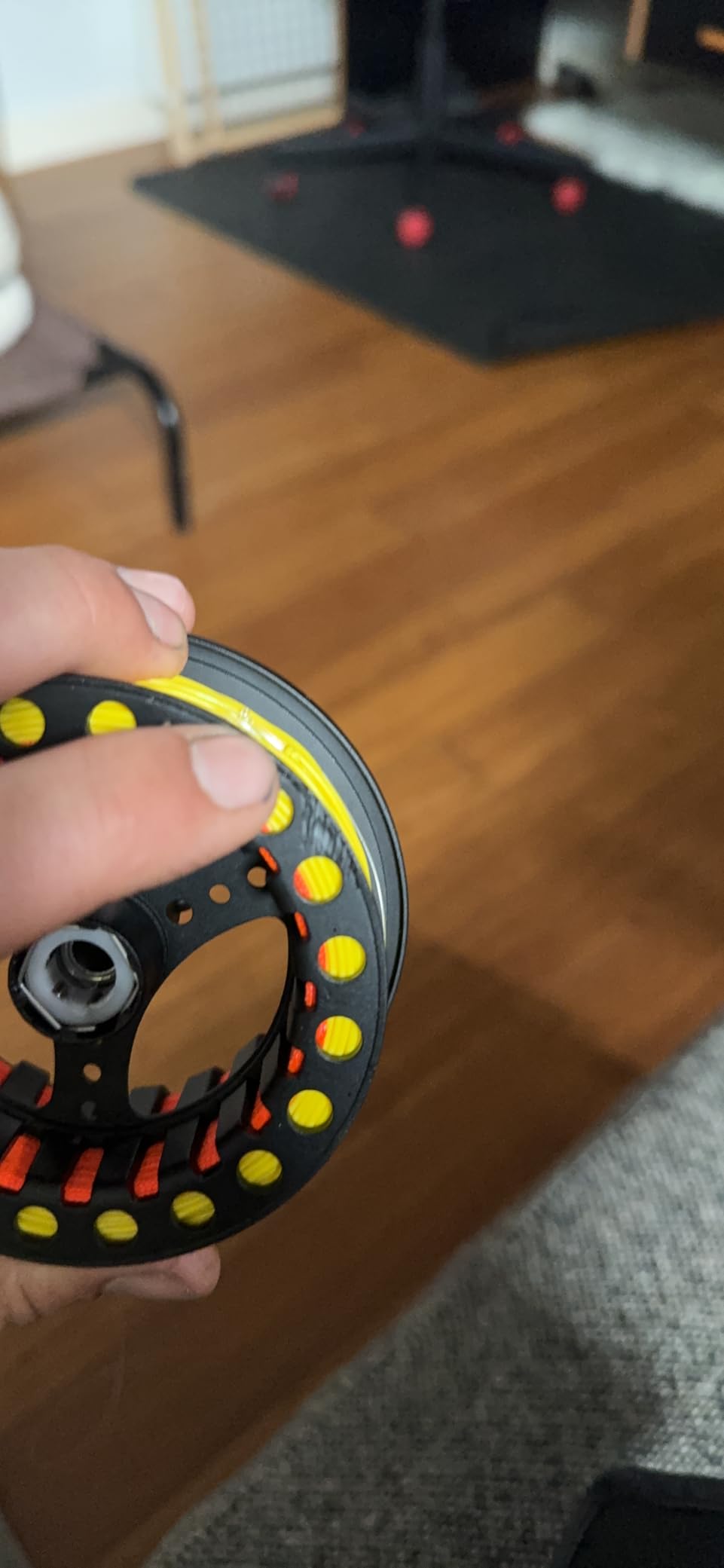
The SF-001 is the other complete-package option, and it adds one feature the other combos do not have. As line leaves the spool, you hear a clear ticking alarm. On a beginner’s first season that is genuinely useful, because noticing you are stripping line is the difference between setting the hook and missing it.
The body is die-cast aluminum alloy with anti-corrosion treatment and a stainless steel main shaft, and it is offered in 3/4, 5/6 and 7/8 weights. The combo includes a weight-forward floating fly line, 20 lb backing and a 9 ft 4X tapered leader.
Watch which version you pick. The combo is supplied with the retrieve pre-set to one hand, and the reel-only versions do not include the line and leader package. Owners rate the alarm and the complete kit highly, with 69% of ratings at five stars.
Is the ticking alarm a gimmick or useful
It is useful for the first ten trips and then becomes background noise, which is exactly how a clicker behaves. The value is that it teaches you to look at the spool, and once that habit sticks you do not need it.
It also tells you something you cannot see while casting. If the ticking stops or changes when a fish is on, you know you have pressure on the line even while your eyes are on the rod tip.
Who should look past this one
If you are past the beginner stage, the line and leader in the box are standard items you will replace anyway, and the retrieve hand is set to one orientation out of the box.
Buyers fishing salt water should note the anti-corrosion treatment is a benefit but there is no sealed drag, so a saltwater-rated reel further down is the safer bet.
8. Maxcatch AVID – the lightest reel with a numbered drag knob
- Light at 4 oz with a rigid machined body
- Numbered one-revolution drag knob for repeat settings
- Smooth cork and Teflon drag stack
- Hard-anodized corrosion-resistant finish
- Tool-free spool removal and hand conversion
- Fewer owner reviews than most reels here
- Mid-arbor capacity is lower than a pure large arbor
The AVID handles the drag better than any other reel in this roundup. The knob turns through one full revolution from zero to maximum with numbered settings along the way, so you can find a drag setting once and return to exactly the same setting on every trip. Most competitors give you a friction screw with no reference point at all.
At 4 ounces it is the lightest reel we measured for a disc-drag design, and the body is CNC-machined 6061-T6 aluminum with a hard anodized finish rather than a cast body. The drag stack pairs cork with Teflon discs, and the mid-arbor spool keeps line memory down while staying compact.
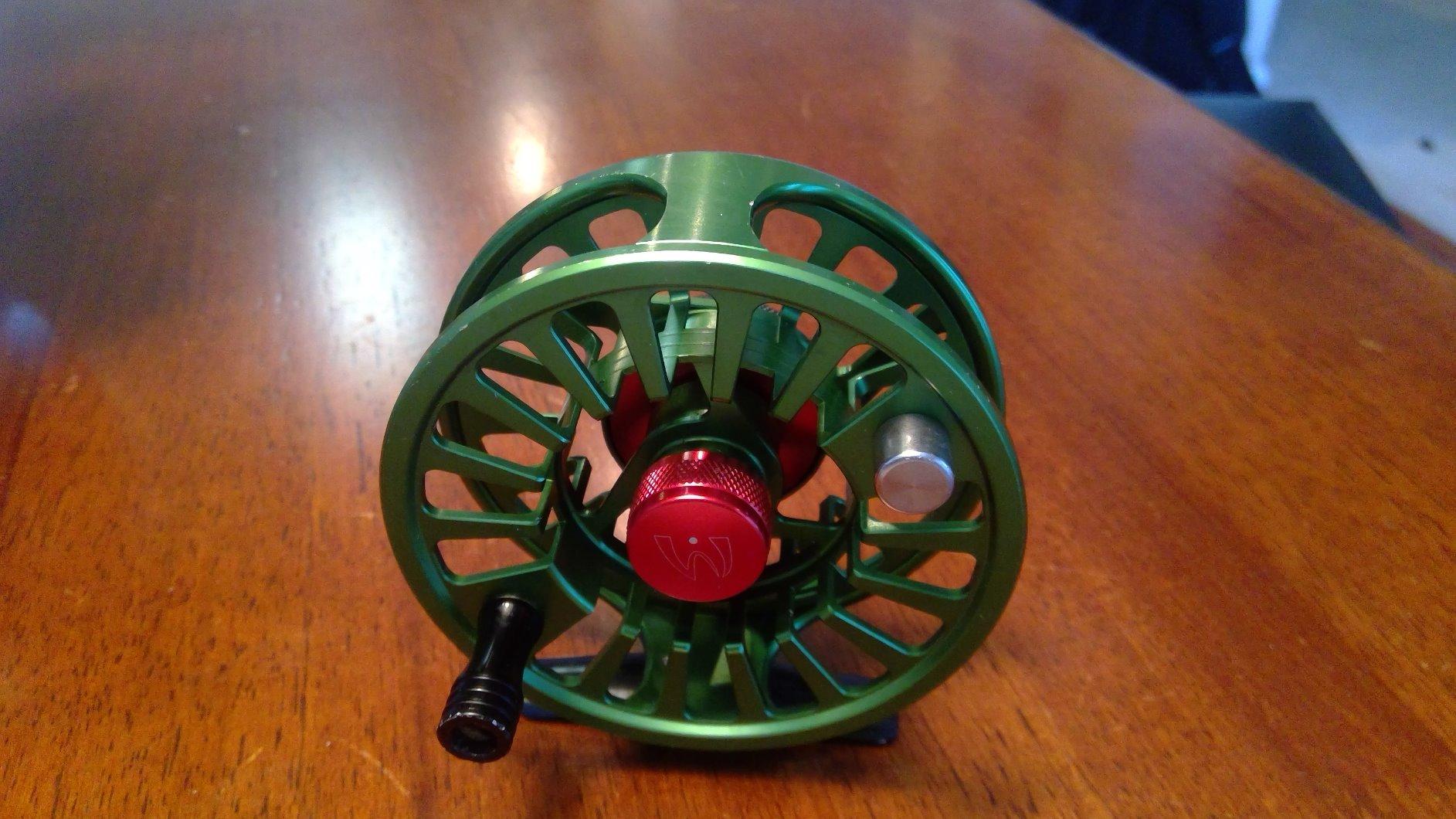
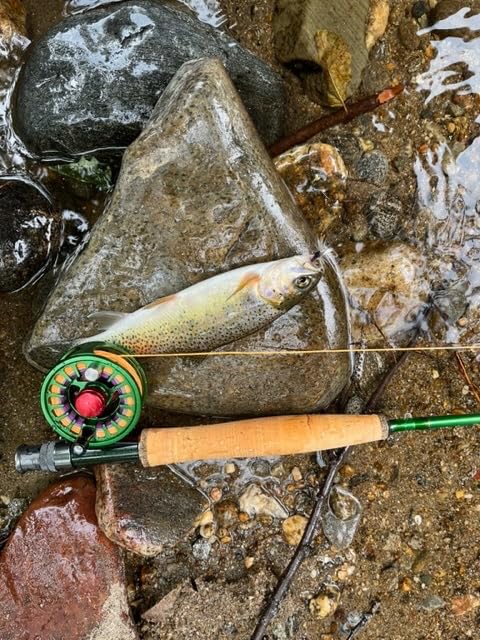
Owners single out the numbered knob, the weight and the corrosion resistance, with 79% of ratings at five stars, and several mention landing larger fish than the size suggests. The trade-off is that a mid-arbor spool holds less backing than a large arbor on the same reel.
Why the numbered drag knob matters most to beginners
Almost every new angler sets the drag far too tight on the first day and has no way to reproduce a setting that worked well later. Numbered settings remove the guesswork and let you write the number down next to your line weight.
It is the feature that makes this reel easy to recommend to someone who will own several fly lines. Change line, remember the number, move on.
Who should look past this one
If you need serious backing capacity for long casts or a pike line, the mid-arbor limits you and a large arbor reel is the better tool.
Buyers who want the lightest possible reel with large arbor capacity should compare the graphite option above, which reaches similar weights with more spool diameter.
9. SF SF-003 Pro – a mid-arbor that arrives ready to fish
- Pre-spooled with backing
- fly line and a leader
- CNC-machined aluminum frame is light and corrosion resistant
- Mid-arbor design picks up fast with little line memory
- Smooth and consistent disc drag
- Only a one-year manufacturer warranty
- Thin review history to judge it by
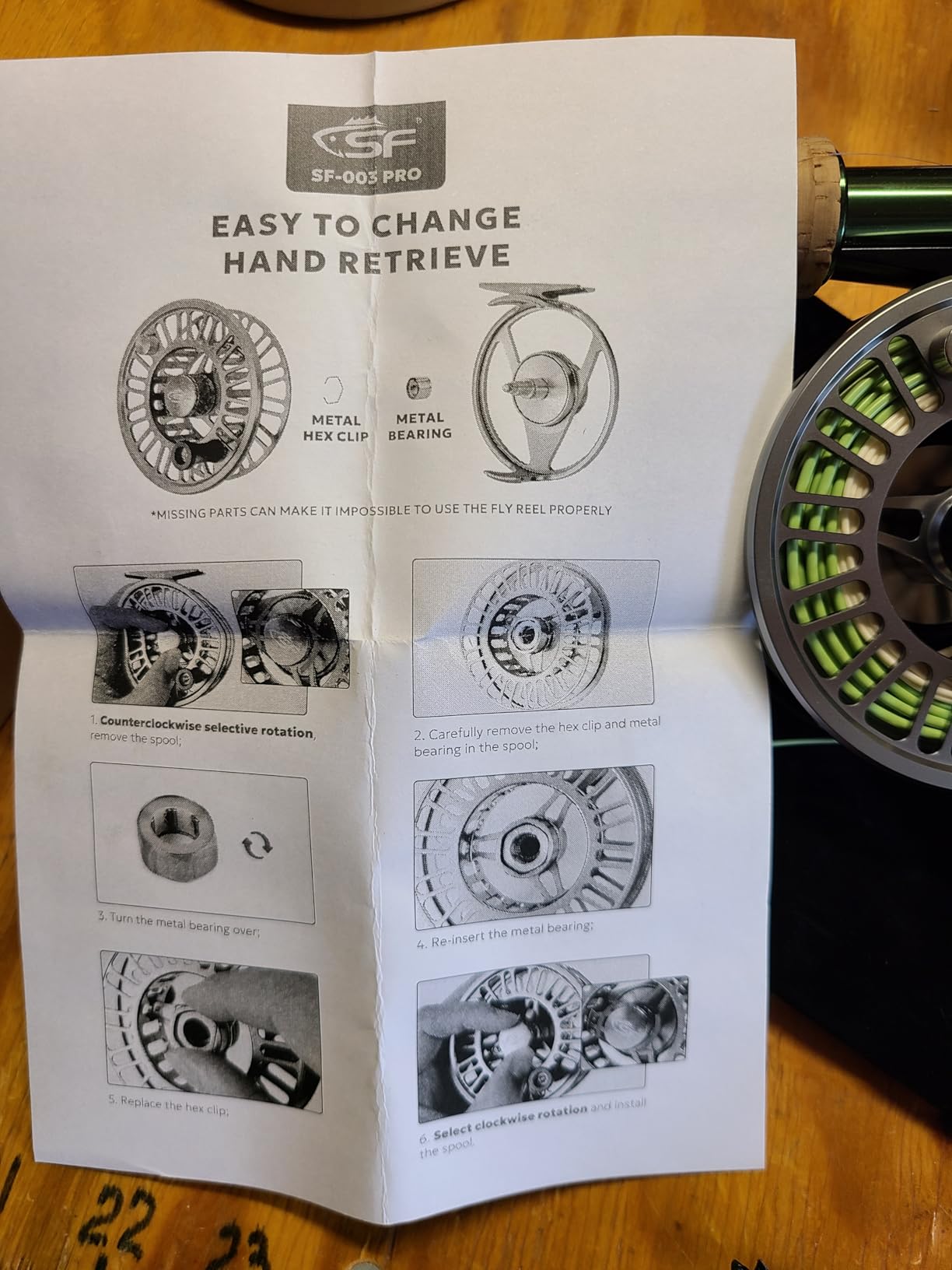
The SF-003 Pro is built around a mid-arbor spool rather than a wide one. That keeps the reel compact at 125 grams while still giving you fast pickup and far less line memory than a standard arbor, which is the usual complaint aimed at small entry reels.
It is pre-spooled with orange backing, a weight-forward floating fly line and a 9 ft 5X tapered leader, and it is balanced specifically for 5/6 weight freshwater trout. The disc drag gives consistent resistance for tippet protection, and the frame is CNC-machined aluminum in a matte gunmetal finish.
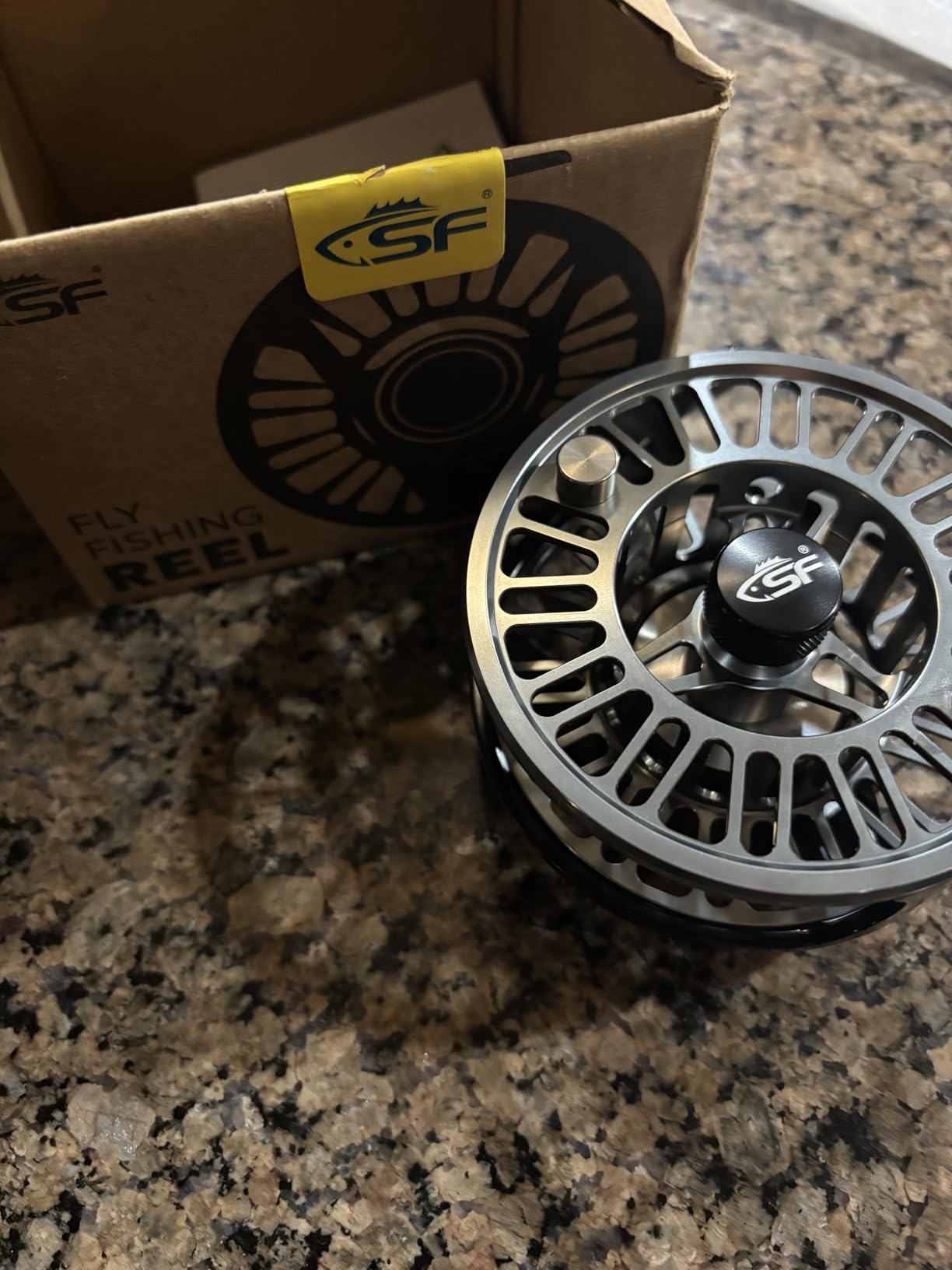
The evidence base is modest, at 96 ratings, and the warranty is one year. Reviewers describe a smooth, well-balanced reel that suits both new and experienced anglers, and there is no long record yet of owners reporting back after seasons of use.
Mid-arbor versus large arbor for a beginner
A mid-arbor splits the difference: more pickup speed than a standard arbor, less line memory than many small large-arbor reels, and a compact spool that balances a light rod well.
If you cast a full shooting head on a long line, a large arbor gives you more capacity. If you mostly fish a weight-forward line on a creek, a mid-arbor is easier to balance and lighter on the rod tip.
Who should look past this one
If you want a reel with a long service record behind it, the limited owner history here means you are buying on design rather than on years of reports from other anglers.
Anyone fishing salt water or heavy baitfish species should choose a reel with a sealed drag and a larger spool instead.
10. Aventik FLK – the strongest budget drag and a hard-anodized finish
Aventik FLK Fly Fishing Reel Aluminum Trout 3/5, 5/7, 7/9wt Large Arbor Freshwater Fly Reel with Line (Green 3/5)
- CNC-cut aluminum parts resist corrosion
- Drag is strong
- smooth and easy to adjust
- Frosted anodized finish wears well
- Large arbor spool with a palming rim and quick release
- Three-year warranty
- Drag is not sealed and needs rinsing after salt water
- Spool cap can back off under heavy drag
- Some units arrive with shavings or a missing drag disc
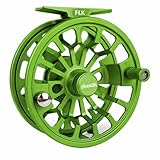
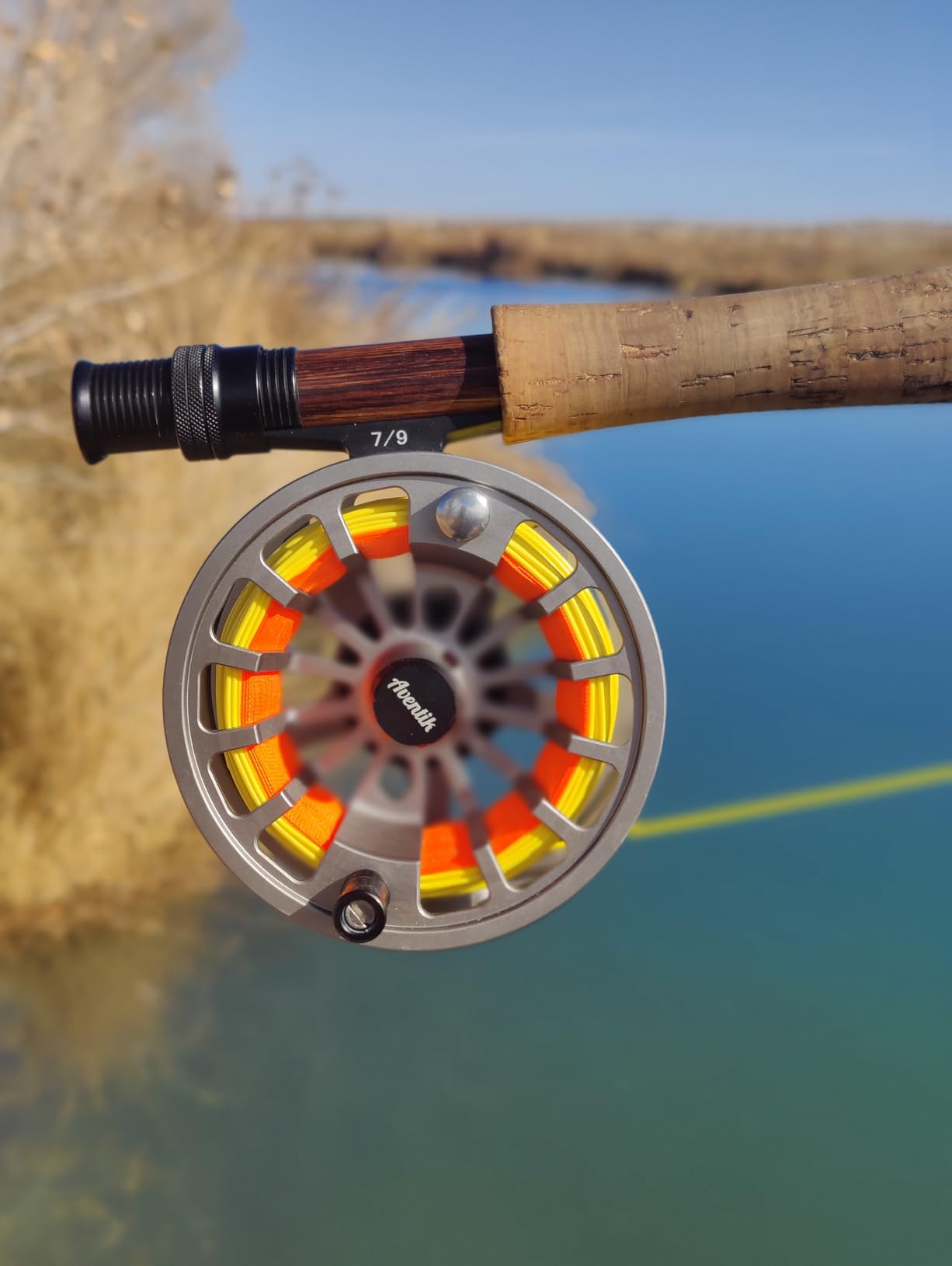
The FLK is the one to look at if you want machining and finishing that hold up. The body is aircraft T6061 aluminum, cold forged and tempered, with a Type II hard anodized surface. That is a harder, thicker oxide layer than standard anodizing, and it is why the finish still looks right after a season of wet hands.
Detailed reviewers rate the CNC machining and drag strength highly, including an account of landing a 20 lb carp on an 8 weight setup. The 3D large-arbor spool has a palming rim and quick release, and there is a three-year warranty with the parts support to match.
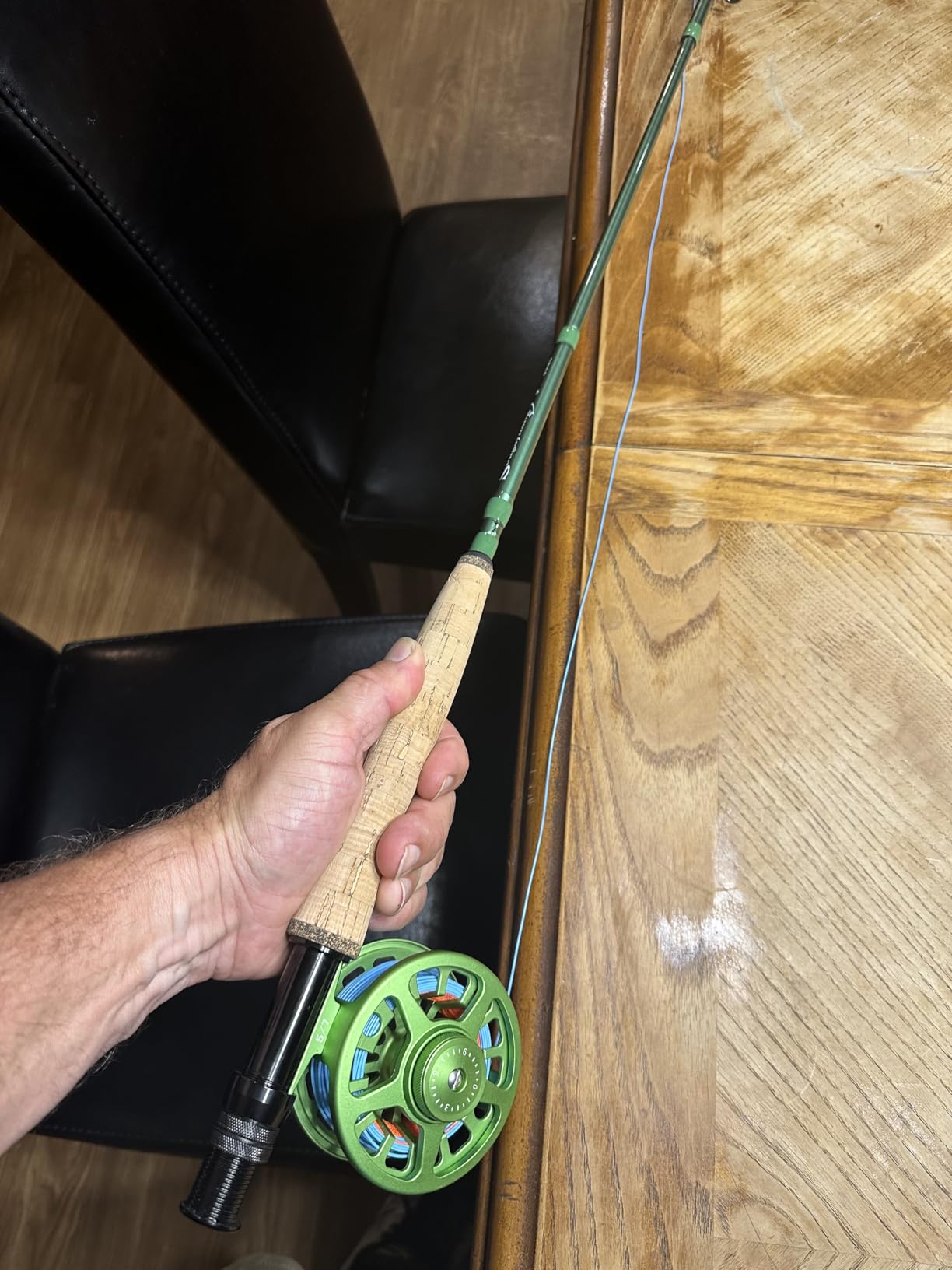
Quality control is the weak point. Reviewers report finding fine aluminum shavings inside new reels or a missing drag disc, and the recommendation is to open it, clean it, check the disc and re-lube before the first cast. That is ten minutes of work, but skip it and the drag may not run true.
Should you open a new reel before fishing it
If you buy this one, yes. The shavings issue is specific enough that detailed owners flag it, and a drag disc that has not been seated properly will feel inconsistent no matter how good the machining is.
The same owners report strong customer service when a part was missing, which is the other half of the story. A three-year warranty on a reel at this level is unusual in the entry market.
Who should look past this one
If you fish salt water regularly, the drag is not sealed and needs a fresh-water rinse after every trip. That habit is fine for most people and unacceptable for anyone who will forget.
The listed weight of 157 grams in the smallest size also makes this a rod-weight decision rather than a purely budget one, so check the rod weight list in the buying guide before ordering.
11. Redington Crosswater IV – the saltwater and general-purpose option
Redington Crosswater IV Fly Reel, Durable Fly Fishing Reel, Black, 7/8/9
- Rated for both freshwater and salt water
- Smooth carbon disc drag with real stopping power
- Large arbor retrieves line quickly
- Easy spool change and retrieve hand conversion
- Cloth reel bag included
- Lowest average rating in this roundup at 4.1
- Heavy 0.23 kg listed weight for a first reel
- Only 34 ratings to judge it by
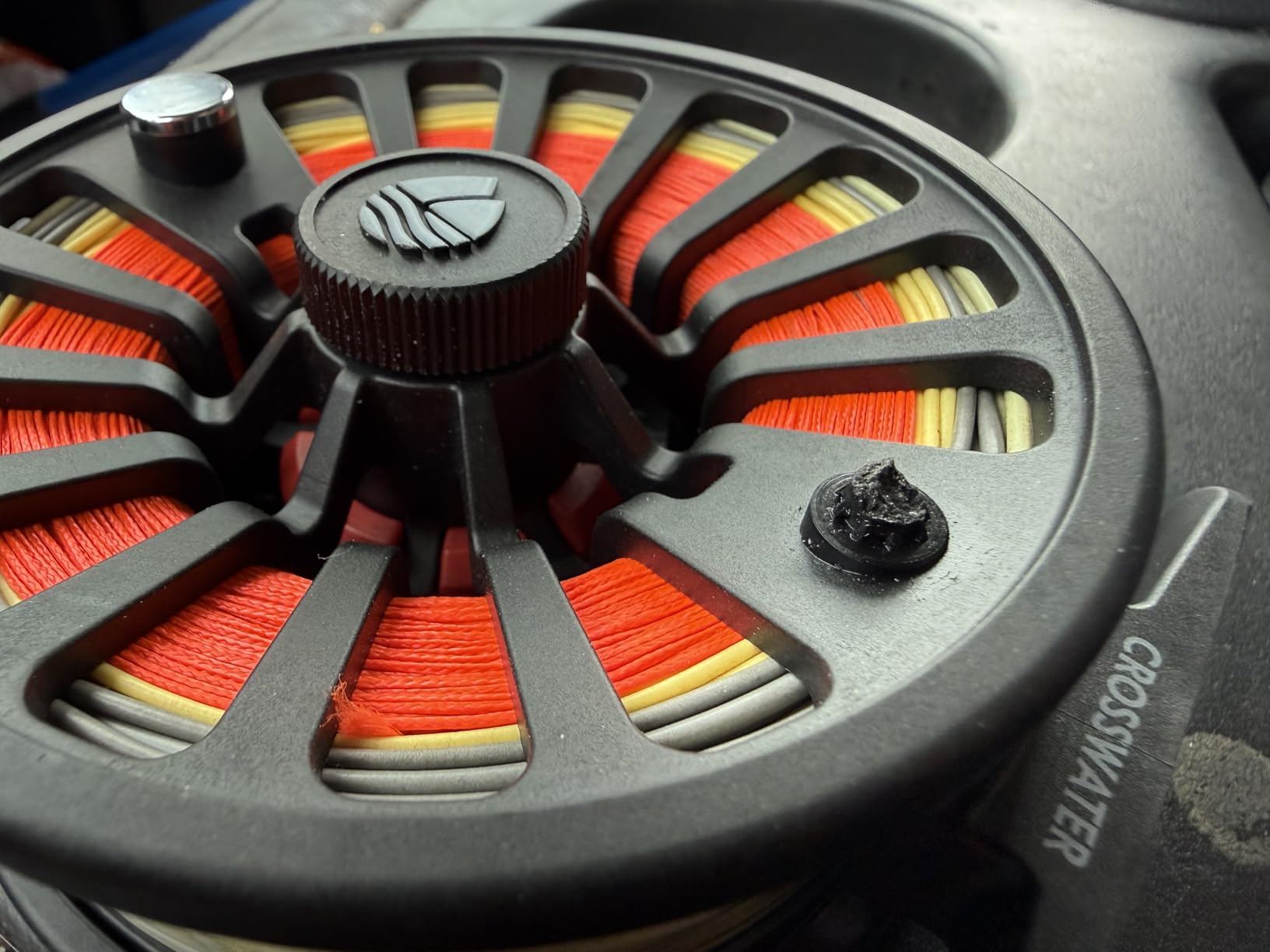
The Crosswater IV is the only reel here sold explicitly for both fresh and salt water, with a carbon disc drag and a composite body rather than an aluminum casting. The large arbor spool retrieves quickly, the spool changes without tools, and the reel converts between retrieve hands easily.
Owners like the drag’s stopping power and the fact that one reel covers estuary trout, flats fish and inshore species. A cloth reel bag comes in the box, which is a small touch that matters more on a boat than it does at a car trunk.
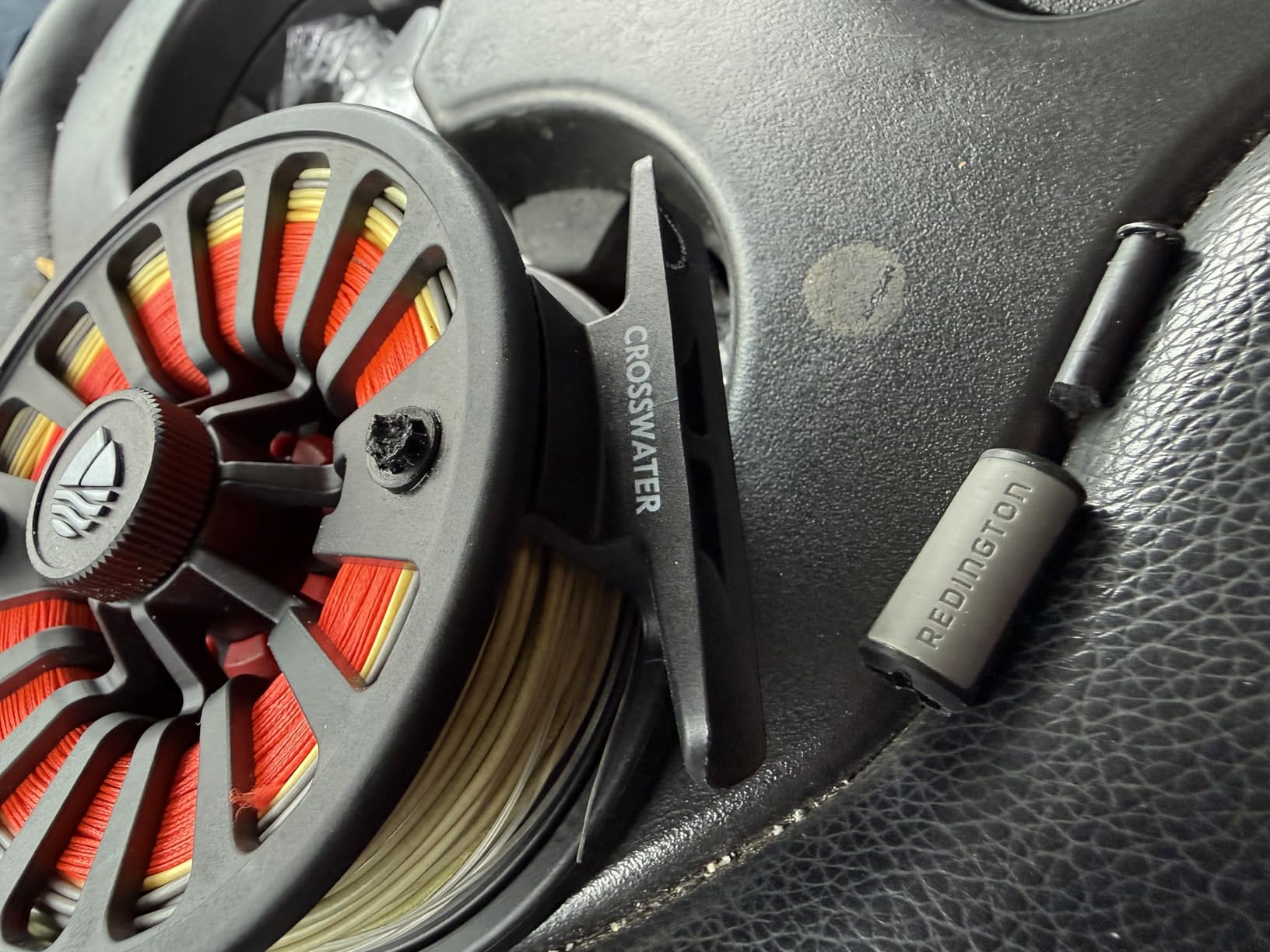
The evidence is thin and mixed. At 34 ratings this has the smallest review base of the twelve, and the 4.1 average is the lowest in the roundup with a 9% one-star share. The listed weight of 0.23 kg is also the largest figure given for any reel here, and it translates to a reel with a bigger footprint on a 5 weight rod.
Saltwater use changes what you need from a reel
Salt water is the one place where construction details matter more than weight. A corrosion-resistant body and shaft are the baseline, and a drag you can rinse, clean and re-lube in a sink matters far more than a sealed drag you never intend to service.
If you will only ever fish fresh water, paying for saltwater capability is money better spent on a lighter reel. This pick earns its place for anglers who will genuinely put it in salt water.
Who should look past this one
If you are buying your very first reel and are not sure you will ever fish salt water, the low rating and the heavy listed weight make this a risky default. There are better-supported disc drag reels here for fresh water.
Anyone fishing a 5 weight all day will also notice the size and mass more than the versatility is worth to them.
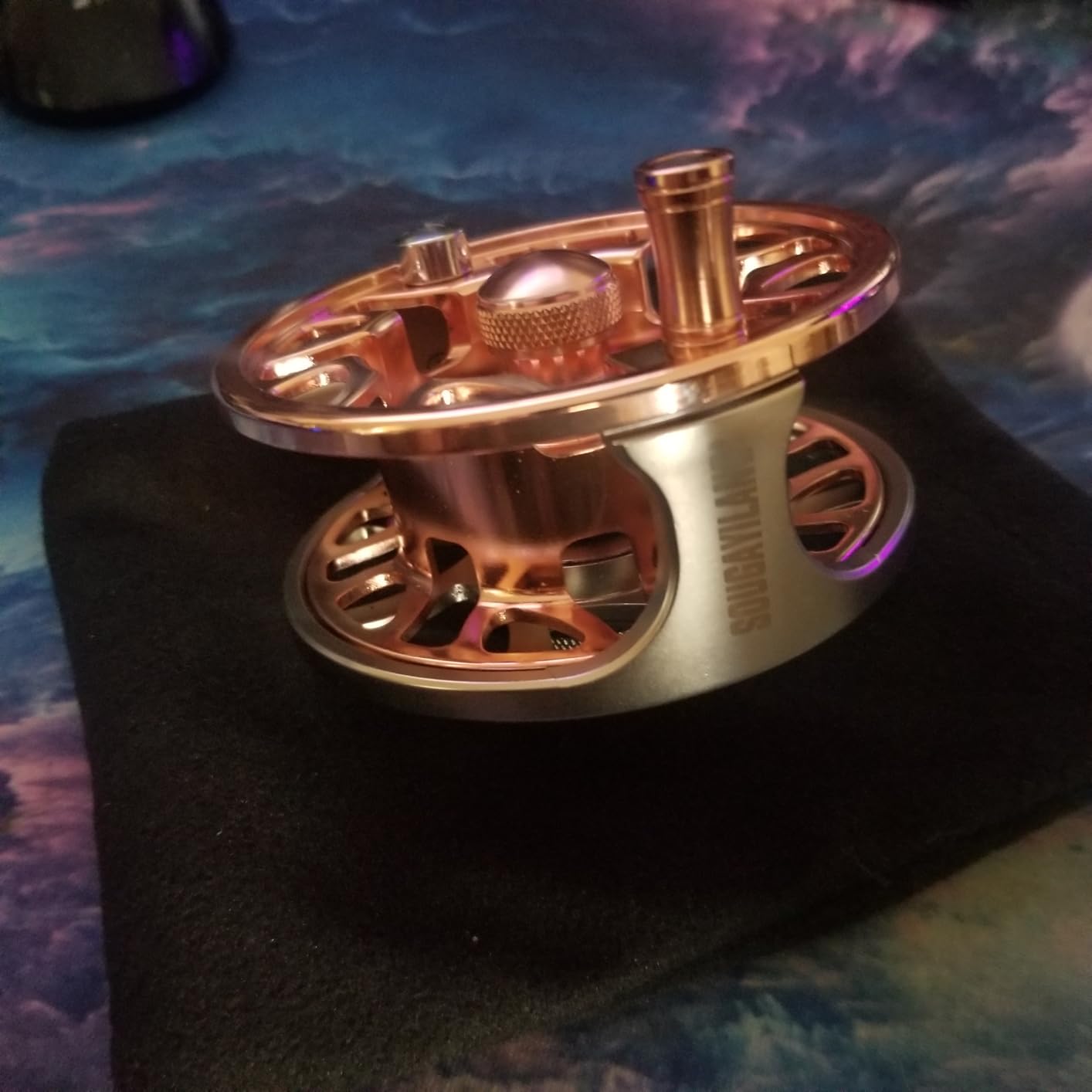
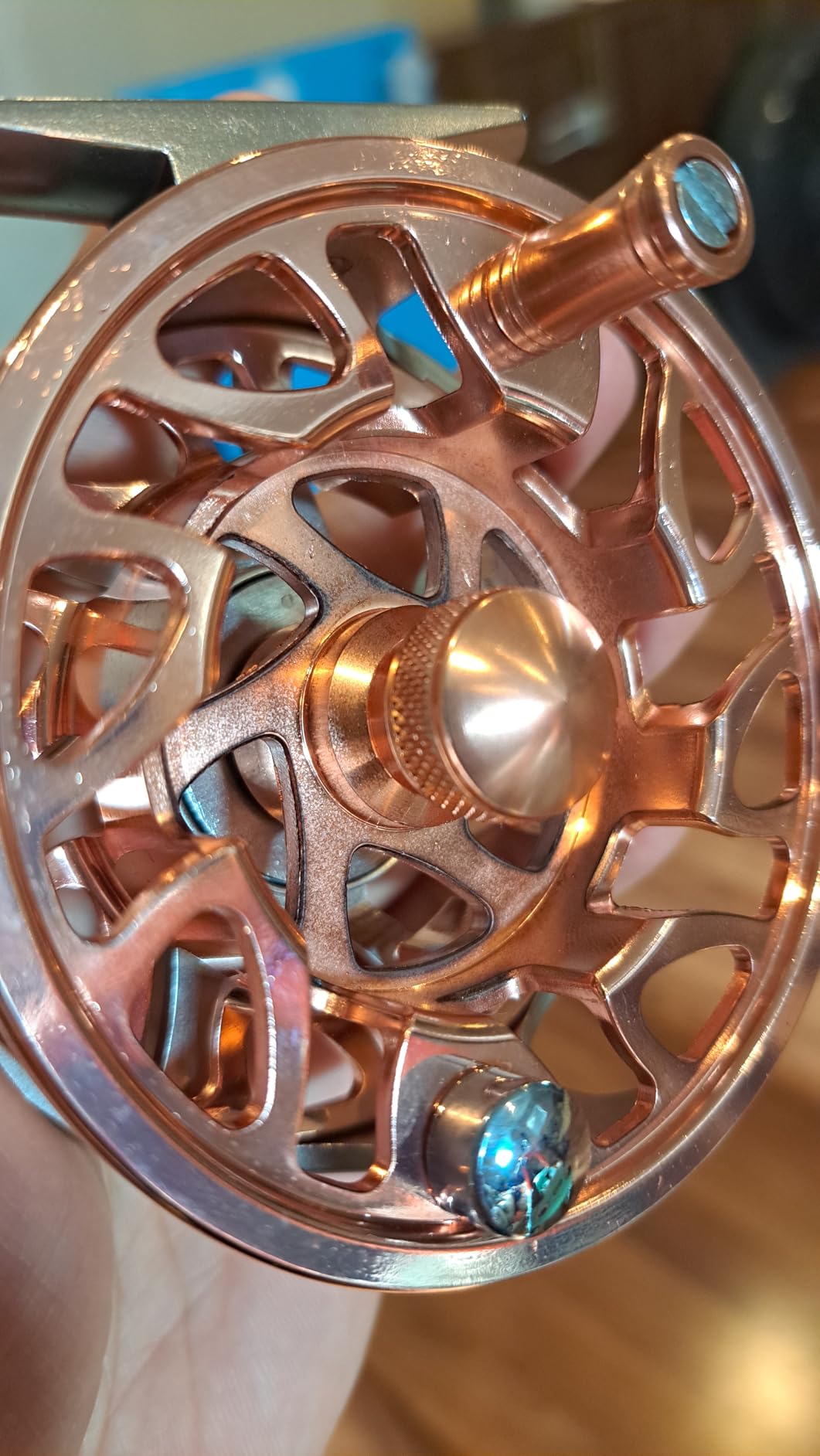
12. Sougayilang 5/6 – a budget 5/6 weight reel
Sougayilang Fly Fishing Reel, CNC-Machined Aluminum Alloy, 5/6 Weight, Lightweight Trout Reel
- Smooth
- quiet retrieve with easy drag adjustment
- CNC-machined frame and spool with a polished finish
- Retrieve hand converts in about five minutes
- Reel case included
- Holds up to repeated use in sand and rock
- Heavy at 7.2 oz for a 5 weight rod
- Can backlash when stripping line
- Low drag resistance compared with multi-disc reels
This reel is balanced for 5 and 6 weight trout work and machined from aircraft-grade bar stock aluminum, which is a better starting material than a cast body at essentially the same cost. The frame and spool are both CNC precision machined, cold forged and tempered, and the polished hard-anodized finish resists abrasion and weather.
Owners praise the quiet retrieve, the finish and the fact that hand conversion takes about five minutes with no tools. It holds up in sand and rock, and reviewers mention it being used by younger anglers who can still manage the weight.
Weight is the problem here. At 7.2 ounces it unbalances a 5 weight rod noticeably. Some users also report occasional backlash when stripping line, and drag resistance is lower than on the multi-disc reels above.
Does the weight matter that much on a first reel
More than most buyers expect. Reel weight sits at the balance point of the rod, so a reel that is heavy for the rod makes casting feel like you are lifting something rather than flicking it, and it gets tiring over a full day.
If you are pairing this with a 6 weight or 7 weight rod the weight becomes an advantage rather than a problem, because the rod is built to carry it.
Who should look past this one
If you are buying for a 5 weight rod, for a child, or for anyone with limited hand strength, look at a lighter reel instead. The 4 ounce option carries more than a pound less on the balance point.
Buyers who plan to fish heavier species should also move up, because the lower drag resistance is noticeable when a fish runs properly.
How to Choose Your First Fly Reel
Everything above comes down to one decision: match the reel to your rod weight, then buy the best drag you can at that size. Here is how that works in practice.
Match the reel size to your rod weight
Reel sizes are printed as pairs, such as 5/6 or 7/8, and the first number is the rod weight it is designed to balance. Use this as your guide.
- 3 weight rod: 3/4 reel, around 4 ounces
- 4 weight rod: 4/5 or 5/6 reel, roughly 4 to 5 ounces
- 5 weight rod: 5/6 reel, the most common beginner setup
- 6 weight rod: 6/7 or 7/8 reel, about 5 to 6 ounces
- 7 weight rod: 7/8 reel, moving up for bass and pike
- 8 to 10 weight rod: 9/10 reel, for salmon, steelhead and heavy freshwater species
If your reel feels tip-heavy, you went too heavy. If the rod feels like it is pulling itself off your hand, go lighter. Most beginners who are unhappy with a reel are actually unhappy with the pairing.
Large arbor or mid arbor
A large arbor spool is physically wider. It gathers line faster with each turn of the handle, resists line memory better over a long day, and holds more backing, which matters when you are chasing a fish a hundred feet away.
A mid arbor is more compact and usually lighter, which suits a light rod and a younger angler. The difference in casting feel is real but modest, and for most beginners it matters less than picking the right size.
Disc drag or click and pawl
A disc drag applies friction with smooth, even pressure, which is what protects your tippet when a fish runs. This is the default choice for a beginner and for anyone targeting species that will not stop politely.
A click-and-pawl reel has a pawl that clicks against a ratchet as line leaves the spool. There is no adjustment, and the click tells you when line is moving. This is plenty for trout and panfish in clean water, and it is worth considering for ultralight and travel setups where weight and simplicity matter most.
Machined aluminum versus die-cast
A die-cast body is poured into a mould. It is heavier, it can be slightly rough, and the finish wears sooner. A machined body is cut from solid aluminum or titanium, which gives tighter tolerances, a smoother drag feel and a longer life.
At this price level the difference is real but small. Several reels here use CNC machining in the areas that matter, such as the spool and the reinforced frame, and pair that with a disc drag. That is the sweet spot for a first reel.
What a beginner does not need
You do not need titanium. It saves weight you will not notice and costs several times more.
You do not need a sealed drag at this level. Unserved drag maintenance is a fifteen minute task you will do twice a season.
You do not need two spools in the box yet. Learn to change a spool before you buy a second one.
You do not need a premium brand name. A CNC-machined reel with a cork or Teflon drag stack from a lesser brand will outlast a badly serviced name-brand reel.
How to set your drag in four steps
- Strip about 20 feet of line off the spool and let it hang straight down under the weight of the fly line.
- Hold the line against the reel frame with one hand, then back the drag knob off to its loosest setting.
- Turn the knob up slowly until the line just begins to slip, then back off until it stops.
- If a fish breaks you off, you were too tight. If line keeps running and the spool never stops, you were too loose.
That last check is the only real test. Most beginners set the drag far tighter than they think, and the four-step process above is the fastest way to build the habit.
Caring for a beginner reel
Rinse the reel in fresh water after every trip, especially after salt water, and pay attention to the drag. Unscrew the spool, wipe the drag discs, add a small amount of reel grease to the shaft, and reassemble. Do this two or three times a season and an entry reel will outlast its owner’s enthusiasm for it.
Keeping organized gear matters as much as picking the right reel. Our guide to reel storage and setup covers the practical side of keeping kit tidy between trips, and our guide to beginner tools worth buying once follows the same principle: buy it right the first time. The same buy-it-right-the-first-time thinking shows up in our roundup of the best centrifugal juicers for beginners, where a mid-range pick beats the cheapest or most expensive option almost every time.
Frequently Asked Questions
What is the best fly reel for a beginner?
The Piscifun Sword is the best fly reel for a beginner because it combines a multi-disc carbon and stainless drag, a CNC-machined aluminum body and a 4.48 ounce weight in the 5/6 size. That covers nearly every beginner case: trout, bass and light freshwater use. Match it to a 5 or 6 weight rod and it will stay balanced all day.
What size fly reel should I buy?
Buy the reel size that matches your rod weight, using the paired number printed on the reel. A 5 weight rod takes a 5/6 reel, a 6 weight rod takes a 6/7 or 7/8, and a 4 weight rod takes a 4/5. If your rod feels tip-heavy, you chose too heavy a reel. If it pulls itself off your hand, go lighter.
Do beginners need an expensive fly reel?
No. Most beginners can land trout without using the reel at all, by stripping line with their fingertips, so the reel mainly balances the rod and manages drag when a fish runs. That said, the very cheapest reels develop a gritty drag after a season of use. Spending in the middle of the entry range gives you a smooth drag without paying for titanium.
Should I buy a fly rod and reel combo instead?
A combo is a reasonable first purchase because you get a matched rod, reel and line at a lower total cost, and it removes the sizing guesswork. The tradeoff is a rod you may outgrow quickly. If you already know you will be fishing trout on a 5 or 6 weight, buying the reel and rod separately gives you far more choice at the same money.
What is the best fly reel for the money?
For most beginners the best value sits in the machined aluminum models with a real disc drag rather than at the very bottom of the market. The Sougayilang Large Arbor gives you a large arbor spool, two bearings and a five-year warranty, and the Piscifun Sword is the stronger all-round buy. Both hold up where the cheapest clicker reels stop feeling smooth.
The Beginner Fly Reel We’d Buy First
If you take one thing from this guide, make it the pairing rule: match the reel size to your rod weight first, then choose the smoothest disc drag you can at that size. Get that wrong and no amount of spending fixes it. Get it right and even a modest reel performs like a good one.
Our pick for 2026 is the Piscifun Sword in 5/6. It is light enough for a full day, the drag is smooth and adjustable, and the one-way clutch bearing removes the most common beginner frustration. If your hands are small or your rod is a 5 weight, the Maxcatch AVID at 4 ounces is the same idea in an even lighter frame with a numbered drag knob.
Whichever you choose, buy one reel, match it properly, and go fishing. The best fly fishing reels for beginners are simply the ones that stop being interesting because they work. Every model in this roundup has been updated for 2026 availability, and we will keep revising the list as the entry market changes.