
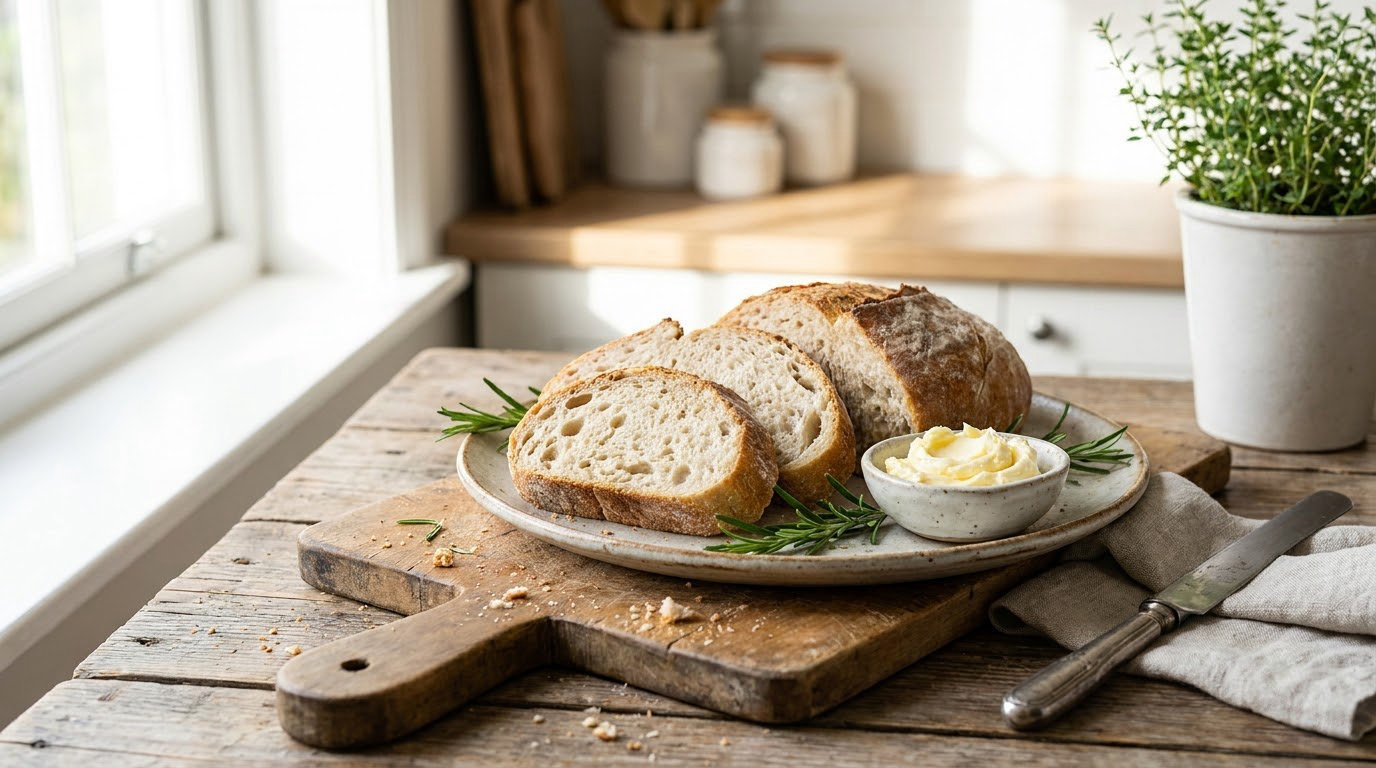
How long does homemade bread last on the counter? For most plain homemade loaves the honest answer is 2 to 4 days at room temperature, and that window can move by a day either way depending on the bread, the wrapping, and how warm and humid your kitchen is. Lean crusty loaves sit at the short end. Enriched loaves made with butter, milk, or eggs sit at the long end.
October is when this question comes up hardest for me. The weather cools, the kitchen gets a little damp, and every bake somehow produces more bread than one household can eat before it goes quiet on the counter.
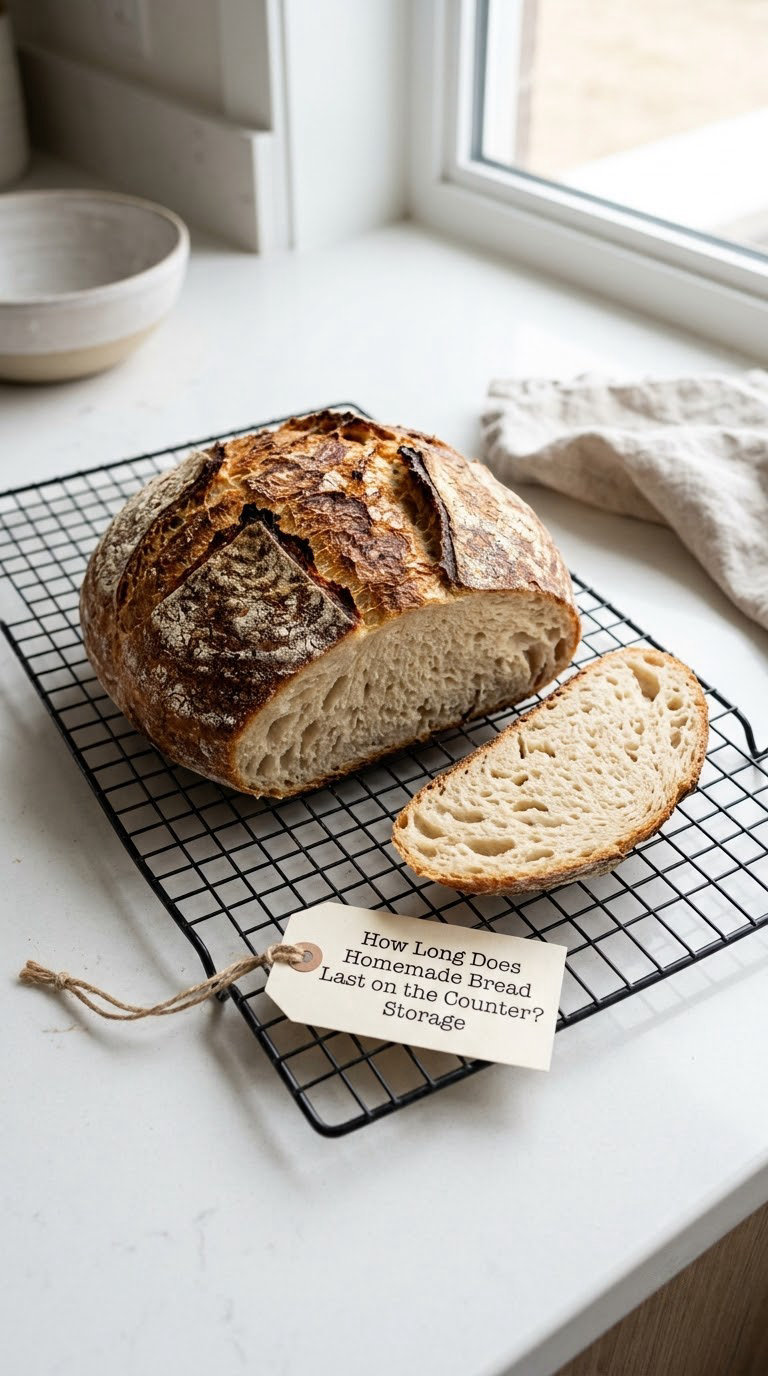
The reason homemade bread gives you a shorter window than a store-bought loaf comes down to what is not in it. Commercial bread carries preservatives such as sorbic acid to slow mold, and your loaf has nothing like that working for it. The moment it cools, two things start: the starch firms back up, which is staling, and airborne mold spores find the moisture in the crumb.
Which one gets you first is decided by how you store it. Plastic holds onto moisture and stalls staling, which also gives mold exactly what it wants. Paper and cloth let moisture escape, so the loaf dries out before anything grows on it.
Table of Contents
How Long Does Homemade Bread Last on the Counter?
Two to four days is the honest range for most plain homemade loaves kept at room temperature, and richer or naturally leavened breads can stretch toward five. Soft sandwich bread and quick breads such as banana or zucchini bread are usually fine for three to four days, while a plain lean boule can taste tired in a day and a half.
Five things move that number. Moisture in the crumb is the big one, since more water means more room for mold. Fat and sugar slow it down, which is why enriched dough outlasts lean dough. Acidity helps too, so a sourdough loaf beats a straight dough of the same hydration. Kitchen temperature and humidity matter: mold grows fastest around 86 to 98°F (30 to 37°C), which is warmer than most kitchens but not out of reach on a counter near the stove in summer. And whether the loaf is cut matters enormously, because every slice you take exposes new crumb.
Sliced bread goes first because those open faces dry and then absorb moisture from the air. Keeping a loaf whole and slicing only what you need that day buys you time, usually a full day or more over a pre-sliced loaf.
Counter Storage Times by Bread Type
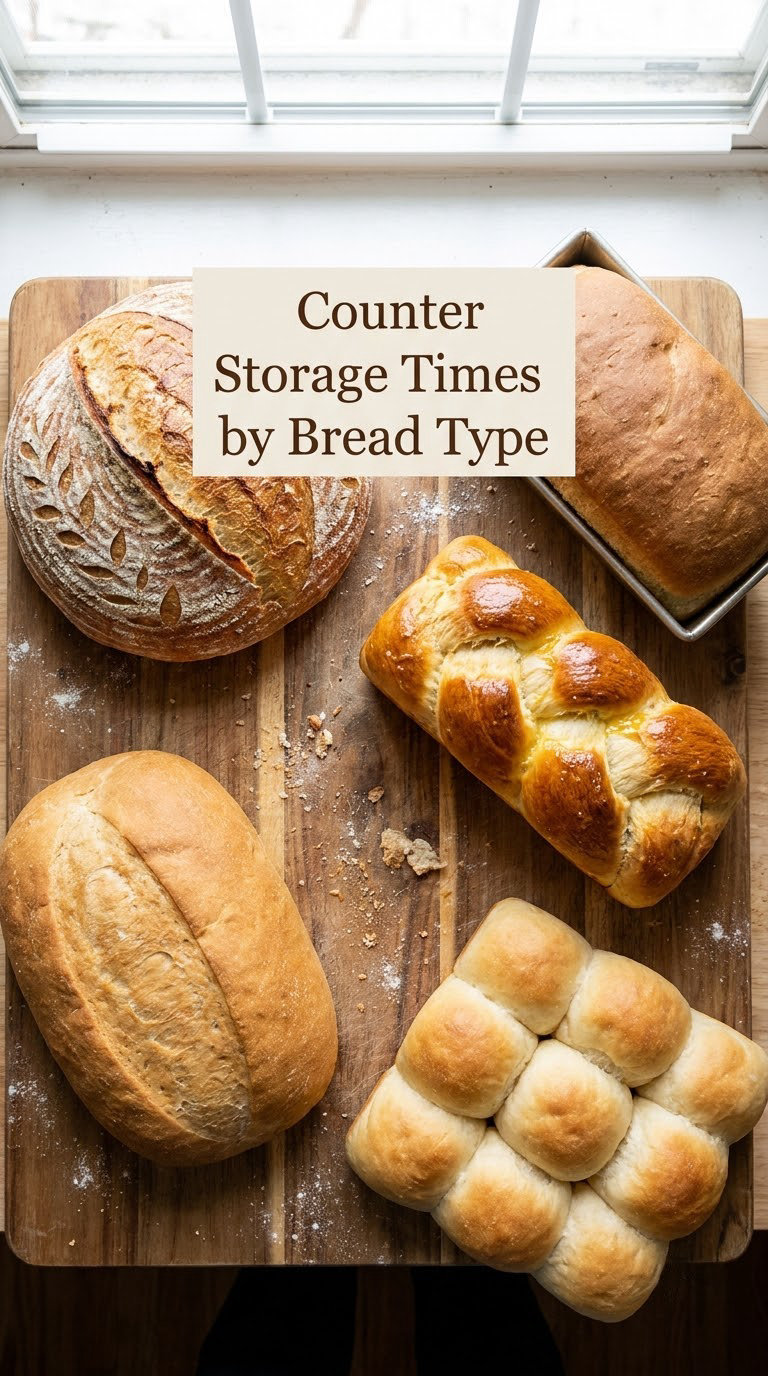
These are the ranges I use, and they assume a cool, dry kitchen and bread that was cooled completely before being wrapped.
| Bread type | Days on the counter | Best counter storage |
|---|---|---|
| Lean crusty artisan loaf | 1 to 2 days | Paper bag or clean towel, cut side down |
| Standard sandwich bread | 2 to 4 days | Resealable plastic bag or airtight container |
| Enriched bread (milk, butter, eggs) | 3 to 5 days | Resealable plastic bag or airtight container |
| Sourdough | 3 to 5 days | Cut side down on a rack, loosely covered |
| Quick breads (banana, zucchini, cornbread) | 3 to 4 days | Airtight container at room temperature, or freeze |
| Dinner rolls | 1 to 2 days | Clean towel in a basket, not sealed |
| Baguettes | 1 day | Paper bag; refresh or freeze the same day |
| Bagels | 2 to 3 days | Paper bag or a cloth |
A note on sourdough, since the range is debated: the natural lactic and acetic acid from a starter does slow mold a little, but sourdough stales on the same clock as any other bread, and many bakers on r/Breadit report their loaves molding by day three or four regardless of method. Treat five days as the optimistic end.
How to Store Homemade Bread on the Counter
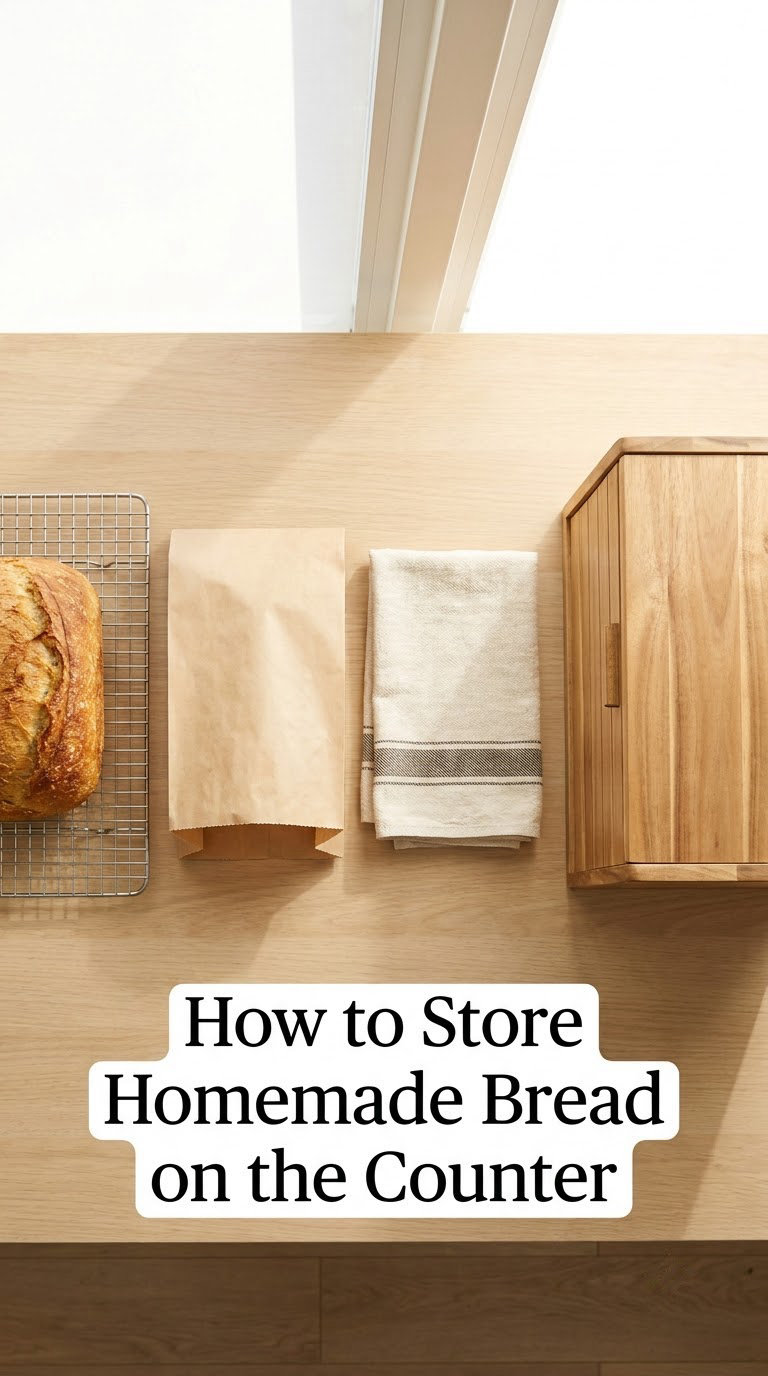
Five steps, and the first one is the one people skip.
- Cool the loaf completely. Bread keeps releasing steam for one to two hours after it leaves the oven. Wrapping it warm traps that moisture and gives mold a head start.
- Pick the wrap by crust. Crusty loaves go in a paper bag or under a clean cotton or linen towel so the crust stays crisp. Soft enriched and sandwich loaves go into a resealable plastic bag or airtight container to hold moisture in.
- Set it cut side down. If the loaf is already cut, place the cut face on the towel so it does not dry out and collect dust.
- Use a bread box or cloth tent if you have one. A bread box gives the loaf a slightly humid microclimate that slows staling without sealing in enough moisture for mold.
- Keep it away from heat and check it daily. No stove, no dishwasher, no sunny windowsill. A cool, dark corner of the counter is the spot.
Wax paper or beeswax wrap works as the middle option between paper and plastic. It slows moisture loss without creating the sealed, humid pocket that a plastic bag creates.
If you bake on a schedule, a bread machine tends to make exactly one batch too many, so plan to freeze half of it on the day you bake. That is simpler than trying to store a warm loaf in a hurry.
Should You Refrigerate Homemade Bread?
No, not for a loaf you plan to eat within a few days. Refrigerators sit around 35 to 40°F (2 to 4°C), and bread stales fastest in that range. The starch molecules line up and set into a rigid structure, and cold just speeds that process up. A loaf in the fridge can go hard in a day while staying perfectly edible, which is the worst of both worlds.
There are two honest exceptions. Bread with a perishable filling, like cream cheese frosting or a custard layer, belongs in the fridge or the freezer, not on the counter. And very moist quick breads that you will not touch for more than a couple of days are safer cold, because refrigeration holds their moisture steady and mold growth slows noticeably below about 50°F (10°C).
Refrigerating also does not stop mold. It slows it. Bread people have kept in the fridge for two weeks is not shelf stable, and if you want more than about four days, freezing is the method that actually works.
How to Freeze and Thaw Bread
Freezing is the answer for longer storage. A frozen loaf keeps its texture far better than anything else you can do, and the process is simple.
- Cool the loaf completely. Warm bread wrapped and frozen makes ice crystals in the crumb.
- Wrap it tightly. For a whole loaf, double-wrap in plastic wrap or seal the loaf first, then slide it into a freezer bag or a layer of foil. Push out the air and seal it.
- Portion it. Sliced bread freezes well and is far less wasteful than thawing a whole loaf to use four pieces. A bread slicer makes this quicker if you want a dedicated one.
- Label and date the bag. Frozen bread keeps three months and stays good for quality up to six.
Thaw it in the bag on the counter so the moisture stays with the bread, which takes a few hours. Toast straight from frozen works too. To bring back a crusty loaf after thawing, dampen the surface lightly, wrap it in foil, and bake at 350°F (175°C) for about 10 minutes.
A sourdough loaf freezes best sliced and laid flat in a bag, laid on its side so the slices do not warp. Enriched and filled breads hold up well frozen, including banana bread, which you can bake and freeze in pan-ready form if you like.
Signs Homemade Bread Has Gone Bad
Stale and spoiled are different problems, and they look nothing alike. Stale bread is hard, dry, and tastes flat. It is completely safe to eat. Moldy bread has fuzzy or powdery growth, often blue, green, white, or black, usually starting on the crust, the cut face, or a damp seam where slices touch.
Use this order of checks. Look first, for fuzzy or powdery growth and any wet or slimy patches. Smell next, since mold gives off a musty, fermented, or rotten odor that is hard to miss once you know it. Then press the crumb, because if it feels damp and sticky instead of dry and firm, something is growing even if you cannot see it.
Throw out the whole loaf if you see mold anywhere, including a spot you would cut away. The hyphae run deeper than the visible fuzz, and slices adjacent to the growth are already involved. Do not taste bread that seems off, and do not rely on cutting off the green part and keeping the rest.
A sour or beer-like smell on very fresh bread usually means the dough was underfermented and it will still be safe once baked through. A fermented odor on bread that has been sitting out for days is a different story. When in doubt, discard it.
Common Mistakes That Make Bread Go Stale
Almost every wasted loaf comes down to one of these.
- Wrapping before it cools. Trapped steam softens the crust, then feeds mold. Give it one to two hours on a rack.
- Sealing a crusty loaf in plastic. The crust goes soft and the interior gets damp. Use paper or cloth.
- Storing it next to the stove or dishwasher. Both add heat and steam. Choose the coolest dry corner you have.
- Putting a bread box in a humid room. A box works well in a dry, air-conditioned kitchen and works badly in a damp one. There, skip the box and go looser.
- Pre-slicing the whole loaf. Every cut face dries out and then picks up moisture from the air. Slice as you need it.
- Refrigerating to prevent mold. You get hard bread by tomorrow and still have a mold decision to make in four days.
- Forgetting it exists. The most common report by far is a loaf found in the back of a cabinet on day five. Put it at eye level, and check once a day.
Before you toss a loaf that is only stale, there is a rescue. Lightly dampen the crumb, wrap the loaf in foil, and bake at 350°F (175°C) for 10 to 15 minutes. That brings a two-day-old loaf back close to fresh. If it is truly past that, use it for croutons, breadcrumbs, French toast, or bread pudding instead.
Frequently Asked Questions
Can homemade bread last a week on the counter?
Not safely for most loaves. About two to four days is the normal window for plain homemade bread on the counter, and five is a good day for enriched or sourdough in a cool, dry kitchen. Past that, mold risk climbs quickly, especially in a humid room. Freeze anything you want to keep longer, and thaw it a day before you plan to eat it.
Does a sliced loaf last longer than a whole loaf?
A sliced loaf loses moisture faster, not slower. Every cut face dries out in open air, then absorbs humidity from the room, which gives mold a place to start. Keeping the loaf whole and cutting only what you need that day usually buys you an extra day or more.
How long does sourdough last on the counter?
Expect three to five days, with the fifth day being the optimistic end. The lactic and acetic acid from a starter slows mold slightly, but sourdough stales on the same clock as any other bread. Many home bakers report mold by day three or four. Store it cut side down on a rack, loosely covered, and freeze it if you will not eat it within two days.
Can I eat bread that has been in the fridge for two weeks?
Treat it as unsafe and throw it out. Refrigeration slows mold, it does not stop it, and bread is not shelf stable after two weeks cold. Hard bread in the fridge is stale rather than spoiled, but if you see any fuzzy or powdery growth, smell a musty or rotten odor, or notice damp sticky patches, discard the whole loaf.
Is it okay to eat bread that sat out overnight?
Yes, overnight on the counter is exactly the normal case. A loaf sitting out at room temperature for eight to twelve hours is well within the safe window, as long as it is plain bread without perishable fillings. Cream cheese, custard, and similar fillings need the fridge or the freezer instead.
How do I revive stale homemade bread?
Lightly dampen the loaf with a mist of water, wrap it tightly in foil, and bake at 350u0026deg;F (175u0026deg;C) for 10 to 15 minutes. The steam inside the foil softens the crumb and re-crisps the crust. This works best within a couple of days of the loaf going stale. Beyond that, use it for croutons, breadcrumbs, or bread pudding.
Conclusion
Most homemade bread lasts 2 to 4 days on the counter, soft enriched loaves push toward five, and a lean crusty loaf can taste tired by the second day. How long does homemade bread last on the counter depends less on the recipe than on the wrapping, so cool it fully, choose paper for crusty loaves and plastic for soft ones, keep it out of the steamy part of the kitchen, and look at it once a day.
When you bake more than one loaf, freeze the extra on the day it comes out of the oven. That is the whole trick, and it turns a two-day window into three months.