
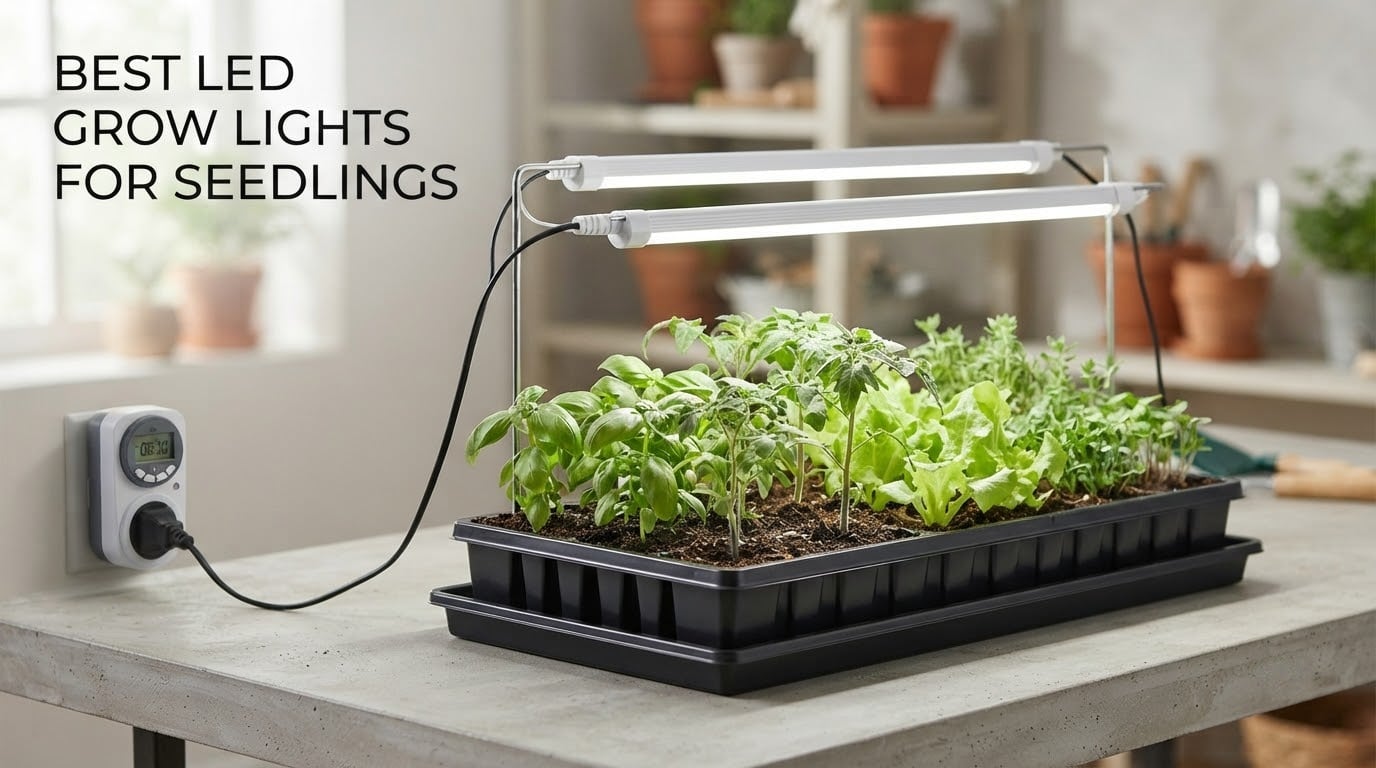
The best LED grow lights for seedlings are dimmable, blue-rich or full-spectrum fixtures you can hang 12 to 24 inches above the tray and run on a timer for 14 to 18 hours a day. For most home seed-starting setups, a 100W panel with a dimmer or a pack of 5000K strip bars mounted under a shelf covers everything a young seedling needs.
That single sentence answers the question most people arrive with in February, usually standing in a basement or spare room with a dome tray on the floor and leggy tomato starts already forming. The good news is that seedlings are not demanding. They need a modest slice of blue-rich light, delivered consistently, at a height you can change as they grow.
Our team has been running seed trays through winter and early spring for years, and we have set up everything from a two-tray countertop rig to a four-tier wire rack in a basement. We compared twelve fixtures across that range for this roundup, from a 10-watt bar to a dimmable 100-watt panel, and read the customer reviews closely on each one. Every light here works for seedlings. The differences are in brightness, dimming control, heat, and how much of a pain the setup is.
We earn from qualifying purchases on this page, and that never changes what we recommend. If a fixture has a documented flaw, we say so below.
Table of Contents
Top 3 LED Grow Lights for Seedlings
Mars Hydro TS600
- 100W dimmable panel
- Full spectrum with red and IR
- 120-degree reflector
- 2x2 foot coverage

Barrina T5 4-Pack
- 5000K full spectrum
- Four 1-foot bars
- Individually switched
- Linkable up to 16 units
The Mars Hydro TS600 is the fixture we keep coming back to because the dimmer solves the one problem most grow lights create, which is being too bright on day one. The Barrina T5 four-pack is the value pick, and it is what we put on a wire rack when we want to light several shelves for very little. The Viparspectra P700 carries the highest average rating in this group and throws noticeably more light than anything else near its size.
All 12 LED Grow Lights for Seedlings in 2026 at a Glance
Every fixture below earned its place. The features column is what separates them, and all of these appear in the reviews further down.
| Product | Specifications | Action |
|---|---|---|
| Mars Hydro TS600 100W Dimmable Panel |
|
Check Latest Price |
 LEOTER 80 LED Clamp Light LEOTER 80 LED Clamp Light |
|
Check Latest Price |
| Barrina T5 5000K Four-Pack |
|
Check Latest Price |
 Viparspectra P700 70W Dimmable Panel Viparspectra P700 70W Dimmable Panel |
|
Check Latest Price |
 Litever 36W Four-Strip Kit Litever 36W Four-Strip Kit |
|
Check Latest Price |
 RWNTAO 8.6 Inch Shelf Strips RWNTAO 8.6 Inch Shelf Strips |
|
Check Latest Price |
 DYMOND BoostGro 2FT Linkable Bar DYMOND BoostGro 2FT Linkable Bar |
|
Check Latest Price |
 LBW Desk Grow Light 214 LEDs LBW Desk Grow Light 214 LEDs |
|
Check Latest Price |
 SDOVUERC Six-Bar 36W Strip SDOVUERC Six-Bar 36W Strip |
|
Check Latest Price |
 RWNTAO 13 Inch Two-Pack RWNTAO 13 Inch Two-Pack |
|
Check Latest Price |
 FOXGARDEN Stand Grow Light FOXGARDEN Stand Grow Light |
|
Check Latest Price |
 Bokeedo T5 10W Two-Pack Bokeedo T5 10W Two-Pack |
|
Check Latest Price |
Why Seedlings Need Different Light Than Mature Plants
A seedling is a leaf that has been folded up for two weeks. It has no stored energy, almost no stem tissue, and no root system worth defending. What it needs first is a specific wavelength: blue light in the 400 to 500 nanometer range drives the compact, sturdy growth that keeps a seedling from flopping over later.
That is why nearly every good seedling fixture leans cool or blue-white. Color temperature is the quick way to read it on a box. Anything at 5000K or higher is cool and blue-dominant. Warm amber tones around 2700K to 3000K are fine once a plant has true leaves and flowers, but they encourage stretching on newly emerged starts.
The second thing to understand is intensity. Growers commonly quote PPFD, or photosynthetic photon flux density, in micromoles per square meter per second. For seedlings, the useful range sits between 100 and 300. Mature fruiting plants are grown at two to four times that number. A 500-watt flowering fixture is not a seedling light, it is a seedling scalpel.
Over a full day, the number that matters is DLI, the daily light integral, measured in moles per square meter per day. Seedlings do well on 10 to 14. You reach that by running a modest-intensity light for a long photoperiod, which is exactly the pattern most timers give you.
This is also where the marketing gets muddy. Watts measure energy draw, lumens measure brightness to your eye, PPFD measures light to the plant, and Kelvin measures color. Four different numbers, three of which tell you almost nothing about seedling performance. The r/gardening consensus we keep coming back to is simpler: get something rated at 5000K or higher, and budget roughly 15 to 20 watts of LED power draw per 10×20 inch seed tray.
If you want a broader look at how these fixtures handle bigger jobs, our guide to the best full spectrum LED grow lights covers the vegetative and flowering end of the range.
1. Mars Hydro TS600 100W Panel – Best Overall for Seedlings
MARS HYDRO 100W TS600 2x2ft Dimmable LED Grow Lights for Indoor Plants
- Smooth dimming dial for young seedlings
- Even coverage with no dead spots
- Fanless and quiet
- Low power draw with daisy-chain option
- Adjustable hanging hardware included
- Some reports of power supply failure within the first year
- Side-mounted dimmer box makes the fixture tilt slightly
- Sparse assembly instructions
This is the fixture we put above a two-tray setup and stop worrying about. The TS600 runs at 100 watts, outputs 10000 lumens, and has a physical dimmer dial on the side that lets you turn intensity down when the seedlings first emerge. That dial is the whole reason it works for seed starting rather than just vegetative growth.
Across more than 20,000 reviews, the recurring praise is for coverage evenness across a 2 by 2 foot space and for how quietly and coolly it runs. There is no fan, so nothing to listen to in a spare room at night, and the 120-degree reflector keeps the light aimed at the canopy rather than the walls.
Start the dial near the bottom after germination and bring it up as true leaves form. The spectrum runs from 3200K to 4200K plus 5200K to 6800K with 730 to 740 nanometer red, which covers both the blue seedling stage and the red-leaning flowering stage if you keep the same fixture going.
Reviewers report strong seedling response and describe it as the best value entry-level grow light. The one persistent complaint worth knowing about is longevity: a minority of buyers saw the light or the power supply fail somewhere between six and twelve months in. The manufacturer warranty is listed at five years, which is far better than most of the bars in this roundup.
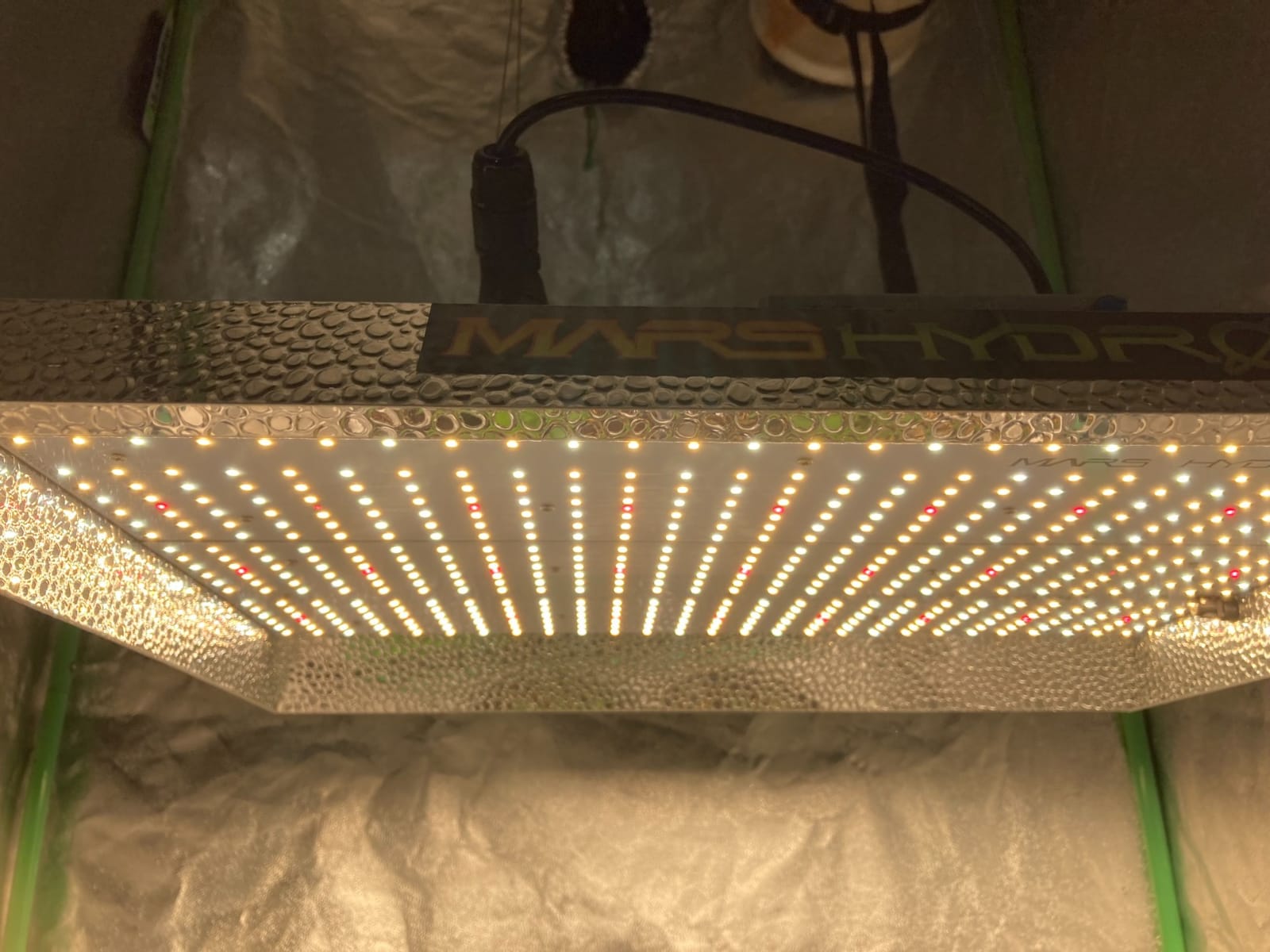
Who the TS600 suits
If you have one or two trays, this is the cleanest single-box answer. The low power draw means you can run more than one from a single outlet, and the dimmer means you do not have to raise the light out of reach of a tall plant just to tone it down. It also daisy-chains, which makes it the easiest of the panel options to expand into a multi-shelf rack.
The 2×2 foot coverage footprint is genuinely useful rather than marketing, and it matches a standard seed-starting shelf width closely enough that you are not wasting light on bare shelf.
Watch-outs on the TS600
It still runs warm enough to raise the temperature of a sealed space, so give a closet or tent setup some airflow. The dimmer box mounts on one side, which makes the panel sit slightly tilted while hanging, and the included instructions are thin. Take two minutes with a diagram before you start.
If you are lighting several shelves at once rather than one tray, the seed starting systems with grow lights we tested cover rack-style setups in more depth.
2. LEOTER 80 LED Clamp Light – Best for a Countertop Setup
- Four 360 degree gooseneck heads cover several pots
- Dependable memory timer removes daily on-off work
- Ten dimming levels plus three spectrum modes
- Compact and repositionable
- Low power draw is easy on a USB brick
- Not the brightest
- some seedlings lagged behind stronger fixtures
- Gooseneck arms droop out of position
- Needs a USB wall adapter not a standard plug
We use one of these on the kitchen counter when the basement setup is full. The clamp grips a shelf or a table edge, and four gooseneck heads spread out to cover a tray plus a few pots without any assembly. It is the fastest light to deploy in this entire roundup.
The timer is the feature that quietly earns it a permanent spot. Three, nine, or twelve hours on a circular memory cycle, and it just repeats. Combined with ten dimming levels and three spectrum modes, you can dial a freshly emerged tray down low and turn it up as the plants fill in.
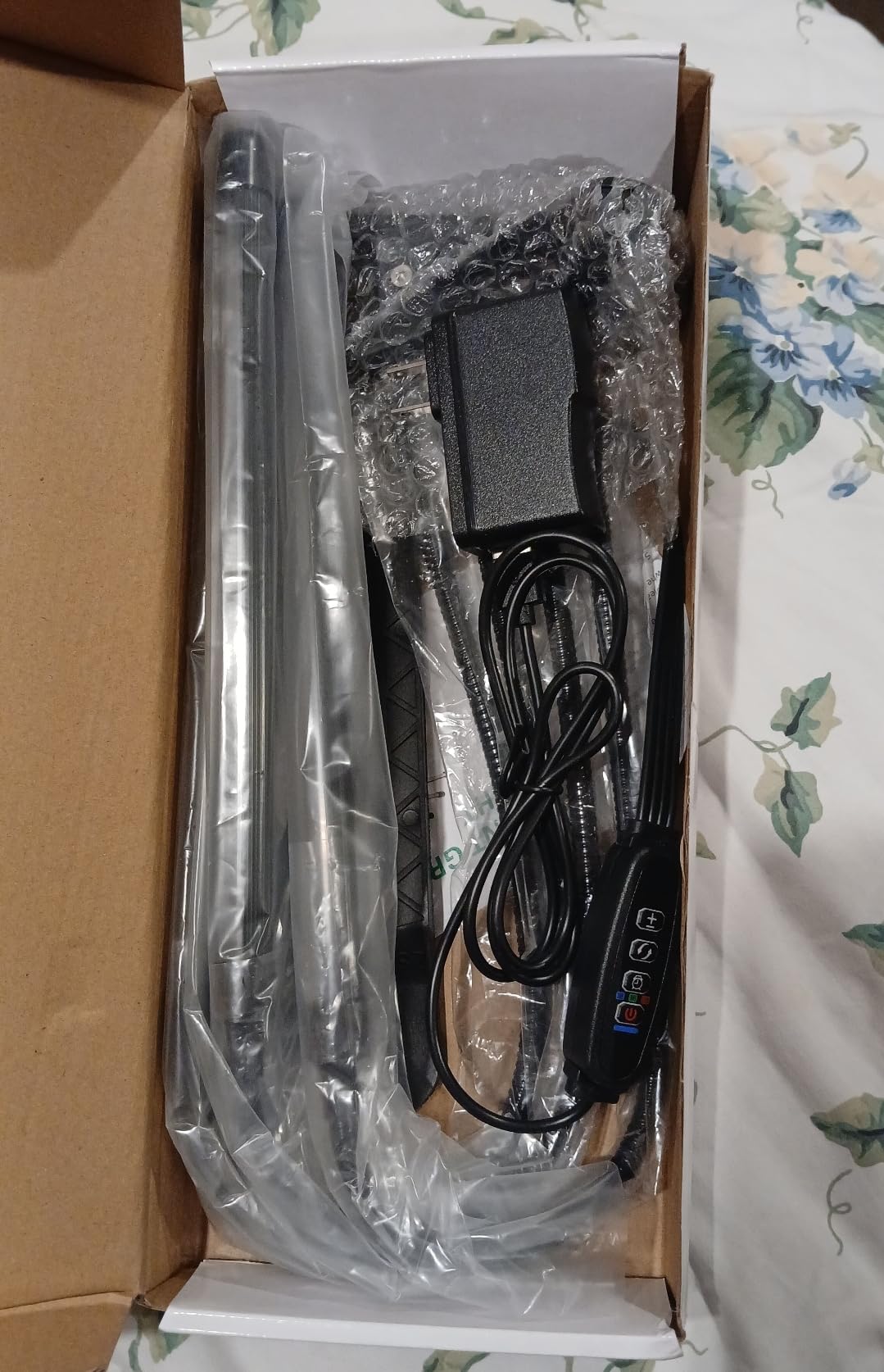
The 80 LEDs break down as 32 red, 12 blue, 20 yellow, and 16 white, covering 380 to 800 nanometers. You get dedicated 660 nanometer red and 460 nanometer blue modes as well as a mixed setting, which gives you more control than most fixtures at this level.
Owners rate it as a solid low-cost supplemental light for seed starting and houseplants. The most common criticism is brightness relative to dedicated grow fixtures, which is fair. If your seedlings look fine but seem slow to thicken up, this is usually why.
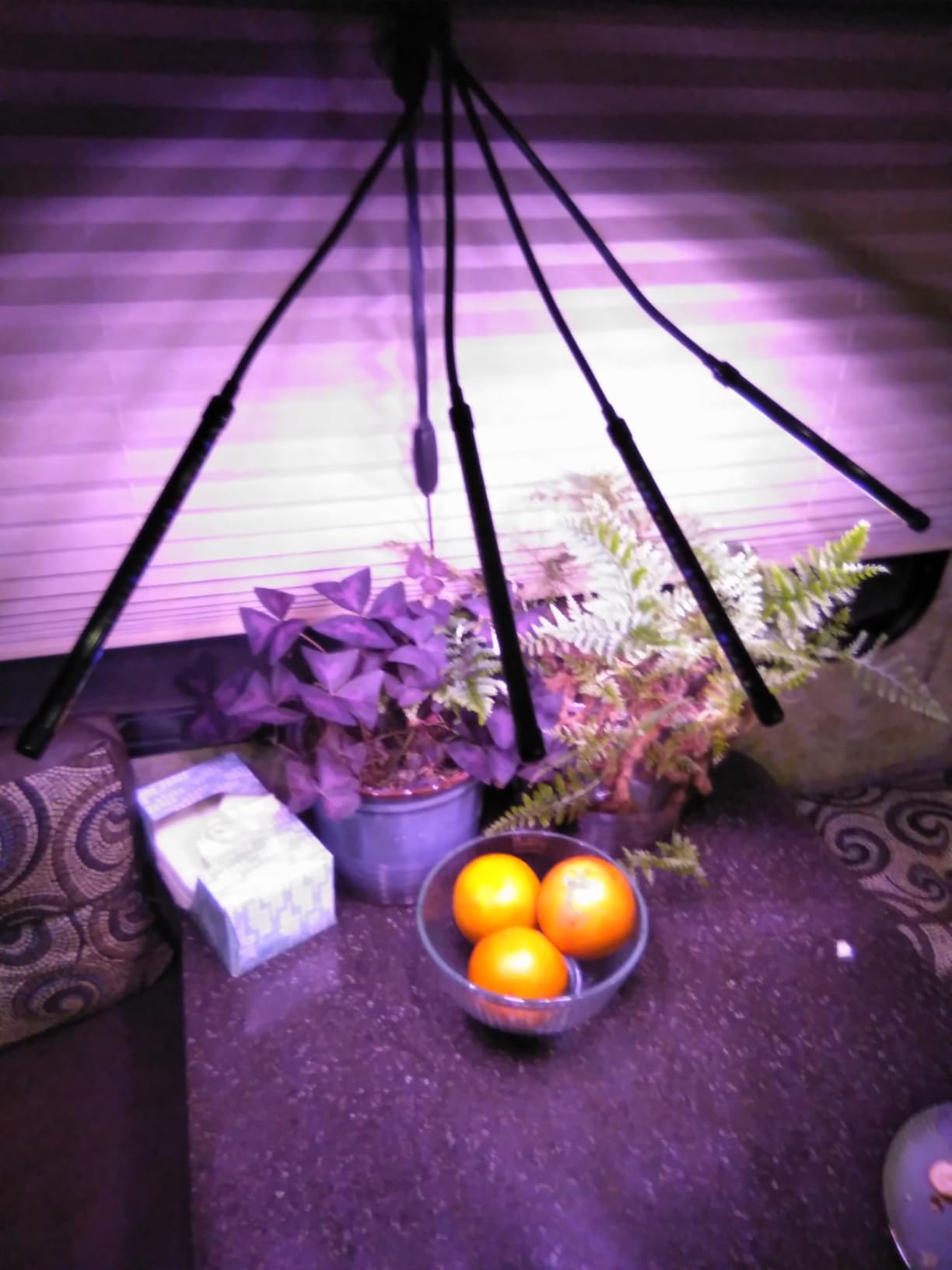
Who the LEOTER suits
Apartment kitchens and small rooms where a rack is not happening. It clamps to anything with an edge, moves in seconds between locations, and needs no dedicated outlet beyond a USB brick. It is also a good second light for a single tray where the main fixture covers only part of the surface.
Anyone sensitive to a strong color cast in a living space will like it too, since the mixed mode reads much more like a normal white fixture than a purple horticultural light.
Watch-outs on the LEOTER
The gooseneck arms are the weak point. Owners report they droop out of whatever position you set them in, so plan on re-angling every week or two as seedlings grow. USB power also means you need an adapter, not a standard wall plug.
Warranty coverage is only one year, which is the shortest in this group. Treat it as a supplemental fixture rather than the backbone of a rack.
3. Barrina T5 5000K Four-Pack – Best Value for Multi-Shelf Racks
Barrina T5 Grow Lights for Indoor Plants, 5000K Full Spectrum, 1FT, 4 Packs
- Bright neutral 5000K output that looks like a normal fixture
- Individually switchable bars and linkable cords for separate zones
- Slim bars mount under shelves with included clips and ties
- Runs cool with very low power draw
- Credited with strong germination rates
- No built-in timer
- Power cords are short and often need an extension
- Daisy-chain cables are limited in length
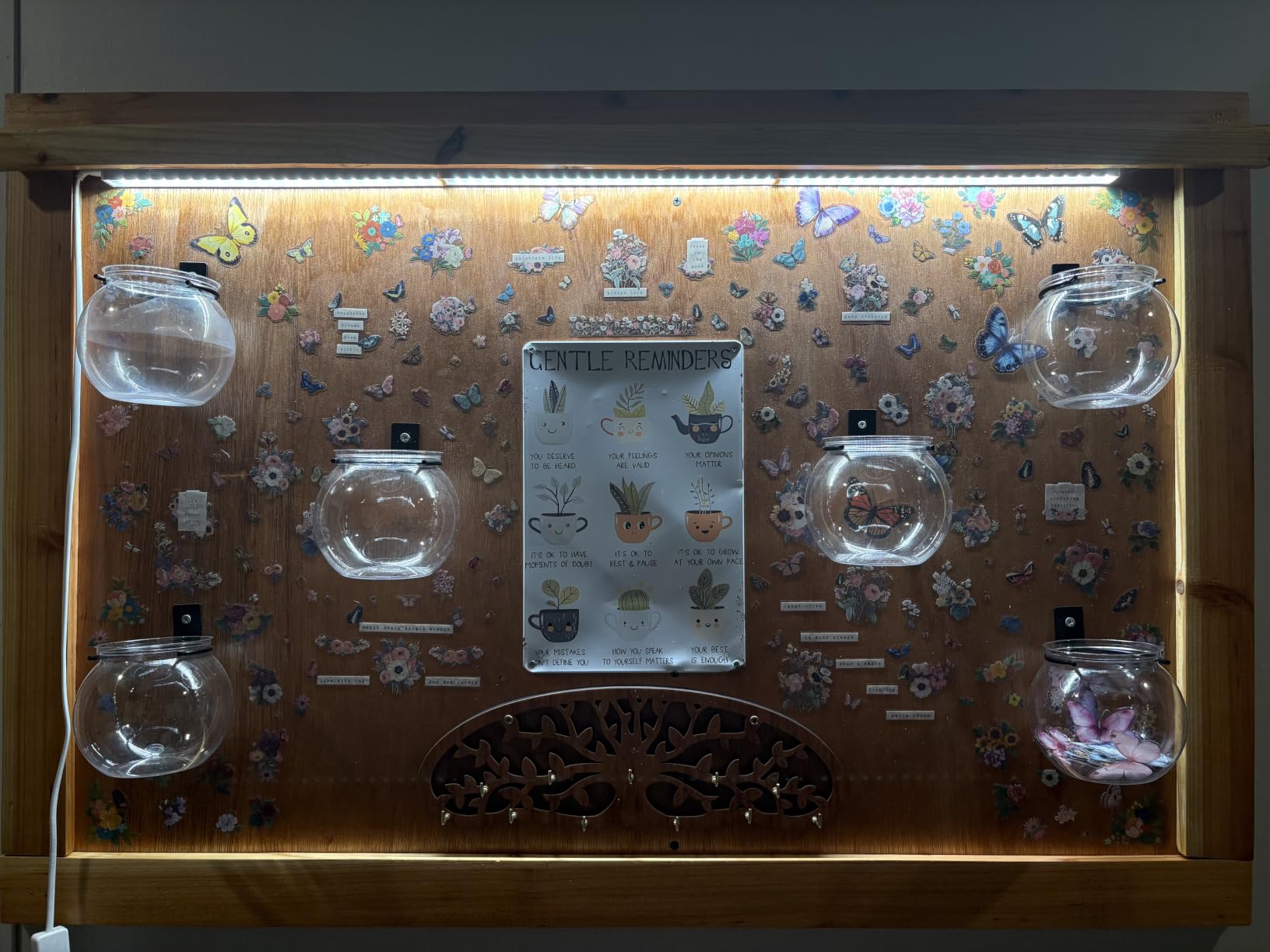
When we built a four-shelf wire rack for a basement seed room, this is what filled it. Four one-foot bars per shelf, 5000K white full spectrum, twenty watts total per four-pack. The light reads as a normal white fixture rather than a grow light, which matters if the rack is anywhere near where you work.
The 5000K rating is exactly the spec the r/gardening consensus points to for seed starting, and growers consistently praise the brightness for the draw. If you have seen the spectrum of light inside a Barrina bar and read it as sufficient, that is the shared experience across thousands of setups.
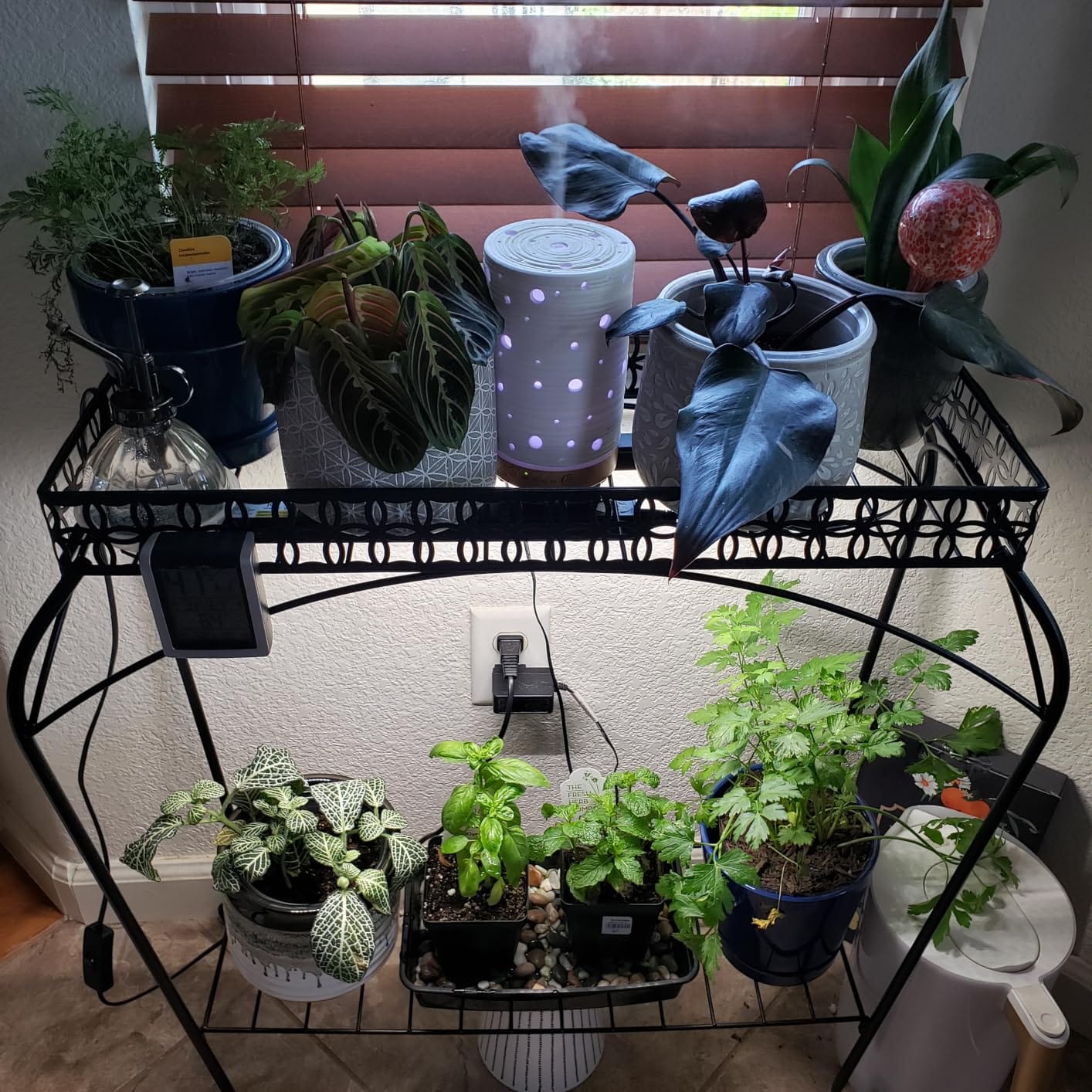
Each bar has its own on/off switch, so you can light half a shelf while you swap trays. Bars link in series up to sixteen units, and the kit includes double-sided tape, clips, cable ties, two switched power cords, and three connecting cords. That mounting hardware is what makes a clean install possible without drilling.
Output lands at 5000K across 96 LEDs with 20 watts total for the four-pack, and the aluminum and polycarbonate housing stays cool. Growers call it the best value bar kit for under-shelf and seedling rack work.
Who the Barrina four-pack suits
Anyone covering more than one shelf or more than two trays. The low total draw means a full four-tier rack stays inexpensive to operate, and the neutral color keeps a basement or spare room from looking like a grow tent. Individual switching lets you dedicate one bar to microgreens and another to tomato starts.
If you have already committed to hanging shelves and want to know what fits under them, our picks for LED shop lights cover the same mounts from a different angle.
Watch-outs on the Barrina four-pack
There is no timer. You need a wall timer or a smart plug, and that is the single most common owner workaround. Power cords are short, so plan your run length before you mount rather than after.
Because the light is white rather than purple, do not expect it to be visible as a glow from across the room. It does its job quietly, which is exactly what most people want in a living space.
4. Viparspectra P700 70W Panel – Strongest Output With a Four-Level Dimmer
70 Watt Grow Light, Dimmable Plant Light, LED Grow Lights for Indoor Plants
- Highest average rating in this roundup
- All-aluminum build well above plastic panels at this price
- Coverage verified with a PAR meter
- Fanless with large aluminum heat sinks
- Includes pulley system and long cord for hanging
- Very bright even on the lowest dimmer setting
- Switch and plug sit on top of the fixture
- No built-in timer
- Gets warm in an enclosed space
This is the pick for anyone who has run a dimmable panel, moved too high to avoid burning seedlings, and then found their plants went leggy again. The four-level dimmer on the end of the fixture solves that trade-off without moving the light.
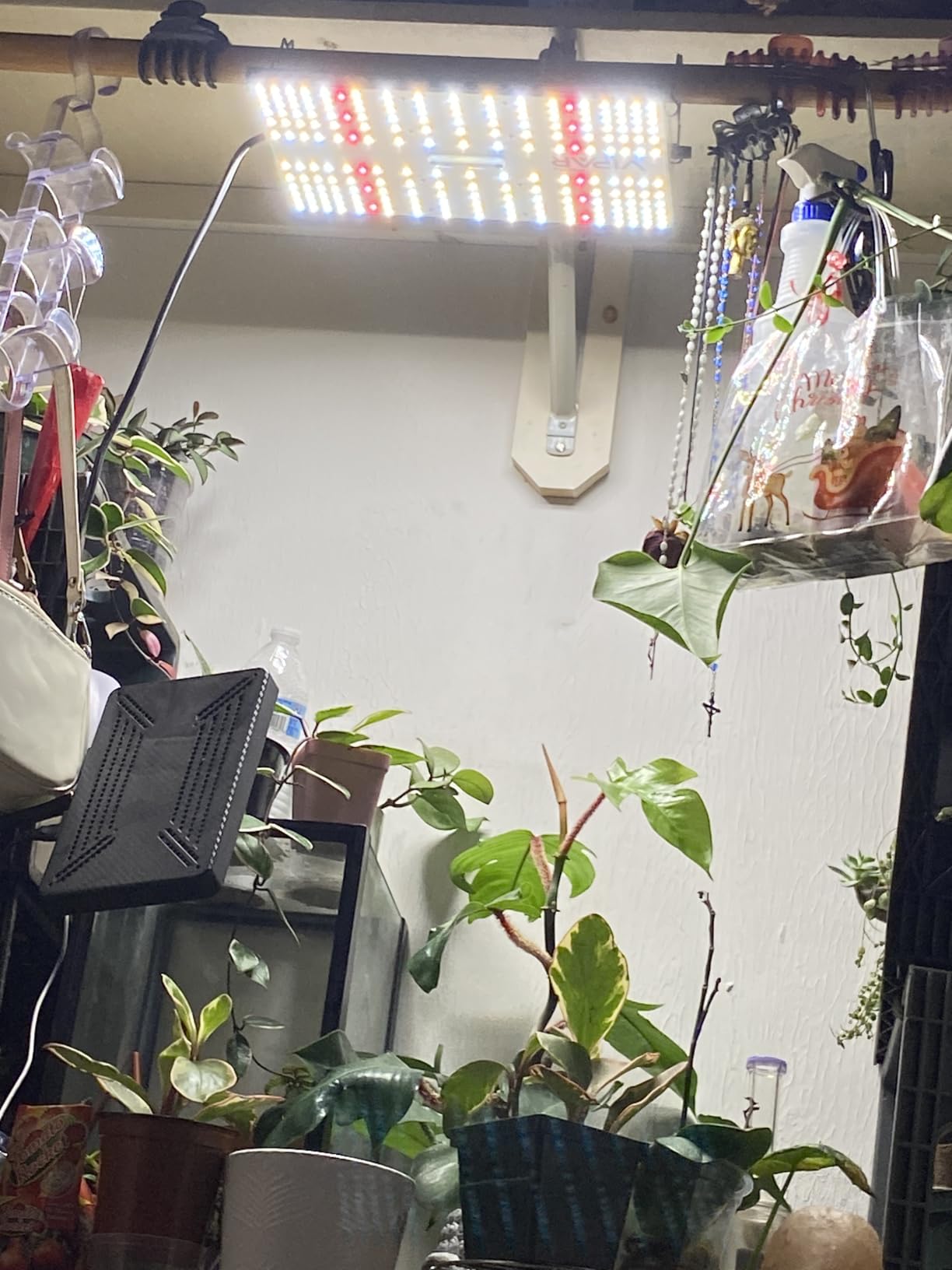
It delivers 11000 lumens from 70 watts across 216 emitters, using a balanced mix of 660 nanometer red plus 3000K and 5000K white. Owners describe it as a visible step up from budget bar lights, with growth that starts sooner and fills in faster.
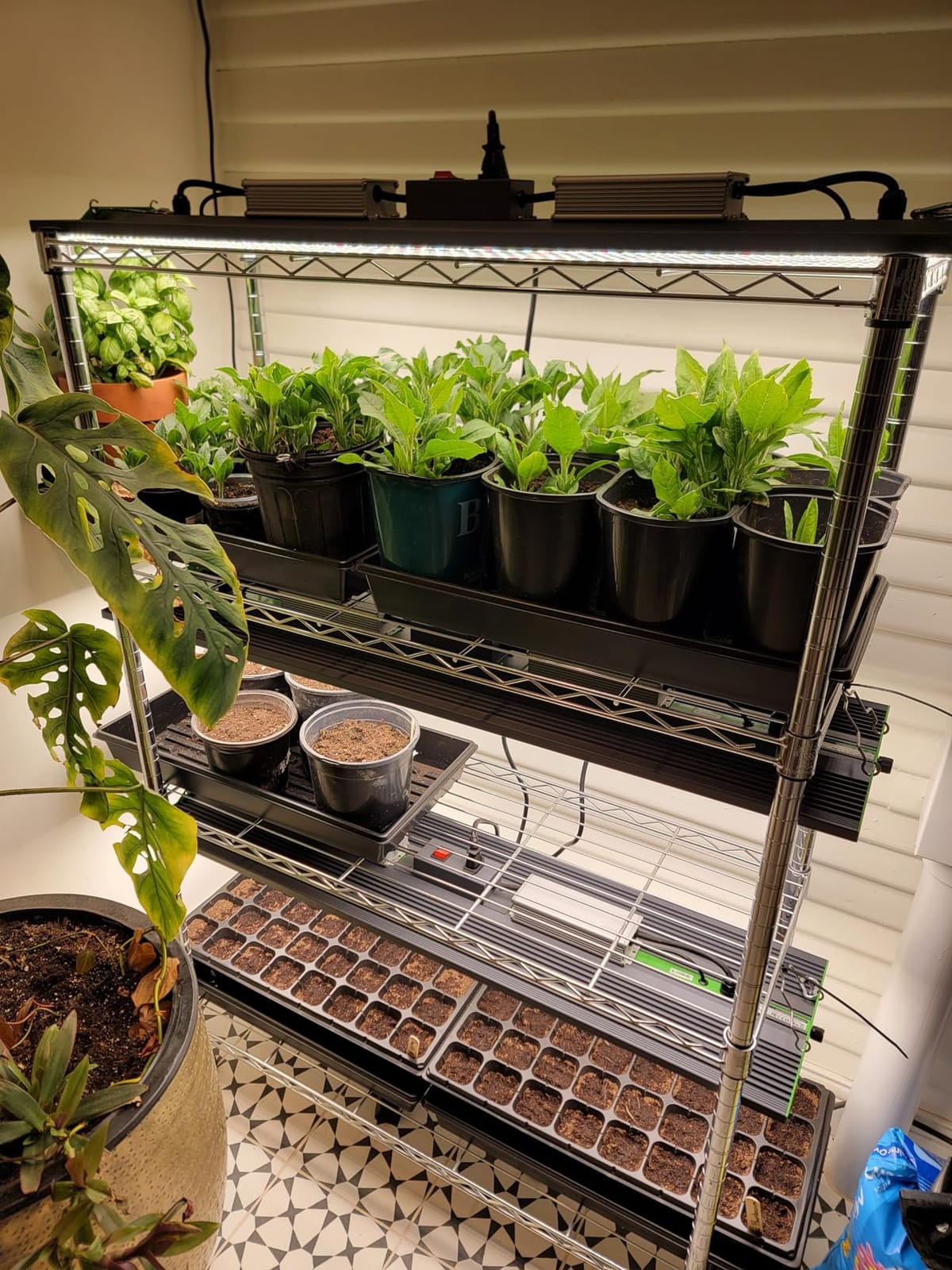
The build is where the money went. A full aluminum body with large heat sinks, a fanless design that stays silent, stainless steel hanging hooks, and a nine-foot cord with a pulley system. Coverage actually fills a 2 by 3 foot shelf rather than hot-spotting in the middle, which is the most common complaint about cheaper panels.
At more than 5,300 reviews it carries the highest average rating in this roundup. Buyers repeatedly note that it delivers 150-watt class output from a 70-watt draw, which is more headroom than a seedling tray strictly needs.
Who the P700 suits
People who want one fixture that can take a tray through germination, seedling, and vegetative stages without being swapped out. The four dimmer settings let you stay on the lowest setting for a week after emergence and then step up, which is exactly when seedlings can tolerate more light.
It also suits anyone who has been disappointed by plastic-bodied panels that flex and yellow. The aluminum here is noticeably heavier at 2.4 pounds, which is part of the reason it feels stable on a hanging hook.
Watch-outs on the P700
It is bright. Even the lowest dimmer setting can be intense, so keep it out of eye line or shield it, and start seedlings at the back of the coverage area. In a sealed closet it warms the air enough to benefit from airflow.
The on/off switch and plug sit on top of the fixture, which is awkward when it is hanging over a shelf rather than sitting on a bench. There is no timer, so budget for a wall timer or smart plug.
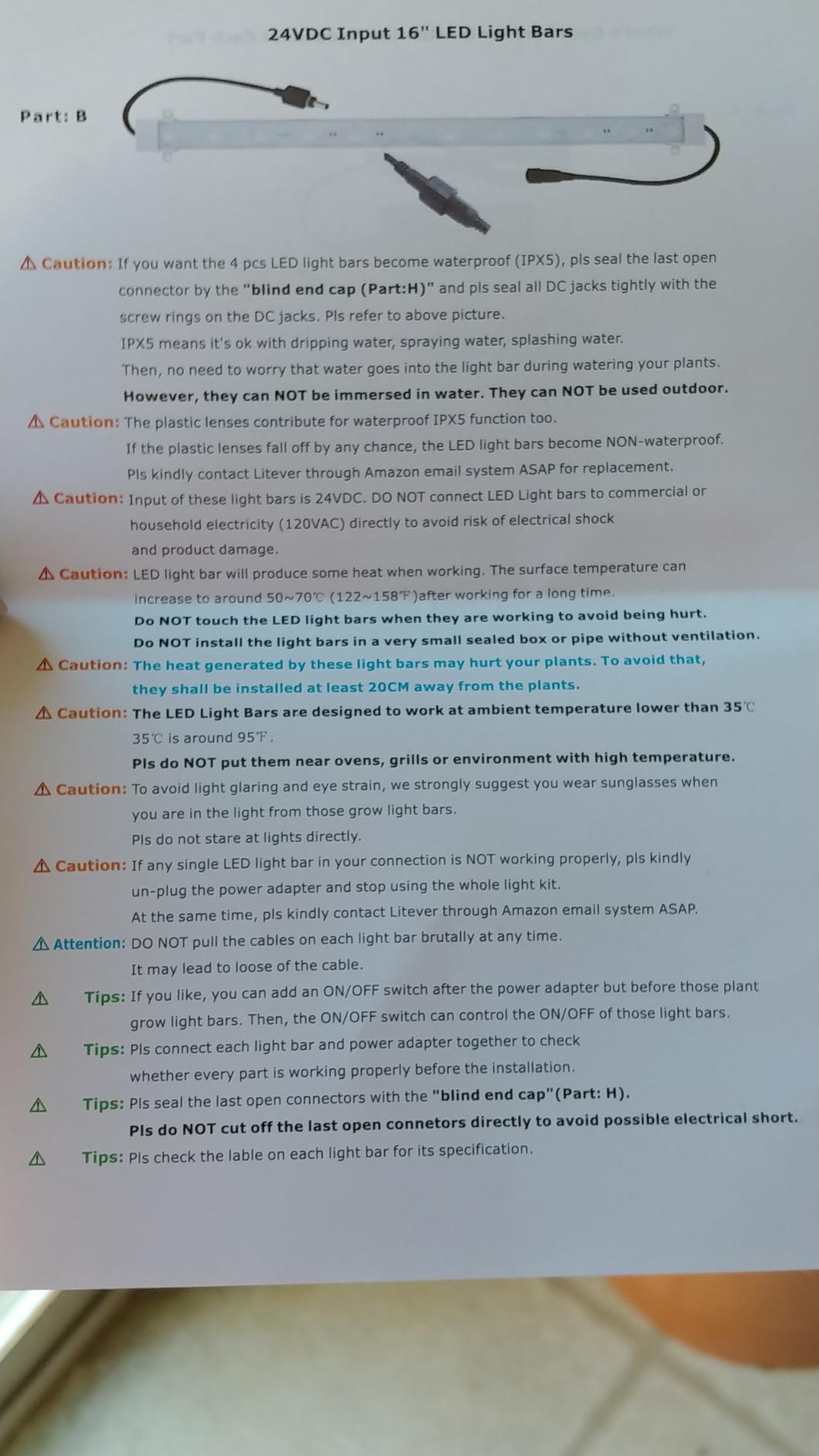
5. Litever 36W Four-Strip Kit – Best for Humid Greenhouses and Misting Systems
- Sealed gasketed strips tolerate humidity and misting
- Strips stay cool to the touch
- Inline timer works with smart plugs and wall timers
- Link bars in a line or doubled in parallel
- Exceptionally durable
- Three mounting options included
- Specs label them not water resistant despite marketing language
- Some kits arrive missing a threaded waterproof cover or timer
- Strong magenta color cast is unpleasant in a living space
- Lower output than larger panels
We use this kit in the one place other indoor lights cannot go, which is a small unheated greenhouse attached to the house. The sealed, rubber-gasketed connections are the reason. Everything else in this roundup is a dry-location fixture.
Four 16-inch bars at 36 watts total give 4500 lumens of combined output. Bars can be linked in a single line or paired in parallel, so you can double the light over one tray or spread four bars across a bench, and the inline timer doubles as a dimmer.
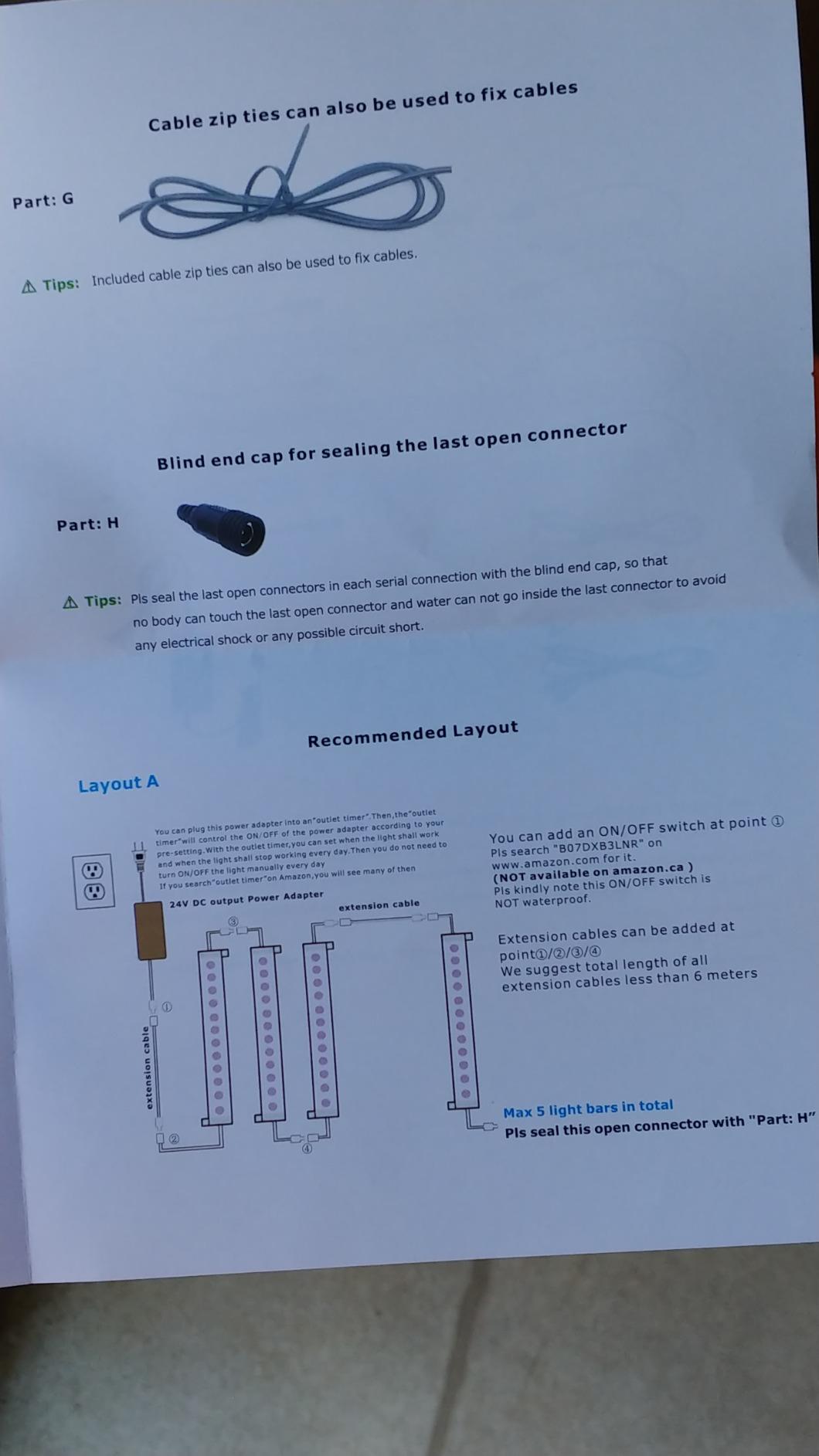
Durability is the standout. One owner reports running the same kit for eight years. Buyers also like that the timer is a separate inline unit rather than a fixed button, which means it works with smart plugs and wall timers instead of locking you into one schedule.
Installation covers three methods: self-adhesive pads, screws, and zip ties. A Class 2 certified 60-watt adapter powers the whole set, and the aluminum-bodied bars handle heat dissipation.
Who the Litever kit suits
Anyone propagating in a greenhouse, cold frame, or misting propagation box where humidity is part of the setup. It is also a solid choice for a garage or workshop seed station where the light has to survive a season of dust and temperature swings.
Because the bars are sealed and cool to the touch, they can run close to young cuttings without cooking them, which is useful when humidity is already high.
Watch-outs on the Litever kit
Listing language and spec sheet disagree on water resistance. Owners report some kits arriving without the threaded waterproof cover on the power connection, and some without the timer. Check the box contents before you strip the packaging and mount everything.
The magenta color cast is strong in every mode. If the kit lives in a room you use at night, look at a white-spectrum alternative instead.
6. RWNTAO 8.6 Inch Shelf Strips – Best Low-Profile Option for Plant Shelves
- Compact bars with 156 LEDs across the two-pack
- Ten brightness levels for freshly germinated seedlings
- Four mounting options fit most shelves
- All-aluminum housing resists corrosion
- 71 inch cord reaches most shelves
- Lower total output than panel fixtures
- One-year warranty is among the shortest here
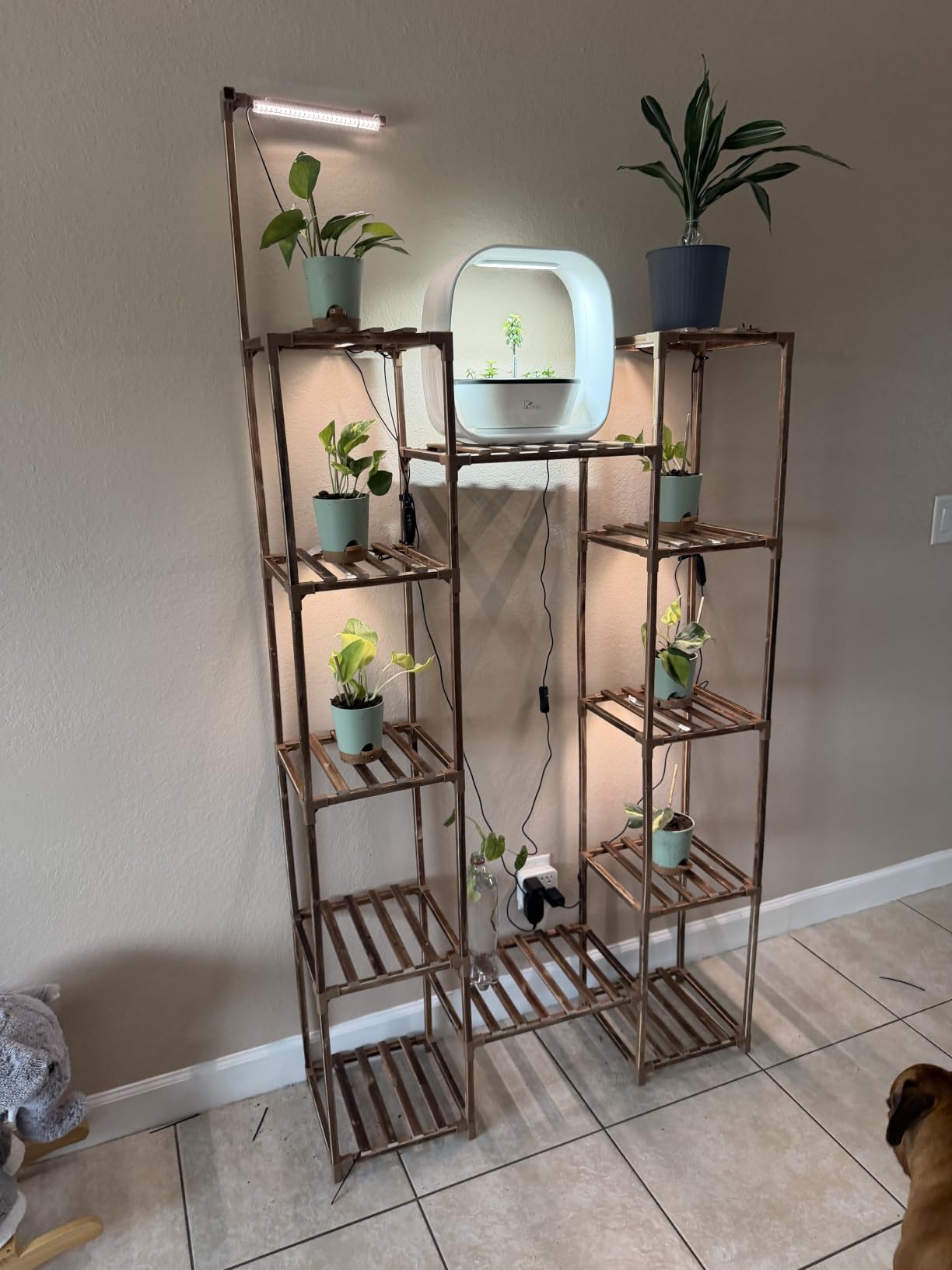
These are the strips we tuck onto a bookshelf already full of houseplants. At 8.66 inches long and a shade over a quarter inch thick, they take up almost no vertical space, which is the entire problem they solve.
Each bar carries 78 full-spectrum LEDs at 26 times 3500K, running 380 to 800 nanometers, and the pair includes a cycle memory timer with 3, 9, or 12 hour settings. Ten dimming levels and three switch modes let you dial a germination tray down low.
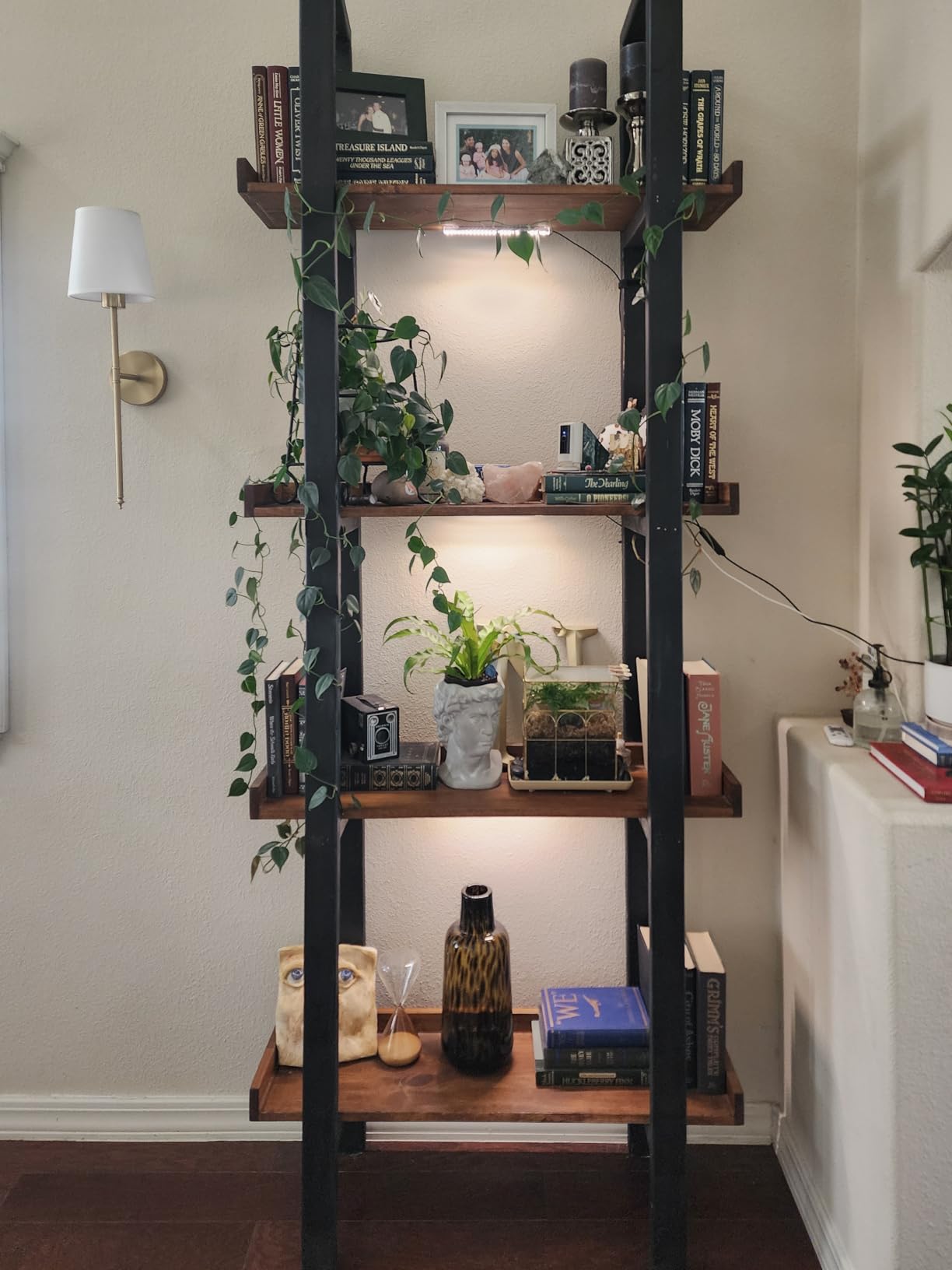
Mounting is where they win over stickier options. Screws, cable ties, double-sided tape, and magnets are all included, so you can move them between a metal shelf and a wooden one. The 71-inch cord reaches most shelves without an extension.
Reviewers treat these as a low-cost shelf strip that handles seedlings and succulents well, with the dimmer and timer doing most of the work. Output is modest by design, aimed at supplemental shelf lighting rather than filling a wide bench.
Who the RWNTAO strips suit
People lighting a single tray on an existing shelf, or adding gentle light to a mixed houseplant shelf where a full panel would be visually overwhelming. The low profile matters more than it sounds when the shelf gap is tight.
They are also a reasonable second light for a two-tray setup where one dimmable panel covers only part of the canopy.
Watch-outs on the RWNTAO strips
These are supplemental lights. If you are starting tomatoes or peppers expecting heavy stock, a single pair over a full 10×20 tray will feel thin. Owners do report strong results for germination and lower-light plants.
The one-year warranty is short. The aluminum body resists corrosion, but there is less recourse if a driver fails after a season.
7. DYMOND BoostGro 2FT Linkable Bar – Best Single Bar for One Seed Flat
DYMOND BoostGro LED Grow Light Full Spectrum Linkable 5000K Daylight + 660nm Red Indoor Plant Lighting Fixture (2 FT, Black)
- Two foot bar is well proportioned for seed flats
- Hangs from the included cable with two clips
- Linkable four units per circuit
- 16W draw and 1900 lumens
- 660nm red diodes improve color and vigor
- No built-in timer
- Single-bar output means more units for wide shelves
- Generates noticeable warmth
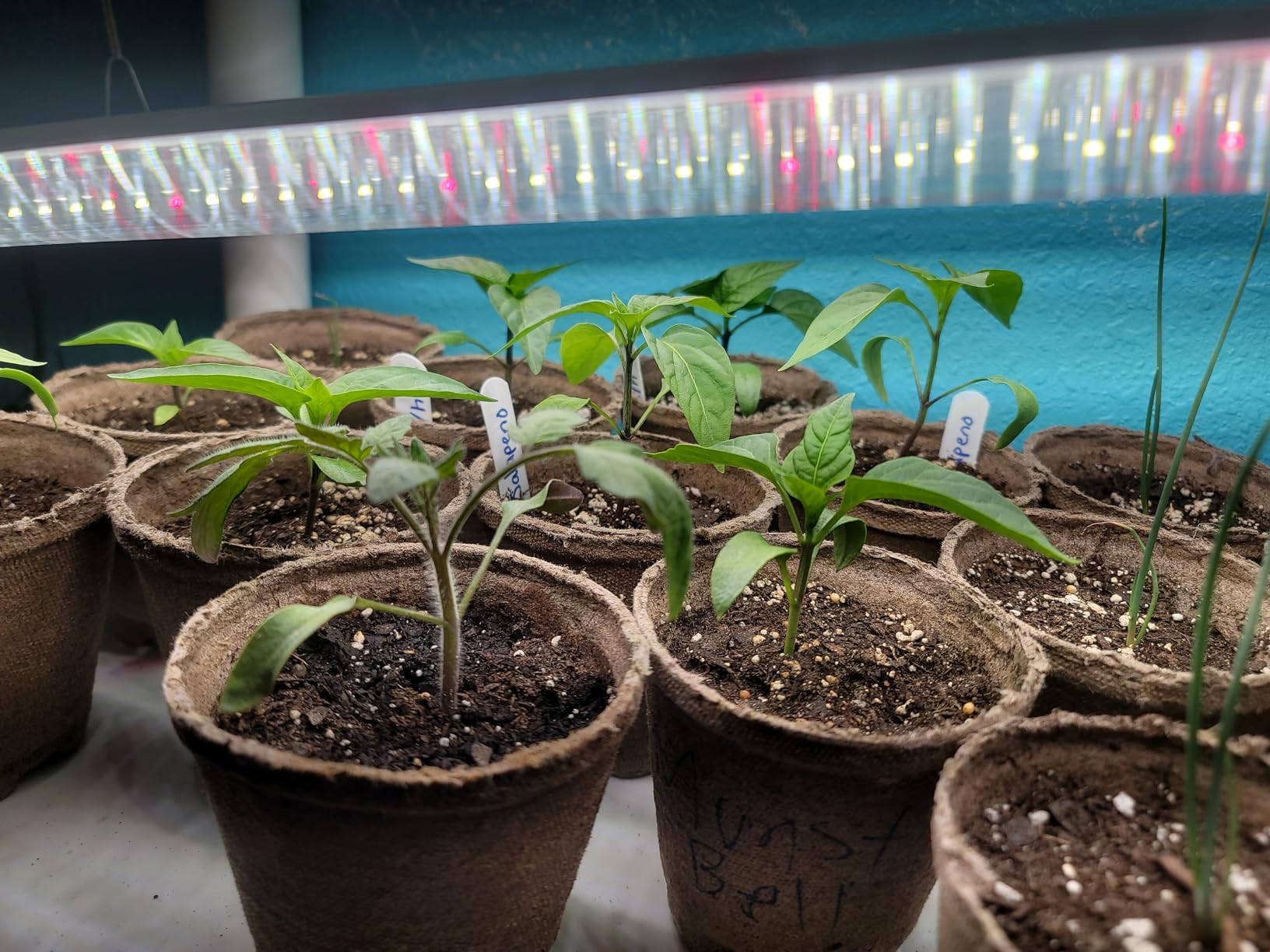
If you are starting with one tray and one shelf, this is the cleanest single-fixture answer. The two-foot bar is proportioned so a 10×20 flat gets even coverage from edge to edge, which is exactly the failure mode of shorter bars.
It runs 16 watts and produces 1900 lumens, with 5000K daylight white plus added 660 nanometer red for a spectrum that covers germination through flowering. Buyers report that the red supplementation visibly improves color and vigor over plain 5000K white.
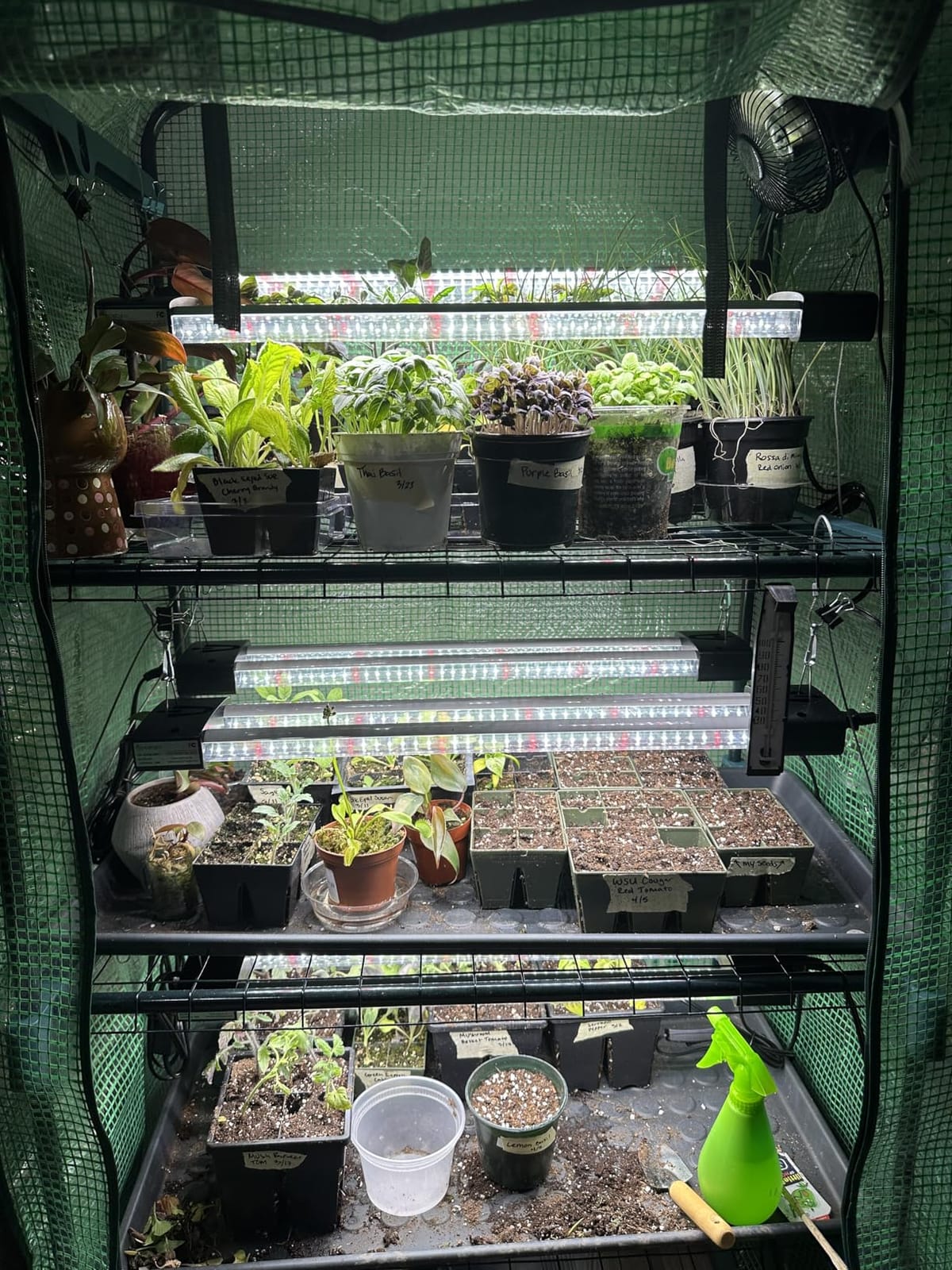
Setup takes under a minute. The included two-foot hanging cable and two clips are all you need, and the inline on/off switch is on the cord rather than the housing. It is FCC certified and carries a three-year limited warranty, which is among the better terms here.
At roughly 13 ounces, this is the lightest fixture in the roundup. That matters if you are hanging it from a wire shelf rather than an overhead beam.
Who the DYMOND bar suits
First-time seed starters with one or two trays, and anyone who wants a fixture they can add to over time. Four units daisy-chain onto a single power circuit, so a one-bar setup can grow into a four-shelf rack without new outlets.
The three-year warranty and low draw make it a low-risk place to start if you are unsure how much light your setup needs.
Watch-outs on the DYMOND bar
There is no built-in timer, which is the most requested feature across its reviews. Most owners solve it with a smart plug, and that is a reasonable addition.
Sixteen watts is one bar of light. A wide shelf needs two or more, and the bar does generate noticeable warmth even though the tubing stays cool to the touch.
8. LBW Desk Grow Light 214 LEDs – Best Small Stand With Real Height Adjustment
LBW Desk Grow Light, 214 LEDs Full Spectrum Plant Light for Indoor Plants
- Brighter and more effective than clip-on gooseneck lights
- Adjustable height lets the light track a plant
- Gooseneck head angles into pots or a terrarium
- Timer and six dimming levels
- Hooks included for under-shelf mounting
- Light base is top-heavy and can tip over
- Output is intense for plants placed very close
- Height adjustment tops out at 26 inches
- Some power adapter failures reported
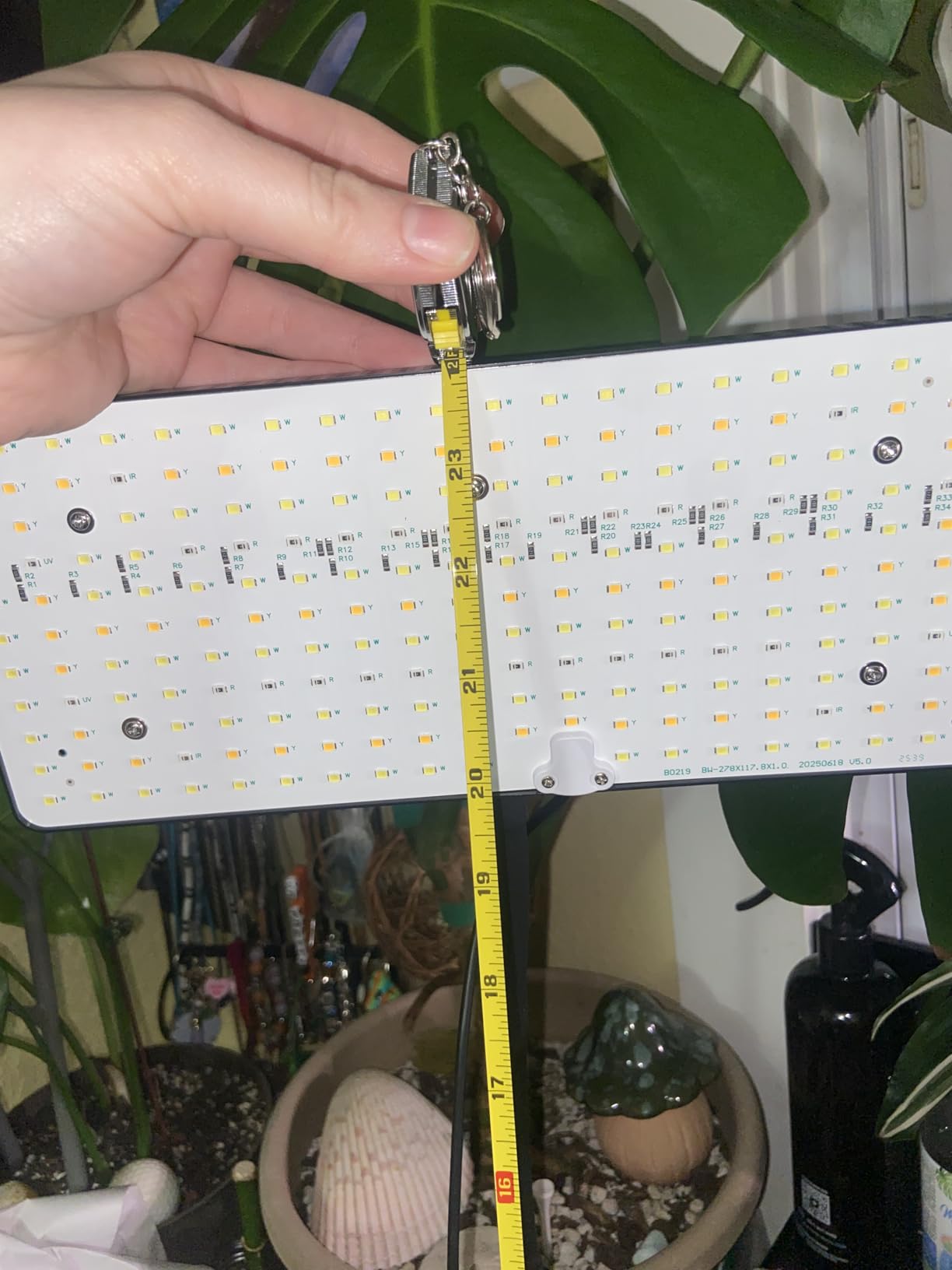
We keep one of these on the desk for cuttings and for the tray that needs attention mid-day. The telescoping post adjusts from 10 to 26 inches, which is a real range for a desktop fixture and lets the light follow a plant as it grows instead of being reset each week.
The panel carries 214 full-spectrum LEDs from 380 to 780 nanometers, and the listing calls out seed starting and seedling development specifically. A 3, 6, or 12 hour timer and six dimming levels give you enough control to tune intensity through germination.
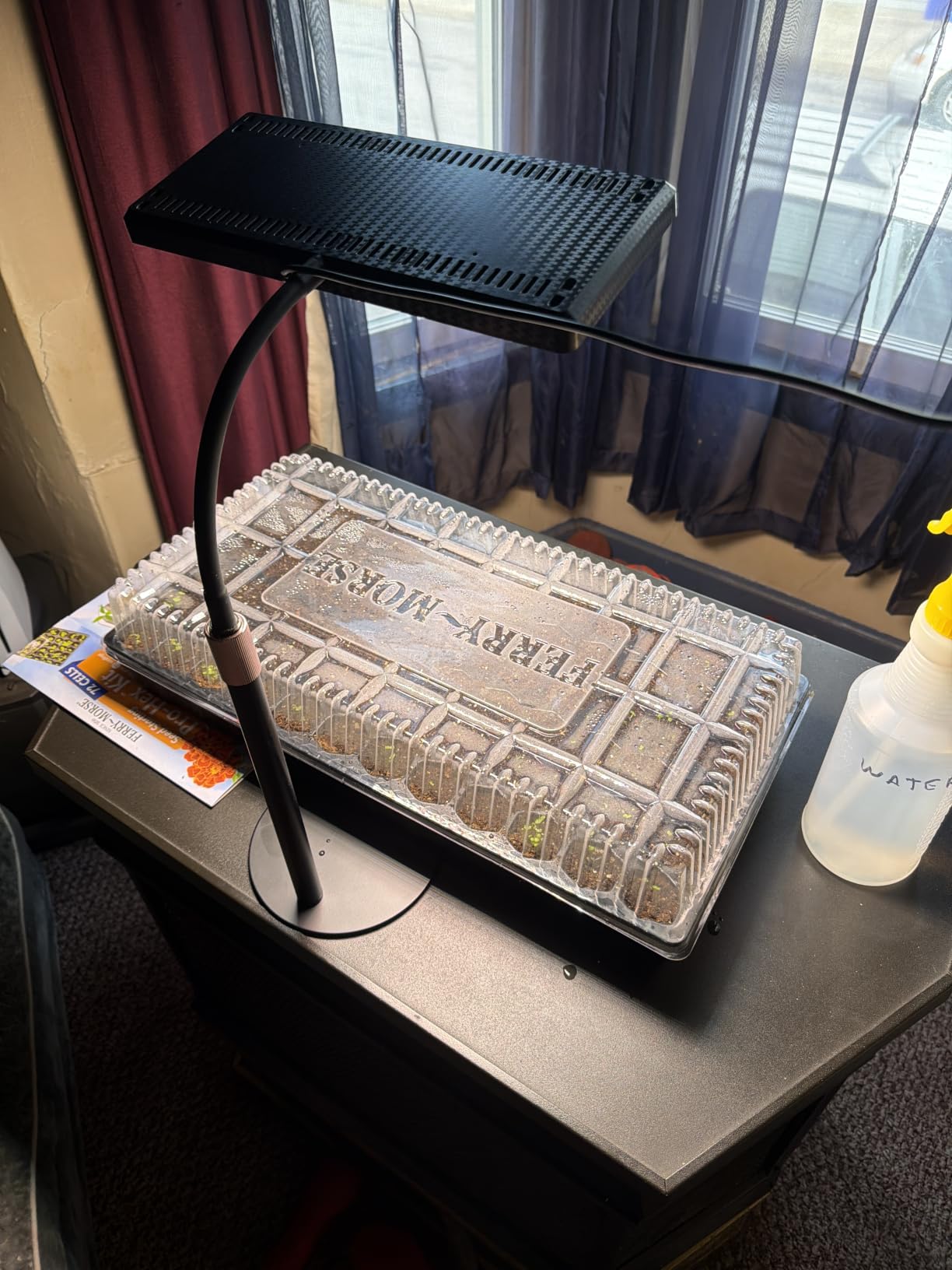
Owners widely prefer this to cheap articulated-arm lights, citing real results on succulents and fussy foliage plants, plus a dependable timer. Heat is barely noticeable even when it runs all day, and vent holes in the back of the panel handle dissipation.
Hooks are included, so you can remove the base and mount it under a shelf instead. That is the workaround most buyers use once they have seen the base tip.
Who the LBW stand suits
Apartment growers with one shelf and no rack, and anyone who wants a single fixture for propagation plus houseplants. The bendable gooseneck head can be angled directly into a pot or a terrarium, which no hanging bar in this roundup can do.
At 25 watts it is one of the stronger desk fixtures available, which is why it outperforms clip-on lights of similar price for actual growth.
Watch-outs on the LBW stand
The base is light and top-heavy with a panel on top, so the stand can fall over and take nearby plants with it. Several owners weighted the base with a jar of rocks or removed the base and used the hooks under a shelf.
Output is intense for anything placed directly beneath it. Keep the post near maximum height during germination, and expect it to run no taller than 26 inches for a large plant.
9. SDOVUERC Six-Bar 36W Strip – Best Coverage on a Single Shelf
SDOVUERC 16” 6 Bars Grow Light Strips for Indoor Shelves Plants Growing.
- Six bars span a full shelf width including dark corners
- Built-in circular memory timer
- 95 inch cord reaches large or tall shelves
- Bright without running hot
- Tape ties and screws included
- Strong blue purple cast in every setting
- Some users find output weaker than expected
- One-year warranty
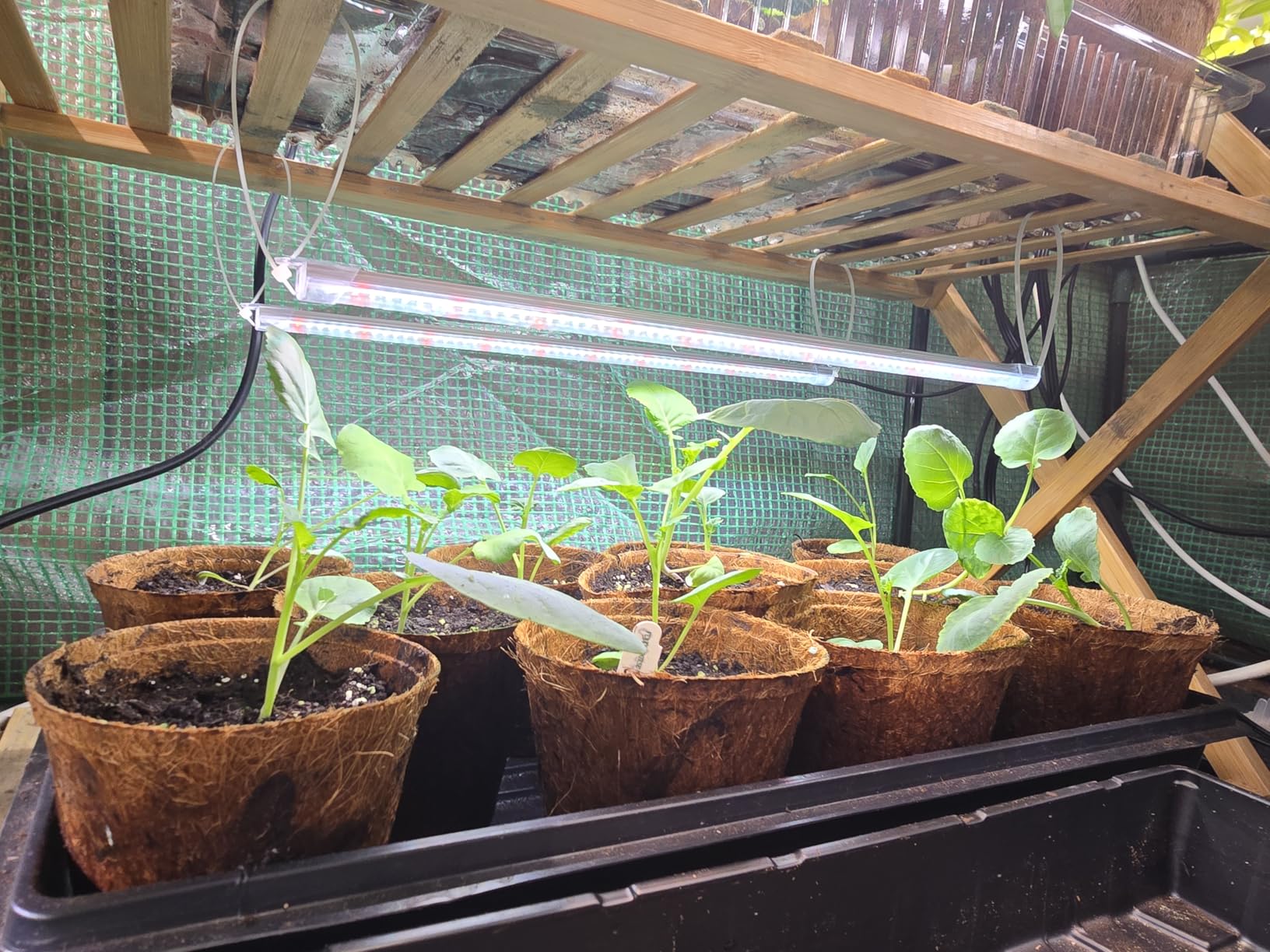
This solves a problem the other bars cannot. A single fixture with six 16-inch bars lights the full width of a shelf, including the corners where a single bar or a two-foot tube leaves dark patches. If your rack is one long tier, this is the one to look at.
Total output is 36 watts and 3600 lumens from 360 LEDs in warm white, cool white, and 660 nanometer red. The emission runs 380 to 800 nanometers at a 6000K color temperature, which is firmly in the blue-dominant range seedlings prefer.
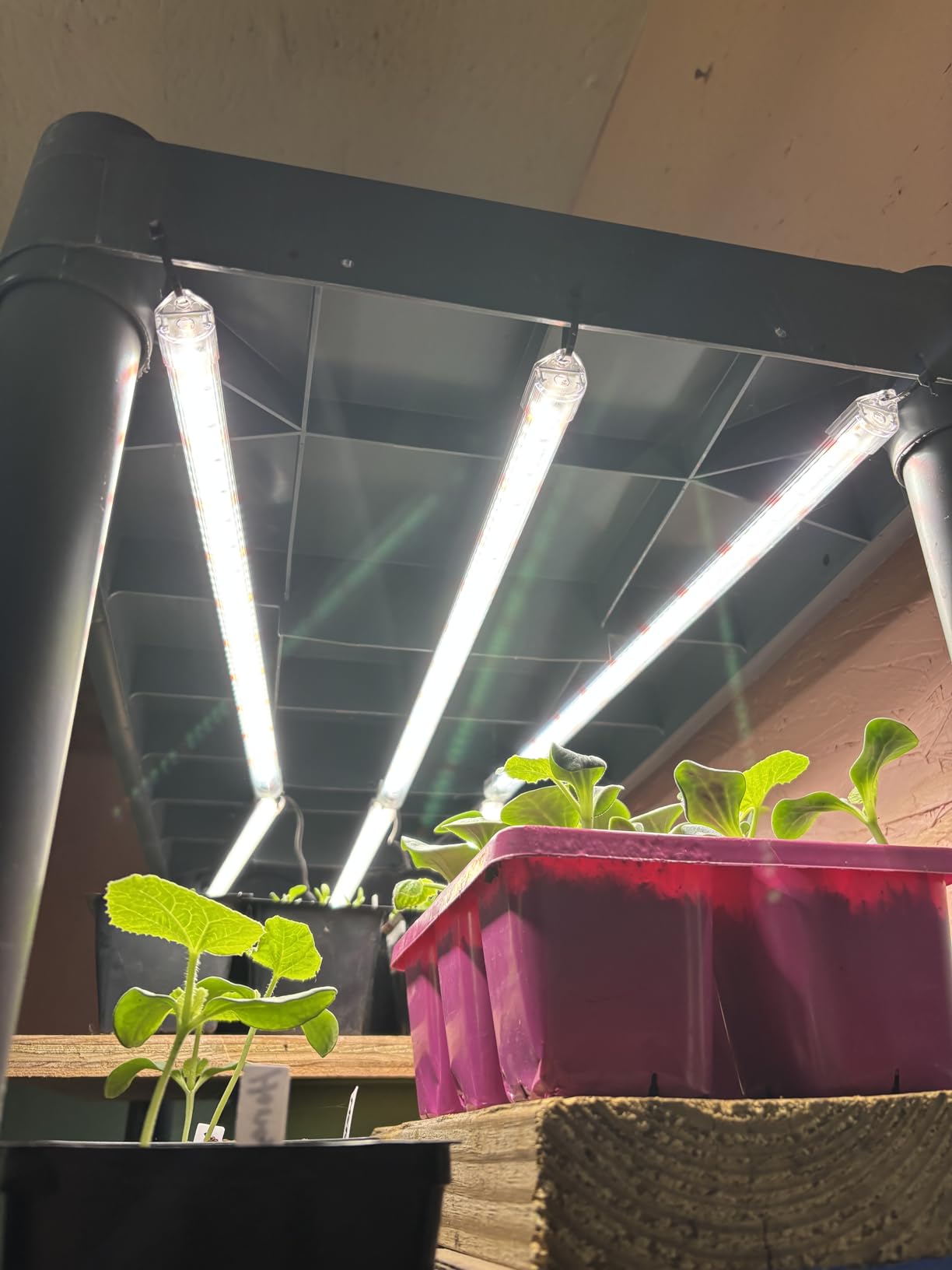
The built-in circular memory timer with 6, 12, or 18 hour options means you do not have to buy an external timer. The 95-inch cord is the longest in this roundup and reaches across a large or tall shelf without an extension.
Three mounting methods are included: double-sided tape, cable ties, and screws. Buyers describe it as bright, easy to attach, and strong value for the coverage a single unit provides.
Who the SDOVUERC strip suits
Anyone lighting one wide shelf or one long tier of a rack with a single fixture instead of four separate bars. It also handles propagation benches where you want even light edge to edge without gaps between fixtures.
The long photoperiod options make it convenient if you move seedlings past the seedling stage into early vegetative growth without changing equipment.
Watch-outs on the SDOVUERC strip
The blue and purple cast is strong in every setting, which several owners find unpleasant for evening use in a living space. This is a working light, not an ambient one.
A small group of buyers report output weaker than expected, including one controlled comparison against outdoor sunlight. And the warranty is only one year.
10. RWNTAO 13 Inch Two-Pack – Best Budget Pick
- Lowest cost here while still offering ten dimming levels
- Reliable for germination and low-light plants
- Thin 0.27 inch profile fits under shelves
- Compact with a 71 inch cord
- Owners report a year plus of reliable operation
- Output limited to low-light plants
- Adhesive strips release once the bars warm up
- Included magnets are weak on typical shelves
- Will not resume settings after a power interruption
If you want to see whether a grow light is even necessary before spending real money, this is the sensible test. Two 13-inch bars, 96 full-spectrum LEDs at 48 times 3500K each, and enough control to run a small tray properly.
It is the least expensive option in the roundup and it still has a 3, 9, or 12 hour cycle memory timer plus ten dimming levels and three switch modes. That is more control than many fixtures twice the price include.
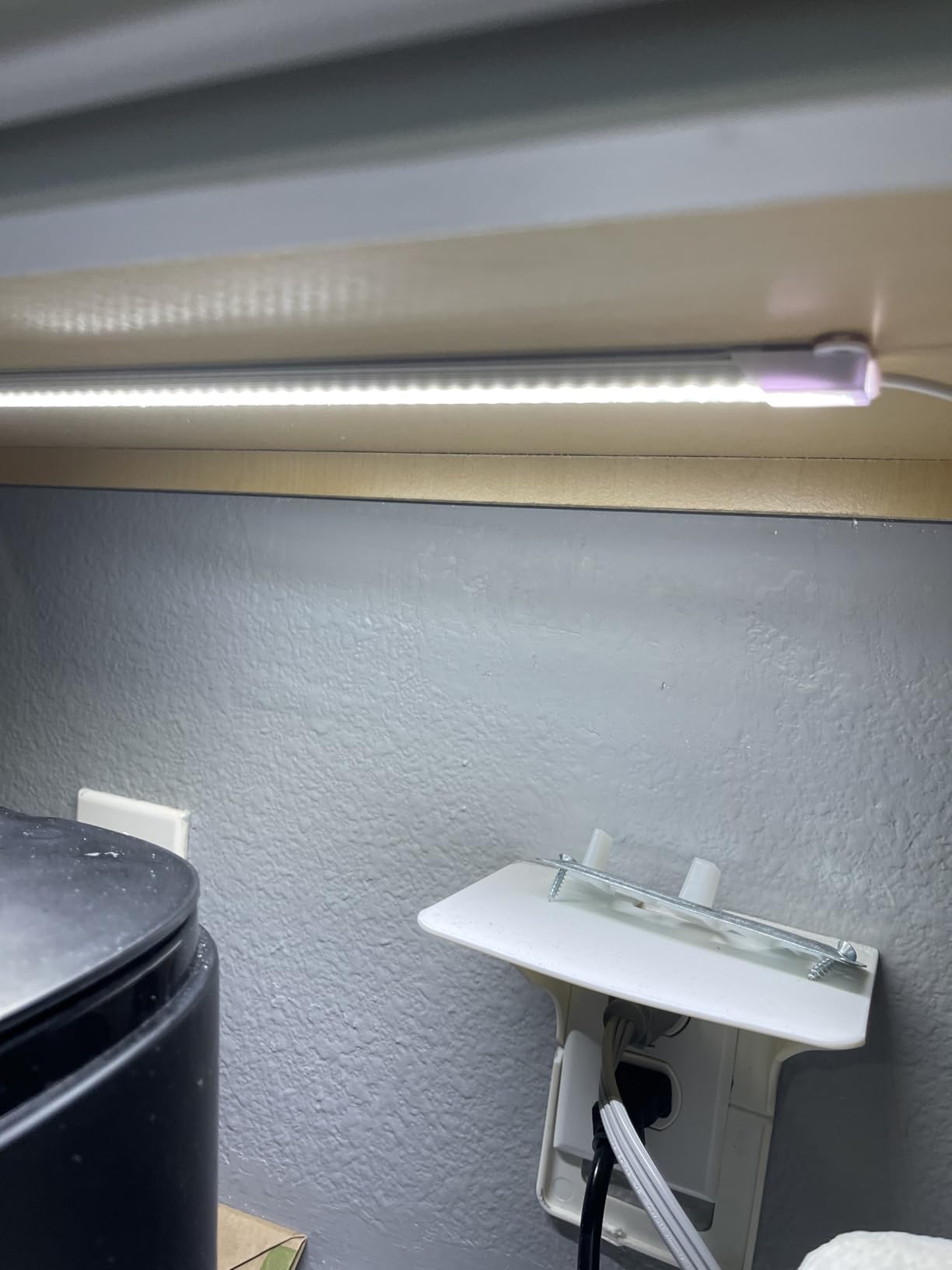
Reviewers treat it as a cheap, compact shelf light that reliably handles germination and low-light houseplants such as succulents, with a timer that works well. Owners also report a year-plus of operation with the LEDs still performing.
At 0.27 inches thick, the bars fit under a shelf without eating usable space, and the 71-inch cord is plenty for a single tier.
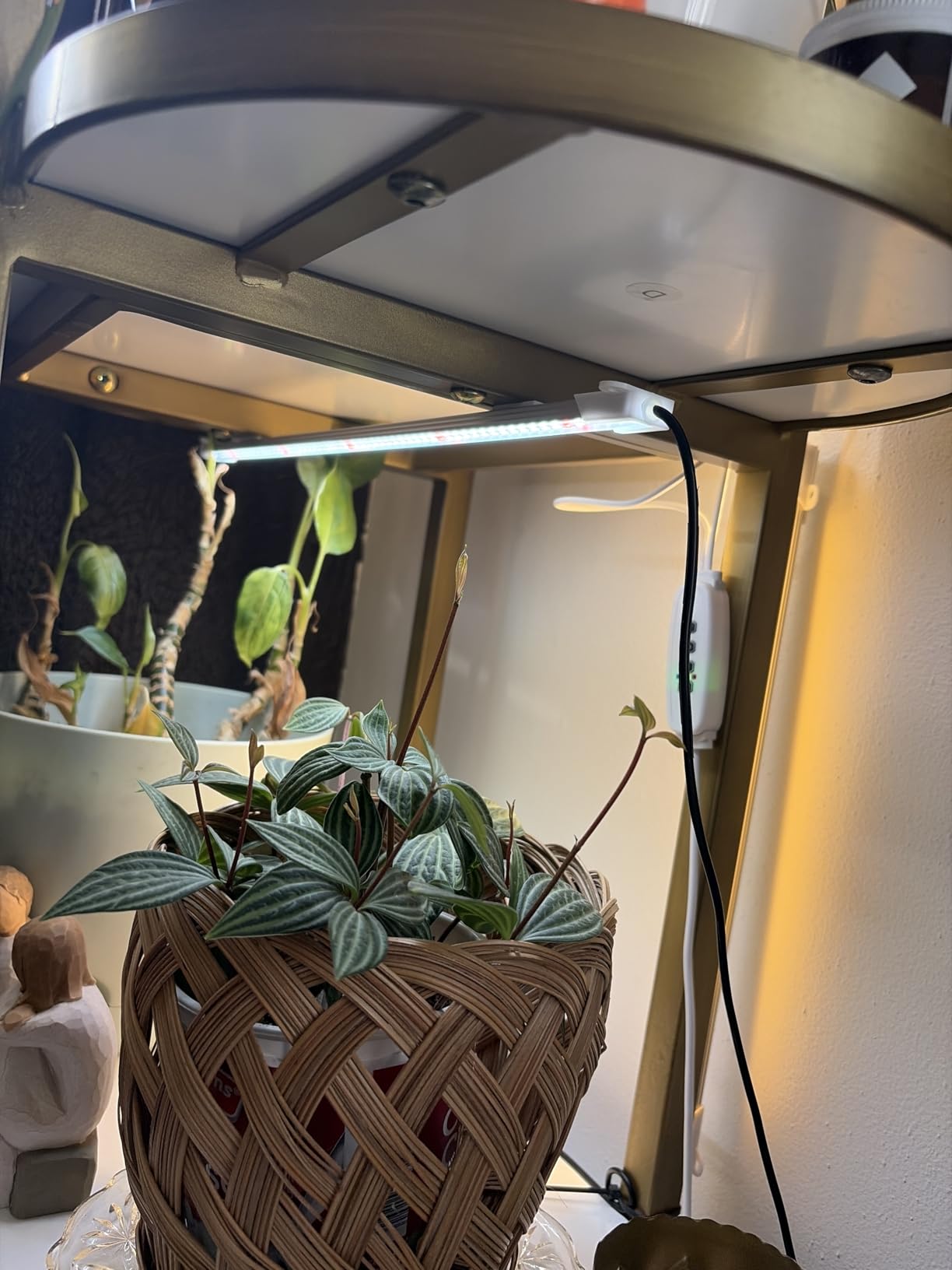
Who the RWNTAO two-pack suits
First-timers and anyone with one small tray, a windowsill unit, or a shelf of succulents. It handles germination reliably, which is the hardest part of seed starting to get right in a dim room.
It is also a good way to fill one awkward corner of a multi-shelf rack where a larger fixture will not fit.
Watch-outs on the RWNTAO two-pack
Output is limited. This is a low-light fixture, and it is better suited to vegetative growth than to producing stocky seedlings headed for transplant. Do not expect flowering performance.
Mounting is the weak point. The included adhesive strips release once the bars warm up and can fall off a cabinet, and the magnets are weak on typical shelf surfaces. Use the screws or ties instead.
11. FOXGARDEN Adjustable Stand Grow Light – Best All-in-One Stand
- Full spectrum mix tuned for seeds and cuttings
- Adjustable height from 11 to 21.65 inches
- Reflector widens coverage
- Iron construction and a stable base
- Sponge pad protects the desktop
- Modest 22W single-board output
- Narrow 21.65 inch maximum height
- Shortest warranty coverage among panel-style lights
This is the complete answer for someone who wants light and stand in one box. The post adjusts from 11.02 to 21.65 inches, so you can raise the board as a plant grows rather than re-hanging anything.
The LED mix is 60 cool white, 32 warm white, and 16 red across 108 beads at 22 watts. A 4, 8, or 12 hour auto timer and six brightness levels from 10 to 100 percent give you real control over both photoperiod and intensity.
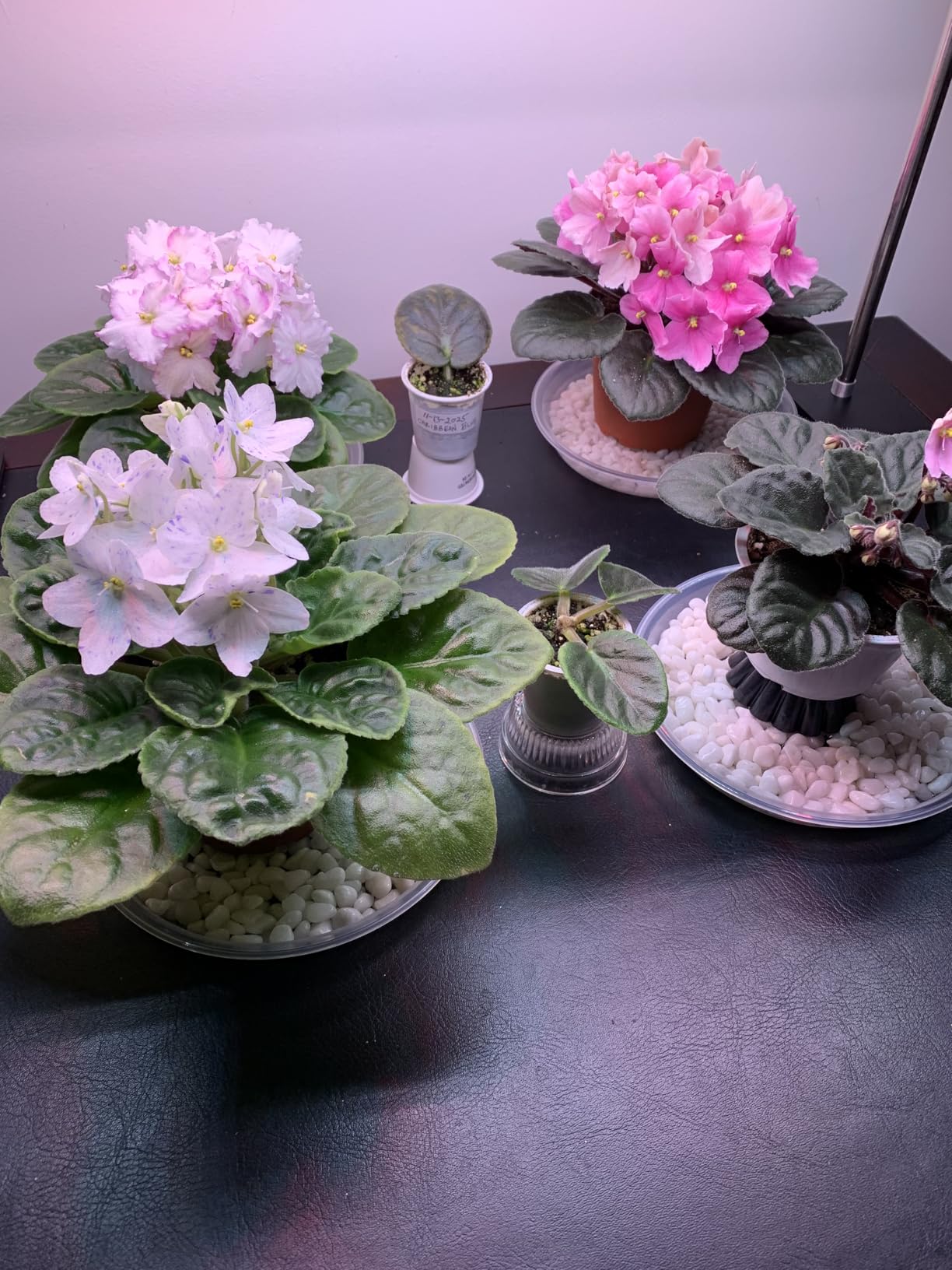
The reflector on the board widens an otherwise small light panel without adding power, which is why owners are generally happy with coverage from a 22-watt fixture. The iron board and metal base are noticeably more stable than lighter desk stands, and a sponge pad protects the surface underneath.
Buyers like the combination of timer plus dimming for seedling work. It installs quickly and does not need tools beyond what come in the box.
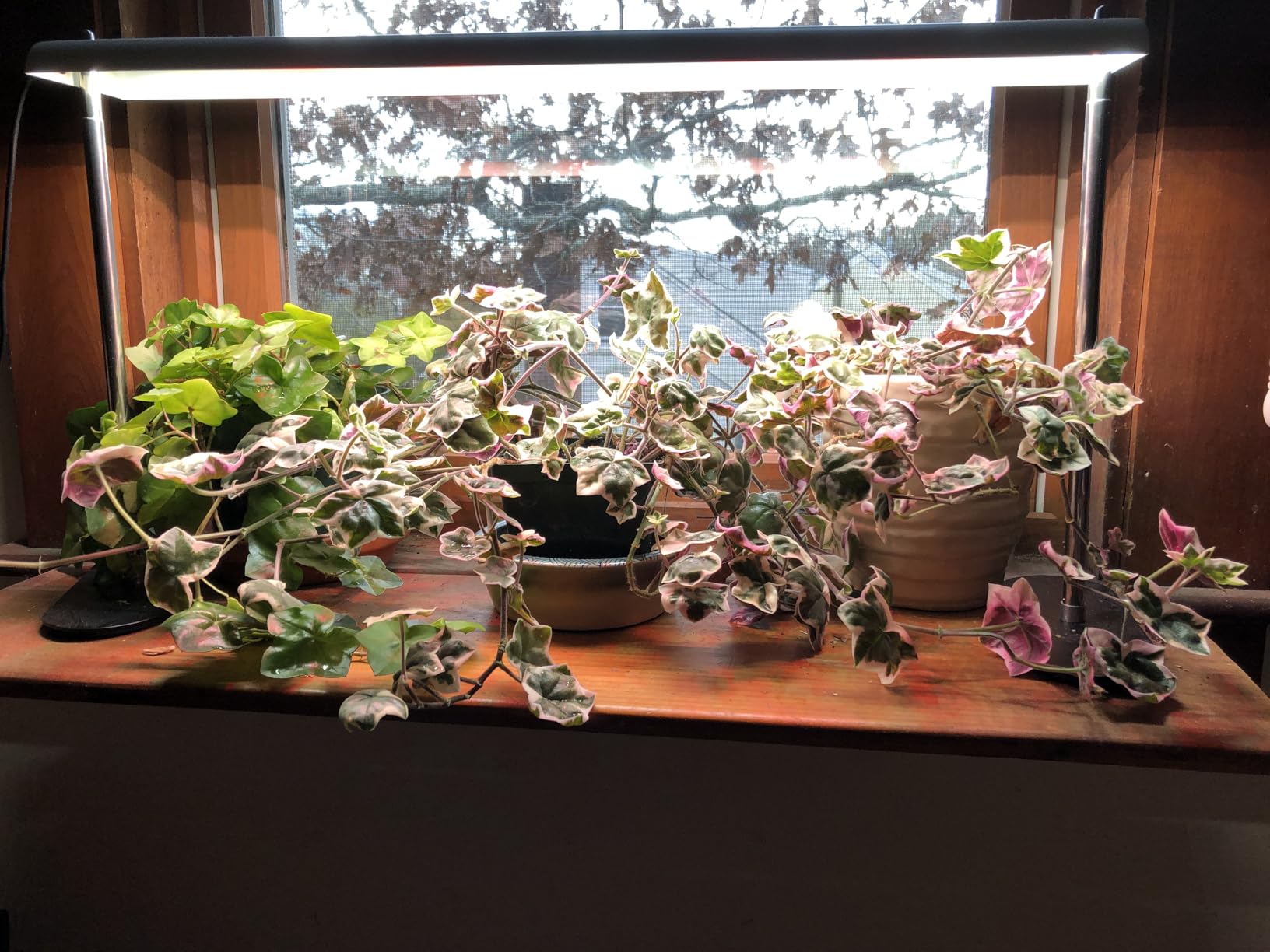
Who the FOXGARDEN stand suits
Anyone starting from nothing who does not want to assemble a rack and hang lights from it. Put it on a table, set the height, set the timer, and it works. It is a natural choice for a first tray or a small herb shelf.
The stable base also makes it a safer choice in a home where a top-heavy stand near the edge worries you. If you want more coverage options, our best clip-on grow lights cover the other common mounting style.
Watch-outs on the FOXGARDEN stand
Twenty-two watts from a single board is modest for more than a small pot or tray. If you want to cover a 10×20 flat edge to edge, budget for a second source of light.
The maximum height of 21.65 inches will not clear a taller upright plant, and the warranty is 12 months, the shortest among the panel-style lights here.
12. Bokeedo T5 10W Two-Pack – Best Under-Shelf Mounting
T5 Grow Lights for Seed Starting, 10W x2, Grow Lights for Indoor Plants
- 1900 plus lumens from 20W beats small USB plant lights
- V-shaped reflectors focus light on the canopy
- Aluminum housing runs cool
- Four installation options
- Two tubes sized for a standard shelf
- Not dimmable so intensity cannot be reduced for new seedlings
- No built-in timer
When we want a fixture that disappears under a shelf, this is the one. Both tubes mount flush against the underside, so the light lands on the tray without taking any of the shelf height above it.
Twenty watts total across two 10-watt tubes produces 1900 lumens or more. Owners specifically call out that this is far more usable light than small 5-volt USB plant lights running at similar power, which is the single most common comparison in the reviews.
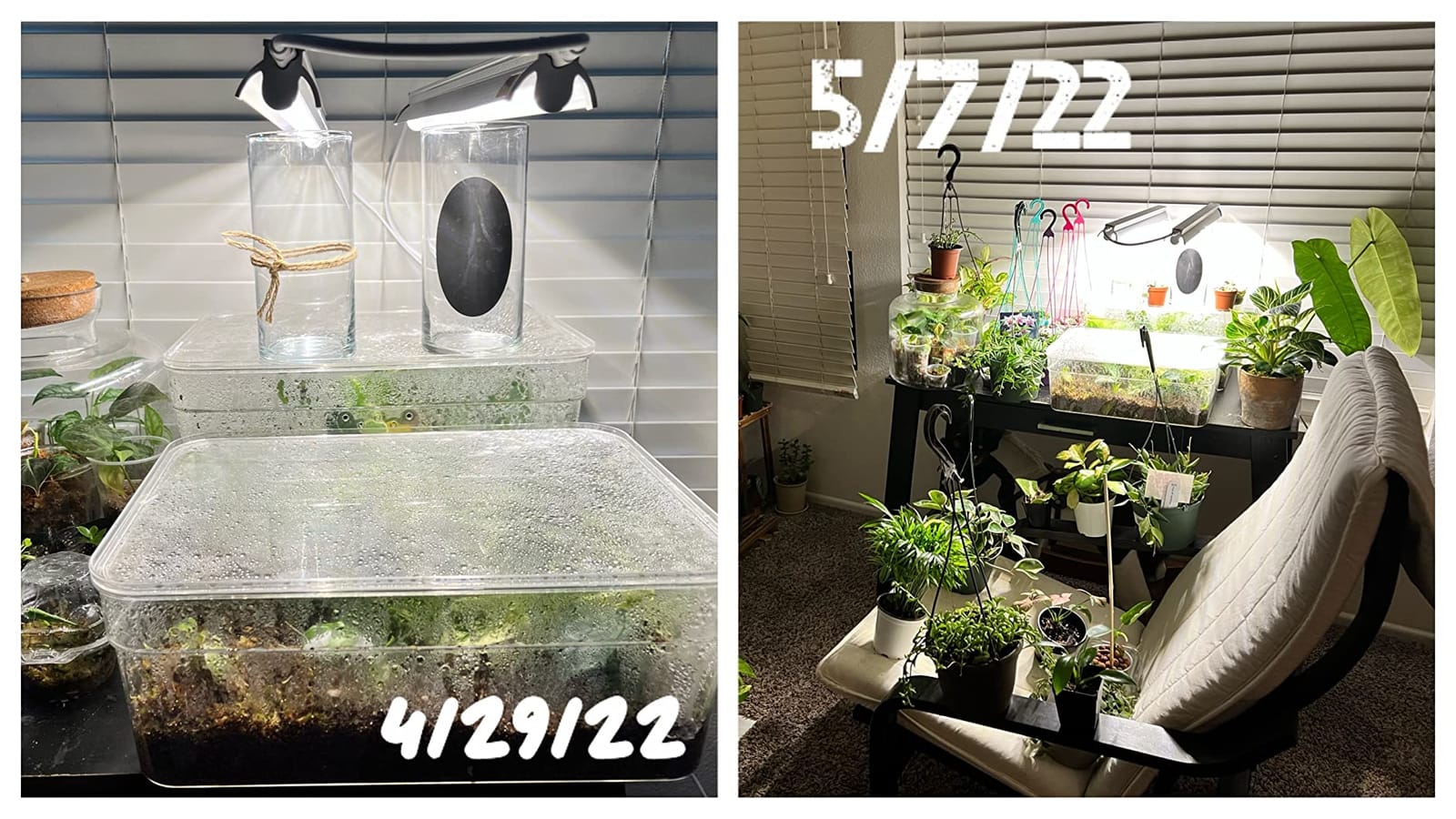
The spectrum is a 3-in-1 mix of 3000K full spectrum at 380 to 780 nanometers, 6000K white, and 660 nanometer red. V-shaped reflectors add roughly 25 percent effective light while cutting spill into the room, and the full aluminum housing keeps the tubes cool and extends their life.
Four installation options cover plant shelves, flower racks, and hanging directly over plants. Warranty is 12 months plus a 30-day satisfaction guarantee.
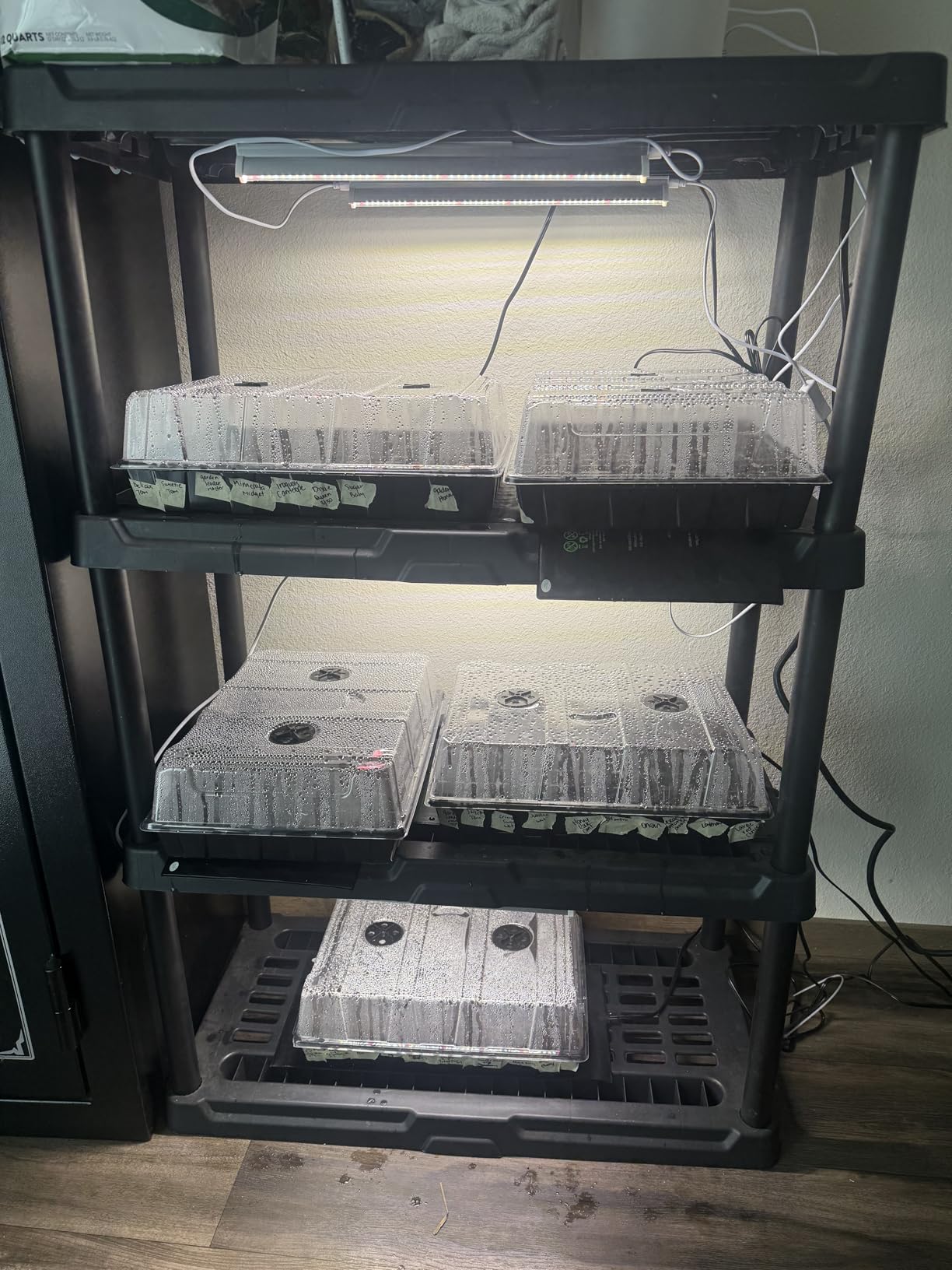
Who the Bokeedo two-pack suits
Under-shelf setups where vertical space is the constraint. Two tubes give a paired arrangement sized for a standard seed-starting shelf, and the reflectors keep the light concentrated where you want it.
It is also a good backup fixture, since the paired output covers a tray without demanding much power and the aluminum body is built for years of daily use.
Watch-outs on the Bokeedo two-pack
It is not dimmable. There is no way to reduce intensity for newly germinated seedlings, so hang it a little higher than you would a dimmable fixture and check the first week carefully.
There is no built-in timer either, so add a wall timer or smart plug to hold a consistent photoperiod.
How to Choose an LED Grow Light for Seedlings
Start with these seven factors, in this order. Get the first three right and you can stop worrying about the rest.
1. Color temperature, not color. Look for a stated color temperature of 5000K or higher. This is the single most useful number on the box and the one most consistently recommended by growers. Avoid fixtures that only advertise pink or purple appearance with no Kelvin figure.
2. Intensity you can control. Dimmability is worth real money on a seedling light. It lets you start low and turn up, which removes the daily guessing about hang height. If a fixture is not dimmable, plan to raise it instead.
3. Coverage matched to the tray. A 2 by 2 foot panel covers roughly two standard 10×20 flats. Bars need to span the tray width to avoid dark edges. Buying a large panel for a single tray is the most common overspend we see.
4. Adjustable height. Seedlings go from a quarter inch tall to six inches tall in about three weeks. A fixture you can raise, either by hanging chain or by a telescoping post, will outlast one you cannot.
5. Wattage per tray. The working rule is 15 to 20 watts of LED power draw per 10×20 inch tray. That is why a four-pack of 5-watt bars is a sane way to light two shelves, and why a 70-watt panel covers more than a single tray comfortably.
6. Heat and airflow. LEDs run cooler than fluorescent or HID, but a 100-watt panel in a closed closet will still raise the air temperature. If your setup is enclosed, leave room for airflow.
7. Timer and power load. Many fixtures in this category ship without a timer, and a 14 to 18 hour schedule you have to remember is a schedule you will forget. When running multiple lights, check the total draw on the circuit before adding a fourth and fifth unit.
Our picks for the best LED workbench lights share the same mounting hardware and electrical standards as many of the fixtures above, if you want to compare the build quality side by side.
How Far to Hang a Grow Light Above Seedlings
Twelve to 24 inches above the canopy is the working range, and you will move within it constantly. Start at about 18 inches and adjust from there based on how the seedlings look.
Light obeys the inverse square law. Double the distance and you cut the intensity to roughly a quarter. So a light that is comfortable at 24 inches will be four times as intense at 12 inches. That single relationship explains most of the seedling damage people accidentally cause.
Higher wattage does not automatically mean a closer hang, but it does mean you have more room to work with. A 5-watt strip bar can sit 6 to 10 inches above a tray. A 100-watt panel is usually best started at 20 to 24 inches and dimmed down rather than lowered.
Move the light down when you see long, thin stems bending toward it, pale leaves, or seedlings that are tall but floppy. That is a light-deficiency signal. Move it up, or turn the dimmer down, when you see bleached white patches, leaves that cup upward, or brown crisp edges on the leaves closest to the fixture.
Check the fixture every few days during the first two weeks after emergence. Growth at that stage is fast enough that a setting that was right on Monday can be too strong by Thursday.
Light Burn vs Leggy: What Your Seedlings Are Telling You
Two opposite problems produce opposite-looking plants, and both usually get misdiagnosed. Here is how to tell them apart at a glance.
Leggy seedlings have long, thin, pale stems and stretched cotyledons reaching toward the source. The cause is too little light, a fixture hung too high, or one that is too weak for the tray. The fix is to move the light closer, add a second bar, or step up to a brighter fixture.
Light burn shows as bleached white or tan patches on the leaves nearest the fixture, leaves curling upward or cupping, and crisp brown edges. Stems stay short and thick. The cause is too much intensity, usually from dimming being ignored or a high-wattage fixture hung too close. The fix is to raise the light or turn the brightness down.
Germinate then stall is the confusing one that shows up repeatedly on multi-tier racks. Seedlings break the surface, put out cotyledons, and then never form true leaves, even though the roots underneath look healthy. That combination points to light reaching the tray unevenly or in the wrong amount, often because one bar is covering only part of the tray. The fix is even coverage, not more power.
On a shared shelf, two bars usually help because they close the gaps. But if the canopy is already bleached, the problem is intensity and position, and a second bar makes it worse. Diagnose before you add hardware.
LED Shop Lights vs Grow Lights for Seed Starting
Regular r/vegetablegardening regulars argue that LED shop lights do the job for seed starting and cost less, and there is real evidence behind them. Wirecutter tested the category and found that any white LED shop light with 5000 lumens or more and a color temperature of 5000K or higher will start seeds successfully.
Those two numbers are the whole test. If a shop light clears both, it is a legitimate grow light for seedlings. If it is a warm 3000K fixture or a 3000-lumen strip, it is not.
The reason shop lights work is that a seedling canopy is not picky about spectrum purity. It mainly wants blue-weighted light at a consistent intensity for a long photoperiod, and a 5000K white LED delivers that. The purple appearance of a horticultural fixture is aesthetic, not functional.
What you give up going the shop light route is control. Most lack a timer and most lack a dimmer, which is exactly the two features that make seedling work easy. If you are adapting a shop light, add a wall timer or smart plug on day one, and hang it 10 to 14 inches above the tray rather than 24.
Grow lights are worth the extra spend when you want dimming, a known spectrum figure, and coverage that matches a tray without hot spots. For a single tray on a tight budget, a properly specced shop light is a legitimate choice.
Frequently Asked Questions
What type of light is best for growing seedlings?
A low-wattage, blue-rich or full-spectrum LED fixture rated at 5000K color temperature or higher is the right choice. Seedlings need 100 to 300 micromoles per square meter per second of usable light, delivered from 12 to 24 inches above the canopy for 14 to 18 hours a day. Dimmability is valuable because it lets you start low and raise intensity as true leaves form.
What color light is best for seedlings to grow optimally?
Blue-weighted light between 400 and 500 nanometers drives compact, sturdy seedling growth and prevents stretching. In practice that means a fixture rated at 5000K to 6400K color temperature. Warm amber light around 2700K to 3000K encourages tall, weak stems on new starts, though it is fine once plants have true leaves and flowers.
How far should seedlings be from an LED grow light?
Keep seedling lights about 12 to 24 inches above the tray canopy, starting near 18 inches. Because of the inverse square law, doubling the distance cuts intensity to roughly a quarter, so move closer when seedlings stretch and lean pale, and move farther up or dim lower when leaves bleach, cup, or crisp at the edges.
Are LED lights too strong for seedlings?
Yes, high-wattage fixtures can burn seedlings, especially on a low shelf with no dimming. Bleached white patches, upward-curling leaves, and brown crisp edges are the signs, while short thick stems confirm it is intensity rather than a watering problem. Fix it by raising the light or turning the dimmer down rather than by moving the light closer.
Can I use an LED shop light as a grow light?
Yes, as long as it clears two minimum specs: 5000 lumens or more and a color temperature of 5000K or higher. Testing found any white LED shop light meeting both thresholds starts seeds successfully, because seedlings mainly need consistent blue-weighted light over a long photoperiod. Add a wall timer or smart plug, since most shop lights lack one.
How many hours a day do seedlings need light?
Run seedling lights 14 to 18 hours per day on a timer. That photoperiod combined with moderate intensity gets seedlings to a daily light integral of roughly 10 to 14 moles per square meter per day, which is enough for compact growth without the scorching that comes from trying to deliver the same total with a much brighter, shorter burst.
Final Verdict on the Best LED Grow Lights for Seedlings
After running trays under all of these, the Mars Hydro TS600 remains our pick for the best LED grow lights for seedlings overall. The dimmer is the feature that matters, the coverage is genuinely even across a 2 by 2 foot area, and it stays quiet enough to run in a room you also work in.
For multi-shelf racks, the Barrina T5 four-pack wins on value and on how unobtrusive the light looks. For the highest output with real dimming control, the Viparspectra P700 is hard to argue with. For under-shelf mounting where height is tight, the Bokeedo T5 pair does the job cleanly.
Whichever you pick, remember the three numbers that matter: 5000K or higher, 12 to 24 inches above the canopy, and 14 to 18 hours a day on a timer. Get those right in 2026 and the rest is detail.