
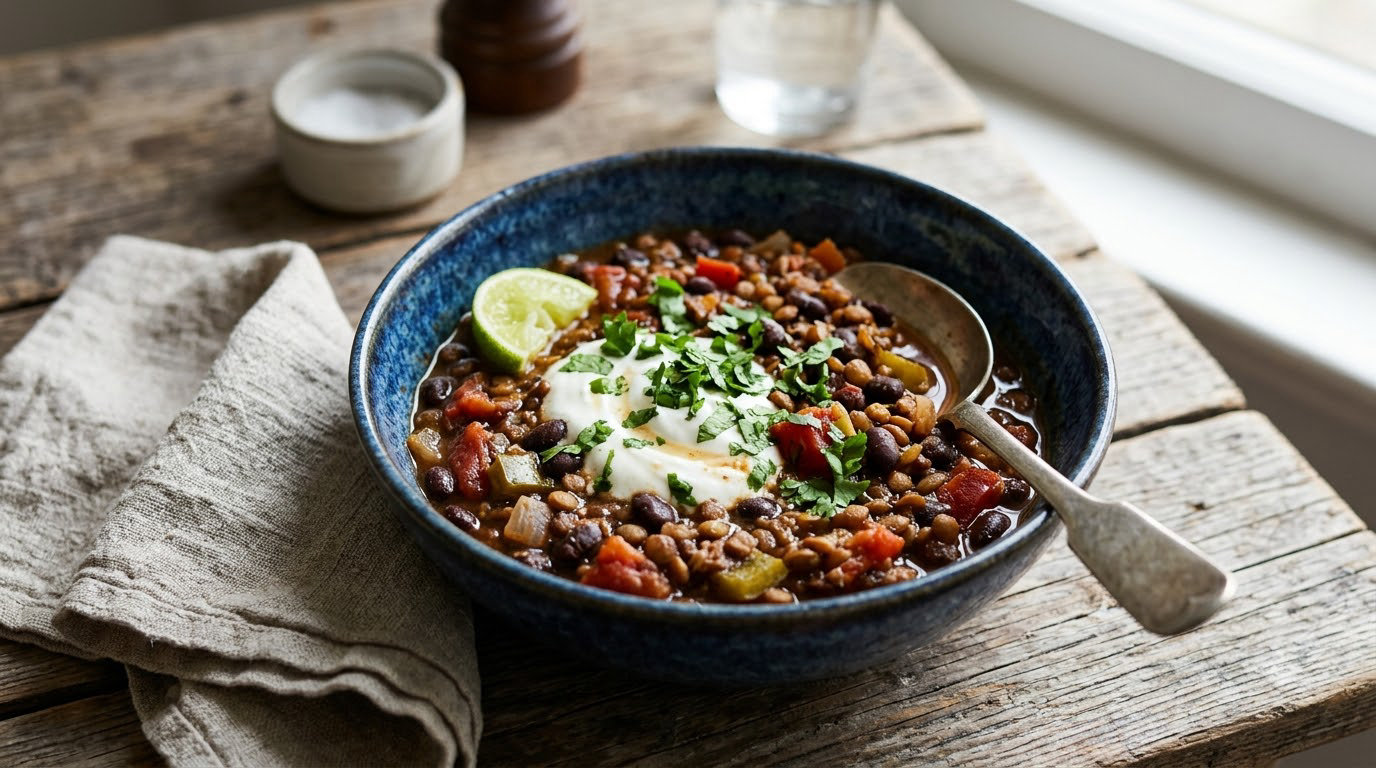
To freeze cooked beans for meals, cool them completely, divide them into single-meal portions, press out the air, seal and label each container, then freeze flat at 0°F (-18°C) or below. Plain cooked beans keep their texture and flavor for about 3 to 4 months in the freezer, and you can cook most of them straight from frozen without thawing.
Most people who freeze beans overcook them first or seal them while still warm, and that is what turns a good batch into a soft, watery one. Get the cooling and the sealing right and a single pot of beans becomes six or seven weeknight dinners.
Table of Contents
How to Freeze Cooked Beans for Meals: Quick Guide
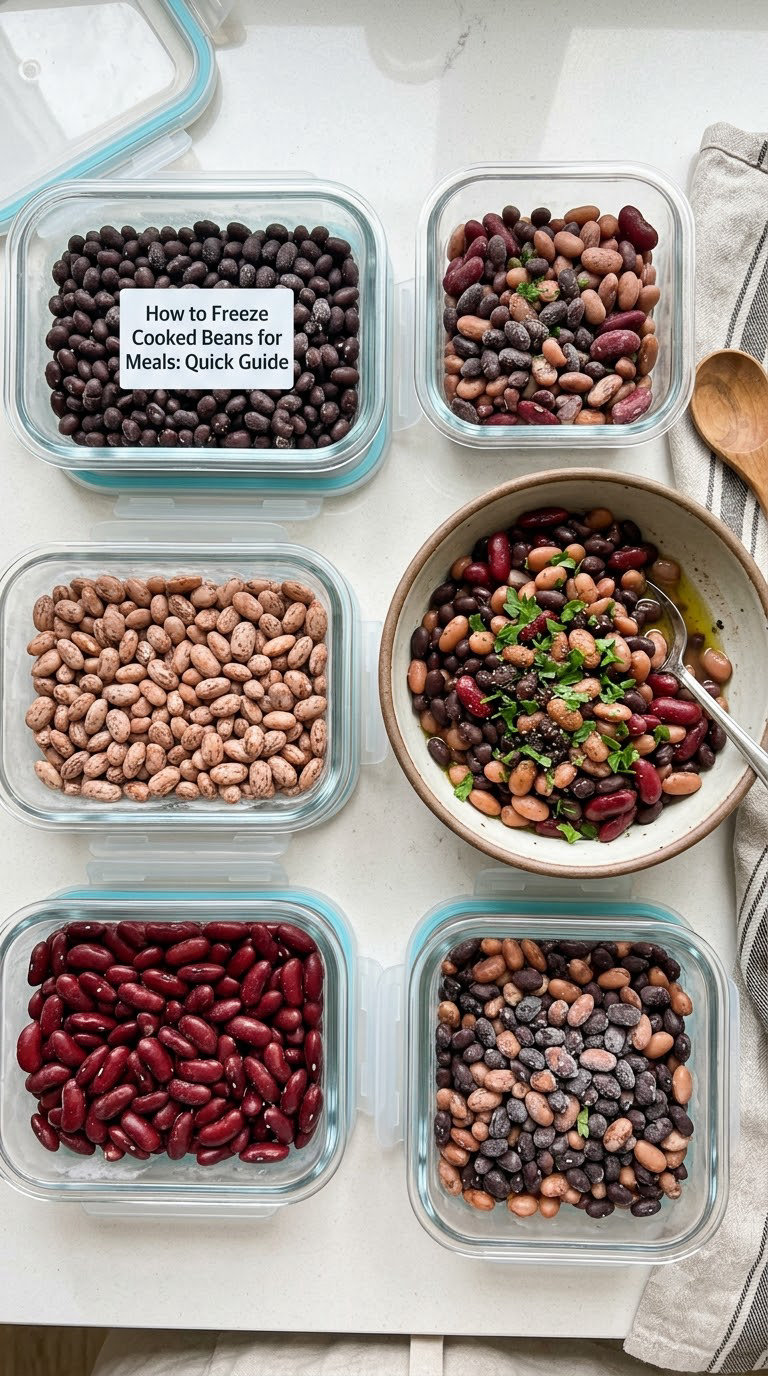
Here is the whole method in six steps.
- Cool the beans. Spread them in a single layer in a shallow dish or pot, or set the pot in an ice bath, and stir until no steam rises. Beans that go into the freezer warm will condense and turn watery.
- Drain well. Tip off the cooking liquid in a colander and let the beans sit a few minutes so the excess drains away.
- Portion by the cup. Decide your household before you scoop. One cup of cooked beans is about half a serving of protein alongside a grain, and sandwich-sized resealable freezer bags are the portion most home cooks land on.
- Choose a container and press out the air. Wide, flat containers or freezer bags stack better than deep tubs. Seal the bag, run your fingers along it to squeeze the air out, then seal again, or snap the lid shut on a rigid container.
- Label and date. Write the bean type, the portion size, and the month. Freezer organization collapses without this step.
- Freeze flat, then stack. Lay bags or containers on a flat surface until they are solid, usually an hour or two, then stand them upright in the freezer. Leave the label side facing out.
Keep your freezer at 0°F (-18°C) or colder. That is the temperature where food stays safely frozen without the quality drifting downward, and it is the number USDA guidance points to for home freezers.
Most cooked dishes, beans included, keep 3 to 4 days in the refrigerator. If your beans are already past that, freezing does not make them safe again, so use them first.
Which Cooked Beans Freeze Best?
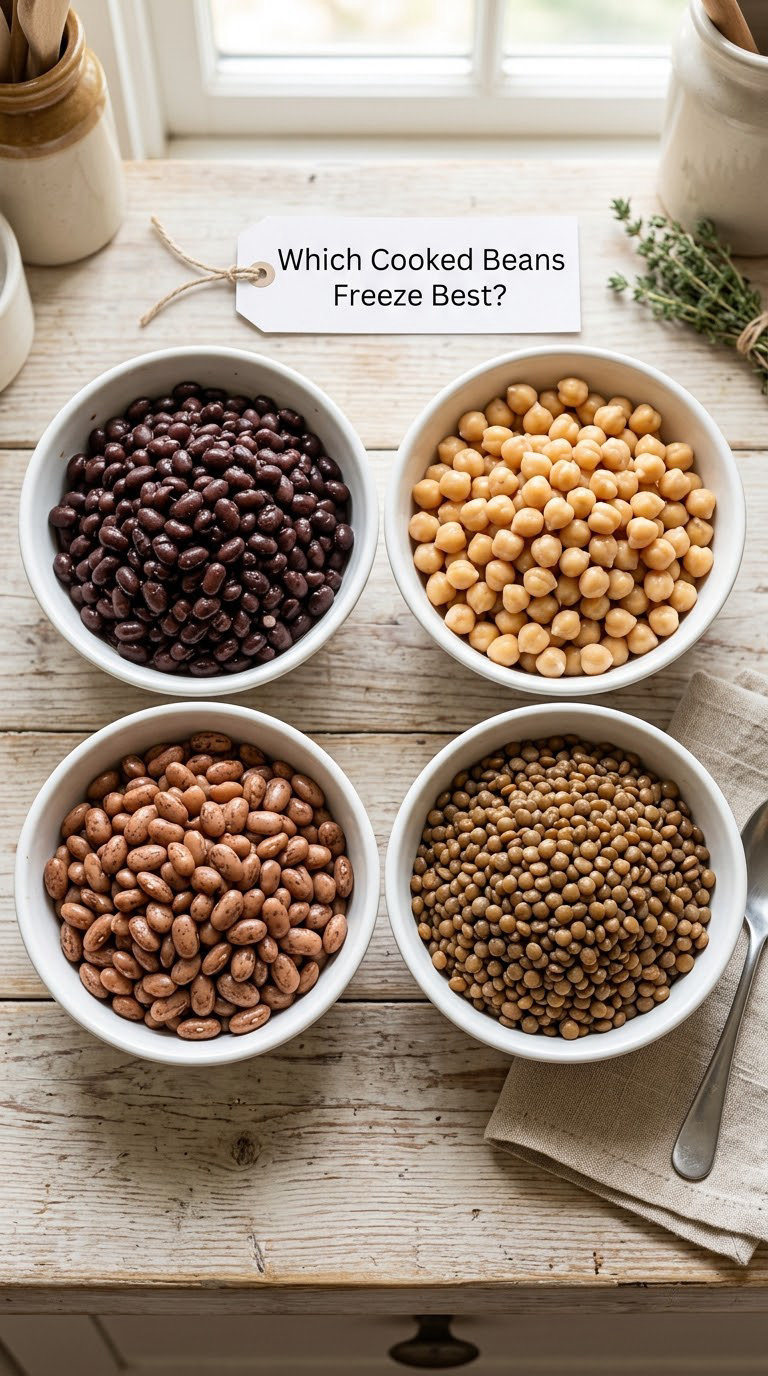
Dried beans, chickpeas, and lentils all freeze well. Texture holds best on beans that stay whole and firm, and the starchy ones turn softest of all, so plan to use those in dishes where a softer texture is a feature.
| Bean | How it freezes | Best uses after thawing |
|---|---|---|
| Black beans | Excellent, holds shape | Chili, tacos, burritos, soups, patties |
| Pinto beans | Excellent, holds shape | Refried beans, chili, bean dip |
| Kidney beans | Very good | Chili, three-bean salad, curry |
| Navy beans | Very good | Casserole, white bean soup, baked-bean style dishes |
| Chickpeas | Good, slightly firmer after freezing | Hummus, curries, roasted chickpeas, salads |
| Lentils | Good, but softest of the group | Soups, dal, meatless chili |
| Butter beans or cannellini | Good | Casserole, salads, stews |
Lima beans and very starchy large beans tend to break down more in the freezer. They are still perfectly edible, just better in a soup where the texture blends in.
How to Prepare Cooked Beans for Freezing
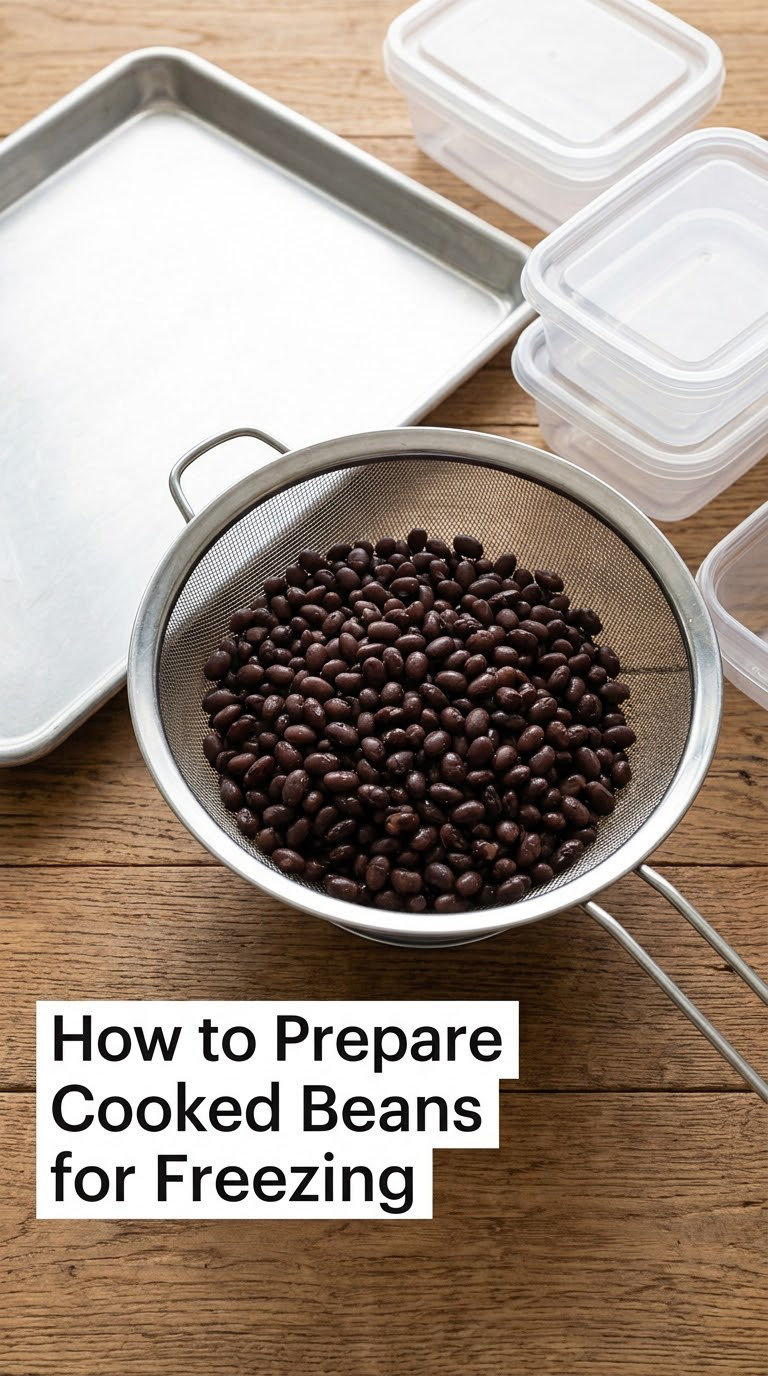
Preparation takes ten minutes and it is where the texture is won or lost.
Cool the beans fast, in shallow containers
Set the pot in an ice bath and stir, or spread the beans across a rimmed baking sheet. Deep, hot piles of beans trap warmth in the center and go into the freezer still steaming, which creates condensation and a soft, wet result.
Budget about 30 to 45 minutes for a large pot to come down to room temperature with the ice bath, less for a small batch.
Do cooked beans need blanching? No
Blanching is a step for raw green beans, snap peas, and other vegetables. It stops the enzymes that keep vegetables bright and crisp. Cooked beans have already been simmered long enough to set their starch, so blanching them adds nothing but a soggy middle. Skip it.
Freeze beans with liquid or without?
Both methods work, and the choice depends on what you plan to cook.
- Freeze with a little liquid when you want texture. A thin layer of broth, cooking water, or sauce keeps the beans moist as they freeze.
- Freeze drained for meal prep, tacos, salads, and refried beans. Less liquid means less sogginess and faster reheat, and the beans thaw ready to use.
Seasoned beans freeze too. Chili, curries, and beans cooked with salsa all keep, though the flavor softens slightly. If you have not yet added salt or a squeeze of lemon, wait until the reheating stage; acid and salt added at the end taste noticeably fresher. Beans cooked in fat, such as baked beans in pork drippings, tend to go soft, so freeze those only if a softer texture is fine with you.
Pick the right container
| Container | Works well for | Watch out for |
|---|---|---|
| Sandwich-size freezer bags | Single-meal portions, flat stacking | Must be pressed flat to avoid freezer burn |
| Silicone freezer bags | Reusable single portions | Fill no more than two-thirds |
| Rigid deli containers | Family-size or mixed batches | Deep lids take up more space |
| Glass wide-mouth jars | Two to three cup portions, one to three months | Narrow jars cannot be laid flat, so avoid deep jars |
| Ice cube trays | Small doses for smoothies or soups | Transfer to a bag once frozen |
| Vacuum sealer bags | Longest storage, minimal burn | Costs more and needs the equipment |
Whatever you pick, leave a little room at the top for expansion. Water expands when it freezes, and a bag packed to the seam will split on the first cold night.
How Long Can You Freeze Cooked Beans?
Plain cooked beans without heavy seasoning stay at their best for 3 to 4 months at 0°F (-18°C) and remain safe to eat for longer at a lower quality. A single-cup portion is usually gone long before the limit.
| Storage | How long | Quality note |
|---|---|---|
| Plain cooked beans, frozen | 3 to 4 months for best quality | Firm, holds shape well |
| Chili, curry, or soup with beans | 2 to 3 months | Seasoning mellows; add salt after reheating |
| Refried beans | 2 to 3 months | Freezes well, reheats well |
| Cooked beans, refrigerator | 3 to 4 days | Keep in a covered container, not in the can |
| Shelled beans straight from the bag | About a year | Not the same as freezing cooked beans |
Label every bag or jar with the date, and build a habit of eating the oldest ones first. Freezer organization is easier when you can see a row of dates instead of a wall of unlabeled bags.
Frozen Bean Meals: What to Make Next
One bag of cooked beans becomes dinner faster than opening a can, because there is no draining and no rinsing.
- Bean and vegetable soup: Drop frozen beans straight into simmering broth with carrots and onion. Add 10 to 15 extra minutes compared with canned beans, and season at the end.
- Chili: Brown the meat first, then add beans from frozen with the rest of the ingredients. They cook through in about 25 minutes on medium heat.
- Bean tacos or burritos: Warm a single cup of frozen beans in a skillet with a splash of water or broth, then mash lightly with a fork. Top with lime and cilantro.
- Curry: Frozen chickpeas or kidney beans go into a tomato or coconut sauce and simmer 10 to 12 minutes.
- Casserole: Layer frozen beans with pasta or rice, sauce, and cheese, then bake at 350°F (175°C) until bubbling and browned on top.
- Bean and grain bowls: Thaw one portion in the refrigerator overnight, then spoon it over rice, quinoa, or greens with any dressing.
- Hummus or bean dip: Thaw a half-cup portion, blend with olive oil, lemon, and garlic, and loosen with water or tahini.
- Black bean patties: Mash thawed beans with egg and a little flour, form patties, and pan-fry until crisp on both sides.
- Three-bean salad: Thaw three different beans, dress with vinaigrette, and chill for an hour. The texture is better than canned.
My freezer usually holds beans in one-cup bags rather than tubs, because that is what an actual Tuesday dinner needs. For more ideas built around the same staples, our ground beef and bean recipes and crockpot lentil recipes for meatless meals both start from frozen staples.
How to Thaw and Reheat Frozen Beans Safely
Thaw only the portion you are cooking tonight. A whole tub thaws in the refrigerator overnight, and small bags thaw on the counter in an hour or two.
- Refrigerator overnight: Move the bag or container to the fridge, set it on a plate or tray, and leave it 8 to 12 hours. The safest and least messy method.
- Cold water: Seal the beans in a leakproof bag, submerge in cold water, and change the water every 30 minutes. A single cup loosens in about an hour.
- Microwave: Put a single portion on a plate, cover loosely, and heat in 30-second bursts, stirring between them, until hot all the way through.
- Stovetop: Add frozen beans to a skillet with 2 to 3 tablespoons of water or broth, cover, and simmer 5 to 8 minutes until the liquid cooks away.
For soups, chili, and curries, skip the thaw entirely and add the beans from frozen during cooking. Just give them extra time, since frozen beans need roughly 10 to 15 minutes longer to soften than canned.
When reheating cooked beans on their own, bring them to 165°F (74°C) and keep them steaming hot. Add liquid in small splashes so the beans do not dry out, and toss in a pinch of salt and a squeeze of lemon at the end to bring back the brightness that freezing flattens.
Once thawed, use the beans within three to four days. You may refreeze them, but thawed beans freeze a second time noticeably softer, so I only refreeze by accident, never on purpose.
Common Mistakes When Freezing Cooked Beans
- Freezing warm beans. Condensation forms and the batch turns watery. Cool to room temperature, fast, in shallow pans or an ice bath.
- Leaving too much liquid. Packaged with a lot of free liquid, beans thaw soft and dilute. Drain for a few minutes, or freeze only the beans with a thin coating of sauce.
- Using one oversized container. A five-cup tub has to thaw entirely to use two cups. Freeze in single-meal portions instead, in bags that stand up in a row.
- Forgetting to label. You end up with mystery bags and freezer burn going unchecked. Name the bean, the portion, and the month every time.
- Leaving air in the bag. Air causes freezer burn and dry surfaces. Seal, press along the bag to push air toward one corner, and seal again.
- Packing the bag full. Liquid and beans expand as they freeze and can split the seam. Fill bags two-thirds or leave an inch of headspace in a container.
- Seasoning too early. Salt and vinegar dull a little during storage. Season the finished dish at the end of reheating.
- Reheating the whole batch over and over. Every warm-and-cool cycle costs texture. Heat only what you are eating.
Two more questions come up constantly: can you freeze beans from a can, and does it help to blanch first. Both have the same answer as above. Canned beans freeze fine once drained and rinsed, and blanching is for raw green beans, not cooked ones.
If you freeze other batch-cooked staples alongside the beans, our guides on freezing cooked rice and freezing mashed potatoes cover the same cooling and flattening rules.
Frequently Asked Questions
Can you freeze cooked beans that have been seasoned?
Yes. Chili, curries, and beans cooked with salsa or drippings all freeze well, though spices and vinegar mellow a little in the freezer. Freeze them slightly under-seasoned and add salt, acid, and fresh herbs at the end of reheating. Beans cooked in a lot of fat tend to soften more, which suits refried beans and soups better than a crisp taco filling.
Do you freeze cooked beans with liquid or without liquid?
Both work. Freezing with a thin layer of broth or cooking water keeps beans moist and tender, which is best for beans you will simmer in a soup. Freezing them well drained is better for tacos, salads, and refried beans, where you want a firm texture and fast reheating. Avoid freezing a deep pool of liquid with the beans.
How long do frozen cooked beans last in the freezer?
Plain cooked beans stay at their best quality for 3 to 4 months stored at 0°F (-18°C). Seasoned dishes like chili, curry, and bean soup hold their texture for about 2 to 3 months. They remain safe to eat longer at 0°F, but flavor and texture decline, so date every bag and eat the oldest first.
Can you refreeze beans after thawing them?
Technically yes, but thawed beans come out noticeably softer the second time. Refreezing is fine when a portion thawed by mistake, not when you thawed a full batch on purpose. For a full batch, cool the beans again quickly, use a fresh airtight container with an air-exposed surface, and eat within a few months.
What is the best container for freezing cooked beans?
Sandwich-size freezer bags are the most practical choice because they hold a single-meal portion and lie flat for stacking. Press the air out, leave a finger’s width at the top, and seal. Rigid glass or plastic containers work for family-size batches, and jars suit two to three cup portions kept under three months, as long as the beans are shallow enough to freeze flat.
How should frozen beans be thawed before using them?
Move the portion to the refrigerator 8 to 12 hours ahead, set on a plate or tray to catch drips, for the safest and driest result. A sealed bag submerged in cold water loosens in about an hour if you change the water every 30 minutes. For soups, chili, and curries, skip thawing and add the beans from frozen, giving them 10 to 15 extra minutes.
Conclusion
The method is short enough to remember: cool the beans fast, drain them, scoop them into one-cup portions, press out the air, label with a date, and freeze flat at 0°F (-18°C). Those six steps are the whole difference between beans that keep their shape for four months and a freezer full of soft, unlabeled bags.
Start with the next pot you cook. Freeze half of it in sandwich-size bags before you serve dinner, and by next week you will have a weeknight meal that took no time at all to put together.