
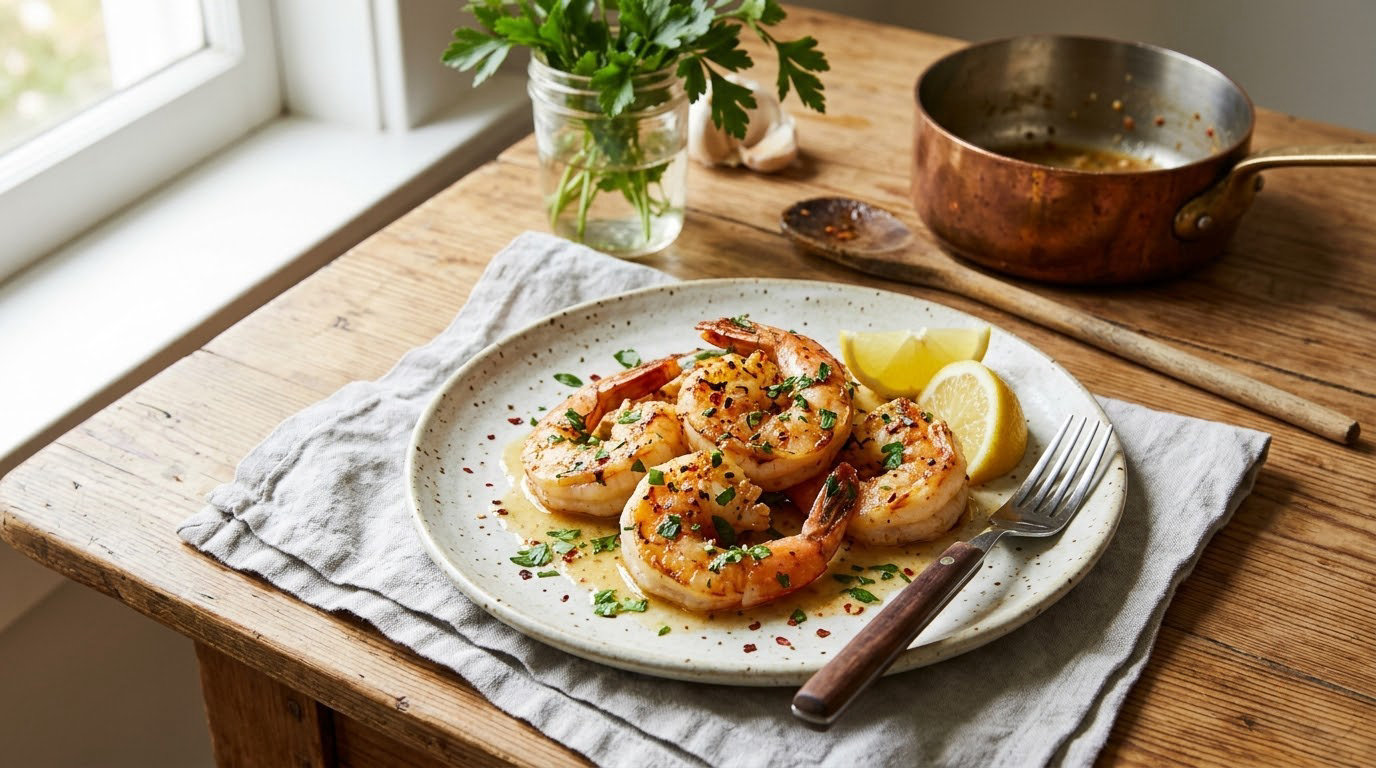
Cooked shrimp keeps 3 to 4 days in the refrigerator when stored properly. If you want to know how to store cooked shrimp in the fridge, the whole method comes down to three things: cool it fast, seal it airtight, and mark the date so you know which tub came first.
Shrimp is lean and perishable with almost no fat to slow it down, so temperature and time are the only real limits. Get it into a shallow container within two hours of cooking, keep the fridge at 40°F (4°C) or below, and plan to eat it inside the first two days when the texture is at its best.
If you are saving it from a stir-fry, scampi or shrimp cocktail, the leftover method is the same as the meal-prep one. I keep separate tubs for each service so I thaw nothing I am not using.
Table of Contents
How to Store Cooked Shrimp in the Fridge: Quick Guide
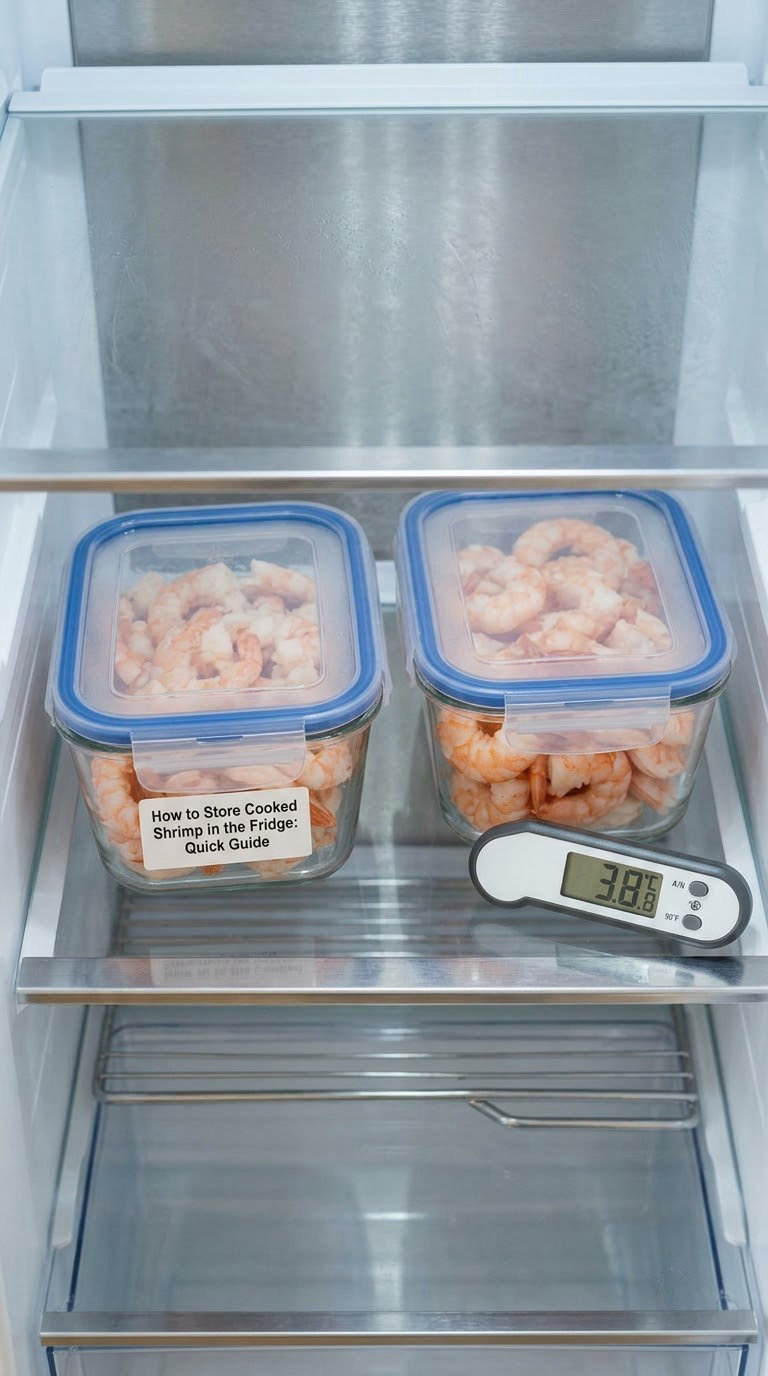
Cool the shrimp briefly in the pan, divide it into shallow airtight containers, refrigerate within two hours of cooking, label the date, and eat it within 3 to 4 days for the best quality and safety.
| What To Know | The Number |
|---|---|
| Fridge temperature | 40°F (4°C) or below |
| Time in the fridge | 3 to 4 days, best eating quality in the first 1 to 2 days |
| Time at room temperature | Under 2 hours, or under 1 hour above 90°F (32°C) |
| Best container | Shallow airtight glass or food-safe plastic, right-sized to the portion |
| Best method | Cool fast in a single layer, seal airtight, label, lowest fridge shelf |
| Freezer | 2 to 3 months at 0°F (-18°C) for best quality |
| Minimum safe internal cook temp | 145°F (63°C) |
A refrigerator thermometer is the one tool worth buying if your fridge runs warm. An internal temp above 40°F quietly eats into that 3-to-4-day window, and most of us never check.
What Container Is Best for Cooked Shrimp?
Any airtight container works, because the job is the same in every case: block air so the shrimp cannot dry out and cannot pick up the smell of the onions and curry sitting next to it. The differences come down to how you use the fridge, not how safe it is.
| Container | Moisture | Best For | Watch Out For |
|---|---|---|---|
| Airtight glass with snap lid | Holds moisture best, no odors transfer in or out | Family fridge, visible leftovers, stacking | Heavier, glass can chip if dropped cold |
| Food-safe plastic deli container | Holds moisture well with a tight seal | Everyday leftovers, portioned meals | Stains and dulls with tomato or chili sauces |
| Resealable freezer bag | Fine, but lay shrimp flat so nothing stacks on it | Meal prep, single portions, frozen flat | Easy to overfill; liquid sloshes if it is not drained |
| Loose plate under cling film | Poor, exposed to air and odors | Thirty minutes of fridge time, nothing longer | Dries out and smells up fast, never for overnight storage |
Right-size the container so the shrimp sits one or two layers deep. A deep pile in a tall tub cools the middle slowly, which is exactly the condition bacteria like, and it sweats in a way that leaves the shrimp sitting in liquid.
For the same reason I set a small plate or tray under the tub when the shrimp came out of a sauce. It catches the drips so nothing sits in a puddle, and it keeps the shelf clean.
How to Store Cooked Shrimp in the Fridge: Step by Step
Confirm It Is Fully Cooked First
Start where the cooking ended: make sure the shrimp hit 145°F (63°C) before you even think about the fridge. Fully cooked shrimp is opaque and white or pink, firm to the touch, and curled into a loose C, not a tight one.
Cooking it only until just done is a small kindness to the reheating step later. Every extra minute in the pan is a minute the shrimp spends tightening up, which is what makes stored shrimp turn rubbery.
Cool, Seal, Label, Place
- Cool briefly in the pan. Turn the heat off and let the shrimp sit 10 to 20 minutes in the cooking liquid. This stops the carryover cooking that dries the surface out.
- Get it refrigerated within two hours. If your kitchen is above 90°F (32°C), you have one hour, not two. That is the room-temperature rule for cooked shrimp, and it is the single most important line on this page.
- Spread it shallow. Spoon the shrimp into a single layer or two in the container. If you have a big batch, split it across more tubs rather than piling it into one deep one.
- Seal it airtight. Snap the lid or press out the air from the bag. Air exposure is what makes the surface dry and tough.
- Label with the date. A strip of masking tape and a pen is fine. In a shared fridge, first in, first out is the habit that keeps you from grabbing the oldest tub without thinking.
- Put it on the lowest shelf. Cold air sinks, so the bottom shelf is the coldest spot. Keep it below and away from ready-to-eat food like cut fruit and cooked rice you plan to eat straight away.
Do not wrap the container in towels or set it inside a closed box for warmth. A sealed box holds in the warmth longer, and warm leftovers are exactly the window you are trying to avoid.
For the storage math behind a whole cooked batch, I use the same date-marking habit I wrote about in how long cooked chicken lasts in the fridge. Leftovers age the same way, protein or not.
Should You Leave Cooked Shrimp Peeled or in the Shell?
Both are safe when chilled promptly. The 3-to-4-day window does not change with the shells, so pick whichever you will actually eat.
Peeled shrimp is the easier choice for portioning and weeknight cooking. The downside is exposed surface, and exposed surface dries faster, so keep the lid on tight and skip leaving the tub open while you scoop.
Shell-on holds a little more moisture in for another day or two of fridge life because the shell works as its own cover. It also takes up more room, and peeling cooked shrimp by hand is a fiddly job you probably do not want twice.
Tail-on is the best of both when you want to serve them as a platter or cocktail, since the tail shields the flesh and the shells keep working after the shrimp is cold. They do not freeze or stack as neatly, though.
Whichever form you choose, dry the shrimp well before it goes in. A paper towel layer in the bottom of the container, changed once if the shrimp sits more than a day, pulls off the extra surface moisture that leads to sogginess.
How Long Does Cooked Shrimp Last in the Fridge?
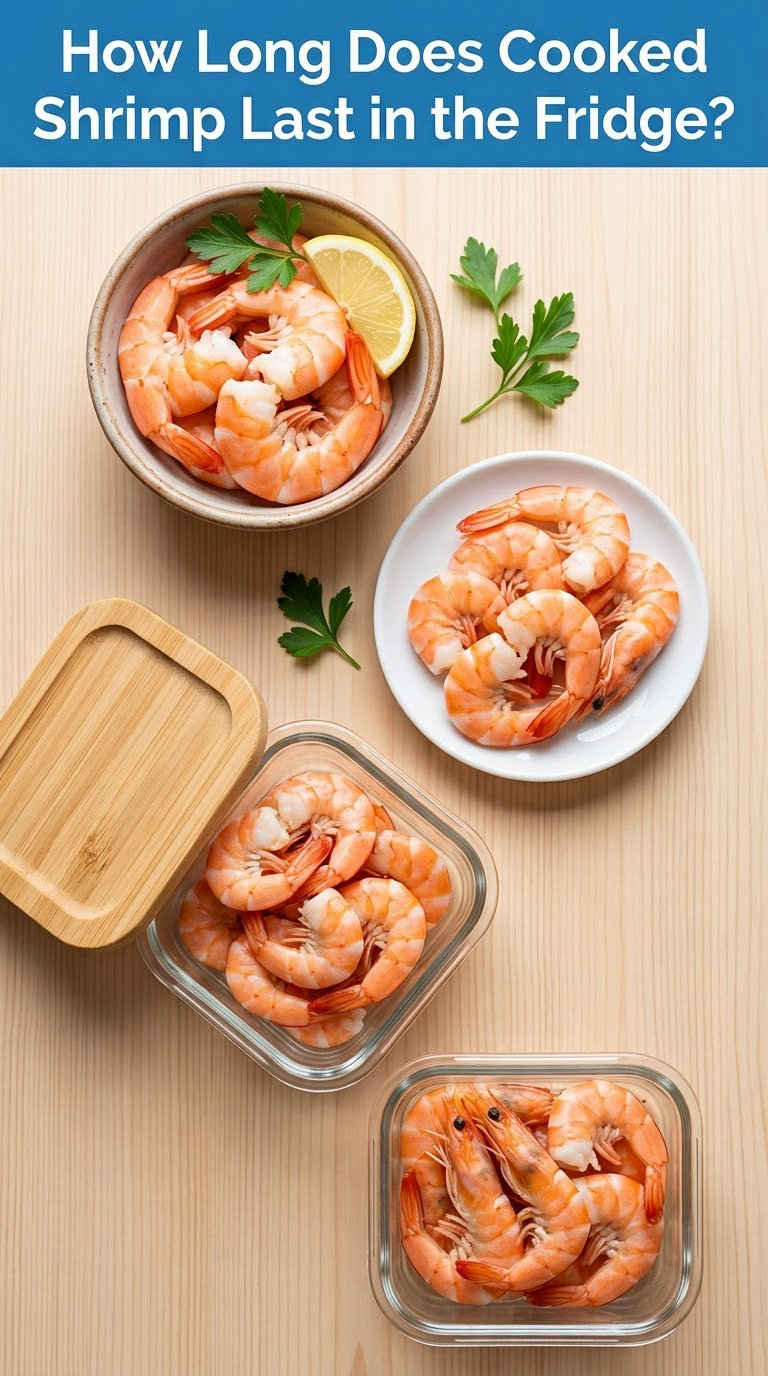
Three to four days at or below 40°F (4°C) is the realistic window, and the best eating quality lands in the first one to two days. After that the shrimp is still safe if stored right, but the texture keeps sliding downhill.
| Shrimp State | Fridge at 40°F (4°C) | Freezer at 0°F (-18°C) | Notes |
|---|---|---|---|
| Cooked, peeled or shell-on | 3 to 4 days | 2 to 3 months | Best quality days 1 to 2 |
| Cooked in a sauce or marinade | 2 to 3 days | 2 to 3 months | Liquid speeds up softening |
| Acid-marinated or ceviche-style | 1 to 2 days | Not recommended | Acid is not a fridge preservative |
| Portioned for meal prep | 3 to 4 days | 2 to 3 months | Freeze flat, slide off one serving at a time |
| Raw shrimp | 1 to 2 days | 3 to 6 months | Different rule entirely from cooked |
That last row is the one people mix up most. Raw shrimp gets 1 to 2 days, cooked shrimp gets 3 to 4, and the raw rule never applies to a cooked batch sitting in the fridge.
When you hit day 4 with an unopened tub, freeze it rather than gambling. If it is already open and has been sitting at the front of the shelf where the door lets in warm air all day, that is a discard, not a gamble.
How to Reheat Stored Shrimp Without Drying It Out
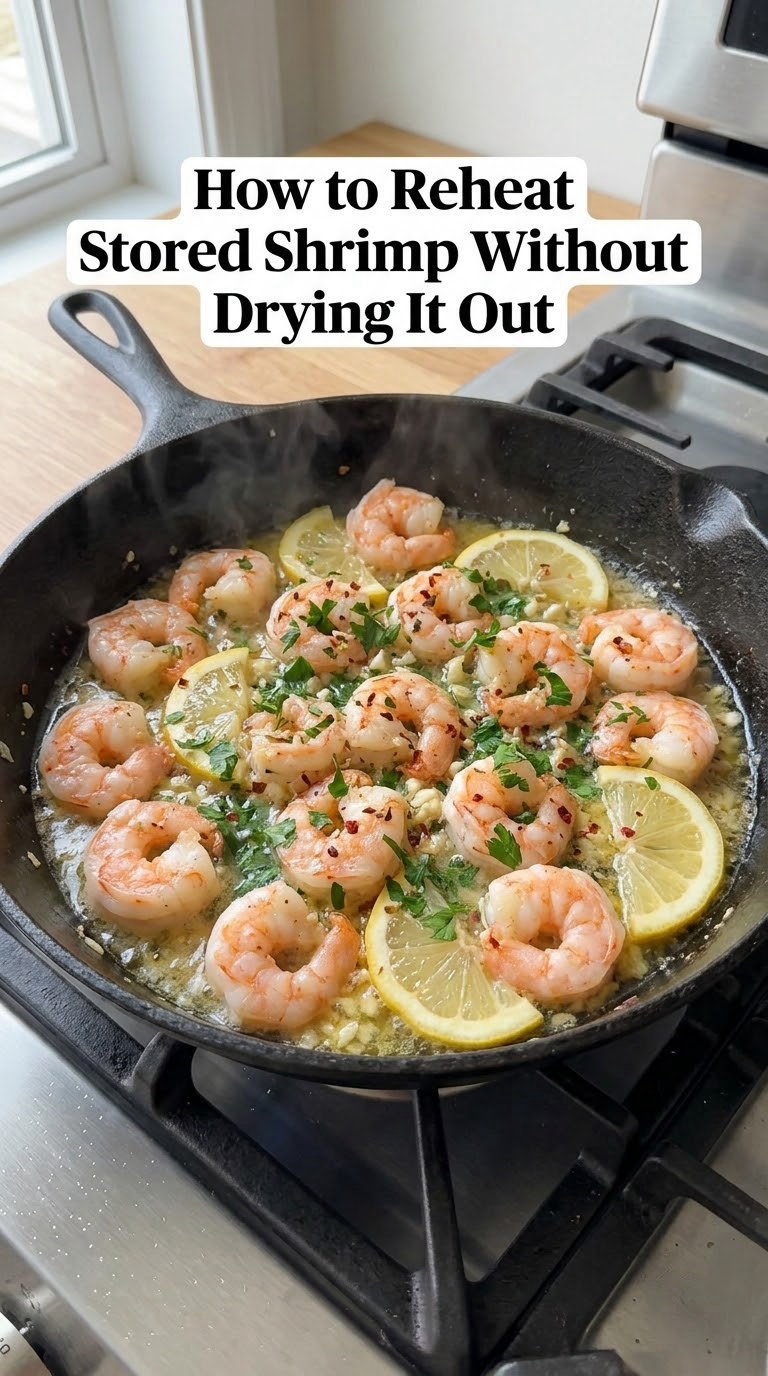
Shrimp reheats in under two minutes, so the recipe is the same everywhere: temper it, use a hot pan with a little liquid, and stop the moment it is steaming hot through.
Skillet. Take the tub out of the fridge about an hour before you cook so the shrimp is closer to room temperature, which is what stops it toughening the second it hits the pan. Get the skillet properly hot, add a tablespoon of oil or butter, then the drained shrimp, and toss for 60 to 90 seconds.
Microwave. Put the shrimp in a single layer on a plate, cover loosely with a damp paper towel, and run it in 20-second bursts. Pull it out and stir between bursts, because the edges of a microwave plate run much hotter than the middle.
Steamer. A steamer basket over simmering water reheats gently and keeps the texture closest to fresh. Five minutes, covered, and you are done.
For reheating leftovers safely, the food must reach 145°F (63°C) all the way through. That number is the floor, not the target, and once you have reheated a portion, eat it right away rather than putting it back for another round.
A splash of the sauce you saved, a little broth, or a knob of butter gives the shrimp something to steam in, which is the whole difference between moist shrimp and dry shrimp. I also learned this the hard way trying to reheat one-pan shrimp dinners with rice in a dry pan on a weeknight when I was tired.
Common Mistakes When Refrigerating Cooked Shrimp
Leaving it out too long. A shrimp tray on the counter through dinner is over two hours in a warm room. That is the mistake that actually makes people ill, and it cannot be fixed later in the fridge.
Refrigerating a big hot pile. A deep mound of hot shrimp in one tub cools the center slowly and warms the whole fridge while it does it. Divide it across shallow containers and put them in while they are still warm, not cold.
Failing to seal or label. An open tub dries out, picks up onion and garlic smells, and gives you no idea how old it is. Seal it and date it the moment it goes in.
Storing it beside strong odors. Shrimp absorbs smells readily. If you have no shelf space, put the tub in a sealed bag or a bin with a lid.
Leaving it in a pool of sauce. Sauce or marinade shortens the window to 2 to 3 days and softens the shrimp faster. If you want the flavor, keep the liquid in a separate sealed jar and add it when you reheat.
Reheating too hard, too many times. High heat and repeated reheats are what produce rubbery shrimp. One gentle pass, then eat.
A paper towel under the shrimp, swapped once if the container sits more than a day, solves most of the soggy-bottom complaints. Freeze portioned shrimp flat on a tray first, then bag them once solid, and you will stop thawing more than you need. It works the same way I described for freezing cooked rice safely.
Frequently Asked Questions
Can you put cooked shrimp in the fridge while it is still hot?
Yes, and you should not wait for it to reach room temperature. Set it in the fridge within two hours of cooking, spread shallowly in an airtight container so the heat escapes fast, and leave the lid cracked or vented for the first 20 minutes if the shrimp went in piping hot. Sealing a screaming-hot tub traps steam, which turns the surface soft and keeps the middle warm far longer than you want.
Should cooked shrimp be stored peeled or with the shells on?
Both keep the same 3 to 4 days when refrigerated at or below 40°F (4°C). Peeled is easier to portion and cook from, but dries slightly faster, so keep the lid tight. Shell-on and tail-on hold a little more moisture in because the shell covers the flesh, at the cost of fridge space and a fiddly peeling job later.
How long does shrimp last after cooking in the refrigerator?
Three to four days at or below 40°F (4°C), with the best texture in the first one to two days. Shrimp kept in its sauce or marinade drops to 2 to 3 days, and acid-marinated or ceviche-style shrimp only hold 1 to 2 days. When you know how to store cooked shrimp in the fridge, skip the raw shrimp rule, which is 1 to 2 days for uncooked shrimp.
Is it okay to store cooked shrimp in a sealed airtight container?
Sealing it airtight is the best thing you can do. An airtight container keeps air away from the surface, which slows drying, toughening and odor pickup. Right-size the container so the shrimp sits one or two layers deep rather than piled up, and keep a paper towel in the bottom to catch moisture. Do not seal a tub that is still steaming hot.
How do you know when cooked shrimp has gone bad?
Discard it if the smell is sour, ammonia-like or sharply fishy, or if the shrimp feels slimy or mushy instead of firm. Greying, dulling or darkening is another warning sign. The harder question is time: harmful bacteria can reach unsafe levels before the smell or texture changes at all, so the 3 to 4 day window is the real limit and looking fine is not proof of safety.
Can you reheat refrigerated shrimp without making it rubbery?
Yes, if you go gently. Take the container out about an hour ahead so the shrimp starts closer to room temperature, then use a hot skillet with a splash of broth, butter or saved sauce for 60 to 90 seconds, or steam it covered for five minutes. Heat only until it is steaming hot through, reheat once, and never let it sit at room temperature while it warms up.
Simple Steps for Fresh-Tasting Leftover Shrimp
How to store cooked shrimp in the fridge, in short: cool the shrimp briefly, get it into a shallow airtight container inside two hours, and label the date. Then use it within 3 to 4 days, aiming for the first two if you want the texture at its best.
When you are ready to cook rather than store, the easy weeknight shrimp recipes are a good next step, and they all start from a tub of refrigerated cooked shrimp.