
We have all been there. You open the fridge, spot that container of chicken from Sunday dinner, and think: “Wait, when did I cook this?” If you are staring at leftover chicken right now and wondering whether it is still safe to eat, you are in the right place. This guide covers everything you need to know about how long cooked chicken lasts in the fridge, the warning signs of spoilage, and exactly what to do with those leftovers before time runs out.
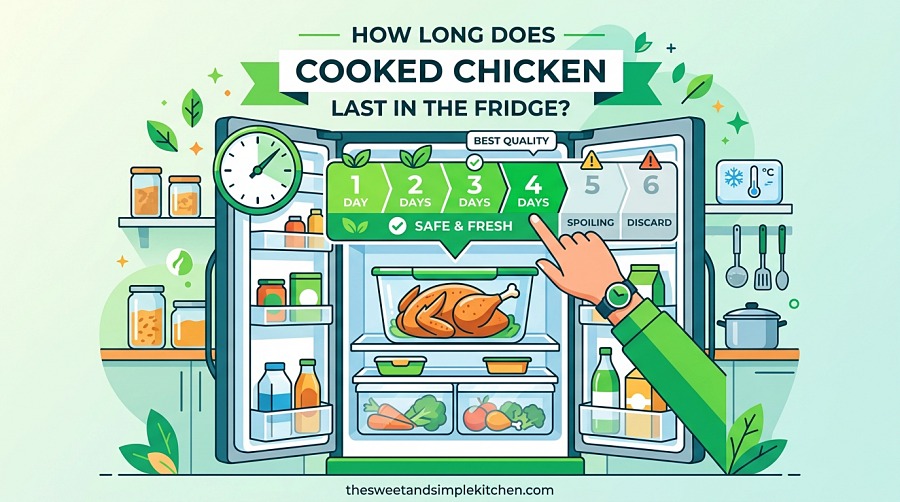
Here is the quick answer so you do not have to scroll: cooked chicken lasts 3 to 4 days in the refrigerator, stored at 40 degrees Fahrenheit or below. After that, the risk of foodborne illness goes up fast. And if it has been sitting on the counter for more than 2 hours? Toss it. I know that stings, but food poisoning hurts way more.
In this guide, I am walking you through the USDA-backed storage timeline, how to properly store cooked chicken so it actually lasts those full four days, how to freeze it when you need more time, and even a few quick recipe ideas so nothing goes to waste. Whether you are a chicken breast recipe fanatic or just trying to survive the week on leftovers, I have got you covered.
Table of Contents
The Short Answer: How Long Does Cooked Chicken Last in the Fridge?
Cooked chicken is safe to eat for 3 to 4 days when stored in the refrigerator at or below 40 degrees Fahrenheit (4 degrees Celsius). That is the standard from the USDA Food Safety and Inspection Service, and honestly, it is a rule I follow without exception in my own kitchen.
Here is why that window matters. Bacteria do not die in the fridge. They slow way down, sure, but they keep growing. After day four, the bacterial load can reach a point where reheating does not save you. Some bacteria produce heat-resistant toxins that survive even when you cook or reheat the chicken to safe temperatures.
That does not mean day five chicken will automatically make you sick. Plenty of people have eaten five-day-old chicken and felt fine. But the risk increases every single day, and no amount of reheating can undo certain toxins. Why gamble?
Here is a quick breakdown of how long different types of cooked chicken last in the fridge:
- Chicken breast (sliced or whole): 3-4 days
- Chicken thighs: 3-4 days
- Whole cooked chicken (like a rotisserie): 3-4 days
- Chicken salad: 3-4 days (mayonnaise does not extend this)
- Chicken soup or stew: 3-4 days
- Shredded chicken: 3-4 days
Notice a pattern? It does not matter if you are working with breast, thigh, or a whole bird. The 3-4 day rule stays the same. The one thing that changes things is how you store it, which we will get into next.
Quick Reference: Storage Times at a Glance
Sometimes you just need a fast answer. Here is a straightforward comparison of how long cooked chicken lasts depending on where and how you store it.
| Storage Method | How Long It Lasts | Key Rule |
|---|---|---|
| Refrigerator (40 degrees F or below) | 3-4 days | Store in airtight container within 2 hours of cooking |
| Freezer (0 degrees F or below) | 2-6 months | Wrap tightly in freezer-safe packaging to avoid freezer burn |
| Room temperature (counter) | Under 2 hours | Anything past 2 hours at room temp is unsafe. Period. |
| Insulated lunch bag with ice pack | Up to 2 hours after removing from fridge | Not a long-term storage method |
Bookmark this. Pin it. Screenshot it. Whatever works for you. This table is the cheat sheet that keeps your kitchen safe.
How to Store Cooked Chicken the Right Way
Knowing that cooked chicken lasts 3-4 days is only half the battle. How you store it makes a huge difference in whether it actually makes it to day four or starts going downhill on day two. Here is what I do in my kitchen, step by step.
Step 1: Let It Cool (But Do Not Wait Too Long)
You do not need to put scalding hot chicken straight into the fridge. That can actually raise the temperature inside your refrigerator and put your other food at risk. Let the chicken cool on the counter for about 20 to 30 minutes until it is no longer steaming.
But here is the critical part: never leave cooked chicken at room temperature for more than 2 hours. That is the USDA’s “danger zone” rule, and it is non-negotiable. If your kitchen is hot (above 90 degrees F), that window shrinks to just 1 hour. So if you cooked chicken for a summer barbecue and forgot about it on the patio table for three hours, I am sorry, but it needs to go.
Step 2: Choose the Right Container
The best storage containers for cooked chicken are glass or BPA-free plastic containers with tight-fitting lids. You want something genuinely airtight, not just loosely covered with foil or plastic wrap.
I divide larger batches into shallow containers so the chicken cools evenly and quickly in the fridge. Deep containers trap heat in the center, and that warmth can keep bacteria growing even while the outside feels cold. Shallow containers (no more than 2 inches deep) solve this problem.
Freezer bags work well too, especially if you are short on container space. Press out as much air as possible before sealing. Less air means less chance of freezer burn and bacterial growth.
Step 3: Label It with the Date
This is the step most people skip, and it is honestly the one that would save so much guesswork. Grab a piece of tape or a sticky label, write the date you cooked the chicken, and stick it on the container.
That way, when you find a mystery container on Thursday, you know exactly whether it is from Monday (still good) or the previous Thursday (absolutely not). I started doing this years ago, and it has eliminated so much food waste in our house.
Step 4: Put It in the Right Spot
Not all fridge zones are equal. The back of the middle shelf is generally the coldest and most consistent spot. Avoid the fridge door (temperature fluctuates every time you open it) and the very front of shelves (same issue). If you have a designated meat drawer, that works too.
Make sure your fridge is actually running at or below 40 degrees Fahrenheit. You would be surprised how many home refrigerators are running warmer than people think. A cheap appliance thermometer is worth the few dollars.
Does the Type of Chicken Matter?
In terms of storage time, not really. Whether you are storing juicy chicken thighs or grilled chicken breast, the 3-4 day window holds. What does matter is how the chicken was cooked and whether it was mixed with other ingredients.
Rotisserie chicken from the grocery store? Same 3-4 day rule. Chicken mixed into a pasta salad with mayo? Still 3-4 days, and honestly, I would try to eat it sooner since mayo-based dishes can go off faster. Chicken in a broth-based soup? Same rule, though the broth can help preserve texture a bit longer.
If you want to keep chicken longer, your best option is freezing. We have a whole section on that below, plus a roundup of 33 best freezer meals for busy families if you want to go deep on freezer strategies.
Can You Freeze Cooked Chicken? (And How to Do It Right)
Yes, you can absolutely freeze cooked chicken, and it is a lifesaver when you have made too much or found a great sale at the store. Frozen cooked chicken stays safe indefinitely at 0 degrees Fahrenheit, but for the best quality, aim to use it within 2 to 6 months.
Here is my step-by-step process for freezing cooked chicken so it actually tastes good when you thaw it:
- Cool it first. Same as fridge storage, let the chicken cool to room temperature within that 2-hour window.
- Portion it out. Freeze chicken in the portion sizes you will actually use. For me, that means single-serving bags for lunches and a larger bag for family dinners. This way you only thaw what you need and avoid refreezing.
- Wrap it well. Double-wrap if you can. I put the chicken in a freezer bag, press out the air, seal it, and then put that bag inside another freezer bag. It sounds like overkill, but freezer burn is the enemy of good chicken, and double-walling makes a real difference.
- Label and date it. Same rule as the fridge. Write what it is and when you froze it. “Chicken breast 5/20” is all you need.
- Freeze it flat. Lay the bags flat in the freezer. They freeze faster, thaw faster, and stack neatly once frozen.
How to Thaw Frozen Cooked Chicken
The safest way to thaw cooked chicken is in the refrigerator overnight. Just move it from the freezer to the fridge before you go to bed, and by morning, it is ready to reheat or eat cold in a salad.
You can also thaw it in the microwave using the defrost setting if you are in a hurry. The key is to use it immediately after microwave thawing, since parts of the chicken may have already started warming into the danger zone.
Never thaw chicken on the kitchen counter. I know people do it, and I know it seems faster, but it is a genuinely risky habit. The outside of the chicken warms up while the inside is still frozen, giving bacteria a cozy place to multiply.
Will frozen chicken taste different after thawing? A little, yes. The texture can become slightly softer, especially in breast meat. Thighs and dark meat hold up better in the freezer. But for things like chicken salad, casseroles, and soups, you will barely notice the difference. If you are curious about other foods you can freeze, check out our guide on how to freeze cream cheese safely. The same principles apply.
How to Tell if Cooked Chicken Has Gone Bad
Even if you followed every storage rule perfectly, it is still worth checking your chicken before you eat it. Sometimes the fridge was slightly too warm. Sometimes the container was not sealed right. Sometimes things just go off faster than expected.
Here are the four telltale signs that cooked chicken has spoiled, and what to look (and smell) for.
1. The Smell Test
Fresh cooked chicken has a mild, savory aroma. Spoiled chicken, on the other hand, develops a sour, ammonia-like, or sulfur smell. If you open the container and your nose immediately says “no,” trust that instinct. Your sense of smell is one of the best tools for catching spoilage early.
That said, some bacteria do not produce a smell. So while a bad odor is a definite “do not eat” signal, a lack of odor does not guarantee the chicken is safe. Always combine the smell test with the other checks below.
2. The Texture Check
Run your finger over the surface of the chicken. Fresh cooked chicken feels firm and slightly moist. If it feels slimy, sticky, or tacky to the touch, bacteria have started breaking down the proteins. That slime is a dead giveaway that the chicken needs to go in the trash, not your mouth.
3. The Color Test
Cooked chicken should be white (breast) or light brown (thighs and dark meat). If it has turned gray, developed a greenish tint, or shows yellowish spots that were not there before, those are signs of spoilage. Any visible mold (fuzzy patches of green, white, or black) means it is absolutely done. Do not try to cut around mold on cooked chicken. The invisible mold threads spread far beyond what you can see.
4. The Taste (Last Resort Only)
If the chicken passes the smell, texture, and color tests, take a tiny bite. If it tastes sour, off, or just “wrong” compared to how it tasted when you first cooked it, spit it out and discard the rest. A small taste of slightly spoiled chicken is unlikely to cause serious harm, but it is not worth pushing your luck with a full portion.
What Happens If You Eat Spoiled Chicken?
If you accidentally eat chicken that has gone bad, you might experience nausea, stomach cramps, vomiting, or diarrhea within 6 to 24 hours. Most cases of food poisoning from chicken are caused by Salmonella, Campylobacter, or E. coli. Symptoms usually pass within a day or two, but if you experience severe dehydration, bloody stool, or a high fever, seek medical attention right away.
The best advice I can give? When in doubt, throw it out. No leftover chicken is worth a night hugging the toilet.
How to Reheat Leftover Chicken Safely
Reheating cooked chicken is not as simple as zapping it until it is warm. The USDA says leftovers should be reheated to an internal temperature of 165 degrees Fahrenheit (74 degrees Celsius) to kill any bacteria that may have developed during storage. Here is how to do it with each method.
Oven Method (Best for Texture)
Preheat your oven to 350 degrees F. Place the chicken in an oven-safe dish, add a splash of broth or water to keep it moist, and cover with foil. Heat for about 15-20 minutes until the internal temperature hits 165 degrees F. This method keeps the skin crispy and the meat juicy, especially for bone-in pieces.
Microwave Method (Fastest)
Place the chicken on a microwave-safe plate, cover it with a damp paper towel to prevent drying out, and heat in 30-second intervals. Check the temperature after each interval. Microwaves heat unevenly, so check a few spots with a thermometer. This method is quickest but can make the texture rubbery if you overdo it.
Stovetop Method (Great for Shredded Chicken)
Heat a little oil or butter in a skillet over medium heat. Add the chicken and cook, stirring occasionally, until it reaches 165 degrees F internally. This works beautifully for shredded or diced chicken that you are adding to tacos, stir-fries, or pasta dishes.
One important rule: do not reheat chicken more than once. Every time chicken goes through the danger zone (40-140 degrees F) during cooling and reheating, bacteria get another window to multiply. Reheat only the portion you plan to eat.
3 Easy Ways to Use Leftover Chicken Before It Expires
Instead of letting that leftover chicken sit in the fridge while you wonder what to do with it, here are three practical recipes that use up cooked chicken fast. Each one takes 20 minutes or less and turns those leftovers into something you actually want to eat.
1. Quick Chicken Salad Wraps (Prep Time: 10 Minutes)
This is my go-to when I need lunch in a hurry and the chicken is on day three.
Ingredients:
- 2 cups cooked chicken, shredded or diced
- 1/3 cup mayonnaise (or Greek yogurt for a lighter version)
- 1 stalk celery, finely chopped
- 2 tablespoons red onion, finely diced
- 1 tablespoon fresh dill, chopped (or 1 teaspoon dried)
- Salt and pepper to taste
- 4 large flour tortillas or lettuce wraps
Instructions:
In a medium bowl, combine the chicken, mayo, celery, red onion, and dill. Stir until everything is evenly coated. Season with salt and pepper to taste. Scoop about half a cup of the mixture onto each tortilla or lettuce leaf, fold the sides in, and roll it up tight. Serve immediately, or wrap tightly in plastic wrap and refrigerate for up to 1 day.
Serving suggestion: Pair with fresh fruit or a handful of pretzels for a complete lunch. These wraps are also great with sliced avocado or a drizzle of hot honey.
2. Leftover Chicken Fried Rice (Prep Time: 15 Minutes, Cook Time: 8 Minutes)
Day-old rice and day-old chicken were practically made for each other. This recipe works best with cold rice straight from the fridge.
Ingredients:
- 2 cups cooked chicken, diced into small pieces
- 3 cups cold cooked white or brown rice
- 2 tablespoons vegetable oil
- 2 eggs, beaten
- 1 cup frozen peas and carrots, thawed
- 2 cloves garlic, minced
- 3 tablespoons soy sauce
- 1 tablespoon sesame oil
- 2 green onions, sliced
Instructions:
Heat 1 tablespoon of vegetable oil in a large skillet or wok over medium-high heat. Pour in the beaten eggs and scramble them until just set, then remove to a plate. Add the remaining tablespoon of oil to the pan. Toss in the garlic, peas, and carrots, and cook for 2 minutes. Add the rice and break up any clumps with your spatula. Spread it into an even layer and let it cook undisturbed for 2 minutes so it gets slightly crispy. Add the diced chicken and soy sauce, stir everything together, and cook for another 2-3 minutes until the chicken is heated through. Remove from heat, stir in the scrambled eggs and sesame oil, and top with sliced green onions.
Serving suggestion: This is a complete meal on its own, but a side of steamed edamame or a simple cucumber salad rounds it out nicely.
3. Cheesy Leftover Chicken Casserole (Prep Time: 10 Minutes, Bake Time: 25 Minutes)
Comfort food at its simplest. This is the recipe I make when I have a pile of leftover chicken and a hungry family waiting for dinner.
Ingredients:
- 3 cups cooked chicken, shredded
- 2 cups cooked rice or egg noodles
- 1 can (10.5 oz) cream of chicken soup
- 1/2 cup sour cream
- 1 cup frozen mixed vegetables (peas, carrots, corn)
- 1 cup shredded cheddar cheese, divided
- 1/2 teaspoon garlic powder
- 1/2 teaspoon onion powder
- Salt and pepper to taste
- 1/2 cup crushed Ritz crackers or breadcrumbs (for the topping)
- 2 tablespoons butter, melted
Instructions:
Preheat your oven to 375 degrees F. Grease a 9×13 inch baking dish. In a large bowl, mix together the chicken, rice or noodles, cream of chicken soup, sour cream, frozen vegetables, half the cheese, garlic powder, onion powder, salt, and pepper until well combined. Spread the mixture evenly in the prepared baking dish. In a small bowl, mix the crushed crackers with the melted butter. Sprinkle the cracker mixture and remaining cheese over the top of the casserole. Bake for 25 minutes, or until the top is golden and the casserole is bubbling. Let it rest for 5 minutes before serving.
Serving suggestion: Serve with a simple green salad or Instant Pot mashed potatoes for a full comfort-food dinner. Looking for more casserole inspiration? Browse our best casserole recipes for dinner collection.
Frequently Asked Questions
Can you eat chicken 5 days after cooking?
The USDA recommends eating cooked chicken within 3 to 4 days. Eating it on day 5 is past the recommended safety window, and the risk of foodborne illness increases significantly. While some people eat 5-day-old chicken without getting sick, it is not worth the gamble. If you are approaching day 5 and still have leftover chicken, freeze it or throw it out.
Is chicken okay to eat after 7 days in the fridge?
No. Cooked chicken should not be eaten after 7 days in the refrigerator. The USDA’s 3-4 day guideline exists because harmful bacteria like Salmonella and Campylobacter can multiply to dangerous levels well before the one-week mark. At 7 days, the chicken is unsafe regardless of how it looks or smells. Discard it.
Is 4 days in the fridge too long for cooked chicken?
Four days is the upper limit of the USDA’s recommended window, so chicken stored properly on day 1 is still considered safe on day 4. Make sure the chicken has been kept at 40 degrees F or below the entire time, stored in an airtight container, and shows no signs of spoilage (off smell, slimy texture, or discoloration). Day 4 is your last safe day.
Can I put hot chicken directly in the fridge?
Yes, you can put warm chicken in the fridge, but it is better to let it cool slightly first. Let the chicken sit at room temperature for 20 to 30 minutes (no more than 2 hours), then refrigerate. Putting scalding hot food directly in the fridge can raise the internal temperature of the appliance and put other stored foods at risk. Dividing large batches into shallow containers helps them cool faster.
Is it safe to eat cooked chicken left out for 4 hours?
No. The USDA’s 2-hour rule states that cooked chicken should not sit at room temperature for more than 2 hours (or 1 hour if the room is above 90 degrees F). At 4 hours, the chicken has been in the bacterial danger zone (40-140 degrees F) for far too long and should be discarded. Reheating will not make it safe, because some bacteria produce heat-resistant toxins.
The Bottom Line
So, how long does cooked chicken last in the fridge? 3 to 4 days, stored at 40 degrees Fahrenheit or below in an airtight container. Freeze it within that window if you need more time, and it will keep for 2 to 6 months. Label everything with a date, trust your senses when something seems off, and remember: when in doubt, throw it out.
If you are looking for fresh ways to cook chicken that your family will actually finish in one sitting (no leftovers required), check out our 15 easy chicken breast recipes and 15 easy chicken thigh recipes for dinners that rarely leave anything behind. And if you are building out your food storage knowledge, our guide on how to cook bacon in the oven pairs perfectly with any of these chicken dishes for a full family meal.
Stay safe, eat well, and label those containers.