
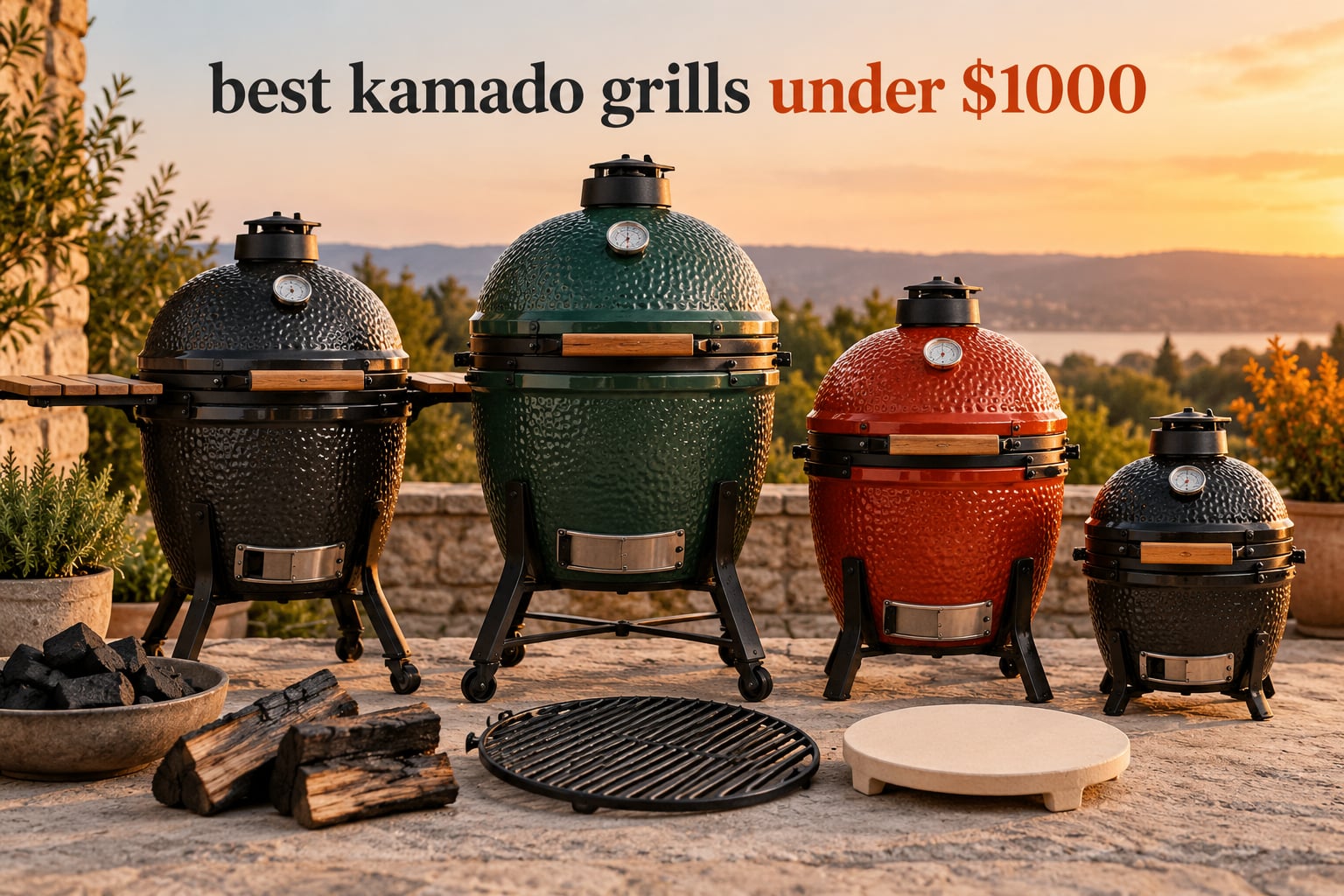
The short answer: the Char-Griller Akorn is the best kamado grill you can buy for under 1000 dollars, because it gives you the kamado cooking method, a 445 square inch grate and a full metal cart inside a budget that leaves room for the accessories you actually need. The Kamado Joe Joe Jr. is the pick if you want real thick-walled ceramic instead of insulated steel, and the Kamado Joe Classic Joe Series I is the pick if you can find the older series at a discount and want two-tier cooking.
A kamado is a Japanese-style charcoal cooker, and the word simply means stove or cooking range. The concept is an egg-shaped vessel with a firebox at the bottom, thick walls that store heat, and two vents you control with your hands. That is the entire trick. Because the walls hold so much thermal mass, you move between 225F smoking and 600F searing by opening and closing a top and bottom damper rather than by chasing a burner dial.
Here is the honest problem with the sub-1000-dollar band. Below a grand you are choosing between two very different machines. One is a thin steel body with a ceramic firebox liner, which is light, tough and fast to respond. The other is a genuinely thick ceramic shell, which is heavy, slower to change temperature and far steadier over a long cook. Both work. They just cook differently, and the price difference is not the main thing that separates them.
We spent weeks reading owner feedback and comparing the ten grills below on wall thickness, grate area, vent range, weight, warranty and the accessories each one needs before its first cook. If you want the wider picture first, our backyard kamado roundup and ceramic kamado guide cover the mid-size and premium end of the market, while this list stays strictly inside your cap.
Table of Contents
Top 3 Kamado Grills Under 1000 Dollars

Char-Griller Akorn 20-Inch
- 445 sq in cast iron cooking area
- Triple-wall insulated steel
- EasyDump ash pan
- Locking casters

Kamado Joe Joe Jr 13.5-Inch
- Thick ceramic body
- 150 sq in cooking area
- Heat deflectors included
- Two cooking levels

Kamado Joe Classic Joe Series I
- 250 sq in two-tier cooking
- Divide and Conquer grates
- Slide-out ash drawer
- Cart and shelves included
Which kamado is the best value for money under 1000 dollars? The Akorn, by a wide margin. It carries the largest cooking area in this group, moves on less charcoal than a metal kettle of similar size, and takes a knock without shattering. The Joe Jr. is the better grill on paper because its ceramic walls are real, and the Classic Joe I is the better buy the moment the older series lands near street level. All three include a stand or cart in the box, so none of them needs a furniture purchase before you light them.
All 10 Kamado Grills Under 1000 Dollars Compared in 2026
| Product | Specifications | Action |
|---|---|---|
| Char-Griller Akorn 20-Inch Kamado |
|
Check Latest Price |
| Kamado Joe Joe Jr 13.5-Inch |
|
Check Latest Price |
 London Sunshine Cadet Tabletop Kamado London Sunshine Cadet Tabletop Kamado |
|
Check Latest Price |
| Kamado Joe Classic Joe Series I |
|
Check Latest Price |
 London Sunshine 15-Inch Ceramic Kamado London Sunshine 15-Inch Ceramic Kamado |
|
Check Latest Price |
 Outvita 13-Inch Round Kamado Outvita 13-Inch Round Kamado |
|
Check Latest Price |
 Brand-Man Rodeo Elite Steel Kamado Brand-Man Rodeo Elite Steel Kamado |
|
Check Latest Price |
 London Sunshine 15-Inch Kamado With Casters London Sunshine 15-Inch Kamado With Casters |
|
Check Latest Price |
 VINGLI 13-Inch Portable Kamado VINGLI 13-Inch Portable Kamado |
|
Check Latest Price |
 ROVSUN 13-Inch Kamado ROVSUN 13-Inch Kamado |
|
Check Latest Price |
Here is the short version of who each one suits.
- Char-Griller Akorn: best overall, biggest grate, toughest body.
- Kamado Joe Joe Jr.: best real ceramic under the cap.
- London Sunshine Cadet: cheapest way to learn kamado vent control.
- Kamado Joe Classic Joe Series I: best two-tier ceramic for a family cookout.
- London Sunshine 15-Inch: best budget ceramic with folding side grates.
- Outvita 13-Inch: best for a small patio or a weekend trip.
- Brand-Man Rodeo Elite: best if you want the cart and prep table included.
- London Sunshine 15-Inch with casters: best ceramic you can wheel around.
- VINGLI 13-Inch: best for cooking for one or two people.
- ROVSUN 13-Inch: best budget picnic cooker.
1. Char-Griller Akorn 20-Inch Kamado, Editor’s Choice
- Largest grate in this roundup at 445 sq in
- Holds and controls temperature from 200F to 700F
- EasyDump ash pan clears coals in seconds
- Locking casters and folding side shelves
- Triple-wall steel burns less fuel than a metal kettle
- Steel body needs a cover and regular oiling to prevent rust
- Lid thermometer reads inaccurate
- No heat deflector included for low-and-slow
The Akorn is the grill we keep coming back to, and it is the one we would put on a patio without hesitating. Our team has run it through full-temperature cooks and long smokes, and the thing that stands out is how little you have to touch the vents once the fire is established. The triple-wall steel body limits airflow enough that the temperature holds across a 200F to 700F range, which is a wider usable span than most people expect from a steel-bodied cooker.
At 445 square inches of cast iron grate, it is the largest cooking surface of anything in this list. That matters more than it sounds like it should. A full-size brisket needs flat clearance, and most of the small ceramic kamados in this price range simply do not have it, which means you end up butchering a packer cut into pieces to make it fit.
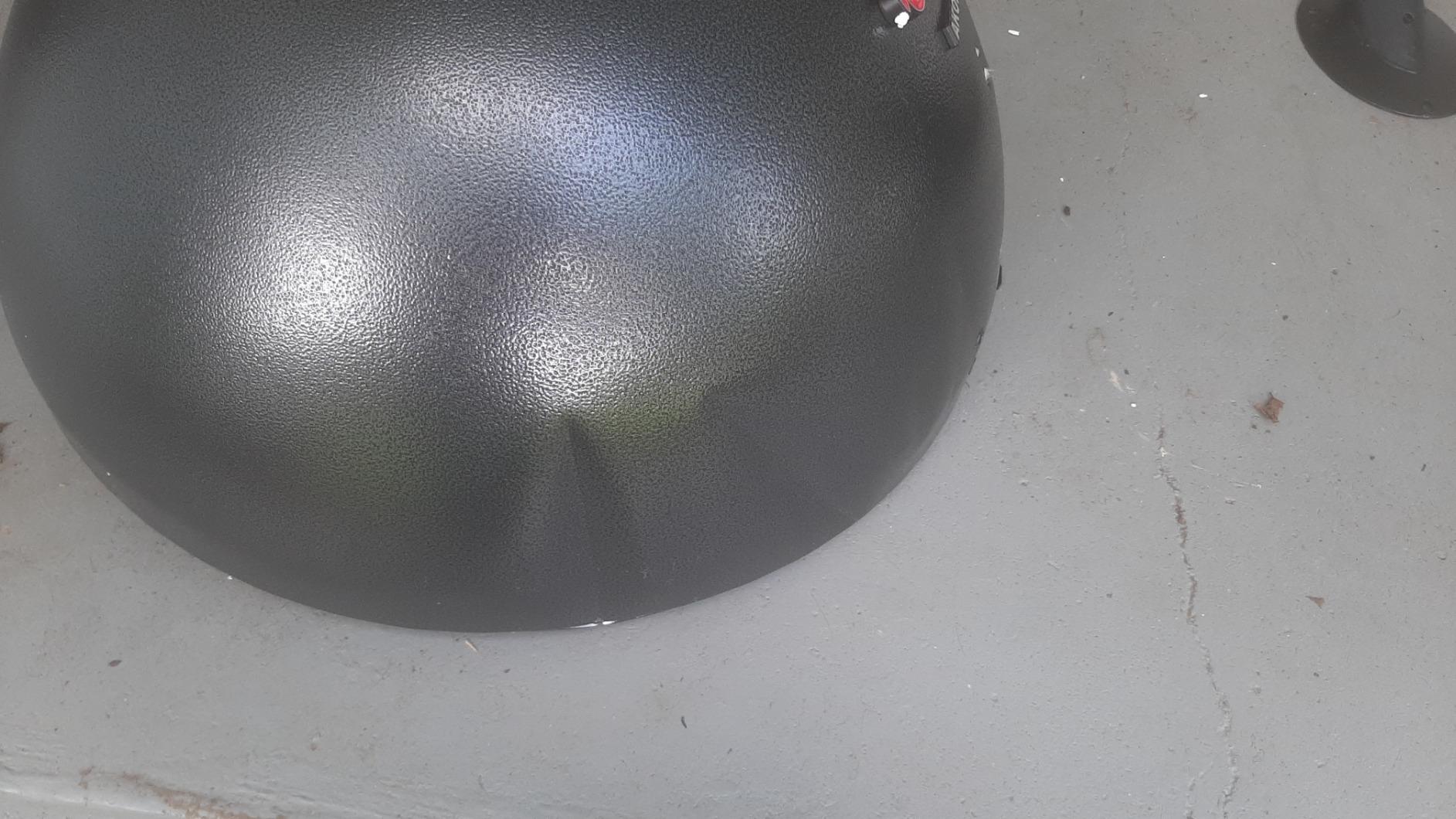
The hardware is the other reason it wins. Indexed dual dampers, an EasyDump ash pan, 8-inch locking casters, foldable side shelves and a grate lifter all come standard. Owners who have had theirs for several seasons describe oiling the steel and keeping a cover on it as the only real maintenance routine, and the pattern of complaints is remarkably consistent: a cover matters, and the built-in thermometer is decorative rather than useful.
Our practical advice is to buy a two-probe thermometer the same week the grill arrives. Everything owners report about the lid gauge being off makes sense once you are using real probes at grate level. The one accessory you genuinely need to add is a heat deflector stone, and without one the Akorn is more of a grill than a smoker.
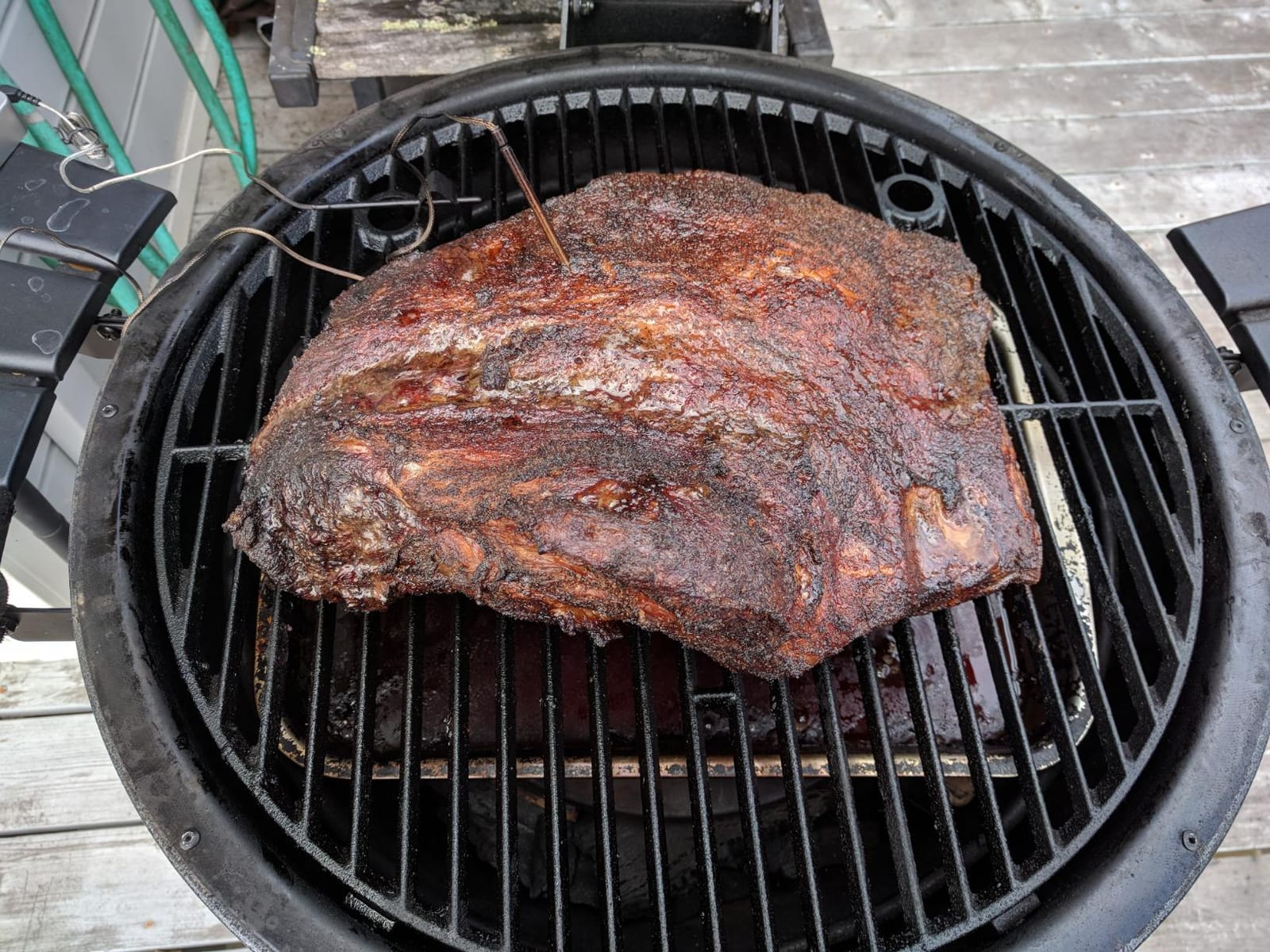
What the Akorn does better than the ceramic options
It responds fast. Thick ceramic takes a long time to walk from 225F up to searing heat and a long time to come back down, and on a weeknight that delay is the difference between cooking and giving up. The steel body on the Akorn moves in a fraction of the time, which is exactly why it stays useful as an everyday grill and not only a weekend smoker.
It also survives mishaps. Forum owners comparing the Akorn with a Big Joe regularly note the one advantage nobody can argue with: a steel cooker does not shatter if a neighbour’s kid or an overexcited golden retriever knocks it over. That is a real consideration for a family patio.
Where the Akorn falls short
It is a steel body, so it is not a true ceramic kamado and it will not behave identically over a twelve-hour burn. Owners report larger swings on windy days, and bark development on brisket suffers more than it would in a thick ceramic shell. If your goal is set-it-and-forget-it overnight cooking, this is the wrong grill.
It also needs a heat deflector plate and a good cover to live a long life, and both are extra purchases. Steel that is not covered will spot with rust within a season. Budget for those two items before you decide the grill was a bad value.
2. Kamado Joe Joe Jr 13.5-Inch, Most Compact
- Real thick-walled ceramic with excellent heat retention
- Reaches sear temperature quickly
- Included heat deflectors and ash tool
- Uses noticeably less charcoal than a metal kettle
- Compact enough to move to a second patio
- At 75.6 pounds it takes two people to move
- Ceramic can arrive cracked
- 150 sq in suits two to four people
If what you want is genuine ceramic behaviour and you refuse to cross four figures, the Joe Jr. is the honest answer. It is a real ceramic kamado, not a steel cooker with a ceramic coat, and the difference shows up the moment you close the top vent. Owners describe heat retention and fuel consumption as the big surprises, with many reporting the grill using a fraction of the charcoal a comparable steel cooker needs.
It includes a cast iron stand, a stainless steel grate, heat deflectors and an ash tool, so the day it arrives it is cookable. Two cooking levels plus the supplied deflectors let you run direct heat on one side and indirect on the other, which is how most people get a full spread of food done in one session.
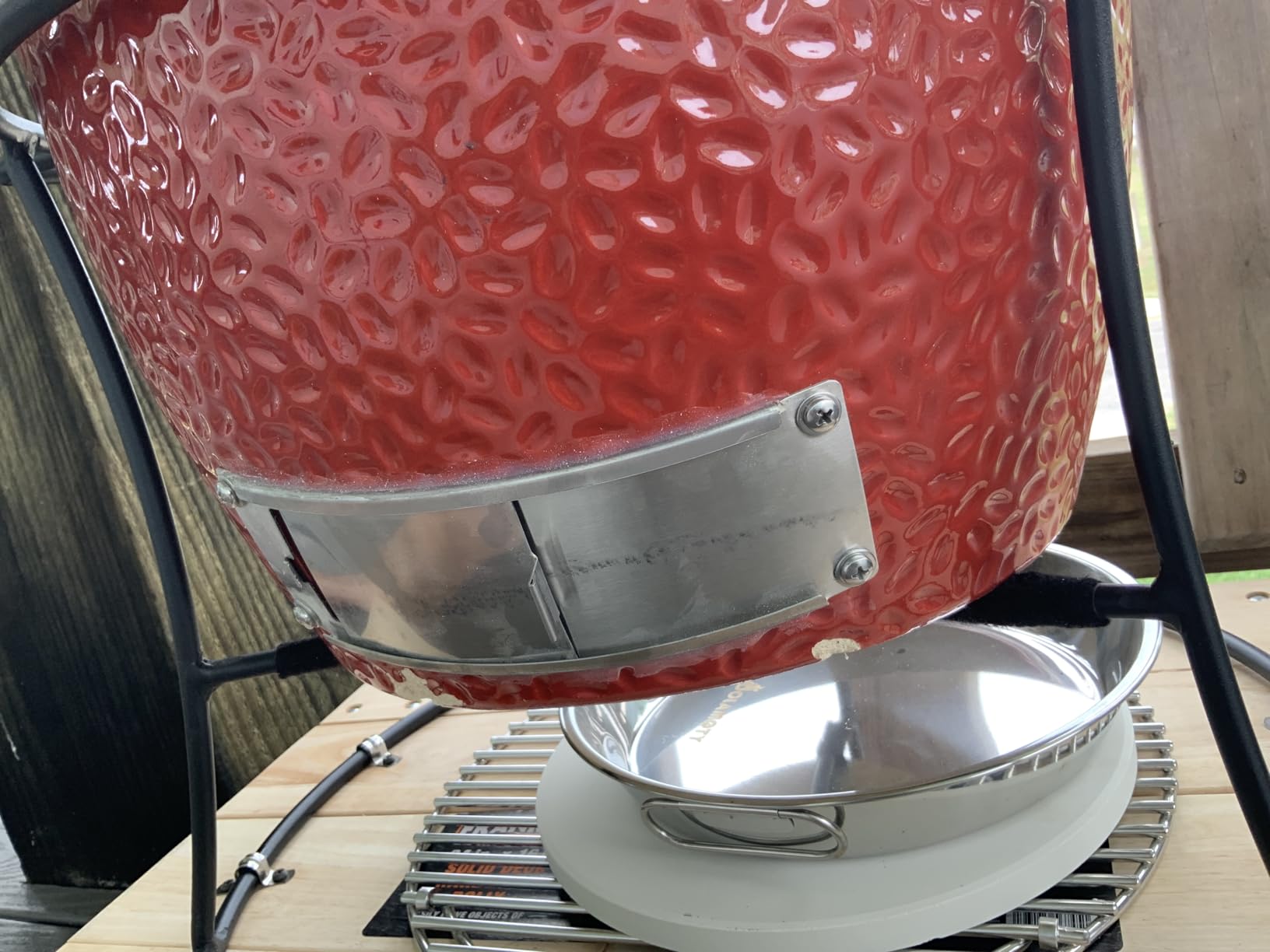
Two practical warnings come up repeatedly in owner feedback. The first is weight. At 75.6 pounds it is not a one-person carry even though it is sold as portable, and owners consistently describe repositioning it as a two-person job. The second is transit damage. Ceramic can arrive cracked, and the standard advice from buyers is to inspect the cooker before the delivery crew leaves and before you cut the shipping straps.
Cleaning is the part people enjoy. The included ash tool and grate hook mean the whole cleanup takes under a minute, which is a genuine quality-of-life difference against a steel firebox you have to reach into. Owners also point out that you should use lump charcoal with a chimney or a torch rather than lighter fluid, since the ceramic seals tightly enough that a chemical taste lingers.
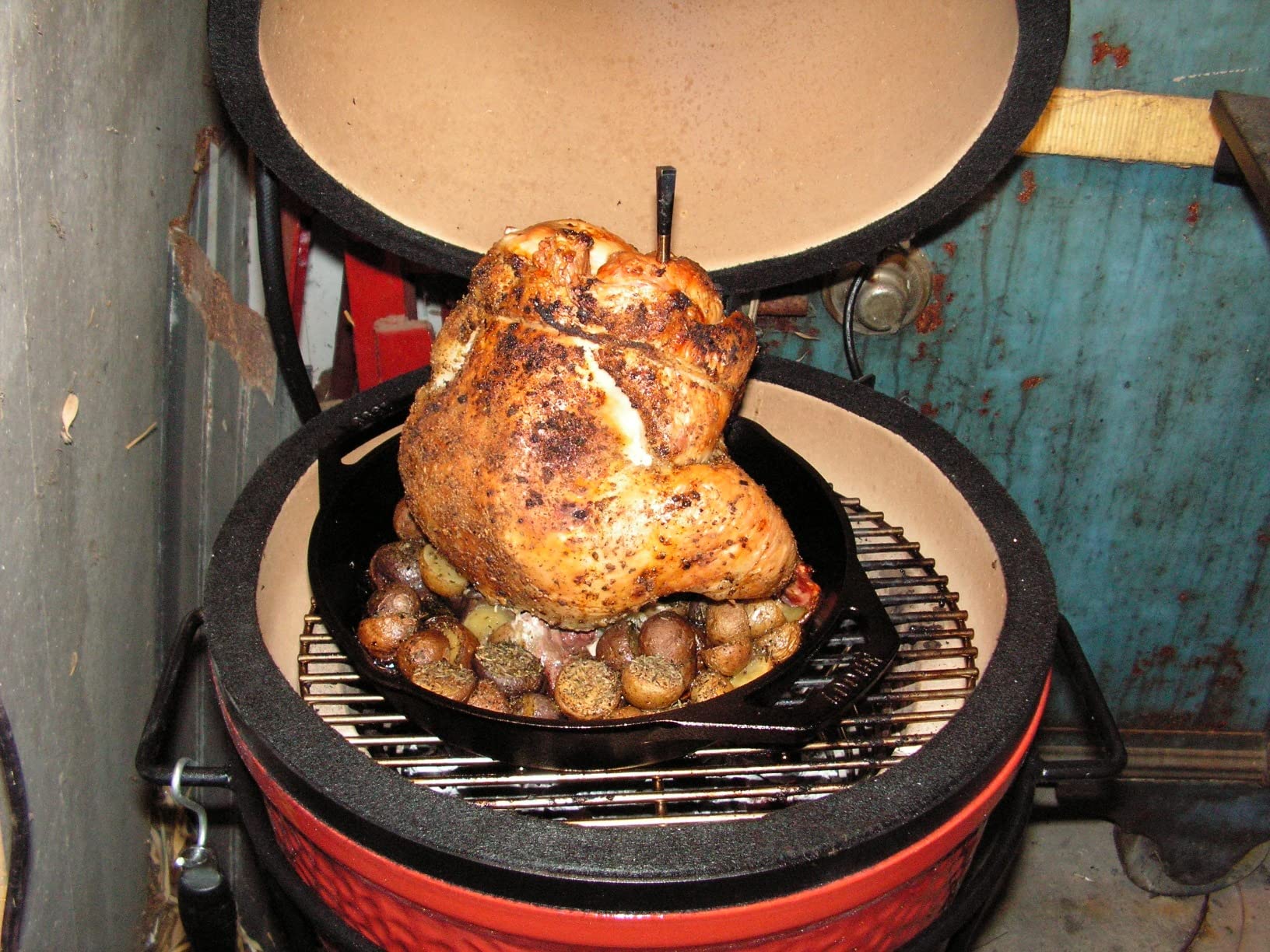
Why the Joe Jr. earns its spot
The heat retention is the reason. When you are cooking low and slow for hours, a thick ceramic wall is not a luxury, it is the mechanism that makes the food good. Meat stays in its own juices instead of drying out, and the temperature barely moves while you sleep.
For a household cooking for two to four people, 150 square inches is genuinely enough. It is also the only true ceramic kamado in this price range, which matters if you are buying a kamado specifically for the ceramic experience.
Where it will frustrate you
The grate is small. Once a group of more than four shows up, you are cooking in shifts, and anyone planning large family gatherings should look at the Akorn or a mid-size ceramic instead. The size limit is real and it does not negotiate.
It also arrives without any of the ecosystem that makes a full-size kamado pleasant, so a fitted cover, a better vent cap or a rotisserie are all aftermarket items with no cheap version available. Plan for that before the first cook.
3. London Sunshine Cadet Tabletop Kamado, Best for First Timers
London Sunshine Ceramic Charcoal BBQ Kamado Grill Smoker – Portable Tabletop Cadet Series -Orange
- Thick ceramic wall that burns charcoal efficiently
- Pre-assembled body and lid
- Good stepping stone from a kettle grill
- Built-in gauge plus lower vent
- Steel stand and wood handles included
- Grate fits about three burgers at once
- Heavy for its size
- Best suited to direct cooking over long smokes
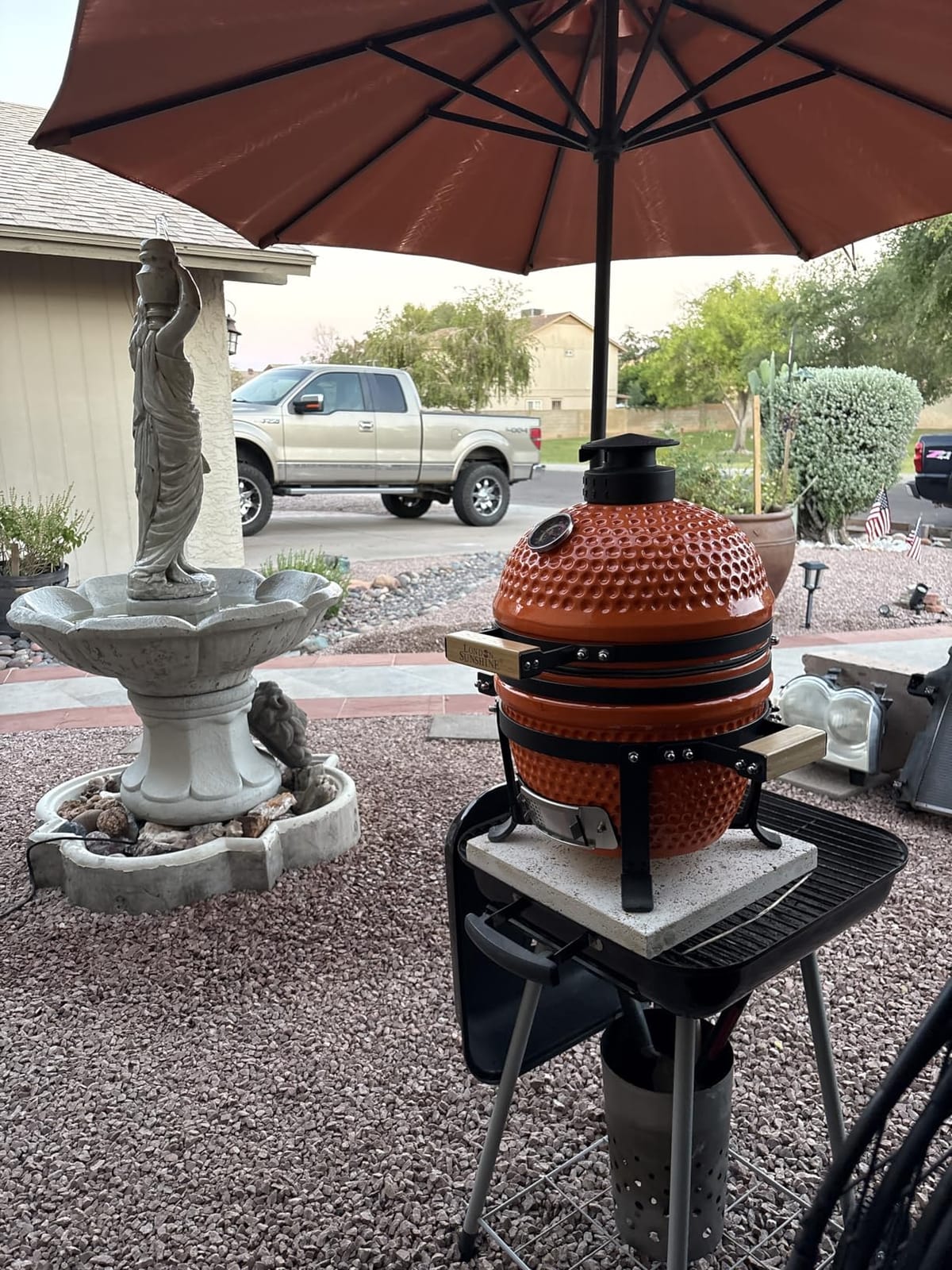
The Cadet is the cheapest way on this list to actually learn how a kamado breathes. At 94.25 square inches it is a genuine tabletop cooker, and the 0.8 inch ceramic wall gives it the sealed, slow-burning character that separates kamado cooking from grilling on an open kettle. The whole body and lid ship pre-assembled, so there is nothing to build on day one.
For someone moving up from a kettle or an electric grill, this is the least intimidating way to learn vent control. The built-in temperature gauge and the stainless steel bottom vent give you two things to adjust, and the cast iron top vent handles the rest. Owners describe the learning curve as short once you understand that the fire, not the vent, sets the ceiling.
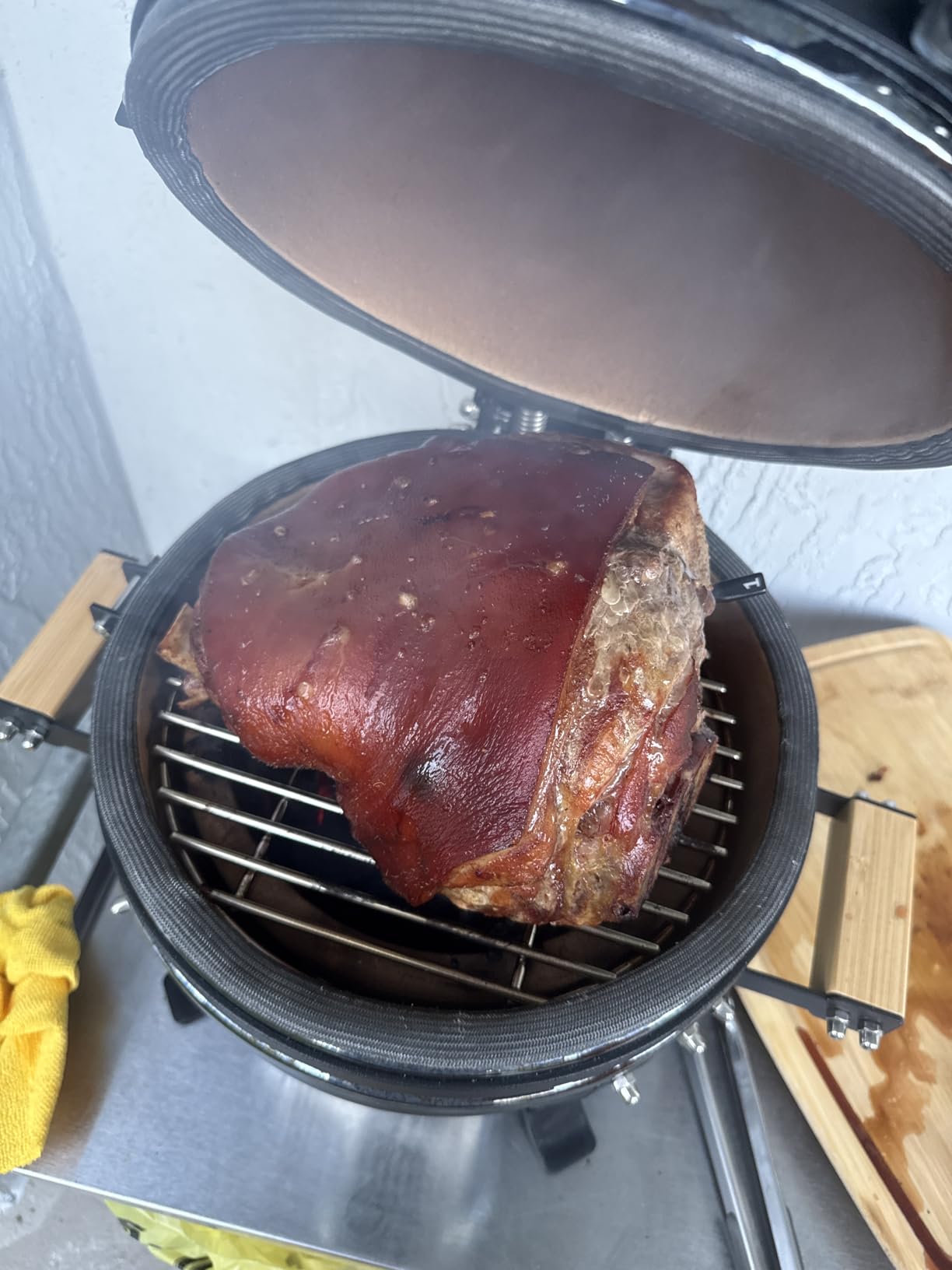
The steel stand and wooden handles make it straightforward to place on a patio table or carry out to a park. The glass fiber gasket, inner fire bowl and 11-inch stainless grate are all included, which is a better starting kit than most competitors at this tier. The stated cooking range runs from 180F to 750F, so it covers both slow cooking and broiling.
What you give up is capacity and long-haul stability. The grate fits roughly three burgers or two ribeyes, and owners note the grate can read undersized against the body. It is a direct-cooking tool more than a smoker, and pairing it with a friend who owns a big cooker is a perfectly reasonable strategy.
Who this grill suits
It suits a couple, a small apartment patio, or anyone who wants to learn the kamado method before spending real money. The fuel efficiency owners report is the part that surprises people, since a sealed ceramic body burns a small load slowly and evenly.
It also suits anyone with a genuine travel itch. Owners use it on patios and in yards without treating it as a permanent fixture, which is a flexibility no full-size ceramic can offer.
Who should skip it
Skip it if you cook for a crowd. There is no version of this where 94 square inches is enough, and the frustration builds fast. A 15-inch ceramic at a similar spend serves a household far better.
Skip it if you are planning a twelve-hour brisket. The firebox is small and so is the fuel load, which means more tending and less stability over a long burn. This is a grill with kamado manners, not a smoker.
4. Kamado Joe Classic Joe Series I 18-Inch, Best for Serious Smokers
- Holds set temperature for hours in wind
- Divide and Conquer grates allow direct and indirect at once
- Slide-out ash drawer needs no disassembly
- Cart
- shelves
- deflector and gripper included
- 188 pounds needs two or three people to lift
- Reflector and other ceramic parts break easily in unpacking
- Series I top vent shifts when the lid opens
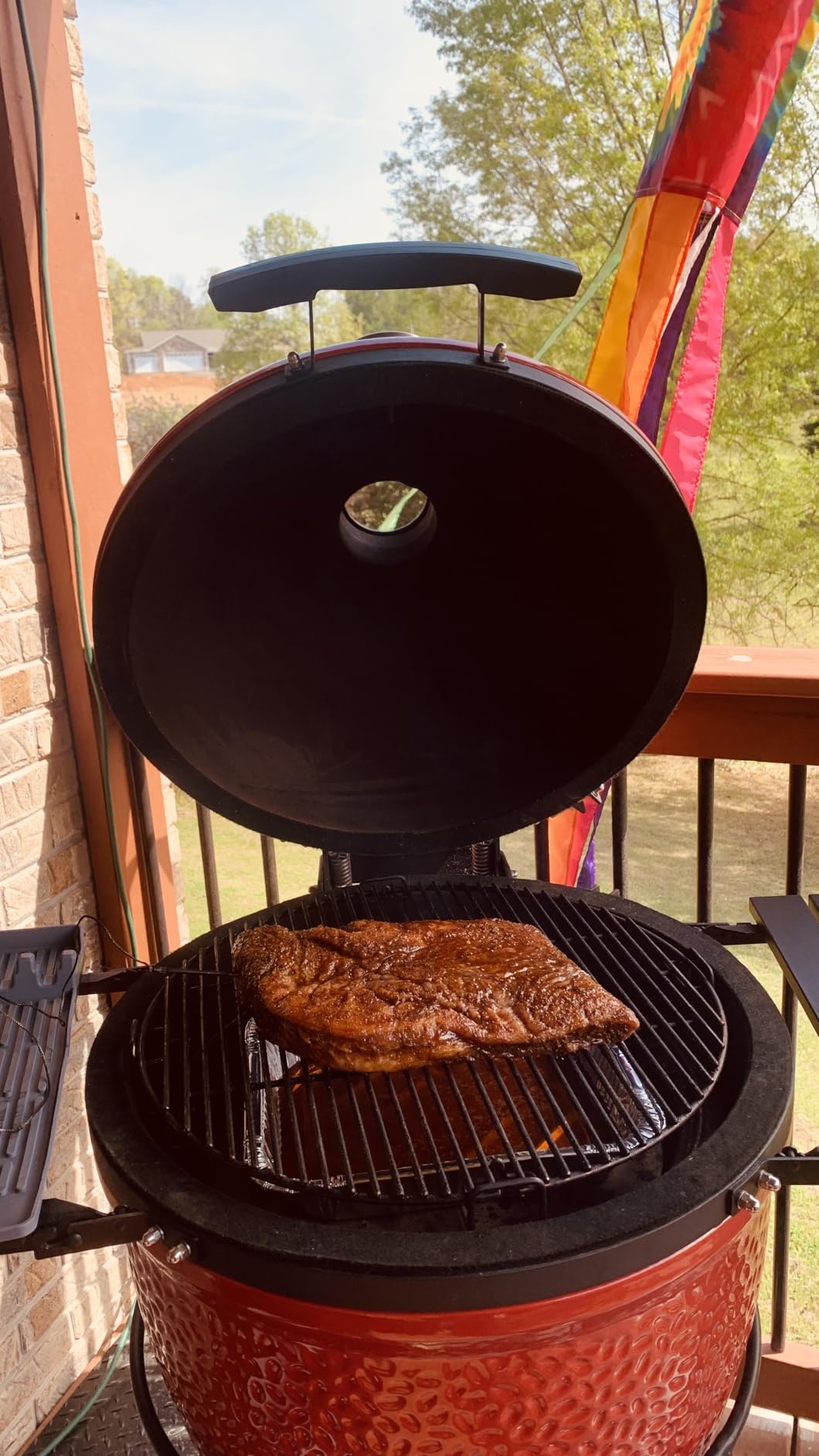
The older Classic Joe Series I is the one to watch in this price range. Newer series add convenience rather than flavour, and long-term owners consistently say the earlier model is the better buy when the two are close in cost. The Divide and Conquer half-moon grates are the reason: you can load one side for direct heat and stack the other side over the fire for indirect, and you get both at the same time.
The slide-out ash drawer is the feature people notice most on a daily basis. Because the internals never have to be pulled apart, cleanup after a twelve-hour cook takes minutes instead of a project. The attached top vent cap staying put when you lift the lid is a small thing that you appreciate every single cook.
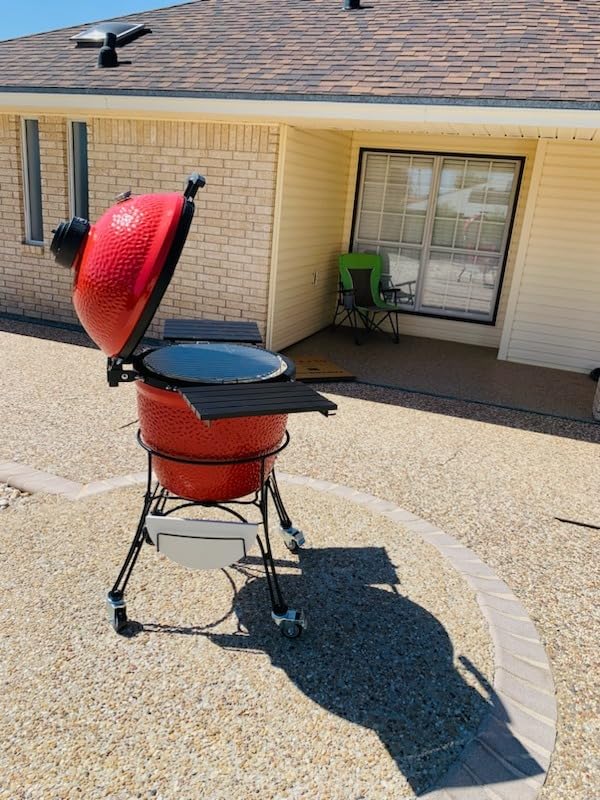
At 250 square inches across two tiers, this is a genuine family cooker. Owners describe it matching a same-size Big Green Egg on cooking results while including a better ash system and a longer list of included hardware, and they report holding set temperature for hours even on windy days, which is the test most budget grills fail.
There are real frictions. At 188 pounds, lifting it onto the cart takes two or three people. The ceramic deflector and other ceramic parts are easy to damage during unpacking, so open the boxes carefully. The Series I top vent also shifts position each time the lid is opened, and the built-in thermometer is hard to read from a standing position.
Why serious smokers will be happy here
Two-tier cooking and a working ash drawer is the combination that makes repeat long cooks pleasant. You set the fire, place food on whichever level suits the cook, and clear ash at the end without dismantling anything.
The ceramic body is the real reason for the price gap over a steel kamado. Over a long burn that wall is what keeps the temperature honest, and owners consistently point to overnight cooks as the moment the purchase makes sense.
Where the value breaks down
This is the model where a discount matters most. If the Series I is near street level, it is the best grill in the roundup. If it is priced close to a new-series equivalent, the older model’s quirks stop being charming and start being irritating.
Weight is the other limit. Unless you have a helper and a clear path, this is a grill that lives in one spot permanently. Owners also note that rotisserie hardware is sold separately if you want it.
5. London Sunshine 15-Inch Ceramic Kamado, Most Versatile
London Sunshine 15″ Ceramic Kamado Charcoal BBQ Grill and Smoker, Green
- 1 inch ceramic wall at a low price
- Heats quickly and holds temperature
- Stainless side grates fold up to add charcoal mid-cook
- Glass fiber gasket seals well
- Stand and metal handles included
- Interior diameter is smaller than the outside suggests
- About 92 pounds and awkward to reposition
- Heat deflector plate sold separately
A 1 inch ceramic wall at this spend is unusual, and it is why this one earns its place. Owners compare the finish and build quality favourably against far more expensive ceramic cookers, and they report fast heat-up with temperature that is easy to settle once the fire is established. The Japanese dome shape is doing real work here, since it directs airflow around the fire instead of over it.
The folding stainless steel side grates are the feature we did not expect to care about and now recommend. Folding them down gives you access to drop in more lump charcoal mid-cook without lifting the whole grate, which matters on a longer smoke. The glass fiber gasket is also tight enough that owners describe easy cleaning around the seal.
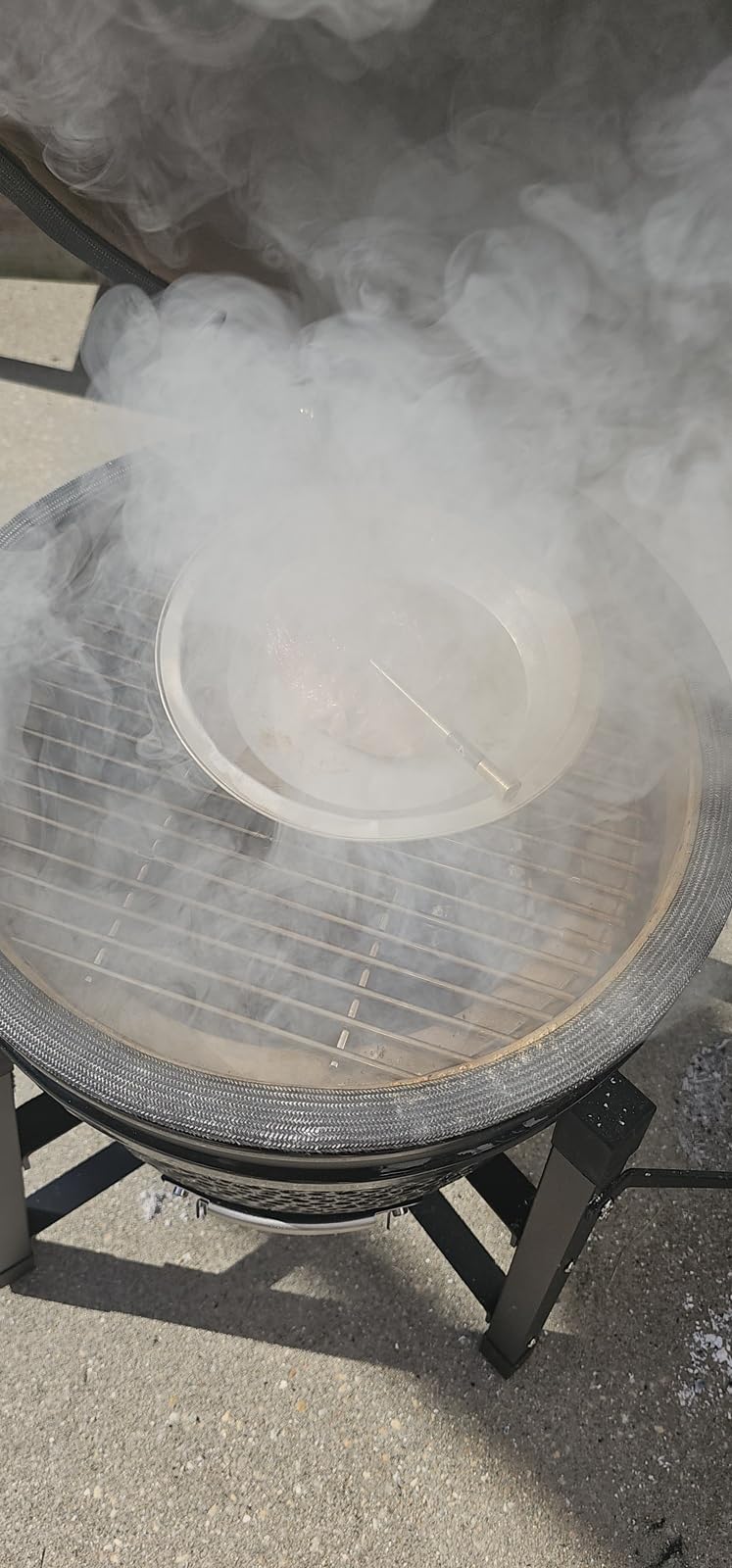
Read the measurements before you measure your patio. The stated cooking grate diameter is 13.2 inches inside a 15.7 inch ceramic body, and owners repeatedly warn that the interior is smaller than the outside silhouette suggests. That is the single most common surprise, and it is a good reason to check your cooking plan before you commit.
Weight is the second one. At roughly 92 pounds this is a permanent fixture rather than a portable cooker, and a few owners report missing assembly screws on arrival, so check the hardware bag before you start. Adding a deflector plate converts it from a grill into a genuine indirect smoker.
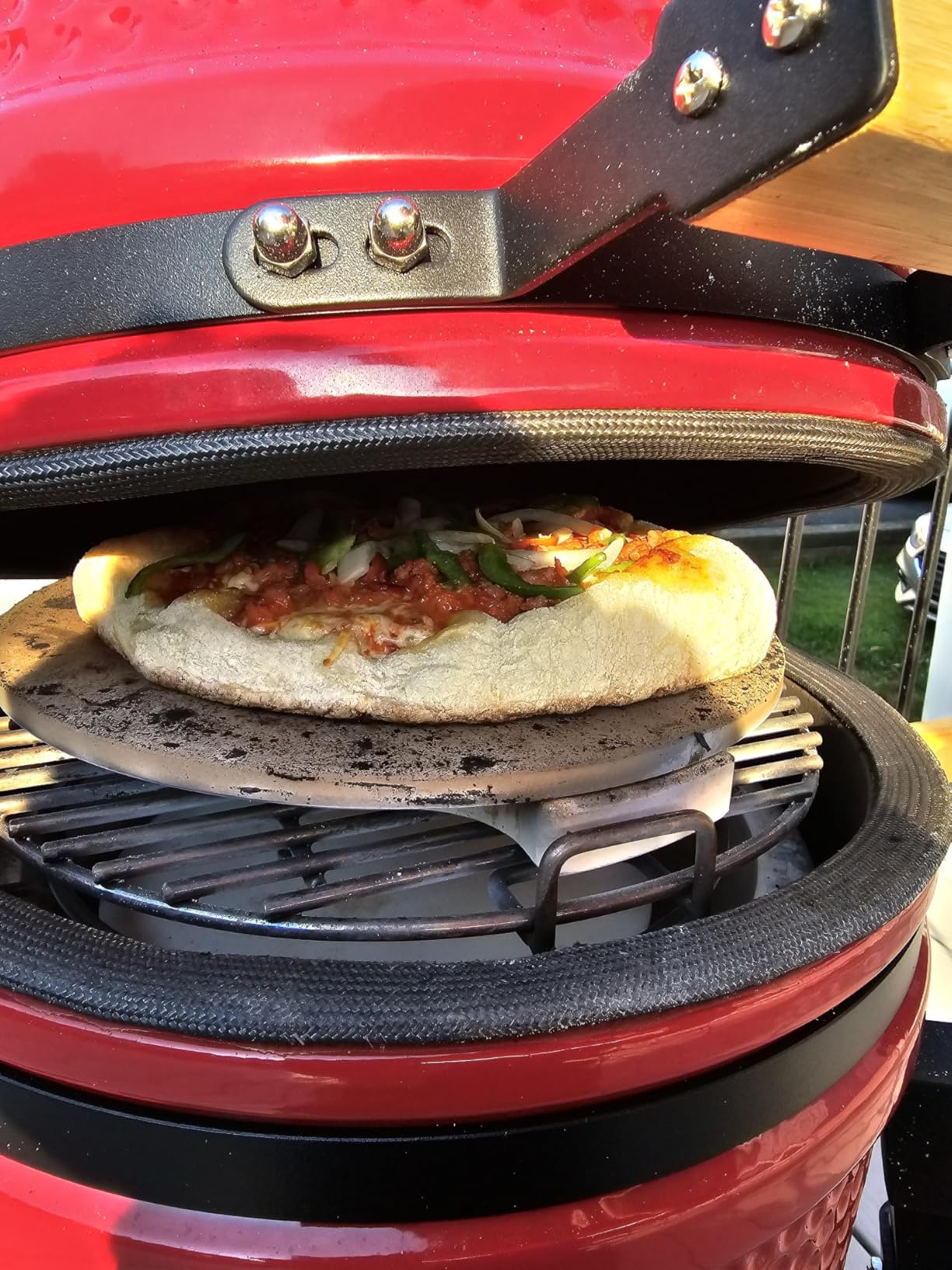
Who this budget pick serves
A couple or a small family who want ceramic heat behaviour without spending four figures. One-inch walls are the right thickness for steady temperature, and the quick heat-up is a genuine advantage over heavier ceramic.
It also suits anyone who wants a full-size kamado shape on a patio that cannot take a 200-pound cooker off a truck. A tall stand and metal side handles are included, so it goes from box to cooking position without extra furniture.
Where it falls short
The cooking surface is the constraint. A 13.2 inch grate handles a good dinner and a small rack of ribs, but a packer brisket is a stretch and a full rib slab is a squeeze. If you plan large-format cooking regularly, step up in diameter rather than in brand.
It also needs a heat deflector plate for true low-and-slow, and the 1 year warranty is short next to the lifetime ceramic coverage the Kamado Joe models carry. Read those two points together before you decide the low price is the whole story.
6. Outvita 13-Inch Round Kamado, Best for Camping
- Very efficient on charcoal versus a metal grill
- Reaches cooking heat quickly then holds
- Enamel steel grate is easy to clean
- Top and bottom vents plus a thermometer
- Bamboo handle stays cool to carry
- Grate only about 8.5 inches across
- No removable ash box
- Assembly has many bolts and a second ring that is easy to miss
The Outvita is the most compact genuine ceramic on the list, and the efficiency is the story. Owners repeatedly report getting smoke flavour and long burn times on a fraction of the charcoal a non-ceramic grill needs, which is exactly the behaviour you want when fuel weight matters on a trip or a small patio.
Control is simpler than on the larger cookers. Once the vents are set, the ceramic body holds temperature for hours, and closing the top and bottom vents at the end of a cook lets the fire smother so the remaining coal can be saved for next time. The enamel steel grate is simple to clean and will not rust the way bare steel does.
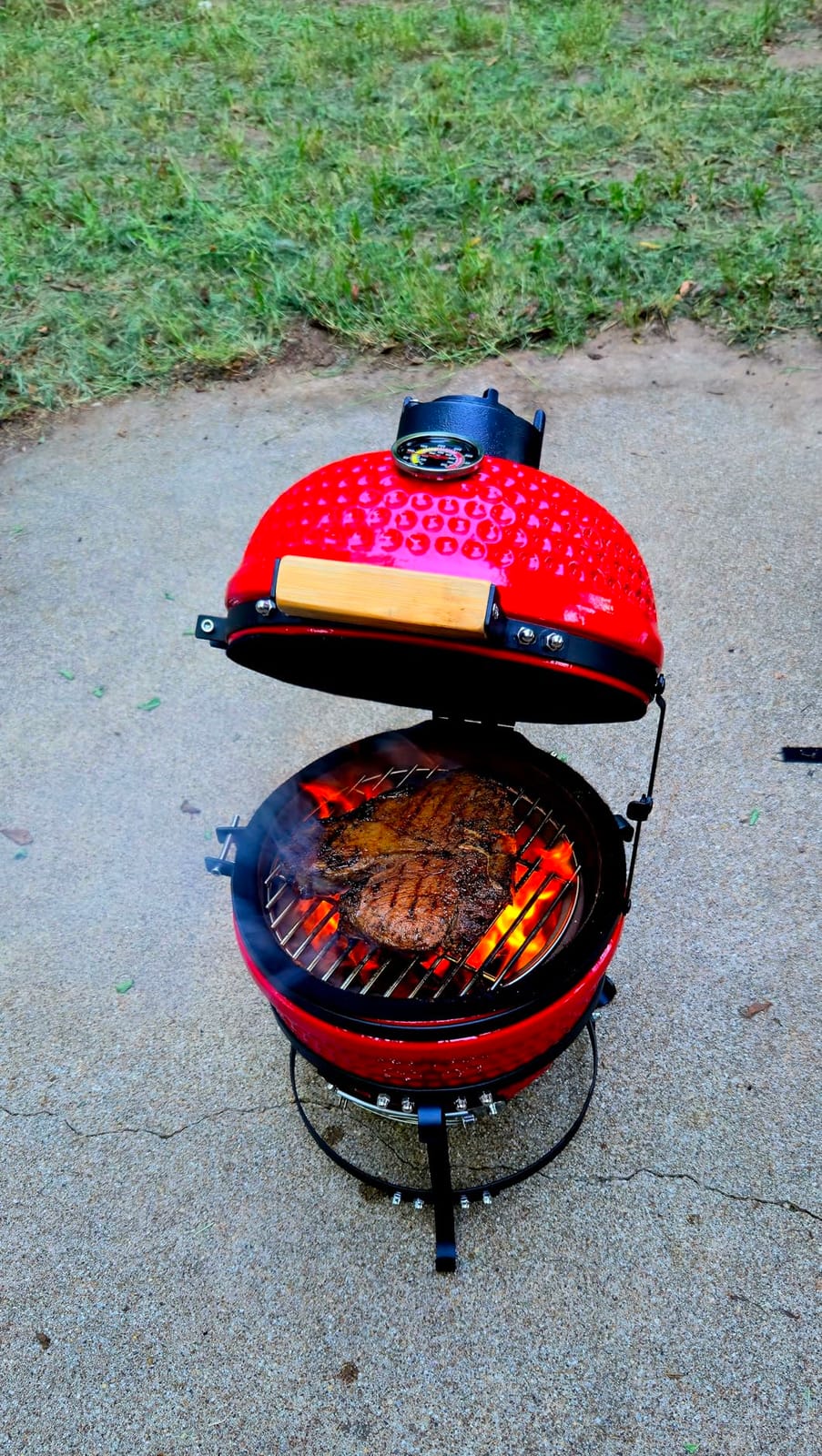
The compromises are honest ones. The grate is about 8.5 inches across, which is one or two people and little more, and there is no removable ash box, so ash comes out with a shop vac or by lifting the ceramic bowl out. The bamboo handle stays cool enough to carry, but there are no proper carrying handles, and the mounting bracket can scratch the ceramic exterior.
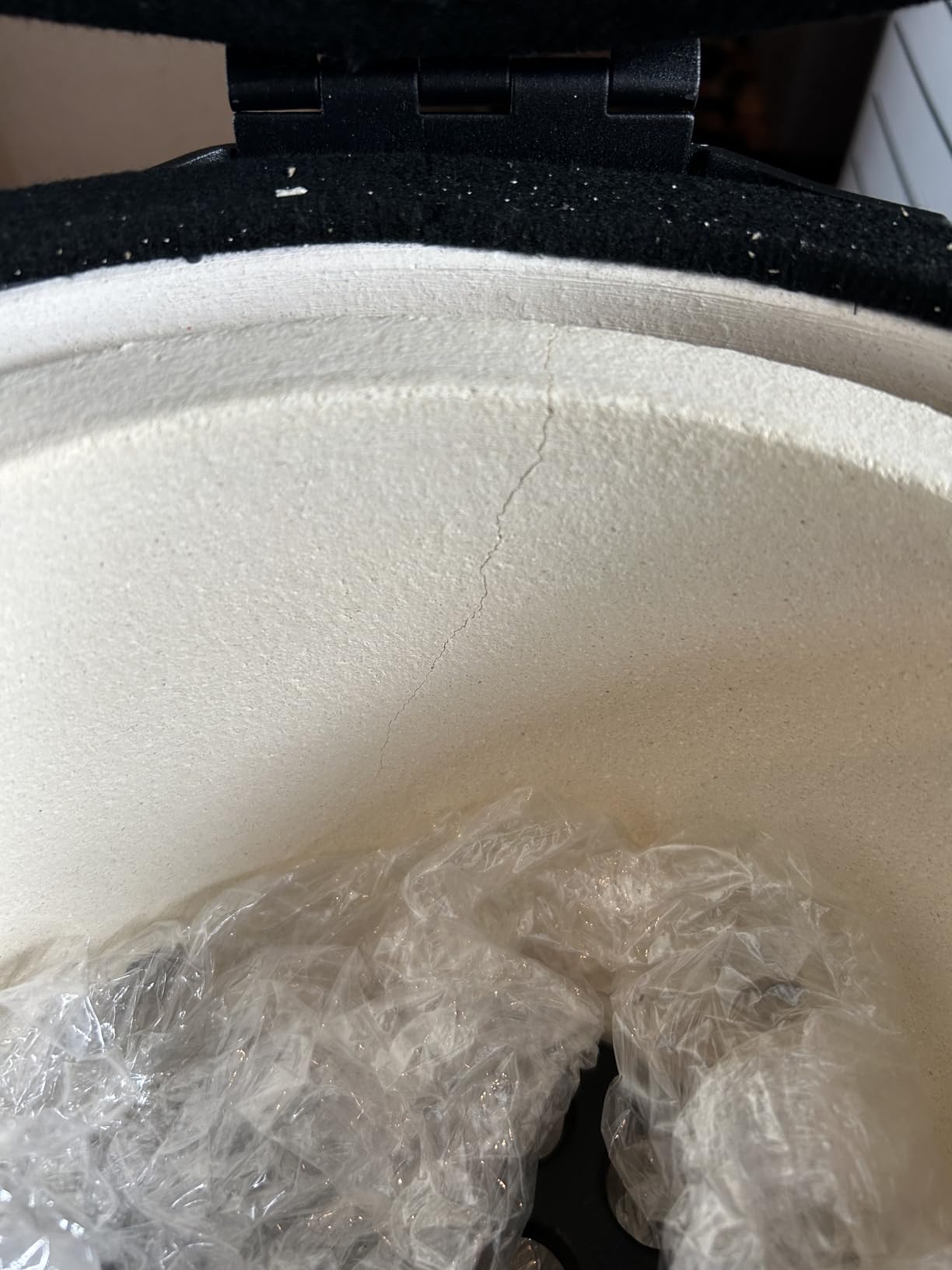
Assembly takes more bolts than you would expect, and a number of owners mention missing the second ring in the packaging. Set aside twenty minutes and read the parts list before you start. A smaller set of owners also reports the ceramic body cracking after only a few uses, so treat it as a patio cooker you move around, not as a permanent installation.
Why it earns a spot
It is the cheapest path to real ceramic behaviour, and the fuel saving is not a marginal benefit. Owners who switched from a steel kettle report using a small fraction of the charcoal for comparable cooks, which pays for the grill several times over.
It also suits patios with tight rules. At roughly 50 pounds and a 13 inch body it fits where a 200-pound kamado would never be allowed, and it moves with one person.
Where buyers report trouble
Ash management is the biggest daily annoyance. Without a removable catcher, cleanup means a vacuum or disassembly, and on a kamado that means handling a hot ceramic bowl rather than pulling a metal tray.
Capacity is the other limit. Plan for one or two people, and if you host regularly you will outgrow it faster than you expect. A slightly larger 15-inch ceramic costs more and removes both problems.
7. Brand-Man Rodeo Elite Steel Kamado, Best for a Ready-Made Cart
- 400 sq in of cast iron plus a half-moon warming rack
- Large prep table and storage cart included
- Holds heat for many hours once lit
- Double-layer steel body with a mesh gasket
- Trivet included in the box
- Assembly takes several hours with careful instructions
- Two-box packaging and stand pieces can arrive damaged
- Steel gives a different result from true ceramic
What makes this one unusual is what arrives in the box. A large prep surface, a storage cart and robust wheels are included rather than sold separately, so you do not spend your budget on furniture after the grill. For a family that wants a working outdoor station on day one, that changes the maths entirely.
The cooking space is 400 square inches of 20-inch cast iron grates plus a half-moon warming rack, and owners describe heat that builds fast and then holds for many hours. The coin-thickness double-layer body with a mesh fiberglass gasket and the included trivet give it a sealed kamado feel, and the top and bottom dampers give you the two-handed control a kamado needs.
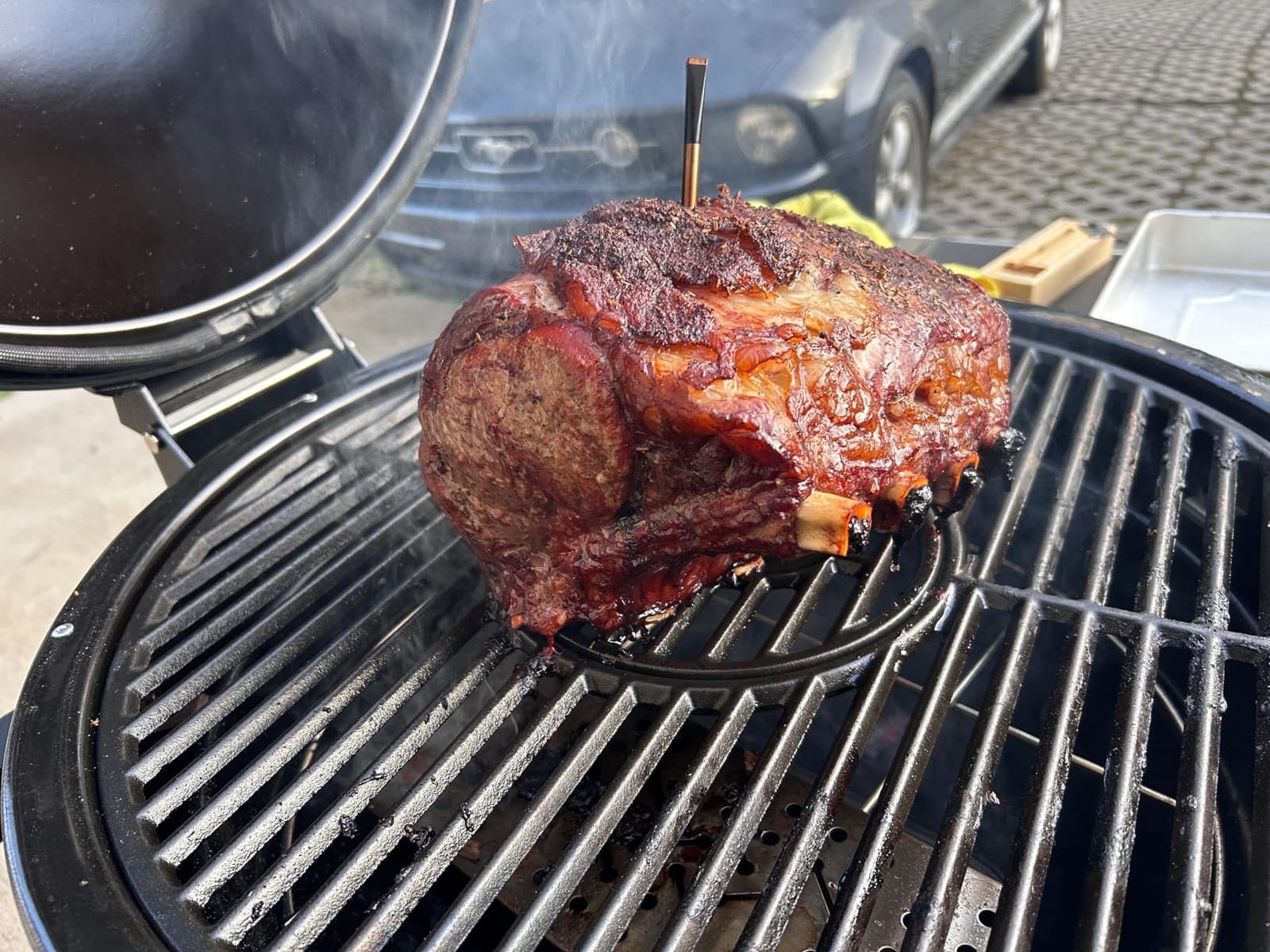
Two things to plan for. Assembly is the big one, with owners describing several hours of careful work and instructions that need following properly. The other is packaging, because the grill and the stand arrive separately and stand components have been reported arriving damaged, so inspect both boxes before the driver leaves.
Be clear about what you are buying. This is a steel-bodied kamado, and owners are straightforward that the result differs from a true ceramic cooker. It also takes a long time to come back down in temperature once hot, which is the mirror image of the quick response that makes it pleasant on a weeknight. Add a cast iron plate and it becomes a griddle as well.
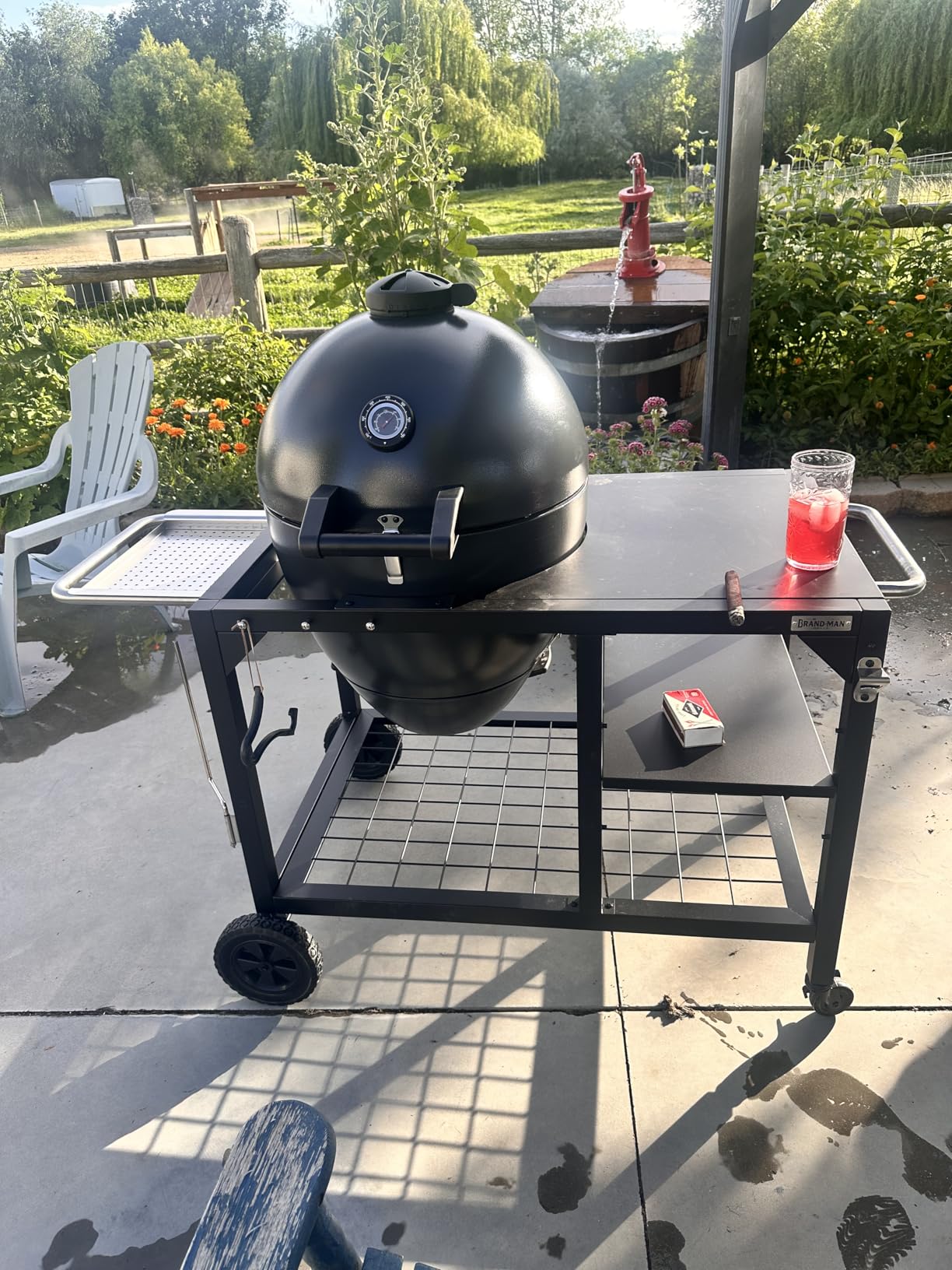
Why the included cart matters
Accessory cost is where budget grills quietly consume a budget. A stand, a deflector and a set of cast iron grates can add more than a quarter of the grill cost to the final number, and here the largest single part of that is already in the box.
The storage underneath is genuinely useful rather than decorative, and the prep surface means you are not chopping onions on a fence post. For anyone building an outdoor kitchen area, that is real value.
Where it will disappoint
Anyone chasing overnight ceramic stability should look elsewhere. Steel responds quickly in both directions, which is wonderful for searing and frustrating when you want the temperature to sit untouched for ten hours.
The assembly commitment is real. Owners who treat it as a weekend project are happy; owners who expect a one-hour setup are not. And with a small review base, long-term durability feedback is thinner here than for the established names, which is worth weighing against the warranty terms.
8. London Sunshine 15-Inch Kamado With Locking Casters, Best for a Movable Patio Setup
London Sunshine 15-inch Ceramic Kamado Charcoal BBQ Grill & Smoker with Locking Casters, Foldable Side Shelves, Stainless Steel Grates, and Tall Stand (Black)
- Ceramic body holds temperature for hours without drying food
- Locking casters roll and then hold steady
- Foldable side shelves and a foldable grate
- Easy to assemble and well packed
- Owners compare results to a large egg cooker
- No removable ash container
- so cleaning requires a shop vac
- Cooking surface is small
- aimed at a couple or small family
- Some buyers could not push it past roughly 460F at full burn
This is the London Sunshine 15-inch with the mobility upgrades, and the casters are the reason it exists separately from the green version above. Owners report that the wheels both roll the cooker into position and lock it firmly once it is there, which solves the problem that ceramic cookers are otherwise permanently glued to one spot on the patio.
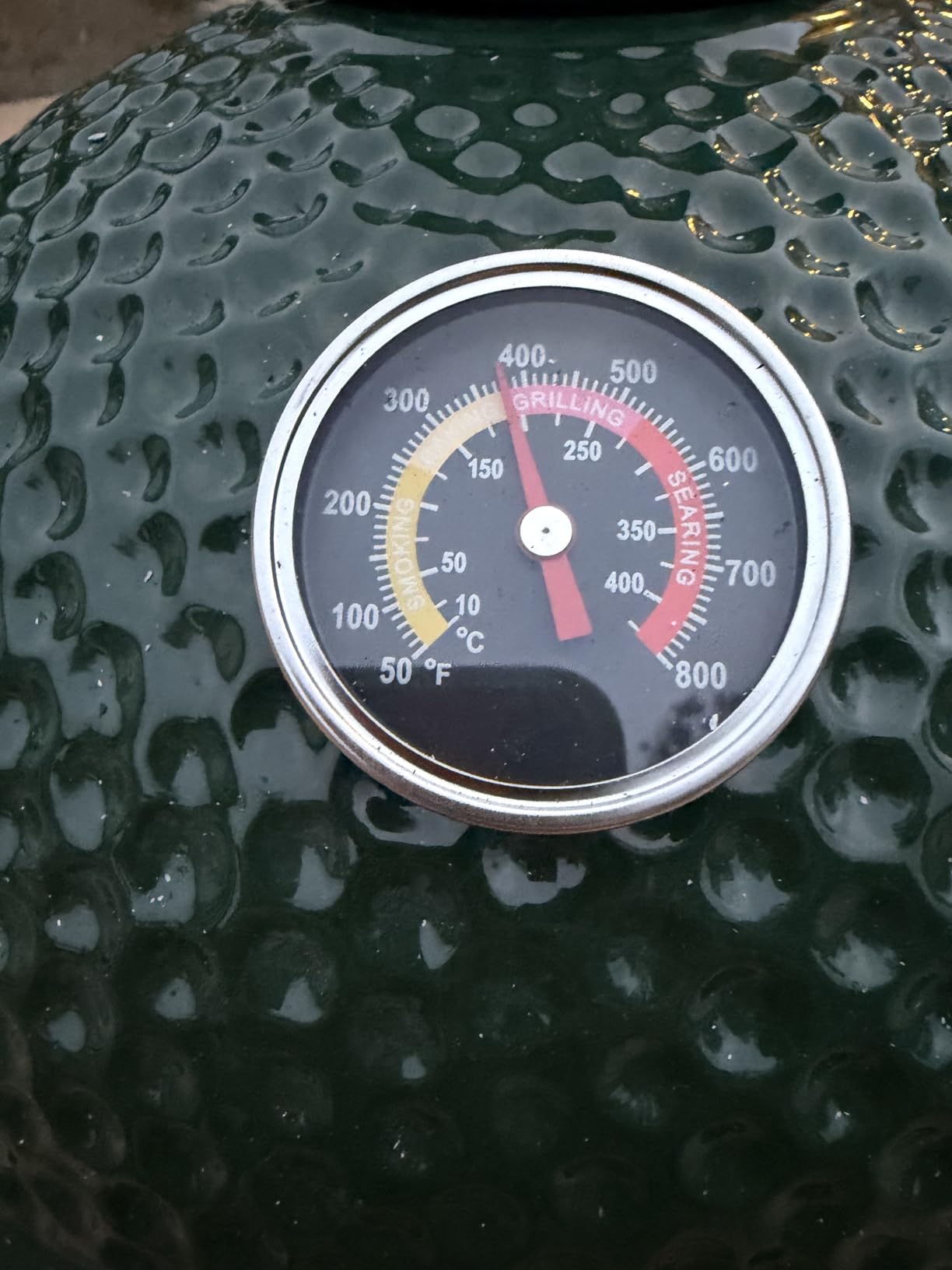
The 1 inch ceramic wall does the expected work. Meat cooks for hours without drying out, the temperature stays where you put it, and the stated 180F to 750F range covers smoking, baking, searing and grilling in one body. The high-temperature glass fiber gasket and the foldable stainless grate seal the package together nicely.
Assembly is straightforward and the packing is solid, both of which owners single out. The foldable side shelves add usable workspace, and folding the grate gives you mid-cook charcoal access without opening the whole cooking surface, which is a small quality-of-life gain on longer cooks.
The trade-offs are the same ones you get with any 15-inch ceramic. There is no removable ash container, so cleanup needs a shop vac, and the compact grate is aimed at a couple or small family. A minority of owners also report being unable to push much past roughly 460F at a full burn, so if you want heavy searing this is the wrong shape for you.
Who this one works for
Anyone whose patio gets used for more than cooking. Being able to wheel the cooker out of the way and bring it back changes how you use a small outdoor space, and a small review base does not change the physics of a 1 inch ceramic wall.
It suits people who want ceramic steadiness without the ceremony of a fixed station. The tall stand and side handles make the initial placement easy, and the casters handle everything after that.
Where buyers report trouble
Ash cleanup is the standing complaint. There is no drawer to slide out, so a shop vacuum is part of the routine rather than an occasional chore. If you smoke weekly, that is an irritation you will feel every cook.
Peak temperature is the other open question. Owners report mixed results at the top end, so if searing is a priority rather than a garnish, verify before you commit. With a small number of reviews, there is simply less long-term data to lean on here than with the bigger names.
9. VINGLI 13-Inch Portable Kamado, Best for One or Two People
VINGLI 13″ Kamado Charcoal Grill Portable Barbecue Grill BBQ Kettle Stand Lid Perfect for Outdoor Camping Patio Backyard Picnic
- Holds heat and burns a small amount of charcoal
- Closing the vents lets unburned coal be reused
- Easy assembly with clear step-by-step instructions
- Genuine charcoal flavour at a low cost
- Grill
- smoke
- bake or roast on one body
- Grate measures nearer 9.5 inches than the 13 listed
- Gasket and top exhaust are not the tightest seal
- Some units crack within a couple of months
The VINGLI is the thrift option, and its best feature is one that sounds trivial until you have used it. Closing both vents at the end of a cook smothers the fire so the unburned coal can be saved and reused next time. On a small ceramic body that runs cool and efficient, leftover fuel is a genuine saving rather than a novelty.
At 46 pounds it is the lightest real ceramic here, and assembly is genuinely easy with clear instructions. Owners report real charcoal flavour and low fuel use, and the egg-shaped ceramic body keeps the burn tidy. It is a good fit for a balcony, a first apartment patio, or a cook who wants to learn without spending.
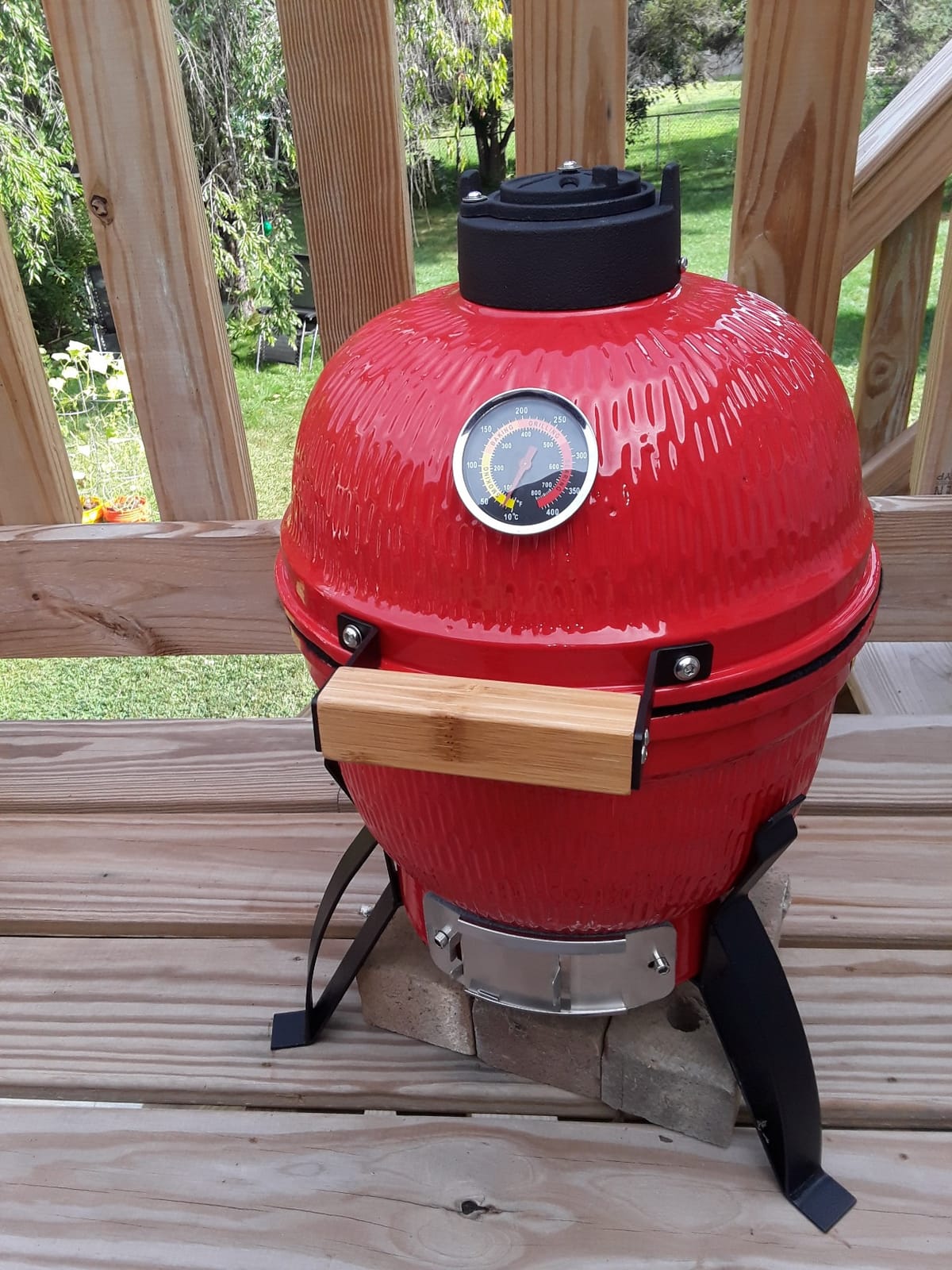
There is a measurement problem. The listed 13 inch size describes the body, while the actual cooking area measures closer to 9.5 inches, and owners call this out repeatedly. Plan your cook for one or two people and check the grate dimension before you buy, because that gap is the difference between a pleasant two-person dinner and a crowded one.
Durability is the other flag. A smaller but recurring set of owners report cracking in the ceramic sides after a couple of months, and the rating is the lowest of the ceramic units here for that reason. The gasket and top exhaust are also not the tightest seal, which costs you a little efficiency and a little smoke control.
Why it works for a small cook
It delivers the one thing a kamado is for at a very low cost, which is heat that stays put while a small load of charcoal burns slowly. If you are cooking for two most weeks, the small grate stops being a limitation and becomes exactly the right size.
The fuel efficiency also makes it a good teaching cooker. There is no point burning through a bag of charcoal while you learn where the vents go.
Who should pass
Pass if you cook for a group, or if you want to smoke for many hours. A small firebox with a loose exhaust is not a stable long-burn platform, and the smaller grate makes long cooks tedious.
Pass as well if durability is your priority. The reported cracking after a couple of months is a real pattern in the feedback, and there are no brand-specific accessories available, so a fitted cover or a proper deflector plate is not something you can buy later.
10. ROVSUN 13-Inch Kamado, Best for Patio Picnics
- Thick spherical ceramic body spreads heat evenly
- Covers 180F to 750F for smoking through broiling
- Uses very little charcoal and cooks spare ribs well
- Compact and light enough for patios and picnics
- Red ceramic finish looks good outdoors
- Cooking surface suits only one to two people
- Exterior shell and handles get very hot during a cook
- Best results come from lump charcoal only
The ROVSUN rounds out the list as the simplest possible answer to a small cooking problem. The 13 inch spherical ceramic body distributes heat evenly around the food, and the 180F to 750F range covers everything from slow smoking through to broiling without any mechanical help beyond the adjustable air vent.
Owners describe it as a solid little pit that cooks ribs and other small cuts well on minimal fuel, and the compact footprint is genuinely portable for patios, picnics and camping. The polished red ceramic finish also does more work than it should, because a grill that looks good stays where you put it.
The real trade-off is capacity. Owners are clear that this is a cooker for one to two people, and the grate is not going to change size. The other caution is safety-related rather than performance-related: the exterior shell and handles get very hot during a cook, so keep children and pets away from the body while the vents are open.
Use lump charcoal only. Owners report that the ceramic body takes on a chemical taste from lighter fluid, which is common to sealed ceramic cookers and easy to avoid. A one year manufacturer warranty is the shortest meaningful cover in this roundup, so treat it as a seasonal patio appliance rather than a long-term investment.
Why it earns the last slot
It is a no-fuss entry into ceramic cooking for someone with a very small kitchen problem. There is nothing to learn beyond the air vent, it heats with little fuel, and it cooks ribs and fish well for its size.
It also works as a second cooker. Plenty of owners use a small ceramic like this alongside a larger grill for sides and small cuts while the big one handles brisket.
Where it runs out of road
The 13 inch body is the ceiling on everything. No accessory changes a small grate, and no venting trick creates cooking area, so this is a cooker for a specific and narrow job.
The hot exterior deserves repeating. Ceramic conducts, and the shell plus handles reach temperatures that will burn on contact, which means placement matters more here than on a metal grill with a cooler skin.
How to Pick a Kamado Grill Under 1000 Dollars in 2026
Ceramic or steel, and why the label is not enough
The difference between a steel kamado and a ceramic kamado is the single decision that drives everything else. Steel-bodied cookers like the Akorn and the Brand-Man respond quickly, weigh under about 110 pounds, and survive being knocked over. Thick ceramic cookers hold temperature far better over long burns, weigh between 75 and 190 pounds, and shatter if they land wrong.
What the kamado name does not tell you is wall thickness. The London Sunshine models here run 0.8 to 1 inch of ceramic, the Outvita and VINGLI use thin round bodies, and the Kamado Joe units use a full thick-walled shell. Read the stated wall thickness before you read anything else on the listing.
Cooking area is the number that ends the decision
Match the grate to the number of people you actually feed. Roughly 100 square inches handles two, 150 to 250 covers a small family, and 400 or more is what you want for full-size brisket and rib slabs. The two 15-inch ceramics here are listed around 13.2 inches at the grate, which reads bigger than it cooks.
This is also where the budget bites. A larger diameter costs more, and the jump from a 13-inch to a 15-inch ceramic is the most useful money you can add in this price range. If your cooking plan involves a packer brisket, start there and work backwards.
Vents decide how easy it is to control
Every kamado is controlled by two dampers, a top and a bottom, and a cast iron top vent is a meaningful upgrade over a stamped one because it resists rust and warping. Indexed dampers with clear markings make the first months much less frustrating, which is worth more to a beginner than any extra feature.
Skip any cooker where the only airflow control is a single sliding door. You cannot choke a fire down well with one lever, and low-and-slow cooking depends on precise air restriction. If you are buying used, the same advice applies: check that both vents move smoothly and hold position.
The accessories that quietly push you over
A grill is not usable out of the box in most cases, and this is where budgets get blown. A heat deflector plate, a fitted cover, a good two-probe thermometer and a folding front shelf can add a meaningful amount on top of the purchase, and none of them are optional if you plan to cook low and slow.
This is the reason the Brand-Man ranks where it does, and the reason the Akorn’s included cart matters more than its headline price suggests. Before you buy anything, write down what you already own. A kettle grill owner usually needs only a deflector plate and a cover; a first-time smoker needs more.
Warranty, gaskets and the real lifespan
Warranty length is the cleanest quality signal available. The Kamado Joe models carry lifetime coverage on the ceramic and five years on metal parts, which tells you something about how long the shell is expected to last. The London Sunshine and ROVSUN units carry one year, and a few of the smaller ceramic imports carry no meaningful stated cover at all.
Plan for gasket replacement regardless of brand. Felt gaskets on ceramic cookers stiffen and eventually shed, and a replacement gasket is a cheap part that any owner can fit. It is routine maintenance, not a defect, and it is worth keeping in mind when you compare warranty terms, because a lifetime ceramic warranty does not include consumables.
When a pellet grill or offset smoker is the better buy
If you want a smoker and nothing else, a pellet grill at the same budget gives you automatic temperature control and no fire management. You give up the ability to sear at 600F, the smoke character of lump charcoal and the flavour that comes from managing a fire by hand, but you gain consistency and a much shorter learning curve.
If you want both a grill and a smoker and you like wood, a small offset smoker uses the same budget differently, cooking for longer with more tending but far more capacity. Neither is wrong, they are simply different hobbies. A kamado suits the person who wants one vessel to do everything and enjoys owning the fire. Our charcoal grill roundup covers that wider category if you want to see the alternatives side by side, and our beginner kamado guide goes deeper on the learning curve for first-time owners.
Frequently Asked Questions
Which kamado grill is the best value for money?
The Char-Griller Akorn is the best value under 1000 dollars because it combines a 445 square inch cast iron grate, triple-wall insulated steel and a full cart in one package. It is the largest cooking area in this roundup, it moves on less charcoal than a metal kettle of the same size, and it survives knocks that would destroy a ceramic cooker. Add a heat deflector plate and a cover and you still have budget to spare.
Is the Char-Griller Akorn a good grill?
Yes, within its class. The Akorn is a steel-bodied kamado rather than a true ceramic one, so it is quicker to change temperature and much lighter at 97 pounds, but it swings more on windy days and produces less bark on long brisket cooks. Owners rate the 445 square inch grate, the EasyDump ash pan and the fuel efficiency highly, and they consistently flag rust prevention, the inaccurate lid thermometer and the missing heat deflector as the three things to plan for.
What is the best kamado brand under 1000 dollars?
Kamado Joe is the strongest brand in this price range because its warranty covers the ceramic for life and the metal parts for five years, which is a durability signal no budget brand matches. Joe Jr. and the Classic Joe Series I both fit under the cap. The Akorn is the better all-round buy and carries the largest grate, while the London Sunshine models deliver real ceramic walls at a fraction of the price with shorter warranty terms.
How long do kamado grills last?
A well-maintained ceramic kamado with a lifetime ceramic warranty can last decades, since the ceramic shell does not rust or corrode and the wear items are replaceable. Steel-bodied kamados like the Akorn and the Brand-Man are rated in years rather than decades, and they depend heavily on being covered and oiled. Budget for a replacement gasket on any ceramic model within a few seasons, since felt seals stiffen and shed with age regardless of brand.
What is the difference between a kamado grill and a charcoal grill?
A charcoal grill is an open steel bowl where you chase temperature by moving grates and adjusting vents, so it responds fast and burns through fuel quickly. A kamado is a sealed ceramic or insulated steel vessel whose thick walls store heat, so it holds a set temperature for hours with almost no vent adjustment. That heat retention is what makes kamados excellent smokers and gives you one appliance for low-and-slow cooking and high-heat searing.
The Bottom Line
For most people shopping the best kamado grills under 1000 dollars, the Char-Griller Akorn is the answer. It gives you the largest grate, the fastest response and a cart in the box, and the money it saves over a ceramic cooker is better spent on a heat deflector and a cover.
Buy the Kamado Joe Joe Jr. instead if the ceramic is the entire point, the Classic Joe Series I if you find the older series priced near street level and want two-tier cooking, and the Brand-Man if you would rather not buy furniture. Whatever you choose, add a deflector plate, a cover and a real probe thermometer before the first cook, and give it a full low-and-slow run before you judge it. That is where the best kamado grills under 1000 dollars separate themselves from everything else.