
When the grid goes down in January, your furnace stops too. The blower, the igniter and the thermostat all need power, so a gas furnace with an electric blower is no help at all when the lines are cold and dark. That is why the search for the best propane heaters for emergency power outages has moved from prepper forums into mainstream kitchens and workshops. I have run through the eight indoor-rated and outage-capable heaters below, checked their run times against real tank sizes, and sorted out which ones actually work when the electricity is off.
My team spent weeks reading the review data on these heaters and cross-checking it against what people actually report after using them during outages. What we found is that the difference between a good emergency heater and a disappointing one rarely comes down to brand. It comes down to whether the BTU rating matches one room, whether the tank type matches the length of the outage, and whether the safety sensors work the way the manual claims.
One honest framing first, because it is the thing most roundups skip. A propane heater warms a room, not a house. The consensus on r/preppers is that a Buddy-style heater plus several 20 lb tanks holds one or two rooms, not a two-story house, and the sensible outage plan is to close the interior doors and camp in one warm room. Every recommendation below is built around that reality.
Table of Contents
Indoor Propane Heater Safety: Read This Before You Light One
Ventless propane heaters are rated for indoor use, and that rating is real. It is also not the same as safe in a sealed room. Combustion consumes oxygen and produces carbon dioxide and water vapor, so every indoor run needs fresh air. Cracking a window two or three inches is the minimum, and venting the room for the whole time the burner is lit.
A working carbon monoxide detector is not optional. Keep one inside the room with the heater, one near where your family sleeps, and confirm both have fresh batteries before the storm season. Users on iRV2 and permies.com consistently describe battery-powered CO and smoke detectors plus a fire extinguisher as the baseline kit for any indoor propane use, and we agree with that.
Two more limits worth knowing. Catalytic Buddy-style heaters should not be run in high wind, because wind across the burner disrupts combustion and can create carbon monoxide. And above 5,000 feet of elevation, oxygen depletion sensors can false-trip and shut the heater down when there is plenty of oxygen available. That combination, a vent cracked a few inches and a battery detector within earshot, is the honest baseline described by people running these heaters indoors: good ventilation, good detector, no overnight heroics.
Finally, test-run any heater before you need it. Light it, run it for an hour with the vent open, and confirm the tip-over and oxygen depletion shutoffs behave as described. Finding a failed sensor during a three-day outage is a bad afternoon.
Top 3 Picks for Emergency Power Outages
If you want a short answer, these three cover the most common household needs: one warm room for a couple of days, one larger room for a longer stretch, and a unit you can wheel between rooms.
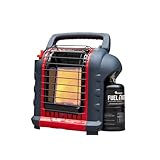
Mr. Heater 9,000 BTU Portable Buddy
- 4000 or 9000 BTU radiant
- Heats about 225 sq ft
- 5.4 hrs low and 2.4 hrs high per 1 lb tank
- Low-oxygen safety shutoff
- Indoor and outdoor rated

Mr. Heater 18,000 BTU Big Buddy PRO
- 4000 9000 or 18000 BTU
- Heats up to 450 sq ft
- Up to 216 hrs on two 20 lb tanks at low
- Radiant plus convection fan
- Floor or wall mount

GASLAND MHA18B 18,000 BTU
- Three modes up to 18000 BTU
- Heats 450 sq ft
- CSA certified with tip-over and ODS
- Built-in wheels and carry handle
- Regulator and hose included
Our complete ranking, with run-time math and the failure modes reviewers reported, runs below.
Best Propane Heaters for Emergency Power Outages in 2026
All eight heaters below run without grid power for their core function. The three forced-air models do need electricity for their fan, which we flag in the notes.
| Product | Specifications | Action |
|---|---|---|
| Mr. Heater 9,000 BTU Portable Buddy |
|
Check Latest Price |
 Mr. Heater Little Buddy MH4B Mr. Heater Little Buddy MH4B |
|
Check Latest Price |
| Mr. Heater 18,000 BTU Big Buddy PRO |
|
Check Latest Price |
| GASLAND MHA18B 18,000 BTU |
|
Check Latest Price |
 Dyna-Glo 30,000-60,000 BTU Forced Air Dyna-Glo 30,000-60,000 BTU Forced Air |
|
Check Latest Price |
 DEWALT 68,000 BTU Forced Air DEWALT 68,000 BTU Forced Air |
|
Check Latest Price |
 ProCom 10,000 BTU Blue Flame ProCom 10,000 BTU Blue Flame |
|
Check Latest Price |
 Remington 60,000 BTU Forced Air Remington 60,000 BTU Forced Air |
|
Check Latest Price |
1. Mr. Heater 9,000 BTU Portable Buddy Radiant Propane Heater – Best Overall for One Room
- Two radiant heat settings with no electricity required
- Rated for both indoor and outdoor use
- Low-oxygen emergency shutoff plus self-extinguishing construction
- Covers roughly 225 sq ft which suits a bedroom or small office
- Compact enough to move between rooms
- Radiant heat concentrates directly in front of the unit
- Coverage is limited to about 225 sq ft
- Non-authorized attachments void the warranty
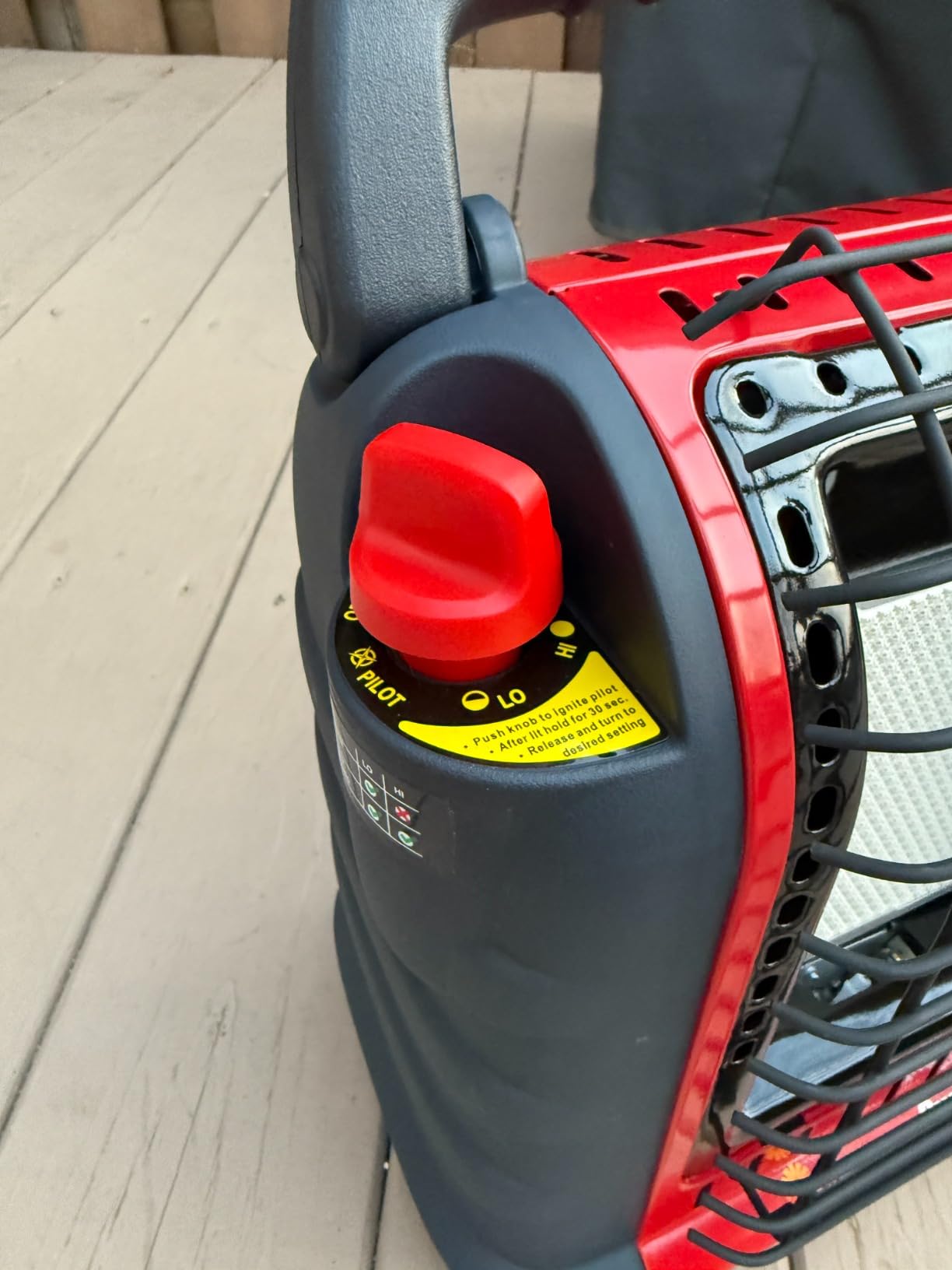
This is the unit I keep coming back to for a home outage, and the numbers explain why. It carries a 4.7 rating across more than 29,000 reviews, sits at number one in indoor propane space heaters, and runs entirely on a 1 lb propane cylinder with piezo ignition. No outlet, no battery pack, no fan motor that stalls when the grid drops.
The two settings matter more than the spec sheet suggests. On low you get 5.4 hours from a cylinder; on high you get 2.4 hours. That spread is what lets you match the burner to the length of the outage instead of burning through fuel at full tilt waiting for power to come back.
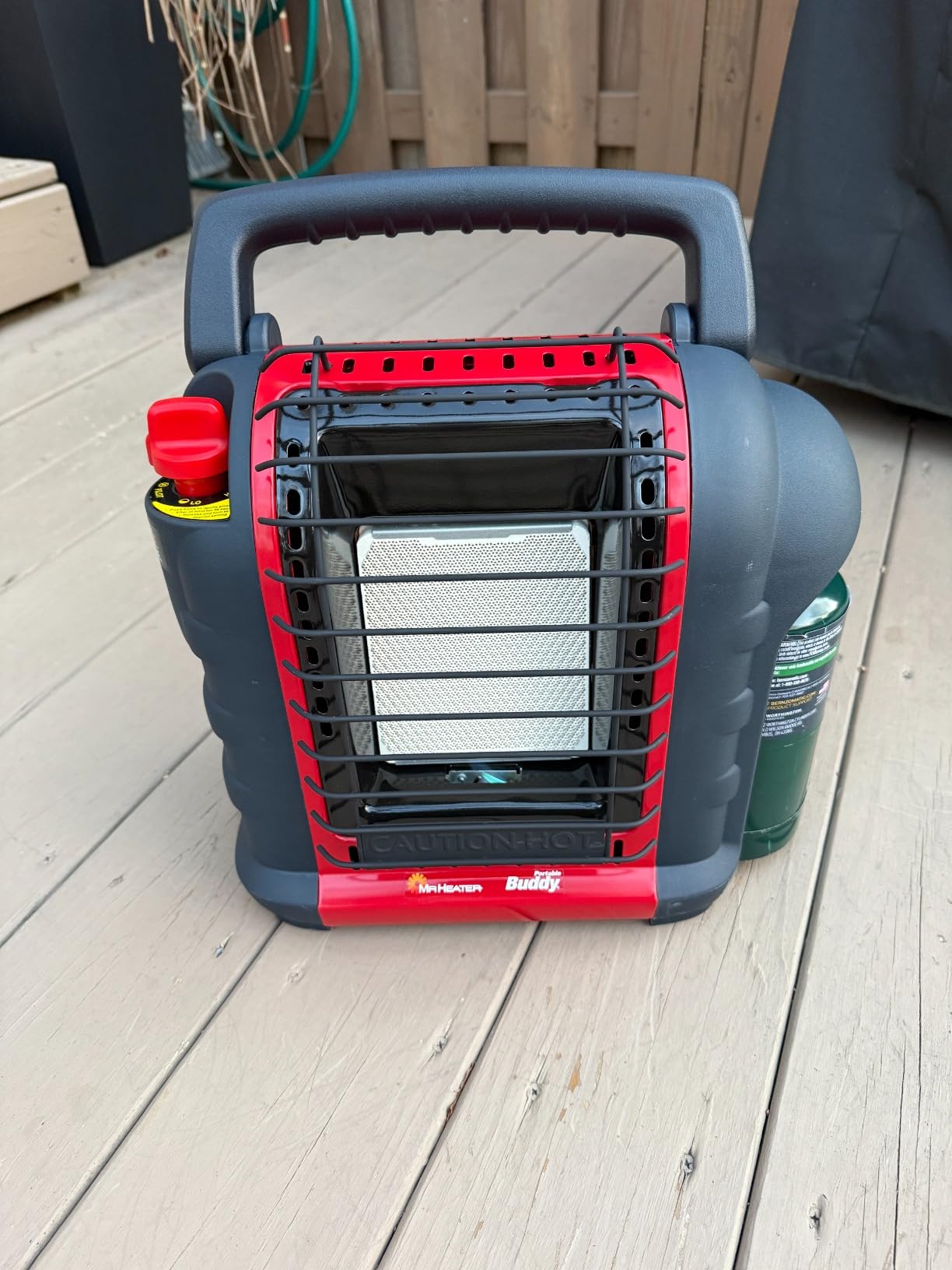
What you are getting is radiant heat, which means the warmth travels in a straight line toward whoever is sitting in front of the unit rather than circulating through the whole room. Buyers regularly describe this as a feature: it is genuinely comfortable at close range, and it works well in a garage, a mudroom, or a spot where people are actually sitting. It also means placement matters more than with a fan-driven unit.
The low-oxygen safety shutoff and the self-extinguishing construction are the parts I care about most in an emergency context, because they are the systems that still function when everything else in the house has stopped working. The piezo igniter comes in the box with the heater, so there is one less thing to fail.
When the Portable Buddy earns its slot
This is the heater for a 150 to 225 square foot room, a couple of bedrooms, or a spot where you will sit and work while the outage runs. It is also the most practical pick for someone who wants a small stove that runs on grocery-store cylinders, because swapping a fresh 1 lb cylinder takes seconds and needs no tools. During a multi-day outage, easy fuel swaps matter more than raw BTU.
When to skip it
Skip it if you are trying to heat a large living room or an open floor plan. Reviews are consistent on the ceiling here: 9,000 BTU is enough for a small room, not a house, and radiant output leaves uneven temperatures if you park the unit in the middle of a space. It also runs hotter than some people like in a closed bedroom, since radiant heat does not distribute the way forced air does.
2. Mr. Heater 3,800 BTU Little Buddy MH4B – Best Lightweight Pick You Can Carry With One Hand
- Light and easy to carry at 5.6 pounds
- Easy one-button ignition with no power needed
- Tip-over shutoff plus automatic low-oxygen shutoff
- 8 inch round stand uses very little floor space
- Quiet clean odor-free operation
- Only 3800 BTU covering about 95 sq ft
- Single heat setting with no thermostat
- Connects directly to a 1 lb cylinder so tank changes are frequent
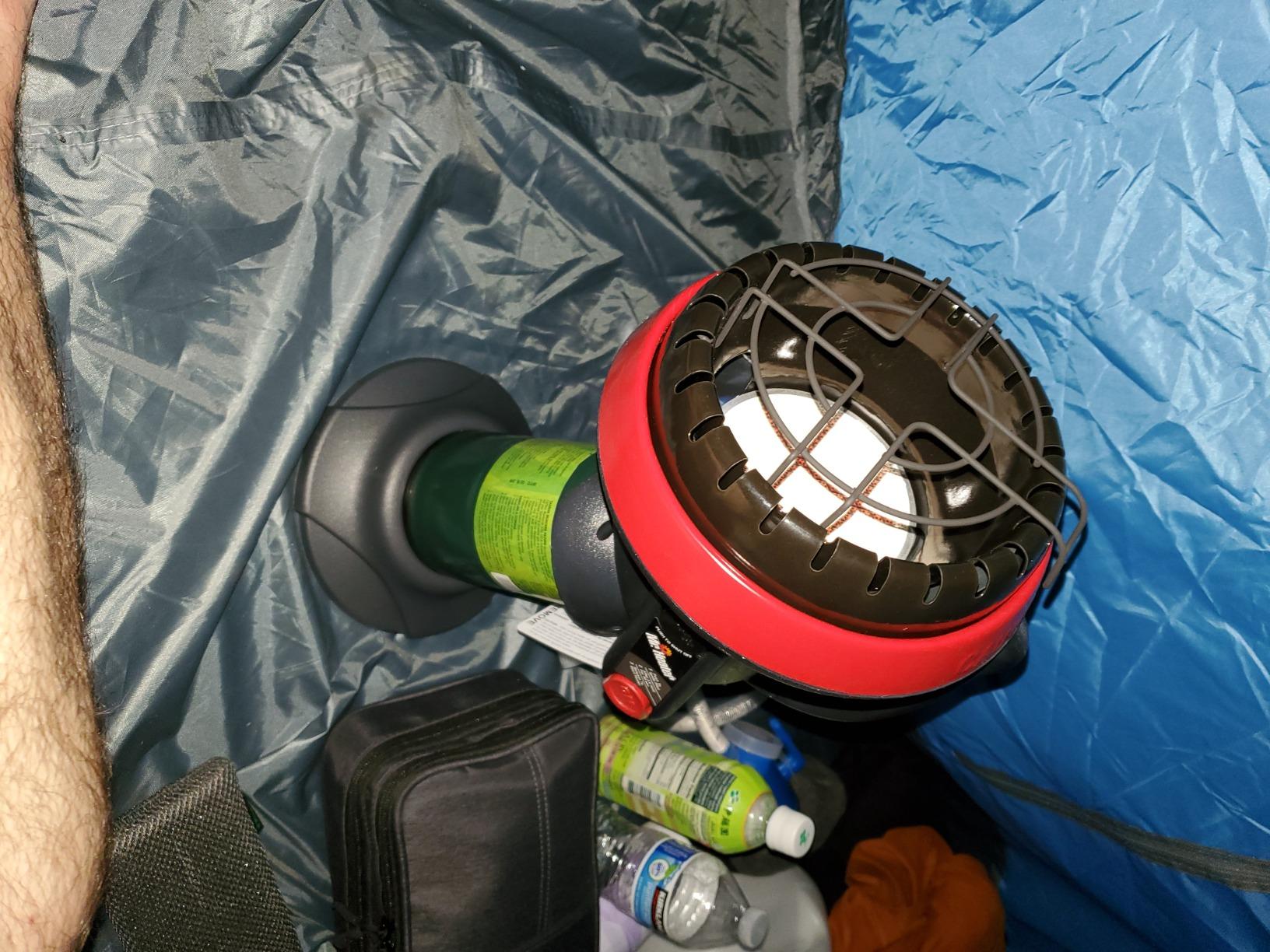
The Little Buddy is not a room heater. It is a person heater, and owners are comfortable saying so. At 3,800 BTU and roughly 95 square feet of stated coverage, its job is to warm one seated person, a small mudroom, or the corner of a room where somebody is working through an outage.
At 5.6 pounds, it is the easiest heater here to carry from room to room, and the 8 inch round stand takes up almost no floor space. That footprint matters in a home where you are trying to heat a small area without tripping over things in the dark.
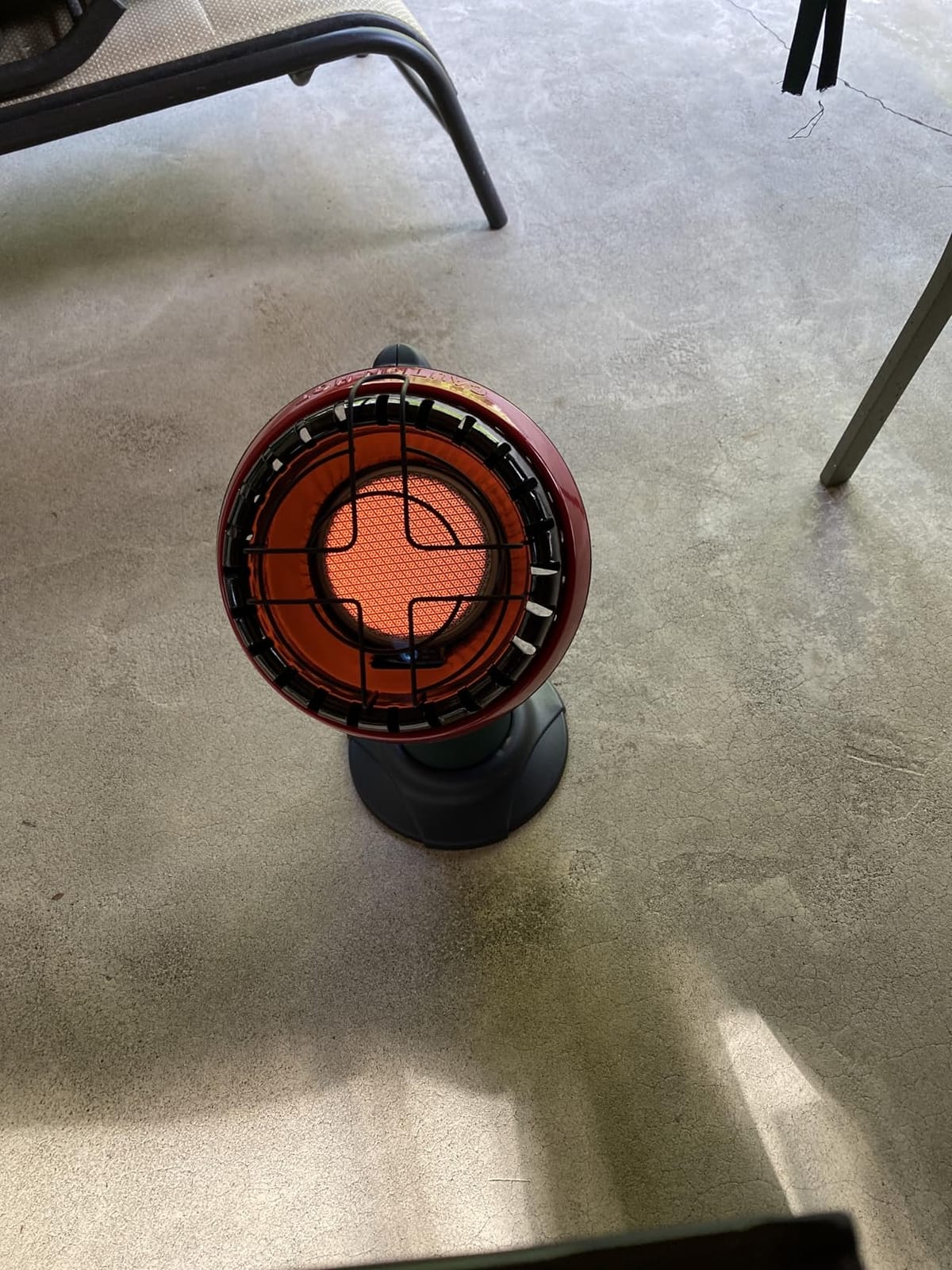
The safety package is unusually complete for a unit this small. You get both an accidental tip-over shutoff and an automatic low-oxygen shutoff, which are the two failures most likely to matter when the power is out and nobody is paying attention to the heater. The one-button ignition needs no electricity, and reviewers consistently describe the operation as quiet, clean and odor-free.
A Permies reader described running this style of heater indoors with good ventilation as their household backup, paired with battery smoke and CO detectors. That is exactly the use case this unit fits: a second heat source for a small space, held in reserve rather than relied on as the primary heat for a whole house.
It also carries a 3 year limited warranty, which is longer than most of the heaters in this lineup.
When the Little Buddy earns its slot
Choose it when the goal is personal warmth with almost no planning. It runs on a standard 1 lb cylinder, ignites with one button, and weighs less than most carry-on bags. It is a strong addition to a go-bag or a vehicle winter kit, and a sensible second heater to have on hand if the main unit in the house is already warming the larger room.
When to skip it
Skip it if you are expecting it to raise the temperature of a bedroom by 20 degrees. There is a single heat setting and no thermostat, so you get all 3,800 BTU or nothing, and the 95 square foot rating is the honest limit. Reviewers who wanted a warm room report disappointment; reviewers who wanted warm hands report satisfaction.
3. Mr. Heater 18,000 BTU Big Buddy PRO Series – Best Value for a Long, Multi-Day Outage
- Three heat settings covering 4000
- 9000 and 18000 BTU
- Dual system blends radiant comfort with a convection fan for faster warm-up
- Covers up to 450 sq ft
- Run time of up to 216 hrs on two 20 lb tanks at low with an optional hose
- Mounts on the floor or the wall
- Heaviest radiant Mr. Heater here at 14.1 pounds
- Needs a 20 lb tank and an optional hose rather than small cylinders
- Built-in fan is noticeable when running
If an outage is going to run longer than a day, fuel logistics change everything, and this is the heater where that shift shows up. The Big Buddy PRO connects to 20 lb propane cylinders through an optional hose and runs up to 216 hours on two tanks at the low setting. That is the difference between swapping a cylinder every few hours and setting up once.
The hybrid heating system is the other reason it earns its place. Radiant heat delivers the direct warmth people like, while the built-in high powered fan moves air so the room warms more evenly than a pure radiant unit. Owners running shops and garages repeatedly describe it warming a space faster than a Buddy heater at the same rating.
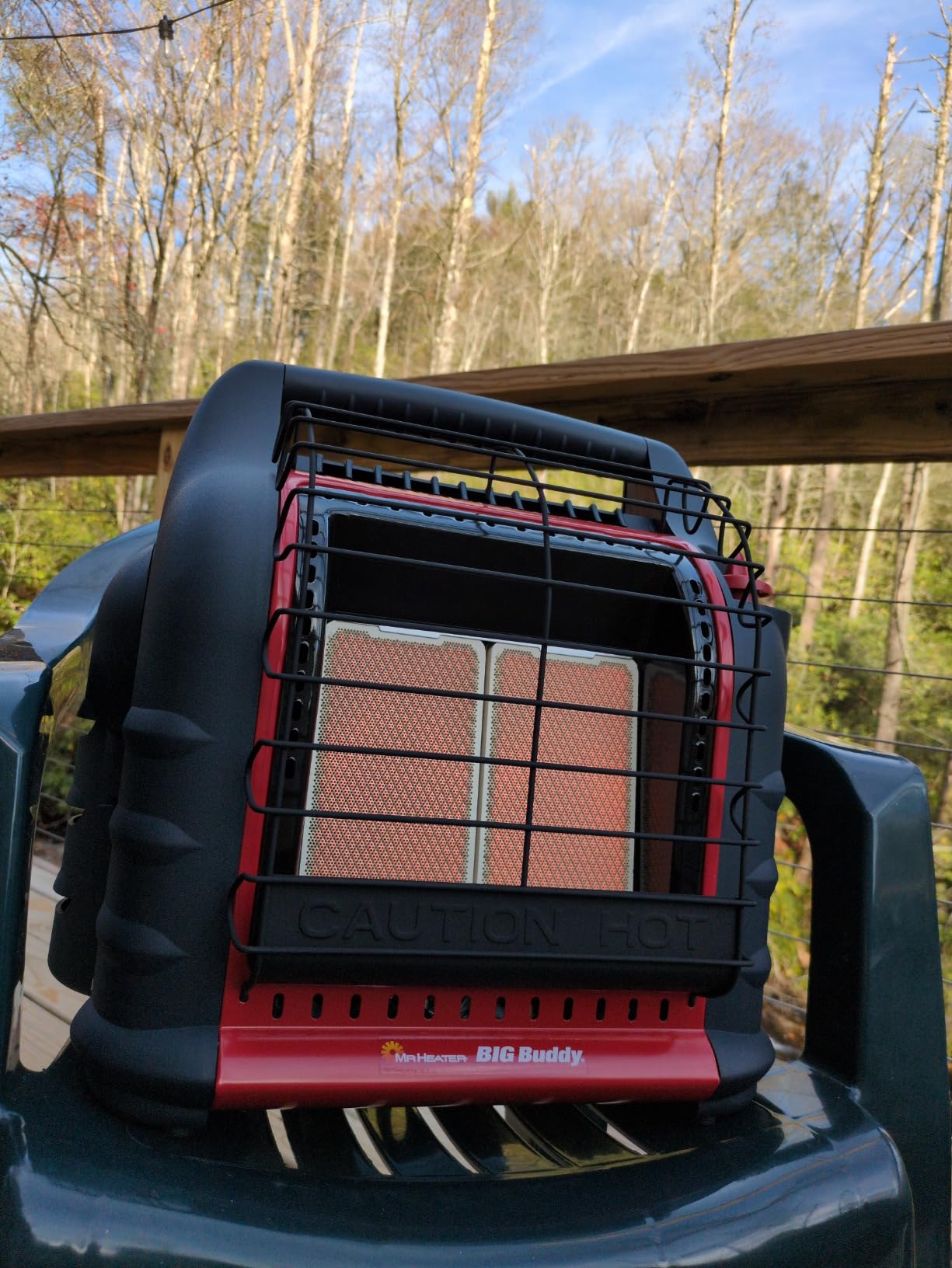
The 450 square foot coverage figure puts it in a different class from the two Buddy heaters. It also has the largest coverage claim among the radiant units here, which suits a finished basement, a main-floor family room, or a two-bedroom area you have closed off from the rest of the house. Three settings, including 4,000 and 9,000 BTU, let you dial the output down to match a colder room or a conserving phase later in the outage.
Safety is handled with tip-over protection, flame resistance and low-oxygen shutoff, and the unit carries a 3 year limited warranty. It mounts on the floor or on the wall, which is useful when floor space is tight or when you want the heat aimed above head height in a crowded room.
When the Big Buddy PRO earns its slot
Choose it when you are planning for two days or more without resupply, or when you want the option of leaving the heater on low for a long stretch without babysitting cylinders. It is also the pick here for a larger room that still has to run on a cylinder-fed fuel supply, and the wall mount gives you control over placement in a space where furniture has already been moved in to keep the heat in one area.
When to skip it
Skip it if the outage is short and you only have 1 lb cylinders on hand. At 14.1 pounds it is the heaviest radiant unit in this lineup, and it needs the 20 lb tank plus an optional hose, which is an extra purchase and an extra thing to keep dry and inspected. The built-in fan is also audible, which matters if you are trying to sleep beside it.
4. GASLAND MHA18B 18,000 BTU Propane Heater – Best for Moving Between Rooms During an Outage
GASLAND MHA18B Propane heater Outdoor,18,000 BTU, Max Heat 450 Sq.Ft
- Three heating modes up to 18000 BTU
- CSA certified with tip-over and low-oxygen shutoff
- Built-in wheels and carry handle for moving it
- Propane cylinder housed inside the cabinet
- Regulator and hose included
- No electricity required
- Aimed at ventilated spaces like garages and patios rather than closed living areas
- Radiant output warms the area in front of the unit more than the room
- Weight is not stated in the specifications
The GASLAND cabinet is the easiest 18,000 BTU heater here to reposition, and during an outage repositioning is a real advantage. Built-in rolling wheels and a carry handle mean you can move it from the bedroom to the living room without wrestling with a 14 pound pedestal or hunting for a second cylinder connection.
It runs three heating modes at up to 18,000 BTU covering 450 square feet, which puts it level with the Big Buddy PRO in output while adding mobility. The propane cylinder sits inside the cabinet rather than hanging off the back, which keeps the profile tidy and the connection short.
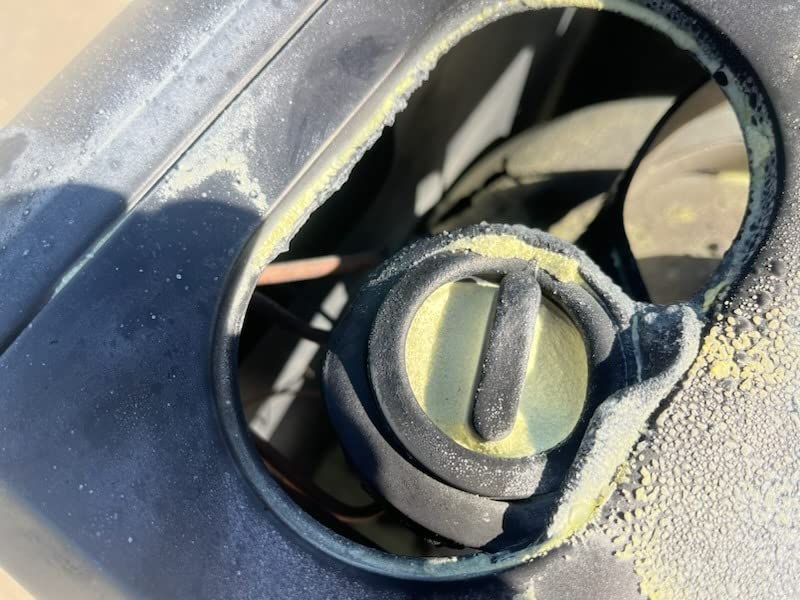
The useful detail for an emergency kit: the gas regulator and hose are included. Most of the forced-air heaters in this lineup also include a hose and regulator, but several competitor units do not, and hunting for a compatible connector in a dark house is a waste of time you may not have.
CSA certification with tip-over and low-oxygen shutoff gives it the same core protection as the Mr. Heater units. The quiet radiant operation is the other thing buyers mention, and it needs no electricity at all.
When the GASLAND earns its slot
It suits anyone whose living space shifts during an outage, and it works well as a garage or workshop unit that still functions when the grid is down. If you want the option to follow the family from room to room without a second heater, the wheels make this the least annoying unit to live with.
When to skip it
Be clear-eyed about its intended environment: buyers consistently position it as a garage, patio and workshop heater, and it is not positioned as a closed living area unit. Radiant output also means the area in front of the cabinet warms more than the whole room. And note the coverage claim is 450 square feet of garage-type space, which is not the same as 450 square feet of insulated house with interior doors open.
5. Dyna-Glo Delux RMC-FA60DGD 30,000-60,000 BTU Forced Air Heater – Best for Heating a Garage or Detached Space
Dyna-Glo Delux RMC-FA60DGD 30,000 – 60,000 BTU LP Forced Air Heater
- Continuously variable output from 30000 to 60000 BTU
- Covers up to 1350 sq ft and raises air temperature quickly
- Continuous electronic ignition avoids delayed ignition
- Overheat auto shutoff protection
- 10 ft hose and regulator included
- Runs within minutes of opening the box
- Built-in fan needs power
- so this is not a pure no-electricity outage heater
- Thin sheet metal with some bent fan blade reports
- Very noisy
- Short power cord and no on/off switch
This is the tool for the biggest space in the story: an attached garage, a detached workshop, or a barn. At 30,000 to 60,000 BTU with continuous adjustment and coverage of up to 1,350 square feet, it warms air throughout the volume rather than radiating in a straight line at one spot.
The adjustment range is what makes it useful rather than merely powerful. Owners with insulated spaces run it at the lower end and turn it up when doors are opened. The adjustable heat angle lets you point the output where you actually need it.
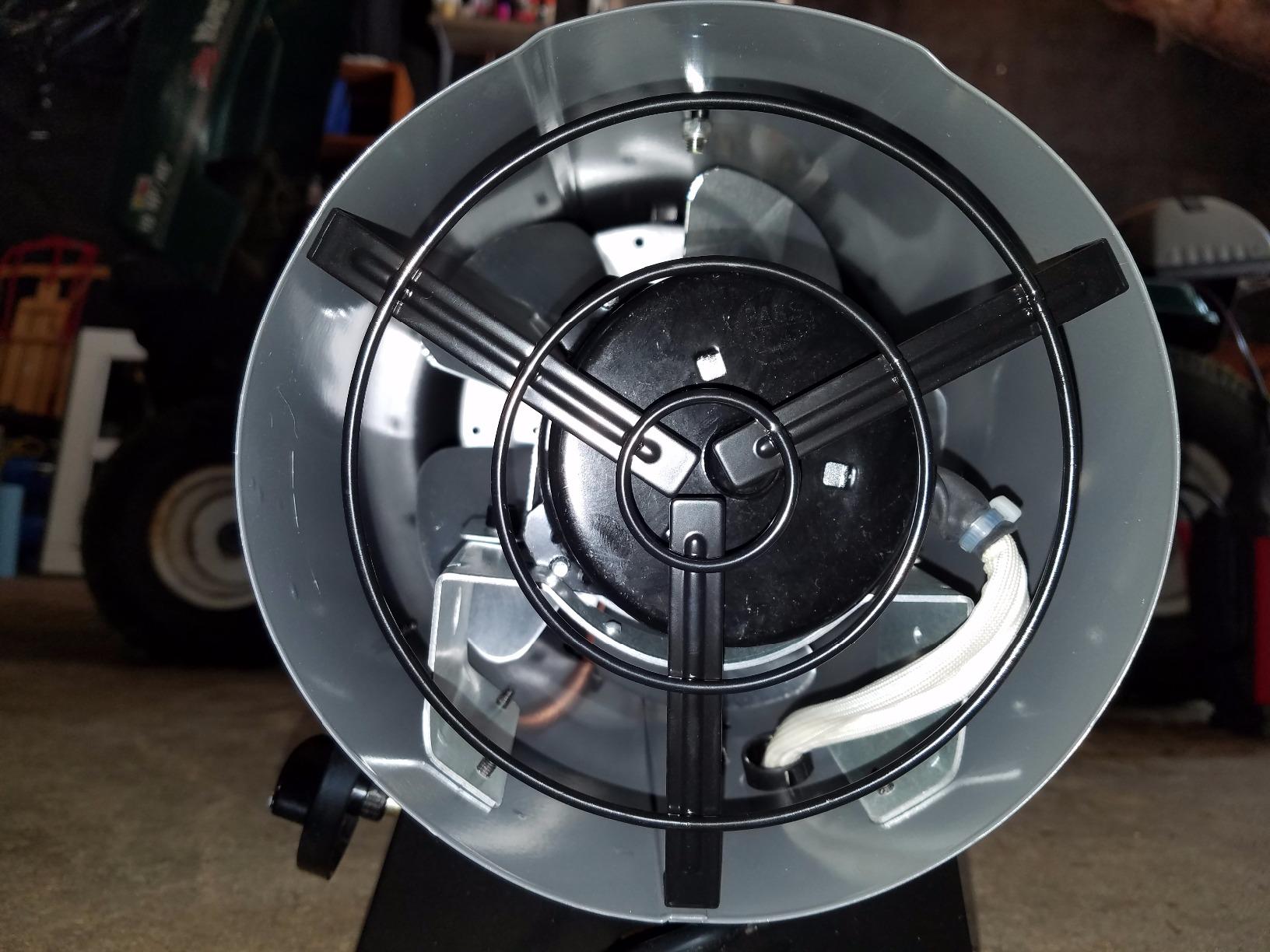
Two safety and reliability details to know. Continuous electronic ignition is designed specifically to prevent the delayed ignition problem, and the overheat auto shutoff protects the unit if airflow is blocked. The 10 foot hose and regulator are included, so the only fuel you have to supply is the cylinder.
There is a real caveat for this article specifically. Unlike the radiant heaters, this unit has a fan, and the fan needs electricity. During a grid outage, a Dyna-Glo means pairing the heater with a generator or an inverter. It is a heater for a space where you already have power, or for a garage you can power from a portable generator.
Quality complaints show up in the earlier reviews: thin sheet metal, one owner reporting a pinched burner tube, and units arriving with a bent fan blade that has to be straightened before lighting. Later buyers describe receiving units that worked out of the box, so inspect it the day it arrives rather than during an outage.
When the Dyna-Glo earns its slot
Choose it when the goal is raising the temperature of a large attached or detached space, protecting pipes in an unheated garage, or keeping a workshop usable. Users report climbing air temperature quickly in well-insulated garages, and the variable output lets you avoid overshooting a space that is already warming.
When to skip it
Skip it for a living space. Owners describe it as noisy enough to need hearing protection in some cases, and that noise carries straight into any room where people are sleeping. It is also not a heater that works without grid power in its intended role, since the fan is central to how it distributes heat.
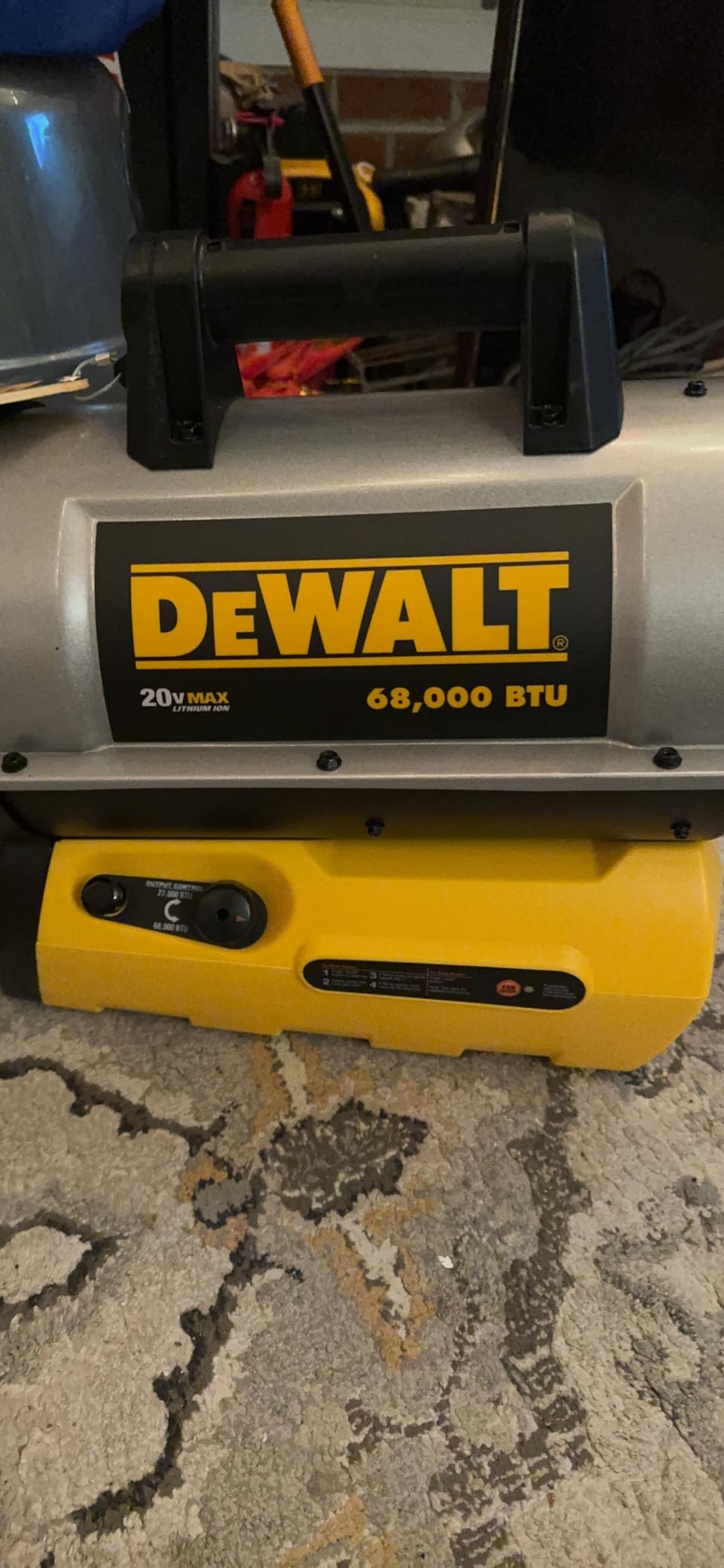
6. DEWALT 68,000 BTU Forced Air Propane Heater – Best Cordless Power Option
DEWALT 68,000 BTU Cordless Portable Forced Air Propane Heater
- Only unit here that runs on battery power with no cord at all
- 68000 BTU covering up to 1700 sq ft
- An 8 Ah battery pack lasts most of a day on low or about 4 hrs on high
- Quiet low-odor combustion
- Hose regulator handle and manual included
- Two-year parts warranty
- No built-in thermostat so it runs until you turn it off
- Higher cost than comparable forced-air heaters
- Starting in extreme cold can take holding the ignition and cycling the power button
The DEWALT solves a problem the other heaters here cannot. Its fan runs on DEWALT 20V batteries or on 120V AC, so you can have forced-air heat in a garage, shop or tool trailer with no cord connected to anything. For someone already invested in the battery platform, that is a genuinely different capability rather than a small convenience.
At 68,000 BTU covering up to 1,700 square feet, it is the largest coverage claim in this lineup. Owners describe it as quieter and more powerful than the Mr. Heater units they replaced, with low-odor combustion and no diesel-type fumes.
Run-time math on batteries is straightforward and worth planning around. An 8 Ah pack lasts most of a day on low, or roughly four hours on high. That works well for an outage if you have a way to keep charging, and it fails badly if you planned to run high all night on one pack.
Two caveats come up repeatedly in reviews. There is no built-in thermostat, so it runs until you switch it off rather than cycling itself, and cold-weather startup can require holding the ignition while cycling the power button. Both are manageable if you know they are coming, and both would be annoying to discover at midnight during a freeze.
The included package is complete: heater, hose and regulator assembly, handle and owner’s manual, plus a two-year parts warranty.
When the DEWALT earns its slot
Choose it if you already own DEWALT batteries, if your backup heat needs to be genuinely cordless, or if you want high output in a shop or trailer. It is the strongest option here for heating a large space while keeping your distance from any outlet or extension cord.
When to skip it
Skip it if you are furnishing an emergency kit from scratch and want the simplest fuel setup, because it sits above comparable forced-air heaters in cost. Also consider the missing thermostat if you plan to leave it running unattended, and test it cold before you need it, since the startup behavior in low temperatures is the most common complaint. Skip it as your only house backup heat if you want a unit that controls its own output.
7. ProCom 10,000 BTU Blue Flame Heater with Thermostat – Best for a Main Living Room on Wall Mount
ProCom Heating Liquid Propane Ventless Blue Flame Heater With Base Feet – 10,000 BTU, T-Stat Control – Model# ML100TBA-B
- Thermostat with high
- medium and low control lets it cycle itself
- 10000 BTU covering up to 500 sq ft in a slim cabinet profile
- No electricity required and marketed for outages and emergencies
- Push-button ignition with a pilot oxygen depletion sensor
- ANSI certified
- Owners report noticeably lower fumes than other ventless heaters
- Lowest average rating here at 4.3
- Some units stop calling for gas within weeks or a month
- The ODS can foul with dust and shut the heater down
- Pilot flame is audible to some owners
This is the only heater here that combines a built-in thermostat with no electricity requirement, and in a multi-day outage that combination is worth a lot. Instead of managing output manually, you set a temperature and the unit cycles itself between high, medium and low.
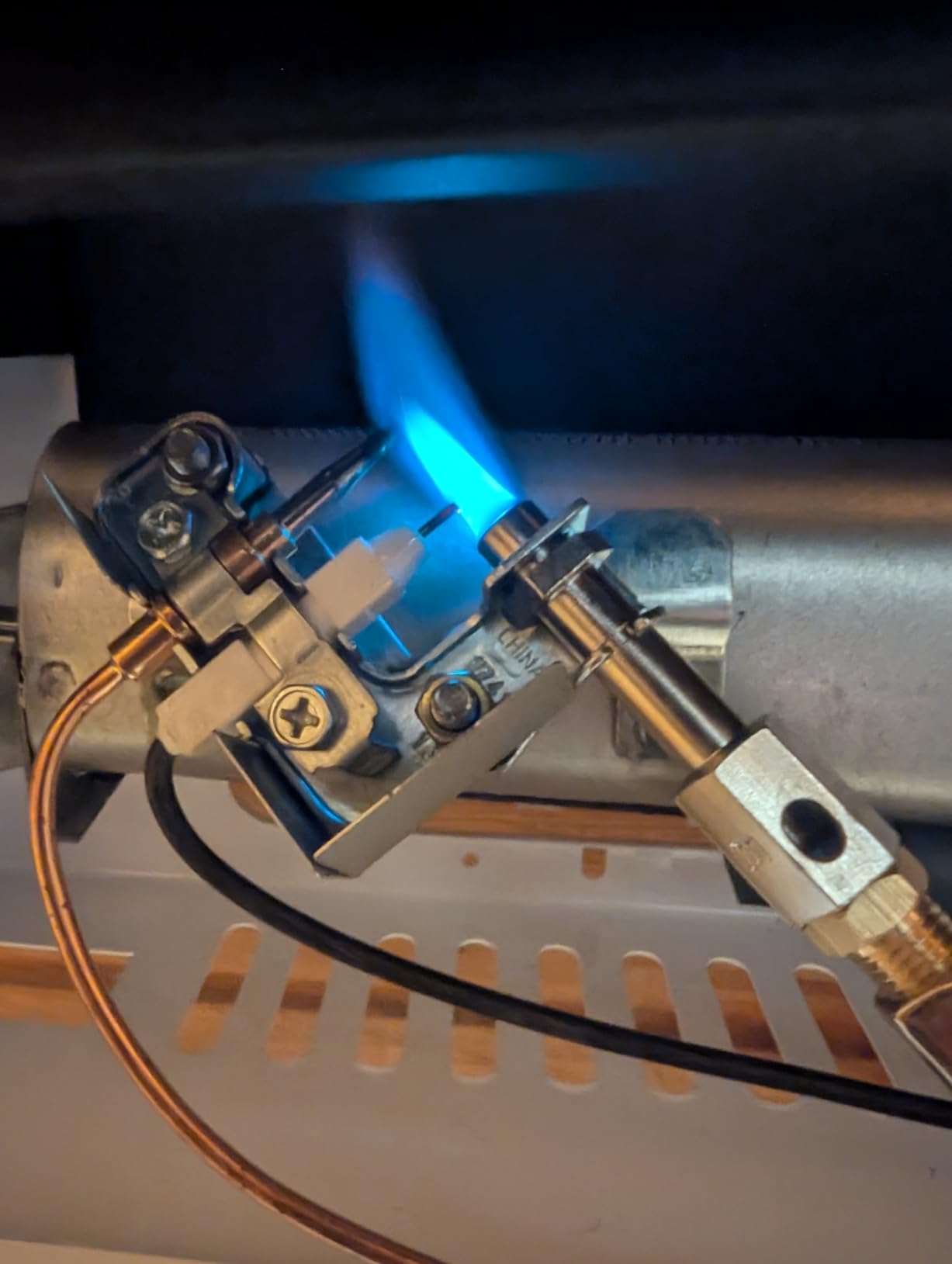
The blue flame burner design is the other differentiator. A visible flame heats the air rather than only radiating infrared, which some people find less drying and less harsh in an enclosed room, and it spreads warmth through the space rather than concentrating it in one direction.
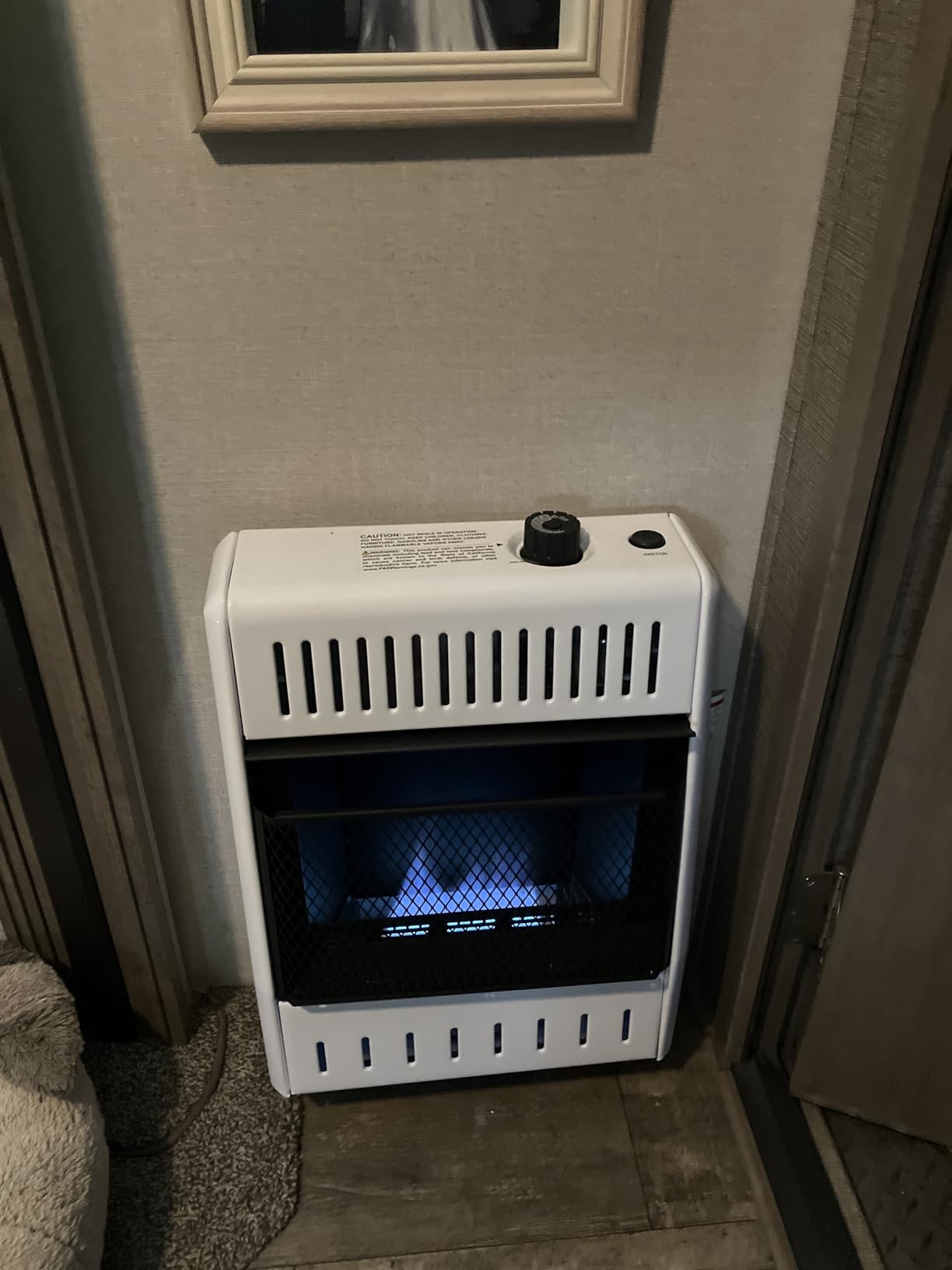
It is explicitly positioned for power outages and in-house emergencies, needs no electricity, and is ANSI certified. At 10,000 BTU covering up to 500 square feet, it claims the largest living-space coverage of the indoor-rated heaters here.
Owners frequently note that it produces noticeably lower fumes than other ventless heaters, which matters in a small room with a cracked window and a family in it. The slim 6.38 by 17 by 23 inch profile, plus included wall mount hardware and base feet, means you can install it on a wall or stand it on the floor depending on the room.
The honest part: this is the lowest-rated unit in the lineup at 4.3, and the negative theme is reliability rather than performance. Several owners report units that stop calling for gas within weeks or a month, and the oxygen depletion sensor can foul with dust and shut the heater down. That is a real risk when your backup heater stops calling for heat on day two of an outage.
When the ProCom earns its slot
Choose it for a main living room or a bedroom where you want set-and-forget temperature control without grid power, or anywhere wall mounting would free up floor space. If you have been using several electric units to hold a room at a temperature, this replaces that pattern with one appliance.
When to skip it
Skip it if your only plan for backup heat is something that must not fail, because the gas-calling and dirty-sensor complaints are concentrated enough to matter. Keep it clean, keep it in the open, and test the thermostat before an emergency. The pilot flame is also audible to some owners, which is worth checking if the unit will be in a bedroom.
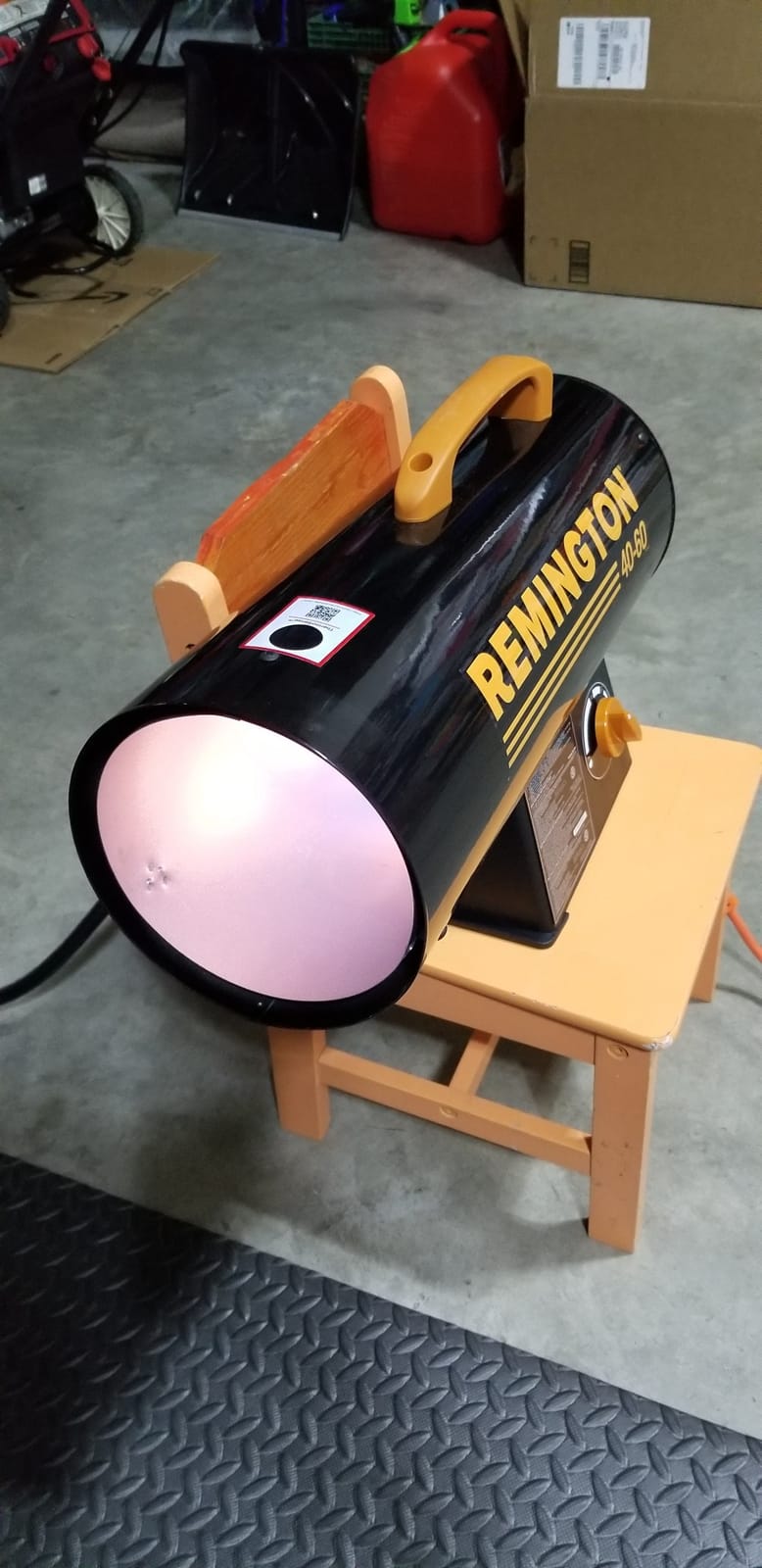
8. Remington 60,000 BTU LP Forced Air Heater – Best for a Fast Warm-Up in an Open Space
Remington LP Forced Air Heater, Portable 60,000 BTU Space Heater for up to 1500 Square Feet – Liquid Propane Gas Powered, Tank Not Included
- 60000 BTU of forced air covering up to 1500 sq ft
- Heavy-duty steel construction at only 11 pounds
- Variable heat settings with adjustable height
- Thermocouple plus high-temp limit and flame-out fuel cutoffs
- Continuous electronic ignition for quick starts
- 10 ft hose and regulator included
- Very loud and unsuited to living spaces
- Power cord is under a foot long
- Propane tank not included
- LP connector screws on counterclockwise
The Remington covers up to 1,500 square feet at 60,000 BTU and does it in heavy-duty steel at only 11 pounds, which keeps it easy to reposition between jobs. Owners with two-car garages report the space warming in roughly 10 to 20 minutes.
The triple safety cutoffs are the part I would actually point to. It has a thermocouple, a high-temperature limit shutoff and a flame-out fuel cut-off, which together cover both the failure mode where the flame goes out and the one where the unit overheats.
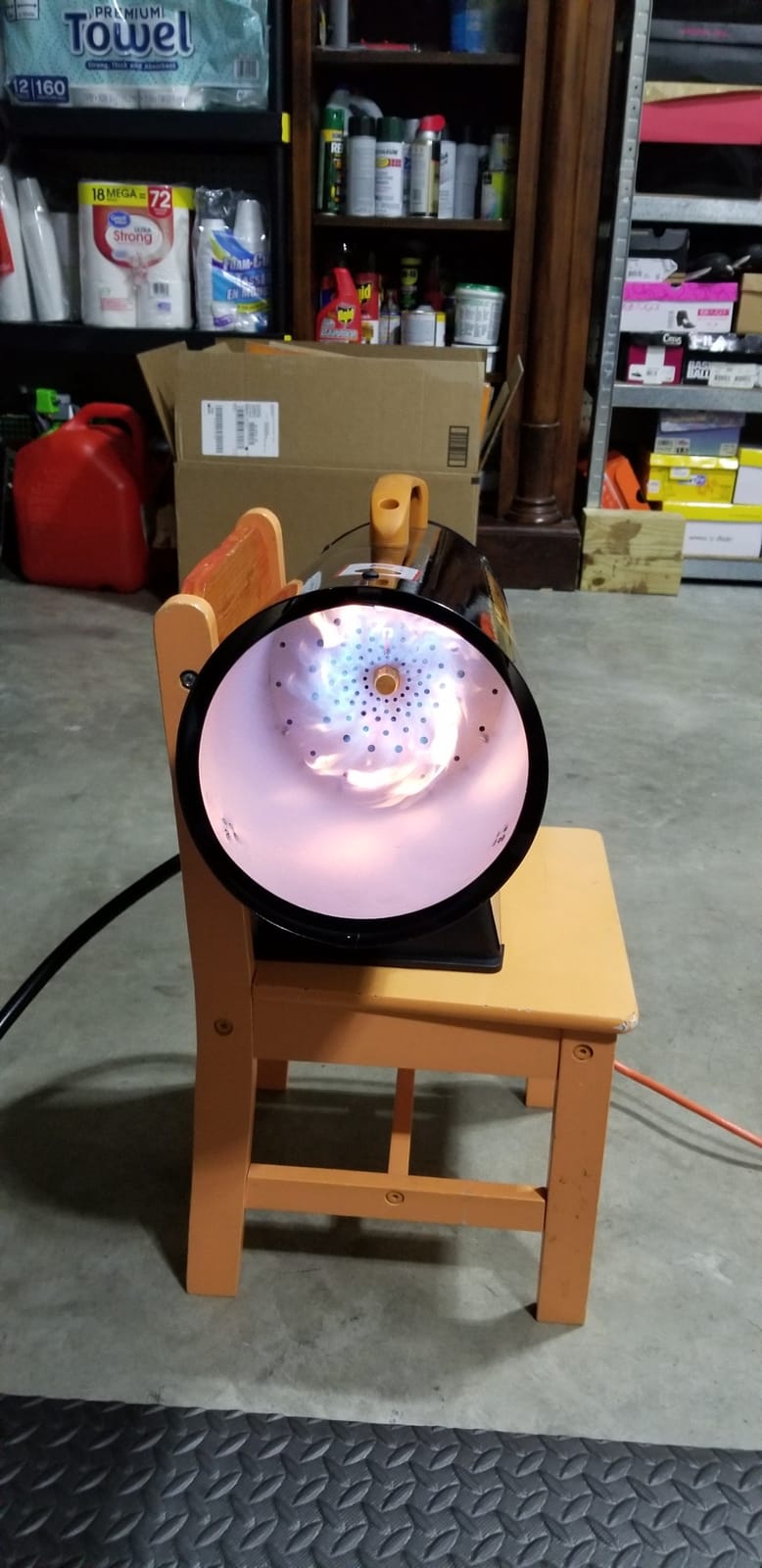
Electronic ignition gives quick starts with no pilot to babysit, and the variable heat settings with adjustable height let you direct warmth where you need it rather than blasting it at a wall. The 10 foot cylinder hose and regulator are included; the tank itself is not, so plan for one 20 lb cylinder per fill.
Noise is the dominant complaint and the reason most returns happen. Owners describe it as unsuitable for living spaces or anywhere conversation matters. The power cord is also extremely short, under a foot, which in practice means the heater has to sit close to an outlet, and the fan needs electricity just like the other forced-air heaters here.
When the Remington earns its slot
Choose it for a garage, a workshop, or a space where you want heat distributed through the air in minutes rather than gradually from one radiant spot. It is a good fit for protecting exposed pipes in an unheated outbuilding during a cold snap, provided you have a way to power the fan.
When to skip it
Skip it anywhere people sleep or hold conversations. The short cord is an ongoing annoyance rather than a one-time surprise, and because the tank is not included you will be sourcing that separately. It is a work heater, and it is best treated as one.
How to Size a Propane Heater for an Outage
The sizing rule most guides use is 30 to 40 BTU per square foot for a normal room, and up to 50 BTU per square foot in cold climates or in spaces with poor insulation. A 200 square foot room at 40 BTU per square foot lands around 8,000 BTU, which is why the 9,000 BTU Portable Buddy is framed around roughly 225 square feet rather than something larger.
Coverage claims are worth reading closely because they are not all measuring the same thing. Manufacturer figures describe the space the heater is designed to warm under ordinary conditions. A radiant heater warms the person in front of it very effectively while the far corners of the room stay cool, and a forced-air heater moves air across the whole volume. Compare a radiant number to a forced-air number and you are comparing two different things.
Electricity draw is the second sizing factor people miss. Radiant and blue flame heaters need no power at all for their core function, which is why they are the backbone of this roundup. Forced-air heaters need their fan running, which means a generator or an inverter. If you are sizing for a blackout, that distinction matters more than any other spec on the sheet.
For a garage or workshop under power, our coverage of propane garage heaters for any size workshop goes deeper on BTU ranges for those larger spaces.
Radiant vs Convection vs Forced Air: Which Style for an Outage
Radiant heaters send infrared heat in a straight line toward whatever is in front of them. They are quiet, need no power, and feel intensely warm at close range. The tradeoff is uneven room temperature and a comfort zone that sits where the heater points.
Convection and blue flame heaters warm the air itself, which spreads through a room more evenly and often feels less harsh in an enclosed space. The ProCom combines a blue flame burner with a thermostat, which is why it works well as a main-room heater rather than a corner heater.
Forced-air torpedo and cabinet heaters add a fan to push air across the space. They are usually the fastest way to raise the temperature of a large volume, and also the loudest. A Reddit discussion on r/readingspace framed the trade-off simply: torpedo heaters are fastest for a whole garage, radiant heaters are quieter and better up close. Both are true.
Two style-specific cautions for outages. Catalytic radiant heaters should not be run in high wind because the airflow can disrupt combustion. And if a heater’s oxygen depletion sensor keeps shutting it down, resist the urge to bypass it. Clean the sensor, open the vent further, and check whether you are above 5,000 feet, where ODS-equipped heaters can false-trip in oxygen-rich air.
Propane Tank Size and Run Time Planning
A propane heater does not care about your preference about cylinders, so decide which type you plan to run on before you buy anything. A 1 lb cylinder plugs straight into the Buddy and Little Buddy heaters and swaps in seconds, which is ideal for short outages and light use. A 20 lb cylinder feeds the Big Buddy PRO, the GASLAND cabinet and all three forced-air heaters, and it is the only sensible choice when you are planning for more than a day.
Run times worth planning around, from the manufacturer figures and owner reports: the Portable Buddy runs 5.4 hours on low and 2.4 hours on high from a 1 lb cylinder. The Big Buddy PRO runs up to 216 hours on two 20 lb tanks at the low setting with an optional hose. Those two numbers are the whole fuel-planning conversation for most households, and they are the difference between a cylinder swap every few hours and a setup that runs for days.
Buy more fuel than you think you need. A single 20 lb tank is a lot of energy relative to a room heater, but the calculation people on r/preppers run is simple: figure how long the outage lasts, pick your heat setting, then count cylinders at that setting rather than at the label maximum. Add a margin, and keep cylinders outdoors or in a ventilated spot rather than in the heated room.
Two practical notes people learn the hard way. A Reddit commenter reported that dirty propane can clog an internal regulator until the unit will not start, so fuel filtering and clean cylinders matter more than people expect. And high wind plus a catalytic radiant heater is a combination associated with combustion problems, so if a storm is forecast, plan to switch off the radiant unit rather than work around the warning.
When you are gathering fuel and gear, our picks for propane torch kits cover the cooking and repair jobs that come up in the same emergency kit, and propane grills are worth considering for a household cooking plan that does not depend on electricity either.
Heat One Room, Not the Whole House
The most common question in outage forums is not which heater to buy. It is whether to attempt the whole house at all, and the answer from people who have done it is consistently the same: pick a room, close the interior doors, and heat that one. A propane heater plus several 20 lb tanks holds one or two rooms comfortably, and no heater on this list will change that.
Concentrating heat in one room does more than keep people warm. Closing off the rest of the house slows the temperature drop in the space where your family and pets are, and it keeps more of your fuel focused where it is needed. It also reduces the total propane burn rate, which stretches your fuel supply.
Watch for frozen pipes while you do this. Open cabinets on exterior walls let warm air move to plumbing in the cold wall cavities, and keeping a faucet on a slow drip in extreme cold reduces the risk of a line freezing. Heat concentrated on one floor leaves the crawlspace and unheated rooms just as cold, so a thermostat in a far room is not a safety net.
There are two alternatives worth comparing. A generator plus an electric space heater gives you no combustion indoors at all, but the load math matters: a 1,500 watt space heater is a large share of a portable generator’s capacity, so fuel cost climbs fast. And a natural gas furnace or fireplace keeps working during a grid outage in most cases, because the gas line and gas control do not need electricity, only the blower does. A manual or fireplace damper is the cheapest backup plan in the house.
Lighting during the outage is worth solving at the same time, which is why we keep roadside emergency LED flare kits in the same category of gear as a heater.
Frequently Asked Questions
What is the best heater to use during a power outage?
The best heater during a power outage is an indoor-rated ventless propane heater that runs without electricity, sized to a single room rather than a whole house. The Mr. Heater 9,000 BTU Portable Buddy is our top pick for a room up to about 225 square feet, and the 18,000 BTU Big Buddy PRO covers up to 450 square feet and runs far longer on 20 lb tanks. Always crack a window and keep a working carbon monoxide detector running.
Is there a propane heater that is safe to use indoors?
Yes, but indoor rated does not mean sealed room. Every indoor-rated propane heater here carries an oxygen depletion sensor and a flame-failure shutoff, and those sensors only work if there is enough oxygen and if air can move. Cracking a window two or three inches for the entire burn, keeping a carbon monoxide detector running in the room, and never running a catalytic radiant heater in high wind are the three rules that make indoor use reasonable.
How long will a 20 lb propane tank last on a Mr. Heater Big Buddy?
Up to 216 hours on two 20 lb propane tanks at the low setting with an optional hose, according to the manufacturer. At the medium and high settings the burn rate rises sharply and the same fuel lasts a fraction of that time, which is why setting matters more than tank size for planning. The Little Buddy and Portable Buddy instead run on 1 lb cylinders, with the Portable Buddy rated at 5.4 hours on low and 2.4 hours on high.
Is it safe to run a Mr. Buddy heater all night?
Only with ventilation and a working detector, and only after a test run. Buddy-style heaters are rated for indoor use with a partially open window, and their low-oxygen shutoff is designed to intervene if the room does not get enough fresh air. Many households run one safely overnight for a short outage, but we recommend testing the unit first, confirming fresh detector batteries, and keeping the heater several feet from bedding, curtains and other combustibles.
Which heater pulls the least electricity?
The radiant and blue flame models pull essentially nothing for their core function. The Mr. Heater Little Buddy, Portable Buddy and Big Buddy PRO run on piezo or mechanical ignition, and the ProCom blue flame heater uses push-button ignition with a pilot, so all of them keep heating through a blackout. The Dyna-Glo, DEWALT and Remington forced-air units need power for their fans, which means a generator or inverter during an outage.
The Bottom Line for Emergency Heat in 2026
The Mr. Heater 9,000 BTU Portable Buddy is our pick for the best propane heaters for emergency power outages, because it needs no electricity, carries the strongest safety package in the lineup, and runs on cylinders you can buy anywhere. For outages that run past a day, move up to the 18,000 BTU Big Buddy PRO, where 20 lb tanks and a 216 hour low-setting run time change the fuel math entirely.
Whatever you choose, the plan matters more than the unit. Heat one room, close the doors, crack a window, keep a working carbon monoxide detector in the room and another near where people sleep, and stock more fuel than you think you need. Do a test run now, while the power is still on, and you will not be learning anything new at midnight in a freeze.