
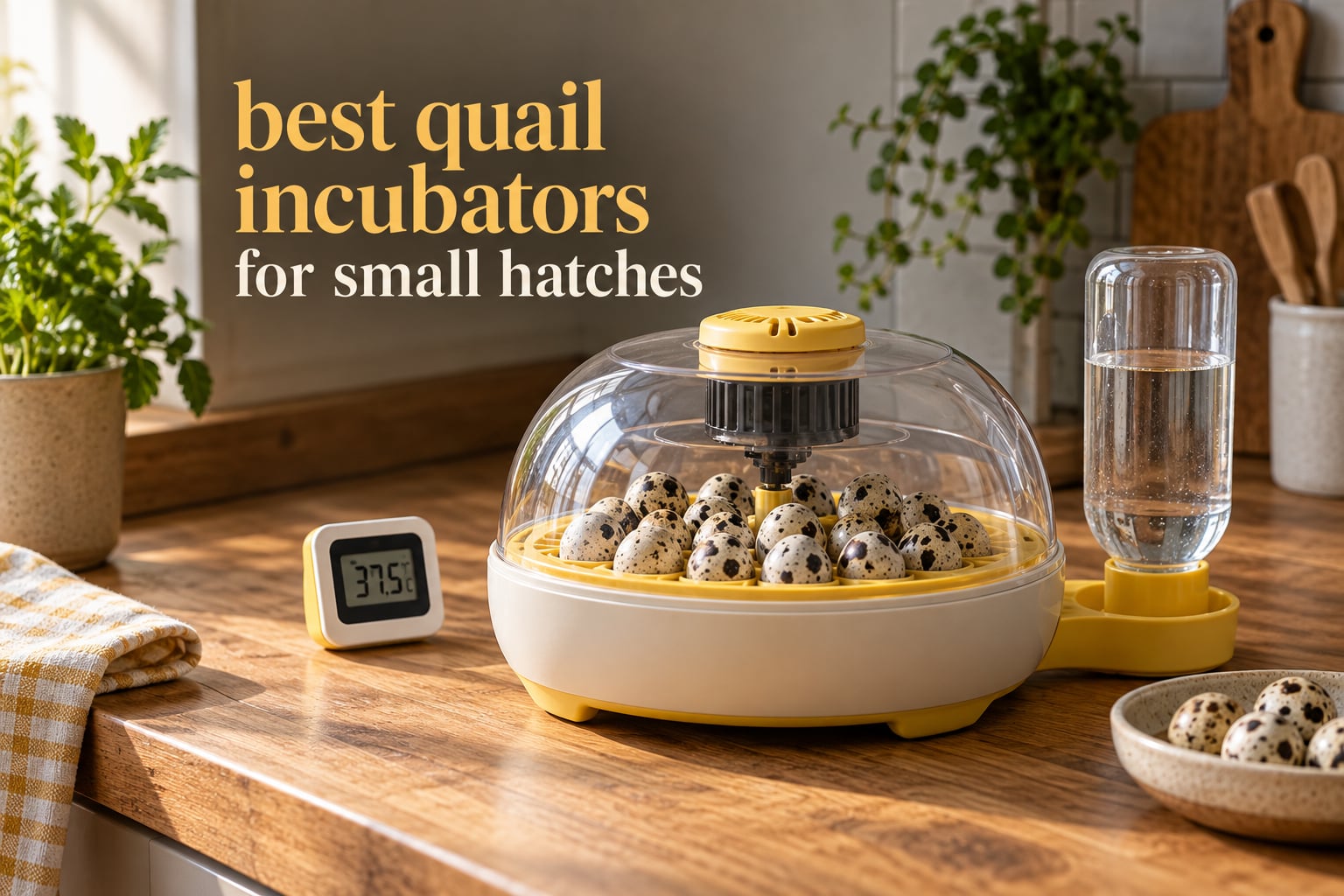
The number on the box is not the number you will fill. Most quail incubators are advertised with a chicken-egg capacity, and the quail-egg figure is a separate, smaller claim that often assumes a specific tray is fitted. Get that wrong and you will set eggs that roll into corners, fall through gaps, or never get turned.
That is why the best quail incubator for a small hatch is not simply the one with the highest number printed on the front. It is the one whose stated capacity is already in quail eggs, whose tray physically holds them upright, and whose temperature and humidity readings you can verify with your own instruments. We put ten countertop incubators with substantial owner review bases through their specifications and their owner reports to work out which ones actually fit a first batch of 24 to 60 quail eggs.
The good news is that ten of these machines are compact enough for a kitchen counter, quiet enough to sit in a spare room, and small enough that a first hatch does not have to be a major purchase. Our induction cooktop guide for small kitchens deals with the same counter-space-versus-capability tradeoff we run into here, and the same rule applies to a spare-room appliance. The bad news is that humidity is where most first hatches go wrong, and no display on any of these machines is accurate enough to be the only gauge you trust.
Every unit below is stated in real quail eggs where the manufacturer states them, with the chicken-egg number kept separate. Where a quail tray is not included, we say so. Prices change daily, so use the check buttons rather than any figure you remember.
Table of Contents
Top 3 Quail Incubators for Small Hatches in 2026

TRIOCOTTAGE M12H
- 12 eggs
- auto turn with manual override
- built-in candler
- external water refill

ONKO 40-Egg Quail Unit
- 40 quail egg capacity
- turns every 2 hours
- 360 degree shell
- top candler
Our top pick, the TRIOCOTTAGE M12H, is the one we would hand a first-time hatcher: a large base of owner reviews at a consistent 4.4 stars, automatic turning you can override, and a candling light owners single out as unusually clear.
All 10 Picks at a Glance in 2026
| Product | Specifications | Action |
|---|---|---|
| TRIOCOTTAGE M12H 12-Egg Incubator |
|
Check Latest Price |
 VEVOR 12H 12-Egg Incubator VEVOR 12H 12-Egg Incubator |
|
Check Latest Price |
 IBKINXX DLN-12 12-Egg Incubator IBKINXX DLN-12 12-Egg Incubator |
|
Check Latest Price |
 CoInceptus 16-Egg Incubator CoInceptus 16-Egg Incubator |
|
Check Latest Price |
 Onsju 18H-OO 18-Egg Incubator Onsju 18H-OO 18-Egg Incubator |
|
Check Latest Price |
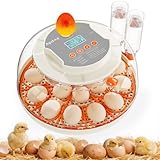 Apdoe 18 Plus 8 Egg Incubator Apdoe 18 Plus 8 Egg Incubator |
|
Check Latest Price |
| ONKO 40 Quail Egg Incubator |
|
Check Latest Price |
 innhom 56-Egg Incubator innhom 56-Egg Incubator |
|
Check Latest Price |
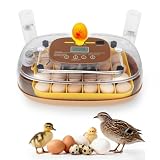 ZEMIRO Series III 24-Egg Incubator ZEMIRO Series III 24-Egg Incubator |
|
Check Latest Price |
 DEZHXHE 8-30 Egg Incubator DEZHXHE 8-30 Egg Incubator |
|
Check Latest Price |
Two entries deserve a note before the individual reviews. The ZEMIRO and the ONKO are the two whose stated capacity is written in quail eggs rather than a chicken count, and the ZEMIRO is the machine here with a genuine two-stage humidity system rather than a single fixed level. Everything else needs a small conversion in your head before you order.
1. TRIOCOTTAGE M12H 12-Egg Incubator – the stand-alone choice for a first batch
- Long-term owners report full hatches across several batches
- Built-in candling light is the clearest its users have had
- External water control lets you adjust humidity without opening the lid
- Quiet fan and compact footprint
- Thick plastic base survives drops
- Humidity display reads about 10 percent higher than an independent hygrometer
- Auto turn stalls if larger eggs are crowded
- Only about 6 large eggs fit at once
The M12H is a compact machine that still does everything properly. It measures 7.5 by 7.5 by 6.6 inches, weighs under four pounds, and runs an LED temperature display with an external insulation layer around the chamber. The curved cover gives you a full look at the tray without lifting the lid.
What sells it for quail is the turning system and the water control. The turner runs on regular intervals with a manual override, so you can stop it yourself on day 14 rather than waiting for a preset. The external water replenishment means you change humidity without cracking the lid, which saves temperature and humidity every time you would otherwise lift the lid to add water.
Owners who use it long term report repeated successful batches, including full hatches on turkey, duck and chicken eggs, and the built-in candling light gets singled out as the clearest they have used. It shuts off on its own, so you are not fumbling with a switch in the dark.
There is one recurring quirk, and it matters for quail specifically. The humidity reading runs roughly 10 percent higher than an independent hygrometer measures, so if you chase the display you will overshoot. Set it about 10 percent below the number you want and verify with your own meter. The second quirk is crowding: if you load larger eggs, the auto turn can stall, and only about six large eggs fit comfortably. Quail eggs are not a crowding problem, which makes this unit a natural fit here.
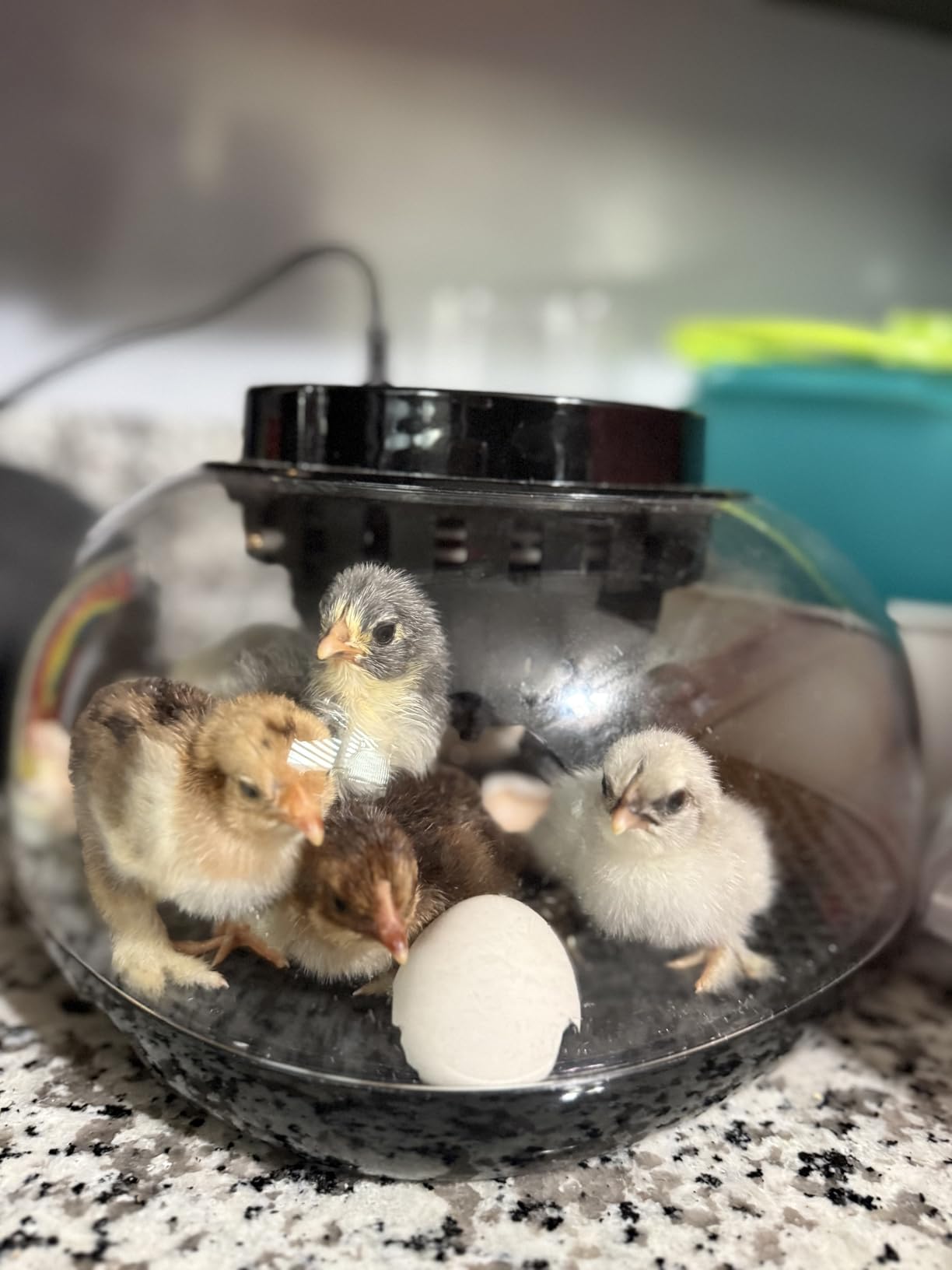
What to check before your first setting
Candle the eggs in the built-in light on day 7 and remove anything clear. Twelve eggs is a real hatch, but it is also a hatch where a single bad egg can sit in the corner of the tray and never be noticed without a light.
Run the machine empty for a day before eggs go in, and expect the humidity to need two adjustments in the first 48 hours as the plastic shell off-gasses. Quail keepers on r/quails describe exactly this behaviour as normal for new plastic incubators.
Where it falls short
Twelve eggs is genuinely small. Once you know how the machine works, the natural next question is a bigger batch, and this is not the unit to grow into. It is also a tabletop unit with a single tray level, so there is no headroom to run a second tier above the eggs.
The humidity over-read is manageable once you know it exists, but it does add a step. Buy an inexpensive hygrometer before your first setting, not after your first failure.
2. VEVOR 12H 12-Egg Incubator – the Most Versatile with an integrated humidity sensor
- 360 degree airflow circulates heat and humidity evenly
- Integrated humidity sensor removes the need for a separate meter
- Clear window plus built-in lighting for checking without opening
- Manual 12V battery switchover during outages
- Light weight at 2.8 pounds
- 12 eggs is the smallest capacity here
- PP shell yellows or cracks over years
- 0.9F normal fluctuation can matter for small eggs
The VEVOR 12H holds a top-two position in Amazon’s poultry egg incubator category, and the reason is airflow. Its 360 degree air circulation design is what keeps a quail tray even from corner to corner, and quail eggs in particular are small enough that a warm spot in a still-air chamber is easy to miss.
The sensor is the other headline. Most of the machines in this roundup either show you a humidity number you should not trust, or show you nothing at all. This one has an integrated temperature and humidity sensor with a live display, which removes one guesswork step out of the setup entirely.
It weighs 2.8 pounds, which makes it among the easiest machines here to move between a warm kitchen and a stable spare room, and the transparent shell with built-in lighting lets you check embryos without lifting the lid and dropping the temperature.
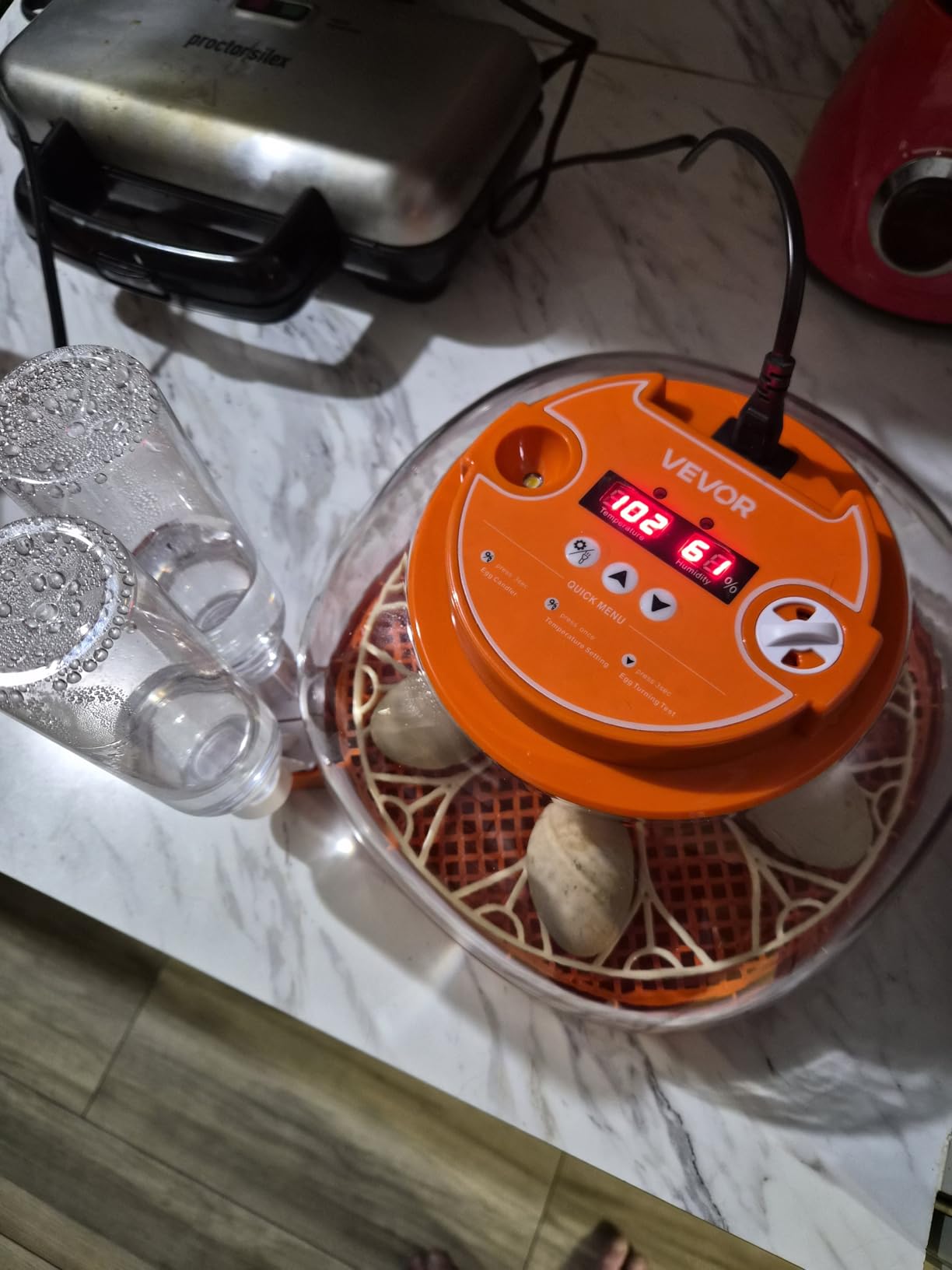
Two practical notes. The listed fluctuation of 0.9F is the normal operating range of this design rather than a fault, but on a 12-egg tray it is worth an independent thermometer to know where your eggs actually sit. And the polystyrene shell is a less durable material than the ABS used on several machines here, so expect cosmetic yellowing and eventually a crack if you keep it in a sunlit room.
Outage protection is manual rather than automatic. You switch to 12V yourself when the power fails, which means you need a battery and a clamp lead on hand before hatch season rather than during it.
Whether the 12-egg ceiling is a problem
For a first hatch, no. Twelve quail eggs is a manageable number to candle, to hand-turn if a turner fails, and to keep an eye on during the final three days. It is the machine we would start on if the whole idea is still new.
The figure to check is the tray. A 12-egg configuration is a small-egg configuration, and a quail set should load it without gaps. If you are planning a repeat batch, look at the 18- and 24-egg variants in the same family before you settle.
Where it falls short
The 12-egg configuration is the smallest capacity in the group, so it sets the ceiling on your first hatch. The shell material is the second limitation, and the manual battery switchover is a third because it depends on you being awake when the power goes out.
None of that matters for a careful, single small batch. It matters a great deal if you are planning to run three or four batches a year.
3. IBKINXX DLN-12 – the most-reviewed machine in the set
Incubator for Hatching Eggs – 12 Egg Capacity, 360° Viewing for Chicken
- Largest review base of any machine here at 470 ratings
- Selectable turning interval lets you match the interval to the species
- External water refill keeps humidity steady
- Disassembles completely for cleaning between batches
- 12-egg capacity is small next to the 18 and 56-egg models
- Humidity control is basic against dual-bottle designs
- One in ten reviews is a one-star rating
When a small batch is part of a plan rather than a one-off, review volume is the single most useful signal you have. The DLN-12 carries 470 ratings, the largest base in this group, and it holds a top-three category position. That is more owner data than most machines here get, and it means the failure modes are already documented.
The useful feature for quail is the selectable turning interval. Sixty, 120 and 180 minutes give you a shorter interval for a 17-day coturnix hatch than you would use for a 28-day chicken batch, and the turner stops automatically three days before the hatch date so you do not have to remember to kill it yourself.
Its 360 degree transparent shell and built-in candling feature mean you can check development without opening the unit, and the lower tray rinses under water while the upper vent cover lifts off for cleaning between batches.
It is a single-level machine listed for chicken, duck, goose, bird and quail eggs, with six levels of spacing claimed in the frame design. For quail you will use the narrowest spacing and probably fewer than 12 eggs to give the turner room to roll them, which is a point forum hatchers make often: packed eggs turn badly.
That packing rule comes up repeatedly in quail communities, and it is the single most common reason a small batch underperforms. Whatever machine you choose, leave gaps. A tray you can fit 12 eggs into should not be filled to 12 if the eggs cannot rotate freely.
How it handles a long hatch season
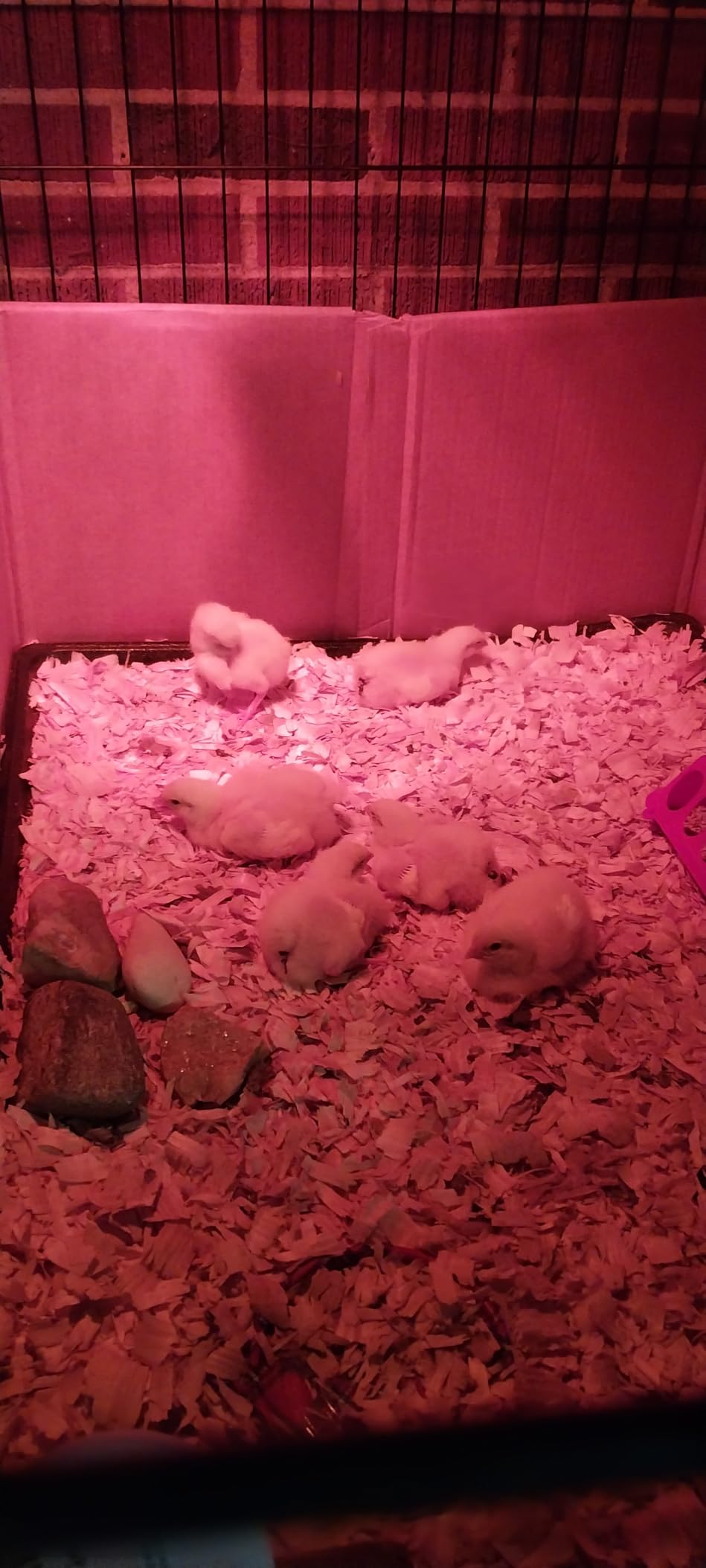
The complete disassembly is the underrated part. The lower tray rinses with water and the vent cover comes off, which means turnaround between batches is a ten-minute job rather than a soaking one. For anyone running repeat hatches that matters more than any single feature on the box.
It carries a two-year manufacture warranty, which is among the longer commitments on the plastic machines here, and worth factoring into how long you expect one to last.
Where it falls short
Twelve eggs, and humidity control that is basic by comparison with the dual-bottle machines. If you already know you will be running batches above 30 eggs, this is the wrong size to grow into.
The one-star share is worth taking seriously at this review volume. Read a handful of the critical reviews before you buy rather than relying on the average.
4. CoInceptus 16-Egg Incubator – the best when outages are the worry
- Adjustable roller spacing fits quail through goose eggs on one tray
- Dual 110V and 12V power protects an active hatch
- Built-in candler lets you remove unfertilized eggs early
- Reaches set temperature within an hour
- Turning every 90 minutes cuts manual work
- No humidity value is displayed at all
- Water bottles are not included with the auto fill base
- Turning wire must be connected for auto turn
- One-star share of 11 percent
The CoInceptus solves the problem nobody lists on the spec sheet: what happens when the electricity goes off at hour nine of a hatch. It runs on 110V and is wired for manual 12V switchover, so a battery of the right size can carry a quail batch through an outage instead of ending it.
Its other distinguishing feature is the adjustable roller spacing. The rollers move to accommodate egg sizes in a single tray, which on a machine this small is a meaningful saving on counter space compared with carrying separate trays.
Owners like the quick heat-up and steady hold once it reaches temperature, and the built-in candler is the one most used: identifying and removing unfertilized eggs early frees tray space and improves the odds on the eggs that remain.
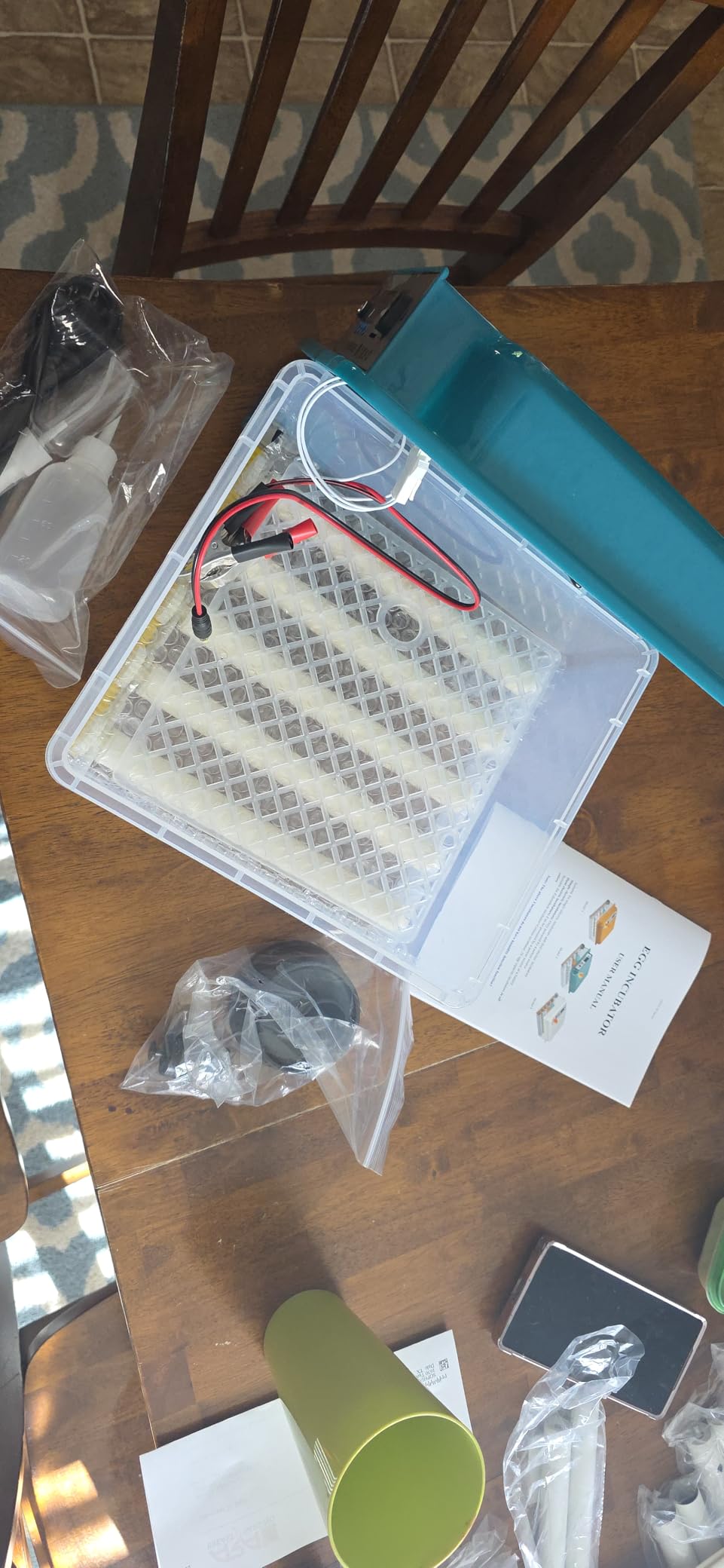
The humidity story is the weak point. This unit does not display humidity values at all, and the water bottles are not included with the automatic fill base, so you are managing moisture blind through the external bottle setup plus whatever hygrometer you buy. That is workable but it is not convenient, and for quail it is the variable that decides your hatch.
The auto-turn also needs the egg turning wire connected. That is a thirty-second job and people forget it, so set a reminder before you set eggs rather than discovering it on day three.
Setting it up for quail specifically
Narrow the roller spacing to the quail position and leave gaps between eggs so they can roll. At 90-minute intervals the turner is turning more often than most quail keepers hand-turn, which is a good margin for a small batch where the alternative is three to five manual turns a day for two weeks.
Buy your own hygrometer before the first batch. On a machine with no humidity display, an independent meter is not a nicety, it is the only instrument in the loop.
Where it falls short
The missing humidity readout and the bottles not being included together mean you will spend more on accessories than the machine’s own spec sheet suggests. The 4.1 rating with 11 percent one-star reviews points at humidity calibration as the recurring source of frustration.
If your power is stable and you would rather not manage moisture yourself, pick a machine with a dual-bottle system instead.
5. Onsju 18H-OO – flexible turning on 18 standard or 40 quail eggs
- Widest interval choice at 60
- 120 or 180 minutes
- Turning pauses automatically 96 hours before the hatch date
- Handles up to 40 quail or parrot eggs in one run
- Top-ranked in its Amazon category
- LED candler under a clear dome for monitoring
- One-star share is among the higher ones in this group
- Setup steps must be followed for best lifespan
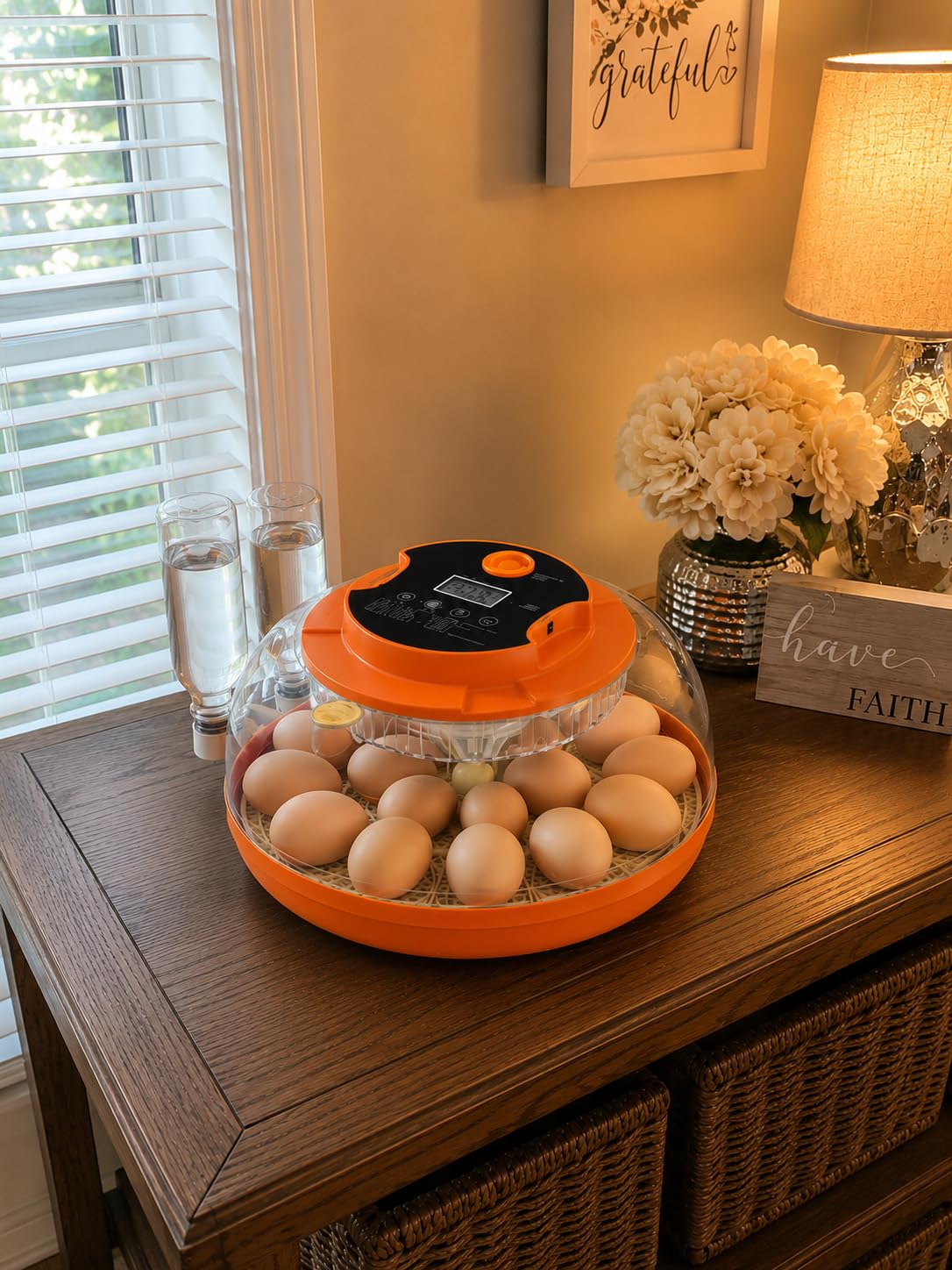
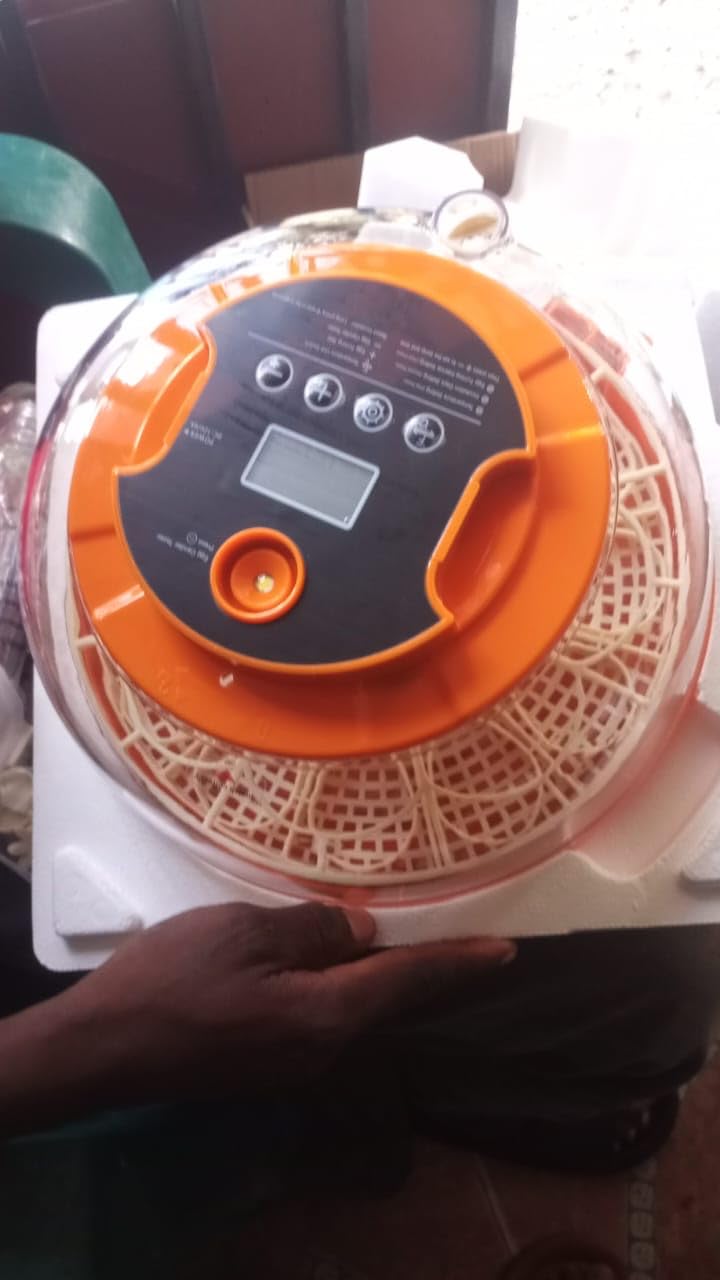
The Onsju 18H-OO is a machine where the manufacturer states a quail number alongside the chicken one: 18 standard eggs or up to 40 smaller eggs such as quail. That dual claim is exactly what you want on a small-batch machine, because it tells you the tray genuinely re-spaces rather than forcing a compromise.
The turning system is among the best specified in this group. You choose 60, 120 or 180 minutes, and the unit pauses turning 96 hours before the set hatch date with a clear stop indicator on the display. No guessing about when to unplug the turner.
Its sealed, auto-regulated humidity system replenishes on its own, the digital monitoring gives audible alerts for abnormal conditions, and the high-intensity LED candling light sits under a 360 degree dome so you can see the whole tray at once.
Reviewers who set it up carefully report good results, and the one-star share appears to trace back to setup rather than to hatch results. Digital temperature control and a silent fan keep heat distribution even, and for a spare room or a room where someone works that matters more than most buyers expect.
The manual’s own instruction is explicit about following setup steps carefully for best performance and lifespan, which is the practical advice here.
Why 40 quail eggs is the useful number
Forty quail eggs is a real small-batch size. It is enough to keep a table supplied without turning your kitchen into a hatchery, and it is a batch you can still hand-turn if the turner fails.
Load quail eggs to the smaller-egg setting rather than the standard one, and expect roughly 40 as the practical ceiling rather than a target. Reviewers using it at the quail setting report good results, but they also report crowding as the first thing to fix.
Where it falls short
The sealed humidity system is good but not adjustable in fine increments, so a dry room still leaves you wanting an independent meter. And the auto-stop at 96 hours assumes you set the hatch date correctly, which is another thing to get right on the first try.
Read the manual before the first batch. The people who rate it highly appear to be the ones who did.
6. Apdoe 18 + 8 Egg Incubator – two trays for mixed loads
- Standard tray holds up to 50 quail or small bird eggs
- Large 8-slot tray takes duck
- goose and turkey eggs
- Turning stops automatically during the last three days
- Manual water bottles outside the chamber
- Three-year warranty with lifetime technical support
- Some buyers report the newer revision holds humidity less consistently
- Chamber runs shallow once goslings and poults stand
- Candling light projects outward and needs a dark room
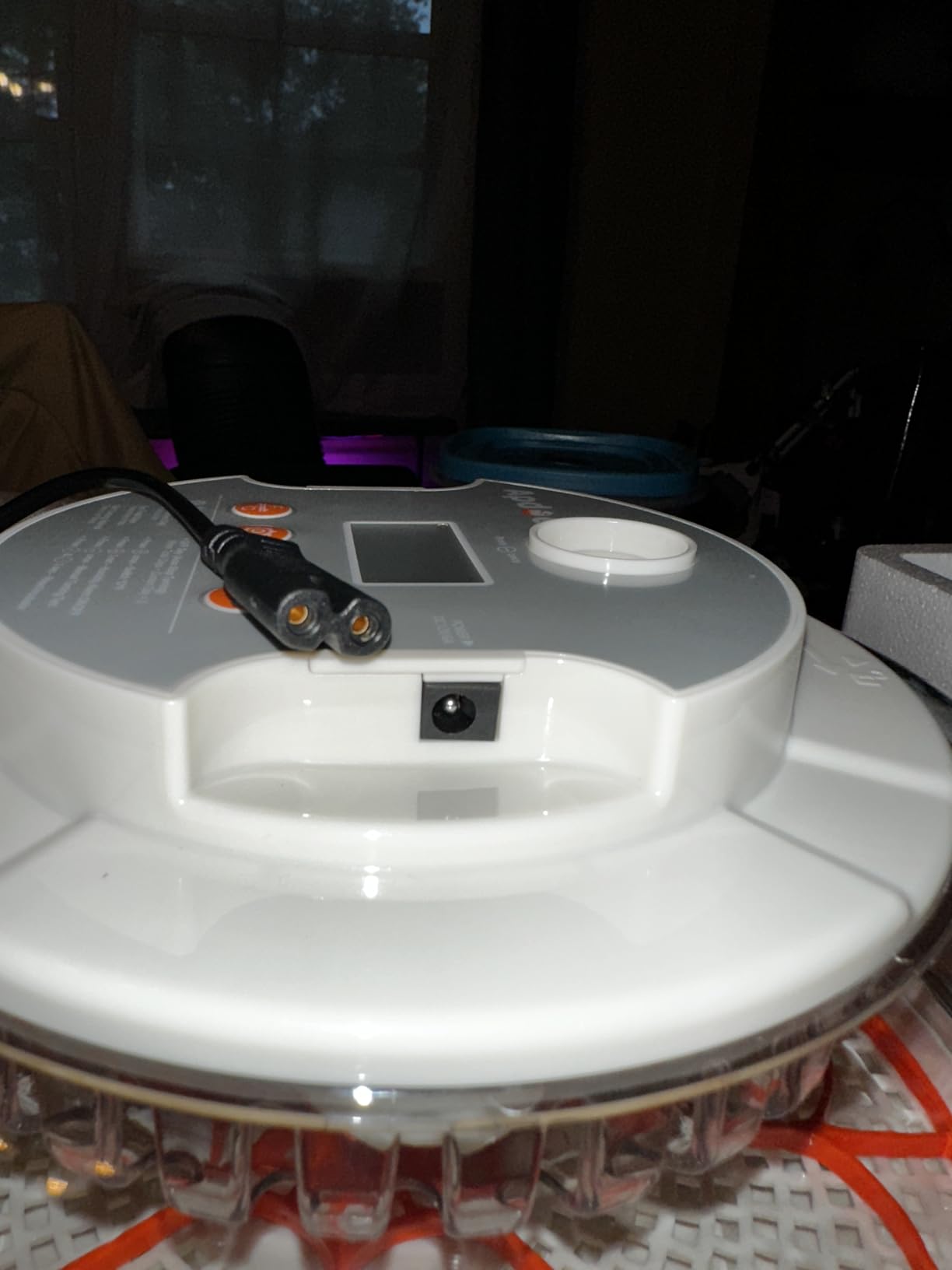
The Apdoe is the pick for anyone who does not want to choose between species. It comes with two trays: a standard 18-slot tray that holds up to 50 quail or small bird eggs, and a large 8-slot tray for duck, goose and turkey eggs. For a mixed flock that is a genuinely useful arrangement rather than a gimmick.
The turner is well specified, with 1, 2 and 3 hour intervals, a live countdown, and automatic stoppage during the final three days. You can also set the incubation day and cycle manually, which matters for anyone moving eggs mid-cycle between machines.
Independent sensors are where this one earns its place in a serious comparison: owners testing with an external probe report temperature holding between 99.1 and 100.6F over a 24 hour period. That is a documented figure rather than a claim.
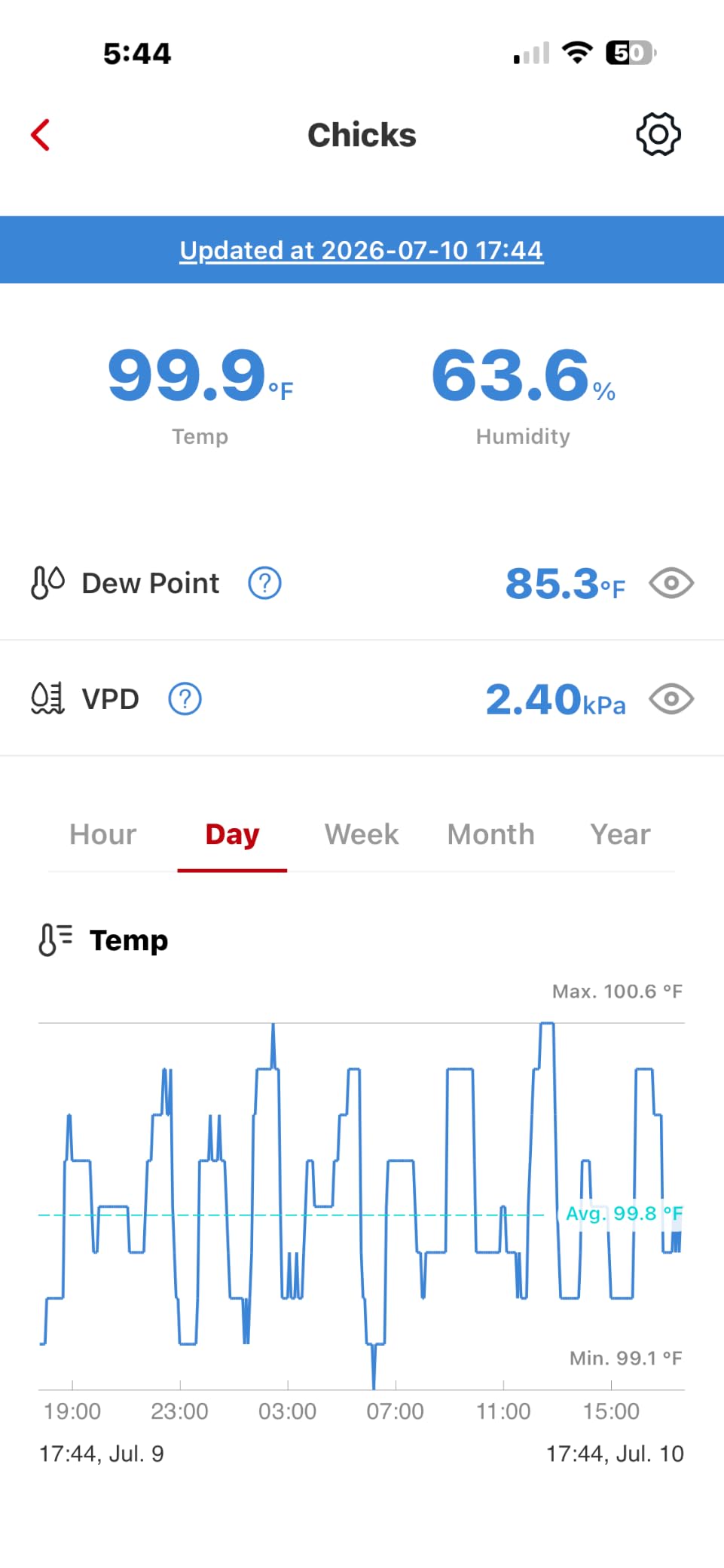
Water bottles sit outside the chamber with an adjustable air vent and multi-level water channels, and the whole thing breaks down to trays, lid and fan for deep cleaning. A cleaning brush is included, which sounds minor until you have cleaned egg residue out of a water channel without one.
It carries a long warranty, three years with lifetime technical support, and a commitment worth weighing against the revision complaints below. Hatchers report strong results, including full hatches on 11 of 11 and 13 of 15.
Whether a mixed-species tray is worth the setup
For quail alone, the standard tray is the part you care about, and it claims up to 50 quail eggs. In practice the dividers rather than the slot count set your real number, so decide the hatch size first and set the spacing to match.
The ability to set the incubation day manually is quietly valuable. It lets you start a second machine mid-cycle, or move eggs between units, without the machine fighting you for the first three days.
Where it falls short
Some buyers report that the newer revision holds humidity less consistently than the earlier version, which is a revision-level complaint rather than a design flaw. It is worth checking which revision you are actually receiving.
The chamber runs shallow once large birds hatch and stand, so this is a quail-first machine despite the goose and turkey claims. And the candling light throws outward rather than focusing on a single egg, so you need a genuinely dark room to use it properly.
7. ONKO 40 Quail Egg Incubator – built for quail and nothing else
- Stated capacity is 40 quail eggs with no conversion needed
- 4.5 stars across 225 ratings among the strongest bases in this group
- Turns every 2 hours with a removable tray to stop turning
- Two external water bottles replenish automatically
- Clear shell with a top-mounted candler
- Built-in gauges are not trusted by some users
- Humidity needs manual tuning of bottles and vent
- No day counter on the display
Only two machines in this roundup state a quail-egg capacity as the headline figure, and this is the one that commits to it hardest. Forty quail eggs, digital temperature and humidity control, automatic turning every two hours, and a tray you physically remove on day 14 to stop the turn. Nothing about it requires you to do arithmetic.
On a machine advertised for chicken eggs you have to work out the quail spacing yourself; here the tray is already built for eggs an inch long, which is the whole reason quail eggs fall through generic trays.
The 360 degree transparent shell with a top-mounted egg candler means candling happens at the top of the dome rather than through a slot, and the removable tray and base rinse under water for cleaning between hatches.
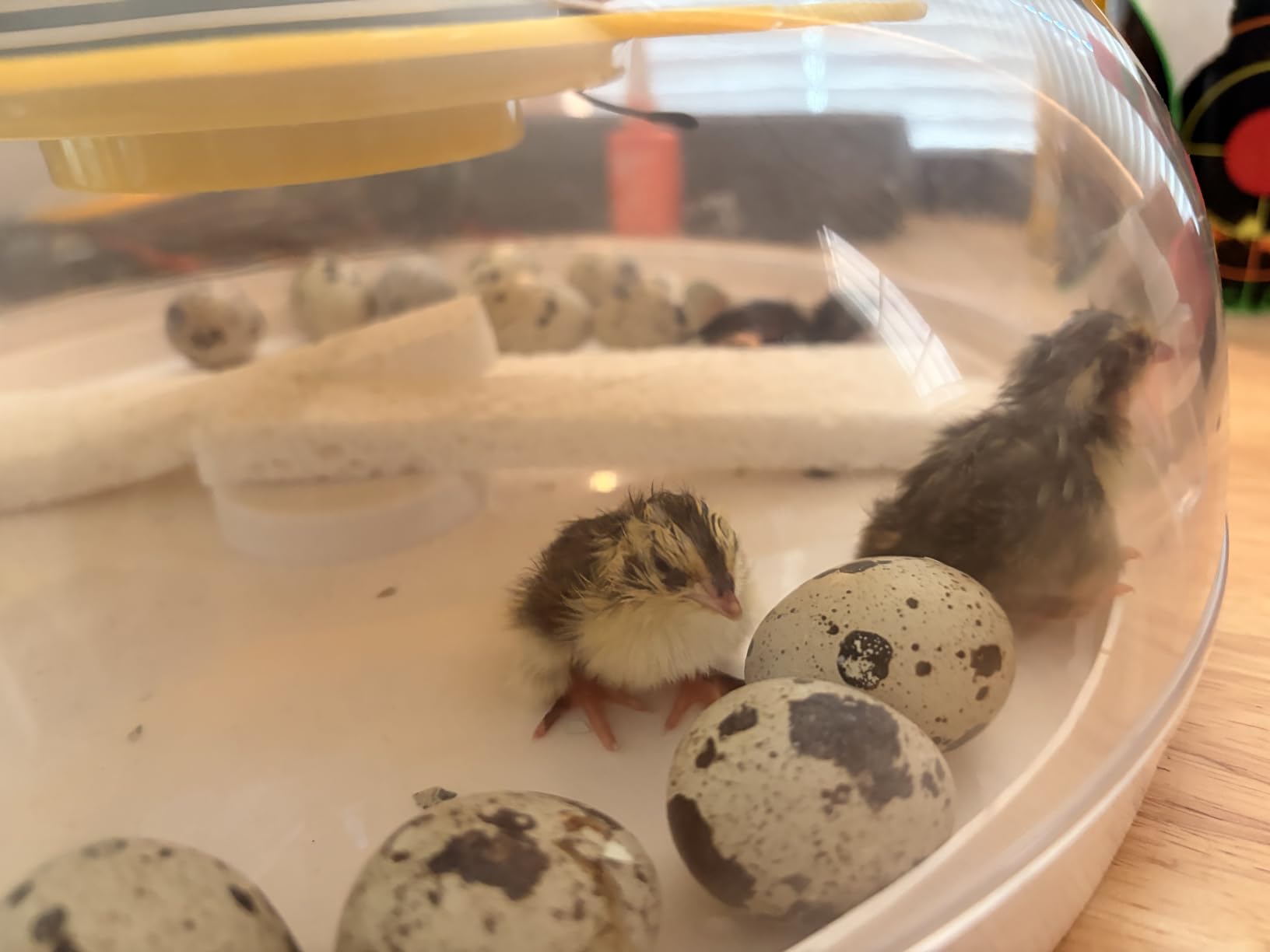
It is also one of the shallowest machines here at just over four inches tall, which makes it easy to store between seasons. Buyers report strong hatch rates, including a first batch of quail eggs where every egg hatched, and stable readings across the whole incubation period.
The humidity needs real attention. It is set by two external water bottles plus the adjustable ventilation holes in the top cover, and owners describe that as manual tuning rather than set-and-forget. There is a low-humidity alarm, which tells you when it has drifted too dry, but not when it is too wet.
Why the shallow profile is an advantage here
A hatch that fits 40 quail eggs in a box this flat leaves room around the eggs for air to move and for you to look at the tray without leaning over it. It is among the easiest machines here to check and the easiest to put away in a cupboard when the season ends.
The removable-tray turner stop is also the cleanest workflow on this list. No switch, no countdown, no relying on the machine to know what day it is. You remove the tray, you set it on top as a dry-hatching surface, and lockdown begins.
Where it falls short
The factory gauges are not trusted by everyone, and on a machine whose whole pitch is a digital display, that gap between what the screen says and what your hygrometer says is worth closing with your own instruments before you set eggs.
There is no day counter, so you are tracking the 17-day coturnix clock yourself. Buy a cheap kitchen thermometer and hygrometer; the run cost is trivial next to a failed batch.
8. innhom 56-Egg Incubator – the largest single tray in the group
- Largest capacity in the group with eight dividers for mixed loads
- Humidity control motor sets water delivery precisely
- Smart alarm beeps and flashes on temperature and humidity deviation
- Built-in airflow for even heat
- Suited to farm
- classroom and lab use
- Heaviest unit here at 9 pounds and takes the most counter space
- Hose must be assembled correctly or the humidity system fails
- Higher one-star share of 11 percent
- Newer listing with a shorter review history
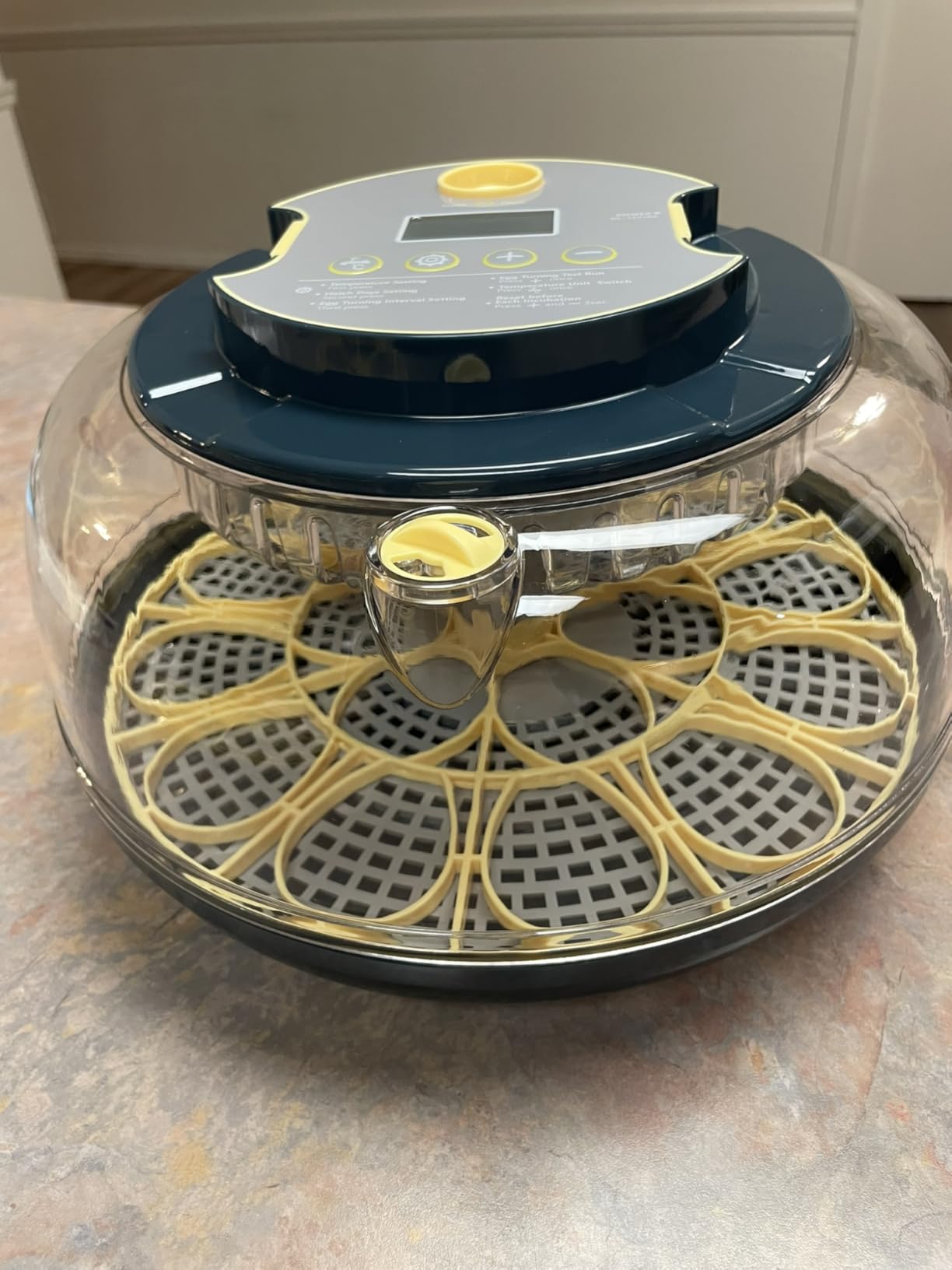
If your small batch is closer to fifty eggs than to twenty, this is the machine on the list. Fifty-six eggs across eight adjustable dividers is the largest single-tray capacity here, and the dividers are what make it useful for quail rather than just a big box: you set the spacing once and the eggs stay in position.
The humidity control motor is the standout feature. Rather than a fixed water channel, a motor sets the water drip level, which is the closest thing to real humidity control in this group and the reason we would trust it with a 56-egg load where a swing costs more.
The alarm system is unusually specific. It beeps and flashes when temperature deviates by plus or minus 2F, repeats the temperature warning every 15 minutes, and the humidity warning hourly. For a machine you might not check every day, that persistence is worth more than a prettier display.
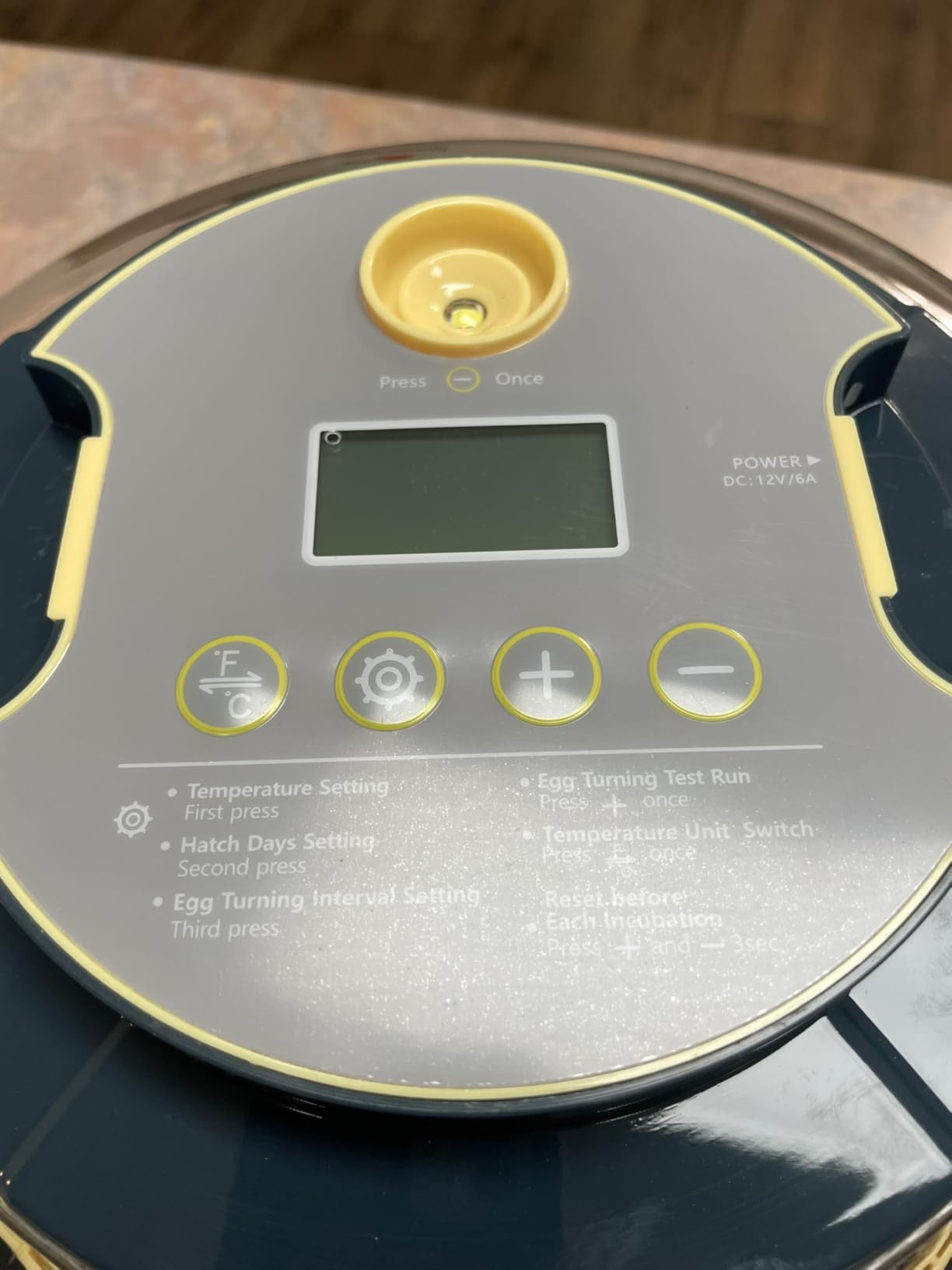
Turning runs automatically every two hours and stops three days before hatch, and the unit also gives explicit hatch-phase guidance: remove the tray on day 19 and mist twice daily from days 19 to 21 for a 21 day species. Coturnix quail will be long gone by then, so treat it as a reference for the other end of the scale.
The 360 degree viewing design supports both observation and candling, which matters when you are trying to identify a handful of questionable eggs in a large tray.
Is 56 eggs still a small hatch?
It is at the top of small-batch territory and the bottom of a small-production one. It suits a household that wants a couple of batches a year for its own table, or a school or lab class. It is more than most first-time hatchers need.
The cost of that capacity is space and weight. At 9 pounds and nearly 20 inches across, it needs a clear counter or shelf, and moving it from a warm kitchen to a stable room is a two-person job.
Where it falls short
Setup is the weak point. The hose has to be assembled correctly on first use or the humidity control system simply will not work, and the reviews point at exactly that as the main source of early frustration.
It also carries a higher one-star share and a shorter review history than most of the machines here. The 4.1 rating reflects complaints concentrated on setup and first-run calibration rather than on hatch results, so budget an afternoon for the first cycle.
9. ZEMIRO Series III 24-Egg – two-stage humidity and a near-silent fan
- Only machine here with a true two-stage humidity system
- Turn intervals selectable at 60
- 90
- 120
- 150 or 210 minutes
- Quail capacity of 48 eggs stated directly
- Child-safe locking lid and anti-slip chick mat
- Top category rank with a large review base
- One-star share of 14 percent
- the highest in the group
- Humidity levels are preset rather than adjustable within a stage
- 48-egg quail figure depends on using the quail tray correctly
The ZEMIRO Series III is the most feature-specified machine here, and also one of the ones with the weakest satisfaction score. Both things are true, and the reason is that its features are more ambitious and therefore more sensitive to correct use.
The dual-bottle system is the reason to care. Every other unit here runs a single humidity level you can nudge up or down, which is why the most common forum question on quail incubation is whether 50 percent is too high. This one has Level 1 at roughly 55 to 65 percent relative humidity and Level 2 above 70 percent for the pre-hatch phase, which is the actual shape of a quail hatch.
Its turning intervals are the widest available on this list: 60, 90, 120, 150 or 210 minutes, with automatic lockdown before hatch. The display shows temperature, humidity, incubation days and the turning countdown in one place, so you are not counting days yourself.
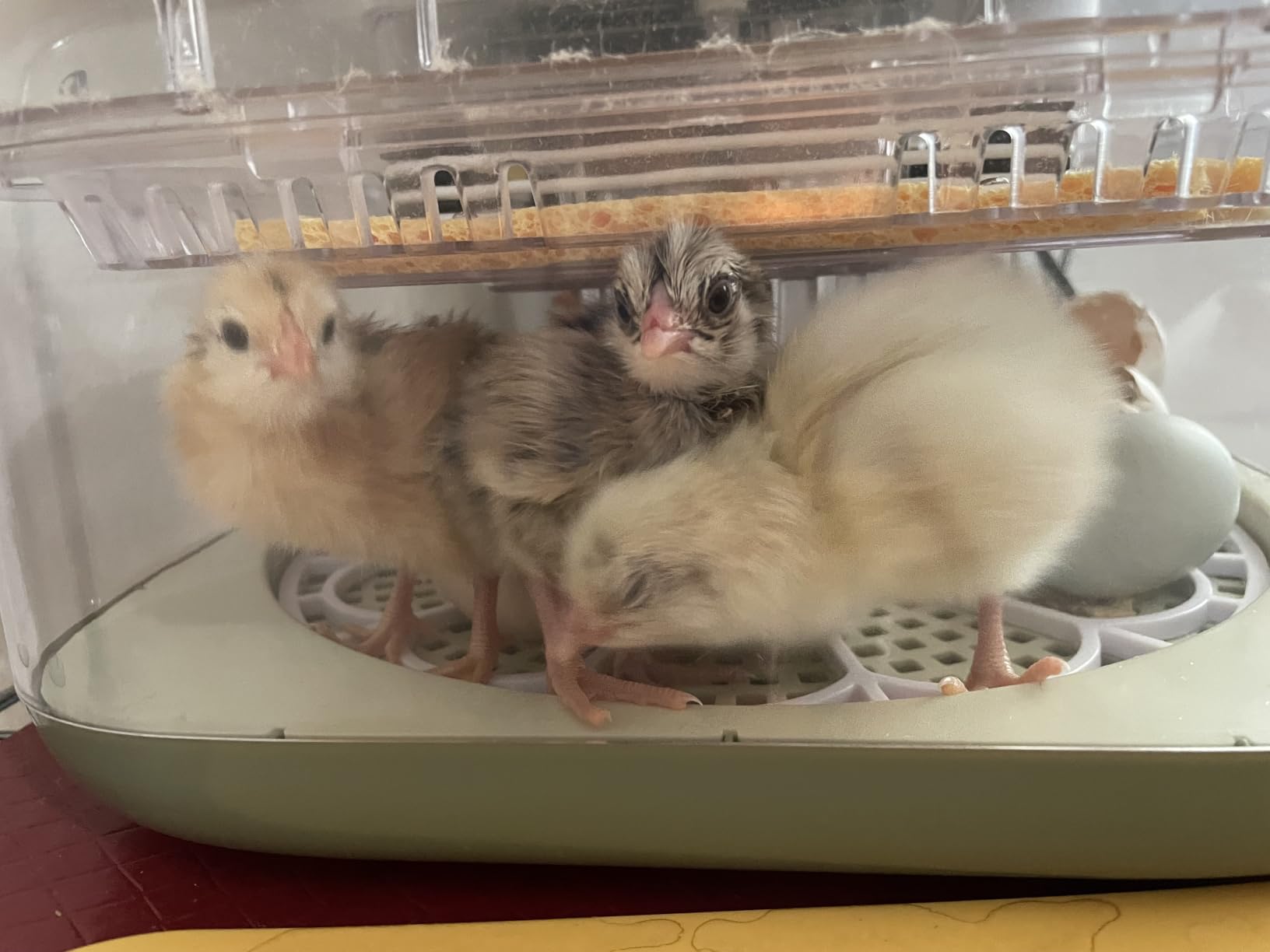
For indoor use it is the quietest option here, with a turbine fan operating below 30 dB, a figure the manufacturer publishes. That matters if the incubator lives in a room you work in, a bedroom, or an apartment where a constant fan hum is genuinely irritating. The thick flame-retardant ABS shell, child-safe locking lid and anti-slip chick mat are also sensible for a household with children around.
It is rated for ambient conditions between 64 and 86F above 4.5 percent relative humidity, and the settable temperature range is 68 to 104F. Check your room against that before you commit.
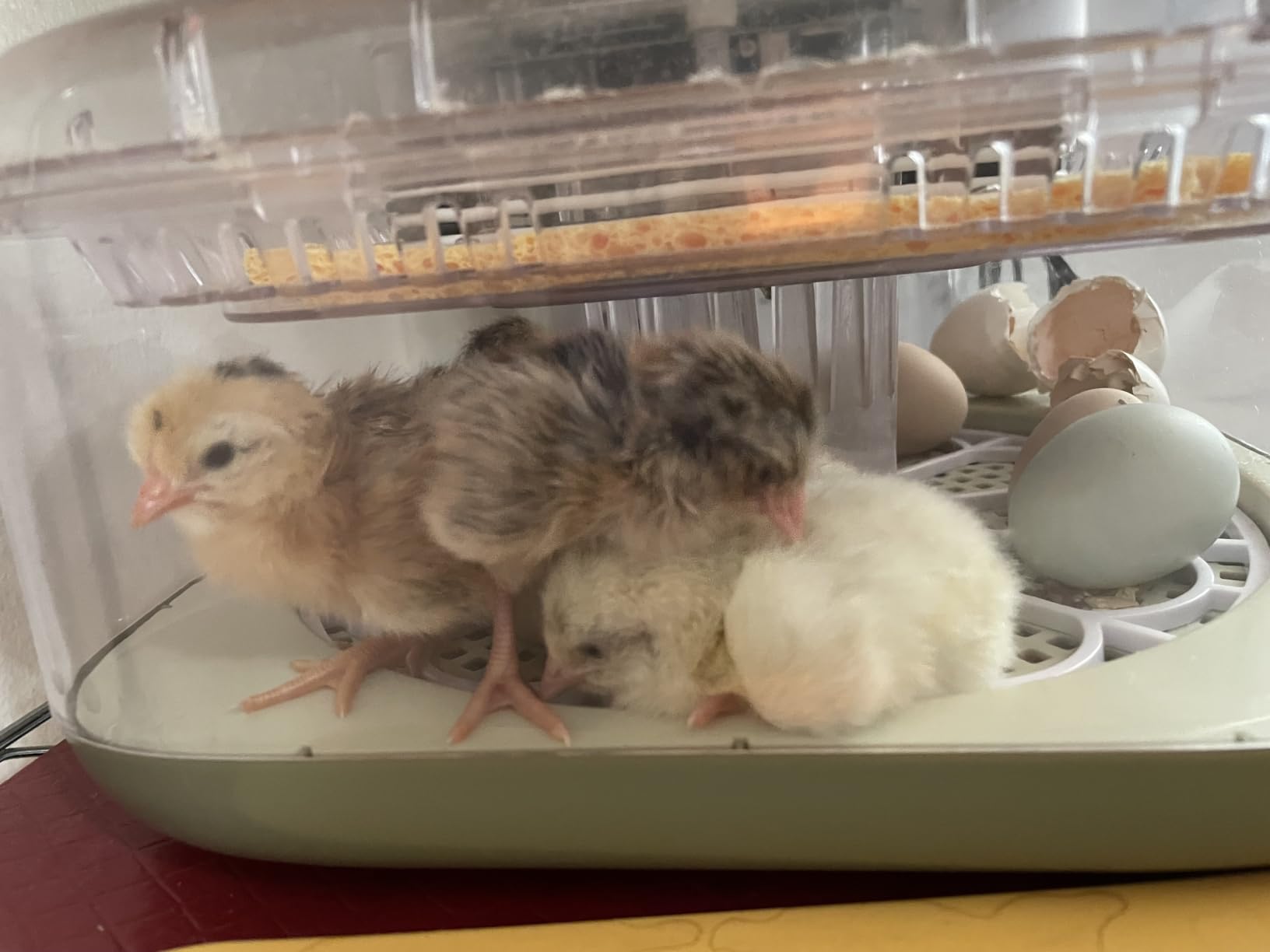
What the two-stage system actually buys you
It lets you run a normal incubation humidity for days 1 to 14 and then raise it properly for the final three days, instead of choosing one compromise level and living with it. For quail that final push is what gets the pip through the shell and the chick dry enough to survive its first hours.
Two vent switches give you on-demand adjustment on top of the two stages, and the built-in LED candler plus clear lid let you check without opening. The 48-egg quail figure assumes the quail tray is used correctly, so confirm the tray is in the box before you count on it.
Where it falls short
The 14 percent one-star share is the highest in this group and the 4.0 average is the lowest. That is a meaningful minority of buyers getting results they did not want, and we would not bury that.
The humidity levels are preset rather than continuously adjustable within a stage, so a very dry or very humid room still leaves you wanting an independent meter. If you are new to incubation, this is not the forgiving choice.
10. DEZHXHE 8-30 Egg Incubator – bright candling on a tight budget
- Two interchangeable trays
- one standard and one for small bird eggs
- LED candling light owners rate as the best they have used
- Fan-driven airflow holds conditions steady once set
- Dual power supply with manual 12V battery switchover
- Lowest entry point of the group
- Quail tray slots are too small for standard coturnix eggs
- Only about 16 of 30 eggs rotate
- Set temperature can read high against true egg temperature
- One review reports the turning motor smoking
- No incubation day counter
The DEZHXHE is the lowest entry point into quail hatching here, and it comes with two interchangeable trays: a standard egg tray and a bird egg tray. Success rates reported by owners are encouraging, including 17 of 21 from a fertile batch.
Its real strength is the candling light. Multiple owners describe it as the best candling light they have used, and on a machine at this end of the range a good light is what lets you find the clear eggs early and give the rest a better chance.
It holds temperature and humidity steadily once configured, with fan-driven distribution, an external automatic water filler with adjustable bottle count, and a manual 12V battery switchover for outages.
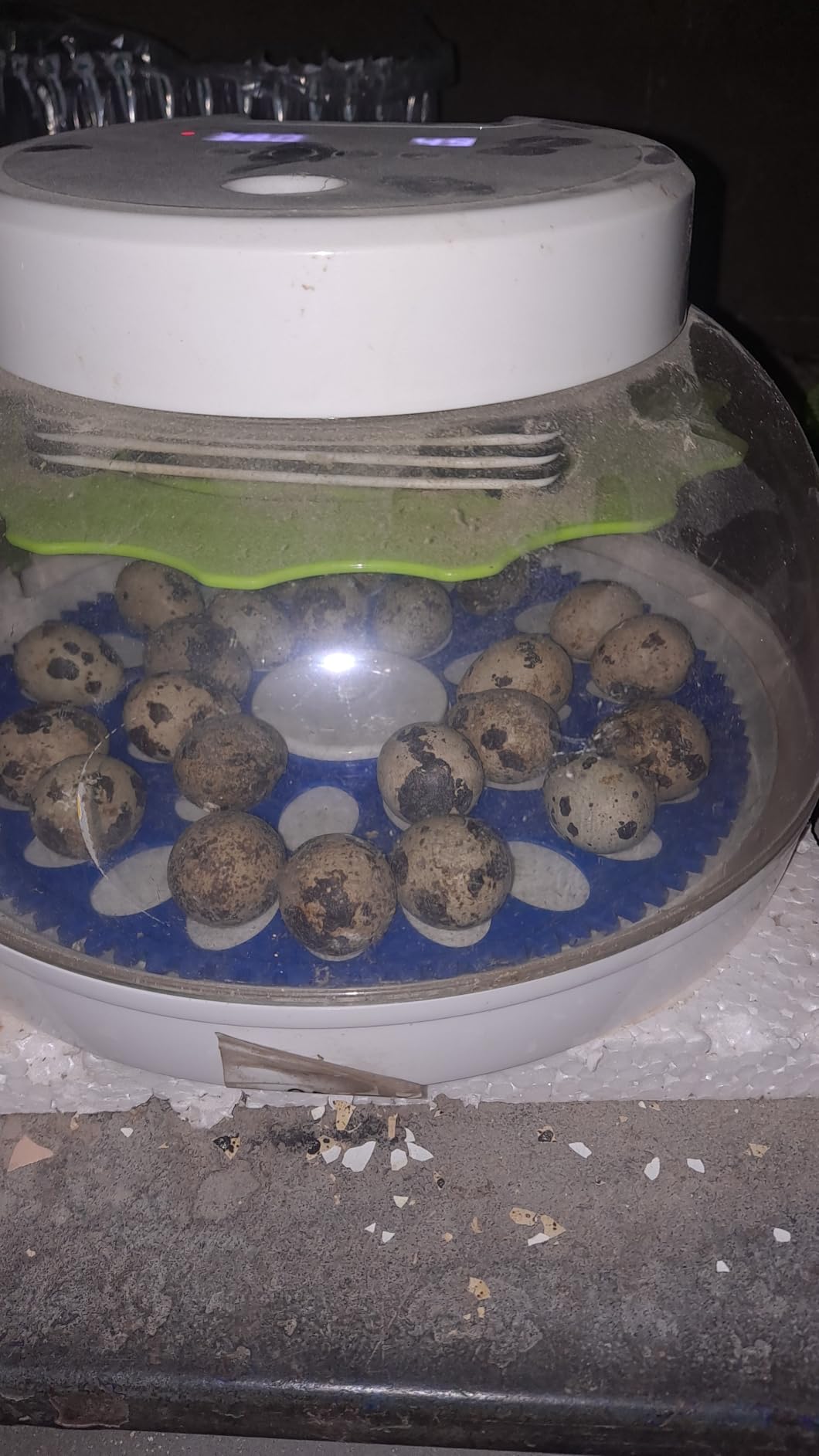
Now the part that decides it for most people. The quail tray slots are reported as too small for standard coturnix eggs, and users fall back to the chicken tray instead, which loses you the tight spacing that makes quail hatching work in the first place. Second, only about 16 of the 30 positions rotate; the middle circle does not turn.
Third, the thermostat can read 102.8F while the actual egg temperature is 99.5F, so a separate thermometer is effectively mandatory rather than optional. One review also reports the turning motor beginning to smoke after a few days, and some units are loud when the turner engages.
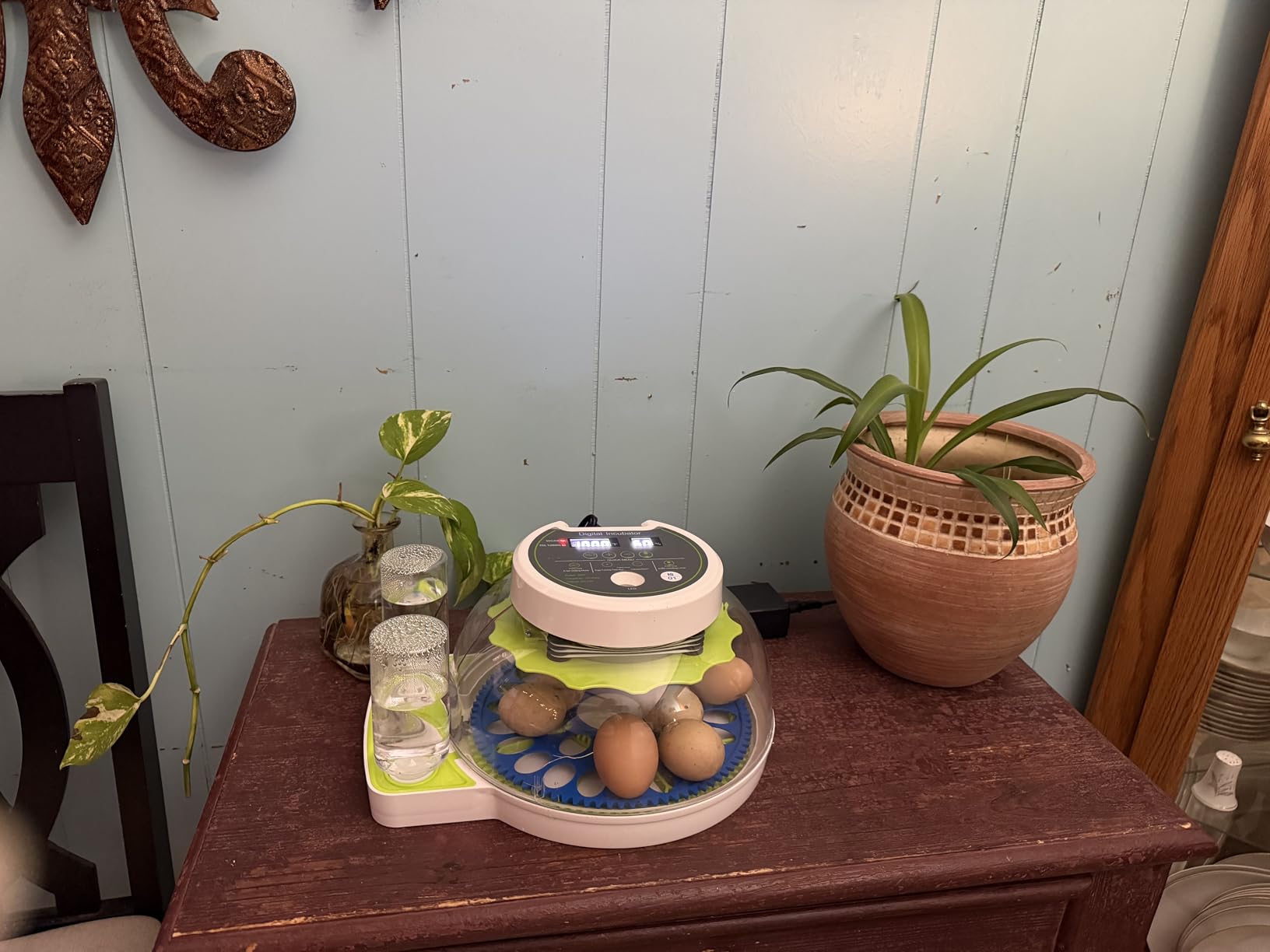
Who this actually suits
It suits someone with a handful of eggs who is comfortable verifying conditions with their own instruments, and does not need every egg in the tray to turn. Under 20 eggs, a partial-turning issue matters far less than it would at 30.
It also suits a classroom, where the visible dome and the candler are doing more work than the automation. Verify the quail tray fit yourself with a few eggs before committing a full batch to it.
Where it falls short
The quail tray sizing problem is the core issue, and it is exactly the problem this topic exists to warn about. A machine sold with a small-egg tray that will not hold standard coturnix eggs is a machine you will be working around from the first batch.
Combine the thermostat over-read, the unturning middle ring and the missing day counter, and this is a pick for someone confident with eggs rather than a first-timer.
How to Choose a Quail Incubator Without Guessing
Convert the chicken number into a quail number
A quail egg is about one inch long and roughly a third the weight of a chicken egg, so you cannot convert by arithmetic and you should not try. The honest answer is that a machine listing a chicken-egg capacity tells you almost nothing about quail, because quail capacity depends entirely on the tray fitted and the spacing set.
Use this instead: look for a machine that states a quail number, or that includes a small-egg or bird-egg tray. Several here do: the ONKO 40 leads with 40 quail eggs, the ZEMIRO Series III states 24 chicken eggs or 48 quail eggs, the Onsju 18H-OO gives both an 18 standard and a 40 quail figure, and the Apdoe’s standard tray is described as holding up to 50 quail eggs. The rest need a tray change or a divider setting you configure yourself.
Then check whether the quail tray or rail is included. On chicken-capable machines the quail rail is frequently a separate part, and a capacity claim means very little if the compatible rack is an extra purchase. The 18-slot standard tray on the Apdoe holding up to 50 quail eggs and the 48-egg quail figure on the ZEMIRO are the clearest stated numbers in the group.
Forced air or still air, and why the target moves
Forced-air machines circulate air with a fan, so temperature is even across the whole chamber and the air reading is the reading. Still-air machines rely on convection, so the air is warmer at the top and the eggs sitting at the bottom of the tray sit in cooler air.
That difference is why the target temperature differs. In a forced-air incubator you are reading the air the eggs are actually sitting in, and the working target is around 99.5F, which is 37.5C. In a still-air incubator the air reading overstates what the egg feels like, and keepers commonly work to a higher air number, around 101 to 102F, because the egg top sits in cooler air than the display suggests.
Every machine in this roundup circulates air rather than relying on convection alone, which is one of the reasons small countertop units now work as well as they do. The 360 degree airflow design on the VEVOR, the silent fan on the Onsju and the built-in circulation on the innhom all exist for the same reason: even heat means an even hatch.
The practical rule is simple. Put your own thermometer where the eggs sit, not where you think the air is, and let that reading set your target rather than the display.
Humidity from day 1 to lockdown
Humidity is the variable that most often decides a quail hatch, and it is the one people are least confident about. A rough dividing line is about 45 to 55 percent relative humidity through days 1 to 14, then 65 to 70 percent from lockdown to pip.
Fifty percent is not too high early. It is roughly in range for the first two weeks, and pushing higher to start is one of the classic early mistakes because the shell needs to lose moisture before the chick can pip. Seventy-five percent is high but not dangerous at lockdown; it is at the wet end of what you want and can leave a chick damp and prone to problems after hatching.
The machines on this list split three ways. The ZEMIRO Series III has a genuine two-stage system, with roughly 55 to 65 percent at Level 1 and above 70 percent at Level 2. The DEZHXHE and CoInceptus are the most hands-on, with external bottles you adjust yourself or, in the CoInceptus case, no humidity display at all. Everything else sits in between.
Whatever the machine, buy an independent hygrometer. Several machines here have displays that reviewers report running high, and one has no humidity reading whatsoever. A small meter is the least expensive safeguard in this entire list.
The accessories you buy separately
Count these before you order, because they are the difference between a working setup and a frustrating one:
- Quail tray or rail. The single most important accessory on this page. Confirm with the listing that it is included.
- Independent thermometer. Place it at egg height. Several displays here over-read.
- Independent hygrometer. Non-negotiable if your machine does not display humidity.
- Candler. Several machines here have one built in, so check before buying your own.
- Water bottles. Not included with the automatic fill base on the CoInceptus.
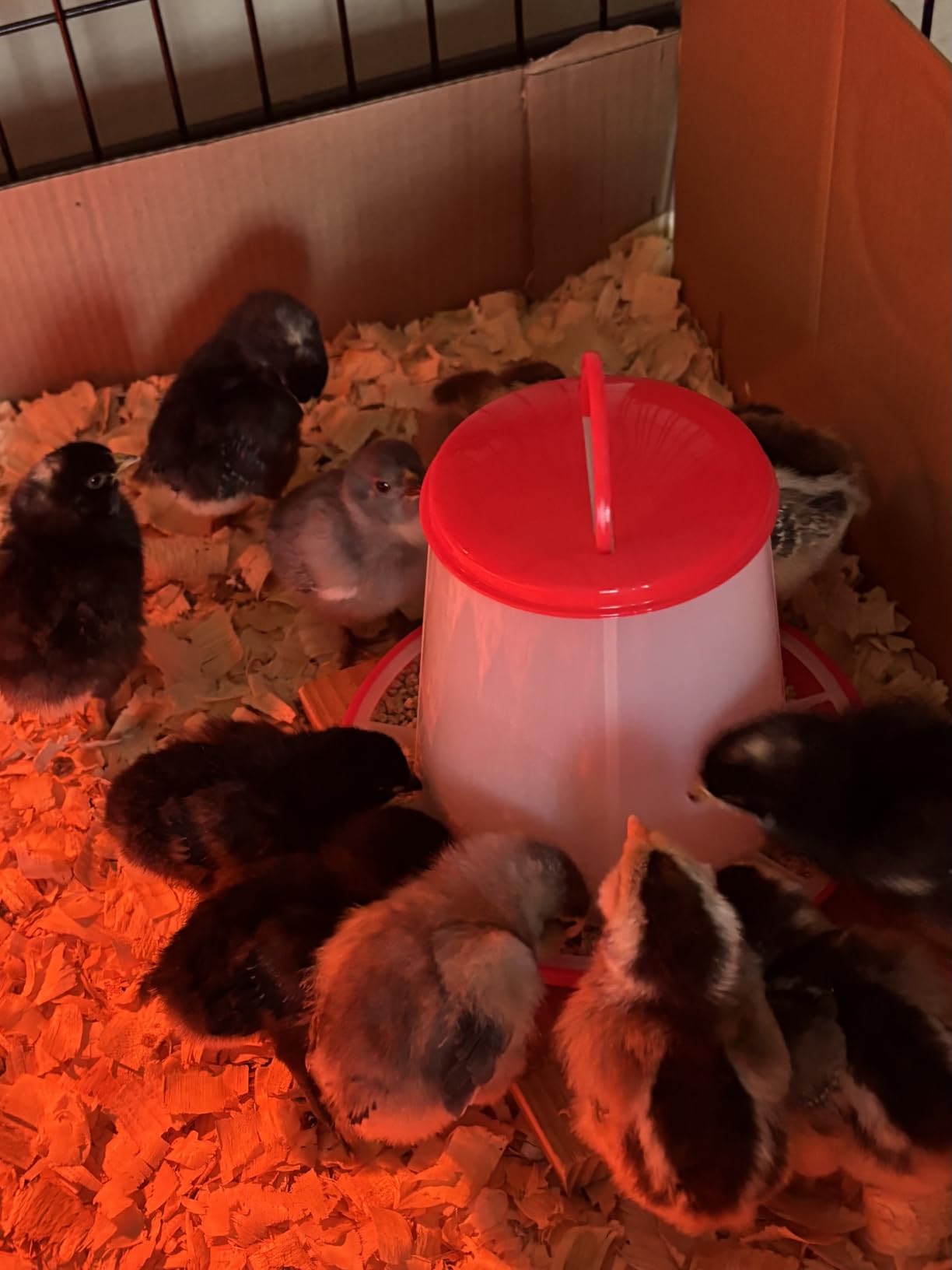
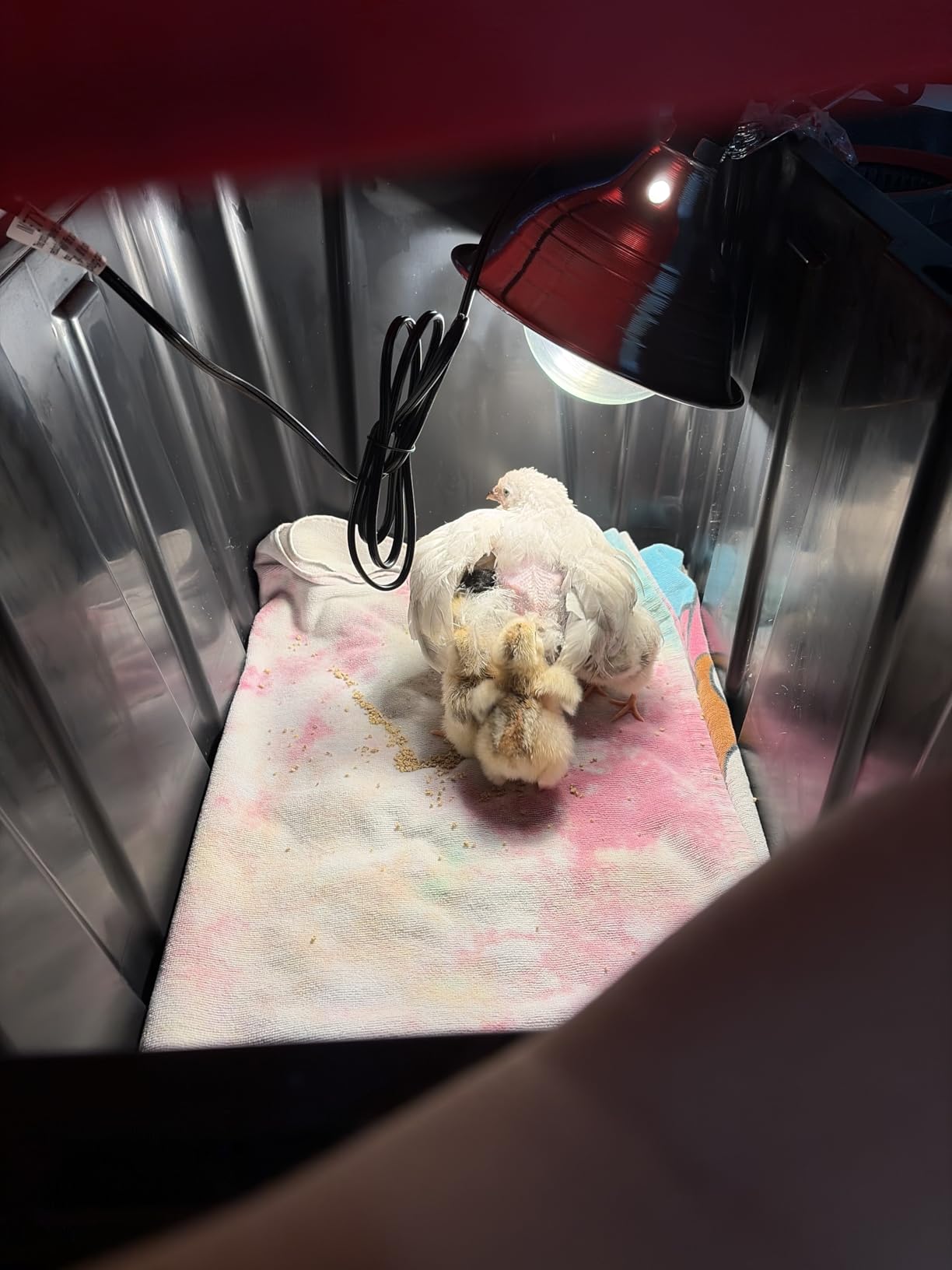
- Brooder. You will need somewhere warm and dry for chicks once they hatch and dry off.
- Battery and clamp lead. Only if you care about outage protection, and only for the models with 12V switchover.
That last item is the one people forget. Choosing a machine with 12V switchover means nothing if there is no battery and no lead when the power goes out. Our guide to electric chainsaws for small trees makes the same kind of point about accessories: the tool is only half the setup, and the supporting kit is what you actually need on the day.
Running a new incubator before eggs go in
Set the machine up two days before you collect eggs. Run it empty, watch the display for a full day, and compare it to your own thermometer at egg height. New plastic incubators off-gas, so humidity will drift upward for the first day or so, and you want to know that before 17 days of incubation depend on it.
Fill the water system and confirm it holds level over 24 hours. Check that the turner runs, and if the machine needs a turning wire or a hose assembly, assemble it now rather than finding out on day three.
Finally, count the days. Coturnix quail hatch in 17 to 18 days, so stop turning around day 14 to 15 and raise humidity. Button quail run longer, closer to 21 days, with a different humidity profile. Know which bird you are hatching before you set the clock.
Frequently Asked Questions
What is the best incubator for quail eggs?
The best quail incubator for a small hatch states its capacity in quail eggs, includes a quail tray or rail, and holds temperature you can verify with your own thermometer. Among the ten units we compared, the TRIOCOTTAGE M12H leads on review volume and the ONKO 40 is the one built around quail eggs from the start.
What is the best brand of incubator?
Brand reputation matters less than verifiable owner volume. The machines with several hundred ratings let you read real failure modes before buying, while thinly reviewed generic machines carry a documented risk of inaccurate thermostats. Check the review count and the one-star share together, not the average alone.
How hot should an incubator be for quail eggs?
In a forced-air incubator, aim for about 99.5F, which is 37.5C, and confirm it with a thermometer placed at egg height. In a still-air machine the air reads higher than the egg actually feels, so keepers work to roughly 101 to 102F instead. All ten machines here use a fan or a built-in circulation fan.
Is 50% humidity too high for quail eggs?
No. Around 45 to 55 percent relative humidity is a reasonable working range for days 1 to 14 of a quail hatch, so 50 percent is within range rather than too high. The mistake is running high humidity right from the start, because the shell needs to lose moisture before the chick can pip.
Is 75% humidity too high for hatching?
75 percent sits at the wet end of the useful range. The usual target from lockdown to pip is around 65 to 70 percent, so 75 percent is more moisture than most hatchers want and can leave chicks damp after hatching. Very humid rooms make it easy to overshoot.
Do quail eggs need an automatic turner?
They do not strictly need one, because manual turning three to five times a day works. But turning by hand for 14 days is the part most first-time hatchers regret skipping, and quail keepers report that a turner removes most of the daily workload.
How long do quail eggs take to hatch in an incubator?
Coturnix quail eggs typically hatch in 17 to 18 days, so stop turning around day 14 to 15 and raise humidity for the final three days. Button quail run longer, closer to 21 days, with a different humidity profile. A few stragglers beyond the expected day are normal.
The Best Quail Incubators for Small Hatches in 2026
By batch size, the picks are clear. Under 15 eggs, the TRIOCOTTAGE M12H is the one to buy: one of the largest review bases in the group at 374 ratings, a candling light owners praise, external water control, and a turner you can stop yourself on day 14. If you want the fewest hands-on decisions, it is also the machine that asks the least of you.
At 18 to 40 quail eggs, the Onsju 18H-OO and the ONKO 40 are the two worth shortlisting. The Onsju gives you a 40-egg quail claim with selectable turning intervals and an automatic stop before hatch. The ONKO is built around quail eggs from the ground up, with a tray that holds 40 of them and needs no conversion. The ZEMIRO Series III belongs in the same range if your room is quiet or your humidity needs proper staging.
Above 40 eggs, the innhom 56 is the largest single tray on this list, with eight dividers and a humidity control motor that earns its keep at that load. Allow a full afternoon for its first-run setup.
What we would avoid is any machine where the quail tray is not included, where the humidity is managed by guesswork, or where the capacity claim is a chicken-egg number. Those three filters remove most of the disappointment before it starts. Whatever you choose, run it empty for a day, verify with your own thermometer and hygrometer, and set the hatch date the day the eggs go in. For more kitchen and household how-tos, keep reading.