
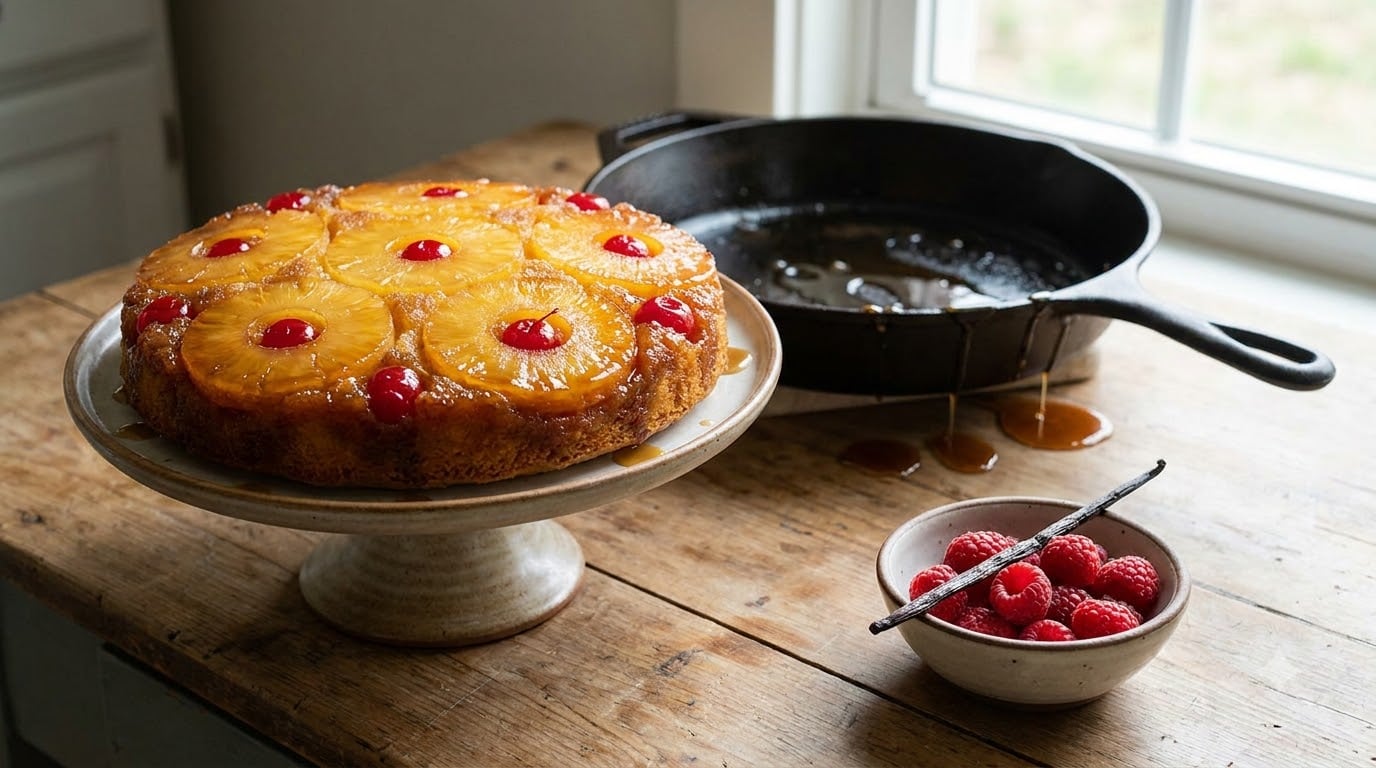
A pineapple upside down cake in a cast iron skillet is the easiest path to that glossy, jammy caramelized topping without wrestling a springform pan. The skillet goes straight from stovetop to oven, the brown sugar melts into butter while you whisk the batter, and the whole thing flips out in one dramatic move. Total time: about 55 minutes, most of it hands-off while the cake bakes.
If you own a 10 or 12-inch cast iron and a couple of canned pineapple rings hiding in the pantry, you are roughly fifteen minutes away from a dessert that looks like it came off a bakery counter.
Table of Contents
Why This Recipe Works
Cast iron does something a thin cake pan simply cannot: it holds heat the way a good Dutch oven holds heat. That thermal mass turns a layer of brown sugar and butter into a deep, even caramel crust instead of a thin, uneven glaze.
The stovetop pre-melt matters too. By melting the butter and dissolving the brown sugar on the burner before the batter goes in, you eliminate the crunchy sugar pockets that form when cold sugar hits a hot oven. The fruit sinks into a glossy syrup that hardens just enough to release cleanly when you flip the cake.
Finally, the dark seasoned surface of a well-loved cast iron gives the fruit edges a slight jammy char you cannot get from a light aluminum pan. It is the same reason cast iron sears a steak better than nonstick. For more on choosing the right pan for baking, our easy cake baking guide walks through how pan material changes the crumb.
Ingredients
For the topping:
- 4 tablespoons (57 g) unsalted butter
- 3/4 cup (160 g) packed light brown sugar
- 1 can (20 oz / 567 g) pineapple rings in juice, drained well (reserve 2 tablespoons of the juice)
- 8 to 10 maraschino cherries, stems removed, plus 1 tablespoon of the cherry juice for color
For the cake:
- 1 1/2 cups (190 g) all-purpose flour
- 1 1/2 teaspoons baking powder
- 1/4 teaspoon fine salt
- 1/2 cup (113 g) unsalted butter, softened to room temperature
- 3/4 cup (150 g) granulated sugar
- 2 large eggs, room temperature
- 1 teaspoon vanilla extract
- 1/2 cup (120 ml) whole milk, room temperature
- 2 tablespoons reserved pineapple juice
A quick note on the fruit: canned pineapple rings in juice (not heavy syrup) caramelize the most evenly because the slices are uniform thickness and the moisture is predictable. Fresh pineapple works but must be cored and sliced to a consistent 1/4-inch thickness, then patted very dry. Maraschino cherry juice gives the brown sugar a faint pink hue without changing the flavor. Room-temperature dairy helps the batter emulsify, which keeps the crumb tender instead of dense.
Equipment
You need a 10 or 12-inch well-seasoned cast iron skillet, not enameled. Enameled cast iron does not caramelize brown sugar the same way and the topping is more likely to stick. If you are shopping for one that handles steak and baking equally well, our roundup of the best cast iron skillets for steak covers versatile everyday options.
Beyond the skillet, grab a heatproof silicone spatula, a hand whisk, and an instant-read thermometer. The thermometer is optional but helpful: it takes the guesswork out of doneness so you never overbake a tender cake into a dry one.
How to Make Pineapple Upside Down Cake in a Cast Iron Skillet
Step 1: Preheat
Heat your oven to 350°F (175°C) with the rack in the center position. Cold cast iron that hits a hot oven can warp slightly, so put the empty skillet on the center rack during preheat if you have time. If you are short on time, set it on the burner for the topping step and accept a slightly longer bake.
Make the Caramel Topping
Place the cold skillet over medium-low heat and add the 4 tablespoons of butter. Once it is fully melted, sprinkle the brown sugar evenly across the surface and stir with the silicone spatula until the mixture looks like wet sand and no dry streaks remain, about 90 seconds.
Turn off the heat. Arrange the pineapple rings in a single layer directly on the caramel, overlapping them slightly if needed. Tuck a maraschino cherry into the center of each ring. Drizzle the tablespoon of cherry juice around the edges for color. Slide the skillet off the burner while you mix the batter.
Mix the Cake Batter
Whisk the flour, baking powder, and salt together in a small bowl and set it aside. In a separate large bowl, beat the softened butter and granulated sugar with a hand mixer on medium speed until pale and fluffy, about 2 minutes. Add the eggs one at a time, beating well after each, then mix in the vanilla.
Add the dry ingredients to the wet in three additions, alternating with the milk and the reserved pineapple juice, starting and ending with the flour mixture. Mix on low only until the last streak of flour disappears. Overmixing here is the fastest path to a tough cake.
Assemble and Bake
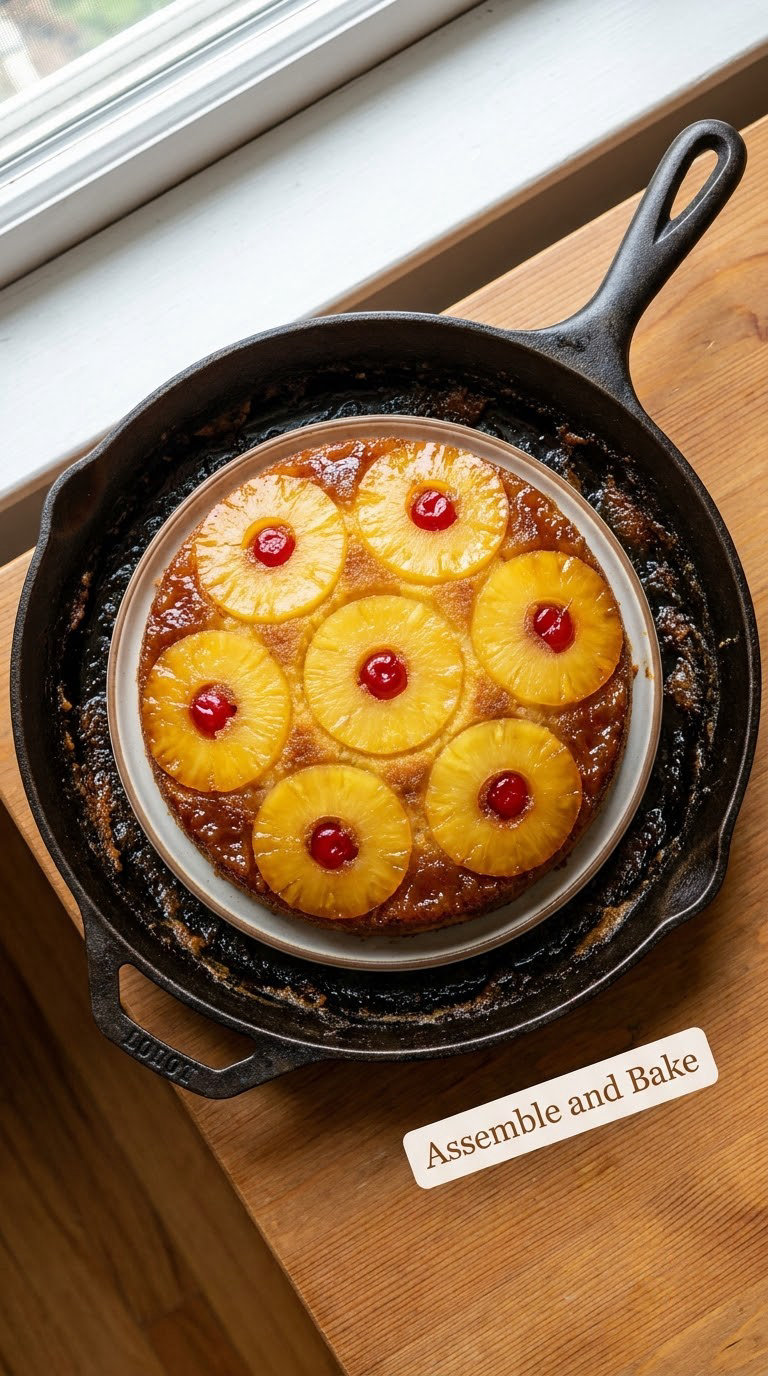
Pour the batter directly over the fruit in the skillet and use the spatula to spread it gently to the edges. Bake on the center rack for 38 to 45 minutes. The cake is done when the top springs back lightly to a fingertip, the center reads 205 to 210°F on an instant-read thermometer, and a toothpick inserted in the middle comes out with a few moist crumbs.
Cool the skillet on a wire rack for exactly 10 minutes, no longer. Run a thin knife around the edge, place a large plate or cake stand over the skillet, and confidently flip in one smooth motion. Lift the skillet slowly so the caramel drips over the cake instead of pooling on the counter. If a ring sticks, ease it back into place with the spatula while the caramel is still warm.
Tips for Success
Preheat the skillet cold. Dropping butter into a screaming-hot cast iron browns the milk solids too early and gives the topping a burnt-butter edge before the sugar even dissolves.
Do not skip the 10-minute rest. Under 5 minutes and the cake falls apart on the plate. Over 15 minutes and the sugar sets like cement and refuses to release. Set a timer.
Pat the canned pineapple dry between layers of paper towels before arranging it. Extra juice is the single biggest cause of a soggy, sliding topping.
Use light brown sugar, not dark. Dark brown sugar overwhelms the butter and the pineapple, and the resulting caramel tastes closer to molasses than caramel.
Mix the batter only until smooth. A few small lumps are fine. The moment you stop seeing dry flour, stop the mixer.
Never invert onto glass straight from the oven. The thermal shock can shatter a glass plate. Use ceramic, metal, or a wooden cake stand.
Variations
Swap canned for fresh pineapple by coring and slicing a small pineapple into 1/4-inch rings, patting them very dry, and roasting them on a sheet pan at 400°F for 10 minutes to drive off moisture before arranging them in the skillet.
Use maple sugar in place of the brown sugar for a deeper, almost woodsy caramel that pairs beautifully with the vanilla.
Replace the whole milk with full-fat coconut milk for a tropical version. The cake picks up a coconut aroma without tasting like coconut candy.
Stir a tablespoon of dark rum into the brown sugar and butter before arranging the fruit for an adults-only version. The alcohol bakes off but the warm rum note stays.
Substitute a cup-for-cup gluten-free flour blend for the all-purpose flour at the same measurements. The bake time stays roughly the same, though the crumb is slightly more delicate, so cool the full 10 minutes before flipping.
Storage, Make-Ahead and Reheating
Cover the cake loosely with foil and store it at room temperature for up to 1 day, or refrigerate it for up to 4 days. Bring refrigerated slices back to room temperature before serving for the best texture, or warm them gently.
For longer storage, wrap individual slices in plastic wrap, then freeze them in a zip-top bag for up to 2 months. Thaw overnight in the fridge. Avoid freezing the whole cake, as condensation on thaw makes the topping weep.
To reheat, place slices on a baking sheet in a 300°F oven for 8 to 10 minutes. This refreshes the caramel without overbaking the cake. Avoid the microwave, which turns the topping into a chewy puddle.
The topping does not hold well if made fully in advance. Assemble the brown sugar layer and arrange the fruit right before pouring the batter for the cleanest flip.
What to Serve With It
Lightly sweetened whipped cream with a splash of vanilla is the classic pairing and lets the caramelized fruit stay the star.
A scoop of vanilla bean ice cream on a warm slice. The hot caramel meeting cold ice cream is the contrast that makes this dessert famous.
A small pour of warm dark rum sauce for a dinner-party finish. Reduce 1/2 cup rum with 1/4 cup brown sugar and 2 tablespoons butter until syrupy.
Fresh raspberries scattered on the plate for a tart counterpoint to the sweet topping.
A strong cup of black coffee or espresso balances the richness and keeps the meal from feeling too heavy.
Frequently Asked Questions
What size cast iron skillet is best for pineapple upside down cake?
A 10-inch skillet is the sweet spot for most home bakers. It gives you a thick, bakery-style cake that covers the bottom evenly with about 1 1/2 cups of batter. A 12-inch skillet works but produces a thinner cake, so use slightly less batter or expect a shorter bake time around 30 to 38 minutes. Anything smaller than 9 inches overflows.
Can I use fresh pineapple instead of canned in this cast iron skillet cake?
Yes, with one extra step. Core and slice fresh pineapple into 1/4-inch rings, then pat them very dry between paper towels. For the best texture, roast the slices at 400°F for 10 minutes on a sheet pan to drive off extra juice before arranging them in the skillet. Fresh pineapple holds more water than canned, so this step prevents a soggy topping.
How do I know when my pineapple upside down cake in a cast iron skillet is done?
Look for three signs together: the top springs back lightly when pressed, a toothpick inserted in the center comes out with a few moist crumbs (not wet), and an instant-read thermometer reads 205 to 210°F in the middle. Cast iron holds heat, so the cake continues to set as it cools, which is why pulling it at 205-210 keeps it from drying out.
Why did the topping stick to the skillet when I inverted the cake?
Almost always, the cake rested too long in the skillet. The brown sugar caramel hardens as it cools, so waiting longer than 15 minutes cements the topping to the pan. Flip the cake at exactly 10 minutes. If a ring stubbornly sticks, warm that spot briefly on a burner to soften the sugar, then ease it back onto the cake.
How do I keep the cake from getting dry in a cast iron skillet?
Three habits help most: mix the batter only until the flour disappears, pull the cake at 205 to 210°F instead of waiting until it feels fully set, and brush the warm cake with a tablespoon of melted butter right after flipping. The butter soaks in and keeps the crumb moist for hours.
Conclusion
This is the easiest pineapple upside down cake in a cast iron skillet you will make all year: one pan, stovetop to oven, glossy caramel without a springform in sight. If you have been waiting for a reason to bake something retro, this is the weekend recipe.
For more ideas that lean on the same tropical sweetness, browse our roundup of 15 easy pineapple dessert recipes and pick the next one to try.