
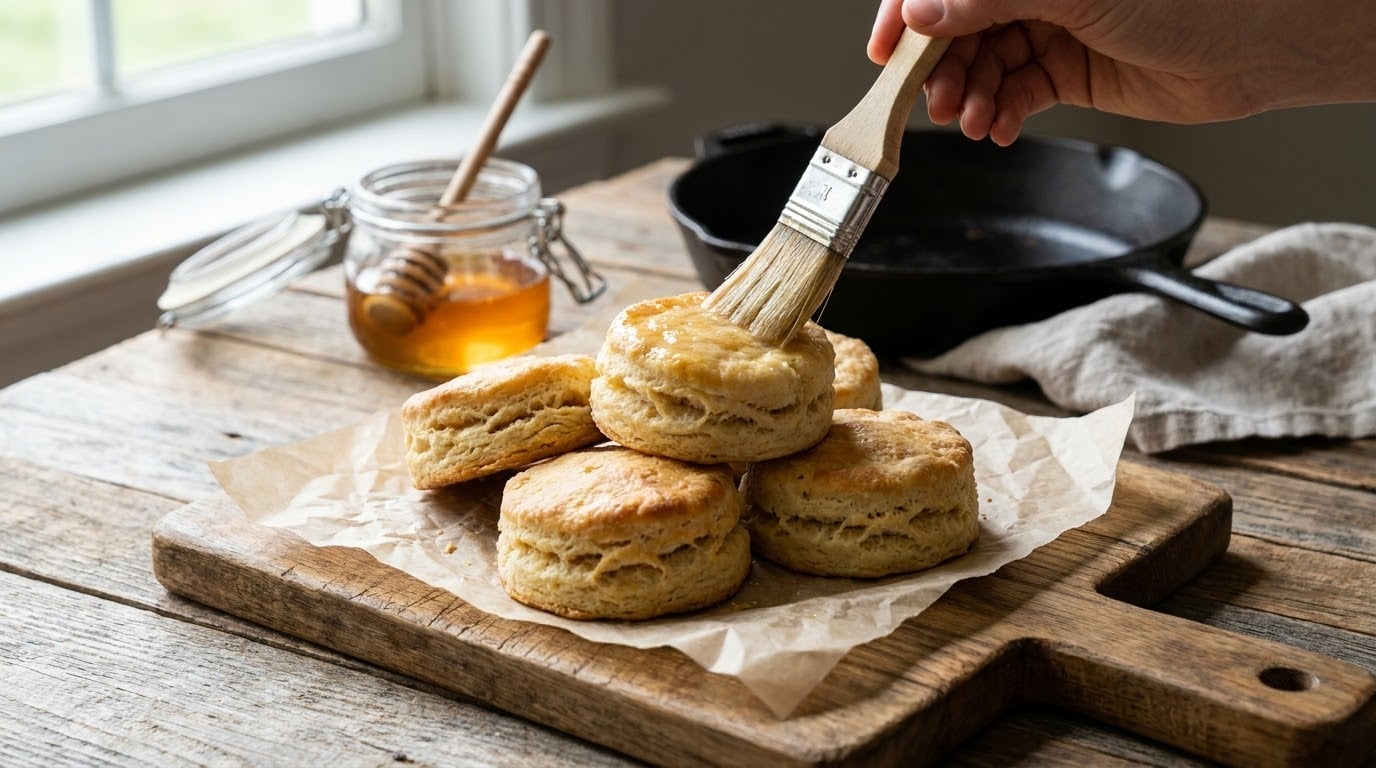
A flaky Southern buttermilk biscuits recipe starts with frozen grated butter, ice-cold cultured buttermilk, and a gentle fold-and-turn that builds steam pockets before the dough sets in a hot oven. Total time is about 35 minutes from flour to plate, and one batch makes 8 tall biscuits with crisp golden tops and a tender, layered crumb. This method works because the butter stays cold long enough to melt mid-bake, which lifts the dough into flaky sheets rather than dense muffins.
I grew up watching my grandmother grate butter into flour on a wooden board, and the height of the biscuits in her cast-iron skillet was always the test of a Sunday well spent. Most home bakers stir, knead, and wonder why theirs come out flat or tough. The trick is cold, cold, cold, and a soft hand. I’ll show you the technique that gets tall, flaky layers every single time, plus make-ahead tips for busy weeks.
If you love a stack of buttered biscuits for breakfast or a pile of them under sausage gravy on a cold night, this is the recipe you’ll come back to.
Table of Contents
Why This Recipe Works
- Frozen grated butter disperses into tiny, distinct pieces that stay cold in the dough and melt mid-bake, creating steam pockets that lift the biscuits into tall flakes.
- Ice-cold cultured buttermilk adds tang and tenderizes the gluten so the crumb stays soft, even with all-purpose flour.
- A gentle fold-and-turn routine (no kneading) builds 4 to 6 thin layers without developing tough gluten.
- A preheated heavy pan, either a 10-inch cast-iron skillet or a rimmed sheet pan lined with parchment, gives the bottom a quick burst of heat for oven spring.
- A hot oven at 475°F (246°C) sets the outside before the butter fully melts inside, so the layers puff instead of pooling.
Ingredients
- 2 1/2 cups (312 g) self-rising flour, plus more for dusting (see note for DIY)
- 1/2 cup (113 g) unsalted butter, frozen for 30 minutes
- 1 cup (240 ml) cultured buttermilk, very cold
- 1 tablespoon (12 g) granulated sugar (optional, for browning)
- 1/2 teaspoon (2 g) fine sea salt (skip if your self-rising flour is salted)
- 2 tablespoons (28 g) melted unsalted butter, for brushing
About the flour: Southern-style self-rising flour like White Lily is soft-wheat and gives the most tender crumb. To make a DIY substitute, whisk together 2 1/2 cups (312 g) all-purpose flour, 3 3/4 teaspoons baking powder, and 3/4 teaspoon fine salt.
About the butter: Freeze it for 30 minutes, then grate on the large holes of a box grater. Frozen grated butter is the single biggest reason home bakers finally get tall biscuits.
About the buttermilk: Real buttermilk is thicker and tangier than the cultured kind sold in cartons, and both work. For an emergency swap, stir 1 tablespoon lemon juice or white vinegar into 1 cup whole milk and let it sit 5 minutes. If you have leftover buttermilk on hand, save it for a tangy batch of pancakes or cornbread.
About the salt: Fine sea salt or table salt both work. If you use kosher salt, increase to 3/4 teaspoon since the crystals are larger.
Equipment
- Box grater (large holes) for the frozen butter
- Large mixing bowl
- Bench scraper or butter knife
- Rolling pin (used gently, mostly for patting)
- 2 1/2-inch round biscuit cutter, sharp-edged, no twist
- Rimmed baking sheet lined with parchment, or a 10-inch cast-iron skillet
- Pastry brush for the melted butter
- Instant-read thermometer (helpful for checking doneness)
How to Make Southern Buttermilk Biscuits
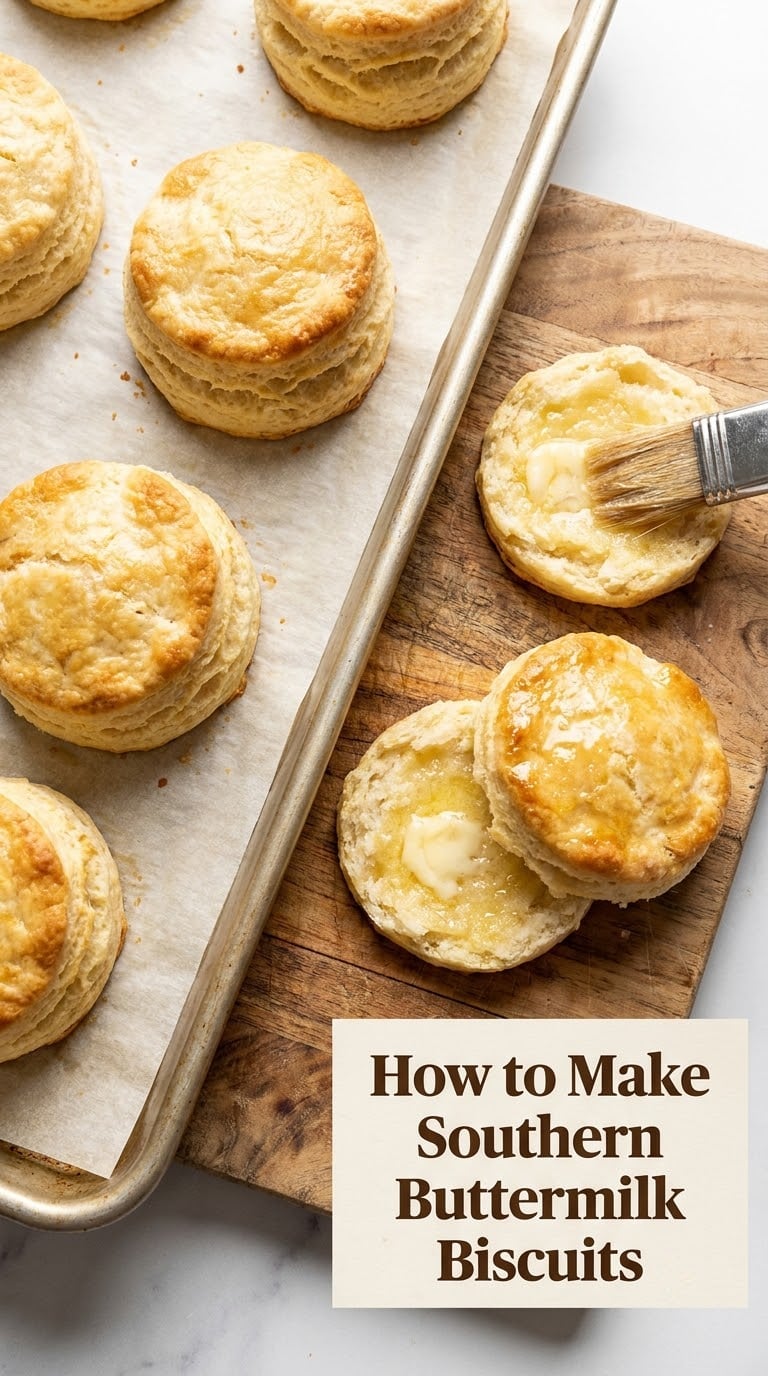
Yield: 8 biscuits · Prep: 15 minutes · Cook: 14 to 17 minutes · Total: about 32 minutes · Difficulty: Easy
Dough
- Place a rack in the upper third of the oven and preheat to 475°F (246°C). Line a rimmed baking sheet with parchment, or place a 10-inch cast-iron skillet on the rack to preheat.
- Whisk the self-rising flour, sugar, and salt in a large mixing bowl.
- Grate the frozen butter on the large holes of a box grater directly into the flour. Toss gently with your fingertips or a fork until every shred is coated in flour.
- Pour the cold buttermilk over the mixture. Stir with a fork or bench scraper just until a rough, sticky dough comes together and no dry spots remain. Stop the moment it holds together; it should look shaggy, not smooth.
Shaping
- Turn the dough out onto a lightly floured surface. Pat it into a rough 1-inch-thick rectangle with your hands, no rolling pin yet.
- Fold the dough in thirds like a letter, give it a quarter turn, and pat it out again to 1 inch. Repeat the fold-and-turn 3 to 4 times total for visible layers.
- Pat the dough to a final 1-inch thickness. Dip a 2 1/2-inch round cutter in flour and press straight down. Do not twist. Twisted edges seal the sides and stop the rise.
- Place the cut biscuits on the prepared pan with their sides almost touching; they support each other as they bake and rise straighter.
- Gather the scraps, pat them out once more, and cut. Avoid re-rolling more than once or the last biscuits will be tough.
Baking
- Bake on the upper third rack for 13 to 17 minutes, until the tops are a deep golden brown and the bottoms sound hollow when tapped.
- Check doneness with an instant-read thermometer inserted into the center; the internal temperature should read 205 to 210°F (96 to 99°C).
- Brush the hot biscuits with melted butter the moment they come out of the oven so the tops stay soft and glossy.
- Serve warm. Split with a fork, not a knife, to keep the flaky layers intact.
Tips for Success
- Keep everything cold: freeze the butter, chill the buttermilk, and chill the mixing bowl for 10 minutes if your kitchen runs warm.
- Never twist the cutter. Press straight down and lift. Twisting seals the edges and keeps the biscuit from rising tall.
- Place biscuits so they touch. Side-by-side biscuits climb higher because they lean on each other for support as they bake.
- Stop the moment the dough holds together. Overmixing or extra kneading develops gluten and turns biscuits tough and bready.
- Pull them at 205°F (96°C) internal. Underbaking leaves gummy centers; overbaking dries the crumb and burns the bottoms.
- Use fresh baking powder. If your canister has been open more than 6 months, replace it; flat biscuits are almost always stale leavening.
Variations
- Cheddar and chive: Fold 1 cup of sharp cheddar and 1/4 cup chopped chives into the dry ingredients. Brush with garlic butter after baking.
- Honey butter: Whisk 3 tablespoons honey into the melted butter and brush warm. The honey sinks into the layers for a sweet glaze.
- Everything bagel: Sprinkle the tops with everything bagel seasoning before baking. Press it in lightly so it sticks.
- Cinnamon sugar: Add 2 teaspoons cinnamon to the dry mix and sprinkle the tops with cinnamon sugar before baking. Split and serve with honey butter for breakfast.
- Gluten-free: Substitute a 1:1 gluten-free flour blend (with xanthan gum) for the self-rising flour. Add 1 extra tablespoon of cold buttermilk; GF flours drink more liquid.
Storage, Make-Ahead and Reheating
Room temperature: Biscuits are best within 2 hours of baking. After that, the crust softens and the crumb dries out.
Fridge: Store cooled biscuits in an airtight container or zip-top bag for up to 2 days. Press out as much air as you can.
Freezer, baked: Cool completely, wrap each biscuit in foil, and freeze in a freezer bag for up to 2 months. Reheat straight from the freezer.
Freezer, unbaked: Cut the biscuits, place them on a parchment-lined sheet, and freeze until solid, about 1 hour. Stack the frozen discs in a freezer bag and bake straight from the freezer; add 2 to 3 minutes to the bake time. This is the make-ahead move that saves a holiday morning.
Reheating: Wrap a baked biscuit in foil and warm in a 350°F (177°C) oven for 5 to 7 minutes. For a crisper top, split the biscuit, butter the cut sides, and toast under the broiler for 1 to 2 minutes. Avoid microwaving; it makes the crust rubbery and the crumb tough.
If you find yourself with leftover buttermilk after a batch, save it for a stack of fluffy pancakes or a tangy batch of weeknight comfort food.
What to Serve With It
- Sausage gravy: The classic. Pour hot sausage gravy over split biscuits for the definitive Southern breakfast.
- Slow-cooked jam: Split and spread with strawberry or blackberry jam for a sweet breakfast.
- Fried chicken: Use a biscuit as the base for a fried chicken sandwich, or serve alongside for a true Southern supper.
- Butter and honey: A simple pat of salted butter and a drizzle of local honey never fails.
- Strawberry shortcake: Split warm biscuits, layer with macerated berries and fresh whipped cream for an old-fashioned strawberry shortcake.
Frequently Asked Questions
Why are my Southern buttermilk biscuits flat and dense?
Flat, dense biscuits usually trace back to warm butter, overmixed dough, or stale baking powder. Keep the butter frozen until you grate it, stir the dough only until it just holds together, and replace any baking powder older than 6 months. Cutting straight down with a sharp cutter and placing the biscuits close together helps them climb in the pan.
Do I have to use real buttermilk in this recipe?
Real cultured buttermilk gives the best tang and the most tender crumb, but you can swap it in a pinch. Stir 1 tablespoon lemon juice or white vinegar into 1 cup of whole milk and let it sit for 5 minutes. The mixture will thicken slightly and work in any buttermilk biscuit recipe, including this one. For other swaps, check our guide on buttermilk substitute ideas.
Can I use salted butter instead of unsalted?
Yes. If you use salted butter, skip the extra salt in the dough and add a tiny pinch only if needed after tasting the butter. Salted butter is a little softer than unsalted, so freeze it a few extra minutes before grating. The flavor is slightly different but the rise and flake are nearly identical.
How do I get tall, flaky layers in buttermilk biscuits?
Three habits make the difference: keep everything cold (frozen butter, ice-cold buttermilk), fold-and-turn the dough 3 to 4 times without kneading, and press the cutter straight down without twisting. Place the cut biscuits so their sides touch on the pan so they support each other as they rise in the oven.
Can I make the dough ahead and bake later?
Yes. Cut the biscuits, freeze them on a parchment-lined sheet until solid, then bag and freeze for up to 2 months. Bake straight from the freezer and add 2 to 3 minutes to the total bake time. You can also refrigerate the cut biscuits for up to 12 hours on the pan, covered, before baking.
What is the safe internal temperature for baked biscuits?
Biscuits are fully baked when an instant-read thermometer inserted into the center reads 205 to 210°F (96 to 99°C). The tops should be a deep golden brown and the bottoms should sound hollow when tapped. Pulling them at 205°F avoids the gummy centers that come from underbaking.
Conclusion
Bake a batch this weekend and start with the one habit that changes everything: keep the butter frozen and grate it. If you nail that step on the first try, a tall, flaky biscuit is almost guaranteed. From there, the rest is just a soft hand and a hot oven.
Once you taste a real Southern buttermilk biscuit warm from the oven with cold butter and a drizzle of honey, you’ll understand why this simple bread has held a place on Southern tables for generations.