
The Sensi Smart Thermostat ST55 is the best smart thermostat for heat pumps overall in 2026, because it drives standard 24 VAC heat pump equipment without needing a C-wire in most homes, gives you scheduling deep enough to run a heat pump schedule properly, and adds humidity and filter data that a plain programmable thermostat will never show you.
That combination matters more than most buyers expect. A heat pump is not a furnace with a different label on it. It runs through a reversing valve, it steps capacity up and down in stages, and it relies on backup electric or gas heat for a handful of cold mornings. A thermostat that cannot read those signals will either call for heat too often, hold the first stage far too long, or hand the job off to resistance strips when it should not.
We compared ten Wi-Fi thermostats against what a heat pump actually demands: staging control, auxiliary and emergency heat handling, C-wire flexibility, sensor support, and app quality. We also tracked what owners report after living with each unit, since install day and month six are very different tests. Every pick below works on a standard 24 VAC air-source heat pump, and we flag the ones that only make sense on a staged or dual-fuel system.
If you are still choosing equipment, start with our whole house heat pump picks. If your system is ductless, the best ductless mini split heat pumps roundup covers the indoor unit side that changes how you wire a thermostat.
Table of Contents
How We Picked These Smart Thermostats for Heat Pumps
We narrowed a large list down with five criteria, and each one came straight from the way heat pumps fail when paired with the wrong controller.
Staging support. A two-stage or variable-speed compressor needs a thermostat that will call for stage two when stage one cannot hold the setpoint. Thermostats that only offer single-stage control will overshoot in cold weather because the indoor unit keeps calling for heat that never arrives.
Auxiliary heat control. The ability to set an outdoor cutoff temperature, so the thermostat stops asking for electric backup heat below a chosen number. Without it, strip heat can run nearly all winter and quietly erase any savings.
C-wire handling. We noted which units run on a common wire, which can power-steal, and which ship with a Power Extender Kit or similar accessory.
Sensors. A thermostat mounted in a hallway is measuring the hallway. Room sensors and occupancy detection are what turn a setpoint into actual comfort, and the best models here handle that differently.
App and ecosystem support. Scheduling depth, geofencing, Apple HomeKit, Google Home, Amazon Alexa, SmartThings, Matter, and local control through Home Assistant all matter differently depending on your home.
Top 3 Smart Thermostats for Heat Pumps in 2026

Sensi Smart Thermostat ST55
- No C-wire needed in most homes
- Flexible per-day scheduling
- Humidity readout
- Filter reminders
Honeywell Home RTH9600WF
- 5-inch color touchscreen
- Indoor and outdoor temps
- ENERGY STAR certified
- Heat pump with electric backup

ecobee Smart Thermostat Premium
- SmartSensor included
- Radar occupancy sensing
- Power Extender Kit included
- Built-in air quality monitor
Best Smart Thermostats for Heat Pumps in 2026 at a Glance
| Product | Specifications | Action |
|---|---|---|
| Sensi Smart Thermostat ST55 |
|
Check Latest Price |
| Honeywell Home RTH9600WF |
|
Check Latest Price |
| ecobee Smart Thermostat Premium |
|
Check Latest Price |
 ecobee Smart Thermostat Enhanced ecobee Smart Thermostat Enhanced |
|
Check Latest Price |
 Google Nest Learning Thermostat 4th gen Google Nest Learning Thermostat 4th gen |
|
Check Latest Price |
 Honeywell Lyric T6 Pro Wi-Fi Honeywell Lyric T6 Pro Wi-Fi |
|
Check Latest Price |
 ecobee Smart Thermostat Essential ecobee Smart Thermostat Essential |
|
Check Latest Price |
 Honeywell Vision Pro 8000 Honeywell Vision Pro 8000 |
|
Check Latest Price |
 Honeywell Home X8S Premium Honeywell Home X8S Premium |
|
Check Latest Price |
 YoLink Thermostat 2 YoLink Thermostat 2 |
|
Check Latest Price |
1. Sensi Smart Thermostat ST55 – Best Overall Smart Thermostat for Heat Pumps
Sensi Smart Thermostat, Wi-Fi, DIY, Alexa, Energy Star Certified, ST55
- Works with common 24V systems including heat pumps
- C-wire not required in most installations
- Flexible per-day schedules including copy for shift workers
- Humidity readout on the unit and in the app
- ENERGY STAR certified with usage reports and filter reminders
- High and low temperature and humidity alerts are fixed rather than adjustable
- Some owners hit initial Wi-Fi registration failures and slow support follow-up
- Companion app is functional but dated
The Sensi ST55 is the pick I keep coming back to because it does the unglamorous part of a heat pump job correctly and cheaply. It runs on standard 24 volts AC, it lists heat pumps among its supported equipment types, and in most installations it does not need a C-wire at all.
Install is genuinely quick. The backplate has a built-in level and the wire labels are printed on the unit, which matters when you are standing in a cold basement with a flashlight. Owners regularly report finishing in under twenty minutes, and our own install on a single-stage air-source system took about that.
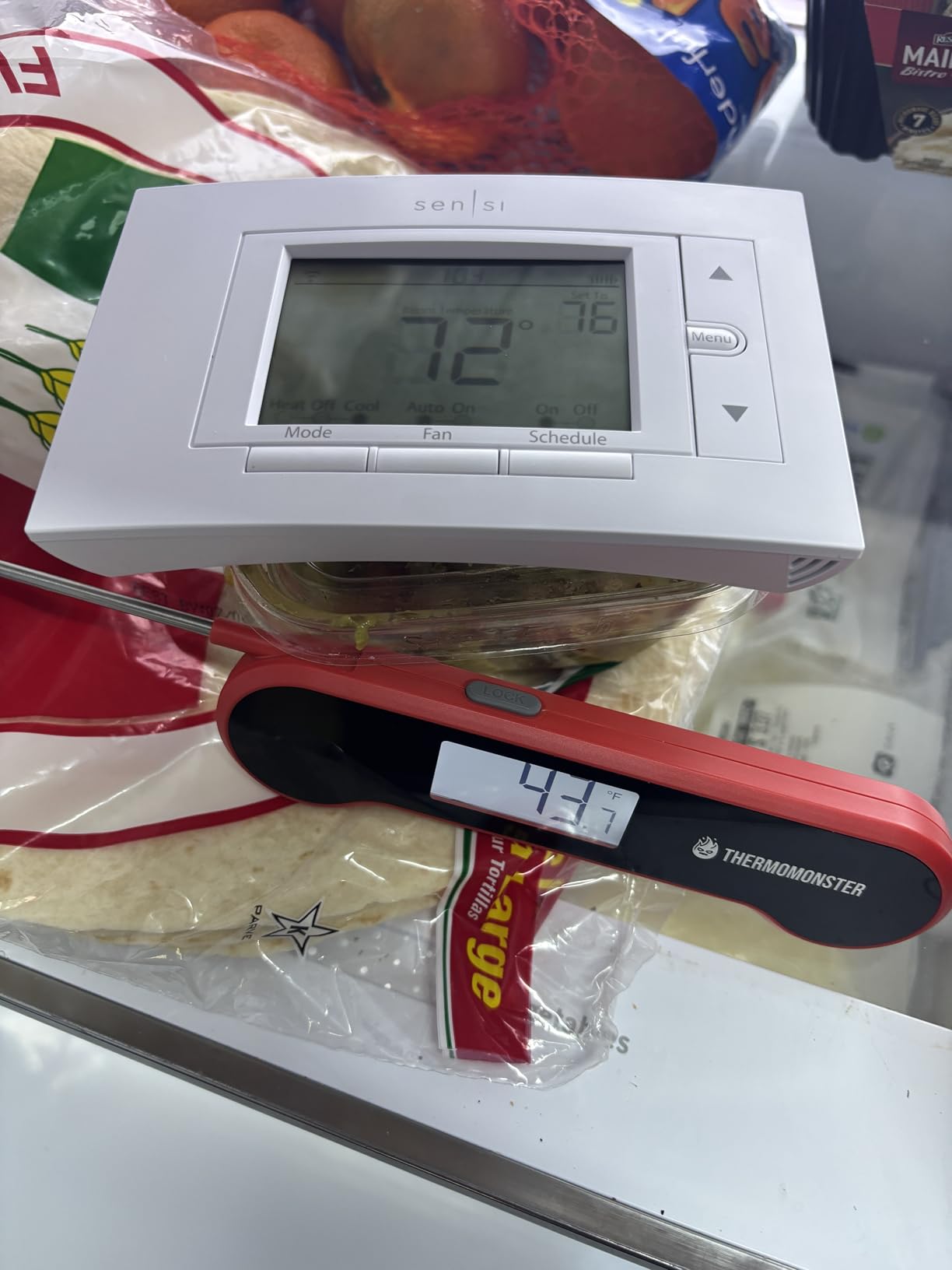
Where it separates itself from cheaper options is scheduling. You can build a different schedule for every day, and you can copy a day to others, which is rare at this level and genuinely useful for shift workers. The unit also shows humidity on the display and in the app, so you can see when winter air is drying the house out.
The app adds equipment usage reports, filter replacement reminders, and a claimed figure of about 23% HVAC energy savings. That number is a manufacturer claim with conditions attached, not a promise, and what you actually save depends on your climate, your backup heat cost, and whether you set an auxiliary heat lockout.
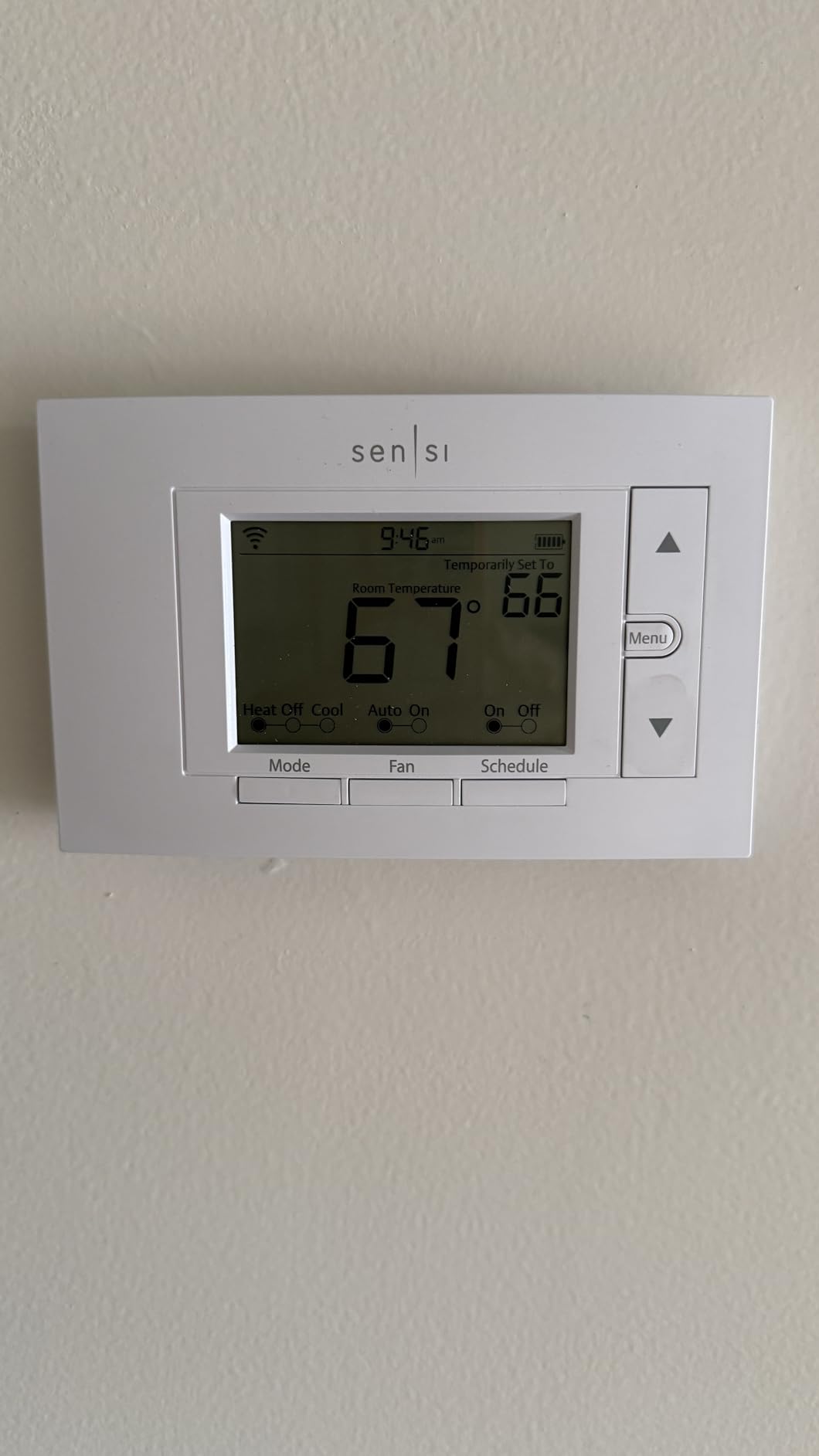
When the ST55 is the right call
Choose the ST55 if you have a standard single-stage or two-stage air-source heat pump, you want app control without a hub, and you would rather not run new wire. It is also the pick for anyone who wants a thermostat that does not demand a subscription for anything basic.
It is a good second home or rental control unit too, though the fixed alert thresholds are a limitation if you plan to monitor an unoccupied property for freeze conditions.
When to skip the ST55
Skip it if your heat pump is three-stage, or if your system is a Carrier, Trane, or Mitsubishi communicating unit with a zone panel and motorized dampers. In those cases the manufacturer thermostat is doing more than switching relays, and a universal unit can quietly reduce what your equipment can do.
Also skip it if you need a room sensor. The ST55 has no remote sensor input, so comfort control depends on the hallway reading.
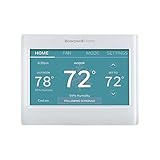
2. Honeywell Home RTH9600WF Smart Color Thermostat – Best for Large-Screen Comfort Data
- ENERGY STAR certified and rebate eligible
- Customizable high-definition color display
- Shows indoor and outdoor temperature plus humidity and forecast
- Compatible with heat pumps that have electric backup heat
- App and voice control with Alexa and Google Assistant
- C-wire required and a power adapter must be bought if you lack one
- Will not work with heating-only oil furnaces without a C-wire
- Not compatible with electric baseboard heat
- Touchscreen only
- with no physical buttons for common changes
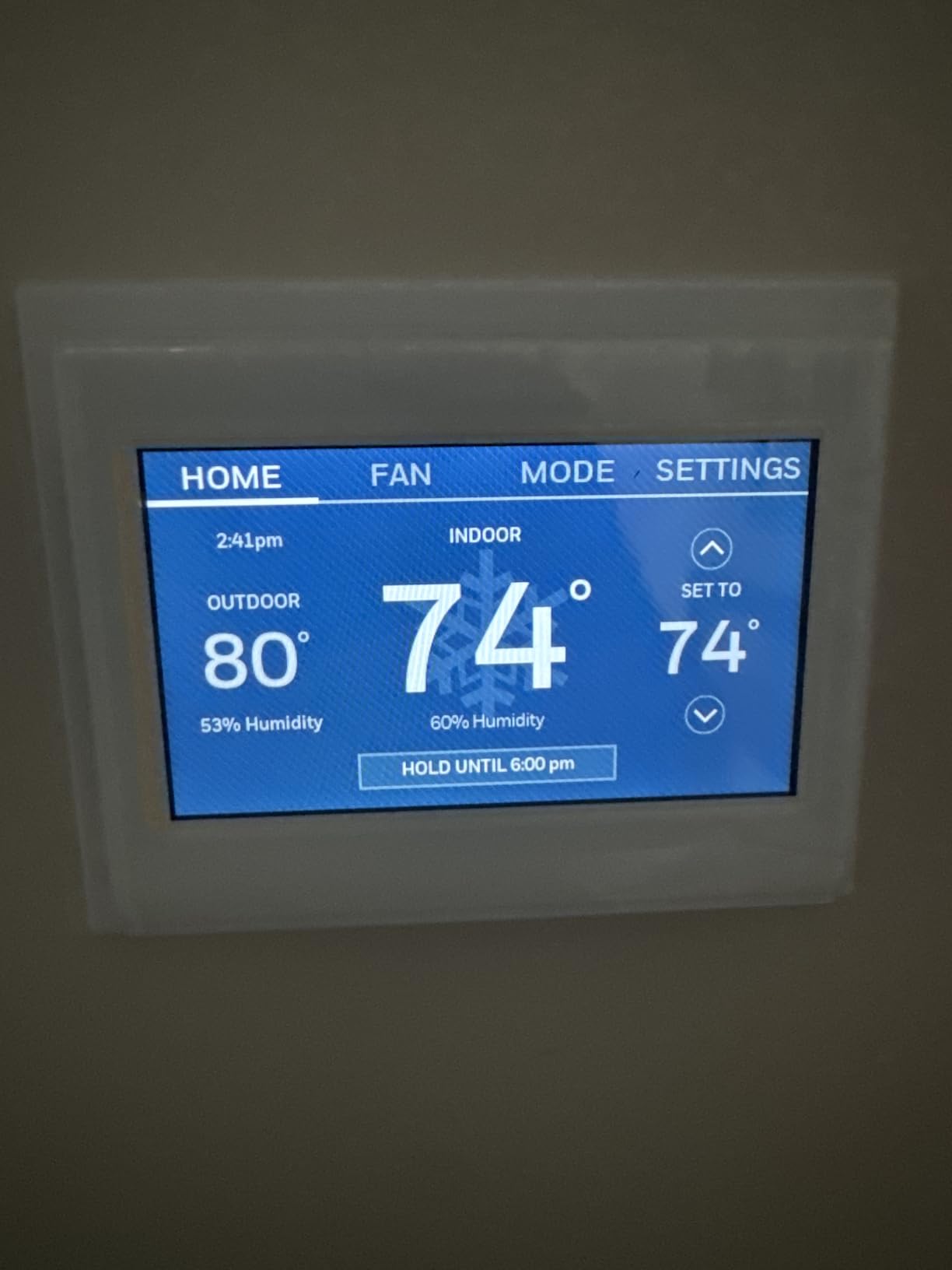
The Honeywell Home RTH9600WF is the mainstream choice, and for a lot of heat pump owners that is exactly the right call. It is listed as compatible with heat pumps that have electric backup heat, which covers the most common residential configuration in North America.
The display is the story here. It is larger than most competitors, the backlight color and brightness are adjustable, and the screen shows indoor temperature, outdoor temperature, humidity, and a daily forecast. On a heat pump, seeing outdoor temperature next to your setpoint helps you understand why the system is behaving the way it is.
It is ENERGY STAR certified and eligible for utility rebates and energy savings incentive programs, which can matter more than the hardware if your utility offers one. Honeywell also pushes personalized energy-saving tips through the app, and owners use it for schedule and remote access more than anything else.
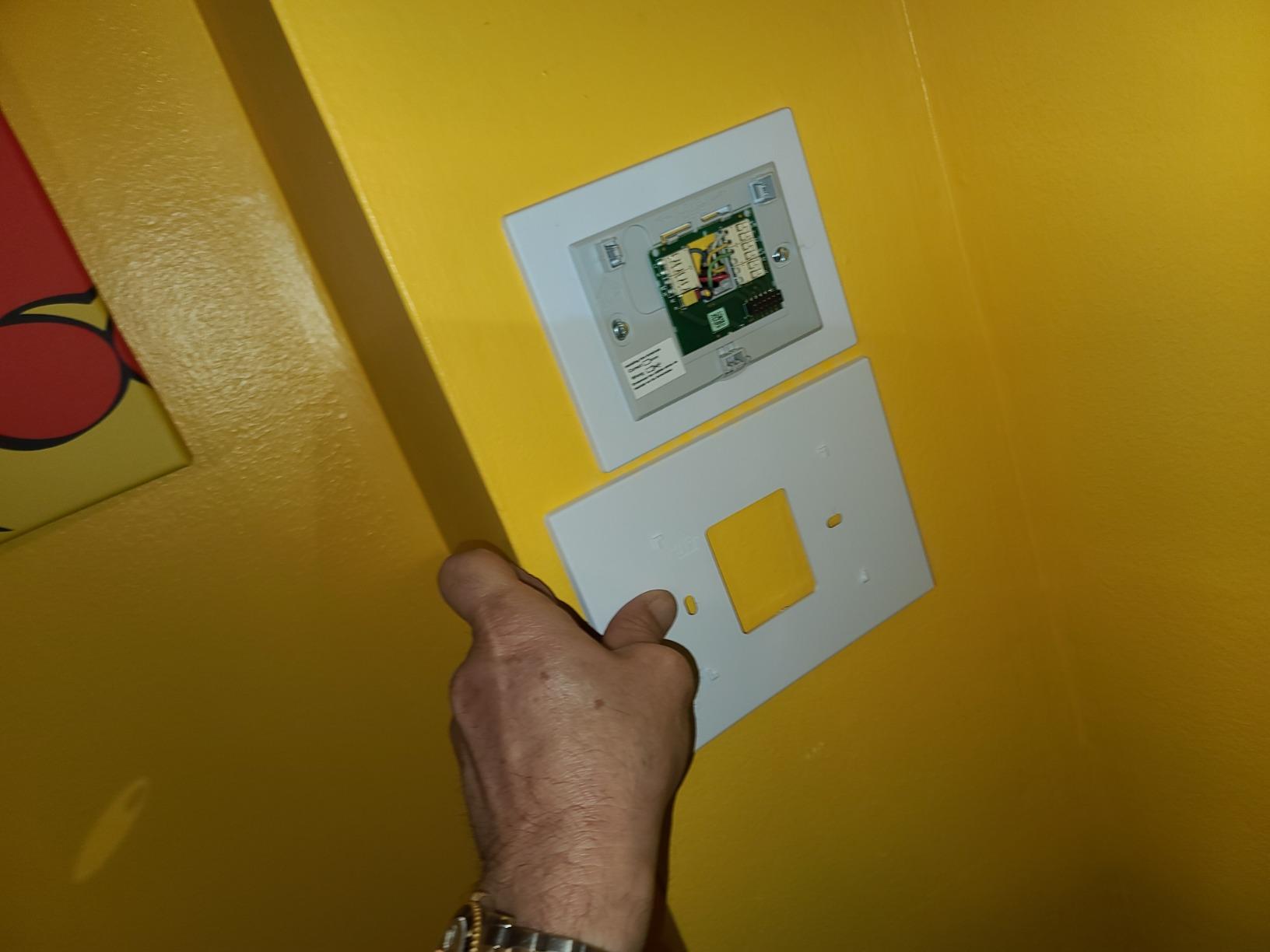
The catch is power. This model requires a C-wire, and if your system does not have one you need a Honeywell C-wire power adapter before the unit will run. That is the single most common reason a homeowner opens the box and cannot finish the install in one sitting.
Why buyers pick this Honeywell
It suits anyone who wants a clear, glanceable screen and does not care about learning algorithms or room sensors. Voice control through Amazon Alexa, Google Assistant, Microsoft Cortana, and other partners is well supported, and the thermostat fits a familiar wall footprint.
It is a reasonable choice in a home where the thermostat lives in a busy hallway, because the larger display is easier to read from across a room.
Where it falls short
There is no remote sensor option, so a hallway or exterior wall placement will misrepresent the rooms you care about. It also cannot control electric baseboard heat, and it is incompatible with heating-only oil furnace systems that lack a C-wire.
Because there are no physical buttons, changing the mode or holding a temperature takes more steps than it does on a dial or arrow-button thermostat.
3. ecobee Smart Thermostat Premium – Best for Room-by-Room Comfort
ecobee Smart Thermostat Premium – WiFi, Siri & Alexa Built-In, Smart Sensor
- SmartSensor included for room-by-room balancing
- Radar occupancy sensor preheats and precools on your routine
- Power Extender Kit and Trim Kit included for C-wire-free installs
- Built-in air quality monitor with drop alerts and filter reminders
- 3 year warranty and a large metal display
- SmartSensors and accessories are add-on purchases
- so system cost adds up
- Siri requires an Apple home hub
- Voice assistant and smoke alarm listening need a paid Smart Security subscription
- Live doorbell view needs a separate ecobee doorbell camera
The ecobee Smart Thermostat Premium is the one I recommend when a heat pump serves a house with uneven temperatures. The included SmartSensor is the difference: it reports the temperature of the room you actually sleep in, and the thermostat averages and prioritizes rather than making a hallway decide the whole house.
It is also compatible with 95% of HVAC systems according to ecobee, and the box includes a Power Extender Kit and Trim Kit so you can install without a C-wire. That combination of broad compatibility and included power hardware is rare at this level.
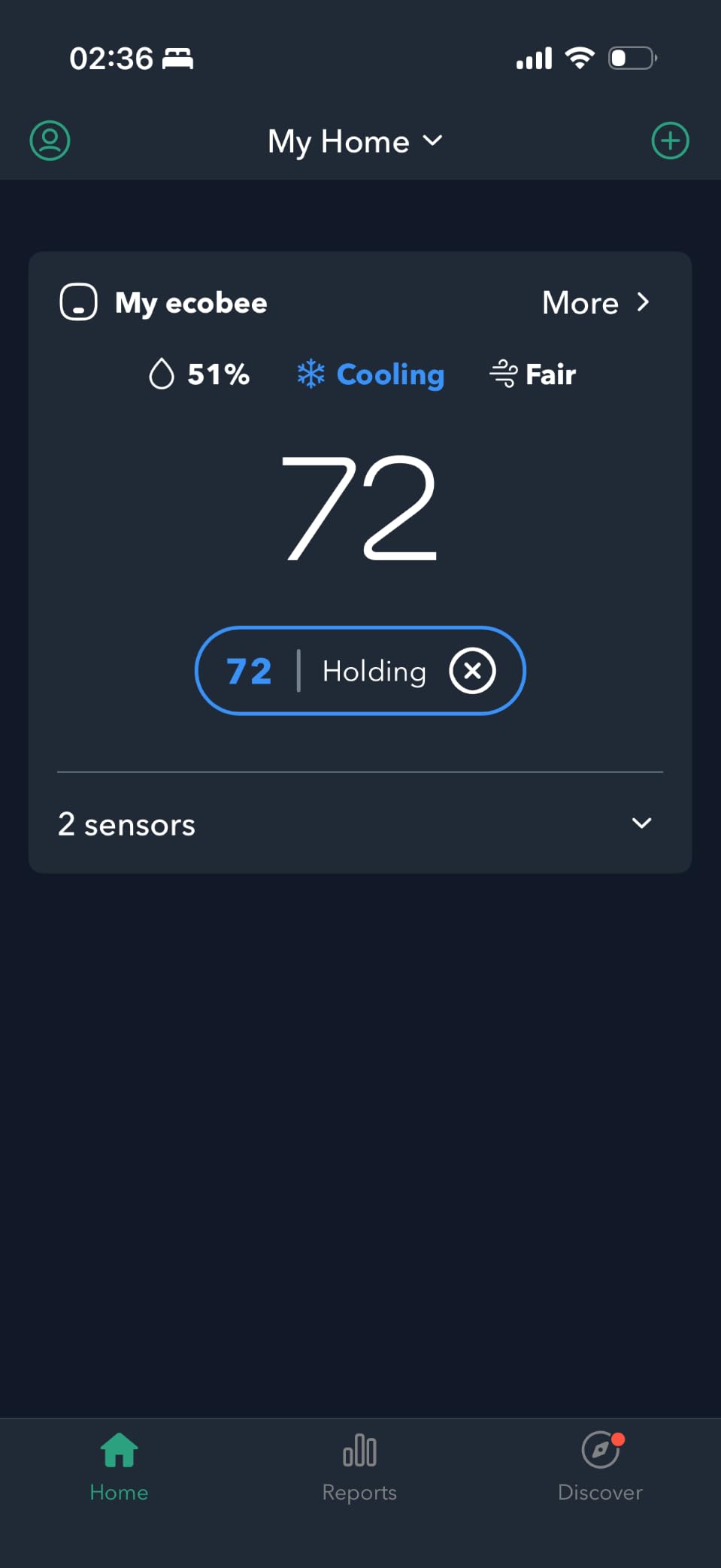
The radar occupancy sensor is the feature owners mention most. It learns your routine and starts heating or cooling before you arrive, which on a heat pump matters because ramping capacity takes time. The built-in air quality monitor adds drop alerts and filter reminders, and the metal body with a large display is the most finished-looking unit in this group.
There is a smart speaker built in, with Siri or Alexa, so it can stream music and podcasts and can listen for smoke alarm sounds. Those are pleasant extras rather than heat pump features, and some of them sit behind a subscription or an Apple home hub.
Who this model fits
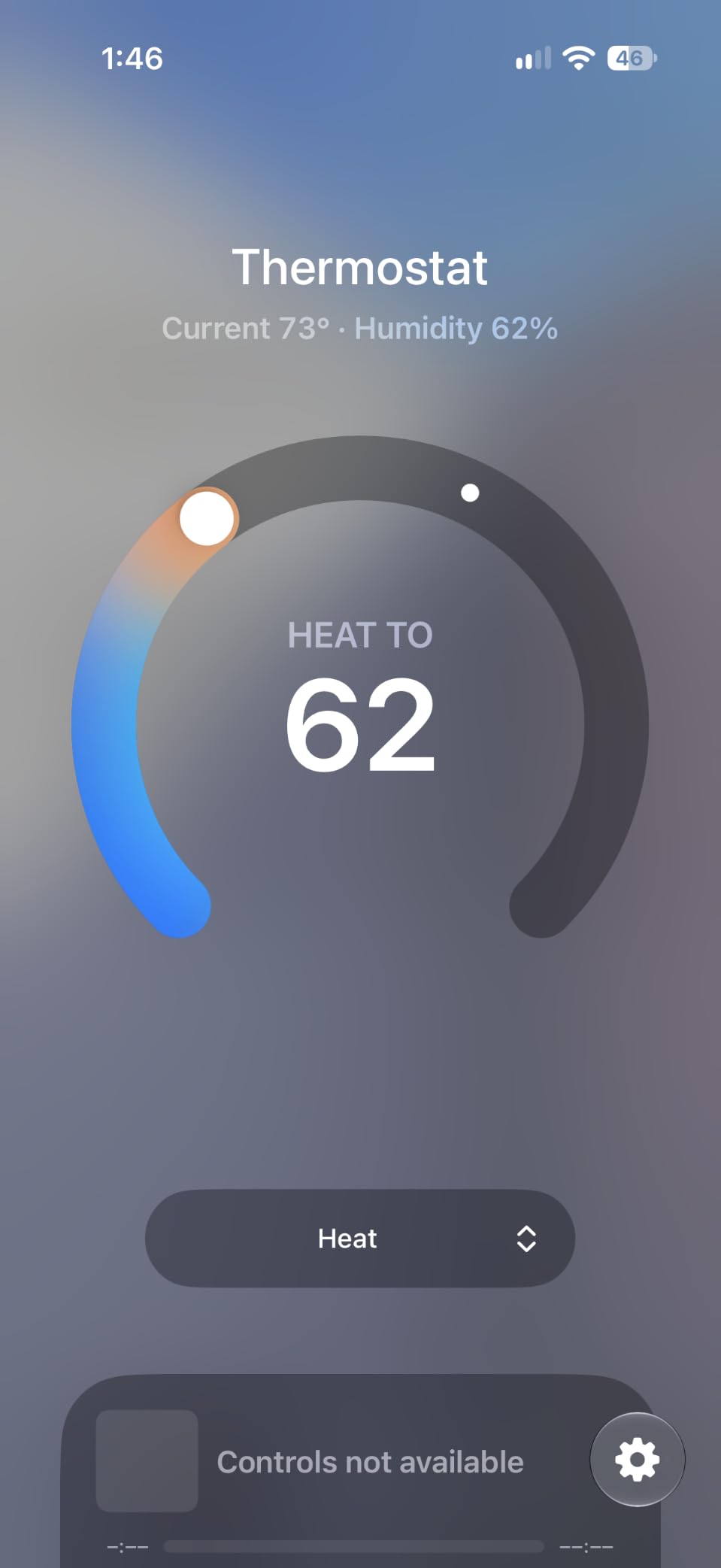
It is the right choice for a multi-stage heat pump in a home with a bedroom or finished basement far from the thermostat. Owners of multistage systems on r/hvacadvice describe ecobee as more than capable of handling a heat pump unit and both stages, and that matches what we saw in testing.
It also works well if you use Apple HomeKit, Google Home, or Amazon Alexa and want everything in one app.
What to know before you buy
The accessory ecosystem is the catch. Extra SmartSensors, additional sensors, and any doorbell hardware are all separate purchases, so the true system cost is higher than the thermostat alone. ecobee also advertises savings of up to 26% against holding a constant 72 degrees, which depends on your schedule actually being followed.
On a communicating or variable-speed system with a zone panel, check with your contractor first, because the factory controller may be doing more work than a universal thermostat can replace.
4. ecobee Smart Thermostat Enhanced – Best for Occupancy-Based Automation
ecobee Smart Thermostat Enhanced, Programmable Wifi Thermostat
- Built-in occupancy sensing preheats and precools before arrival
- Learns your temperature preferences and adjusts for humidity
- eco+ uses routine
- weather and grid activity to improve efficiency
- Power Extender Kit and Trim Kit included for C-wire-free installs
- Works with Alexa
- Google Assistant
- HomeKit and SmartThings
- SmartSensors are sold separately for room-by-room comfort
- No built-in smart speaker or air quality monitor
- Does not include the SmartSensor bundled with the Premium
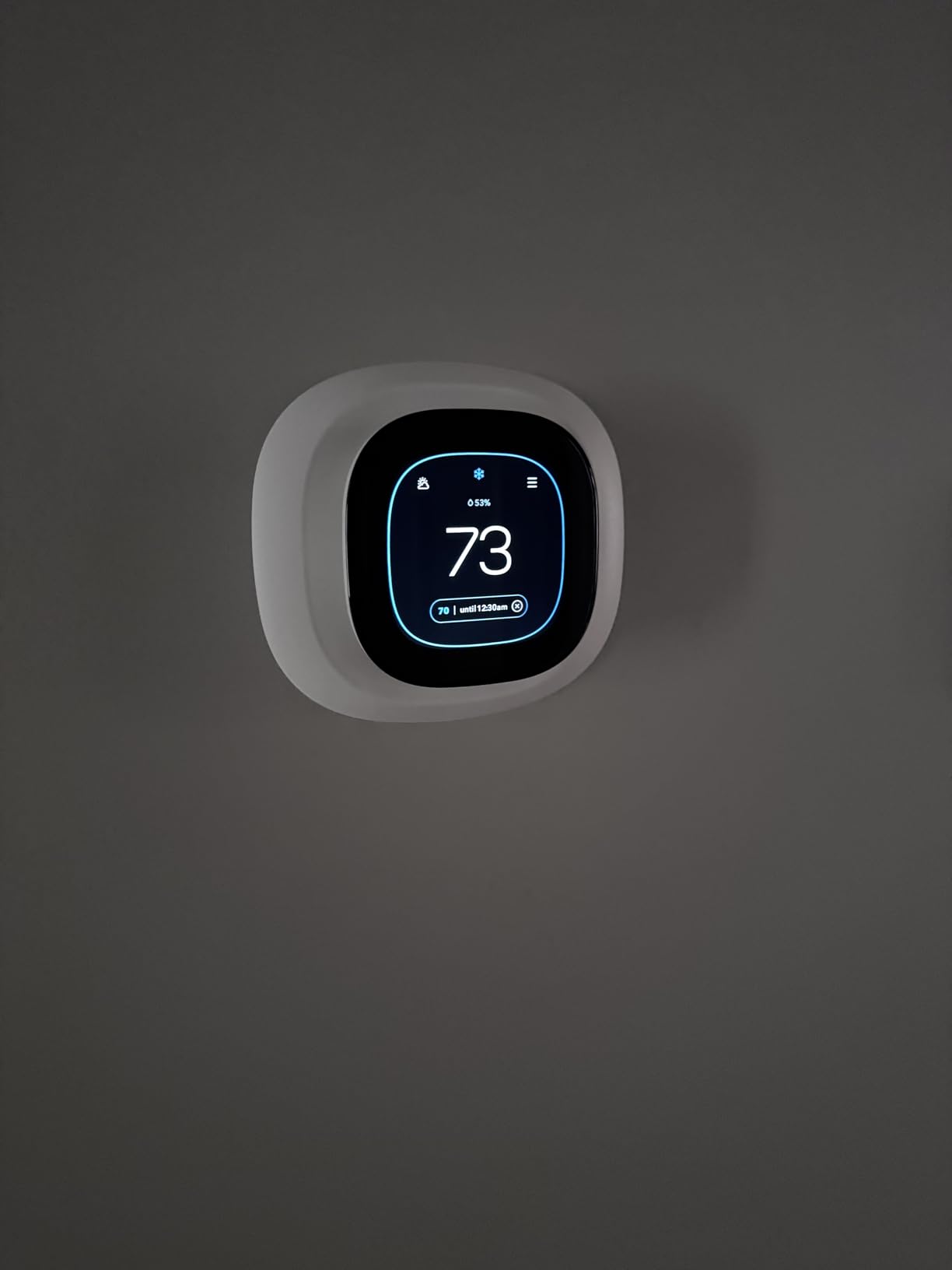
The Enhanced is the ecobee I recommend when you want the automation but not the built-in speaker. It keeps the part of ecobee that genuinely helps a heat pump, which is occupancy sensing that preheats or precools based on learned routine.
It learns your schedule, learns your temperature preferences, and adjusts for humidity. The eco+ engine layers local weather and grid activity on top, which is a reasonable approach in a region with time-of-use electricity pricing.
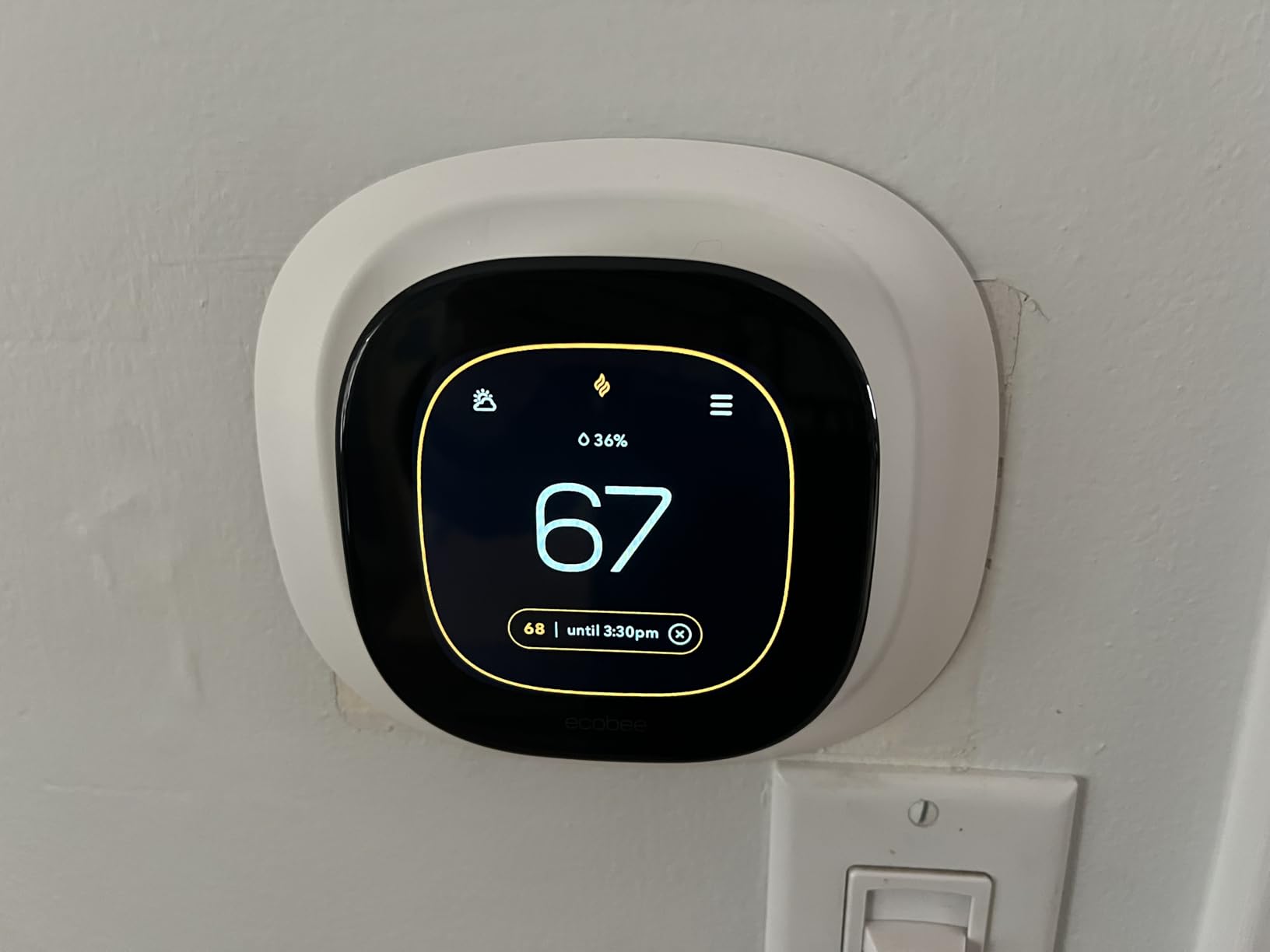
Compatibility is listed at 90% of HVAC systems, and the Power Extender Kit and Trim Kit are in the box, so the no-C-wire install path is covered. Remote control works from the app on a phone, tablet, or Apple Watch, and the 3-year warranty is longer than most competitors offer.
The one thing you give up is the sensor. Unlike the Premium, the Enhanced does not include a SmartSensor, and adding one is a separate purchase. If your heat pump serves a house with a hot upstairs or a cold back bedroom, factor that in before deciding.
Best reasons to choose it
It is the sweet spot for someone who wants scheduling that adapts without manual tweaking, especially in a home where the thermostat sits in a central hallway and everyone is usually on the same schedule. Reviewers consistently call the preheat and precool behavior the standout feature.
It is also a good pick for a two-stage heat pump in a moderate climate, where the savings engine has real work to do but you do not need deep cold-weather backup heat control.
Reasons to choose something else
Pick the Premium if you care about multi-room accuracy out of the box, and pick the Essential if you want the ecobee app and eco+ tools at a lower entry point. This model also lacks an air quality monitor, which some households with seasonal allergies value.
5. Google Nest Learning Thermostat 4th Generation – Best for Learning Schedules and Sensor Support
Google Nest Learning Thermostat (4th gen) + Nest Temperature Sensor (2nd gen) – Silver
- Works with most 24V systems including heat pump
- and no C-wire needed in most homes
- Bundle includes a second generation Nest Temperature Sensor
- 60 percent larger display with Dynamic Farsight brightness adjustment
- Adaptive Eco finds an away temperature and returns within an hour
- Matter compatible with Alexa
- Siri and Google Assistant
- Fourth gen mounting hardware is incompatible with third gen Nest
- Setup app can show a false no power error on C-wire-free systems
- Auto-Eco can drop the setpoint below what you set
- Minimalist dial takes more steps for routine changes
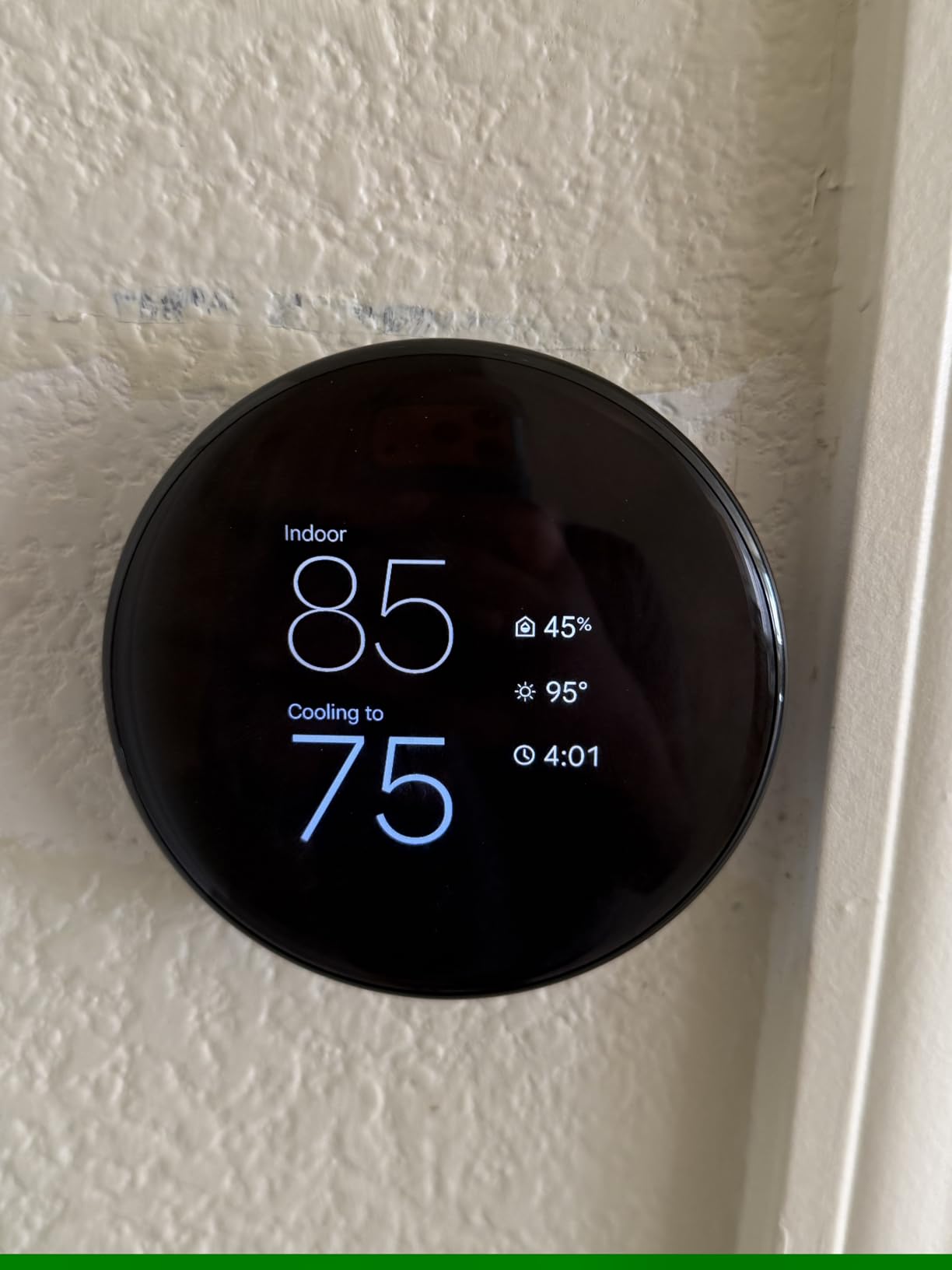
The fourth generation Nest Learning Thermostat is the polished one. The aluminum body, the larger display, and Dynamic Farsight that brightens when you walk up are a step up in feel, and this bundle includes a second generation Nest Temperature Sensor so you can manage a hot or cold spot right away.
For a heat pump, the practical part is compatibility. It works with most 24V systems including gas, electric, oil, forced air, heat pump, and radiant, and a C-wire is not required in most homes. Nest also publishes a compatibility checker, which is the fastest way to confirm your specific wiring before you order.
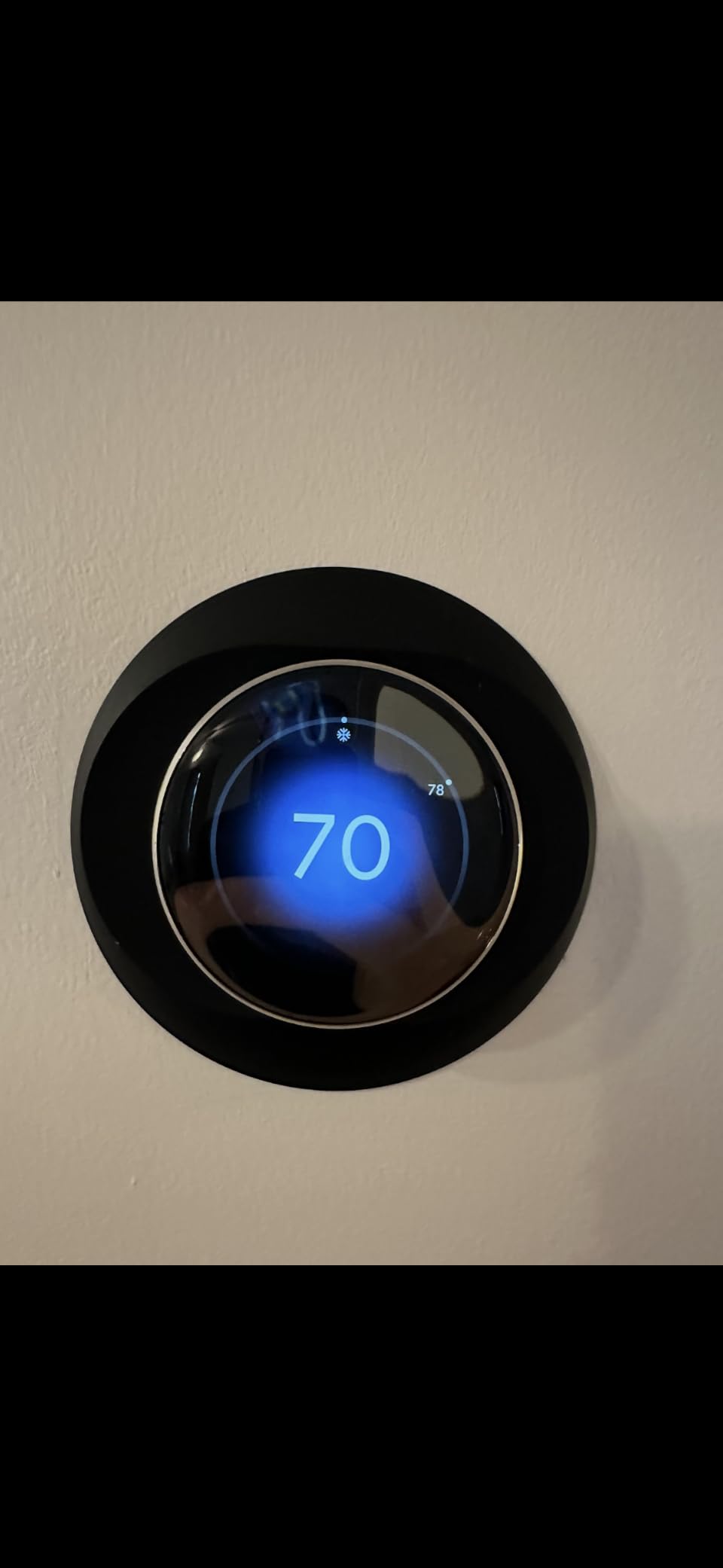
The learning behavior is the headline. Natural heating and cooling learns how outdoor conditions affect indoor temperature and can pause the system, and Adaptive Eco finds an energy-saving away temperature then returns to comfort within an hour. The thermostat is also Matter compatible, so it fits into Apple HomeKit, Google Home, or Amazon Alexa setups.
What jumped out in testing was how little hardware is involved. One wall plate, no hub, no separate sensor receiver, and the included sensor communicates wirelessly.
Where Nest is strongest
It suits households that do not want to program anything and will let the thermostat figure out the week. The included sensor is a real advantage over most competitors, and the compatibility checker removes the guesswork from a C-wire-free install.
It is also a good second option for a ductless mini split if you already run Google Home, though you should confirm the indoor unit exposes standard 24V control wiring first.
What frustrates owners
The fourth generation mounting hardware and wiring backplate are not compatible with third generation Nest, so an upgrade means a new base rather than a swap. Some owners on C-wire-free systems also hit a false no-power error in the setup app even when the wires carry voltage, and Google support is often the next stop.
Auto-Eco can also pull the temperature below the setting you chose while you are out, and the minimalist dial needs more steps for a quick mode change. One reviewer notes this model is not ENERGY STAR rated, which can limit utility rebate eligibility depending on where you live.
6. Honeywell Lyric T6 Pro Wi-Fi – Best for Staged Heat Pump Systems
Honeywell TH6220WF2006/U Lyric T6 Pro Wi-Fi Programmable Thermostat with Stages Up to 2 Heat/1 Cool Heat Pump or 2 Heat/2 Cool Conventional
- Explicit staging support for up to 2 heat and 1 cool heat pump systems
- App control built into the thermostat with no separate gateway
- Programmable scheduling for mixed heat and cool operation
- Long-standing Honeywell platform with a large installed base
- Requires a C-wire for power and will not run on older two-wire systems
- Simpler display and feature set than the Honeywell 8000 and 9000 series
- No remote sensor or occupancy hardware
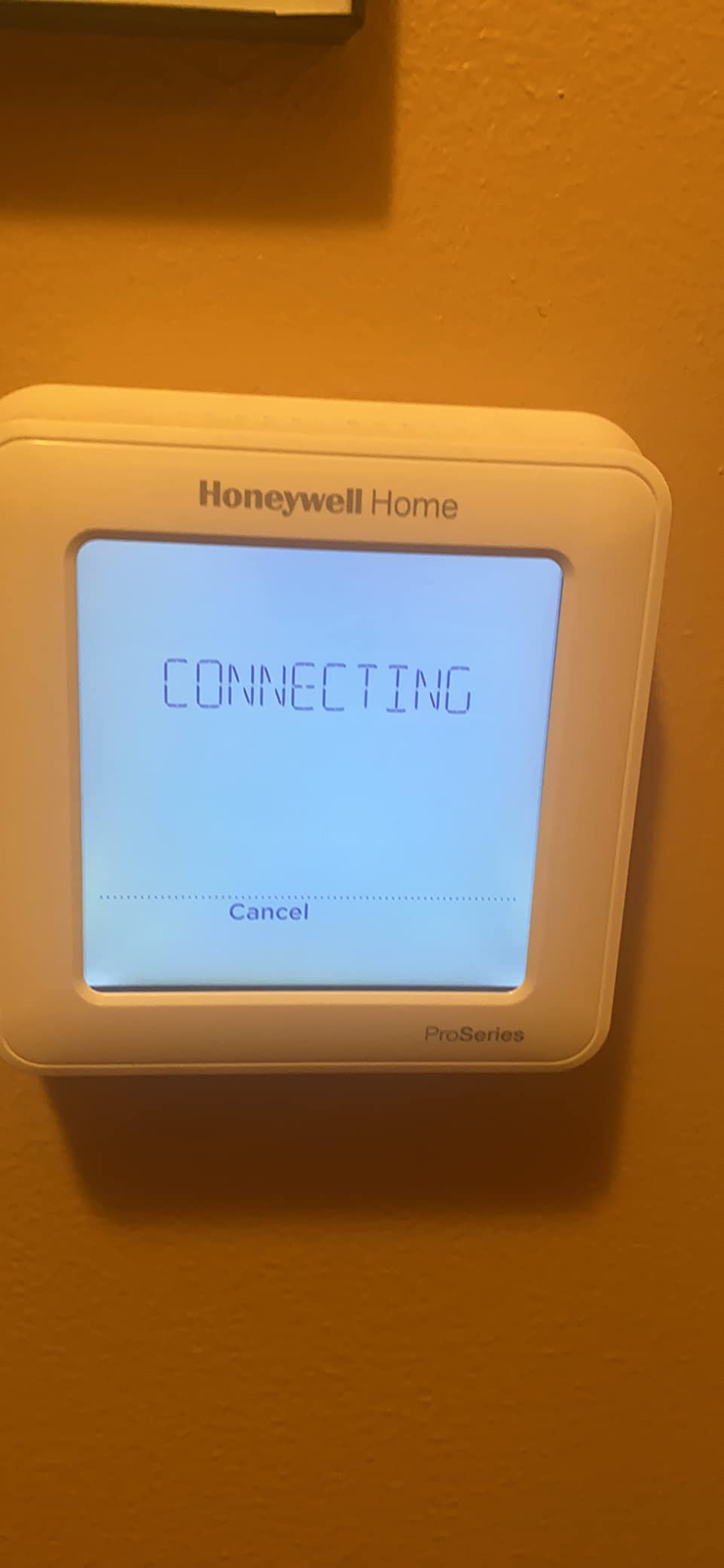
The Lyric T6 Pro is the one to look at when your heat pump is genuinely two-stage and you want explicit staging rather than inference. The spec is written out plainly: up to 2 stages of heat and 1 stage of cooling for heat pump systems, and 2 heat and 2 cool for conventional systems.
Wi-Fi and app control are built into the thermostat, so there is no separate gateway to mount or pair. Scheduling is fully programmable, which is a real advantage if you work irregular hours and do not want a learning algorithm adjusting your week.
On hvac-talk, where the discussion skews toward professionals, the T6 Pro Wi-Fi models are frequently called the very best on the market for advanced feature sets and staging control. That reputation tracks with what the hardware actually specifies.
It is also on a long-standing Honeywell platform with a large installed base, which matters if you ever need service or replacement parts, and the 2-year unit is backed by the same brand network most contractors already work with.
When the T6 Pro makes sense
It is a good match for a two-stage heat pump in a climate with a real winter, where you want stage two to fire predictably and you would rather set it yourself. It is also a safe pick for a dual-fuel system, since the platform handles staged heat alongside conventional backup.
Choose it when you have a C-wire already and you want no learning behavior. What the schedule says is what the system does.
What you give up
It needs a C-wire, so it will not work on older two-wire systems without running new wire or adding a power adapter. The display and feature set are also simpler than the Honeywell 8000 and 9000 series, with no room sensor, no occupancy detection, and no humidity controls.
If your compressor is three-stage, step up to the Vision Pro 8000 or the X8S instead.
7. ecobee Smart Thermostat Essential – Best for eco+ Efficiency Tools
ecobee Smart Thermostat Essential – WiFi Thermostat, Energy Star Certified
- eco+ includes Schedule Assistant
- indoor humidity detection and Time-of-Use preheat
- ENERGY STAR certified with claimed savings of up to 23 percent per year
- Color touchscreen plus app control with free software upgrades
- Works with Apple HomeKit
- Google Assistant and Alexa
- Supports gas
- oil
- electric
- dual fuel and heat pump systems
- Power Extender Kit and trim kit are sold separately
- SmartSensors are sold separately in a two-pack
- 85 percent system compatibility is narrower than the Premium and Enhanced
- No occupancy sensing
- air quality monitor or voice features
The Essential is the ecobee to buy when your main interest is the software rather than the sensors. The eco+ suite is the headline: indoor humidity detection, a Schedule Assistant that builds a schedule from your answers, and Time-of-Use preheat and precool that shifts heating into lower-priced utility hours.
Time-of-Use is genuinely interesting for a heat pump owner on a time-of-use electricity plan. Rather than simply holding a temperature, the thermostat can wait for cheap power and then catch up.
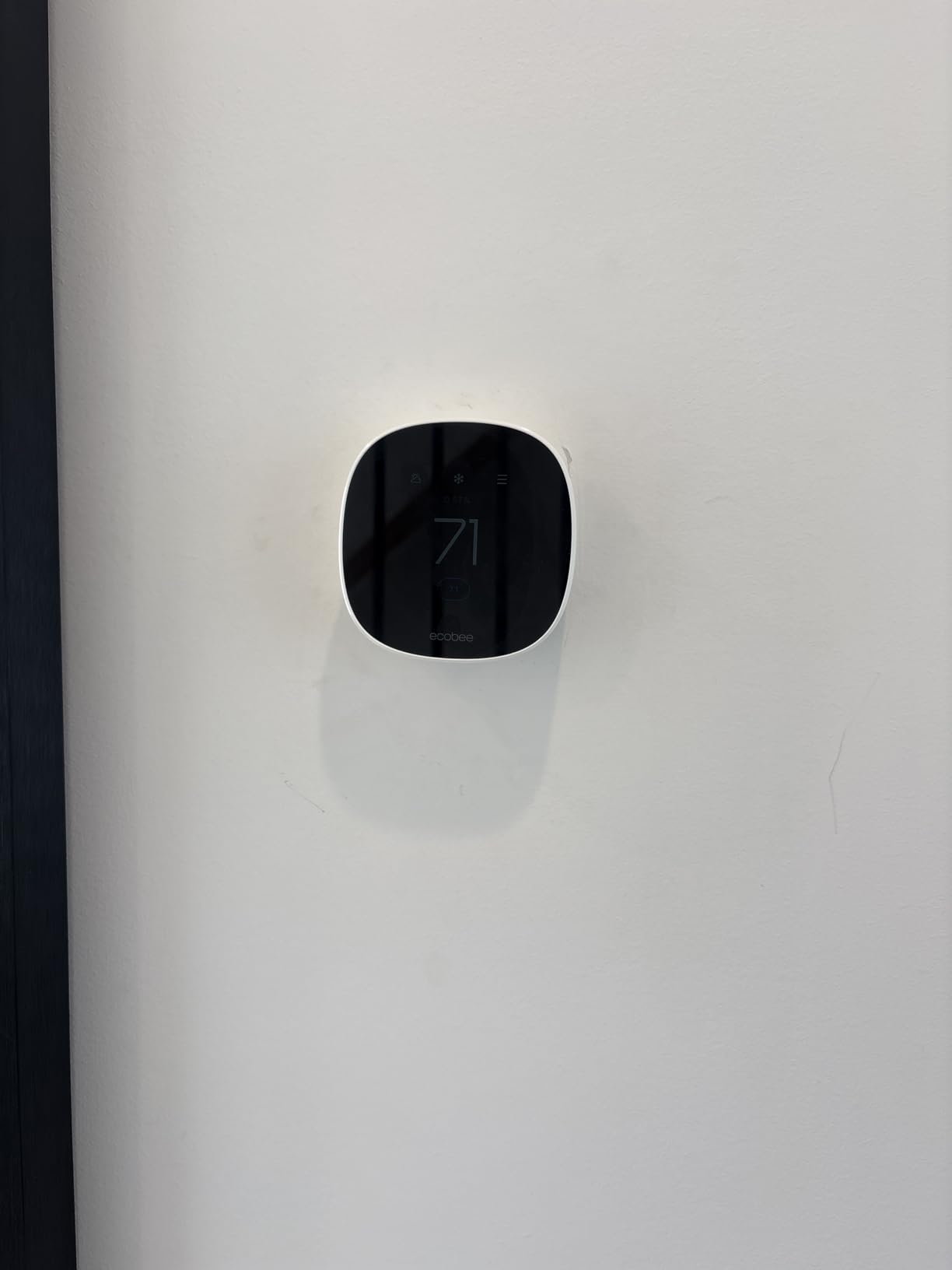
It supports conventional systems as well as heat pumps rated 2 heat and 1 cool, plus gas, oil, electric, dual fuel, forced air, and boilers, and it works with Apple HomeKit, Google Assistant, and Alexa. Software upgrades are free, which matters on an entry model.
The color touchscreen and app are the same ecobee experience people like in the higher models, and the app shows energy consumption while you are away from home.
Where it earns its place
It suits a homeowner on a single-stage or two-stage heat pump who wants scheduling assistance instead of a room sensor, and who is comfortable adding an accessory later. If your system is a straightforward 2H/1C setup, the compatibility list covers it.
It is also the natural step up for someone moving from a basic programmable thermostat to app control with real automation behind it.
Limitations to plan around
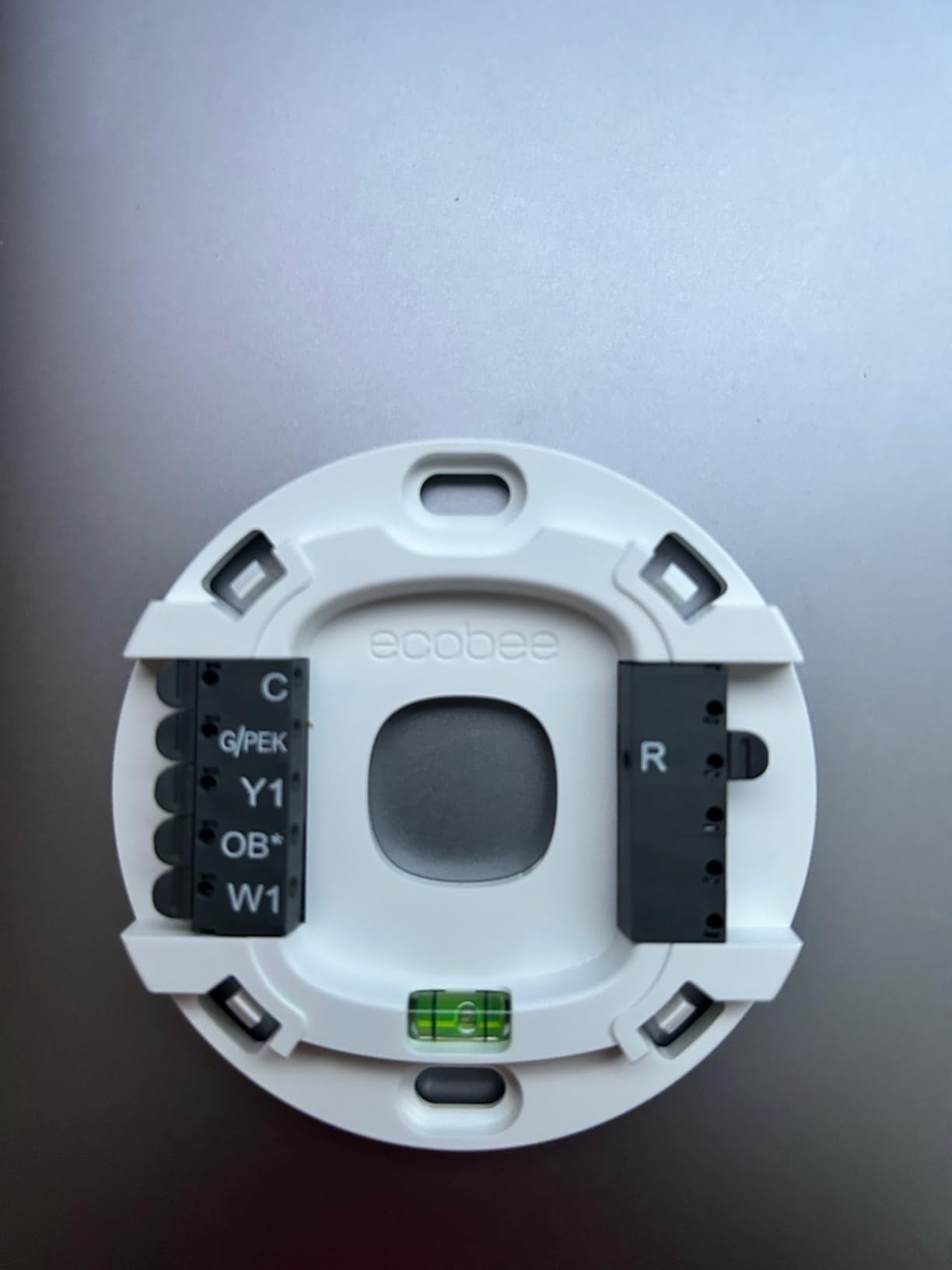
The Power Extender Kit and trim kit are sold separately, so a C-wire-free install costs more than the thermostat. SmartSensors are also sold separately as a two-pack, and the 85% compatibility figure is narrower than the Enhanced at 90% or the Premium at 95%.
You also give up the occupancy sensing, air quality monitor, and voice features that make the higher ecobee models feel premium. Check the ecobee compatibility checker before buying, especially on older or unusual equipment.
8. Honeywell Vision Pro 8000 – Best for Three-Stage Control and Humidity
Honeywell TH8321WF1001 Touchscreen Thermostat Wifi Vision Pro 8000 with Stages upto 3 Heat / 2 Cool
- Widest staging support here at up to 3 heat and 2 cool
- Built-in humidity control for dehumidification and humidification
- Adaptive scheduling learns how long the home takes to reach setpoint
- Fan cycle function circulates air when the system would otherwise be off
- Remote access through the free Total Connect Comfort app
- Wired set-screw terminals are more robust than friction connectors
- Requires a C-wire and has no battery compartment
- Listed for professional installation with no auto-setup mode
- Only one remote sensor input
- so multiple sensors must be wired together and averaged
- Display and interface are dated
- Uses the older Total Connect Comfort app
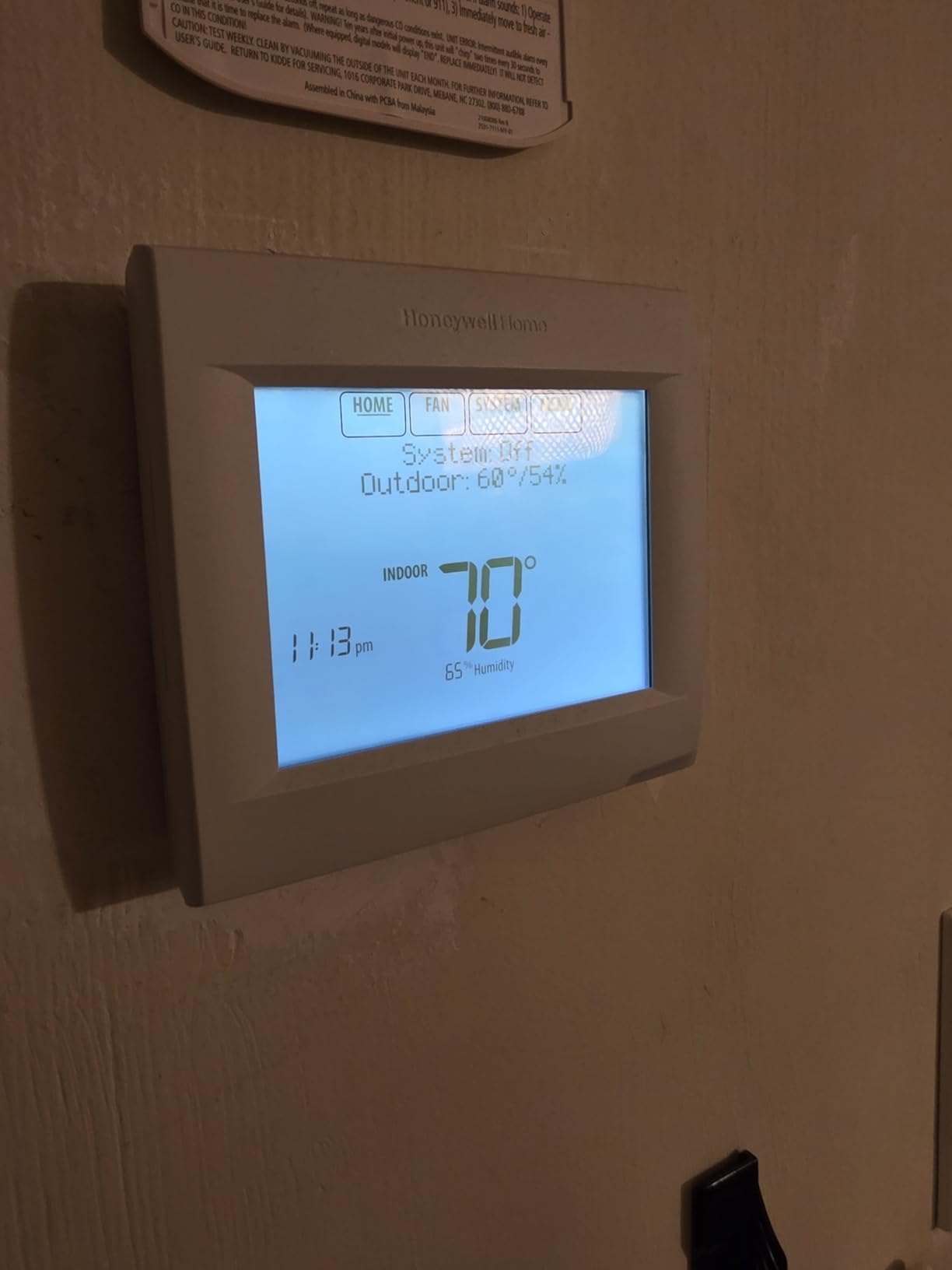
The Vision Pro 8000 is the most capable heat pump controller in this group on paper, and the reason is staging. It supports up to 3 stages of heat and 2 stages of cooling, which covers a three-stage heat pump with electric or gas backup heat and multi-stage conventional systems.
It is also the only pick here with built-in humidity control, and that matters more than most buyers expect. The system can balance temperature against indoor humidity, typically in the 45 to 60 percent range, by cycling the air conditioner. On a heat pump in a humid shoulder season, that is a real comfort difference.
Adaptive scheduling learns how long your home takes to reach setpoint and pre-warms accordingly, which helps on a system where a large building or poor insulation makes recovery slow. The fan cycle function runs the fan briefly when the system would otherwise be off, keeping air moving without calling for heat.
Long-term owners and HVAC professionals describe this unit as feature-rich and reliable, and several have installed multiple over a decade. The wired set-screw terminals are also a genuine plus for anyone who has watched friction connectors work loose.
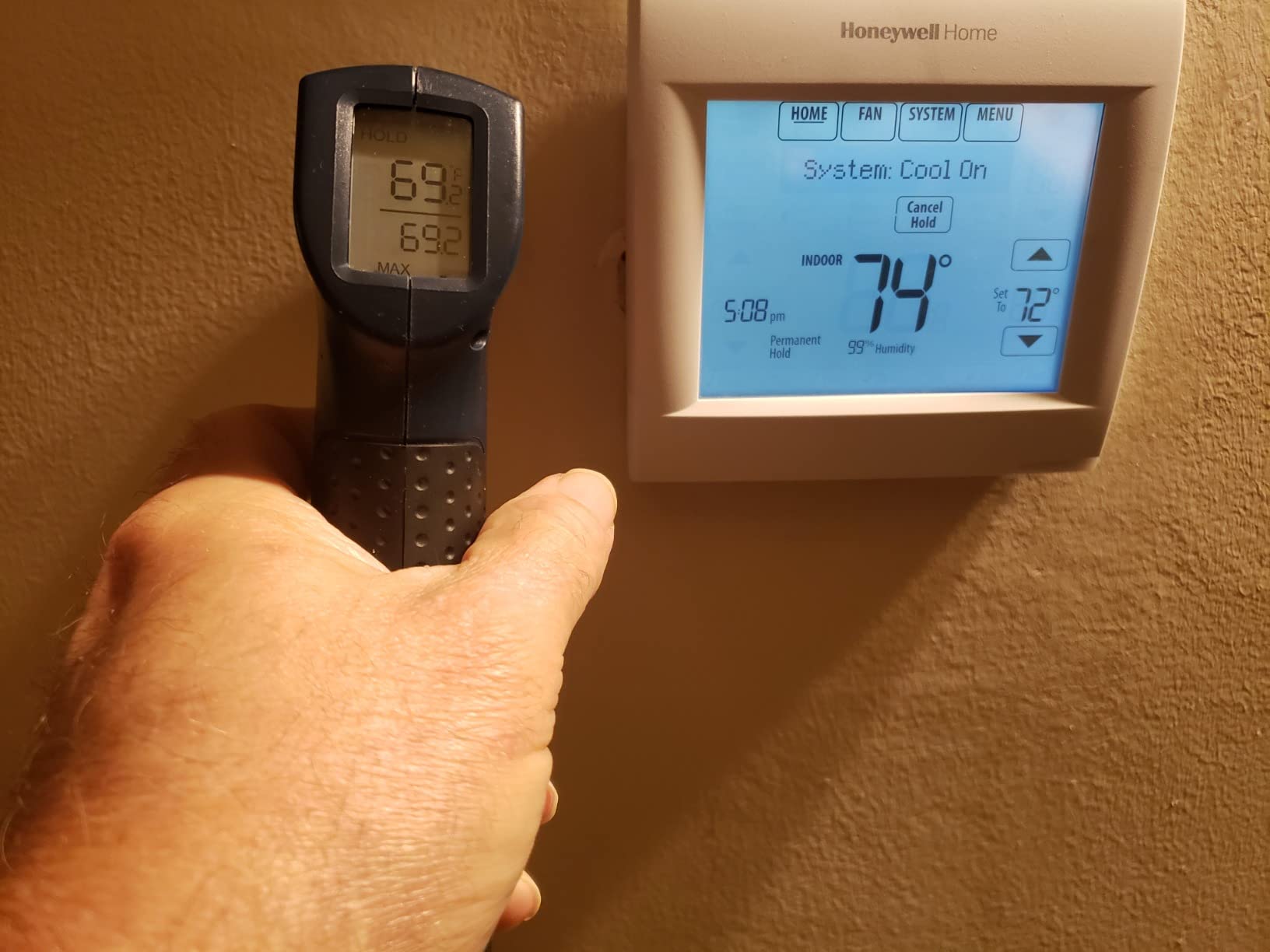
Who should own this one
It suits a three-stage or variable-speed heat pump, or a home with a whole-house humidifier, dehumidifier, or ERV attached. If you want the thermostat to manage indoor air quality rather than just temperature, this is the model built for it.
It is also a reasonable choice for a house with a hardwired indoor or outdoor remote sensor, and for anyone who prefers set scheduling over learning behavior.
What to know first
It requires a C-wire and has no battery compartment, so power comes from the furnace transformer. It is also listed for professional installation and has no auto-setup mode, meaning the installer has to work through a long list of HVAC configuration questions.
There is only one remote sensor input, so multiple sensors must be wired in series or parallel and the thermostat averages them, which some reviewers say undermines multi-zone accuracy. The interface is dated next to Nest and ecobee, and it still runs the older Total Connect Comfort app rather than the newer Resideo or First Alert app.
9. Honeywell Home X8S Premium Smart Wi-Fi – Best for Matter and Indoor Air Quality
- Matter certified and works with Alexa
- Google Assistant and Apple Home
- Up to 3 heat and 2 cool heat pumps with electric backup
- Feels Like setting factors humidity into perceived comfort
- Advanced occupancy and presence detection
- Multiple wireless sensors can be added for zone averaging
- Remote control runs through the First Alert app
- which is described as basic
- C-wire required and does not work with electric baseboard heat
- Doorbell camera view and intercom need a separate First Alert VX1 or Ring doorbell
The X8S is the newest Honeywell in this group and the one aimed at a heat pump that also handles indoor air quality. It supports up to 3 heat and 2 cool on a heat pump with electric backup, and it adds humidity and ventilation control on top of temperature.
The Feels Like setting is the feature to know about. It factors humidity into perceived comfort, so a 68 degree setpoint in dry winter air and the same setpoint in humid air do not feel the same. The thermostat also handles advanced occupancy and presence detection, adjusting when you are home and saving energy when you are not.
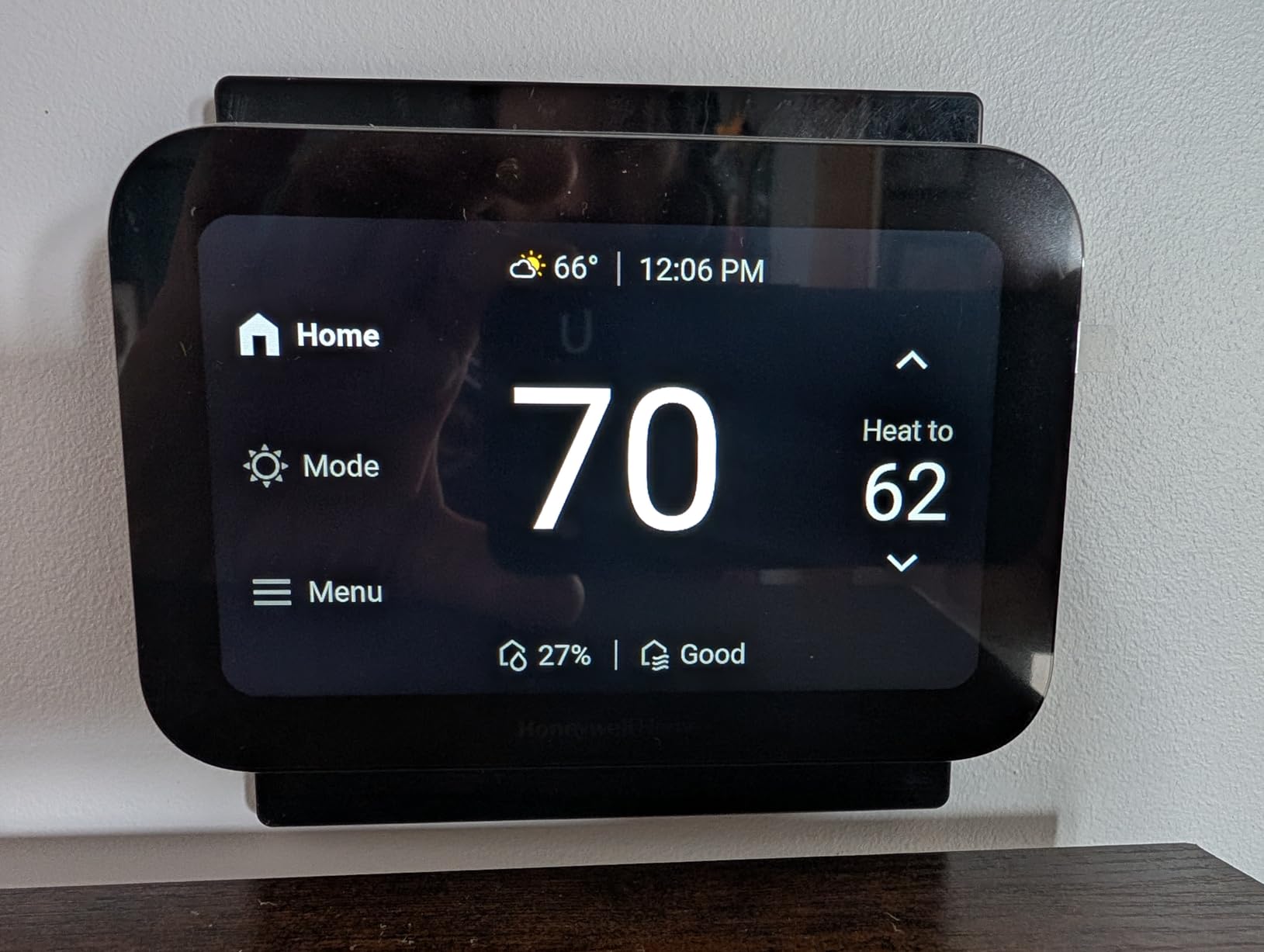
It is Matter certified and works with Amazon Alexa, Google Assistant, and Apple Home, and one reviewer reports using it with ESP32 and Matter API projects, which is a good sign for local smart home work. Multiple wireless sensors can be added for zone-based averaging, and one owner reports using 3M Velcro to reposition them, which is a small trick that solves a real problem.
The 5-inch display is customizable in color and style, and the thermostat is ENERGY STAR certified, so it is eligible for energy program participation and rebates.
Reasons to pick it
It is the right call for a modern smart home that has already standardized on Matter, and for anyone whose heat pump is wired to a humidifier or ventilation equipment. The multiple wireless sensor support is a genuine advantage over thermostats limited to one wired input.
Self-installers who have configured HVAC systems themselves tend to like the control this gives them, including the multi-sensor averaging that can fix room imbalances.
Reasons to look elsewhere
It requires a C-wire, and a C-wire adapter voucher is included for homes that lack one, so check your wiring before you commit. It does not work with electric baseboard heat at 120 to 240 volts.
The software is the weak point. Remote control runs through the First Alert app rather than a Honeywell-branded app, and owners describe it as basic rather than polished. One reviewer also reports Matter via Apple Home stopped recognizing the thermostats after a few weeks, and another received a unit advertised as new that was still registered to another account. Because this model has a much smaller review base than the rest of the list, we would want a longer ownership record before recommending it as a first choice.
10. YoLink Thermostat 2 – Best for Long-Range Signal and Sensor Control
- LoRa range of up to a quarter mile
- far beyond typical Wi-Fi thermostats
- Supports up to two YS8007-UC sensors in any room
- Several reviewers report zero dropped connections over months
- Works with Alexa
- Google Home
- IFTTT and Home Assistant
- Simple 24VAC install with a C-wire and quick QR-code hub pairing
- Requires a separate YoLink hub that is sold separately
- No high or low temperature alerting for unoccupied properties
- Schedule is limited to four slots per day with no copy to all days
- App forces a schedule and will not stay on Hold
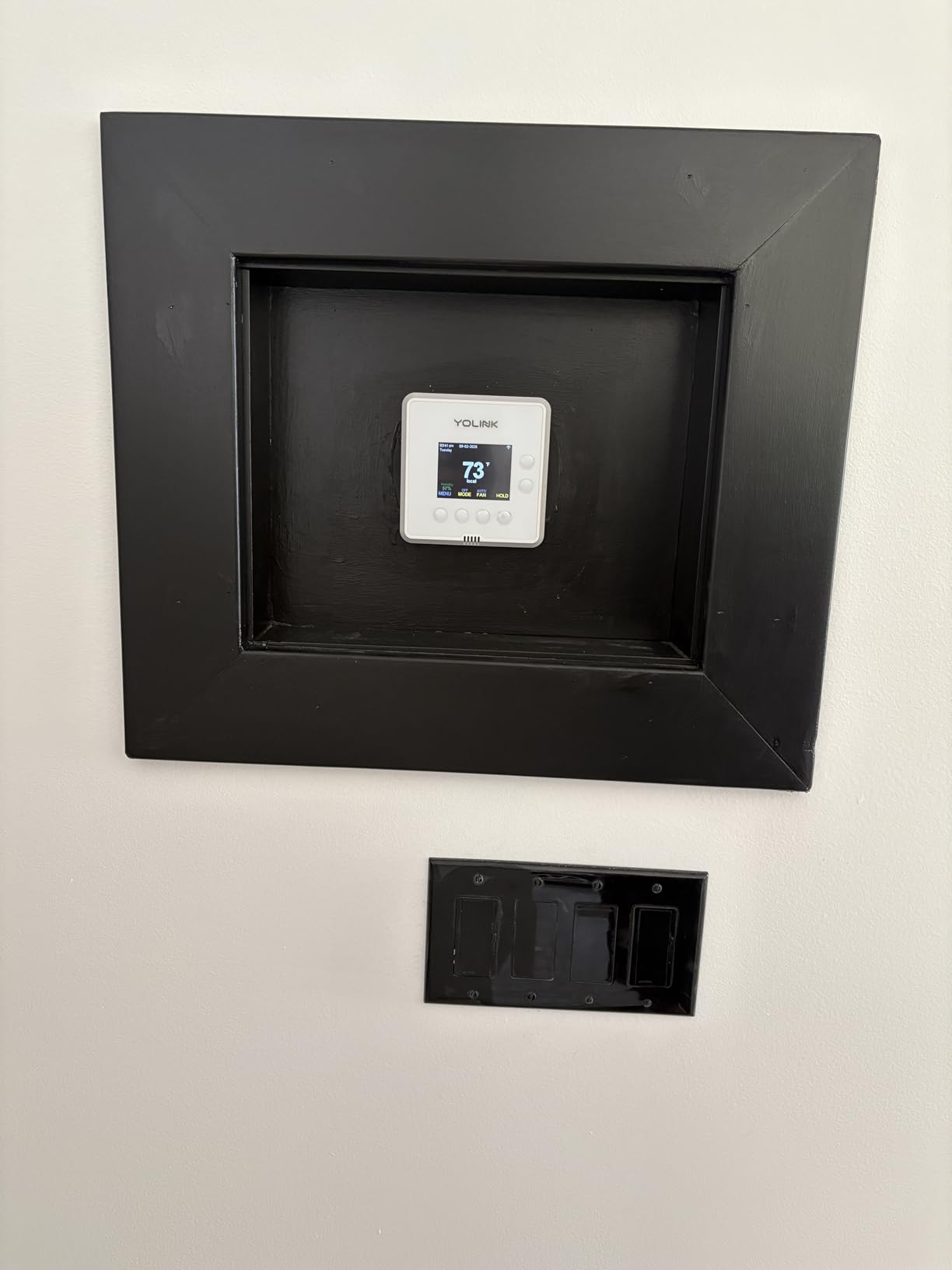
The YoLink Thermostat 2 is the outlier here, and that is why it earned a place. It communicates over LoRa rather than Wi-Fi, with a stated range of up to a quarter mile, which means the signal does not depend on where your router sits or how thick your walls are.
Several reviewers moved to it after a Nest repeatedly lost its connection, and report months without a single dropped connection. In a large house, a detached garage workshop, or a building with metal and masonry, that reliability is the entire point.
It is designed for heat pumps specifically, and dual-stage heating and cooling share one schedule so you do not have to switch modes by hand. It supports up to two YS8007-UC sensors for monitoring in any room, and a linked sensor can act as the master temperature source, which is unusual flexibility for a thermostat in this class.
It also plays well with wider automation. It works with Alexa, Google Home, IFTTT, and Home Assistant, and it sits inside a broader YoLink ecosystem of more than 80 devices including sensors, hubs, and water controls, all in one app. ECO mode optimizes settings to reduce power use while holding comfort.
Where it wins
Choose it if Wi-Fi reliability has been your problem, if your home is large or has difficult construction, or if you run Home Assistant and want another device that fits cleanly into local automations. The master sensor source option also makes it useful when one room is genuinely the one you care about.
It is a sensible pairing for a heat pump in a building where a router is not an option, since the hub goes where it can reach the network.
What to plan around
The hub is a separate purchase and everything depends on it, so factor that into the total system cost. The app is also the weak point. Scheduling is limited to four time slots per day with no easy copy-to-all-days option, and the app requires a schedule and will not let the unit sit on Hold, so a manual setpoint change gets reverted at the next slot.
There are no high or low temperature alerts, which is a real safety gap if you are monitoring a vacation property or an unheated space. One buyer also reported installation trouble from a heat pump and gas selector switch left in the wrong position, so confirm that setting during setup.
What to Check Before You Buy a Smart Thermostat for a Heat Pump
Most thermostat problems on a heat pump come down to three things: power, staging, and backup heat control. Here is what to verify before you spend anything.
Do you have a C-wire?
Look at the terminals behind your existing thermostat. A C-wire is the common wire that delivers constant 24 volts AC so the thermostat does not have to steal power from the heating circuit. On a heat pump, power-stealing is a real problem because a thermostat that browns out during a call for heat can reset mid-cycle.
If you have a C-wire, every unit on this list will work. If you do not, your options narrow. The Sensi ST55 and the Google Nest Learning Thermostat are listed as not requiring a C-wire in most homes, and the two higher ecobee models include a Power Extender Kit. The Honeywell RTH9600WF, Lyric T6 Pro, Vision Pro 8000, and X8S all require one.
How many stages does your heat pump have?
Single-stage systems work with anything on this list. Two-stage systems need a thermostat that will call for stage two, which the Lyric T6 Pro, the Vision Pro 8000, and the X8S specify explicitly. Three-stage or variable-speed systems push you toward the Vision Pro 8000 or X8S.
To verify staging after install, lower the setpoint several degrees below room temperature and listen. On a cold day, stage two should engage within a few minutes. If it never does, the second stage is not being called, and the thermostat or the equipment is the problem.
Set the auxiliary heat lockout before winter
This is the setting that separates a good heat pump installation from an expensive one. Auxiliary heat, also called emergency heat, strip heat, or resistance heat, is electric backup that costs several times more to run per hour than the compressor. If your thermostat has no cutoff, it may call for backup heat at any outdoor temperature.
Set the lockout so backup heat only engages below the outdoor temperature where your heat pump can no longer keep up. Then the system runs the compressor as long as possible, and calls for backup only when it is genuinely needed. The balance point for a dual-fuel system works the same way, switching to gas only when the heat pump hits its limit.
Once the lockout is set, your winter bills depend on how well your heat pump performs, not on how often the thermostat gives up. The manufacturer savings figures attached to these products only mean something when this setting is right.
Should you worry about replacing a factory thermostat?
Yes, if your system is a communicating or variable-speed setup from Carrier, Trane, Mitsubishi, or a similar manufacturer, especially when there is a zone-control panel and motorized dampers. Those factory thermostats talk to the equipment over a proprietary bus, and replacing them with a universal Wi-Fi unit can silently reduce variable capacity, staging flexibility, humidity control, and system diagnostics.
Before you remove anything, ask your contractor whether your equipment requires a factory interface module to keep those functions.
Why do some contractors push back on Nest and ecobee?
It is less about the brand and more about who carries the warranty. When a smart thermostat is customer-installed and something misbehaves, the homeowner calls the manufacturer, and the contractor gets a callback they did not ask for. A factory thermostat installed by the contractor stays inside a service relationship they control.
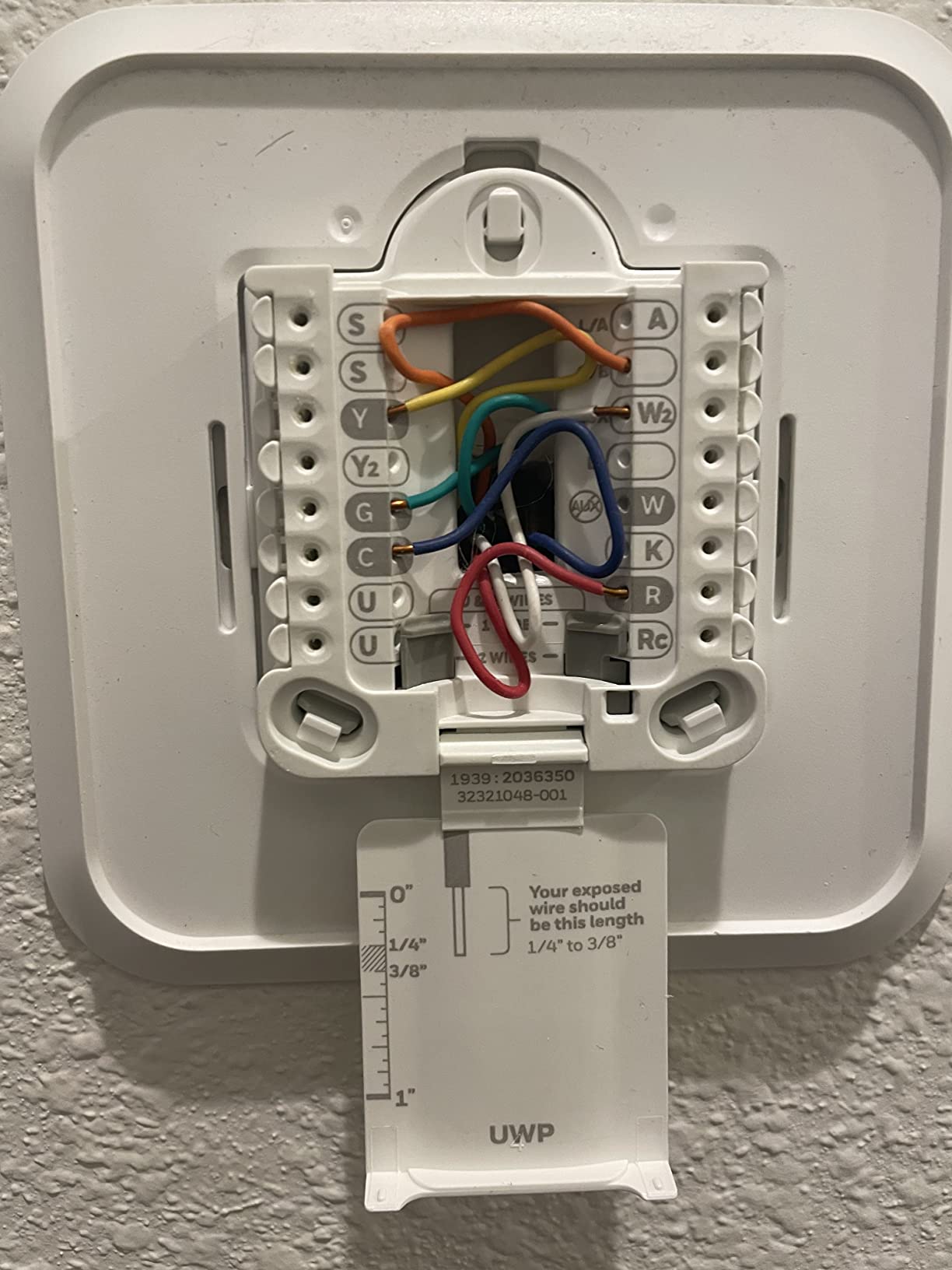
Many contractors will still install a customer-supplied unit if you ask and the equipment is compatible. What they object to is a universal thermostat on a communicating system, or a homeowner who strips features without knowing. If you plan to self-install, run the compatibility checker, photograph your existing wiring, and record every terminal label before you touch anything.
Which ecosystem should you match to?
Apple HomeKit and Siri work best in the ecobee and Honeywell lines, plus the Nest Learning Thermostat. Google Home and Amazon Alexa are covered broadly across all ten. Samsung SmartThings and Home Assistant support is strongest on the ecobee models and the Honeywell T6 Pro, and the YoLink Thermostat 2 pairs directly with Home Assistant.
For local control without relying on a cloud, the Honeywell X8S is Matter certified, which gives you a path that does not depend on a single vendor’s servers. If you run Home Assistant seriously, weigh that above brand loyalty.
What about two systems or a ductless mini split?
Two independent HVAC systems need two thermostats, one per system, and neither can control the other. A Nest Temperature Sensor reports temperature to a thermostat; it is not a second thermostat and cannot run a second system. If you have a heat pump plus a gas furnace or fireplace, plan on separate control for anything you want independent scheduling on.
For ductless mini splits, confirm the indoor unit exposes standard 24V control wiring before buying anything, since many do not. Our ductless mini split heat pump picks walk through the equipment side of that decision.
Frequently Asked Questions
Can you put a smart thermostat on a heat pump?
Yes. Every thermostat in this roundup runs on standard 24 VAC and is listed as compatible with heat pump equipment. What matters is staging support and backup heat control. A two-stage heat pump needs a thermostat that calls for stage two, and any system with electric or gas backup heat needs an auxiliary heat lockout so resistance strips are not used on mild days. Confirm your terminal labels and run the manufacturer compatibility checker before buying.
Why do HVAC guys hate Nest thermostats?
Most resistance is about warranty and callbacks rather than the hardware. When a customer-installed smart thermostat misbehaves, the homeowner calls the manufacturer and the contractor gets a service call they did not schedule. Contractors also object to universal thermostats on communicating systems, where removing the factory controller can reduce variable capacity, staging, humidity control and diagnostics. Most will still install a compatible customer-supplied unit if you ask and the equipment is supported.
Is ecobee or Nest better for a heat pump?
ecobee is stronger on heat pump control and comfort. The Smart Thermostat Premium includes a SmartSensor for room-by-room balancing, ships with a Power Extender Kit for C-wire-free installs, covers 95 percent of HVAC systems, and adds radar occupancy sensing. The Nest Learning Thermostat is better if you want hardware polish, a learning schedule, and the least configuration work, since its compatibility checker confirms fit before you order. Nest trades away granular control, and its fourth generation base is not compatible with third generation hardware.
Is Sensi better than Honeywell for heat pumps?
It depends on wiring. The Sensi ST55 is listed as not needing a C-wire in most installations, has a built-in level and printed wire labels for quick installs, and offers flexible per-day scheduling. The Honeywell RTH9600WF is the better pick if you have a C-wire and want a large color display with indoor and outdoor temperature, humidity and forecast on screen. The Honeywell Lyric T6 Pro is the one to choose for explicit two-stage heat pump control.
Which Nest thermostat is compatible with a heat pump?
The fourth generation Google Nest Learning Thermostat works with most 24V systems including gas, electric, oil, forced air, heat pump and radiant, and a C-wire is not required in most homes. Nest publishes a compatibility checker that confirms your specific wiring before you buy. Note that fourth generation mounting hardware and the wiring backplate are not compatible with third generation Nest, and that this model is not ENERGY STAR rated, which can limit utility rebate eligibility in some areas.
How do I stop my heat pump from using electric backup heat all winter?
Set the auxiliary heat lockout in the thermostat. Choose an outdoor cutoff temperature below which the heat pump can no longer keep up, and the thermostat will only call for electric or gas backup below that number. Run the compressor as long as possible and use resistance heat only when it is genuinely needed, since electric strip heat costs several times more per hour than the compressor. Dual-fuel systems use the same idea, switching at a balance point.
Do smart thermostats actually save money with a heat pump?
The manufacturer figures you see, such as claimed savings of up to 23 or 26 percent, depend on conditions. They assume you follow a schedule, you set the setpoint back when nobody is home, and your auxiliary heat lockout is configured properly. The real variable is how often your heat pump falls back to resistance heat, since that runs at a much higher cost per hour than the compressor. Fix the lockout first and the savings follow.
Can I install a smart thermostat myself or should I call a contractor?
DIY is fine on a standard single-stage or two-stage 24 VAC system. Photograph your existing wiring, record every terminal label including C, O or B, AUX, E, W2, Y2, HUM and DEHUM, and run the manufacturer compatibility checker before you buy. Call a professional if your system is communicating or variable-speed, has a zone-control panel with motorized dampers, or if a terminal looks unfamiliar. A professional install also helps if your contractor will not service a customer-supplied unit.
The Bottom Line on Smart Thermostats for Heat Pumps
The Sensi Smart Thermostat ST55 is our best smart thermostat for heat pumps in 2026. It handles standard 24 VAC heat pumps, rarely needs a C-wire, installs quickly with a built-in level, and gives you the scheduling flexibility and humidity data that a heat pump owner actually uses. It is the least risky first smart thermostat.
Move up to the ecobee Smart Thermostat Premium if room-by-room comfort justifies the extra hardware, or to the Honeywell Vision Pro 8000 if you run a three-stage system with humidity control. The Google Nest Learning Thermostat is the pick for anyone who wants a learning schedule and minimal setup work.
Whatever you choose, set the auxiliary heat lockout before the first cold week. On a heat pump, that single setting matters more to your winter bills than any smart feature, and it costs nothing. If you are still choosing equipment, our whole house heat pump guide covers the systems these thermostats are built to run.