
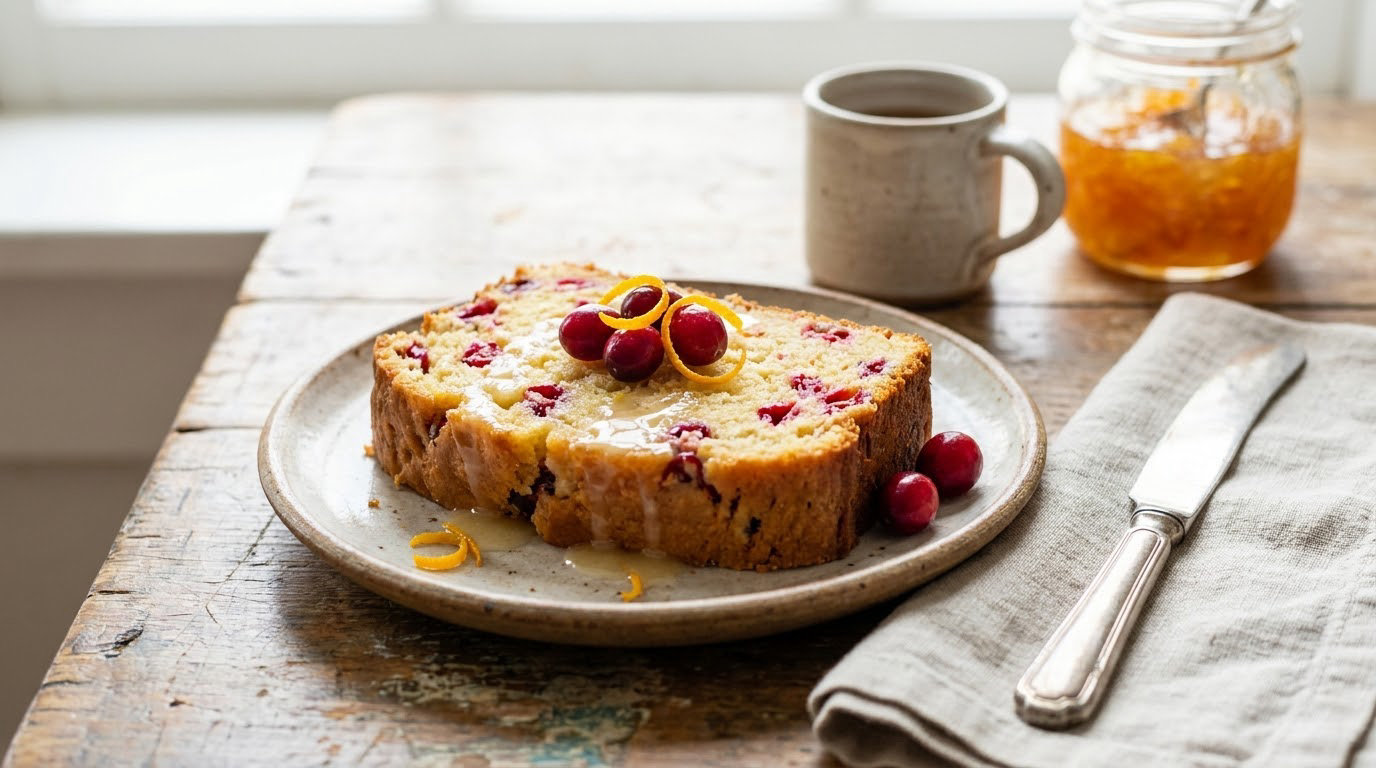
If you’ve ever wanted a holiday loaf that smells like a citrus grove in December, this cranberry orange bread recipe is the one. It bakes up tall and tender, with bursts of tart cranberry and a bright, buttery orange flavor that fills the kitchen before the timer even rings.
The whole thing comes together in one bowl with a whisk, no mixer required, and it slides out of the oven in about an hour. Whether you’re planning a Christmas morning breakfast, a Thanksgiving brunch, or a homemade food gift for a neighbor, this is a cranberry orange bread recipe you’ll come back to every fall.
Table of Contents
Why This Cranberry Orange Bread Recipe Works
Most quick breads turn out either dry or gummy, and the cranberry ones are especially tricky because the berries leak moisture as they bake. This version gets the texture right with a few small, specific choices:
- Fresh orange zest in the batter. The oils in the zest carry the citrus flavor all the way through the loaf, instead of just tasting like orange on the surface.
- Buttermilk for tenderness. The gentle acidity tenderizes the crumb and keeps it soft for days. If you’ve ever had a quick bread that felt tough the next morning, buttermilk is usually the missing piece.
- A blend of melted butter and a little oil. Butter gives flavor, oil keeps the loaf moist even after it cools. Using both is the difference between a bread that tastes good on day one and one that still tastes good on day three.
- A mix of fresh and dried cranberries. Fresh berries give you bright, juicy pops. A handful of dried cranberries adds chewy texture and concentrated sweetness. Together they balance each other.
- Gentle mixing. Quick bread batter is delicate. Stir just until the flour disappears and stop, or the loaf turns out dense.
The result is a tender, fragrant loaf with a crackled golden top, a soft middle, and fruit in every slice.
Ingredients
- 2 cups (260 grams) all-purpose flour, plus 1 tablespoon for tossing the cranberries
- 1 cup (200 grams) granulated sugar
- 1 and 1/2 teaspoons baking powder
- 1/2 teaspoon baking soda
- 1/2 teaspoon fine salt
- Zest of 2 large navel oranges (reserve the fruit for juice)
- 3/4 cup (180 ml) buttermilk, at room temperature
- 1/4 cup (60 ml) fresh orange juice (from the zested oranges)
- 2 large eggs, at room temperature
- 1/2 cup (113 grams) unsalted butter, melted and slightly cooled
- 2 tablespoons neutral oil (such as canola or vegetable)
- 1 teaspoon pure vanilla extract
- 1 and 1/2 cups (about 150 grams) fresh cranberries, roughly chopped if large
- 1/2 cup (70 grams) dried cranberries
A few ingredient notes: If you don’t have buttermilk, stir 2 teaspoons of white vinegar or lemon juice into 3/4 cup of whole milk and let it sit for 5 minutes. Frozen cranberries work without thawing; just toss them straight from the freezer with the extra tablespoon of flour so they don’t bleed into the batter. Want a brighter loaf? Swap a few extra tablespoons of buttermilk for orange juice, or vice versa, depending on how tangy you like it.
Equipment
One piece of equipment matters here: a 9×5-inch (23×13 cm) metal loaf pan. A light-colored aluminum pan is ideal because it conducts heat gently and gives the bread time to bake all the way to the center before the top browns. Dark or glass pans run hotter on the sides and can leave you with a deep brown crust and a raw middle. Line the pan with a strip of parchment paper that hangs over the long sides so you can lift the loaf out cleanly once it cools.
How to Make Cranberry Orange Bread
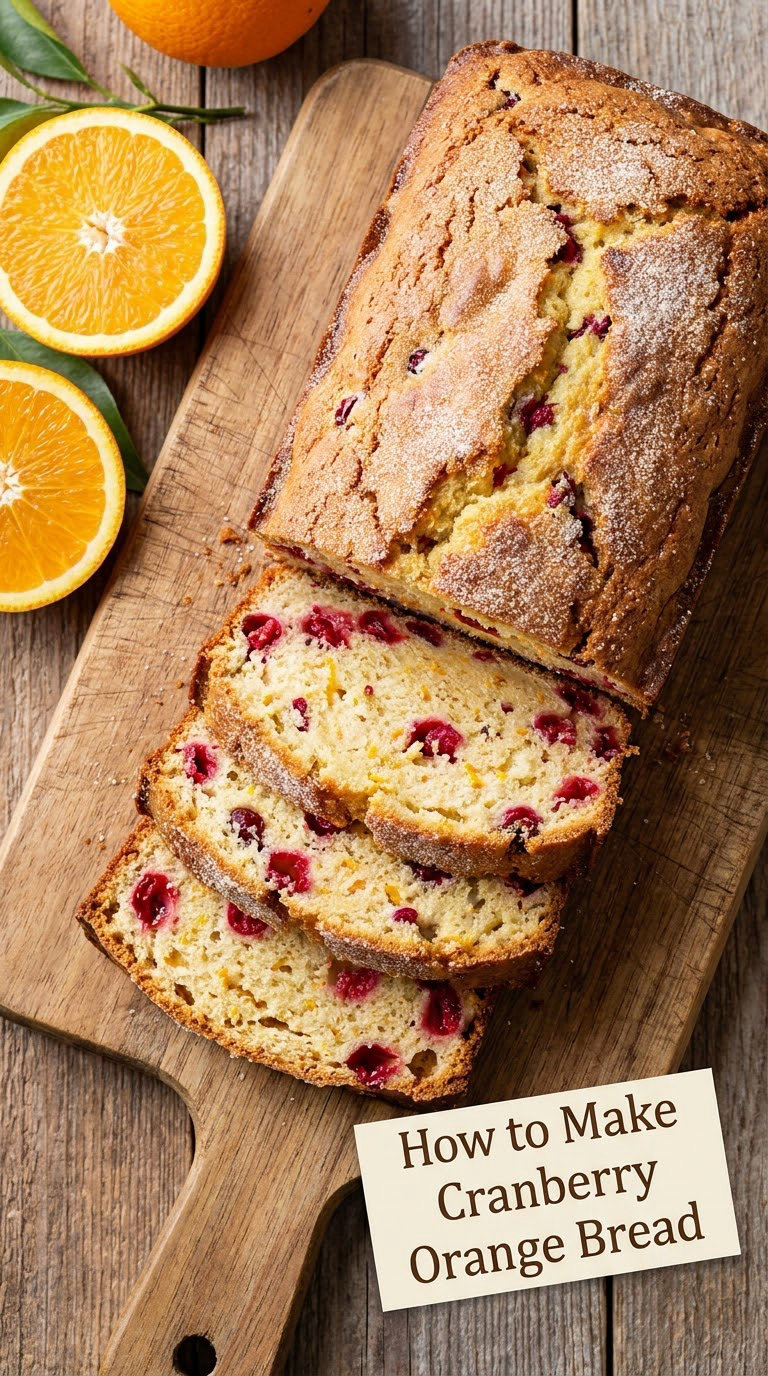
This cranberry orange bread recipe moves fast once you start, so measure everything before you begin.
- Heat the oven and prep the pan. Place a rack in the center of the oven and heat to 350°F (175°C). Line a 9×5-inch metal loaf pan with parchment, leaving overhang on the long sides, and lightly grease the exposed ends.
- Zest the oranges first. Zest the two oranges directly into a large mixing bowl. Set the fruit aside for juicing later. Zesting into the same bowl means those fragrant oils end up in the batter.
- Whisk the dry ingredients. Add the flour, sugar, baking powder, baking soda, and salt to the bowl with the zest. Whisk for about 20 seconds to distribute the leavening evenly and to rub the zest into the flour.
- Whisk the wet ingredients. In a separate bowl or large measuring cup, combine the buttermilk, fresh orange juice, eggs, melted butter, oil, and vanilla. Whisk until smooth.
- Combine without overmixing. Pour the wet mixture into the dry ingredients. Stir with a spatula or wooden spoon just until no streaks of flour remain. A few small lumps are fine. Overmixing now is what makes a tough, dense loaf.
- Toss the cranberries with flour. In a small bowl, toss the fresh and dried cranberries with the reserved tablespoon of flour. This light coating helps stop the berries from sinking to the bottom of the loaf during baking.
- Fold in the cranberries and bake. Gently fold the floured cranberries into the batter, then scrape it into the prepared pan and smooth the top. Bake at 350°F (175°C) for 55 to 65 minutes, until a toothpick inserted in the center comes out with a few moist crumbs attached but no wet batter.
- Cool before slicing. Let the loaf rest in the pan for 15 minutes so it can finish carrying over and firm up enough to lift out. Use the parchment overhang to transfer it to a wire rack and cool completely before slicing.
Tips for Success
- If the berries sink: The flour-toss step in step 6 is the trick. If your batter is on the thin side, add another teaspoon of flour to the cranberry coating.
- If the loaf turns out dry: You probably overbaked it or measured the flour with a heavy hand. Spoon it into the measuring cup and level it, or better yet, weigh it on a kitchen scale (260 grams).
- If the middle is raw but the top is brown: Your oven runs hot on top, or you’re using a dark pan. Tent the loaf loosely with foil at the 40-minute mark and continue baking until a toothpick comes out clean.
- If the top cracks: A crack down the center is actually normal for quick breads and not a flaw. If you want a cleaner top, smooth the batter gently and avoid banging the pan on the counter before baking.
- If the orange flavor fades: Zest directly into the dry ingredients and use freshly squeezed juice, never bottled. Bottled juice tastes cooked and the flavor bakes out.
- If you want extra brightness: Stir 2 teaspoons of orange zest into a simple glaze of 1/2 cup powdered sugar and 1 to 2 tablespoons of orange juice, then drizzle over the cooled loaf.
Variations
This cranberry orange bread recipe is forgiving. A few small swaps give you a different loaf every time you bake it.
- Cranberry orange walnut bread. Add 3/4 cup (about 85 grams) of toasted, chopped walnuts along with the cranberries. Toasting the nuts first in a dry skillet for 3 to 4 minutes deepens the flavor.
- Cranberry orange pecan bread. Swap the walnuts for toasted pecans. Pecans are a bit sweeter and pair especially well with the orange glaze if you choose to add one.
- Gluten-free cranberry orange bread. Replace the all-purpose flour with an equal weight of a cup-for-cup gluten-free flour blend that contains xanthan or guar gum. Check the bake time at 50 minutes; gluten-free loaves can dry out faster.
- Cranberry orange muffins. Divide the batter into a lined 12-cup muffin tin and bake at 375°F (190°C) for 22 to 25 minutes, until a toothpick comes out clean. You’ll get about 12 muffins.
Want something closer to that bakery-style copycat? Brush the warm loaf with a thin orange glaze (1/2 cup powdered sugar + 1 to 2 tablespoons orange juice) and let it set before slicing.
Storage, Make-Ahead and Reheating
Cranberry orange bread keeps beautifully if you store it the right way. Wrapped tightly in plastic wrap or foil, the loaf stays fresh on the counter for up to 3 days. The buttermilk and oil blend keep it softer than most quick breads at the 48-hour mark.
For longer storage, transfer to an airtight container or zip-top bag and refrigerate for up to 1 week. Bring slices back to room temperature before serving, or warm them gently.
To freeze, wrap the whole loaf or individual slices in plastic wrap, then in foil or a freezer bag. It keeps well for up to 3 months. Thaw overnight on the counter, still wrapped, so it doesn’t dry out. For more on this, see our guide to how long homemade bread lasts on the counter and how to freeze bread so it stays fresh.
Make-ahead note: The batter can be mixed, covered, and refrigerated overnight. In the morning, give it a gentle stir, scrape it into the prepared pan, and bake as directed, adding about 5 minutes to the bake time since the batter will be chilled.
Reheating: Warm a slice in a 300°F (150°C) oven for about 8 minutes to refresh the crust, or toast it lightly in a toaster. A 10-second pass in the microwave works in a pinch but softens the crust.
What to Serve With Cranberry Orange Bread
This is one of those bakes that earns its place at any table. Here are four pairings I keep coming back to:
- Softened salted butter. Simple, classic, and the salt makes the orange flavor pop. Best on a freshly warmed slice.
- Cream cheese and orange marmalade. Spread a thin layer of each on one piece of toast for a breakfast that feels special.
- A mug of coffee or black tea. The citrus cuts through the bitterness of coffee beautifully, and a chai latte with the warming spices echoes the holiday feel of the loaf.
- A scoop of vanilla ice cream. For dessert, warm a thick slice and top it with vanilla ice cream. The cold cream against the warm, tart-sweet bread is one of the easiest desserts in my kitchen.
If you’re planning a holiday spread, this loaf also pairs well with a board of other winter bakes. Take a look at our roundup of cozy cranberry dessert recipes for winter for ideas.
Frequently Asked Questions
Can I use dried cranberries instead of fresh in this cranberry orange bread recipe?
Yes. Use about 1 cup (140 grams) of dried cranberries in place of the fresh, and skip the flour-toss since dried berries don’t sink the same way. Soak them in 2 tablespoons of warm orange juice for 10 minutes first to plump them up, or the bread can taste a bit dry in spots.
Why do the cranberries sink to the bottom of the loaf?
Fresh cranberries are heavier than batter, so they drop during baking. Tossing them in a tablespoon of flour before folding them in gives them a dry coating that helps suspend them through the loaf. A thicker batter (a touch less buttermilk) also helps.
Can I make cranberry orange bread with frozen cranberries?
Yes. Add them straight from the freezer without thawing, and toss them with the tablespoon of flour as written. Thawing first releases too much juice and turns the batter pink. Expect to add 2 to 3 minutes to the bake time since frozen fruit chills the batter.
How do I know when cranberry orange bread is done baking?
Insert a toothpick into the center of the loaf. It should come out with a few moist crumbs attached but no wet batter. The top should be deep golden and spring back lightly when pressed. Internal temperature should read about 200 to 205°F (93 to 96°C) on an instant-read thermometer.
Can I make this cranberry orange bread recipe without buttermilk?
Yes. Stir 2 teaspoons of white vinegar or lemon juice into 3/4 cup of whole milk and let it sit for 5 minutes. Plain yogurt thinned with a splash of milk also works. Avoid using regular milk on its own; the loaf will turn out noticeably more dense without that acid.
How long does cranberry orange bread stay fresh?
Wrapped tightly, it stays fresh on the counter for 3 days, in the fridge for up to 1 week, and in the freezer for up to 3 months. The buttermilk and oil in the batter keep it moister than most quick breads, so it holds up better than banana or pumpkin loaves at the 48-hour mark.
Final Verdict
This cranberry orange bread recipe earns a permanent spot in my holiday rotation. The buttermilk keeps it tender, the orange zest carries real citrus flavor through every slice, and the mix of fresh and dried cranberries gives you both juicy pops and chewy bites in the same loaf. Make it once and you’ll find yourself reaching for it every time cranberries show up at the market.