
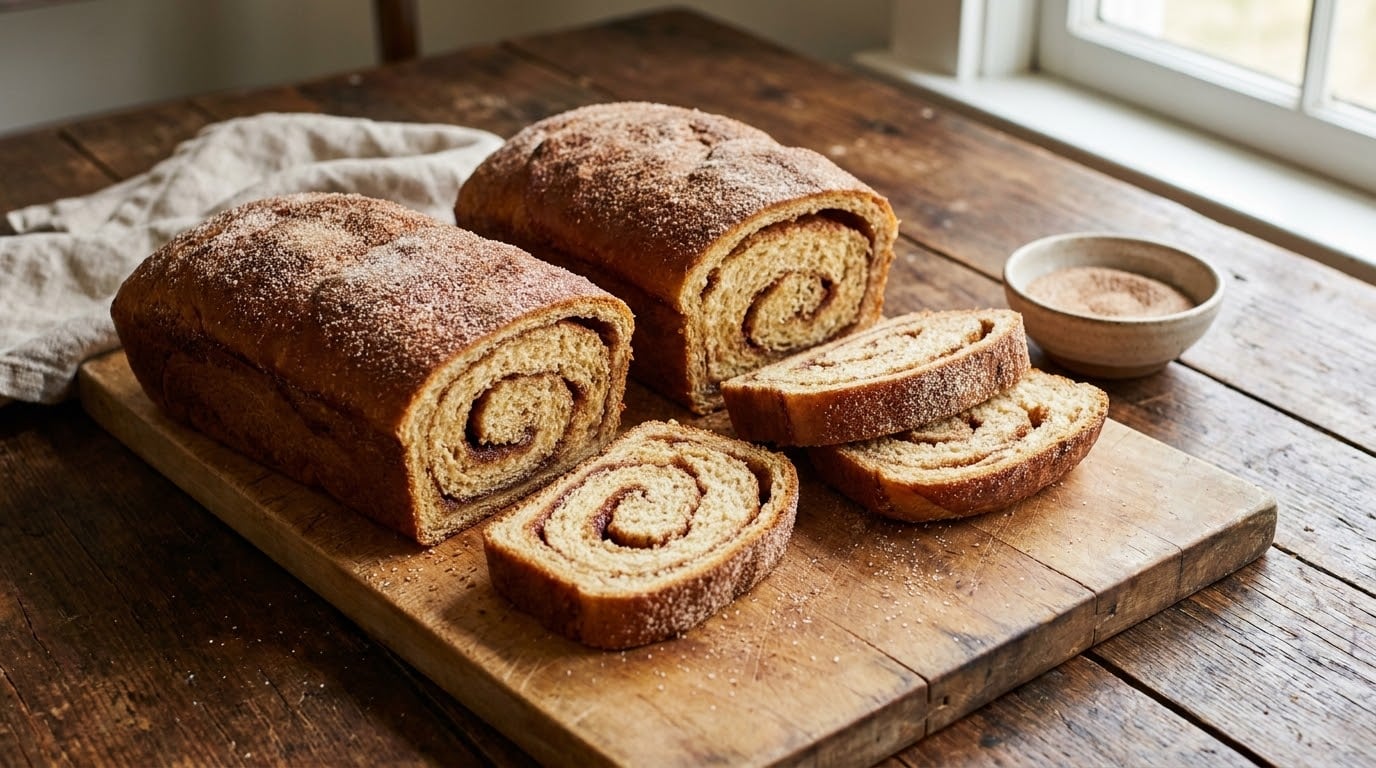
You can absolutely make amish cinnamon bread without a starter, and the result tastes every bit as good as the 10-day version. This no-starter recipe skips the sourdough culture entirely and leans on buttermilk and instant vanilla pudding to give the crumb that signature moist, tender pull and that warm tang the fermented version is known for. Two bowls, one afternoon, and you’ve got two loaves of buttery cinnamon-sugar swirled bread on the counter in about an hour.
If you’ve ever wanted the flavor of classic Amish friendship bread without tracking down a starter, feeding a bag, or waiting nearly two weeks, this is the shortcut that actually works. I’ve baked this version for years on busy weekends when I want the house to smell like a country bakery but I don’t have the patience for a sourdough timeline. The batter comes together in one bowl, the cinnamon-sugar swirl gets layered right into the pan, and the loaves cool on a rack while you put the kettle on.
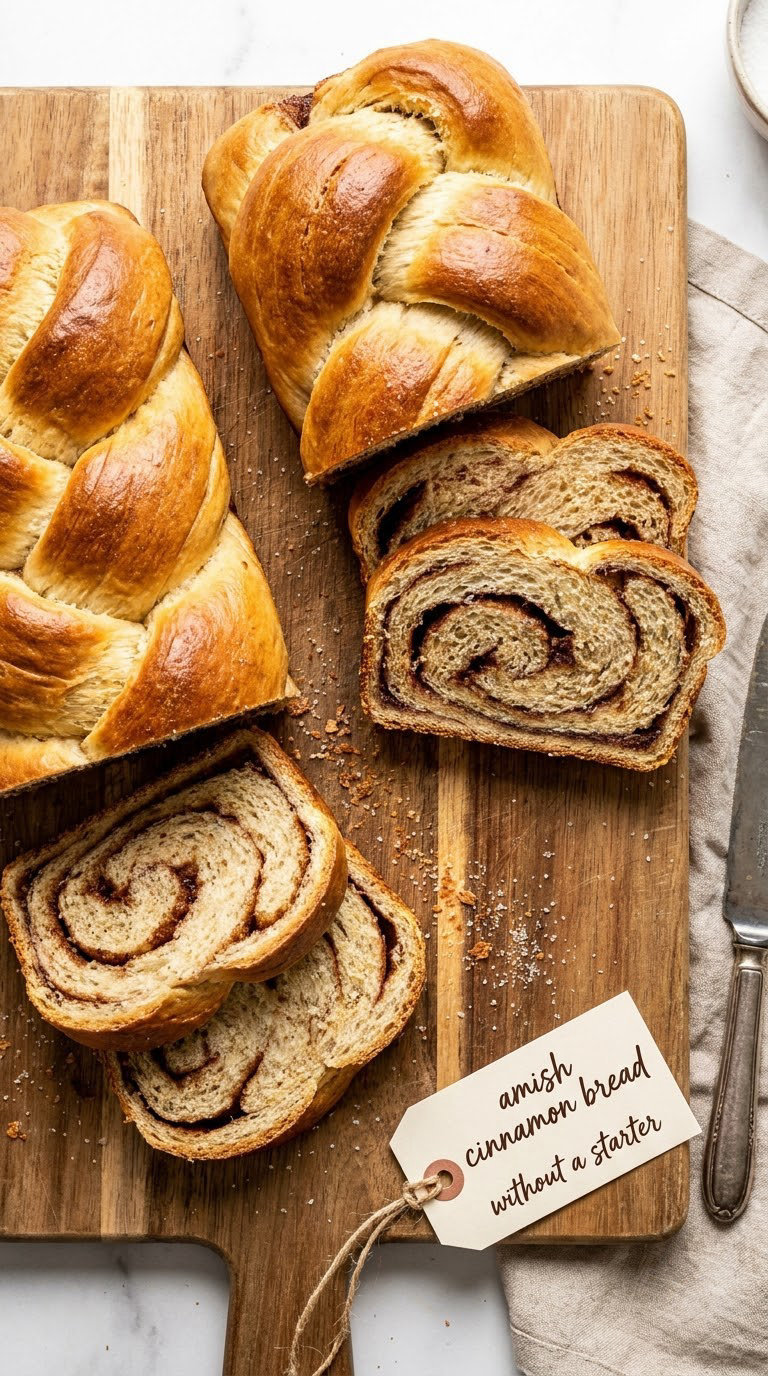
Table of Contents
Why This Recipe Works
- No starter or yeast needed, so you can start and finish the same afternoon.
- A two-batter cinnamon-sugar layering method gives you the signature swirled crumb without any marbling skill.
- Buttermilk and softened butter produce a soft, buttery loaf from pantry staples you probably already own.
- Total active time is roughly 15 minutes and the bake finishes in under an hour, well within the 1 hour 15 minute window most home bakers have on a weekend.
Ingredients
- 1 cup (226 g) unsalted butter, softened
- 2 cups (400 g) granulated sugar, divided
- 2 large eggs, room temperature
- 2 cups (480 ml) buttermilk, or 2 cups whole milk plus 2 tablespoons white vinegar
- 2 teaspoons pure vanilla extract
- 4 cups (500 g) all-purpose flour
- 2 teaspoons baking soda
- 1 teaspoon baking powder
- 1 teaspoon fine salt
- 2 tablespoons ground cinnamon
- Optional: 1 small box (3.4 oz / 96 g) instant vanilla pudding mix for an even moister crumb
Buttermilk is doing real work here, the acidity reacts with the baking soda to give the loaf lift and a faint tang that mimics the fermented flavor of the original starter version. If you’re out, the milk plus vinegar swap works fine, just let it sit for five minutes before you pour it in. Room temperature eggs and butter are non-negotiable for an even crumb, cold butter will leave you with pockets of fat and a denser texture. The instant vanilla pudding is optional in this no-starter version; it adds a touch more moisture and a faint vanilla perfume, and you can leave it out without changing the structure of the loaf.
For gluten-free bakers, a cup-for-cup gluten-free baking blend works in place of the all-purpose flour with no other changes. Weigh your flour if you can, four cups measured by the scoop method can quietly turn into 540 g and that’s how a tender quick bread turns dry.
Equipment
- Two 9×5 inch loaf pans, lightly greased or lined with parchment
- Electric mixer or stand mixer with paddle attachment
- Offset spatula or the back of a spoon for swirling
- Wooden skewer or butter knife for marbling the cinnamon layer
No thermometer, no proofing box, no stand mixer required. A handheld mixer and a regular loaf pan are everything you need.
How to Make Amish Cinnamon Bread Without a Starter
- Heat your oven to 350°F (175°C) and grease two 9×5 inch loaf pans, or line them with parchment leaving a little overhang on the long sides so the loaves lift out cleanly.
- Cream the softened butter with 1 1/2 cups of the sugar in a large bowl until the mixture looks pale and fluffy, about 3 minutes on medium speed. Don’t rush this step, the air you beat in now is half of your rise.
- Beat in the eggs one at a time, then the vanilla and the buttermilk (or milk plus vinegar), scraping the bowl once. The batter may look slightly curdled at this point, that’s normal.
- Sprinkle the flour, baking soda, baking powder and salt over the wet mixture and fold gently with a spatula just until no streaks of flour show. If you’re using the instant vanilla pudding, whisk it in with the dry ingredients.
- Stir the remaining 1/2 cup sugar with the 2 tablespoons of cinnamon in a small bowl until evenly colored.
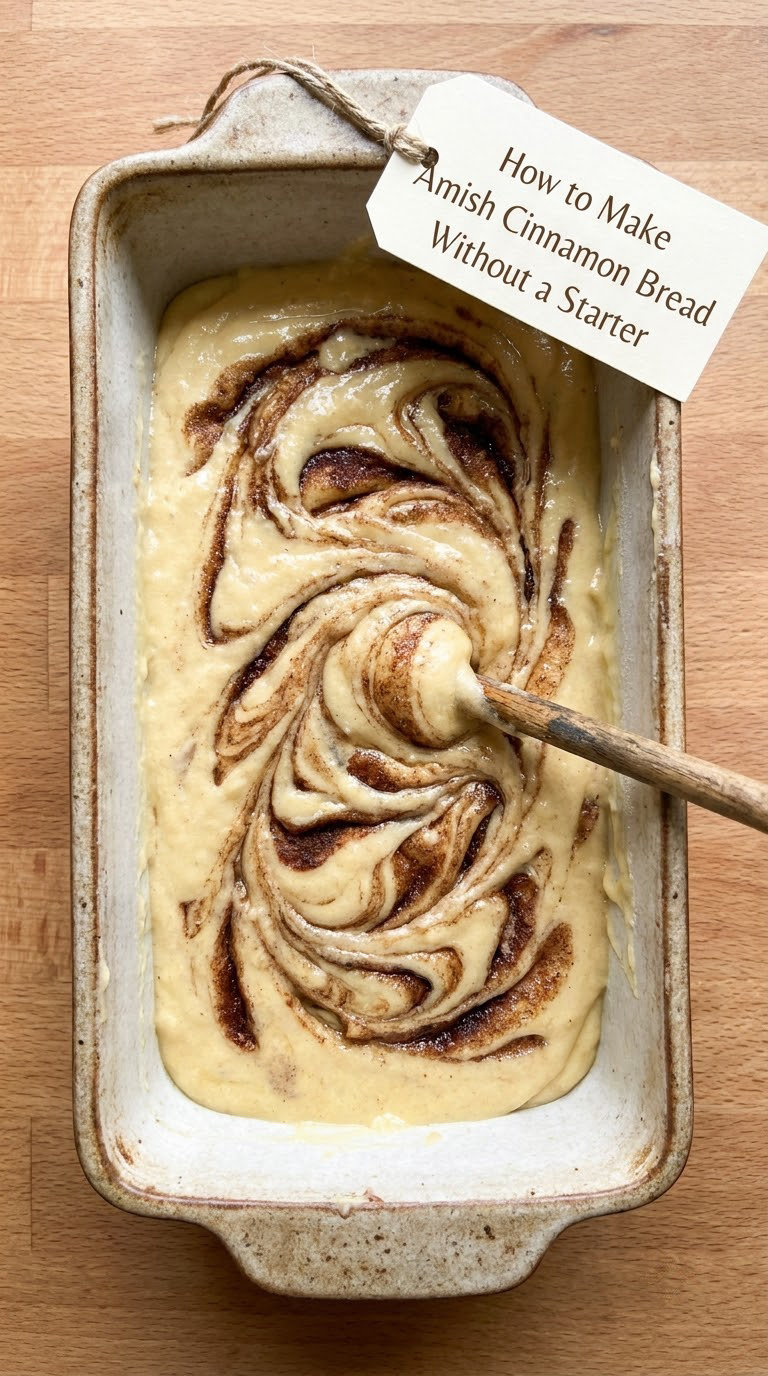
- Spread about one third of the batter in the bottom of each prepared pan. Sprinkle each with roughly half of the cinnamon-sugar mixture. Top with the rest of the batter, then dust with the remaining cinnamon sugar.
- Run a wooden skewer or butter knife through each loaf in a long S-shape, just two or three passes, to marble the cinnamon layer. Don’t stir, you want ribbons, not a uniform batter.
- Bake on the middle rack for 45 to 55 minutes. The tops should be deeply golden and a toothpick inserted into the center should come out with only a few soft crumbs, no wet batter. If the top browns too quickly, tent loosely with foil around the 35-minute point.
- Cool in the pan for 15 minutes, then lift out onto a wire rack and cool another 30 minutes before slicing. The cinnamon layer stays soft while the loaves are slightly warm, which is when they’re hardest to resist.
Tips for Success
- If the center sinks after baking, you overmixed the batter or underbaked it slightly. Pull the loaf at the first hint of moist crumbs on the toothpick, not before, not after.
- If the top is browning too fast, tent with a sheet of aluminum foil at the 35-minute mark and keep baking. Every oven runs a little hot.
- For a clean cinnamon swirl, only make two or three passes with the skewer. More than that and the batter blends back into a uniform cinnamon bread instead of a marbled loaf.
- If the loaf comes out dry, you probably measured the flour by volume and packed it in. Weigh your flour (500 g) next time, or check your oven with a separate thermometer, a 25°F swing will quietly dry out quick breads.
- For bakery-style even slices, cool the loaf fully and use a long serrated knife with a gentle sawing motion. A regular chef’s knife will squish the soft crumb.
Variations
- Brown sugar cinnamon layer: swap the 1/2 cup white sugar in the cinnamon layer for brown sugar. You’ll get a deeper molasses note and a slightly chewier ribbon.
- Pecan or walnut cinnamon bread: fold 1 cup of chopped toasted pecans or walnuts into the batter before layering. Toasting the nuts first keeps them from sinking.
- Dairy-free version: use plant milk plus 2 tablespoons vinegar in place of the buttermilk, and swap the butter for a stick-style vegan butter. The crumb is slightly more tender, but the flavor is still warmly spiced.
- Gluten-free version: replace the all-purpose flour with a cup-for-cup gluten-free baking blend that contains xanthan gum. No other changes needed.
- Pumpkin spice cinnamon bread: trade the cinnamon for pumpkin pie spice, and add 1/4 cup pumpkin puree to the wet ingredients. Cozy fall bake, no starter required.
Storage, Make-Ahead and Reheating
Wrapped tightly in foil, a loaf keeps on the counter for about 3 days. The cinnamon-sugar layer softens over time, which most of us consider a feature rather than a fault.
For longer storage, slide the fully cooled loaf into an airtight container or a heavy zip-top bag and refrigerate for up to 7 days. The fridge firms up the crumb a little, so warm individual slices in a 300°F (150°C) oven for 8 minutes before serving.
For freezing, slice the cooled loaf, stack the slices with a small square of parchment between them, and freeze in a freezer bag for up to 3 months. A slice thaws on the counter in about 20 minutes, or you can warm it straight from the freezer in a toaster oven. If you want to read more about how long homemade bread actually keeps on the counter, my homemade bread storage guide goes deeper into room-temp timelines and moisture tricks. For the full freeze routine, see my guide to freezing bread so it stays fresh.
What to Serve With It
- A thick slab of salted butter and a hot cup of coffee, the classic breakfast move.
- Soft cream cheese spread, which catches in the cinnamon swirls and turns every slice into dessert.
- Apple butter or pear butter for a fall version that doubles as an easy gift.
- A cold glass of milk for the kids, or a chai latte for grown-ups.
- Stale slices make a glorious base for French toast the next morning, the cinnamon layer caramelizes in the pan.
Frequently Asked Questions
Can you make amish cinnamon bread without a starter?
Yes, you can make amish cinnamon bread without a starter and the result is the soft, buttery, cinnamon-sugar quick bread most people think of when they picture Amish friendship bread. The no-starter version uses buttermilk for tang, baking soda for lift, and a layered cinnamon-sugar ribbon to mimic the spiced crumb of the 10-day fermented loaf, all in about an hour from start to finish.
What does the amish friendship bread starter do in this recipe?
In the traditional 10-day Amish friendship bread recipe, the starter is a fermented batter that gives the loaf its faint tang, its moist open crumb, and a hint of sourdough flavor. The no-starter version recreates that flavor with buttermilk, baking soda, and optional instant pudding mix, so you skip the 10-day feed-and-mush cycle but keep the soft texture and warm spice.
Can I use regular milk instead of buttermilk?
You can, as long as you add 2 tablespoons of white vinegar or lemon juice to 2 cups of whole milk and let it sit for five minutes before adding it to the batter. This quick buttermilk swap gives you the acidity the baking soda needs to react and lift the loaf, and it preserves the soft crumb.
Why did my amish cinnamon bread come out dense or sink in the middle?
A dense or sunken loaf almost always comes down to one of three things: the butter or eggs were too cold, the batter was overmixed once the flour was added, or the loaf came out of the oven a few minutes too early. Measure your flour by weight if you can, mix the dry ingredients in just until you cannot see streaks, and pull the loaf at the first sign of moist crumbs on a toothpick.
Can I turn this recipe into muffins instead of loaves?
Yes, portion the batter into a lined 12-cup muffin tin, sprinkle each with cinnamon sugar, and bake at 350°F (175°C) for about 18 to 22 minutes. They are done when the tops spring back lightly to the touch and a toothpick comes out with a few moist crumbs. Expect roughly 18 to 20 muffins from one batch.
How do I know when amish cinnamon bread is done baking?
The tops should be a deep golden brown and a wooden skewer or toothpick inserted into the center of the loaf should come out with only a few soft crumbs, no wet batter. Internal temperature should read about 200°F (93°C) on an instant-read thermometer. If you are new to baking bread at home, my guide to bread baking temperatures walks through the right readings for quick breads, lean loaves, and enriched doughs.
Final Thoughts
Amish cinnamon bread without a starter is the recipe I reach for when I want the house to smell like a bakery by mid-afternoon. Bake the loaves the same day you plan to serve them, slice them slightly warm so the cinnamon layer is still pliable, and stash any leftovers in the freezer for those mornings when only a thick slice of cinnamon-sugar toast will do. If you end up baking this on repeat, my freezer guide for homemade bread walks through how to slice, wrap, and thaw quick breads so they taste fresh-baked weeks later. For pairing ideas, these 15 easy cinnamon dessert recipes for fall are a natural next stop once the loaves are gone.