
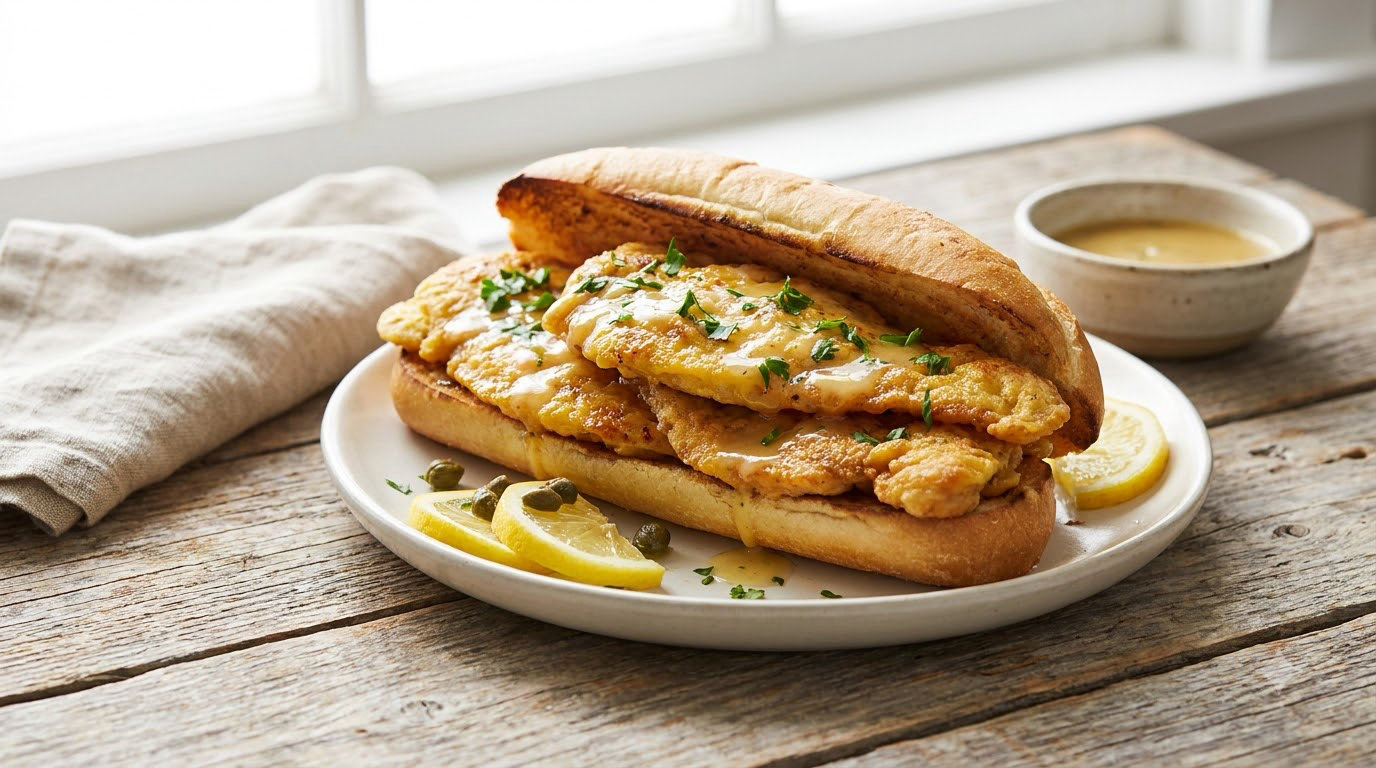
A good chicken francese recipe should feel doable on a Tuesday and look like something you would order off a restaurant menu. The kind of dish where thin cutlets fry to a pale gold, then swim in a buttery lemon sauce that tastes like it took hours, even though it all comes together in one pan in about 30 minutes.
That is what this version does. I have made it on rushed weeknights and for friends sitting at my kitchen table, and it is the same recipe both times. The only things that change are how fast I work and whether I bother to plate it on something nicer than the everyday plates. If you can pound a chicken breast flat and crack a couple of eggs, you can make this.
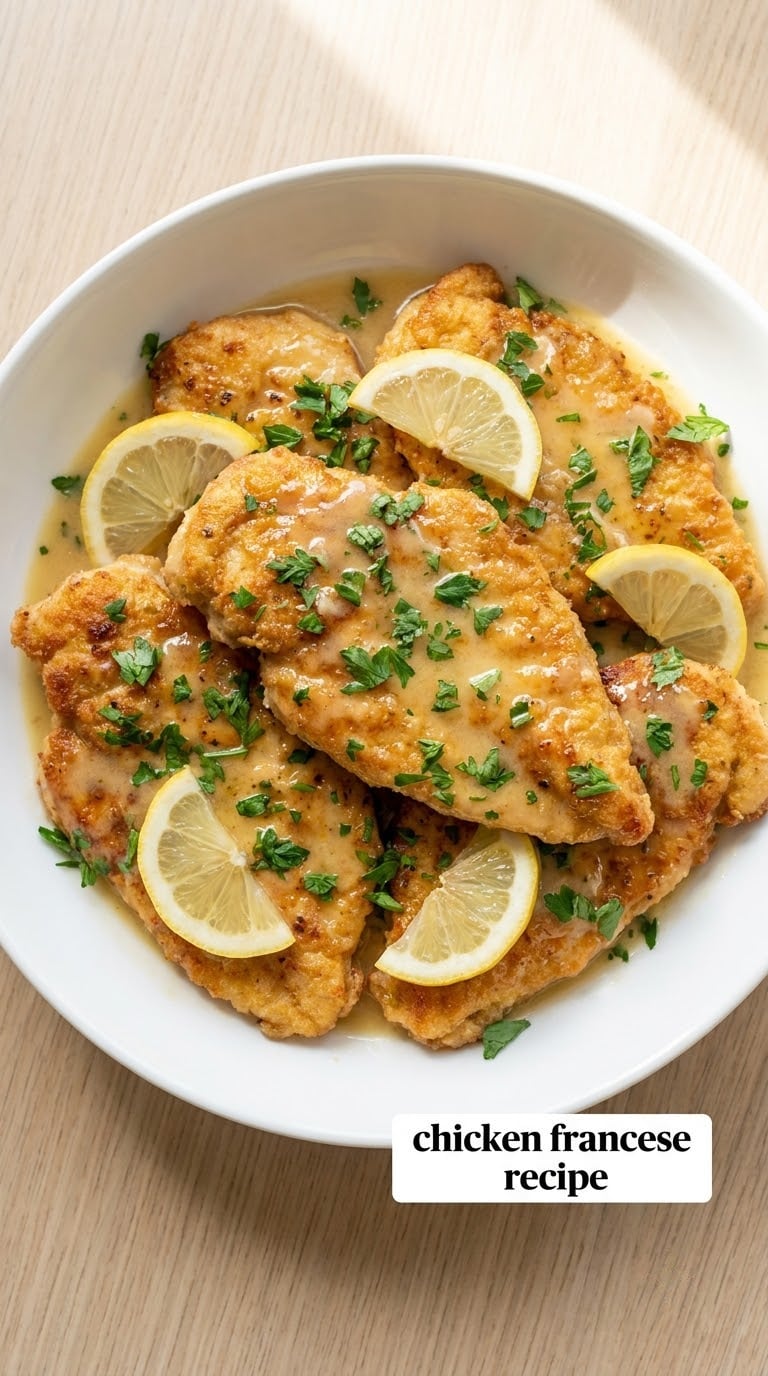
Table of Contents
Why This Recipe Works
The whole trick of chicken francese is the contrast. A thin, even cutlet cooks in under three minutes per side. A hot pan browns the flour-egg coating fast, so the crust stays light instead of soaking up oil. And a short, sharp pan sauce built from the drippings tastes far more intense than any sauce you would simmer for an hour.
The dredge order matters more than people realize. Flour first, then egg, then flour is what many recipes still call for, but for chicken francese the cleaner approach is flour, then egg, then straight into the pan. The flour gives the egg something to grip, and the egg gives you that signature pale, almost lacy coating. Skip the second flour coat and your sauce stays clear, not cloudy.
The pan has to be hot before the cutlet goes in. If it is not, the egg coating drags, sticks to the bottom, and tears off when you flip. Medium-high heat with a thin slick of olive oil and a little butter is the sweet spot. The butter browns in the pan and the oil keeps the butter from burning, which is what gives the sauce that warm, toasty edge.
Finally, do not overcook the chicken. Thin cutlets finish in a flash, and the carryover heat finishes them while they rest. An instant-read thermometer pulled at 162°F (72°C) will coast to 165°F (74°C) in a couple of minutes, and the cutlets stay juicy instead of rubbery.
Ingredients
Yield: 4 servings · Prep: 15 minutes · Cook: 15 minutes · Total: 30 minutes · Difficulty: Easy
For the chicken:
- 4 boneless skinless chicken breasts (about 6 oz each), butterflied and pounded to 1/4 inch thick
- 1 cup all-purpose flour (about 130 g)
- 1 teaspoon kosher salt
- 1/2 teaspoon black pepper
- 3 large eggs
- 2 tablespoons water
- 1/4 cup grated Parmesan (optional, for a richer coating)
- 3 tablespoons olive oil, for frying
- 2 tablespoons unsalted butter, for frying
For the lemon butter sauce:
- 3 tablespoons unsalted butter
- 3 garlic cloves, minced
- 1/2 cup dry white wine (Pinot Grigio, Sauvignon Blanc, or unoaked Chardonnay)
- 1 cup low-sodium chicken stock
- 1/4 cup fresh lemon juice (from 2 large lemons)
- 1 tablespoon lemon zest
- 1 teaspoon all-purpose flour, whisked with 2 tablespoons cold stock (for thickening)
- 2 tablespoons chopped fresh flat-leaf parsley
- Salt and pepper, to taste
A few notes on the key ingredients. Chicken cutlets should be thin and even, no thicker than a pencil, so they cook in the time the recipe says. Use real butter, not margarine, since this is the sauce and the flavor rides on it. Fresh lemon is non-negotiable; the bottled stuff tastes flat and a little metallic once it reduces in the pan.
For the wine, anything dry and unoaked works. Sweet wines like Moscato or anything labeled “cooking wine” (it is salted and tastes like it) will throw the sauce off. If you do not want to cook with wine, swap it for more chicken stock with a small splash of white wine vinegar; I cover that in the variations.
Equipment
You do not need a lot of gear, but a few specific tools make this easier. A 12-inch skillet, preferably stainless steel or a heavy nonstick, gives the cutlets room to lay flat without crowding. A meat mallet (or a heavy rolling pin and a sturdy zip-top bag) is what you need to pound the chicken to an even 1/4 inch. An instant-read thermometer takes the guesswork out of doneness, and a microplane makes quick work of the lemon zest.
- 12-inch skillet
- Meat mallet or rolling pin
- Instant-read thermometer
- Microplane zester
- Two shallow bowls (for flour and egg)
- Tongs
- Whisk
How to Make Chicken Francese
- Butterfly and pound the chicken. Slice each breast horizontally into two even cutlets, then place between two pieces of plastic wrap. Pound to 1/4 inch thick with the flat side of a meat mallet. Season both sides with salt and pepper.
- Set up the dredging station. In one shallow bowl, whisk together the flour, 1 teaspoon salt, and 1/2 teaspoon pepper. In a second bowl, whisk the eggs, 2 tablespoons water, and the Parmesan until smooth and uniform.
- Heat the pan. Set a 12-inch skillet over medium-high heat. Add the olive oil and 2 tablespoons of butter. Heat until the butter foams and the foam just begins to subside, about 2 minutes. The oil should shimmer, not smoke.
- Dredge the cutlets. Working one at a time, press each cutlet into the flour, coating both sides and shaking off the excess. Dip into the egg mixture, turning to coat, and let any extra drip off. Do not stack the dredged cutlets; they will stick together.
- Fry in batches. Lay two cutlets in the hot pan without crowding. Cook for 2 to 3 minutes per side, until the coating is pale gold and an instant-read thermometer reads 162°F (72°C) at the thickest point. Transfer to a warm plate and tent with foil. Repeat with the remaining cutlets, adding a little more oil and butter as needed.
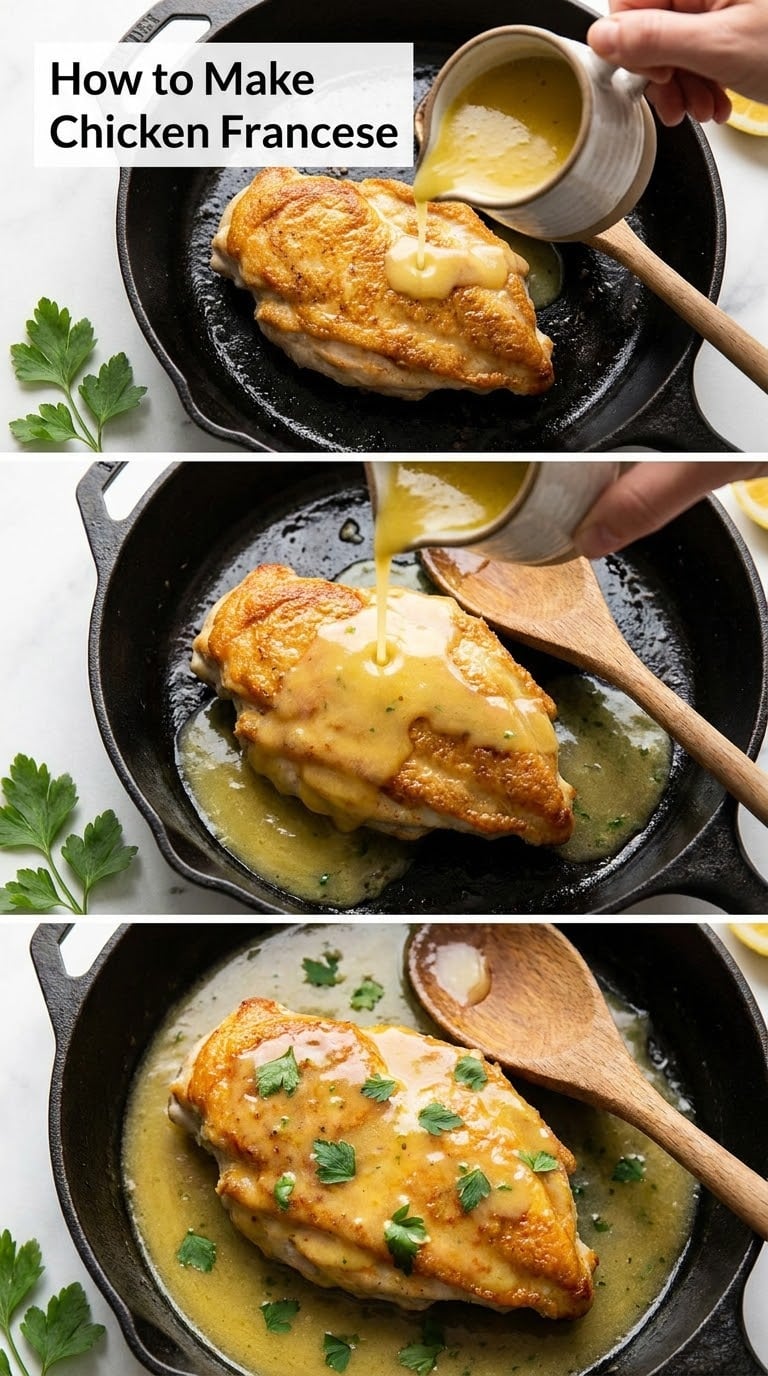
- Build the sauce. Lower the heat to medium. Add the minced garlic to the same pan and stir for 30 seconds, just until fragrant. Pour in the white wine and scrape up every browned bit on the bottom of the pan with a wooden spoon. Let the wine reduce by half, about 2 minutes.
- Add stock and lemon. Pour in the chicken stock and the lemon juice. Simmer for 3 to 4 minutes to concentrate the flavor. Whisk the 1 teaspoon of flour into the cold stock, then drizzle that slurry into the pan while whisking. Simmer another 1 to 2 minutes, until the sauce lightly coats the back of a spoon.
- Finish the sauce. Whisk in the remaining 3 tablespoons of cold butter, one piece at a time, so the sauce turns glossy and emulsifies. Stir in the lemon zest and most of the parsley. Taste and adjust with salt and pepper.
- Return chicken to the pan. Slide the cutlets (and any juices on the plate) back into the sauce. Spoon the sauce over the top and warm through for about 1 minute, just until the chicken is heated.
- Serve. Plate the cutlets, spoon the sauce over the top, and finish with the remaining parsley.
Tips for Success
Dredge in flour first, then egg, not the other way. Wet chicken does not hold flour well. Dry chicken dipped in flour gives the egg a textured surface to grip, and the coating stays on through the sear.
Keep the cutlets close in size. A chicken breast that is 6 ounces raw will give you two cutlets that cook in the same amount of time. If one is much thicker than the other, the thicker one will still be raw inside when the thin one is done. Pound everything to a uniform 1/4 inch and the timing works every time.
Do not crowd the pan. Two cutlets at a time in a 12-inch skillet is the right call. Crowding drops the temperature, the cutlets steam instead of sear, and the coating turns gummy instead of golden. Cook in batches; the second batch is faster because the pan is already hot.
Watch the sauce as it reduces. A sauce that is too thin will pool on the plate and look like broth. A sauce that is too thick turns pasty and loses that silky pour. The right texture coats the back of a spoon but still runs off the spoon in a steady stream when you tilt it.
Add the butter at the end, off the heat if needed. Whisking cold butter into a just-simmered sauce is what gives chicken francese its glossy, restaurant-style finish. If the pan is still roaring hot, the butter can break and the sauce will look greasy. Pull the pan off the burner for 30 seconds before the final butter goes in.
If you love saucy chicken dishes, my chicken enchilada casserole hits a similar comfort-food note, just in casserole form.
Variations
Dairy-free. Swap the butter for a high-quality vegan butter block (the kind that comes in sticks, not the soft tub spread) and use olive oil for the sear. The sauce will still emulsify and stay glossy.
Gluten-free. Replace the all-purpose flour with white rice flour or a 1:1 gluten-free flour blend. Rice flour gives the cleanest crust and does not taste gritty. Double-check that your chicken stock is certified gluten-free.
Caper and white wine Francese. Stir 2 tablespoons of drained capers into the sauce along with the lemon juice. Capers add a briny pop that plays well with the lemon and turns the dish into something close to a chicken piccata-francese hybrid.
Mushroom Francese. After removing the cutlets, add 8 oz of sliced cremini mushrooms to the pan and cook until they release their liquid and turn golden, about 5 minutes. Push them to the side, build the sauce around them, and spoon the whole thing over the chicken.
Veal Francese. Replace the chicken with veal scaloppine (about 4 oz each). Veal cooks even faster than chicken, so cut the sear time down to 1 to 1 1/2 minutes per side and check the internal temperature at 145°F (63°C) for medium, or 160°F (71°C) for well done.
Storage, Make-Ahead and Reheating
Cooked chicken francese keeps in the fridge for 3 to 4 days in an airtight container. The sauce is best stored separately so the cutlets do not soak in it and lose their texture. For the freezer, store the cutlets and the sauce in separate containers for up to 2 months. Thaw overnight in the fridge before reheating.
For make-ahead, you can pound and dredge the cutlets up to 4 hours ahead. Keep them in a single layer on a parchment-lined tray, uncovered, in the fridge. The dry dredge will set up a little, which actually helps the coating stick during the sear. Do not apply the egg coating ahead of time; it will run and slide off.
To reheat, warm the sauce gently in a skillet over low heat. Add the cutlets, spoon the warm sauce over the top, and cover for 2 to 3 minutes, just until heated through. Skip the microwave, which makes the coating rubbery and the sauce can break.
What to Serve With It
Angel hair pasta is the most classic pairing; the thin noodles catch the light lemon sauce beautifully. For a heartier plate, garlic mashed potatoes soak up every drop. Risotto Milanese, with its warm saffron notes, is the restaurant move. Roasted asparagus or broccolini works if you want a green on the plate. And a simple arugula salad with lemon vinaigrette cuts the richness without competing with the sauce.
For a full plate, the easy rice side dishes for chicken roundup has plenty of weeknight-friendly options. If you want a similar weeknight vibe, my easy crockpot pulled chicken sandwiches is the slow-cooker answer to the same comfort craving.
Frequently Asked Questions
What is the difference between chicken francese and chicken piccata?
Chicken francese is dredged in flour and egg, then served in a lemon-butter-white wine sauce. Chicken piccata skips the egg dip, uses only flour, and the sauce is built around capers, lemon, and butter with white wine. Francese is richer and slightly more custardy on the cutlet; piccata is brighter and more briny.
How do I keep chicken francese from getting rubbery?
Pound the cutlets to an even 1/4 inch so they cook fast and evenly. Pull them from the pan at 162°F (72°C); the carryover heat brings them to 165°F (74°C) while they rest. Overcooked chicken is the main reason it turns rubbery, and a thermometer takes the guesswork out.
Can I make chicken francese ahead of time?
You can pound and flour-dredge the cutlets up to 4 hours ahead and keep them chilled on a tray. Apply the egg dip right before frying. Cooked cutlets and sauce keep separately in the fridge for 3 to 4 days. Reheat gently in a covered skillet over low heat so the sauce does not break.
What is the safe internal temperature for chicken francese?
Cook chicken to a minimum internal temperature of 165°F (74°C), measured at the thickest part of the cutlet with an instant-read thermometer. Pulling the cutlets at 162°F (72°C) and letting them rest a couple of minutes lets carryover heat finish the job without drying them out.
Do I have to use wine in chicken francese?
Wine is traditional but not required. Replace the 1/2 cup of white wine with 1/2 cup of chicken stock plus 1 tablespoon of white wine vinegar or fresh lemon juice. The sauce will be slightly less complex, but still bright and balanced. Avoid sweet wines and anything labeled cooking wine, which is salted.
Conclusion
The two details that decide how a chicken francese recipe turns out are the pan temperature and the lemon timing. Get the oil hot enough to set the egg coating on contact, and add the lemon juice and zest at the very end so the brightness does not cook off. Everything else is forgiving.
Once you have made it once, this is the kind of chicken francese recipe you keep on the inside cover of your head for any night you want something a little special without much fuss. Serve it over angel hair, a pile of mashed potatoes, or just a green salad and call it dinner.