
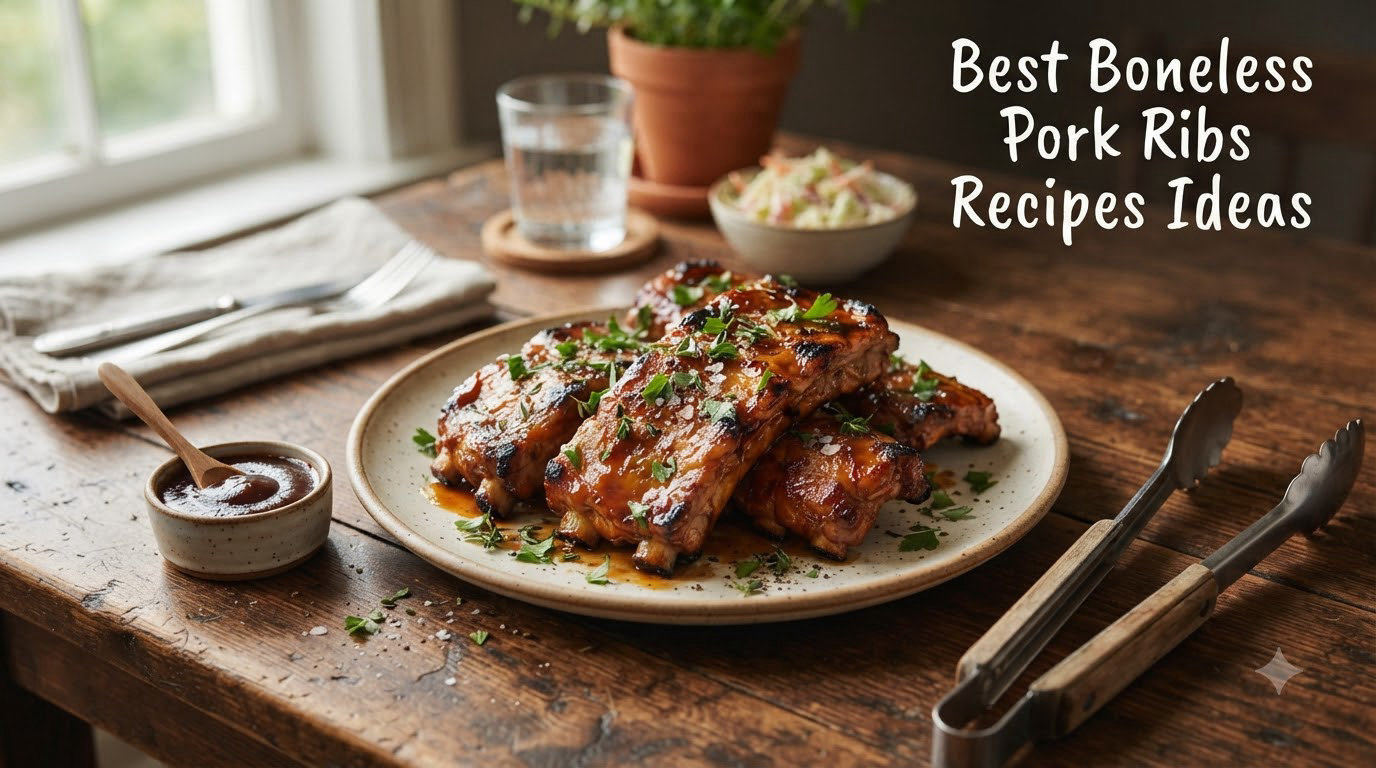
My first step with boneless country-style ribs is identifying the cut: shoulder pieces benefit from low, slow cooking, while lean loin pieces need a shorter cook and closer temperature checks. That is the practical foundation behind country-style pork rib recipes.
You will also find oven and slow cooker pork ribs presented naturally, with clear doneness cues, useful sides, storage guidance, and fixes for tough shoulder meat or dry loin meat. You can build the next meal around this side dishes for pulled pork.
Table of Contents
What Are Boneless Country-Style Pork Ribs?
Boneless country-style pork ribs are not actually ribs at all, which surprises most people the first time they hear it. They are cuts of pork shoulder, also called pork butt, sliced into rib-shaped strips. The meat comes from the muscular area near the shoulder blade, which means it carries generous marbling and connective tissue that breaks down beautifully during low, slow cooking.
You will sometimes see them labeled as boneless pork shoulder ribs, Western ribs, or country-style boneless ribs depending on your butcher and region. Occasionally you will find true bone-in country-style ribs that contain a piece of the shoulder blade, but the boneless version is far more common in grocery stores.
The reason these cuts are called ribs comes down to marketing and shape. Butchers slice the shoulder into strips roughly the size and look of traditional ribs, making them easy to cook, serve, and eat with the same hands-on approach as real ribs. The trade-off is that you get a meatier, more marbled bite than baby backs or spare ribs, often at half the price per pound.
Because the meat is heavily marbled, boneless pork ribs shine when cooked low and slow. That said, they also work surprisingly well with quicker, hotter methods if you prefer a firmer, steak-like texture. I cover both approaches in the recipes below.
Cooking Methods Comparison: Oven vs Slow Cooker vs Grill vs Instant Pot
For safe handling, I follow the USDA thermometer guidance: whole cuts of beef and pork need 145°F plus a three-minute rest, while leftovers should be reheated to 165°F. Tender braises often cook beyond the safety minimum to soften collagen.
One thing I noticed when researching boneless pork ribs recipes is that almost every article covers only one cooking method. That leaves home cooks guessing about whether the oven, slow cooker, grill, or pressure cooker is the right choice for dinner tonight. Here is the honest comparison based on my own testing.
-
Oven Baked: The most versatile method. You can cook boneless ribs fast at 350F for 35 to 40 minutes for a firm, juicy texture, or low at 300F for 2 hours covered with foil for fall-apart tenderness. Cleanup is easy with a single sheet pan or baking dish.
-
Slow Cooker: The most hands-off method. Set it on low for 6 to 8 hours and the connective tissue melts into gelatin, producing ribs that literally pull apart with a fork. This is my pick for busy weekdays and for feeding a crowd.
-
Grilled: Best for flavor and char. Use a two-zone indirect heat setup and cook low for about 90 minutes, then sauce and sear over direct flame. Grilling takes more attention but rewards you with smoky depth you cannot replicate indoors.
-
Instant Pot / Pressure Cooker: The fastest route to tender ribs. Pressure cooking for 25 to 30 minutes with a natural release gets you close to slow-cooker texture in a fraction of the time. Great for last-minute dinners, though you lose some of the caramelization unless you finish under the broiler.
If I had to pick one, I would choose the oven for everyday cooking and the slow cooker for special occasions. Both produce consistently excellent results with minimal babysitting.
The Best Dry Rub for Boneless Pork Ribs
A good dry rub is the foundation of every great boneless pork ribs recipe. The ratio matters more than the exact ingredients, so measure carefully the first time you make it.
-
1/4 cup packed brown sugar
-
2 tablespoons smoked paprika
-
2 tablespoons kosher salt
-
1 tablespoon freshly ground black pepper
-
1 tablespoon garlic powder
-
1 tablespoon onion powder
-
1 tablespoon ground cumin
-
1 teaspoon cayenne pepper (reduce to 1/2 teaspoon for less heat)
-
1 teaspoon dried oregano
Whisk everything together and store in an airtight jar for up to 3 months. When you are ready to cook, pat the ribs dry, drizzle with a little olive oil or mustard to help the rub adhere, then coat all sides generously. For deeper flavor, apply the rub the night before and let the ribs rest uncovered in the fridge overnight.
If you prefer a simpler approach, salt, pepper, and garlic powder alone will still produce delicious ribs. The rub above is for when you want layers of smoky, sweet, and savory flavor without reaching for bottled sauce.
Best Boneless Pork Ribs Recipes Ideas
For reliable country-style pork rib recipes, use these three checkpoints before choosing a recipe. The same checkpoints keep oven and slow cooker pork ribs practical rather than repetitive.
-
Best result: Match the cooking method to the cut and keep shoulder-style pieces moist until collagen softens.
-
Avoid: Tough shoulder meat or dry loin meat.
-
Doneness: Shoulder-style pieces are ready when a fork twists easily and the meat is succulent; lean loin-style pieces should be checked early and rested after reaching a safe temperature.
Three complete boneless pork rib methods
Recipe 1: Oven-Baked Boneless Pork Ribs (Quick and Slow Methods)
The ingredient list is the same either way.
Ingredients
-
2 to 3 pounds boneless country-style pork ribs
-
1/4 cup dry rub (recipe above)
-
2 tablespoons olive oil
-
1/2 cup BBQ sauce (optional, for finishing)
Quick Method (35 to 40 minutes):
-
Preheat your oven to 350F. Line a baking sheet with foil or parchment for easy cleanup.
-
Pat the ribs dry with paper towels. Drizzle with olive oil and rub the dry seasoning blend all over, pressing it into the meat with your hands.
-
Arrange the ribs in a single layer with a little space between each piece. This helps them brown instead of steam.
-
Bake uncovered for 25 minutes. If using BBQ sauce, brush it on now and return to the oven for another 10 to 15 minutes, or until the sauce is sticky and caramelized.
-
Check the internal temperature in the thickest piece. Let rest 5 minutes before serving.
-
Preheat the oven to 300F. Prepare the ribs with oil and dry rub exactly as above.
-
Place the ribs in a baking dish and cover tightly with foil. The foil traps steam, which is what breaks down the connective tissue.
-
Bake covered for 1 hour and 30 minutes. Remove the foil, brush with BBQ sauce if using, and bake uncovered for another 25 to 30 minutes to caramelize the edges.
-
For an extra-sticky finish, flip on the broiler for 2 to 3 minutes at the very end. Watch closely because the sugar in the sauce can burn quickly.
-
The ribs are done when they pierce easily with a fork and the internal temperature reads 190F to 205F. At this range the collagen has fully broken down and the texture is fall-apart tender.
-
Pat the ribs dry and coat with olive oil and the dry rub. For deeper flavor, do this step the night before and refrigerate overnight.
-
Place the ribs in the slow cooker in a single layer or slightly overlapping. Pour the broth or apple juice around the base, not over the ribs, to keep the rub in place.
-
Cook on LOW for 6 to 8 hours or on HIGH for 4 hours. Low is my preference because the texture is noticeably more tender and the juices concentrate better.
-
Carefully transfer the ribs to a foil-lined baking sheet. Brush with BBQ sauce and broil for 3 to 5 minutes until the sauce is sticky and caramelized. This step is optional but makes a big difference in flavor and appearance.
-
Let rest 5 minutes before serving. The ribs will be very tender, so use a slotted spatula rather than tongs to move them.
-
Low vs High Setting: Low (6 to 8 hours) gives the connective tissue time to fully break down into gelatin, which is what creates that melt-in-your-mouth quality. High (4 hours) works in a pinch but produces a slightly firmer, chewier texture.
-
Prepare the grill for two-zone cooking. If using gas, heat one side to medium-high (around 350F) and leave the other side off. If using charcoal, push the coals to one side.
-
Pat the ribs dry, coat with oil, and apply the dry rub generously.
-
Place the ribs on the cooler side of the grill, away from direct flame. Close the lid and cook for about 60 to 90 minutes, turning once halfway through. The internal temperature should reach 190F for tender results.
-
Move the ribs directly over the heat. Brush with BBQ sauce and grill for 2 to 3 minutes per side, watching carefully to prevent burning. The sugars should caramelize and char in spots.
-
Remove from the grill and let rest 5 to 10 minutes. The ribs will have a beautiful smoky flavor with crisp, saucy edges that you simply cannot replicate indoors.
Slow Method (2 hours, covered):
Recipe 2: Slow Cooker Boneless Country Style Ribs
The slow cooker produces the most consistent fall-apart texture of any method, and cleanup is essentially nothing.
Ingredients
-
2 to 3 pounds boneless country-style pork ribs
-
1/4 cup dry rub
-
1 tablespoon olive oil
-
1/2 cup chicken broth or apple juice
-
1 cup BBQ sauce (added at the end)
Instructions
Recipe 3: Grilled Boneless Pork Ribs
Grilling boneless country-style ribs is a method almost no competitor covers, which is a shame because the smoky char is spectacular. You need a two-zone fire for this, which means hot coals or burners on one side and no heat on the other.
Ingredients
-
2 to 3 pounds boneless pork ribs
-
1/4 cup dry rub
-
2 tablespoons olive oil
-
3/4 cup BBQ sauce
Instructions
Beyond BBQ: Sauce Alternatives for Boneless Pork Ribs
One of the most common questions I see in cooking forums is what to do with boneless pork ribs besides coating them in BBQ sauce. The good news is that country-style ribs are extremely versatile and take well to many different flavor profiles.
Honey Garlic Sauce: Mix 1/2 cup honey, 1/4 cup soy sauce, 4 minced garlic cloves, 1 tablespoon grated ginger, and a splash of rice vinegar. Brush on during the last 10 minutes of cooking.
Teriyaki Glaze: Use bottled teriyaki sauce or make your own with soy sauce, mirin, sugar, and ginger. Reduce it on the stove until syrupy, then brush on the ribs before broiling. The result is sticky, sweet, and savory with a slight umami depth.
White BBQ Sauce: A mayonnaise-based sauce originating in Alabama. Whisk together 1 cup mayonnaise, 1/4 cup apple cider vinegar, 2 tablespoons horseradish, 1 teaspoon sugar, and plenty of black pepper. Serve as a dipping sauce rather than a glaze.
Cajun Cream Sauce: Combine 1/2 cup sour cream, 2 tablespoons hot sauce, 1 teaspoon Cajun seasoning, and a squeeze of lemon. This cuts through the richness of the pork and adds a bright, spicy kick.
Diabetic-Friendly Options: Country-style pork ribs themselves contain zero carbohydrates, so they are suitable for diabetic diets when paired with sugar-free seasonings. Skip the brown sugar in the dry rub and use a sugar-free BBQ sauce, or stick with simple salt, pepper, garlic, and herbs. For a glaze, try mustard-based sauce or a vinegar-pepper mop instead of sweet tomato-based options.
Cooking Times and Internal Temperature Guide
Across these boneless country-style pork ribs, the same principle holds: match the cooking method to the cut and keep shoulder-style pieces moist until collagen softens. That is what makes country-style pork rib recipes dependable instead of vague and keeps oven and slow cooker pork ribs useful. For a related technique, keep this best pork chop recipes nearby.
The single most common question I get about boneless pork ribs is how long to cook them. The answer depends on the method and the texture you want. Here is a quick reference for every approach.
Oven, Quick Method: 350F for 35 to 40 minutes uncovered. Internal temperature 160F to 170F for firm, juicy ribs.
Oven, Slow Method: 300F for 2 hours, covered with foil for the first 90 minutes. Internal temperature 190F to 205F for fall-apart tenderness.
Slow Cooker: Low for 6 to 8 hours, or High for 4 hours. Internal temperature 190F or higher for tender results.
Grill: Indirect heat at 300F to 350F for 60 to 90 minutes, then direct heat for 4 to 6 minutes with sauce.
Instant Pot: High pressure for 25 minutes with a 10-minute natural release, then broil with sauce for 3 minutes.
The USDA recommends cooking all pork cuts to an internal temperature of 145F, followed by a 3-minute rest. That is the safety standard. For boneless country-style ribs specifically, most cooks prefer going higher — 190F to 205F — to fully break down the collagen and achieve that signature fork-tender texture.
Why Are My Boneless Pork Ribs Tough? (Troubleshooting)
Tough ribs are the number one complaint I hear from readers and see in cooking forums. The good news is that there are really only a few common causes, and all of them are easy to fix on your next batch.
-
Cooking too hot and too fast: This is the most frequent culprit. Boneless country-style ribs come from the shoulder, which is full of connective tissue. That tissue only breaks down at lower temperatures over a longer period. If you roast them at 400F for 25 minutes, you will get tough, chewy meat. Drop the temperature to 300F and extend the time, or switch to the slow cooker method.
-
Undercooking: The opposite problem also causes toughness. If you pull the ribs at 145F, the meat is technically safe but the collagen has not had time to melt into gelatin. For fall-apart texture, you want 190F to 205F internally.
-
Not resting the meat: Resting allows the juices to redistribute. Rest for at least 5 minutes, longer for slow-cooked batches.
This seasons the meat throughout and helps it retain moisture.
Serving Suggestions and Side Dish Pairings
I judge the finished dish by texture and temperature rather than time alone. Shoulder-style pieces are ready when a fork twists easily and the meat is succulent; lean loin-style pieces should be checked early and rested after reaching a safe temperature. For another useful dinner plan, see these oven-baked pork chop method.
Boneless pork ribs pair well with almost anything, but a few sides really complete the meal.
-
Classic BBQ Spread: Serve with creamy coleslaw, baked beans, cornbread, and potato salad. This is the traditional cookout lineup and works for both oven and grilled ribs.
-
Weeknight Comfort: Mashed potatoes, roasted green beans, and a simple side salad. The mashed potatoes soak up the pan juices beautifully.
-
Sheet Pan Dinner: Toss cubed sweet potatoes, onions, and bell peppers on the same pan as the ribs for the last 25 minutes of oven cooking. One pan, minimal cleanup.
-
Asian-Inspired: Steamed white rice, stir-fried bok choy, and quick-pickled cucumbers. Perfect when you are using the teriyaki or honey garlic sauce options.
-
Low-Carb Option: Cauliflower mash, roasted Brussels sprouts, and a cucumber tomato salad. The ribs themselves are zero carb, so this is a full low-carb plate.
Storing and Reheating Leftovers
Boneless pork ribs store and reheat beautifully, which is one reason I almost always cook a larger batch than we need for one meal. Leftovers keep in an airtight container in the fridge for up to 4 days.
For longer storage, freeze the cooled ribs in a freezer-safe container or heavy-duty zip-top bag for up to 3 months. Thaw overnight in the fridge before reheating.
Reheating methods: The oven is best for preserving texture. Cover the ribs with foil and warm at 300F for 15 to 20 minutes. The microwave works in a pinch but tends to toughen the meat, so cover with a damp paper towel and heat in 30-second bursts. For slow-cooked, fall-apart ribs, reheat gently in a saucepan with a splash of broth or BBQ sauce over low heat.
Frequently Asked Questions
Are boneless country-style ribs actually ribs?
Often they are thick strips cut from the shoulder, although some packages contain leaner loin meat. The label and marbling help identify which you have.
Why are my boneless pork ribs tough?
Shoulder-style ribs are usually tough because they need more covered cooking time; lean loin pieces can become firm when overcooked.
Should I cover boneless ribs in the oven?
Covering them during the tenderizing stage traps moisture. Uncover them only near the end to thicken and caramelize the sauce.
Can I cook boneless pork ribs without barbecue sauce?
Yes. Mustard-herb, salsa verde, teriyaki, garlic butter, and tomato-based braising sauces all work well.
Can I freeze cooked boneless pork ribs?
Yes. Freeze cooled ribs with their sauce or cooking juices, then thaw overnight and reheat gently to 165°F.
Wrapping Up
For country-style pork rib recipes and oven and slow cooker pork ribs, prep everything before the heat goes on and keep the thermometer close. That simple rhythm prevents tough shoulder meat or dry loin meat and makes the results easier to repeat.
This guide answers the full dinner question: what to cook, how to know it is ready, what to serve, and how to keep the leftovers worth eating.